Visual abstracts
New randomized trials and meta-analyses from leading journals at a glance: who was studied, what was compared, and what was found. Every paper is free to read in full.
All specialtiesCardiology 4877Oncology 4138Gastroenterology & Hepatology 1942Infectious Disease 3837Neurology 1905Psychiatry & Mental Health 2273Pulmonology 2143Critical Care 1365Endocrinology & Diabetes 2580Pediatrics 2980Surgery 2559Orthopedics & Sports Medicine 931Neurosurgery 537Cardiothoracic & Vascular Surgery 674Plastic & Reconstructive Surgery 591Nephrology 1133Rheumatology 823Hematology 1109Dermatology 621Ophthalmology 543Obstetrics & Gynecology 1686Public & Global Health 1058Radiology & Imaging 648Anesthesiology 986Urology 764ENT (Otolaryngology) 503Emergency Medicine 511Allergy & Immunology 313Geriatrics 981Family Medicine & Primary Care 562Medical Genetics & Genomics 676Pathology & Laboratory Medicine 159Physical Medicine & Rehabilitation 757Palliative Care 444Nutrition 1588Digital Health & AI 2201General Medicine 321
Efficacy and safety of robotic surgery versus open surgery for hilar cholangiocarcinoma: a systematic review and meta-analysis
Systematic review and meta-analysisNo clear difference
Is robotic surgery more effective and safer than open surgery for hilar cholangiocarcinoma?
Who
267
Patients diagnosed with hilar cholangiocarcinoma
Compared
Robotic surgery
Open surgery
Main outcome
Operation time, blood transfusion, R0 resection, lymph node metastasis, complications, and hospital stay
Result: no significant differences observed across all primary outcomes
Bottom line: Robotic surgery demonstrates comparable safety and feasibility to traditional open surgery for hilar cholangiocarcinoma treatment.
Limitation: Limited quantity and quality of the included studies.
Int J Surg · 2025-01-01Download image

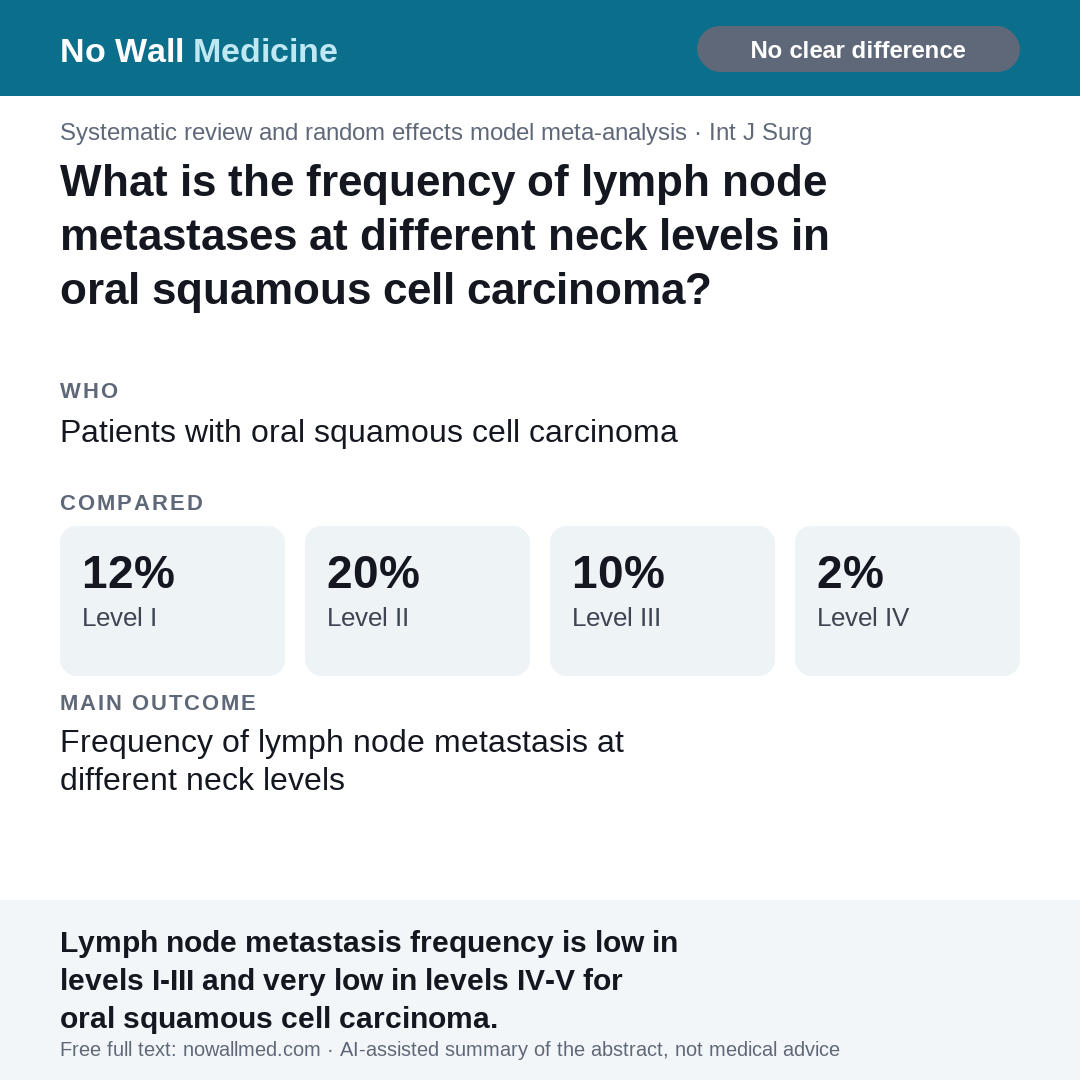
Frequency of lymph node metastases at different neck levels in patients with oral squamous cell carcinoma: a systematic review and meta-analysis
Systematic review and random effects model meta-analysisNo clear difference
What is the frequency of lymph node metastases at different neck levels in oral squamous cell carcinoma?
Who
Patients with oral squamous cell carcinoma
Compared
12%Level I (95% CI: 0.11-0.15)
20%Level II (95% CI: 0.17-0.22)
10%Level III (95% CI: 0.08-0.12)
2%Level IV (95% CI: 0.01-0.03)
Main outcome
Frequency of lymph node metastasis at different neck levels
Bottom line: Lymph node metastasis frequency is low in levels I-III and very low in levels IV-V for oral squamous cell carcinoma.
Int J Surg · 2025-01-01Download image
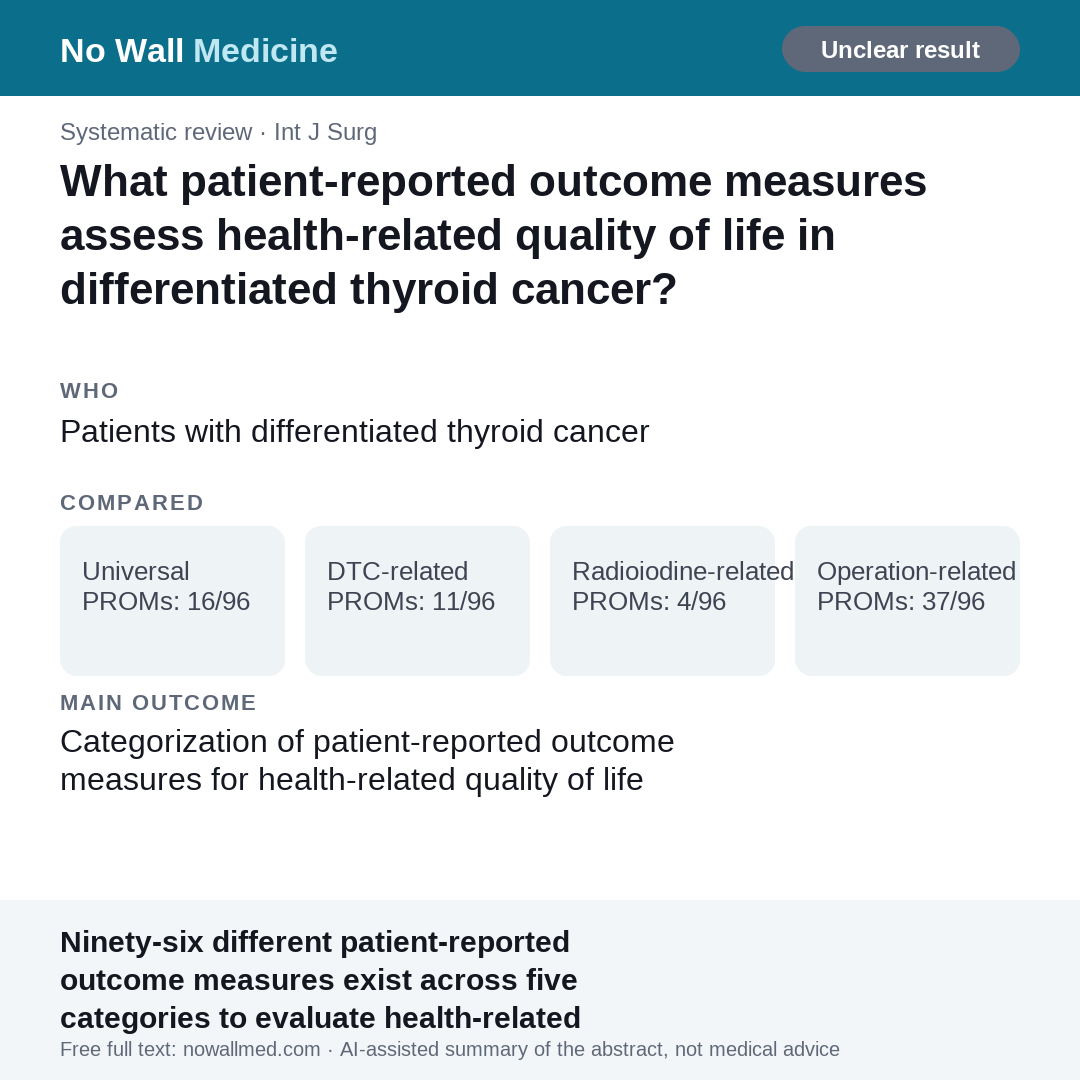
Patient‑reported outcome measures for assessing health‑related quality of life in patients with differentiated thyroid cancer: a systematic review
Systematic reviewUnclear result
What patient-reported outcome measures assess health-related quality of life in differentiated thyroid cancer?
Who
Patients with differentiated thyroid cancer
Compared
Universal PROMs: 16/96
DTC-related PROMs: 11/96
Radioiodine-related PROMs: 4/96
Operation-related PROMs: 37/96
Main outcome
Categorization of patient-reported outcome measures for health-related quality of life
Bottom line: Ninety-six different patient-reported outcome measures exist across five categories to evaluate health-related quality of life in differentiated thyroid cancer.
Limitation: A more detailed critical appraisal of the measures used in various clinical scenarios is required.
Int J Surg · 2025-01-01Download image
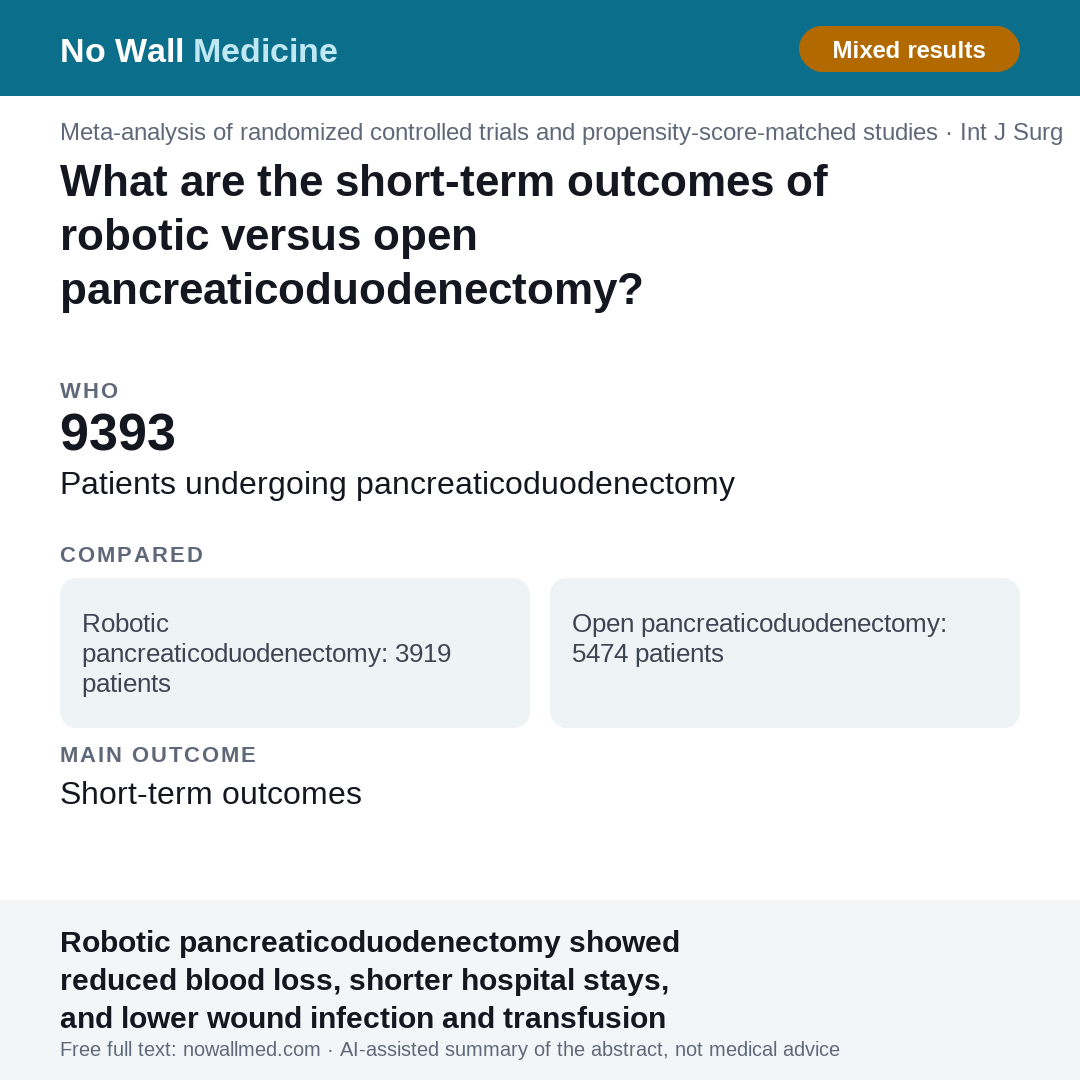
Comparison of short-term outcomes of robotic versus open pancreaticoduodenectomy: a meta-analysis of randomized controlled trials and propensity-score-matched studies
Meta-analysis of randomized controlled trials and propensity-score-matched studiesMixed results
What are the short-term outcomes of robotic versus open pancreaticoduodenectomy?
Who
9393
Patients undergoing pancreaticoduodenectomy
Compared
Robotic pancreaticoduodenectomy: 3919 patients
Open pancreaticoduodenectomy: 5474 patients
Main outcome
Short-term outcomes
Bottom line: Robotic pancreaticoduodenectomy showed reduced blood loss, shorter hospital stays, and lower wound infection and transfusion rates.
Int J Surg · 2025-01-01Download image
The association between immune cells and breast cancer: insights from Mendelian randomization and meta-analysis
Mendelian randomization and meta-analysisBenefit found
What is the causal association between immune cell phenotypes and breast cancer?
Who
731 immune cell phenotypes and breast cancer data · BCAC and Finngen R10 databases
Compared
CD3 on CD28+ CD4-CD8- T cells: OR=0.945 (95% CI: 0.922-0.970)
HLA DR on CD33- HLA DR+: OR=0.977 (95% CI: 0.964-0.990)
Main outcome
breast cancer risk
Result: OR=0.945 (95% CI: 0.922-0.970) for CD3 on CD28+ CD4-CD8- T cells
Bottom line: Two immune cell phenotypes were identified as protective factors against breast cancer risk.
Int J Surg · 2025-01-01Download image

Negative predictive value of fecal immunochemical testing in significant bowel disease screening: a systematic review and meta-analysis
Meta-analysis of trialsBenefit found
FIT value in bowel disease screening
Who
8615
patients with lower bowel symptoms
Compared
FIT
SBD
Main outcome
negative predictive value
Result: negative predictive value 0.90 (95% CI: 0.87-0.94)
Bottom line: FIT provides favorable negative predictive value
Int J Surg · 2025-01-01Download image

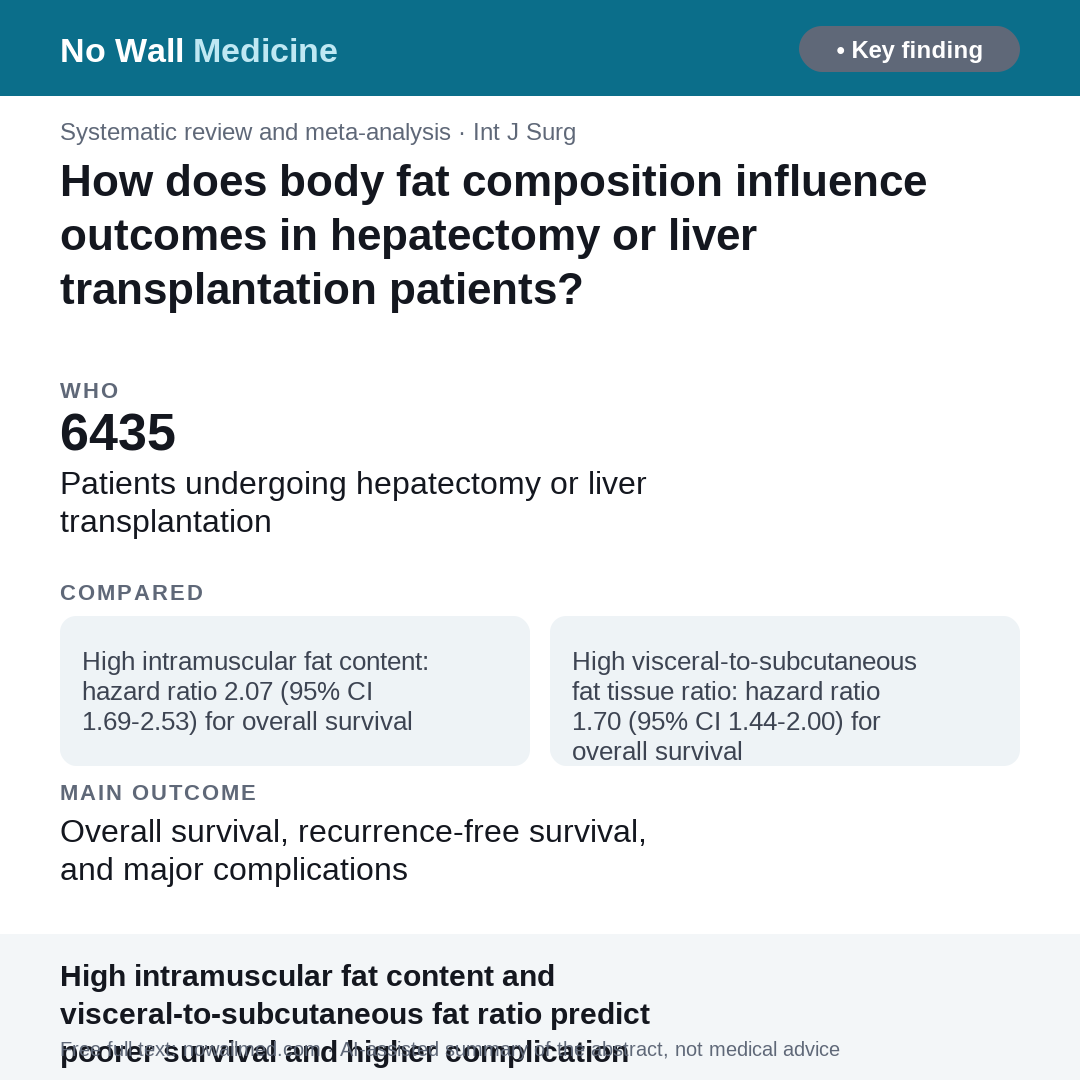
Influence of body fat tissue on outcomes in patients undergoing hepatectomy or liver transplantation: a systematic review and meta-analysis
Systematic review and meta-analysisHarm found
How does body fat composition influence outcomes in hepatectomy or liver transplantation patients?
Who
6435
Patients undergoing hepatectomy or liver transplantation
Compared
High intramuscular fat content: hazard ratio 2.07 (95% CI 1.69-2.53) for overall survival
High visceral-to-subcutaneous fat tissue ratio: hazard ratio 1.70 (95% CI 1.44-2.00) for overall survival
Main outcome
Overall survival, recurrence-free survival, and major complications
Result: hazard ratio 2.07 (95% CI 1.69-2.53) for overall survival
Bottom line: High intramuscular fat content and visceral-to-subcutaneous fat ratio predict poorer survival and higher complication risks after liver surgery.
Int J Surg · 2025-01-01Download image
Comparison of efficacy and safety between robotic-assisted versus laparoscopic surgery for locally advanced mid-low rectal cancer following neoadjuvant chemoradiotherapy: a systematic review and meta-analysis
Systematic review and meta-analysisMixed results
Is robotic-assisted surgery better than laparoscopic surgery for locally advanced mid-low rectal cancer?
Who
1079
Patients with locally advanced mid-low rectal cancer following neoadjuvant chemoradiotherapy
Compared
Robotic-assisted surgery: 0.4 cm shorter distance from anal verge
Laparoscopic surgery
Main outcome
Efficacy and safety of robotic versus laparoscopic surgery
Bottom line: Robotic surgery improves resection completeness and hospital stay but results in longer operative times compared to laparoscopic surgery.
Int J Surg · 2025-01-01Download image

Comparison of learning curves and related postoperative indicators between endoscopic and robotic thyroidectomy: a systematic review and meta-analysis
Meta-analysis of 33 studiesBenefit found
How do learning curves and perioperative outcomes compare between endoscopic and robotic thyroidectomy?
Who
Patients undergoing endoscopic or robotic thyroidectomy
Compared
Endoscopic thyroidectomy: drainage volume WMD=-17.56 [30.22, -4.49]
Robotic thyroidectomy: drainage volume WMD=-17.56 [30.22, -4.49]
Main outcome
Learning curve and perioperative outcomes
Result: incidence-rate ratios 0.64 [0.57-0.72] for number of surgeries
Bottom line: Robotic thyroidectomy has a smaller learning curve and better perioperative outcomes than endoscopic thyroidectomy after reaching the stable stage.
Int J Surg · 2025-01-01Download image

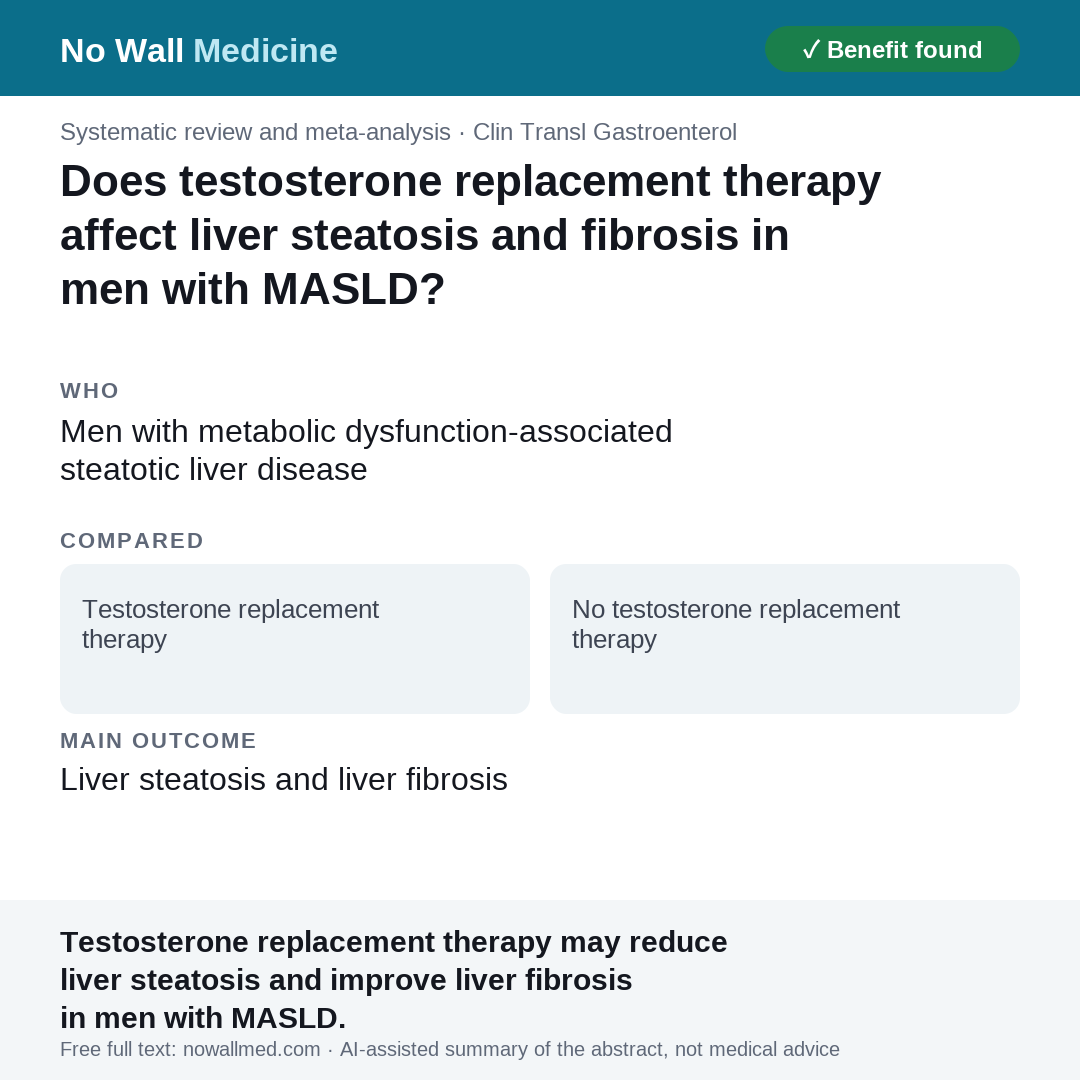
The Effects of Testosterone Replacement Therapy in Adult Men With Metabolic Dysfunction-Associated Steatotic Liver Disease: A Systematic Review and Meta-analysis
Systematic review and meta-analysisBenefit found
Does testosterone replacement therapy affect liver steatosis and fibrosis in men with MASLD?
Who
Men with metabolic dysfunction-associated steatotic liver disease
Compared
Testosterone replacement therapy
No testosterone replacement therapy
Main outcome
Liver steatosis and liver fibrosis
Bottom line: Testosterone replacement therapy may reduce liver steatosis and improve liver fibrosis in men with MASLD.
Limitation: Studies were heterogeneous in population characteristics, treatment modalities, endpoints, and follow-up.
Clin Transl Gastroenterol · 2025-01-01Download image
Effect of long and short half-life PDE5 inhibitors on HbA1c levels: a systematic review and meta-analysis
Systematic review and meta-analysisMixed results
Do long and short half-life PDE5 inhibitors affect HbA1c levels?
Who
1083
People with elevated haemoglobin A1c greater than 6%
Compared
-0.40%Long half-life PDE5 inhibitors ([-0.66, -0.14], p = 0.002, I2 = 82%, 7.70% baseline HbA1c)
Short half-life PDE5 inhibitors: +0.08% ([-0.16, 0.33], p = 0.51, I2 = 40%, 7.73% baseline HbA1c)
Main outcome
Haemoglobin A1c levels
Bottom line: Long half-life PDE5 inhibitors decreased HbA1c, while short half-life inhibitors showed no significant change in the overall analysis.
Limitation: Variable risk of biases, homogeneity, and sample sizes in the included studies.
eClinicalMedicine · 2024-12-31Download image

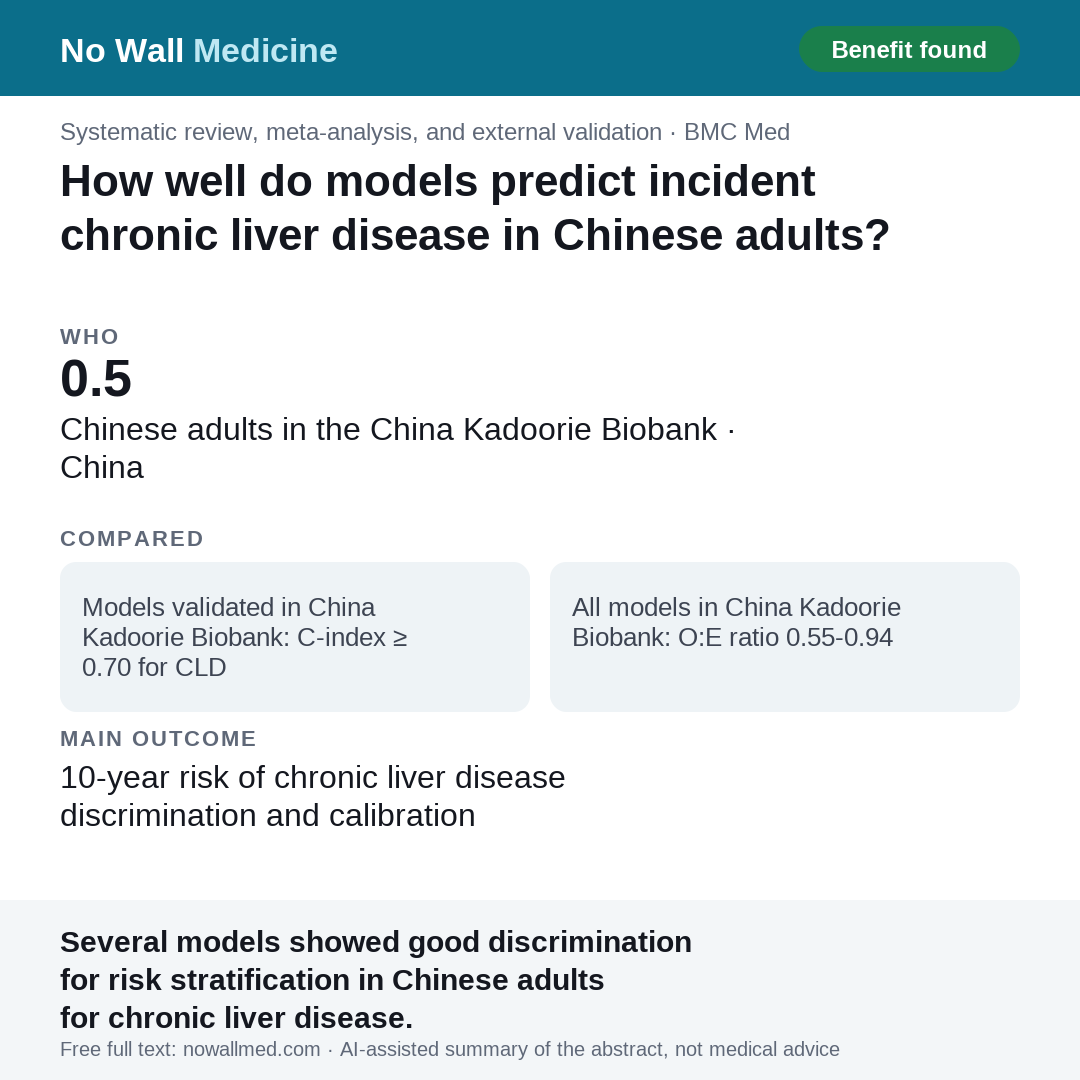
Comparison of models to predict incident chronic liver disease: a systematic review and external validation in Chinese adults
Systematic review, meta-analysis, and external validationBenefit found
How well do models predict incident chronic liver disease in Chinese adults?
Who
0.5
Chinese adults in the China Kadoorie Biobank · China
Compared
Models validated in China Kadoorie Biobank: C-index ≥ 0.70 for CLD
All models in China Kadoorie Biobank: O:E ratio 0.55-0.94
Main outcome
10-year risk of chronic liver disease discrimination and calibration
Bottom line: Several models showed good discrimination for risk stratification in Chinese adults for chronic liver disease.
Limitation: All models tended to overestimate the risk in the validation cohort.
BMC Med · 2024-12-31Download image
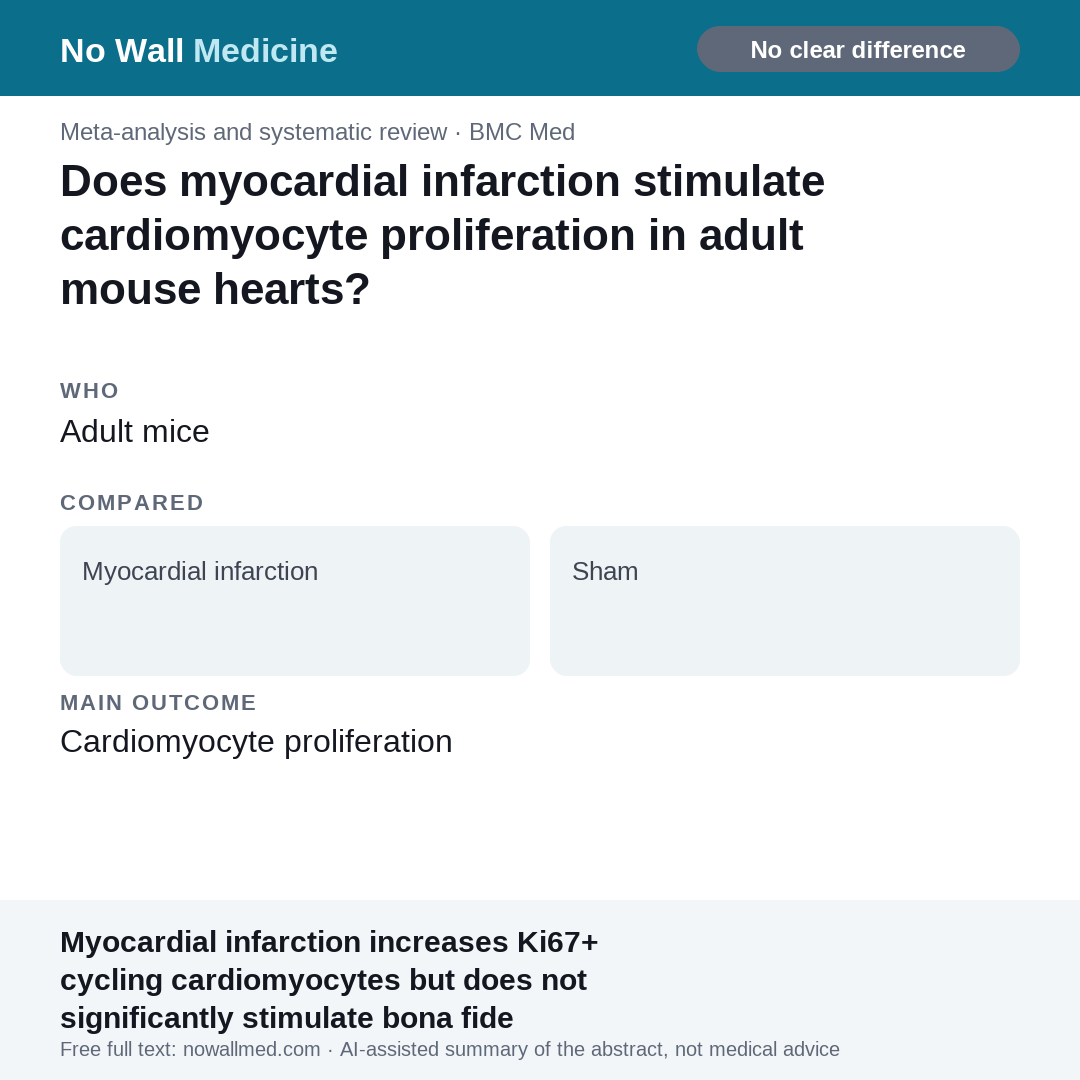
A meta-analysis and systematic review of myocardial infarction-induced cardiomyocyte proliferation in adult mouse heart
Meta-analysis and systematic reviewNo clear difference
Does myocardial infarction stimulate cardiomyocyte proliferation in adult mouse hearts?
Who
Adult mice
Compared
Myocardial infarction
Sham
Main outcome
Cardiomyocyte proliferation
Bottom line: Myocardial infarction increases Ki67+ cycling cardiomyocytes but does not significantly stimulate bona fide cardiomyocyte proliferation.
Limitation: Methodological shortages in several studies prevented demonstration of bona fide cardiomyocyte proliferation.
BMC Med · 2024-12-31Download image
What is the most effective antibiotic monotherapy for severe Pseudomonas aeruginosa infection? A systematic review and meta-analysis of randomized controlled trials
Systematic review and meta-analysis of randomized controlled trialsNo clear difference
What is the most effective antibiotic monotherapy for severe Pseudomonas aeruginosa infection?
Who
1681
Hospitalized adults with microbiologically confirmed severe Pseudomonas aeruginosa infections
Compared
All-cause mortality comparisons: no difference
Carbapenems versus piperacillin-tazobactam for pneumonia clinical failure: RR, 2.55 (95% CI, 1.29-5.03)
Carbapenems versus other comparators microbiological failure: RR, 1.24 (95% CI, 1.02-1.51)
Imipenem resistance versus comparators: RR, 2.33 (95% CI, 1.61-3.38)
Main outcome
30-day mortality
Bottom line: No difference in all-cause mortality was found for any direct antibiotic comparison in severe Pseudomonas aeruginosa infections.
Limitation: All subgroup analyses were underpowered due to the low number of studies reporting outcomes of interest.
Clin Microbiol Infect · 2024-12-31Download image

Unraveling the associations between voice pitch and major depressive disorder: a multisite genetic study
Two-stage meta-analytic case-control studyBenefit found
Are there associations between voice pitch and major depressive disorder?
Who
Chinese women with recurrent depression · Multisite
Compared
Major depressive disorder: AUC-ROC of 0.90 (sensitivity of 0.85 and specificity of 0.81)
Control
Main outcome
Voice pitch features and major depressive disorder classification
Bottom line: Vocal features like slower pitch change and lower pitch can effectively classify major depressive disorder.
Mol Psychiatry · 2024-12-31Download image

Comparison of Renal Adverse Events Between Intravitreal Anti-Vascular Endothelial Growth Factor Agents: A Meta-Analysis
Meta-analysis of 11 randomized controlled trialsNo clear difference
Do different anti-vascular endothelial growth factor agents increase renal adverse event risk?
Who
10031
Adult patients receiving intravitreal anti-vascular endothelial growth factor injections
Compared
Anti-vascular endothelial growth factor agents
Sham injections
Main outcome
Risk of acute kidney injury
Bottom line: Anti-vascular endothelial growth factor agents do not significantly increase acute kidney injury risk compared to sham injections.
Am J Ophthalmol · 2024-12-31Download image

Human Papilloma Virus Infection and Sinonasal Inverted Papilloma Recurrence: A Meta-Analysis
Meta-analysis of 25 case-control studiesBenefit found
Is human papillomavirus infection associated with sinonasal inverted papilloma recurrence?
Who
1116
Patients with benign sinonasal inverted papilloma tumors
Compared
Human papillomavirus positive: 103/267 recurrent
Human papillomavirus negative: 231/849 recurrent
Main outcome
Sinonasal inverted papilloma recurrence
Result: odds ratio 2.05 (95% CI 1.31-3.19)
Bottom line: Human papillomavirus infection may be associated with an increased risk of sinonasal inverted papilloma recurrence.
Limitation: Correlation was variable among recently published studies requiring additional investigation.
Otolaryngol Head Neck Surg · 2024-12-31Download image

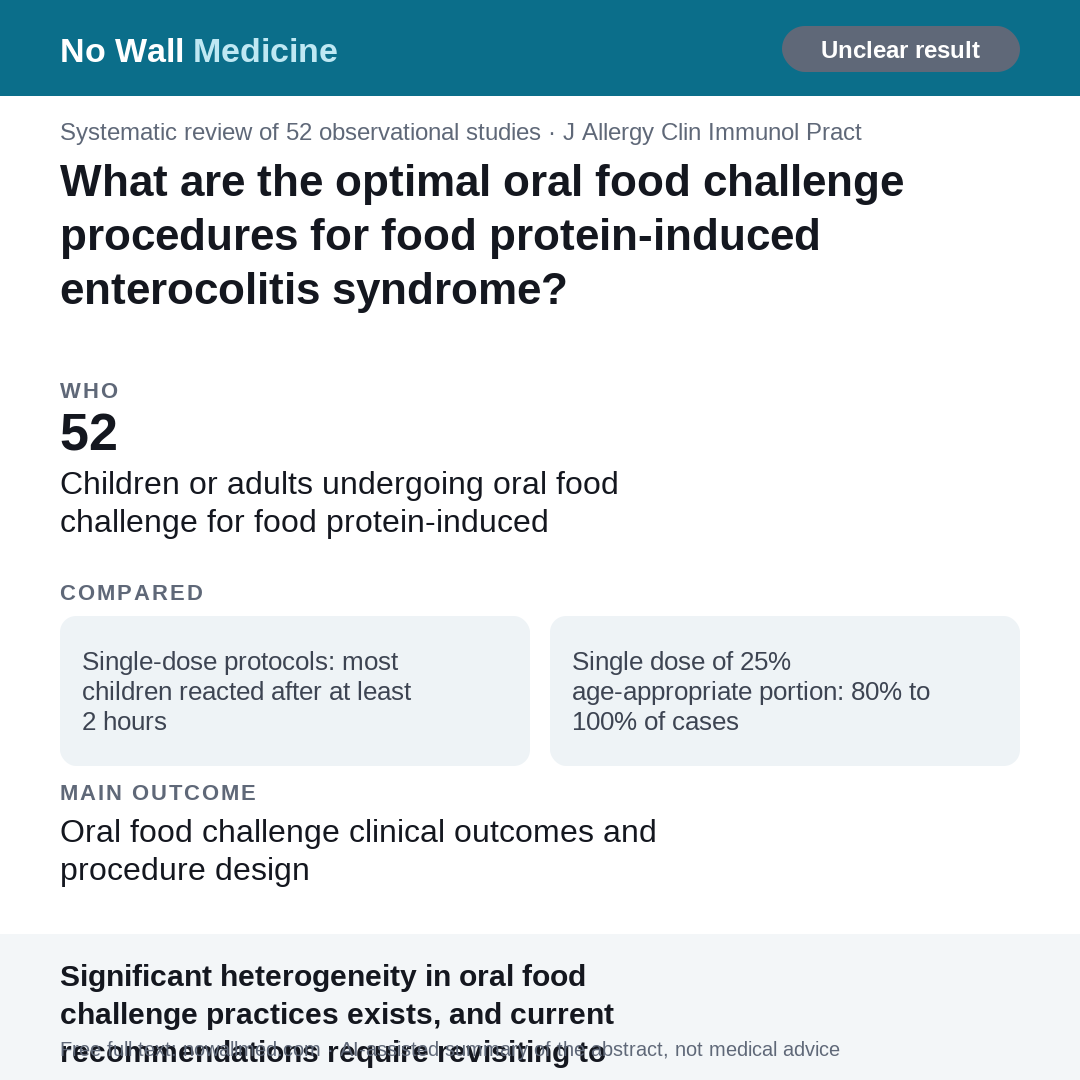
Oral Food Challenge Protocols in Food Protein-Induced Enterocolitis Syndrome: A Systematic Review
Systematic review of 52 observational studiesUnclear result
What are the optimal oral food challenge procedures for food protein-induced enterocolitis syndrome?
Who
52
Children or adults undergoing oral food challenge for food protein-induced enterocolitis syndrome
Compared
Single-dose protocols: most children reacted after at least 2 hours
Single dose of 25% age-appropriate portion: 80% to 100% of cases
Main outcome
Oral food challenge clinical outcomes and procedure design
Bottom line: Significant heterogeneity in oral food challenge practices exists, and current recommendations require revisiting to improve safety and accuracy.
Limitation: Methodological heterogeneity and insufficient outcome reporting prevented assessment of protocol characteristics associated with safer outcomes.
J Allergy Clin Immunol Pract · 2024-12-31Download image
Cost Outcomes of Virtual Surgical Planning in Head and Neck Reconstruction: A Systematic Review
Systematic reviewBenefit found
Is virtual surgical planning cost-beneficial in head and neck reconstruction?
Who
733
Patients undergoing head and neck reconstruction
Compared
Virtual surgical planning: 78% found cost savings or comparable to freehand surgery
Freehand surgery
Main outcome
Economic viability and cost outcomes
Bottom line: Virtual surgical planning is potentially cost-beneficial compared to traditional unplanned surgery.
Limitation: Substantial heterogeneity amongst methods and outcome measures impedes generalizability.
Head Neck · 2024-12-31Download image

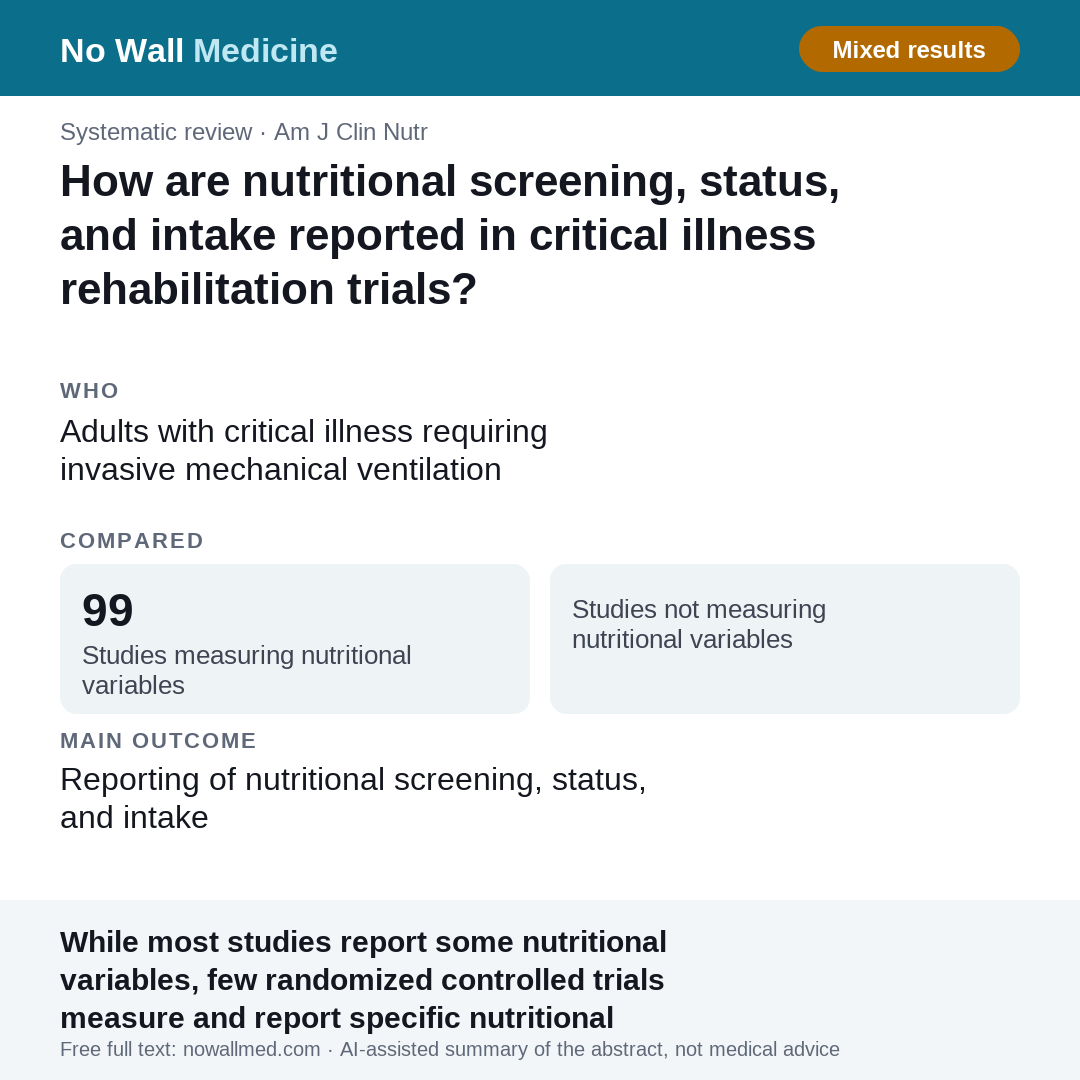
Reporting of nutritional screening, status, and intake in trials of nutritional and physical rehabilitation following critical illness: a systematic review
Systematic reviewMixed results
How are nutritional screening, status, and intake reported in critical illness rehabilitation trials?
Who
123
Adults with critical illness requiring invasive mechanical ventilation
Compared
99Studies measuring nutritional variables (80%)
Studies not measuring nutritional variables
Main outcome
Reporting of nutritional screening, status, and intake
Bottom line: While most studies report some nutritional variables, few randomized controlled trials measure and report specific nutritional factors comprehensively.
Limitation: Only 3 studies were considered to have low risk of bias in all categories.
Am J Clin Nutr · 2024-12-31Download image