Visual abstracts
New randomized trials and meta-analyses from leading journals at a glance: who was studied, what was compared, and what was found. Every paper is free to read in full.
All specialtiesCardiology 4763Oncology 4043Gastroenterology & Hepatology 1903Infectious Disease 3756Neurology 1872Psychiatry & Mental Health 2216Pulmonology 2044Critical Care 1319Endocrinology & Diabetes 2544Pediatrics 2889Surgery 2480Orthopedics & Sports Medicine 917Neurosurgery 525Cardiothoracic & Vascular Surgery 656Plastic & Reconstructive Surgery 574Nephrology 1107Rheumatology 810Hematology 1090Dermatology 611Ophthalmology 532Obstetrics & Gynecology 1645Public & Global Health 1037Radiology & Imaging 619Anesthesiology 958Urology 745ENT (Otolaryngology) 494Emergency Medicine 481Allergy & Immunology 309Geriatrics 972Family Medicine & Primary Care 534Medical Genetics & Genomics 659Pathology & Laboratory Medicine 156Physical Medicine & Rehabilitation 734Palliative Care 421Nutrition 1560Digital Health & AI 2137General Medicine 318
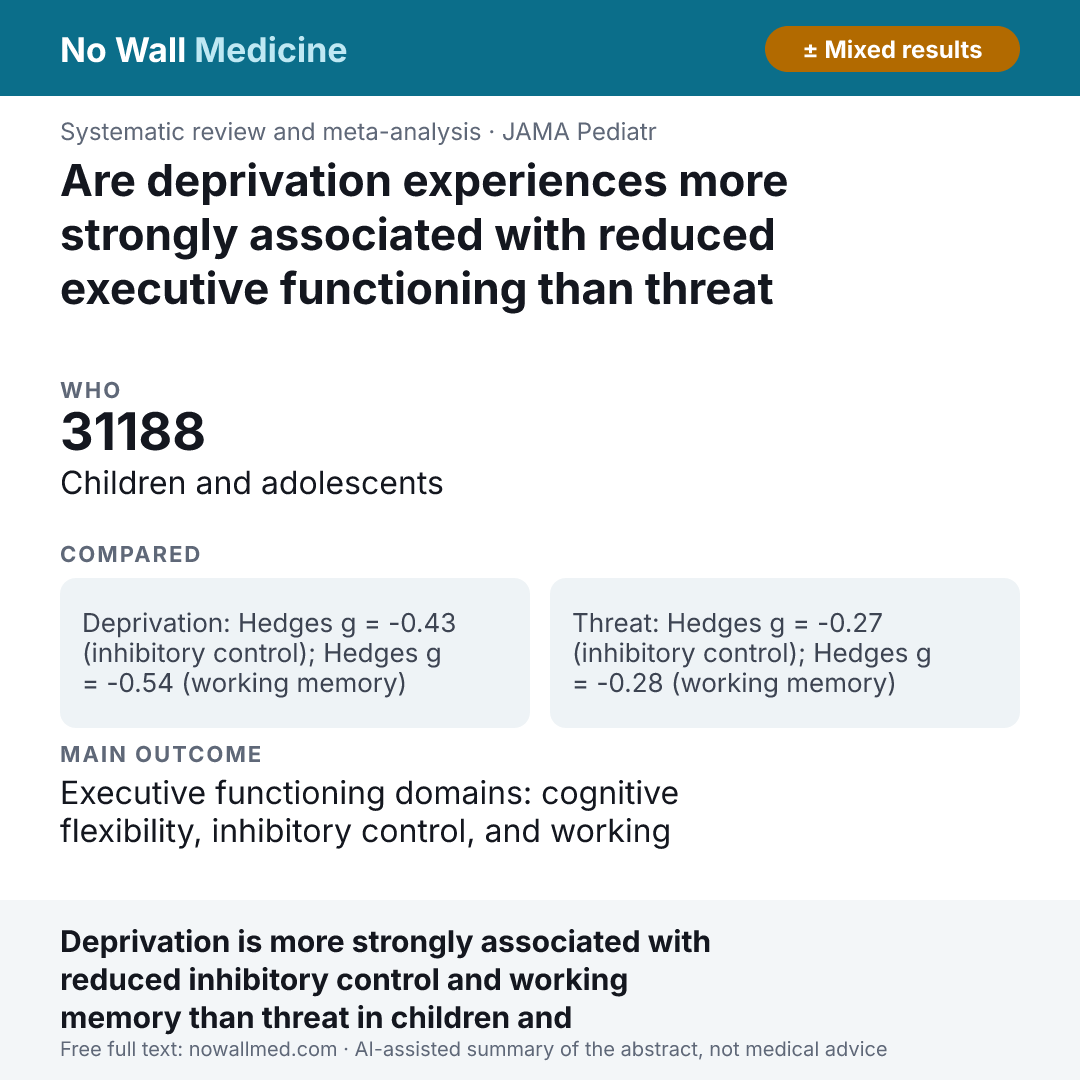
Associations of Early-Life Threat and Deprivation With Executive Functioning in Childhood and Adolescence: A Systematic Review and Meta-analysis
Systematic review and meta-analysisMixed results
Are deprivation experiences more strongly associated with reduced executive functioning than threat experiences?
Who
31188
Children and adolescents
Compared
Deprivation: Hedges g = -0.43 (inhibitory control); Hedges g = -0.54 (working memory)
Threat: Hedges g = -0.27 (inhibitory control); Hedges g = -0.28 (working memory)
Main outcome
Executive functioning domains: cognitive flexibility, inhibitory control, and working memory
Result: inhibitory control Hedges g = -0.43 (95% CI, -0.57 to -0.29) vs threat Hedges g = -0.27 (95% CI, -0.46 to -0.08)
Bottom line: Deprivation is more strongly associated with reduced inhibitory control and working memory than threat in children and adolescents.
JAMA Pediatr · 2021-11-01 · Save PNG
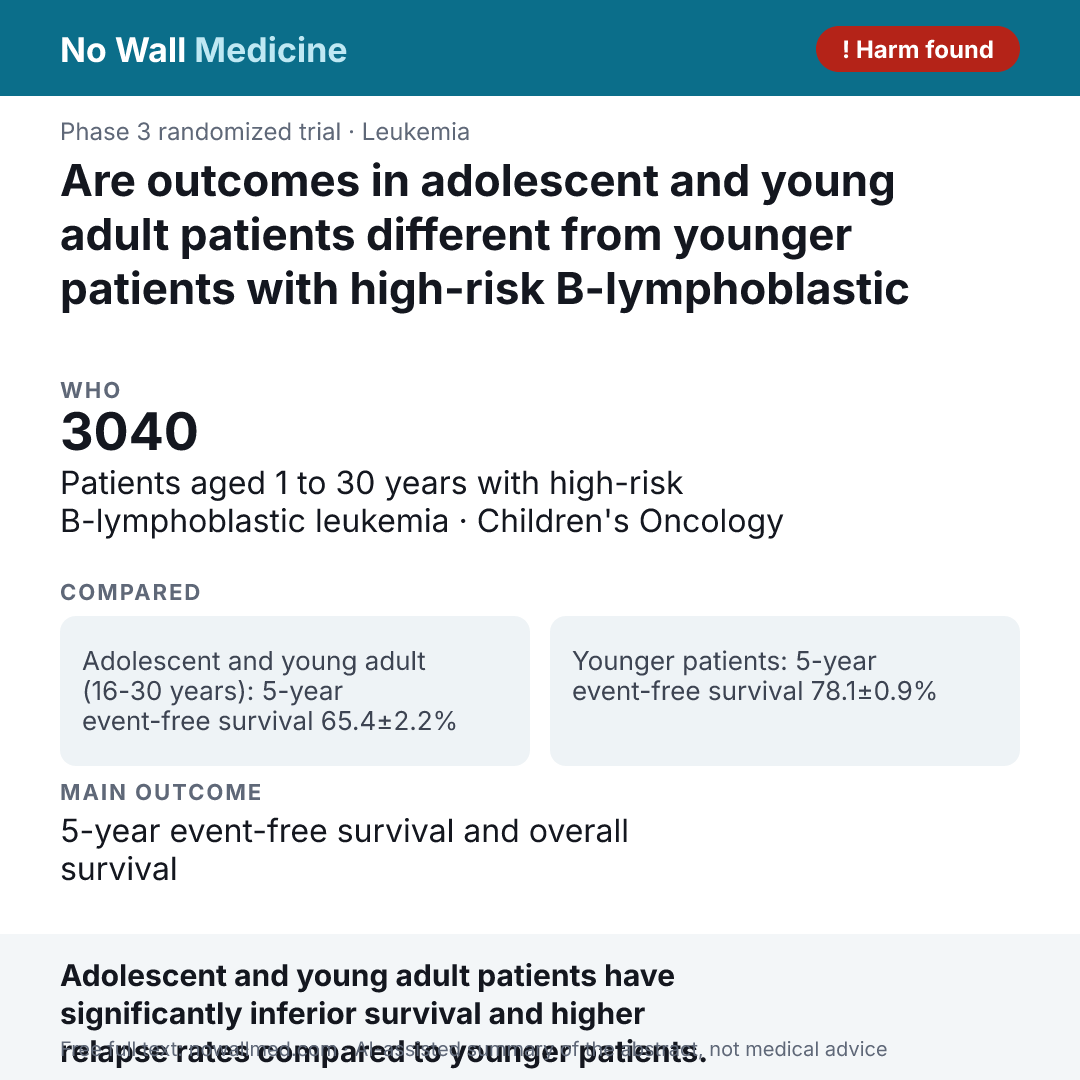
Outcomes in adolescent and young adult patients (16 to 30 years) compared to younger patients treated for high-risk B-lymphoblastic leukemia: report from Children's Oncology Group Study AALL0232
Phase 3 randomized trialHarm found
Are outcomes in adolescent and young adult patients different from younger patients with high-risk B-lymphoblastic leukemia?
Who
3040
Patients aged 1 to 30 years with high-risk B-lymphoblastic leukemia · Children's Oncology Group
Compared
Adolescent and young adult (16-30 years): 5-year event-free survival 65.4±2.2%
Younger patients: 5-year event-free survival 78.1±0.9%
Main outcome
5-year event-free survival and overall survival
Bottom line: Adolescent and young adult patients have significantly inferior survival and higher relapse rates compared to younger patients.
Leukemia · 2021-11-01 · Save PNG
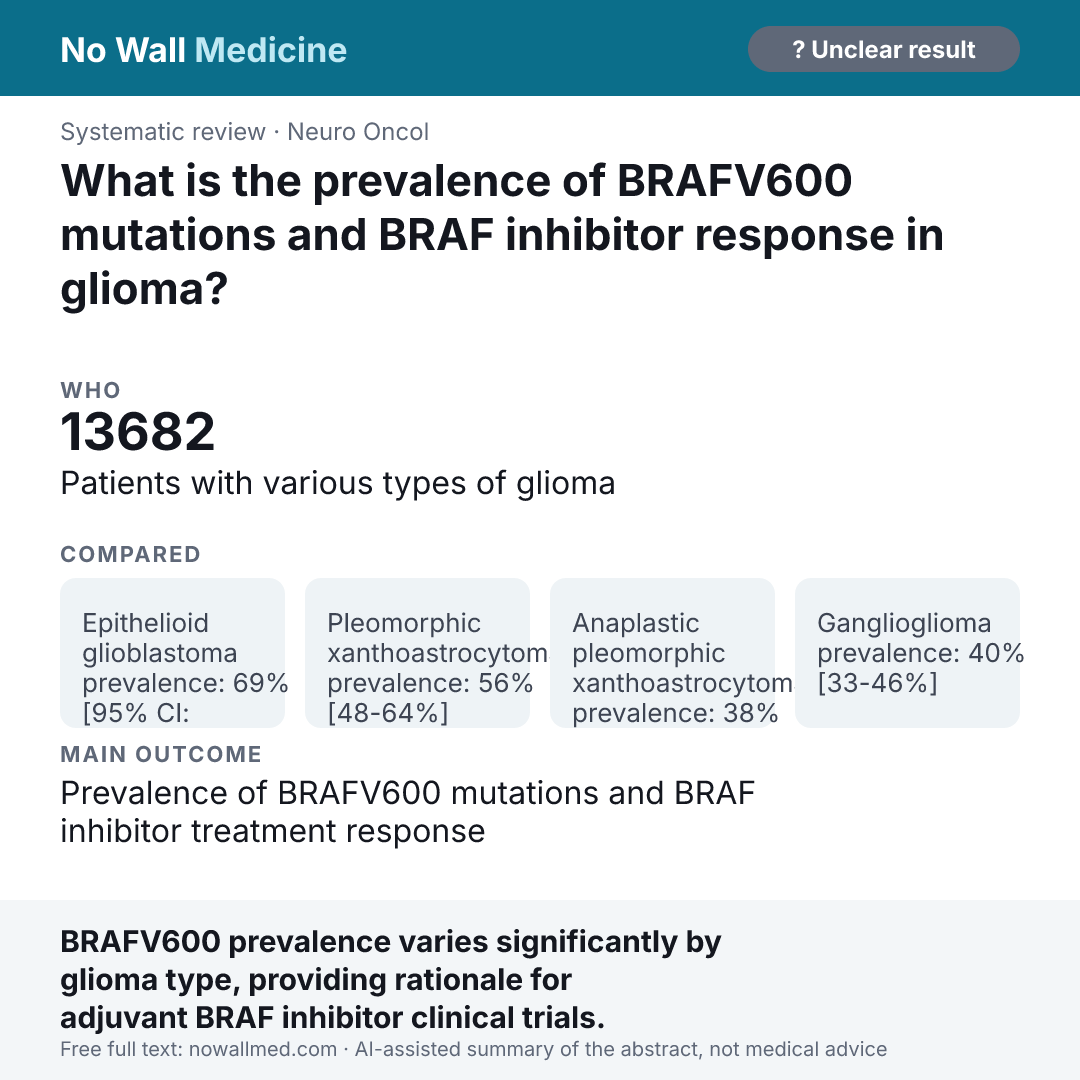
Prevalence of BRAFV600 in glioma and use of BRAF Inhibitors in patients with BRAFV600 mutation-positive glioma: systematic review
Systematic reviewUnclear result
What is the prevalence of BRAFV600 mutations and BRAF inhibitor response in glioma?
Who
13682
Patients with various types of glioma
Compared
Epithelioid glioblastoma prevalence: 69% [95% CI: 45-89%]
Pleomorphic xanthoastrocytoma prevalence: 56% [48-64%]
Anaplastic pleomorphic xanthoastrocytoma prevalence: 38% [23-54%]
Ganglioglioma prevalence: 40% [33-46%]
Main outcome
Prevalence of BRAFV600 mutations and BRAF inhibitor treatment response
Bottom line: BRAFV600 prevalence varies significantly by glioma type, providing rationale for adjuvant BRAF inhibitor clinical trials.
Neuro Oncol · 2021-11-01 · Save PNG
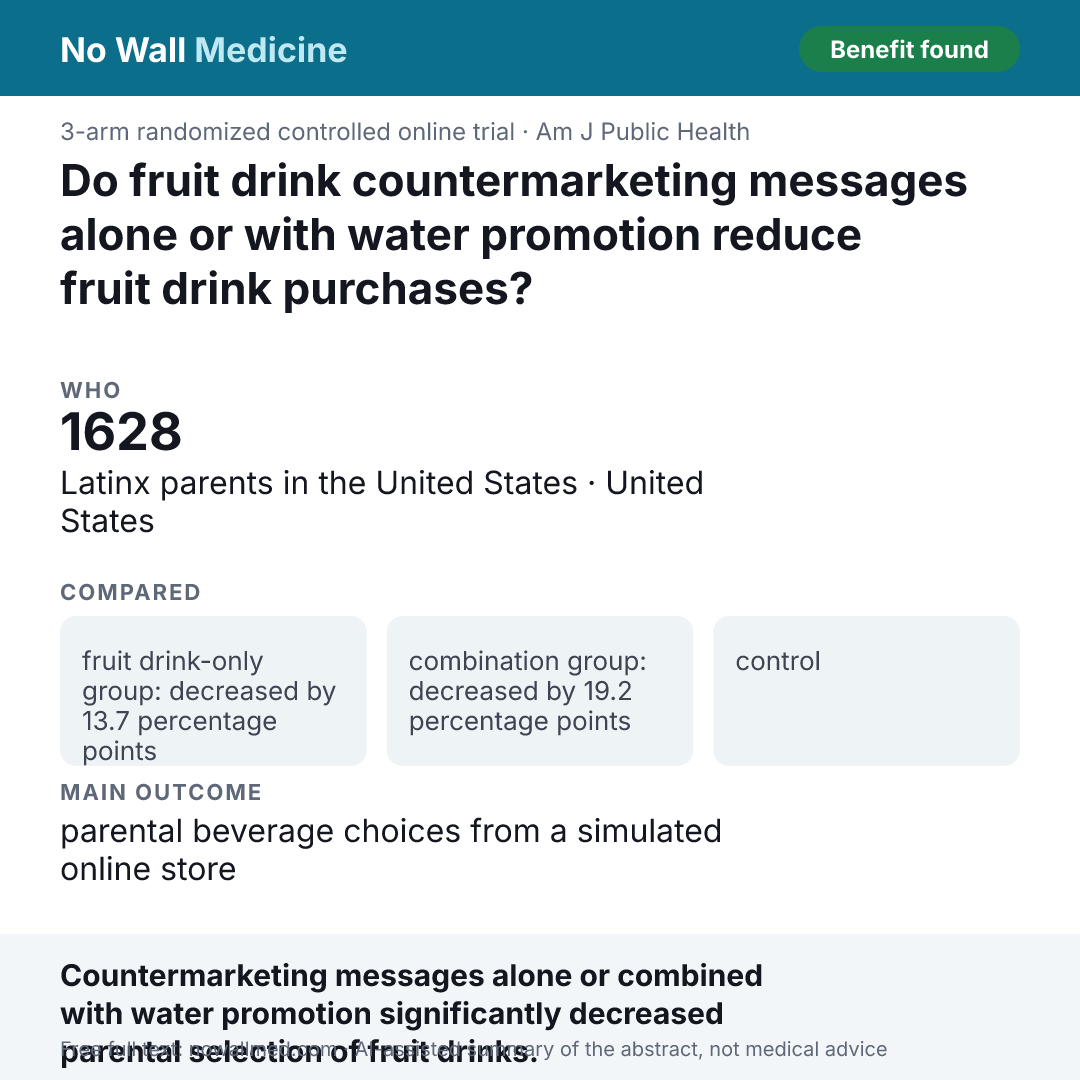
Countermarketing About Fruit Drinks, Alone or With Water Promotion: A 2019 Randomized Controlled Trial in Latinx Parents
3-arm randomized controlled online trialBenefit found
Do fruit drink countermarketing messages alone or with water promotion reduce fruit drink purchases?
Who
1628
Latinx parents in the United States · United States
Compared
fruit drink-only group: decreased by 13.7 percentage points
combination group: decreased by 19.2 percentage points
control
Main outcome
parental beverage choices from a simulated online store
Bottom line: Countermarketing messages alone or combined with water promotion significantly decreased parental selection of fruit drinks.
Am J Public Health · 2021-10-28 · Save PNG
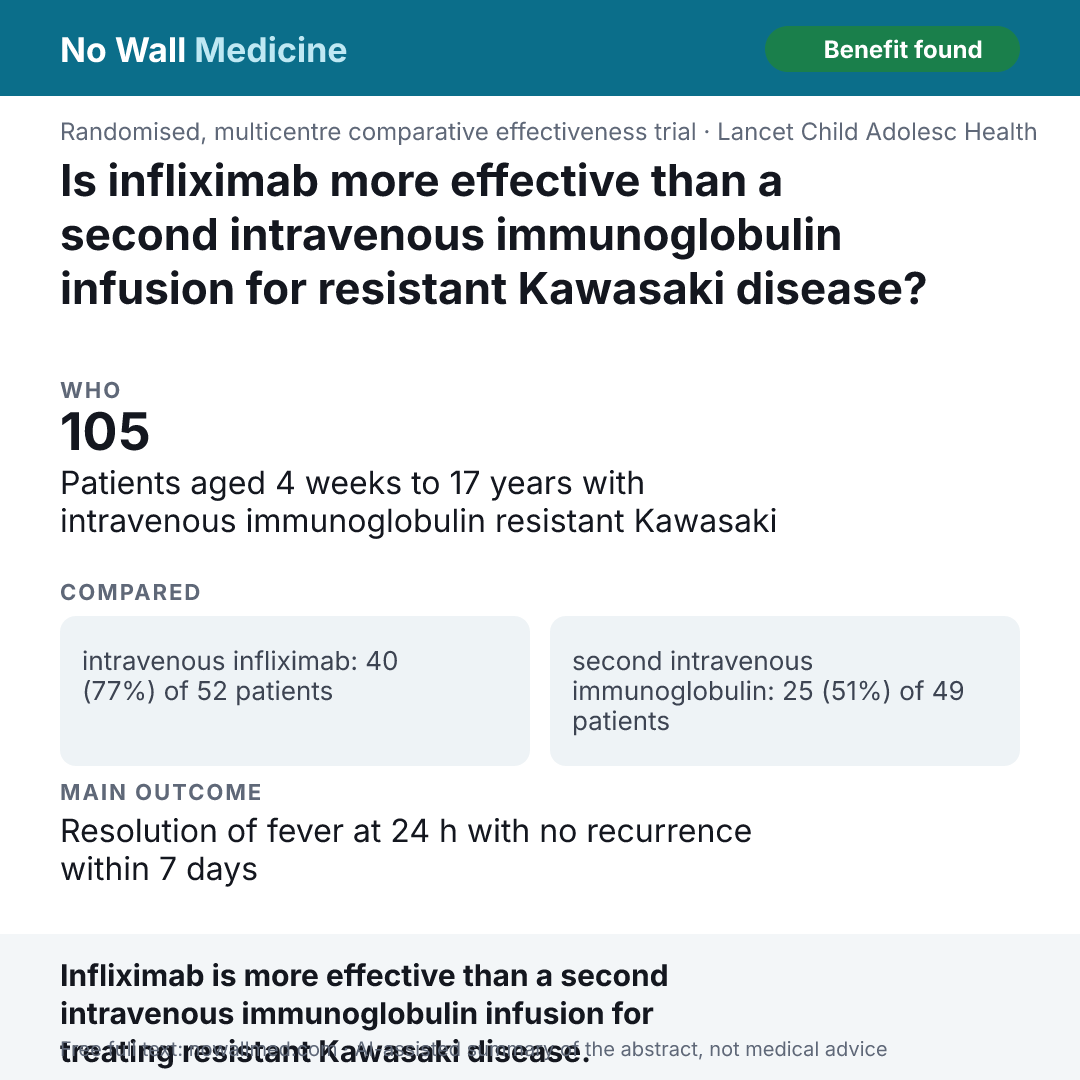
Infliximab versus second intravenous immunoglobulin for treatment of resistant Kawasaki disease in the USA (KIDCARE): a randomised, multicentre comparative effectiveness trial
Randomised, multicentre comparative effectiveness trialBenefit found
Is infliximab more effective than a second intravenous immunoglobulin infusion for resistant Kawasaki disease?
Who
105
Patients aged 4 weeks to 17 years with intravenous immunoglobulin resistant Kawasaki disease · 30 hospitals across the USA
Compared
intravenous infliximab: 40 (77%) of 52 patients
second intravenous immunoglobulin: 25 (51%) of 49 patients
Main outcome
Resolution of fever at 24 h with no recurrence within 7 days
Result: odds ratio 0·31, 95% CI 0·13-0·73
Bottom line: Infliximab is more effective than a second intravenous immunoglobulin infusion for treating resistant Kawasaki disease.
Funded by: Patient Centered Outcomes Research Institute
Lancet Child Adolesc Health · 2021-10-27 · Save PNG
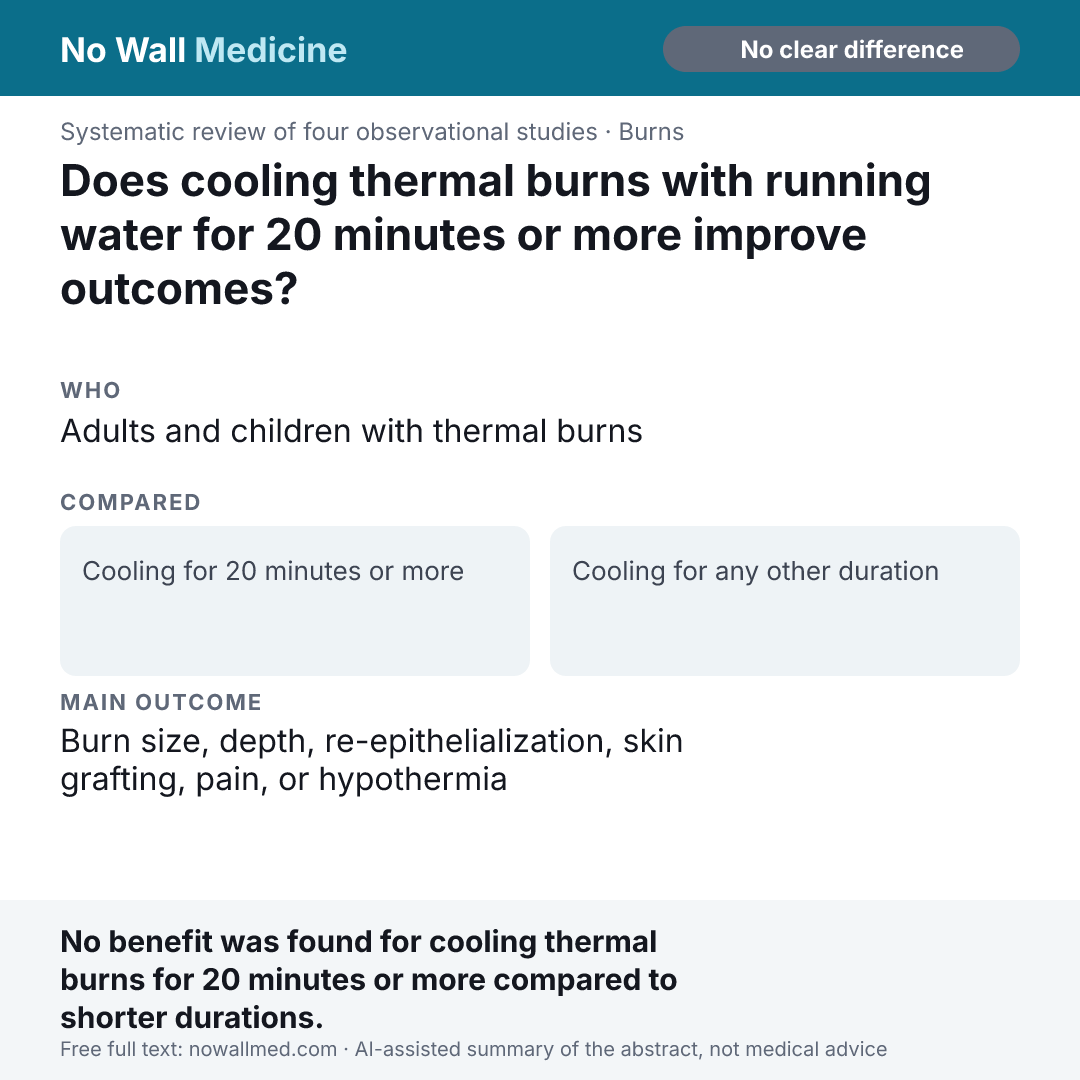
Duration of cooling with water for thermal burns as a first aid intervention: A systematic review
Systematic review of four observational studiesNo clear difference
Does cooling thermal burns with running water for 20 minutes or more improve outcomes?
Who
Adults and children with thermal burns
Compared
Cooling for 20 minutes or more
Cooling for any other duration
Main outcome
Burn size, depth, re-epithelialization, skin grafting, pain, or hypothermia
Bottom line: No benefit was found for cooling thermal burns for 20 minutes or more compared to shorter durations.
Limitation: Very low certainty due to study design, risk of bias, and indirectness.
Burns · 2021-10-26 · Save PNG
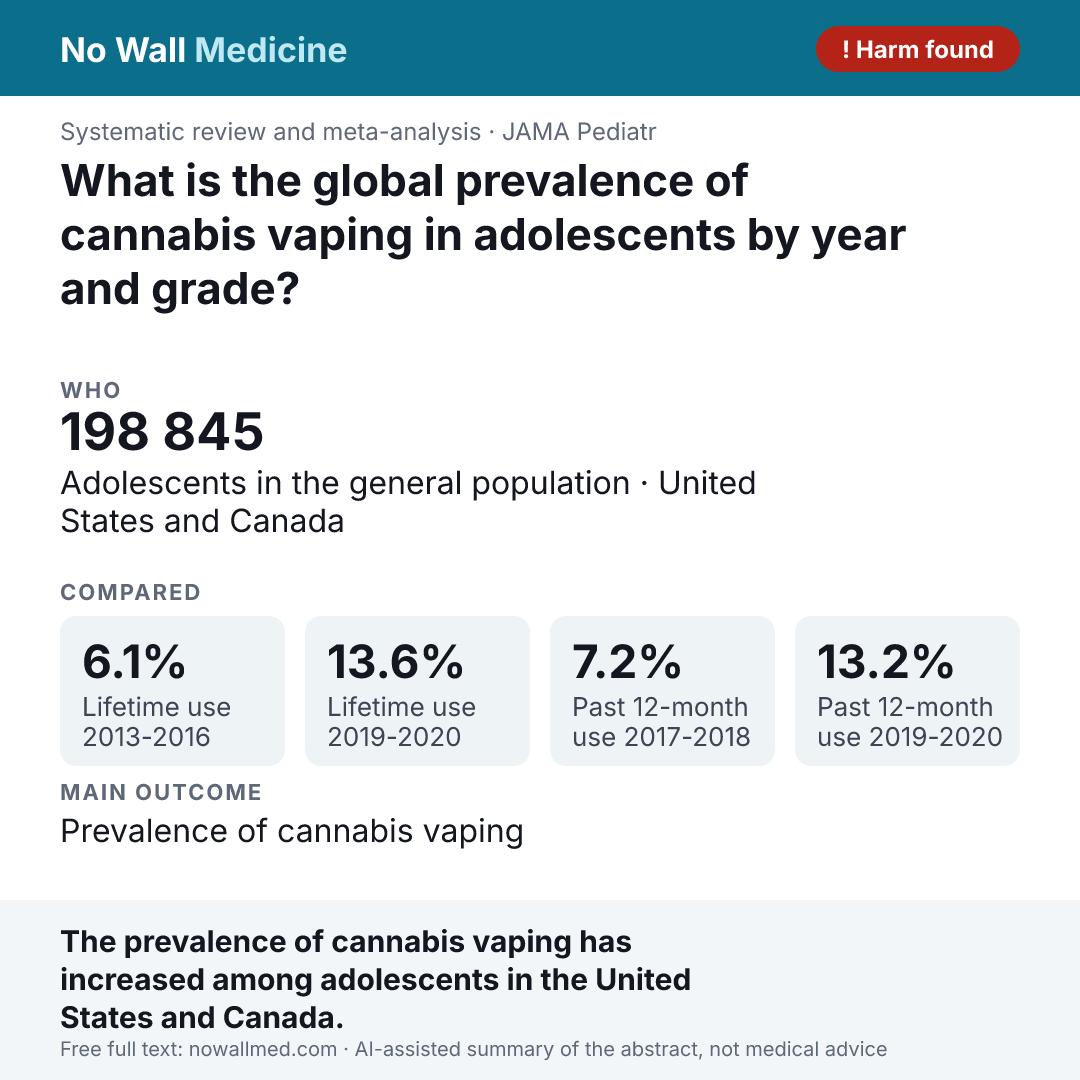
Prevalence of Adolescent Cannabis Vaping: A Systematic Review and Meta-analysis of US and Canadian Studies
Systematic review and meta-analysisHarm found
What is the global prevalence of cannabis vaping in adolescents by year and grade?
Who
198 845
Adolescents in the general population · United States and Canada
Compared
6.1%Lifetime use 2013-2016
13.6%Lifetime use 2019-2020
7.2%Past 12-month use 2017-2018
13.2%Past 12-month use 2019-2020
Main outcome
Prevalence of cannabis vaping
Bottom line: The prevalence of cannabis vaping has increased among adolescents in the United States and Canada.
Limitation: Heterogeneity across studies was large.
JAMA Pediatr · 2021-10-26 · Save PNG
Reducing surgical site infections in low-income and middle-income countries (FALCON): a pragmatic, multicentre, stratified, randomised controlled trial
2x2 factorial, randomised controlled trialNo clear difference
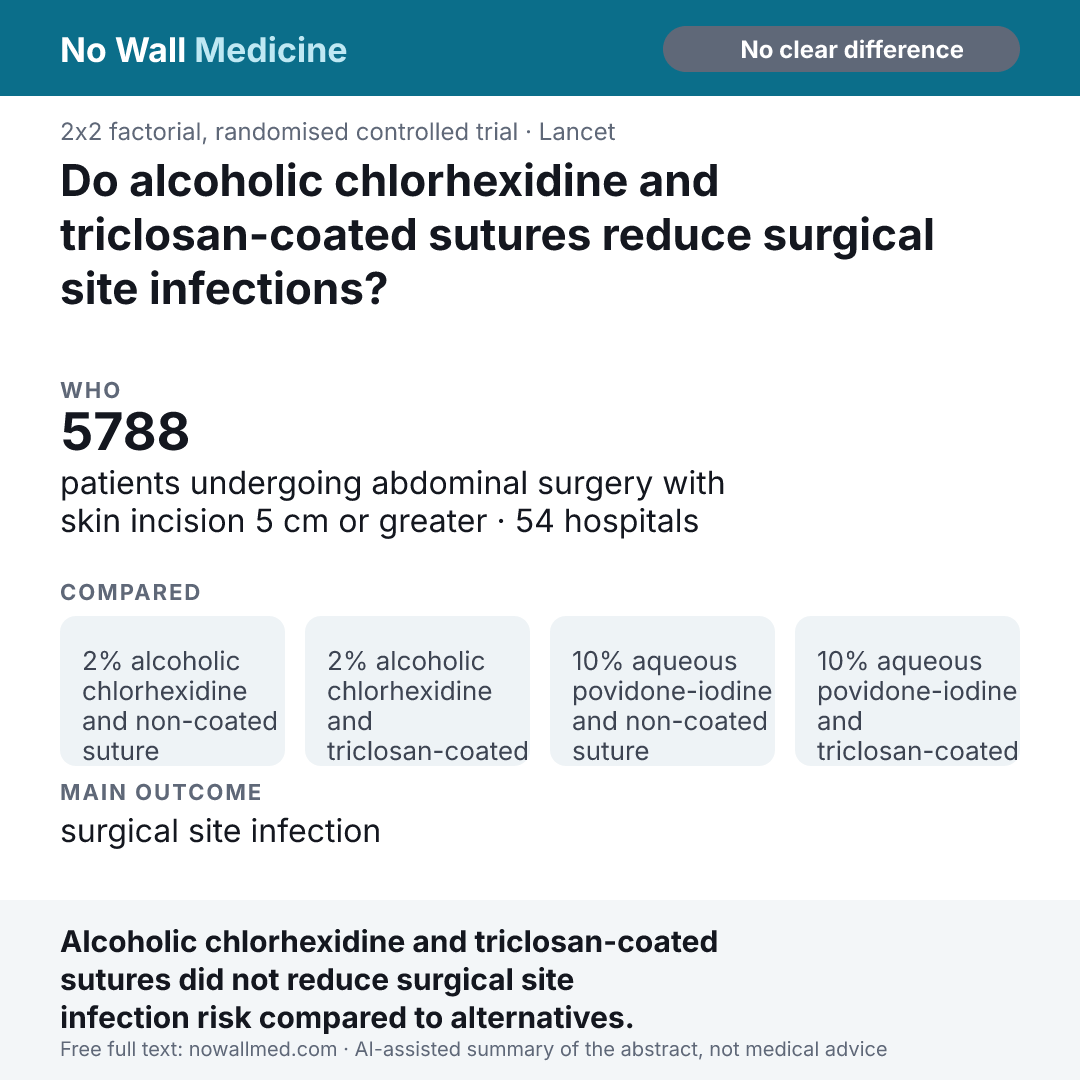
Do alcoholic chlorhexidine and triclosan-coated sutures reduce surgical site infections?
Who
5788
patients undergoing abdominal surgery with skin incision 5 cm or greater · 54 hospitals in seven countries
Compared
2% alcoholic chlorhexidine and non-coated suture
2% alcoholic chlorhexidine and triclosan-coated suture
10% aqueous povidone-iodine and non-coated suture
10% aqueous povidone-iodine and triclosan-coated suture
Main outcome
surgical site infection
Bottom line: Alcoholic chlorhexidine and triclosan-coated sutures did not reduce surgical site infection risk compared to alternatives.
Funded by: National Institute for Health Research Global Health Research Unit Grant
Lancet · 2021-10-25 · Save PNG
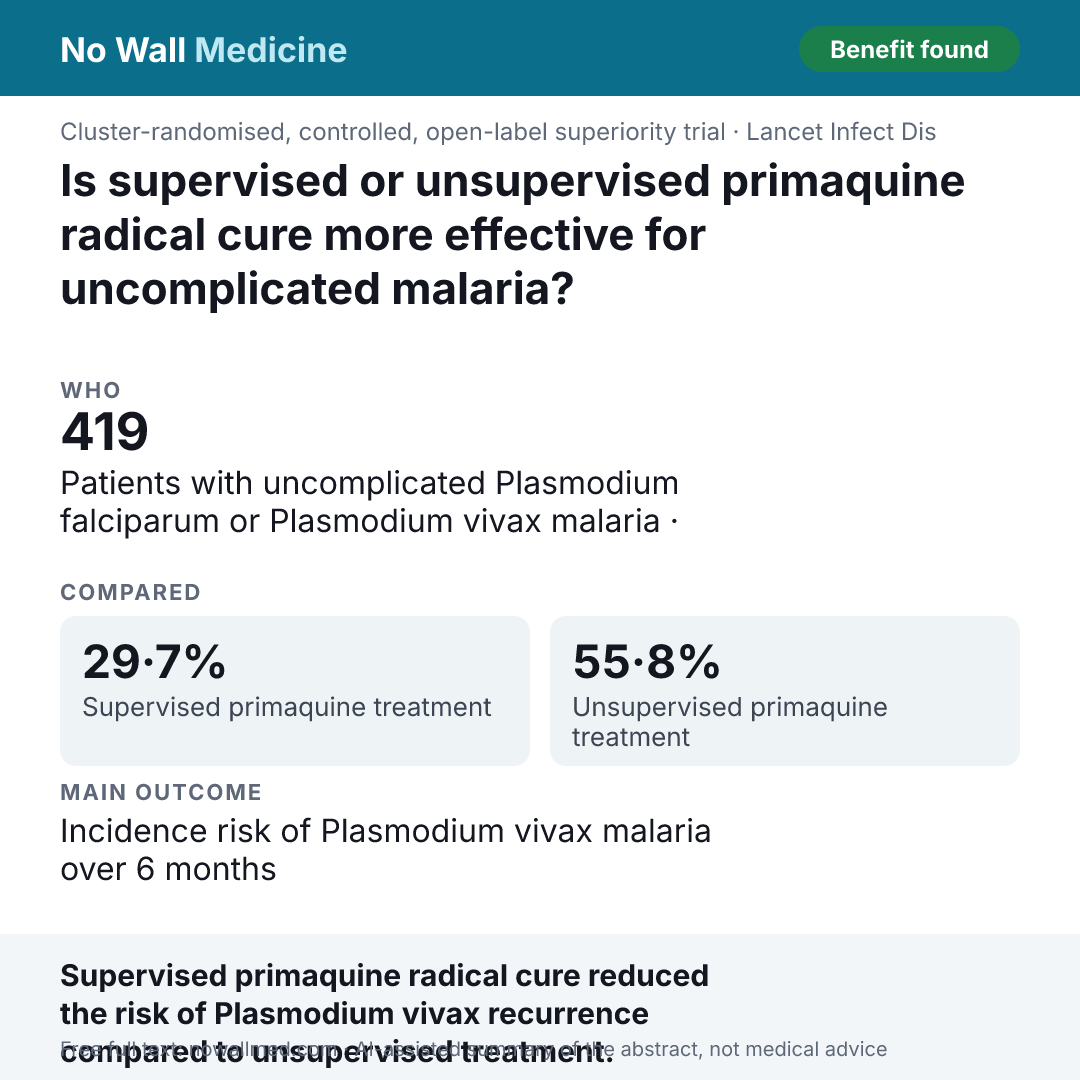
Supervised versus unsupervised primaquine radical cure for the treatment of falciparum and vivax malaria in Papua, Indonesia: a cluster-randomised, controlled, open-label superiority trial
Cluster-randomised, controlled, open-label superiority trialBenefit found
Is supervised or unsupervised primaquine radical cure more effective for uncomplicated malaria?
Who
419
Patients with uncomplicated Plasmodium falciparum or Plasmodium vivax malaria · Papua, Indonesia
Compared
29·7%Supervised primaquine treatment (95% CI 16·4-49·9)
55·8%Unsupervised primaquine treatment (32·3-81·8)
Main outcome
Incidence risk of Plasmodium vivax malaria over 6 months
Result: hazard ratio 0·23 (95% CI 0·07-0·76)
Bottom line: Supervised primaquine radical cure reduced the risk of Plasmodium vivax recurrence compared to unsupervised treatment.
Funded by: Bill & Melinda Gates Foundation, Wellcome Trust, Australian Government
Lancet Infect Dis · 2021-10-25 · Save PNG
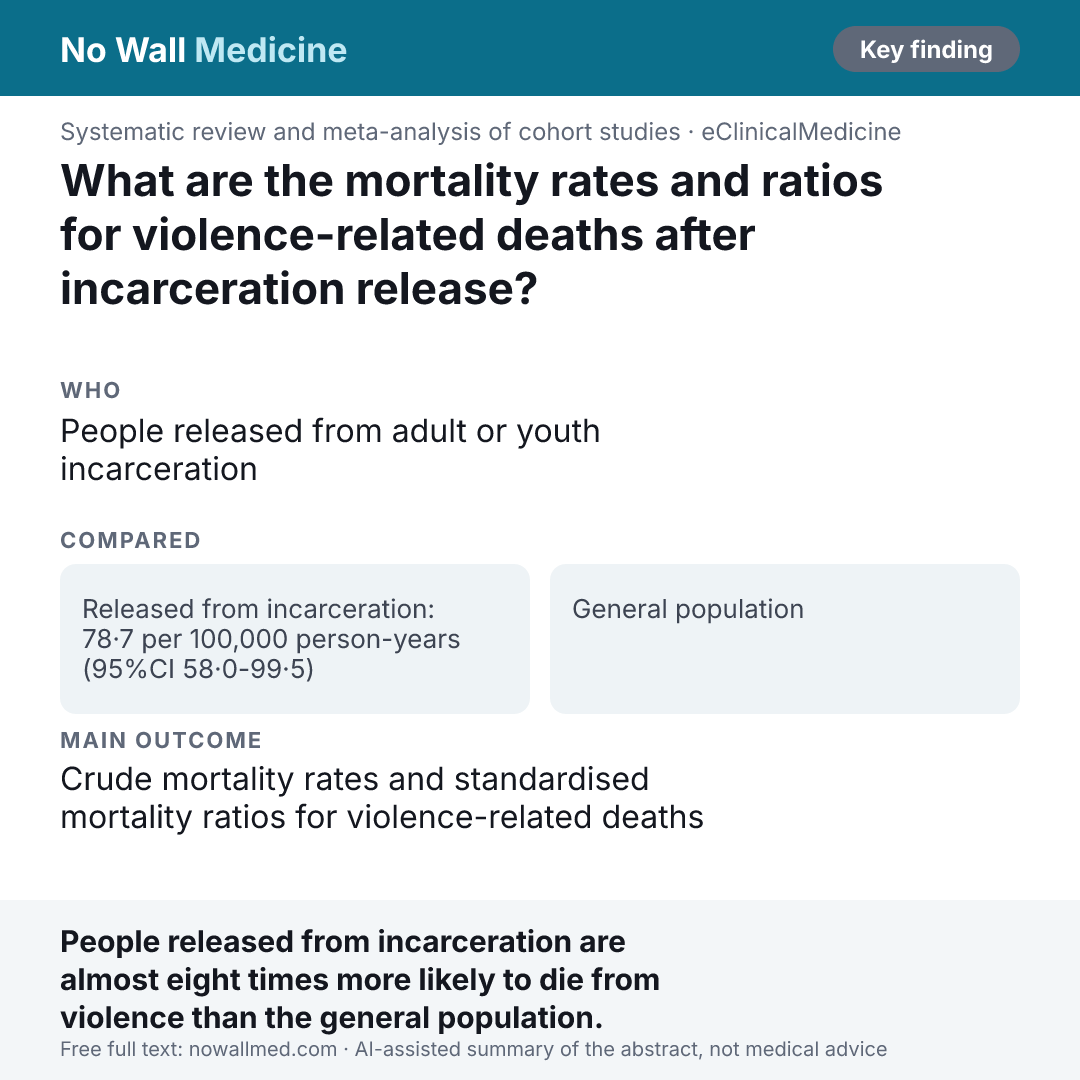
Violence-related deaths among people released from incarceration: systematic review and meta-analysis of cohort studies
Systematic review and meta-analysis of cohort studiesKey finding
What are the mortality rates and ratios for violence-related deaths after incarceration release?
Who
People released from adult or youth incarceration
Compared
Released from incarceration: 78·7 per 100,000 person-years (95%CI 58·0-99·5)
General population
Main outcome
Crude mortality rates and standardised mortality ratios for violence-related deaths
Result: standardised mortality ratio 7·6 (95%CI 2·4-12·8)
Bottom line: People released from incarceration are almost eight times more likely to die from violence than the general population.
eClinicalMedicine · 2021-10-24 · Save PNG
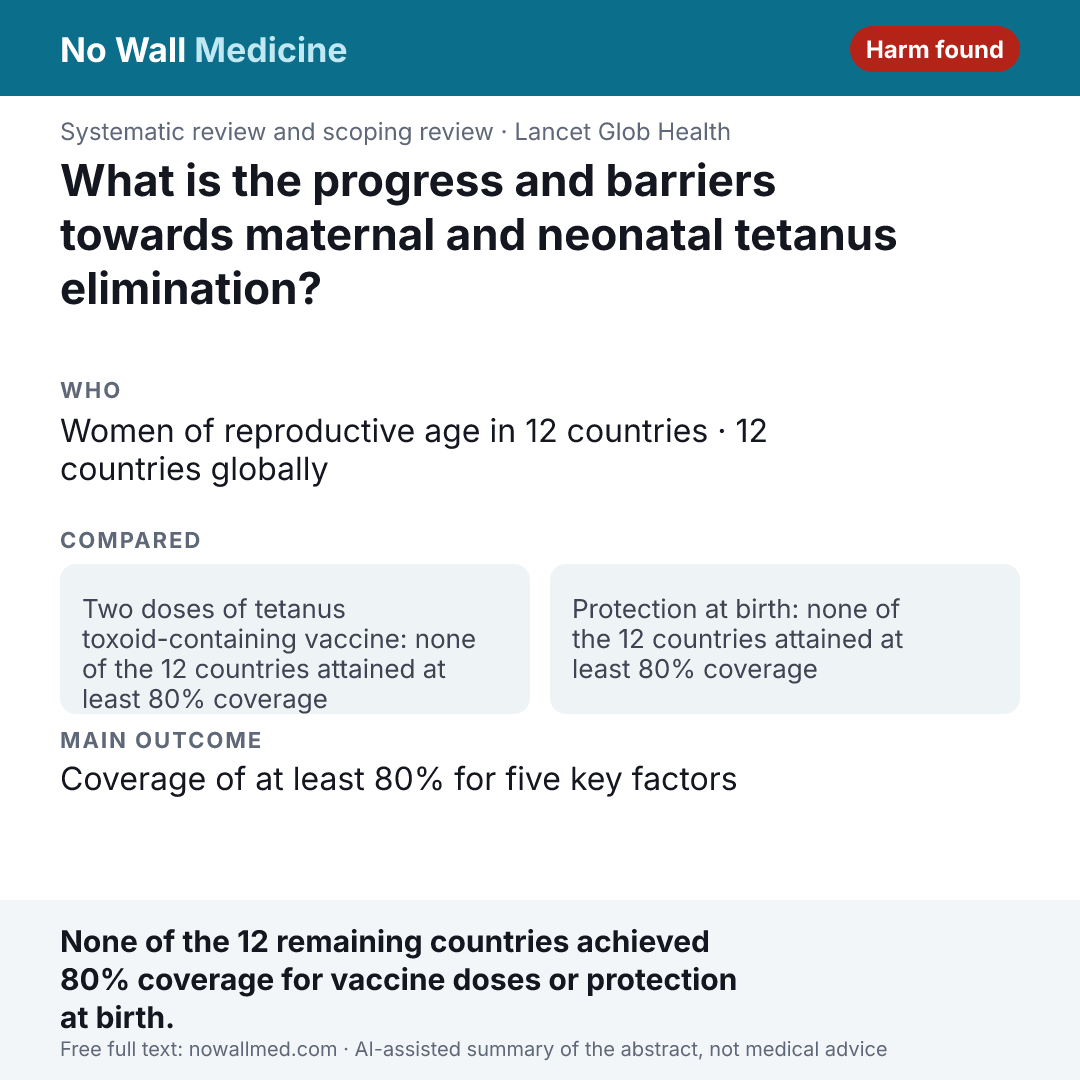
Progress and barriers towards maternal and neonatal tetanus elimination in the remaining 12 countries: a systematic review
Systematic review and scoping reviewHarm found
What is the progress and barriers towards maternal and neonatal tetanus elimination?
Who
Women of reproductive age in 12 countries · 12 countries globally
Compared
Two doses of tetanus toxoid-containing vaccine: none of the 12 countries attained at least 80% coverage
Protection at birth: none of the 12 countries attained at least 80% coverage
Main outcome
Coverage of at least 80% for five key factors
Bottom line: None of the 12 remaining countries achieved 80% coverage for vaccine doses or protection at birth.
Lancet Glob Health · 2021-10-23 · Save PNG
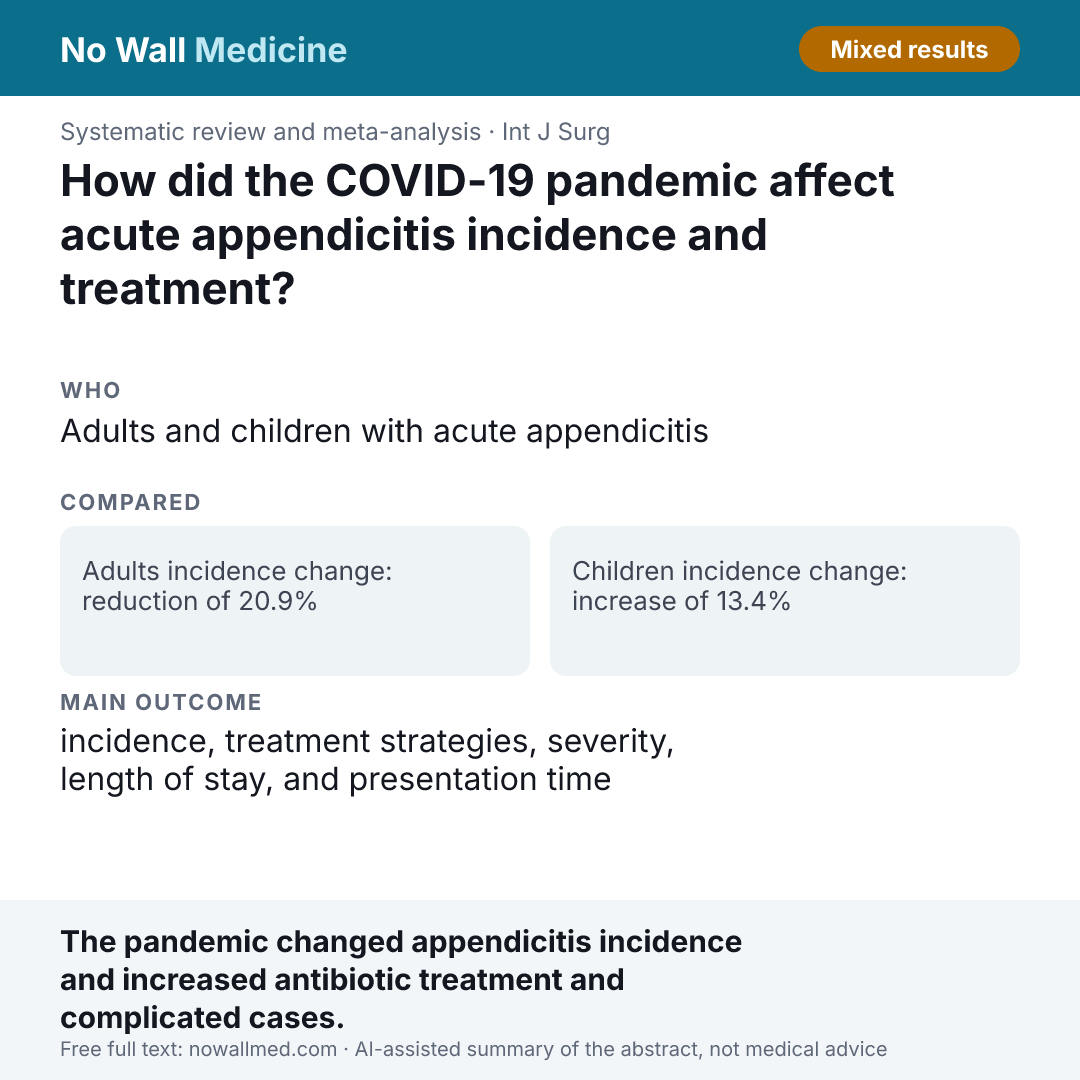
Changes in appendicitis treatment during the COVID-19 pandemic - A systematic review and meta-analysis
Systematic review and meta-analysisMixed results
How did the COVID-19 pandemic affect acute appendicitis incidence and treatment?
Who
Adults and children with acute appendicitis
Compared
Adults incidence change: reduction of 20.9%
Children incidence change: increase of 13.4%
Main outcome
incidence, treatment strategies, severity, length of stay, and presentation time
Bottom line: The pandemic changed appendicitis incidence and increased antibiotic treatment and complicated cases.
Int J Surg · 2021-10-23 · Save PNG
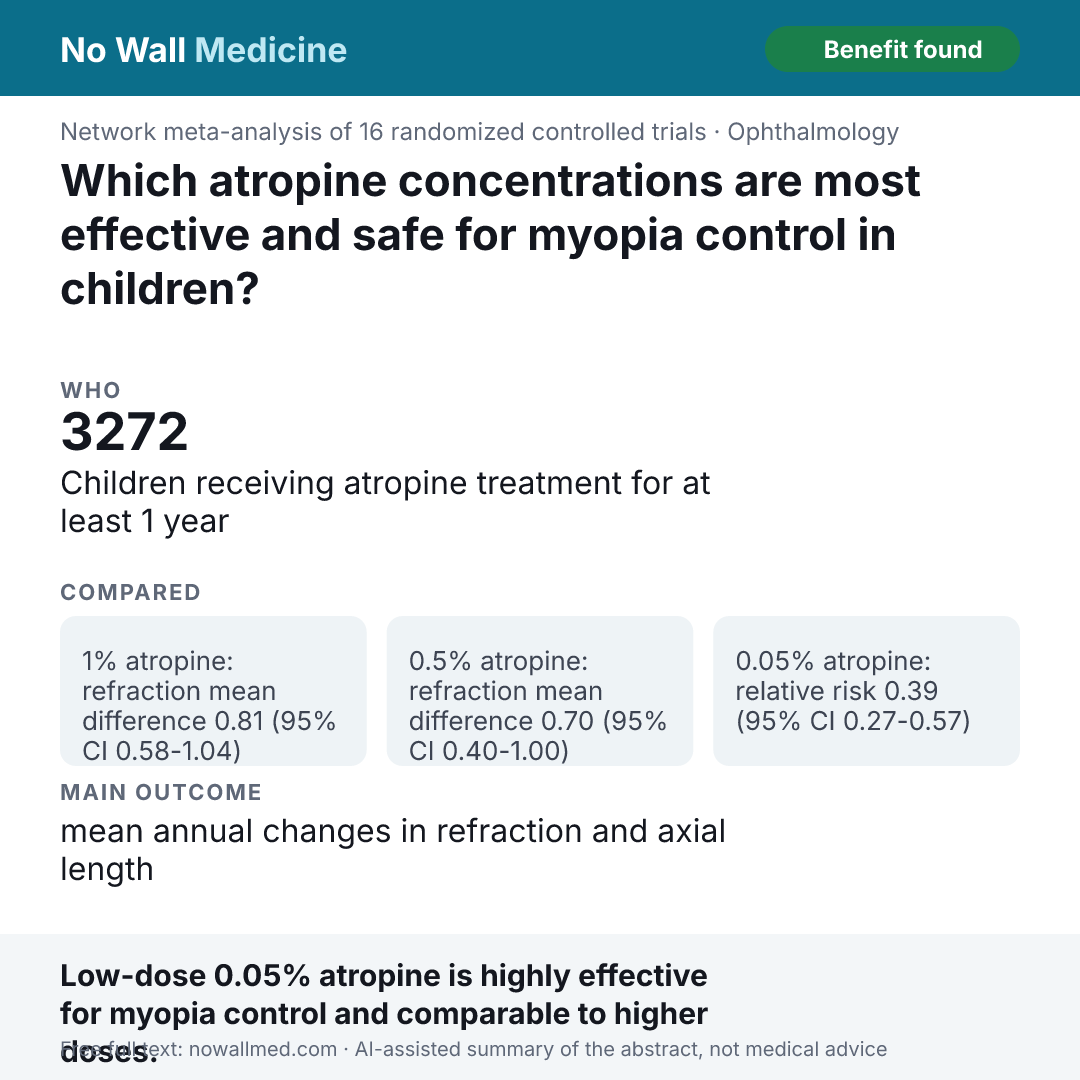
Efficacy and Safety of 8 Atropine Concentrations for Myopia Control in Children: A Network Meta-Analysis
Network meta-analysis of 16 randomized controlled trialsBenefit found
Which atropine concentrations are most effective and safe for myopia control in children?
Who
3272
Children receiving atropine treatment for at least 1 year
Compared
1% atropine: refraction mean difference 0.81 (95% CI 0.58-1.04)
0.5% atropine: refraction mean difference 0.70 (95% CI 0.40-1.00)
0.05% atropine: relative risk 0.39 (95% CI 0.27-0.57)
Main outcome
mean annual changes in refraction and axial length
Result: relative risk 0.39 (95% CI 0.27-0.57) for 0.05% atropine
Bottom line: Low-dose 0.05% atropine is highly effective for myopia control and comparable to higher doses.
Ophthalmology · 2021-10-22 · Save PNG
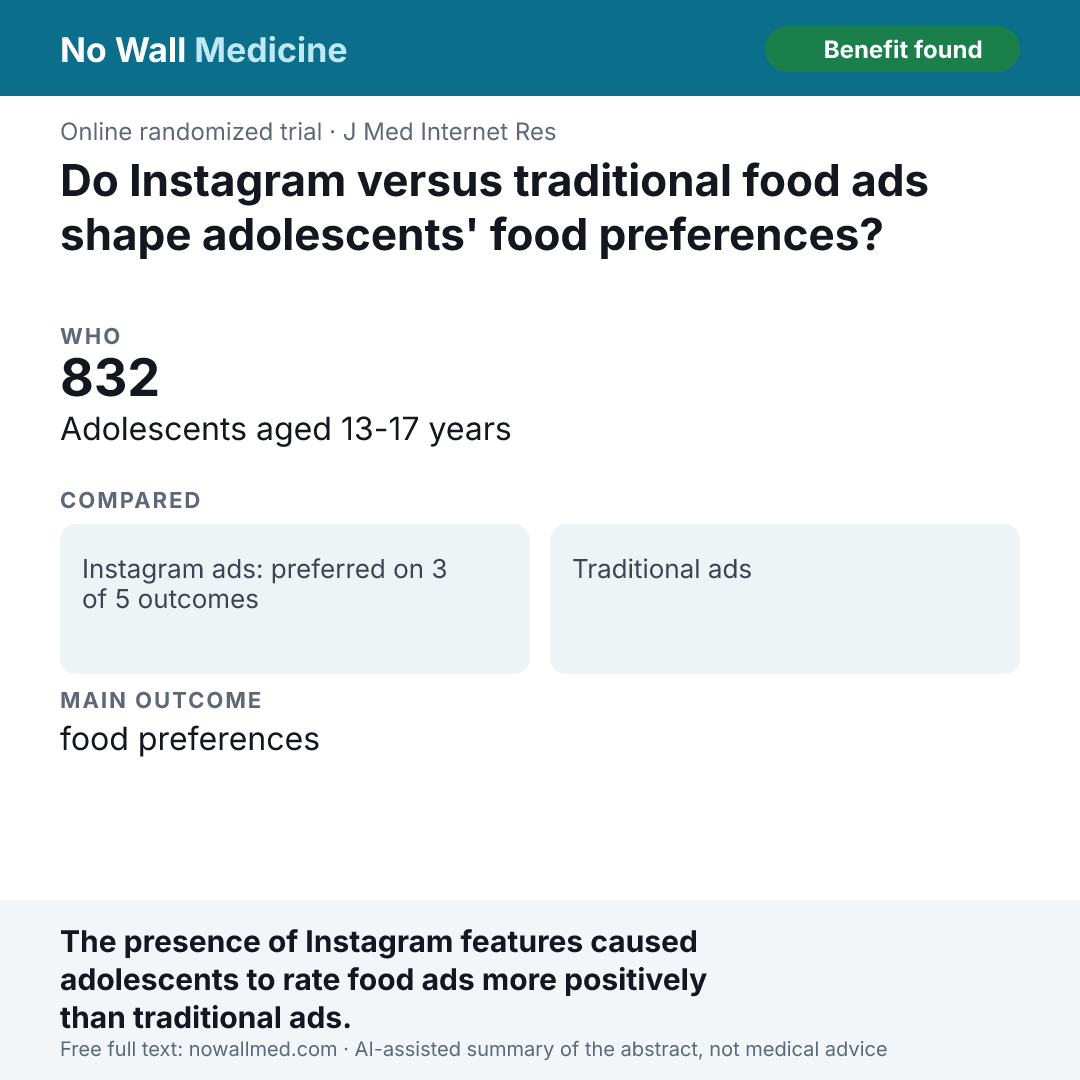
How Food Marketing on Instagram Shapes Adolescents' Food Preferences: Online Randomized Trial
Online randomized trialBenefit found
Do Instagram versus traditional food ads shape adolescents' food preferences?
Who
832
Adolescents aged 13-17 years
Compared
Instagram ads: preferred on 3 of 5 outcomes
Traditional ads
Main outcome
food preferences
Bottom line: The presence of Instagram features caused adolescents to rate food ads more positively than traditional ads.
J Med Internet Res · 2021-10-22 · Save PNG
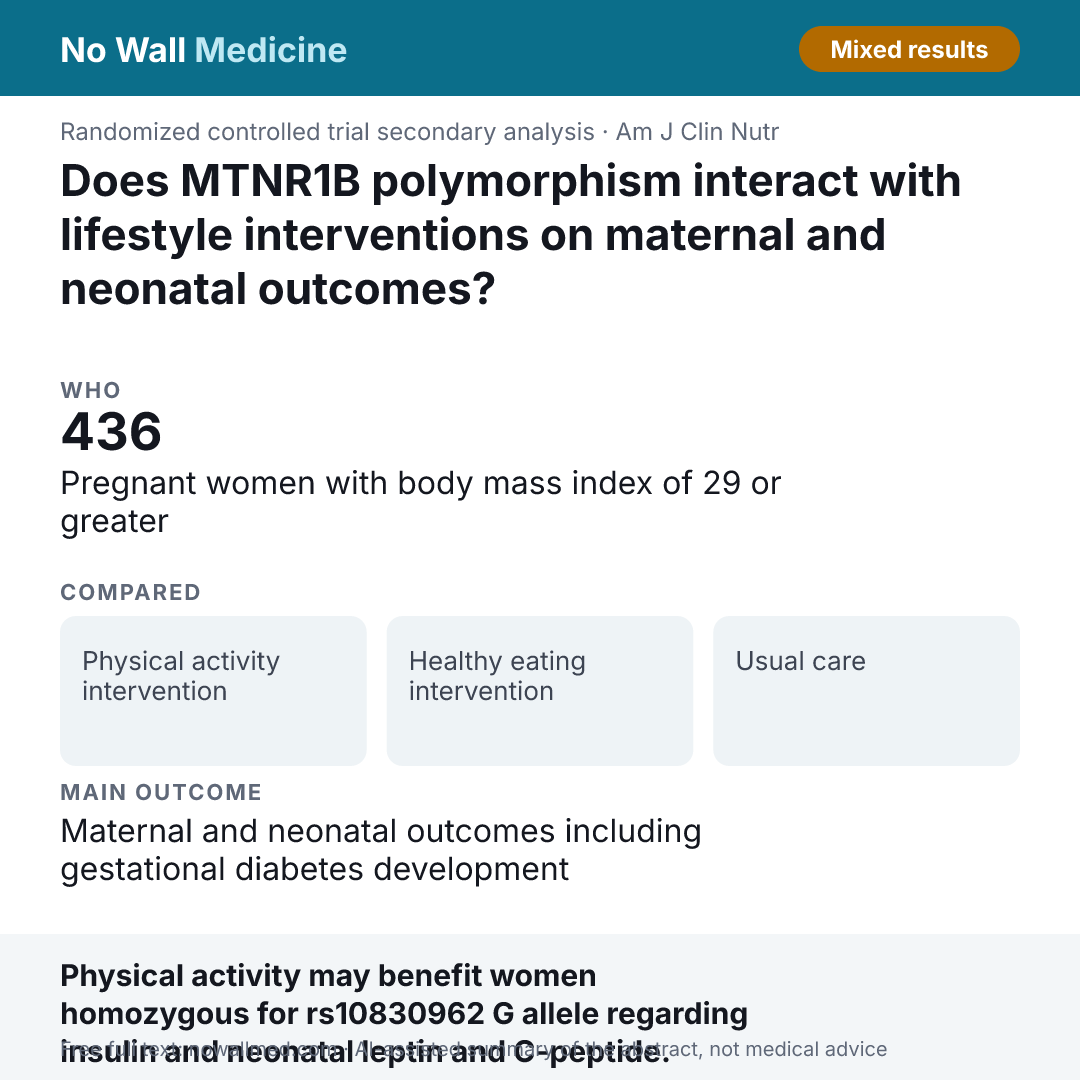
Interaction between rs10830962 polymorphism in MTNR1B and lifestyle intervention on maternal and neonatal outcomes: secondary analyses of the DALI lifestyle randomized controlled trial
Randomized controlled trial secondary analysisMixed results
Does MTNR1B polymorphism interact with lifestyle interventions on maternal and neonatal outcomes?
Who
436
Pregnant women with body mass index of 29 or greater
Compared
Physical activity intervention
Healthy eating intervention
Usual care
Main outcome
Maternal and neonatal outcomes including gestational diabetes development
Bottom line: Physical activity may benefit women homozygous for rs10830962 G allele regarding insulin and neonatal leptin and C-peptide.
Am J Clin Nutr · 2021-10-21 · Save PNG
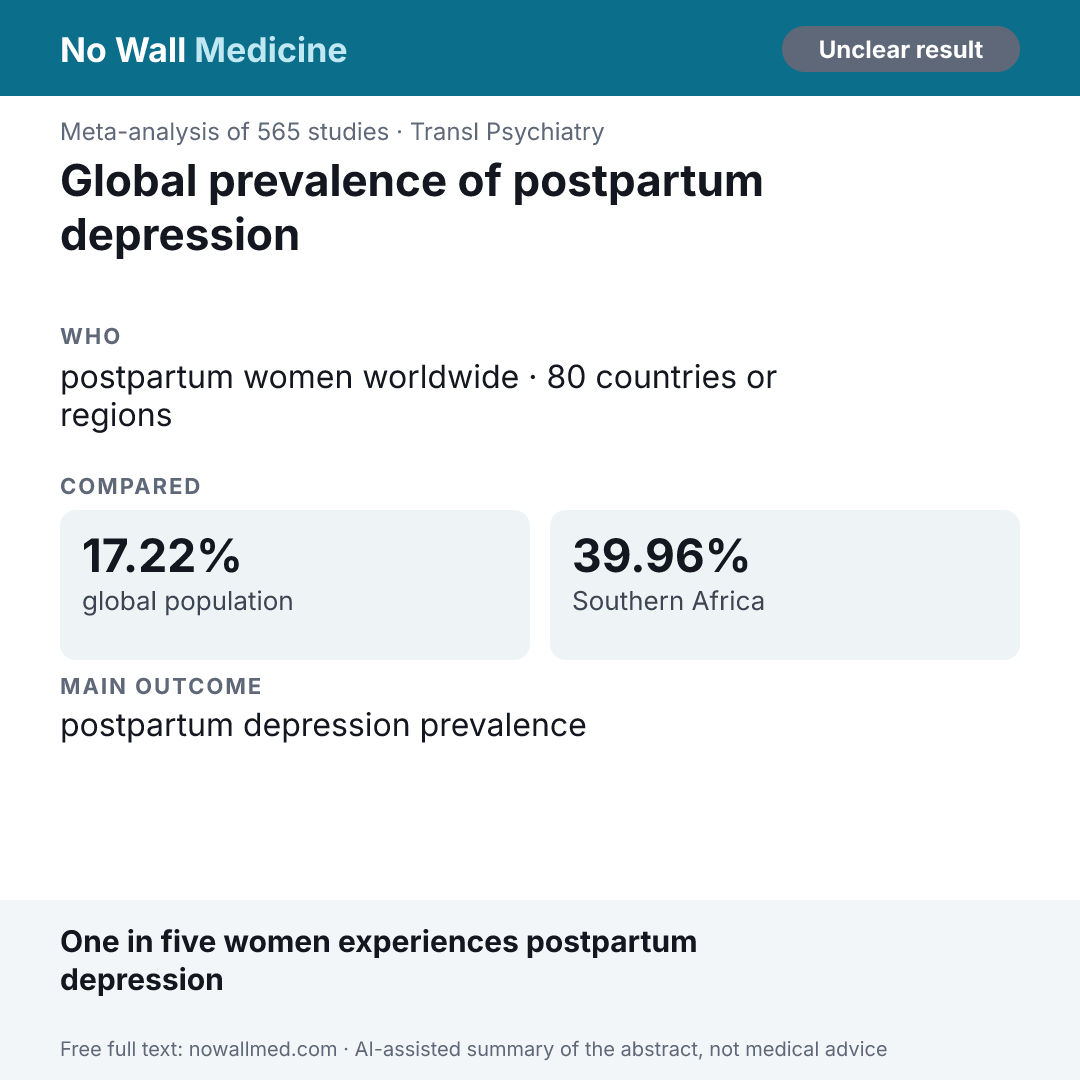
Mapping global prevalence of depression among postpartum women
Meta-analysis of 565 studiesUnclear result
Global prevalence of postpartum depression
Who
postpartum women worldwide · 80 countries or regions
Compared
17.22%global population (95% CI 16.00-18.51)
39.96%Southern Africa
Main outcome
postpartum depression prevalence
Bottom line: One in five women experiences postpartum depression
Transl Psychiatry · 2021-10-20 · Save PNG
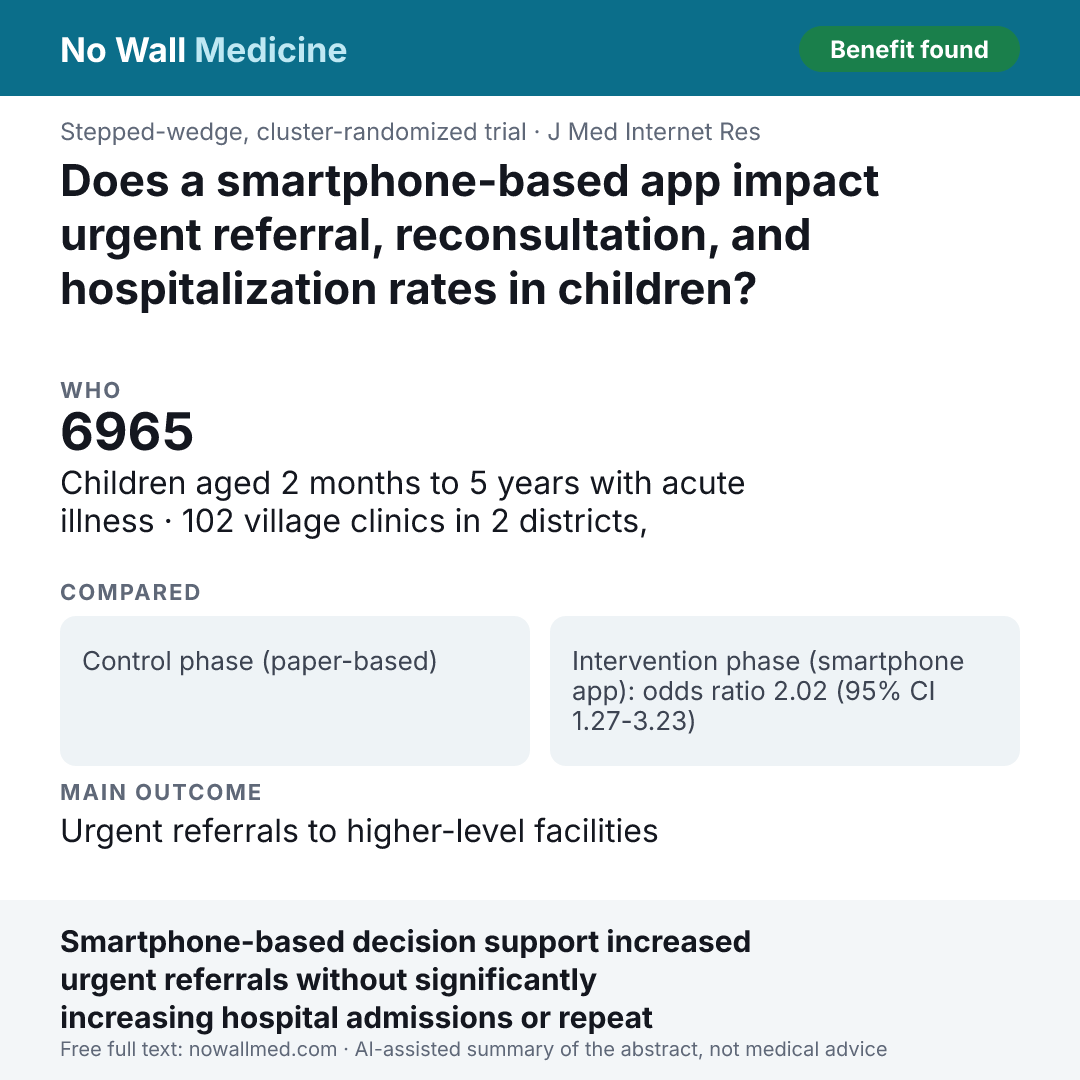
Effectiveness of Smartphone-Based Community Case Management on the Urgent Referral, Reconsultation, and Hospitalization of Children Aged Under 5 Years in Malawi: Cluster-Randomized, Stepped-Wedge Trial
Stepped-wedge, cluster-randomized trialBenefit found
Does a smartphone-based app impact urgent referral, reconsultation, and hospitalization rates in children?
Who
6965
Children aged 2 months to 5 years with acute illness · 102 village clinics in 2 districts, northern Malawi
Compared
Control phase (paper-based)
Intervention phase (smartphone app): odds ratio 2.02 (95% CI 1.27-3.23)
Main outcome
Urgent referrals to higher-level facilities
Result: odds ratio 2.02 (95% CI 1.27-3.23)
Bottom line: Smartphone-based decision support increased urgent referrals without significantly increasing hospital admissions or repeat consultations.
J Med Internet Res · 2021-10-20 · Save PNG
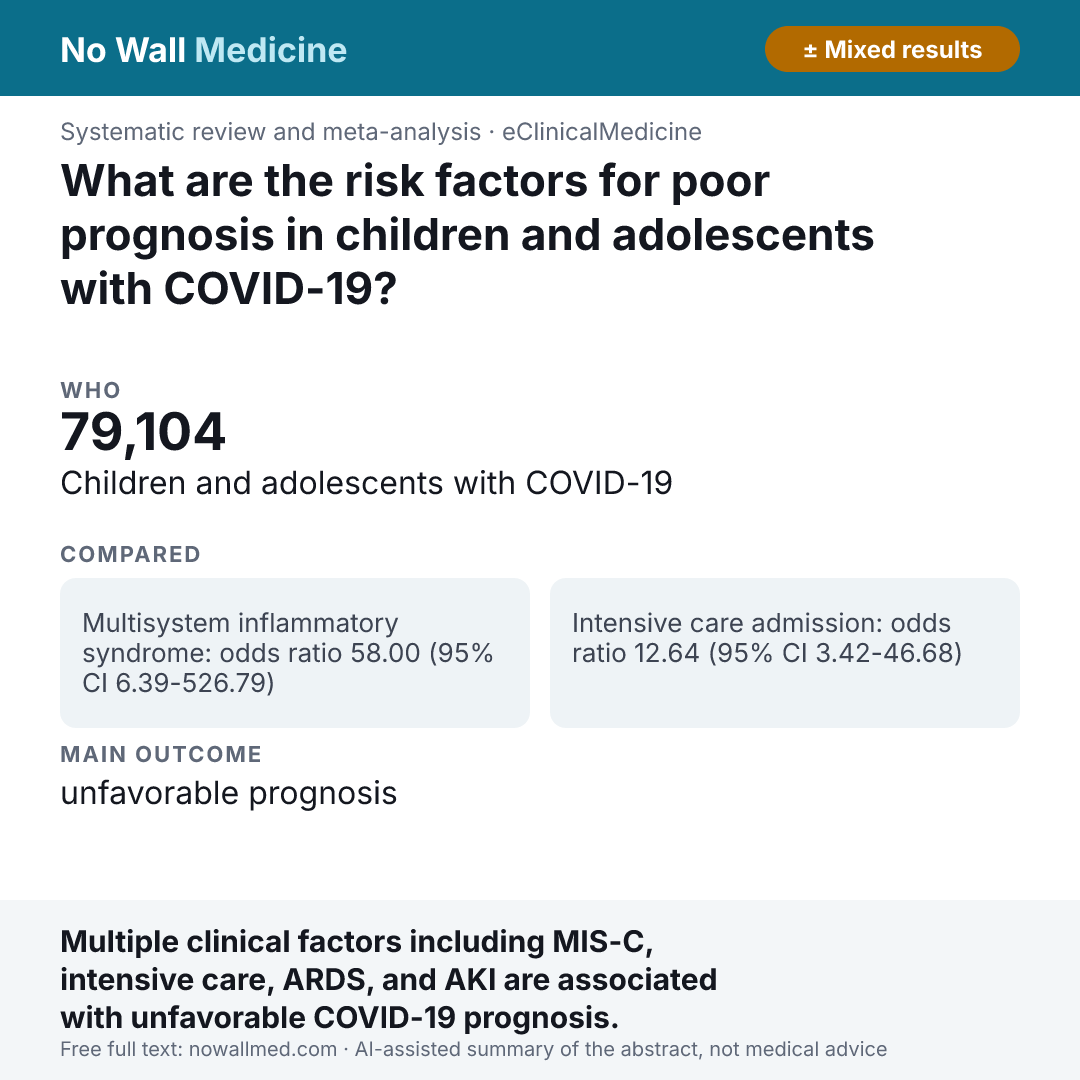
Risk factors for poor prognosis in children and adolescents with COVID-19: A systematic review and meta-analysis
Systematic review and meta-analysisMixed results
What are the risk factors for poor prognosis in children and adolescents with COVID-19?
Who
79,104
Children and adolescents with COVID-19
Compared
Multisystem inflammatory syndrome: odds ratio 58.00 (95% CI 6.39-526.79)
Intensive care admission: odds ratio 12.64 (95% CI 3.42-46.68)
Main outcome
unfavorable prognosis
Bottom line: Multiple clinical factors including MIS-C, intensive care, ARDS, and AKI are associated with unfavorable COVID-19 prognosis.
eClinicalMedicine · 2021-10-19 · Save PNG
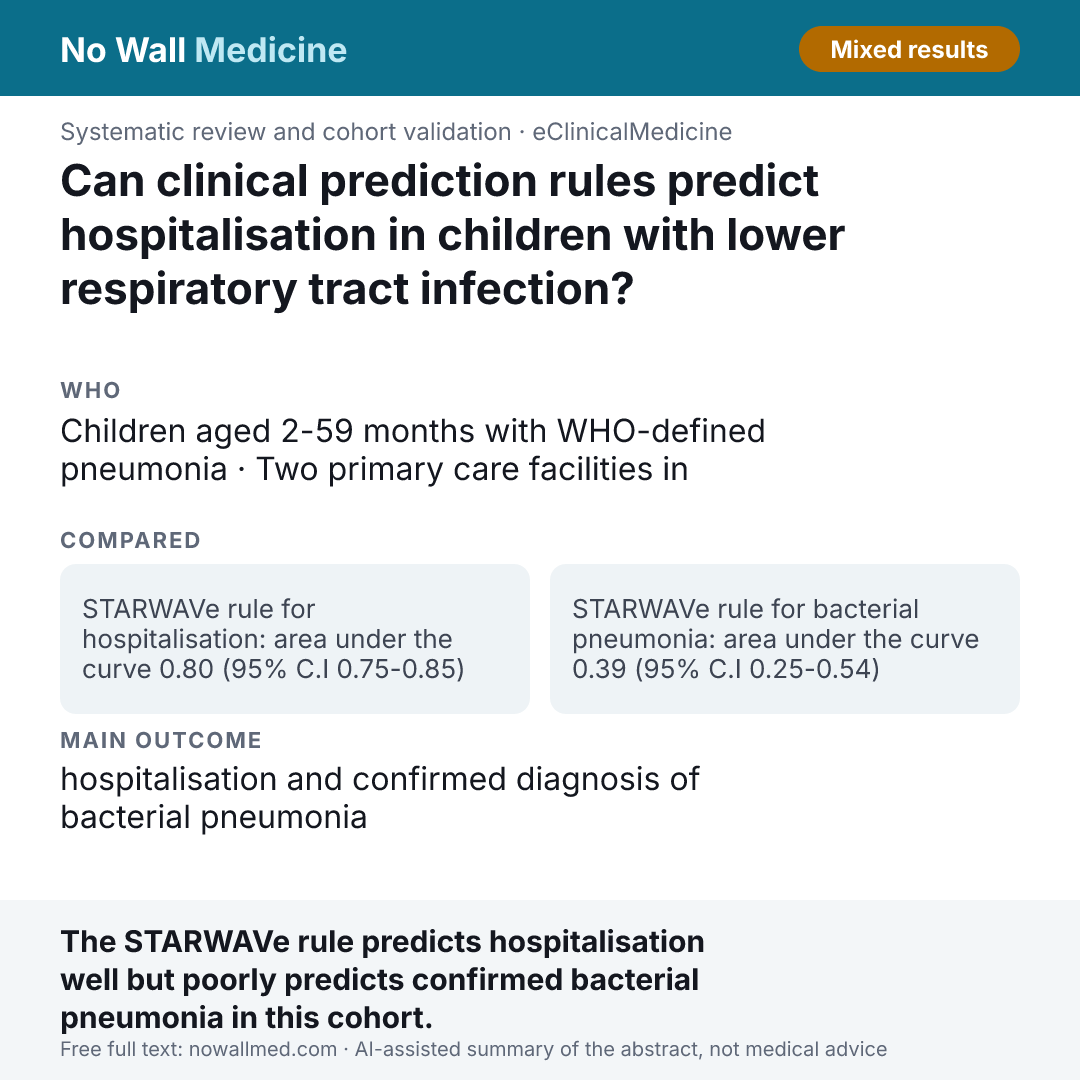
A Systematic Review of Clinical Prediction Rules to Predict Hospitalisation in Children with Lower Respiratory Infection in Primary Care and their Validation in a New Cohort
Systematic review and cohort validationMixed results
Can clinical prediction rules predict hospitalisation in children with lower respiratory tract infection?
Who
Children aged 2-59 months with WHO-defined pneumonia · Two primary care facilities in Mzuzu, Malawi
Compared
STARWAVe rule for hospitalisation: area under the curve 0.80 (95% C.I 0.75-0.85)
STARWAVe rule for bacterial pneumonia: area under the curve 0.39 (95% C.I 0.25-0.54)
Main outcome
hospitalisation and confirmed diagnosis of bacterial pneumonia
Bottom line: The STARWAVe rule predicts hospitalisation well but poorly predicts confirmed bacterial pneumonia in this cohort.
Limitation: absence of a gold standard indicator for bacterial lower respiratory tract infection
eClinicalMedicine · 2021-10-18 · Save PNG
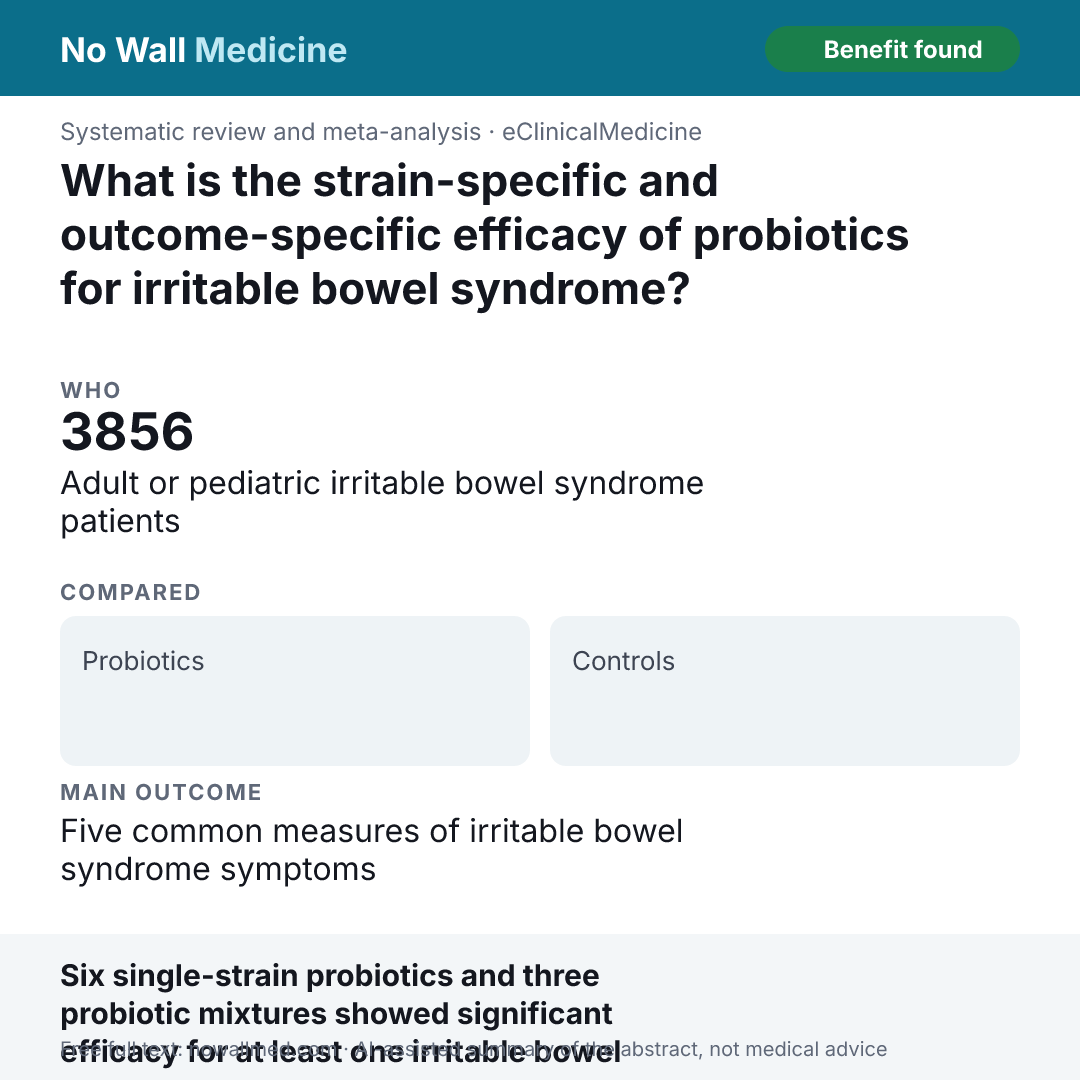
Strain-specific and outcome-specific efficacy of probiotics for the treatment of irritable bowel syndrome: A systematic review and meta-analysis
Systematic review and meta-analysisBenefit found
What is the strain-specific and outcome-specific efficacy of probiotics for irritable bowel syndrome?
Who
3856
Adult or pediatric irritable bowel syndrome patients
Compared
Probiotics
Controls
Main outcome
Five common measures of irritable bowel syndrome symptoms
Bottom line: Six single-strain probiotics and three probiotic mixtures showed significant efficacy for at least one irritable bowel syndrome outcome measure.
Limitation: Diversity of irritable bowel syndrome outcomes used and lack of confirmatory trials for some strains.
eClinicalMedicine · 2021-10-18 · Save PNG