Visual abstracts
New randomized trials and meta-analyses from leading journals at a glance: who was studied, what was compared, and what was found. Every paper is free to read in full.
All specialtiesCardiology 4763Oncology 4042Gastroenterology & Hepatology 1902Infectious Disease 3756Neurology 1872Psychiatry & Mental Health 2214Pulmonology 2042Critical Care 1319Endocrinology & Diabetes 2544Pediatrics 2889Surgery 2479Orthopedics & Sports Medicine 917Neurosurgery 525Cardiothoracic & Vascular Surgery 656Plastic & Reconstructive Surgery 574Nephrology 1107Rheumatology 810Hematology 1090Dermatology 611Ophthalmology 532Obstetrics & Gynecology 1645Public & Global Health 1037Radiology & Imaging 617Anesthesiology 957Urology 745ENT (Otolaryngology) 494Emergency Medicine 481Allergy & Immunology 309Geriatrics 972Family Medicine & Primary Care 533Medical Genetics & Genomics 659Pathology & Laboratory Medicine 156Physical Medicine & Rehabilitation 734Palliative Care 421Nutrition 1560Digital Health & AI 2133General Medicine 318
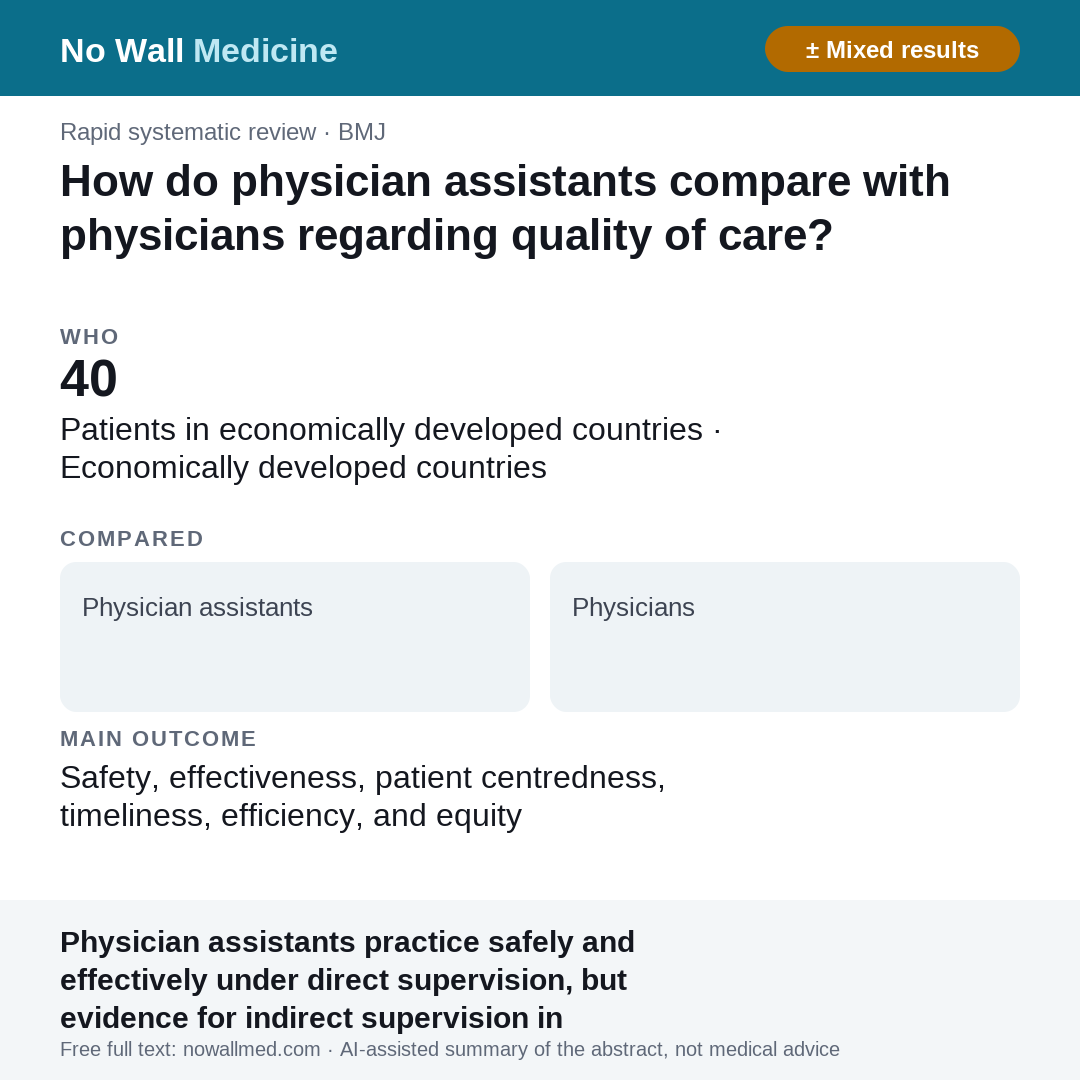
Impact of physician assistants on quality of care: rapid review
Rapid systematic reviewMixed results
How do physician assistants compare with physicians regarding quality of care?
Who
40
Patients in economically developed countries · Economically developed countries
Compared
Physician assistants
Physicians
Main outcome
Safety, effectiveness, patient centredness, timeliness, efficiency, and equity
Bottom line: Physician assistants practice safely and effectively under direct supervision, but evidence for indirect supervision in undifferentiated settings is limited.
Limitation: Most studies were retrospective observational studies of weak quality and no post-covid-19 data were found.
BMJ · 2025-07-03Download image
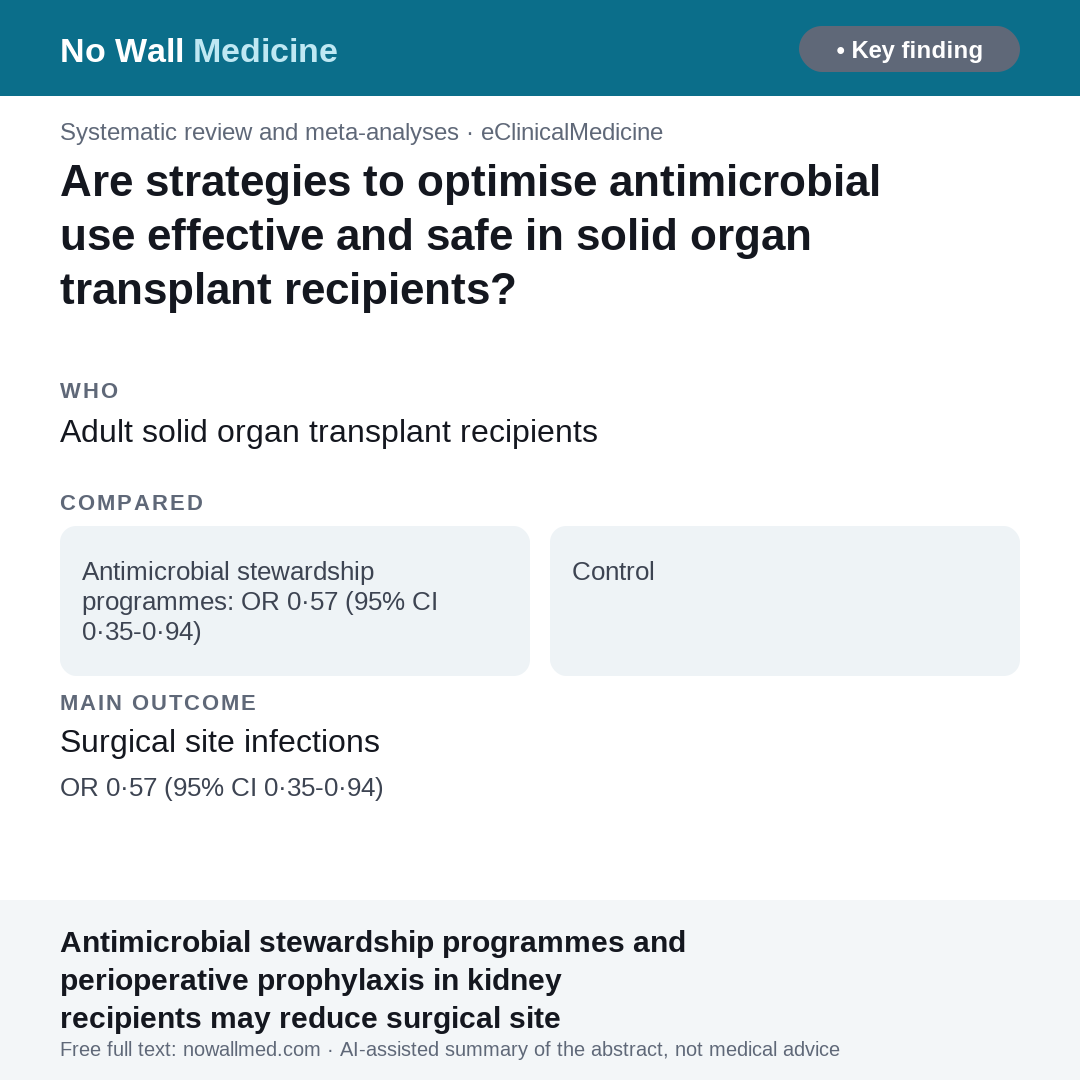
Effectiveness and safety of strategies to optimise antimicrobial use in solid organ transplant recipients. Systematic review and meta-analyses
Systematic review and meta-analysesKey finding
Are strategies to optimise antimicrobial use effective and safe in solid organ transplant recipients?
Who
Adult solid organ transplant recipients
Compared
Antimicrobial stewardship programmes: OR 0·57 (95% CI 0·35-0·94)
Control
Main outcome
Surgical site infections
Result: OR 0·57 (95% CI 0·35-0·94)
Bottom line: Antimicrobial stewardship programmes and perioperative prophylaxis in kidney recipients may reduce surgical site infections without increasing complications.
Limitation: All included studies had a moderate or high risk of bias.
Funded by: Instituto de Salud Carlos III and CIBERINFEC
eClinicalMedicine · 2025-07-03Download image
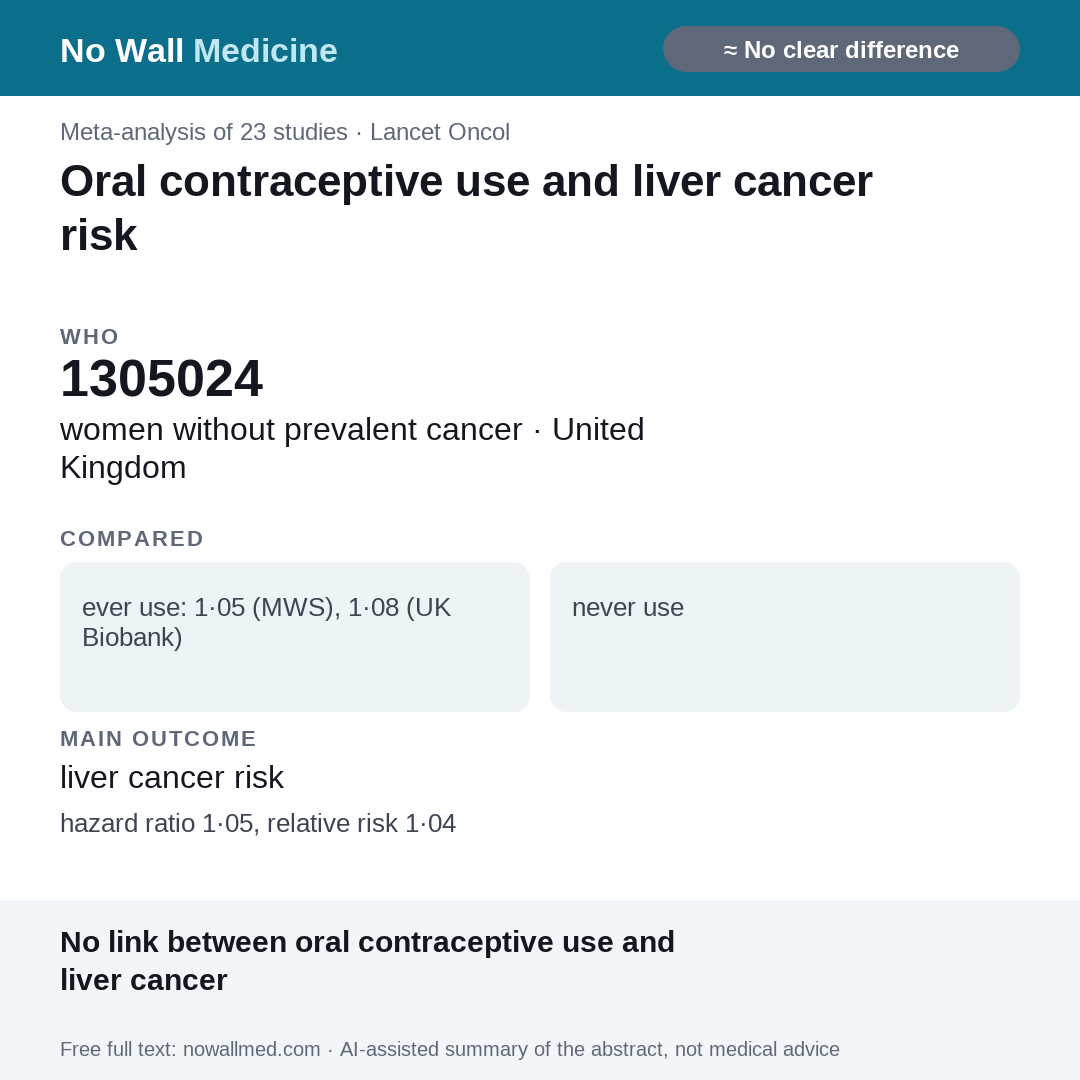
Oral contraceptive use and risk of liver cancer: a population-based study, systematic review, and meta-analysis
Meta-analysis of 23 studiesNo clear difference
Oral contraceptive use and liver cancer risk
Who
1305024
women without prevalent cancer · United Kingdom
Compared
ever use: 1·05 (MWS), 1·08 (UK Biobank)
never use
Main outcome
liver cancer risk
Result: hazard ratio 1·05, relative risk 1·04
Bottom line: No link between oral contraceptive use and liver cancer
Limitation: residual confounding cannot be ruled out
Funded by: Canadian Institutes of Health Research
Lancet Oncol · 2025-07-03Download image
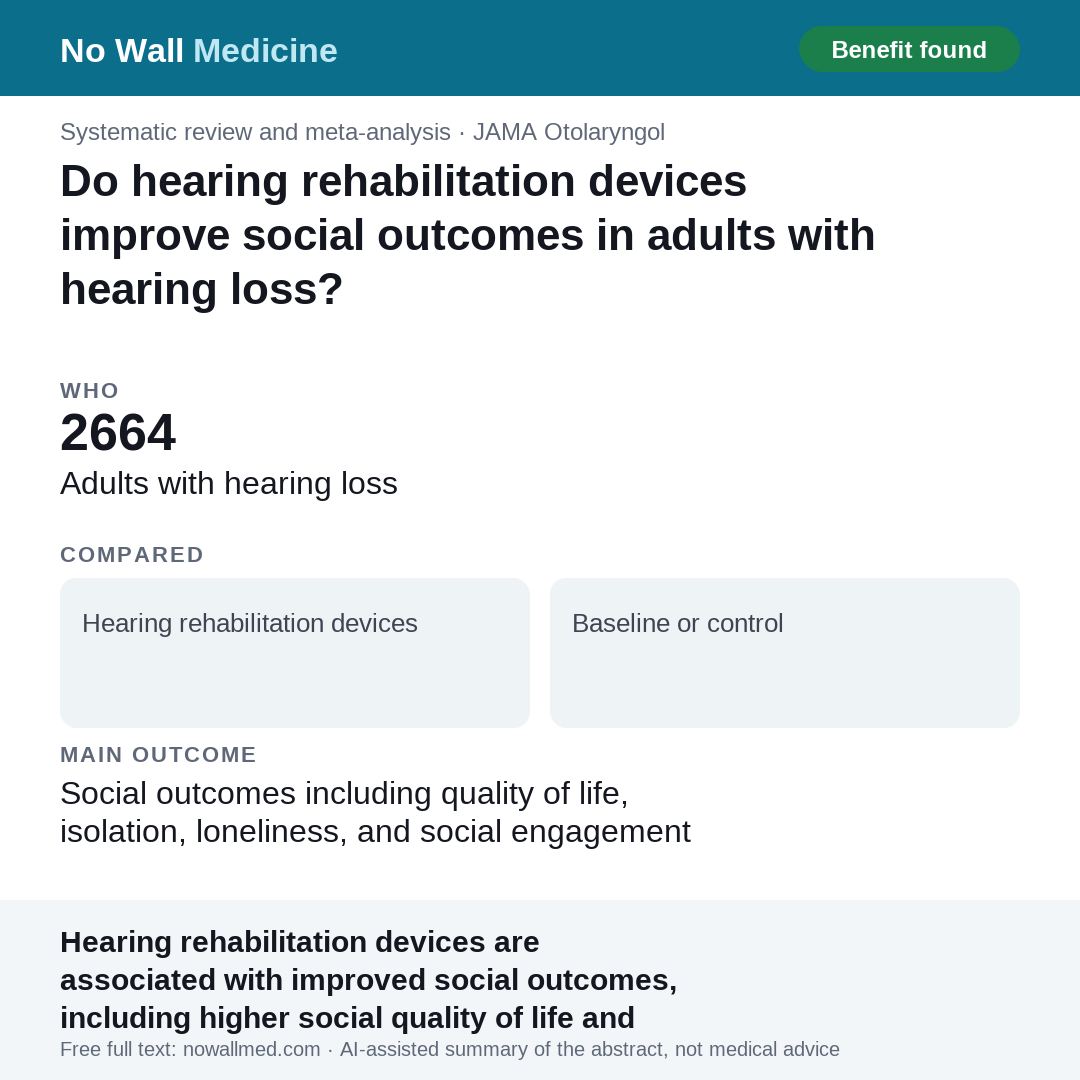
Social Outcomes Among Adults With Hearing Aids and Cochlear Implants: A Systematic Review and Meta-Analysis
Systematic review and meta-analysisBenefit found
Do hearing rehabilitation devices improve social outcomes in adults with hearing loss?
Who
2664
Adults with hearing loss
Compared
Hearing rehabilitation devices
Baseline or control
Main outcome
Social outcomes including quality of life, isolation, loneliness, and social engagement
Result: SMD, 1.22; 95% CI, 0.88-1.57
Bottom line: Hearing rehabilitation devices are associated with improved social outcomes, including higher social quality of life and decreased social handicap.
Limitation: Findings on loneliness were inconclusive due to the limited number of studies.
JAMA Otolaryngol · 2025-07-03Download image
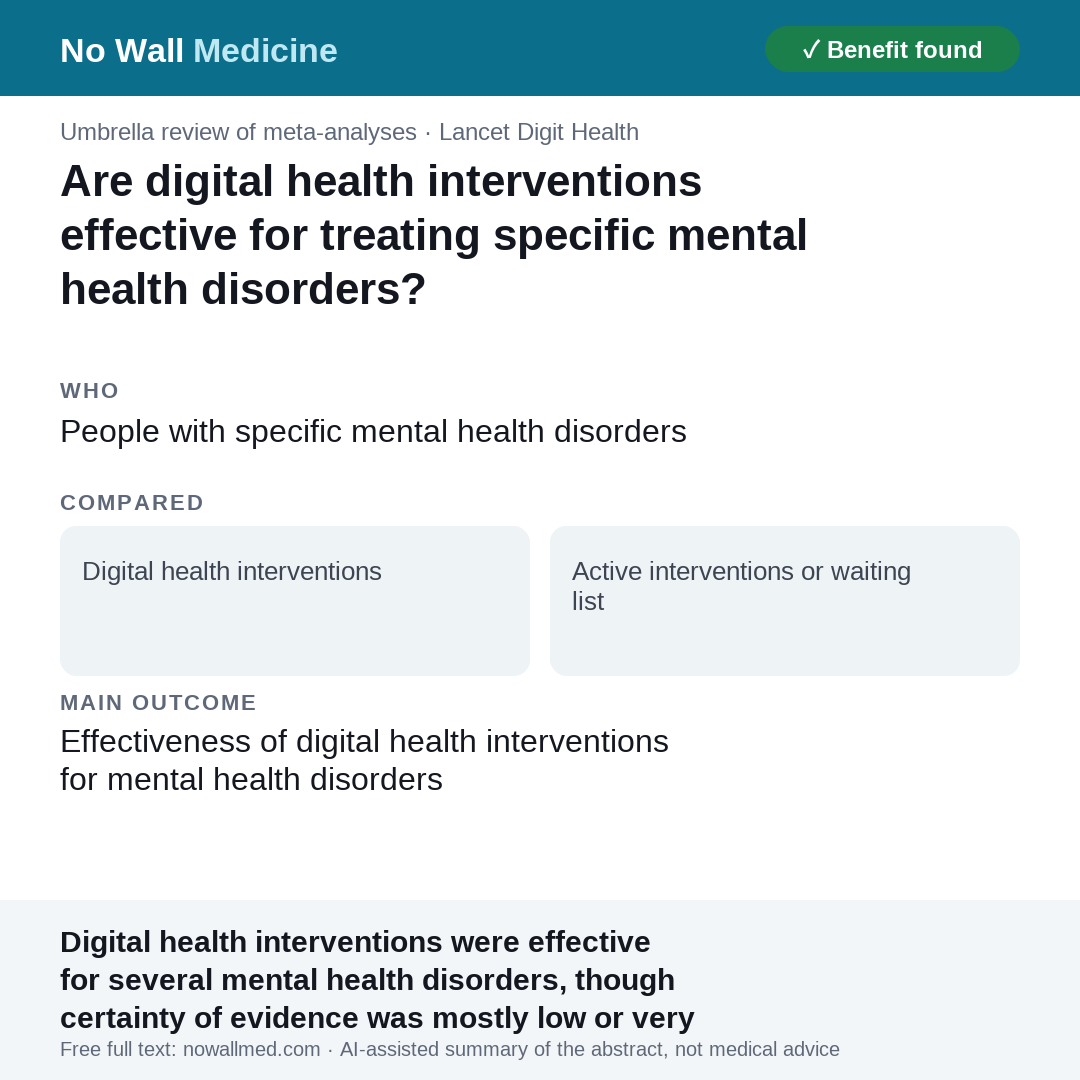
Digital health interventions for mental health disorders: an umbrella review of meta-analyses of randomised controlled trials
Umbrella review of meta-analysesBenefit found
Are digital health interventions effective for treating specific mental health disorders?
Who
People with specific mental health disorders
Compared
Digital health interventions
Active interventions or waiting list
Main outcome
Effectiveness of digital health interventions for mental health disorders
Bottom line: Digital health interventions were effective for several mental health disorders, though certainty of evidence was mostly low or very low.
Limitation: Certainty of evidence was rated as very low or low in most cases.
Lancet Digit Health · 2025-07-03Download image
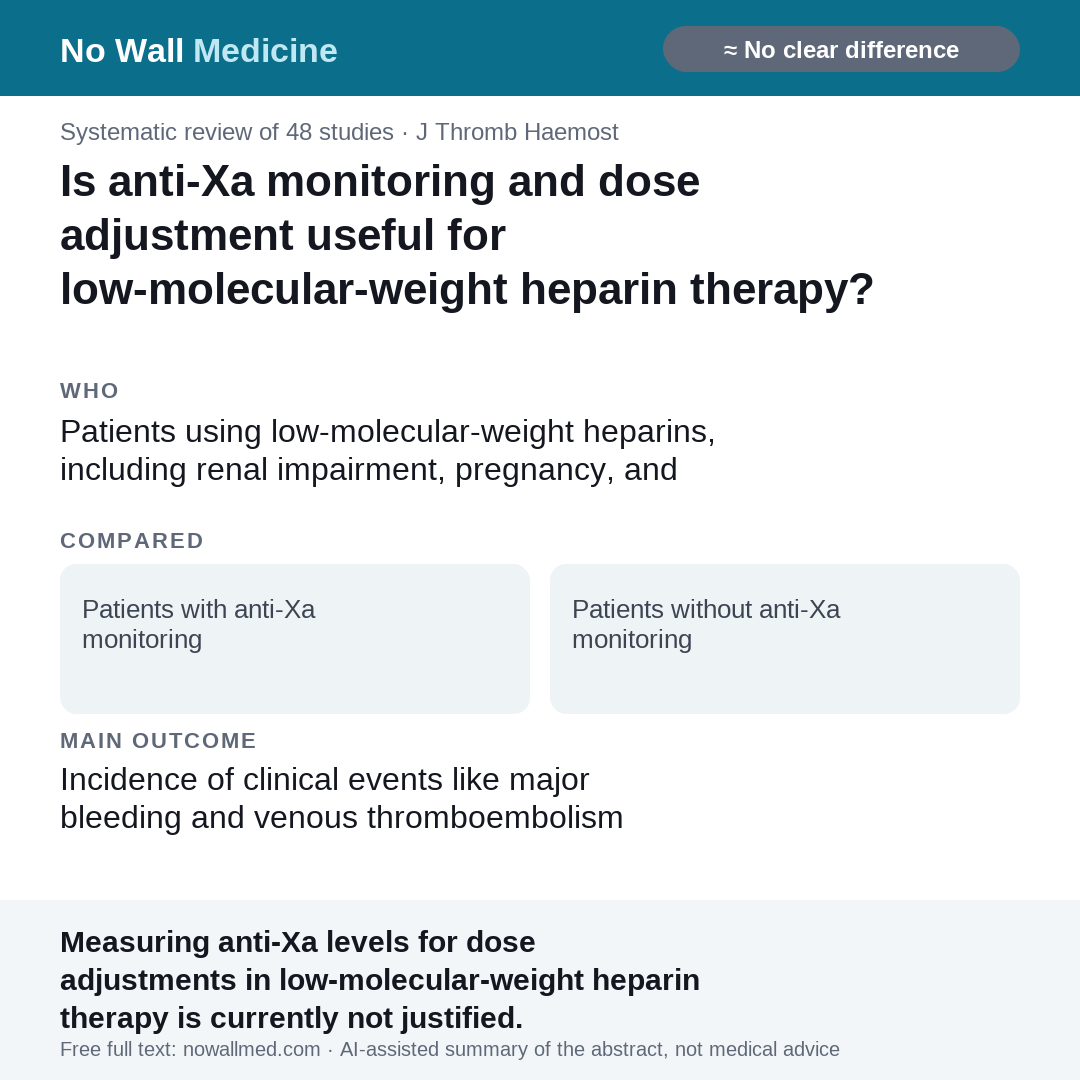
A systematic review on anti-Xa monitoring in the therapeutic use of low-molecular-weight heparins
Systematic review of 48 studiesNo clear difference
Is anti-Xa monitoring and dose adjustment useful for low-molecular-weight heparin therapy?
Who
Patients using low-molecular-weight heparins, including renal impairment, pregnancy, and obesity
Compared
Patients with anti-Xa monitoring
Patients without anti-Xa monitoring
Main outcome
Incidence of clinical events like major bleeding and venous thromboembolism
Bottom line: Measuring anti-Xa levels for dose adjustments in low-molecular-weight heparin therapy is currently not justified.
Limitation: All included studies had a high risk of bias.
J Thromb Haemost · 2025-07-03Download image
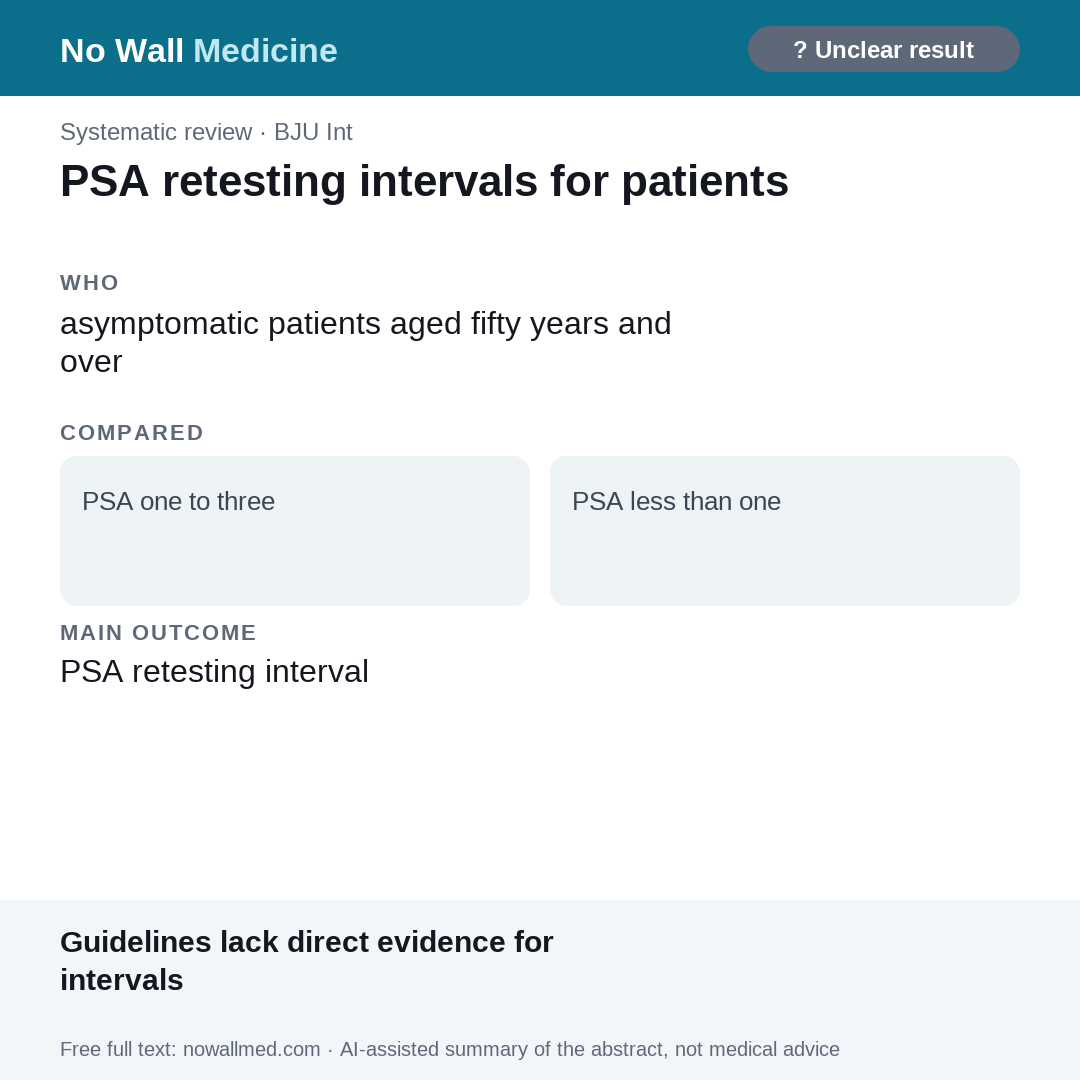
Guideline of guidelines: a critical appraisal of the evidence for PSA retesting intervals
Systematic reviewUnclear result
PSA retesting intervals for patients
Who
asymptomatic patients aged fifty years and over
Compared
PSA one to three
PSA less than one
Main outcome
PSA retesting interval
Bottom line: Guidelines lack direct evidence for intervals
BJU Int · 2025-07-03Download image
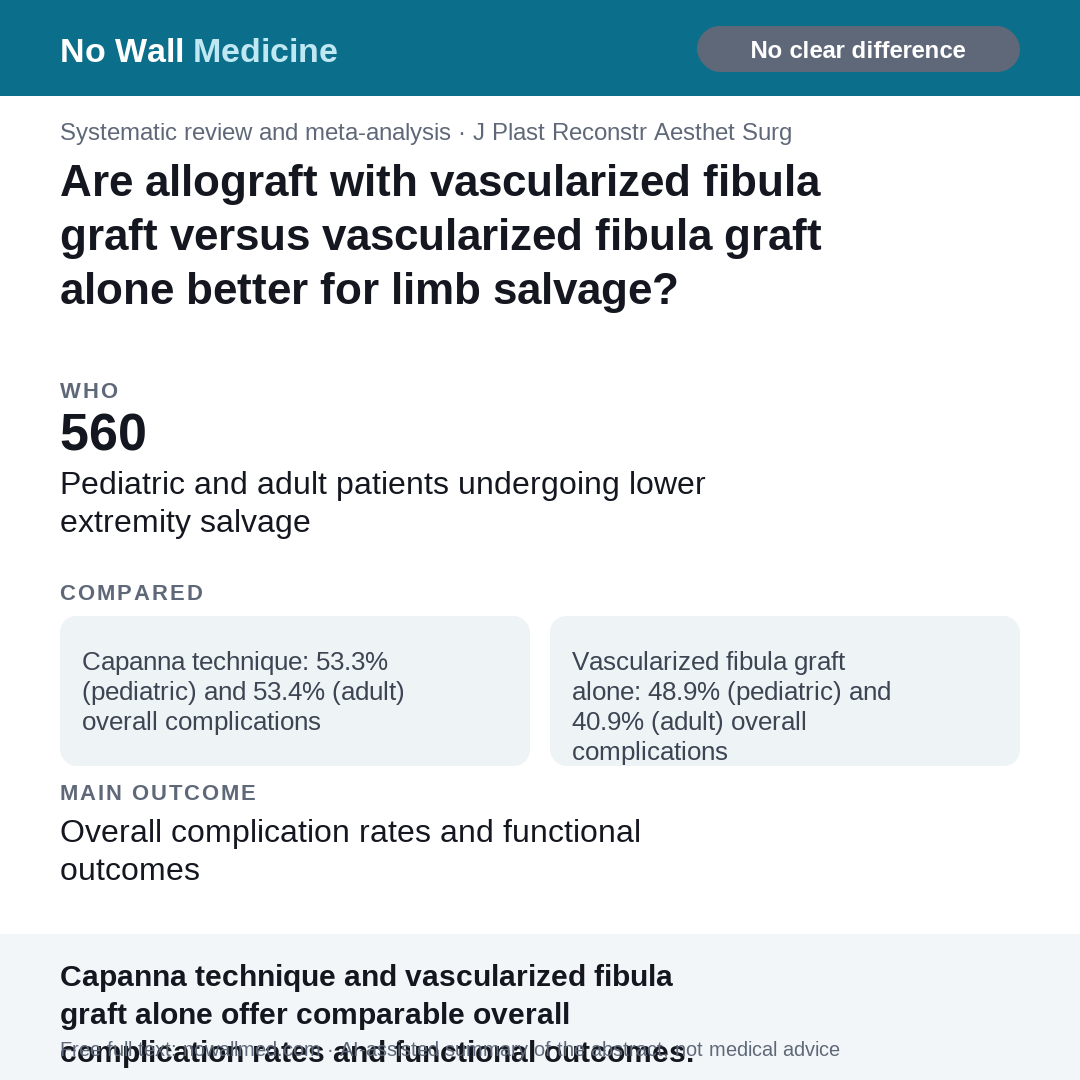
Comparative outcomes of allograft with vascularized fibula graft vs vascularized fibula graft alone for post-oncologic lower extremity salvage - Systematic review and meta-analysis
Systematic review and meta-analysisNo clear difference
Are allograft with vascularized fibula graft versus vascularized fibula graft alone better for limb salvage?
Who
560
Pediatric and adult patients undergoing lower extremity salvage
Compared
Capanna technique: 53.3% (pediatric) and 53.4% (adult) overall complications
Vascularized fibula graft alone: 48.9% (pediatric) and 40.9% (adult) overall complications
Main outcome
Overall complication rates and functional outcomes
Bottom line: Capanna technique and vascularized fibula graft alone offer comparable overall complication rates and functional outcomes.
J Plast Reconstr Aesthet Surg · 2025-07-03Download image
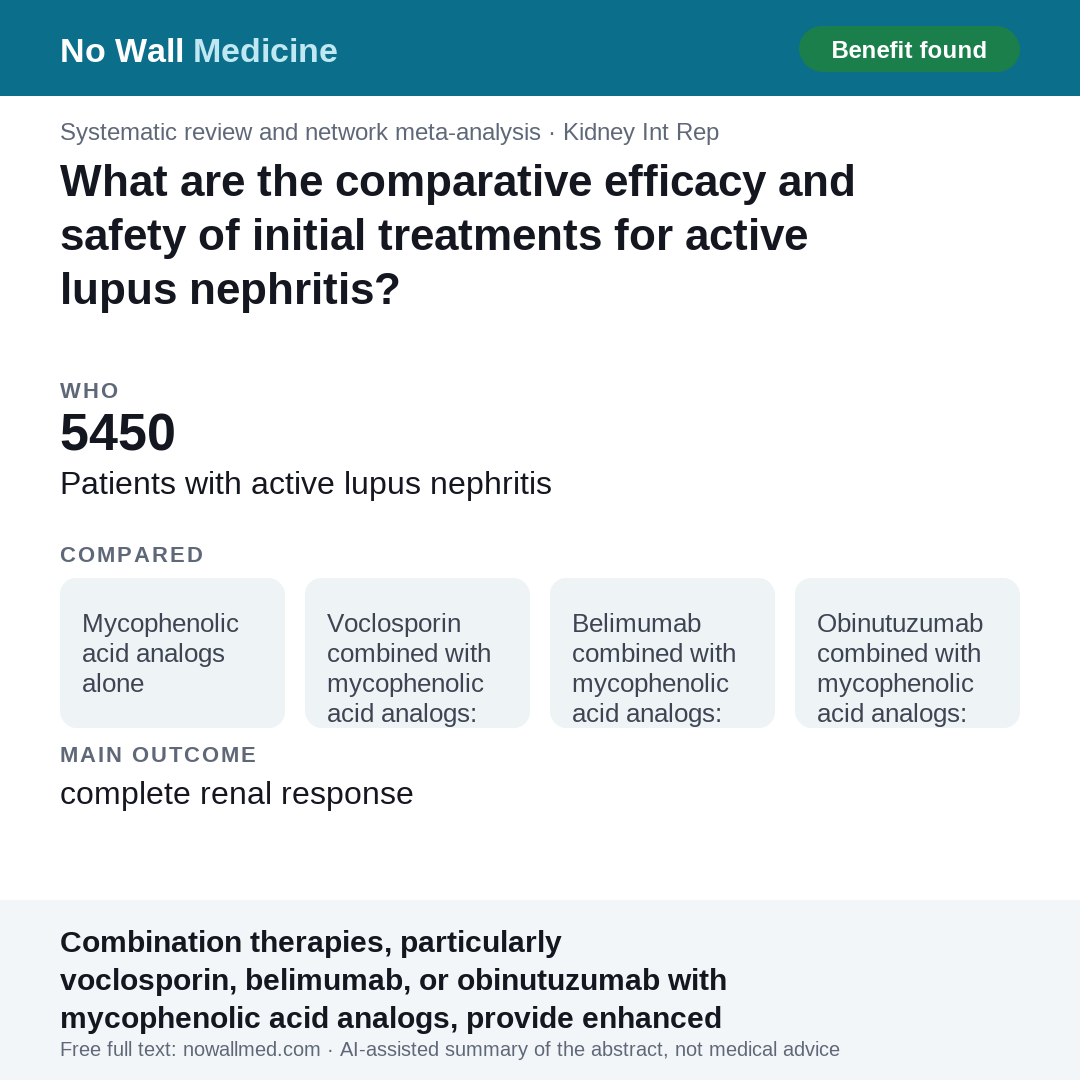
Systematic Review and Network Meta-Analysis of Initial Treatments for Lupus Nephritis
Systematic review and network meta-analysisBenefit, low certainty
What are the comparative efficacy and safety of initial treatments for active lupus nephritis?
Who
5450
Patients with active lupus nephritis
Compared
Mycophenolic acid analogs alone
Voclosporin combined with mycophenolic acid analogs: 281.38 more/1000
Belimumab combined with mycophenolic acid analogs: 145.02 more/1000
Obinutuzumab combined with mycophenolic acid analogs: 134.23 more/1000
Main outcome
complete renal response
Bottom line: Combination therapies, particularly voclosporin, belimumab, or obinutuzumab with mycophenolic acid analogs, provide enhanced complete renal response.
Kidney Int Rep · 2025-07-03Download image
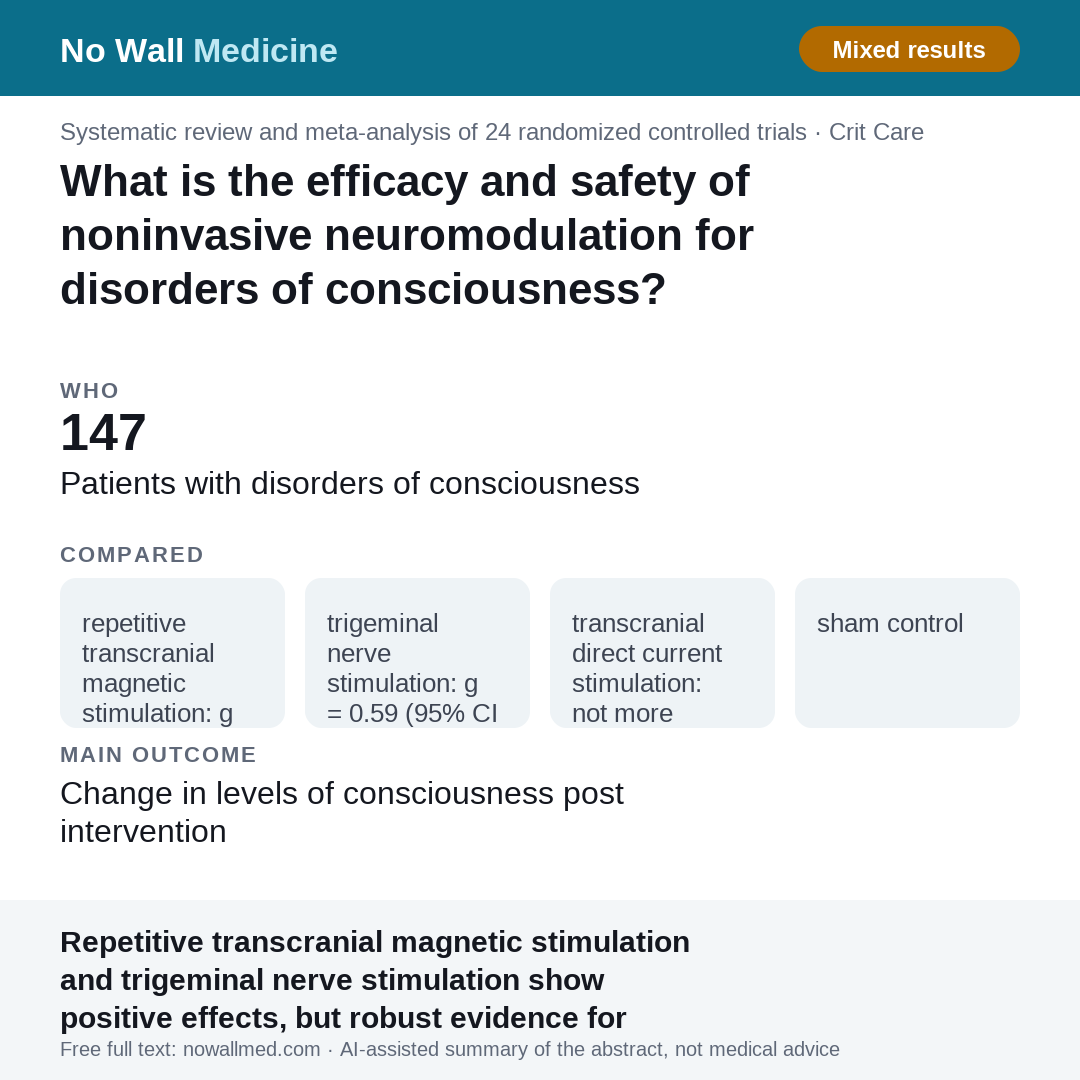
Noninvasive neuromodulation for disorders of consciousness: an updated systematic review and meta-analysis
Systematic review and meta-analysis of 24 randomized controlled trialsMixed results
What is the efficacy and safety of noninvasive neuromodulation for disorders of consciousness?
Who
147
Patients with disorders of consciousness
Compared
repetitive transcranial magnetic stimulation: g = 0.49 (95% CI 0.01, 0.98)
trigeminal nerve stimulation: g = 0.59 (95% CI 0.08, 1.10)
transcranial direct current stimulation: not more effective than sham control
sham control
Main outcome
Change in levels of consciousness post intervention
Result: rTMS g = 0.49 (95% CI 0.01, 0.98); TNS g = 0.59 (95% CI 0.08, 1.10)
Bottom line: Repetitive transcranial magnetic stimulation and trigeminal nerve stimulation show positive effects, but robust evidence for neuromodulation is lacking.
Limitation: Small number of patients, few studies, and potential risk of bias in the meta-analysis.
Crit Care · 2025-07-03Download image
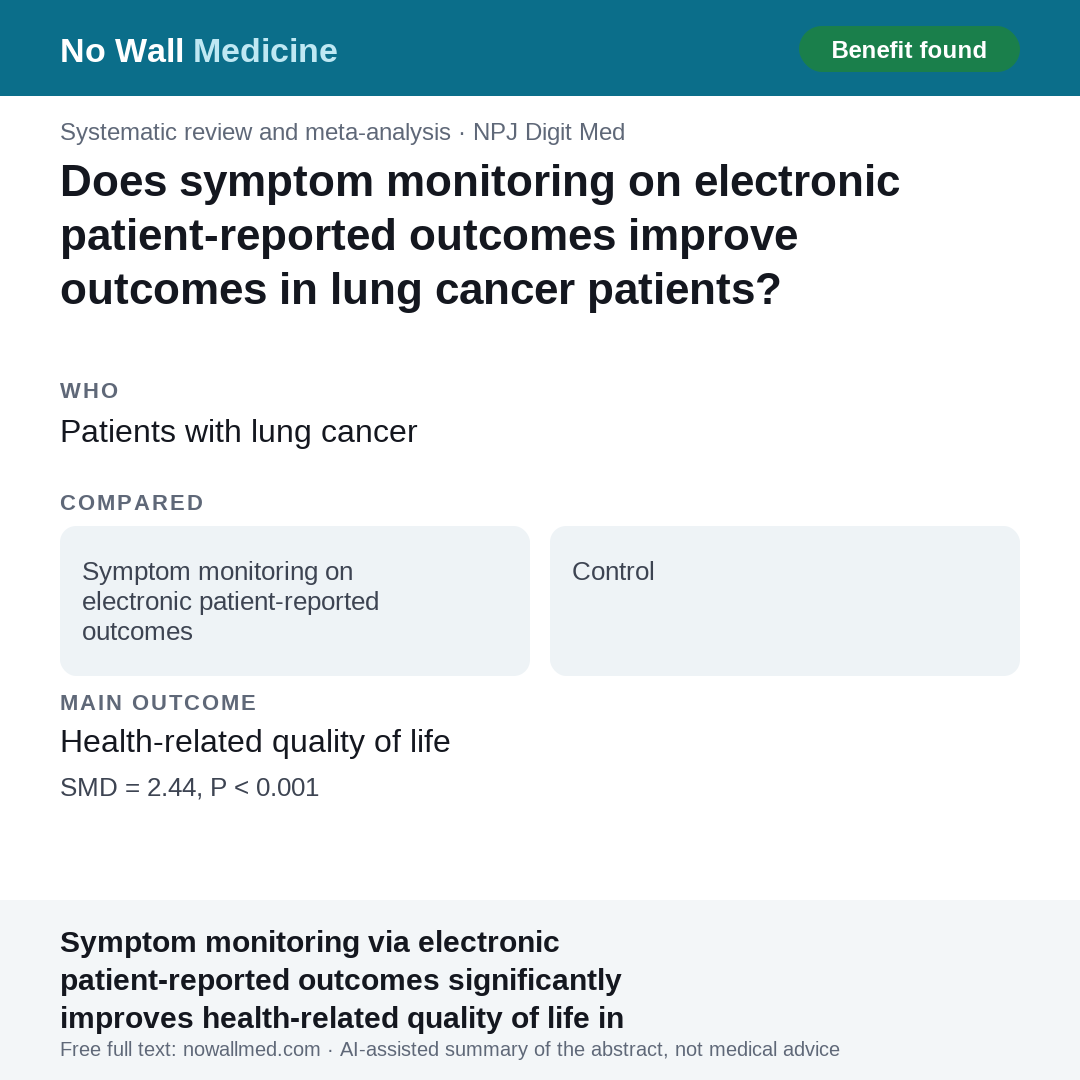
Effectiveness of symptom monitoring on electronic patient-reported outcomes (ePROs) among patients with lung cancer: a systematic review and meta-analysis
Systematic review and meta-analysisBenefit found
Does symptom monitoring on electronic patient-reported outcomes improve outcomes in lung cancer patients?
Who
Patients with lung cancer
Compared
Symptom monitoring on electronic patient-reported outcomes
Control
Main outcome
Health-related quality of life
Result: SMD = 2.44, P < 0.001
Bottom line: Symptom monitoring via electronic patient-reported outcomes significantly improves health-related quality of life in lung cancer patients.
NPJ Digit Med · 2025-07-03Download image
Problematic Online Dating: Systematic Review of Definitions, Correlates, and Study Designs
Systematic reviewMixed results
Problematic online dating behaviors
Who
Online dating app users aged 13 to 80 years
Compared
Problematic use
Non-problematic use
Main outcome
Adverse correlates of online dating
Bottom line: Research on online dating addiction is debated
Limitation: Most studies were cross-sectional
J Med Internet Res · 2025-07-03Download image
Recruiting Asian Americans for Online Studies: Methodological Systematic Review
Systematic reviewMixed results
What strategies effectively recruit Asian Americans for online research studies?
Who
Asian Americans
Compared
Online recruitment: tended to be younger and more highly educated
Offline recruitment
Main outcome
Recruitment strategies and participant characteristics
Bottom line: Researchers should use mixed online and offline recruitment methods to engage Asian Americans in online studies.
J Med Internet Res · 2025-07-03Download image
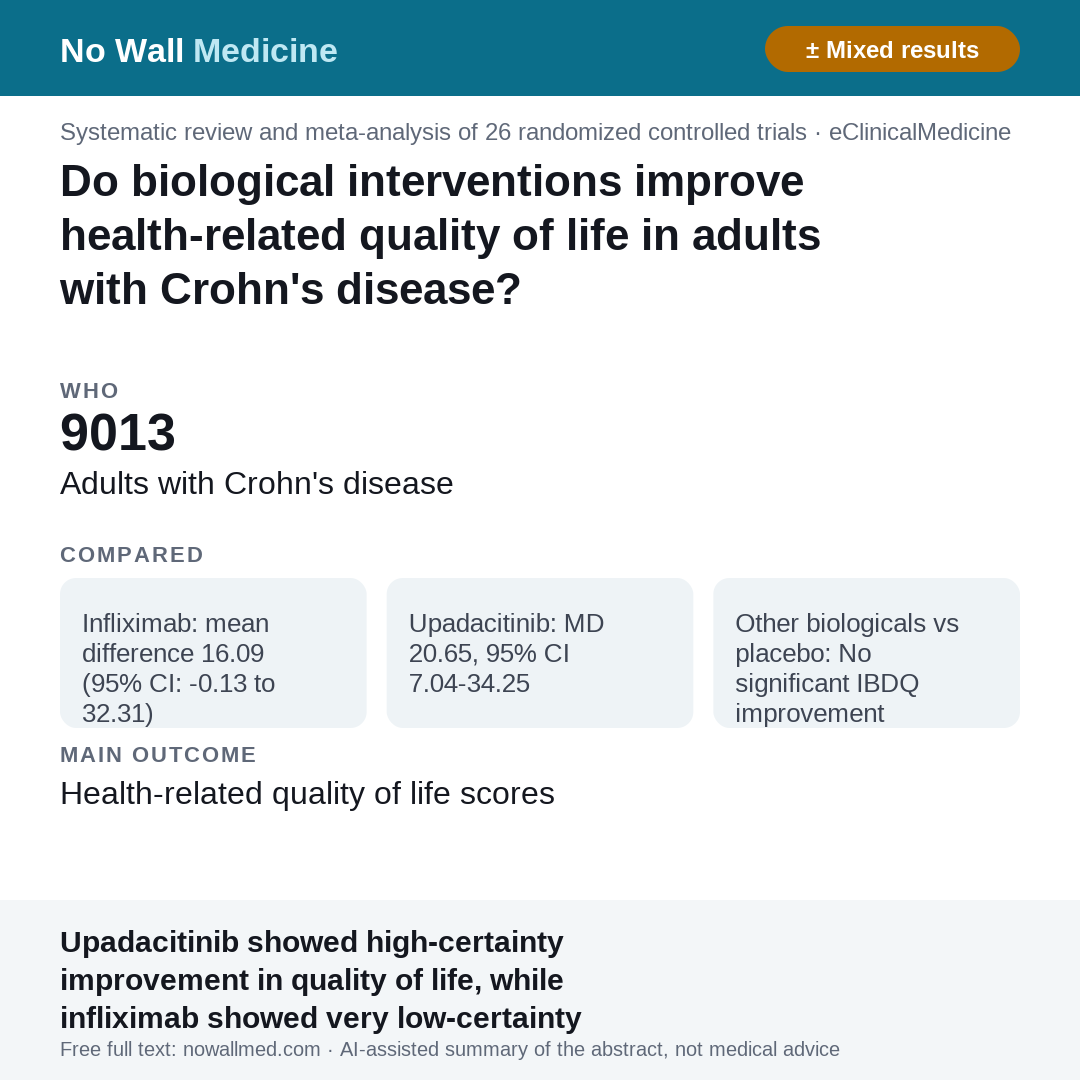
The impact of biological interventions on health-related quality of life in adults with Crohn's disease: a systematic review with meta-analysis
Systematic review and meta-analysis of 26 randomized controlled trialsMixed results
Do biological interventions improve health-related quality of life in adults with Crohn's disease?
Who
9013
Adults with Crohn's disease
Compared
Infliximab: mean difference 16.09 (95% CI: -0.13 to 32.31)
Upadacitinib: MD 20.65, 95% CI 7.04-34.25
Other biologicals vs placebo: No significant IBDQ improvement
Main outcome
Health-related quality of life scores
Bottom line: Upadacitinib showed high-certainty improvement in quality of life, while infliximab showed very low-certainty improvement.
Limitation: Methodological issues, need for larger sample sizes, and standardized reporting contribute to low quality.
eClinicalMedicine · 2025-07-02Download image
Efficacy and Safety of Medical Interventions for Moderate to Severe Hidradenitis Suppurativa: A Living Systematic Review and Network Meta-Analysis
Living systematic review and network meta-analysisMixed results
What are the efficacy and safety of treatments for moderate to severe hidradenitis suppurativa?
Who
5767
Adults with moderate to severe hidradenitis suppurativa
Compared
Active treatments
Placebo
Main outcome
Hidradenitis Suppurativa Clinical Response-50
Bottom line: Several cytokine and small molecule inhibitors showed higher efficacy than placebo for moderate to severe hidradenitis suppurativa.
Limitation: Absence of head-to-head trials for comparative evidence.
JAMA Dermatol · 2025-07-02Download image
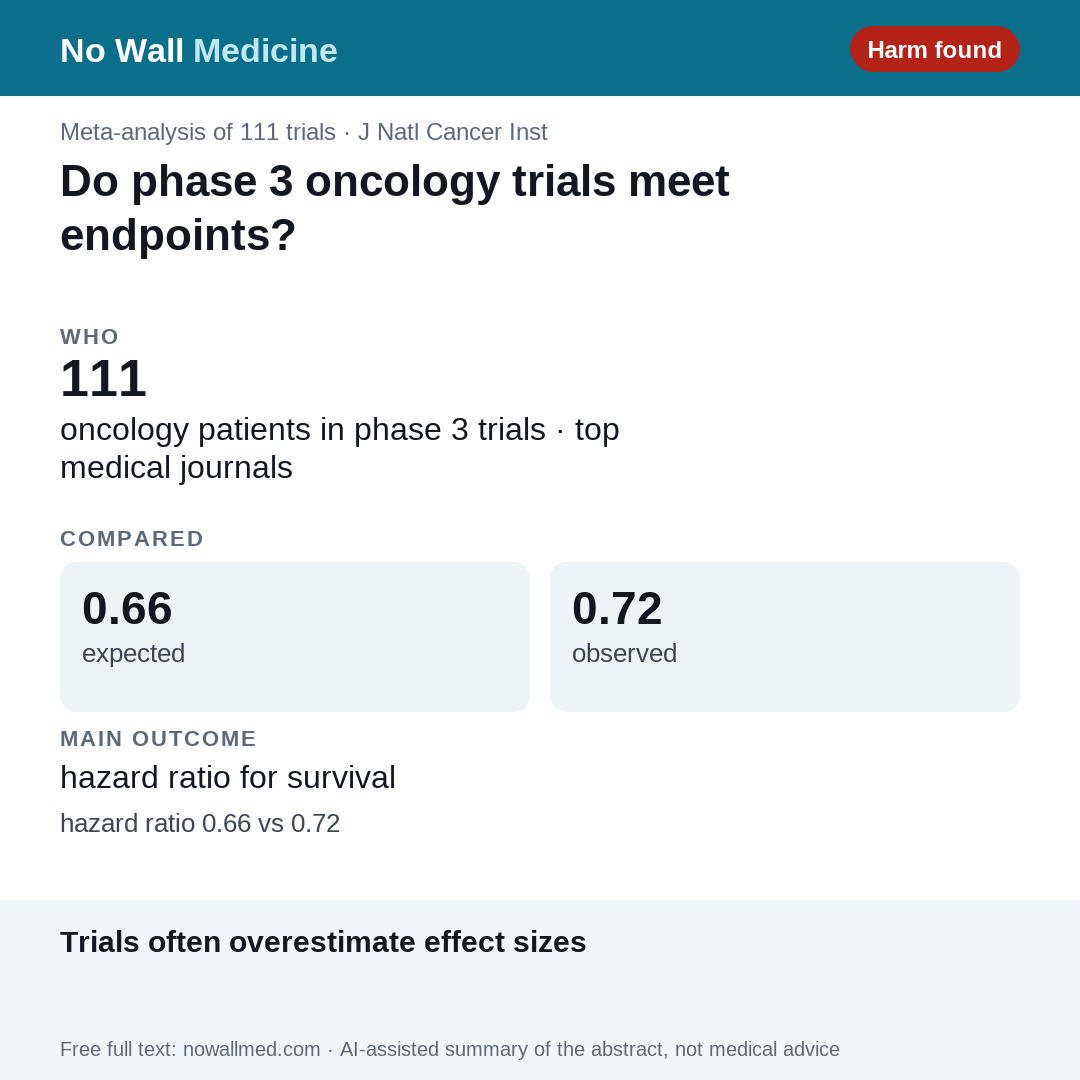
Expected vs observed effect sizes for survival endpoints in phase 3 oncology trials
Meta-analysis of 111 studiesHarm found
Do phase 3 oncology trials meet endpoints?
Who
oncology patients in phase 3 trials · top medical journals
Compared
0.66expected
0.72observed
Main outcome
hazard ratio for survival
Result: hazard ratio 0.66 vs 0.72
Bottom line: Trials often overestimate effect sizes
J Natl Cancer Inst · 2025-07-02Download image
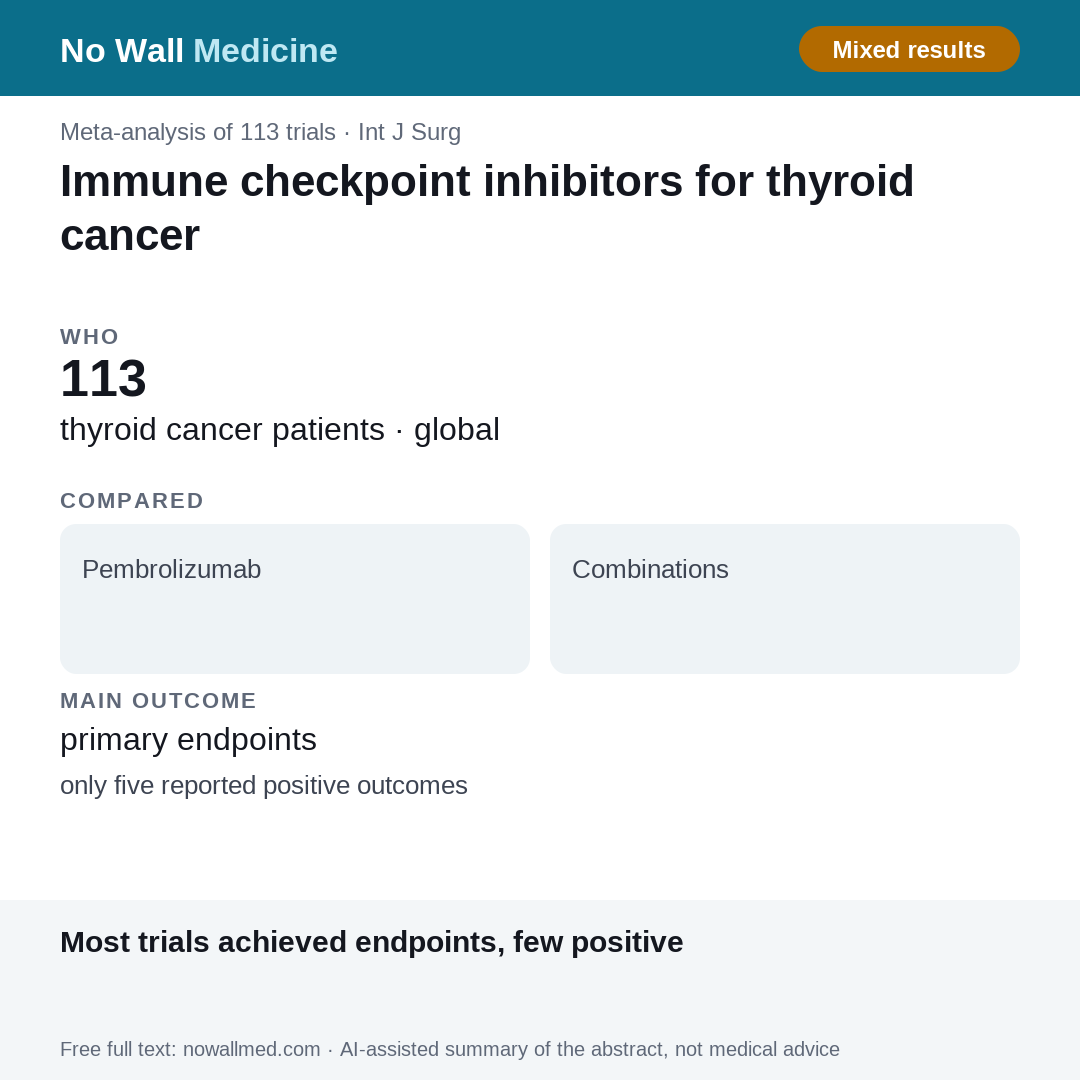
Immune checkpoint inhibitors against thyroid cancer
Meta-analysis of 113 trialsMixed results
Immune checkpoint inhibitors for thyroid cancer
Who
thyroid cancer patients · global
Compared
Pembrolizumab
Combinations
Main outcome
primary endpoints
Result: only five reported positive outcomes
Bottom line: Most trials achieved endpoints, few positive
Int J Surg · 2025-07-02Download image
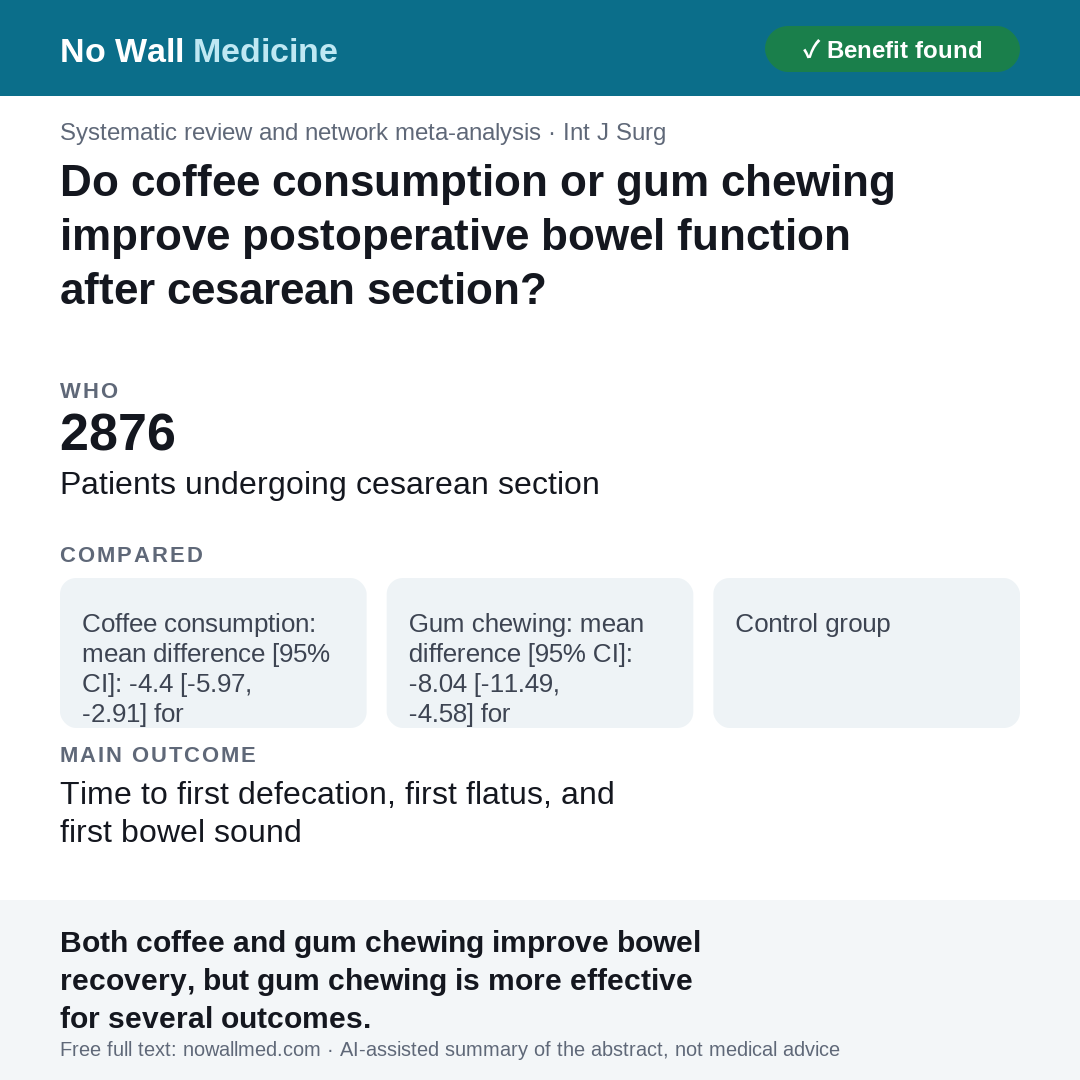
The effects of coffee versus gum chewing after cesarean on bowel functions: a systematic review and network meta-analysis
Systematic review and network meta-analysisBenefit found
Do coffee consumption or gum chewing improve postoperative bowel function after cesarean section?
Who
2876
Patients undergoing cesarean section
Compared
Coffee consumption: mean difference [95% CI]: -4.4 [-5.97, -2.91] for defecation
Gum chewing: mean difference [95% CI]: -8.04 [-11.49, -4.58] for defecation
Control group
Main outcome
Time to first defecation, first flatus, and first bowel sound
Bottom line: Both coffee and gum chewing improve bowel recovery, but gum chewing is more effective for several outcomes.
Int J Surg · 2025-07-02Download image
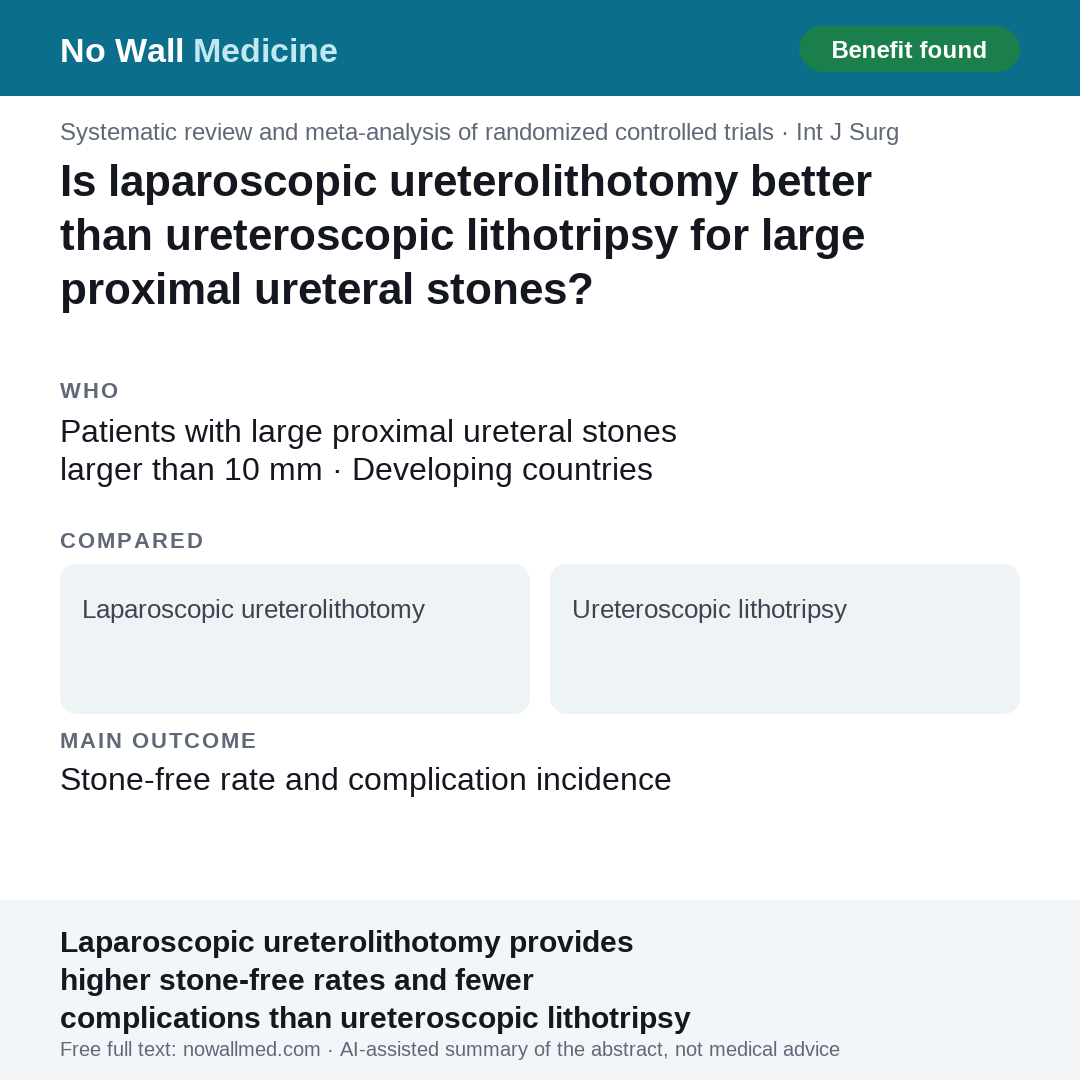
Comparison of ureteroscopic lithotripsy and laparoscopic ureterolithotomy in the treatment of large proximal ureteral stones in developing countries: a systematic review and meta-analysis
Systematic review and meta-analysis of randomized controlled trialsBenefit found
Is laparoscopic ureterolithotomy better than ureteroscopic lithotripsy for large proximal ureteral stones?
Who
Patients with large proximal ureteral stones larger than 10 mm · Developing countries
Compared
Laparoscopic ureterolithotomy
Ureteroscopic lithotripsy
Main outcome
Stone-free rate and complication incidence
Bottom line: Laparoscopic ureterolithotomy provides higher stone-free rates and fewer complications than ureteroscopic lithotripsy for large proximal ureteral stones.
Int J Surg · 2025-07-02Download image
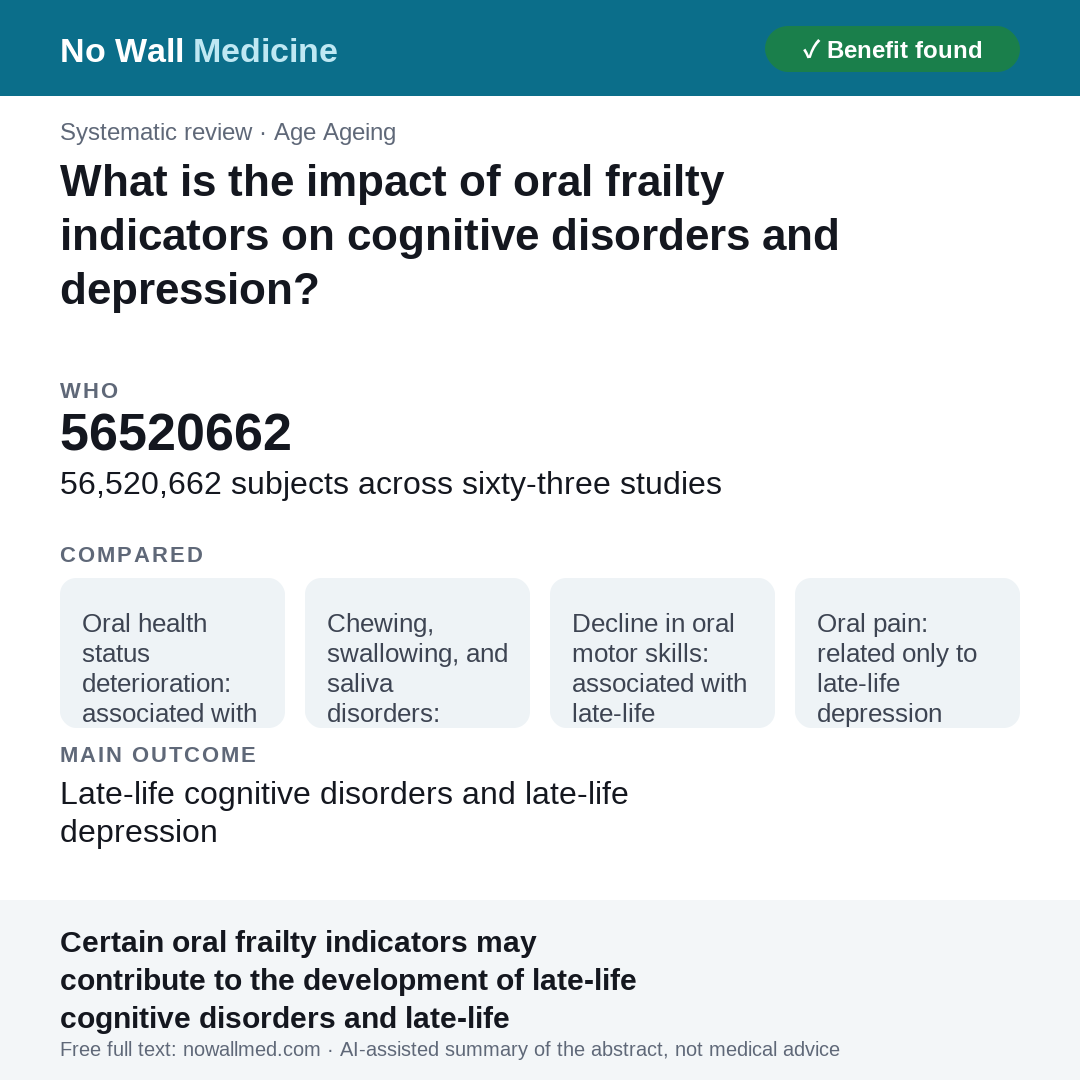
Targeting oral frailty indicators of late-life cognitive disorders and depression: a systematic review
Systematic reviewBenefit found
What is the impact of oral frailty indicators on cognitive disorders and depression?
Who
56520662
56,520,662 subjects across sixty-three studies
Compared
Oral health status deterioration: associated with cognitive impairment, mild cognitive impairment, dementia, and late-life depression
Chewing, swallowing, and saliva disorders: associated with cognitive impairment, mild cognitive impairment, dementia, and late-life depression
Decline in oral motor skills: associated with late-life cognitive impairment/decline
Oral pain: related only to late-life depression
Main outcome
Late-life cognitive disorders and late-life depression
Bottom line: Certain oral frailty indicators may contribute to the development of late-life cognitive disorders and late-life depression.
Age Ageing · 2025-07-02Download image