Visual abstracts
New randomized trials and meta-analyses from leading journals at a glance: who was studied, what was compared, and what was found. Every paper is free to read in full.
All specialtiesCardiology 4877Oncology 4138Gastroenterology & Hepatology 1942Infectious Disease 3837Neurology 1905Psychiatry & Mental Health 2273Pulmonology 2143Critical Care 1365Endocrinology & Diabetes 2580Pediatrics 2980Surgery 2559Orthopedics & Sports Medicine 931Neurosurgery 537Cardiothoracic & Vascular Surgery 674Plastic & Reconstructive Surgery 591Nephrology 1133Rheumatology 823Hematology 1109Dermatology 621Ophthalmology 543Obstetrics & Gynecology 1686Public & Global Health 1058Radiology & Imaging 648Anesthesiology 986Urology 764ENT (Otolaryngology) 503Emergency Medicine 511Allergy & Immunology 313Geriatrics 981Family Medicine & Primary Care 562Medical Genetics & Genomics 676Pathology & Laboratory Medicine 159Physical Medicine & Rehabilitation 757Palliative Care 444Nutrition 1588Digital Health & AI 2201General Medicine 321
The shadow of trauma: impaired mentalization in clinical populations - a systematic review
Systematic reviewHarm found
Does childhood trauma affect mentalization
Who
people with mental disorders
Compared
childhood trauma
no childhood trauma
Main outcome
mentalization abilities
Bottom line: Childhood trauma impairs mentalization
Psychol Med · 2025-07-08Download image

Artificial Intelligence in digital pathology of breast cancer, new era of practice?
ReviewBenefit found
Impact of AI on breast cancer pathology
Who
women with breast cancer
Compared
AI
traditional methods
Main outcome
precision pathology and medicine
Bottom line: AI improves breast cancer pathology
Int J Surg · 2025-07-08Download image

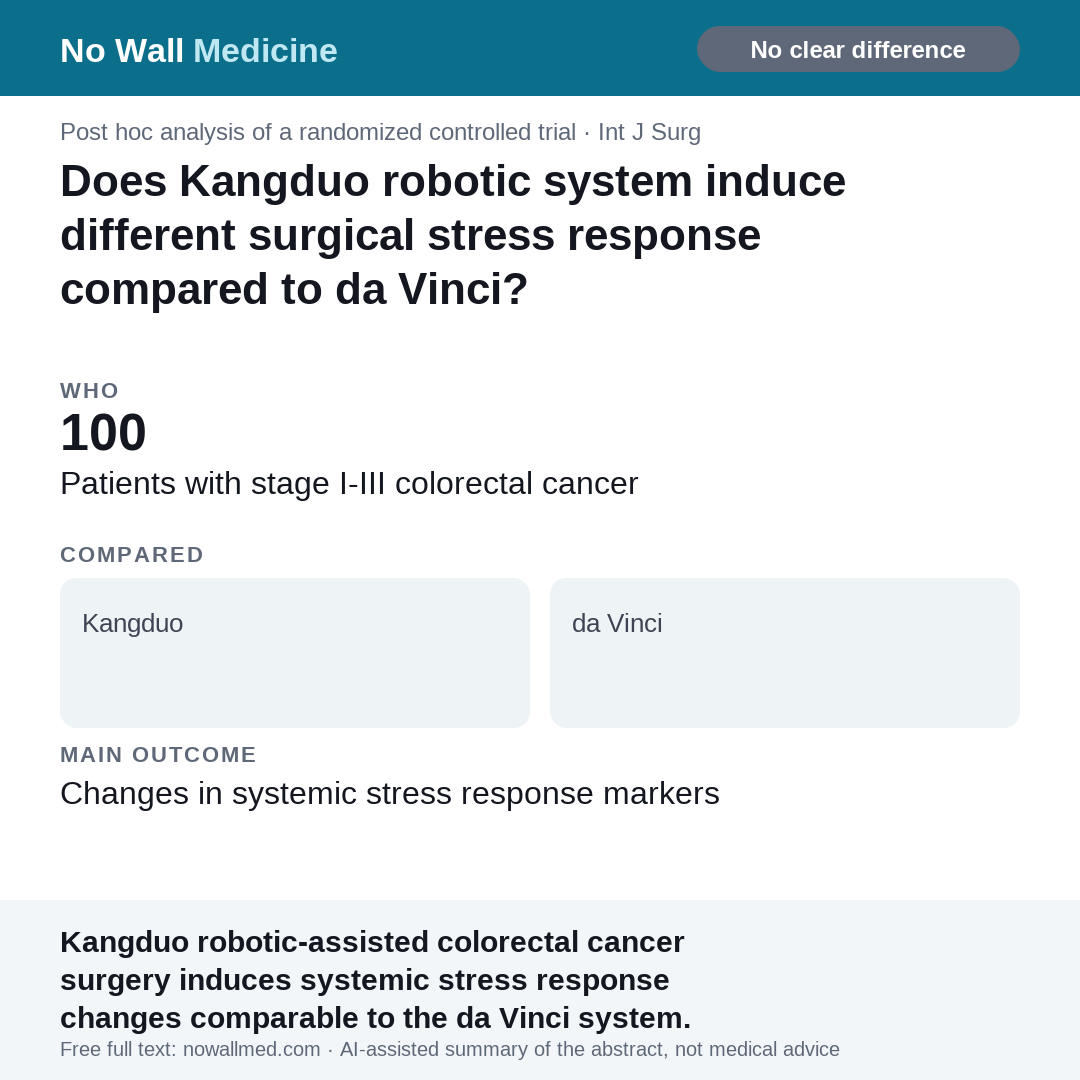
Surgical stress response in Kangduo versus da Vinci robot-assisted colorectal cancer surgery: a post hoc analysis of a randomized controlled trial
Post hoc analysis of a randomized controlled trialNo clear difference
Does Kangduo robotic system induce different surgical stress response compared to da Vinci?
Who
100
Patients with stage I-III colorectal cancer
Compared
Kangduo
da Vinci
Main outcome
Changes in systemic stress response markers
Bottom line: Kangduo robotic-assisted colorectal cancer surgery induces systemic stress response changes comparable to the da Vinci system.
Int J Surg · 2025-07-08Download image
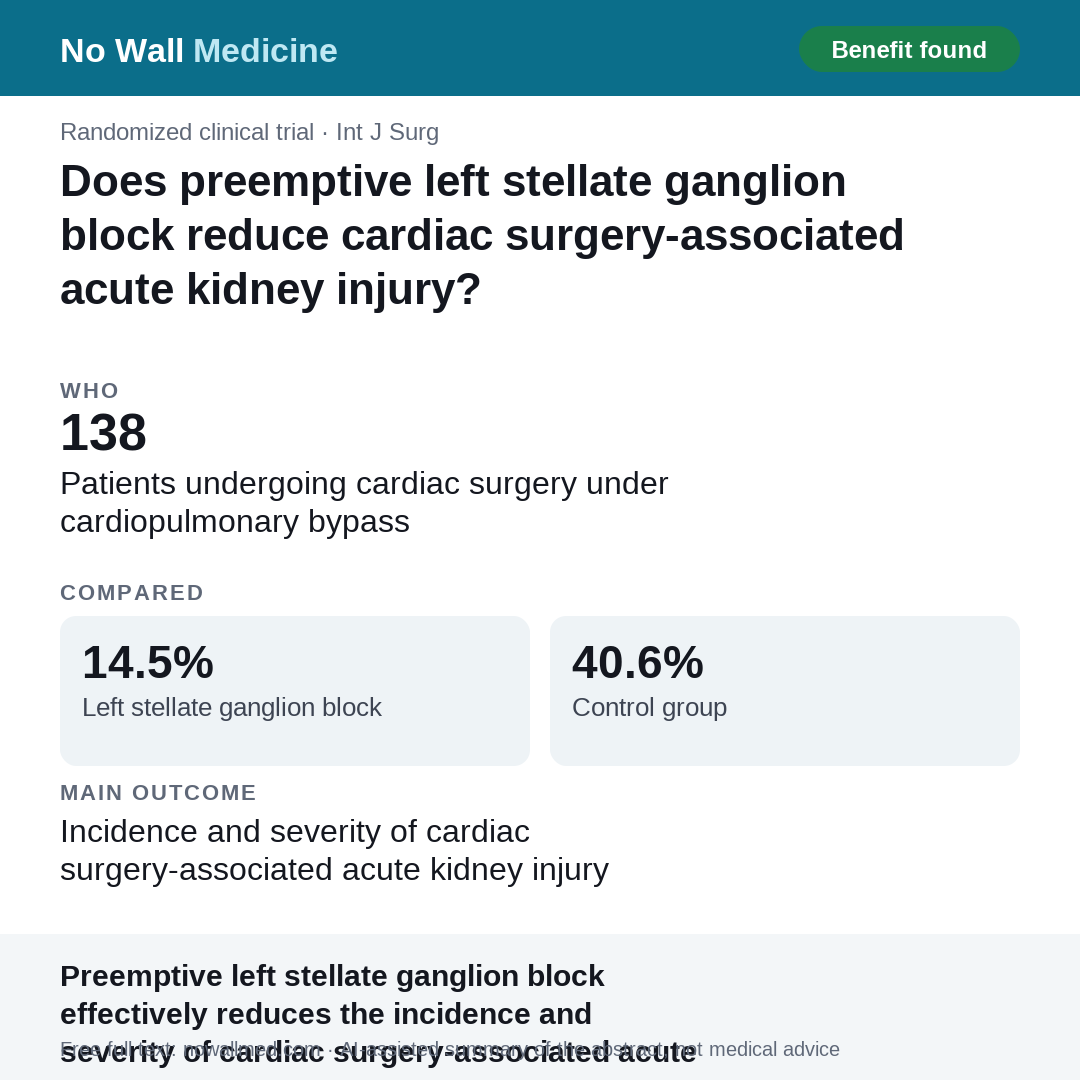
Preemptive left stellate ganglion block reduces the incidence and severity of cardiac surgery-associated acute kidney injury: a randomized clinical trial
Randomized clinical trialBenefit found
Does preemptive left stellate ganglion block reduce cardiac surgery-associated acute kidney injury?
Who
138
Patients undergoing cardiac surgery under cardiopulmonary bypass
Compared
14.5%Left stellate ganglion block (10/69)
40.6%Control group (28/69)
Main outcome
Incidence and severity of cardiac surgery-associated acute kidney injury
Result: RR 0.351, 95% CI: 0.169-0.728
Bottom line: Preemptive left stellate ganglion block effectively reduces the incidence and severity of cardiac surgery-associated acute kidney injury.
Int J Surg · 2025-07-08Download image
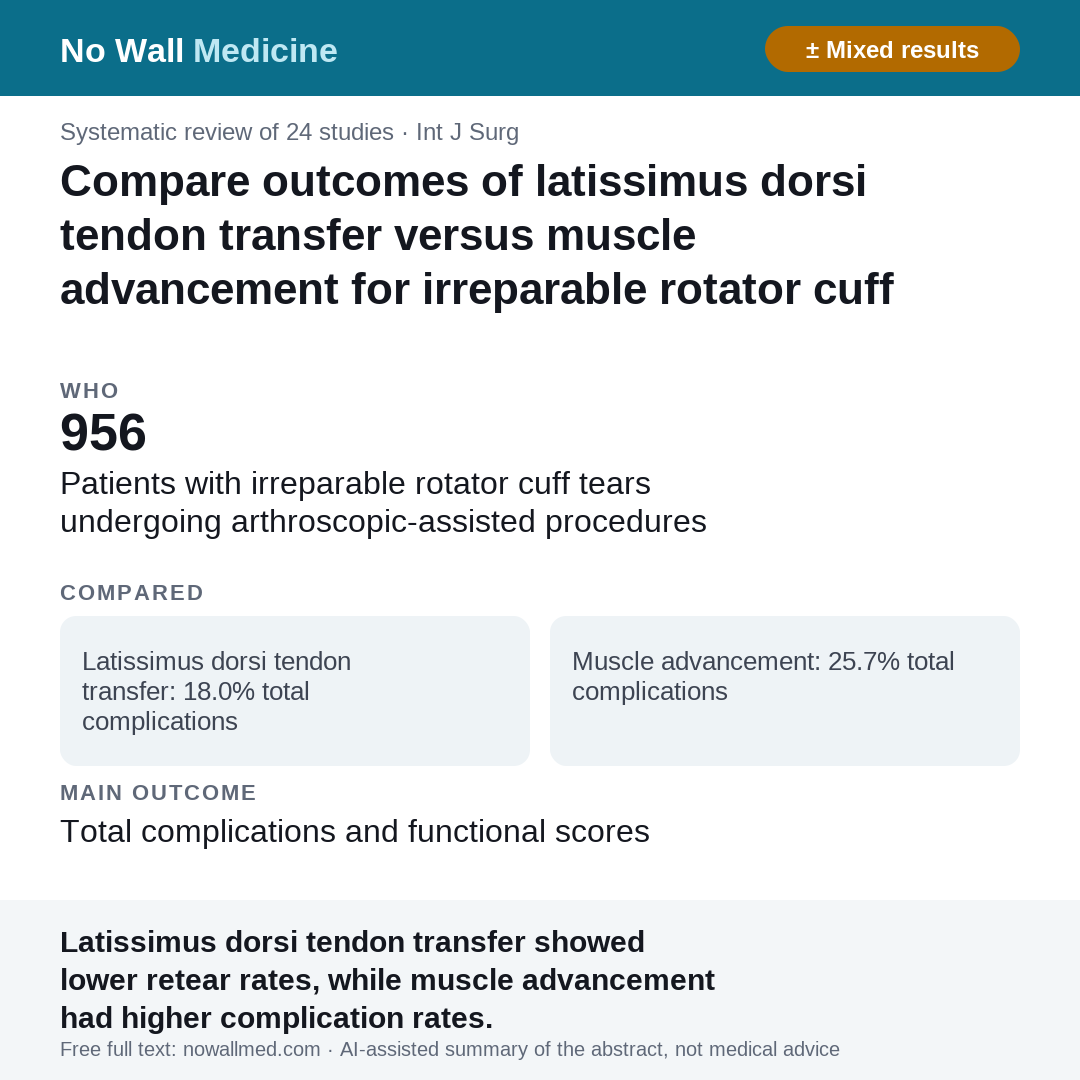
Outcome comparison of arthroscopic latissimus dorsi tendon transfer and muscle advancement for irreparable rotator cuff tear: a systematic review
Systematic review of 24 studiesMixed results
How do latissimus dorsi tendon transfer and muscle advancement compare for irreparable rotator cuff tears?
Who
956
Shoulders with irreparable rotator cuff tears and fatty degeneration
Compared
Latissimus dorsi tendon transfer: 18.0% total complications
Muscle advancement: 25.7% total complications
Main outcome
Functional scores, pain, acromiohumeral distance, range of motion, and complications
Bottom line: Both techniques improve function, but latissimus dorsi tendon transfer has lower failure and complication rates than muscle advancement.
Limitation: Significant heterogeneity was observed in most continuous outcomes.
Int J Surg · 2025-07-08Download image
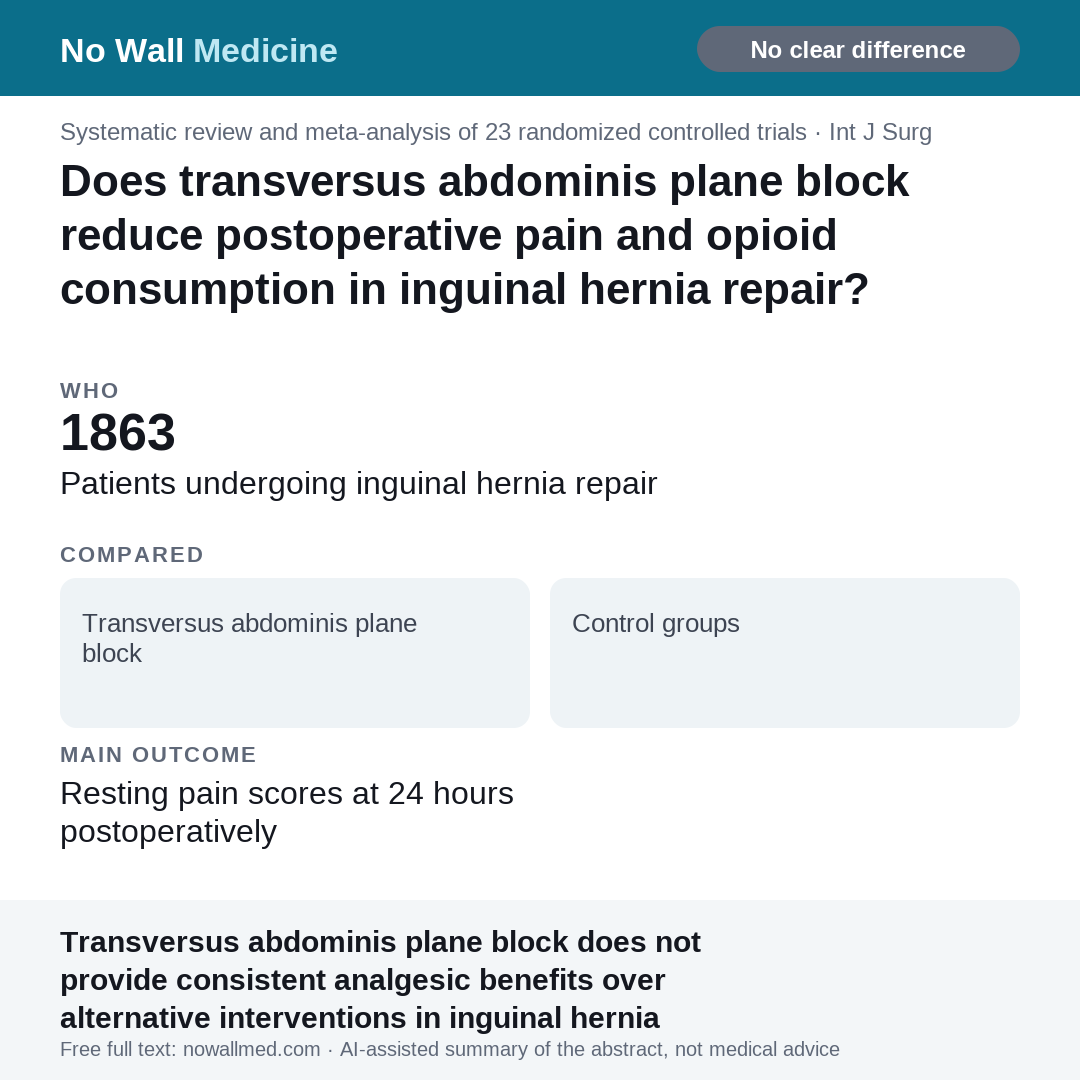
Efficacy of transversus abdominis plane blocks in inguinal hernia repair: a systematic review and meta-analysis of randomized controlled trials
Systematic review and meta-analysis of 23 randomized controlled trialsNo clear difference
Does transversus abdominis plane block reduce postoperative pain and opioid consumption in inguinal hernia repair?
Who
1863
Patients undergoing inguinal hernia repair
Compared
Transversus abdominis plane block
Control groups
Main outcome
Resting pain scores at 24 hours postoperatively
Result: mean difference -0.24 (95% CI -0.80 to 0.32)
Bottom line: Transversus abdominis plane block does not provide consistent analgesic benefits over alternative interventions in inguinal hernia repair.
Limitation: High heterogeneity (I2 = 99%) and evidence quality ranging from low to high.
Int J Surg · 2025-07-08Download image
Performance of international phenotypic criteria for prenatal exome sequencing: systematic review and comparative diagnostic accuracy study using historical individual participant data
Systematic review and comparative diagnostic accuracy studyMixed results
How do international phenotypic eligibility criteria perform for prenatal exome sequencing?
Who
1054
1054 unselected structurally abnormal fetuses · Virtual cohort from a published systematic review
Compared
National Health Service criteria: 27.8% (69/248) diagnostic yield
British Columbia criteria: AUC 0.73 (95% CI 0.58-0.79)
Main outcome
Diagnostic yield for pathogenic and likely pathogenic variants
Result: NHS sensitivity 49.8% (95% CI, 31.7-67.9%)
Bottom line: Existing phenotypic eligibility criteria for prenatal exome sequencing performed modestly across different international sets.
Ultrasound Obstet Gynecol · 2025-07-08Download image

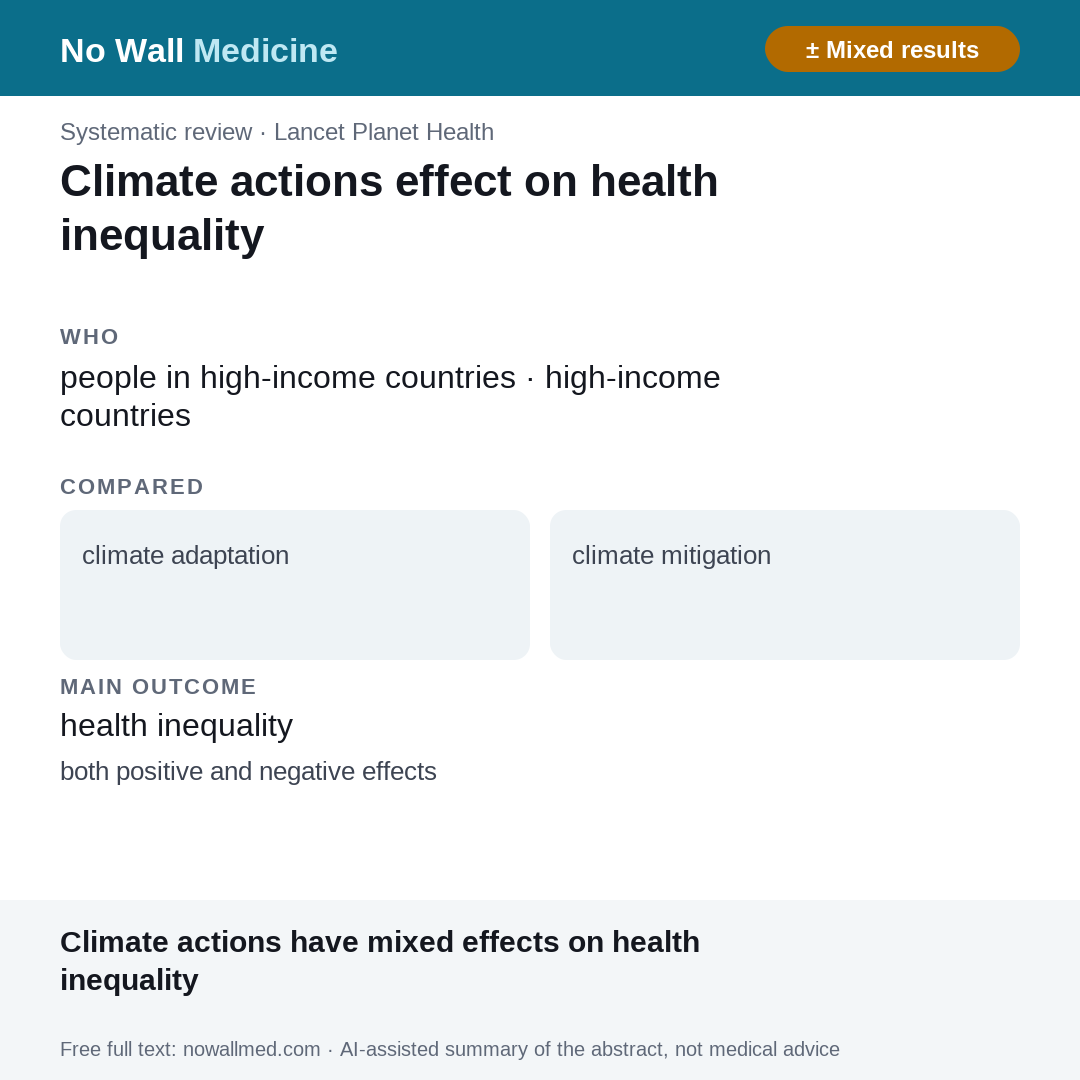
The effect of climate mitigation and adaptation policies on health and health inequalities: a systematic review
Systematic reviewMixed results
Climate actions effect on health inequality
Who
158
people in high-income countries · high-income countries
Compared
climate adaptation
climate mitigation
Main outcome
health inequality
Result: both positive and negative effects
Bottom line: Climate actions have mixed effects on health inequality
Lancet Planet Health · 2025-07-08Download image
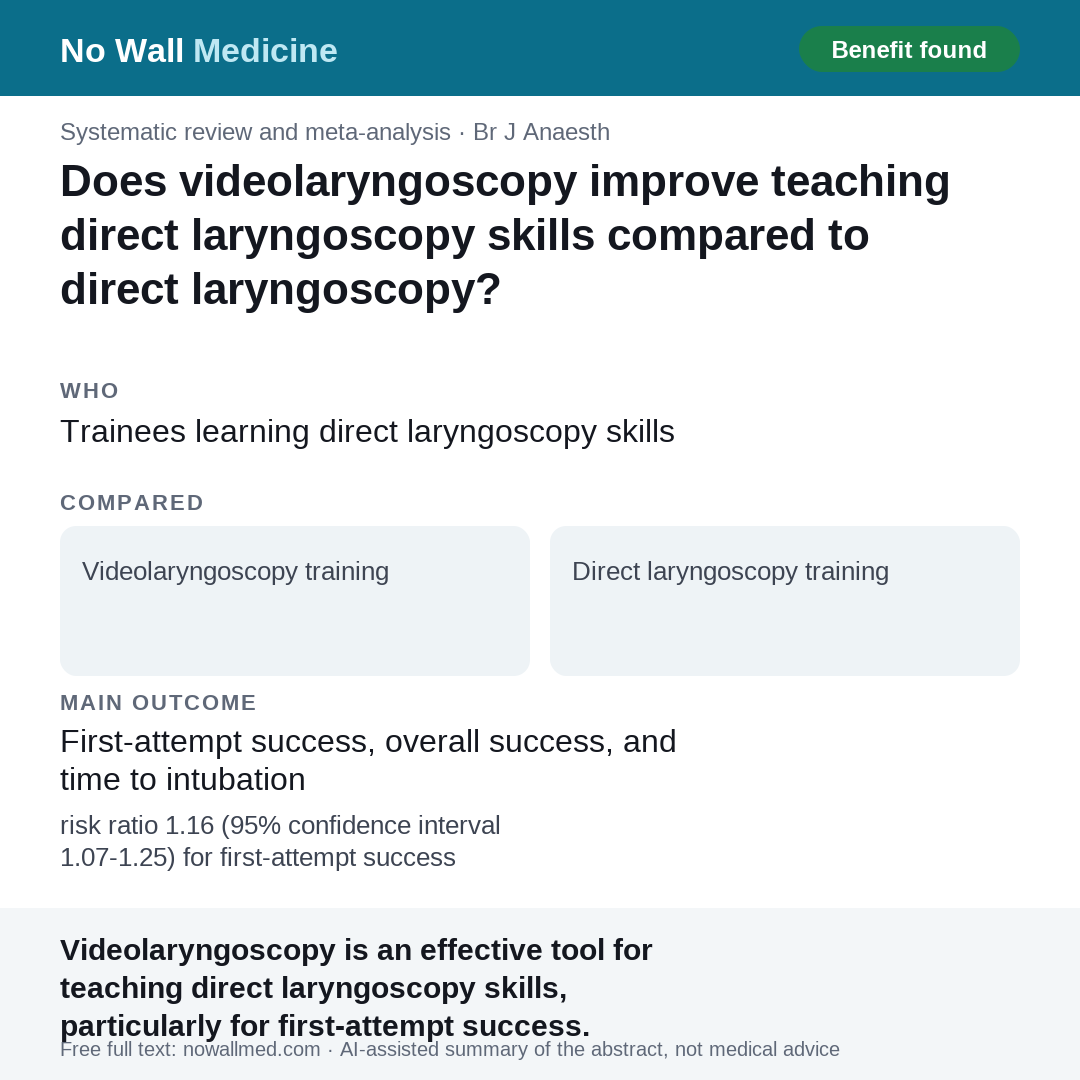
Videolaryngoscopy versus direct laryngoscopy for teaching direct laryngoscopy skills: a systematic review and meta-analysis
Systematic review and meta-analysisBenefit found
Does videolaryngoscopy improve teaching direct laryngoscopy skills compared to direct laryngoscopy?
Who
Trainees learning direct laryngoscopy skills
Compared
Videolaryngoscopy training
Direct laryngoscopy training
Main outcome
First-attempt success, overall success, and time to intubation
Result: risk ratio 1.16 (95% confidence interval 1.07-1.25) for first-attempt success
Bottom line: Videolaryngoscopy is an effective tool for teaching direct laryngoscopy skills, particularly for first-attempt success.
Limitation: Small sample sizes and heterogeneous data presentation.
Br J Anaesth · 2025-07-08Download image
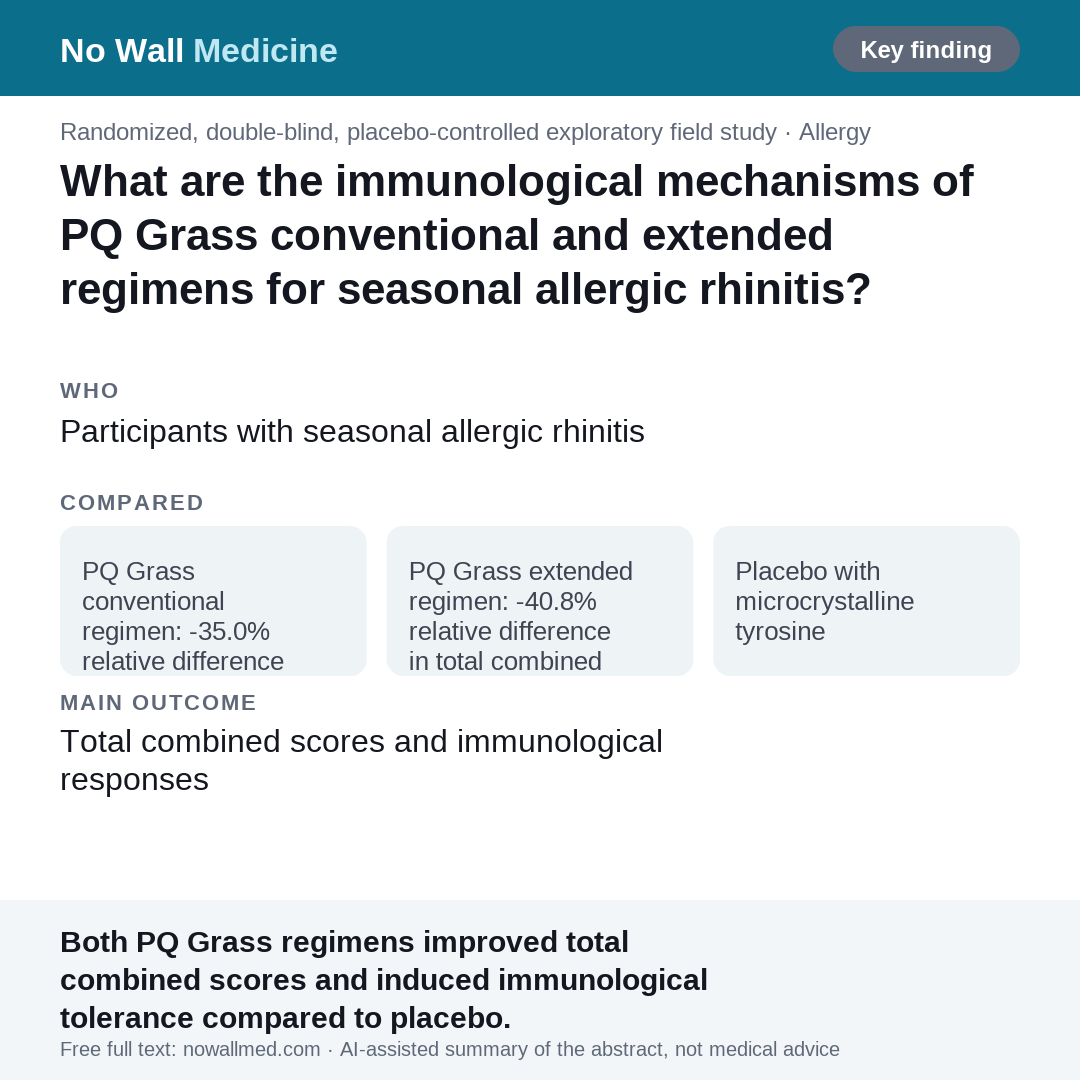
Modulation of Cellular, Molecular, and Humoral Responses by PQ Grass 27,600 SU for the Treatment of Seasonal Allergic Rhinitis: A Randomised Double Blind Placebo Control Exploratory Field Study
Randomized, double-blind, placebo-controlled exploratory field studyBenefit found
What are the immunological mechanisms of PQ Grass conventional and extended regimens for seasonal allergic rhinitis?
Who
Participants with seasonal allergic rhinitis
Compared
PQ Grass conventional regimen: -35.0% relative difference in total combined scores
PQ Grass extended regimen: -40.8% relative difference in total combined scores
Placebo with microcrystalline tyrosine
Main outcome
Total combined scores and immunological responses
Bottom line: Both PQ Grass regimens improved total combined scores and induced immunological tolerance compared to placebo.
Allergy · 2025-07-08Download image
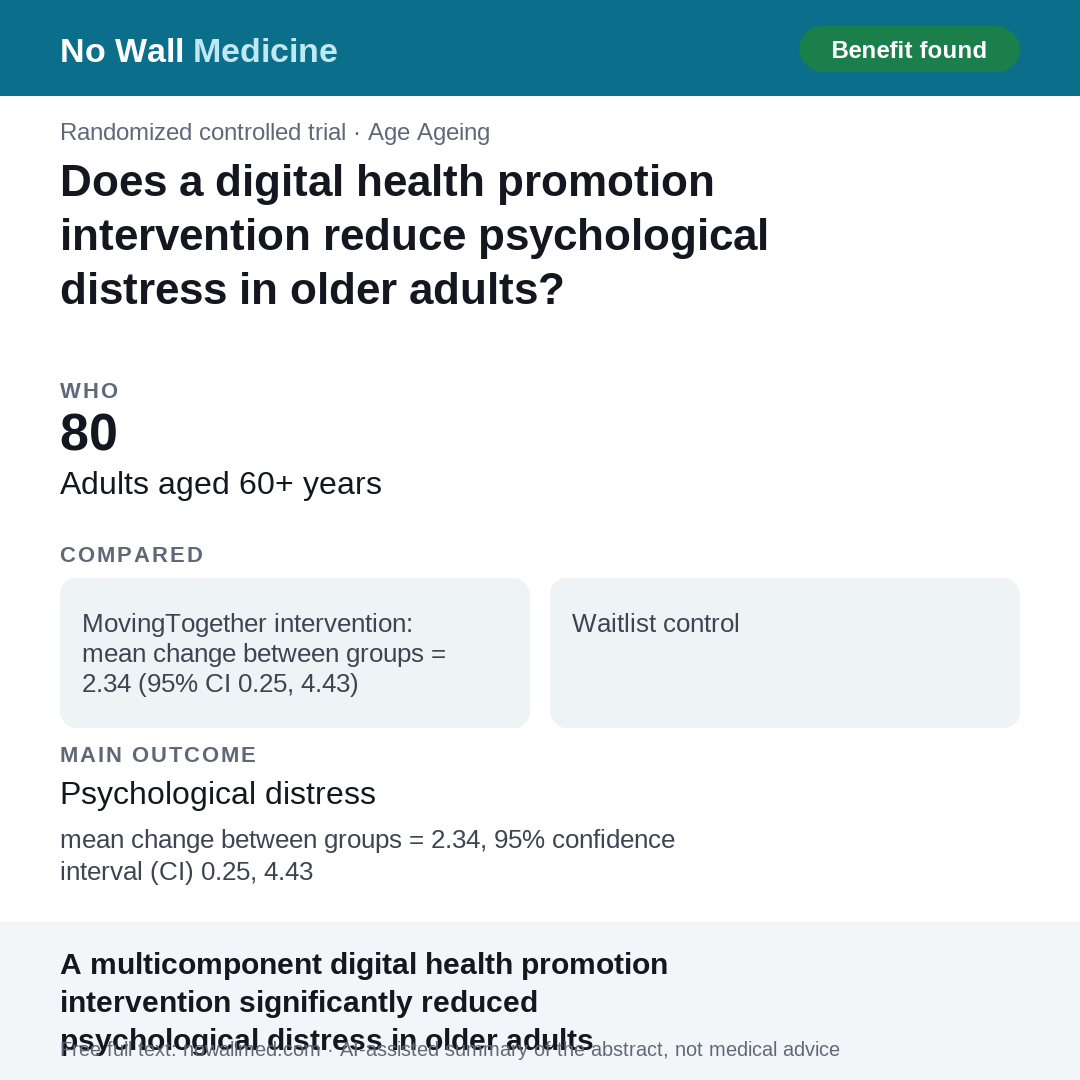
MovingTogether: a randomised controlled trial of a mental-health-informed, digital health promotion intervention for older adults
Randomized controlled trialBenefit found
Does a digital health promotion intervention reduce psychological distress in older adults?
Who
80
Adults aged 60+ years
Compared
MovingTogether intervention: mean change between groups = 2.34 (95% CI 0.25, 4.43)
Waitlist control
Main outcome
Psychological distress
Result: mean change between groups = 2.34, 95% confidence interval (CI) 0.25, 4.43
Bottom line: A multicomponent digital health promotion intervention significantly reduced psychological distress in older adults postintervention and at follow-up.
Age Ageing · 2025-07-08Download image
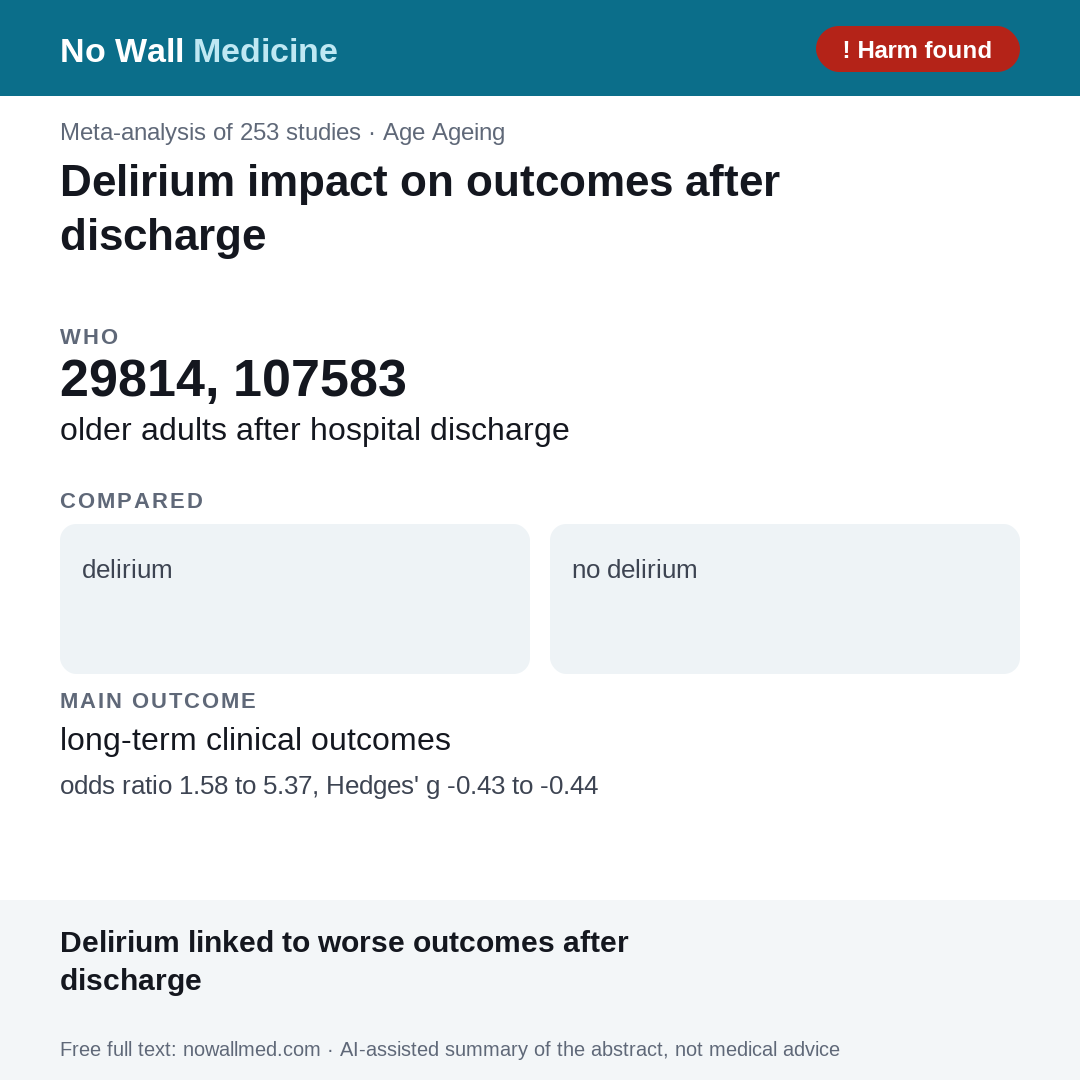
Long-term clinical outcomes of delirium after hospital discharge: a systematic review and meta-analysis
Meta-analysis of 253 studiesHarm found
Delirium impact on outcomes after discharge
Who
29814, 107583
older adults after hospital discharge
Compared
delirium
no delirium
Main outcome
long-term clinical outcomes
Result: odds ratio 1.58 to 5.37, Hedges' g -0.43 to -0.44
Bottom line: Delirium linked to worse outcomes after discharge
Age Ageing · 2025-07-08Download image
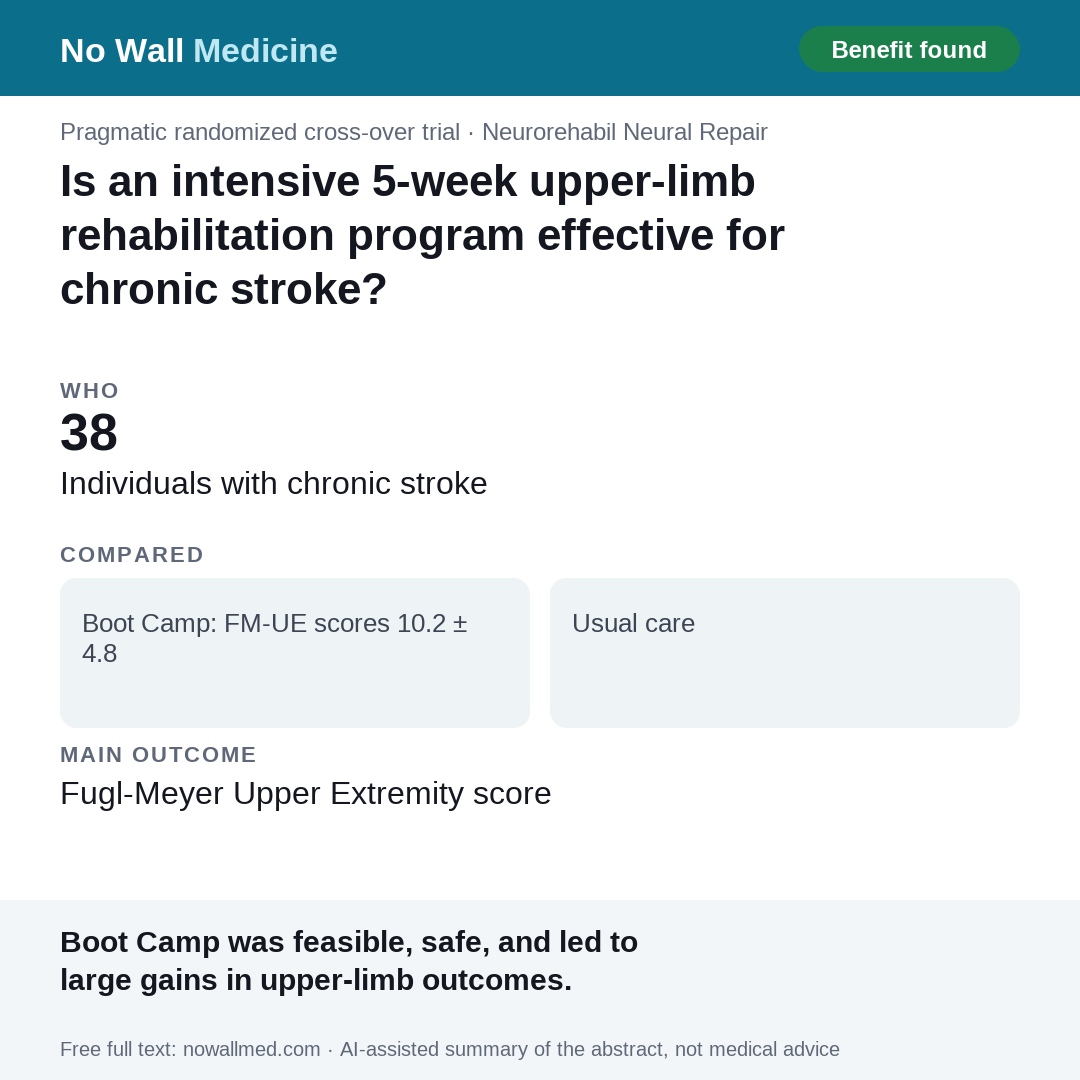
Boot Camp: A Randomized Cross-Over Trial of Intensive Upper-Limb Rehabilitation After Chronic Stroke
Pragmatic randomized cross-over trialBenefit found
Is an intensive 5-week upper-limb rehabilitation program effective for chronic stroke?
Who
38
Individuals with chronic stroke
Compared
Boot Camp: FM-UE scores 10.2 ± 4.8
Usual care
Main outcome
Fugl-Meyer Upper Extremity score
Bottom line: Boot Camp was feasible, safe, and led to large gains in upper-limb outcomes.
Neurorehabil Neural Repair · 2025-07-08Download image
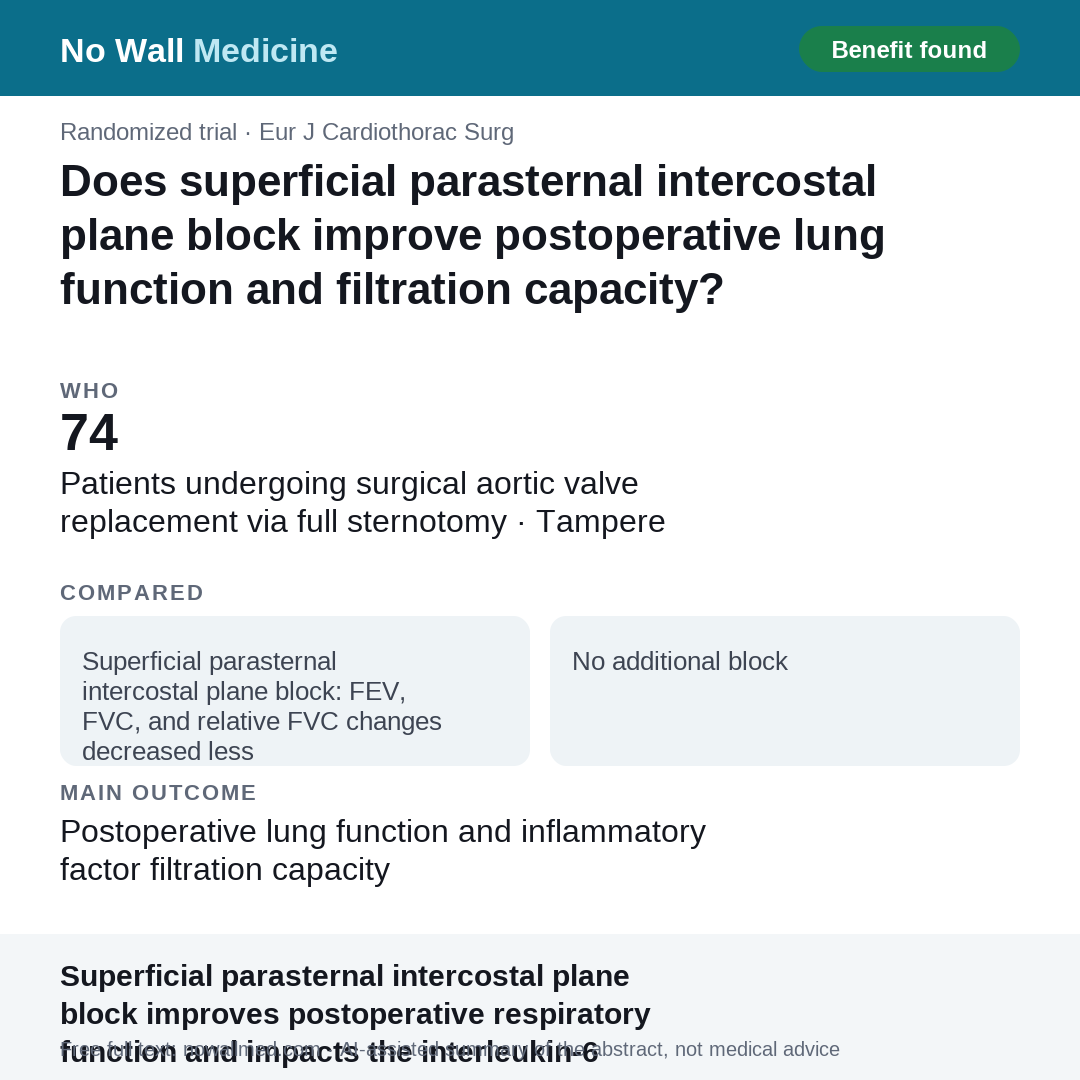
Superficial Parasternal Intercostal Plane Block and Full Sternotomy; A Randomized Trial
Randomized trialBenefit found
Does superficial parasternal intercostal plane block improve postoperative lung function and filtration capacity?
Who
74
Patients undergoing surgical aortic valve replacement via full sternotomy · Tampere University Hospital, Finland
Compared
Superficial parasternal intercostal plane block: FEV, FVC, and relative FVC changes decreased less
No additional block
Main outcome
Postoperative lung function and inflammatory factor filtration capacity
Bottom line: Superficial parasternal intercostal plane block improves postoperative respiratory function and impacts the interleukin-6 ratio.
Eur J Cardiothorac Surg · 2025-07-08Download image
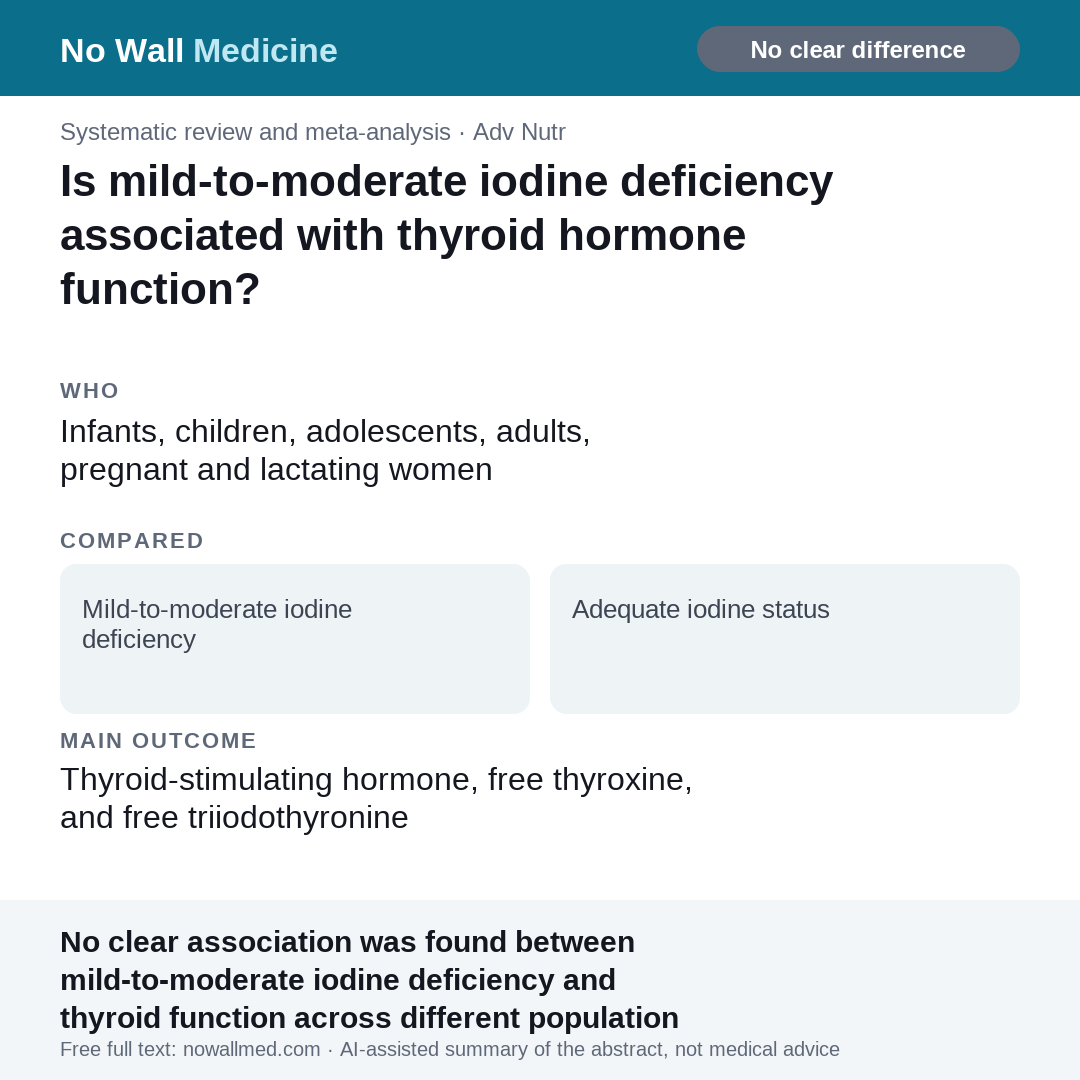
Association of Mild-to-Moderate Iodine Deficiency With Thyroid Function-A Systematic Review and Meta-analysis
Systematic review and meta-analysisNo clear difference
Is mild-to-moderate iodine deficiency associated with thyroid hormone function?
Who
Infants, children, adolescents, adults, pregnant and lactating women
Compared
Mild-to-moderate iodine deficiency
Adequate iodine status
Main outcome
Thyroid-stimulating hormone, free thyroxine, and free triiodothyronine
Result: TSH mean difference 0.03 (95% CI -0.05, 0.12) mIU/L
Bottom line: No clear association was found between mild-to-moderate iodine deficiency and thyroid function across different population groups.
Adv Nutr · 2025-07-08Download image
GWAS meta-analysis identifies five susceptibility loci for endometrial cancer
Meta-analysis of GWASMixed results
Genetic risk for endometrial cancer
Who
17278
endometrial cancer cases and controls · UK, Finland, Estonia, Japan
Compared
cases
controls
Main outcome
genetic susceptibility loci
Result: five additional risk loci identified
Bottom line: Five new genetic risk loci found
Funded by: Wilhelm Sander Foundation, NHMRC
eBioMedicine · 2025-07-08Download image

Antiseptic wound irrigation to prevent surgical site infection after laparotomy: meta-analysis
Systematic review and meta-analysisMixed results
Does antiseptic wound irrigation prevent surgical site infection after laparotomy?
Who
6368
Adult patients undergoing laparotomy
Compared
Antiseptic irrigation
Saline irrigation
Main outcome
Surgical site infection rate
Result: relative risk 0.80 (95% confidence interval 0.58 to 1.09)
Bottom line: Irrigation likely reduces infection rates, but antiseptic versus saline irrigation shows uncertain results.
Limitation: Very low evidence certainty for antiseptic versus saline irrigation comparison.
BJS Open · 2025-07-08Download image

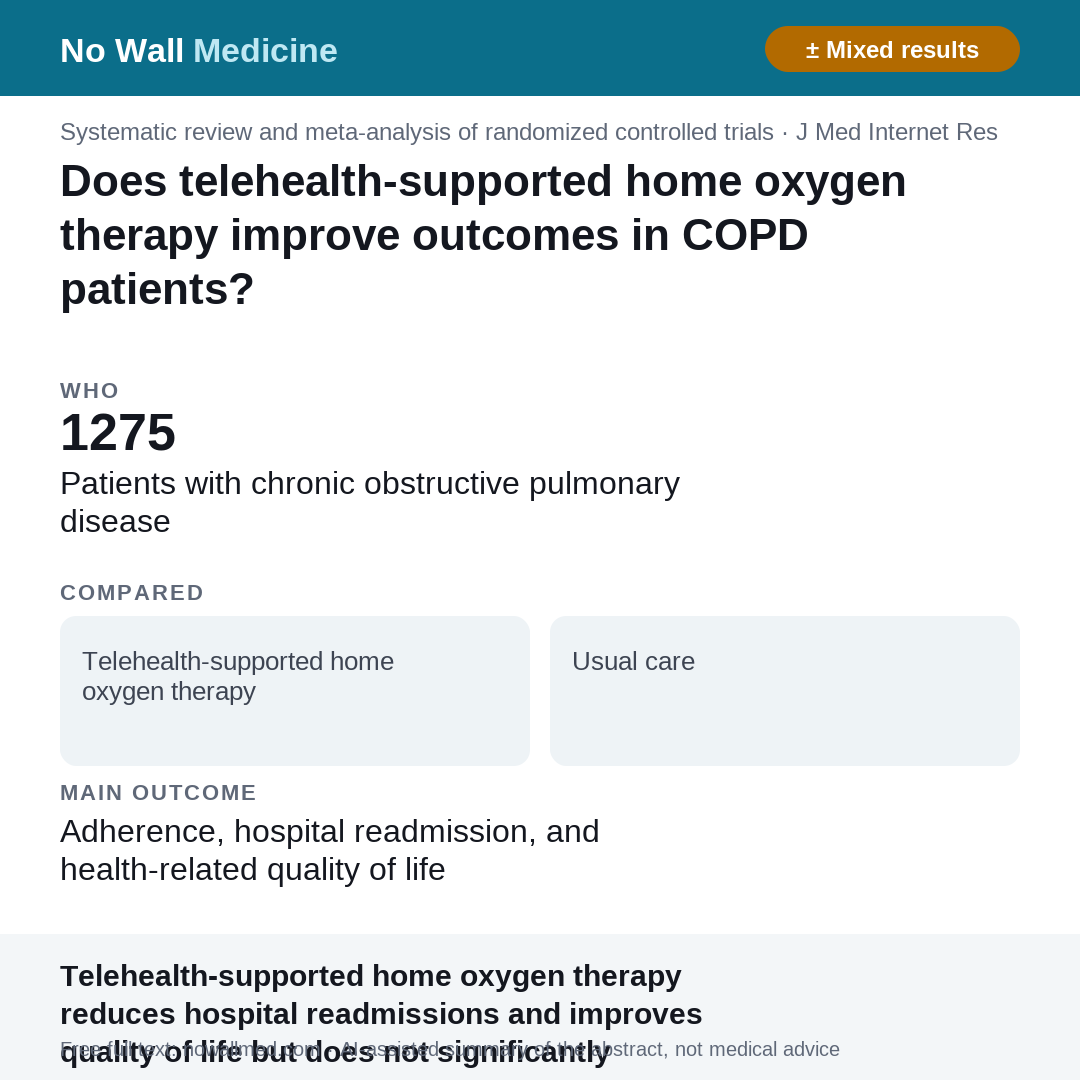
Clinical and Cost-Effectiveness of Telehealth-Supported Home Oxygen Therapy on Adherence, Hospital Readmission, and Health-Related Quality of Life in Patients With Chronic Obstructive Pulmonary Disease: Systematic Review and Meta-Analysis of Randomized Controlled Trials
Systematic review and meta-analysis of randomized controlled trialsMixed results
Does telehealth-supported home oxygen therapy improve outcomes in COPD patients?
Who
1275
Patients with chronic obstructive pulmonary disease
Compared
Telehealth-supported home oxygen therapy
Usual care
Main outcome
Adherence, hospital readmission, and health-related quality of life
Result: hospital readmissions SMD=-0.40 (95% CI -0.60 to -0.21); quality of life SMD=0.49 (95% CI 0.25-0.73)
Bottom line: Telehealth-supported home oxygen therapy reduces hospital readmissions and improves quality of life but does not significantly improve therapy adherence.
Limitation: Limited by study-level risk of bias, variability in intervention designs, and imprecision of effect estimates.
J Med Internet Res · 2025-07-08Download image
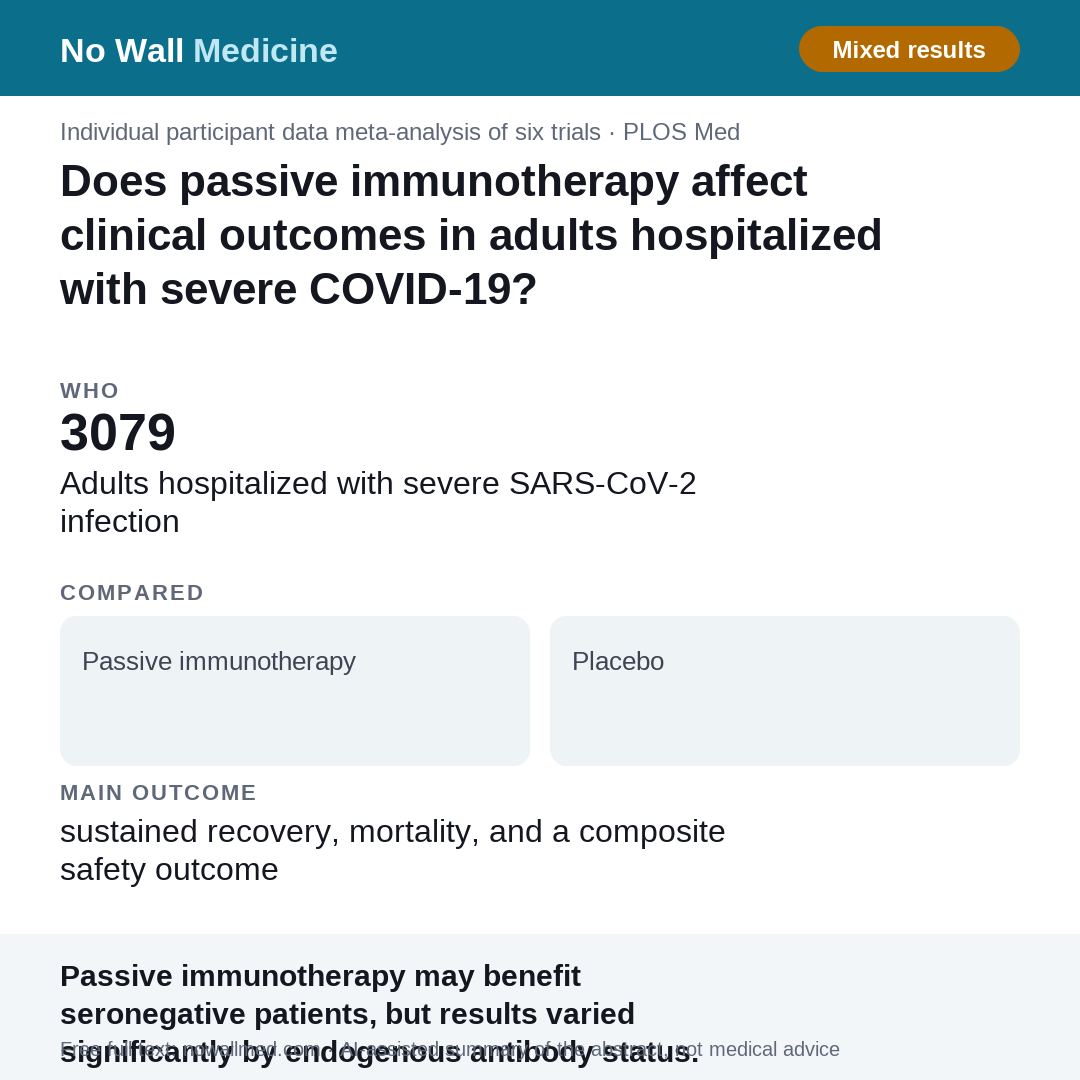
Passive immunotherapy for adults hospitalized with COVID-19: An individual participant data meta-analysis of six randomized controlled trials
Individual participant data meta-analysis of six trialsMixed results
Does passive immunotherapy affect clinical outcomes in adults hospitalized with severe COVID-19?
Who
3079
Adults hospitalized with severe SARS-CoV-2 infection
Compared
Passive immunotherapy
Placebo
Main outcome
sustained recovery, mortality, and a composite safety outcome
Result: sustained recovery rate ratio 1.06 (95% CI 0.99 to 1.14)
Bottom line: Passive immunotherapy may benefit seronegative patients, but results varied significantly by endogenous antibody status.
Limitation: results are limited to the six trials in ACTIV-3/TICO and ITAC
PLOS Med · 2025-07-07Download image
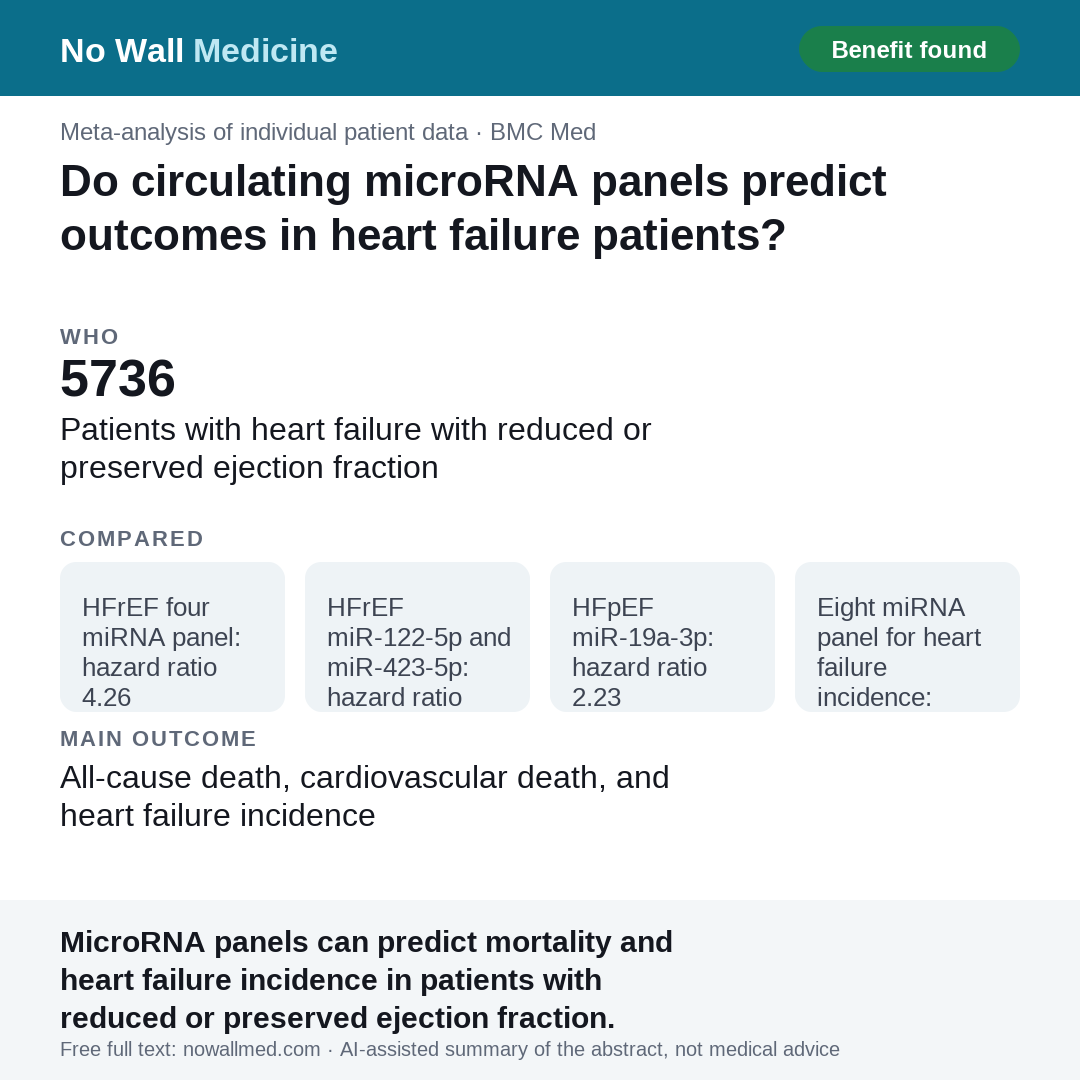
Prognostic and predictive microRNA panels for heart failure patients with reduced or preserved ejection fraction: a meta-analysis of Kaplan-Meier-based individual patient data
Meta-analysis of individual patient dataBenefit found
Do circulating microRNA panels predict outcomes in heart failure patients?
Who
5736
Patients with heart failure with reduced or preserved ejection fraction
Compared
HFrEF four miRNA panel: hazard ratio 4.26 [2.68-6.76]
HFrEF miR-122-5p and miR-423-5p: hazard ratio 3.61 [2.67-4.87]
HFpEF miR-19a-3p: hazard ratio 2.23 [1.16-4.27]
Eight miRNA panel for heart failure incidence: hazard ratio 2.14 [1.81-2.53]
Main outcome
All-cause death, cardiovascular death, and heart failure incidence
Bottom line: MicroRNA panels can predict mortality and heart failure incidence in patients with reduced or preserved ejection fraction.
Limitation: More rigorously designed longitudinal studies are needed to validate clinical application.
BMC Med · 2025-07-07Download image