Visual abstracts
New randomized trials and meta-analyses from leading journals at a glance: who was studied, what was compared, and what was found. Every paper is free to read in full.
All specialtiesCardiology 4763Oncology 4042Gastroenterology & Hepatology 1902Infectious Disease 3756Neurology 1872Psychiatry & Mental Health 2214Pulmonology 2042Critical Care 1319Endocrinology & Diabetes 2544Pediatrics 2889Surgery 2479Orthopedics & Sports Medicine 917Neurosurgery 525Cardiothoracic & Vascular Surgery 656Plastic & Reconstructive Surgery 574Nephrology 1107Rheumatology 810Hematology 1090Dermatology 611Ophthalmology 532Obstetrics & Gynecology 1645Public & Global Health 1037Radiology & Imaging 617Anesthesiology 957Urology 745ENT (Otolaryngology) 494Emergency Medicine 481Allergy & Immunology 309Geriatrics 972Family Medicine & Primary Care 533Medical Genetics & Genomics 659Pathology & Laboratory Medicine 156Physical Medicine & Rehabilitation 734Palliative Care 421Nutrition 1560Digital Health & AI 2133General Medicine 318
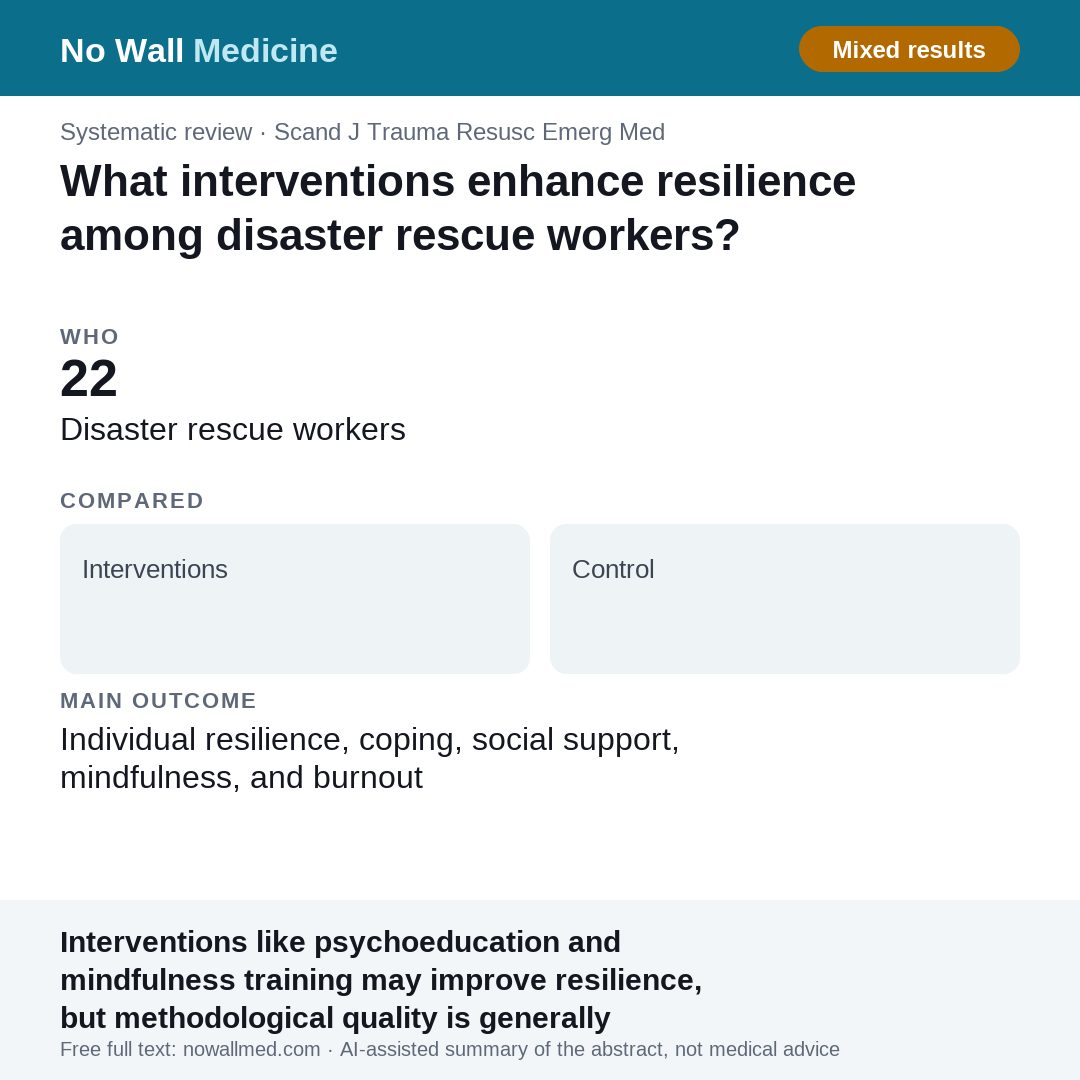
Resilience enhancement interventions for disaster rescue workers: a systematic review
Systematic reviewMixed results
What interventions enhance resilience among disaster rescue workers?
Who
Disaster rescue workers
Compared
Interventions
Control
Main outcome
Individual resilience, coping, social support, mindfulness, and burnout
Bottom line: Interventions like psychoeducation and mindfulness training may improve resilience, but methodological quality is generally sub-optimal.
Limitation: The methodological quality of these interventions was generally sub-optimal.
Scand J Trauma Resusc Emerg Med · 2025-05-19Download image
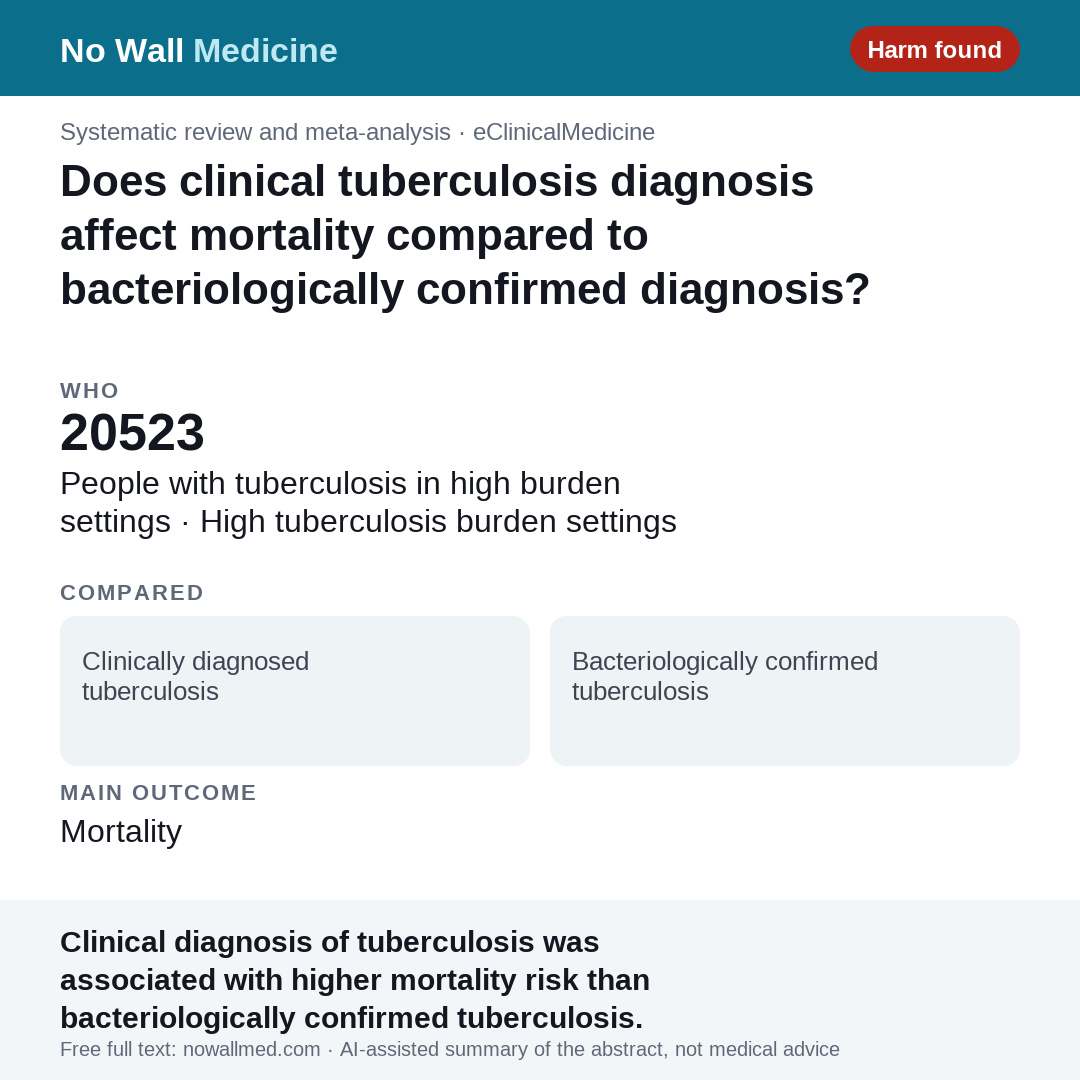
Clinically diagnosed tuberculosis and mortality in high burden settings: a systematic review and meta-analysis
Systematic review and meta-analysisKey finding
Does clinical tuberculosis diagnosis affect mortality compared to bacteriologically confirmed diagnosis?
Who
People with tuberculosis in high burden settings · High tuberculosis burden settings
Compared
Clinically diagnosed tuberculosis
Bacteriologically confirmed tuberculosis
Main outcome
Mortality
Result: risk ratio 1·5 (95% CI: 1·0-2·2)
Bottom line: Clinical diagnosis of tuberculosis was associated with higher mortality risk than bacteriologically confirmed tuberculosis.
Funded by: UK National Institute for Health and Care Research; US National Institutes of Health
eClinicalMedicine · 2025-05-17Download image
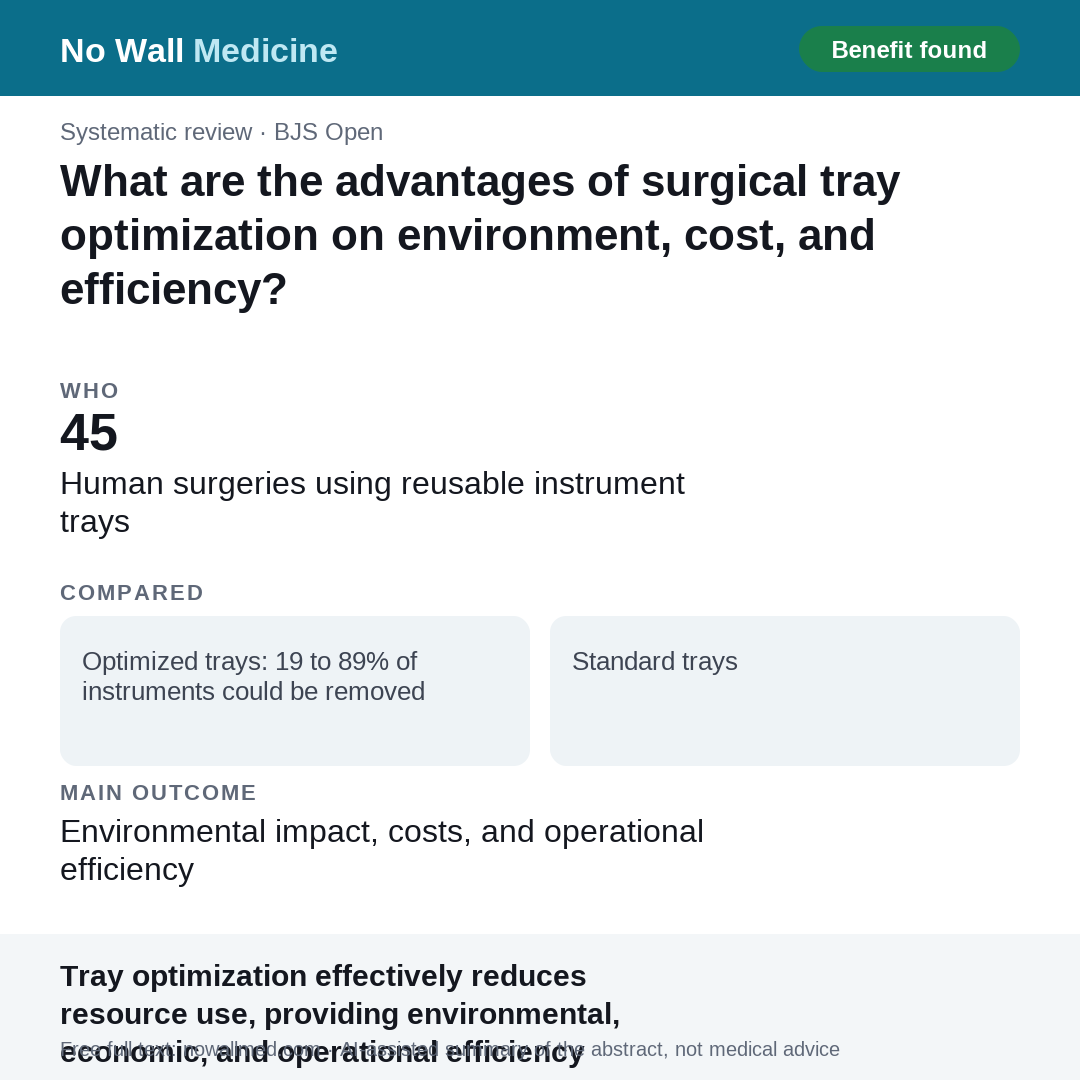
Reducing surgical instrument usage: systematic review of approaches for tray optimization and its advantages on environmental impact, costs and efficiency
Systematic reviewBenefit found
What are the advantages of surgical tray optimization on environment, cost, and efficiency?
Who
45
Human surgeries using reusable instrument trays
Compared
Optimized trays: 19 to 89% of instruments could be removed
Standard trays
Main outcome
Environmental impact, costs, and operational efficiency
Bottom line: Tray optimization effectively reduces resource use, providing environmental, economic, and operational efficiency benefits.
Limitation: Half of the included studies showed a serious risk of bias.
BJS Open · 2025-05-17Download image
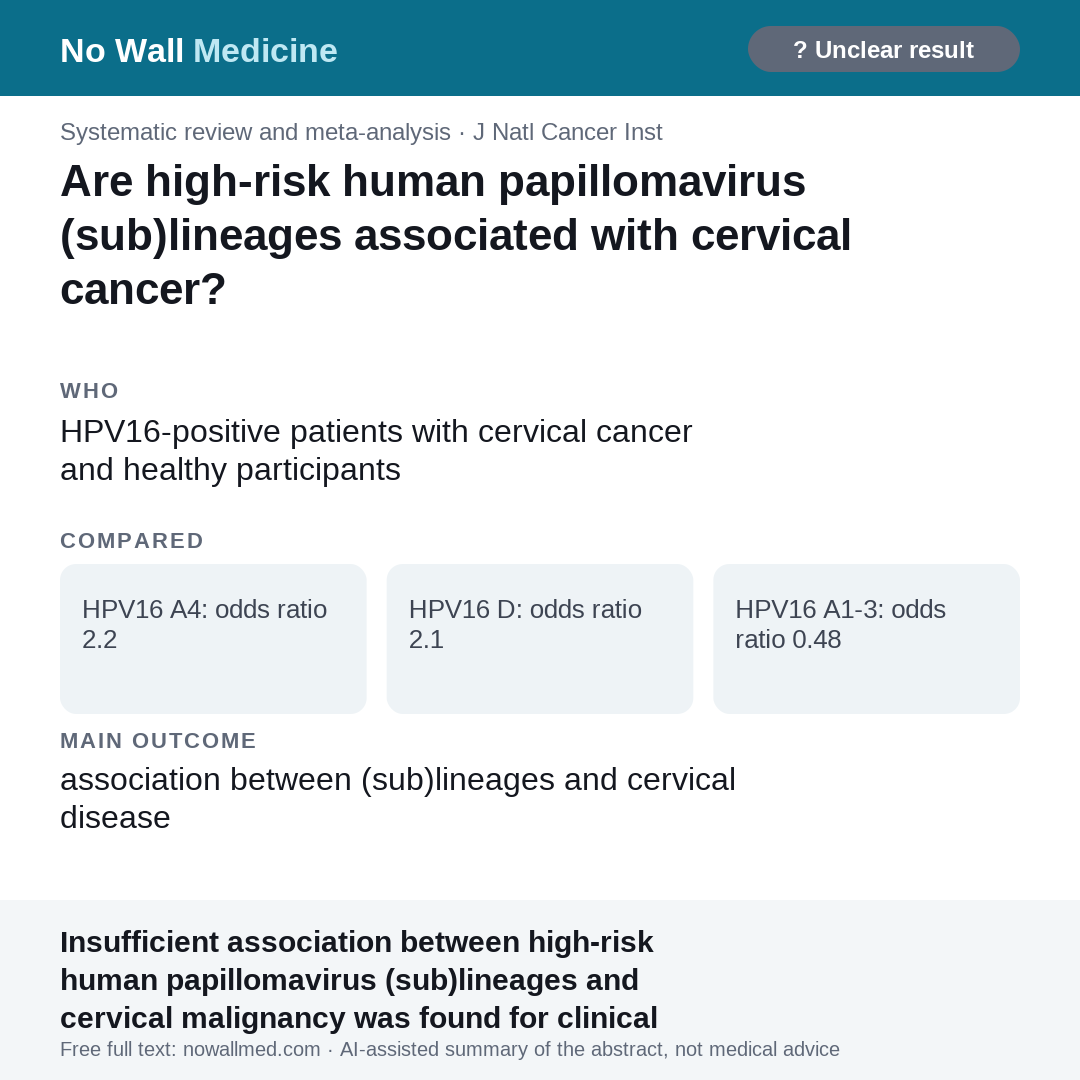
Lineages and sublineages of high-risk human papillomavirus types associated with cervical cancer and precancer: a systematic review and meta-analysis
Systematic review and meta-analysisUnclear result
Are high-risk human papillomavirus (sub)lineages associated with cervical cancer?
Who
HPV16-positive patients with cervical cancer and healthy participants
Compared
HPV16 A4: odds ratio 2.2
HPV16 D: odds ratio 2.1
HPV16 A1-3: odds ratio 0.48
Main outcome
association between (sub)lineages and cervical disease
Result: odds ratio 2.2 (95% CI 1.49 to 3.15) for HPV16 A4; 2.1 (95% CI 1.25 to 3.40) for HPV16 D; 0.48 (95% CI 0.33 to 0.68) for HPV16 A1-3
Bottom line: Insufficient association between high-risk human papillomavirus (sub)lineages and cervical malignancy was found for clinical use.
Limitation: Reports are heterogeneous in study design and often characterized by a small sample size.
J Natl Cancer Inst · 2025-05-16Download image
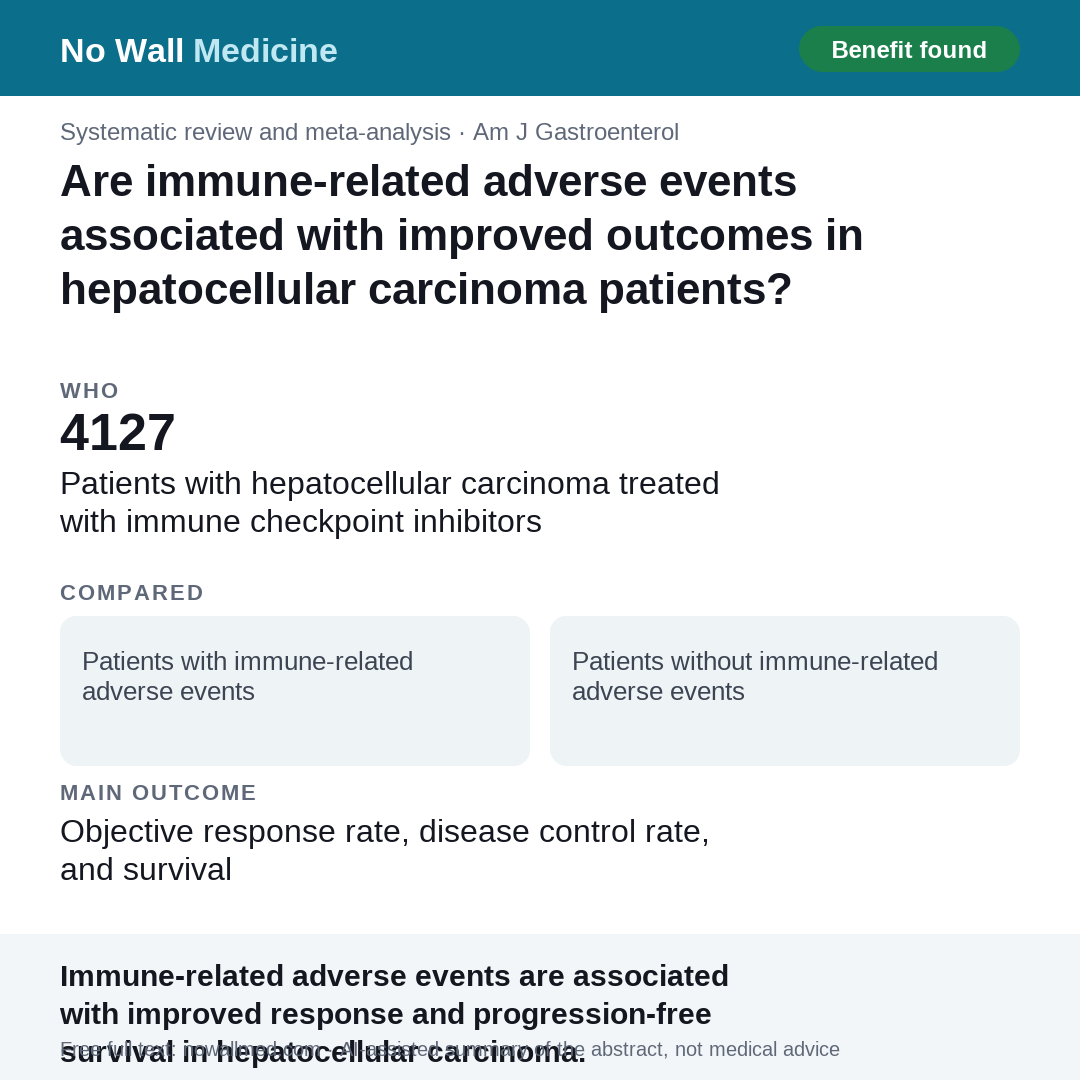
Immune-Related Adverse Events Are Associated With Improved Outcomes After Immune Checkpoint Inhibitor Treatment in Hepatocellular Carcinoma: A Systematic Review and Meta-Analysis
Systematic review and meta-analysisBenefit found
Are immune-related adverse events associated with improved outcomes in hepatocellular carcinoma patients?
Who
4127
Patients with hepatocellular carcinoma treated with immune checkpoint inhibitors
Compared
Patients with immune-related adverse events
Patients without immune-related adverse events
Main outcome
Objective response rate, disease control rate, and survival
Result: pooled hazard ratio 0.66 (95% CI 0.52-0.84)
Bottom line: Immune-related adverse events are associated with improved response and progression-free survival in hepatocellular carcinoma.
Am J Gastroenterol · 2025-05-16Download image
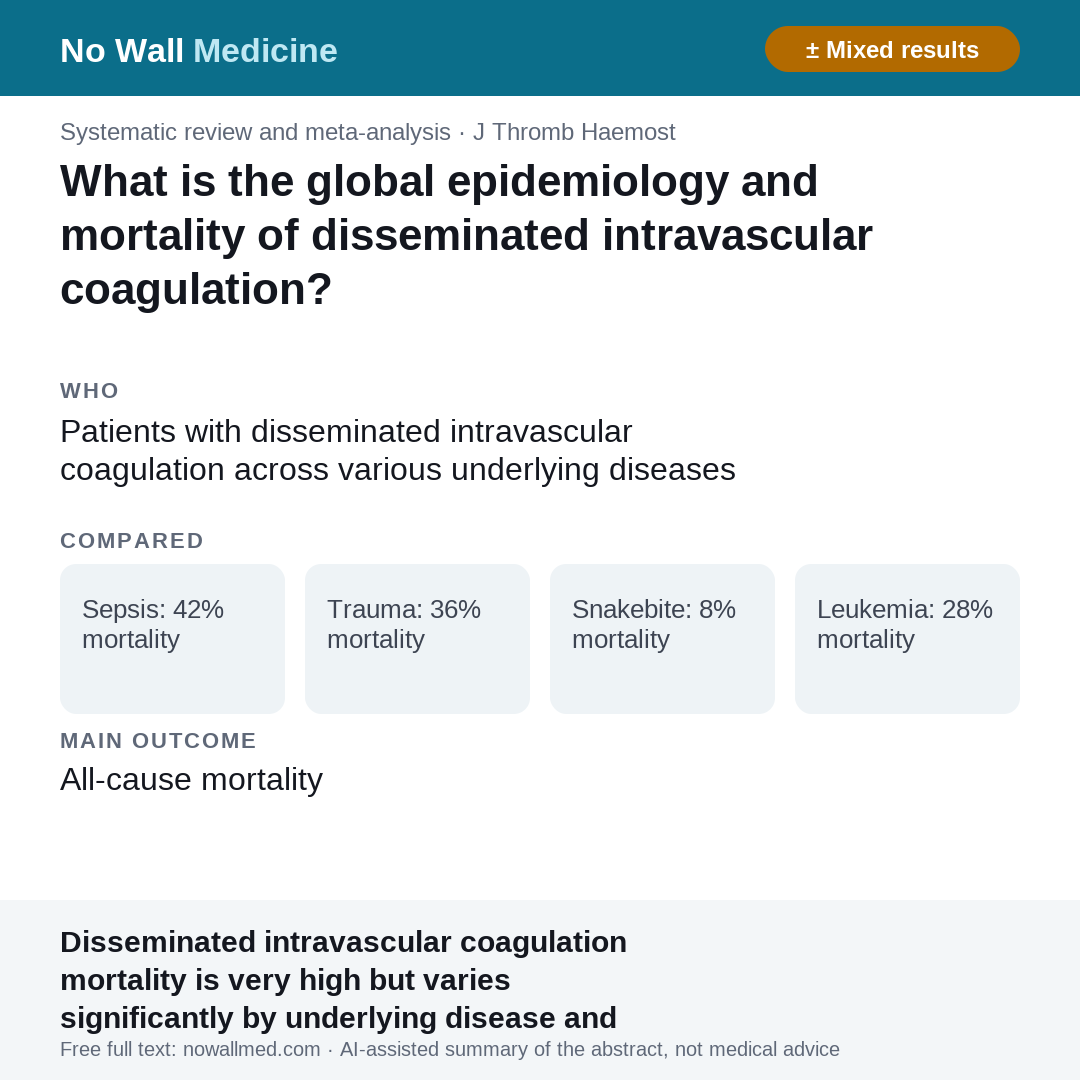
Mortality, diagnosis, and etiology of disseminated intravascular coagulation-a systematic review and meta-analysis: communication from the ISTH SSC subcommittee on disseminated intravascular coagulation
Systematic review and meta-analysisMixed results
What is the global epidemiology and mortality of disseminated intravascular coagulation?
Who
Patients with disseminated intravascular coagulation across various underlying diseases · Global
Compared
Sepsis: 42% mortality
Trauma: 36% mortality
Snakebite: 8% mortality
Leukemia: 28% mortality
Main outcome
All-cause mortality
Bottom line: Disseminated intravascular coagulation mortality is very high but varies significantly by underlying disease and diagnostic criteria.
Limitation: Mortality and odds ratio varied widely by underlying disease and diagnostic criteria.
J Thromb Haemost · 2025-05-16Download image
The Medicolegal Challenges of Facial Plastic Surgery: A Systematic Review
Systematic reviewUnclear result
Medicolegal challenges in facial plastic surgery
Who
facial plastic surgery patients · over 10 countries
Compared
litigation cases
non-litigation cases
Main outcome
medicolegal challenges
Bottom line: Informed consent and precision mitigate risks
Aesthet Surg J · 2025-05-16Download image

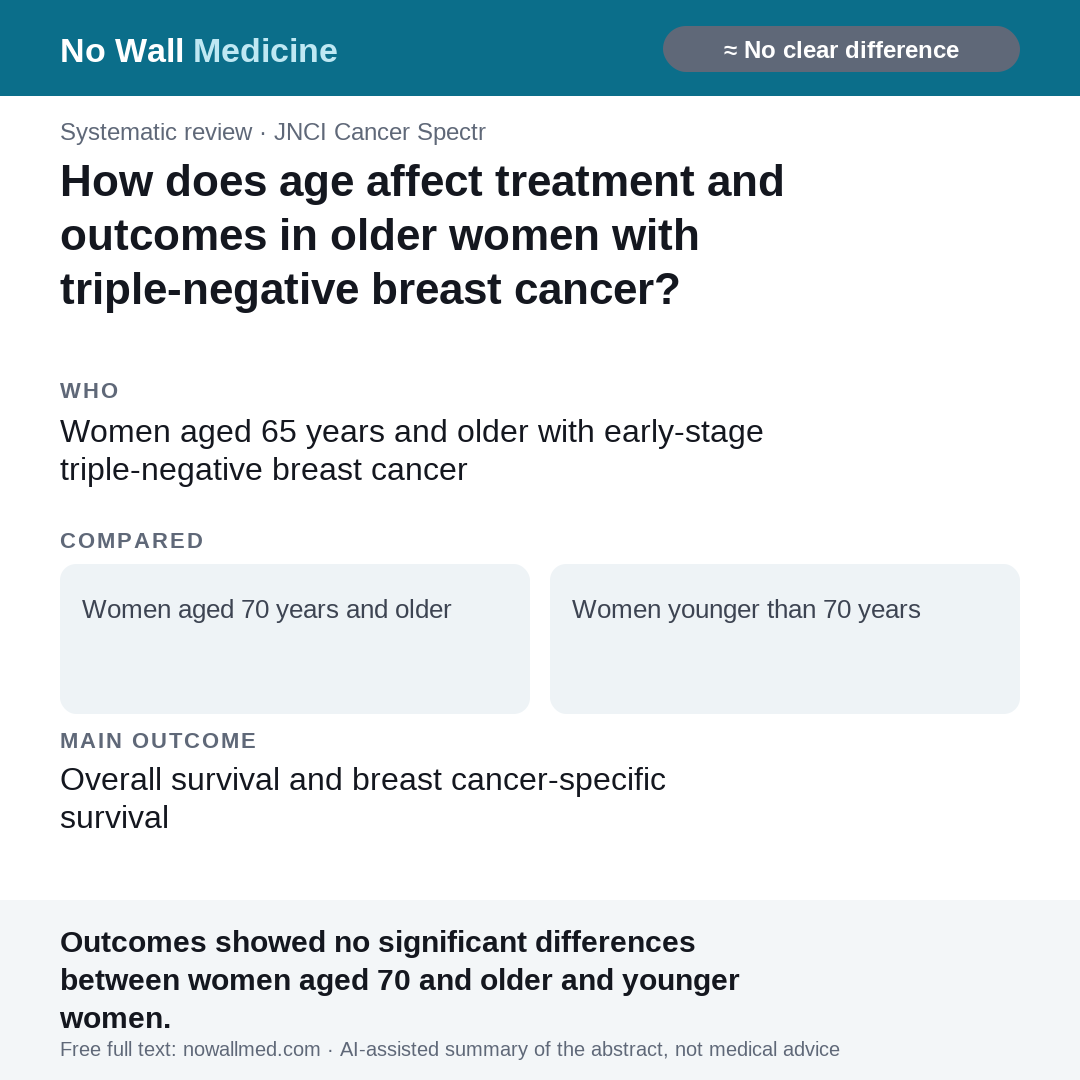
Treatment strategies for triple-negative primary breast cancer in older women: a systematic review
Systematic reviewNo clear difference
How does age affect treatment and outcomes in older women with triple-negative breast cancer?
Who
Women aged 65 years and older with early-stage triple-negative breast cancer
Compared
Women aged 70 years and older
Women younger than 70 years
Main outcome
Overall survival and breast cancer-specific survival
Bottom line: Outcomes showed no significant differences between women aged 70 and older and younger women.
JNCI Cancer Spectr · 2025-05-16Download image
Self-navigating the "Island of Reil": a systematic review of real-time fMRI neurofeedback training of insula activity
Systematic reviewBenefit found
Does rtfMRI neurofeedback train insula activity?
Who
individuals with insula dysfunction
Compared
rtfMRI NF training
control
Main outcome
insula activity modulation
Bottom line: rtfMRI neurofeedback trains insula activity
Limitation: inconsistent behavioral changes
Transl Psychiatry · 2025-05-16Download image

Free versus pedicled flaps for hand reconstruction: A systematic review and meta-analysis
Systematic review and meta-analysisMixed results
What are the outcomes of free versus pedicled flaps for hand reconstruction?
Who
839
Hands requiring reconstruction
Compared
Free flaps: 24 % revision surgery rate
Pedicled flaps: 61 % revision surgery rate
Main outcome
Revision surgery rate, infections, and flap necrosis
Bottom line: Free flaps have lower revision rates, but pedicled flaps have fewer infections and less flap necrosis.
JPRAS Open · 2025-05-16Download image

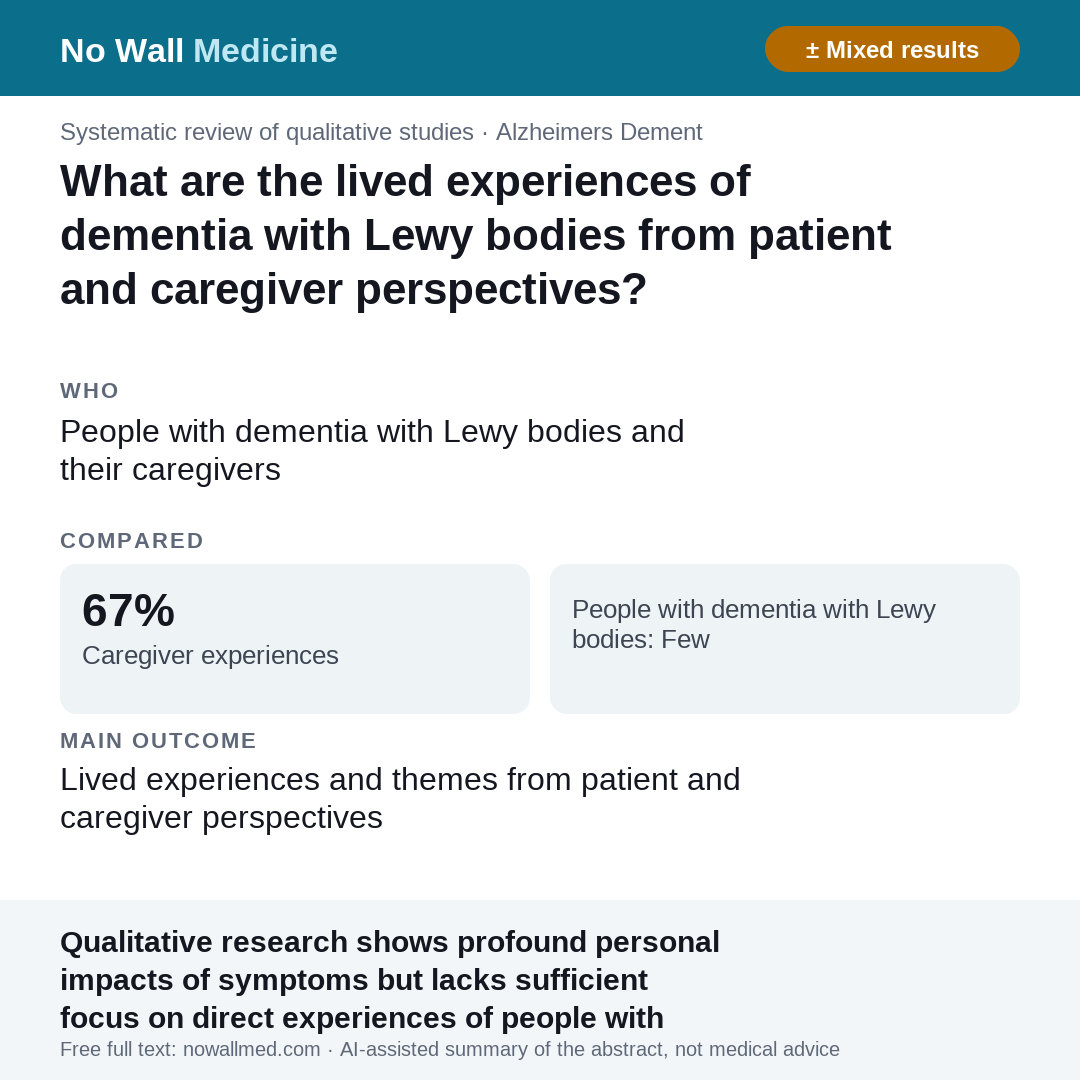
Examining the lived experience of dementia with Lewy bodies through qualitative research: A systematic review
Systematic review of qualitative studiesMixed results
What are the lived experiences of dementia with Lewy bodies from patient and caregiver perspectives?
Who
People with dementia with Lewy bodies and their caregivers
Compared
67%Caregiver experiences
People with dementia with Lewy bodies: Few
Main outcome
Lived experiences and themes from patient and caregiver perspectives
Bottom line: Qualitative research shows profound personal impacts of symptoms but lacks sufficient focus on direct experiences of people with dementia with Lewy bodies.
Limitation: Small sample sizes, inconsistent diagnostic criteria, and under-representation of diverse groups.
Alzheimers Dement · 2025-05-15Download image
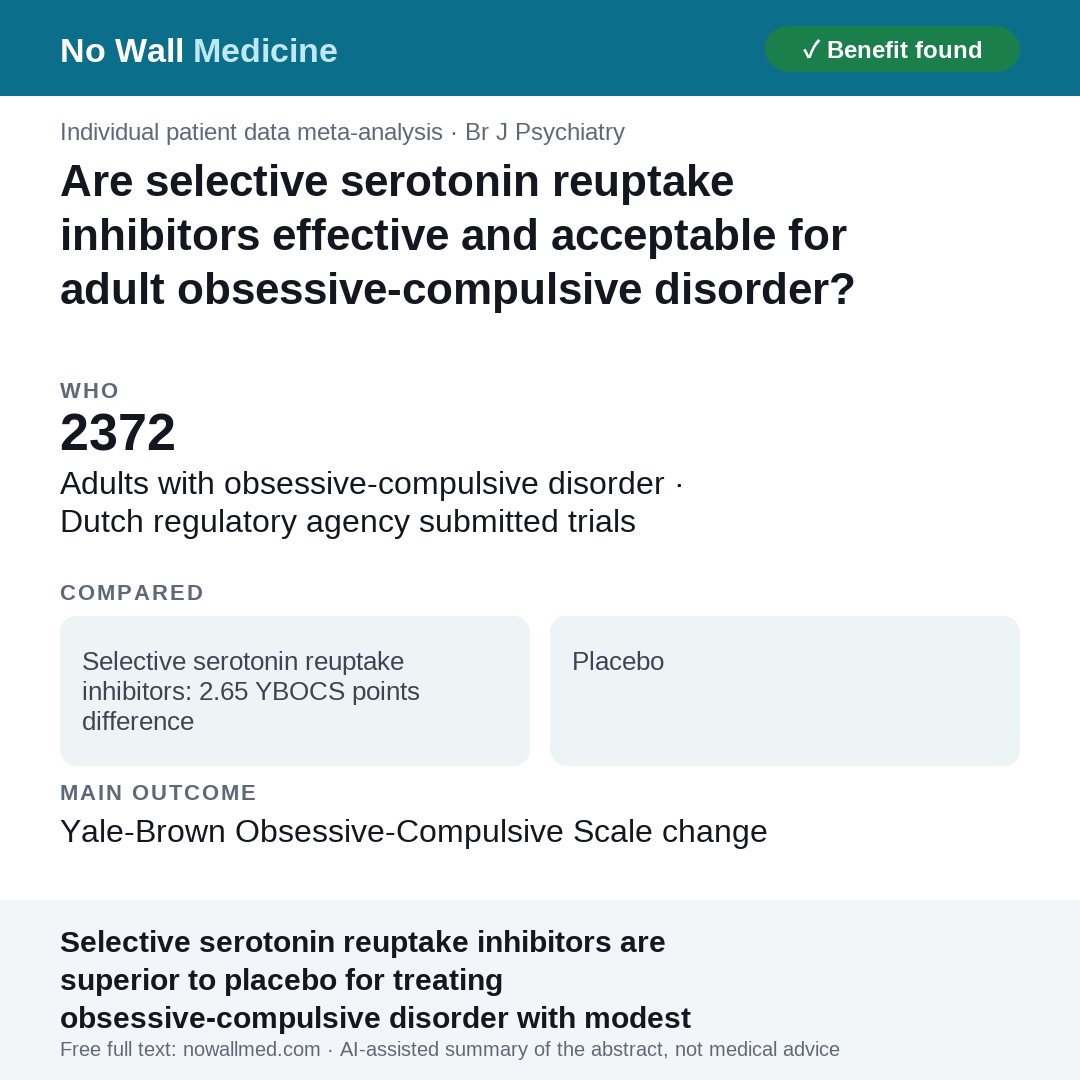
Individual patient data meta-analysis of placebo-controlled trials of selective serotonin reuptake inhibitors submitted for regulatory approval in adult obsessive-compulsive disorder
Individual patient data meta-analysisBenefit found
Are selective serotonin reuptake inhibitors effective and acceptable for adult obsessive-compulsive disorder?
Who
2372
Adults with obsessive-compulsive disorder · Dutch regulatory agency submitted trials
Compared
Selective serotonin reuptake inhibitors: 2.65 YBOCS points difference
Placebo
Main outcome
Yale-Brown Obsessive-Compulsive Scale change
Result: mean difference 2.65 (95% CI 1.85-3.46)
Bottom line: Selective serotonin reuptake inhibitors are superior to placebo for treating obsessive-compulsive disorder with modest effects.
Limitation: Three trials were excluded because of missing data
Br J Psychiatry · 2025-05-15Download image
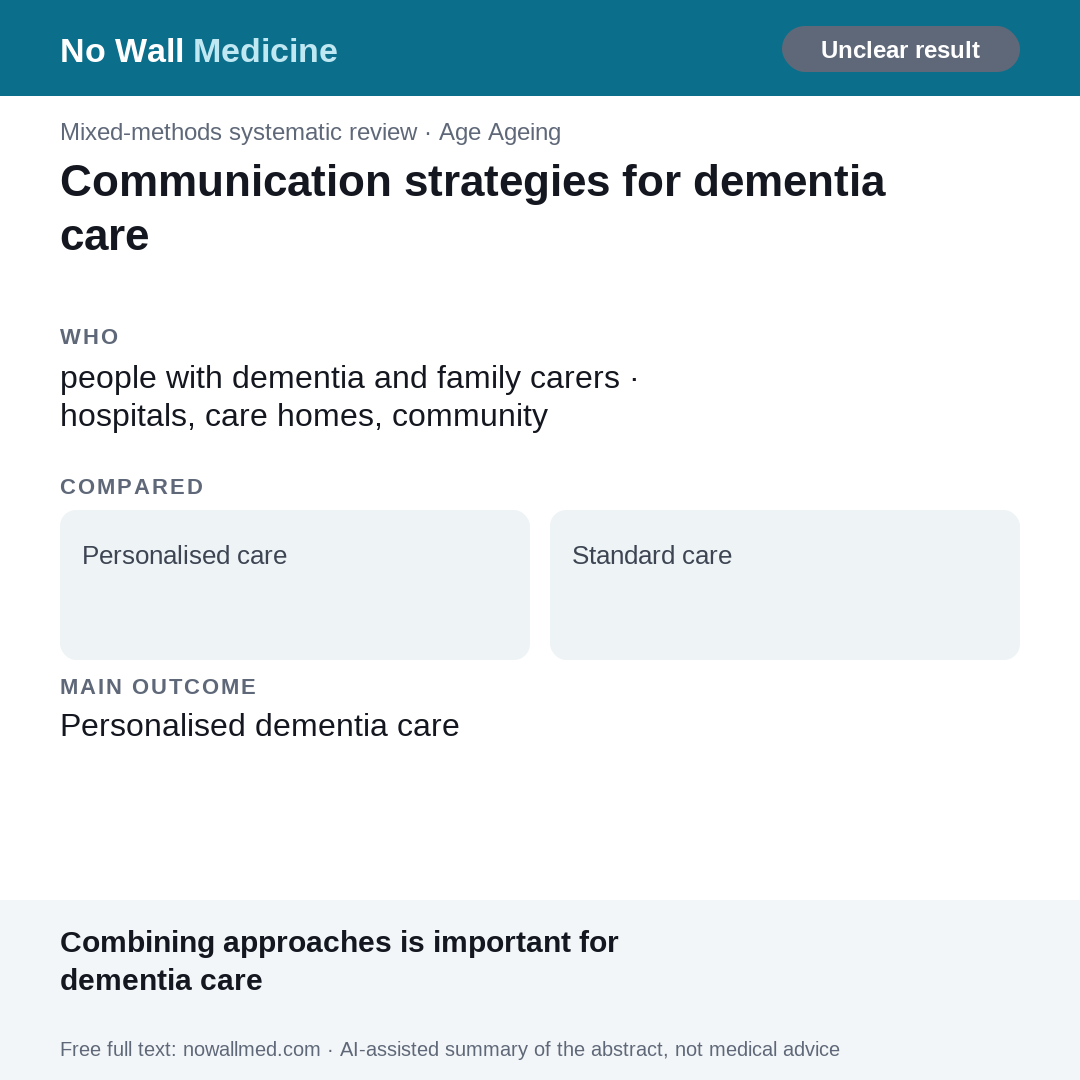
Communication strategies for delivering personalised dementia care and support: a mixed-methods systematic review and narrative synthesis
Mixed-methods systematic reviewUnclear result
Communication strategies for dementia care
Who
people with dementia and family carers · hospitals, care homes, community
Compared
Personalised care
Standard care
Main outcome
Personalised dementia care
Bottom line: Combining approaches is important for dementia care
Age Ageing · 2025-05-15Download image
Barriers and facilitators to implementation of mental capacity legislation in care homes for older adults in the United Kingdom: a mixed-methods systematic review
Mixed-methods systematic reviewMixed results
What are the barriers and facilitators to implementing mental capacity legislation in care homes?
Who
Care homes for older adults in the United Kingdom · United Kingdom
Compared
Barriers: poor access to training, low staff confidence and lack of understanding
Facilitators: in-person training, robust organisational policies and respecting person-centred care
Main outcome
Barriers and facilitators of implementing mental capacity legislation
Bottom line: Implementation is hindered by insufficient time, resources, and training, despite staff appreciating the legislation's importance.
Age Ageing · 2025-05-15Download image

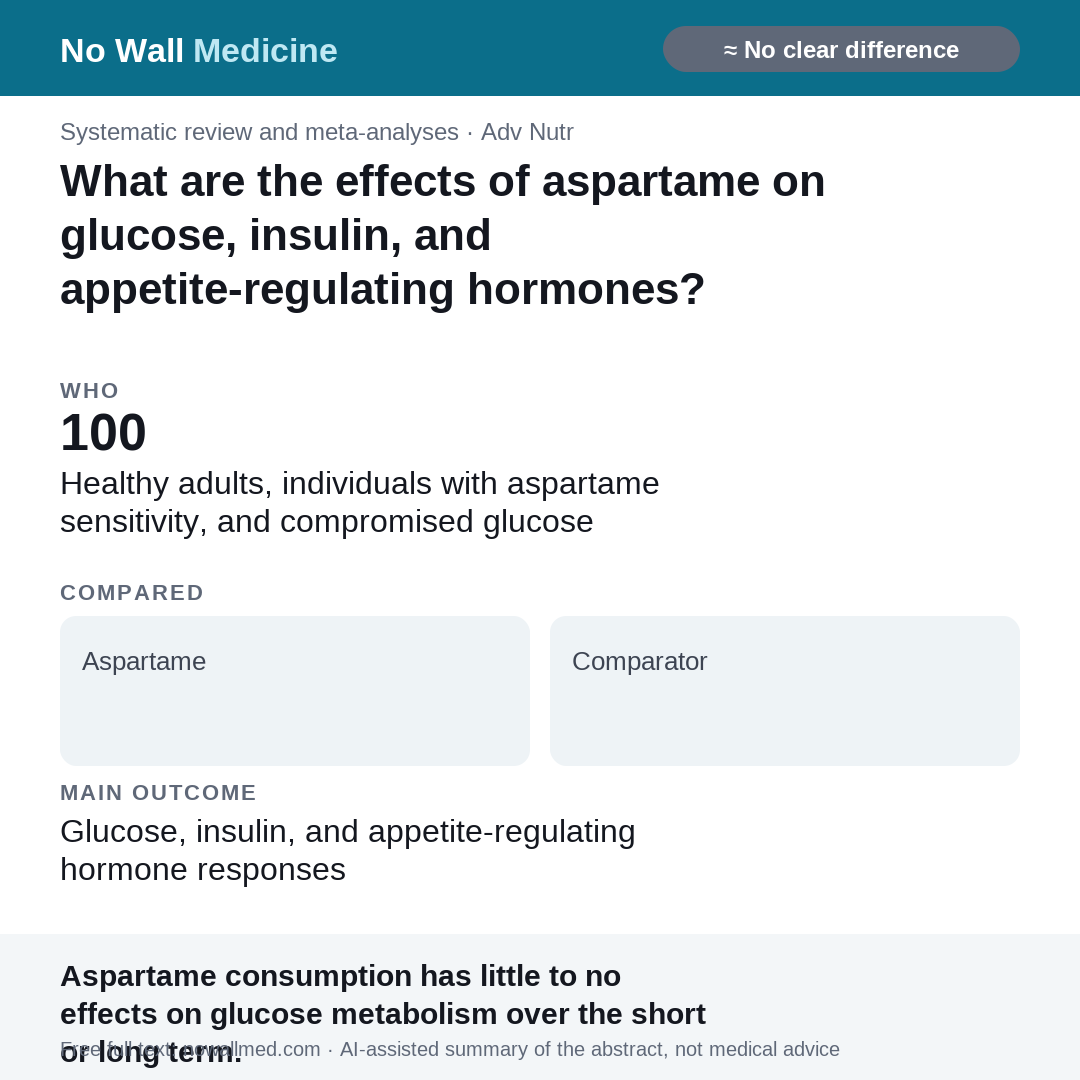
The Effects of Aspartame on Glucose, Insulin, and Appetite-Regulating Hormone Responses in Humans: Systematic Review and Meta-Analyses
Systematic review and meta-analysesNo clear difference
What are the effects of aspartame on glucose, insulin, and appetite-regulating hormones?
Who
100
Healthy adults, individuals with aspartame sensitivity, and compromised glucose metabolism
Compared
Aspartame
Comparator
Main outcome
Glucose, insulin, and appetite-regulating hormone responses
Bottom line: Aspartame consumption has little to no effects on glucose metabolism over the short or long term.
Limitation: Certainty of evidence was very low and high heterogeneity remained between studies.
Adv Nutr · 2025-05-15Download image
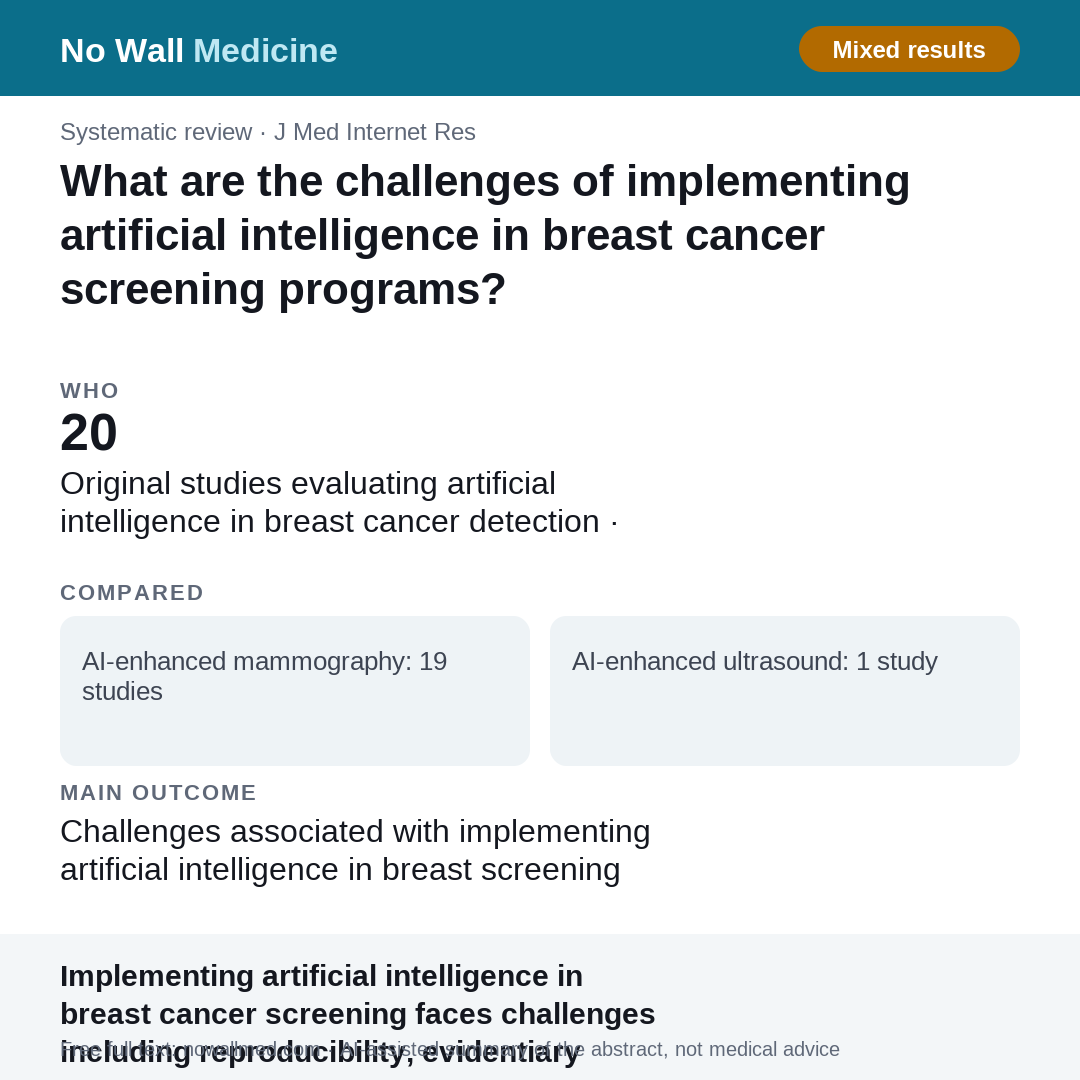
Challenges in Implementing Artificial Intelligence in Breast Cancer Screening Programs: Systematic Review and Framework for Safe Adoption
Systematic reviewMixed results
What are the challenges of implementing artificial intelligence in breast cancer screening programs?
Who
Original studies evaluating artificial intelligence in breast cancer detection · United States and United Kingdom
Compared
AI-enhanced mammography: 19 studies
AI-enhanced ultrasound: 1 study
Main outcome
Challenges associated with implementing artificial intelligence in breast screening
Bottom line: Implementing artificial intelligence in breast cancer screening faces challenges including reproducibility, evidentiary standards, technological concerns, trust, and ethical issues.
J Med Internet Res · 2025-05-15Download image
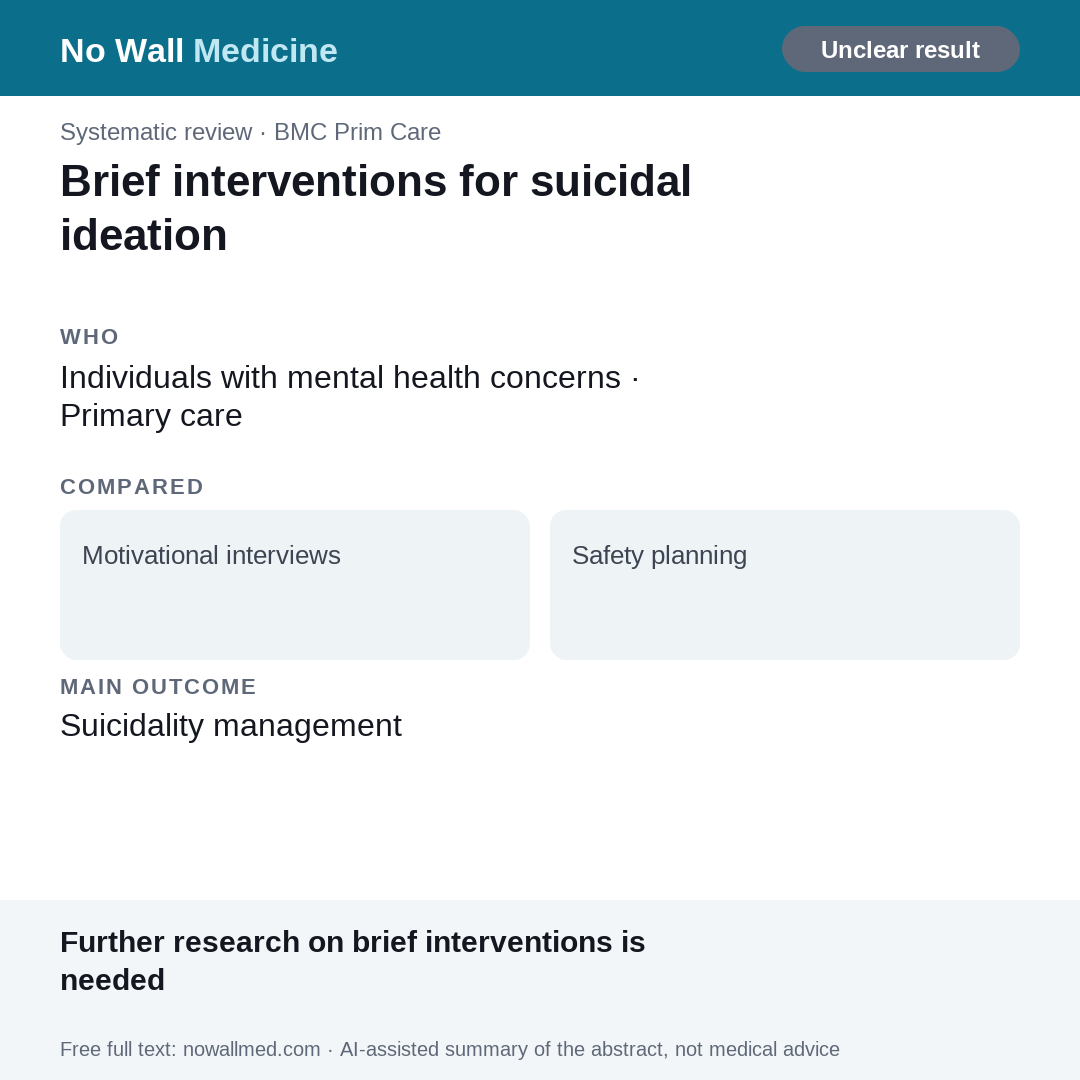
Brief interventions for suicidal ideation in primary care: a systematic review
Systematic reviewUnclear result
Brief interventions for suicidal ideation
Who
Individuals with mental health concerns · Primary care
Compared
Motivational interviews
Safety planning
Main outcome
Suicidality management
Bottom line: Further research on brief interventions is needed
BMC Prim Care · 2025-05-15Download image
Efficacy of digital health technologies in the management of inflammatory bowel disease: an umbrella review
Umbrella review of systematic reviewsMixed results
Are digital health technologies effective in managing inflammatory bowel disease?
Who
Patients with Crohn's disease or ulcerative colitis
Compared
Digital health technology
Standard care or alternative interventions
Main outcome
Clinical efficacy and effectiveness
Bottom line: Digital health technology did not improve clinical remission but may reduce hospital visits and increase treatment adherence.
Limitation: Five of the nine included reviews were rated as critically low quality.
Lancet Digit Health · 2025-05-14Download image

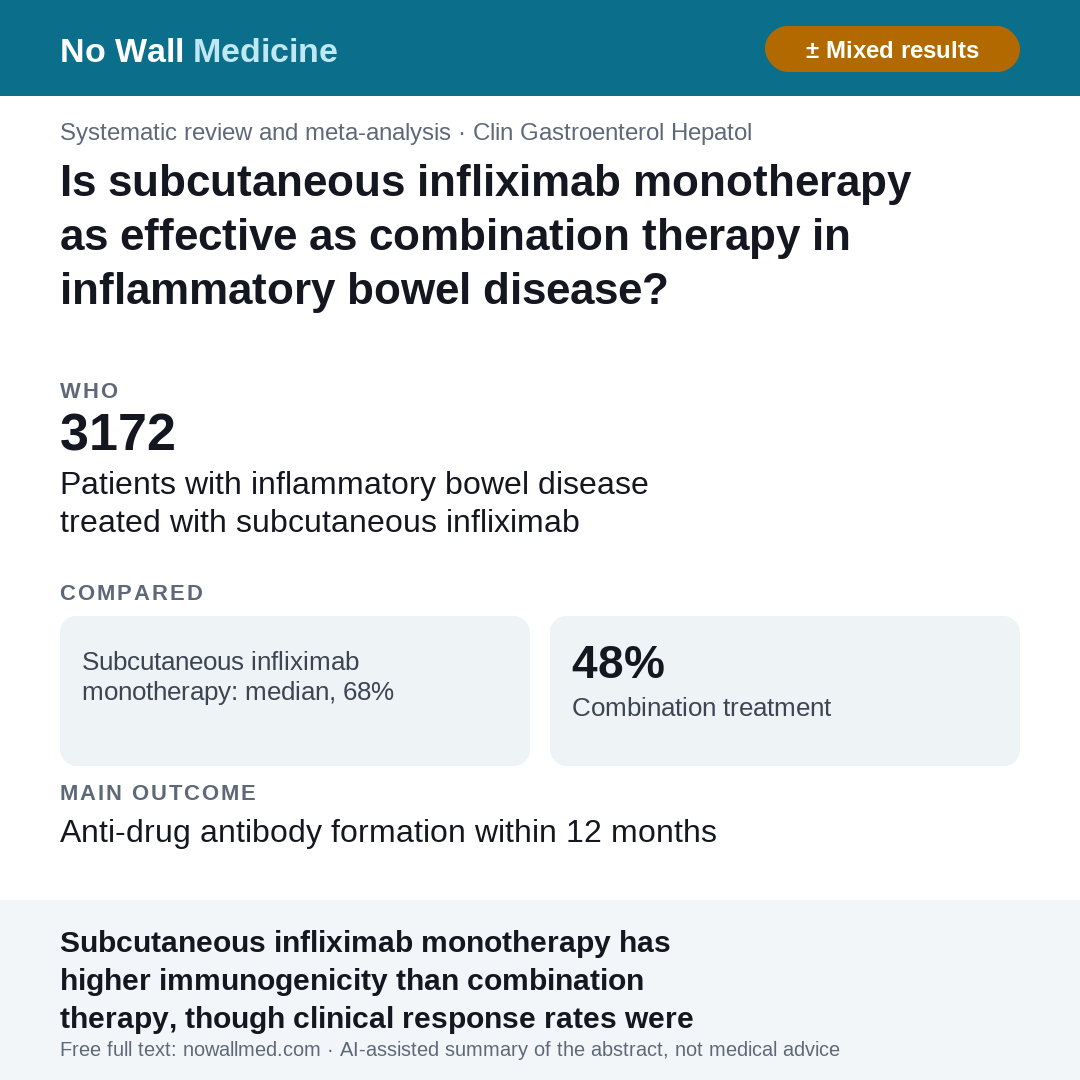
Immunogenicity and Efficacy of Subcutaneous Infliximab Monotherapy vs Combination Therapy in Inflammatory Bowel Disease: A Systematic Review and Meta-analysis
Systematic review and meta-analysisMixed results
Is subcutaneous infliximab monotherapy as effective as combination therapy in inflammatory bowel disease?
Who
3172
Patients with inflammatory bowel disease treated with subcutaneous infliximab
Compared
Subcutaneous infliximab monotherapy: median, 68%
48%Combination treatment
Main outcome
Anti-drug antibody formation within 12 months
Result: odds ratio 3.29 (95% CI 1.71-6.31)
Bottom line: Subcutaneous infliximab monotherapy has higher immunogenicity than combination therapy, though clinical response rates were comparable.
Clin Gastroenterol Hepatol · 2025-05-14Download image
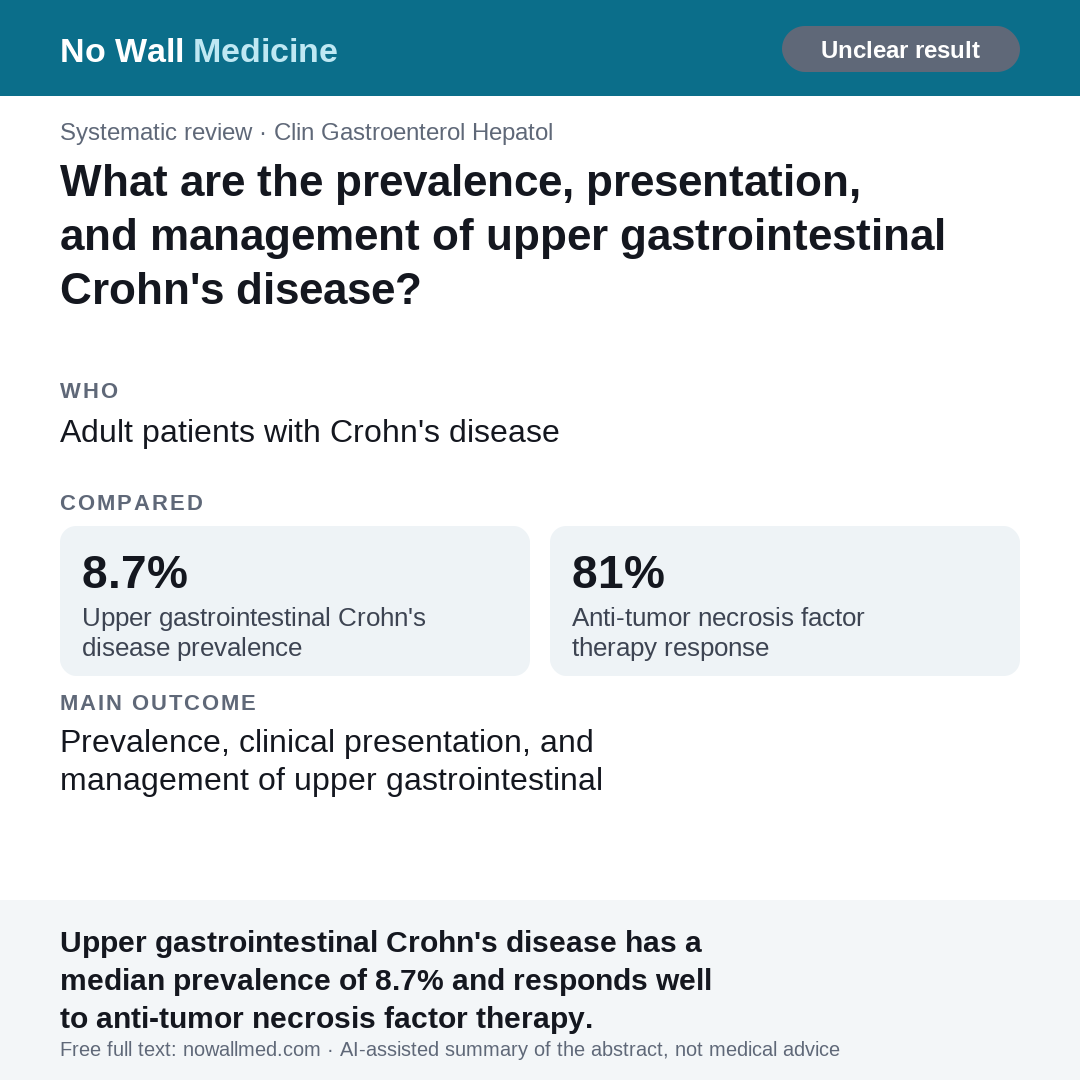
Diagnosis and Management of Upper Gastrointestinal Involvement in Adult Patients With Crohn's Disease: A Systematic Review
Systematic reviewUnclear result
What are the prevalence, presentation, and management of upper gastrointestinal Crohn's disease?
Who
Adult patients with Crohn's disease
Compared
8.7%Upper gastrointestinal Crohn's disease prevalence (interquartile range, 4.74%-24.36%)
81%Anti-tumor necrosis factor therapy response
Main outcome
Prevalence, clinical presentation, and management of upper gastrointestinal involvement
Bottom line: Upper gastrointestinal Crohn's disease has a median prevalence of 8.7% and responds well to anti-tumor necrosis factor therapy.
Limitation: Significant heterogeneity in study design, definitions, diagnosis, and outcome measures.
Clin Gastroenterol Hepatol · 2025-05-14Download image