Visual abstracts
New randomized trials and meta-analyses from leading journals at a glance: who was studied, what was compared, and what was found. Every paper is free to read in full.
All specialtiesCardiology 4877Oncology 4138Gastroenterology & Hepatology 1942Infectious Disease 3837Neurology 1905Psychiatry & Mental Health 2273Pulmonology 2143Critical Care 1365Endocrinology & Diabetes 2580Pediatrics 2980Surgery 2559Orthopedics & Sports Medicine 931Neurosurgery 537Cardiothoracic & Vascular Surgery 674Plastic & Reconstructive Surgery 591Nephrology 1133Rheumatology 823Hematology 1109Dermatology 621Ophthalmology 543Obstetrics & Gynecology 1686Public & Global Health 1058Radiology & Imaging 648Anesthesiology 986Urology 764ENT (Otolaryngology) 503Emergency Medicine 511Allergy & Immunology 313Geriatrics 981Family Medicine & Primary Care 562Medical Genetics & Genomics 676Pathology & Laboratory Medicine 159Physical Medicine & Rehabilitation 757Palliative Care 444Nutrition 1588Digital Health & AI 2201General Medicine 321
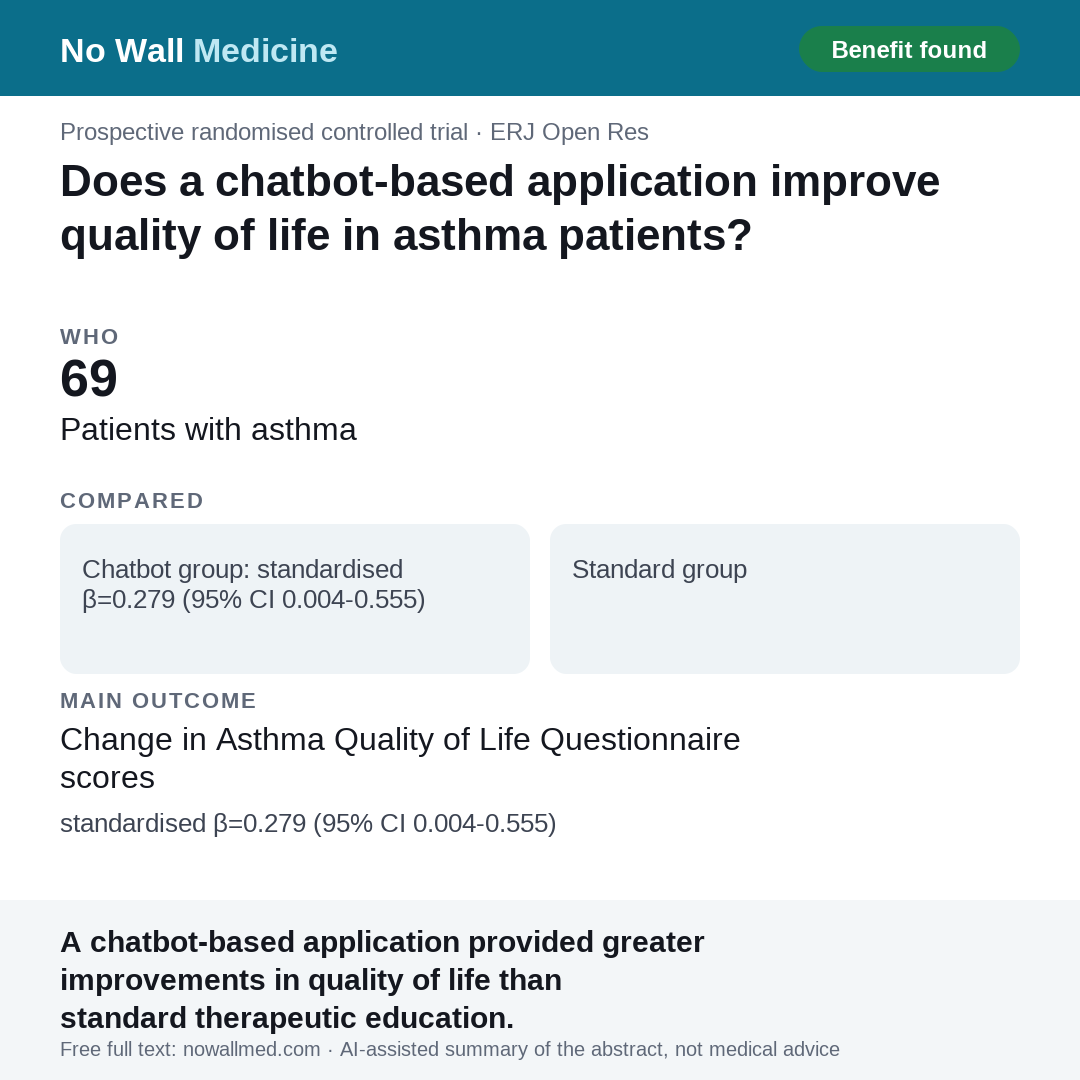
Larger quality-of-life gains with an asthma support app: a randomised controlled trial
Prospective randomised controlled trialBenefit found
Does a chatbot-based application improve quality of life in asthma patients?
Who
69
Patients with asthma
Compared
Chatbot group: standardised β=0.279 (95% CI 0.004-0.555)
Standard group
Main outcome
Change in Asthma Quality of Life Questionnaire scores
Result: standardised β=0.279 (95% CI 0.004-0.555)
Bottom line: A chatbot-based application provided greater improvements in quality of life than standard therapeutic education.
ERJ Open Res · 2025-11-10Download image
Effects of inhaled bronchodilators on dynamic lung mechanics during exercise in COPD: protocol for a randomised, placebo-controlled crossover trial
Randomized, double-blind, placebo-controlled crossover trial protocolUnclear result
Do inhaled bronchodilators improve small airway function and lung mechanics during exercise in COPD?
Who
25
Symptomatic patients with moderate-severe COPD and hyperinflation
Compared
Nebulised salbutamol sulphate and ipratropium bromide
Normal saline
Main outcome
Small airway function, gas exchange, lung mechanics, and exertional dyspnoea
Bottom line: This protocol describes a study to investigate how inhaled bronchodilators affect lung mechanics during exercise in COPD.
ERJ Open Res · 2025-11-10Download image

Comparison of two fractions of inspired oxygen thresholds (0.25 vs 0.30) for surfactant administration in very preterm infants with respiratory distress syndrome under nasal intermittent positive pressure ventilation: study protocol for a multicentre randomised controlled, superiority trial
Multicentre randomised, controlled, superiority trialUnclear result
Is a 0.25 or 0.30 fraction of inspired oxygen threshold better for surfactant administration?
Who
394
Very preterm infants with respiratory distress syndrome · 24 tertiary neonatal intensive care units in China
Compared
Intervention (fraction of oxygen inspired 0.25)
Control (fraction of oxygen inspired 0.30)
Main outcome
Need for invasive mechanical ventilation within 72 hours
Bottom line: This study protocol aims to compare two oxygen thresholds for surfactant administration in very preterm infants.
BMJ Paediatr Open · 2025-11-10Download image

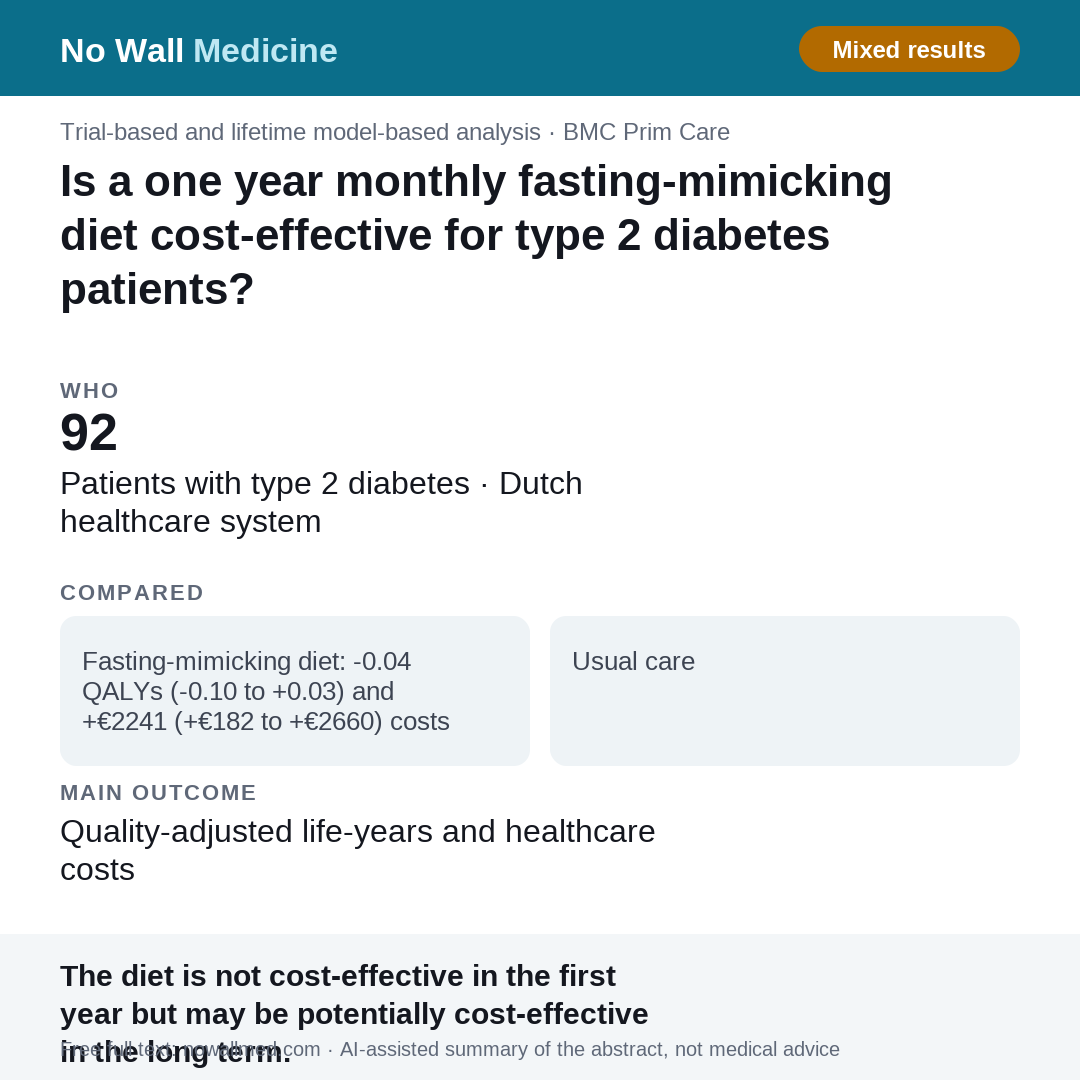
Cost-effectiveness of a periodic fasting-mimicking diet programme in patients with type 2 diabetes: a trial-based analysis and a lifetime model-based analysis
Trial-based and lifetime model-based analysisMixed results
Is a one year monthly fasting-mimicking diet cost-effective for type 2 diabetes patients?
Who
92
Patients with type 2 diabetes · Dutch healthcare system
Compared
Fasting-mimicking diet: -0.04 QALYs (-0.10 to +0.03) and +€2241 (+€182 to +€2660) costs
Usual care
Main outcome
Quality-adjusted life-years and healthcare costs
Result: incremental cost-effectiveness ratio of €8369/QALY
Bottom line: The diet is not cost-effective in the first year but may be potentially cost-effective in the long term.
Limitation: small sample size
BMC Prim Care · 2025-11-10Download image
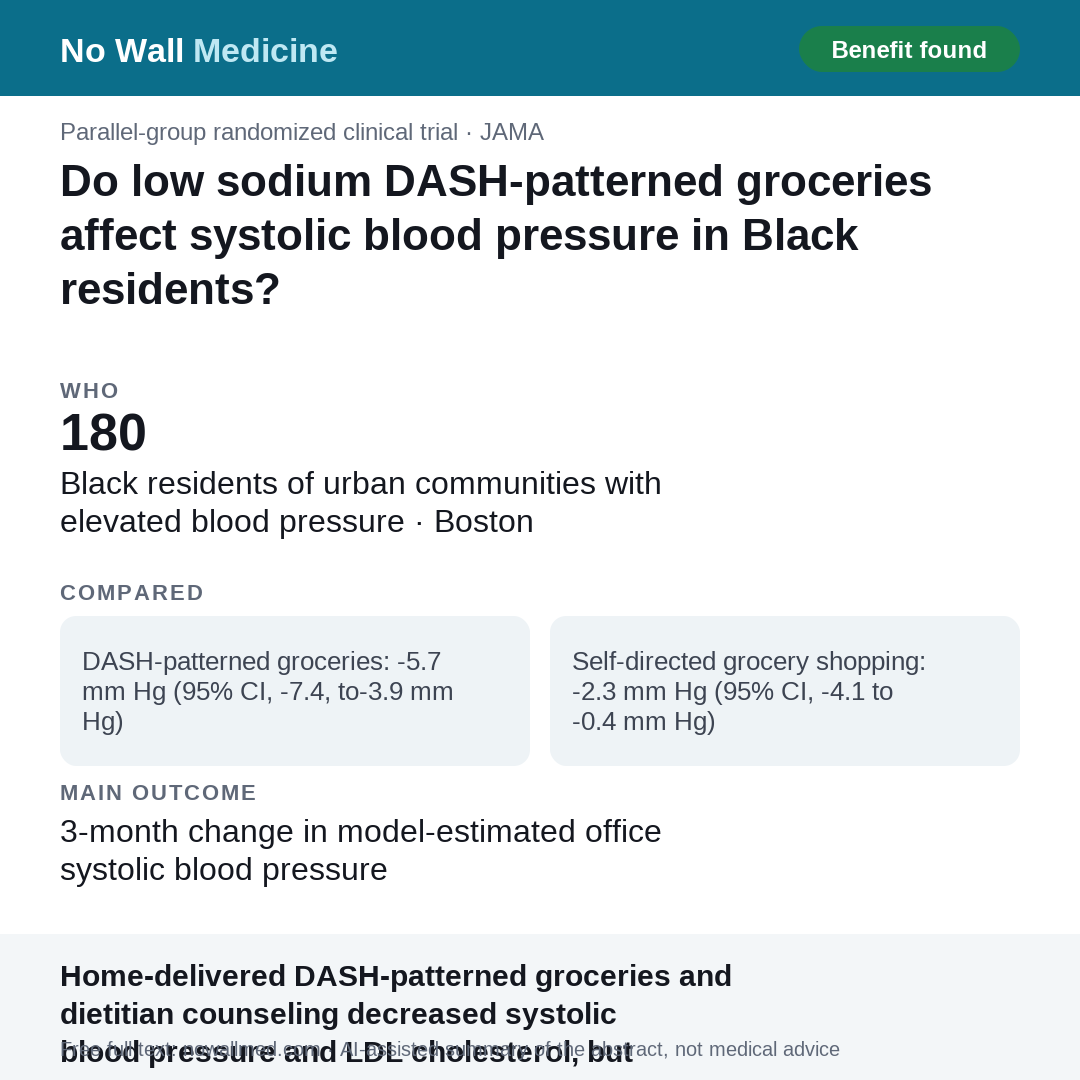
DASH-Patterned Groceries and Effects on Blood Pressure: The GoFresh Randomized Clinical Trial
Parallel-group randomized clinical trialBenefit found
Do low sodium DASH-patterned groceries affect systolic blood pressure in Black residents?
Who
180
Black residents of urban communities with elevated blood pressure · Boston
Compared
DASH-patterned groceries: -5.7 mm Hg (95% CI, -7.4, to-3.9 mm Hg)
Self-directed grocery shopping: -2.3 mm Hg (95% CI, -4.1 to -0.4 mm Hg)
Main outcome
3-month change in model-estimated office systolic blood pressure
Result: difference in changes, -3.4 mm Hg; 95% CI, -5.9 to -0.8 mm Hg
Bottom line: Home-delivered DASH-patterned groceries and dietitian counseling decreased systolic blood pressure and LDL cholesterol, but effects were not maintained.
Limitation: Effects were not maintained 6 months after the intervention was initiated.
JAMA · 2025-11-09Download image
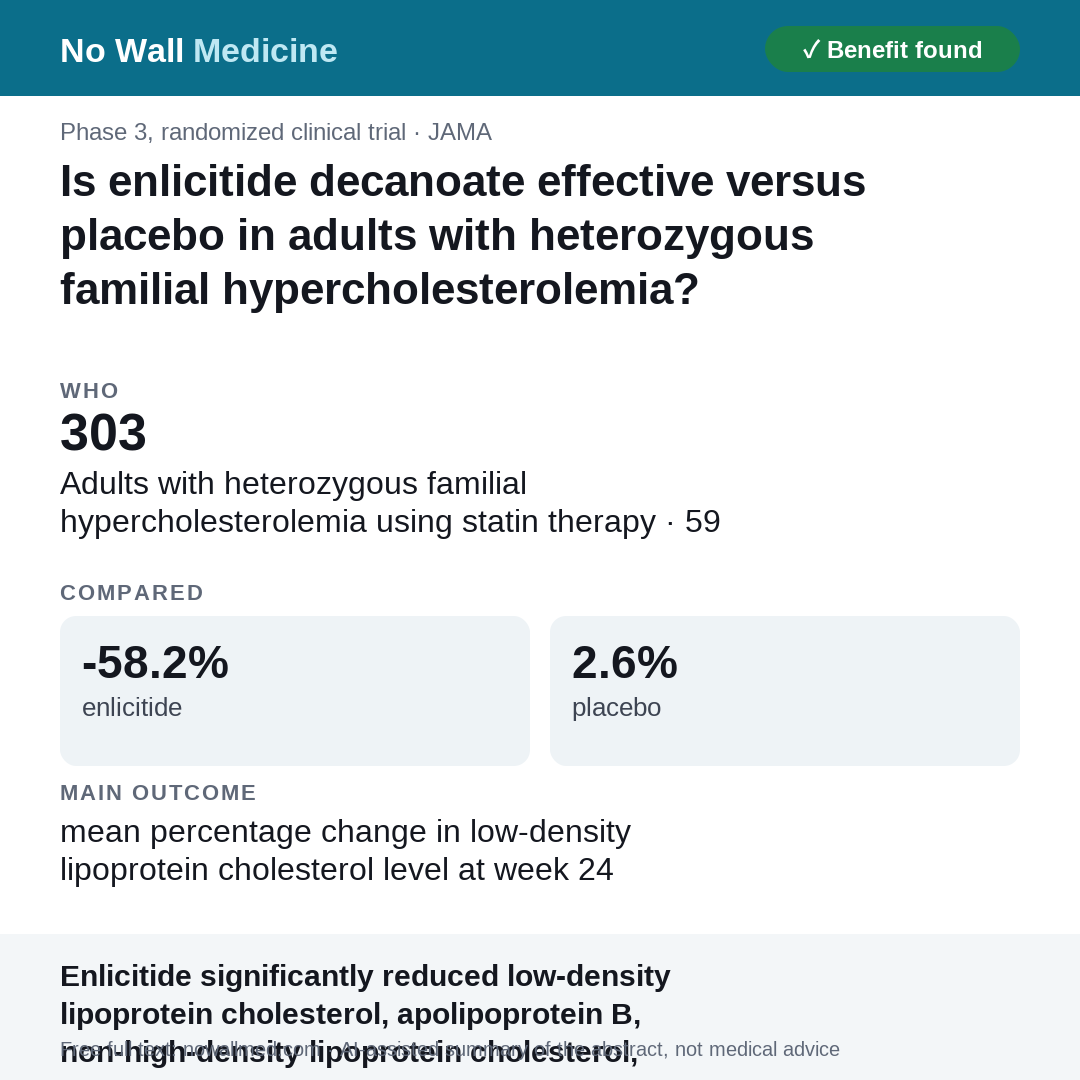
Efficacy and Safety of Oral PCSK9 Inhibitor Enlicitide in Adults With Heterozygous Familial Hypercholesterolemia: A Randomized Clinical Trial
Phase 3, randomized clinical trialBenefit found
Is enlicitide decanoate effective versus placebo in adults with heterozygous familial hypercholesterolemia?
Who
303
Adults with heterozygous familial hypercholesterolemia using statin therapy · 59 sites across 17 countries
Compared
-58.2%enlicitide
2.6%placebo
Main outcome
mean percentage change in low-density lipoprotein cholesterol level at week 24
Result: -59.4% (95% CI, -65.6% to -53.2%)
Bottom line: Enlicitide significantly reduced low-density lipoprotein cholesterol, apolipoprotein B, non-high-density lipoprotein cholesterol, and lipoprotein(a) in adults.
JAMA · 2025-11-09Download image
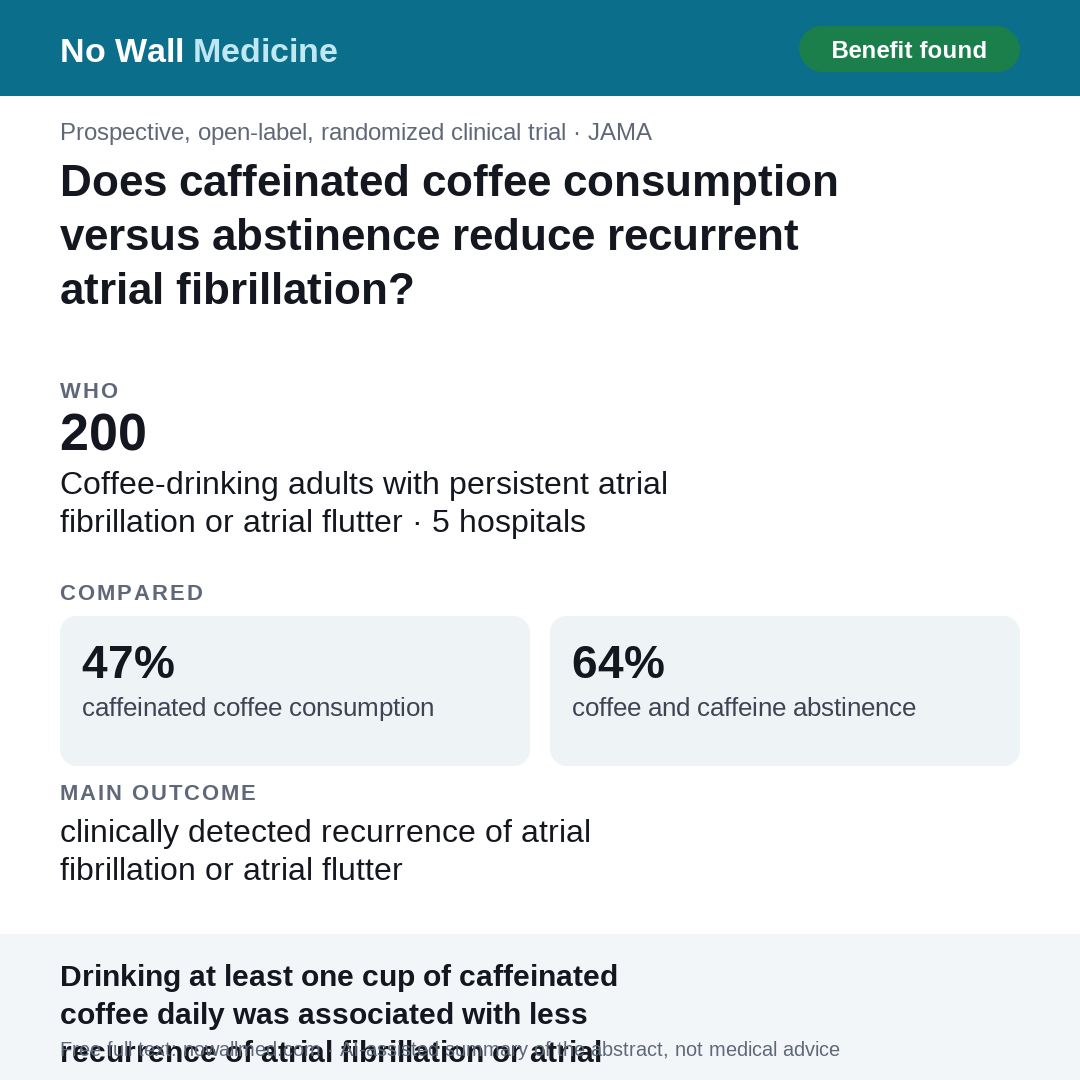
Caffeinated Coffee Consumption or Abstinence to Reduce Atrial Fibrillation: The DECAF Randomized Clinical Trial
Prospective, open-label, randomized clinical trialBenefit found
Does caffeinated coffee consumption versus abstinence reduce recurrent atrial fibrillation?
Who
200
Coffee-drinking adults with persistent atrial fibrillation or atrial flutter · 5 hospitals in the US, Canada, and Australia
Compared
47%caffeinated coffee consumption
64%coffee and caffeine abstinence
Main outcome
clinically detected recurrence of atrial fibrillation or atrial flutter
Result: hazard ratio 0.61 (95% CI 0.42-0.89)
Bottom line: Drinking at least one cup of caffeinated coffee daily was associated with less recurrence of atrial fibrillation or atrial flutter.
JAMA · 2025-11-09Download image
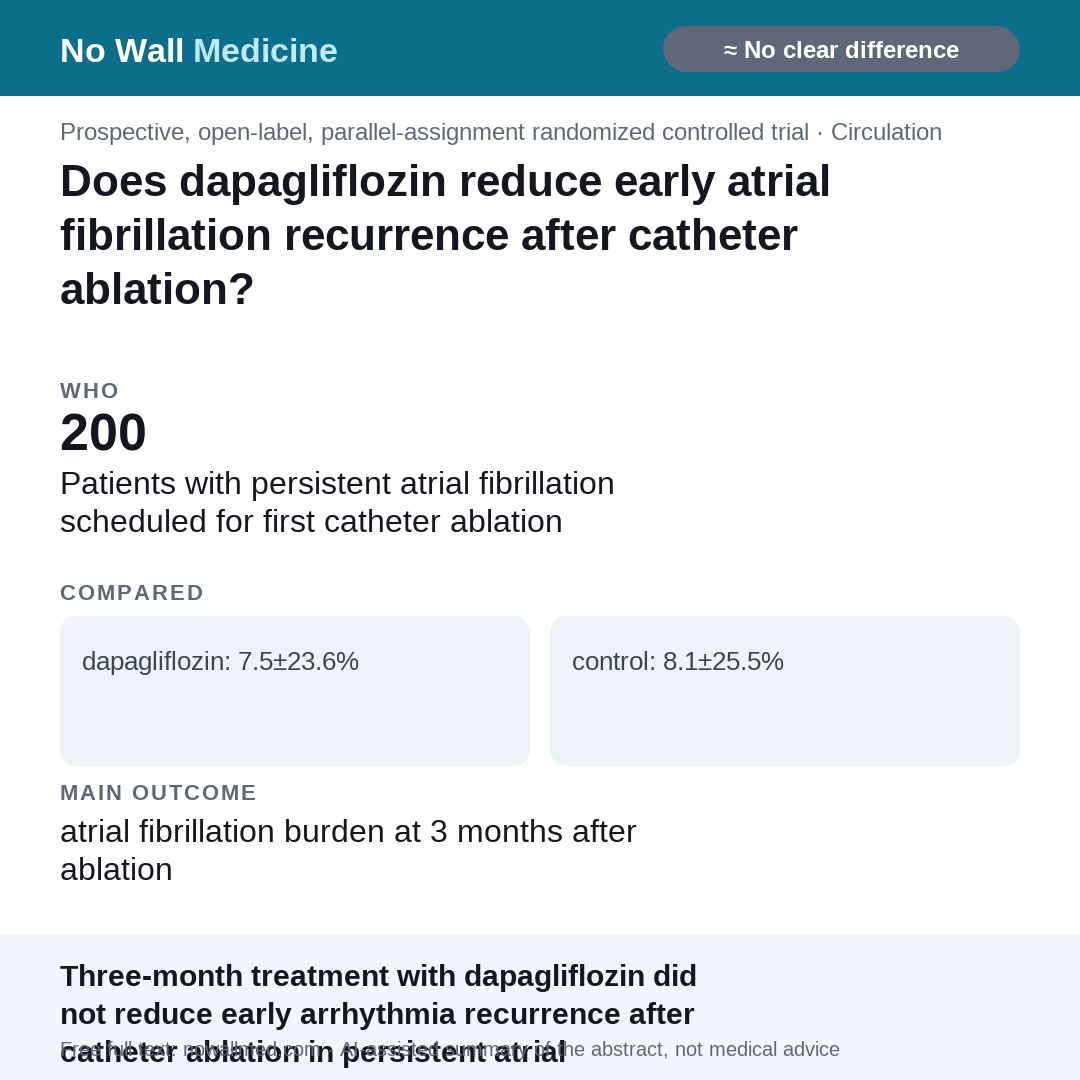
Dapagliflozin to Reduce Early Recurrence After Catheter Ablation for Atrial Fibrillation: The DARE-AF Randomized Clinical Trial
Prospective, open-label, parallel-assignment randomized controlled trialNo clear difference
Does dapagliflozin reduce early atrial fibrillation recurrence after catheter ablation?
Who
200
Patients with persistent atrial fibrillation scheduled for first catheter ablation
Compared
dapagliflozin: 7.5±23.6%
control: 8.1±25.5%
Main outcome
atrial fibrillation burden at 3 months after ablation
Result: hazard ratio 1.11 (95% CI 0.66-1.86)
Bottom line: Three-month treatment with dapagliflozin did not reduce early arrhythmia recurrence after catheter ablation in persistent atrial fibrillation patients.
Circulation · 2025-11-09Download image
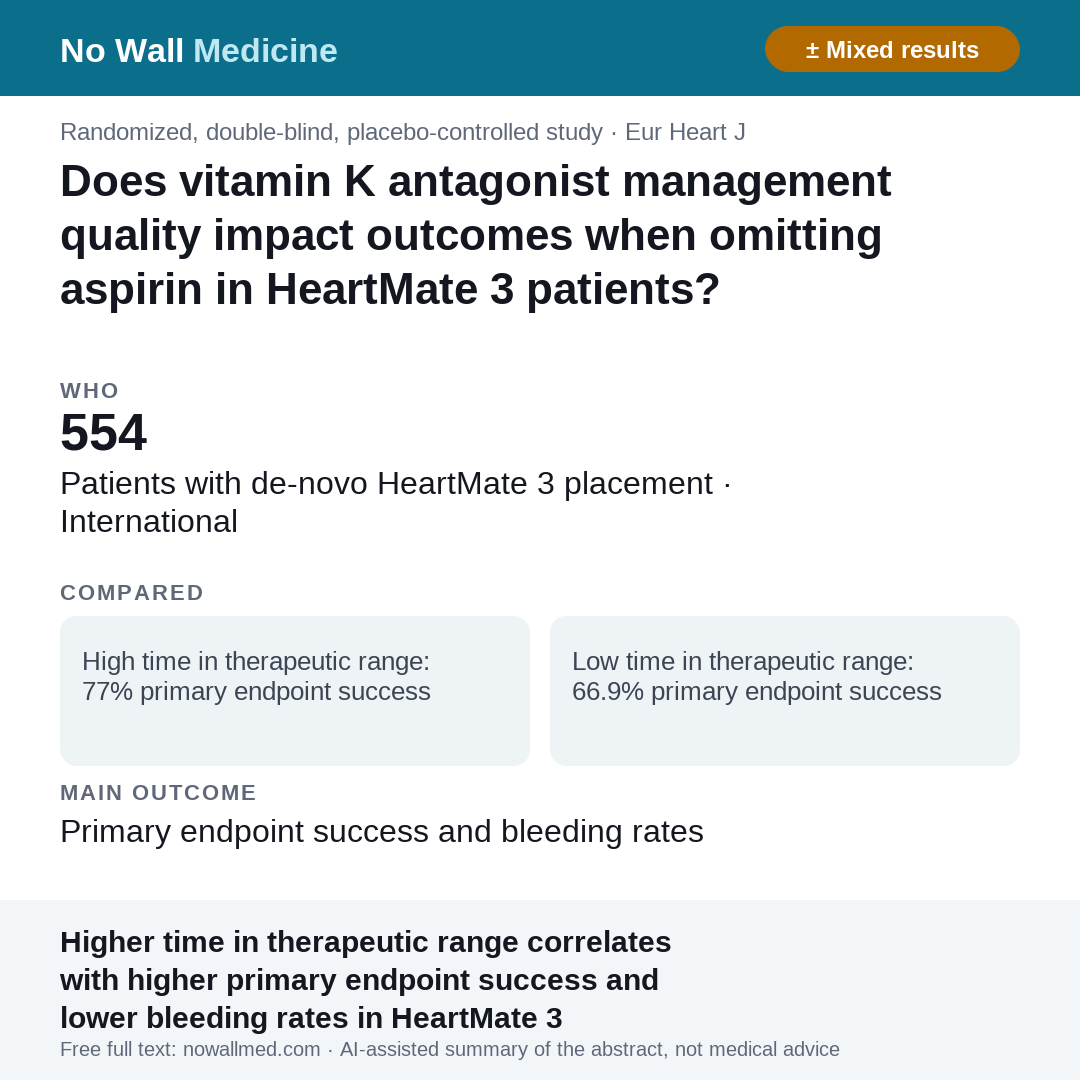
Withdrawal of aspirin in patients with left ventricular assist device treated with vitamin K antagonists: impact of anticoagulation quality in the randomized ARIES-HM3 trial
Randomized, double-blind, placebo-controlled studyMixed results
Does vitamin K antagonist management quality impact outcomes when omitting aspirin in HeartMate 3 patients?
Who
554
Patients with de-novo HeartMate 3 placement · International
Compared
High time in therapeutic range: 77% primary endpoint success
Low time in therapeutic range: 66.9% primary endpoint success
Main outcome
Primary endpoint success and bleeding rates
Result: rate ratio 1.84, 95% confidence interval [CI] 1.37-2.53
Bottom line: Higher time in therapeutic range correlates with higher primary endpoint success and lower bleeding rates in HeartMate 3 patients.
Eur Heart J · 2025-11-09Download image
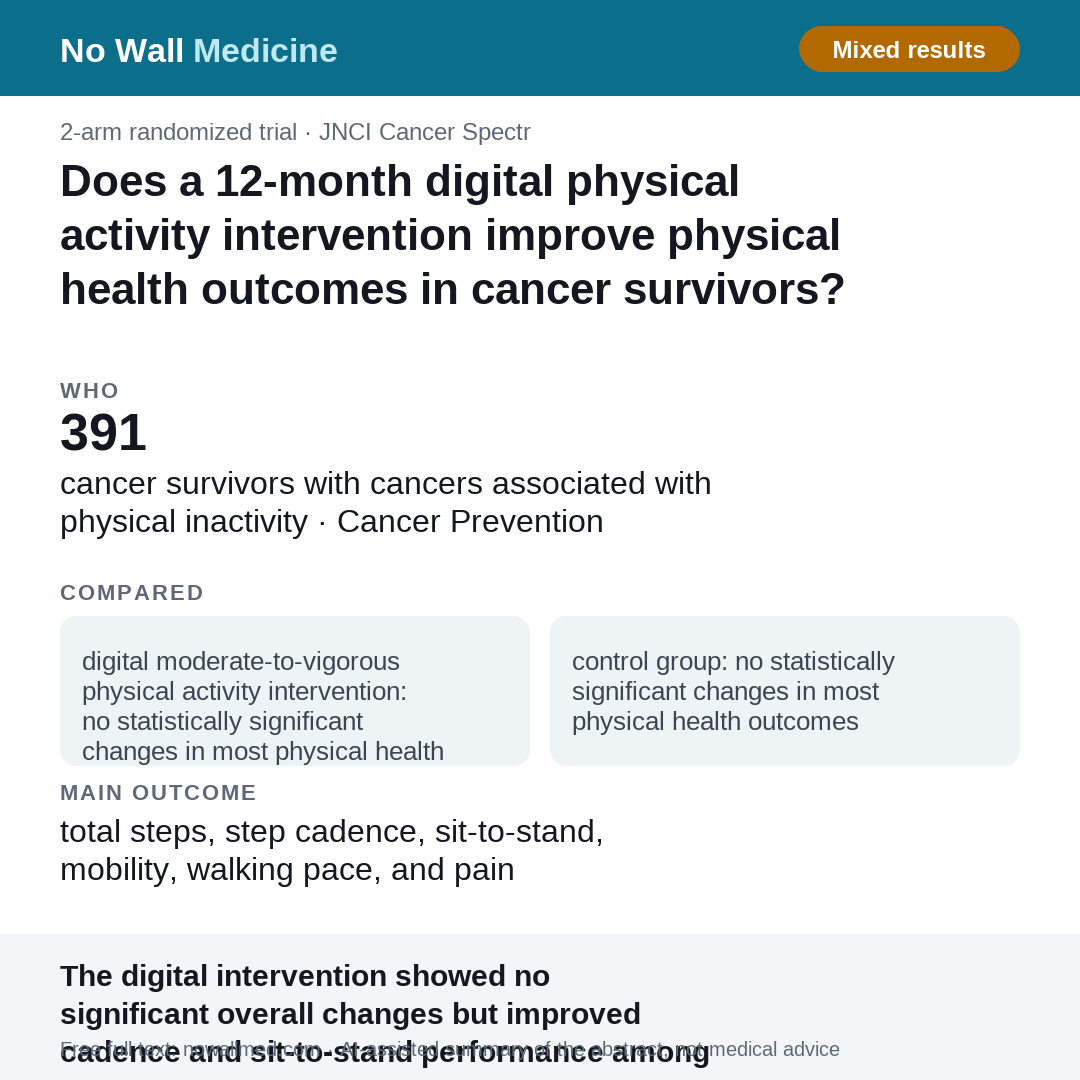
Physical health outcomes and step cadence improvements: a digital physical activity intervention in cancer survivors
2-arm randomized trialMixed results
Does a 12-month digital physical activity intervention improve physical health outcomes in cancer survivors?
Who
391
cancer survivors with cancers associated with physical inactivity · Cancer Prevention Study-3 prospective cohort study
Compared
digital moderate-to-vigorous physical activity intervention: no statistically significant changes in most physical health outcomes
control group: no statistically significant changes in most physical health outcomes
Main outcome
total steps, step cadence, sit-to-stand, mobility, walking pace, and pain
Bottom line: The digital intervention showed no significant overall changes but improved cadence and sit-to-stand performance among adherent participants.
JNCI Cancer Spectr · 2025-11-09Download image
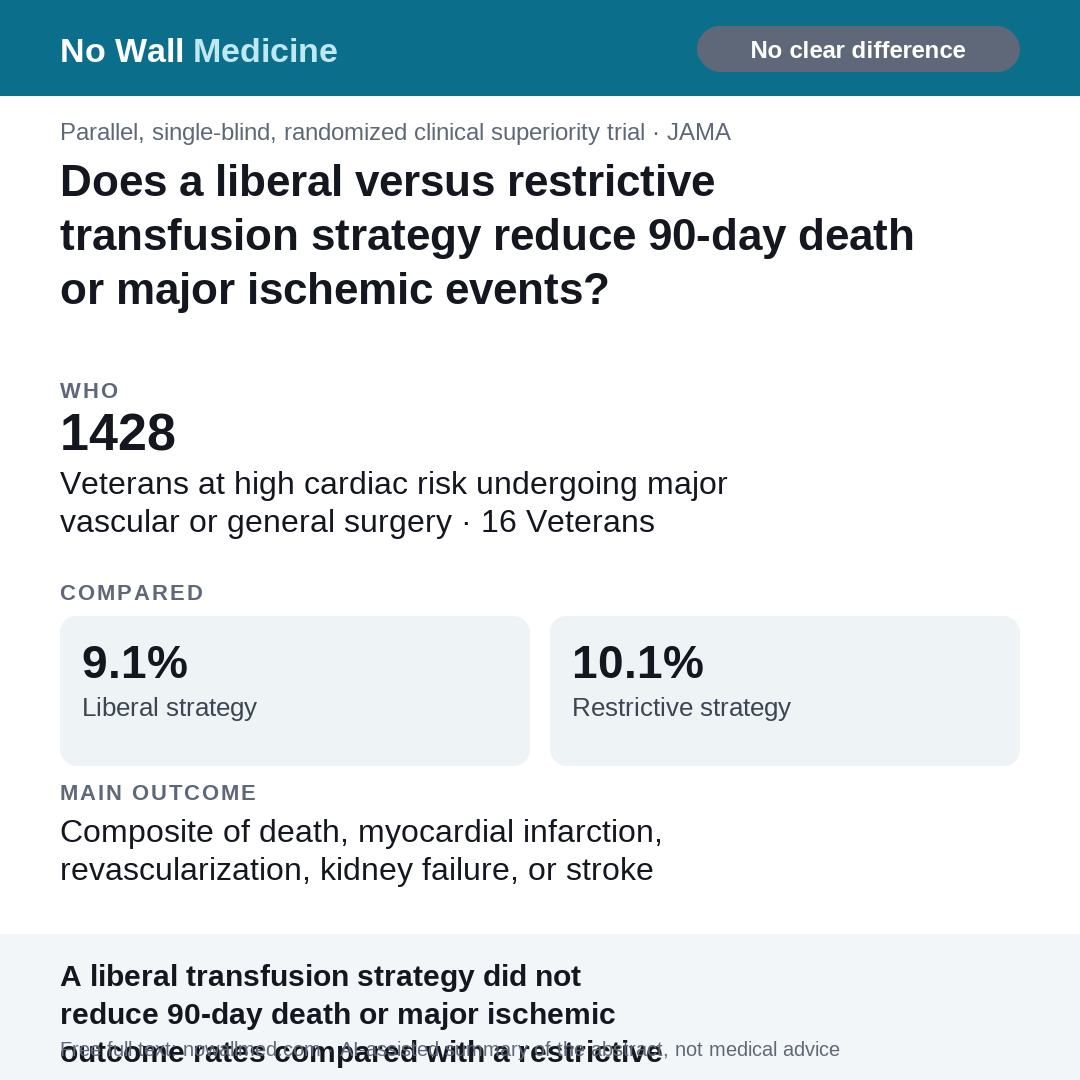
Liberal or Restrictive Postoperative Transfusion in Patients at High Cardiac Risk: The TOP Randomized Clinical Trial
Parallel, single-blind, randomized clinical superiority trialNo clear difference
Does a liberal versus restrictive transfusion strategy reduce 90-day death or major ischemic events?
Who
1428
Veterans at high cardiac risk undergoing major vascular or general surgery · 16 Veterans Affairs Medical Centers in the US
Compared
9.1%Liberal strategy (61 of 670)
10.1%Restrictive strategy (71 of 700)
Main outcome
Composite of death, myocardial infarction, revascularization, kidney failure, or stroke
Result: relative risk 0.90 (95% CI 0.65-1.24)
Bottom line: A liberal transfusion strategy did not reduce 90-day death or major ischemic outcome rates compared with a restrictive strategy.
JAMA · 2025-11-08Download image
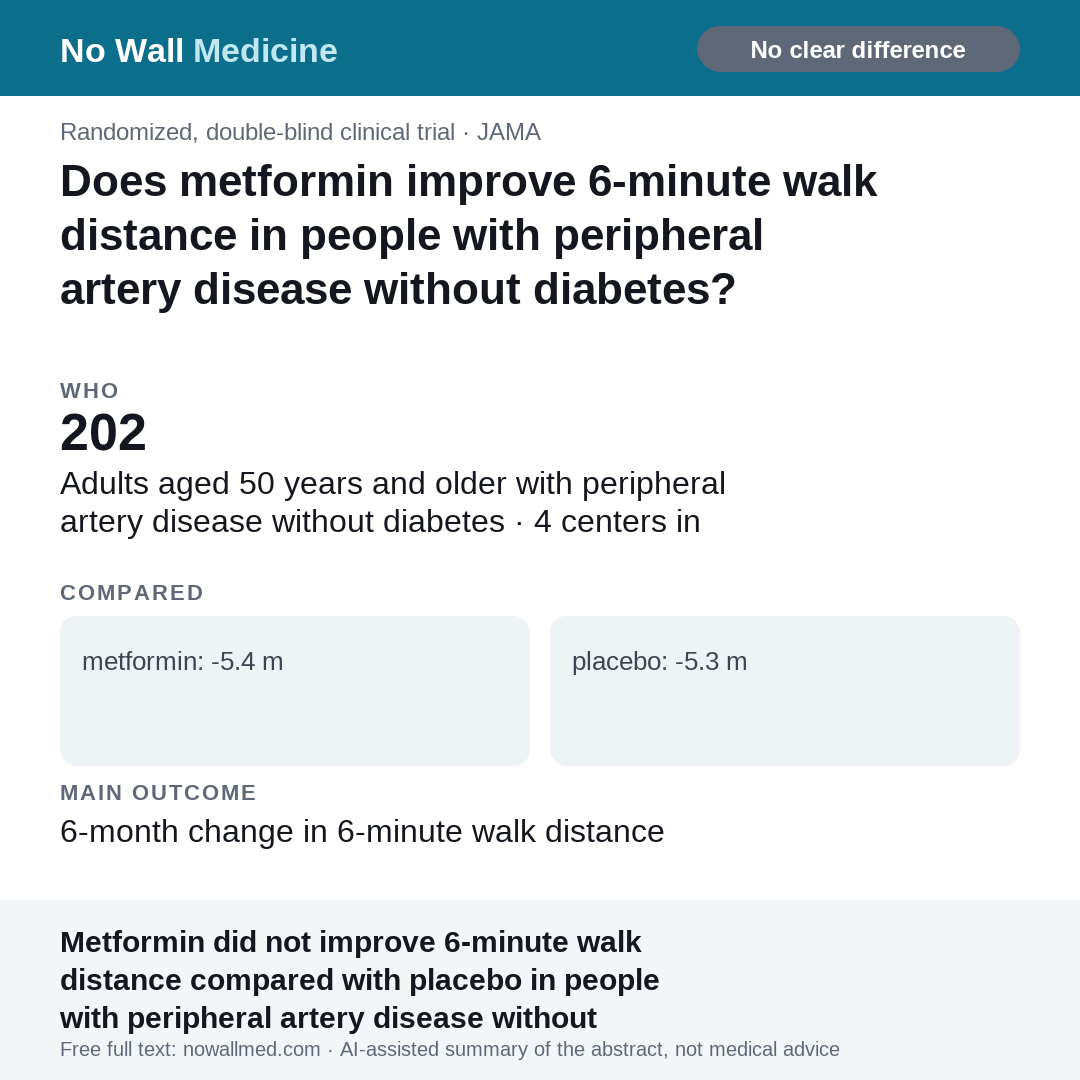
Metformin to Improve Walking Performance in Lower Extremity Peripheral Artery Disease: The PERMET Randomized Clinical Trial
Randomized, double-blind clinical trialNo clear difference
Does metformin improve 6-minute walk distance in people with peripheral artery disease without diabetes?
Who
202
Adults aged 50 years and older with peripheral artery disease without diabetes · 4 centers in the US
Compared
metformin: -5.4 m
placebo: -5.3 m
Main outcome
6-month change in 6-minute walk distance
Result: adjusted between-group difference: 1.1 m (95% CI, -16.3 to 18.6 m)
Bottom line: Metformin did not improve 6-minute walk distance compared with placebo in people with peripheral artery disease without diabetes.
Limitation: Enrollment was lower than targeted due to funding limitations.
JAMA · 2025-11-08Download image
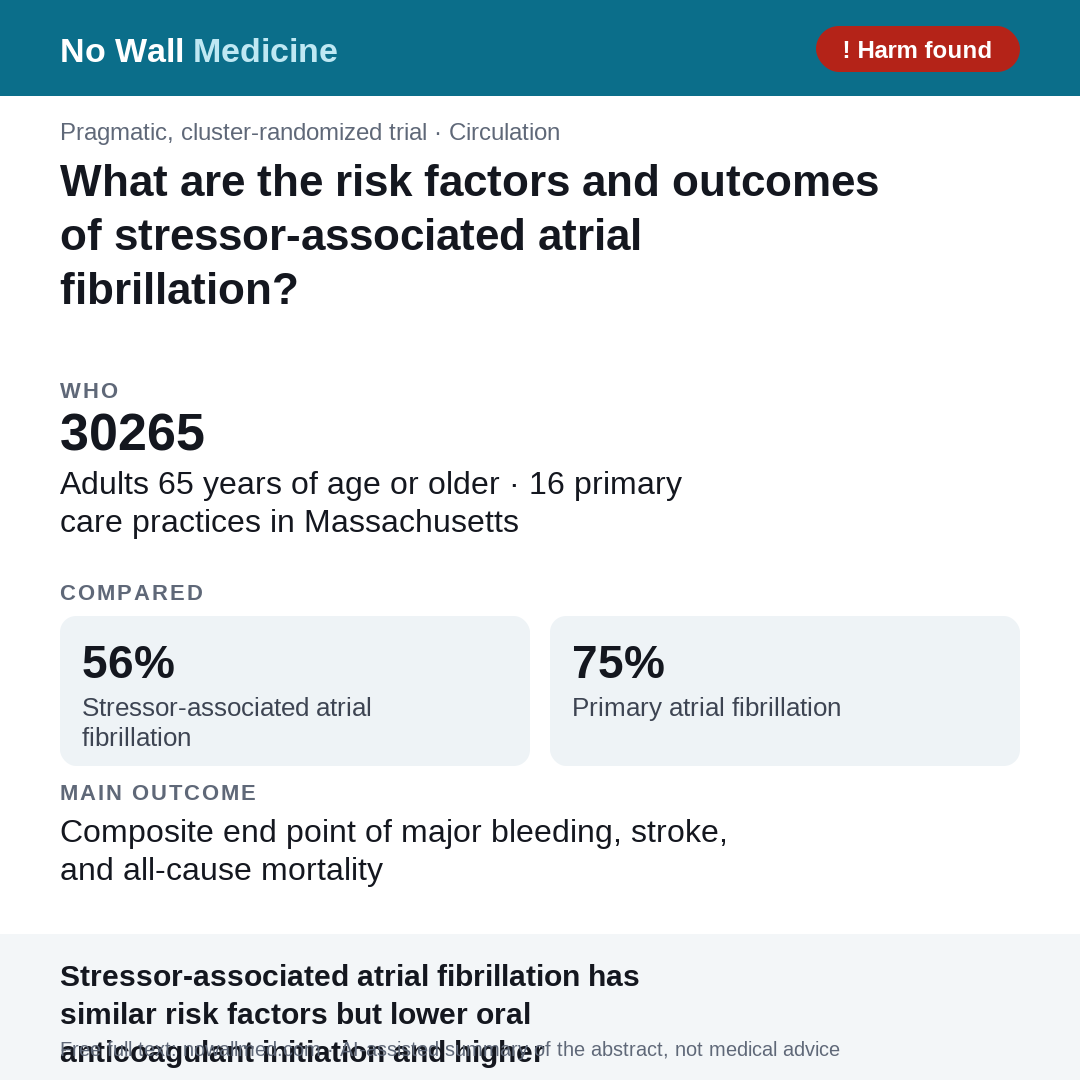
Incidence, Risk Factors, and Outcomes in Stressor-Associated Atrial Fibrillation: Insights From the VITAL-AF Trial
Pragmatic, cluster-randomized trialHarm found
What are the risk factors and outcomes of stressor-associated atrial fibrillation?
Who
30265
Adults 65 years of age or older · 16 primary care practices in Massachusetts
Compared
56%Stressor-associated atrial fibrillation
75%Primary atrial fibrillation
Main outcome
Composite end point of major bleeding, stroke, and all-cause mortality
Result: hazard ratio 6.13 (95% CI 4.31 to 8.72)
Bottom line: Stressor-associated atrial fibrillation has similar risk factors but lower oral anticoagulant initiation and higher composite adverse outcomes.
Circulation · 2025-11-08Download image
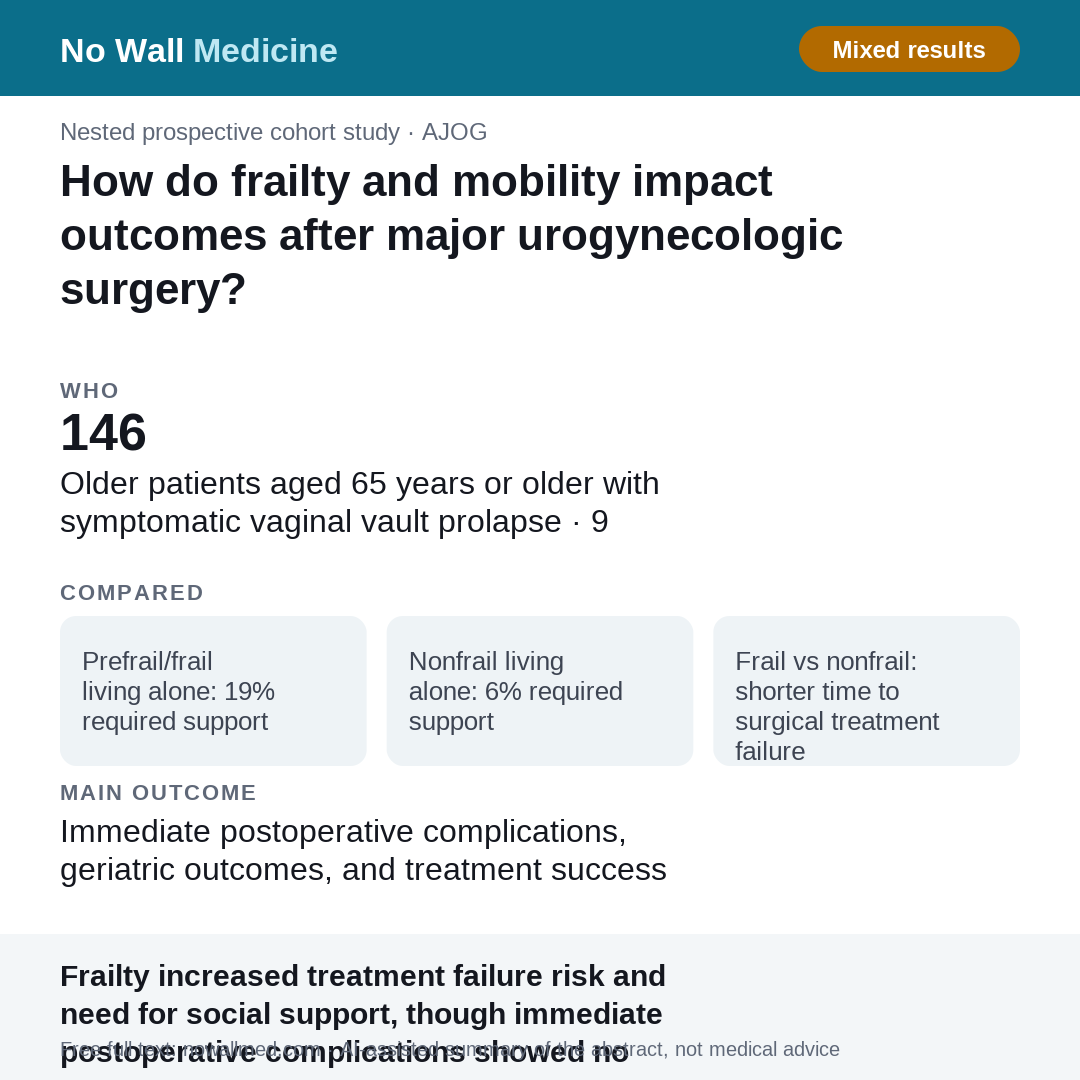
Outcomes by frailty and mobility in older patients undergoing major urogynecologic surgery: a planned supplementary study of the apical suspension repair for vault prolapse in a three-arm randomized (ASPIRe) trial
Nested prospective cohort studyMixed results
How do frailty and mobility impact outcomes after major urogynecologic surgery?
Who
146
Older patients aged 65 years or older with symptomatic vaginal vault prolapse · 9 clinical sites
Compared
Prefrail/frail living alone: 19% required support
Nonfrail living alone: 6% required support
Frail vs nonfrail: shorter time to surgical treatment failure
Main outcome
Immediate postoperative complications, geriatric outcomes, and treatment success
Result: adjusted hazard ratio 2.1 (95% confidence interval, 1.2, 3.6)
Bottom line: Frailty increased treatment failure risk and need for social support, though immediate postoperative complications showed no difference.
AJOG · 2025-11-08Download image
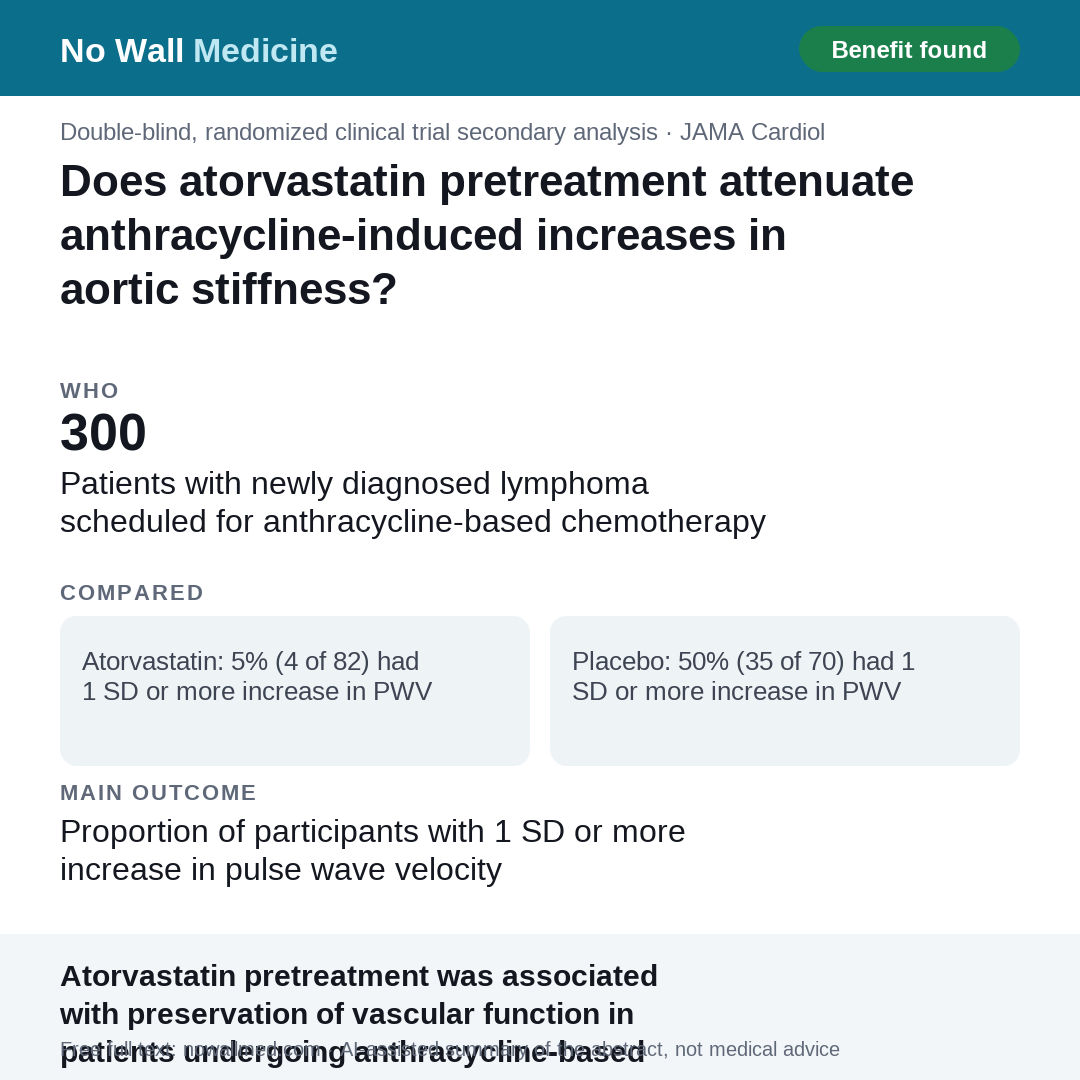
Atorvastatin and Aortic Stiffness During Anthracycline-Based Chemotherapy: A Secondary Analysis of a Randomized Clinical Trial
Double-blind, randomized clinical trial secondary analysisBenefit found
Does atorvastatin pretreatment attenuate anthracycline-induced increases in aortic stiffness?
Who
300
Patients with newly diagnosed lymphoma scheduled for anthracycline-based chemotherapy · 9 academic centers in the US and Canada
Compared
Atorvastatin: 5% (4 of 82) had 1 SD or more increase in PWV
Placebo: 50% (35 of 70) had 1 SD or more increase in PWV
Main outcome
Proportion of participants with 1 SD or more increase in pulse wave velocity
Result: odds ratio 0.05 (95% CI 0.02 to 0.16)
Bottom line: Atorvastatin pretreatment was associated with preservation of vascular function in patients undergoing anthracycline-based chemotherapy.
JAMA Cardiol · 2025-11-08Download image
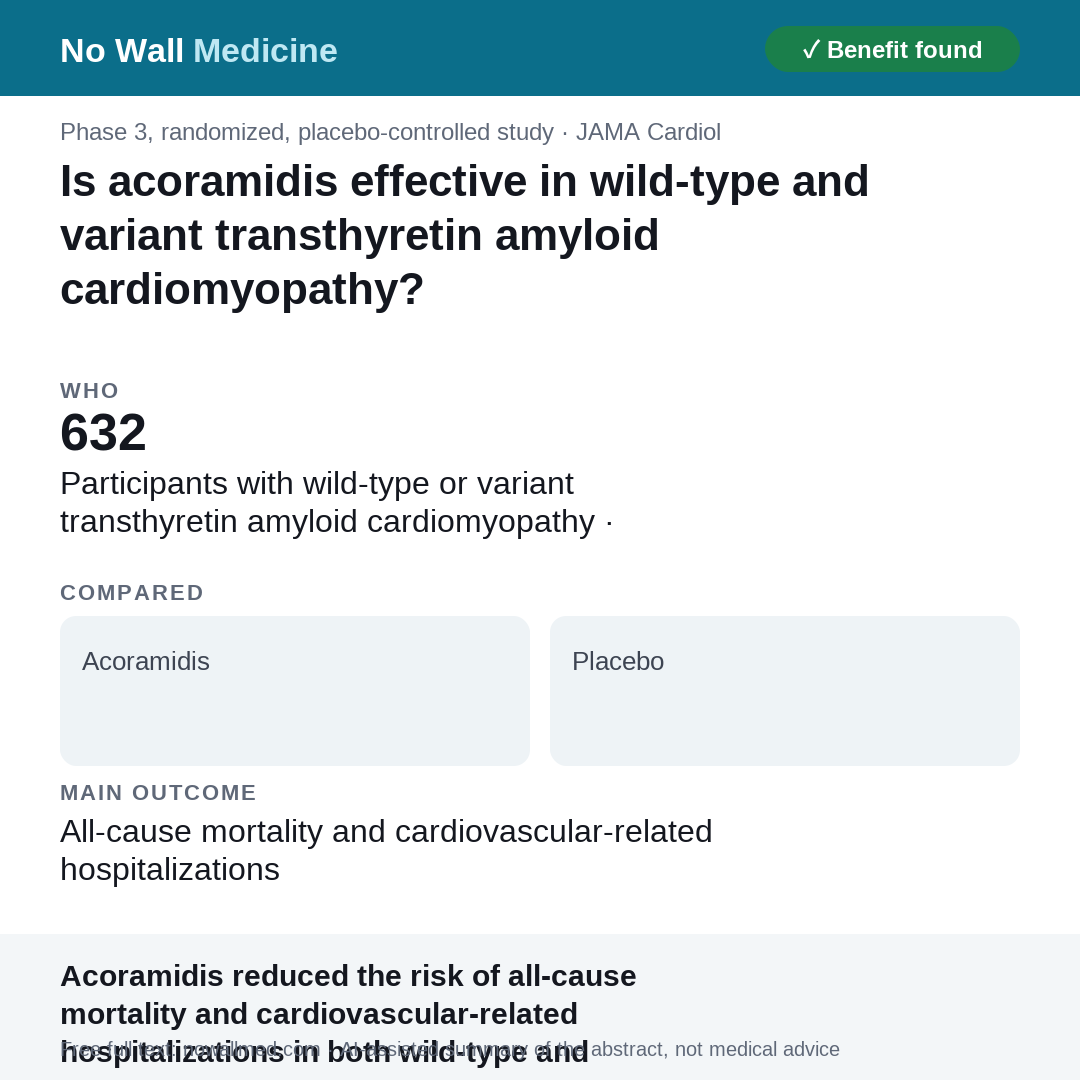
Efficacy of Acoramidis in Wild-Type and Variant Transthyretin Amyloid Cardiomyopathy: Results From ATTRibute-CM and Its Open-Label Extension
Phase 3, randomized, placebo-controlled studyBenefit found
Is acoramidis effective in wild-type and variant transthyretin amyloid cardiomyopathy?
Who
632
Participants with wild-type or variant transthyretin amyloid cardiomyopathy · International, multicenter
Compared
Acoramidis
Placebo
Main outcome
All-cause mortality and cardiovascular-related hospitalizations
Result: hazard ratio 0.69 (95% CI, 0.52-0.90) in wild-type; hazard ratio 0.41 (95% CI, 0.21-0.81) in variant
Bottom line: Acoramidis reduced the risk of all-cause mortality and cardiovascular-related hospitalizations in both wild-type and variant transthyretin amyloid cardiomyopathy.
JAMA Cardiol · 2025-11-08Download image
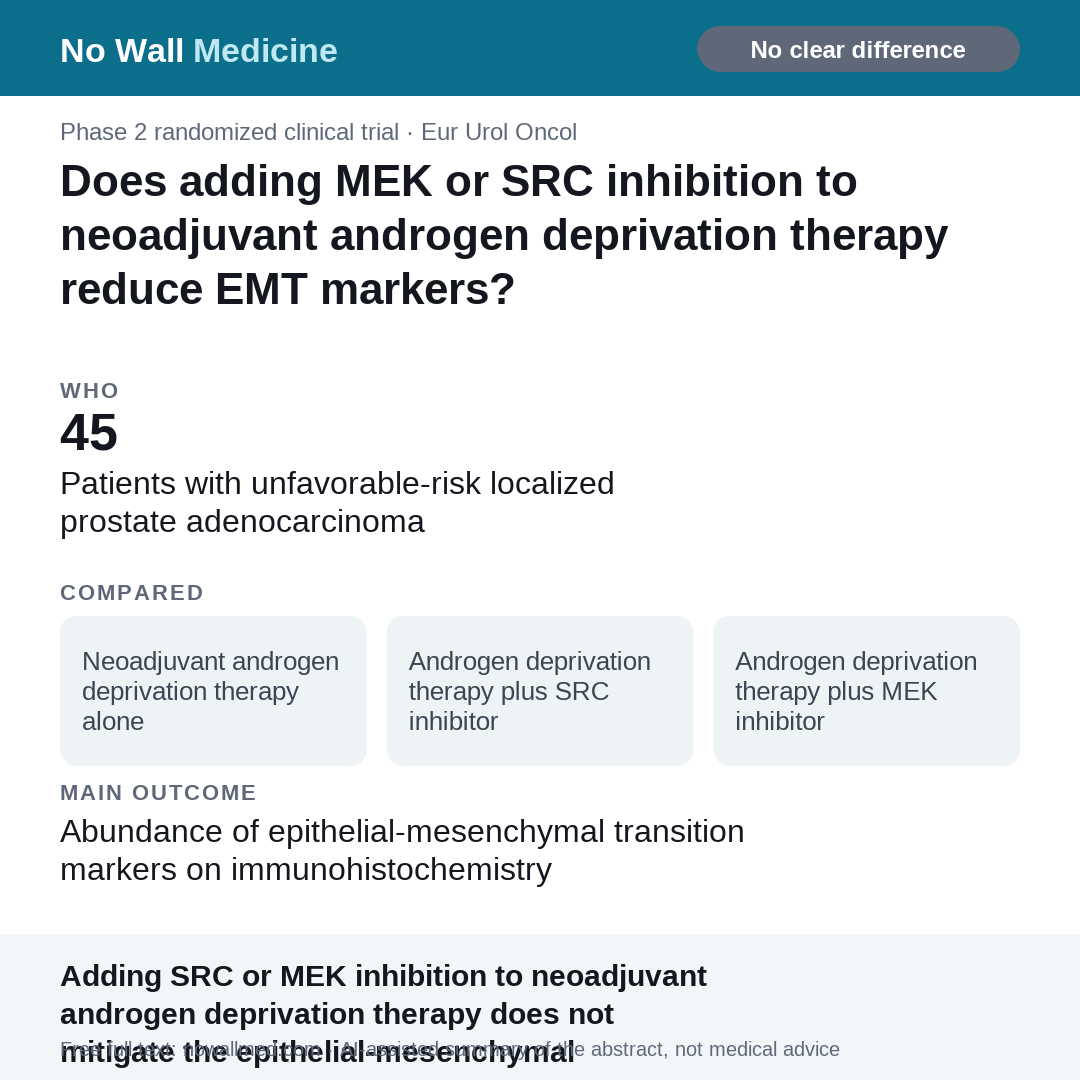
Neoadjuvant Antiandrogen Therapy With or Without MEK or SRC Inhibition for Unfavorable-risk Prostate Cancer: A Phase 2 Randomized Clinical Trial
Phase 2 randomized clinical trialNo clear difference
Does adding MEK or SRC inhibition to neoadjuvant androgen deprivation therapy reduce EMT markers?
Who
45
Patients with unfavorable-risk localized prostate adenocarcinoma
Compared
Neoadjuvant androgen deprivation therapy alone
Androgen deprivation therapy plus SRC inhibitor
Androgen deprivation therapy plus MEK inhibitor
Main outcome
Abundance of epithelial-mesenchymal transition markers on immunohistochemistry
Bottom line: Adding SRC or MEK inhibition to neoadjuvant androgen deprivation therapy does not mitigate the epithelial-mesenchymal transition response.
Eur Urol Oncol · 2025-11-08Download image
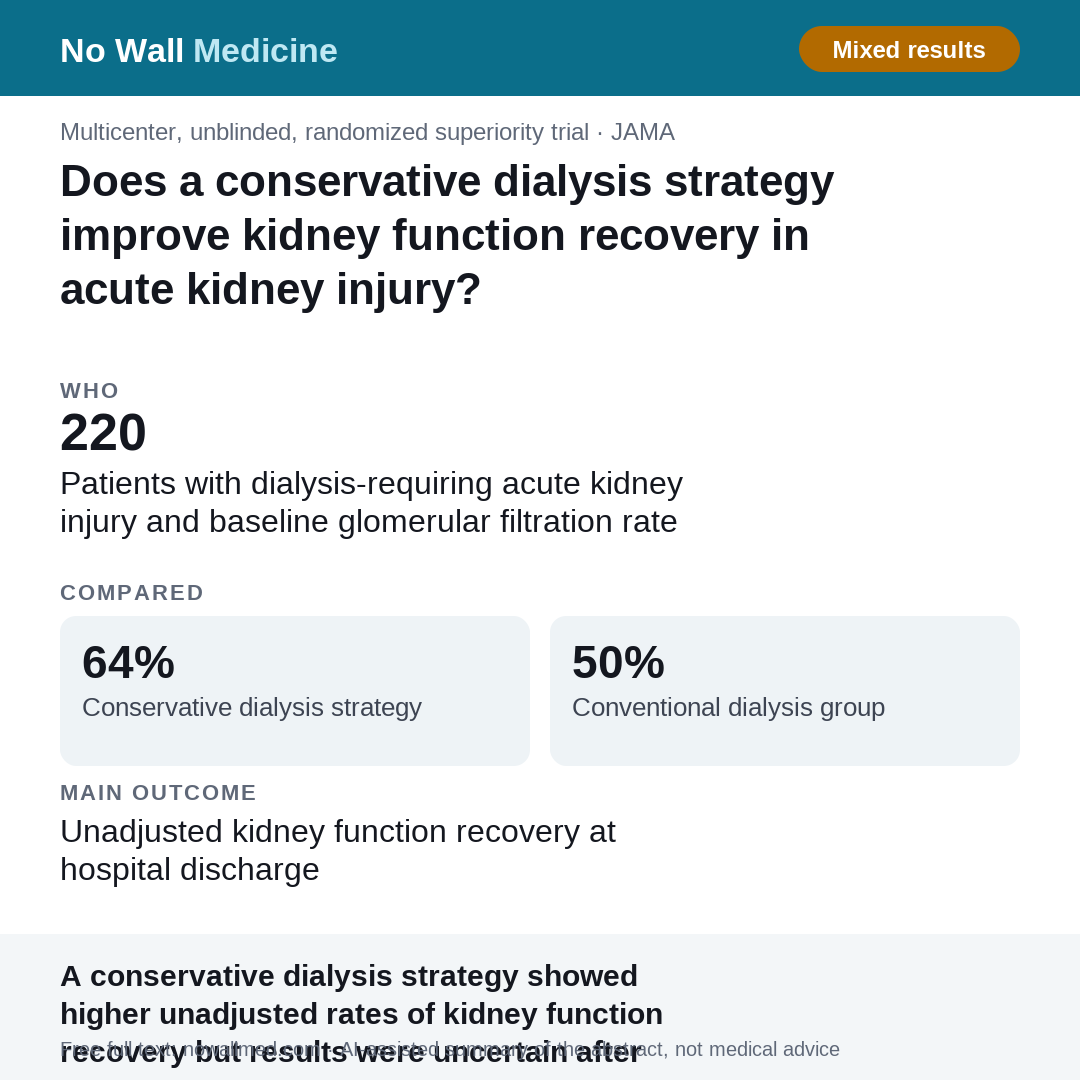
A Conservative Dialysis Strategy and Kidney Function Recovery in Dialysis-Requiring Acute Kidney Injury: The Liberation From Acute Dialysis (LIBERATE-D) Randomized Clinical Trial
Multicenter, unblinded, randomized superiority trialMixed results
Does a conservative dialysis strategy improve kidney function recovery in acute kidney injury?
Who
220
Patients with dialysis-requiring acute kidney injury and baseline glomerular filtration rate >15 mL/min/1.73 m2 · 4 clinical sites in the United States
Compared
64%Conservative dialysis strategy
50%Conventional dialysis group
Main outcome
Unadjusted kidney function recovery at hospital discharge
Result: unadjusted odds ratio, 1.76 (95% CI, 1.02-3.03)
Bottom line: A conservative dialysis strategy showed higher unadjusted rates of kidney function recovery but results were uncertain after adjustment.
JAMA · 2025-11-07Download image
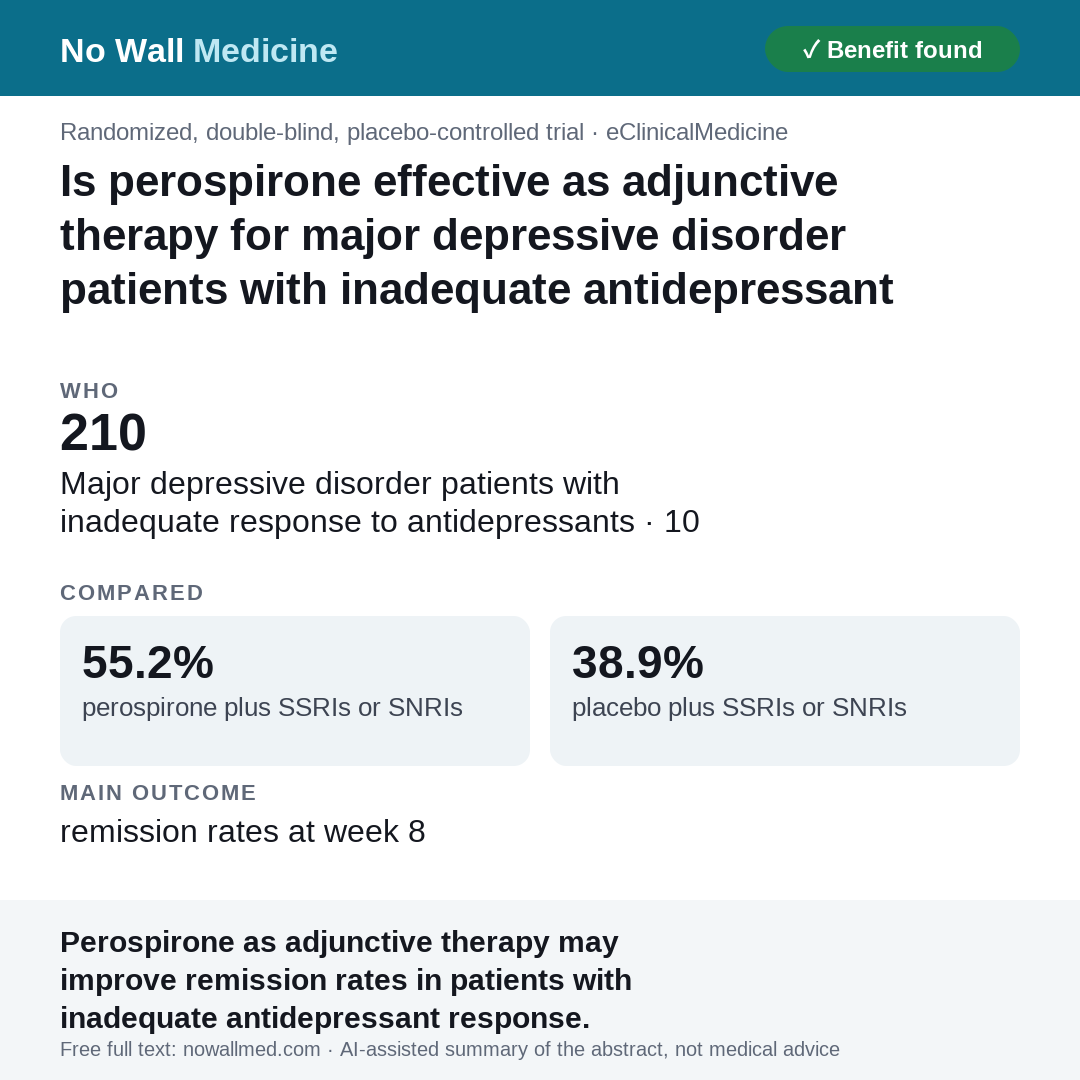
Efficacy and safety of perospirone as adjunctive therapy in major depressive disorder patients with inadequate response to antidepressants: a randomized clinical trial
Randomized, double-blind, placebo-controlled trialBenefit found
Is perospirone effective as adjunctive therapy for major depressive disorder patients with inadequate antidepressant response?
Who
210
Major depressive disorder patients with inadequate response to antidepressants · 10 Chinese hospitals
Compared
55.2%perospirone plus SSRIs or SNRIs
38.9%placebo plus SSRIs or SNRIs
Main outcome
remission rates at week 8
Result: odds ratio 1.944 (95% CI 1.060-3.564)
Bottom line: Perospirone as adjunctive therapy may improve remission rates in patients with inadequate antidepressant response.
Limitation: efficacy should be interpreted with caution due to the lack of multiplicity adjustment
Funded by: National Natural Science Foundation of China and Livzon Pharmaceutical Group Inc.
eClinicalMedicine · 2025-11-07Download image
A barrier-forming gel for oral mucositis in head and neck cancers patients undergoing radiotherapy: randomized, controlled, multicenter trial
Randomized, multicenter, controlled trialBenefit found
Does Episil gel affect oral mucositis and nutritional status in head and neck cancer patients?
Who
200
Head and neck cancer patients receiving radiotherapy · 7 medical centers in China
Compared
Control group: 14/100 (14%)
Episil group: 4/100 (4%)
Main outcome
Incidence of Grade III/IV oral mucositis
Result: 4% vs. 14% (P = 0.024)
Bottom line: Episil gel delayed advanced oral mucositis, improved pain relief, nutritional status, and quality of life.
Funded by: Jilin Province Health Science And Technology ability improvement program
eClinicalMedicine · 2025-11-07Download image