Visual abstracts
New randomized trials and meta-analyses from leading journals at a glance: who was studied, what was compared, and what was found. Every paper is free to read in full.
All specialtiesCardiology 4763Oncology 4042Gastroenterology & Hepatology 1902Infectious Disease 3756Neurology 1872Psychiatry & Mental Health 2214Pulmonology 2042Critical Care 1319Endocrinology & Diabetes 2544Pediatrics 2889Surgery 2479Orthopedics & Sports Medicine 917Neurosurgery 525Cardiothoracic & Vascular Surgery 656Plastic & Reconstructive Surgery 574Nephrology 1107Rheumatology 810Hematology 1090Dermatology 611Ophthalmology 532Obstetrics & Gynecology 1645Public & Global Health 1037Radiology & Imaging 617Anesthesiology 957Urology 745ENT (Otolaryngology) 494Emergency Medicine 481Allergy & Immunology 309Geriatrics 972Family Medicine & Primary Care 533Medical Genetics & Genomics 659Pathology & Laboratory Medicine 156Physical Medicine & Rehabilitation 734Palliative Care 421Nutrition 1560Digital Health & AI 2133General Medicine 318
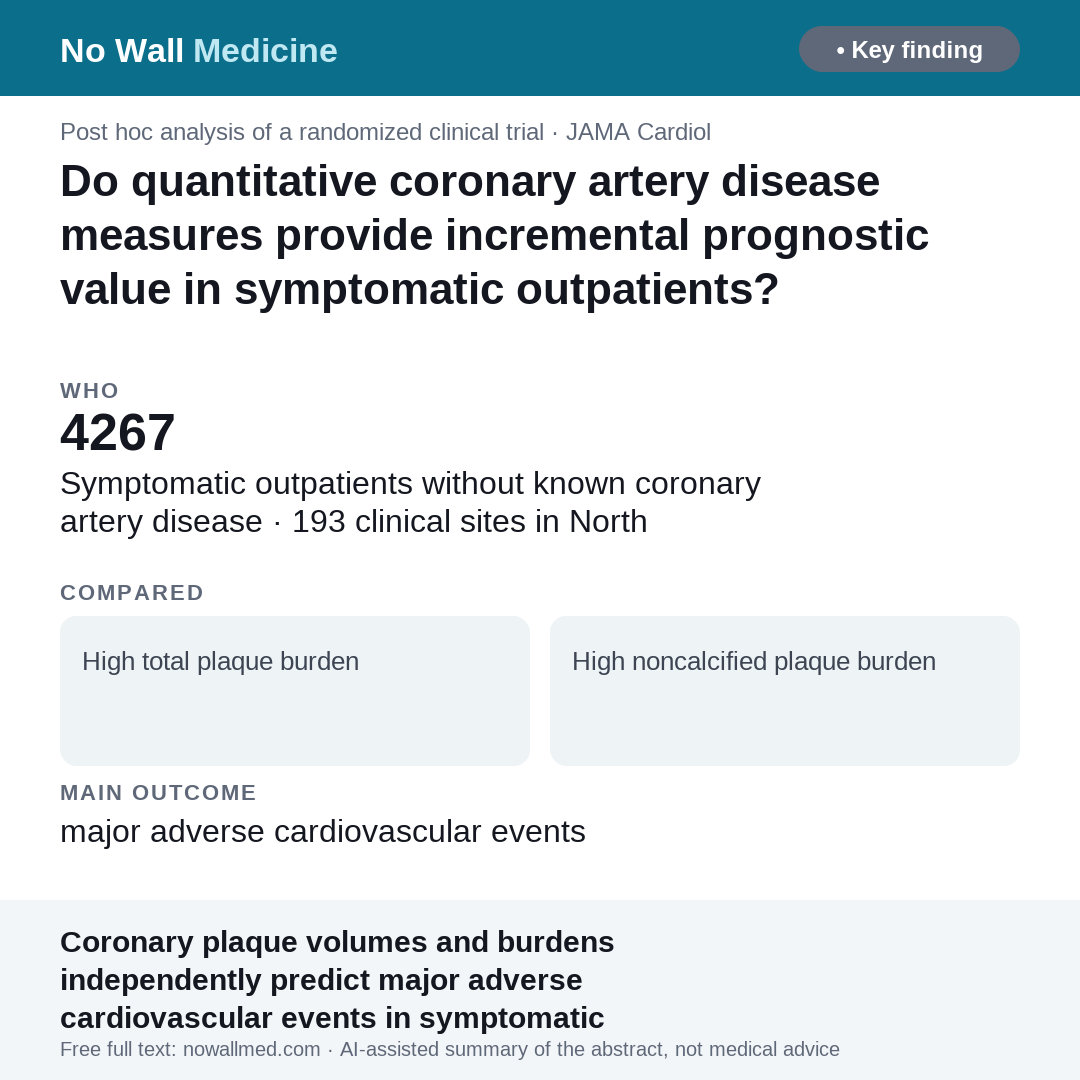
Prognostic Value of Plaque Volume in Patients With First Diagnosis of Coronary Artery Disease: A Substudy of the PROMISE Randomized Clinical Trial
Post hoc analysis of a randomized clinical trialKey finding
Do quantitative coronary artery disease measures provide incremental prognostic value in symptomatic outpatients?
Who
4267
Symptomatic outpatients without known coronary artery disease · 193 clinical sites in North America
Compared
High total plaque burden
High noncalcified plaque burden
Main outcome
major adverse cardiovascular events
Result: TPB: adjusted HR 1.18 (95% CI 1.05-1.34); NCPB: adjusted HR 1.20 (95% CI 1.05-1.37)
Bottom line: Coronary plaque volumes and burdens independently predict major adverse cardiovascular events in symptomatic patients without known disease.
JAMA Cardiol · 2026-02-11Download image
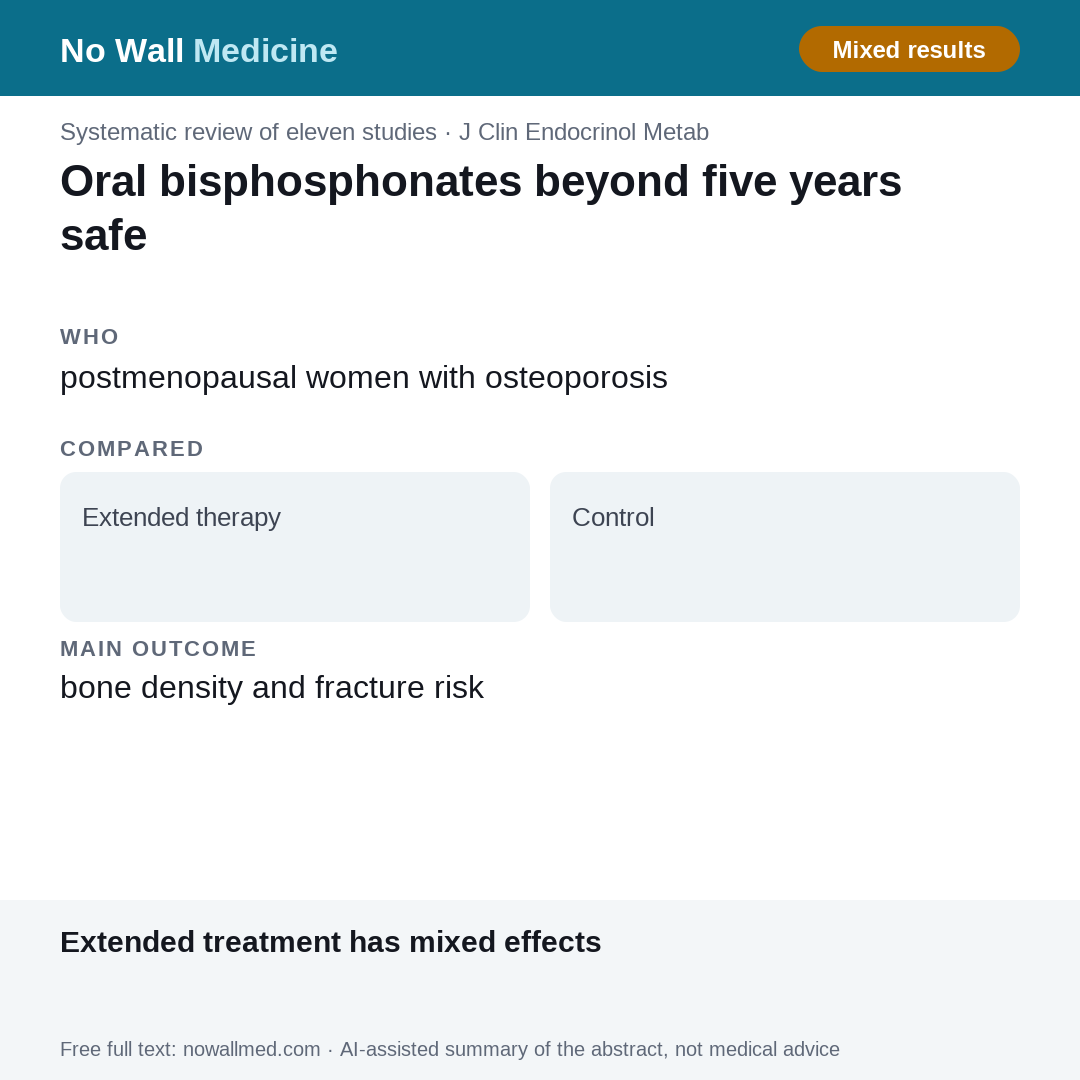
Health and adverse events associated with extended oral bisphosphonates among postmenopausal women: a systematic review
Systematic review of eleven studiesMixed results
Oral bisphosphonates beyond five years safe
Who
postmenopausal women with osteoporosis
Compared
Extended therapy
Control
Main outcome
bone density and fracture risk
Bottom line: Extended treatment has mixed effects
Limitation: substantial heterogeneity and limited evidence
J Clin Endocrinol Metab · 2026-02-11Download image
Pharmacokinetics and Pharmacodynamics Following Repeat Dosing of neffy (Epinephrine Nasal Spray) Versus Intramuscular Injection During Induced Allergic Rhinitis
Phase 1, open-label, randomized, crossover studyEarly signal
How do neffy nasal spray and intramuscular epinephrine compare during allergic rhinitis?
Who
43
43 adults with seasonal allergic rhinitis
Compared
neffy nasal spray: higher or comparable maximum plasma concentration
intramuscular epinephrine
Main outcome
pharmacokinetics and pharmacodynamics
Bottom line: Neffy nasal spray provides pharmacokinetic and pharmacodynamic profiles comparable or greater to intramuscular epinephrine injection.
J Allergy Clin Immunol Pract · 2026-02-11Download image

Bony Union in Maxilla and Mandible Free Flap Reconstruction: A Systematic Review and Meta-Analysis
Systematic review and meta-analysisUnclear result
What are the rates of bony union in maxilla and mandible free flap reconstruction?
Who
Patients undergoing maxilla or mandible reconstruction with vascularized free flap · Not specified
Compared
Maxilla reconstruction: Higher pooled rates of complete union
Radius reconstruction: Higher pooled rates of complete union
Virtual surgical planning: Higher pooled rates of complete union
Main outcome
Bony union rates
Bottom line: Maxilla, radius, and virtual surgical planning are associated with higher pooled rates of complete bony union.
Head Neck · 2026-02-11Download image

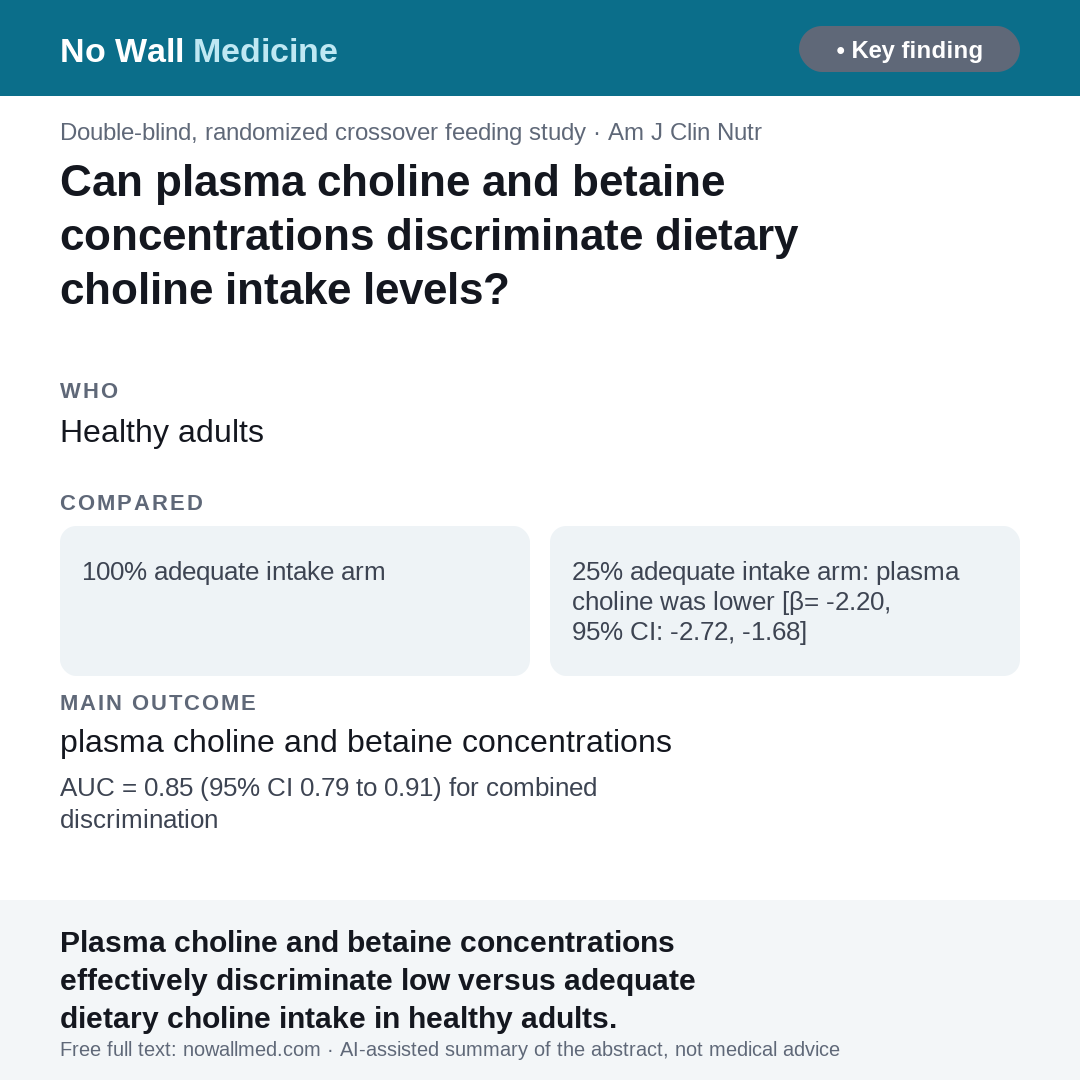
Choline and betaine concentrations in plasma discriminate levels of dietary choline intake in healthy adults: analysis of a double-blind randomized crossover controlled feeding study
Double-blind, randomized crossover feeding studyKey finding
Can plasma choline and betaine concentrations discriminate dietary choline intake levels?
Who
Healthy adults
Compared
100% adequate intake arm
25% adequate intake arm: plasma choline was lower [β= -2.20, 95% CI: -2.72, -1.68]
Main outcome
plasma choline and betaine concentrations
Result: AUC = 0.85 (95% CI 0.79 to 0.91) for combined discrimination
Bottom line: Plasma choline and betaine concentrations effectively discriminate low versus adequate dietary choline intake in healthy adults.
Am J Clin Nutr · 2026-02-11Download image
Echocardiographic Indices of Cardiac Remodeling Following Transcatheter Edge-to-Edge Repair for Secondary Mitral Regurgitation: A Systematic Review and Meta-Analysis
Systematic review and meta-analysisBenefit found
Does transcatheter edge-to-edge repair impact echocardiographic indices of cardiac remodeling?
Who
3987
Patients with secondary mitral regurgitation
Compared
Before transcatheter edge-to-edge repair
After transcatheter edge-to-edge repair: significant increase in left ventricular ejection fraction
Main outcome
echocardiographic indices of cardiac remodeling
Result: mean difference 1.51% (95% CI 0.47-2.55) for left ventricular ejection fraction
Bottom line: Transcatheter edge-to-edge repair promotes significant cardiac remodeling in patients with secondary mitral regurgitation.
J Am Heart Assoc · 2026-02-11Download image

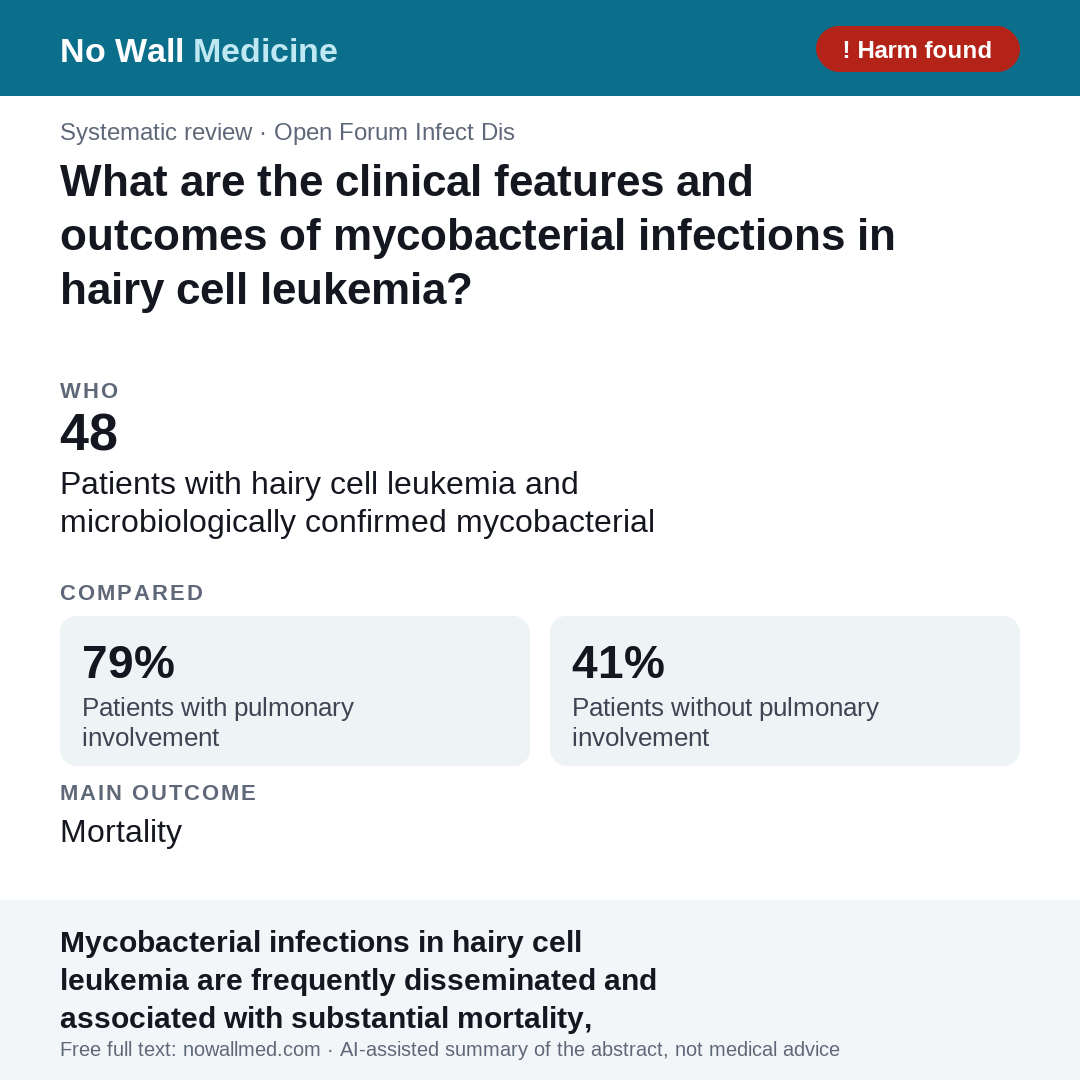
Mycobacterial Infections in Patients With Hairy Cell Leukemia: A Systematic Review of Published Cases
Systematic reviewHarm found
What are the clinical features and outcomes of mycobacterial infections in hairy cell leukemia?
Who
48
Patients with hairy cell leukemia and microbiologically confirmed mycobacterial infection
Compared
79%Patients with pulmonary involvement
41%Patients without pulmonary involvement
Main outcome
Mortality
Bottom line: Mycobacterial infections in hairy cell leukemia are frequently disseminated and associated with substantial mortality, especially with pulmonary involvement.
Open Forum Infect Dis · 2026-02-11Download image
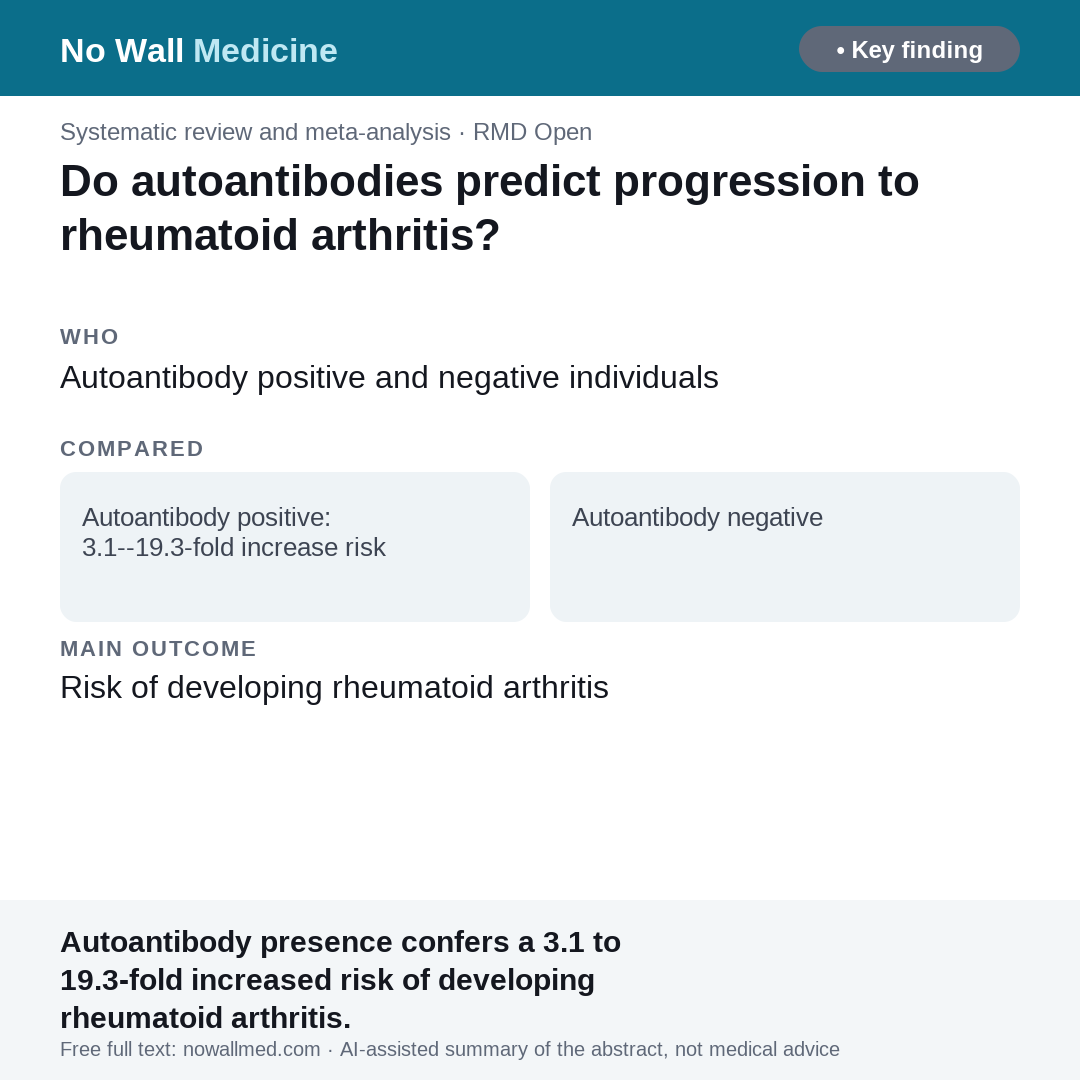
Autoantibodies as predictors of progression to rheumatoid arthritis: a systematic review and meta-analysis
Systematic review and meta-analysisKey finding
Do autoantibodies predict progression to rheumatoid arthritis?
Who
Autoantibody positive and negative individuals
Compared
Autoantibody positive: 3.1--19.3-fold increase risk
Autoantibody negative
Main outcome
Risk of developing rheumatoid arthritis
Bottom line: Autoantibody presence confers a 3.1 to 19.3-fold increased risk of developing rheumatoid arthritis.
RMD Open · 2026-02-11Download image
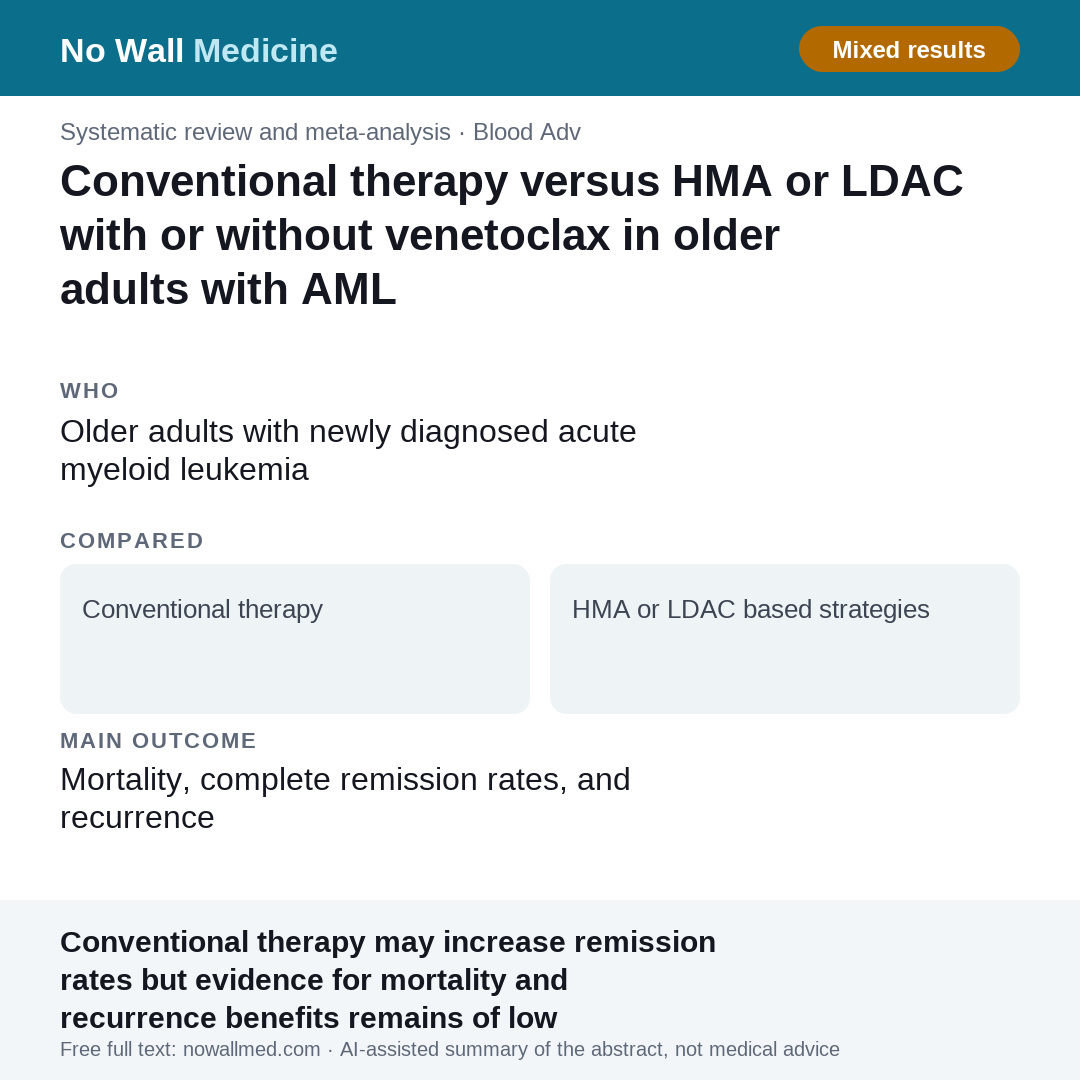
Conventional therapy vs HMA or LDAC with or without venetoclax in older adults with AML: systematic review and meta-analysis
Systematic review and meta-analysisMixed results
Conventional therapy versus HMA or LDAC with or without venetoclax in older adults with AML
Who
Older adults with newly diagnosed acute myeloid leukemia
Compared
Conventional therapy
HMA or LDAC based strategies
Main outcome
Mortality, complete remission rates, and recurrence
Result: risk ratio 0.94 (95% CI 0.85-1.04)
Bottom line: Conventional therapy may increase remission rates but evidence for mortality and recurrence benefits remains of low certainty.
Limitation: Evidence for comparisons with venetoclax is of very low certainty.
Blood Adv · 2026-02-11Download image
Advancing healthcare AI governance through a comprehensive maturity model based on systematic review
Systematic reviewBenefit found
How can healthcare artificial intelligence governance be improved through a maturity model?
Who
35
Thirty-five artificial intelligence implementation frameworks
Compared
Existing frameworks
Healthcare AI Governance Readiness Assessment
Main outcome
Identification of critical governance domains and a maturity model
Bottom line: A new five-level maturity model provides actionable governance pathways based on organizational resources.
NPJ Digit Med · 2026-02-11Download image

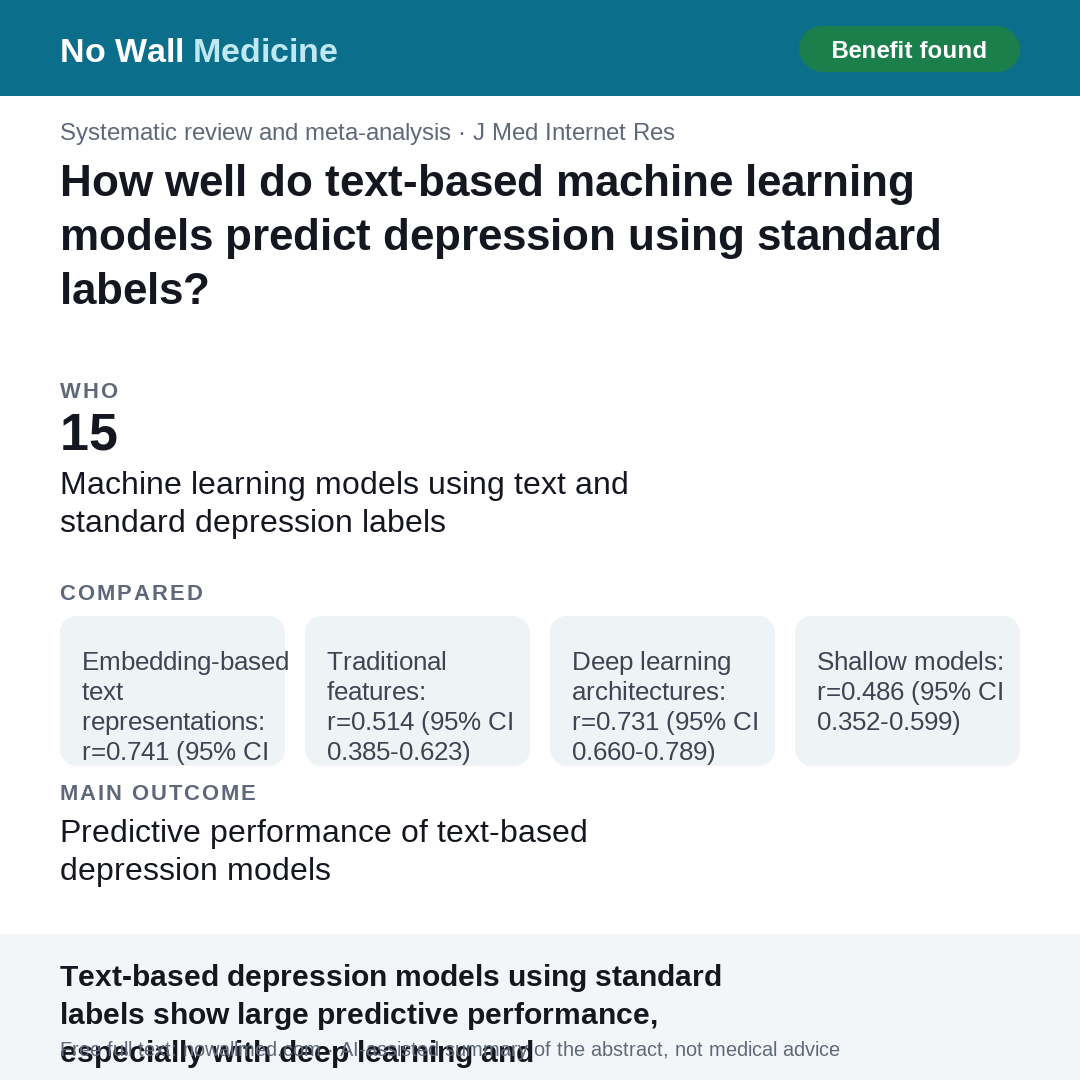
Text-Based Depression Estimation Using Machine Learning With Standard Labels: Systematic Review and Meta-Analysis
Systematic review and meta-analysisKey finding
How well do text-based machine learning models predict depression using standard labels?
Who
Machine learning models using text and standard depression labels
Compared
Embedding-based text representations: r=0.741 (95% CI 0.648-0.812)
Traditional features: r=0.514 (95% CI 0.385-0.623)
Deep learning architectures: r=0.731 (95% CI 0.660-0.789)
Shallow models: r=0.486 (95% CI 0.352-0.599)
Main outcome
Predictive performance of text-based depression models
Result: r 0.605 (95% CI 0.498-0.693)
Bottom line: Text-based depression models using standard labels show large predictive performance, especially with deep learning and embedding-based representations.
J Med Internet Res · 2026-02-11Download image
Robot-assisted therapy following stroke: what effects on quality of life, cognitive and psychosocial outcomes? A systematic review
Systematic reviewBenefit found
What are the effects of robot-assisted therapy on post-stroke non-motor outcomes?
Who
Post-stroke patients
Compared
Robot-assisted therapy
Conventional training controls
Main outcome
Quality of life, cognition, and psychosocial functioning
Bottom line: Robot-assisted therapy may have a broad impact on quality of life, cognition, and psychosocial outcomes after stroke.
Limitation: Considerable heterogeneity in participant characteristics, intervention duration, and dosage.
J Rehabil Med · 2026-02-11Download image

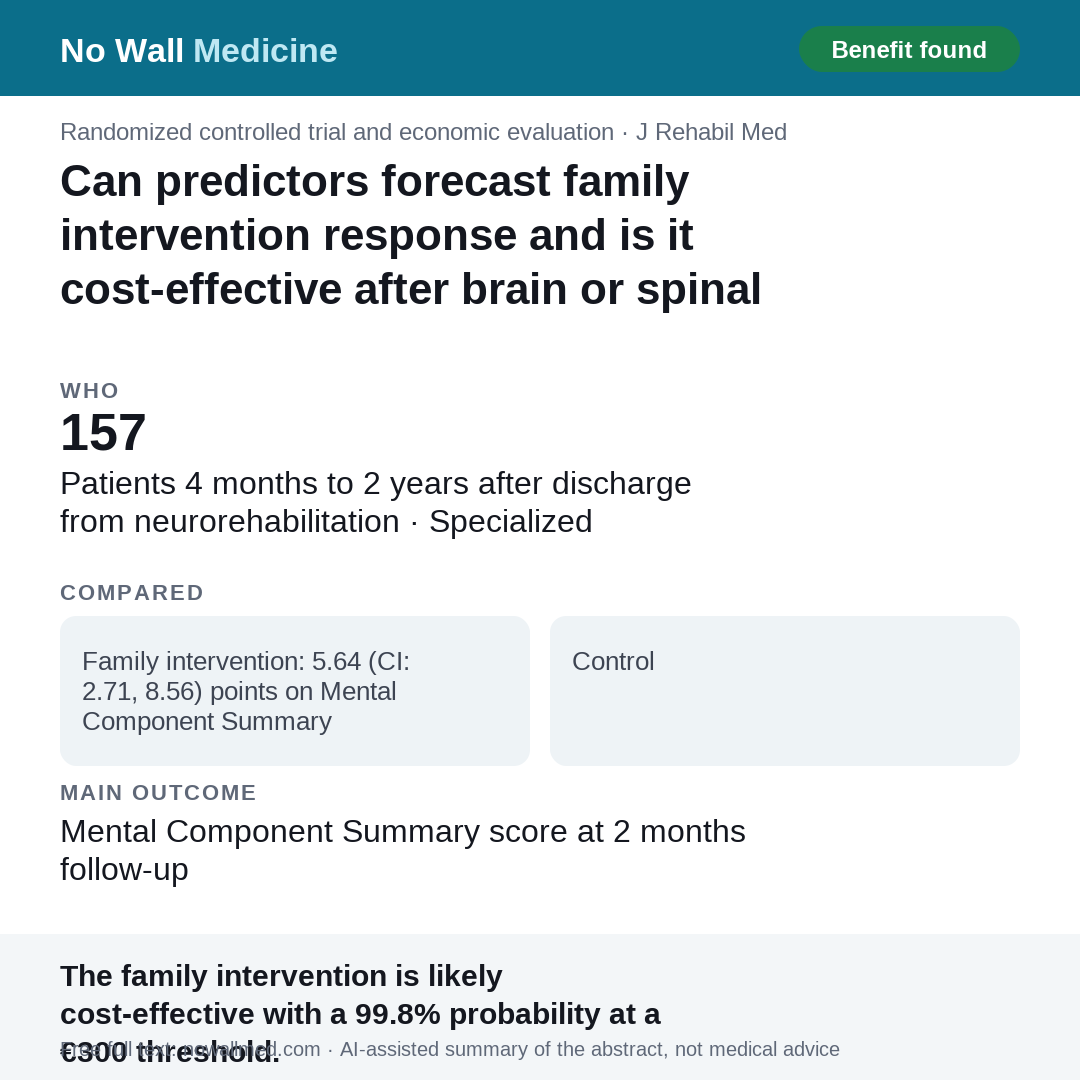
Predicting effect and evaluating cost-effectiveness of a family intervention after acquired brain or spinal cord injury: a randomized controlled trial
Randomized controlled trial and economic evaluationKey finding
Can predictors forecast family intervention response and is it cost-effective after brain or spinal cord injury?
Who
157
Patients 4 months to 2 years after discharge from neurorehabilitation · Specialized neurorehabilitation unit
Compared
Family intervention: 5.64 (CI: 2.71, 8.56) points on Mental Component Summary
Control
Main outcome
Mental Component Summary score at 2 months follow-up
Bottom line: The family intervention is likely cost-effective with a 99.8% probability at a €300 threshold.
J Rehabil Med · 2026-02-11Download image
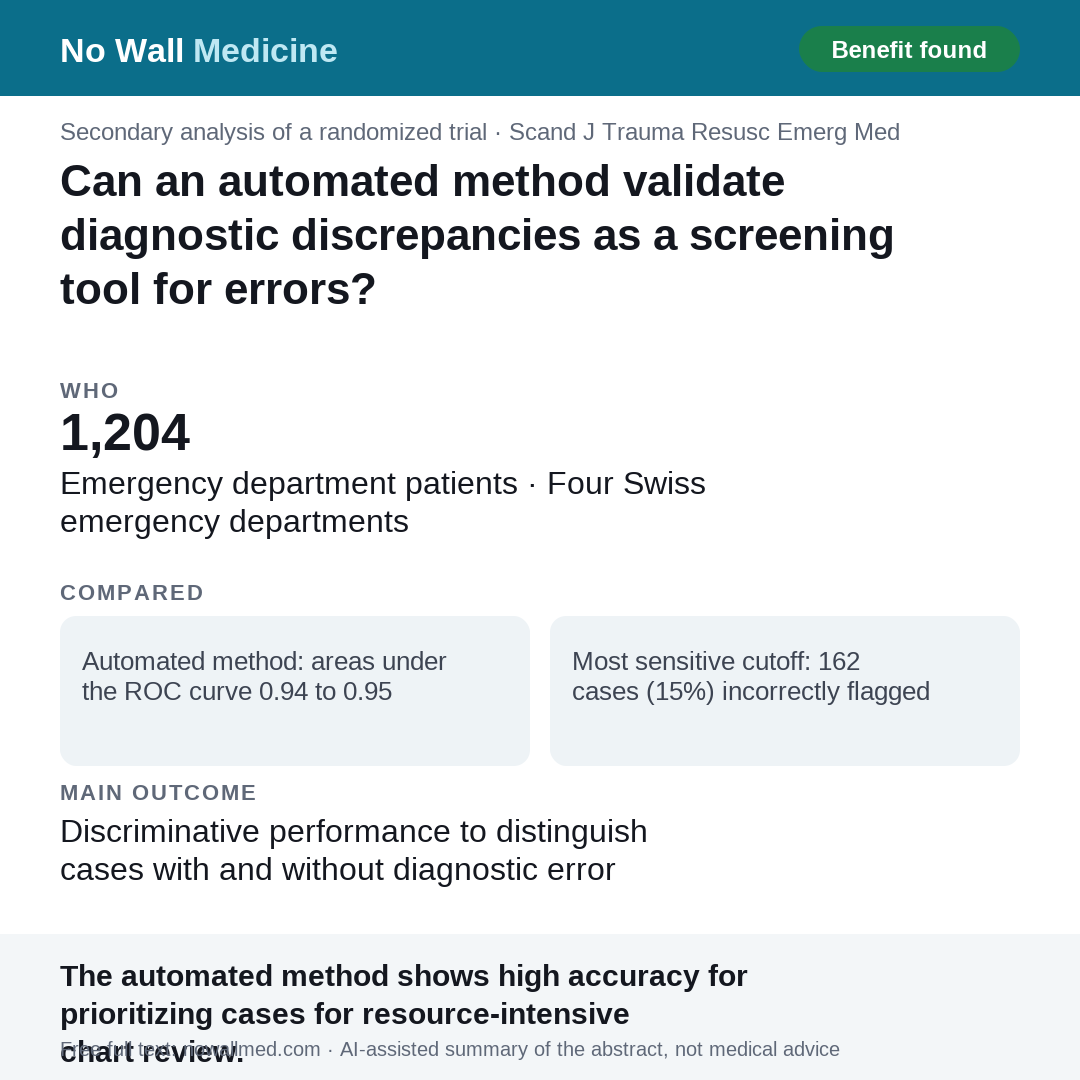
Identification of diagnostic discrepancies as a quality assurance measure in emergency medicine - a validation study
Secondary analysis of a randomized trialBenefit found
Can an automated method validate diagnostic discrepancies as a screening tool for errors?
Who
1,204
Emergency department patients · Four Swiss emergency departments
Compared
Automated method: areas under the ROC curve 0.94 to 0.95
Most sensitive cutoff: 162 cases (15%) incorrectly flagged
Main outcome
Discriminative performance to distinguish cases with and without diagnostic error
Result: areas under the ROC curve 0.94 to 0.95
Bottom line: The automated method shows high accuracy for prioritizing cases for resource-intensive chart review.
Scand J Trauma Resusc Emerg Med · 2026-02-11Download image
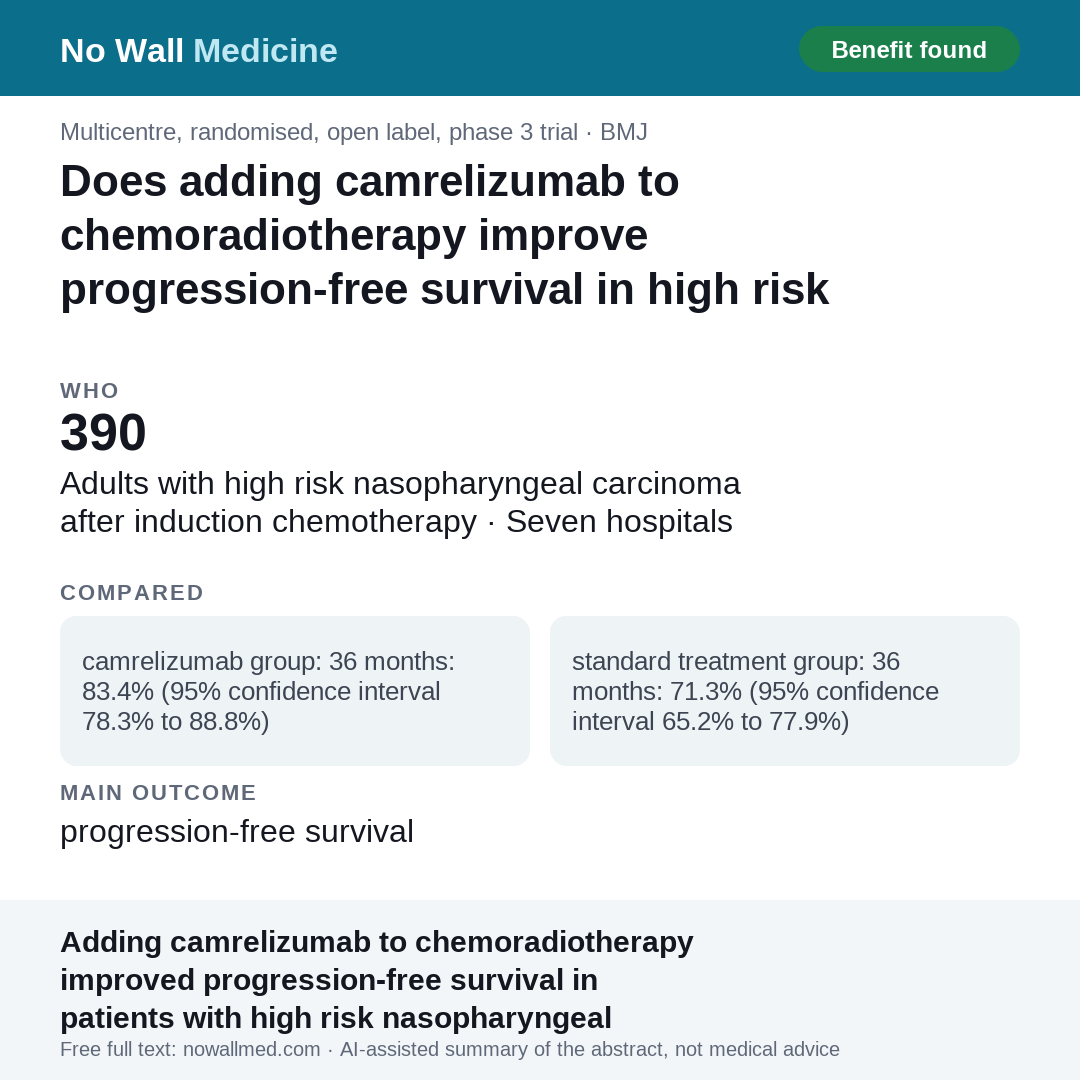
Standard chemoradiotherapy with concurrent and adjuvant camrelizumab in patients with high risk nasopharyngeal carcinoma: multicentre, randomised, open label, phase 3 trial
Multicentre, randomised, open label, phase 3 trialBenefit found
Does adding camrelizumab to chemoradiotherapy improve progression-free survival in high risk nasopharyngeal carcinoma?
Who
390
Adults with high risk nasopharyngeal carcinoma after induction chemotherapy · Seven hospitals in China
Compared
camrelizumab group: 36 months: 83.4% (95% confidence interval 78.3% to 88.8%)
standard treatment group: 36 months: 71.3% (95% confidence interval 65.2% to 77.9%)
Main outcome
progression-free survival
Result: stratified hazard ratio 0.51 (95% confidence interval 0.34 to 0.77)
Bottom line: Adding camrelizumab to chemoradiotherapy improved progression-free survival in patients with high risk nasopharyngeal carcinoma.
BMJ · 2026-02-10Download image
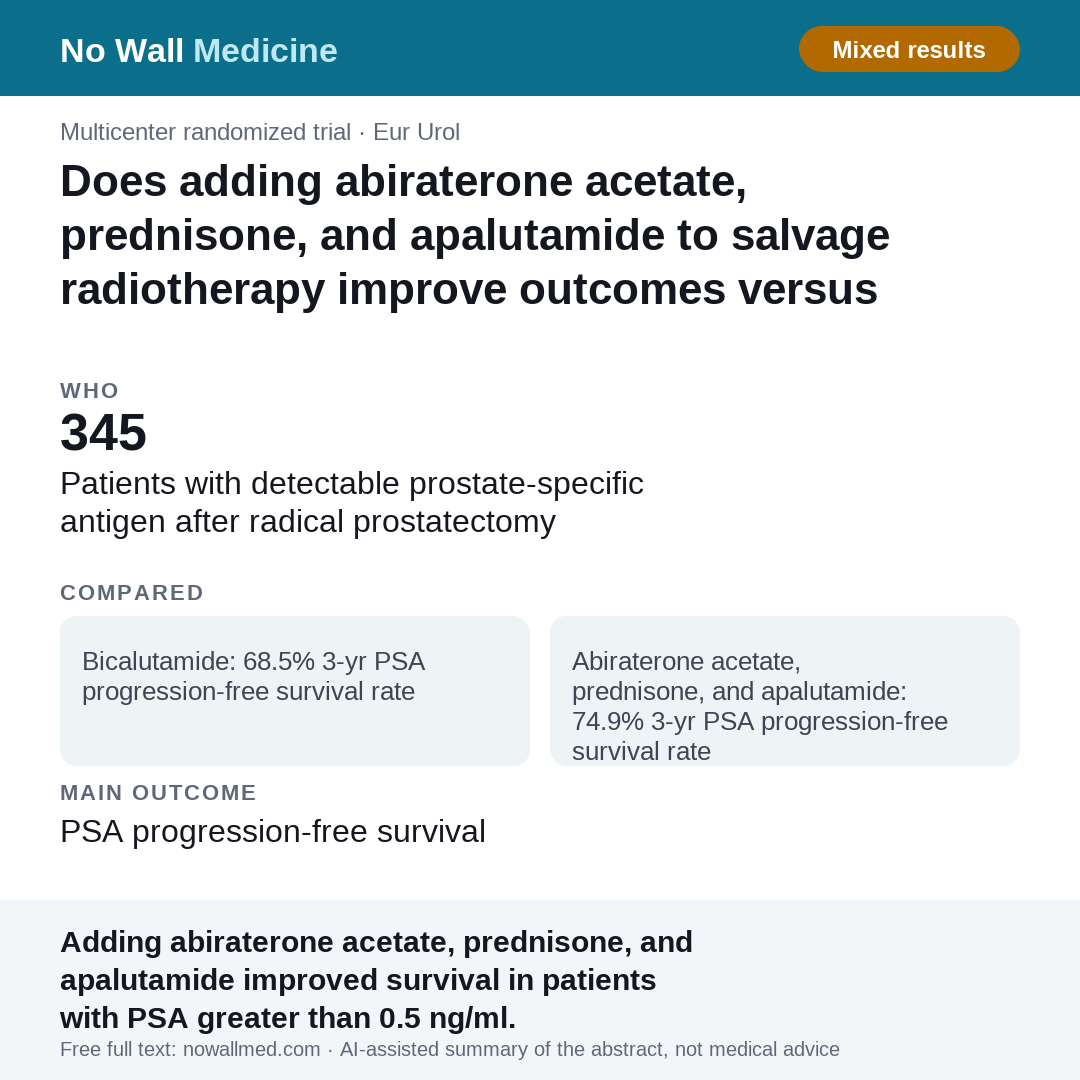
FORMULA-509: A Multicenter Randomized Trial of Postprostatectomy Salvage Radiotherapy and 6 months of a GNRH Agonist with Either Bicalutamide or Abiraterone Acetate plus Prednisone and Apalutamide
Multicenter randomized trialMixed results
Does adding abiraterone acetate, prednisone, and apalutamide to salvage radiotherapy improve outcomes versus bicalutamide?
Who
345
Patients with detectable prostate-specific antigen after radical prostatectomy
Compared
Bicalutamide: 68.5% 3-yr PSA progression-free survival rate
Abiraterone acetate, prednisone, and apalutamide: 74.9% 3-yr PSA progression-free survival rate
Main outcome
PSA progression-free survival
Result: hazard ratio 0.71 (90% CI 0.49-1.03)
Bottom line: Adding abiraterone acetate, prednisone, and apalutamide improved survival in patients with PSA greater than 0.5 ng/ml.
Limitation: The study did not reach the prespecified significance level for the overall population.
Eur Urol · 2026-02-10Download image
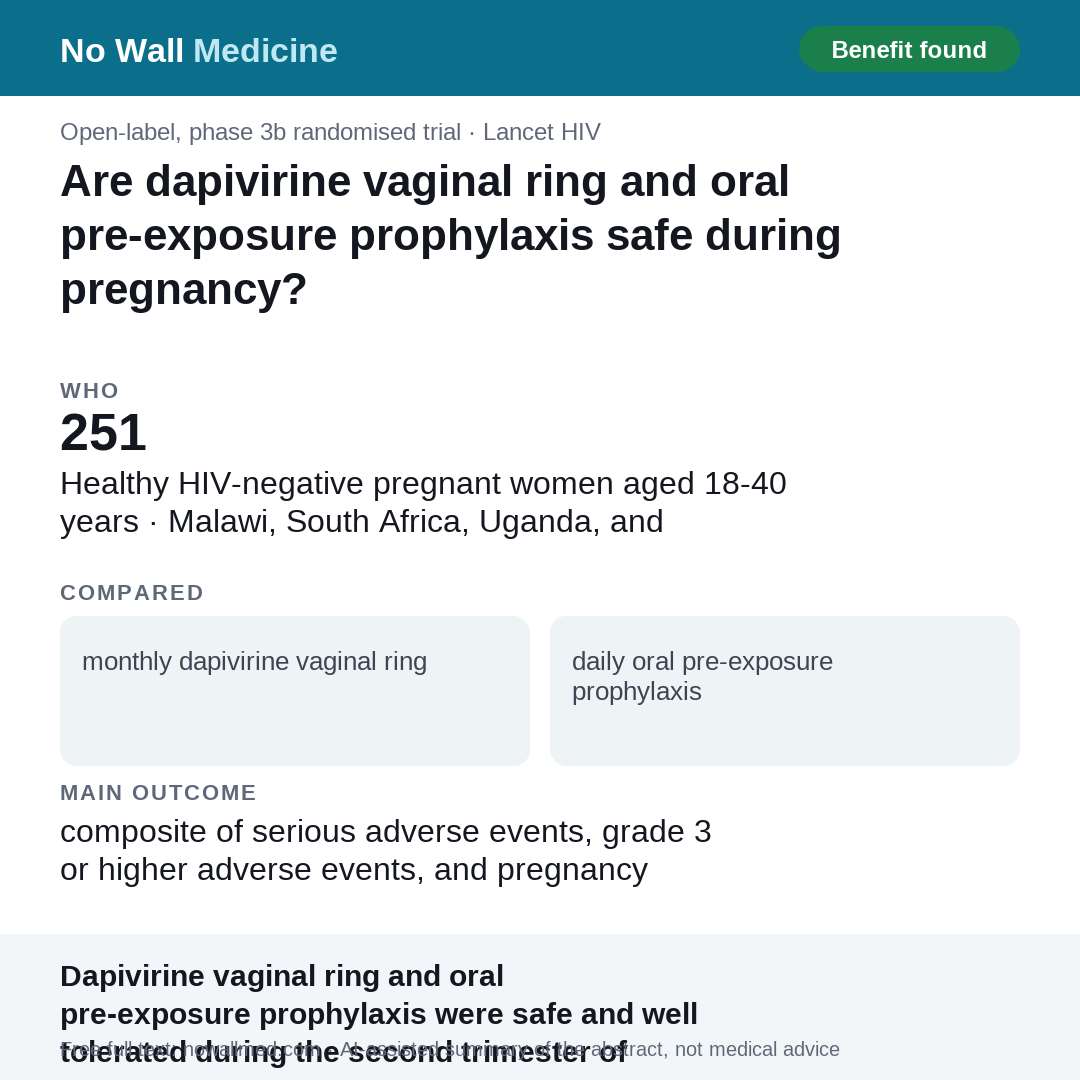
Safety, acceptability, and adherence to dapivirine vaginal ring and oral pre-exposure prophylaxis for HIV prevention in the second trimester of pregnancy: a multicountry, open-label, phase 3b randomised trial
Open-label, phase 3b randomised trialBenefit found
Are dapivirine vaginal ring and oral pre-exposure prophylaxis safe during pregnancy?
Who
251
Healthy HIV-negative pregnant women aged 18-40 years · Malawi, South Africa, Uganda, and Zimbabwe
Compared
monthly dapivirine vaginal ring
daily oral pre-exposure prophylaxis
Main outcome
composite of serious adverse events, grade 3 or higher adverse events, and pregnancy outcomes
Bottom line: Dapivirine vaginal ring and oral pre-exposure prophylaxis were safe and well tolerated during the second trimester of pregnancy.
Funded by: US National Institutes of Health
Lancet HIV · 2026-02-10Download image
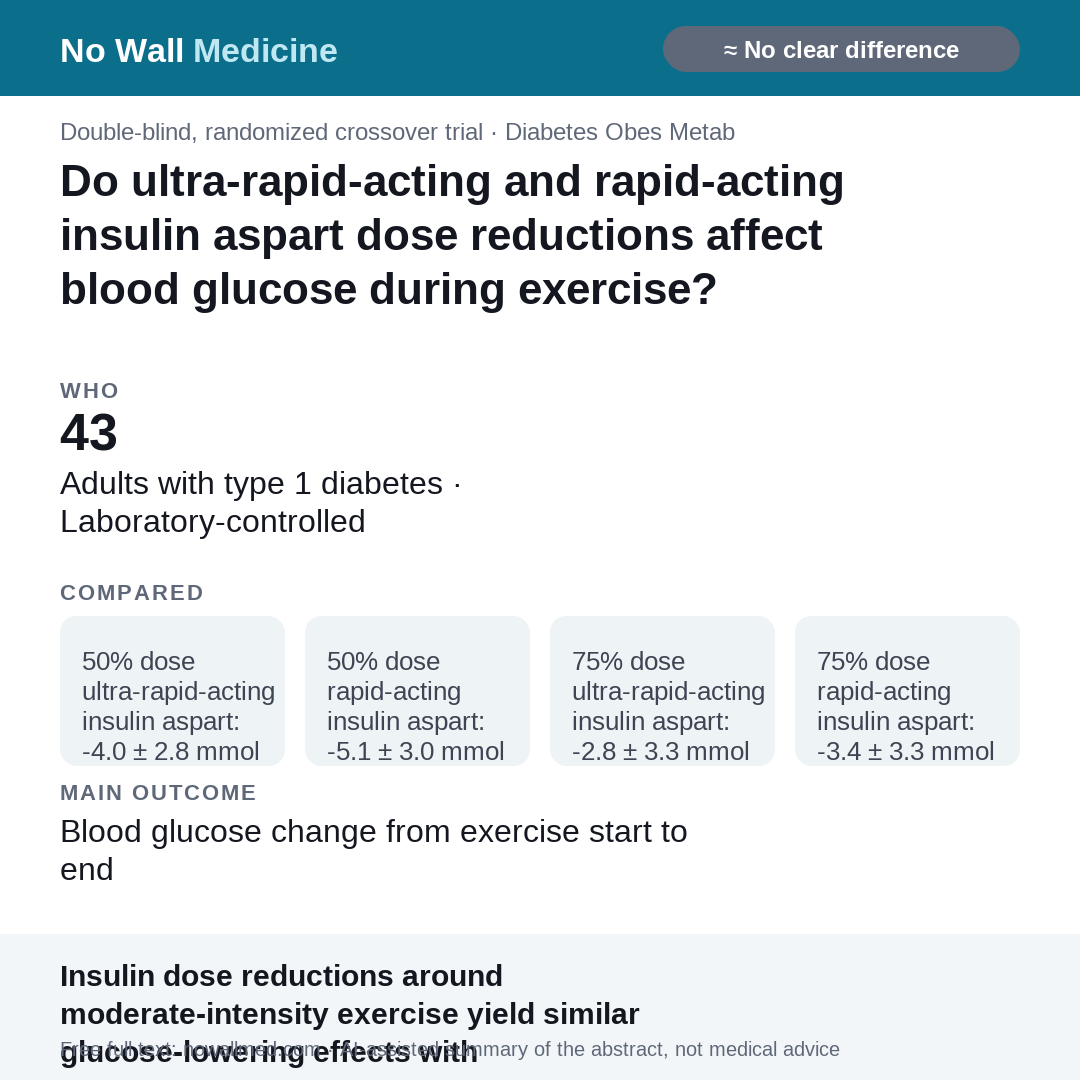
Comparison of pharmacodynamics and pharmacokinetics of ultra-rapid-acting insulin aspart and rapid-acting insulin aspart around continuous moderate intensity exercise in adults with type 1 diabetes: A randomised controlled trial
Double-blind, randomized crossover trialNo clear difference
Do ultra-rapid-acting and rapid-acting insulin aspart dose reductions affect blood glucose during exercise?
Who
43
Adults with type 1 diabetes · Laboratory-controlled
Compared
50% dose ultra-rapid-acting insulin aspart: -4.0 ± 2.8 mmol L-1
50% dose rapid-acting insulin aspart: -5.1 ± 3.0 mmol L-1
75% dose ultra-rapid-acting insulin aspart: -2.8 ± 3.3 mmol L-1
75% dose rapid-acting insulin aspart: -3.4 ± 3.3 mmol L-1
Main outcome
Blood glucose change from exercise start to end
Bottom line: Insulin dose reductions around moderate-intensity exercise yield similar glucose-lowering effects with ultra-rapid-acting and rapid-acting insulin aspart.
Diabetes Obes Metab · 2026-02-10Download image
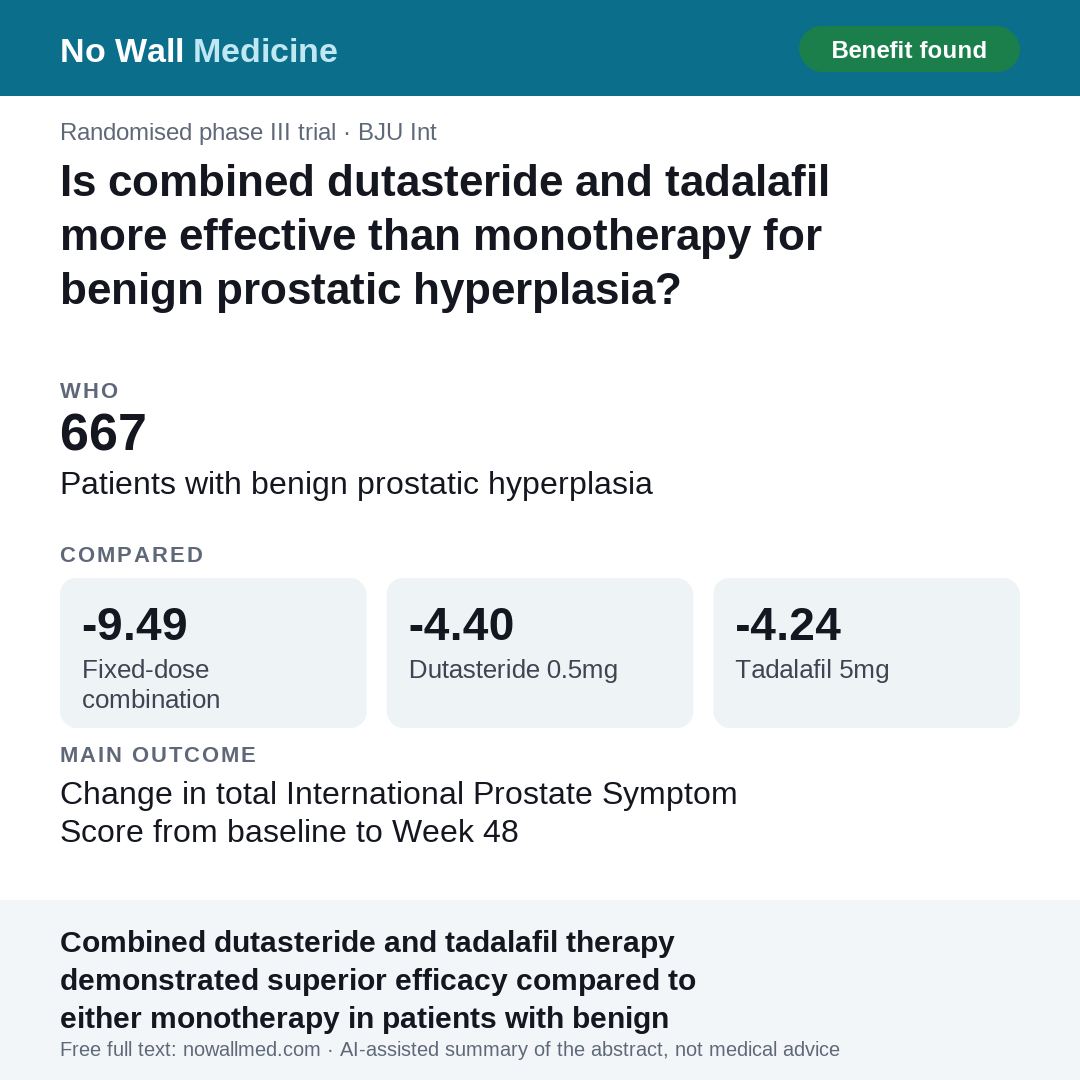
Combined therapy with dutasteride and tadalafil vs dutasteride or tadalafil monotherapy in benign prostatic hyperplasia: a randomised phase III trial
Randomised phase III trialBenefit found
Is combined dutasteride and tadalafil more effective than monotherapy for benign prostatic hyperplasia?
Who
667
Patients with benign prostatic hyperplasia
Compared
-9.49Fixed-dose combination dutasteride 0.5mg/tadalafil 5mg (0.37)
-4.40Dutasteride 0.5mg (0.37)
-4.24Tadalafil 5mg (0.37)
Main outcome
Change in total International Prostate Symptom Score from baseline to Week 48
Result: LSMD -5.09, 95% CI -6.13 to -4.50; LSMD -5.29, 95% CI -6.30 to -4.27
Bottom line: Combined dutasteride and tadalafil therapy demonstrated superior efficacy compared to either monotherapy in patients with benign prostatic hyperplasia.
BJU Int · 2026-02-10Download image
Prognosis and Treatment Response in Aggressive-variant Prostate Cancer and Treatment-related Neuroendocrine Prostate Cancer: A Systematic Review and Meta-analysis
Systematic review and meta-analysisKey finding
What is the prognosis and treatment response of aggressive-variant prostate cancer?
Who
Patients with aggressive-variant prostate cancer
Compared
Aggressive-variant prostate cancer: 46% objective response rate
Non-aggressive-variant prostate cancer: 19% objective response rate
Main outcome
Progression-free survival, overall survival, and objective response rates
Result: hazard ratio 2.72 (95% CI 1.54-4.81) for progression-free survival
Bottom line: Platinum-based chemotherapy shows higher response rates and survival benefits in aggressive-variant prostate cancer subtypes.
Limitation: Data were insufficient for meta-analytic comparison of survival by platinum-based chemotherapy in treatment-related neuroendocrine prostate cancer.
Eur Urol Oncol · 2026-02-10Download image