Visual abstracts
New randomized trials and meta-analyses from leading journals at a glance: who was studied, what was compared, and what was found. Every paper is free to read in full.
All specialtiesCardiology 4877Oncology 4138Gastroenterology & Hepatology 1942Infectious Disease 3837Neurology 1905Psychiatry & Mental Health 2273Pulmonology 2143Critical Care 1365Endocrinology & Diabetes 2580Pediatrics 2980Surgery 2559Orthopedics & Sports Medicine 931Neurosurgery 537Cardiothoracic & Vascular Surgery 674Plastic & Reconstructive Surgery 591Nephrology 1133Rheumatology 823Hematology 1109Dermatology 621Ophthalmology 543Obstetrics & Gynecology 1686Public & Global Health 1058Radiology & Imaging 648Anesthesiology 986Urology 764ENT (Otolaryngology) 503Emergency Medicine 511Allergy & Immunology 313Geriatrics 981Family Medicine & Primary Care 562Medical Genetics & Genomics 676Pathology & Laboratory Medicine 159Physical Medicine & Rehabilitation 757Palliative Care 444Nutrition 1588Digital Health & AI 2201General Medicine 321
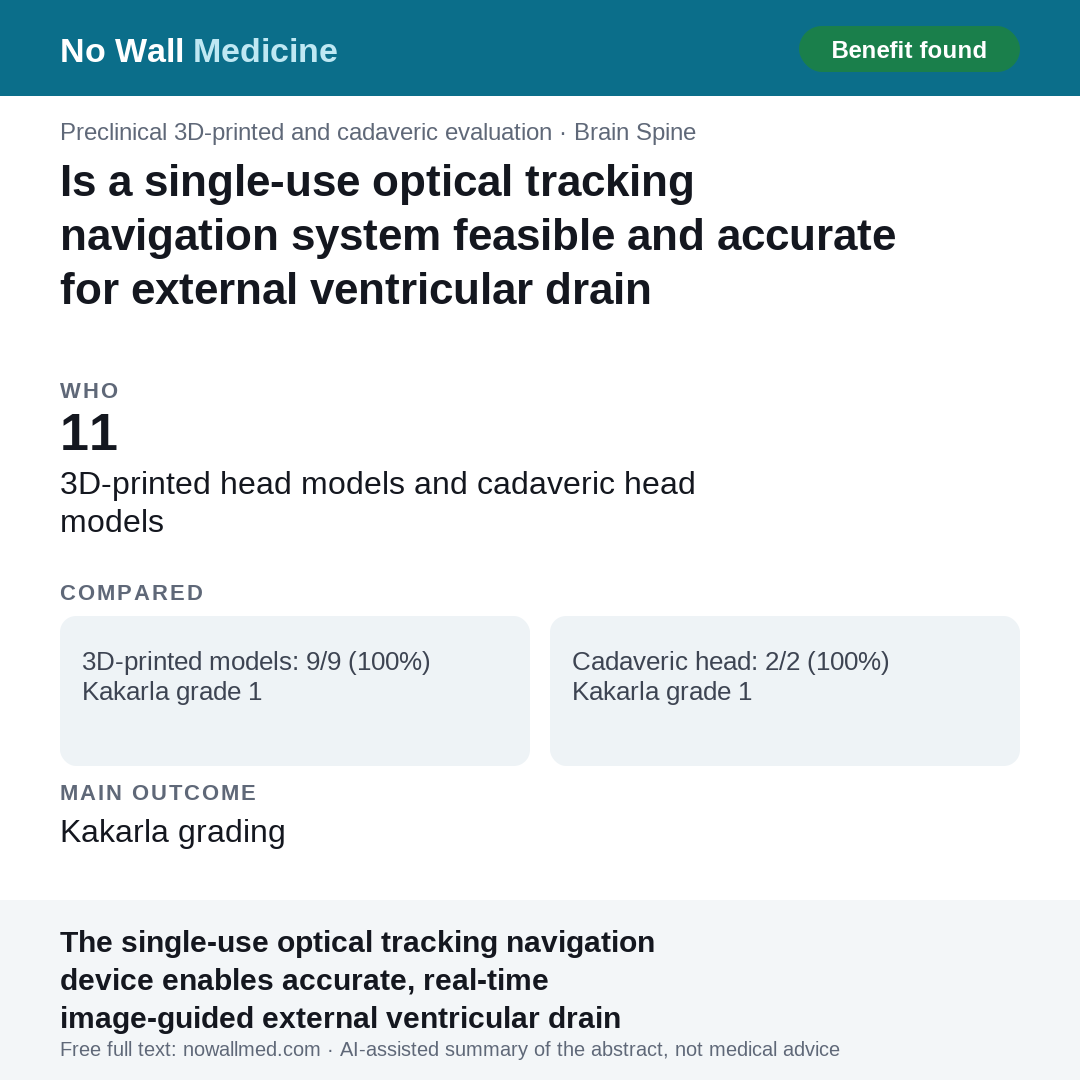
Single-use optical tracking navigation for external ventricular drain placement: Preclinical 3D-Printed and cadaveric evaluation with a systematic review
Preclinical 3D-printed and cadaveric evaluationBenefit found
Is a single-use optical tracking navigation system feasible and accurate for external ventricular drain placement?
Who
11
3D-printed head models and cadaveric head models
Compared
3D-printed models: 9/9 (100%) Kakarla grade 1
Cadaveric head: 2/2 (100%) Kakarla grade 1
Main outcome
Kakarla grading
Bottom line: The single-use optical tracking navigation device enables accurate, real-time image-guided external ventricular drain placement in preclinical models.
Limitation: Small sample size, ex vivo design, and reliance on 2D fluoroscopy for verification.
Brain Spine · 2026-03-03Download image
Bimagrumab plus semaglutide alone or in combination for the treatment of obesity: a randomized phase 2 trial
Randomized, double-blind, placebo-controlled phase 2 trialEarly signal
How do bimagrumab and semaglutide affect body weight in adults with obesity?
Who
507
507 adults with obesity
Compared
-3.3 kgPlacebo
-9.3 kgBimagrumab 30 mg kg-1
-14.2 kgSemaglutide 2.4 mg
-17.8 kgBimagrumab 30 mg kg-1 plus semaglutide 2.4 mg
Main outcome
absolute change from baseline in body weight
Bottom line: Combining bimagrumab and semaglutide resulted in substantial reductions in body weight compared to placebo.
Nat Med · 2026-03-02Download image

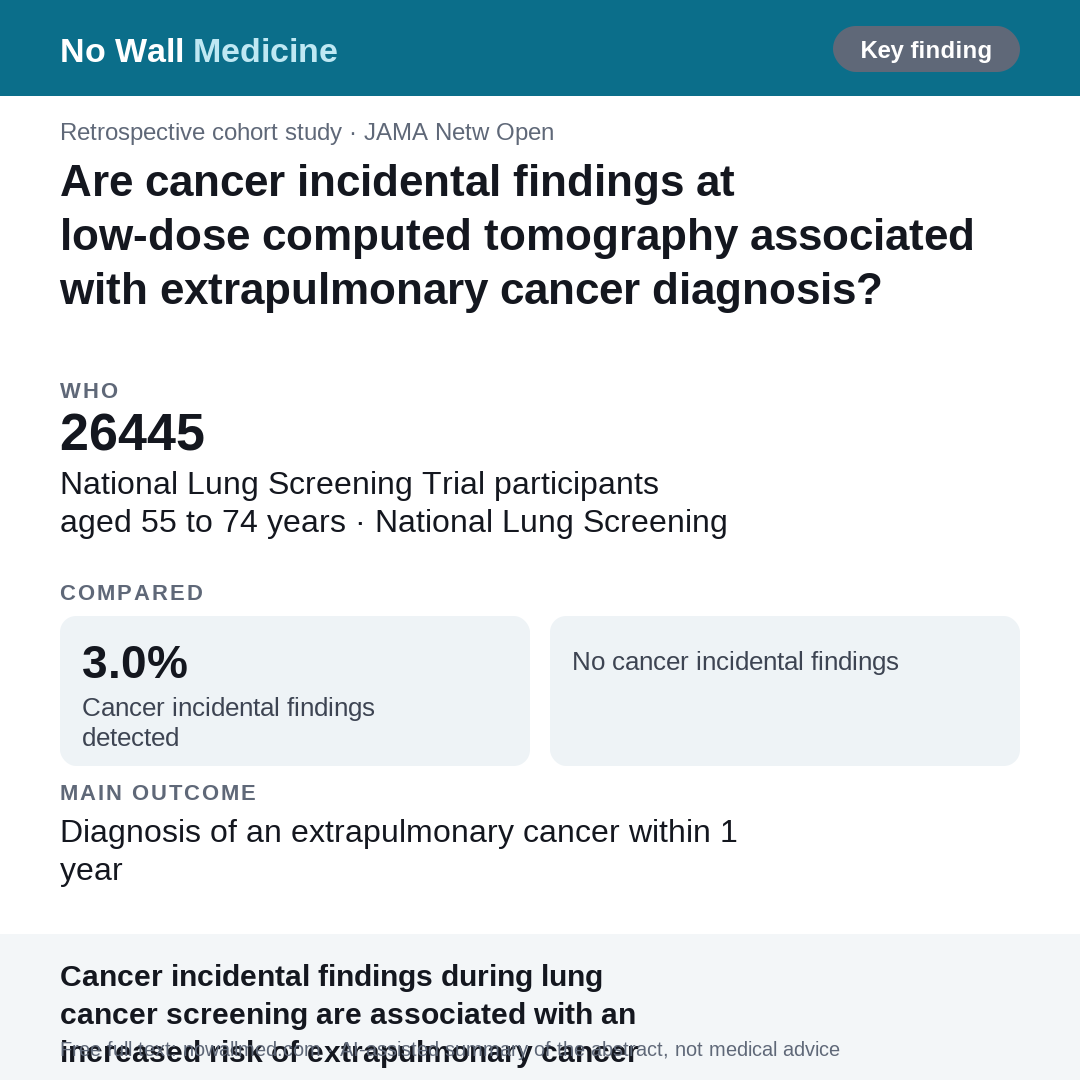
Significant Incidental Findings in the National Lung Screening Trial and Diagnosis of Extrapulmonary Cancer
Retrospective cohort studyBenefit found
Are cancer incidental findings at low-dose computed tomography associated with extrapulmonary cancer diagnosis?
Who
26445
National Lung Screening Trial participants aged 55 to 74 years · National Lung Screening Trial
Compared
3.0%Cancer incidental findings detected
No cancer incidental findings
Main outcome
Diagnosis of an extrapulmonary cancer within 1 year
Result: marginal risk difference 13.89 (95% CL, 7.03-20.75) per 1000 participants
Bottom line: Cancer incidental findings during lung cancer screening are associated with an increased risk of extrapulmonary cancer diagnosis within one year.
JAMA Netw Open · 2026-03-02Download image
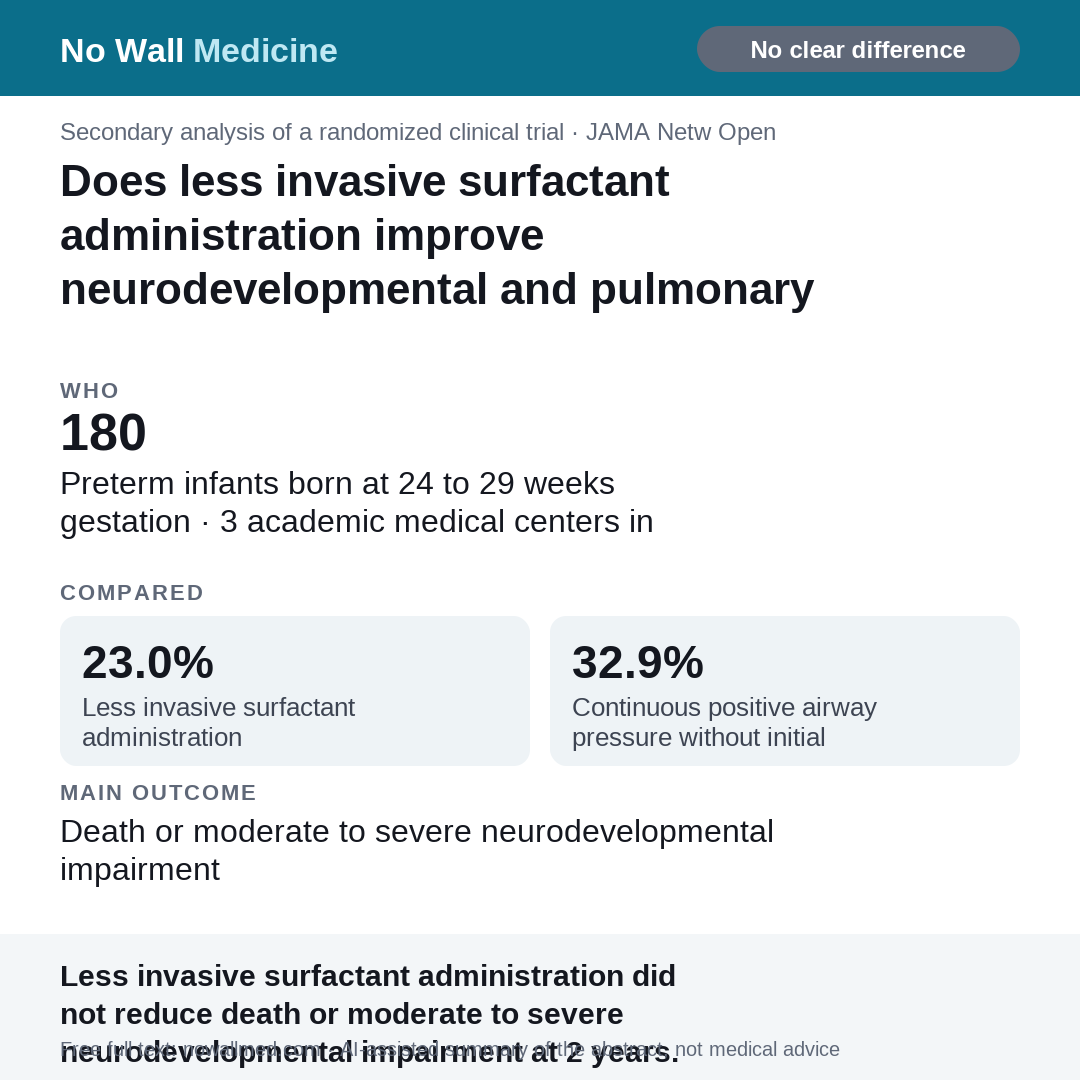
Two-Year Outcomes of Less Invasive Surfactant Administration Among Preterm Neonates: A Secondary Analysis of a Randomized Clinical Trial
Secondary analysis of a randomized clinical trialNo clear difference
Does less invasive surfactant administration improve neurodevelopmental and pulmonary outcomes at 2 years?
Who
180
Preterm infants born at 24 to 29 weeks gestation · 3 academic medical centers in California
Compared
23.0%Less invasive surfactant administration
32.9%Continuous positive airway pressure without initial surfactant
Main outcome
Death or moderate to severe neurodevelopmental impairment
Result: odds ratio 1.56 (95% CI 0.77-3.17)
Bottom line: Less invasive surfactant administration did not reduce death or moderate to severe neurodevelopmental impairment at 2 years.
JAMA Netw Open · 2026-03-02Download image
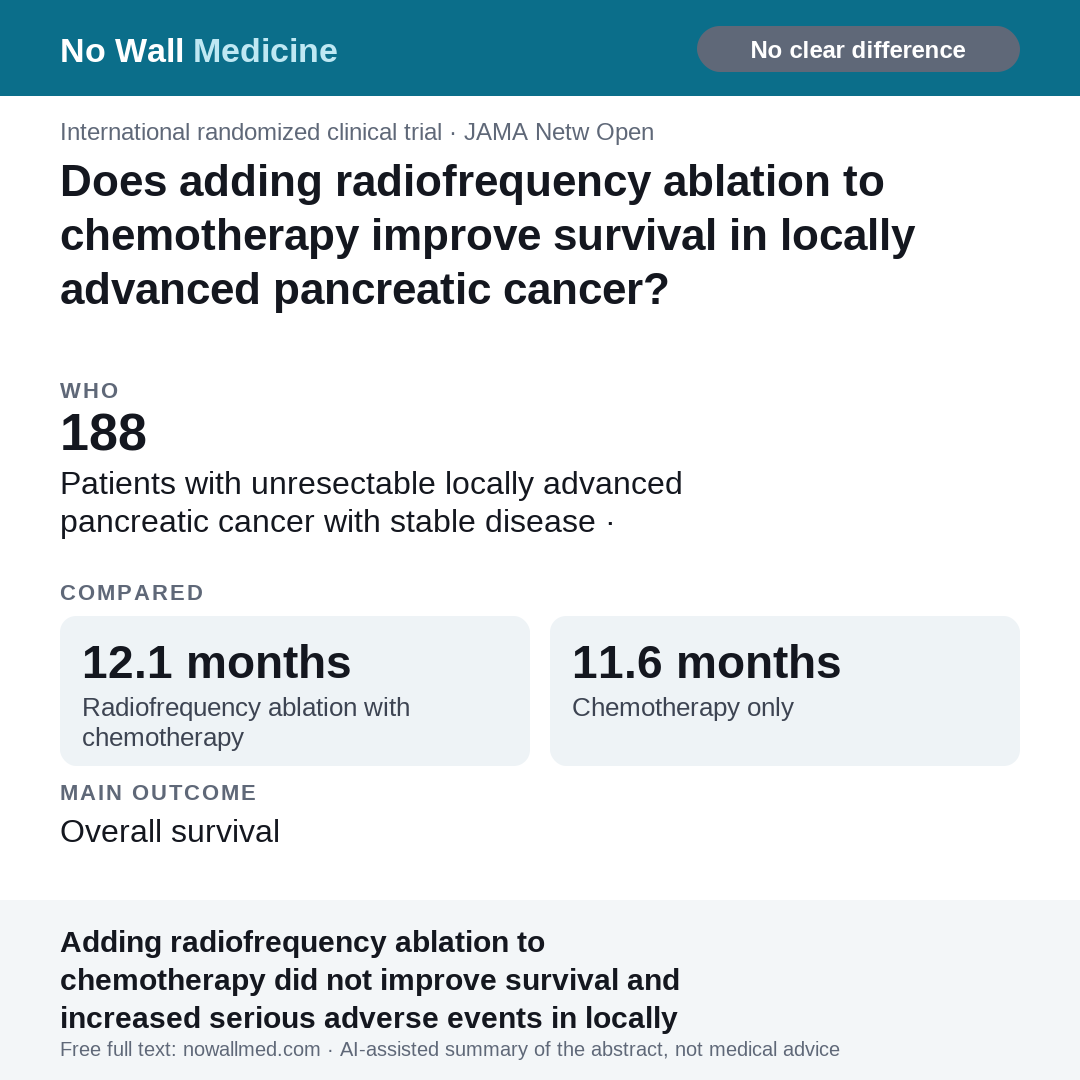
Radiofrequency Ablation and Chemotherapy vs Chemotherapy Only in Locally Advanced Pancreatic Cancer: The PELICAN Randomized Clinical Trial
International randomized clinical trialNo clear difference
Does adding radiofrequency ablation to chemotherapy improve survival in locally advanced pancreatic cancer?
Who
188
Patients with unresectable locally advanced pancreatic cancer with stable disease · International
Compared
12.1 monthsRadiofrequency ablation with chemotherapy
11.6 monthsChemotherapy only
Main outcome
Overall survival
Result: hazard ratio 1.07 (95% CI 0.80-1.45)
Bottom line: Adding radiofrequency ablation to chemotherapy did not improve survival and increased serious adverse events in locally advanced pancreatic cancer.
JAMA Netw Open · 2026-03-02Download image
GLP-1 Receptor Agonists and Noncardiometabolic Outcomes: An Umbrella Review of Meta-Analyses
Umbrella review of meta-analysesMixed results
What are the associations between GLP-1 receptor agonists and noncardiometabolic outcomes?
Who
3580616
People with type 2 diabetes and obesity
Compared
GLP-1 receptor agonists
Control
Main outcome
Noncardiometabolic outcomes across multiple domains
Bottom line: GLP-1 receptor agonists showed gastrointestinal adverse event signals and potential protection against serious infections and respiratory disease.
JAMA Netw Open · 2026-03-02Download image

Enhanced Weight Management Program for Veterans With Posttraumatic Stress Disorder: A Randomized Clinical Trial
Randomized clinical trialNo clear difference
Does MOVE!+UP improve weight change compared to MOVE! in veterans with PTSD?
Who
174
Veterans with posttraumatic stress disorder and body mass index of 25 or greater · 1 Veterans Health Administration site
Compared
MOVE!+UP: 8.9 (13.7) lb
MOVE!: 7.8 (13.8) lb
Main outcome
Weight change at 6 months
Result: -1.5 lb (95% CI, -5.9 to 2.9)
Bottom line: The enhanced weight management program did not result in significantly different weight loss compared to the standard program.
JAMA Netw Open · 2026-03-02Download image

Racial and Ethnic Reporting and Representation in US Alzheimer Clinical Trials: A Systematic Review
Systematic reviewHarm found
What are the patterns of racial and ethnic reporting and representation in US Alzheimer disease phase 3 trials?
Who
88
Phase 3 Alzheimer disease drug trials in the United States · United States
Compared
91.3%White patients median enrollment (87.3%-93.6%)
7.2%Black (non-Hispanic) median enrollment (3.7%-9.1%)
5.2%Hispanic median enrollment (3.1%-6.6%)
0.9%Asian or Pacific Islander median enrollment (0.6%-1.6%)
Main outcome
Reporting and representation of patient race and ethnicity
Bottom line: Phase 3 Alzheimer disease trials show substantial gaps in racial and ethnic reporting and representation, limiting generalizability.
JAMA Netw Open · 2026-03-02Download image

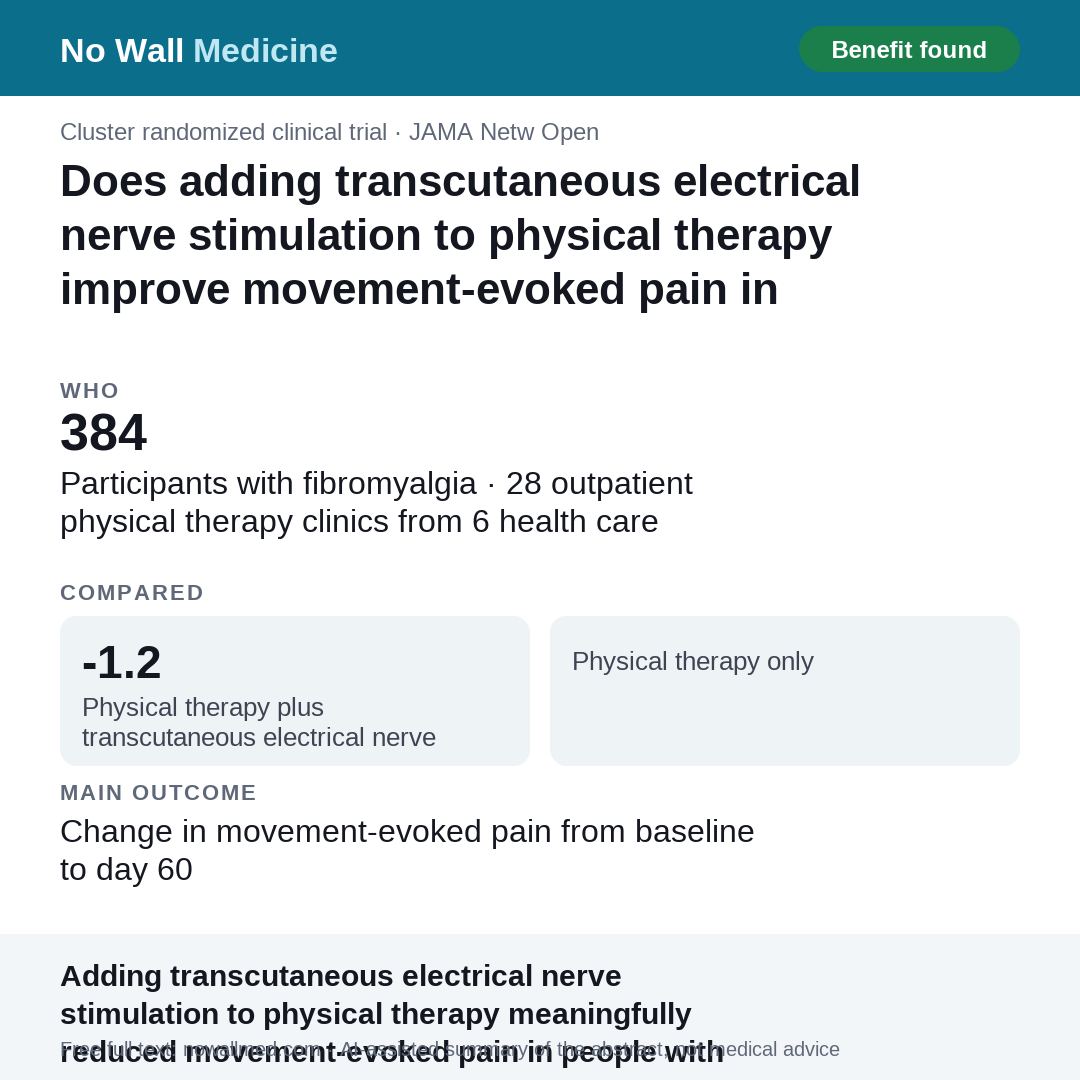
Transcutaneous Electrical Nerve Stimulation and Pain With Movement in People With Fibromyalgia: A Cluster Randomized Clinical Trial
Cluster randomized clinical trialBenefit found
Does adding transcutaneous electrical nerve stimulation to physical therapy improve movement-evoked pain in fibromyalgia?
Who
384
Participants with fibromyalgia · 28 outpatient physical therapy clinics from 6 health care systems
Compared
-1.2Physical therapy plus transcutaneous electrical nerve stimulation (95% CI, -1.6 to -0.7)
Physical therapy only
Main outcome
Change in movement-evoked pain from baseline to day 60
Result: group mean difference, -1.2; 95% CI, -1.6 to -0.7
Bottom line: Adding transcutaneous electrical nerve stimulation to physical therapy meaningfully reduced movement-evoked pain in people with fibromyalgia.
JAMA Netw Open · 2026-03-02Download image
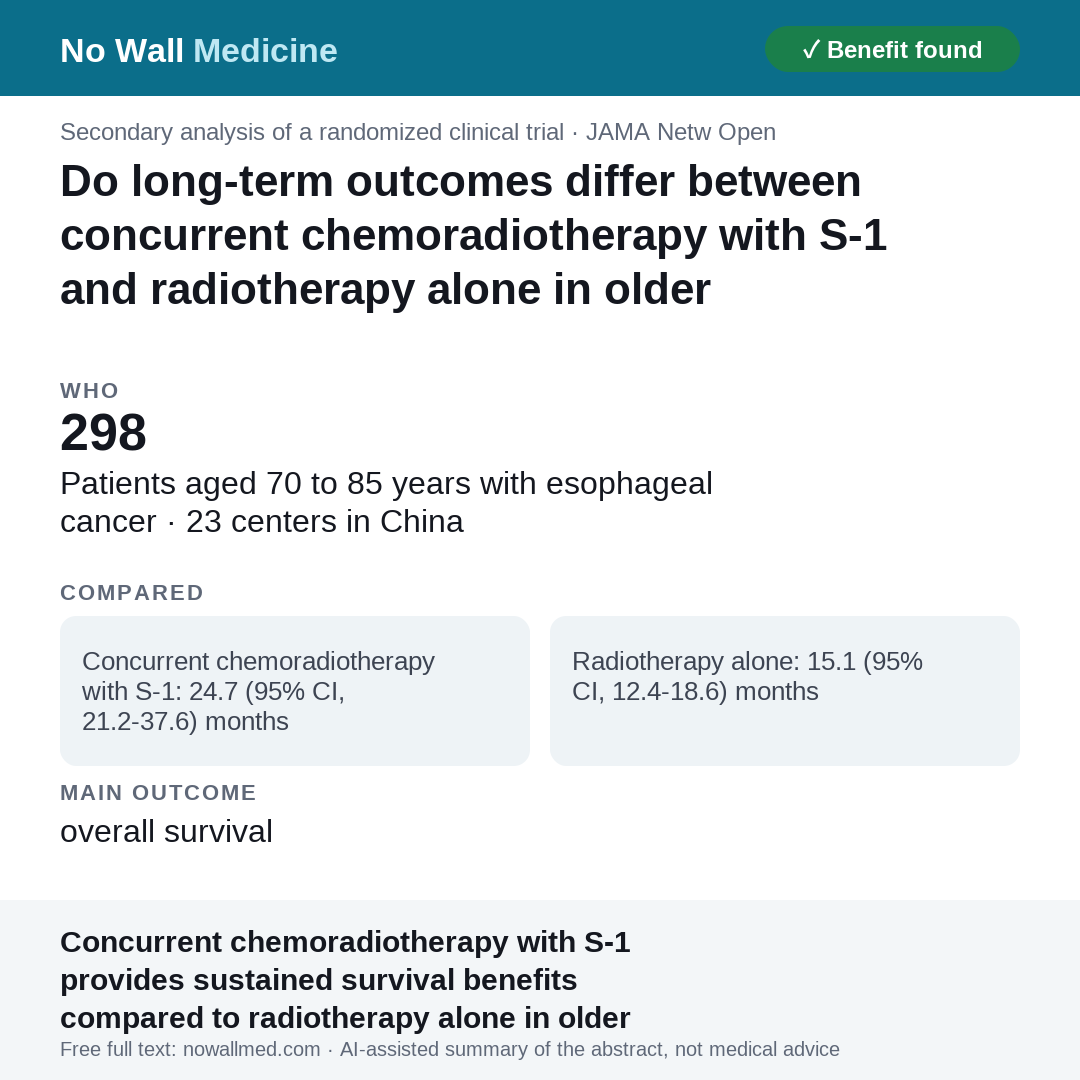
Long-Term Outcomes of Concurrent Chemoradiotherapy With S-1 in Older Patients With Esophageal Cancer: A Secondary Analysis of a Randomized Clinical Trial
Secondary analysis of a randomized clinical trialBenefit found
Do long-term outcomes differ between concurrent chemoradiotherapy with S-1 and radiotherapy alone in older esophageal cancer patients?
Who
298
Patients aged 70 to 85 years with esophageal cancer · 23 centers in China
Compared
Concurrent chemoradiotherapy with S-1: 24.7 (95% CI, 21.2-37.6) months
Radiotherapy alone: 15.1 (95% CI, 12.4-18.6) months
Main outcome
overall survival
Result: hazard ratio 0.69 (95% CI 0.53-0.90)
Bottom line: Concurrent chemoradiotherapy with S-1 provides sustained survival benefits compared to radiotherapy alone in older patients with esophageal cancer.
Limitation: This secondary analysis was not prespecified in the trial protocol.
JAMA Netw Open · 2026-03-02Download image
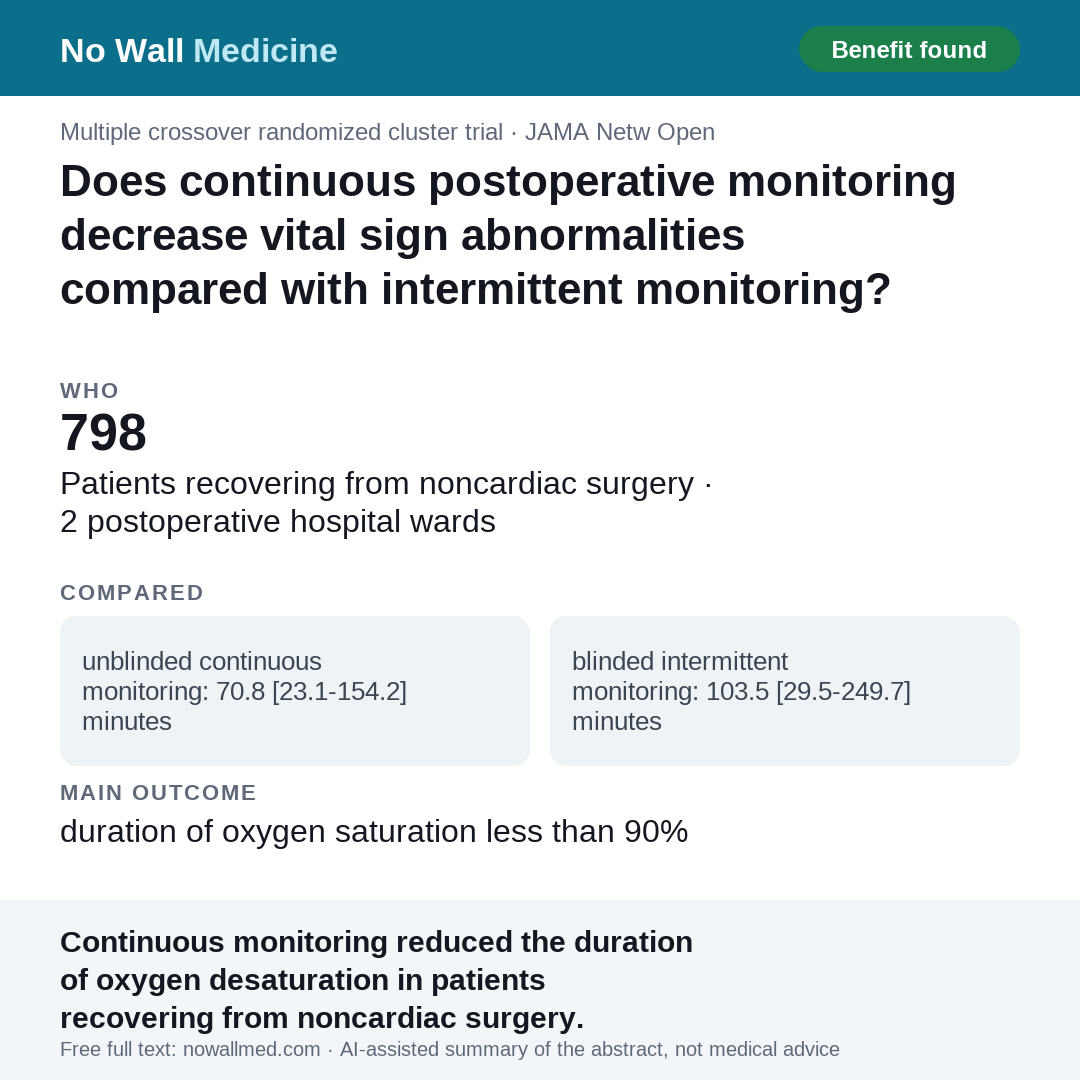
Continuous vs Intermittent Postoperative Vital Sign Monitoring: A Cluster Randomized Crossover Trial
Multiple crossover randomized cluster trialBenefit found
Does continuous postoperative monitoring decrease vital sign abnormalities compared with intermittent monitoring?
Who
798
Patients recovering from noncardiac surgery · 2 postoperative hospital wards
Compared
unblinded continuous monitoring: 70.8 [23.1-154.2] minutes
blinded intermittent monitoring: 103.5 [29.5-249.7] minutes
Main outcome
duration of oxygen saturation less than 90%
Result: geometric means ratio, 0.86 [95% CI, 0.78-0.95]
Bottom line: Continuous monitoring reduced the duration of oxygen desaturation in patients recovering from noncardiac surgery.
JAMA Netw Open · 2026-03-02Download image
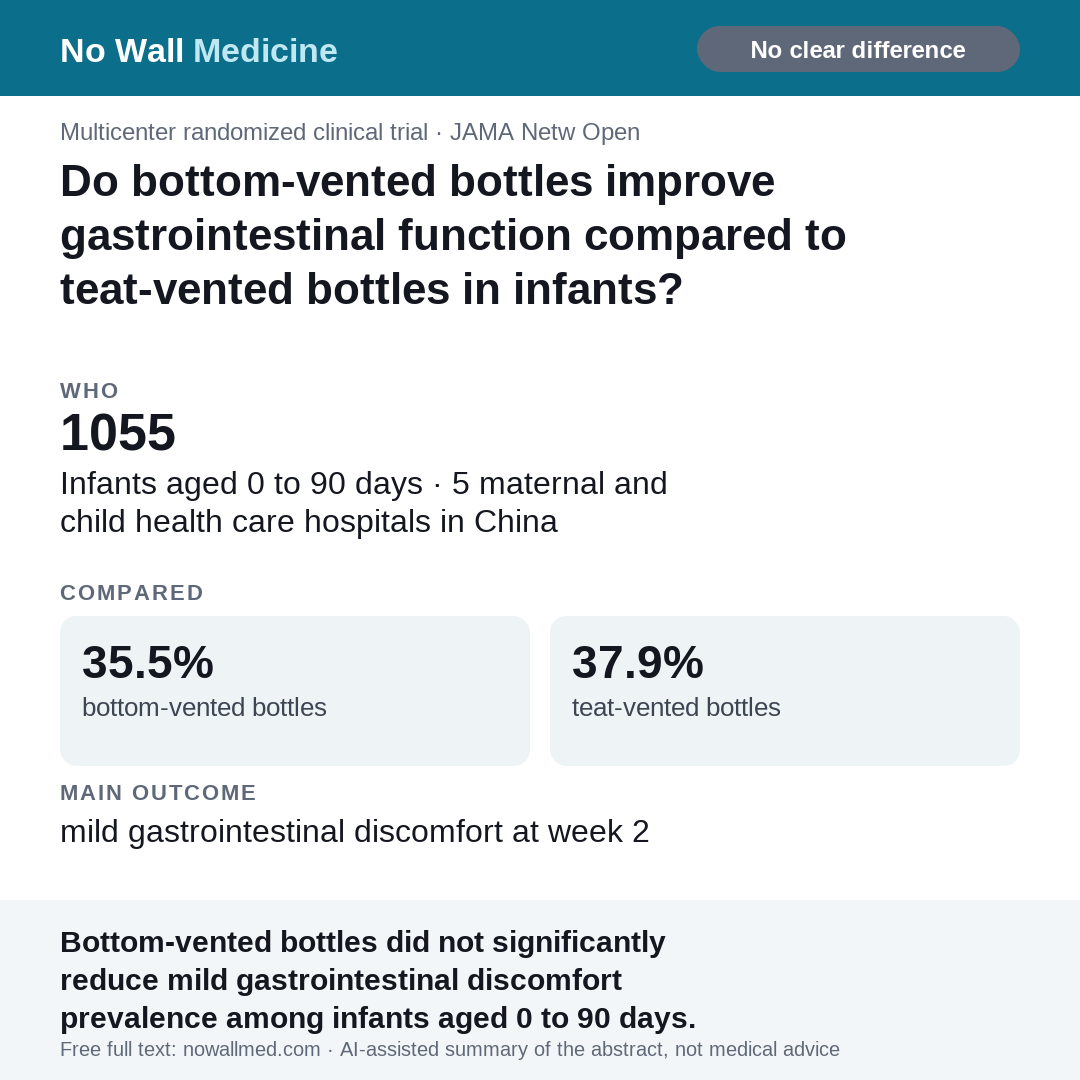
Feeding Bottles With Different Venting Methods and Gastrointestinal Discomfort in Infants: A Randomized Clinical Trial
Multicenter randomized clinical trialNo clear difference
Do bottom-vented bottles improve gastrointestinal function compared to teat-vented bottles in infants?
Who
1055
Infants aged 0 to 90 days · 5 maternal and child health care hospitals in China
Compared
35.5%bottom-vented bottles
37.9%teat-vented bottles
Main outcome
mild gastrointestinal discomfort at week 2
Result: relative risk 0.94 (95% CI 0.80 to 1.10)
Bottom line: Bottom-vented bottles did not significantly reduce mild gastrointestinal discomfort prevalence among infants aged 0 to 90 days.
Limitation: A significant reduction was only observed in an exploratory post hoc subgroup analysis of older infants.
JAMA Netw Open · 2026-03-02Download image
Brief Prescribing Support and Buprenorphine Adoption in Rural Primary Care: A Cluster Randomized Clinical Trial
Cluster randomized pilot clinical trialBenefit found
Is brief buprenorphine prescribing support feasible and effective for rural primary care professionals?
Who
63
63 primary care professionals in 27 Ohio community health centers · 27 Ohio community health centers
Compared
Brief prescribing support program: 86% of rank comparisons improved willingness to treat
Prescribing guidelines only
Main outcome
Feasibility, acceptability, appropriateness, willingness to treat, and likelihood of prescribing
Bottom line: Brief prescribing support was feasible, acceptable, and increased intentions to prescribe buprenorphine in rural primary care.
Limitation: A larger trial is needed to confirm preliminary findings.
JAMA Netw Open · 2026-03-02Download image

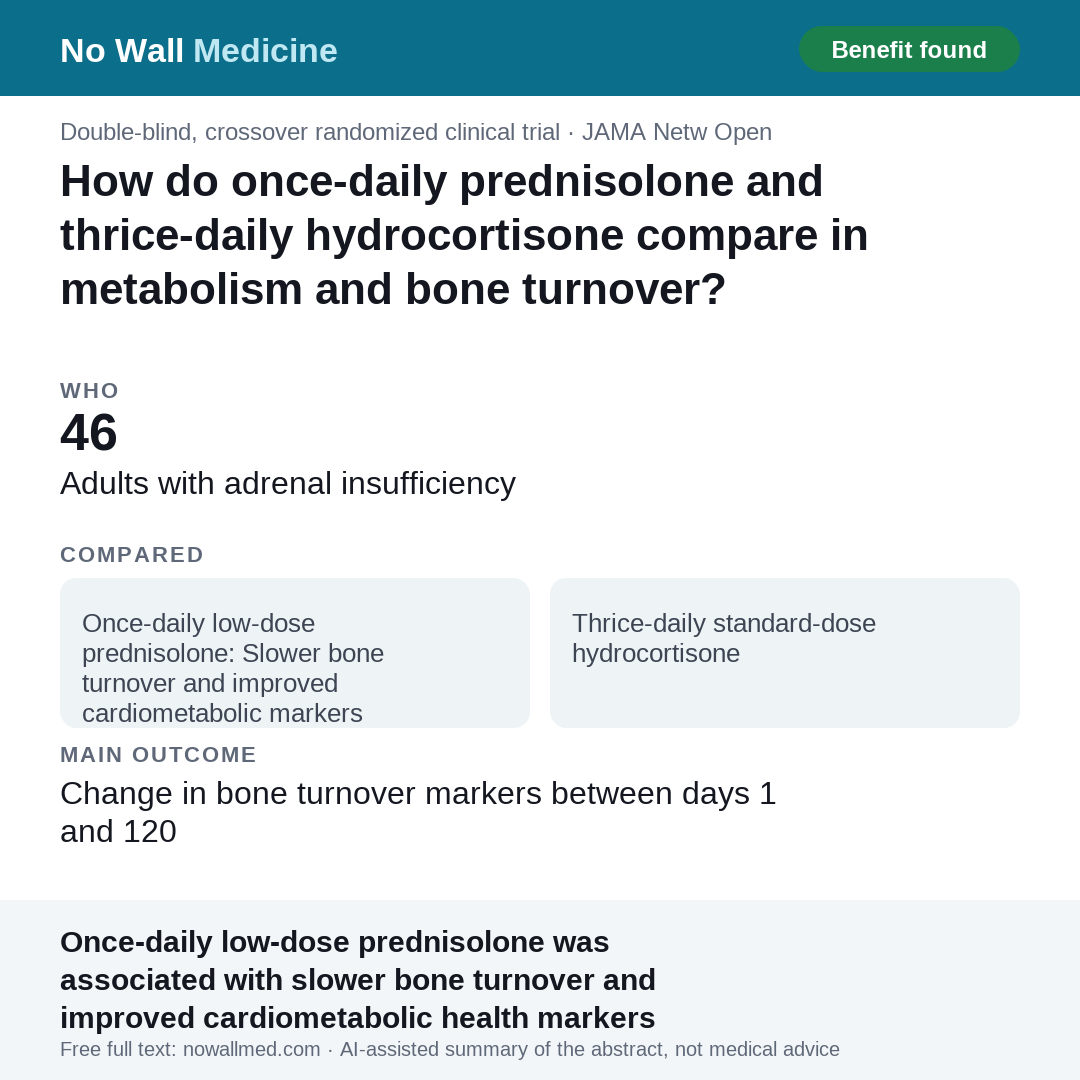
Prednisolone Once Daily vs Hydrocortisone Thrice Daily in Hypoadrenalism: A Randomized Clinical Trial
Double-blind, crossover randomized clinical trialBenefit found
How do once-daily prednisolone and thrice-daily hydrocortisone compare in metabolism and bone turnover?
Who
46
Adults with adrenal insufficiency
Compared
Once-daily low-dose prednisolone: Slower bone turnover and improved cardiometabolic markers
Thrice-daily standard-dose hydrocortisone
Main outcome
Change in bone turnover markers between days 1 and 120
Result: mean treatment difference for carboxylated osteocalcin -1.22 ng/mL (95% CI -2.35 to -0.10 ng/mL)
Bottom line: Once-daily low-dose prednisolone was associated with slower bone turnover and improved cardiometabolic health markers compared to hydrocortisone.
JAMA Netw Open · 2026-03-02Download image
Cost-Effectiveness of Oral Immunotherapy Treatments vs No Treatment for Peanut Allergy in Children
Multicenter, randomized, placebo-controlled economic evaluationBenefit found
Is probiotic and peanut oral immunotherapy or oral immunotherapy cost-effective for peanut allergy?
Who
201
201 children aged 1 to 10 years with peanut allergy · Australia
Compared
Probiotic and peanut oral immunotherapy: 34.1% (12.7%) remission
Oral immunotherapy: 35.1% (15.4%) remission
No treatment: 7.3% (8.1%) remission
Main outcome
Remission achieved and quality-adjusted life years gained
Result: PPOIT: A$1384; 95% CI, A$1269-A$1415 per year of remission; OIT: A$1199; 95% CI, A$1091-A$1217 per year of remission
Bottom line: Both probiotic and peanut oral immunotherapy and oral immunotherapy are cost-effective for achieving remission compared to no treatment.
JAMA Netw Open · 2026-03-02Download image

Machine Learning-Based Sleep Electroencephalographic Brain Age Index and Dementia Risk: An Individual Participant Data Meta-Analysis
Meta-analysis of 5 cohortsHarm found
Sleep brain age index and dementia risk
Who
7105
Community-dwelling adults without dementia · 5 community-based cohorts
Compared
Higher BAI
Lower BAI
Main outcome
Incident dementia
Result: hazard ratio 1.39 (95% CI 1.21 to 1.59)
Bottom line: Higher BAI linked to higher dementia risk
JAMA Netw Open · 2026-03-02Download image

Transradial vs Transfemoral Access for Cerebral Angiography: A Randomized Noninferiority Clinical Trial
Multicenter, open-label, noninferiority randomized clinical trialHarm found
Is transradial access noninferior to transfemoral access for diagnostic cerebral angiography?
Who
858
Patients eligible for cerebral angiography · 13 sites in China
Compared
Transradial access: 392 of 431 (91.0%)
Transfemoral access: 409 of 427 (95.8%)
Main outcome
Success of diagnostic cerebral angiography
Result: difference, -4.8 percentage points (95% CI, -8.1 to -1.5 pp)
Bottom line: Transradial access was not shown to be noninferior to transfemoral access regarding the success rate of diagnostic cerebral angiography.
JAMA Netw Open · 2026-03-02Download image

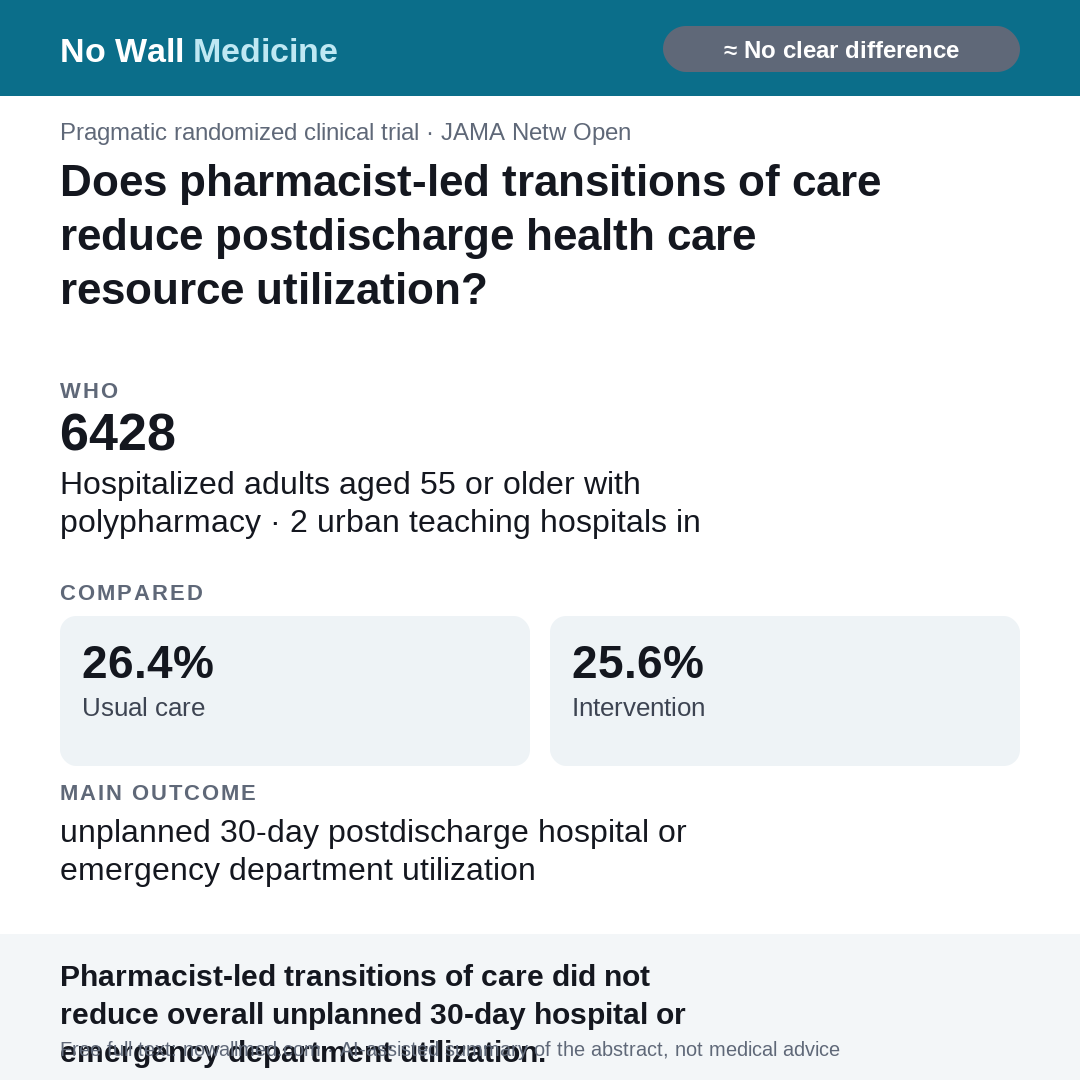
Pharmacist-Led Discharge Care to Reduce Postdischarge Health Care Utilization: A Randomized Clinical Trial
Pragmatic randomized clinical trialNo clear difference
Does pharmacist-led transitions of care reduce postdischarge health care resource utilization?
Who
6428
Hospitalized adults aged 55 or older with polypharmacy · 2 urban teaching hospitals in the US
Compared
26.4%Usual care (593/2242)
25.6%Intervention (570/2230)
Main outcome
unplanned 30-day postdischarge hospital or emergency department utilization
Result: difference, 0.9 percentage points [pp]; 95% CI, -1.7 to 3.5 pp
Bottom line: Pharmacist-led transitions of care did not reduce overall unplanned 30-day hospital or emergency department utilization.
JAMA Netw Open · 2026-03-02Download image
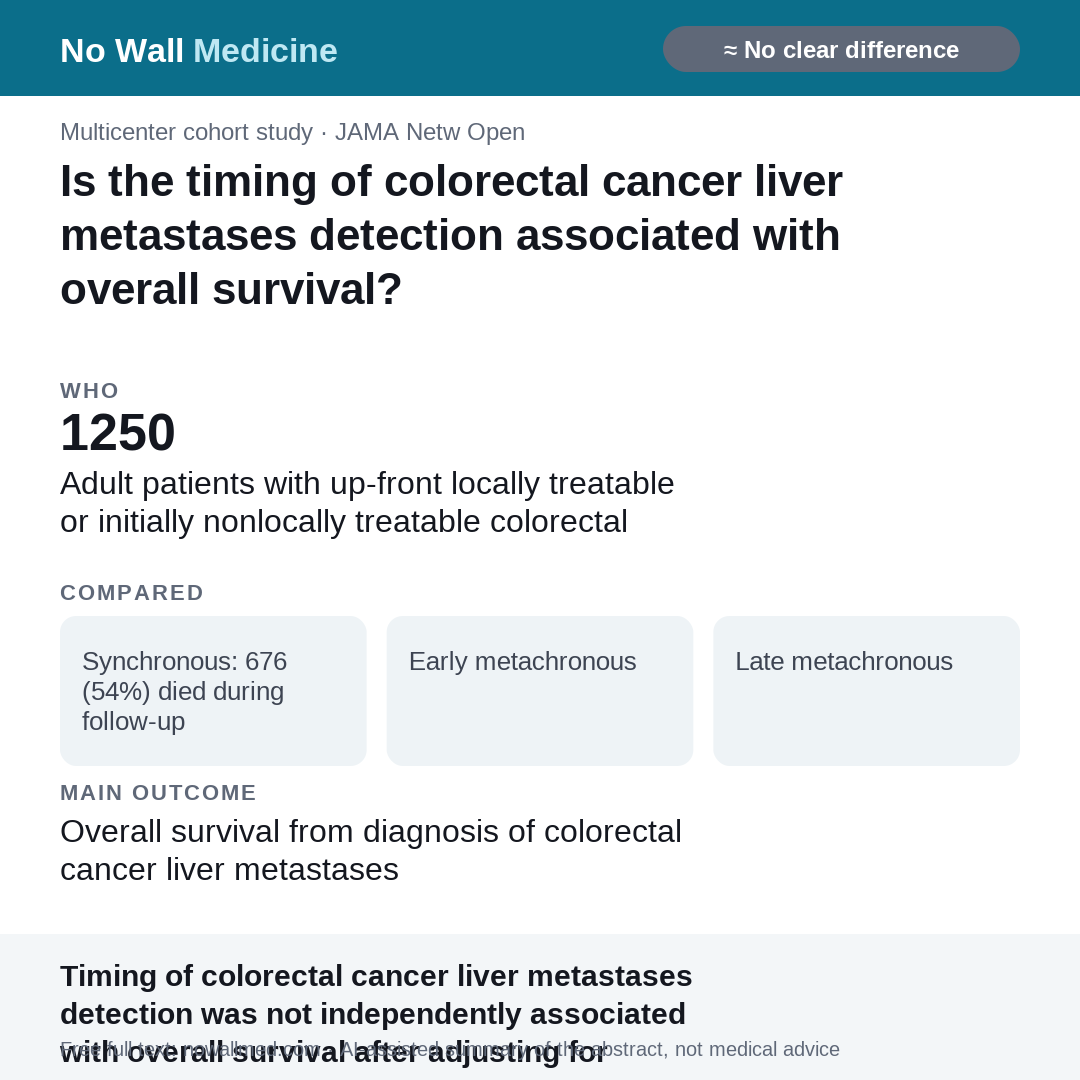
Time of Detection of Liver Metastases and Survival in Patients With Colorectal Cancer
Multicenter cohort studyNo clear difference
Is the timing of colorectal cancer liver metastases detection associated with overall survival?
Who
1250
Adult patients with up-front locally treatable or initially nonlocally treatable colorectal cancer liver metastases · Multicenter
Compared
Synchronous: 676 (54%) died during follow-up
Early metachronous
Late metachronous
Main outcome
Overall survival from diagnosis of colorectal cancer liver metastases
Result: not independently associated with overall survival
Bottom line: Timing of colorectal cancer liver metastases detection was not independently associated with overall survival after adjusting for tumor and treatment factors.
JAMA Netw Open · 2026-03-02Download image
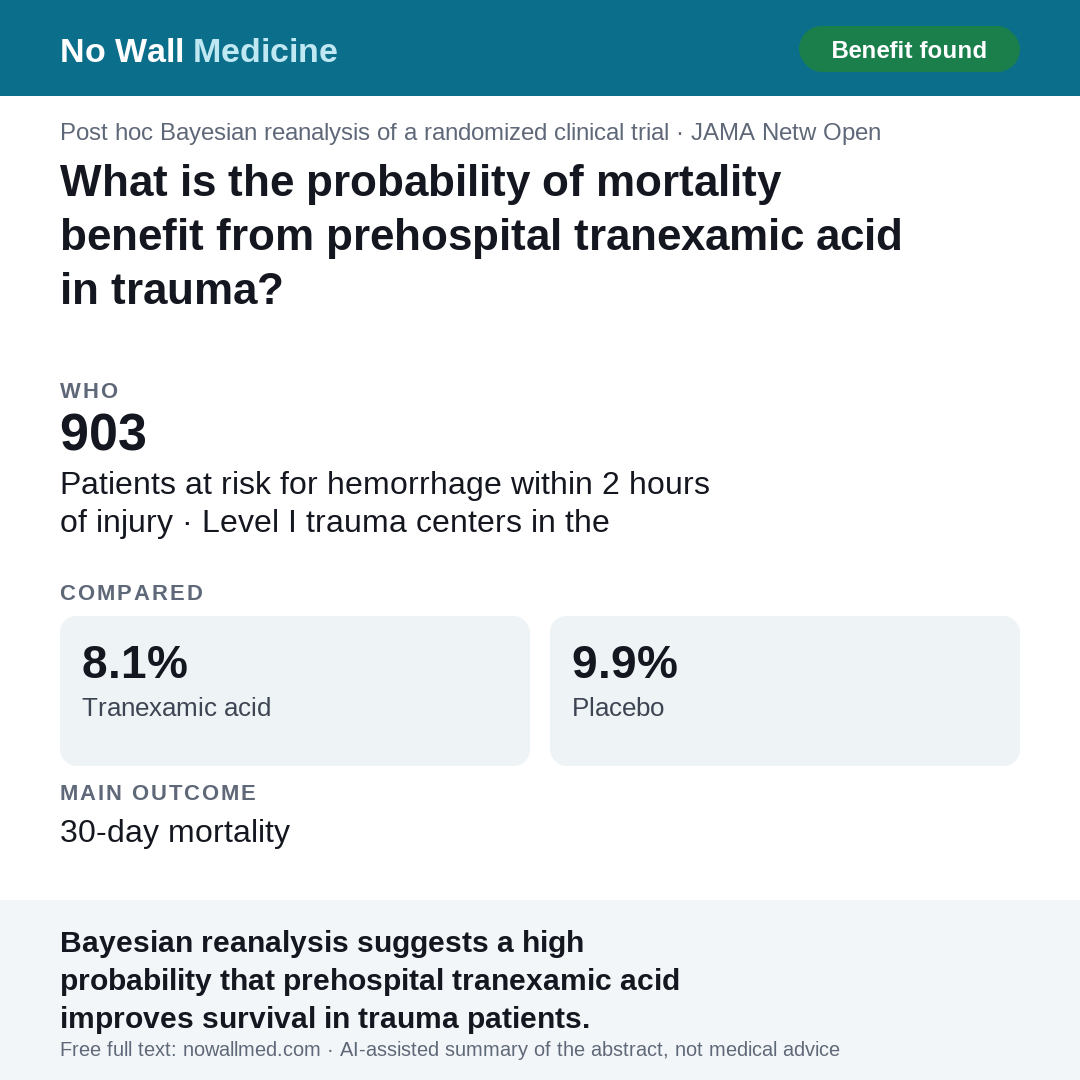
Bayesian Statistics to Reanalyze Data From the STAAMP Trial
Post hoc Bayesian reanalysis of a randomized clinical trialBenefit found
What is the probability of mortality benefit from prehospital tranexamic acid in trauma?
Who
903
Patients at risk for hemorrhage within 2 hours of injury · Level I trauma centers in the United States
Compared
8.1%Tranexamic acid
9.9%Placebo
Main outcome
30-day mortality
Result: posterior risk ratios 0.91 (95% CrI, 0.85-0.97) with a CRASH-2 prior
Bottom line: Bayesian reanalysis suggests a high probability that prehospital tranexamic acid improves survival in trauma patients.
Limitation: This was a post hoc Bayesian reanalysis of existing trial data.
JAMA Netw Open · 2026-03-02Download image