Visual abstracts
New randomized trials and meta-analyses from leading journals at a glance: who was studied, what was compared, and what was found. Every paper is free to read in full.
All specialtiesCardiology 4763Oncology 4042Gastroenterology & Hepatology 1902Infectious Disease 3756Neurology 1872Psychiatry & Mental Health 2214Pulmonology 2042Critical Care 1319Endocrinology & Diabetes 2544Pediatrics 2889Surgery 2479Orthopedics & Sports Medicine 917Neurosurgery 525Cardiothoracic & Vascular Surgery 656Plastic & Reconstructive Surgery 574Nephrology 1107Rheumatology 810Hematology 1090Dermatology 611Ophthalmology 532Obstetrics & Gynecology 1645Public & Global Health 1037Radiology & Imaging 617Anesthesiology 957Urology 745ENT (Otolaryngology) 494Emergency Medicine 481Allergy & Immunology 309Geriatrics 972Family Medicine & Primary Care 533Medical Genetics & Genomics 659Pathology & Laboratory Medicine 156Physical Medicine & Rehabilitation 734Palliative Care 421Nutrition 1560Digital Health & AI 2133General Medicine 318
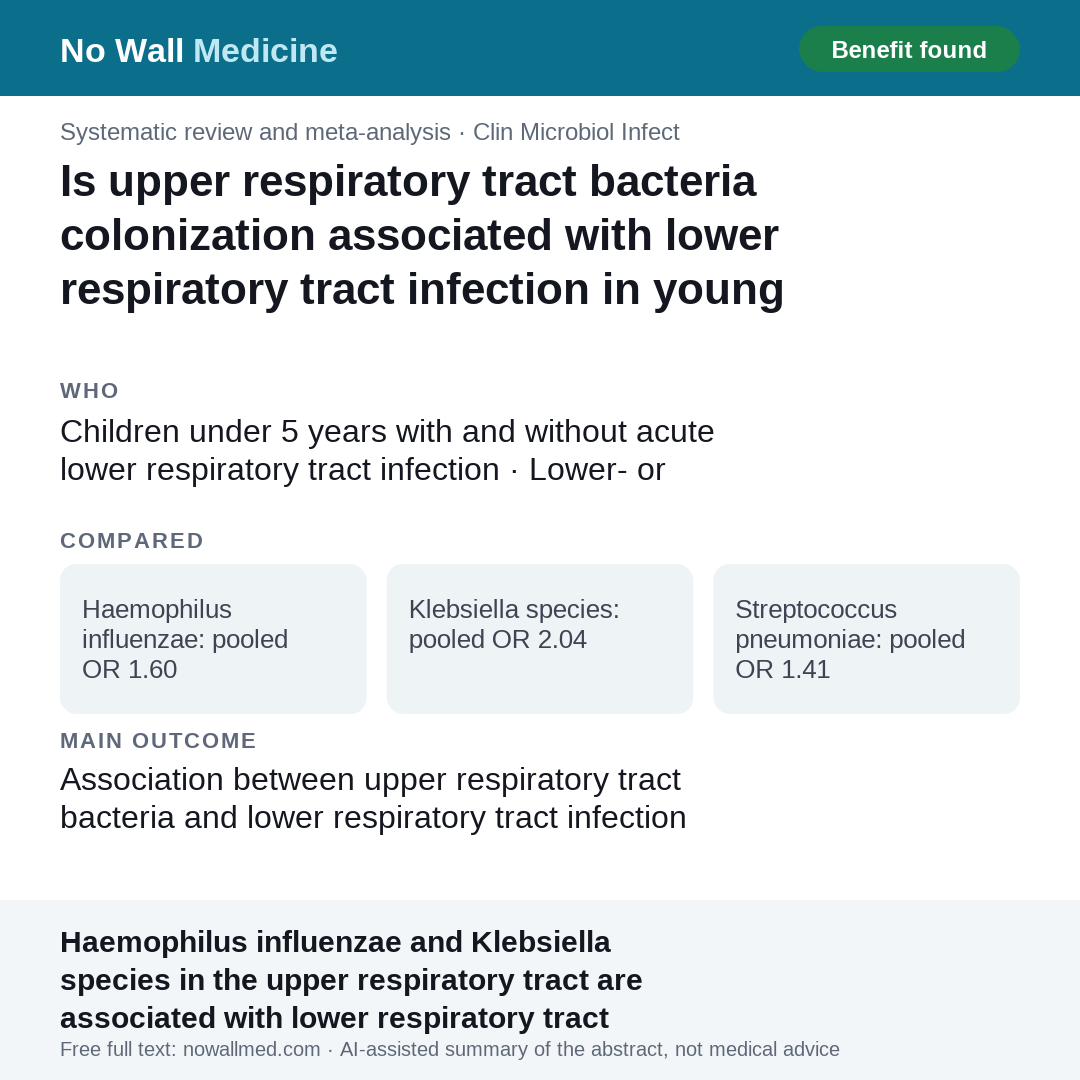
The association between bacteria colonizing the upper respiratory tract and lower respiratory tract infection in young children: a systematic review and meta-analysis
Systematic review and meta-analysisKey finding
Is upper respiratory tract bacteria colonization associated with lower respiratory tract infection in young children?
Who
Children under 5 years with and without acute lower respiratory tract infection · Lower- or lower-middle-income countries
Compared
Haemophilus influenzae: pooled OR 1.60
Klebsiella species: pooled OR 2.04
Streptococcus pneumoniae: pooled OR 1.41
Main outcome
Association between upper respiratory tract bacteria and lower respiratory tract infection
Result: Haemophilus influenzae OR 1.60 (95% CI 1.23-2.07), Klebsiella spp. OR 2.04 (95% CI 1.17-3.55), Streptococcus pneumoniae OR 1.41 (95% CI 1.04-1.90)
Bottom line: Haemophilus influenzae and Klebsiella species in the upper respiratory tract are associated with lower respiratory tract infection in young children.
Clin Microbiol Infect · 2021-06-07Download image
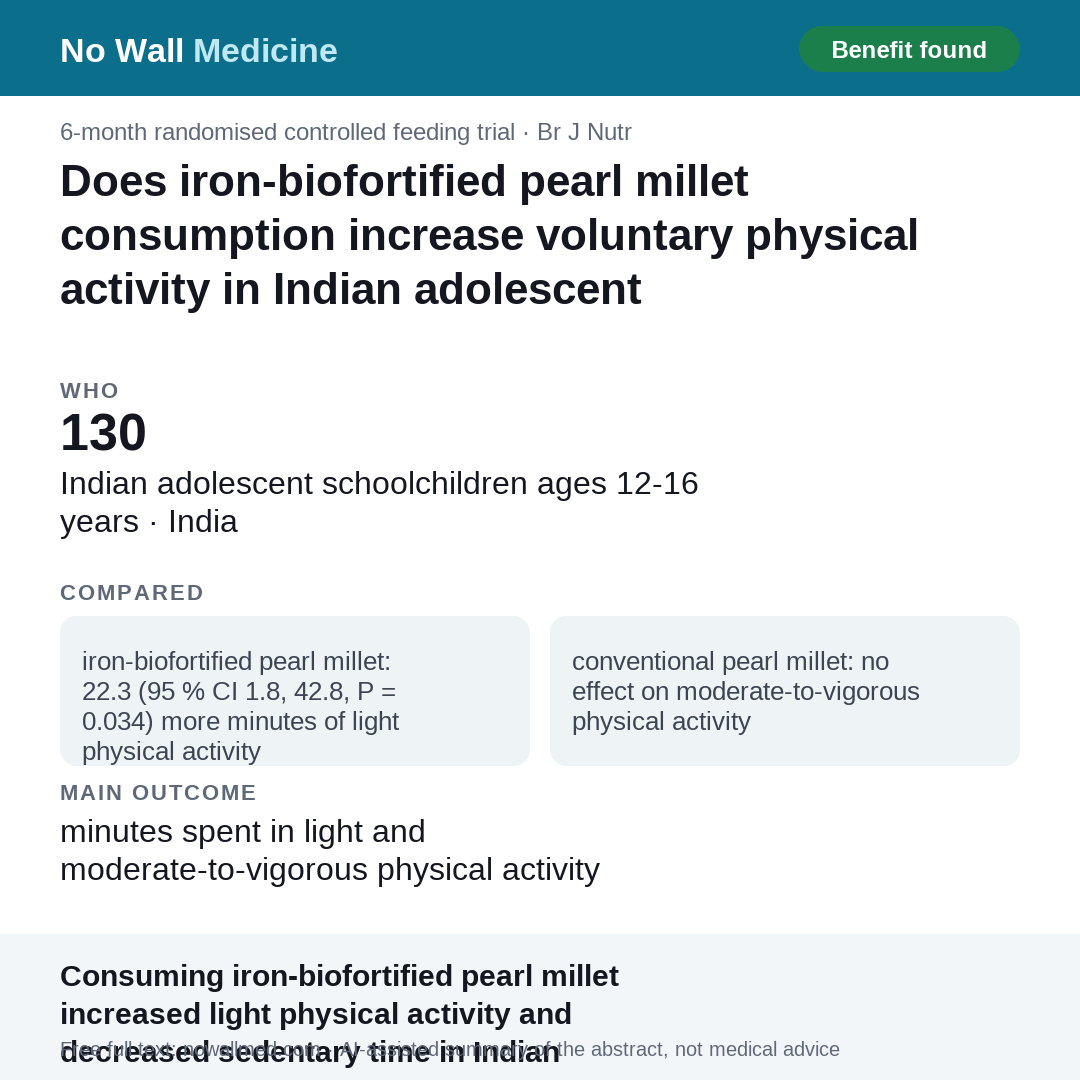
Iron-biofortified pearl millet consumption increases physical activity in Indian adolescent schoolchildren after a 6-month randomised feeding trial
6-month randomised controlled feeding trialBenefit found
Does iron-biofortified pearl millet consumption increase voluntary physical activity in Indian adolescent schoolchildren?
Who
130
Indian adolescent schoolchildren ages 12-16 years · India
Compared
iron-biofortified pearl millet: 22.3 (95 % CI 1.8, 42.8, P = 0.034) more minutes of light physical activity
conventional pearl millet: no effect on moderate-to-vigorous physical activity
Main outcome
minutes spent in light and moderate-to-vigorous physical activity
Result: 22.3 (95 % CI 1.8, 42.8, P = 0.034) more minutes of light physical activity
Bottom line: Consuming iron-biofortified pearl millet increased light physical activity and decreased sedentary time in Indian schoolchildren.
Br J Nutr · 2021-06-03Download image
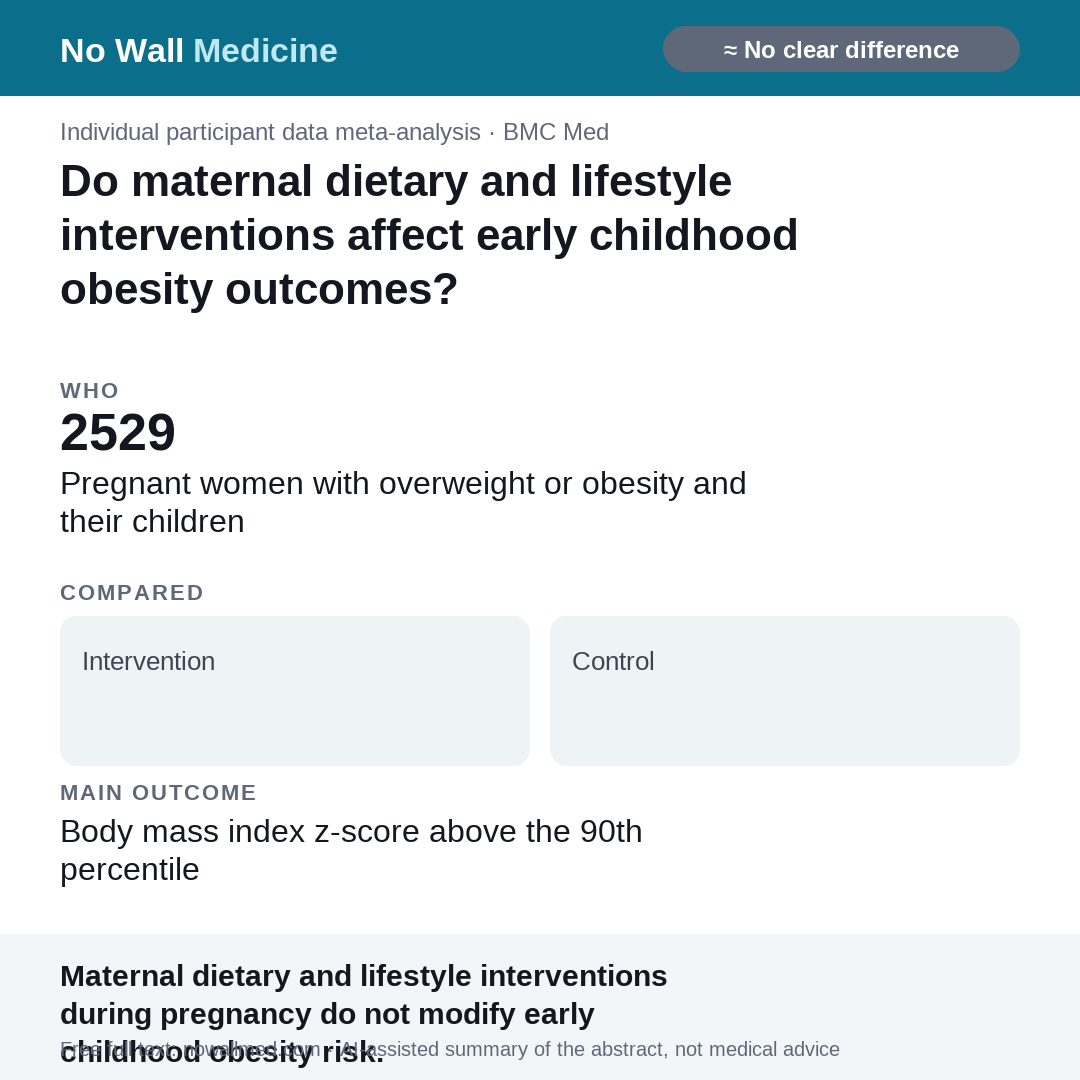
The effects of dietary and lifestyle interventions among pregnant women with overweight or obesity on early childhood outcomes: an individual participant data meta-analysis from randomised trials
Individual participant data meta-analysisNo clear difference
Do maternal dietary and lifestyle interventions affect early childhood obesity outcomes?
Who
2529
Pregnant women with overweight or obesity and their children
Compared
Intervention
Control
Main outcome
Body mass index z-score above the 90th percentile
Result: aRR 0.97 (95% CI 0.87, 1.08)
Bottom line: Maternal dietary and lifestyle interventions during pregnancy do not modify early childhood obesity risk.
Limitation: Future research may need to target the pre-conception period.
BMC Med · 2021-06-02Download image
Age at onset of mental disorders worldwide: large-scale meta-analysis of 192 epidemiological studies
Systematic review and meta-analysisNo clear difference
What are the global estimates for age at onset of mental disorders?
Who
708561
General population from birth cohort and cross-sectional studies · Worldwide
Compared
34.6%Onset before age 14
48.4%Onset before age 18
62.5%Onset before age 25
Main outcome
Proportion of onset before specific ages and peak age at onset
Result: peak age was 14.5 years
Bottom line: The peak age of onset for any mental disorder is 14.5 years, with 62.5% occurring before age 25.
Mol Psychiatry · 2021-06-02Download image

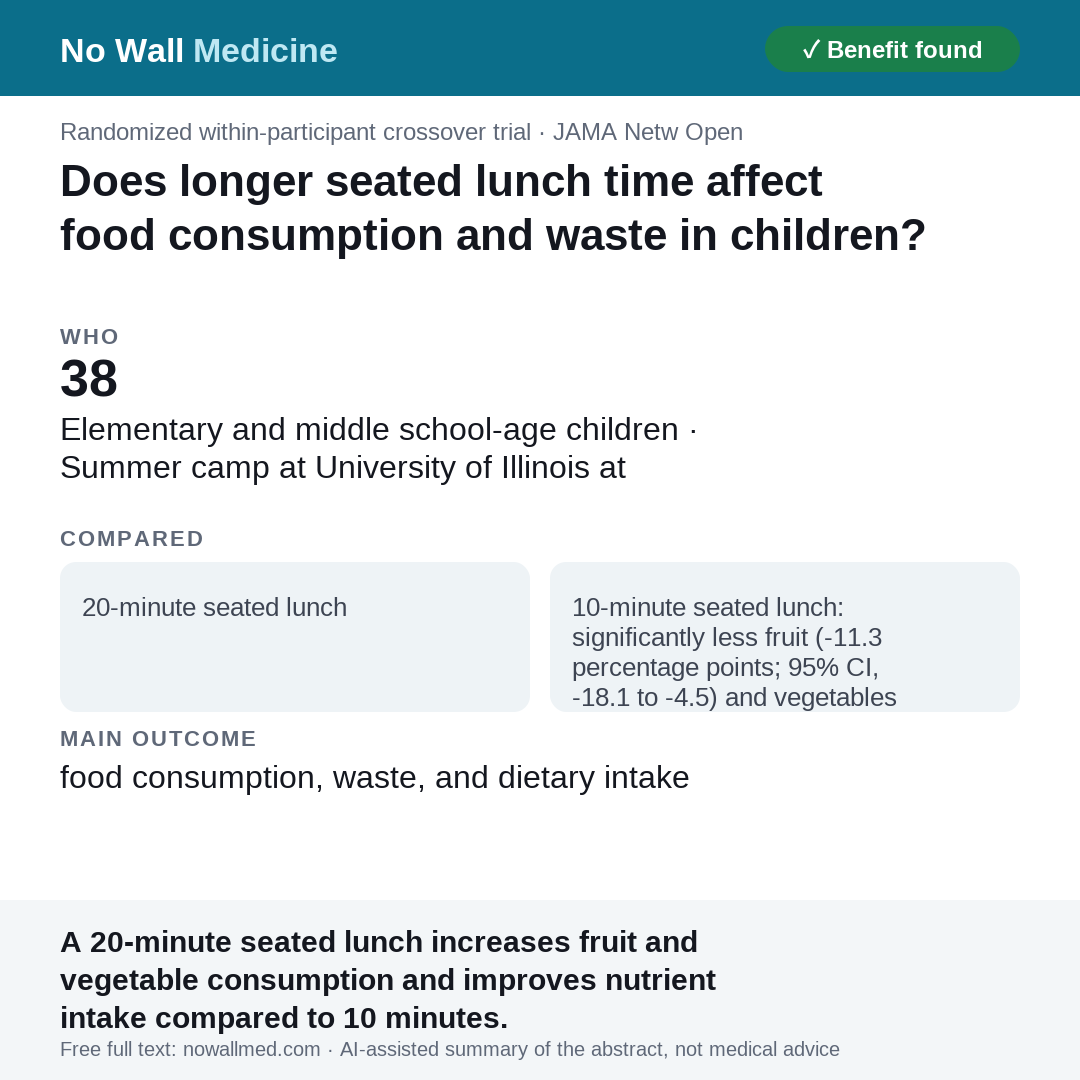
Effects of Longer Seated Lunch Time on Food Consumption and Waste in Elementary and Middle School-age Children: A Randomized Clinical Trial
Randomized within-participant crossover trialBenefit found
Does longer seated lunch time affect food consumption and waste in children?
Who
38
Elementary and middle school-age children · Summer camp at University of Illinois at Urbana-Champaign
Compared
20-minute seated lunch
10-minute seated lunch: significantly less fruit (-11.3 percentage points; 95% CI, -18.1 to -4.5) and vegetables (-14.1 percentage points; 95% CI, -22.7 to -5.7)
Main outcome
food consumption, waste, and dietary intake
Bottom line: A 20-minute seated lunch increases fruit and vegetable consumption and improves nutrient intake compared to 10 minutes.
JAMA Netw Open · 2021-06-01Download image
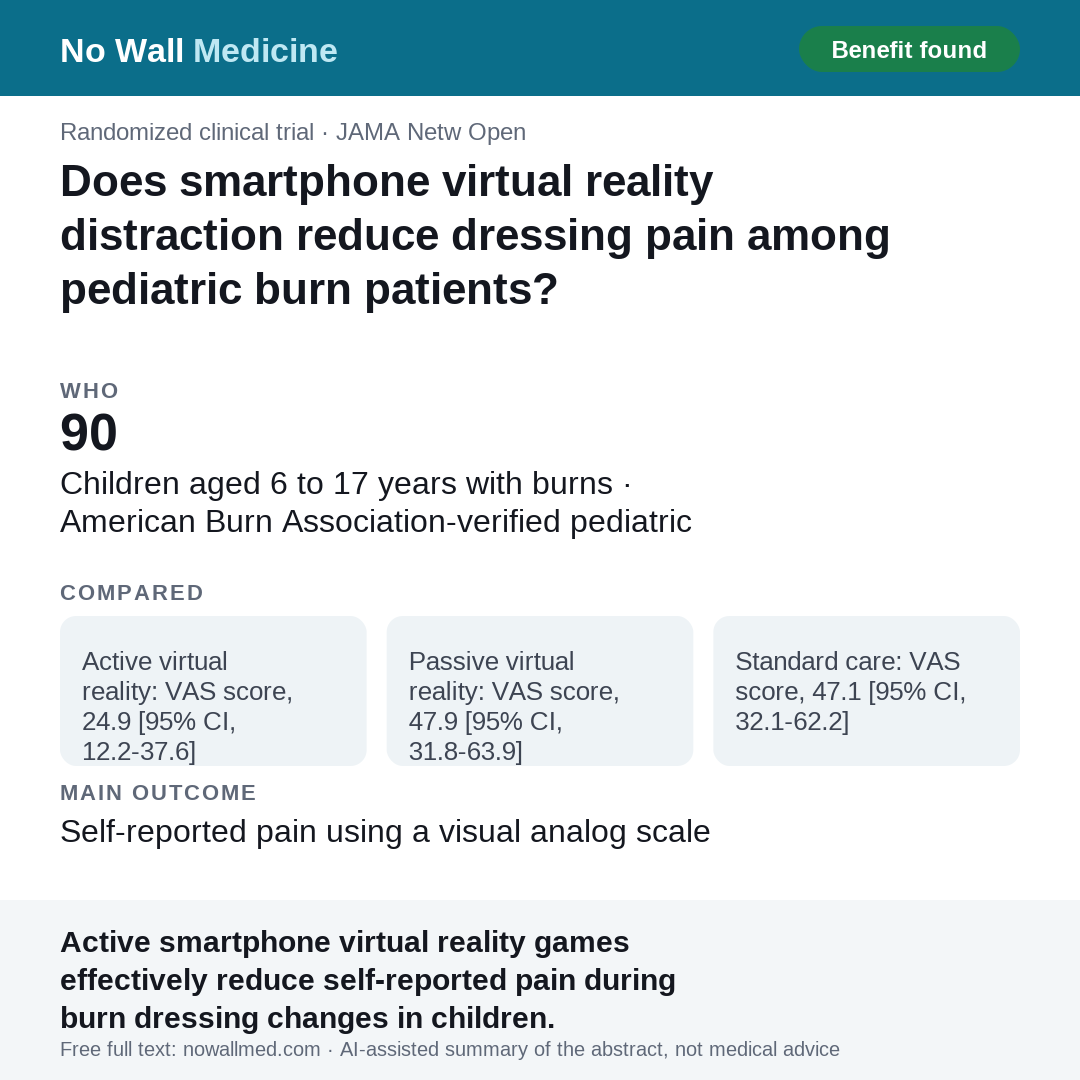
Efficacy of Smartphone Active and Passive Virtual Reality Distraction vs Standard Care on Burn Pain Among Pediatric Patients: A Randomized Clinical Trial
Randomized clinical trialBenefit found
Does smartphone virtual reality distraction reduce dressing pain among pediatric burn patients?
Who
90
Children aged 6 to 17 years with burns · American Burn Association-verified pediatric burn center
Compared
Active virtual reality: VAS score, 24.9 [95% CI, 12.2-37.6]
Passive virtual reality: VAS score, 47.9 [95% CI, 31.8-63.9]
Standard care: VAS score, 47.1 [95% CI, 32.1-62.2]
Main outcome
Self-reported pain using a visual analog scale
Bottom line: Active smartphone virtual reality games effectively reduce self-reported pain during burn dressing changes in children.
JAMA Netw Open · 2021-06-01Download image
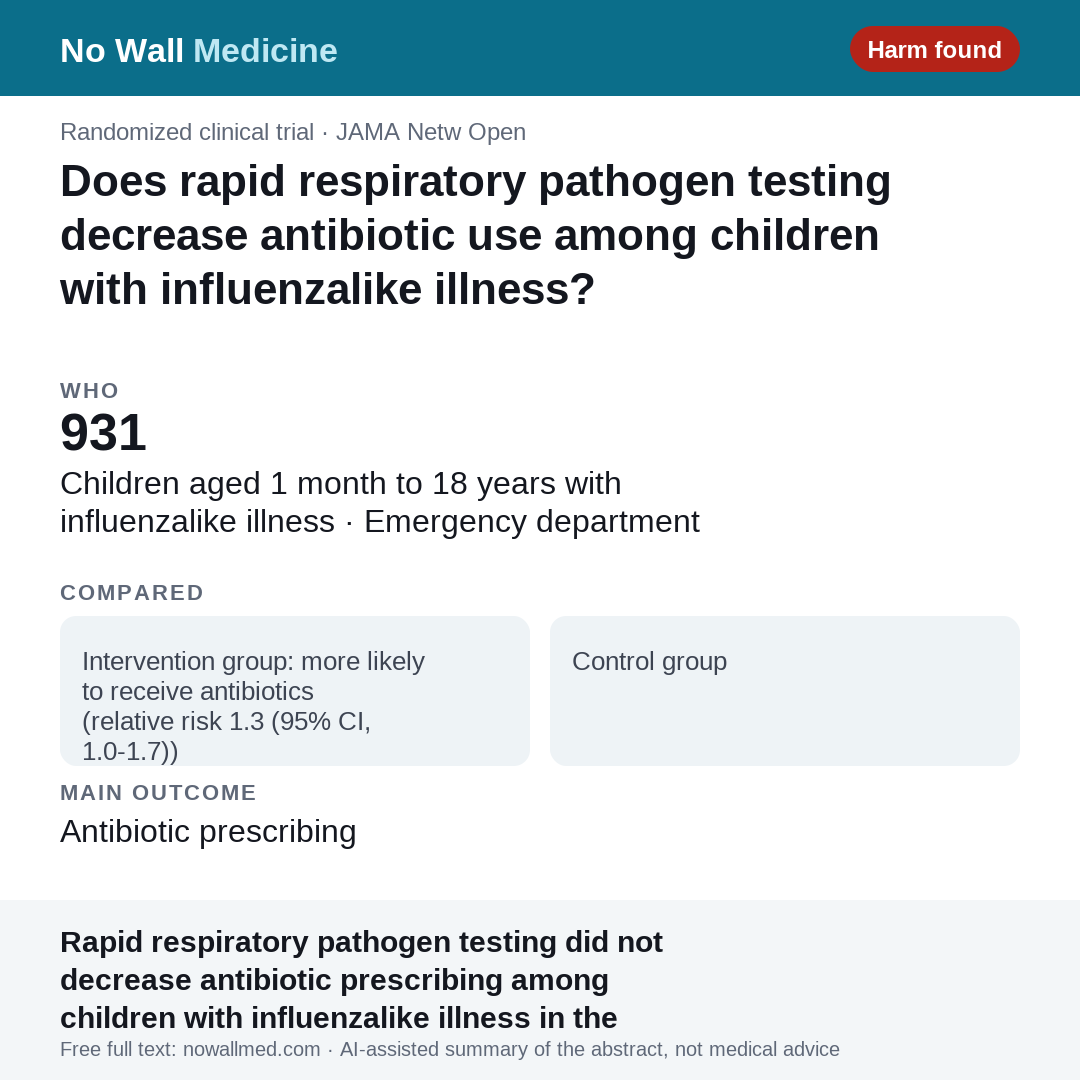
Effect of Rapid Respiratory Virus Testing on Antibiotic Prescribing Among Children Presenting to the Emergency Department With Acute Respiratory Illness: A Randomized Clinical Trial
Randomized clinical trialHarm found
Does rapid respiratory pathogen testing decrease antibiotic use among children with influenzalike illness?
Who
931
Children aged 1 month to 18 years with influenzalike illness · Emergency department
Compared
Intervention group: more likely to receive antibiotics (relative risk 1.3 (95% CI, 1.0-1.7))
Control group
Main outcome
Antibiotic prescribing
Result: relative risk 1.3 (95% CI, 1.0-1.7)
Bottom line: Rapid respiratory pathogen testing did not decrease antibiotic prescribing among children with influenzalike illness in the emergency department.
JAMA Netw Open · 2021-06-01Download image
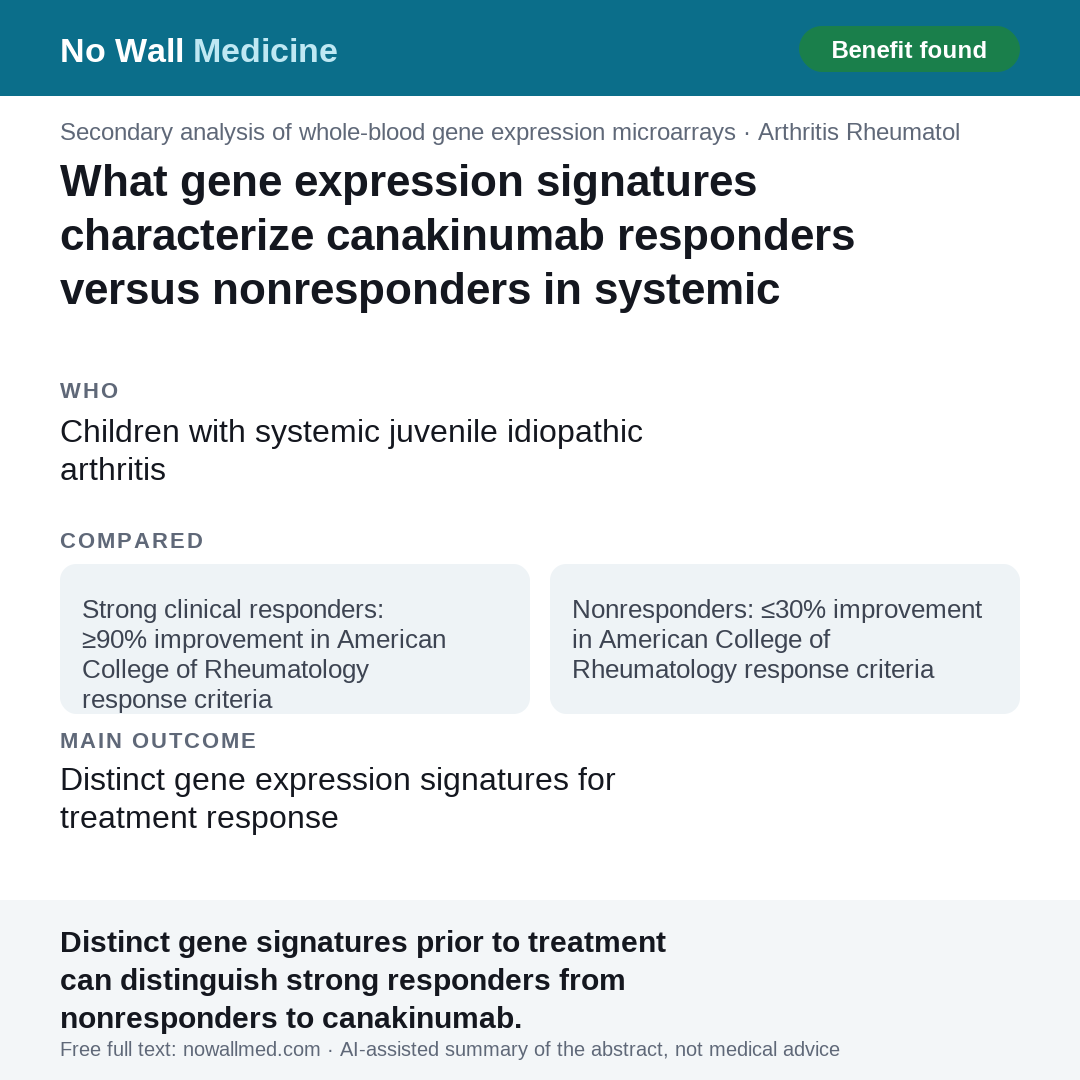
Distinct Gene Expression Signatures Characterize Strong Clinical Responders Versus Nonresponders to Canakinumab in Children With Systemic Juvenile Idiopathic Arthritis
Secondary analysis of whole-blood gene expression microarraysBenefit found
What gene expression signatures characterize canakinumab responders versus nonresponders in systemic juvenile idiopathic arthritis?
Who
Children with systemic juvenile idiopathic arthritis
Compared
Strong clinical responders: ≥90% improvement in American College of Rheumatology response criteria
Nonresponders: ≤30% improvement in American College of Rheumatology response criteria
Main outcome
Distinct gene expression signatures for treatment response
Bottom line: Distinct gene signatures prior to treatment can distinguish strong responders from nonresponders to canakinumab.
Arthritis Rheumatol · 2021-05-31Download image
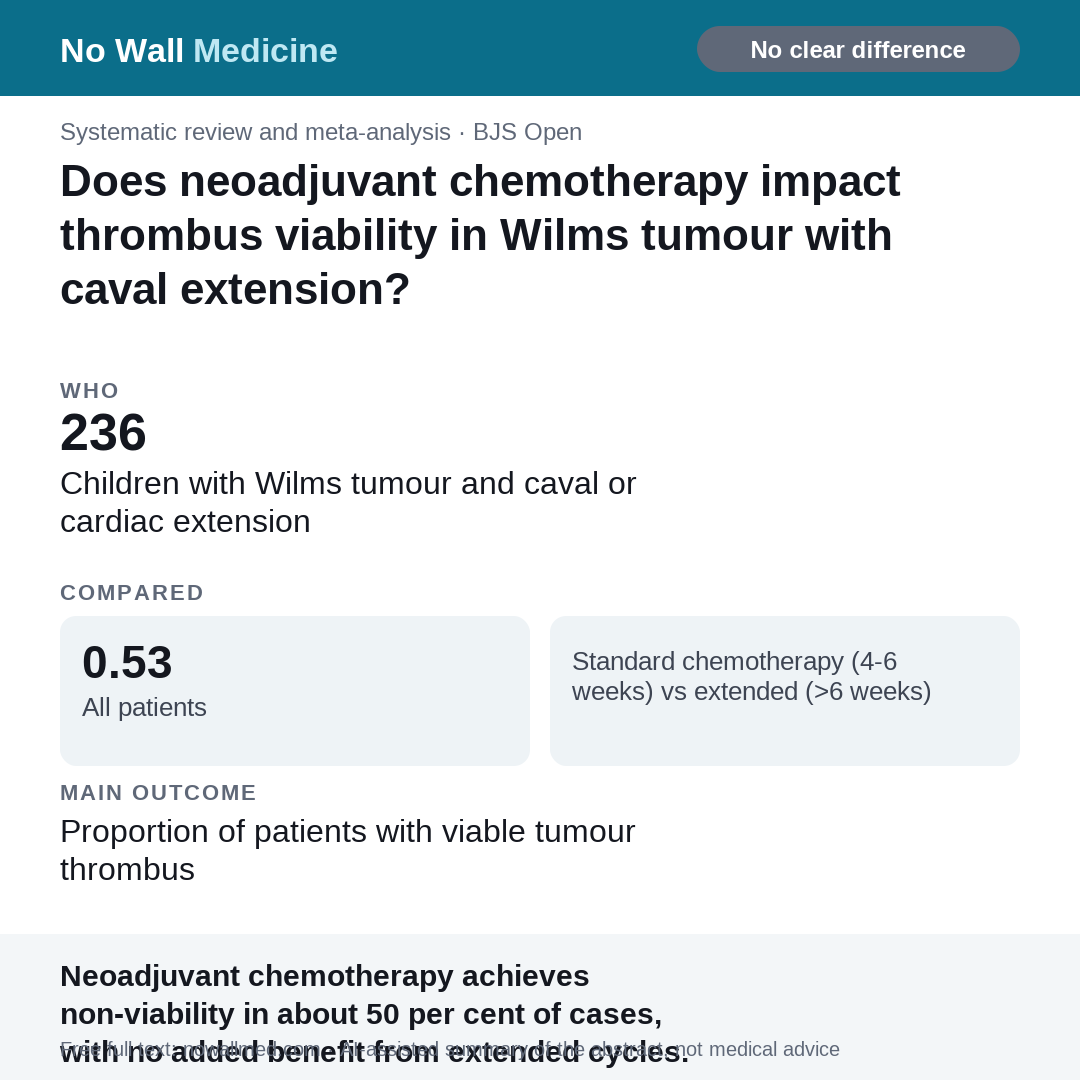
Impact of neoadjuvant chemotherapy on thrombus viability in patients with Wilms tumour and caval extension: systematic review with meta-analysis
Systematic review and meta-analysisNo clear difference
Does neoadjuvant chemotherapy impact thrombus viability in Wilms tumour with caval extension?
Who
236
Children with Wilms tumour and caval or cardiac extension
Compared
0.53All patients (0.43-0.63)
Standard chemotherapy (4-6 weeks) vs extended (>6 weeks)
Main outcome
Proportion of patients with viable tumour thrombus
Result: odds ratio 3.14 (95 per cent c.i. 0.97 to 10.16)
Bottom line: Neoadjuvant chemotherapy achieves non-viability in about 50 per cent of cases, with no added benefit from extended cycles.
BJS Open · 2021-05-30Download image
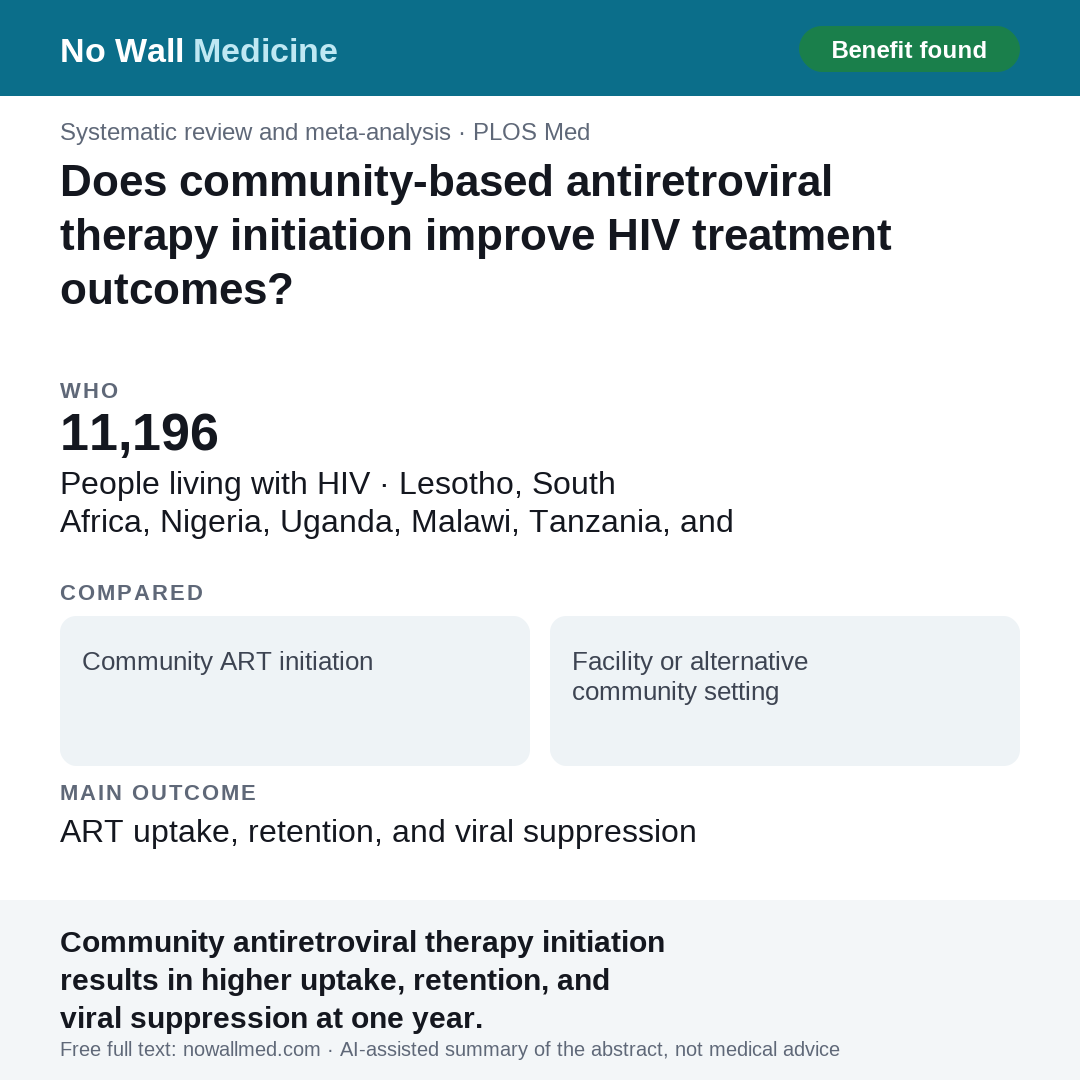
Effects of community-based antiretroviral therapy initiation models on HIV treatment outcomes: A systematic review and meta-analysis
Systematic review and meta-analysisBenefit found
Does community-based antiretroviral therapy initiation improve HIV treatment outcomes?
Who
11,196
People living with HIV · Lesotho, South Africa, Nigeria, Uganda, Malawi, Tanzania, and Haiti
Compared
Community ART initiation
Facility or alternative community setting
Main outcome
ART uptake, retention, and viral suppression
Result: RR 1.73 (95% CI 1.22 to 2.45) for ART uptake
Bottom line: Community antiretroviral therapy initiation results in higher uptake, retention, and viral suppression at one year.
Limitation: Few studies for inclusion, poor-quality observational data, and short-term outcomes.
PLOS Med · 2021-05-28Download image
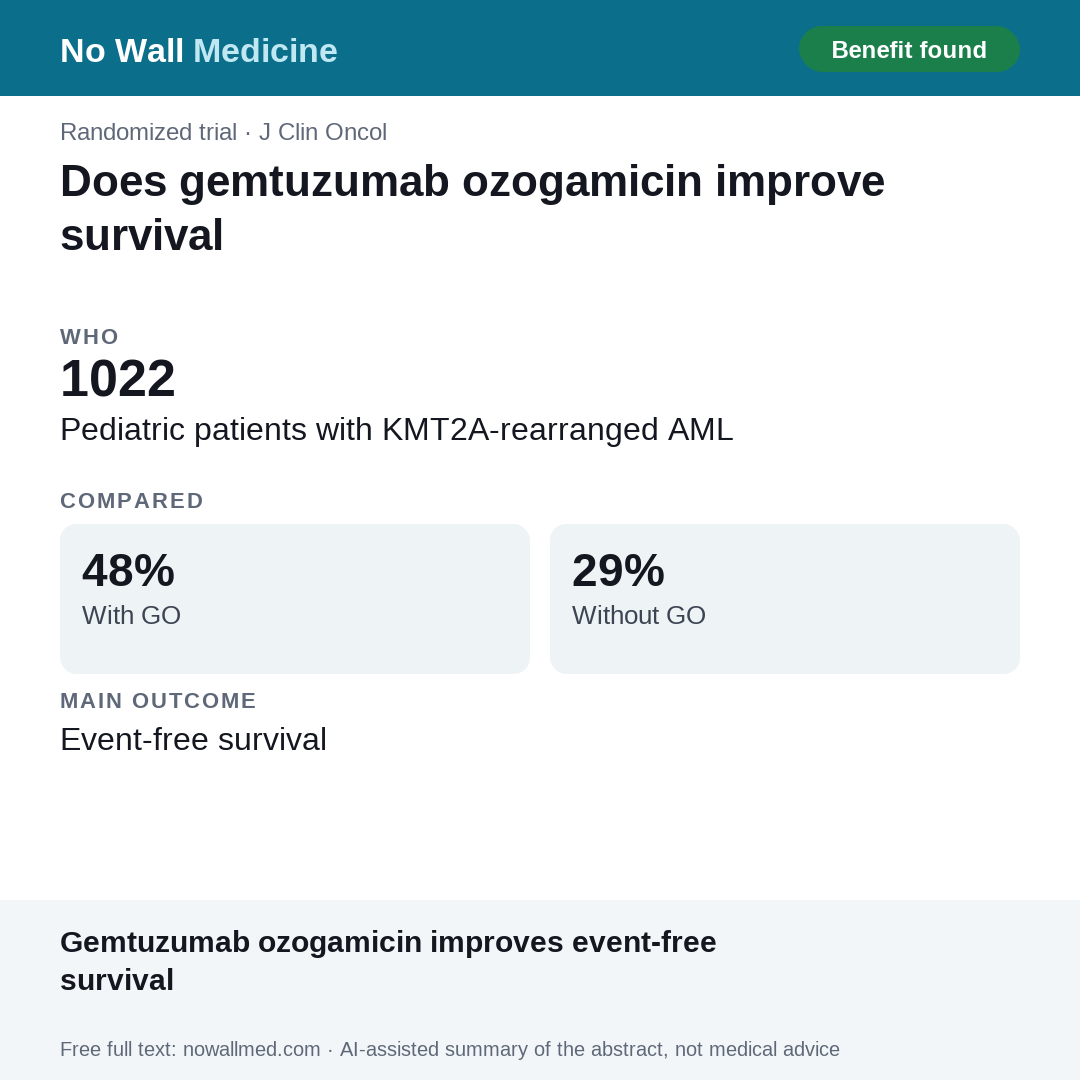
Gemtuzumab Ozogamicin Improves Event-Free Survival and Reduces Relapse in Pediatric KMT2A-Rearranged AML: Results From the Phase III Children's Oncology Group Trial AAML0531
Randomized trialBenefit found
Does gemtuzumab ozogamicin improve survival
Who
1022
Pediatric patients with KMT2A-rearranged AML
Compared
48%With GO
29%Without GO
Main outcome
Event-free survival
Bottom line: Gemtuzumab ozogamicin improves event-free survival
J Clin Oncol · 2021-05-28Download image
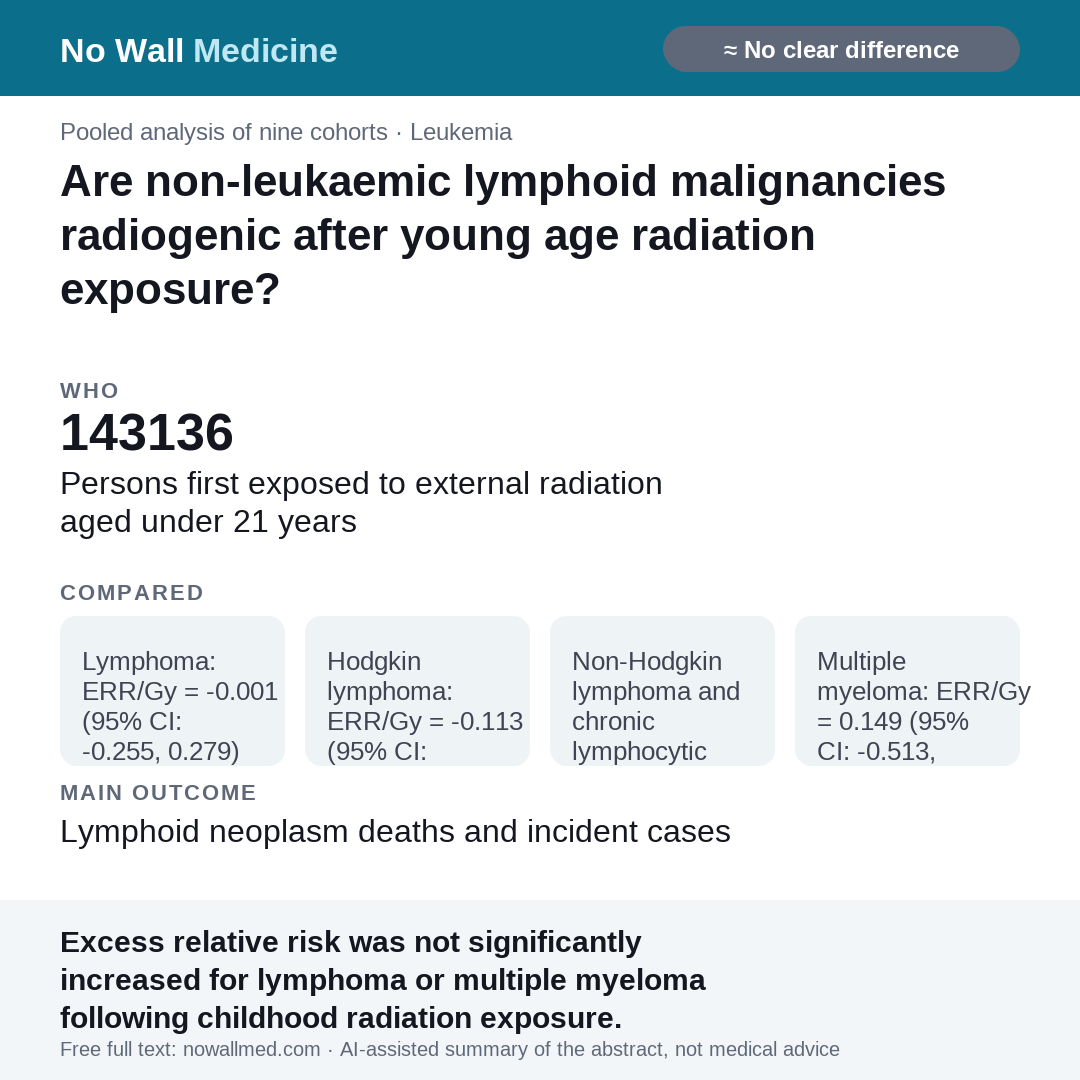
Lymphoma and multiple myeloma in cohorts of persons exposed to ionising radiation at a young age
Pooled analysis of nine cohortsNo clear difference
Are non-leukaemic lymphoid malignancies radiogenic after young age radiation exposure?
Who
143136
Persons first exposed to external radiation aged under 21 years
Compared
Lymphoma: ERR/Gy = -0.001 (95% CI: -0.255, 0.279)
Hodgkin lymphoma: ERR/Gy = -0.113 (95% CI: -0.669, 0.709)
Non-Hodgkin lymphoma and chronic lymphocytic leukaemia: ERR/Gy = 0.099 (95% CI: -0.149, 0.433)
Multiple myeloma: ERR/Gy = 0.149 (95% CI: -0.513, 1.063)
Main outcome
Lymphoid neoplasm deaths and incident cases
Result: ERR/Gy = -0.001 (95% CI: -0.255, 0.279) for lymphoma
Bottom line: Excess relative risk was not significantly increased for lymphoma or multiple myeloma following childhood radiation exposure.
Limitation: Need for longer follow-up, central outcome review, and assessment of radiation doses to lymphoid tissues.
Leukemia · 2021-05-28Download image
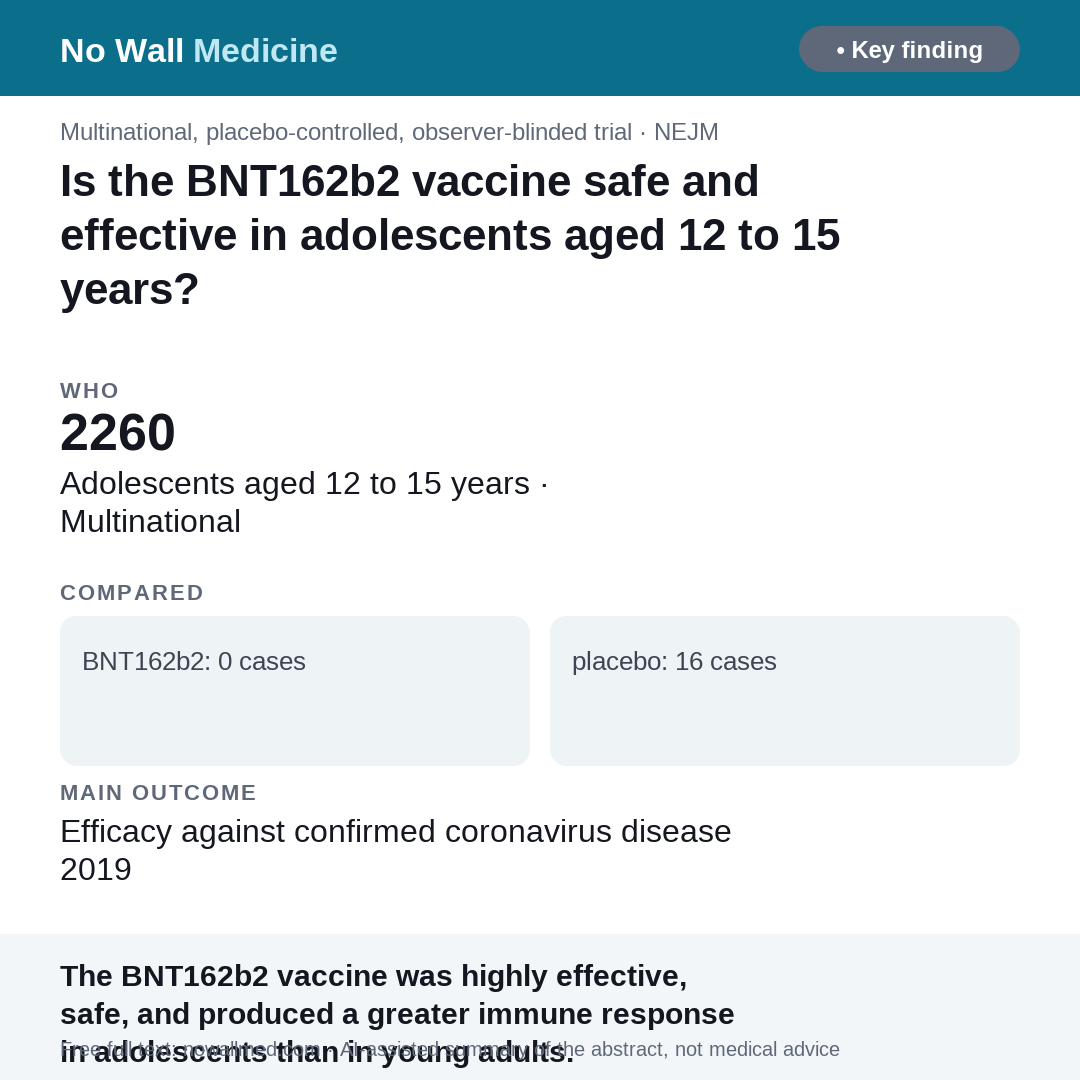
Safety, Immunogenicity, and Efficacy of the BNT162b2 Covid-19 Vaccine in Adolescents
Multinational, placebo-controlled, observer-blinded trialKey finding
Is the BNT162b2 vaccine safe and effective in adolescents aged 12 to 15 years?
Who
2260
Adolescents aged 12 to 15 years · Multinational
Compared
BNT162b2: 0 cases
placebo: 16 cases
Main outcome
Efficacy against confirmed coronavirus disease 2019
Result: 100% (95% CI, 75.3 to 100)
Bottom line: The BNT162b2 vaccine was highly effective, safe, and produced a greater immune response in adolescents than in young adults.
Funded by: BioNTech and Pfizer
NEJM · 2021-05-27Download image
Gut Resistome of Preschool Children After Prolonged Mass Azithromycin Distribution: A Cluster-randomized Trial
Cluster-randomized trialMixed results
How does prolonged mass azithromycin distribution affect the gut resistome of preschool children?
Who
Preschool children from communities treated with azithromycin
Compared
azithromycin arm: macrolide resistance remained higher
control arm
Main outcome
gut resistome and macrolide resistance
Bottom line: Macrolide resistance remained higher after azithromycin distribution, though non-macrolide resistance selection did not persist.
Clin Infect Dis · 2021-05-27Download image
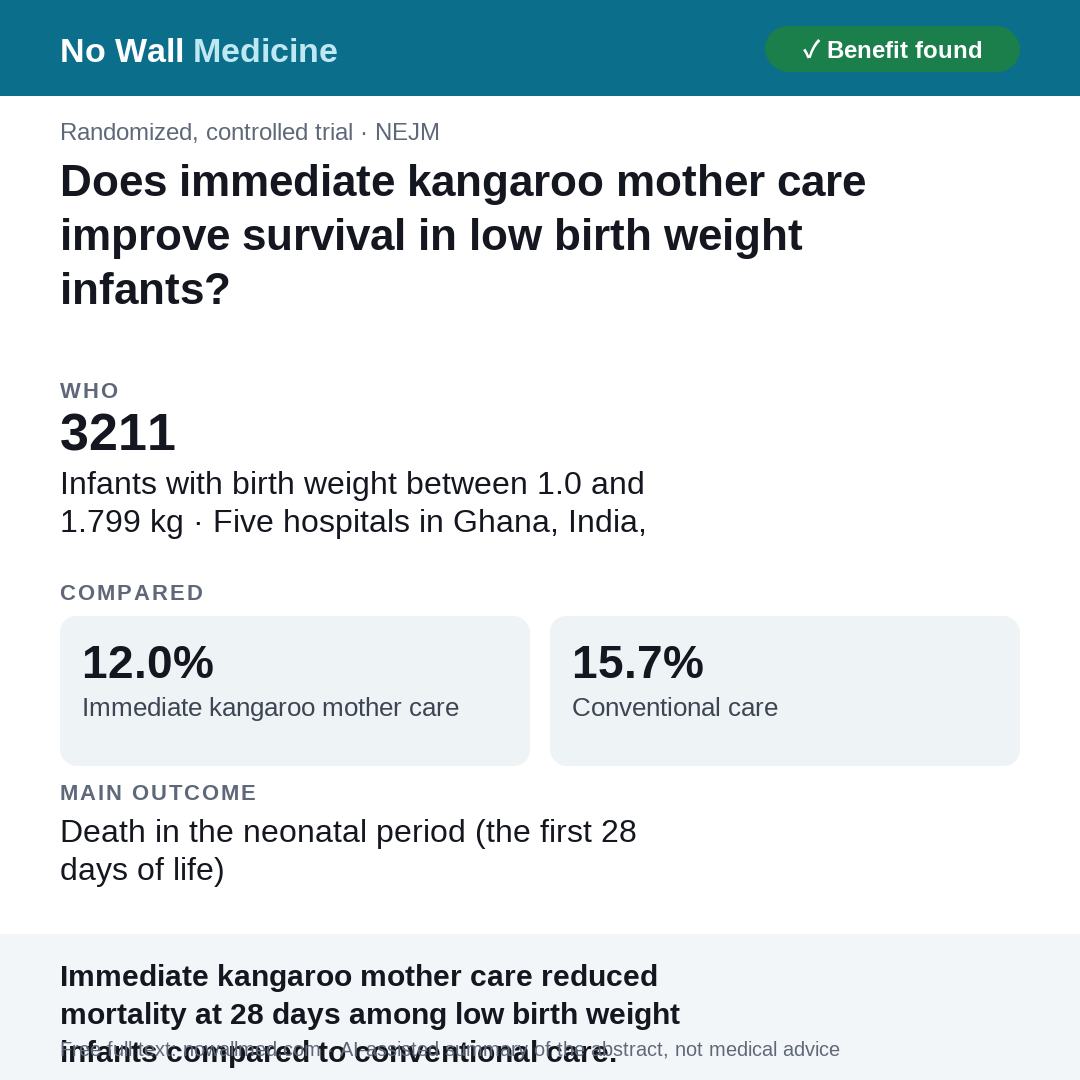
Immediate "Kangaroo Mother Care" and Survival of Infants with Low Birth Weight
Randomized, controlled trialBenefit found
Does immediate kangaroo mother care improve survival in low birth weight infants?
Who
3211
Infants with birth weight between 1.0 and 1.799 kg · Five hospitals in Ghana, India, Malawi, Nigeria, and Tanzania
Compared
12.0%Immediate kangaroo mother care
15.7%Conventional care
Main outcome
Death in the neonatal period (the first 28 days of life)
Result: relative risk of death, 0.75 (95% CI, 0.64 to 0.89)
Bottom line: Immediate kangaroo mother care reduced mortality at 28 days among low birth weight infants compared to conventional care.
Funded by: Bill and Melinda Gates Foundation
NEJM · 2021-05-26Download image
Effect of Training Pediatric Clinicians in Human Papillomavirus Communication Strategies on Human Papillomavirus Vaccination Rates: A Cluster Randomized Clinical Trial
Cluster randomized clinical trialBenefit found
Does online communication training for clinicians reduce missed human papillomavirus vaccination opportunities?
Who
Clinicians in 48 primary care pediatric practices and adolescents aged 11 to 17 years · 48 primary care pediatric practices in 19 states
Compared
Communication training: -2.4% (95% CI, -3.5% to -1.2%) reduction in missed opportunities overall
Standard of care
Main outcome
Missed opportunities for human papillomavirus vaccination
Result: -2.4% (95% CI, -3.5% to -1.2%) reduction in missed opportunities overall
Bottom line: Online communication training for clinicians reduced missed human papillomavirus vaccination opportunities, especially for vaccine initiation during well-child care visits.
JAMA Pediatr · 2021-05-25Download image
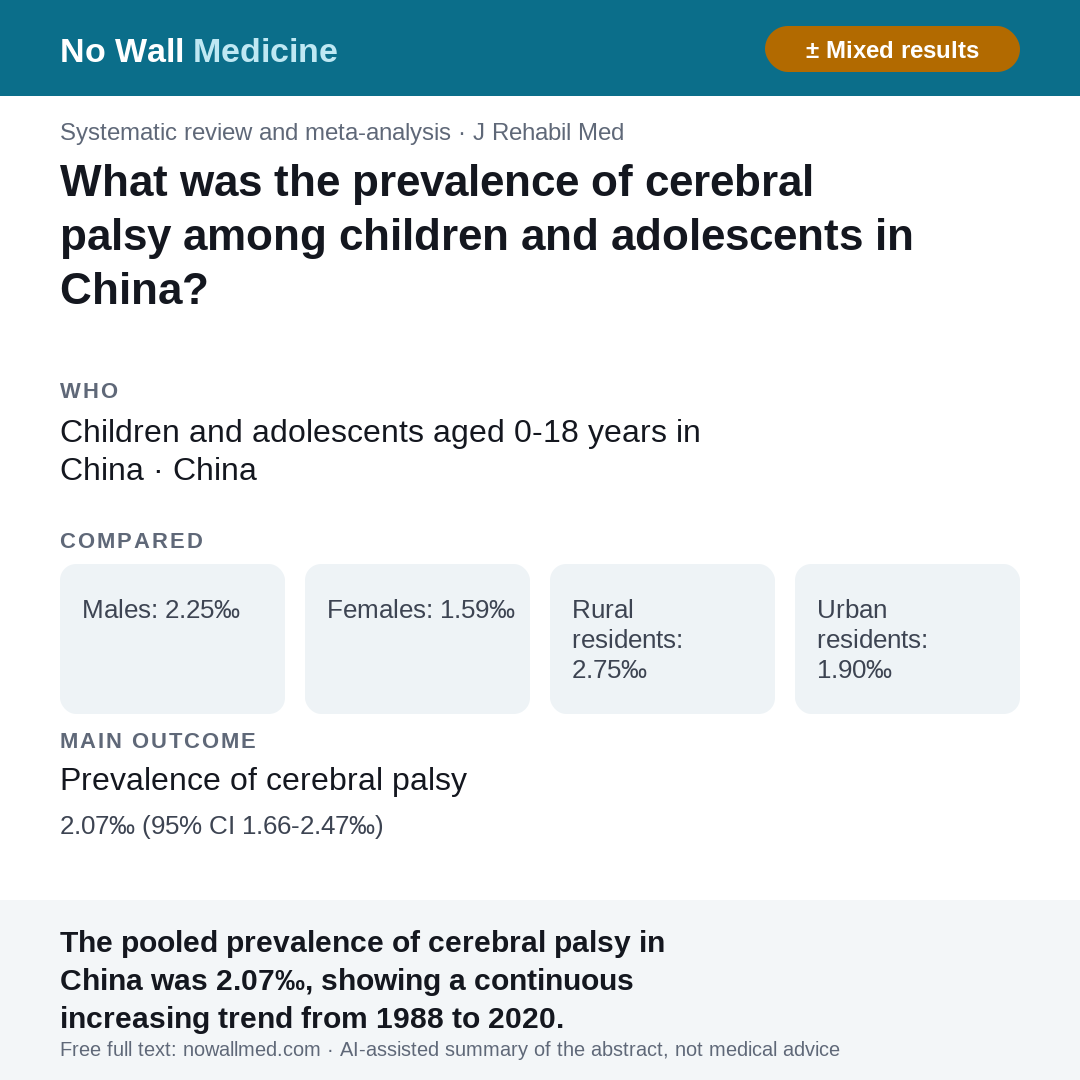
Increasing prevalence of cerebral palsy among children and adolescents in China 1988-2020: A systematic review and meta-analysis
Systematic review and meta-analysisMixed results
What was the prevalence of cerebral palsy among children and adolescents in China?
Who
Children and adolescents aged 0-18 years in China · China
Compared
Males: 2.25‰
Females: 1.59‰
Rural residents: 2.75‰
Urban residents: 1.90‰
Main outcome
Prevalence of cerebral palsy
Result: 2.07‰ (95% CI 1.66-2.47‰)
Bottom line: The pooled prevalence of cerebral palsy in China was 2.07‰, showing a continuous increasing trend from 1988 to 2020.
Limitation: The year of study was a source of heterogeneity among overall prevalence.
J Rehabil Med · 2021-05-24Download image
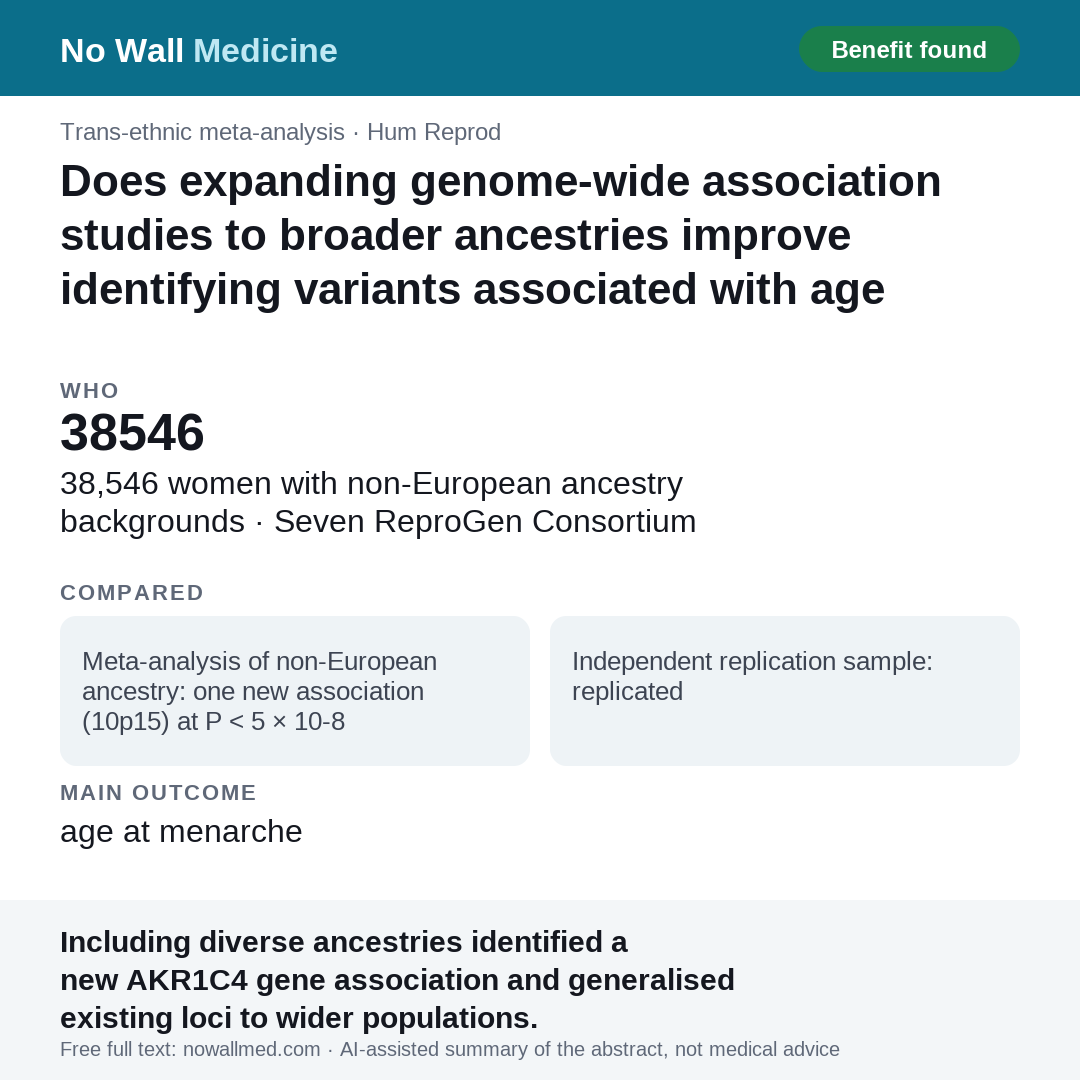
Large trans-ethnic meta-analysis identifies AKR1C4 as a novel gene associated with age at menarche
Trans-ethnic meta-analysisKey finding
Does expanding genome-wide association studies to broader ancestries improve identifying variants associated with age at menarche?
Who
38546
38,546 women with non-European ancestry backgrounds · Seven ReproGen Consortium studies and UK Biobank
Compared
Meta-analysis of non-European ancestry: one new association (10p15) at P < 5 × 10⁻⁸
Independent replication sample: replicated
Main outcome
age at menarche
Bottom line: Including diverse ancestries identified a new AKR1C4 gene association and generalised existing loci to wider populations.
Limitation: Extreme age at menarche were excluded and participants may not fully recall their age at menarche.
Funded by: CHARGE Consortium and National Institute on Aging
Hum Reprod · 2021-05-23Download image
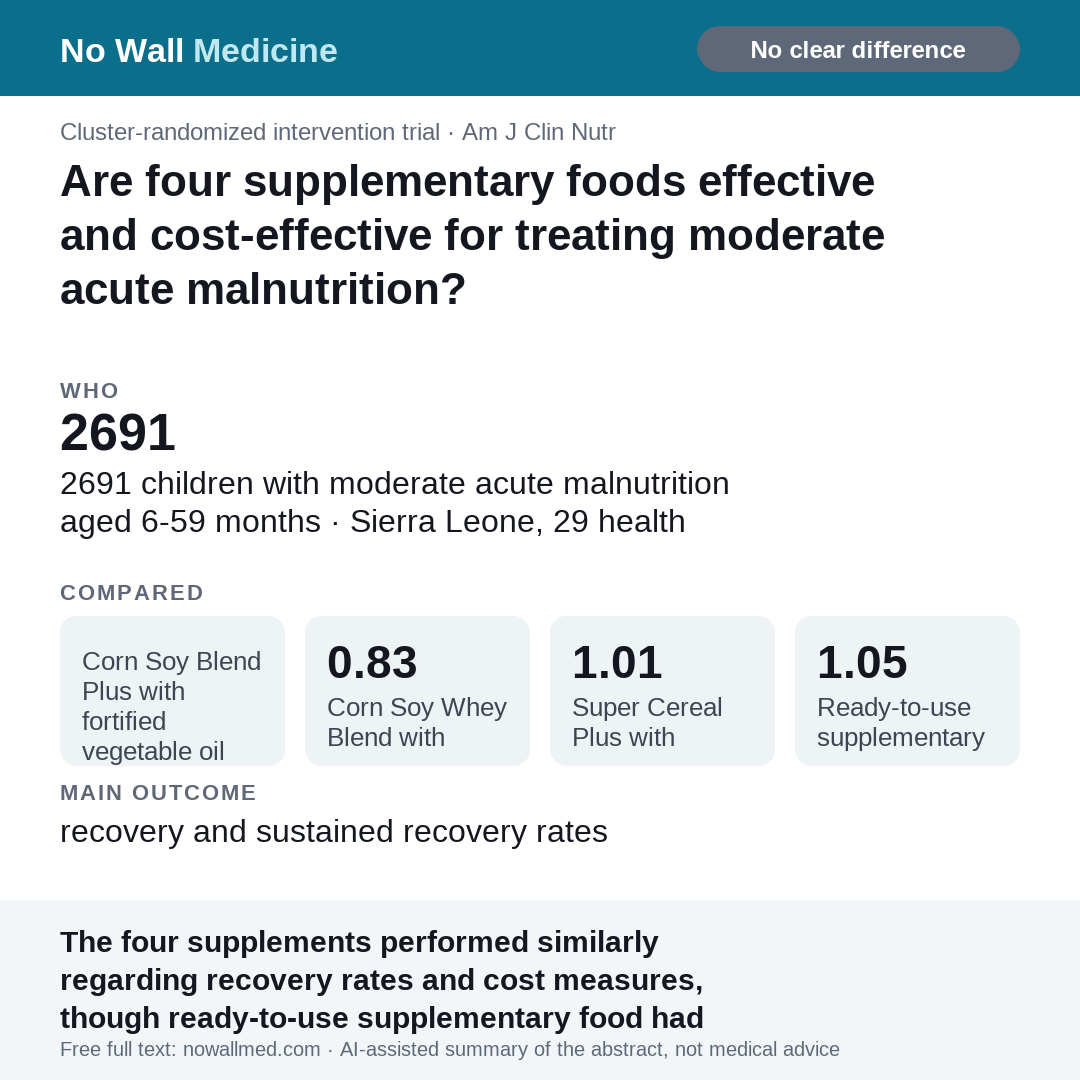
Effectiveness and cost-effectiveness of 4 supplementary foods for treating moderate acute malnutrition: results from a cluster-randomized intervention trial in Sierra Leone
Cluster-randomized intervention trialNo clear difference
Are four supplementary foods effective and cost-effective for treating moderate acute malnutrition?
Who
2691
2691 children with moderate acute malnutrition aged 6-59 months · Sierra Leone, 29 health centers
Compared
Corn Soy Blend Plus with fortified vegetable oil
0.83Corn Soy Whey Blend with fortified vegetable oil (95% CI: 0.64-1.08)
1.01Super Cereal Plus with amylase (95% CI: 0.78-1.3)
1.05Ready-to-use supplementary food (95% CI: 0.82-1.34)
Main outcome
recovery and sustained recovery rates
Result: odds of recovery: 0.83 (95% CI: 0.64-1.08) for CSWB w/oil, 1.01 (95% CI: 0.78-1.3) for SC + A, 1.05 (95% CI: 0.82-1.34) for RUSF
Bottom line: The four supplements performed similarly regarding recovery rates and cost measures, though ready-to-use supplementary food had lower sustained recovery.
Am J Clin Nutr · 2021-05-22Download image
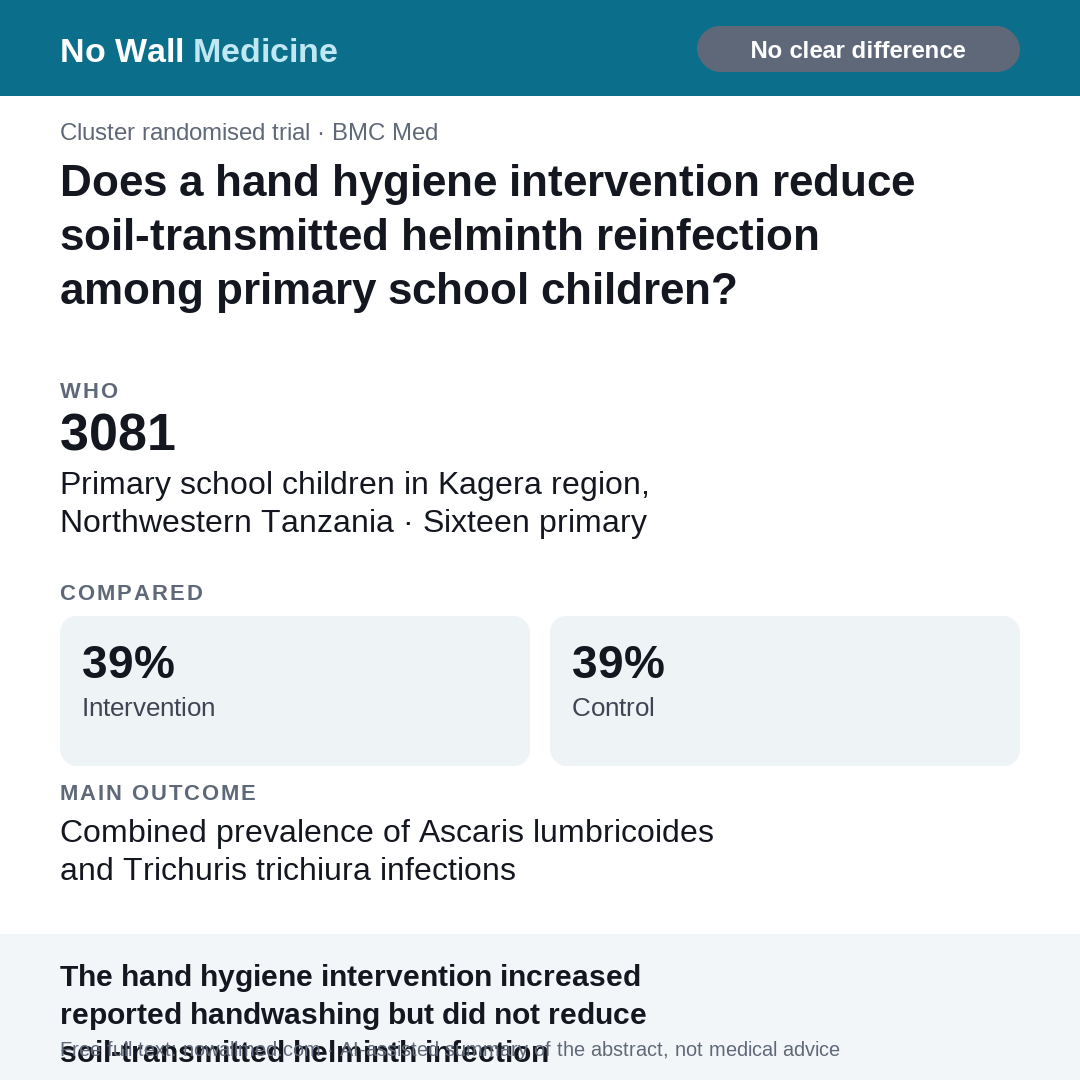
Hand hygiene intervention to optimise soil-transmitted helminth infection control among primary school children: the Mikono Safi cluster randomised controlled trial in northwestern Tanzania
Cluster randomised trialNo clear difference
Does a hand hygiene intervention reduce soil-transmitted helminth reinfection among primary school children?
Who
3081
Primary school children in Kagera region, Northwestern Tanzania · Sixteen primary schools in Northwestern Tanzania
Compared
39%Intervention
39%Control
Main outcome
Combined prevalence of Ascaris lumbricoides and Trichuris trichiura infections
Result: aOR = 1.19; 95%CI 0.74-1.91
Bottom line: The hand hygiene intervention increased reported handwashing but did not reduce soil-transmitted helminth infection prevalence.
Limitation: Possible infection in the home environment or other transmission routes like contaminated water or food.
BMC Med · 2021-05-21Download image