Visual abstracts
New randomized trials and meta-analyses from leading journals at a glance: who was studied, what was compared, and what was found. Every paper is free to read in full.
All specialtiesCardiology 993Oncology 892Gastroenterology & Hepatology 360Infectious Disease 681Neurology 417Psychiatry & Mental Health 519Pulmonology 435Critical Care 302Endocrinology & Diabetes 559Pediatrics 625Surgery 424Orthopedics & Sports Medicine 194Neurosurgery 144Cardiothoracic & Vascular Surgery 103Plastic & Reconstructive Surgery 163Nephrology 225Rheumatology 129Hematology 213Dermatology 92Ophthalmology 117Obstetrics & Gynecology 305Public & Global Health 188Radiology & Imaging 122Anesthesiology 169Urology 191ENT (Otolaryngology) 138Emergency Medicine 114Allergy & Immunology 68Geriatrics 194Family Medicine & Primary Care 132Medical Genetics & Genomics 103Pathology & Laboratory Medicine 31Physical Medicine & Rehabilitation 174Palliative Care 92Nutrition 254Digital Health & AI 524General Medicine 105
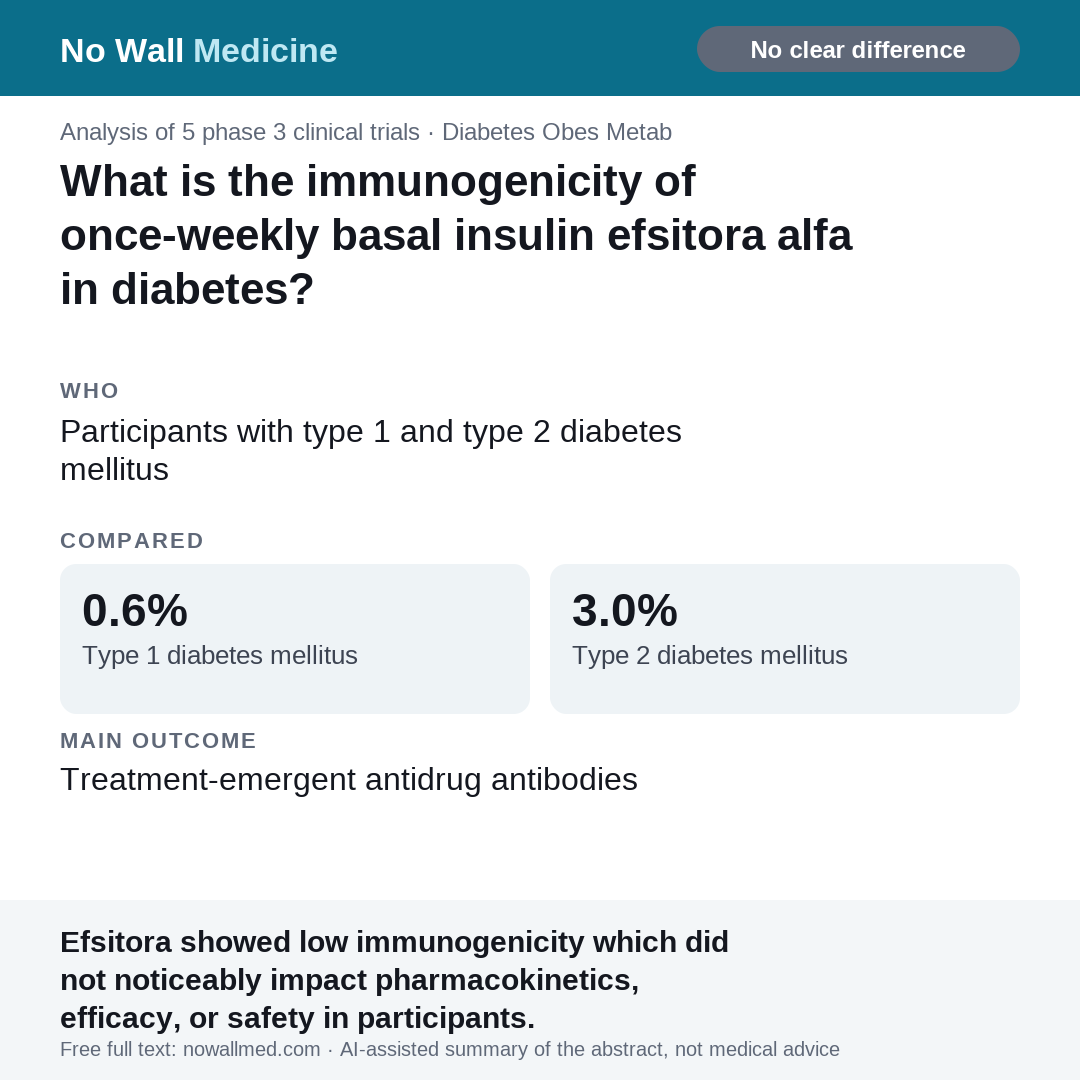
Low immunogenicity of insulin efsitora alfa in participants with type 1 and type 2 diabetes mellitus
Analysis of 5 phase 3 clinical trialsNo clear difference
What is the immunogenicity of once-weekly basal insulin efsitora alfa in diabetes?
Who
Participants with type 1 and type 2 diabetes mellitus
Compared
0.6%Type 1 diabetes mellitus
3.0%Type 2 diabetes mellitus
Main outcome
Treatment-emergent antidrug antibodies
Bottom line: Efsitora showed low immunogenicity which did not noticeably impact pharmacokinetics, efficacy, or safety in participants.
Diabetes Obes Metab · 2025-12-04Download image
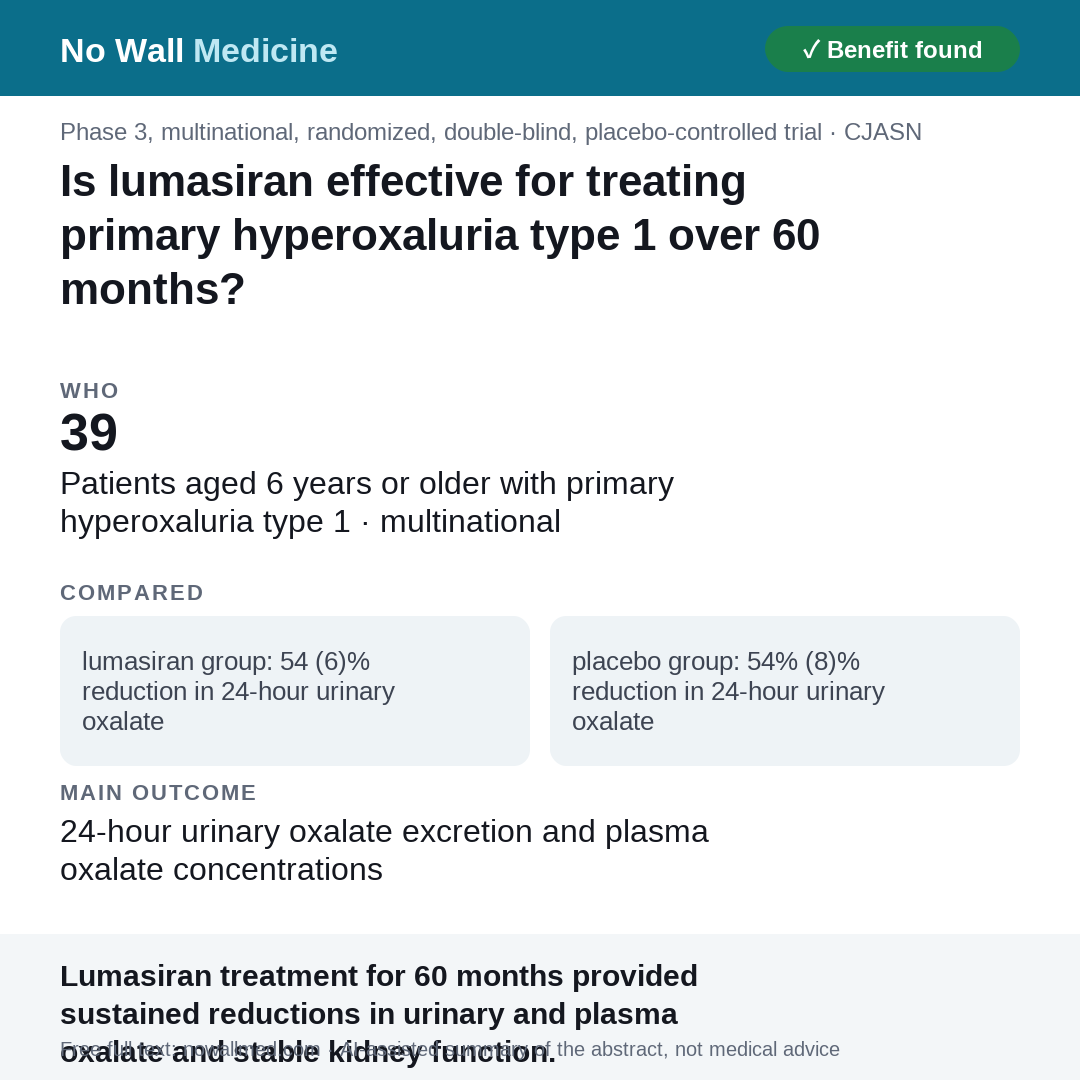
Final Results of the ILLUMINATE-A Phase 3 Clinical Trial of Lumasiran for Primary Hyperoxaluria 1
Phase 3, multinational, randomized, double-blind, placebo-controlled trialBenefit found
Is lumasiran effective for treating primary hyperoxaluria type 1 over 60 months?
Who
39
Patients aged 6 years or older with primary hyperoxaluria type 1 · multinational
Compared
lumasiran group: 54 (6)% reduction in 24-hour urinary oxalate
placebo group: 54% (8)% reduction in 24-hour urinary oxalate
Main outcome
24-hour urinary oxalate excretion and plasma oxalate concentrations
Bottom line: Lumasiran treatment for 60 months provided sustained reductions in urinary and plasma oxalate and stable kidney function.
CJASN · 2025-12-04Download image
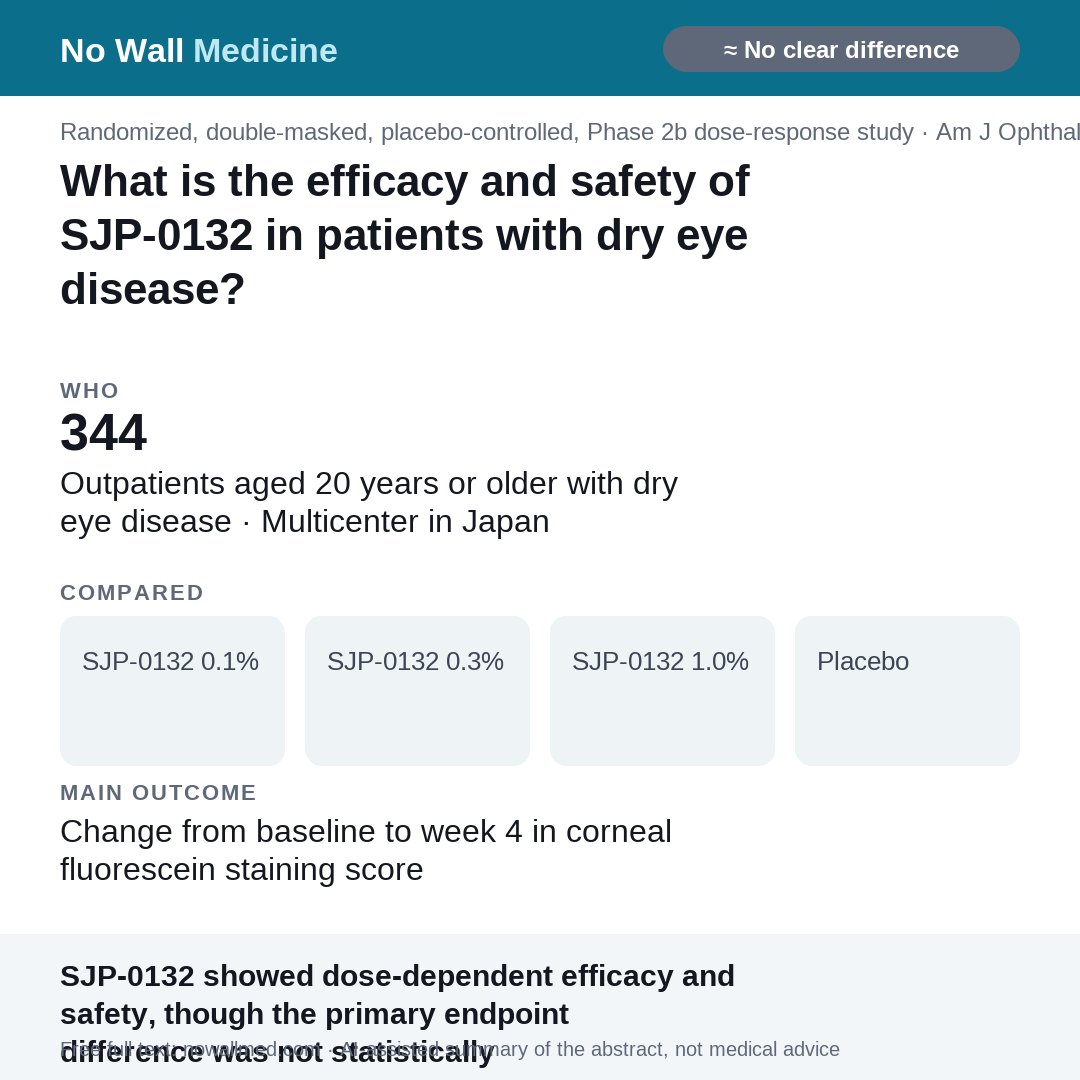
Efficacy and Safety of SJP-0132 in Patients With Dry Eye Disease: A Phase 2b Randomized, Double-Masked, Dose-Finding Study
Randomized, double-masked, placebo-controlled, Phase 2b dose-response studyNo clear difference
What is the efficacy and safety of SJP-0132 in patients with dry eye disease?
Who
344
Outpatients aged 20 years or older with dry eye disease · Multicenter in Japan
Compared
SJP-0132 0.1%
SJP-0132 0.3%
SJP-0132 1.0%
Placebo
Main outcome
Change from baseline to week 4 in corneal fluorescein staining score
Result: between-group difference -0.8; 95% CI -1.7, 0.2
Bottom line: SJP-0132 showed dose-dependent efficacy and safety, though the primary endpoint difference was not statistically significant.
Am J Ophthalmol · 2025-12-04Download image
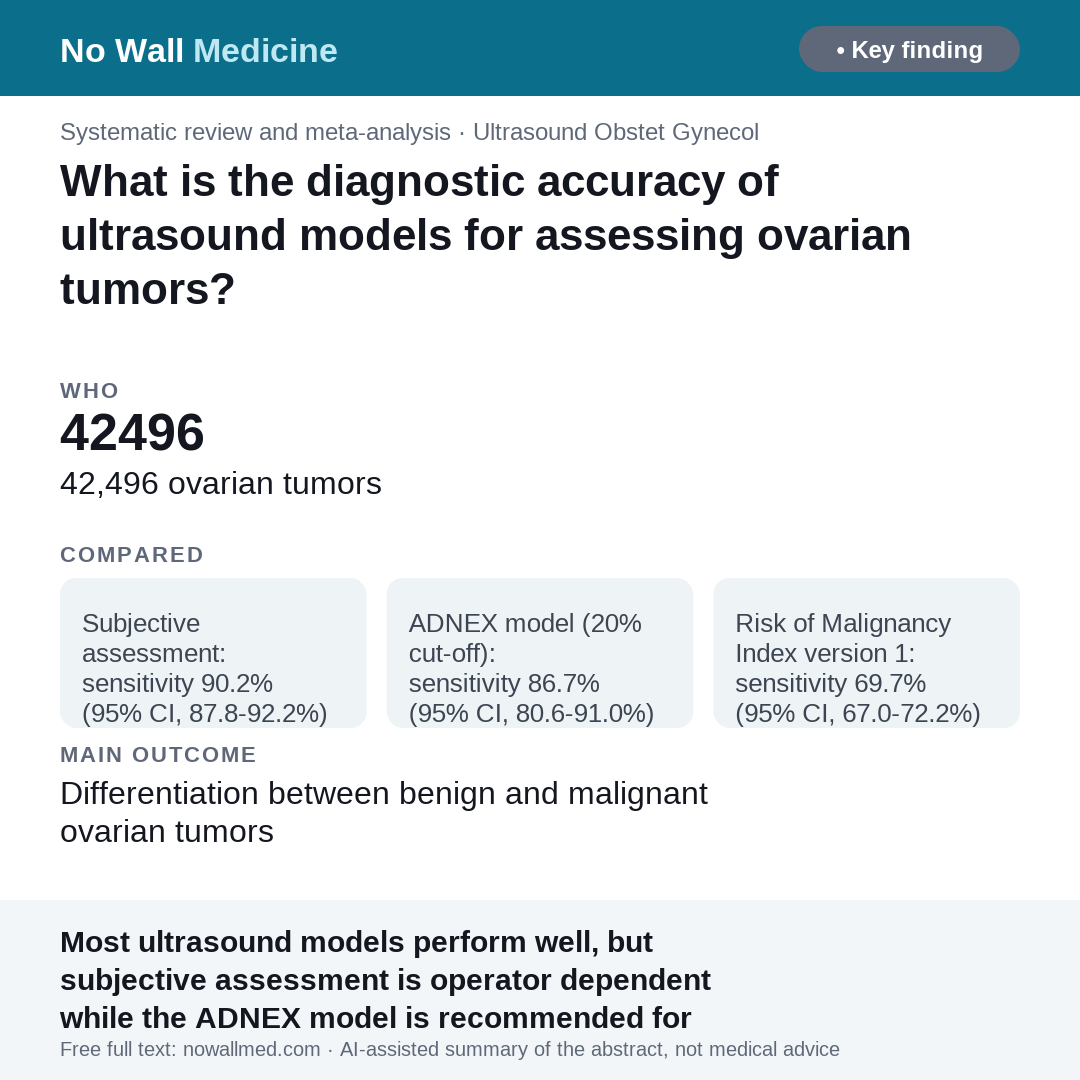
Diagnostic accuracy of ultrasound models for assessment of ovarian tumors: systematic review and meta-analysis
Systematic review and meta-analysisBenefit found
What is the diagnostic accuracy of ultrasound models for assessing ovarian tumors?
Who
42496
42,496 ovarian tumors
Compared
Subjective assessment: sensitivity 90.2% (95% CI, 87.8-92.2%) and specificity 91.4% (95% CI, 89.3-93.2%)
ADNEX model (20% cut-off): sensitivity 86.7% (95% CI, 80.6-91.0%) and specificity 87.9% (95% CI, 80.1-92.9%)
Risk of Malignancy Index version 1: sensitivity 69.7% (95% CI, 67.0-72.2%) and specificity 90.5% (95% CI, 88.3-92.4%)
Main outcome
Differentiation between benign and malignant ovarian tumors
Bottom line: Most ultrasound models perform well, but subjective assessment is operator dependent while the ADNEX model is recommended for independence.
Limitation: Subjective assessment performance is dependent on operator expertise.
Ultrasound Obstet Gynecol · 2025-12-04Download image
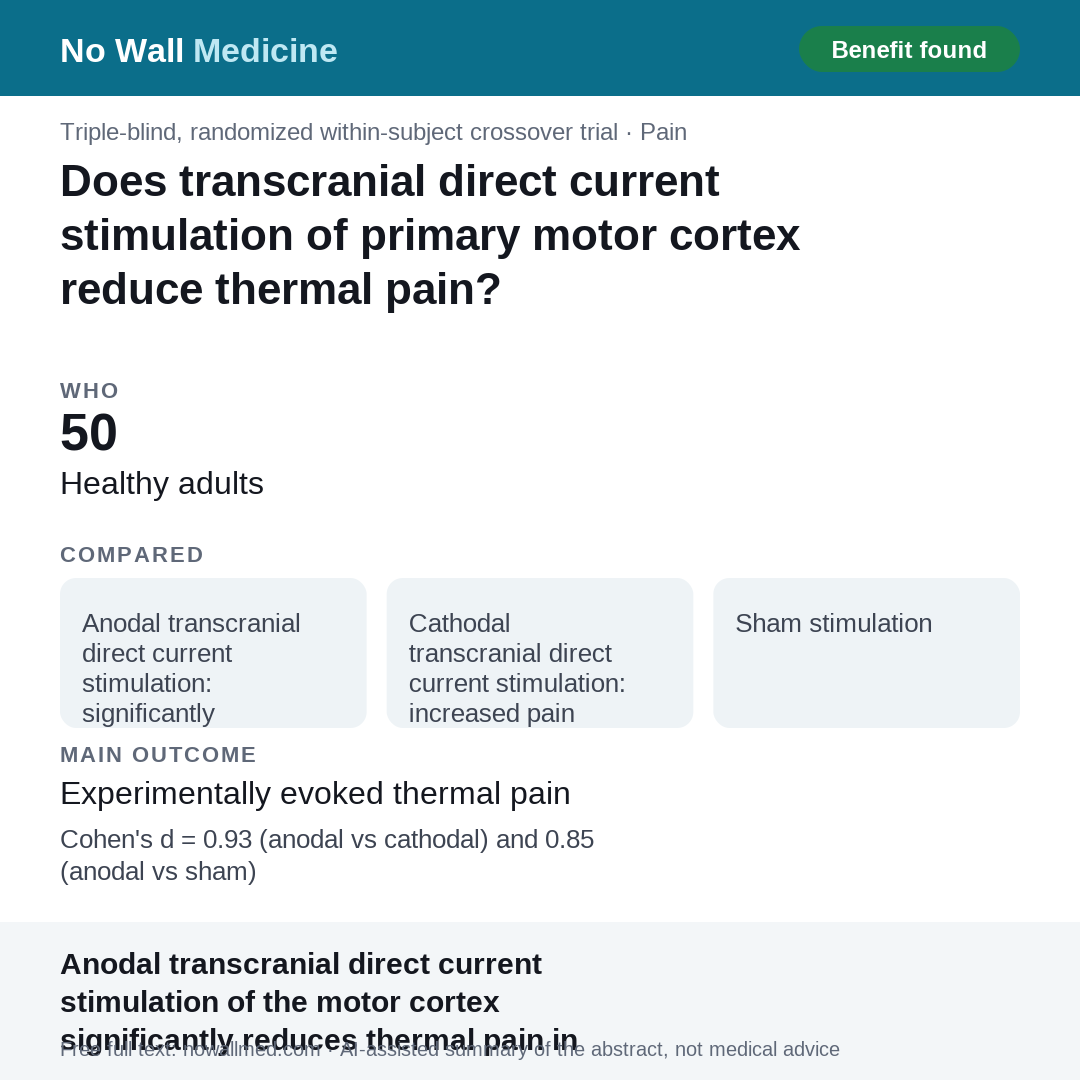
Transcranial direct current stimulation of primary motor cortex reduces thermal pain
Triple-blind, randomized within-subject crossover trialBenefit found
Does transcranial direct current stimulation of primary motor cortex reduce thermal pain?
Who
50
Healthy adults
Compared
Anodal transcranial direct current stimulation: significantly reduced pain
Cathodal transcranial direct current stimulation: increased pain relative to sham
Sham stimulation
Main outcome
Experimentally evoked thermal pain
Result: Cohen's d = 0.93 (anodal vs cathodal) and 0.85 (anodal vs sham)
Bottom line: Anodal transcranial direct current stimulation of the motor cortex significantly reduces thermal pain in healthy adults.
Pain · 2025-12-04Download image
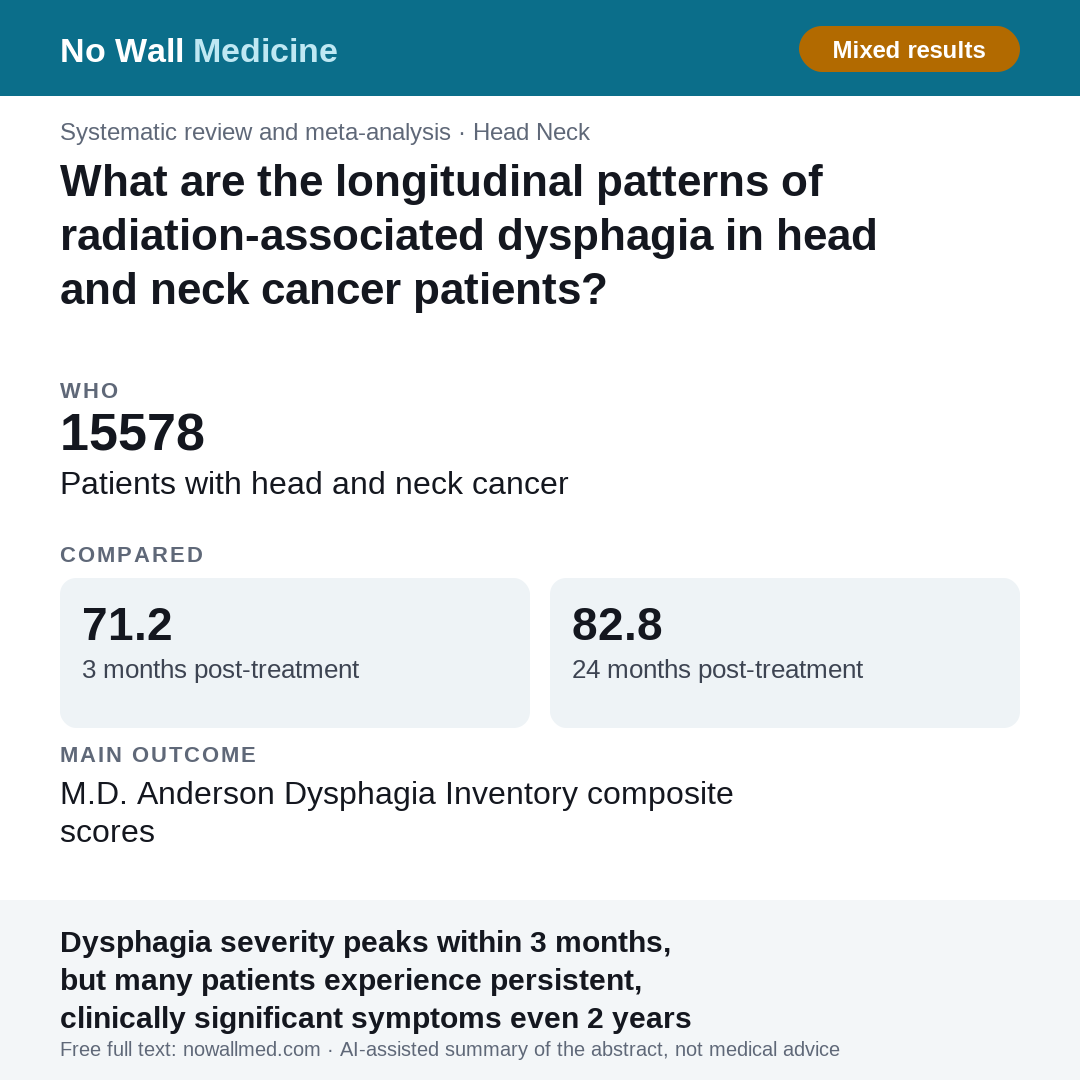
Longitudinal Patterns of Radiation-Associated Dysphagia in Patients With Head and Neck Cancer: A Systematic Review
Systematic review and meta-analysisMixed results
What are the longitudinal patterns of radiation-associated dysphagia in head and neck cancer patients?
Who
15578
Patients with head and neck cancer
Compared
71.23 months post-treatment (CI: 66.8-75.6)
82.824 months post-treatment (CI: 79.2-86.3)
Main outcome
M.D. Anderson Dysphagia Inventory composite scores
Bottom line: Dysphagia severity peaks within 3 months, but many patients experience persistent, clinically significant symptoms even 2 years post-treatment.
Head Neck · 2025-12-04Download image
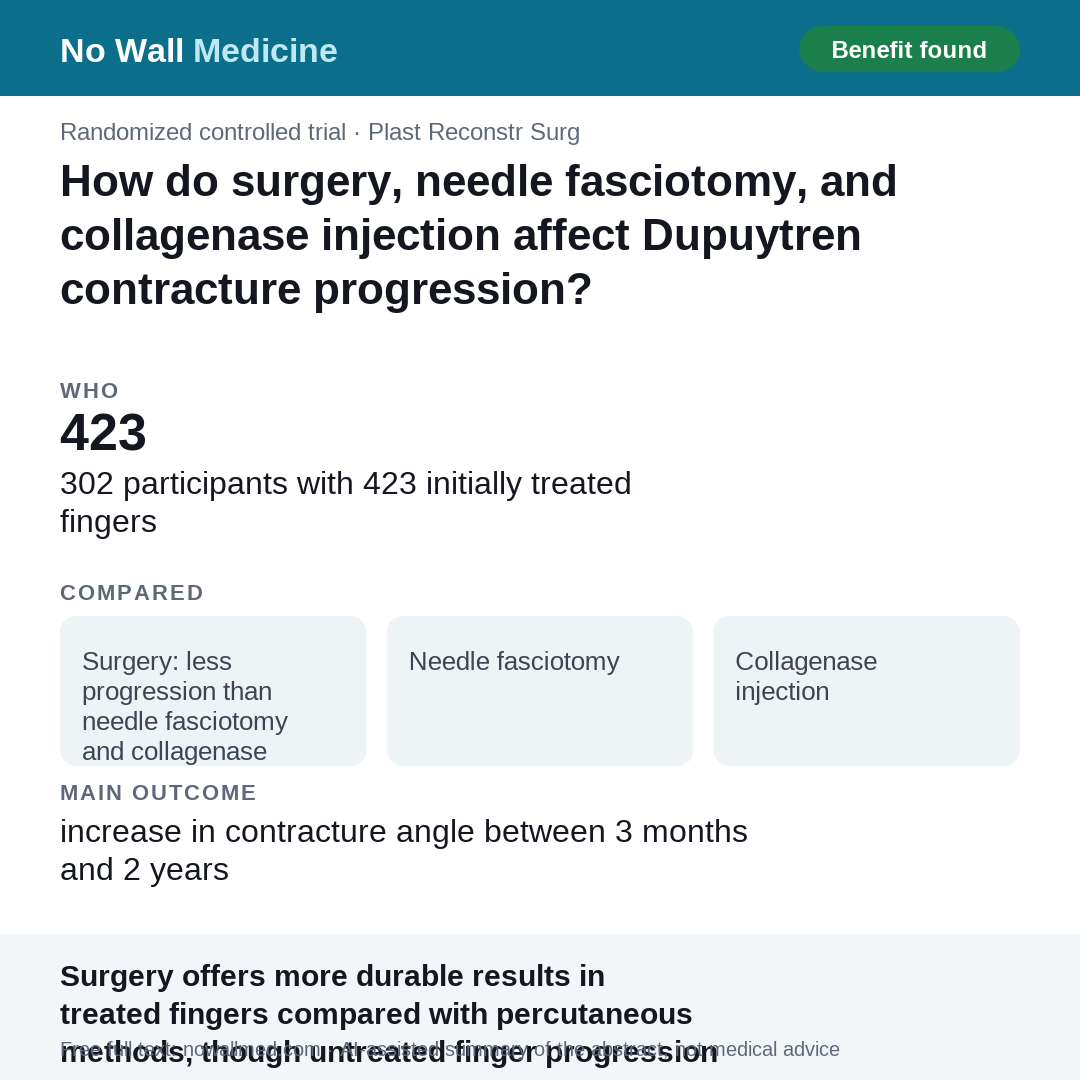
Progression of Dupuytren Contracture: A Randomized Controlled Trial Comparing Surgery, Needle Fasciotomy, and Collagenase Injection
Randomized controlled trialBenefit found
How do surgery, needle fasciotomy, and collagenase injection affect Dupuytren contracture progression?
Who
423
302 participants with 423 initially treated fingers
Compared
Surgery: less progression than needle fasciotomy and collagenase injection
Needle fasciotomy
Collagenase injection
Main outcome
increase in contracture angle between 3 months and 2 years
Result: mean difference 9.7 degrees (95% CI 3.7 to 16) vs needle fasciotomy; mean difference 6.0 degrees (95% CI 0.1 to 12) vs collagenase
Bottom line: Surgery offers more durable results in treated fingers compared with percutaneous methods, though untreated finger progression remains similar.
Plast Reconstr Surg · 2025-12-04Download image
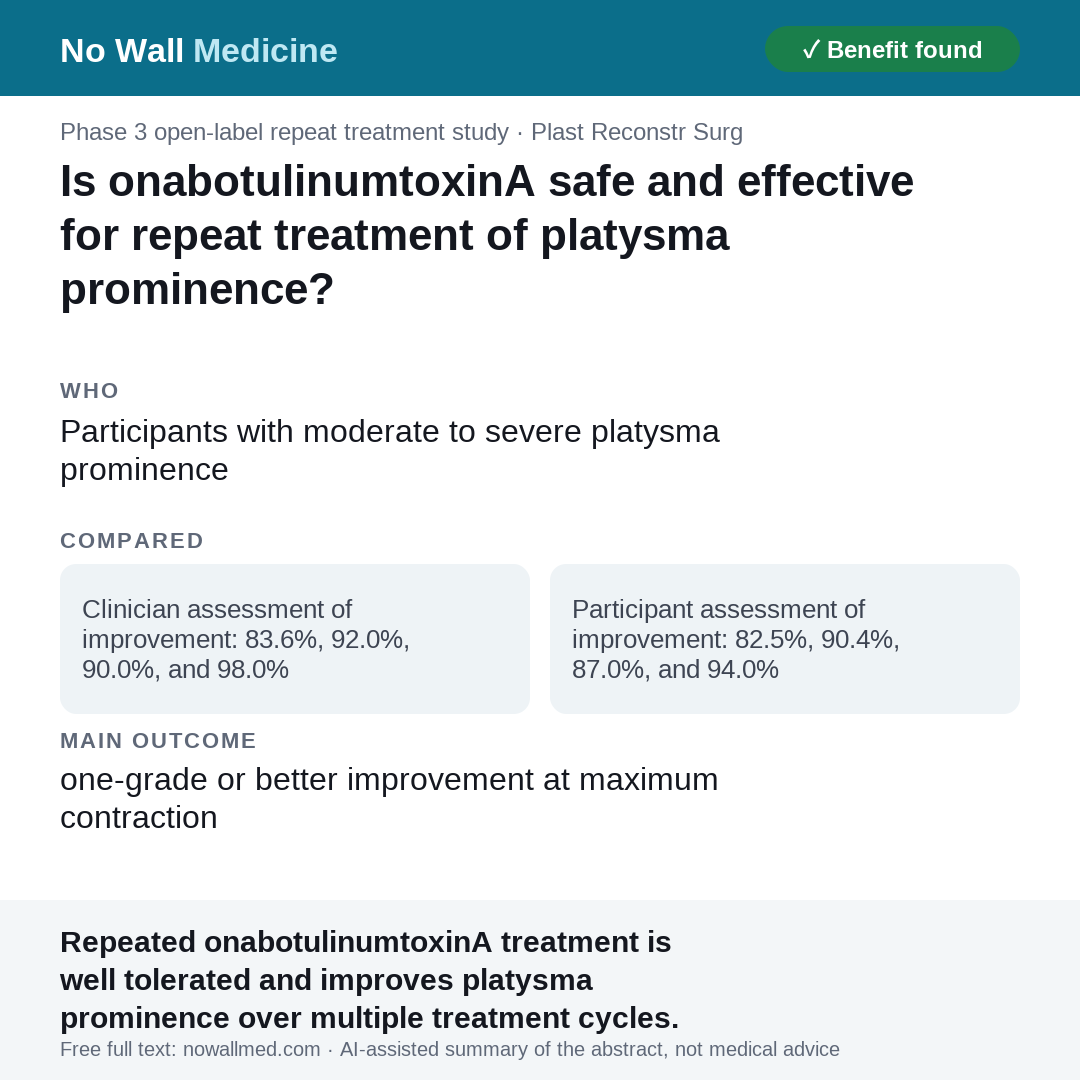
OnabotulinumtoxinA for Platysma Prominence: Safety and Efficacy Results from a Phase 3 Open-Label Repeat Treatment Study
Phase 3 open-label repeat treatment studyBenefit found
Is onabotulinumtoxinA safe and effective for repeat treatment of platysma prominence?
Who
Participants with moderate to severe platysma prominence
Compared
Clinician assessment of improvement: 83.6%, 92.0%, 90.0%, and 98.0%
Participant assessment of improvement: 82.5%, 90.4%, 87.0%, and 94.0%
Main outcome
one-grade or better improvement at maximum contraction
Bottom line: Repeated onabotulinumtoxinA treatment is well tolerated and improves platysma prominence over multiple treatment cycles.
Plast Reconstr Surg · 2025-12-04Download image
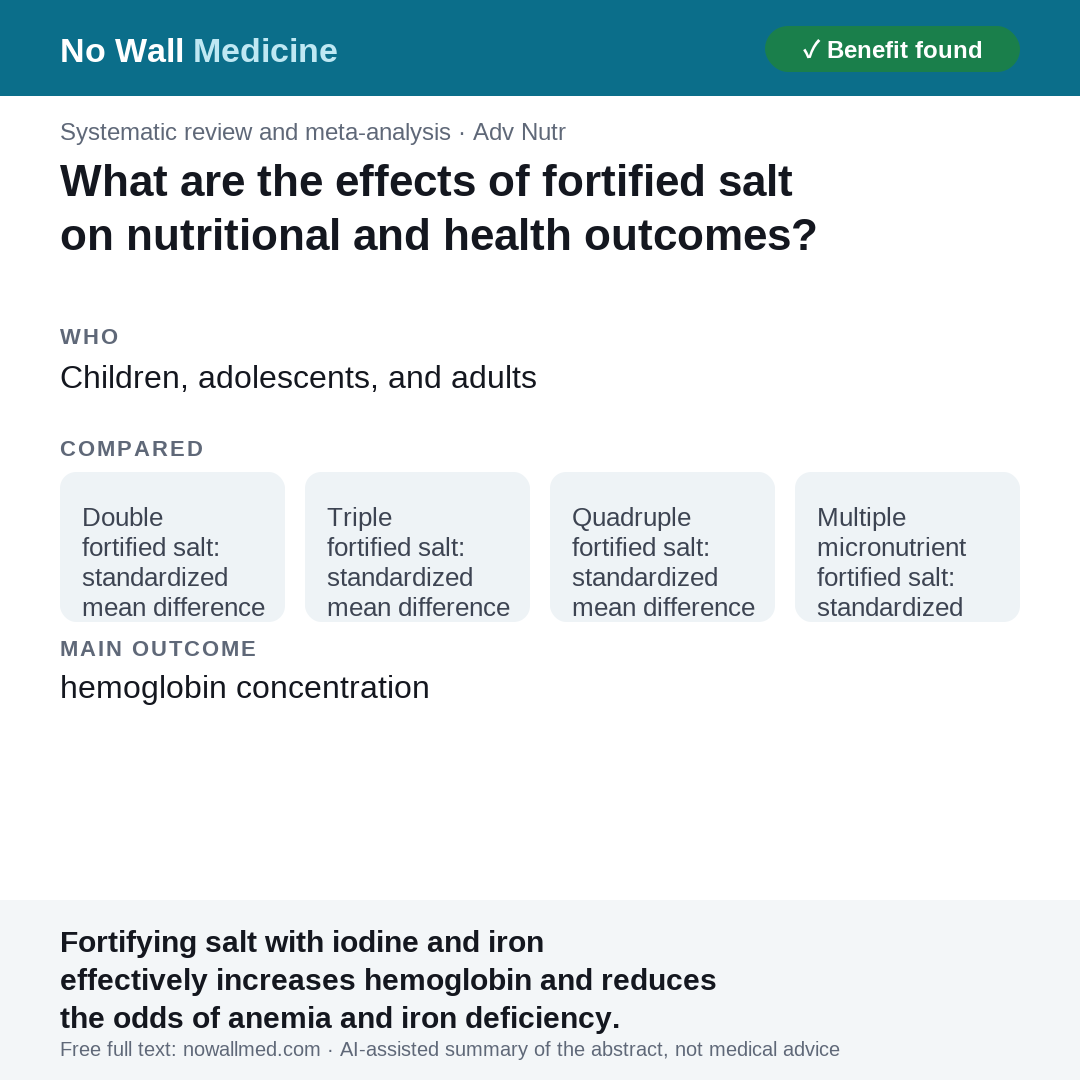
The Effects of Salt Fortified with Multiple Nutrients on Health Outcomes in Children, Adolescents, and Adults: A Systematic Review and Meta-Analysis
Systematic review and meta-analysisBenefit found
What are the effects of fortified salt on nutritional and health outcomes?
Who
Children, adolescents, and adults
Compared
Double fortified salt: standardized mean difference 0.36 (95% CI 0.22, 0.50)
Triple fortified salt: standardized mean difference 1.56 (1.42, 1.70)
Quadruple fortified salt: standardized mean difference 0.33 (0.02, 0.63)
Multiple micronutrient fortified salt: standardized mean difference 0.23 (0.03, 0.43)
Main outcome
hemoglobin concentration
Bottom line: Fortifying salt with iodine and iron effectively increases hemoglobin and reduces the odds of anemia and iron deficiency.
Adv Nutr · 2025-12-04Download image
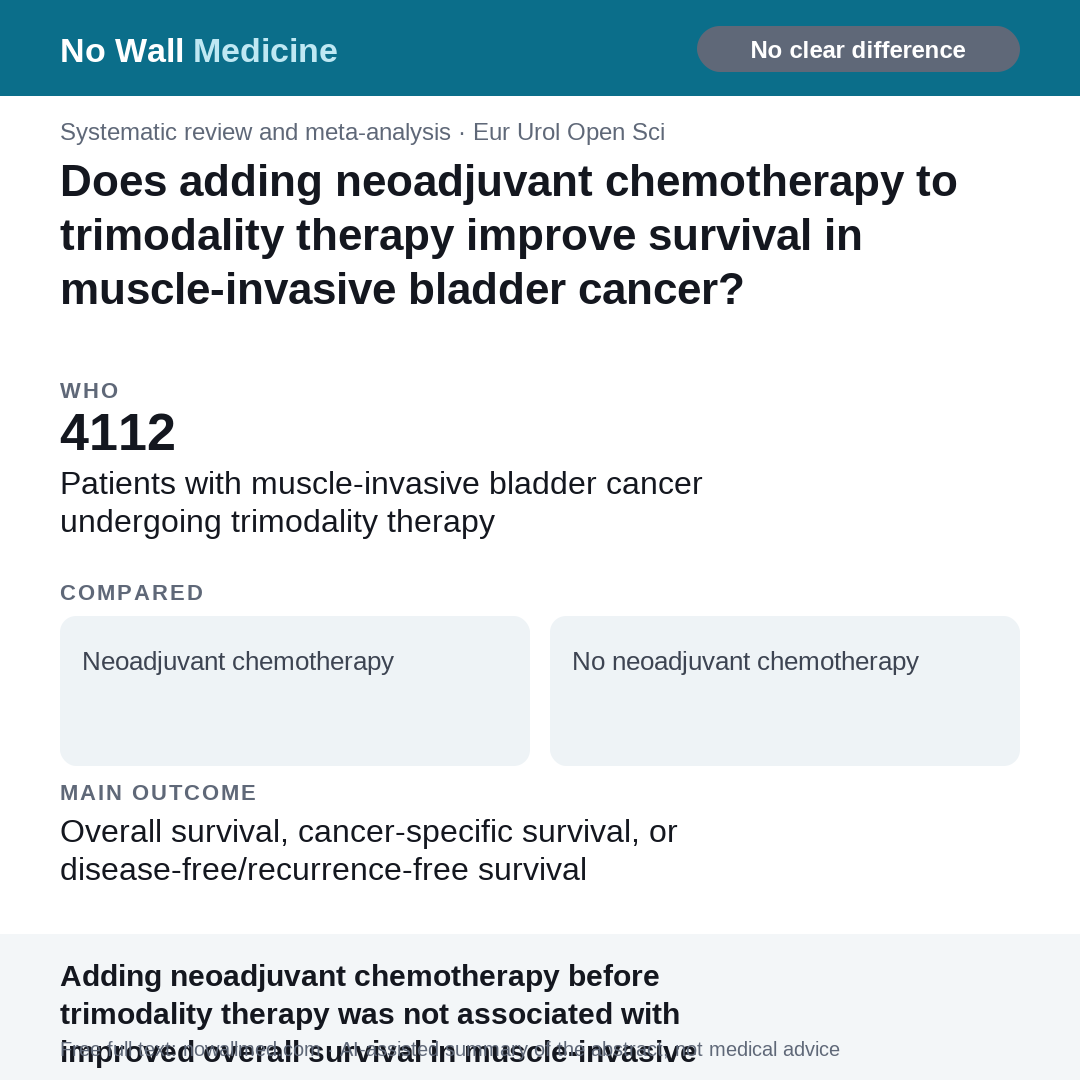
Neoadjuvant Chemotherapy Prior to Trimodality Therapy for Muscle-invasive Bladder Cancer: A Systematic Review and Meta-analysis
Systematic review and meta-analysisNo clear difference
Does adding neoadjuvant chemotherapy to trimodality therapy improve survival in muscle-invasive bladder cancer?
Who
4112
Patients with muscle-invasive bladder cancer undergoing trimodality therapy
Compared
Neoadjuvant chemotherapy
No neoadjuvant chemotherapy
Main outcome
Overall survival, cancer-specific survival, or disease-free/recurrence-free survival
Result: hazard ratio 0.93 (95% CI 0.78-1.12)
Bottom line: Adding neoadjuvant chemotherapy before trimodality therapy was not associated with improved overall survival in muscle-invasive bladder cancer.
Limitation: Nonrandomized design, heterogeneity in patient selection, protocols, and response definitions, and modest number of adjusted studies.
Eur Urol Open Sci · 2025-12-04Download image
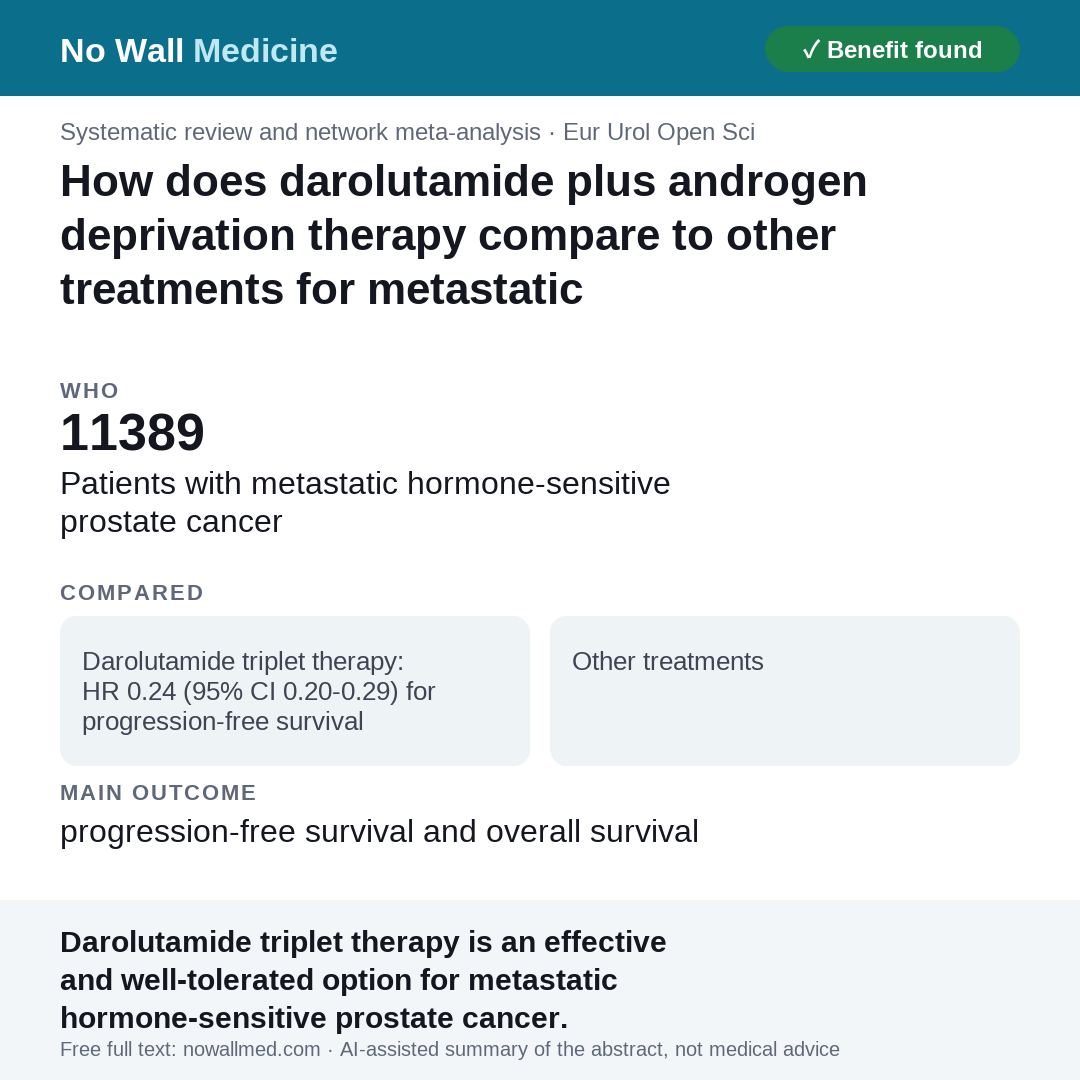
Integration of Darolutamide in the Treatment Landscape for Metastatic Hormone-sensitive Prostate Cancer: A Systematic Review and Network Meta-analysis of Efficacy and Safety
Systematic review and network meta-analysisBenefit found
How does darolutamide plus androgen deprivation therapy compare to other treatments for metastatic hormone-sensitive prostate cancer?
Who
11389
Patients with metastatic hormone-sensitive prostate cancer
Compared
Darolutamide triplet therapy: HR 0.24 (95% CI 0.20-0.29) for progression-free survival
Other treatments
Main outcome
progression-free survival and overall survival
Result: hazard ratio 0.24 (95% CI 0.20-0.29) for progression-free survival
Bottom line: Darolutamide triplet therapy is an effective and well-tolerated option for metastatic hormone-sensitive prostate cancer.
Limitation: Limited direct comparisons between treatments may affect conclusions regarding relative efficacy.
Eur Urol Open Sci · 2025-12-04Download image
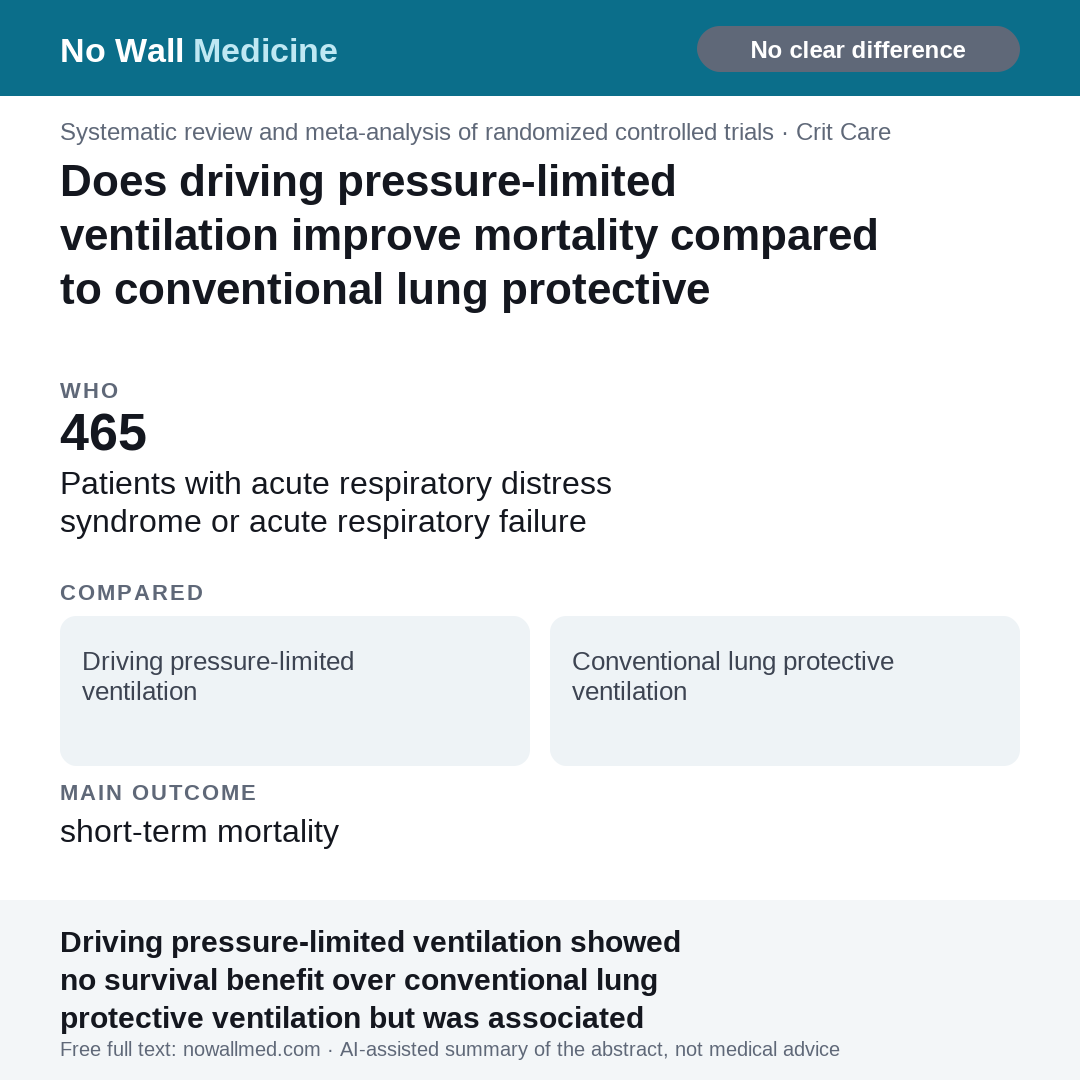
Driving pressure-limited ventilation strategies versus conventional lung protective ventilation strategies for patients with ARDS/ARF: a systematic review and meta-analysis of randomized controlled trials
Systematic review and meta-analysis of randomized controlled trialsNo clear difference
Does driving pressure-limited ventilation improve mortality compared to conventional lung protective ventilation?
Who
465
Patients with acute respiratory distress syndrome or acute respiratory failure
Compared
Driving pressure-limited ventilation
Conventional lung protective ventilation
Main outcome
short-term mortality
Result: odds ratio 1.01 (95% CI 0.49 to 2.10)
Bottom line: Driving pressure-limited ventilation showed no survival benefit over conventional lung protective ventilation but was associated with shorter intensive care unit stays.
Limitation: current limited evidence
Crit Care · 2025-12-04Download image
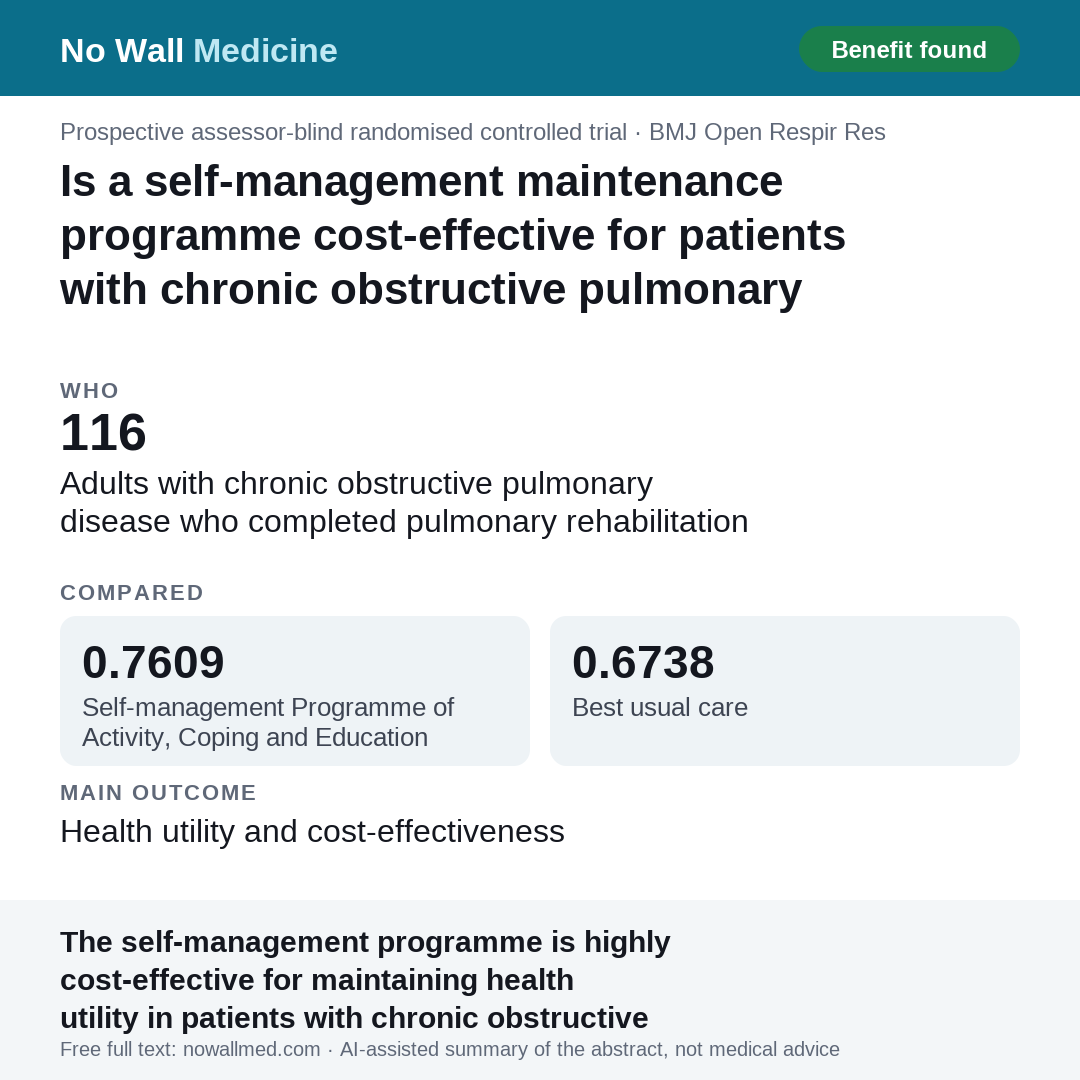
Cost-effectiveness of a self-management maintenance programme following pulmonary rehabilitation: a UK randomised controlled trial for patients with chronic obstructive pulmonary disease
Prospective assessor-blind randomised controlled trialBenefit found
Is a self-management maintenance programme cost-effective for patients with chronic obstructive pulmonary disease?
Who
116
Adults with chronic obstructive pulmonary disease who completed pulmonary rehabilitation · United Kingdom
Compared
0.7609Self-management Programme of Activity, Coping and Education (SE=0.0238)
0.6738Best usual care (SE=0.0348)
Main outcome
Health utility and cost-effectiveness
Result: 0.1178 advantage in mean quality-adjusted life-year values
Bottom line: The self-management programme is highly cost-effective for maintaining health utility in patients with chronic obstructive pulmonary disease.
Limitation: Future research should consider telerehabilitation and tailored digital support beyond 12 months.
BMJ Open Respir Res · 2025-12-04Download image
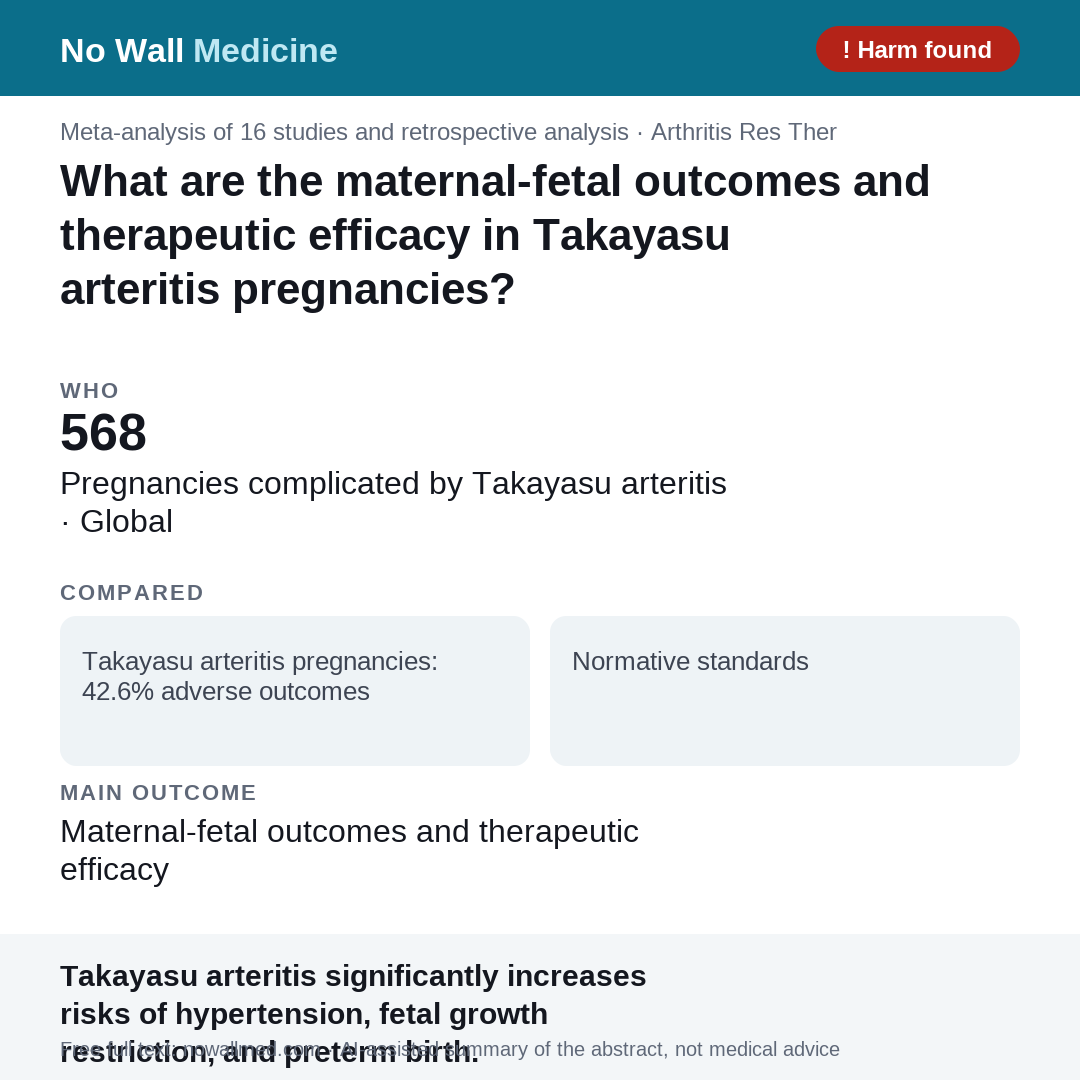
Maternal-fetal outcomes and therapeutic strategies in pregnancies complicated by Takayasu arteritis: a comprehensive analysis
Meta-analysis of 16 studies and retrospective analysisHarm found
What are the maternal-fetal outcomes and therapeutic efficacy in Takayasu arteritis pregnancies?
Who
568
Pregnancies complicated by Takayasu arteritis · Global
Compared
Takayasu arteritis pregnancies: 42.6% adverse outcomes
Normative standards
Main outcome
Maternal-fetal outcomes and therapeutic efficacy
Bottom line: Takayasu arteritis significantly increases risks of hypertension, fetal growth restriction, and preterm birth.
Arthritis Res Ther · 2025-12-04Download image
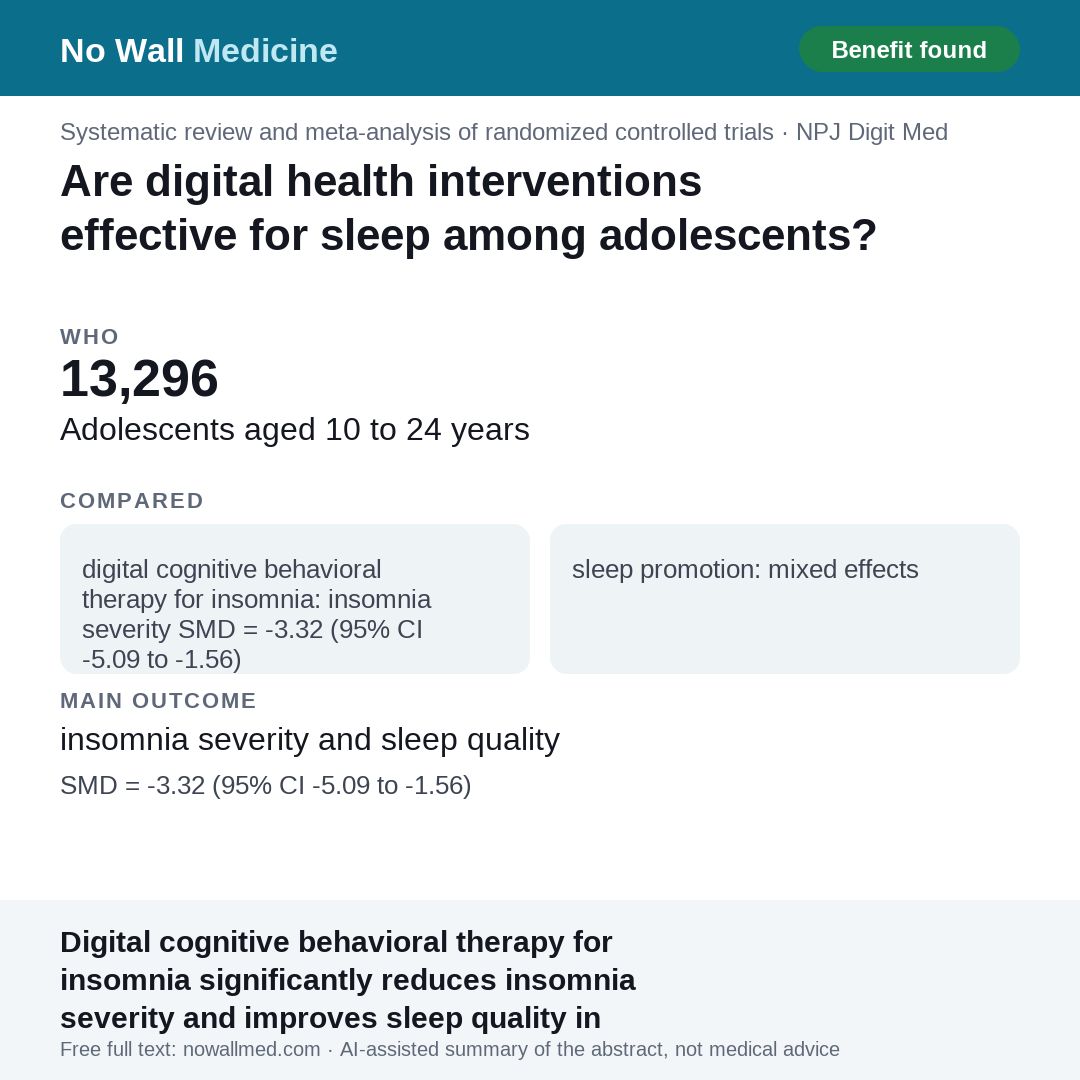
Active components in digital health interventions for sleep among adolescents: a systematic review and meta-analysis of randomized controlled trials
Systematic review and meta-analysis of randomized controlled trialsBenefit found
Are digital health interventions effective for sleep among adolescents?
Who
13,296
Adolescents aged 10 to 24 years
Compared
digital cognitive behavioral therapy for insomnia: insomnia severity SMD = -3.32 (95% CI -5.09 to -1.56)
sleep promotion: mixed effects
Main outcome
insomnia severity and sleep quality
Result: SMD = -3.32 (95% CI -5.09 to -1.56)
Bottom line: Digital cognitive behavioral therapy for insomnia significantly reduces insomnia severity and improves sleep quality in adolescents.
NPJ Digit Med · 2025-12-04Download image
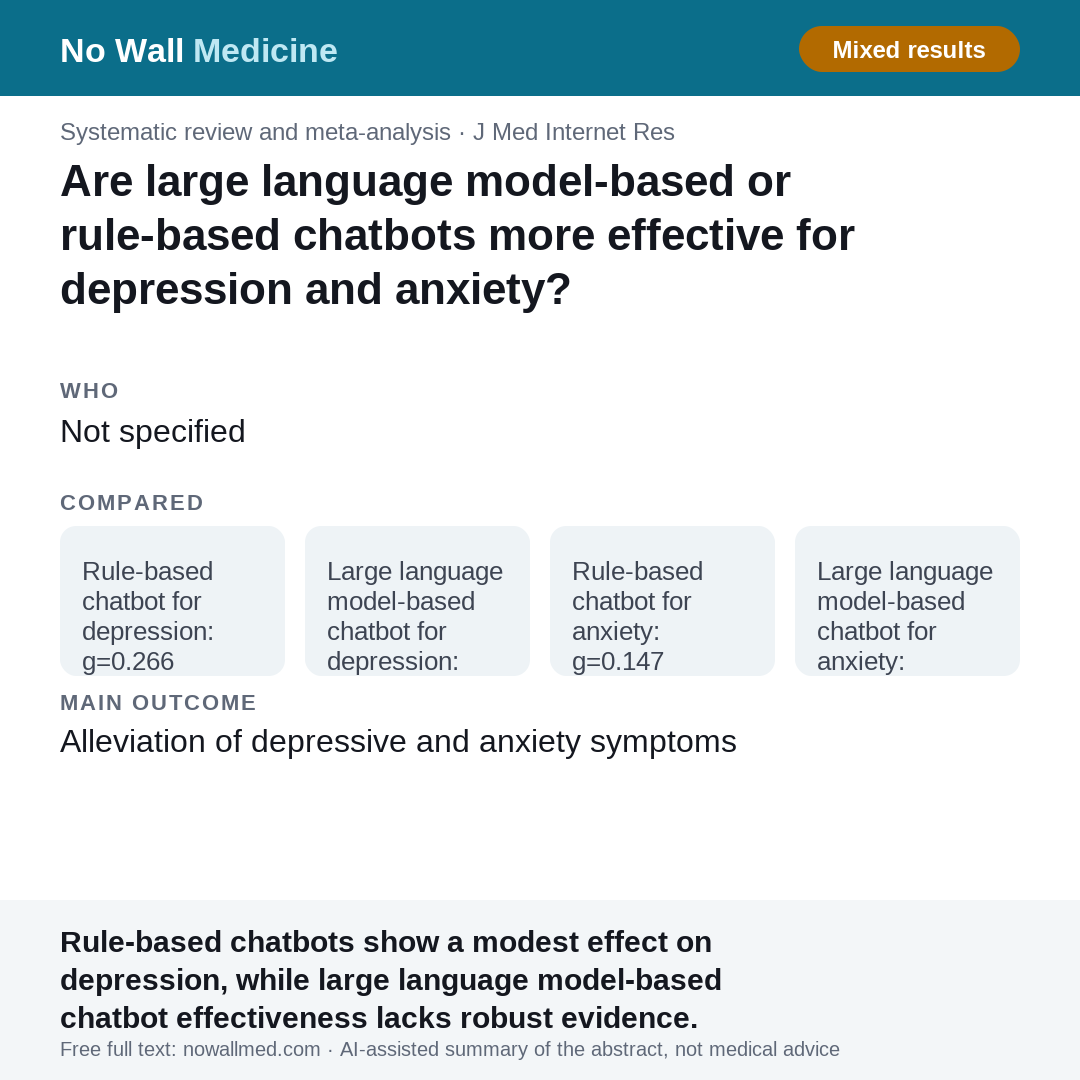
The Efficacy of Rule-Based Versus Large Language Model-Based Chatbots in Alleviating Symptoms of Depression and Anxiety: Systematic Review and Meta-Analysis
Systematic review and meta-analysisMixed results
Are large language model-based or rule-based chatbots more effective for depression and anxiety?
Who
Not specified
Compared
Rule-based chatbot for depression: g=0.266
Large language model-based chatbot for depression: g=0.407
Rule-based chatbot for anxiety: g=0.147
Large language model-based chatbot for anxiety: g=0.711
Main outcome
Alleviation of depressive and anxiety symptoms
Bottom line: Rule-based chatbots show a modest effect on depression, while large language model-based chatbot effectiveness lacks robust evidence.
Limitation: Limited by the sample size, robust evidence supporting large language model-based chatbot interventions is lacking.
J Med Internet Res · 2025-12-04Download image
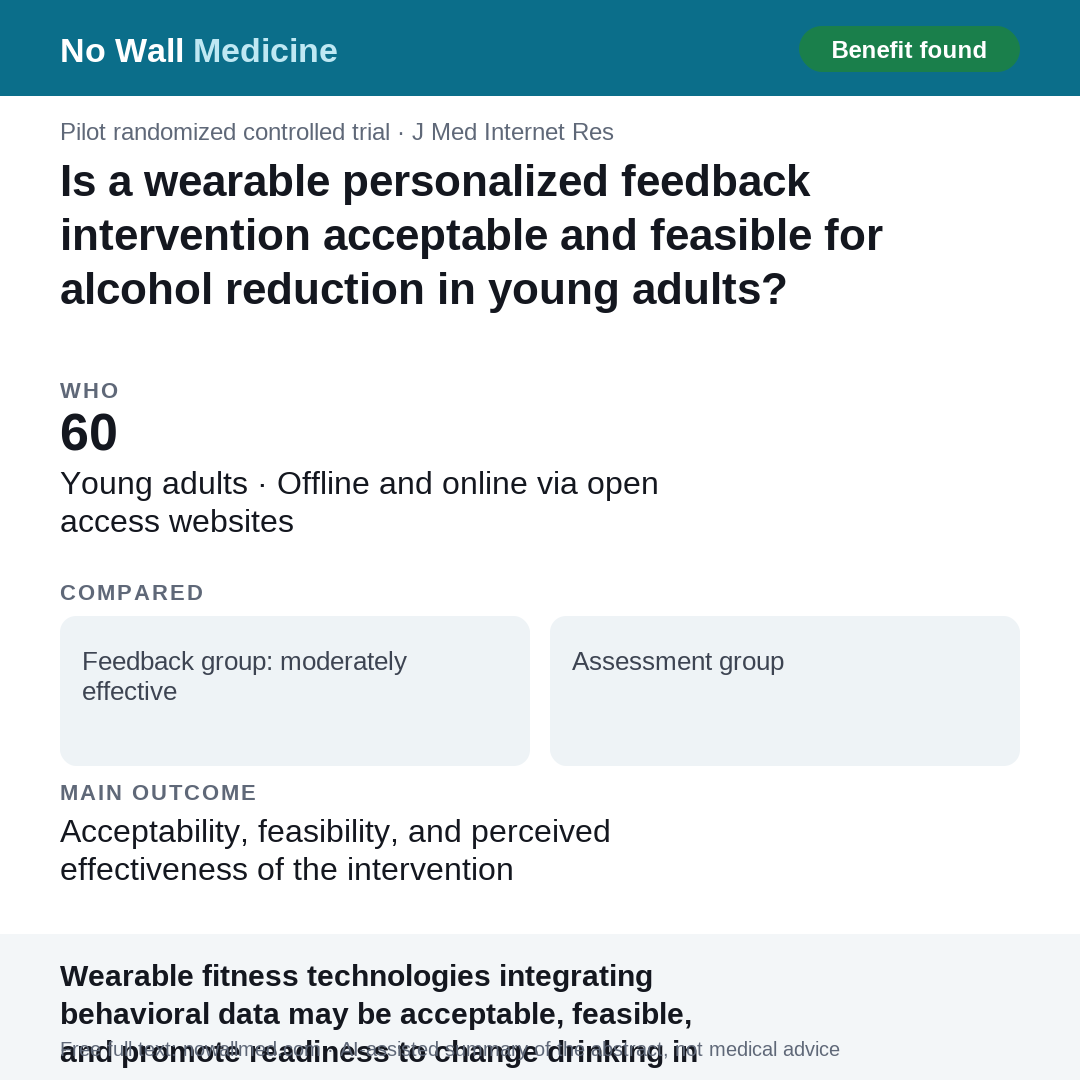
Oura Ring Behavioral Feedback Intervention for Alcohol Reduction in Young Adults: User Experience Evaluation of a Pilot Randomized Trial
Pilot randomized controlled trialBenefit found
Is a wearable personalized feedback intervention acceptable and feasible for alcohol reduction in young adults?
Who
60
Young adults · Offline and online via open access websites
Compared
Feedback group: moderately effective
Assessment group
Main outcome
Acceptability, feasibility, and perceived effectiveness of the intervention
Bottom line: Wearable fitness technologies integrating behavioral data may be acceptable, feasible, and promote readiness to change drinking in young adults.
J Med Internet Res · 2025-12-04Download image
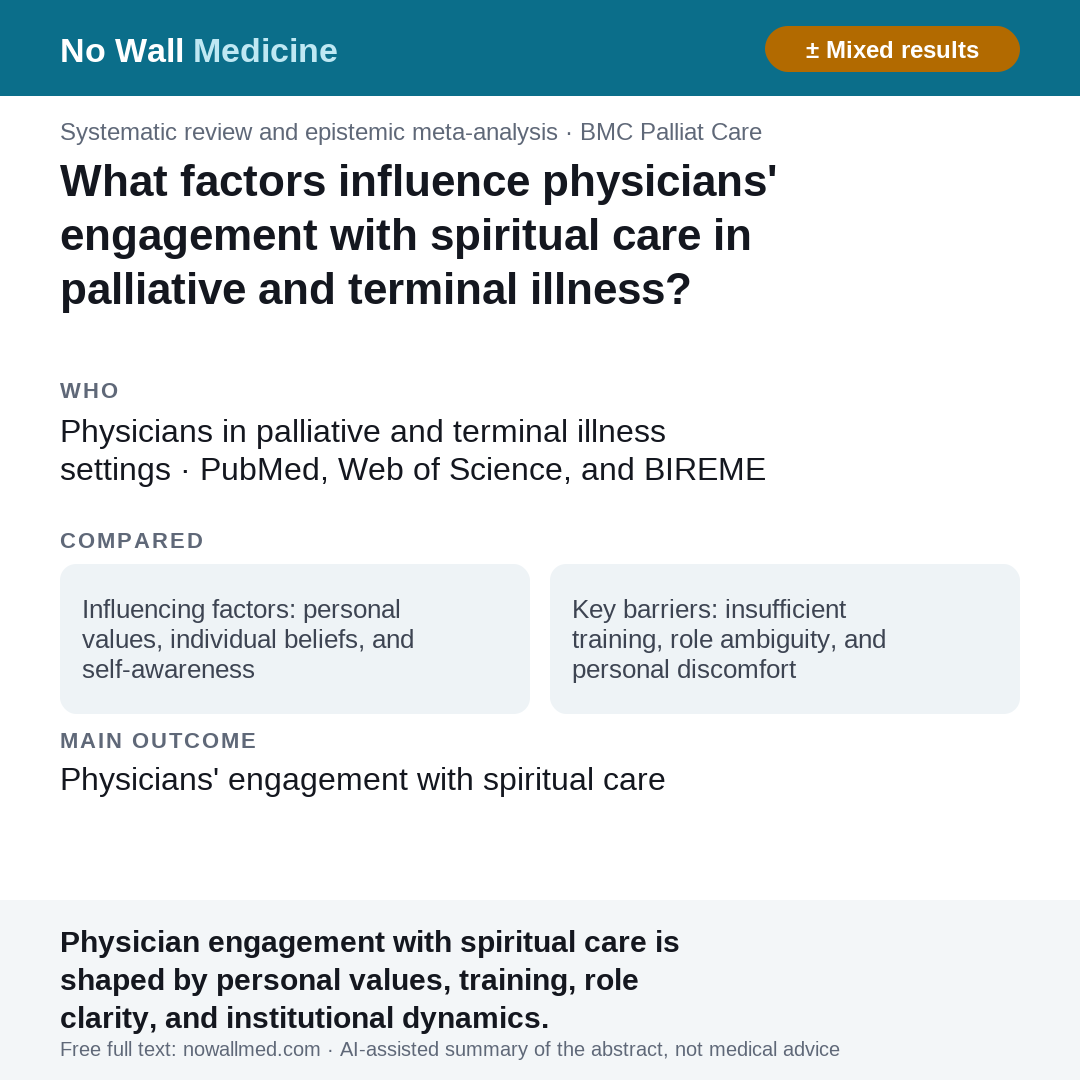
Spirituality and spiritual care in palliative and terminal illness: a systematic review and epistemic meta-analysis from physicians' hermeneutic and bioethical perspective
Systematic review and epistemic meta-analysisMixed results
What factors influence physicians' engagement with spiritual care in palliative and terminal illness?
Who
Physicians in palliative and terminal illness settings · PubMed, Web of Science, and BIREME databases
Compared
Influencing factors: personal values, individual beliefs, and self-awareness
Key barriers: insufficient training, role ambiguity, and personal discomfort
Main outcome
Physicians' engagement with spiritual care
Bottom line: Physician engagement with spiritual care is shaped by personal values, training, role clarity, and institutional dynamics.
BMC Palliat Care · 2025-12-04Download image
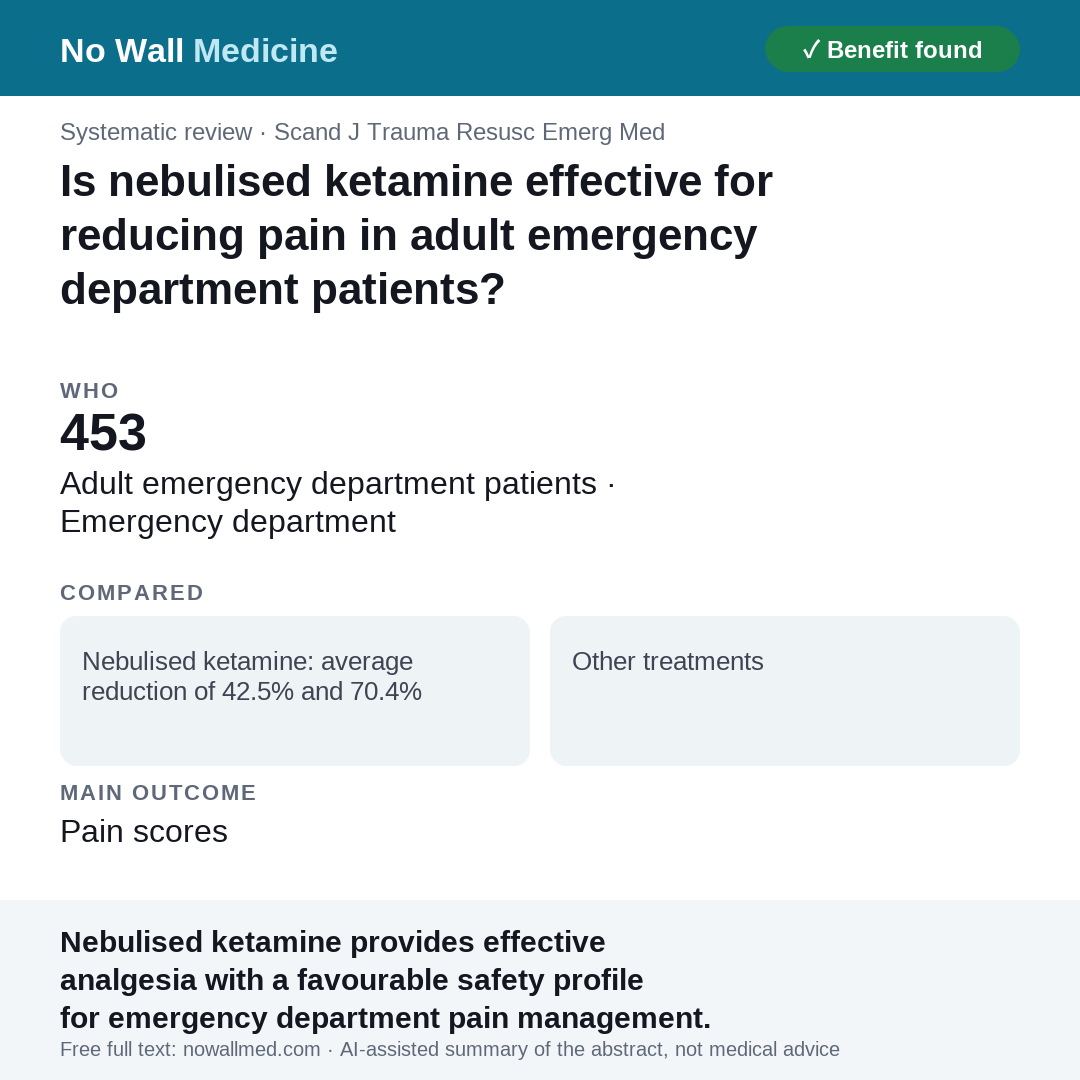
Breathing new life into pain management: a systematic review of nebulised ketamine for analgesia
Systematic reviewBenefit found
Is nebulised ketamine effective for reducing pain in adult emergency department patients?
Who
453
Adult emergency department patients · Emergency department
Compared
Nebulised ketamine: average reduction of 42.5% and 70.4%
Other treatments
Main outcome
Pain scores
Bottom line: Nebulised ketamine provides effective analgesia with a favourable safety profile for emergency department pain management.
Limitation: Further multicentre trials with larger populations are recommended to confirm findings.
Scand J Trauma Resusc Emerg Med · 2025-12-04Download image
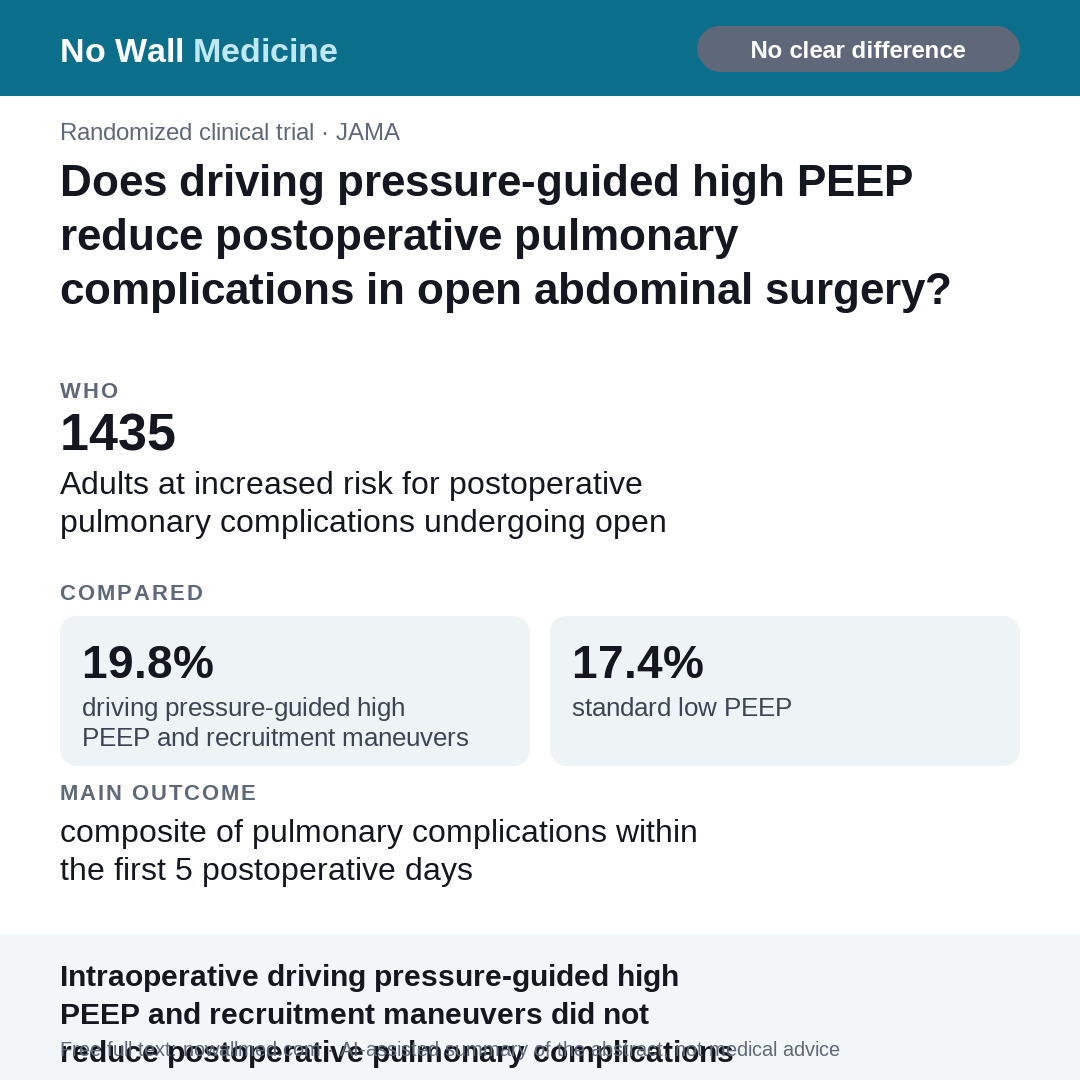
Intraoperative Driving Pressure-Guided High PEEP vs Standard Low PEEP for Postoperative Pulmonary Complications
Randomized clinical trialNo clear difference
Does driving pressure-guided high PEEP reduce postoperative pulmonary complications in open abdominal surgery?
Who
1435
Adults at increased risk for postoperative pulmonary complications undergoing open abdominal surgery · 29 sites in 5 countries across Europe
Compared
19.8%driving pressure-guided high PEEP and recruitment maneuvers (142/718)
17.4%standard low PEEP (125/717)
Main outcome
composite of pulmonary complications within the first 5 postoperative days
Result: absolute difference, 2.5% (95% CI, -1.5% to 6.4%)
Bottom line: Intraoperative driving pressure-guided high PEEP and recruitment maneuvers did not reduce postoperative pulmonary complications compared to standard low PEEP.
JAMA · 2025-12-03Download image