Visual abstracts
New randomized trials and meta-analyses from leading journals at a glance: who was studied, what was compared, and what was found. Every paper is free to read in full.
All specialtiesCardiology 4832Oncology 4114Gastroenterology & Hepatology 1934Infectious Disease 3824Neurology 1899Psychiatry & Mental Health 2256Pulmonology 2082Critical Care 1345Endocrinology & Diabetes 2572Pediatrics 2940Surgery 2525Orthopedics & Sports Medicine 926Neurosurgery 534Cardiothoracic & Vascular Surgery 671Plastic & Reconstructive Surgery 591Nephrology 1124Rheumatology 823Hematology 1104Dermatology 620Ophthalmology 543Obstetrics & Gynecology 1684Public & Global Health 1056Radiology & Imaging 641Anesthesiology 962Urology 754ENT (Otolaryngology) 503Emergency Medicine 489Allergy & Immunology 313Geriatrics 981Family Medicine & Primary Care 541Medical Genetics & Genomics 675Pathology & Laboratory Medicine 157Physical Medicine & Rehabilitation 751Palliative Care 424Nutrition 1580Digital Health & AI 2195General Medicine 321
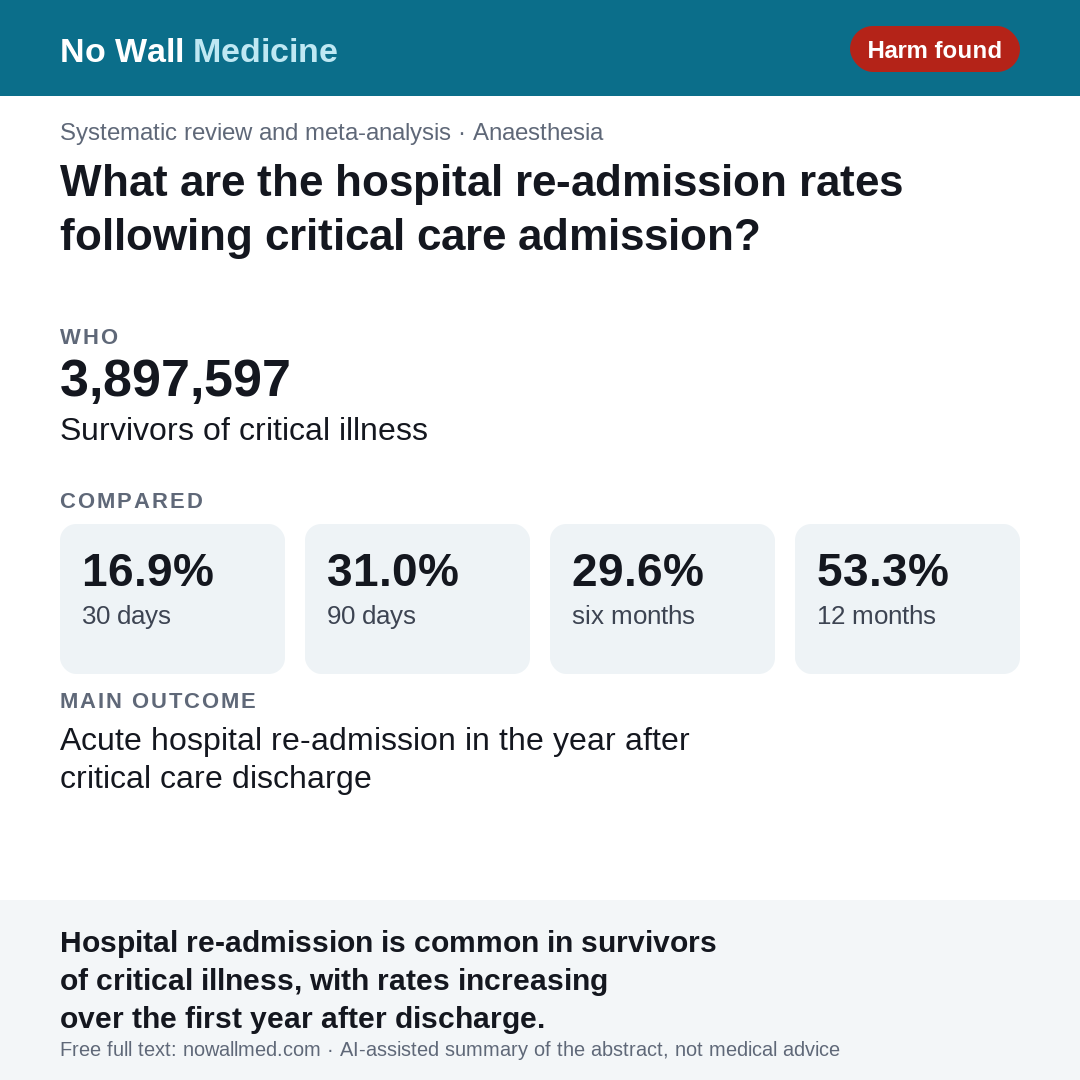
Hospital re-admission after critical care survival: a systematic review and meta-analysis
Systematic review and meta-analysisHarm found
What are the hospital re-admission rates following critical care admission?
Who
3,897,597
Survivors of critical illness
Compared
16.9%30 days (95%CI: 13.3-21.2%)
31.0%90 days (95%CI: 24.3-38.6%)
29.6%six months (95%CI: 24.5-35.2%)
53.3%12 months (95%CI: 44.4-62.0%)
Main outcome
Acute hospital re-admission in the year after critical care discharge
Bottom line: Hospital re-admission is common in survivors of critical illness, with rates increasing over the first year after discharge.
Limitation: Significant heterogeneity was observed across included studies.
Anaesthesia · 2021-12-29Download image
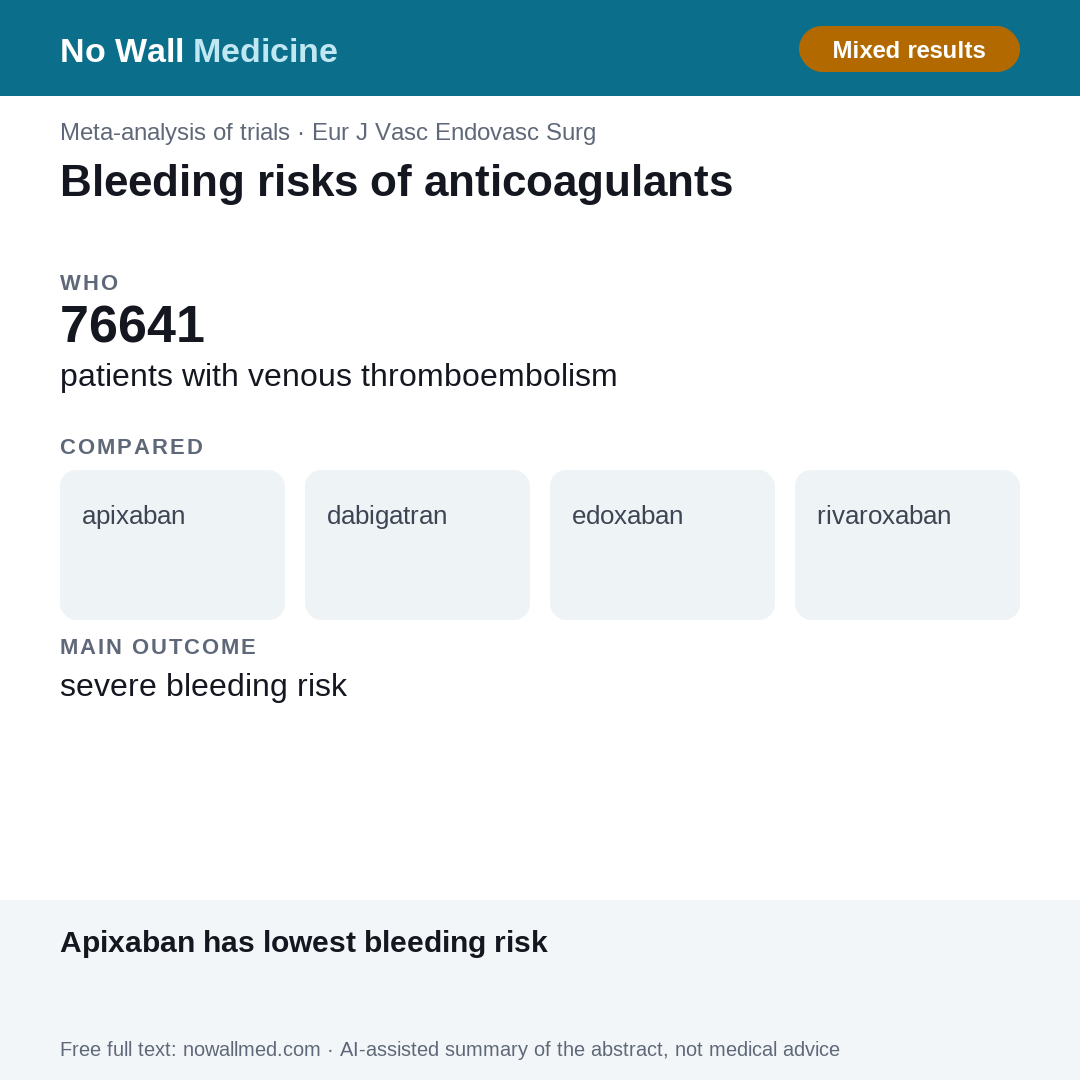
Editor's Choice - Severe Bleeding Risks of Direct Oral Anticoagulants in the Prevention and Treatment of Venous Thromboembolism: A Network Meta-Analysis of Randomised Controlled Trials
Meta-analysis of trialsMixed results
Bleeding risks of anticoagulants
Who
76641
patients with venous thromboembolism
Compared
apixaban
dabigatran
edoxaban
rivaroxaban
Main outcome
severe bleeding risk
Bottom line: Apixaban has lowest bleeding risk
Eur J Vasc Endovasc Surg · 2021-12-29Download image
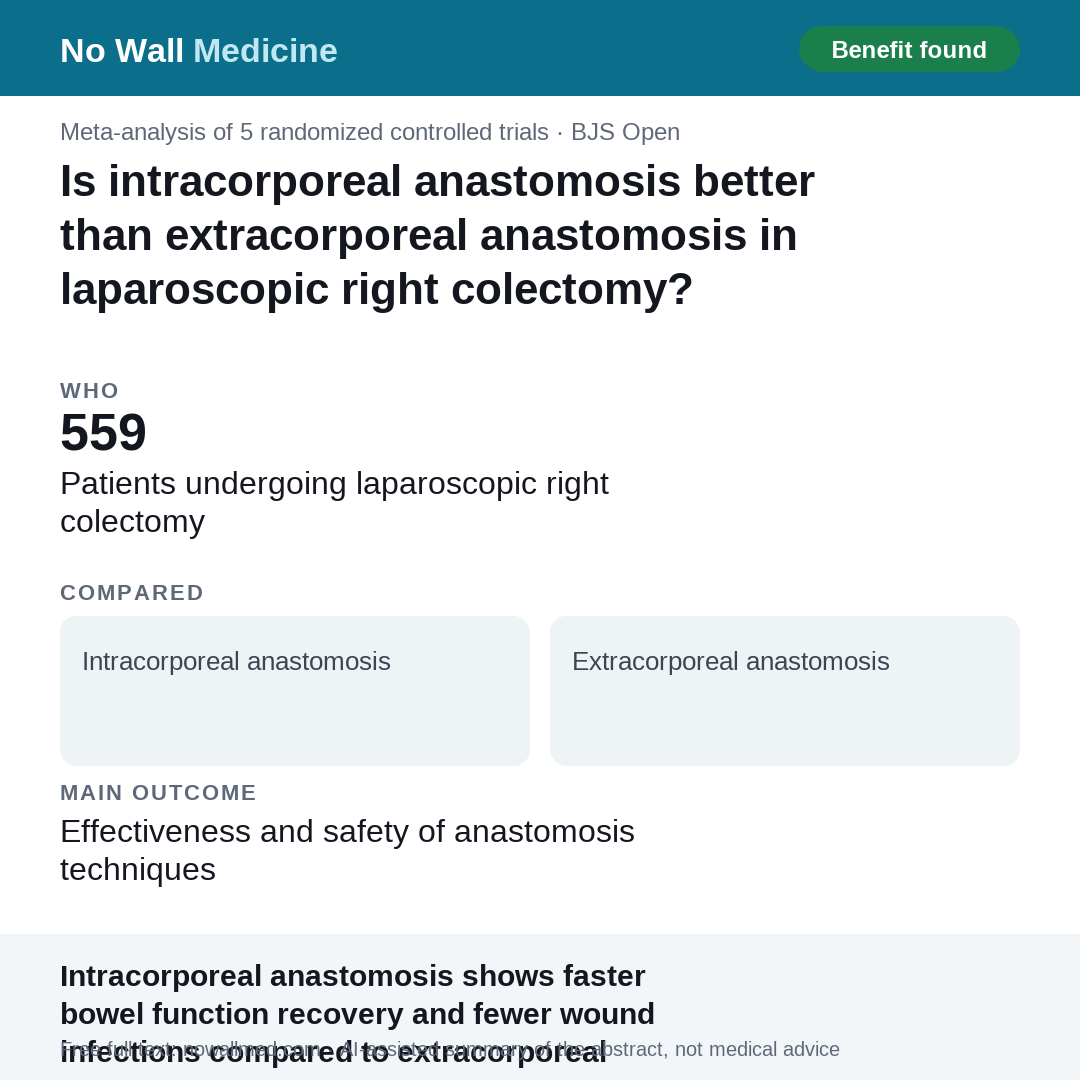
Intracorporeal versus extracorporeal anastomosis in laparoscopic right colectomy: updated meta-analysis of randomized controlled trials
Meta-analysis of 5 randomized controlled trialsBenefit found
Is intracorporeal anastomosis better than extracorporeal anastomosis in laparoscopic right colectomy?
Who
559
Patients undergoing laparoscopic right colectomy
Compared
Intracorporeal anastomosis
Extracorporeal anastomosis
Main outcome
Effectiveness and safety of anastomosis techniques
Bottom line: Intracorporeal anastomosis shows faster bowel function recovery and fewer wound infections compared to extracorporeal anastomosis.
BJS Open · 2021-12-29Download image
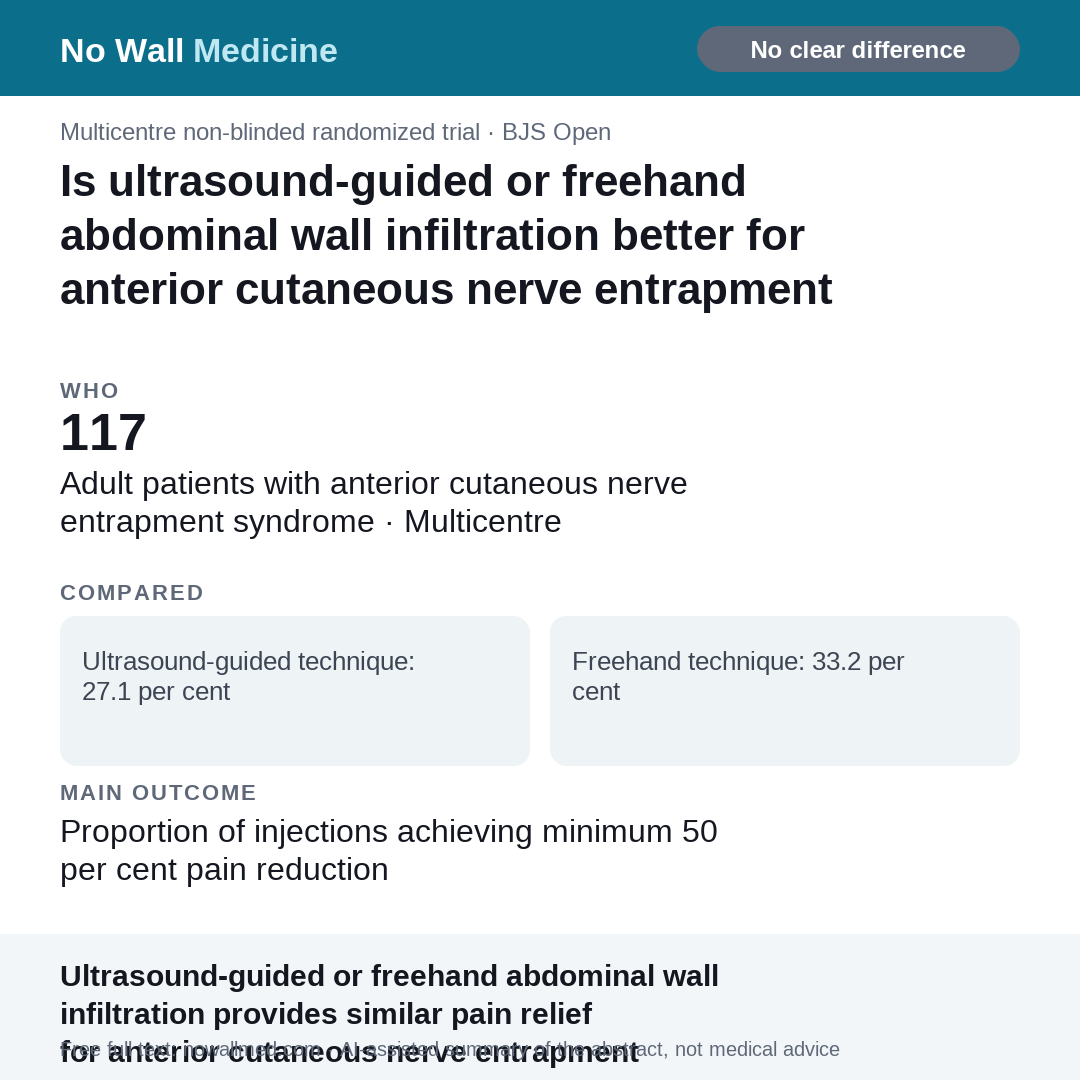
Ultrasound-guided abdominal wall infiltration versus freehand technique in anterior cutaneous nerve entrapment syndrome (ACNES): randomized clinical trial
Multicentre non-blinded randomized trialNo clear difference
Is ultrasound-guided or freehand abdominal wall infiltration better for anterior cutaneous nerve entrapment syndrome?
Who
117
Adult patients with anterior cutaneous nerve entrapment syndrome · Multicentre
Compared
Ultrasound-guided technique: 27.1 per cent
Freehand technique: 33.2 per cent
Main outcome
Proportion of injections achieving minimum 50 per cent pain reduction
Bottom line: Ultrasound-guided or freehand abdominal wall infiltration provides similar pain relief for anterior cutaneous nerve entrapment syndrome.
BJS Open · 2021-12-29Download image
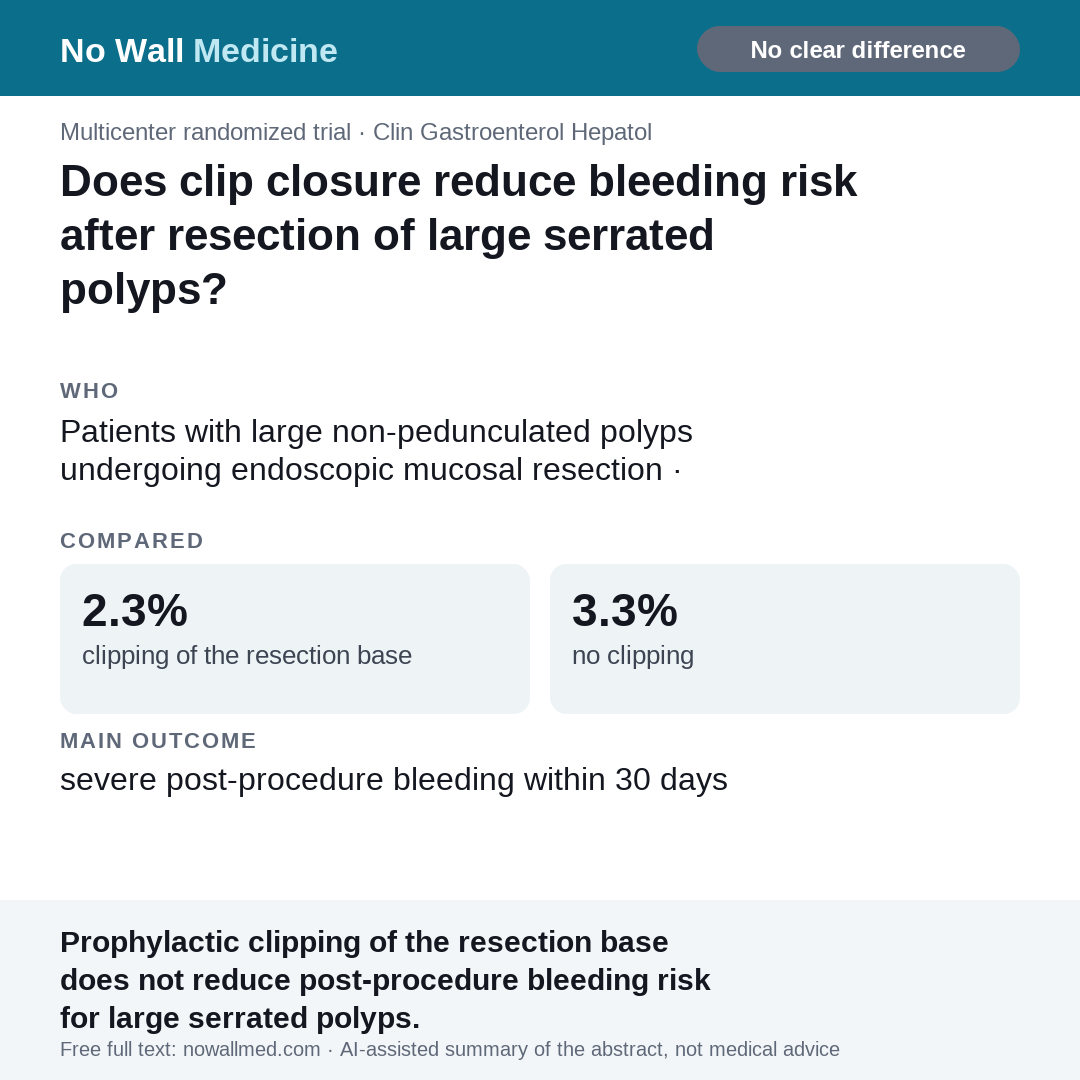
Clip Closure Does Not Reduce Risk of Bleeding After Resection of Large Serrated Polyps: Results From a Randomized Trial
Multicenter randomized trialNo clear difference
Does clip closure reduce bleeding risk after resection of large serrated polyps?
Who
Patients with large non-pedunculated polyps undergoing endoscopic mucosal resection · Multicenter
Compared
2.3%clipping of the resection base
3.3%no clipping
Main outcome
severe post-procedure bleeding within 30 days
Bottom line: Prophylactic clipping of the resection base does not reduce post-procedure bleeding risk for large serrated polyps.
Clin Gastroenterol Hepatol · 2021-12-28Download image
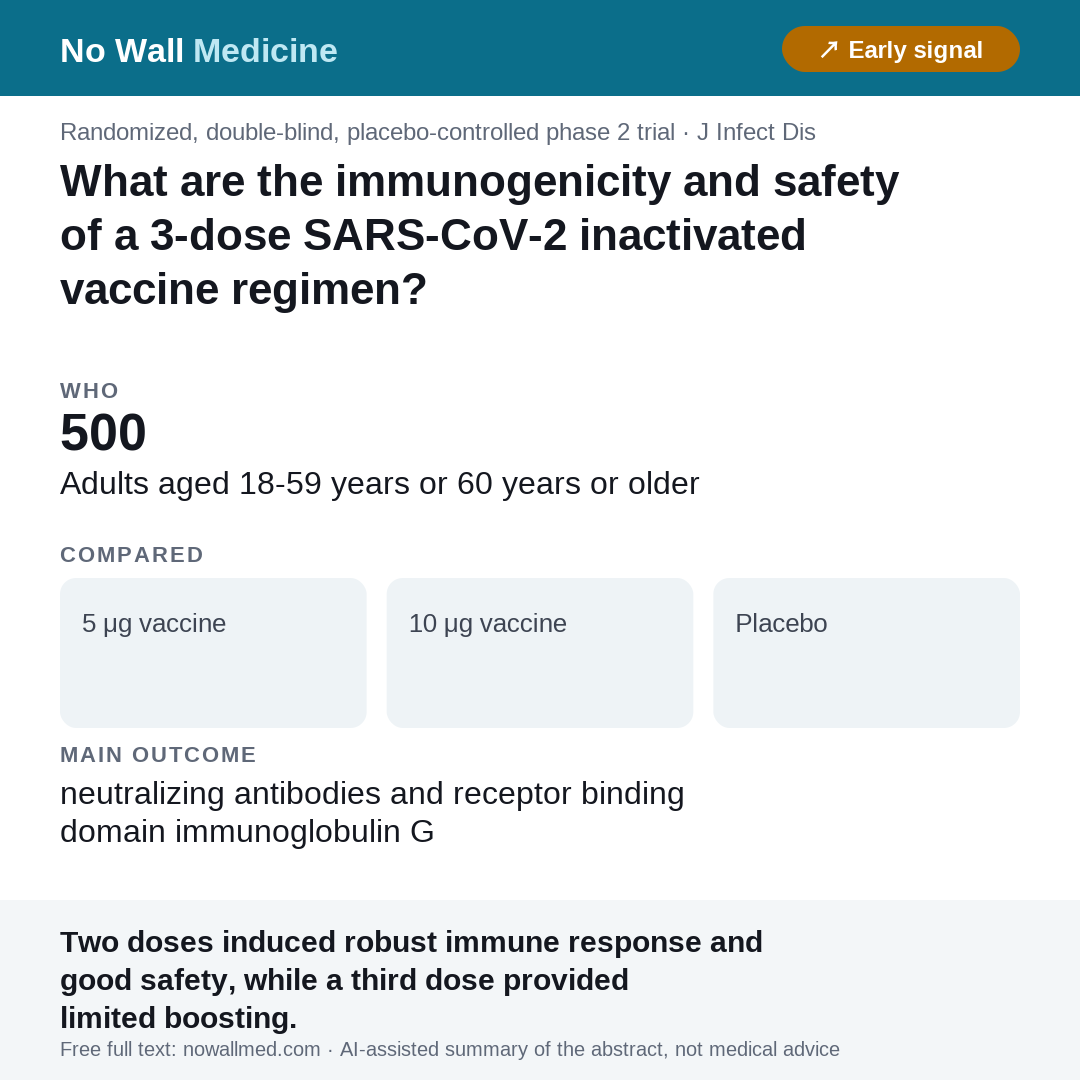
Immunogenicity and Safety of a 3-Dose Regimen of a SARS-CoV-2 Inactivated Vaccine in Adults: A Randomized, Double-Blind, Placebo-Controlled Phase 2 Trial
Randomized, double-blind, placebo-controlled phase 2 trialEarly signal
What are the immunogenicity and safety of a 3-dose SARS-CoV-2 inactivated vaccine regimen?
Who
500
Adults aged 18-59 years or 60 years or older
Compared
5 μg vaccine
10 μg vaccine
Placebo
Main outcome
neutralizing antibodies and receptor binding domain immunoglobulin G
Bottom line: Two doses induced robust immune response and good safety, while a third dose provided limited boosting.
J Infect Dis · 2021-12-28Download image
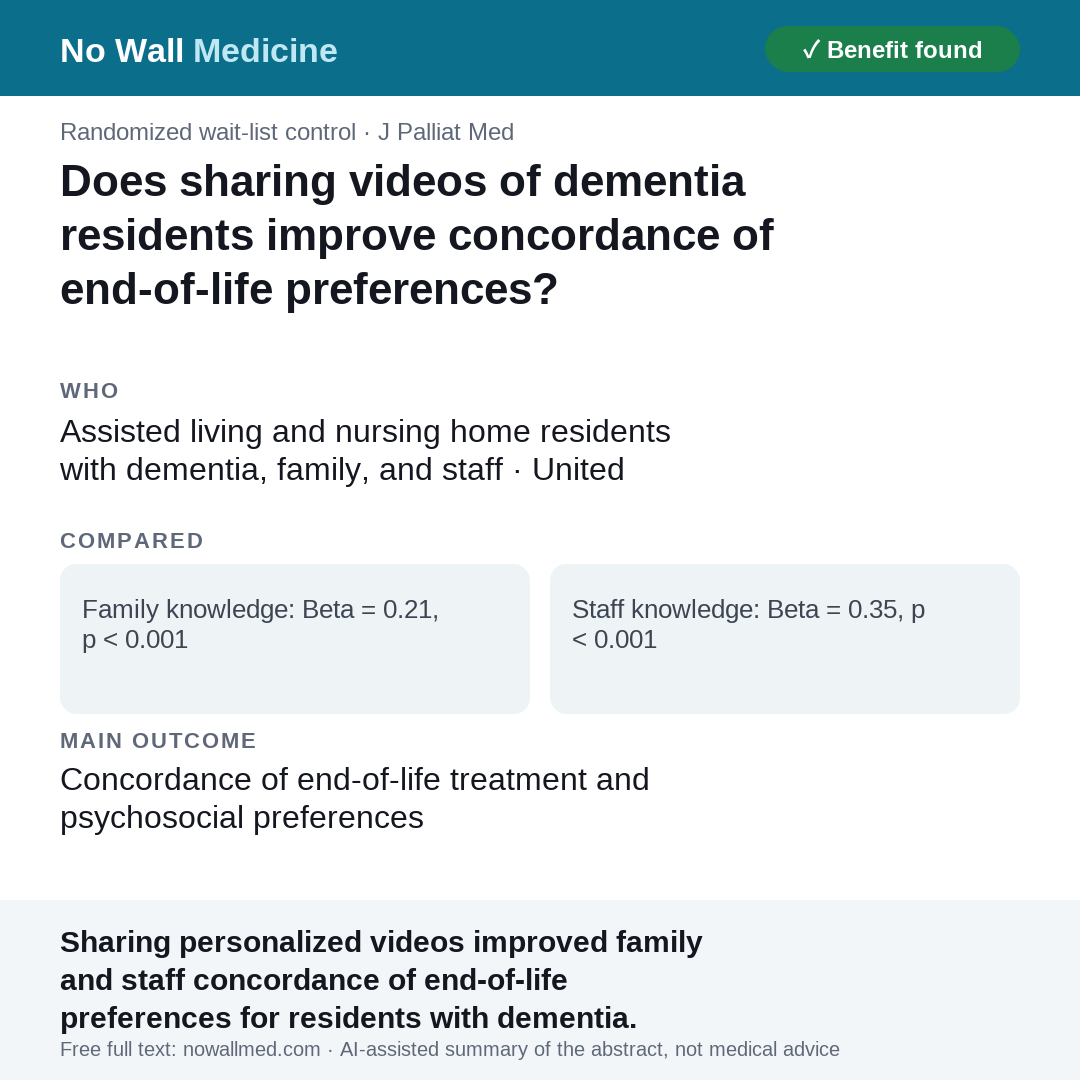
Me & My Wishes: Concordance of End-of-Life Preferences between Residents with Dementia, Family, and Staff
Randomized wait-list controlBenefit found
Does sharing videos of dementia residents improve concordance of end-of-life preferences?
Who
Assisted living and nursing home residents with dementia, family, and staff · United States
Compared
Family knowledge: Beta = 0.21, p < 0.001
Staff knowledge: Beta = 0.35, p < 0.001
Main outcome
Concordance of end-of-life treatment and psychosocial preferences
Bottom line: Sharing personalized videos improved family and staff concordance of end-of-life preferences for residents with dementia.
J Palliat Med · 2021-12-28Download image
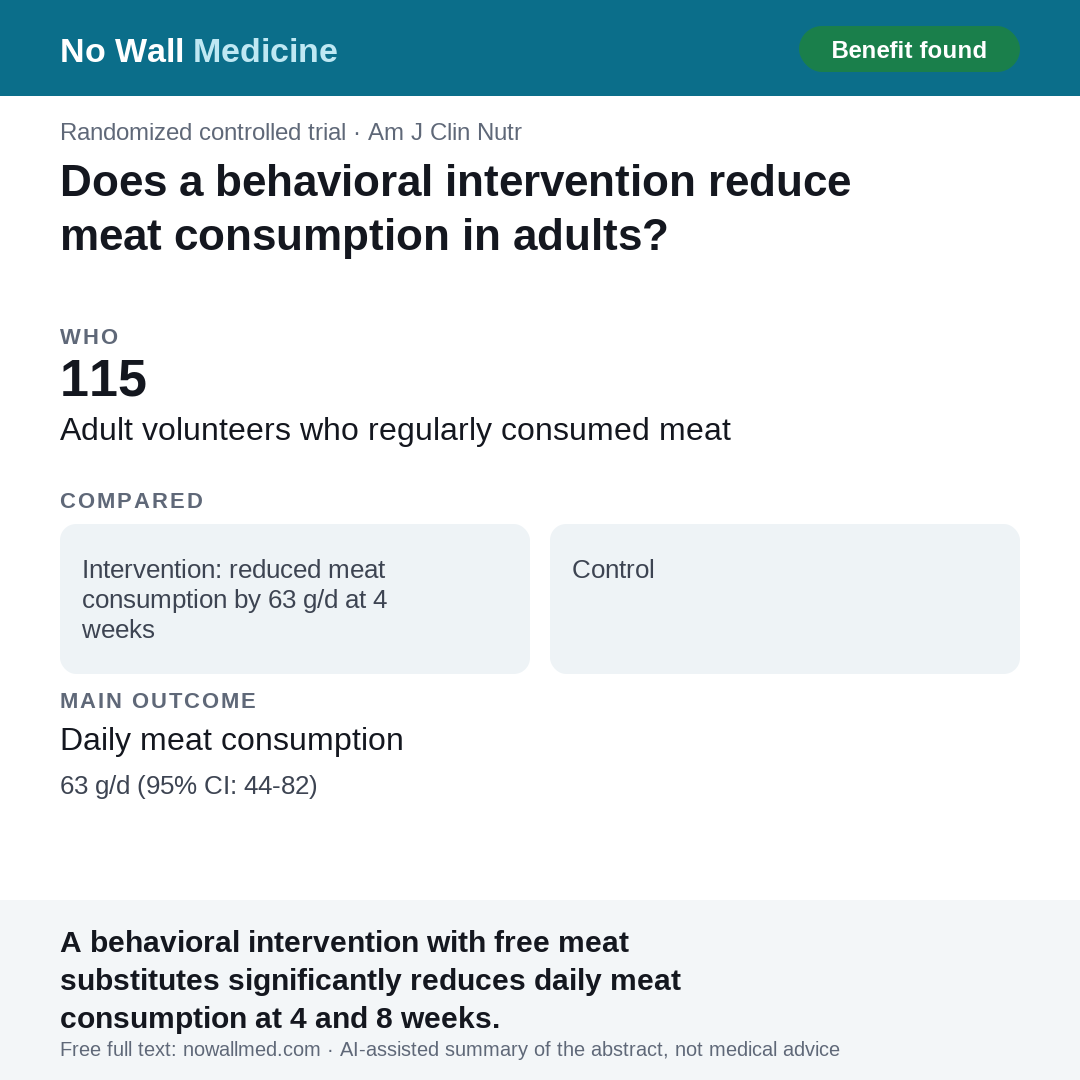
Replacing meat with alternative plant-based products (RE-MAP): a randomized controlled trial of a multicomponent behavioral intervention to reduce meat consumption
Randomized controlled trialBenefit found
Does a behavioral intervention reduce meat consumption in adults?
Who
115
Adult volunteers who regularly consumed meat
Compared
Intervention: reduced meat consumption by 63 g/d at 4 weeks
Control
Main outcome
Daily meat consumption
Result: 63 g/d (95% CI: 44-82)
Bottom line: A behavioral intervention with free meat substitutes significantly reduces daily meat consumption at 4 and 8 weeks.
Am J Clin Nutr · 2021-12-28Download image
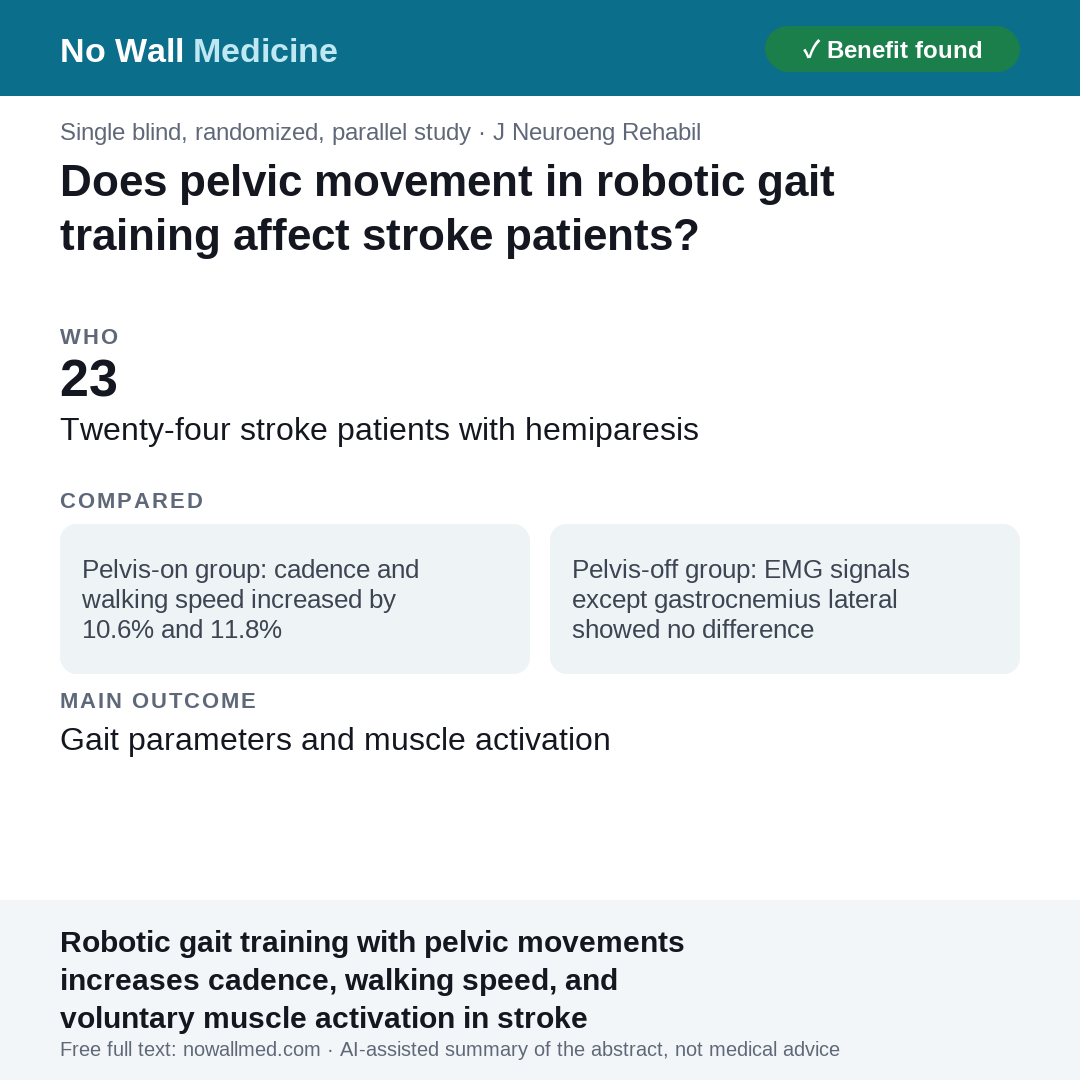
The effect of pelvic movements of a gait training system for stroke patients: a single blind, randomized, parallel study
Single blind, randomized, parallel studyBenefit found
Does pelvic movement in robotic gait training affect stroke patients?
Who
23
Twenty-four stroke patients with hemiparesis
Compared
Pelvis-on group: cadence and walking speed increased by 10.6% and 11.8%
Pelvis-off group: EMG signals except gastrocnemius lateral showed no difference
Main outcome
Gait parameters and muscle activation
Bottom line: Robotic gait training with pelvic movements increases cadence, walking speed, and voluntary muscle activation in stroke patients.
Limitation: One subject dropped out due to personal reasons.
J Neuroeng Rehabil · 2021-12-28Download image
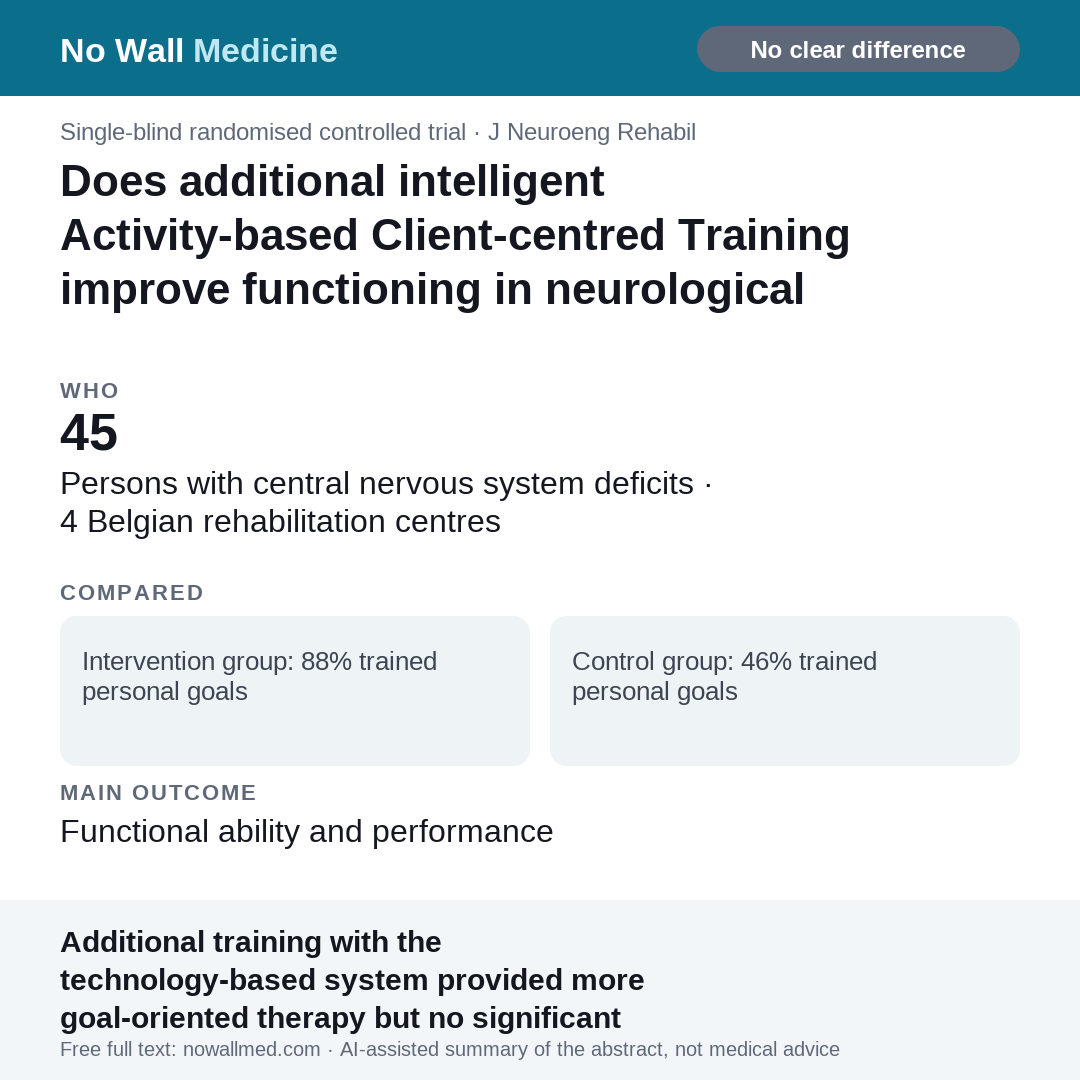
Efficacy of a technology-based client-centred training system in neurological rehabilitation: a randomised controlled trial
Single-blind randomised controlled trialNo clear difference
Does additional intelligent Activity-based Client-centred Training improve functioning in neurological rehabilitation?
Who
45
Persons with central nervous system deficits · 4 Belgian rehabilitation centres
Compared
Intervention group: 88% trained personal goals
Control group: 46% trained personal goals
Main outcome
Functional ability and performance
Bottom line: Additional training with the technology-based system provided more goal-oriented therapy but no significant functional improvement over conventional care.
J Neuroeng Rehabil · 2021-12-28Download image
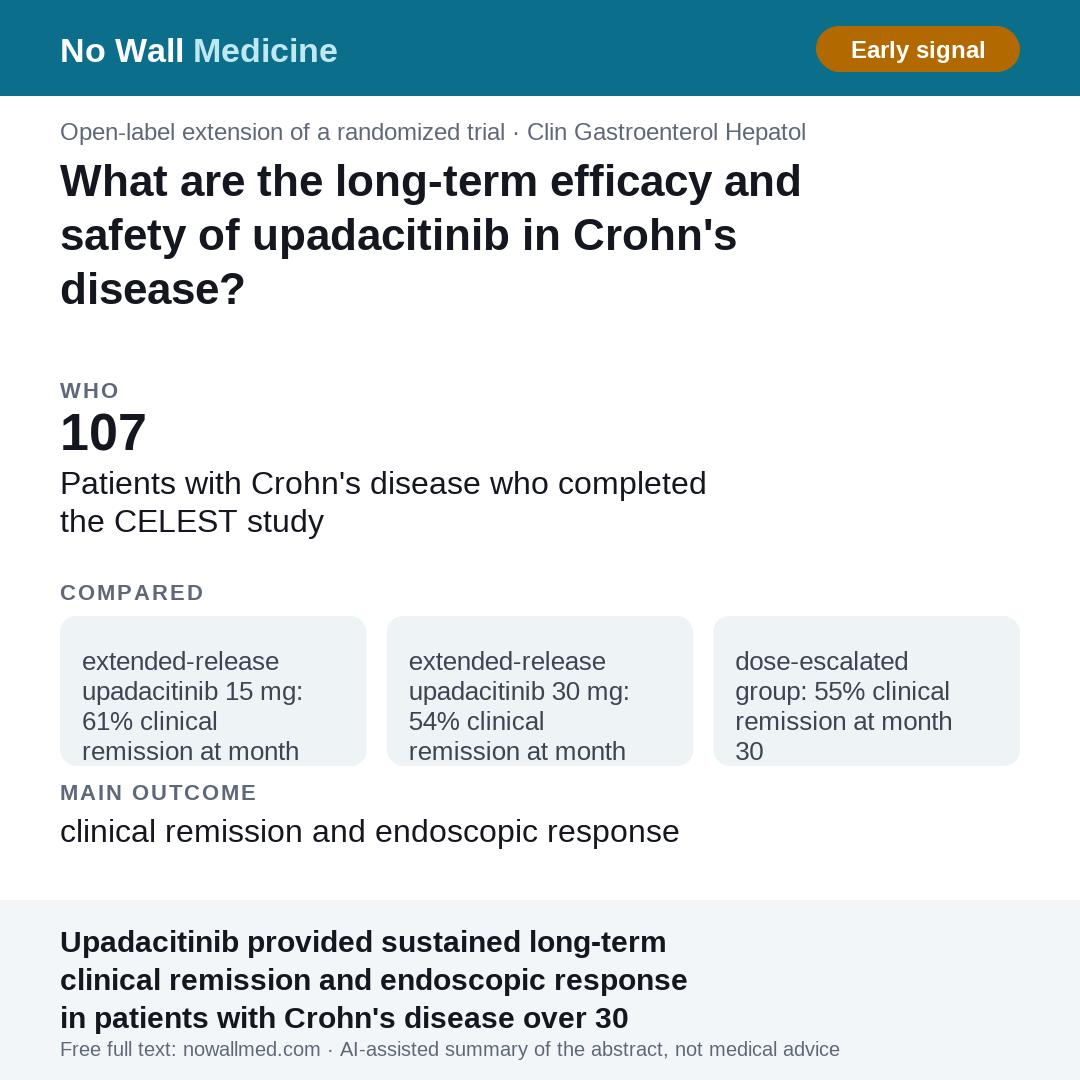
Upadacitinib Was Efficacious and Well-tolerated Over 30 Months in Patients With Crohn's Disease in the CELEST Extension Study
Open-label extension of a randomized trialEarly signal
What are the long-term efficacy and safety of upadacitinib in Crohn's disease?
Who
107
Patients with Crohn's disease who completed the CELEST study
Compared
extended-release upadacitinib 15 mg: 61% clinical remission at month 30
extended-release upadacitinib 30 mg: 54% clinical remission at month 30
dose-escalated group: 55% clinical remission at month 30
Main outcome
clinical remission and endoscopic response
Bottom line: Upadacitinib provided sustained long-term clinical remission and endoscopic response in patients with Crohn's disease over 30 months.
Clin Gastroenterol Hepatol · 2021-12-27Download image
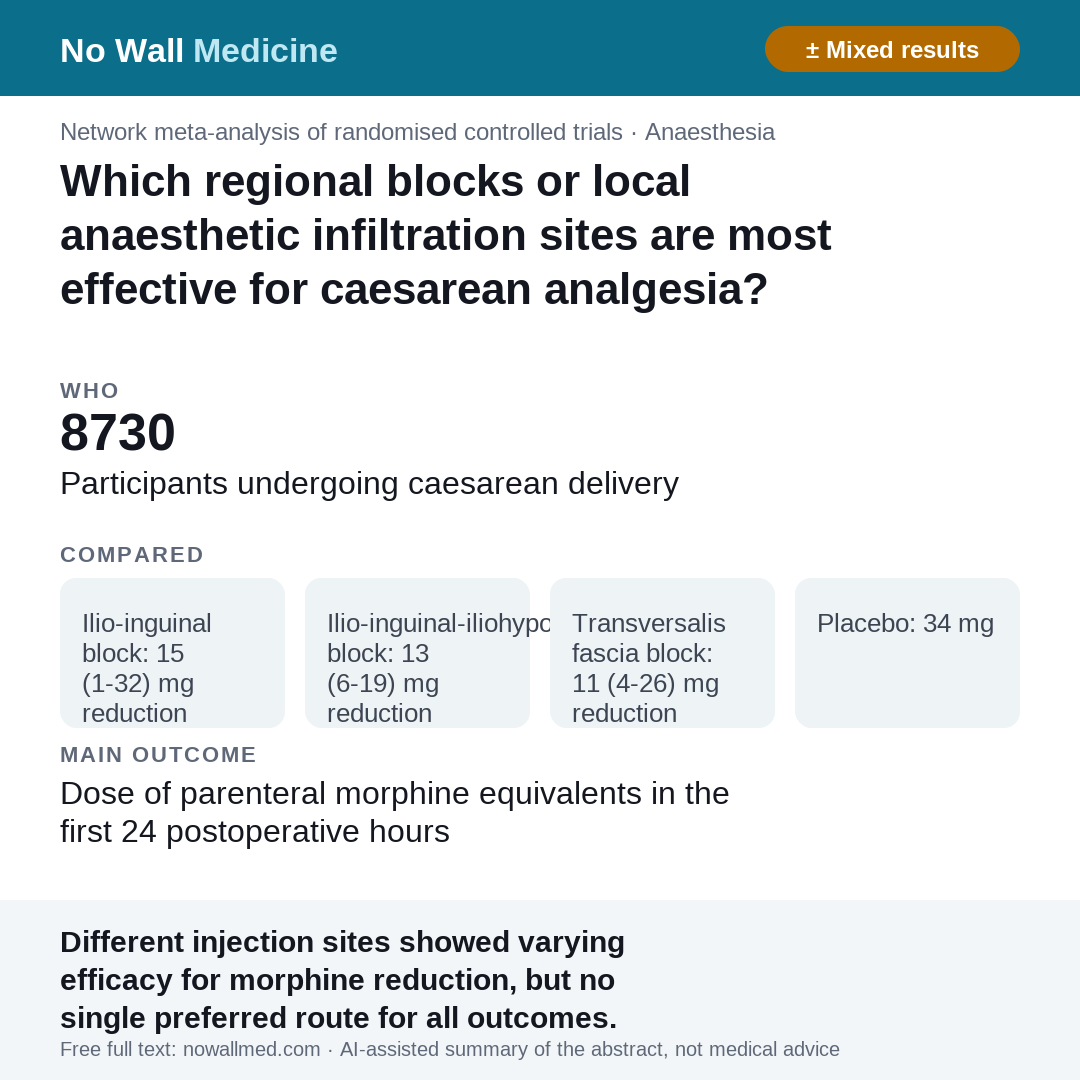
Efficacy of regional blocks or local anaesthetic infiltration for analgesia after caesarean delivery: a network meta-analysis of randomised controlled trials
Network meta-analysis of randomised controlled trialsMixed results
Which regional blocks or local anaesthetic infiltration sites are most effective for caesarean analgesia?
Who
8730
Participants undergoing caesarean delivery
Compared
Ilio-inguinal block: 15 (1-32) mg reduction
Ilio-inguinal-iliohypogastric block: 13 (6-19) mg reduction
Transversalis fascia block: 11 (4-26) mg reduction
Placebo: 34 mg
Main outcome
Dose of parenteral morphine equivalents in the first 24 postoperative hours
Bottom line: Different injection sites showed varying efficacy for morphine reduction, but no single preferred route for all outcomes.
Anaesthesia · 2021-12-27Download image
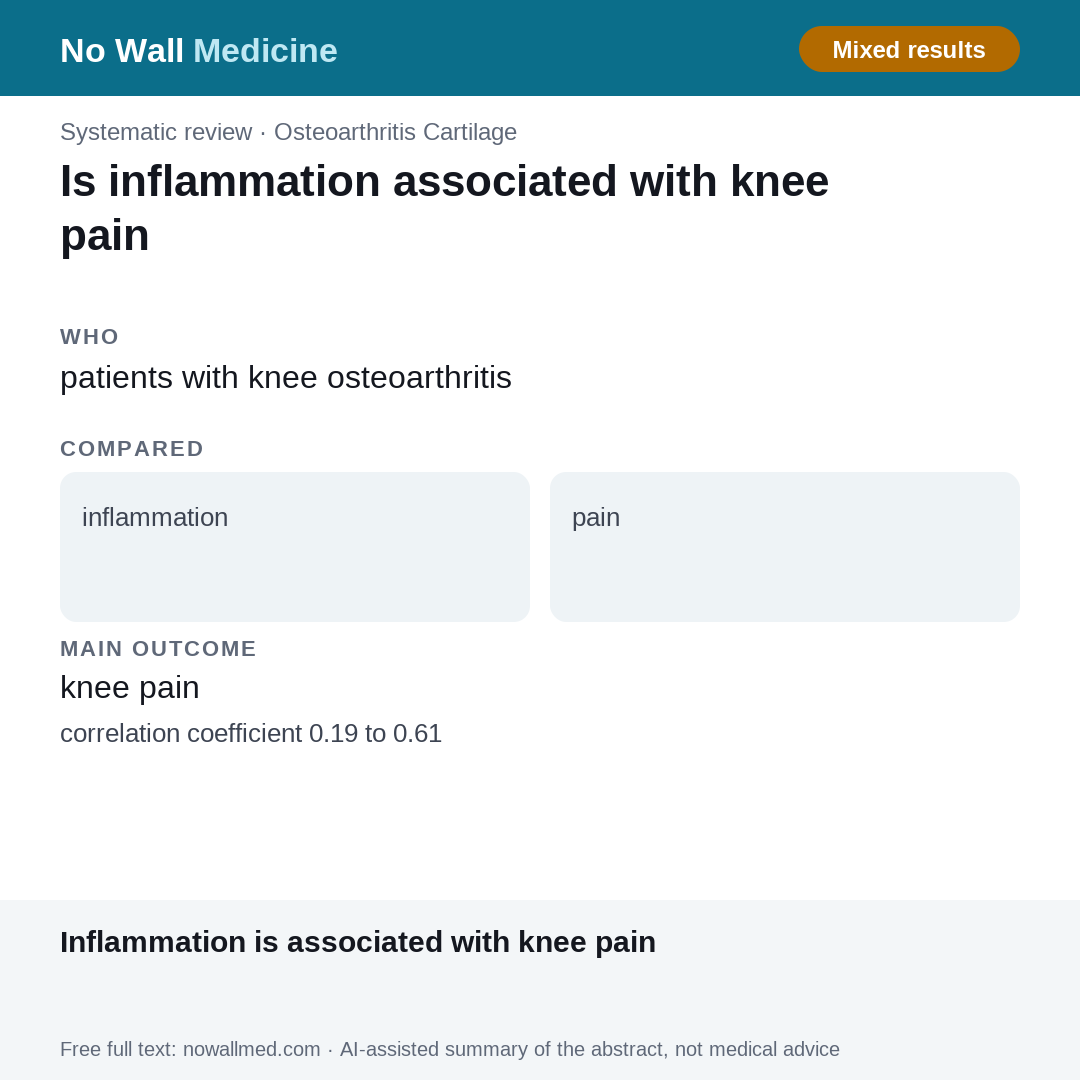
Association between knee inflammation and knee pain in patients with knee osteoarthritis: a systematic review
Systematic reviewMixed results
Is inflammation associated with knee pain
Who
37
patients with knee osteoarthritis
Compared
inflammation
pain
Main outcome
knee pain
Result: correlation coefficient 0.19 to 0.61
Bottom line: Inflammation is associated with knee pain
Limitation: conflicting evidence
Osteoarthritis Cartilage · 2021-12-27Download image
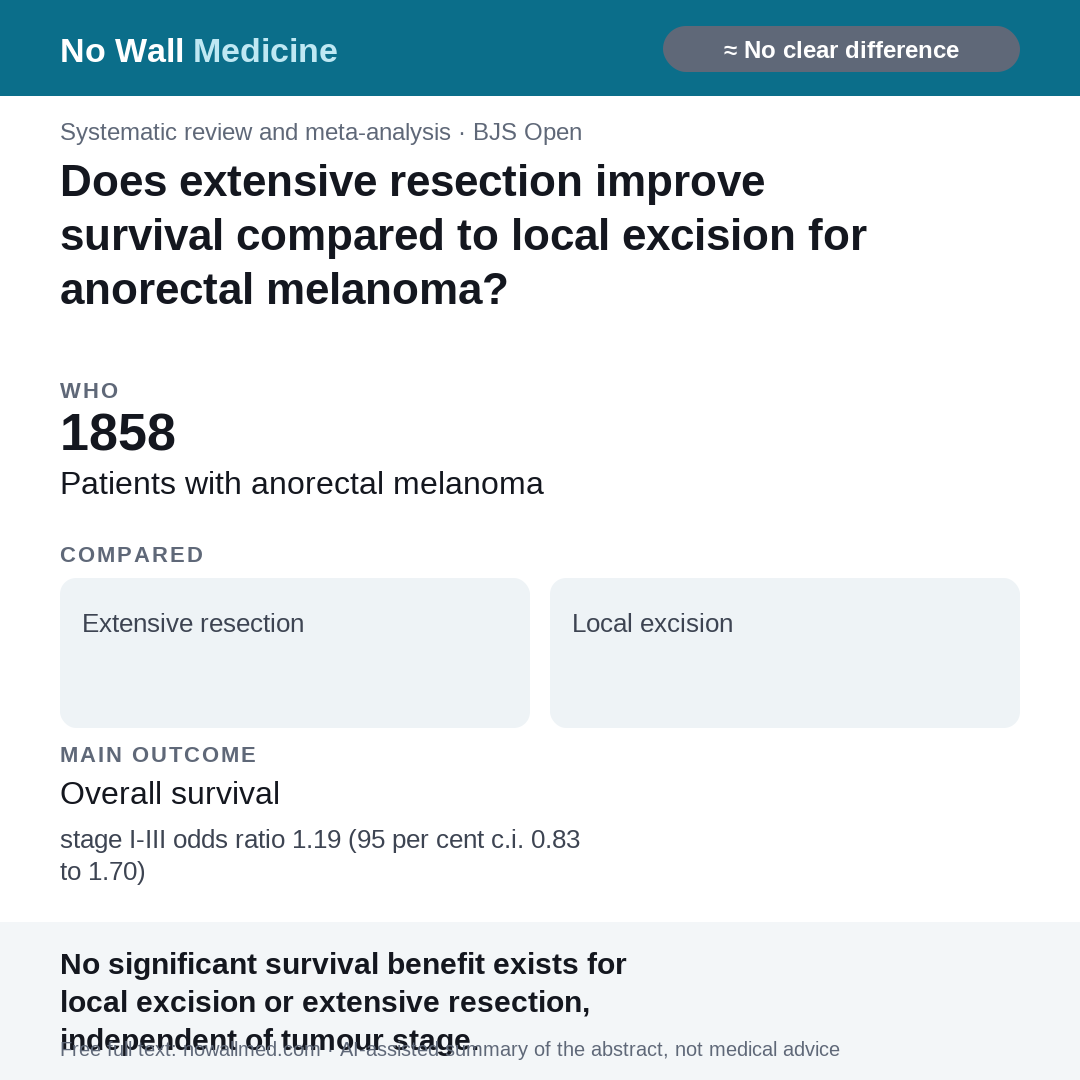
Surgical treatment of anorectal melanoma: a systematic review and meta-analysis
Systematic review and meta-analysisNo clear difference
Does extensive resection improve survival compared to local excision for anorectal melanoma?
Who
1858
Patients with anorectal melanoma
Compared
Extensive resection
Local excision
Main outcome
Overall survival
Result: stage I-III odds ratio 1.19 (95 per cent c.i. 0.83 to 1.70)
Bottom line: No significant survival benefit exists for local excision or extensive resection, independent of tumour stage.
BJS Open · 2021-12-27Download image
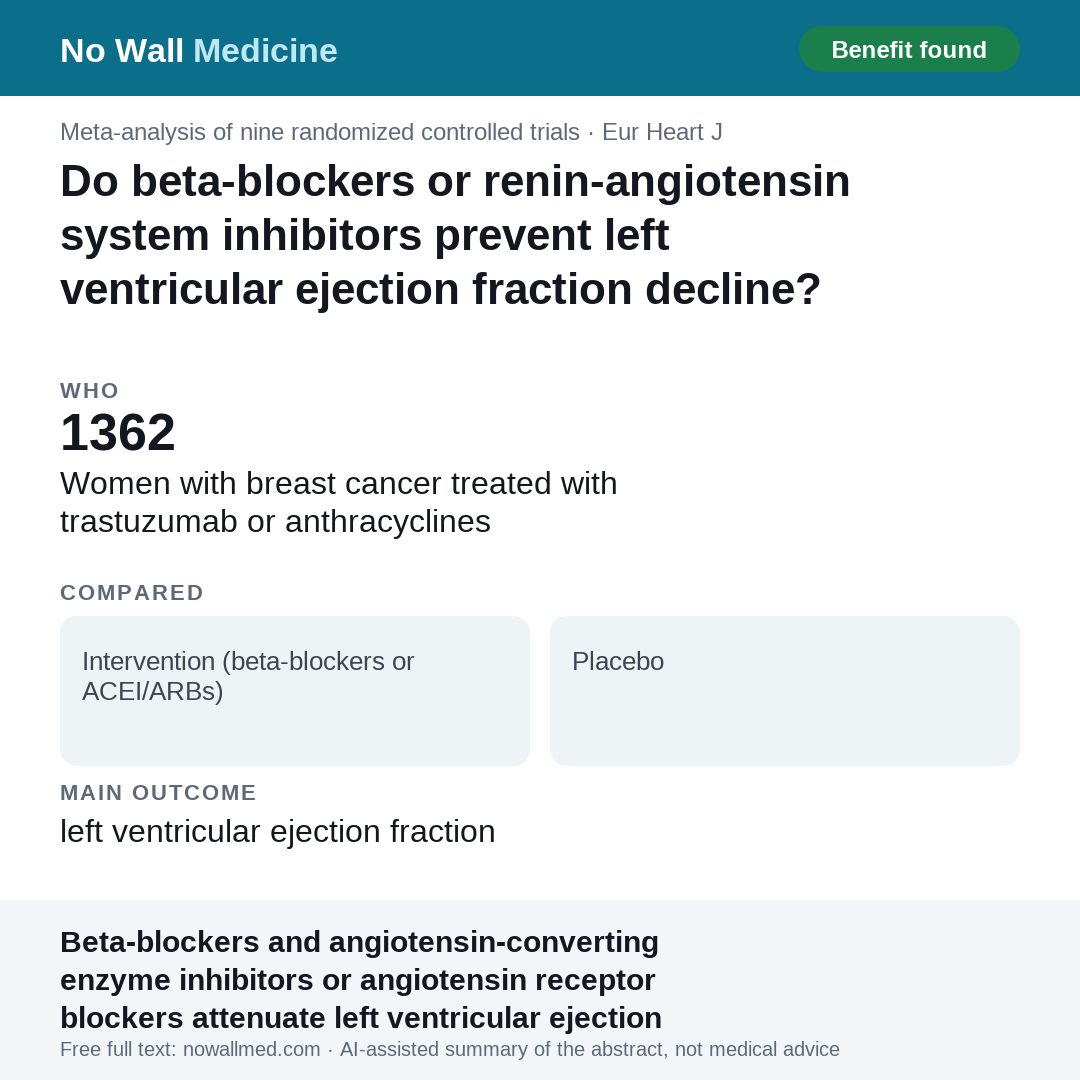
A systematic review and meta-analysis of beta-blockers and renin-angiotensin system inhibitors for preventing left ventricular dysfunction due to anthracyclines or trastuzumab in patients with breast cancer
Meta-analysis of nine randomized controlled trialsBenefit found
Do beta-blockers or renin-angiotensin system inhibitors prevent left ventricular ejection fraction decline?
Who
1362
Women with breast cancer treated with trastuzumab or anthracyclines
Compared
Intervention (beta-blockers or ACEI/ARBs)
Placebo
Main outcome
left ventricular ejection fraction
Result: MD: 2.4; 95% CI: 0.3-4.2
Bottom line: Beta-blockers and angiotensin-converting enzyme inhibitors or angiotensin receptor blockers attenuate left ventricular ejection fraction decline.
Eur Heart J · 2021-12-25Download image
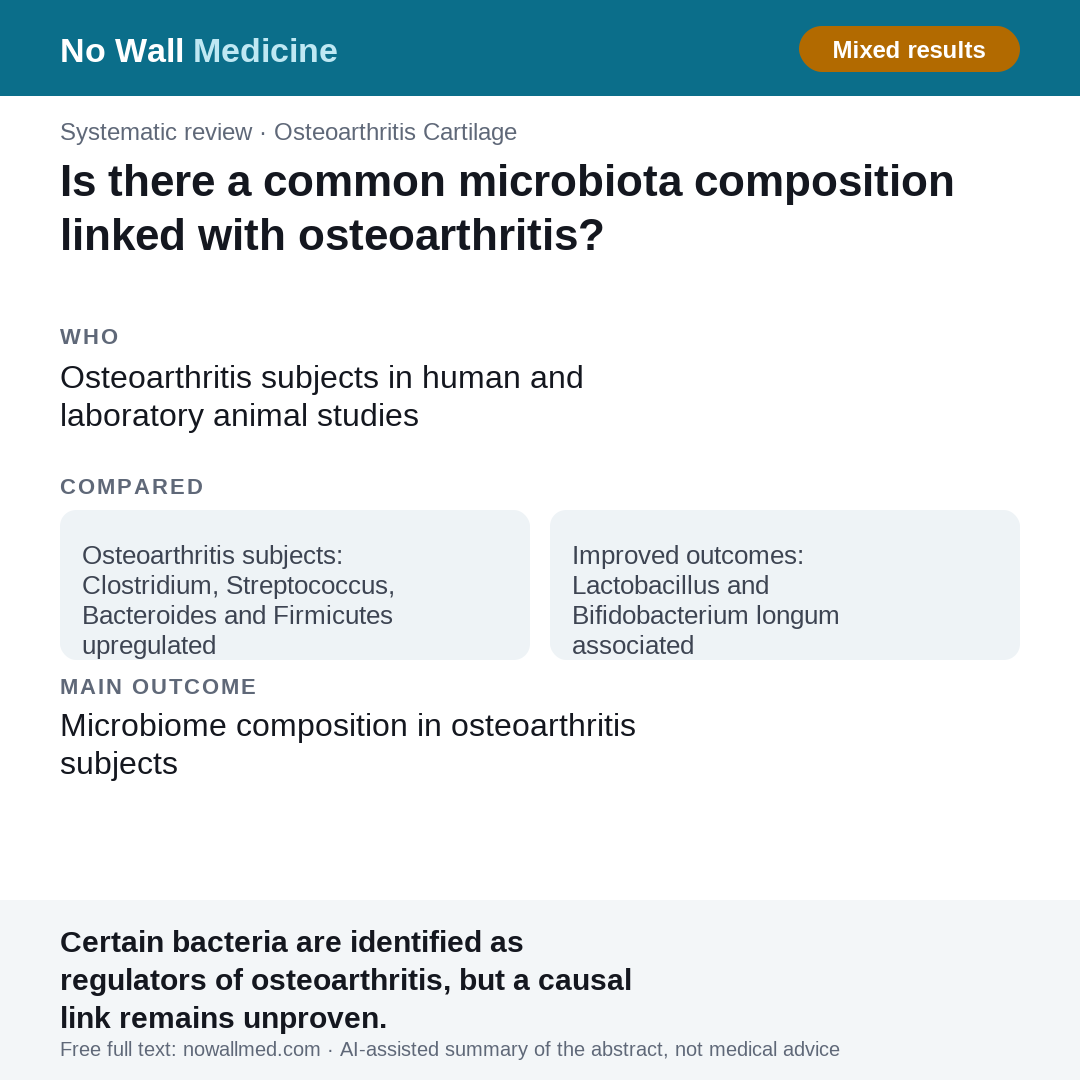
A systematic review of microbiome composition in osteoarthritis subjects
Systematic reviewMixed results
Is there a common microbiota composition linked with osteoarthritis?
Who
Osteoarthritis subjects in human and laboratory animal studies
Compared
Osteoarthritis subjects: Clostridium, Streptococcus, Bacteroides and Firmicutes upregulated
Improved outcomes: Lactobacillus and Bifidobacterium longum associated
Main outcome
Microbiome composition in osteoarthritis subjects
Bottom line: Certain bacteria are identified as regulators of osteoarthritis, but a causal link remains unproven.
Osteoarthritis Cartilage · 2021-12-25Download image
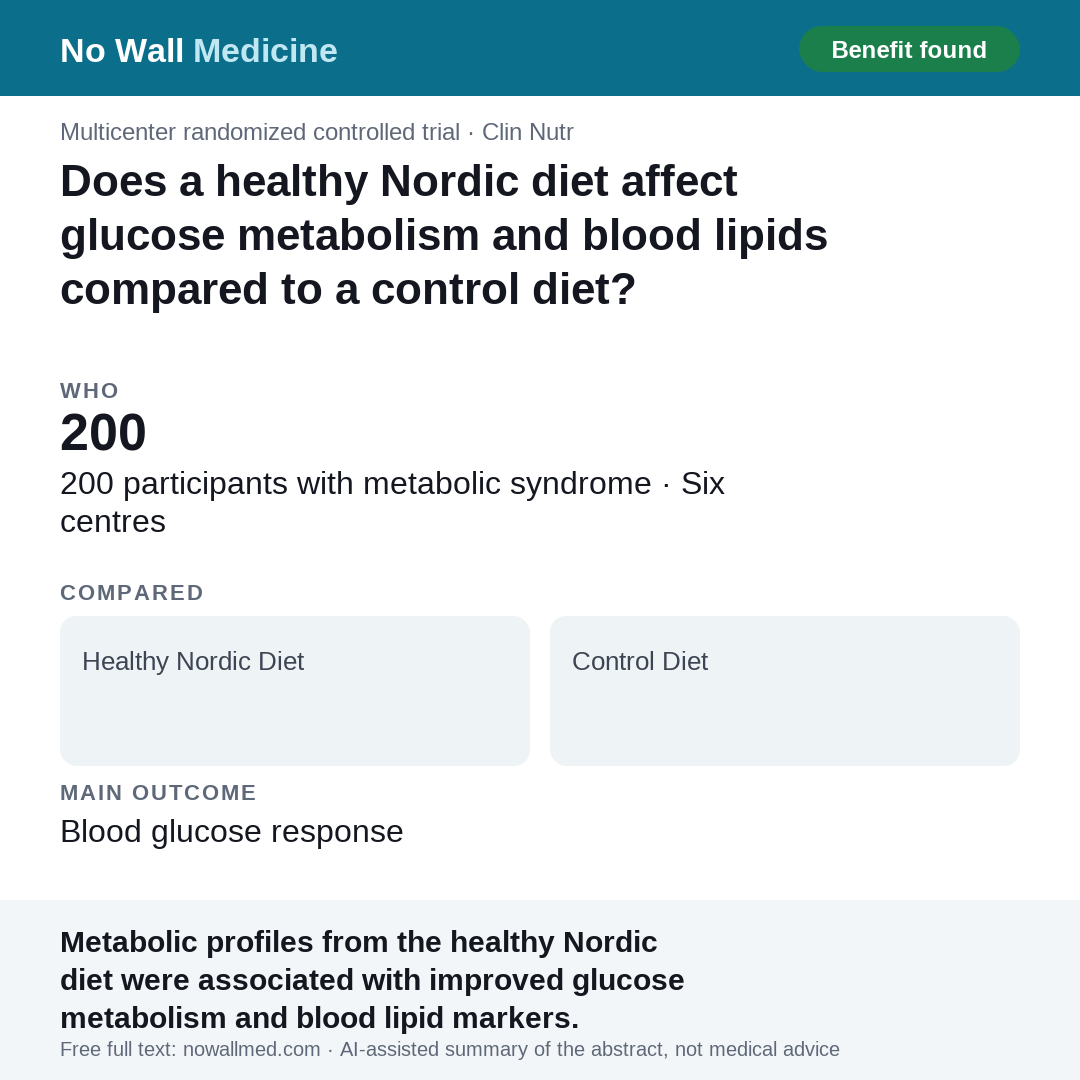
Analysis of the SYSDIET Healthy Nordic Diet randomized trial based on metabolic profiling reveal beneficial effects on glucose metabolism and blood lipids
Multicenter randomized controlled trialBenefit found
Does a healthy Nordic diet affect glucose metabolism and blood lipids compared to a control diet?
Who
200
200 participants with metabolic syndrome · Six centres
Compared
Healthy Nordic Diet
Control Diet
Main outcome
Blood glucose response
Bottom line: Metabolic profiles from the healthy Nordic diet were associated with improved glucose metabolism and blood lipid markers.
Clin Nutr · 2021-12-25Download image
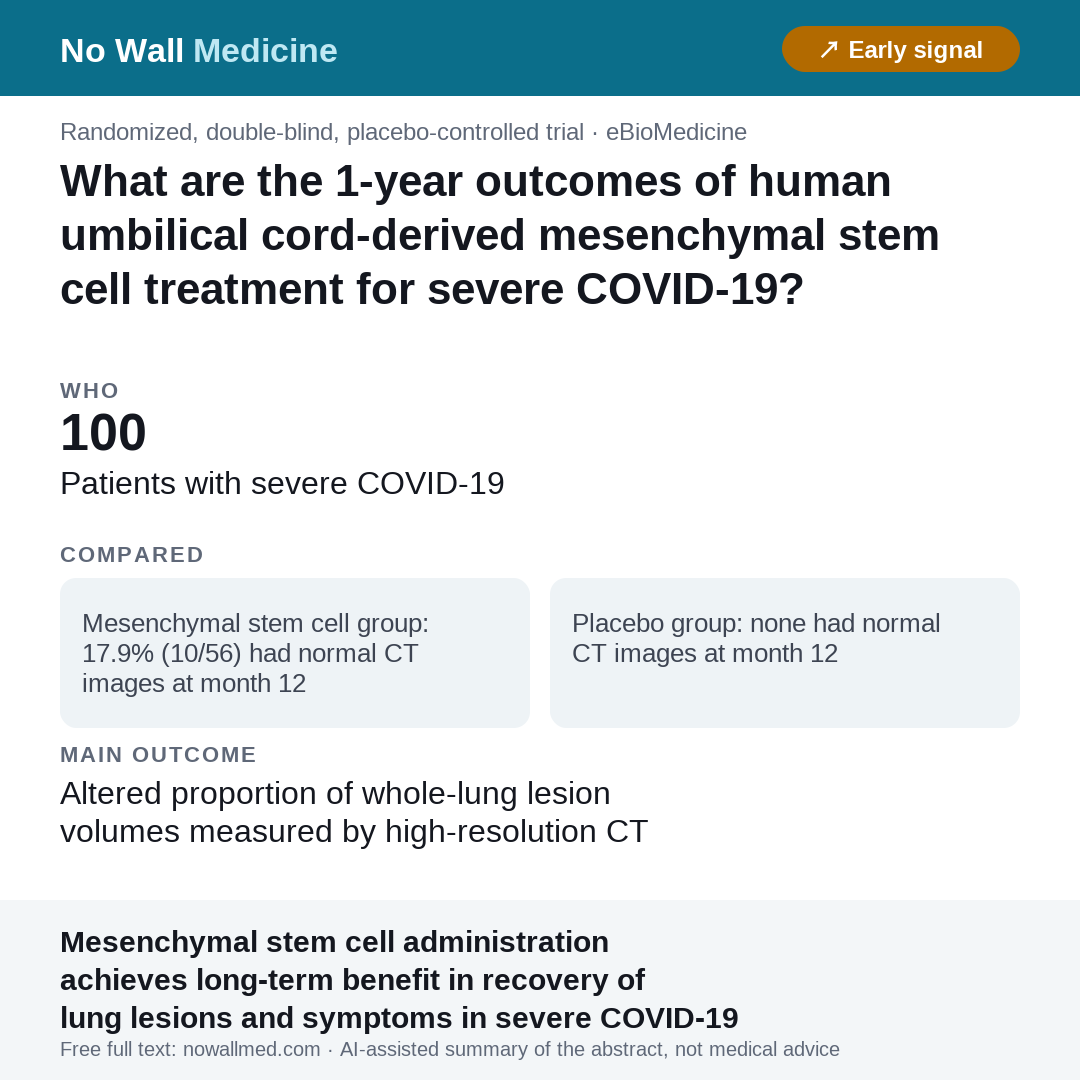
Human mesenchymal stem cells treatment for severe COVID-19: 1-year follow-up results of a randomized, double-blind, placebo-controlled trial
Randomized, double-blind, placebo-controlled trialEarly signal
What are the 1-year outcomes of human umbilical cord-derived mesenchymal stem cell treatment for severe COVID-19?
Who
100
Patients with severe COVID-19
Compared
Mesenchymal stem cell group: 17.9% (10/56) had normal CT images at month 12
Placebo group: none had normal CT images at month 12
Main outcome
Altered proportion of whole-lung lesion volumes measured by high-resolution CT
Result: -10.8% (95% CI: -20.7%, -1.5%, p = 0.030)
Bottom line: Mesenchymal stem cell administration achieves long-term benefit in recovery of lung lesions and symptoms in severe COVID-19 patients.
Funded by: National Key R&D Program of China
eBioMedicine · 2021-12-25Download image
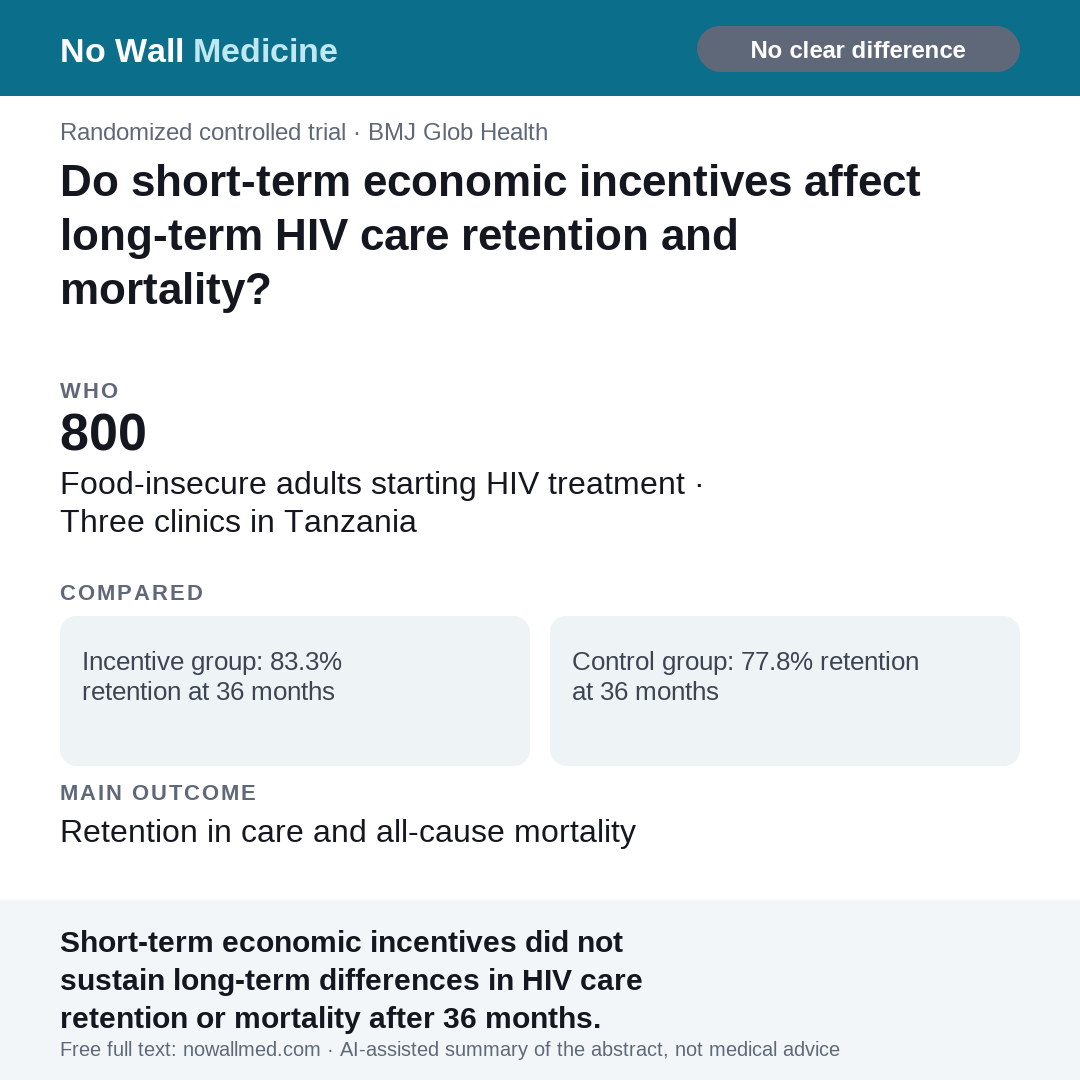
Durability of effects from short-term economic incentives for clinic attendance among HIV positive adults in Tanzania: long-term follow-up of a randomised controlled trial
Randomized controlled trialNo clear difference
Do short-term economic incentives affect long-term HIV care retention and mortality?
Who
800
Food-insecure adults starting HIV treatment · Three clinics in Tanzania
Compared
Incentive group: 83.3% retention at 36 months
Control group: 77.8% retention at 36 months
Main outcome
Retention in care and all-cause mortality
Result: RD 5.6, -2.7 to 13.8
Bottom line: Short-term economic incentives did not sustain long-term differences in HIV care retention or mortality after 36 months.
Limitation: A minority of missing outcomes required multiple imputation.
BMJ Glob Health · 2021-12-25Download image
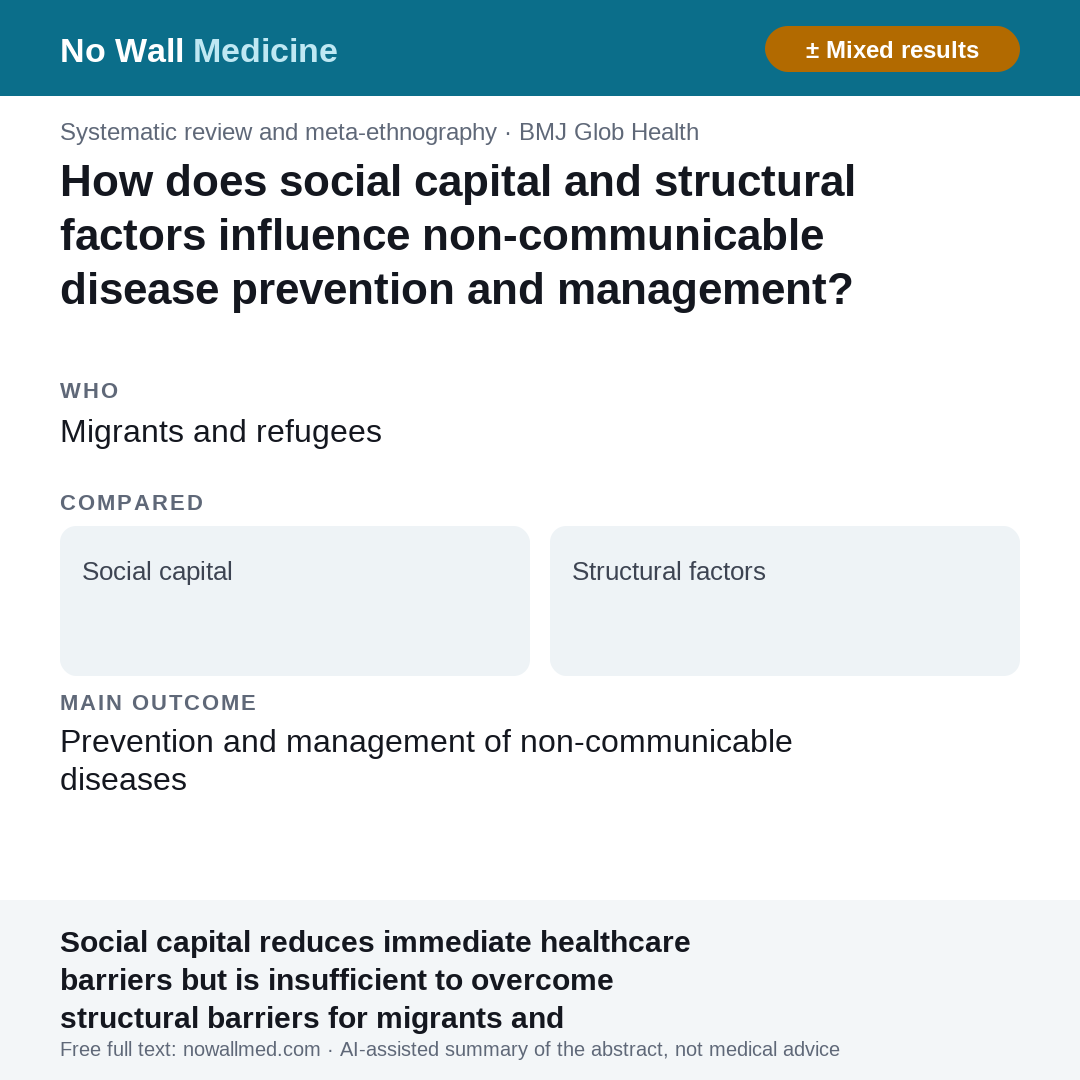
Social capital in the prevention and management of non-communicable diseases among migrants and refugees: a systematic review and meta-ethnography
Systematic review and meta-ethnographyMixed results
How does social capital and structural factors influence non-communicable disease prevention and management?
Who
Migrants and refugees
Compared
Social capital
Structural factors
Main outcome
Prevention and management of non-communicable diseases
Bottom line: Social capital reduces immediate healthcare barriers but is insufficient to overcome structural barriers for migrants and refugees.
BMJ Glob Health · 2021-12-25Download image