Visual abstracts
New randomized trials and meta-analyses from leading journals at a glance: who was studied, what was compared, and what was found. Every paper is free to read in full.
All specialtiesCardiology 3947Oncology 3364Gastroenterology & Hepatology 1557Infectious Disease 2899Neurology 1560Psychiatry & Mental Health 1848Pulmonology 1694Critical Care 1106Endocrinology & Diabetes 2031Pediatrics 2377Surgery 2088Orthopedics & Sports Medicine 747Neurosurgery 455Cardiothoracic & Vascular Surgery 487Plastic & Reconstructive Surgery 530Nephrology 865Rheumatology 644Hematology 881Dermatology 497Ophthalmology 432Obstetrics & Gynecology 1378Public & Global Health 779Radiology & Imaging 534Anesthesiology 797Urology 638ENT (Otolaryngology) 428Emergency Medicine 419Allergy & Immunology 249Geriatrics 816Family Medicine & Primary Care 466Medical Genetics & Genomics 537Pathology & Laboratory Medicine 137Physical Medicine & Rehabilitation 604Palliative Care 356Nutrition 1198Digital Health & AI 1822General Medicine 273
The role of vasopressin in trauma resuscitation: a protocol of a systematic review and meta-analysis of randomized and observational studies
Meta-analysis of studiesUnclear result
Vasopressin effect in trauma resuscitation
Who
severely injured patients with hemorrhagic shock
Compared
Vasopressin
Control
Main outcome
mortality and complications
Bottom line: Vasopressin may benefit trauma resuscitation
Scand J Trauma Resusc Emerg Med · 2026-02-11Download image

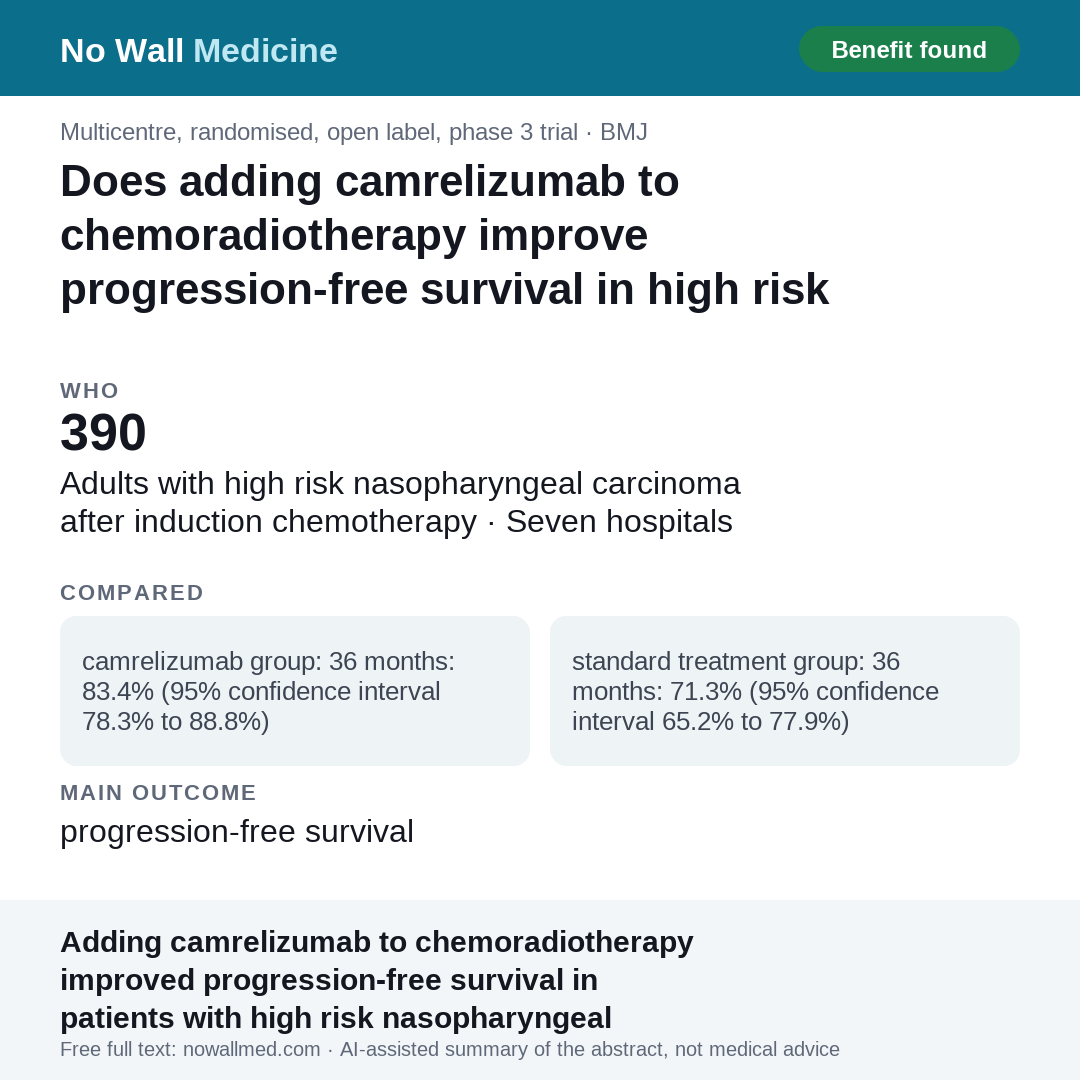
Standard chemoradiotherapy with concurrent and adjuvant camrelizumab in patients with high risk nasopharyngeal carcinoma: multicentre, randomised, open label, phase 3 trial
Multicentre, randomised, open label, phase 3 trialBenefit found
Does adding camrelizumab to chemoradiotherapy improve progression-free survival in high risk nasopharyngeal carcinoma?
Who
390
Adults with high risk nasopharyngeal carcinoma after induction chemotherapy · Seven hospitals in China
Compared
camrelizumab group: 36 months: 83.4% (95% confidence interval 78.3% to 88.8%)
standard treatment group: 36 months: 71.3% (95% confidence interval 65.2% to 77.9%)
Main outcome
progression-free survival
Result: stratified hazard ratio 0.51 (95% confidence interval 0.34 to 0.77)
Bottom line: Adding camrelizumab to chemoradiotherapy improved progression-free survival in patients with high risk nasopharyngeal carcinoma.
BMJ · 2026-02-10Download image
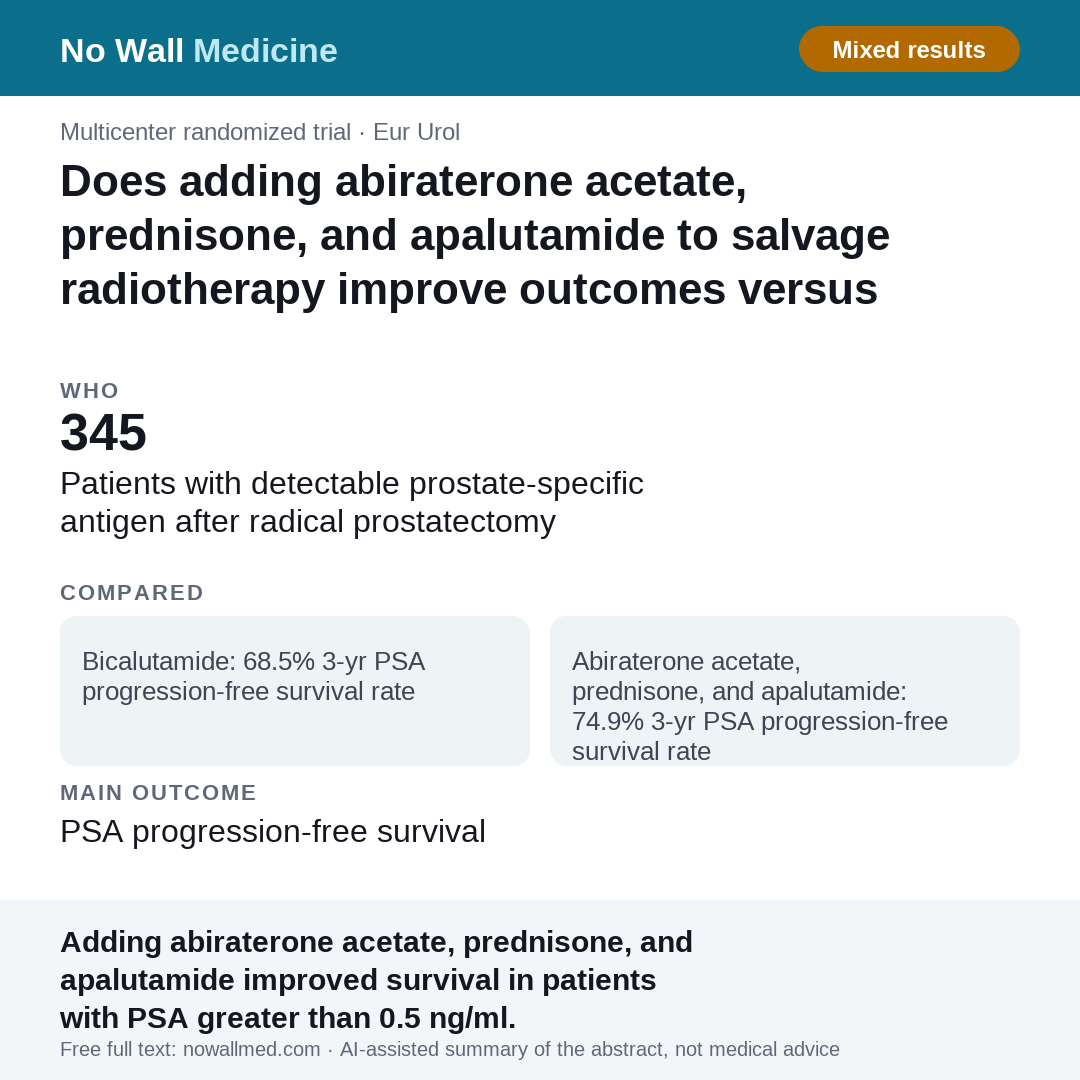
FORMULA-509: A Multicenter Randomized Trial of Postprostatectomy Salvage Radiotherapy and 6 months of a GNRH Agonist with Either Bicalutamide or Abiraterone Acetate plus Prednisone and Apalutamide
Multicenter randomized trialMixed results
Does adding abiraterone acetate, prednisone, and apalutamide to salvage radiotherapy improve outcomes versus bicalutamide?
Who
345
Patients with detectable prostate-specific antigen after radical prostatectomy
Compared
Bicalutamide: 68.5% 3-yr PSA progression-free survival rate
Abiraterone acetate, prednisone, and apalutamide: 74.9% 3-yr PSA progression-free survival rate
Main outcome
PSA progression-free survival
Result: hazard ratio 0.71 (90% CI 0.49-1.03)
Bottom line: Adding abiraterone acetate, prednisone, and apalutamide improved survival in patients with PSA greater than 0.5 ng/ml.
Limitation: The study did not reach the prespecified significance level for the overall population.
Eur Urol · 2026-02-10Download image
Safety, acceptability, and adherence to dapivirine vaginal ring and oral pre-exposure prophylaxis for HIV prevention in the second trimester of pregnancy: a multicountry, open-label, phase 3b randomised trial
Open-label, phase 3b randomised trialBenefit found
Are dapivirine vaginal ring and oral pre-exposure prophylaxis safe during pregnancy?
Who
251
Healthy HIV-negative pregnant women aged 18-40 years · Malawi, South Africa, Uganda, and Zimbabwe
Compared
monthly dapivirine vaginal ring
daily oral pre-exposure prophylaxis
Main outcome
composite of serious adverse events, grade 3 or higher adverse events, and pregnancy outcomes
Bottom line: Dapivirine vaginal ring and oral pre-exposure prophylaxis were safe and well tolerated during the second trimester of pregnancy.
Funded by: US National Institutes of Health
Lancet HIV · 2026-02-10Download image

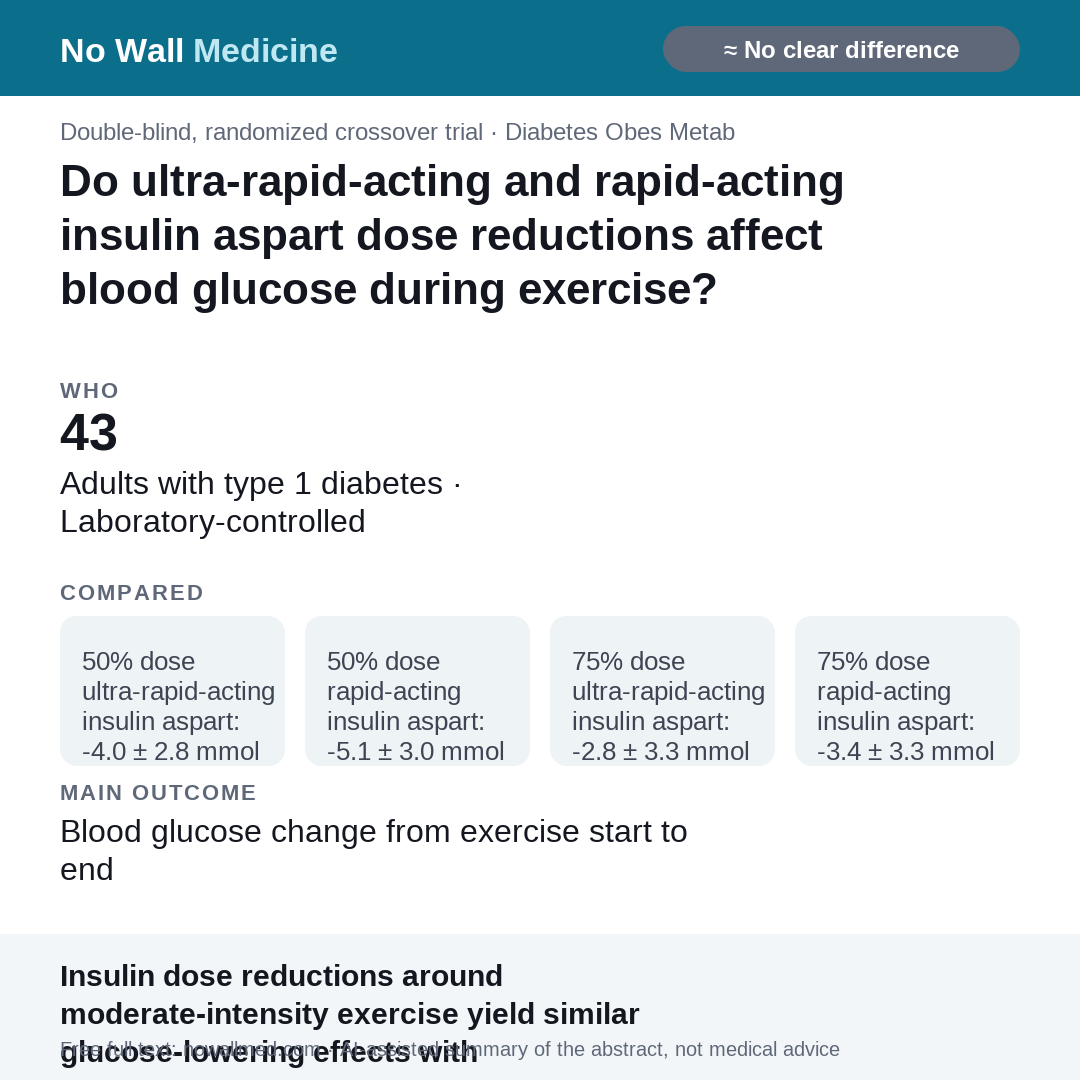
Comparison of pharmacodynamics and pharmacokinetics of ultra-rapid-acting insulin aspart and rapid-acting insulin aspart around continuous moderate intensity exercise in adults with type 1 diabetes: A randomised controlled trial
Double-blind, randomized crossover trialNo clear difference
Do ultra-rapid-acting and rapid-acting insulin aspart dose reductions affect blood glucose during exercise?
Who
43
Adults with type 1 diabetes · Laboratory-controlled
Compared
50% dose ultra-rapid-acting insulin aspart: -4.0 ± 2.8 mmol L-1
50% dose rapid-acting insulin aspart: -5.1 ± 3.0 mmol L-1
75% dose ultra-rapid-acting insulin aspart: -2.8 ± 3.3 mmol L-1
75% dose rapid-acting insulin aspart: -3.4 ± 3.3 mmol L-1
Main outcome
Blood glucose change from exercise start to end
Bottom line: Insulin dose reductions around moderate-intensity exercise yield similar glucose-lowering effects with ultra-rapid-acting and rapid-acting insulin aspart.
Diabetes Obes Metab · 2026-02-10Download image
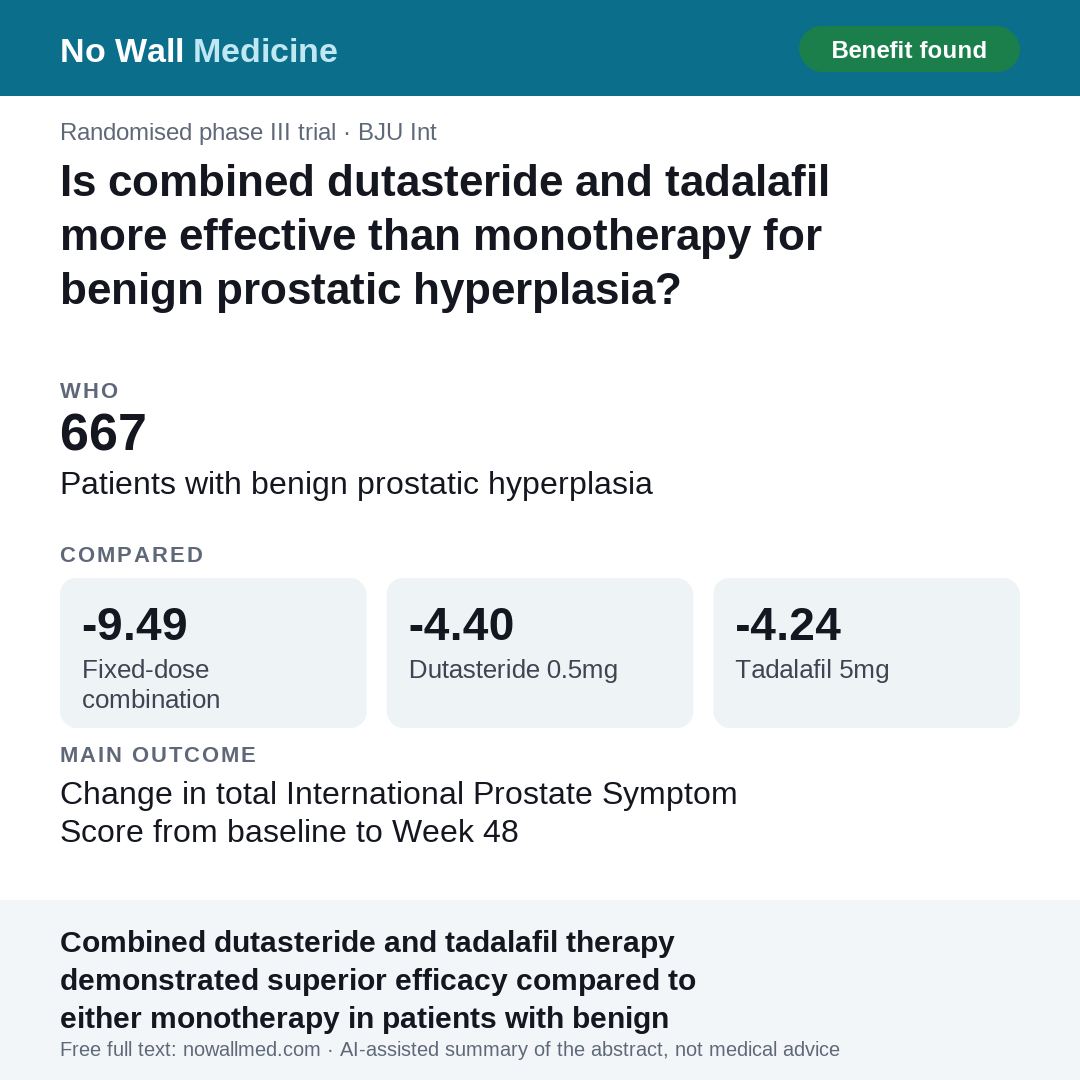
Combined therapy with dutasteride and tadalafil vs dutasteride or tadalafil monotherapy in benign prostatic hyperplasia: a randomised phase III trial
Randomised phase III trialBenefit found
Is combined dutasteride and tadalafil more effective than monotherapy for benign prostatic hyperplasia?
Who
667
Patients with benign prostatic hyperplasia
Compared
-9.49Fixed-dose combination dutasteride 0.5mg/tadalafil 5mg (0.37)
-4.40Dutasteride 0.5mg (0.37)
-4.24Tadalafil 5mg (0.37)
Main outcome
Change in total International Prostate Symptom Score from baseline to Week 48
Result: LSMD -5.09, 95% CI -6.13 to -4.50; LSMD -5.29, 95% CI -6.30 to -4.27
Bottom line: Combined dutasteride and tadalafil therapy demonstrated superior efficacy compared to either monotherapy in patients with benign prostatic hyperplasia.
BJU Int · 2026-02-10Download image
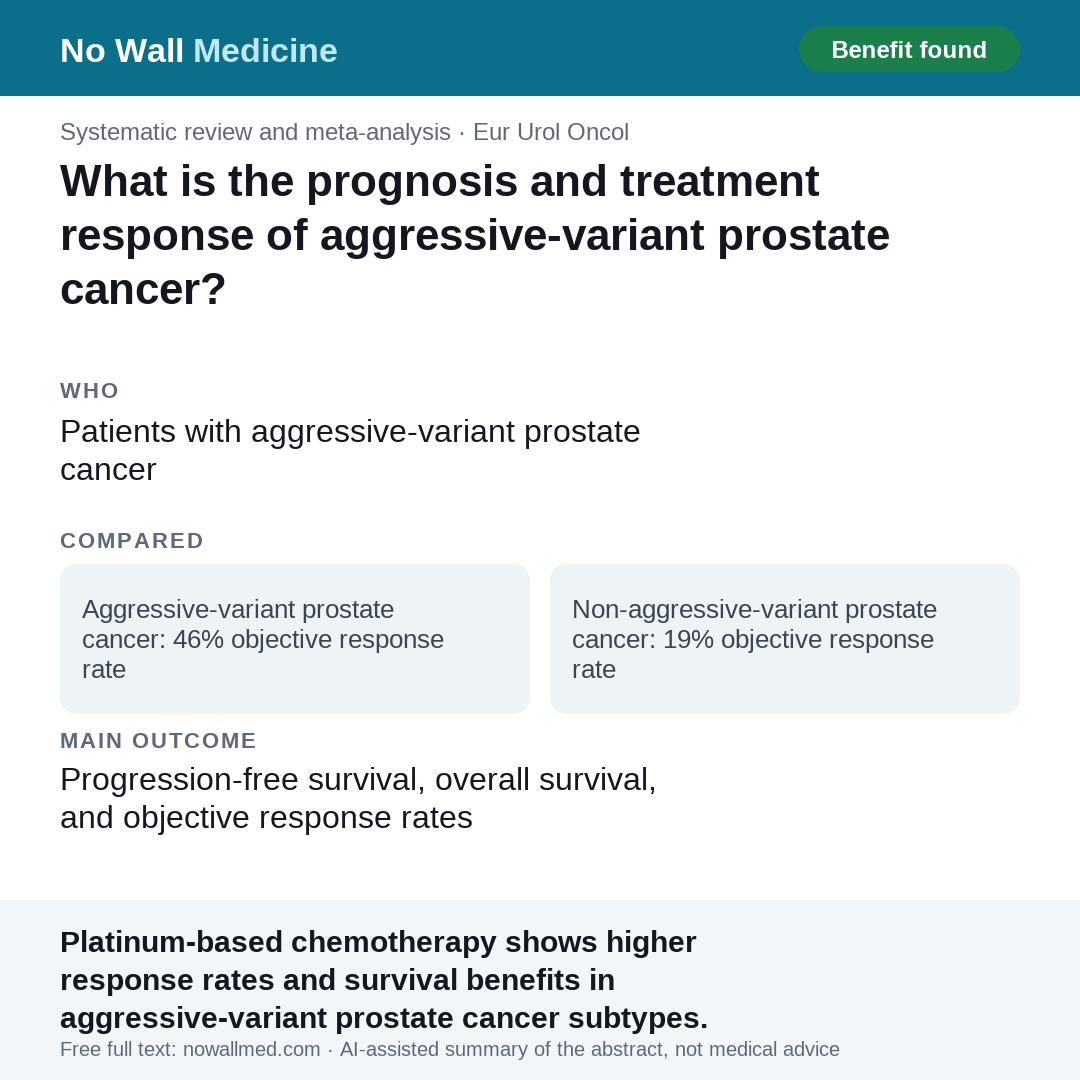
Prognosis and Treatment Response in Aggressive-variant Prostate Cancer and Treatment-related Neuroendocrine Prostate Cancer: A Systematic Review and Meta-analysis
Systematic review and meta-analysisBenefit found
What is the prognosis and treatment response of aggressive-variant prostate cancer?
Who
Patients with aggressive-variant prostate cancer
Compared
Aggressive-variant prostate cancer: 46% objective response rate
Non-aggressive-variant prostate cancer: 19% objective response rate
Main outcome
Progression-free survival, overall survival, and objective response rates
Result: hazard ratio 2.72 (95% CI 1.54-4.81) for progression-free survival
Bottom line: Platinum-based chemotherapy shows higher response rates and survival benefits in aggressive-variant prostate cancer subtypes.
Limitation: Data were insufficient for meta-analytic comparison of survival by platinum-based chemotherapy in treatment-related neuroendocrine prostate cancer.
Eur Urol Oncol · 2026-02-10Download image
A global gap in autonomy assessment among older adults: a COSMIN systematic review
Systematic reviewMixed results
What is the quality of autonomy assessment instruments for older adults?
Who
861338
Adults aged 60 years and older · 42 countries
Compared
Instruments meeting COSMIN category A criteria: 14 instruments
Instruments with structural validity: 29 instruments
Instruments with internal consistency: 33 instruments
Instruments with test-retest reliability: 17 instruments
Main outcome
Quality of autonomy measurement instruments
Bottom line: Only 14 instruments met high-quality criteria, with substantial gaps in cross-cultural validity and responsiveness.
Limitation: Substantial gaps remain in cross-cultural validity and responsiveness of the tested instruments.
Lancet Healthy Longev · 2026-02-10Download image

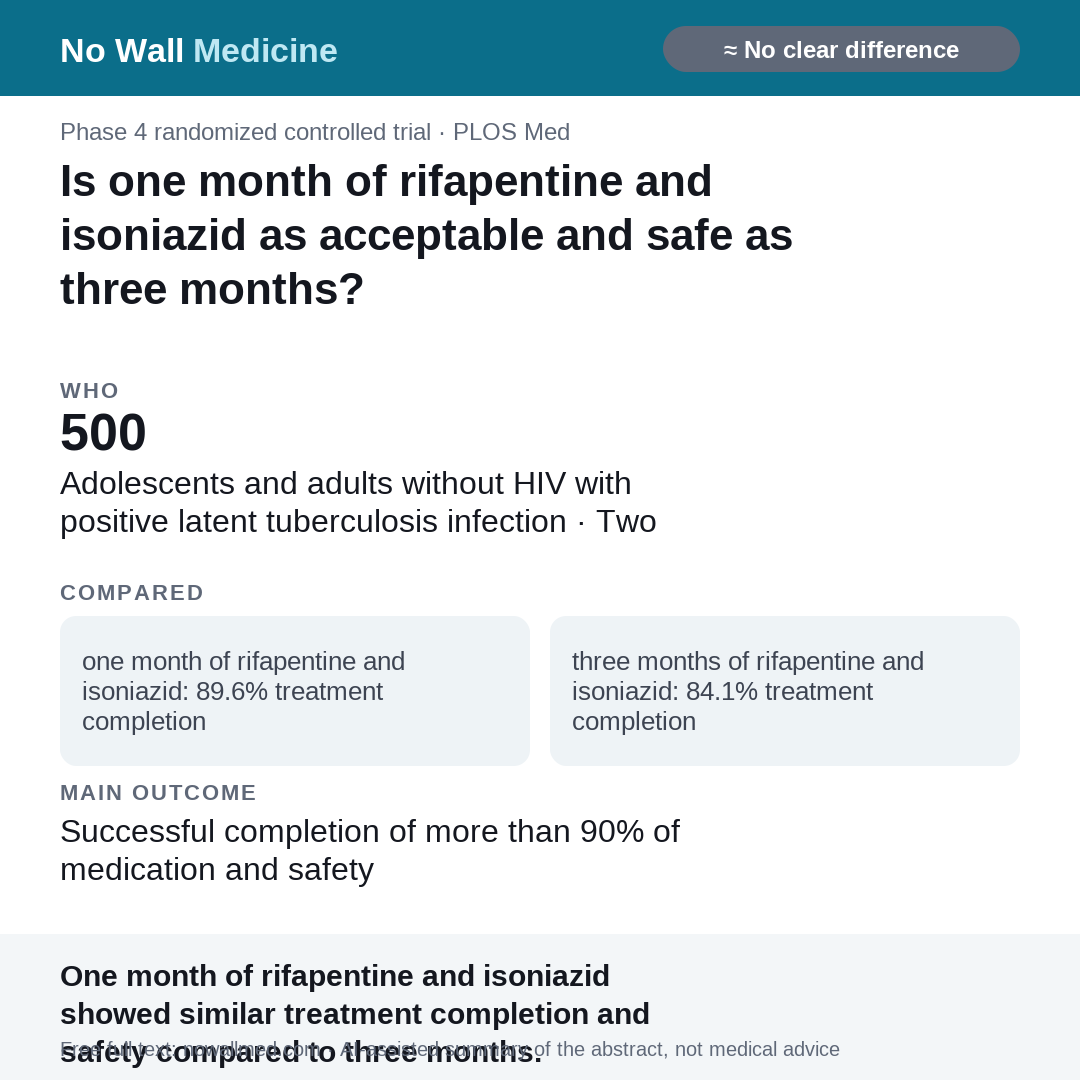
Acceptability and safety of one versus three months of rifapentine and isoniazid to prevent tuberculosis in people exposed in the household or workplace in Brazil: The Ultra-Curto randomized controlled trial
Phase 4 randomized controlled trialNo clear difference
Is one month of rifapentine and isoniazid as acceptable and safe as three months?
Who
500
Adolescents and adults without HIV with positive latent tuberculosis infection · Two sites in Brazil
Compared
one month of rifapentine and isoniazid: 89.6% treatment completion
three months of rifapentine and isoniazid: 84.1% treatment completion
Main outcome
Successful completion of more than 90% of medication and safety
Result: risk difference 5.2%, [95% CI: [-0.1%, 11.2%]
Bottom line: One month of rifapentine and isoniazid showed similar treatment completion and safety compared to three months.
PLOS Med · 2026-02-10Download image
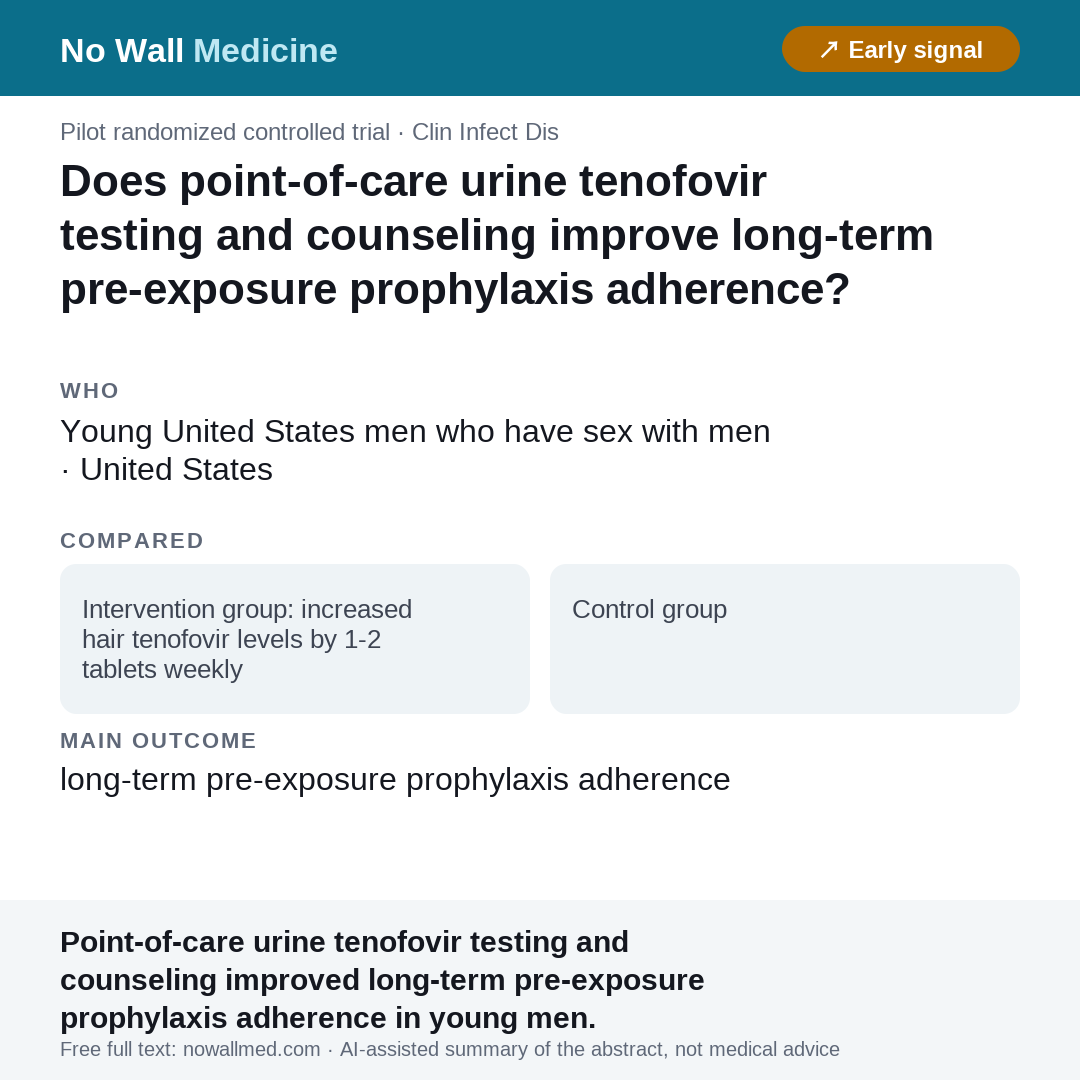
Point-of-Care Urine Tenofovir Drug-Level Feedback Counseling Improves Long-Term Pre-exposure Prophylaxis Adherence for US Men Who Have Sex With Men in Pilot RCT
Pilot randomized controlled trialBenefit found
Does point-of-care urine tenofovir testing and counseling improve long-term pre-exposure prophylaxis adherence?
Who
Young United States men who have sex with men · United States
Compared
Intervention group: increased hair tenofovir levels by 1-2 tablets weekly
Control group
Main outcome
long-term pre-exposure prophylaxis adherence
Bottom line: Point-of-care urine tenofovir testing and counseling improved long-term pre-exposure prophylaxis adherence in young men.
Clin Infect Dis · 2026-02-10Download image
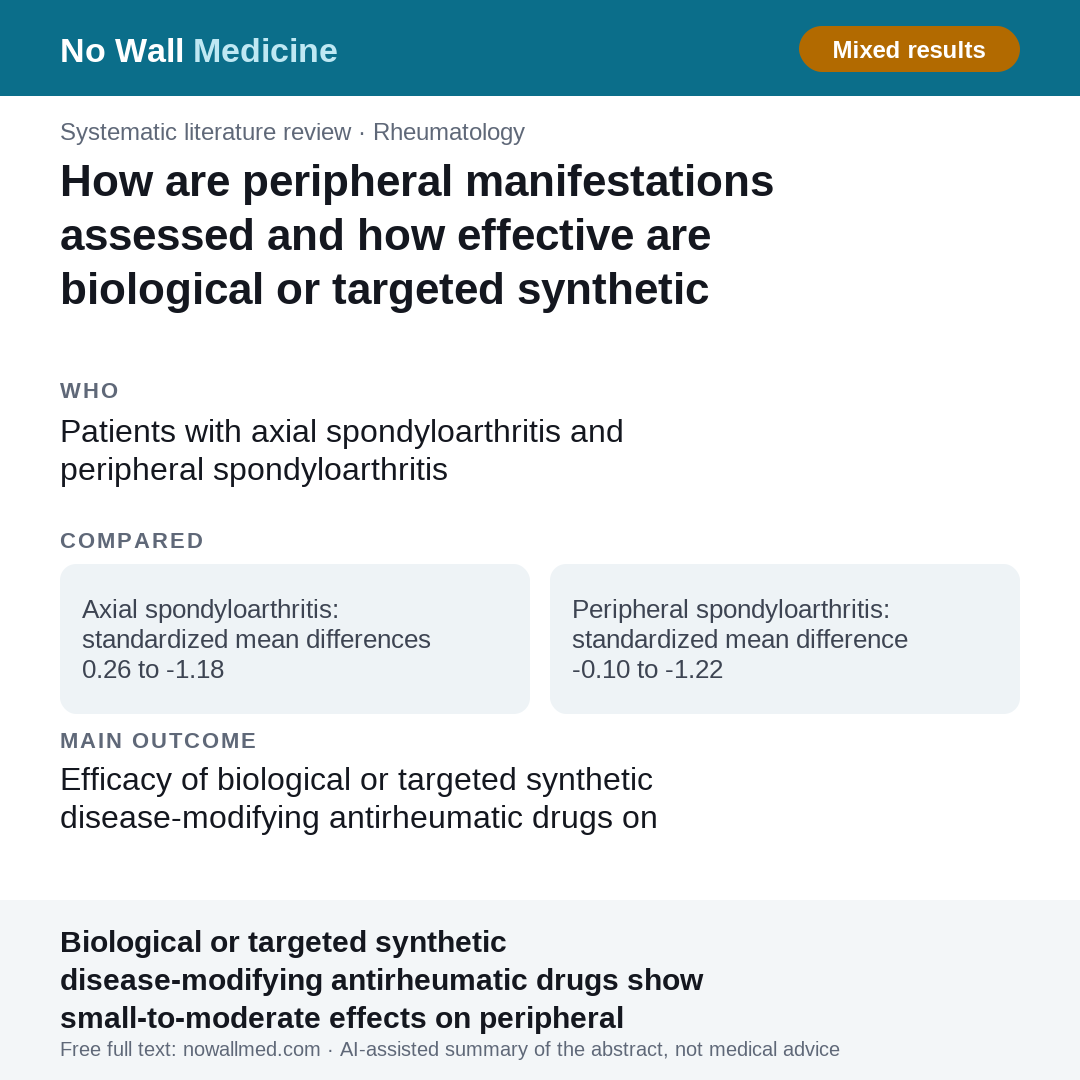
Peripheral manifestations in spondyloarthritis: a systematic literature review on their assessment and the effect of biological/targeted synthetic DMARDs
Systematic literature reviewMixed results
How are peripheral manifestations assessed and how effective are biological or targeted synthetic disease-modifying antirheumatic drugs?
Who
Patients with axial spondyloarthritis and peripheral spondyloarthritis
Compared
Axial spondyloarthritis: standardized mean differences 0.26 to -1.18
Peripheral spondyloarthritis: standardized mean difference -0.10 to -1.22
Main outcome
Efficacy of biological or targeted synthetic disease-modifying antirheumatic drugs on peripheral manifestations
Bottom line: Biological or targeted synthetic disease-modifying antirheumatic drugs show small-to-moderate effects on peripheral manifestations in spondyloarthritis.
Rheumatology · 2026-02-10Download image
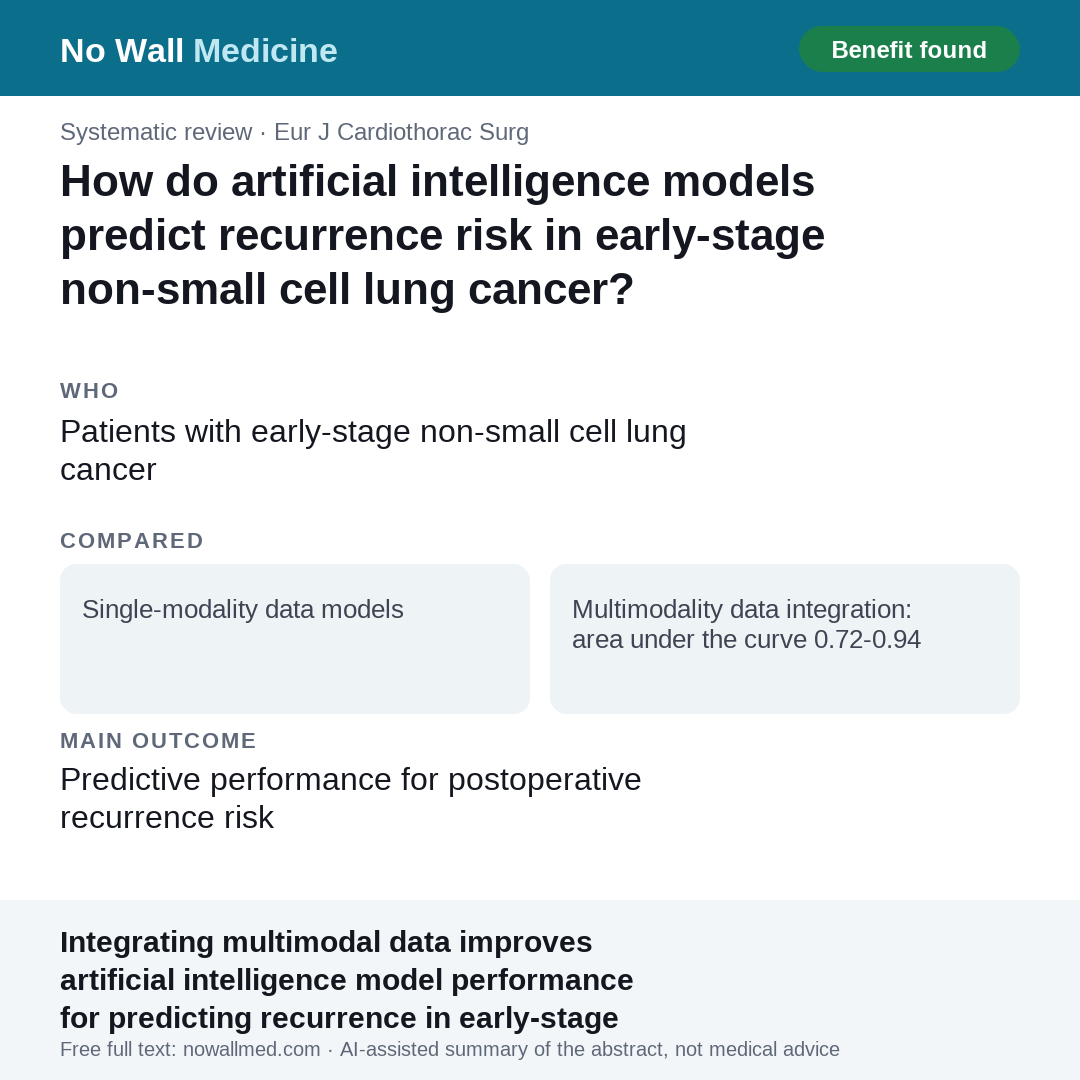
Artificial Intelligence Models to Predict Recurrence Risk Prediction in Early-Stage Non-Small Cell Lung Cancer: A Systematic Review
Systematic reviewBenefit found
How do artificial intelligence models predict recurrence risk in early-stage non-small cell lung cancer?
Who
Patients with early-stage non-small cell lung cancer
Compared
Single-modality data models
Multimodality data integration: area under the curve 0.72-0.94
Main outcome
Predictive performance for postoperative recurrence risk
Bottom line: Integrating multimodal data improves artificial intelligence model performance for predicting recurrence in early-stage non-small cell lung cancer.
Limitation: Models face risk of overfitting and high bias risk during validation due to small test sets.
Eur J Cardiothorac Surg · 2026-02-10Download image
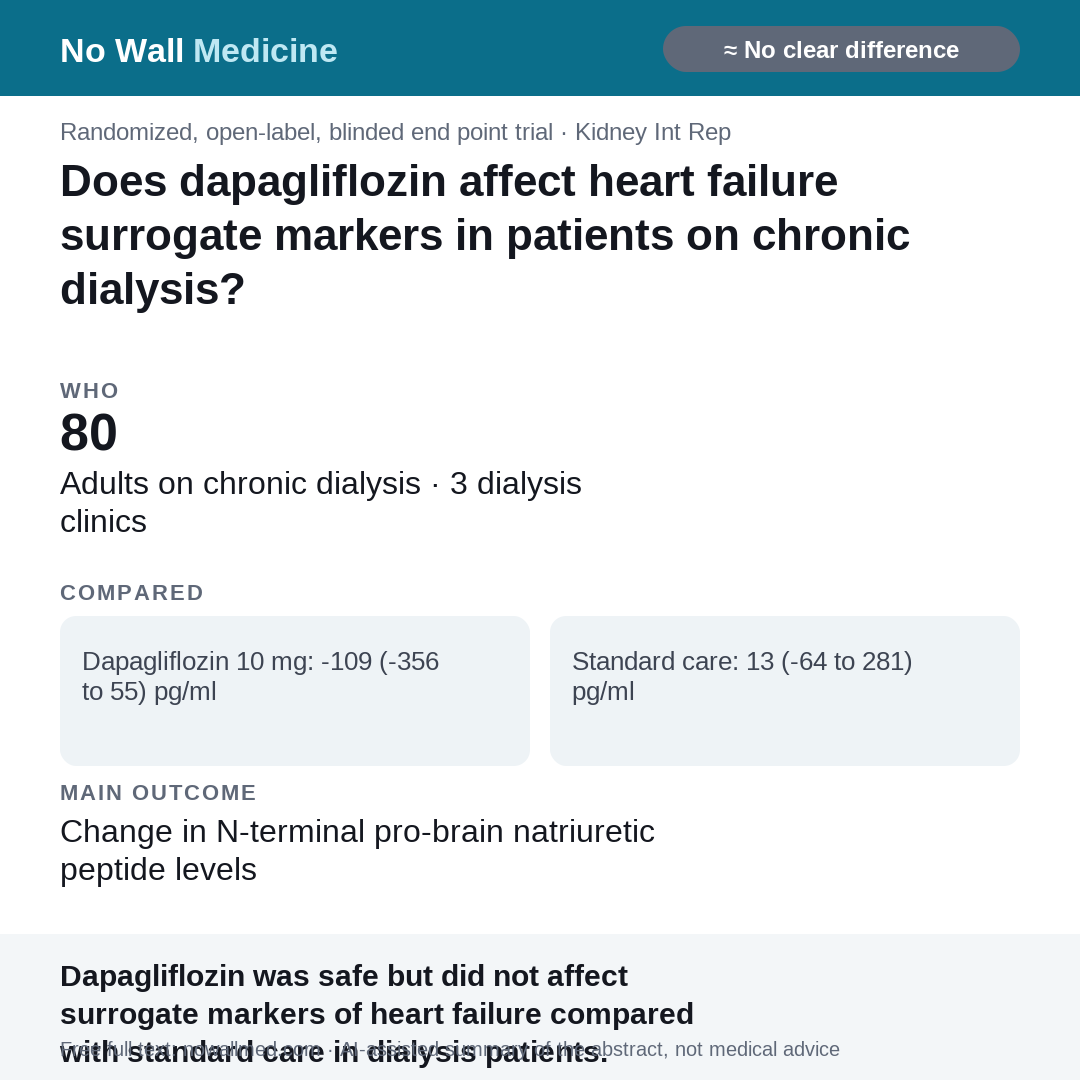
A Multicenter Randomized Clinical Trial of Dapagliflozin in Patients Receiving Chronic Dialysis (The DARE-ESKD-2 Trial)
Randomized, open-label, blinded end point trialNo clear difference
Does dapagliflozin affect heart failure surrogate markers in patients on chronic dialysis?
Who
80
Adults on chronic dialysis · 3 dialysis clinics
Compared
Dapagliflozin 10 mg: -109 (-356 to 55) pg/ml
Standard care: 13 (-64 to 281) pg/ml
Main outcome
Change in N-terminal pro-brain natriuretic peptide levels
Result: median difference -155 (-327 to -33) pg/ml
Bottom line: Dapagliflozin was safe but did not affect surrogate markers of heart failure compared with standard care in dialysis patients.
Kidney Int Rep · 2026-02-10Download image
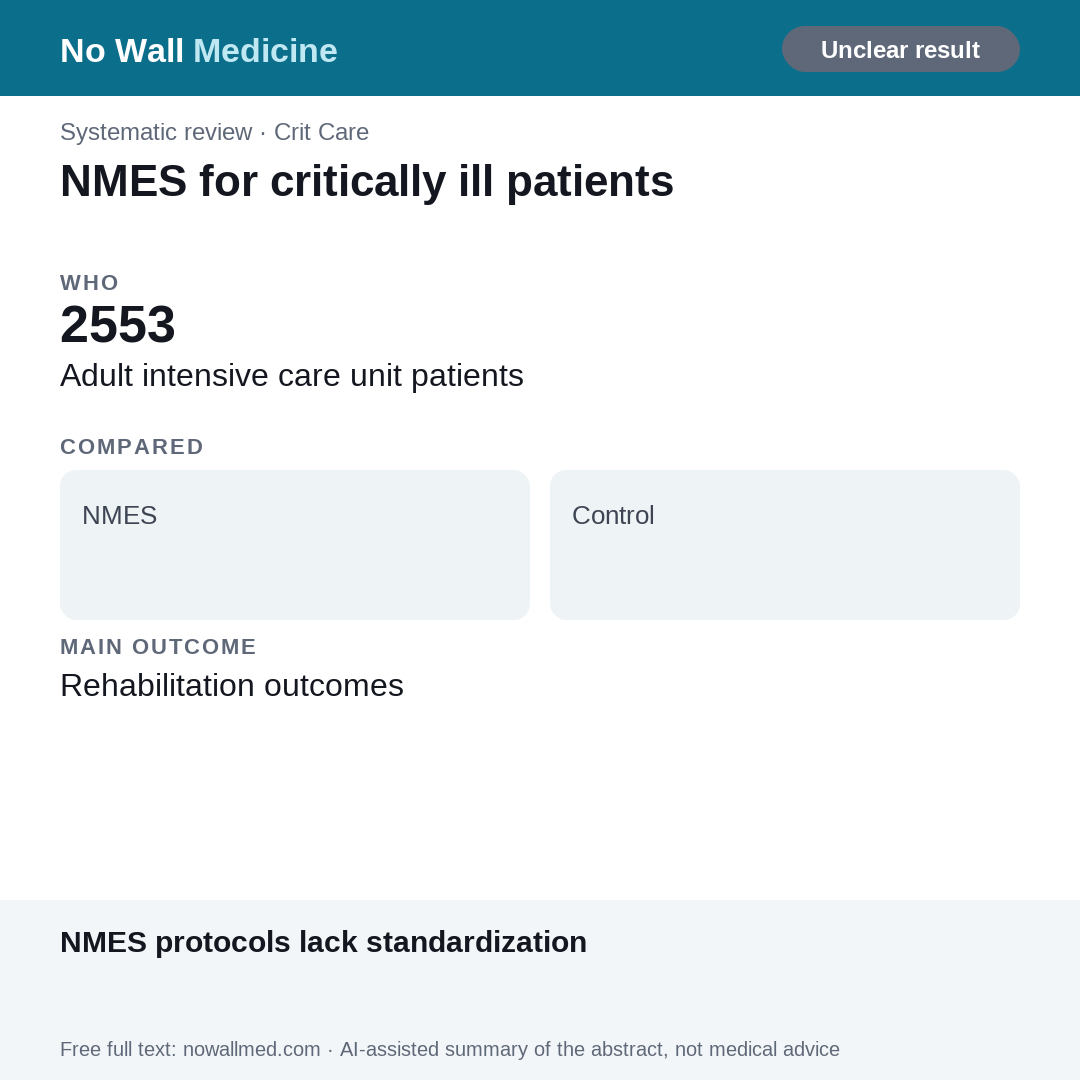
Neuromuscular electrical stimulation for early rehabilitation in critically ill patients: a systematic review of applied protocols
Systematic reviewUnclear result
NMES for critically ill patients
Who
2553
Adult intensive care unit patients
Compared
NMES
Control
Main outcome
Rehabilitation outcomes
Bottom line: NMES protocols lack standardization
Limitation: Heterogeneous NMES protocols
Crit Care · 2026-02-10Download image
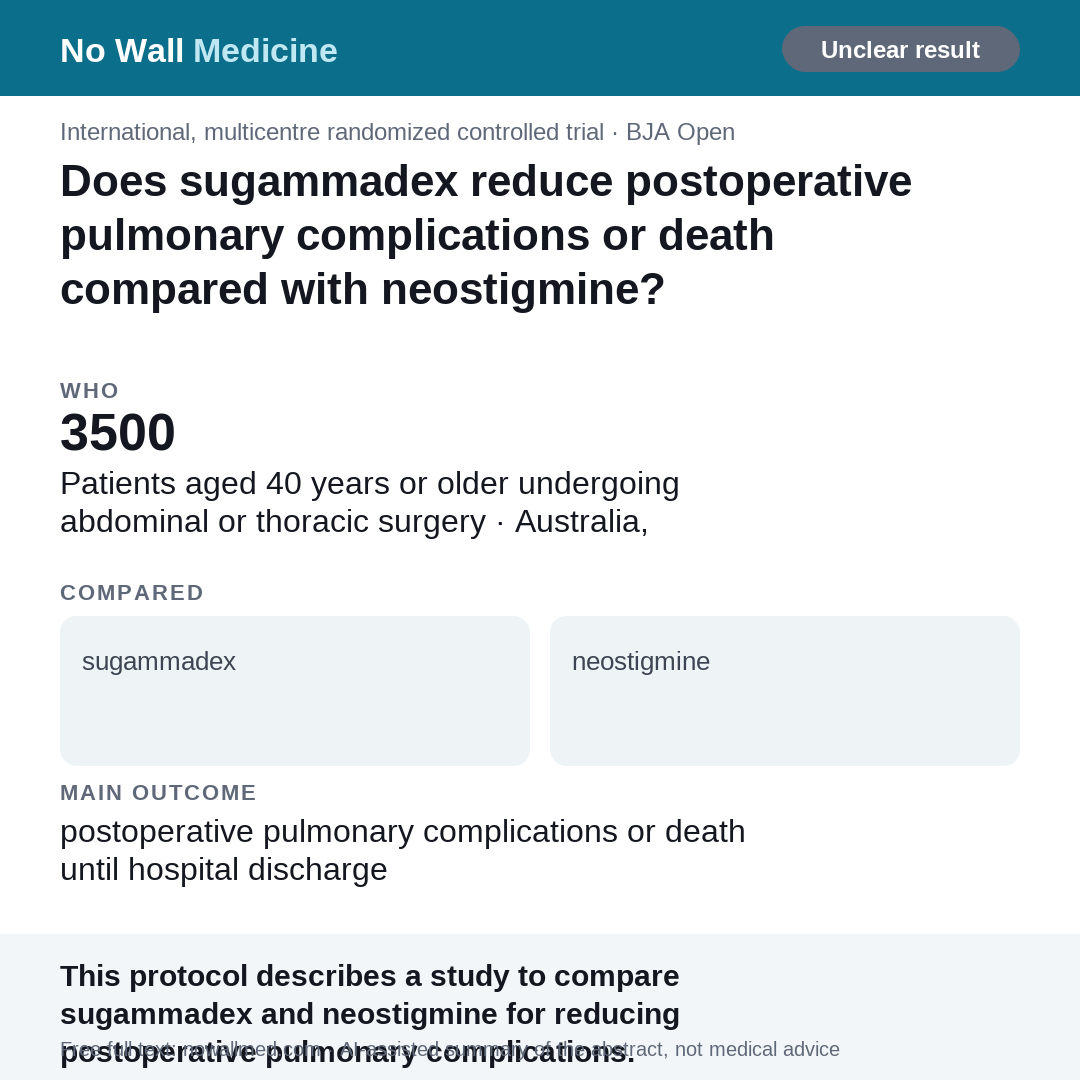
Sugammadex, neostigmine, and postoperative pulmonary complications: protocol of the SNaPP multicentre randomised controlled trial
International, multicentre randomized controlled trialUnclear result
Does sugammadex reduce postoperative pulmonary complications or death compared with neostigmine?
Who
3500
Patients aged 40 years or older undergoing abdominal or thoracic surgery · Australia, Aotearoa New Zealand, and Hong Kong
Compared
sugammadex
neostigmine
Main outcome
postoperative pulmonary complications or death until hospital discharge
Bottom line: This protocol describes a study to compare sugammadex and neostigmine for reducing postoperative pulmonary complications.
BJA Open · 2026-02-10Download image
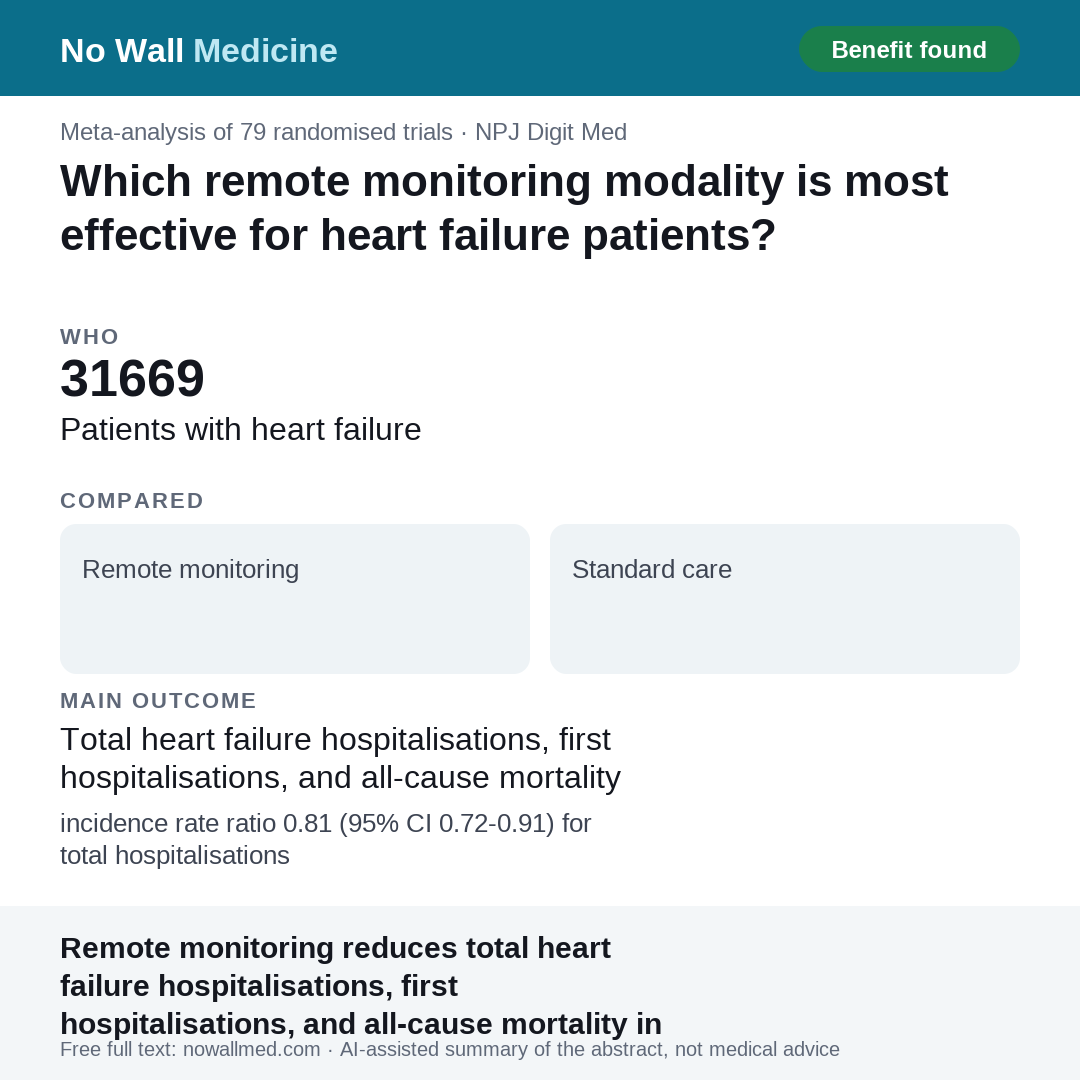
Telemonitoring modalities in heart failure: comparative effectiveness across the heart failure population-a meta-analysis
Meta-analysis of 79 randomised trialsBenefit found
Which remote monitoring modality is most effective for heart failure patients?
Who
31669
Patients with heart failure
Compared
Remote monitoring
Standard care
Main outcome
Total heart failure hospitalisations, first hospitalisations, and all-cause mortality
Result: incidence rate ratio 0.81 (95% CI 0.72-0.91) for total hospitalisations
Bottom line: Remote monitoring reduces total heart failure hospitalisations, first hospitalisations, and all-cause mortality in heart failure patients.
Limitation: Current evidence does not allow targeted remote monitoring implementation for specific patients.
NPJ Digit Med · 2026-02-10Download image
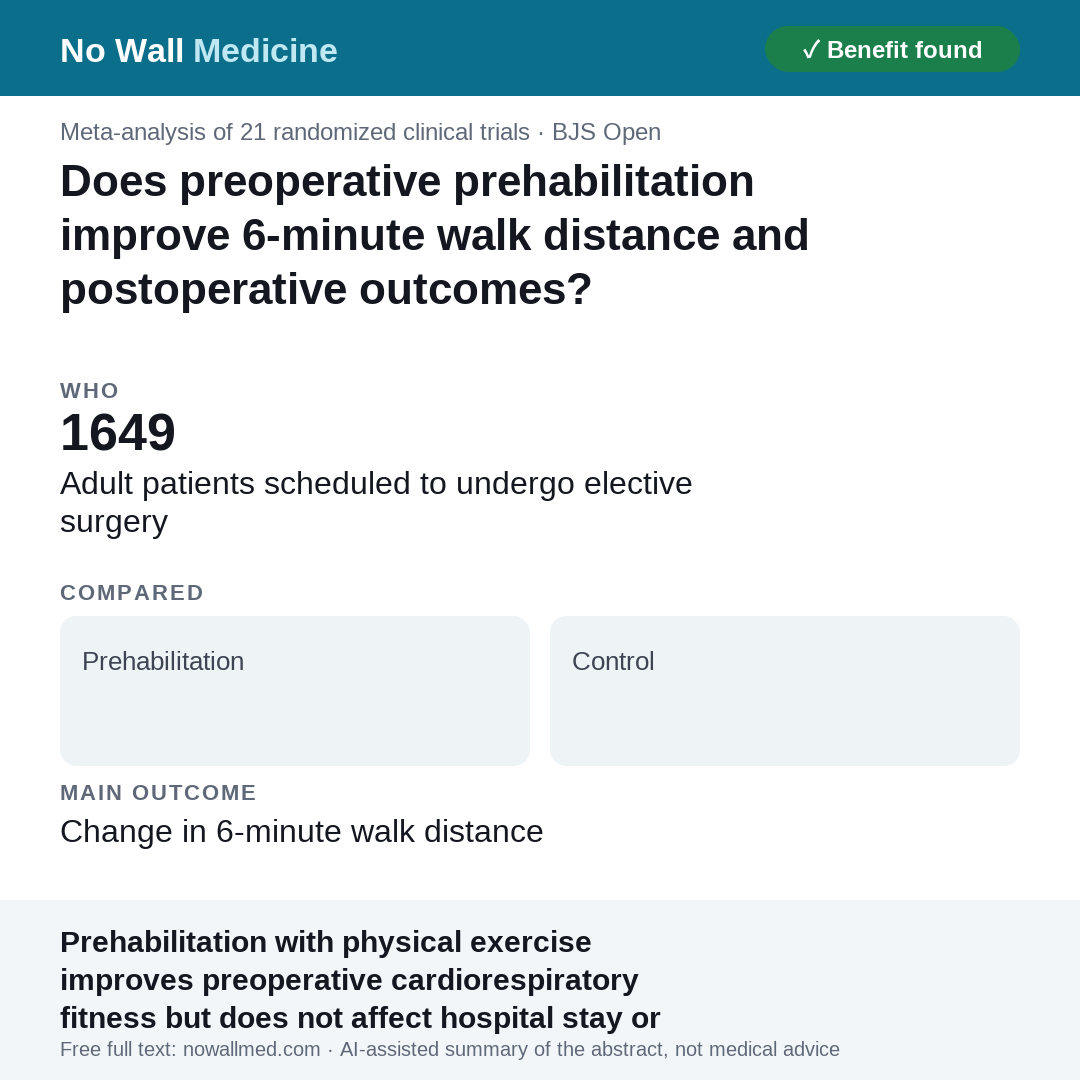
Effect of preoperative prehabilitation on the 6-minute walk distance and postoperative outcomes in adult patients: meta-analysis
Meta-analysis of 21 randomized clinical trialsBenefit found
Does preoperative prehabilitation improve 6-minute walk distance and postoperative outcomes?
Who
1649
Adult patients scheduled to undergo elective surgery
Compared
Prehabilitation
Control
Main outcome
Change in 6-minute walk distance
Result: mean difference 29 m (95% c.i. 14 to 42 m)
Bottom line: Prehabilitation with physical exercise improves preoperative cardiorespiratory fitness but does not affect hospital stay or mortality.
BJS Open · 2026-02-10Download image
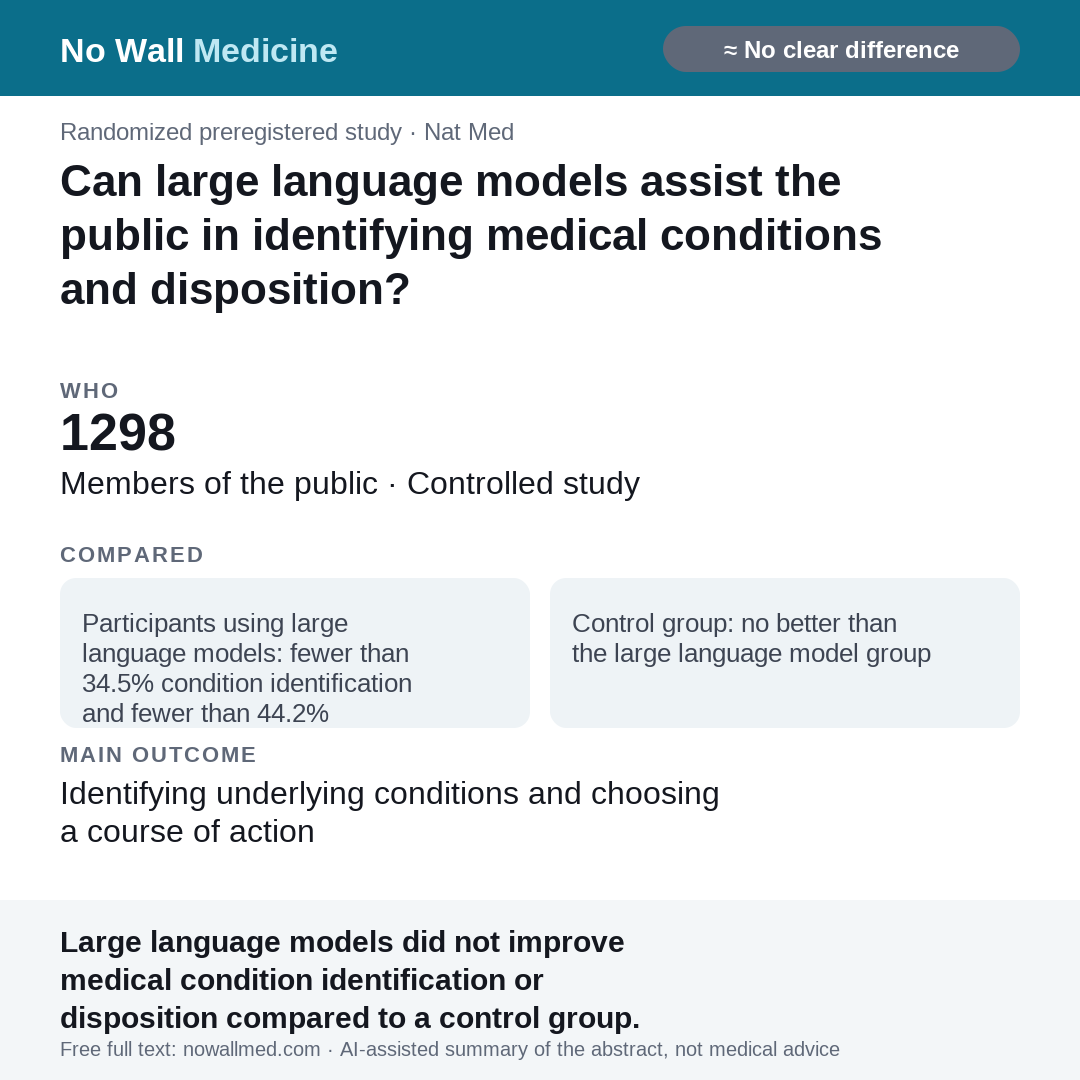
Reliability of LLMs as medical assistants for the general public: a randomized preregistered study
Randomized preregistered studyNo clear difference
Can large language models assist the public in identifying medical conditions and disposition?
Who
1298
Members of the public · Controlled study
Compared
Participants using large language models: fewer than 34.5% condition identification and fewer than 44.2% disposition
Control group: no better than the large language model group
Main outcome
Identifying underlying conditions and choosing a course of action
Bottom line: Large language models did not improve medical condition identification or disposition compared to a control group.
Limitation: Standard benchmarks for medical knowledge do not predict failures found with human participants.
Nat Med · 2026-02-09Download image
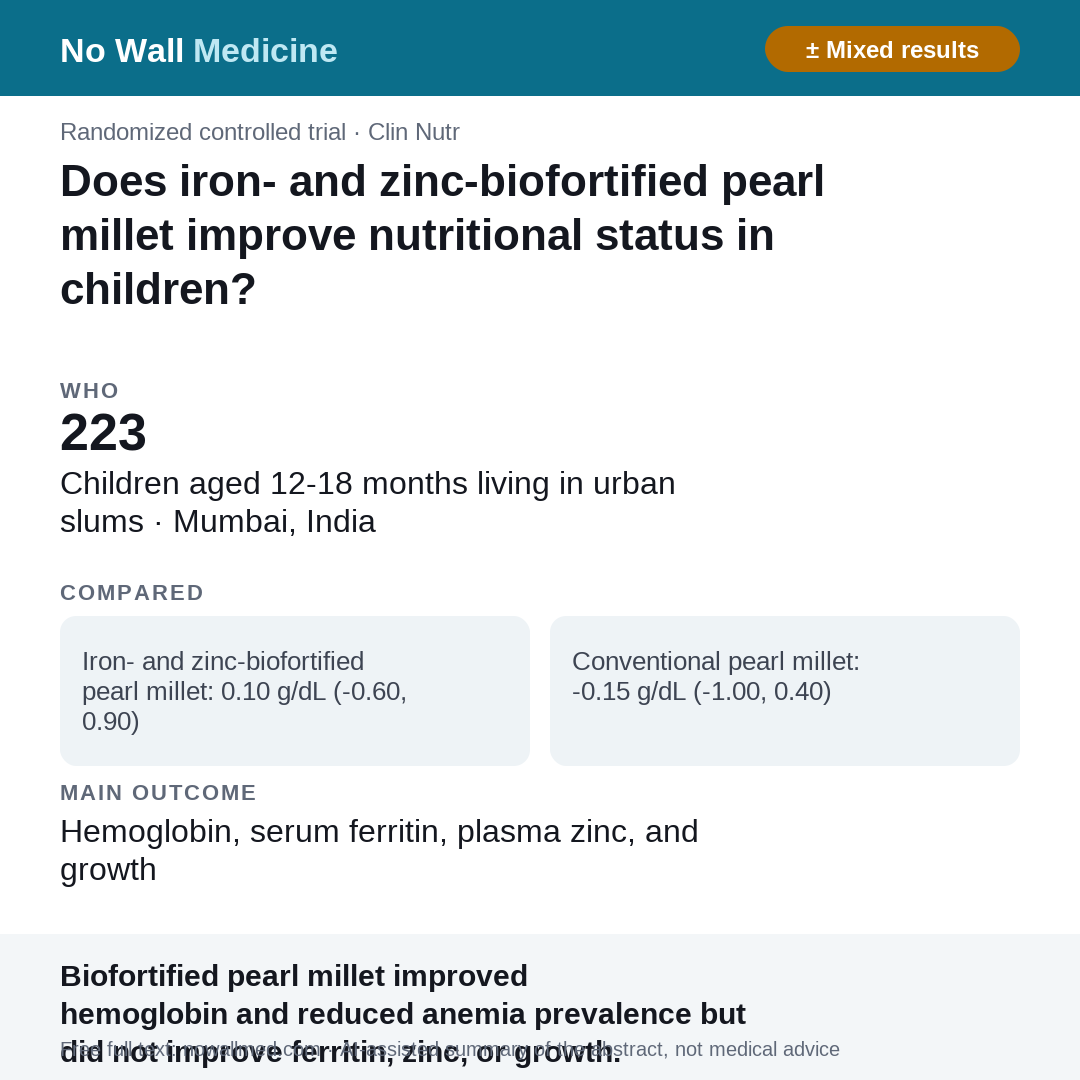
A randomized trial of iron- and zinc-biofortified pearl millet-based complementary feeding in children aged 12-18 months living in urban slums
Randomized controlled trialMixed results
Does iron- and zinc-biofortified pearl millet improve nutritional status in children?
Who
223
Children aged 12-18 months living in urban slums · Mumbai, India
Compared
Iron- and zinc-biofortified pearl millet: 0.10 g/dL (-0.60, 0.90)
Conventional pearl millet: -0.15 g/dL (-1.00, 0.40)
Main outcome
Hemoglobin, serum ferritin, plasma zinc, and growth
Bottom line: Biofortified pearl millet improved hemoglobin and reduced anemia prevalence but did not improve ferritin, zinc, or growth.
Limitation: The trial was not designed to detect differences in serum ferritin, plasma zinc, or growth.
Clin Nutr · 2026-02-09Download image
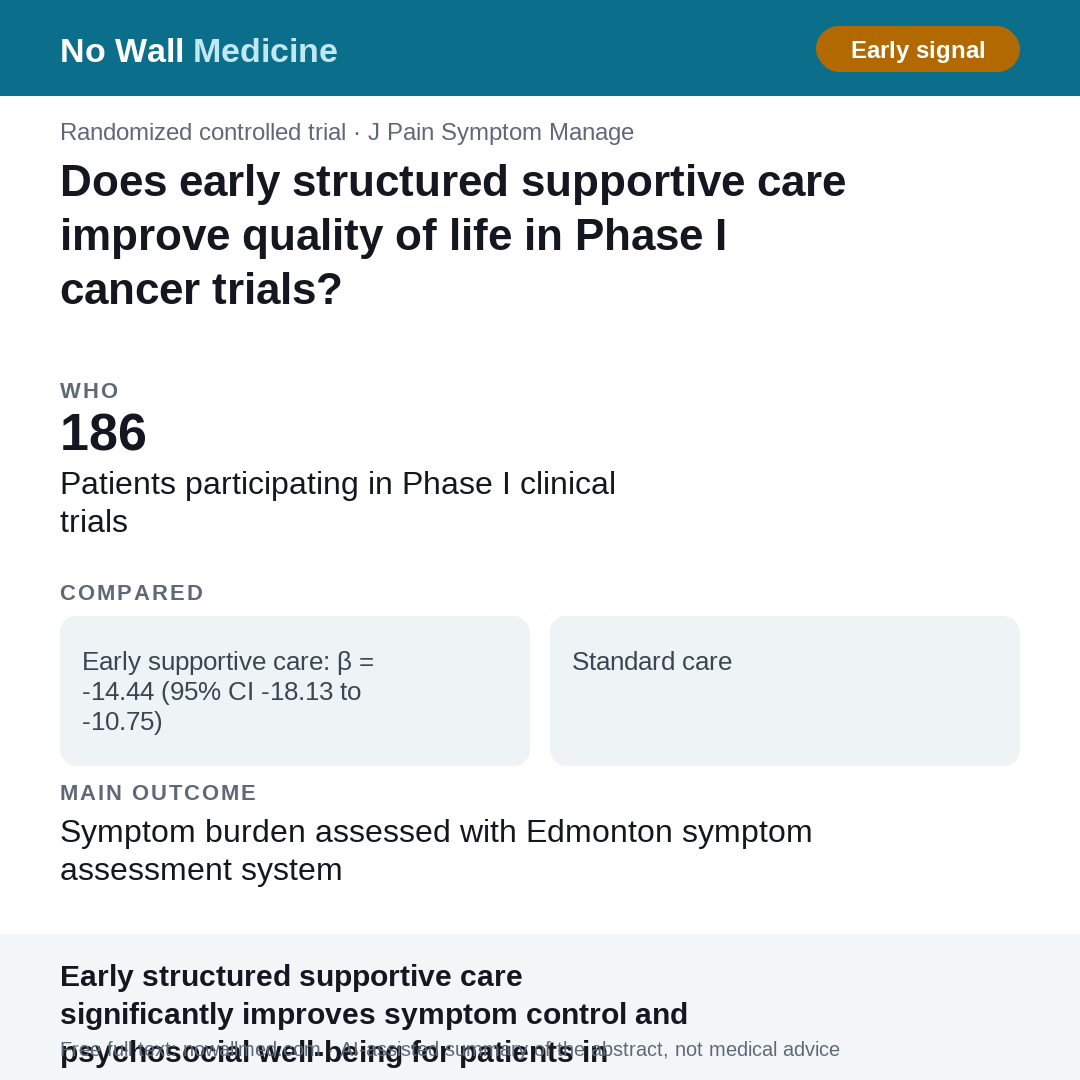
Early Supportive Versus Standard Care in Phase I Cancer Trials: A Randomized Controlled Trial
Randomized controlled trialBenefit found
Does early structured supportive care improve quality of life in Phase I cancer trials?
Who
186
Patients participating in Phase I clinical trials
Compared
Early supportive care: β = -14.44 (95% CI -18.13 to -10.75)
Standard care
Main outcome
Symptom burden assessed with Edmonton symptom assessment system
Result: group effect β = -14.44 (95% CI -18.13 to -10.75)
Bottom line: Early structured supportive care significantly improves symptom control and psychosocial well-being for patients in Phase I cancer trials.
J Pain Symptom Manage · 2026-02-09Download image