Visual abstracts
New randomized trials and meta-analyses from leading journals at a glance: who was studied, what was compared, and what was found. Every paper is free to read in full.
All specialtiesCardiology 4763Oncology 4042Gastroenterology & Hepatology 1902Infectious Disease 3756Neurology 1872Psychiatry & Mental Health 2214Pulmonology 2042Critical Care 1319Endocrinology & Diabetes 2544Pediatrics 2889Surgery 2479Orthopedics & Sports Medicine 917Neurosurgery 525Cardiothoracic & Vascular Surgery 656Plastic & Reconstructive Surgery 574Nephrology 1107Rheumatology 810Hematology 1090Dermatology 611Ophthalmology 532Obstetrics & Gynecology 1645Public & Global Health 1037Radiology & Imaging 617Anesthesiology 957Urology 745ENT (Otolaryngology) 494Emergency Medicine 481Allergy & Immunology 309Geriatrics 972Family Medicine & Primary Care 533Medical Genetics & Genomics 659Pathology & Laboratory Medicine 156Physical Medicine & Rehabilitation 734Palliative Care 421Nutrition 1560Digital Health & AI 2133General Medicine 318
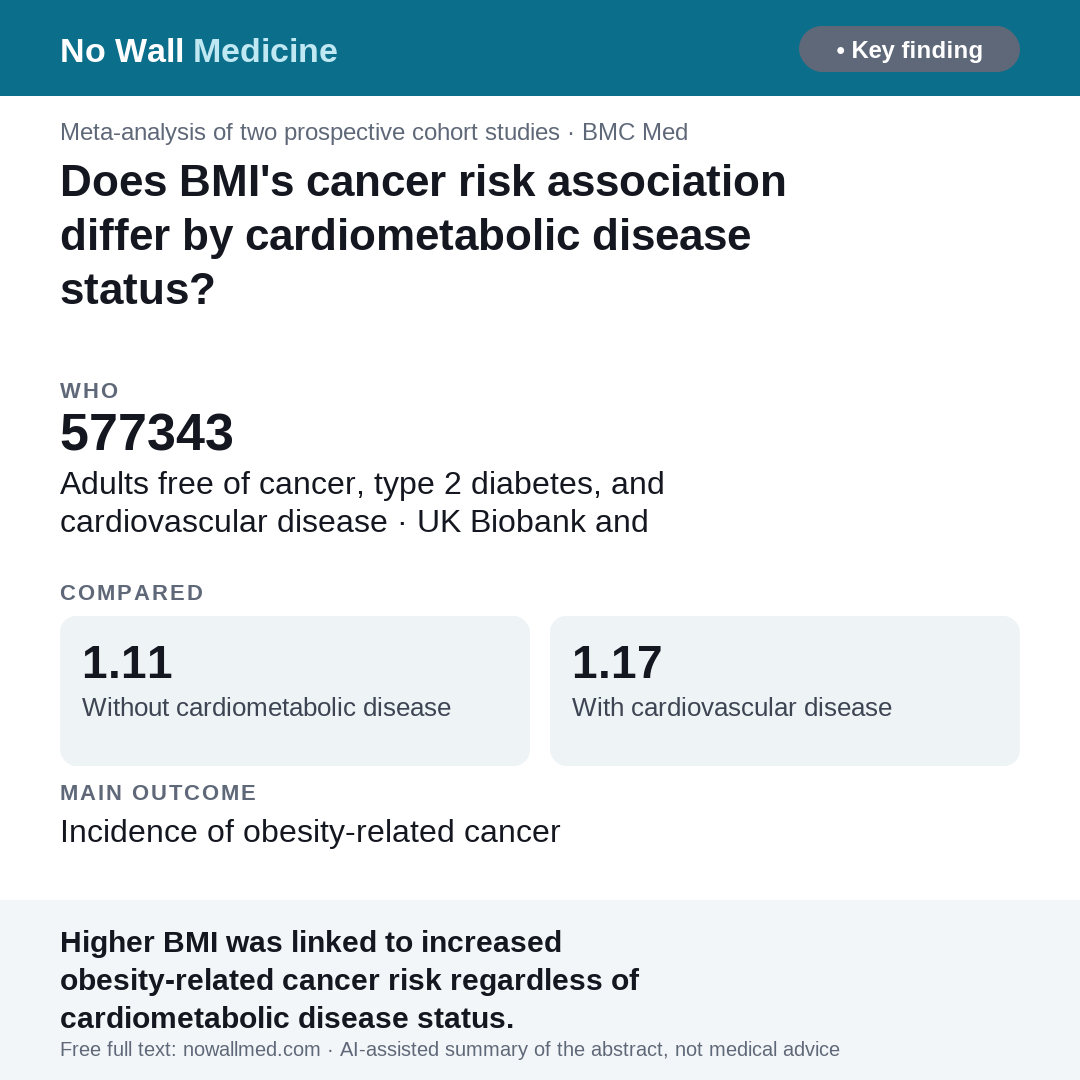
Body mass index and cancer risk among adults with and without cardiometabolic diseases: evidence from the EPIC and UK Biobank prospective cohort studies
Meta-analysis of two prospective cohort studiesKey finding
Does BMI's cancer risk association differ by cardiometabolic disease status?
Who
577343
Adults free of cancer, type 2 diabetes, and cardiovascular disease · UK Biobank and European Prospective Investigation into Cancer and nutrition
Compared
1.11Without cardiometabolic disease (95% CI 1.07, 1.16)
1.17With cardiovascular disease (95% CI 1.11, 1.24)
Main outcome
Incidence of obesity-related cancer
Result: hazard ratio 1.11 (95% CI 1.07, 1.16)
Bottom line: Higher BMI was linked to increased obesity-related cancer risk regardless of cardiometabolic disease status.
BMC Med · 2023-11-23Download image
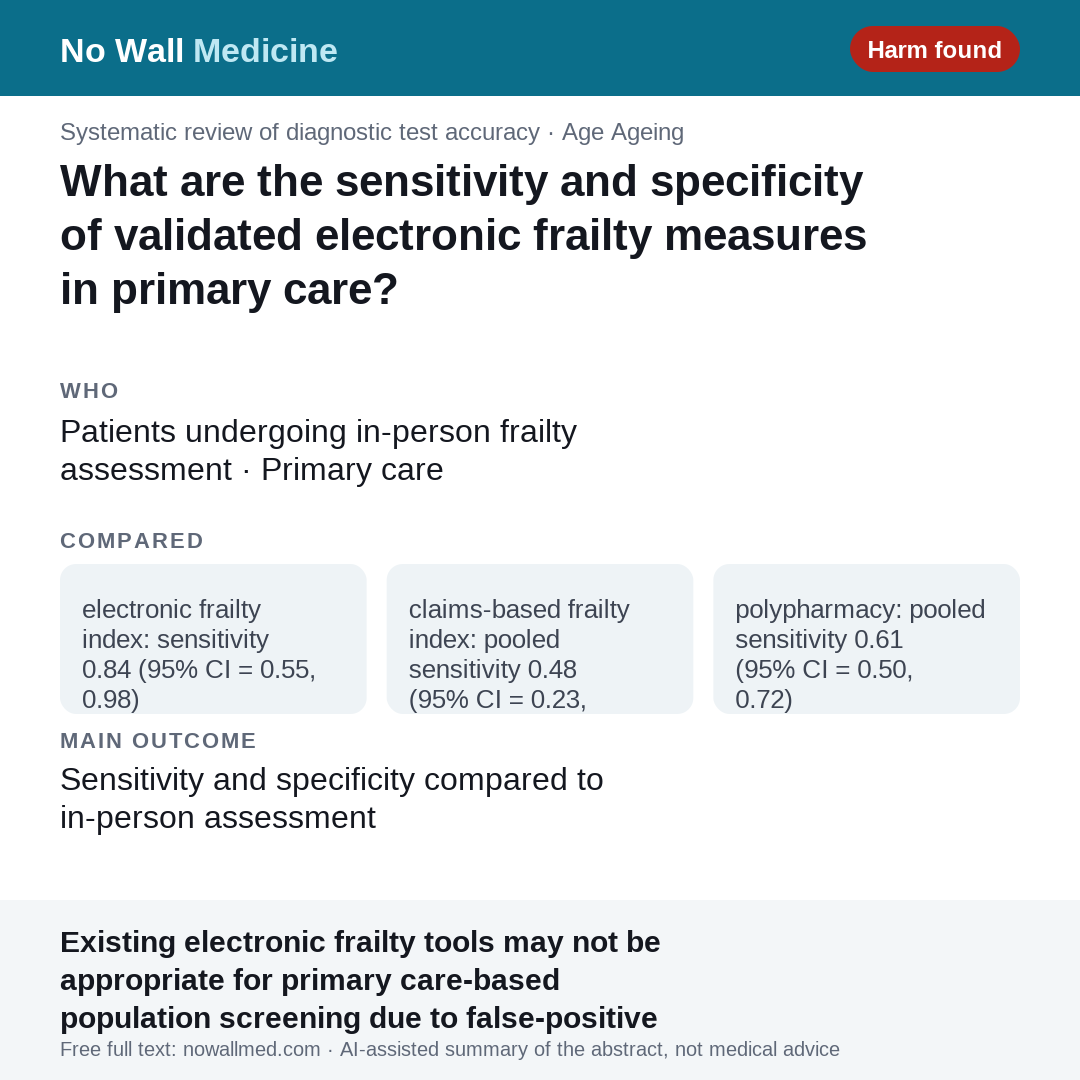
Validated frailty measures using electronic primary care records: a review of diagnostic test accuracy
Systematic review of diagnostic test accuracyHarm found
What are the sensitivity and specificity of validated electronic frailty measures in primary care?
Who
Patients undergoing in-person frailty assessment · Primary care
Compared
electronic frailty index: sensitivity 0.84 (95% CI = 0.55, 0.98)
claims-based frailty index: pooled sensitivity 0.48 (95% CI = 0.23, 0.74)
polypharmacy: pooled sensitivity 0.61 (95% CI = 0.50, 0.72)
Main outcome
Sensitivity and specificity compared to in-person assessment
Bottom line: Existing electronic frailty tools may not be appropriate for primary care-based population screening due to false-positive results.
Age Ageing · 2023-11-23Download image
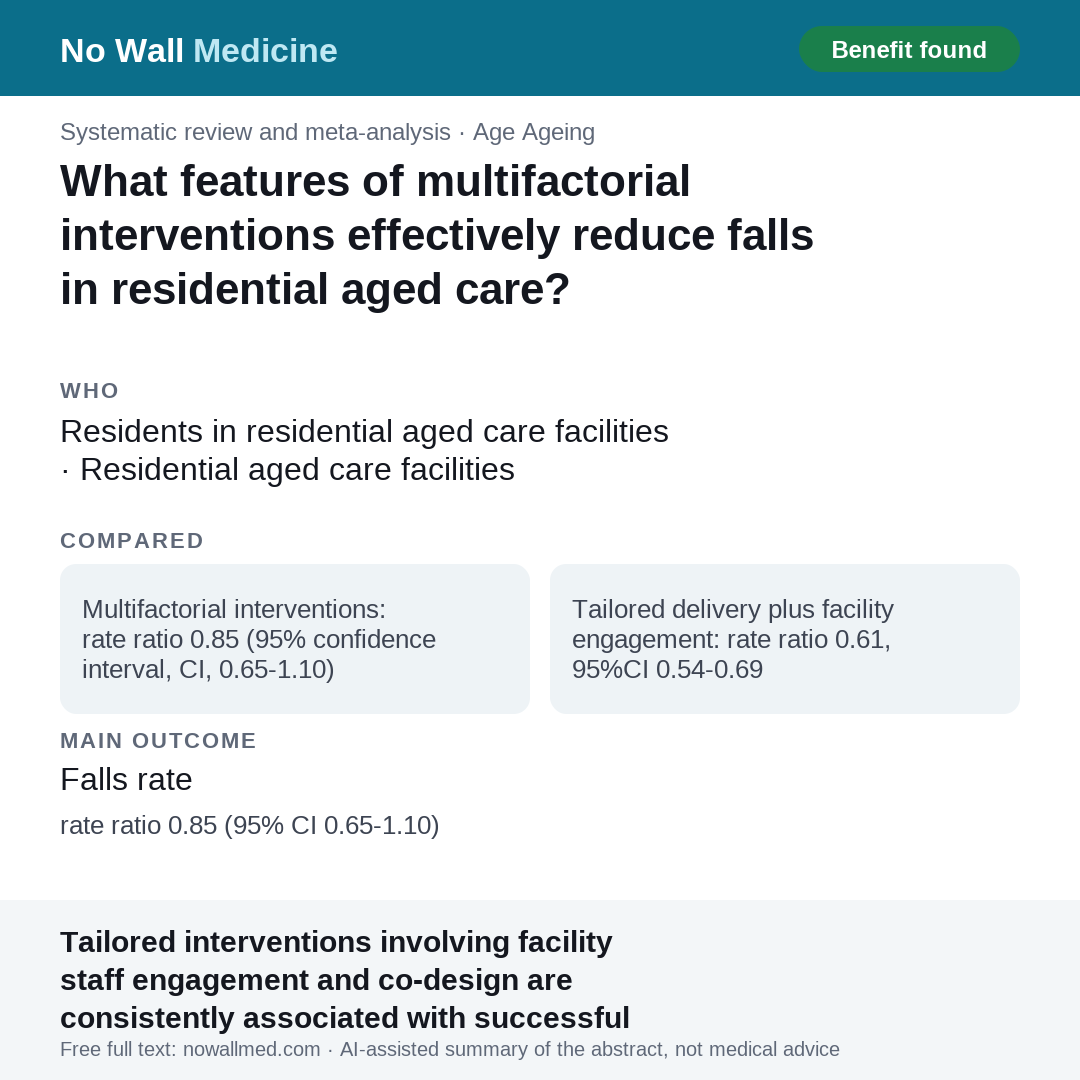
Critical features of multifactorial interventions for effective falls reduction in residential aged care: a systematic review, intervention component analysis and qualitative comparative analysis
Systematic review and meta-analysisBenefit found
What features of multifactorial interventions effectively reduce falls in residential aged care?
Who
Residents in residential aged care facilities · Residential aged care facilities
Compared
Multifactorial interventions: rate ratio 0.85 (95% confidence interval, CI, 0.65-1.10)
Tailored delivery plus facility engagement: rate ratio 0.61, 95%CI 0.54-0.69
Main outcome
Falls rate
Result: rate ratio 0.85 (95% CI 0.65-1.10)
Bottom line: Tailored interventions involving facility staff engagement and co-design are consistently associated with successful falls reduction.
Age Ageing · 2023-11-23Download image
Performances of machine learning algorithms in discriminating sacroiliitis features on MRI: a systematic review
Systematic reviewNo clear difference
How do machine learning algorithms perform in discriminating sacroiliitis features on MRI compared to physicians?
Who
Studies evaluating machine learning for sacroiliitis features on MRI
Compared
Machine learning algorithms: area under the curve 0.76 to 0.99
Human physicians: sensitivity 0.67-1.00 and specificity 0.78-1.00
Main outcome
Performance in discriminating sacroiliitis features on MRI
Bottom line: Machine learning performance is comparable to radiologists, but results vary due to high heterogeneity and study limitations.
Limitation: High heterogeneity, small sample sizes, overfitting, and under-reporting issues in individual studies.
RMD Open · 2023-11-23Download image

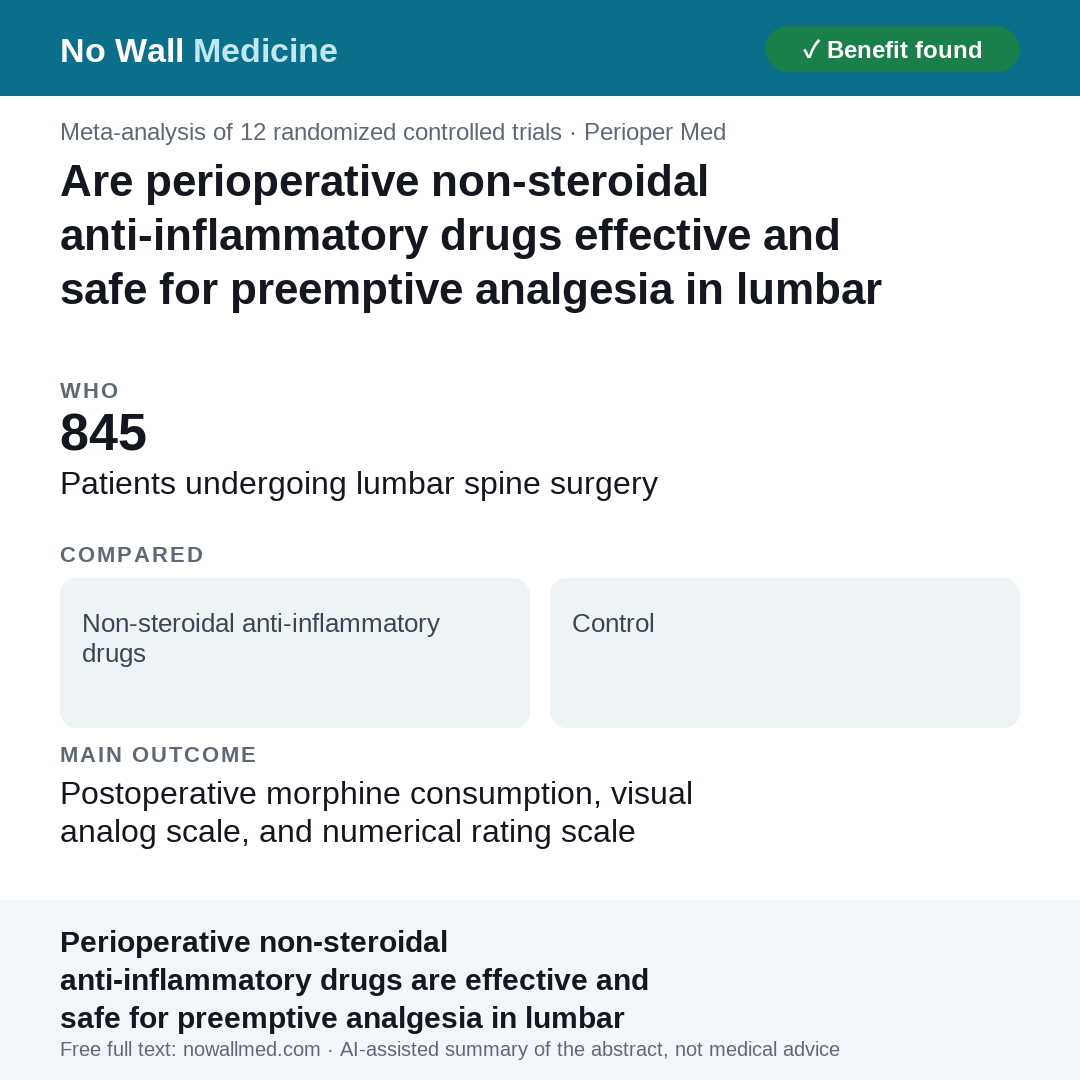
Efficacy and safety of perioperative use of non-steroidal anti-inflammatory drugs for preemptive analgesia in lumbar spine surgery: a systematic review and meta-analysis
Meta-analysis of 12 randomized controlled trialsBenefit found
Are perioperative non-steroidal anti-inflammatory drugs effective and safe for preemptive analgesia in lumbar spine surgery?
Who
845
Patients undergoing lumbar spine surgery
Compared
Non-steroidal anti-inflammatory drugs
Control
Main outcome
Postoperative morphine consumption, visual analog scale, and numerical rating scale
Bottom line: Perioperative non-steroidal anti-inflammatory drugs are effective and safe for preemptive analgesia in lumbar spine surgery.
Perioper Med · 2023-11-23Download image
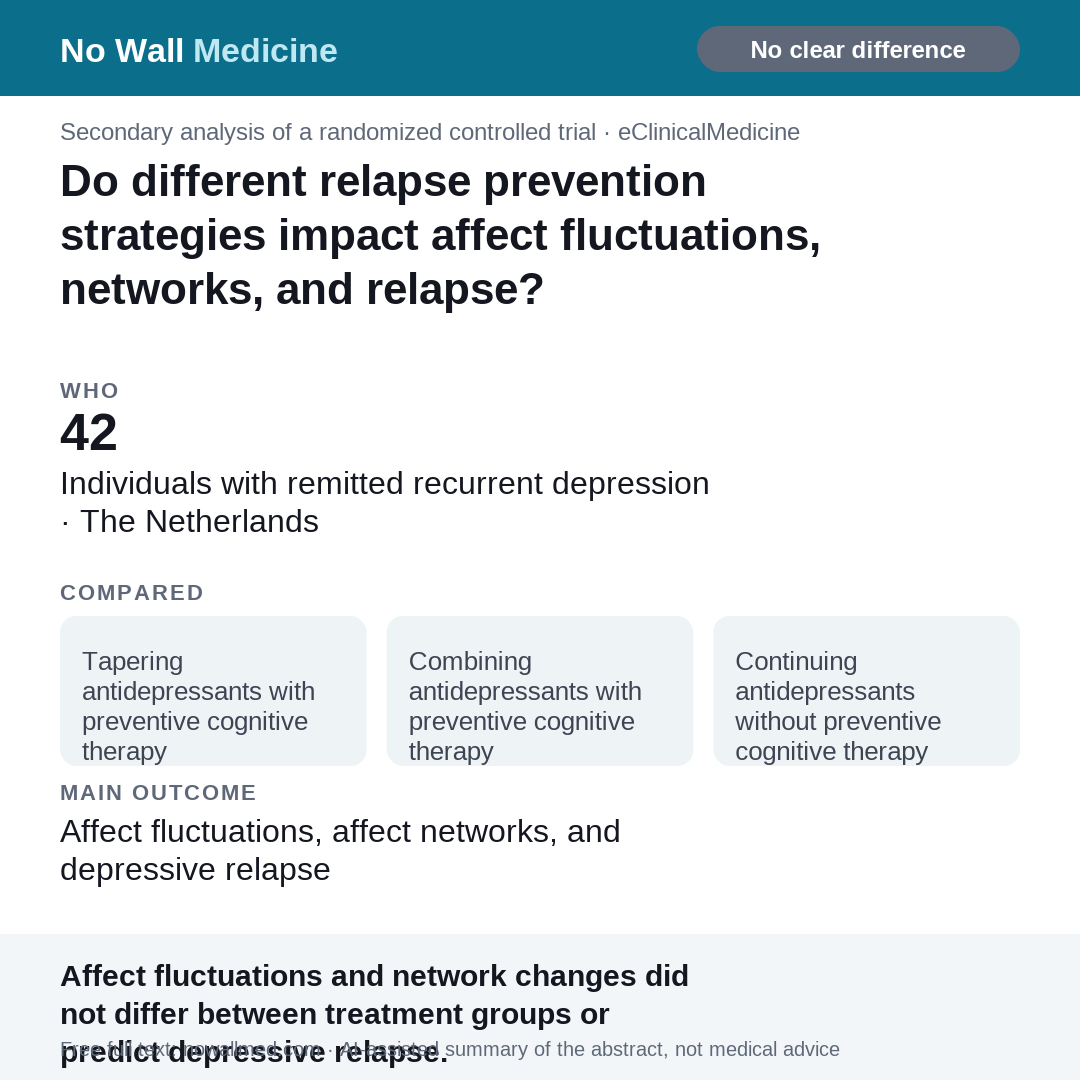
Differential impact of preventive cognitive therapy while tapering antidepressants versus maintenance antidepressant treatment on affect fluctuations and individual affect networks and impact on relapse: a secondary analysis of a randomised controlled trial
Secondary analysis of a randomized controlled trialNo clear difference
Do different relapse prevention strategies impact affect fluctuations, networks, and relapse?
Who
42
Individuals with remitted recurrent depression · The Netherlands
Compared
Tapering antidepressants with preventive cognitive therapy
Combining antidepressants with preventive cognitive therapy
Continuing antidepressants without preventive cognitive therapy
Main outcome
Affect fluctuations, affect networks, and depressive relapse
Bottom line: Affect fluctuations and network changes did not differ between treatment groups or predict depressive relapse.
Limitation: Exploratory nature of the study and wide confidence intervals due to low statistical power.
Funded by: The Netherlands Organisation for Health Research and Development
eClinicalMedicine · 2023-11-22Download image
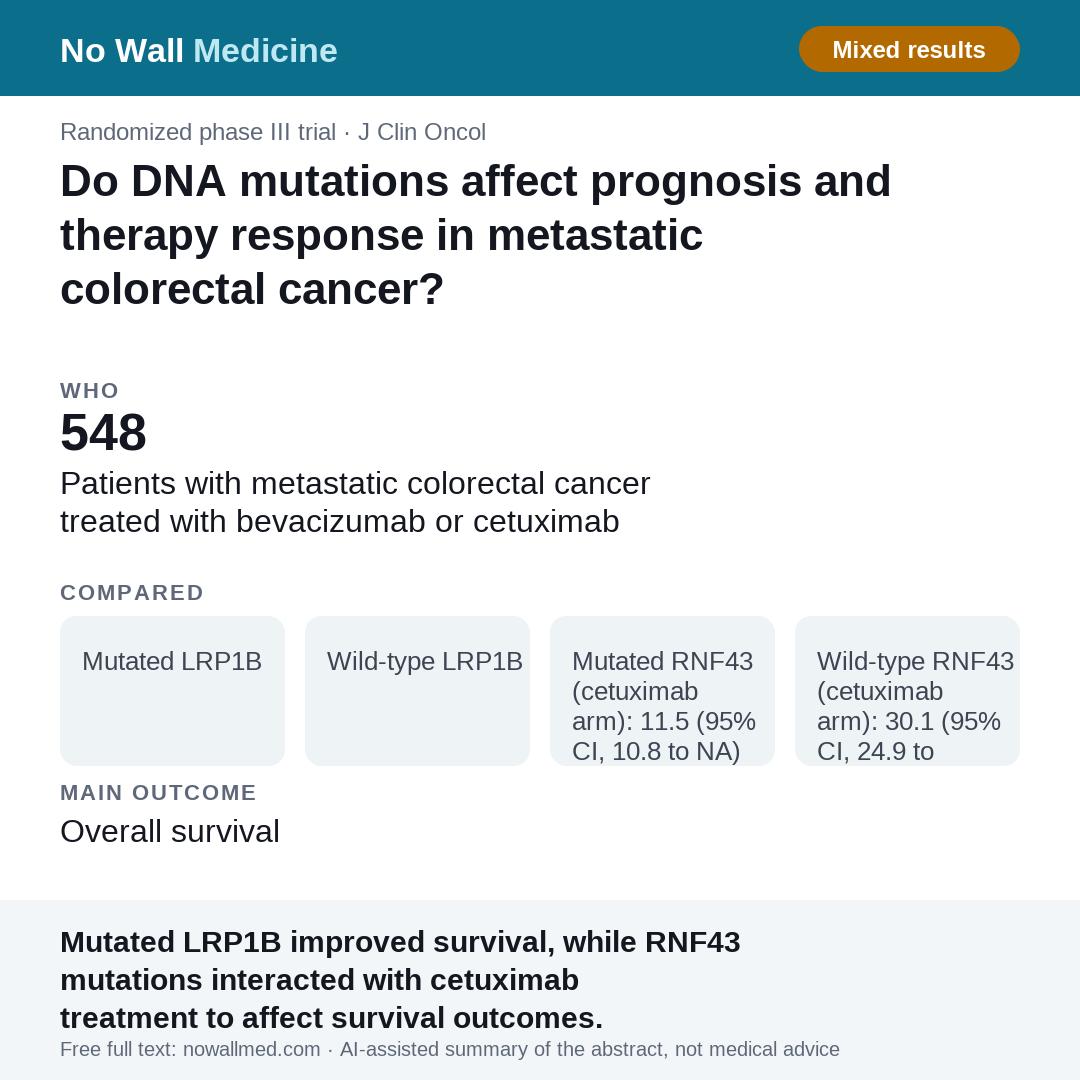
DNA Mutational Profiling in Patients With Colorectal Cancer Treated With Standard of Care Reveals Differences in Outcome and Racial Distribution of Mutations
Randomized phase III trialMixed results
Do DNA mutations affect prognosis and therapy response in metastatic colorectal cancer?
Who
548
Patients with metastatic colorectal cancer treated with bevacizumab or cetuximab
Compared
Mutated LRP1B
Wild-type LRP1B
Mutated RNF43 (cetuximab arm): 11.5 (95% CI, 10.8 to NA) months
Wild-type RNF43 (cetuximab arm): 30.1 (95% CI, 24.9 to 35.3) months
Main outcome
Overall survival
Result: hazard ratio 0.57 (95% CI 0.40 to 0.80)
Bottom line: Mutated LRP1B improved survival, while RNF43 mutations interacted with cetuximab treatment to affect survival outcomes.
J Clin Oncol · 2023-11-22Download image
Opportunistic Treatment of Hepatitis C Infection Among Hospitalized People Who Inject Drugs (OPPORTUNI-C): A Stepped Wedge Cluster Randomized Trial
Stepped wedge cluster randomized trialBenefit found
Does opportunistic treatment improve hepatitis C treatment completion among hospitalized people who inject drugs?
Who
200
Hepatitis C RNA positive hospitalized people who inject drugs · Three hospitals in Oslo, Norway
Compared
intervention conditions: 67 of 98 (68.4% [95% CI: 58.2-77.4])
control conditions: 36 of 102 (35.3% [95% CI: 26.1-45.4])
Main outcome
treatment completion
Result: adjusted odds ratio 4.8 (95% CI 1.8-12.8)
Bottom line: Opportunistic immediate treatment initiation was superior to standard care for treatment completion among hospitalized people who inject drugs.
Clin Infect Dis · 2023-11-22Download image

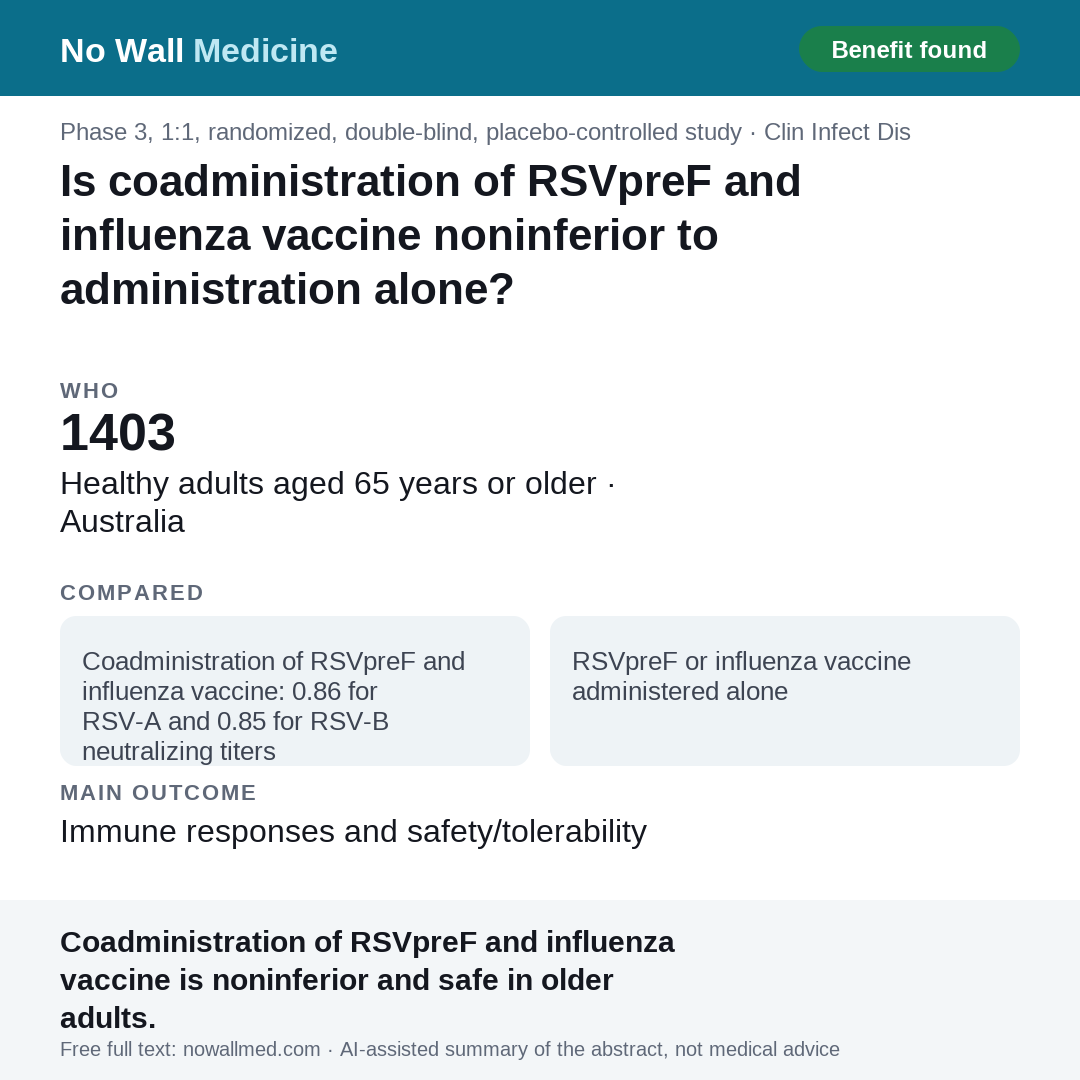
Safety and Immunogenicity of Bivalent RSVpreF Vaccine Coadministered With Seasonal Inactivated Influenza Vaccine in Older Adults
Phase 3, 1:1, randomized, double-blind, placebo-controlled studyBenefit found
Is coadministration of RSVpreF and influenza vaccine noninferior to administration alone?
Who
1403
Healthy adults aged 65 years or older · Australia
Compared
Coadministration of RSVpreF and influenza vaccine: 0.86 for RSV-A and 0.85 for RSV-B neutralizing titers
RSVpreF or influenza vaccine administered alone
Main outcome
Immune responses and safety/tolerability
Result: All comparisons achieved the prespecified 1.5-fold noninferiority margin
Bottom line: Coadministration of RSVpreF and influenza vaccine is noninferior and safe in older adults.
Clin Infect Dis · 2023-11-22Download image
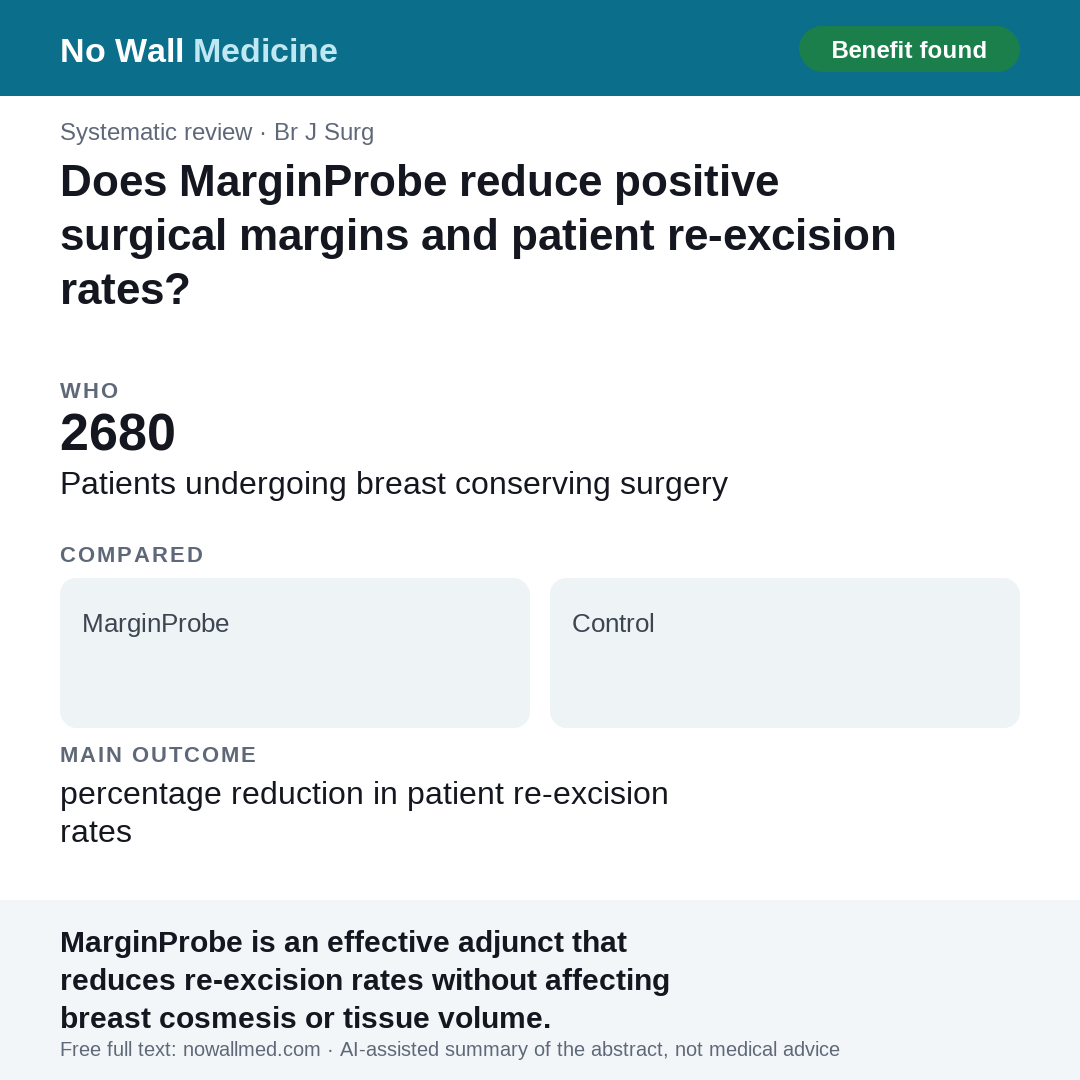
Reducing re-excision rates in breast conserving surgery with Margin Probe: systematic review
Systematic reviewBenefit found
Does MarginProbe reduce positive surgical margins and patient re-excision rates?
Who
2680
Patients undergoing breast conserving surgery
Compared
MarginProbe
Control
Main outcome
percentage reduction in patient re-excision rates
Result: 54.68 per cent reduction (P < 0.001; d = 1.826)
Bottom line: MarginProbe is an effective adjunct that reduces re-excision rates without affecting breast cosmesis or tissue volume.
Br J Surg · 2023-11-22Download image
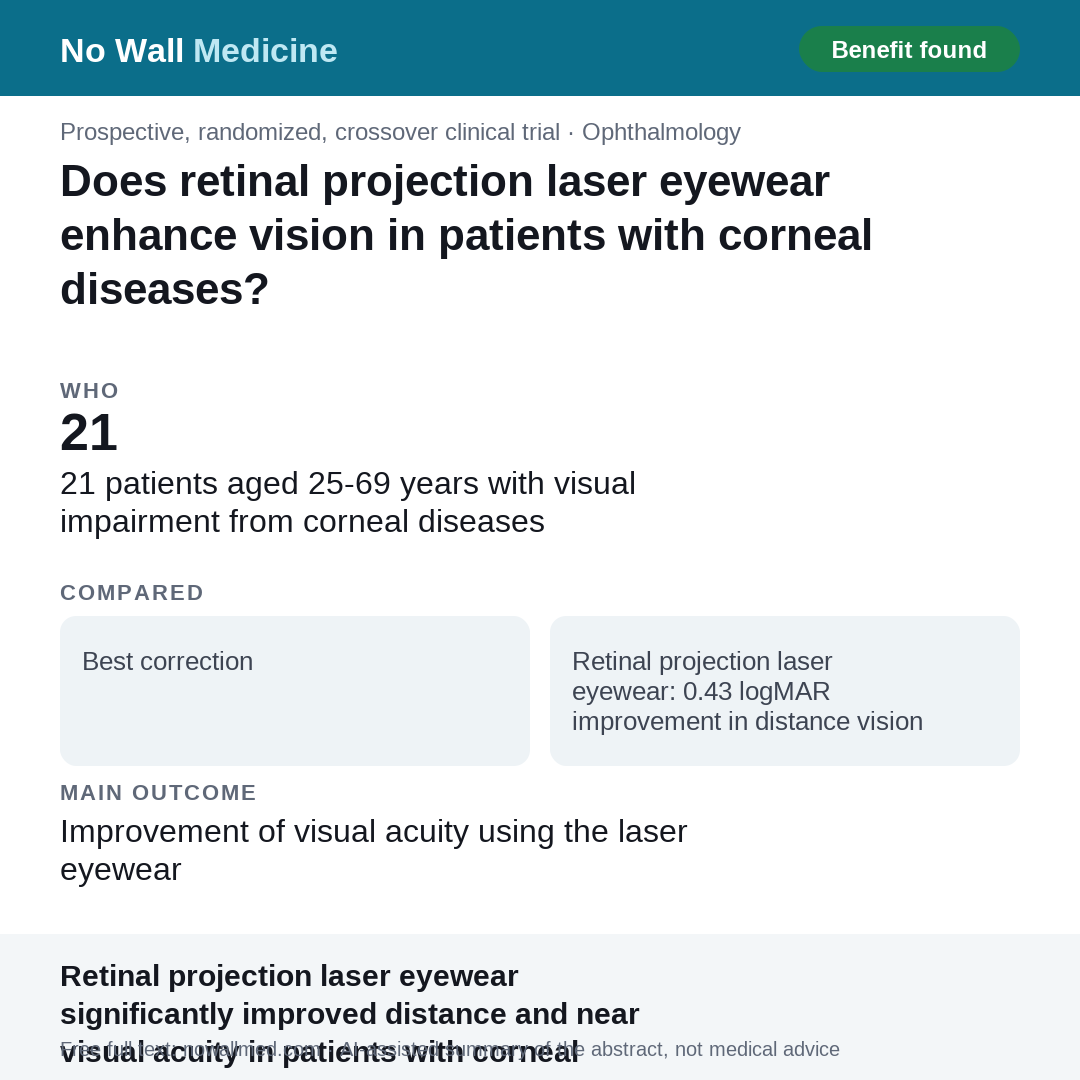
Evaluation of a Retinal Projection Laser Eyeware in Patients with Visual Impairment Caused by Corneal Diseases in a Randomized Trial
Prospective, randomized, crossover clinical trialBenefit found
Does retinal projection laser eyewear enhance vision in patients with corneal diseases?
Who
21
21 patients aged 25-69 years with visual impairment from corneal diseases
Compared
Best correction
Retinal projection laser eyewear: 0.43 logMAR improvement in distance vision
Main outcome
Improvement of visual acuity using the laser eyewear
Bottom line: Retinal projection laser eyewear significantly improved distance and near visual acuity in patients with corneal diseases.
Ophthalmology · 2023-11-22Download image
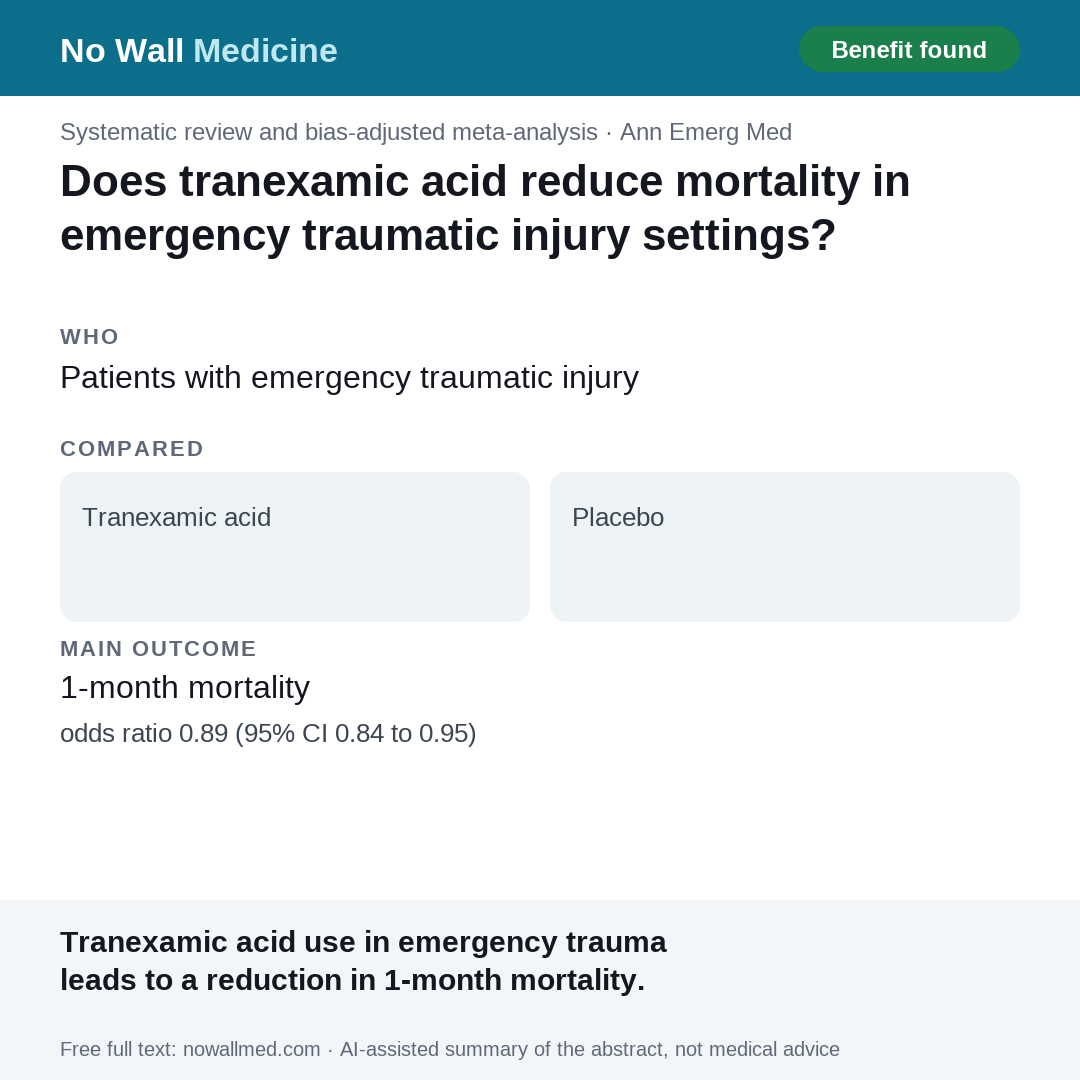
Tranexamic Acid for Traumatic Injury in the Emergency Setting: A Systematic Review and Bias-Adjusted Meta-Analysis of Randomized Controlled Trials
Systematic review and bias-adjusted meta-analysisBenefit found
Does tranexamic acid reduce mortality in emergency traumatic injury settings?
Who
Patients with emergency traumatic injury
Compared
Tranexamic acid
Placebo
Main outcome
1-month mortality
Result: odds ratio 0.89 (95% CI 0.84 to 0.95)
Bottom line: Tranexamic acid use in emergency trauma leads to a reduction in 1-month mortality.
Ann Emerg Med · 2023-11-22Download image
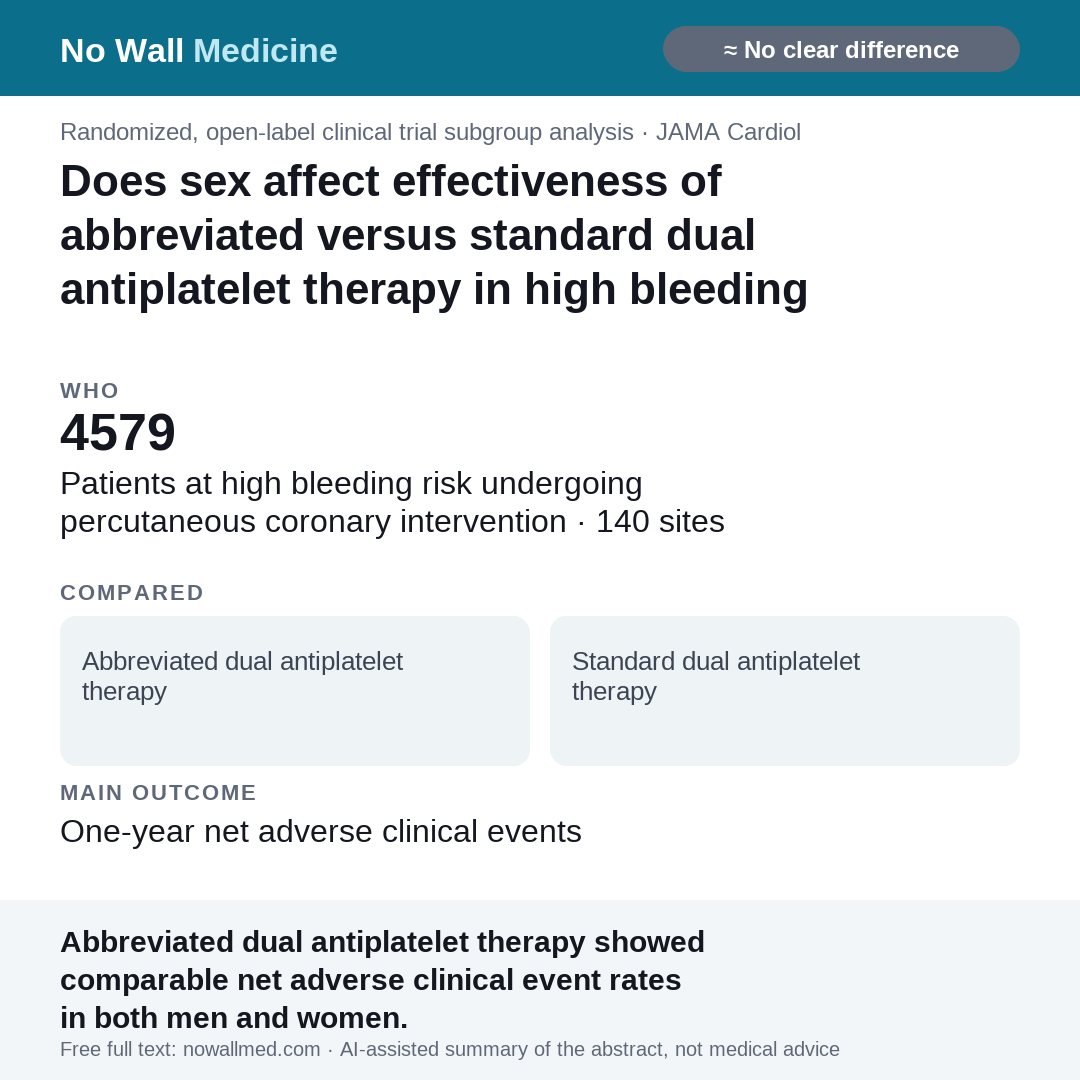
Abbreviated or Standard Dual Antiplatelet Therapy by Sex in Patients at High Bleeding Risk: A Prespecified Secondary Analysis of a Randomized Clinical Trial
Randomized, open-label clinical trial subgroup analysisNo clear difference
Does sex affect effectiveness of abbreviated versus standard dual antiplatelet therapy in high bleeding risk patients?
Who
4579
Patients at high bleeding risk undergoing percutaneous coronary intervention · 140 sites in 30 countries
Compared
Abbreviated dual antiplatelet therapy
Standard dual antiplatelet therapy
Main outcome
One-year net adverse clinical events
Result: hazard ratio 0.97 (95% CI, 0.75-1.24) in men; HR 0.87 (95% CI, 0.60-1.26) in women
Bottom line: Abbreviated dual antiplatelet therapy showed comparable net adverse clinical event rates in both men and women.
JAMA Cardiol · 2023-11-22Download image
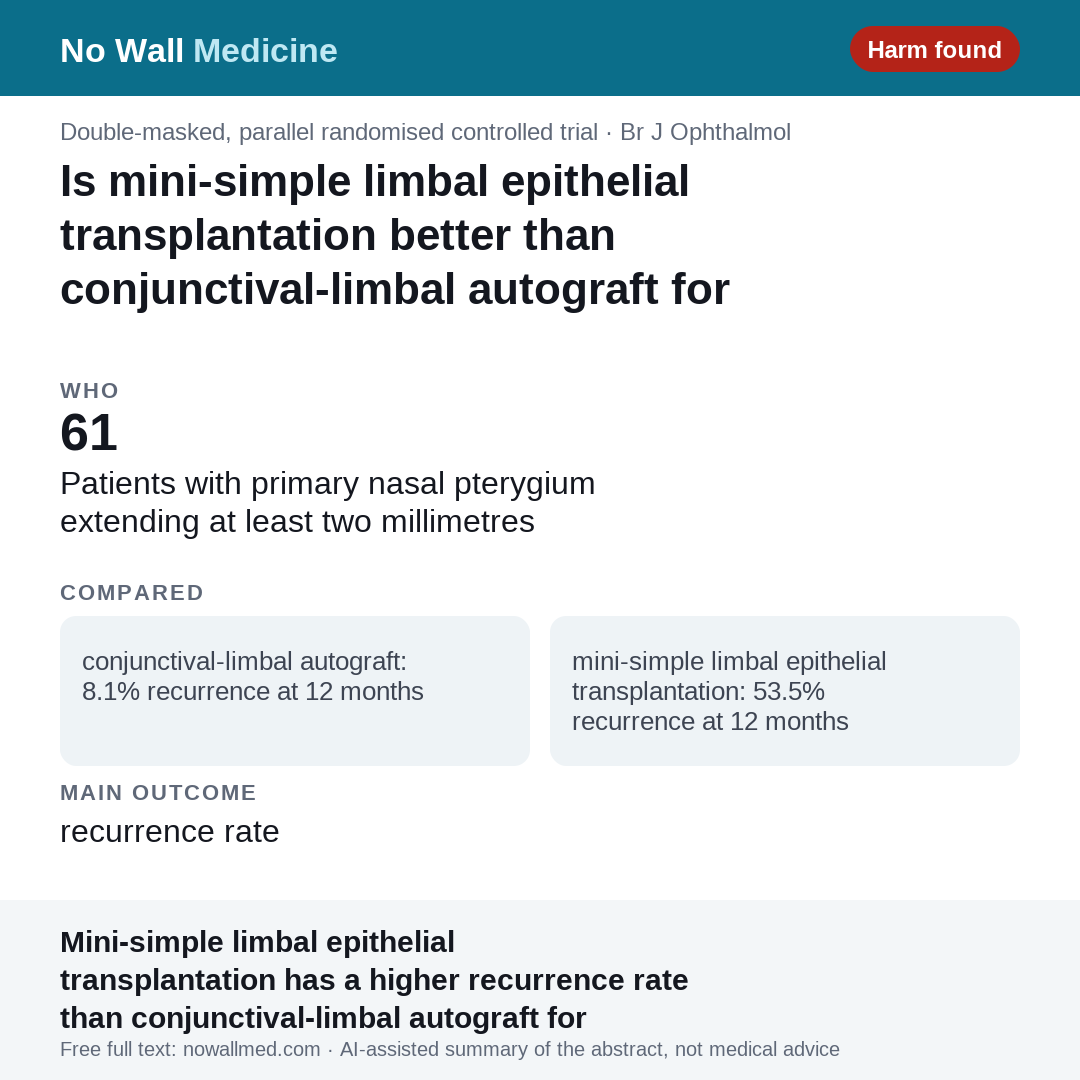
Comparison of mini-simple limbal epithelial transplantation and conjunctival-limbal autograft for the treatment of primary pterygium: a randomised controlled trial
Double-masked, parallel randomised controlled trialHarm found
Is mini-simple limbal epithelial transplantation better than conjunctival-limbal autograft for primary pterygium?
Who
61
Patients with primary nasal pterygium extending at least two millimetres
Compared
conjunctival-limbal autograft: 8.1% recurrence at 12 months
mini-simple limbal epithelial transplantation: 53.5% recurrence at 12 months
Main outcome
recurrence rate
Result: p<0.05
Bottom line: Mini-simple limbal epithelial transplantation has a higher recurrence rate than conjunctival-limbal autograft for primary pterygium.
Br J Ophthalmol · 2023-11-22Download image
Spontaneous activity in peripheral sensory nerves: a systematic review
Systematic reviewUnclear result
Spontaneous activity in peripheral sensory nerves
Who
humans and preclinical models
Compared
neuropathic pain
control
Main outcome
spontaneous activity presence
Bottom line: Spontaneous activity present in neuropathic pain
Limitation: high variability and uncertainty
Pain · 2023-11-22Download image
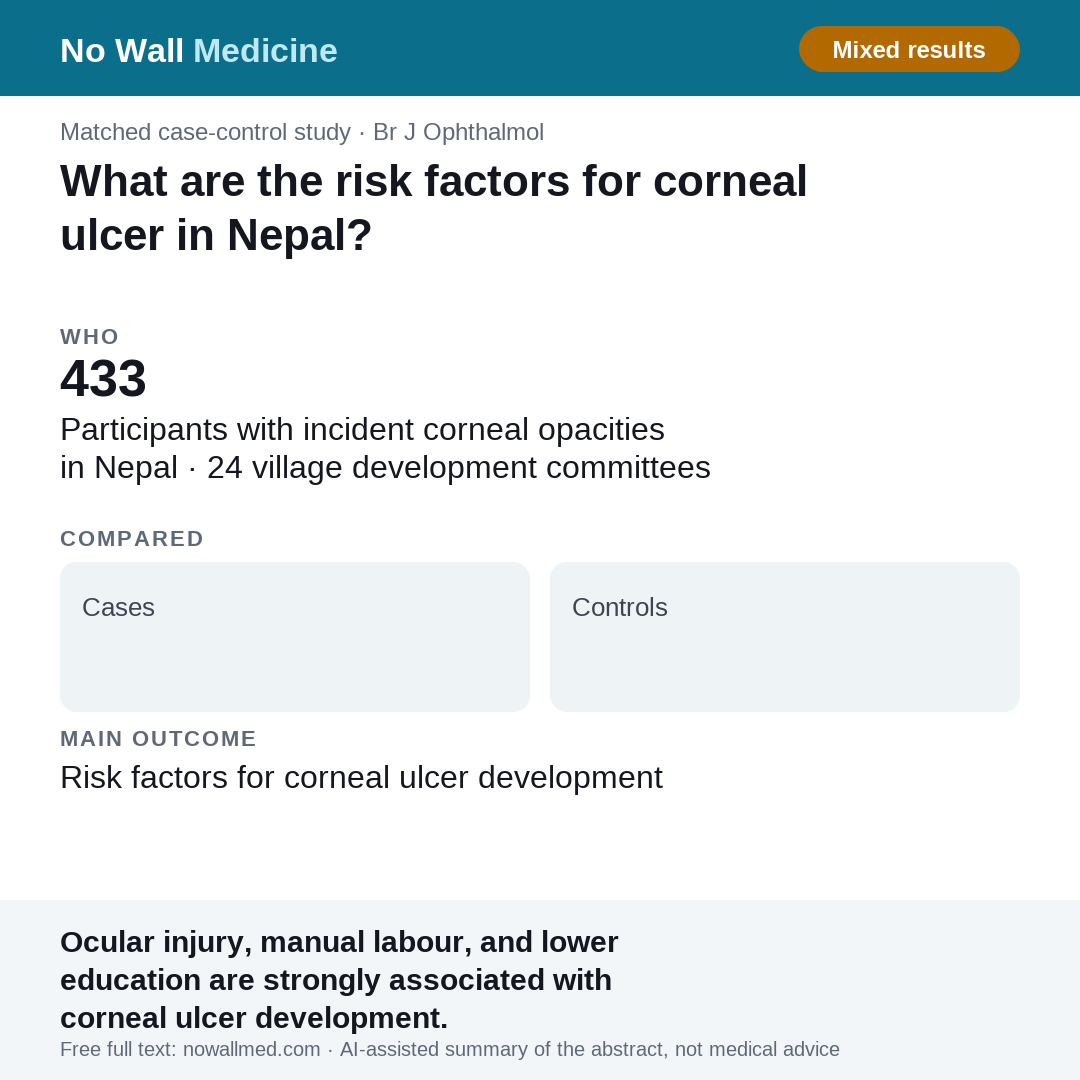
Risk factors for corneal ulcers: a population-based matched case-control study in Nepal
Matched case-control studyMixed results
What are the risk factors for corneal ulcer in Nepal?
Who
433
Participants with incident corneal opacities in Nepal · 24 village development committees in Nepal
Compared
Cases
Controls
Main outcome
Risk factors for corneal ulcer development
Bottom line: Ocular injury, manual labour, and lower education are strongly associated with corneal ulcer development.
Br J Ophthalmol · 2023-11-22Download image
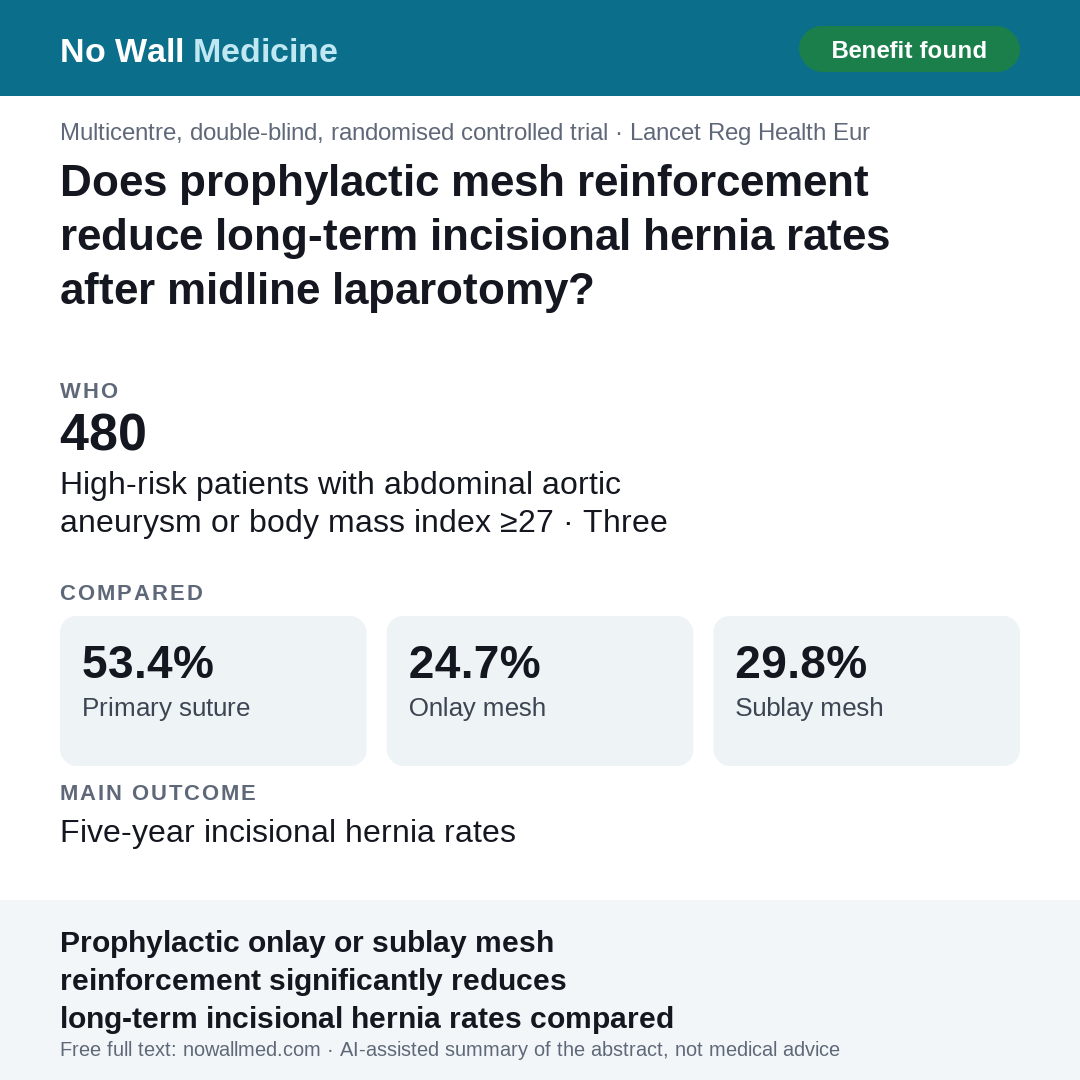
Prevention of incisional hernia with prophylactic onlay and sublay mesh reinforcement vs. primary suture only in midline laparotomies (PRIMA): long-term outcomes of a multicentre, double-blind, randomised controlled trial
Multicentre, double-blind, randomised controlled trialBenefit found
Does prophylactic mesh reinforcement reduce long-term incisional hernia rates after midline laparotomy?
Who
480
High-risk patients with abdominal aortic aneurysm or body mass index ≥27 · Three countries in eleven institutions
Compared
53.4%Primary suture (95% CI: 40.4-64.8)
24.7%Onlay mesh (95% CI: 12.7-38.8)
29.8%Sublay mesh (95% CI: 17.9-42.6)
Main outcome
Five-year incisional hernia rates
Result: onlay mesh HR 0.390 (95% CI 0.248-0.614); sublay mesh HR 0.485 (95% CI 0.309-0.761)
Bottom line: Prophylactic onlay or sublay mesh reinforcement significantly reduces long-term incisional hernia rates compared to primary suture alone.
Funded by: B. Braun
Lancet Reg Health Eur · 2023-11-22Download image
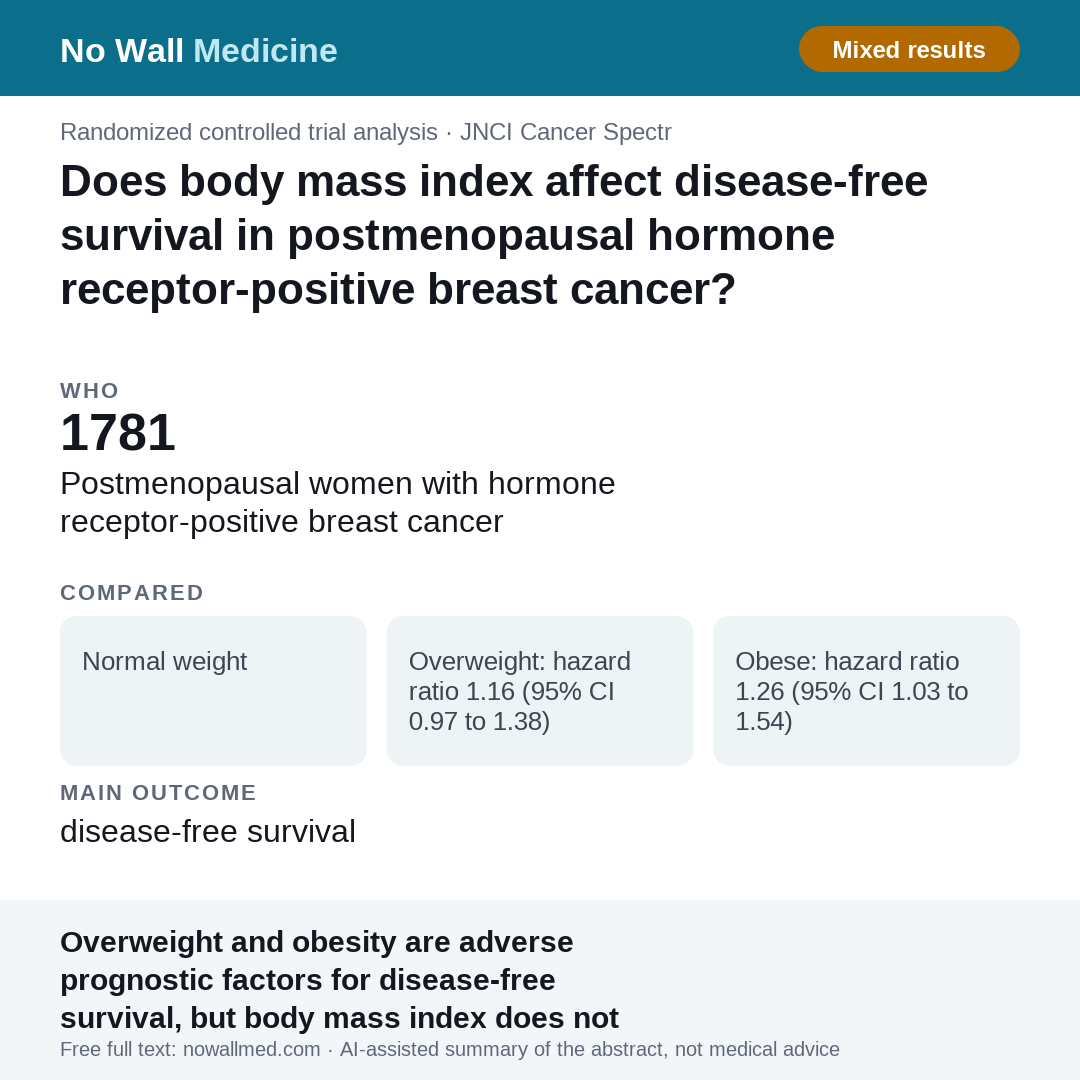
The prognostic and predictive effect of body mass index in hormone receptor-positive breast cancer
Randomized controlled trial analysisMixed results
Does body mass index affect disease-free survival in postmenopausal hormone receptor-positive breast cancer?
Who
1781
Postmenopausal women with hormone receptor-positive breast cancer
Compared
Normal weight
Overweight: hazard ratio 1.16 (95% CI 0.97 to 1.38)
Obese: hazard ratio 1.26 (95% CI 1.03 to 1.54)
Main outcome
disease-free survival
Bottom line: Overweight and obesity are adverse prognostic factors for disease-free survival, but body mass index does not impact anastrozole efficacy.
JNCI Cancer Spectr · 2023-11-22Download image
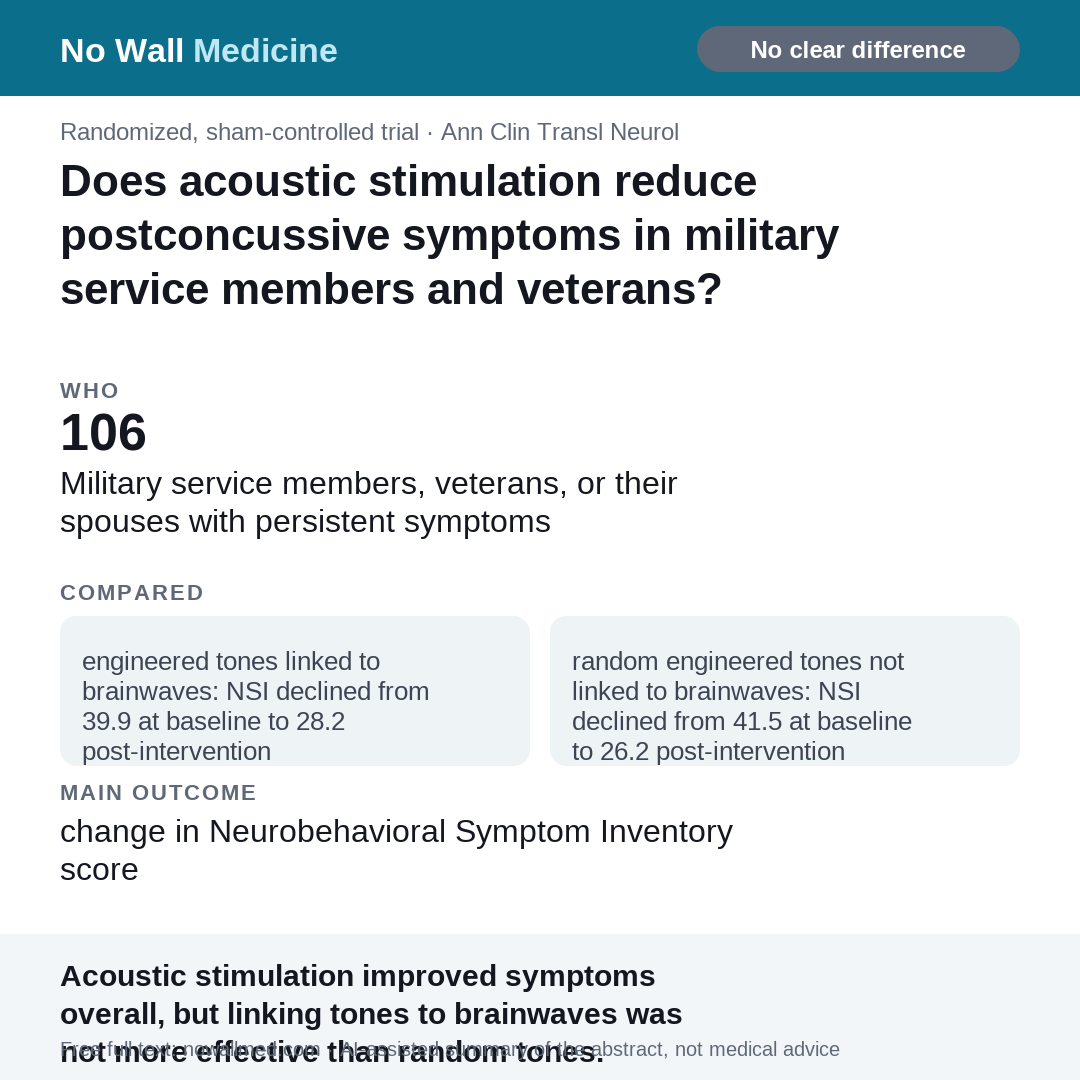
Randomized, controlled clinical trial of acoustic stimulation to reduce postconcussive symptoms
Randomized, sham-controlled trialNo clear difference
Does acoustic stimulation reduce postconcussive symptoms in military service members and veterans?
Who
106
Military service members, veterans, or their spouses with persistent symptoms
Compared
engineered tones linked to brainwaves: NSI declined from 39.9 at baseline to 28.2 post-intervention
random engineered tones not linked to brainwaves: NSI declined from 41.5 at baseline to 26.2 post-intervention
Main outcome
change in Neurobehavioral Symptom Inventory score
Bottom line: Acoustic stimulation improved symptoms overall, but linking tones to brainwaves was not more effective than random tones.
Ann Clin Transl Neurol · 2023-11-22Download image
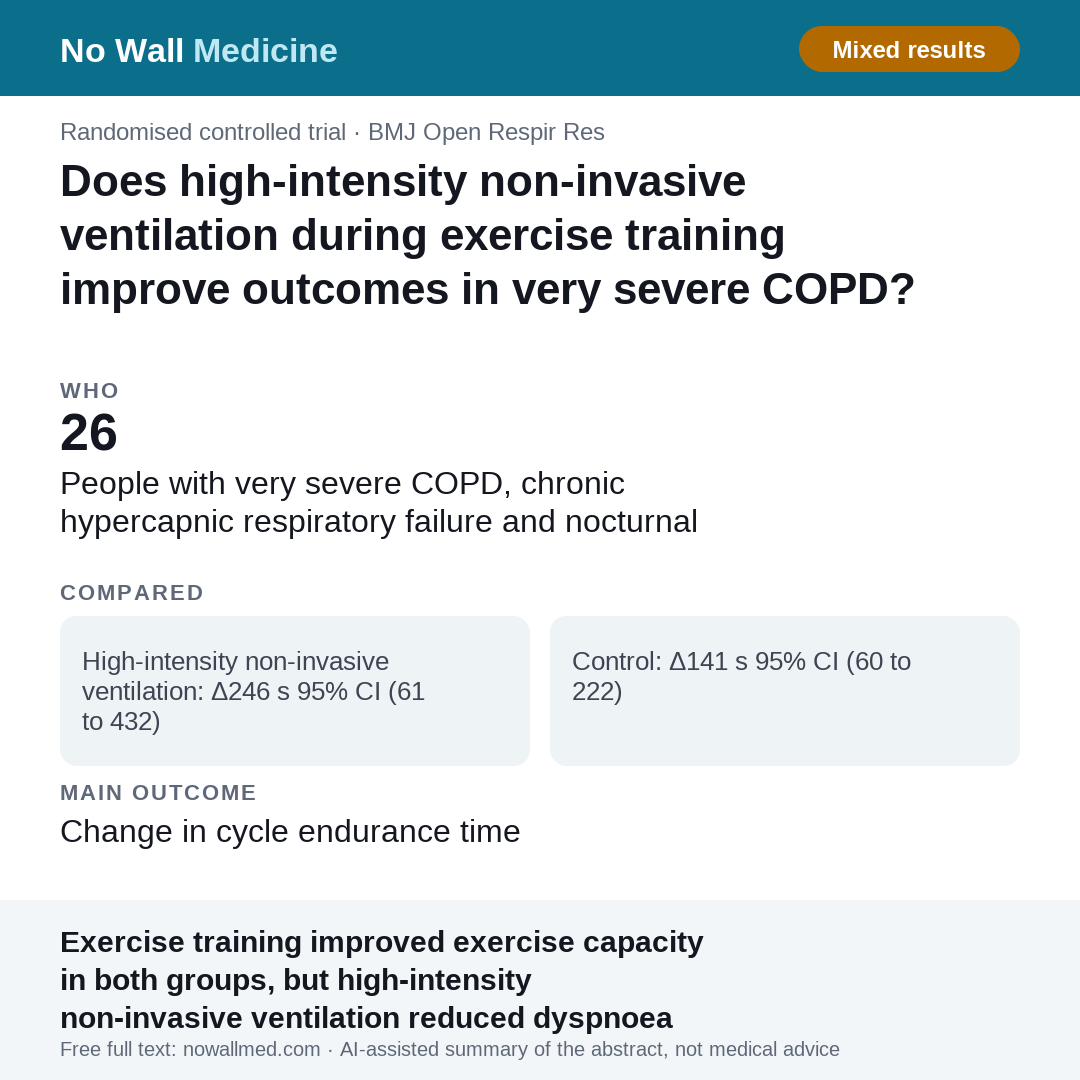
High-intensity non-invasive ventilation during exercise-training versus without in people with very severe COPD and chronic hypercapnic respiratory failure: a randomised controlled trial
Randomised controlled trialMixed results
Does high-intensity non-invasive ventilation during exercise training improve outcomes in very severe COPD?
Who
26
People with very severe COPD, chronic hypercapnic respiratory failure and nocturnal non-invasive ventilation
Compared
High-intensity non-invasive ventilation: Δ246 s 95% CI (61 to 432)
Control: Δ141 s 95% CI (60 to 222)
Main outcome
Change in cycle endurance time
Result: Δ105 s 95% CI (-92 to 302)
Bottom line: Exercise training improved exercise capacity in both groups, but high-intensity non-invasive ventilation reduced dyspnoea during exercise.
Limitation: This was a small group of patients
BMJ Open Respir Res · 2023-11-22Download image