Visual abstracts
New randomized trials and meta-analyses from leading journals at a glance: who was studied, what was compared, and what was found. Every paper is free to read in full.
All specialtiesCardiology 4877Oncology 4138Gastroenterology & Hepatology 1942Infectious Disease 3837Neurology 1905Psychiatry & Mental Health 2273Pulmonology 2143Critical Care 1365Endocrinology & Diabetes 2580Pediatrics 2980Surgery 2559Orthopedics & Sports Medicine 931Neurosurgery 537Cardiothoracic & Vascular Surgery 674Plastic & Reconstructive Surgery 591Nephrology 1133Rheumatology 823Hematology 1109Dermatology 621Ophthalmology 543Obstetrics & Gynecology 1686Public & Global Health 1058Radiology & Imaging 648Anesthesiology 986Urology 764ENT (Otolaryngology) 503Emergency Medicine 511Allergy & Immunology 313Geriatrics 981Family Medicine & Primary Care 562Medical Genetics & Genomics 676Pathology & Laboratory Medicine 159Physical Medicine & Rehabilitation 757Palliative Care 444Nutrition 1588Digital Health & AI 2201General Medicine 321
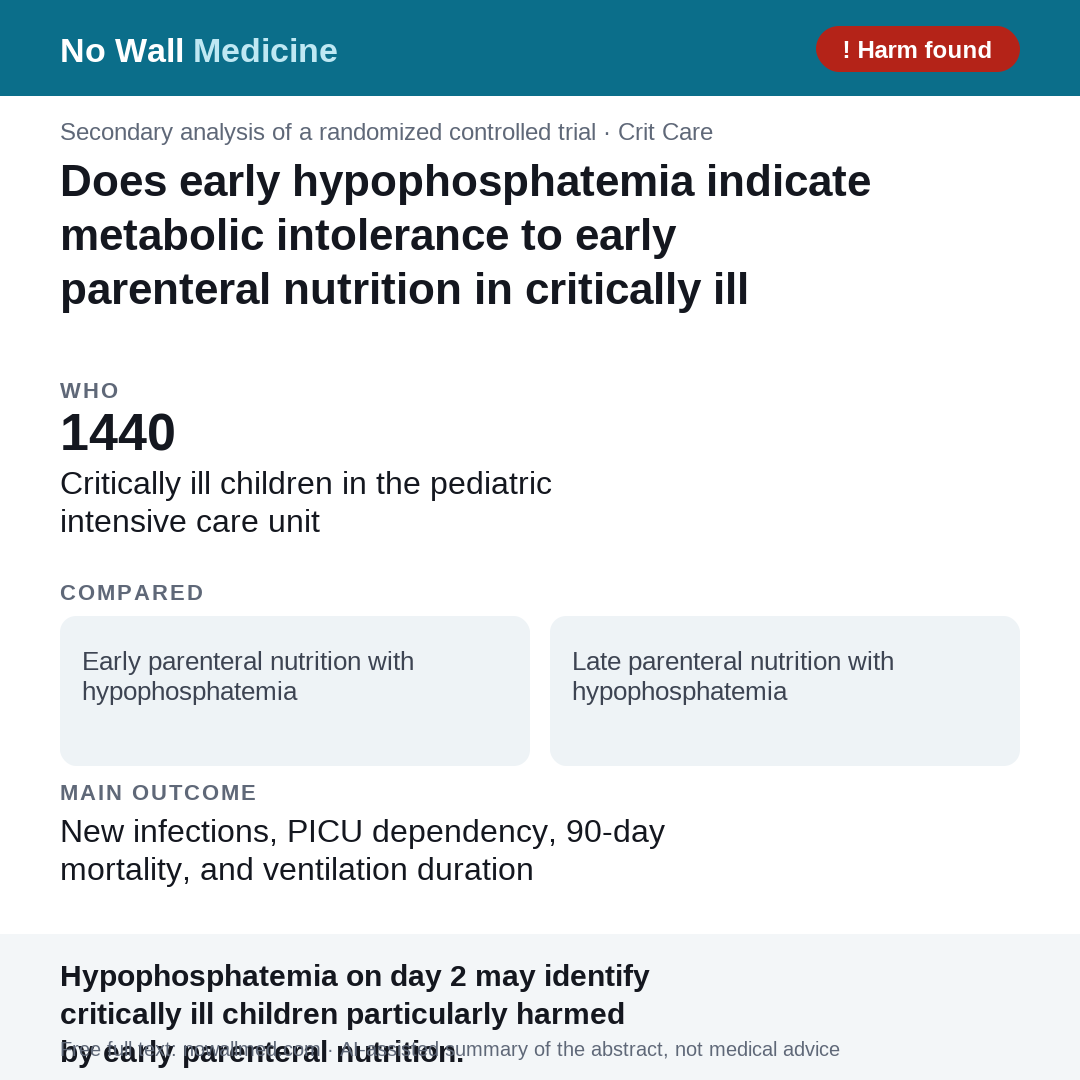
Hypophosphatemia as a biomarker of metabolic intolerance to enhanced nutrition in the PICU: a secondary analysis of the PEPaNIC RCT
Secondary analysis of a randomized controlled trialHarm found
Does early hypophosphatemia indicate metabolic intolerance to early parenteral nutrition in critically ill children?
Who
1440
Critically ill children in the pediatric intensive care unit
Compared
Early parenteral nutrition with hypophosphatemia
Late parenteral nutrition with hypophosphatemia
Main outcome
New infections, PICU dependency, 90-day mortality, and ventilation duration
Bottom line: Hypophosphatemia on day 2 may identify critically ill children particularly harmed by early parenteral nutrition.
Crit Care · 2026-02-12Download image
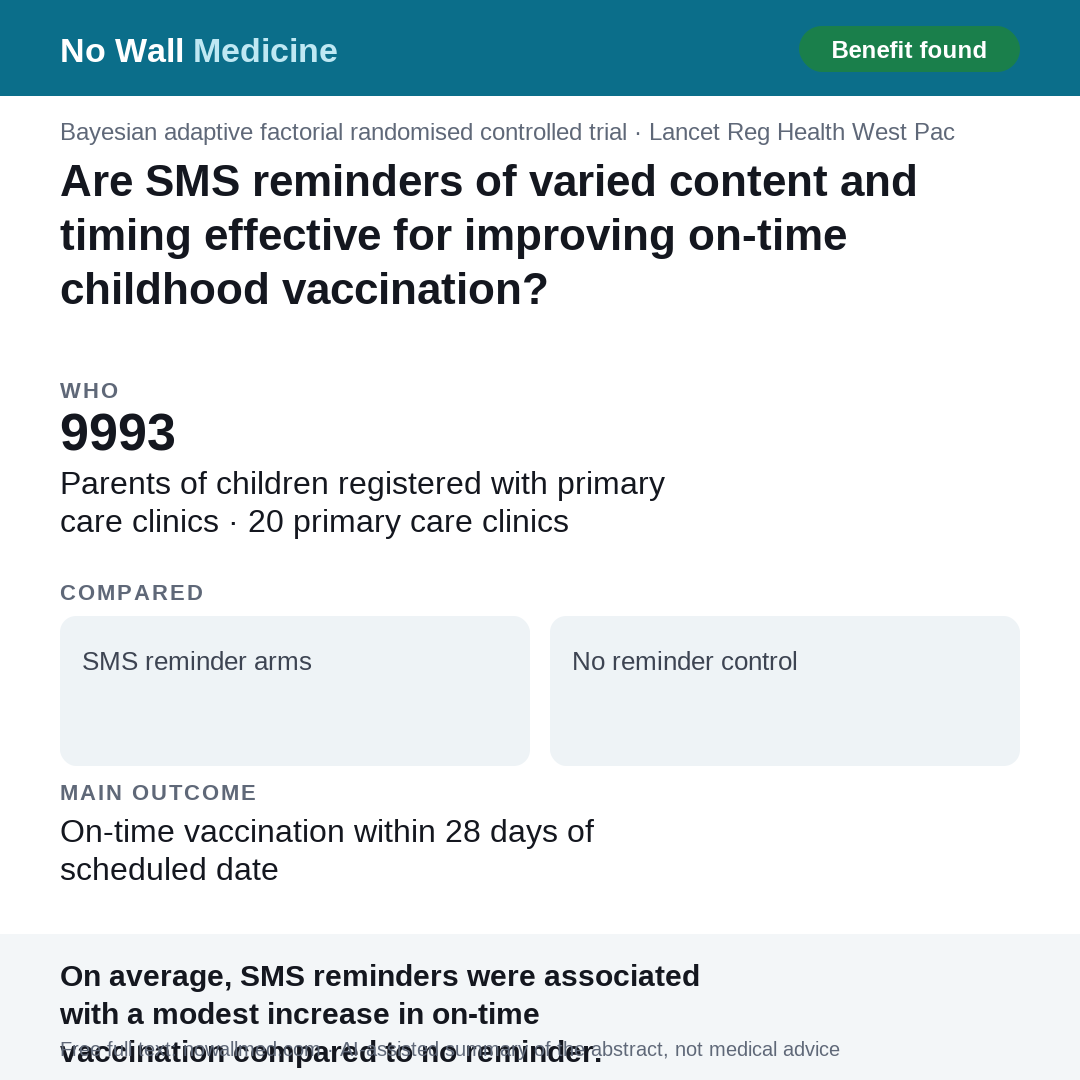
The AuTOMATIC trial: a multicentre digitally-automated, Bayesian, adaptive, parallel, factorial randomised controlled trial of SMS reminders for childhood vaccination
Bayesian adaptive factorial randomised controlled trialBenefit found
Are SMS reminders of varied content and timing effective for improving on-time childhood vaccination?
Who
9993
Parents of children registered with primary care clinics · 20 primary care clinics Australia-wide
Compared
SMS reminder arms
No reminder control
Main outcome
On-time vaccination within 28 days of scheduled date
Result: adjusted odds ratio 1.29 [95% CrI 1.06, 1.55]
Bottom line: On average, SMS reminders were associated with a modest increase in on-time vaccination compared to no reminder.
Funded by: Ramaciotti Foundations, Royal Australasian College of Physicians, Western Australia Department of Health
Lancet Reg Health West Pac · 2026-02-11Download image
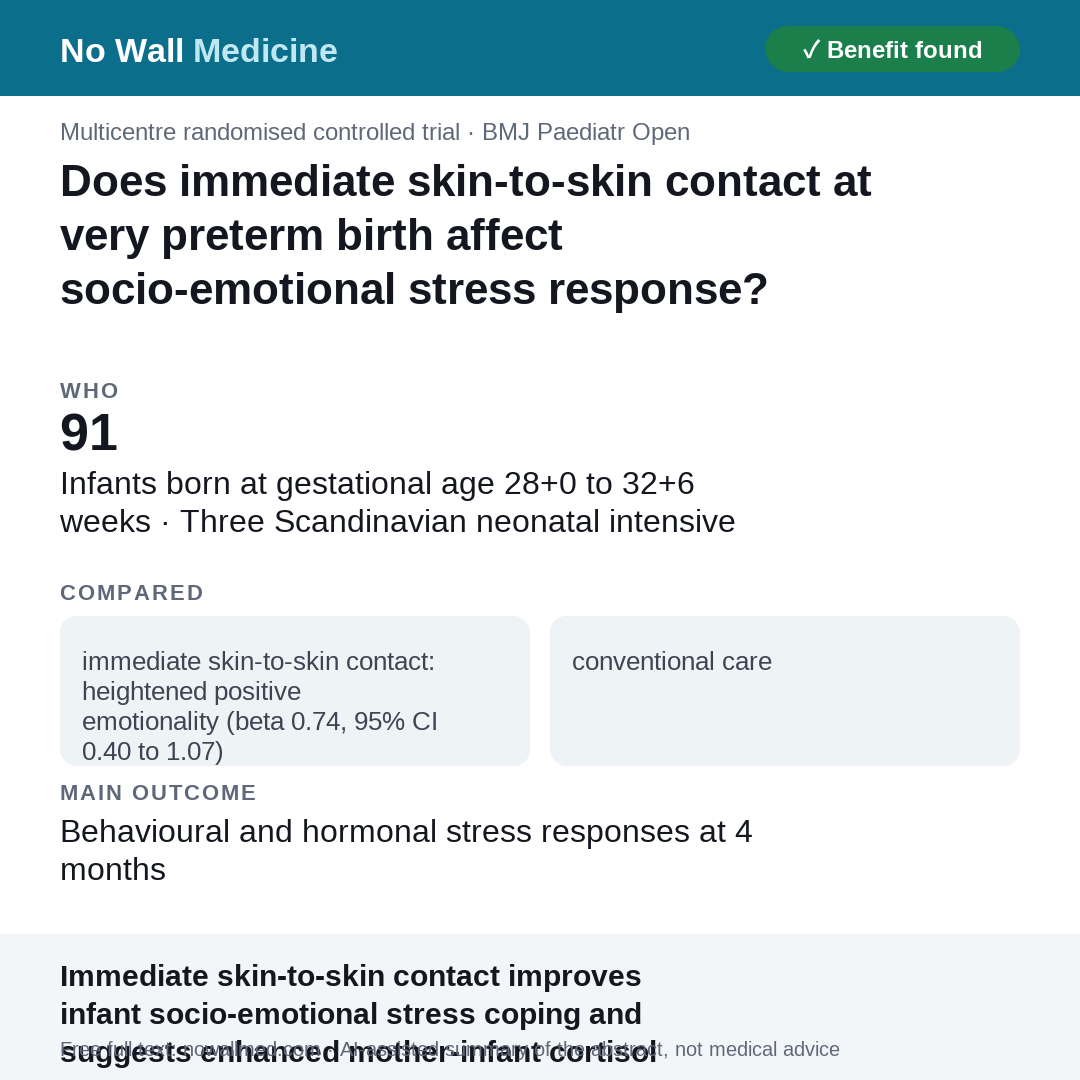
Immediate skin-to-skin contact at very preterm birth and effect on infant socio-emotional stress response and mother-infant cortisol co-regulation: secondary outcomes from the randomised clinical Immediate Parent-Infant Skin-To-Skin Study (IPISTOSS)
Multicentre randomised controlled trialBenefit found
Does immediate skin-to-skin contact at very preterm birth affect socio-emotional stress response?
Who
91
Infants born at gestational age 28+0 to 32+6 weeks · Three Scandinavian neonatal intensive care units
Compared
immediate skin-to-skin contact: heightened positive emotionality (beta 0.74, 95% CI 0.40 to 1.07)
conventional care
Main outcome
Behavioural and hormonal stress responses at 4 months
Result: beta 0.74 (95% CI 0.40 to 1.07)
Bottom line: Immediate skin-to-skin contact improves infant socio-emotional stress coping and suggests enhanced mother-infant cortisol synchrony.
BMJ Paediatr Open · 2026-02-11Download image
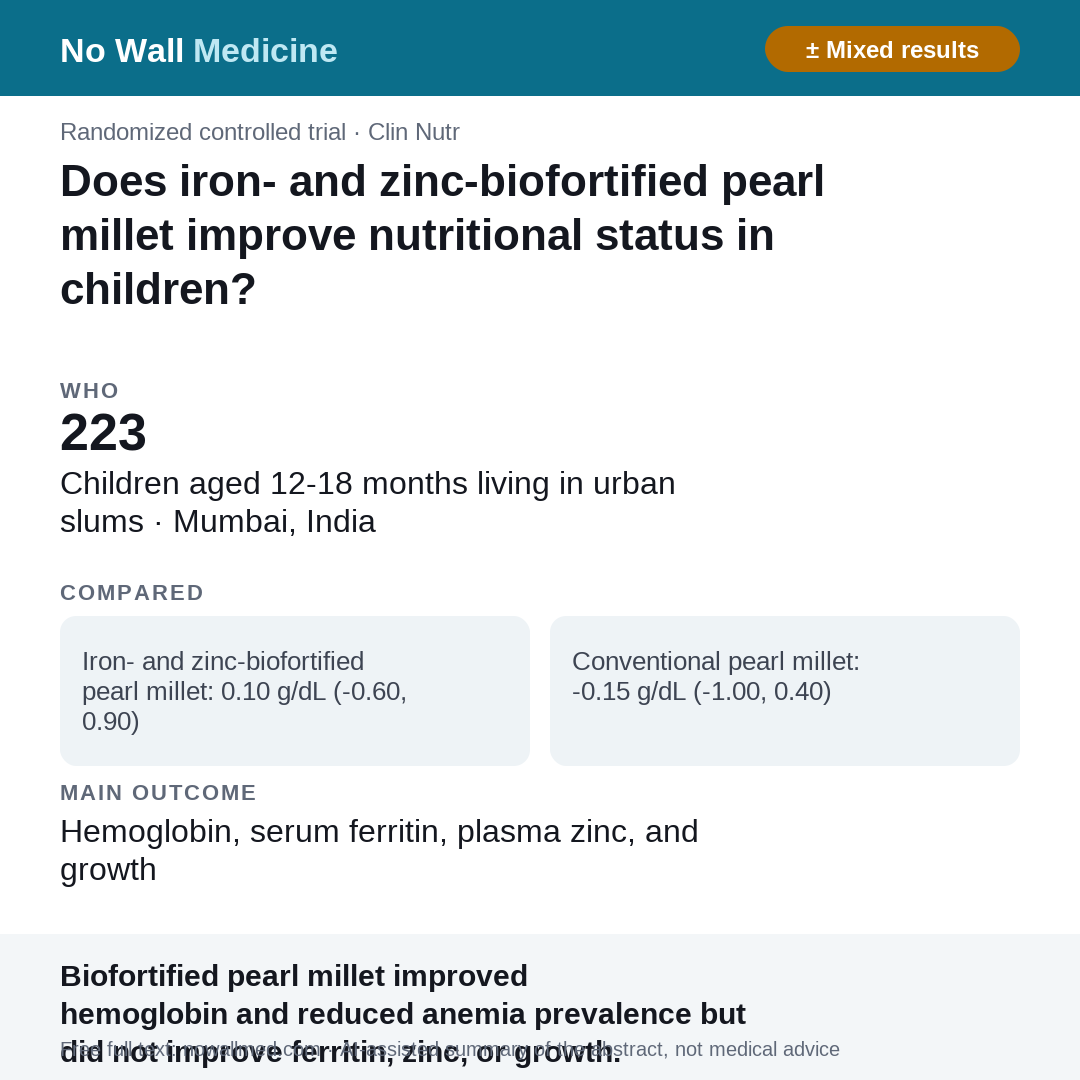
A randomized trial of iron- and zinc-biofortified pearl millet-based complementary feeding in children aged 12-18 months living in urban slums
Randomized controlled trialMixed results
Does iron- and zinc-biofortified pearl millet improve nutritional status in children?
Who
223
Children aged 12-18 months living in urban slums · Mumbai, India
Compared
Iron- and zinc-biofortified pearl millet: 0.10 g/dL (-0.60, 0.90)
Conventional pearl millet: -0.15 g/dL (-1.00, 0.40)
Main outcome
Hemoglobin, serum ferritin, plasma zinc, and growth
Bottom line: Biofortified pearl millet improved hemoglobin and reduced anemia prevalence but did not improve ferritin, zinc, or growth.
Limitation: The trial was not designed to detect differences in serum ferritin, plasma zinc, or growth.
Clin Nutr · 2026-02-09Download image
Risk Factors for the Development of Food Allergy in Infants and Children: A Systematic Review and Meta-Analysis
Systematic review and meta-analysisMixed results
What is the incidence and risk factors for food allergy development in infants and children?
Who
2
Children younger than 6 years · 40 countries
Compared
4.7%Overall incidence
Atopic dermatitis within first year: OR, 3.88; RD, 12.0%; 95% CI, 8.8%-15.7%
Allergic rhinitis: OR, 3.39; RD, 10.1%; 95% CI, 6.7%-14.4%
Infant antibiotic use first month: OR, 4.11; RD, 12.8%; 95% CI, 0.4%-40%
Main outcome
Food allergy to age 6 years
Bottom line: Food allergy incidence is likely 4.7%, with risk factors including early allergic conditions, delayed allergen introduction, genetics, and antibiotic exposure.
JAMA Pediatr · 2026-02-09Download image

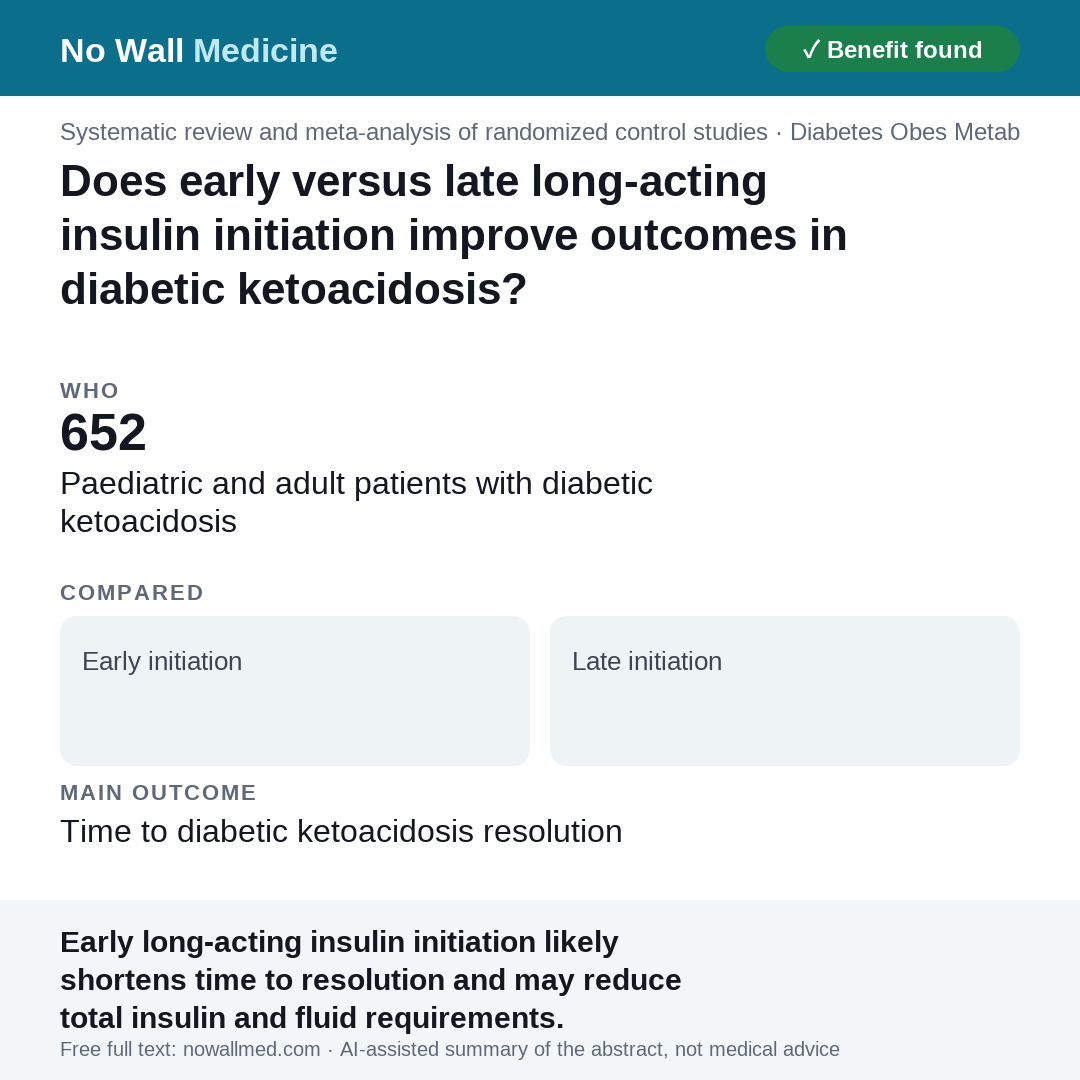
Early versus late initiation of long-acting insulin in paediatric and adult diabetic ketoacidosis: A systematic review and meta-analysis of randomised control trials
Systematic review and meta-analysis of randomized control trialsBenefit found
Does early versus late long-acting insulin initiation improve outcomes in diabetic ketoacidosis?
Who
652
Paediatric and adult patients with diabetic ketoacidosis
Compared
Early initiation
Late initiation
Main outcome
Time to diabetic ketoacidosis resolution
Result: standardized mean difference -0.61 (95% CI -0.83 to -0.38)
Bottom line: Early long-acting insulin initiation likely shortens time to resolution and may reduce total insulin and fluid requirements.
Limitation: Evidence for rebound hyperglycaemia and recurrent diabetic ketoacidosis outcomes remains limited and imprecise.
Diabetes Obes Metab · 2026-02-09Download image
Hobnail hemangioma-a systematic review and a case report of an intraoral lesion with Dabska tumor-like features
Systematic reviewUnclear result
What is hobnail hemangioma
Who
Patients with intraoral lesions
Compared
Hobnail hemangioma
Dabska tumor
Main outcome
Accurate diagnosis
Bottom line: Hobnail hemangioma is a benign lesion
Diagn Pathol · 2026-02-09Download image

Deep learning for synthetic PET imaging: a systematic mapping review of techniques, metrics, and clinical relevance
Systematic mapping reviewMixed results
What is the current state of deep learning for synthetic positron emission tomography?
Who
34
Peer-reviewed studies on deep learning-based synthetic positron emission tomography
Compared
25Brain/neuro studies (73.5%)
Whole-body studies: 9/34 (26.5%)
Main outcome
Methodological frameworks, performance metrics, and clinical relevance
Bottom line: Deep learning shows promise for synthetic positron emission tomography but lacks standardized metrics and large multicenter datasets.
Limitation: The absence of large/multicenter datasets limits the generalizability of findings.
Eur Radiol Exp · 2026-02-09Download image

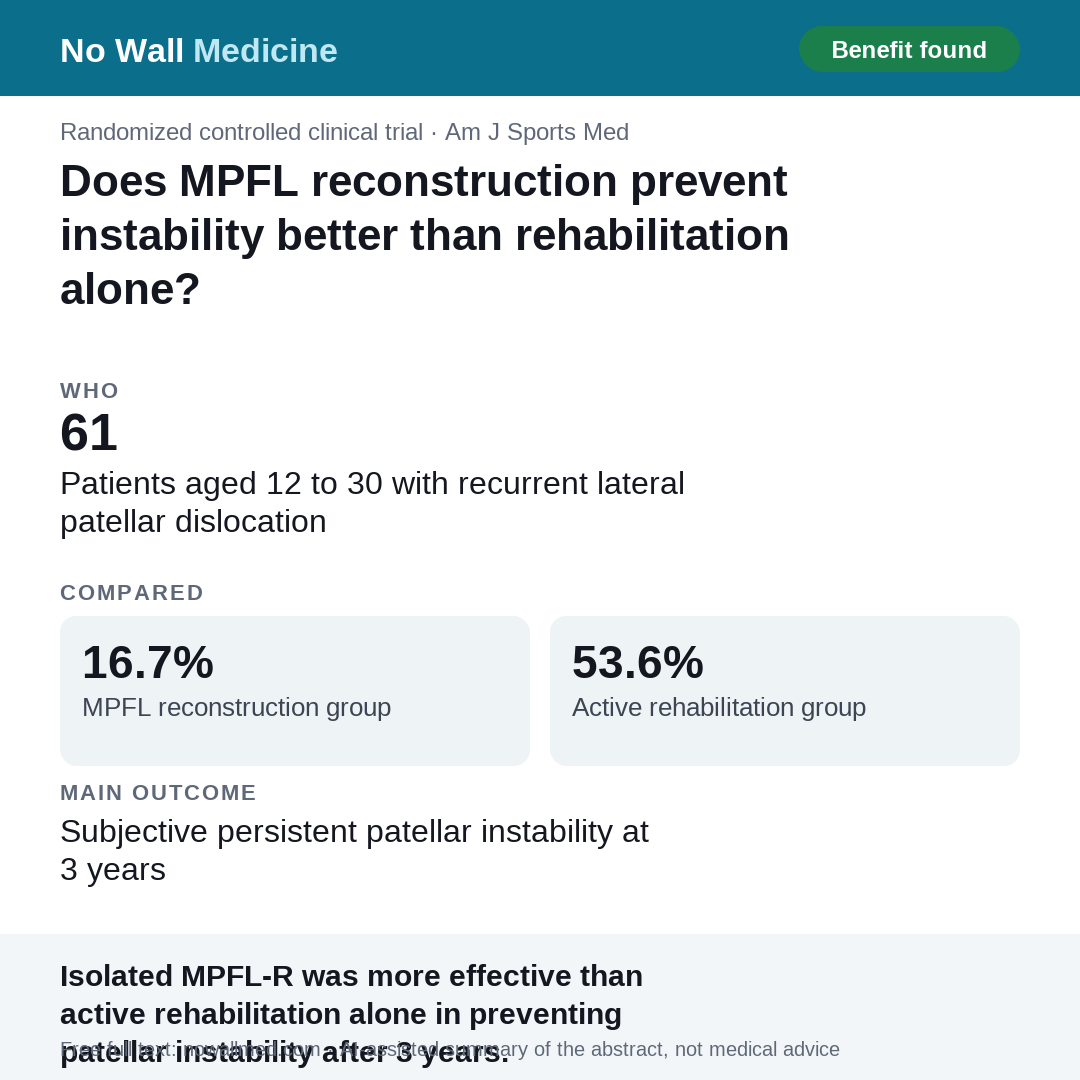
Medial Patellofemoral Ligament Reconstruction vs Nonoperative Treatment for Recurrent Lateral Patellar Dislocation: Three-Year Results From a Randomized Controlled Trial
Randomized controlled trialBenefit found
Surgery vs rehab for patellar dislocation
Who
61
Patients with recurrent lateral patellar dislocation
Compared
16.7%MPFL group (5/30)
53.6%Control group (15/31)
Main outcome
Subjective persistent patellar instability
Result: odds ratio 5.8 (95% CI, 1.7-19.4)
Bottom line: Surgery prevents instability better than rehab
Am J Sports Med · 2026-02-08Download image
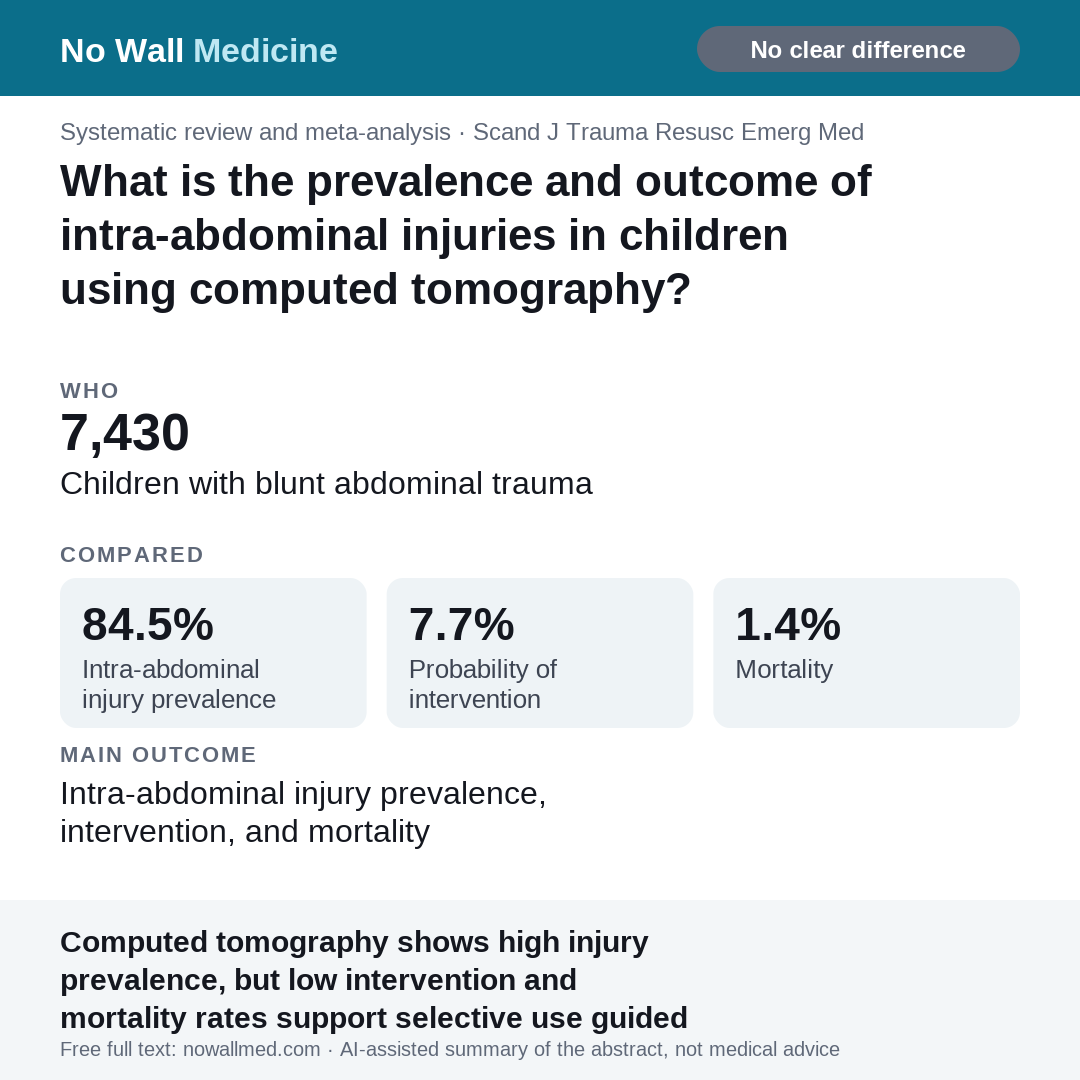
Computed tomography in pediatric blunt abdominal trauma: current evidence, challenges, and future directions - a systematic review and meta-analysis
Systematic review and meta-analysisNo clear difference
What is the prevalence and outcome of intra-abdominal injuries in children using computed tomography?
Who
7,430
Children with blunt abdominal trauma
Compared
84.5%Intra-abdominal injury prevalence (95% credible interval: 62-94%)
7.7%Probability of intervention
1.4%Mortality
Main outcome
Intra-abdominal injury prevalence, intervention, and mortality
Bottom line: Computed tomography shows high injury prevalence, but low intervention and mortality rates support selective use guided by decision rules.
Scand J Trauma Resusc Emerg Med · 2026-02-07Download image
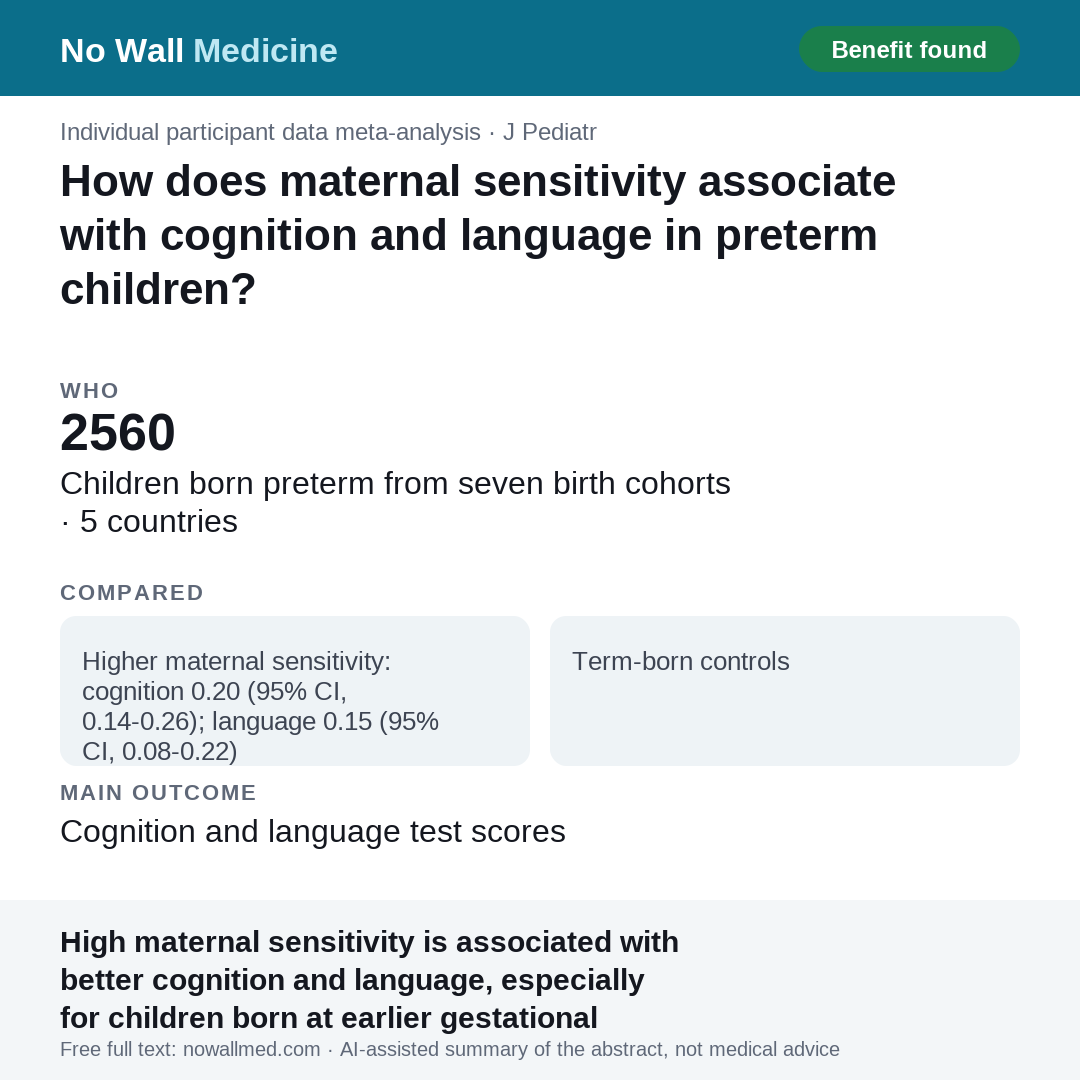
The Association of Maternal Sensitivity with Subsequent Cognition and Language among Children Born Preterm: An Individual Participant Data Meta-Analysis
Individual participant data meta-analysisBenefit found
How does maternal sensitivity associate with cognition and language in preterm children?
Who
2560
Children born preterm from seven birth cohorts · 5 countries
Compared
Higher maternal sensitivity: cognition 0.20 (95% CI, 0.14-0.26); language 0.15 (95% CI, 0.08-0.22)
Term-born controls
Main outcome
Cognition and language test scores
Result: cognition 0.20 (95% CI, 0.14-0.26); language 0.15 (95% CI, 0.08-0.22)
Bottom line: High maternal sensitivity is associated with better cognition and language, especially for children born at earlier gestational ages.
J Pediatr · 2026-02-06Download image
Clinical effectiveness of perioperative oxygen therapy strategies in children: a systematic review and meta-analysis of randomised controlled trials
Systematic review and meta-analysis of randomised controlled trialsNo clear difference
What is the clinical effectiveness of perioperative oxygen strategies in children?
Who
1337
Paediatric patients undergoing surgical procedures · 11 countries
Compared
High fraction of inspired oxygen
Low fraction of inspired oxygen
High-flow nasal oxygen: RR, 0.34 (95% CI, 0.13-0.88)
Conventional oxygen therapy
Main outcome
Surgical site infection, postoperative pulmonary complications, and reintubation rate
Result: RR, 0.34 (95% CI, 0.13-0.88) for reintubation with high-flow nasal oxygen
Bottom line: Current evidence does not support the routine use of any specific paediatric perioperative oxygen strategy.
Limitation: The evidence for several outcomes was very uncertain or had low certainty.
Br J Anaesth · 2026-02-06Download image

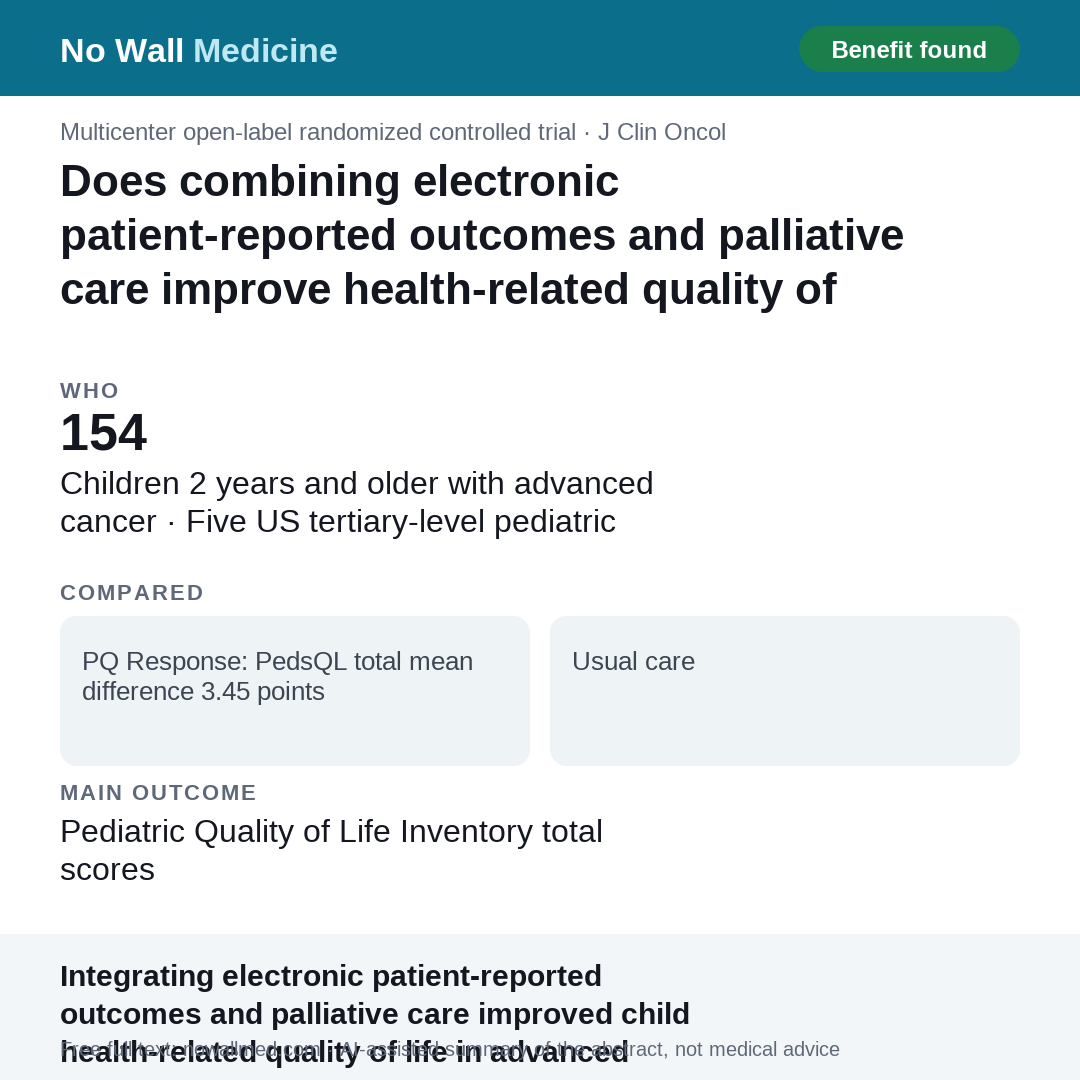
Integrating Electronic Patient-Reported Outcomes and Palliative Care in Pediatric Advanced Cancer: The PediQUEST Response Multisite Randomized Controlled Trial
Multicenter open-label randomized controlled trialBenefit found
Does combining electronic patient-reported outcomes and palliative care improve health-related quality of life?
Who
154
Children 2 years and older with advanced cancer · Five US tertiary-level pediatric cancer centers
Compared
PQ Response: PedsQL total mean difference 3.45 points
Usual care
Main outcome
Pediatric Quality of Life Inventory total scores
Result: 3.45 points (95% CI 0.48 to 6.43)
Bottom line: Integrating electronic patient-reported outcomes and palliative care improved child health-related quality of life in advanced pediatric cancer.
J Clin Oncol · 2026-02-04Download image
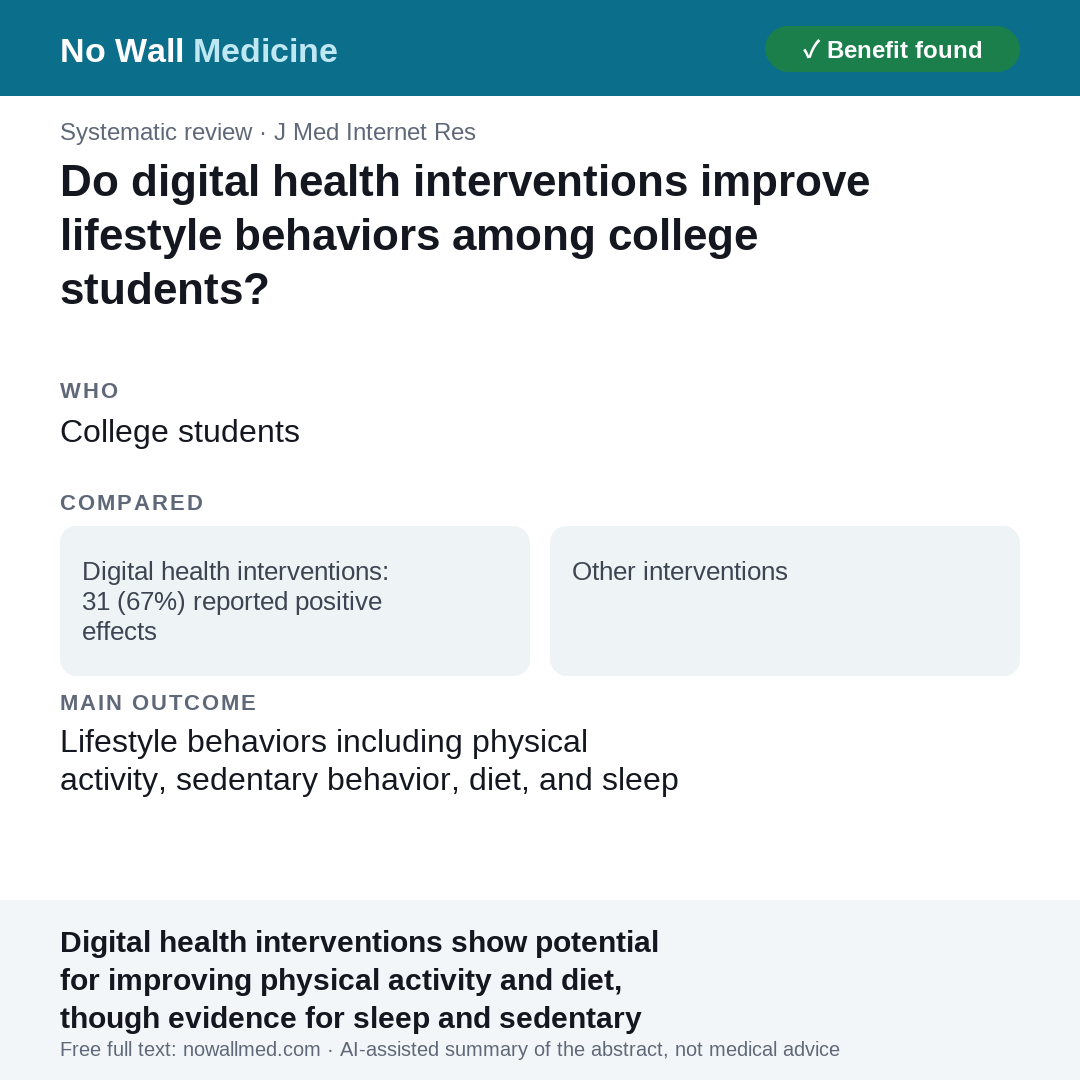
Effect of Digital Health Interventions on College Students' Lifestyle Behaviors: Systematic Review
Systematic reviewBenefit found
Do digital health interventions improve lifestyle behaviors among college students?
Who
College students
Compared
Digital health interventions: 31 (67%) reported positive effects
Other interventions
Main outcome
Lifestyle behaviors including physical activity, sedentary behavior, diet, and sleep
Bottom line: Digital health interventions show potential for improving physical activity and diet, though evidence for sleep and sedentary behavior is limited.
Limitation: Issues related to sample representativeness, intervention refinement, and methodological rigor.
J Med Internet Res · 2026-02-04Download image
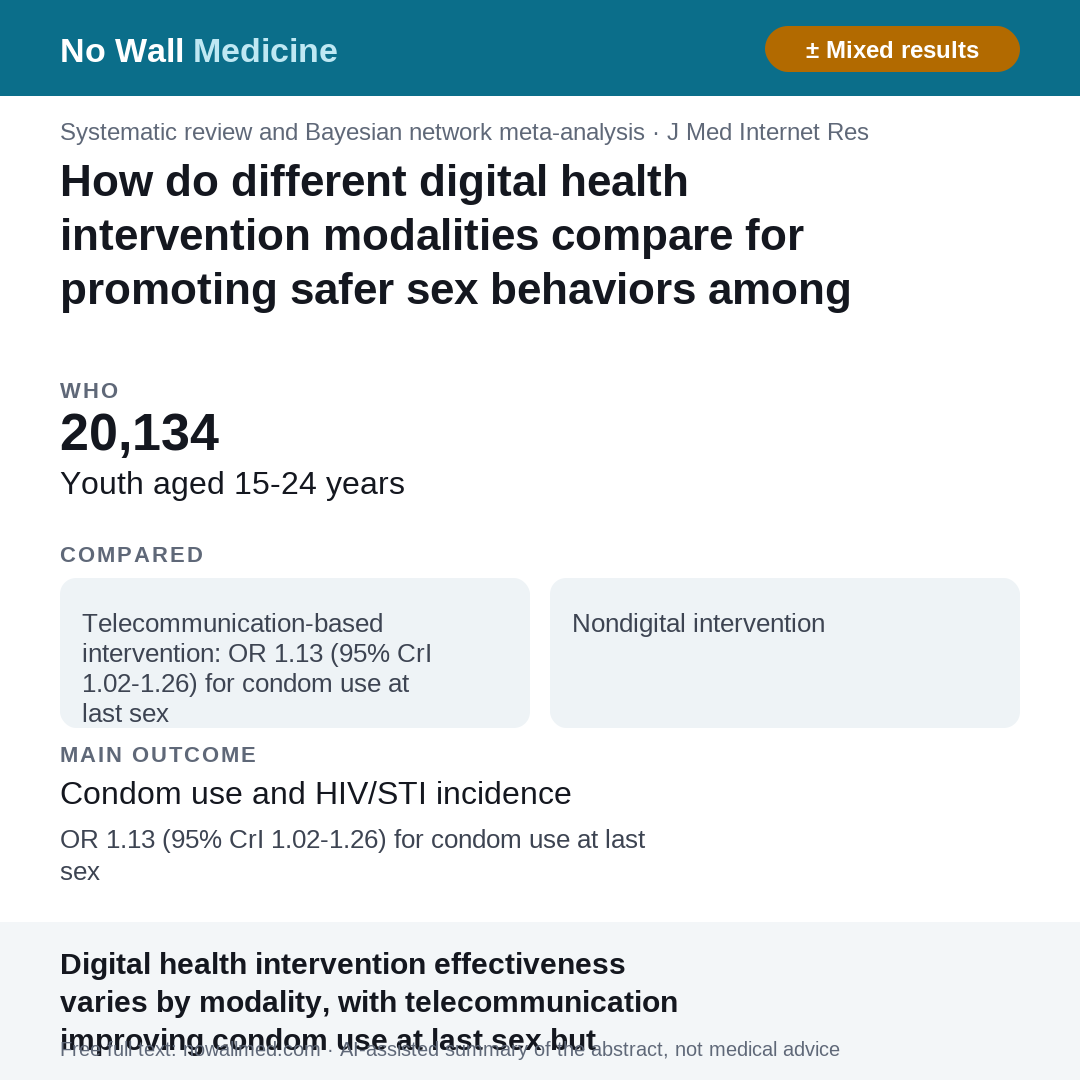
Effects of Digital Health Interventions to Promote Safer Sex Behaviors Among Youth: Systematic Review and Bayesian Network Meta-Analysis
Systematic review and Bayesian network meta-analysisMixed results
How do different digital health intervention modalities compare for promoting safer sex behaviors among youth?
Who
20,134
Youth aged 15-24 years
Compared
Telecommunication-based intervention: OR 1.13 (95% CrI 1.02-1.26) for condom use at last sex
Nondigital intervention
Main outcome
Condom use and HIV/STI incidence
Result: OR 1.13 (95% CrI 1.02-1.26) for condom use at last sex
Bottom line: Digital health intervention effectiveness varies by modality, with telecommunication improving condom use at last sex but outcomes remain imprecise.
Limitation: Wide prediction intervals and low-certainty evidence suggest self-reported behavioral changes may not translate into reduced infections.
J Med Internet Res · 2026-02-04Download image
High-dose nusinersen for spinal muscular atrophy: a phase 3 randomized trial
Phase 2/3 randomized trialBenefit found
Does high-dose nusinersen improve outcomes for individuals with spinal muscular atrophy?
Who
75
Treatment-naive individuals with spinal muscular atrophy · Global
Compared
High-dose nusinersen: +15.1 points
-11.1 pointsMatched sham participants
Main outcome
6-month change in Children's Hospital of Philadelphia Infant Test of Neuromuscular Disorders total score
Result: difference, 26.19 (95% confidence interval = 20.7 to 31.74)
Bottom line: High-dose nusinersen significantly improved Children's Hospital of Philadelphia Infant Test of Neuromuscular Disorders scores compared to sham.
Nat Med · 2026-02-03Download image

Care of Bereaved Persons : A Systematic Review
Systematic review of randomized controlled trialsMixed results
What are the effects of health care interventions for bereaved children and adults?
Who
169
Bereaved or soon-to-be bereaved children and adults
Compared
Individual psychotherapy: improves grief disorder, grief, and depression symptoms
Expert-facilitated support groups and enhanced provider contact: may improve depression symptoms
Main outcome
Grief, grief disorder, and depression symptoms
Bottom line: Individual psychotherapy improves grief and depression, while other interventions show conflicting or insufficient evidence.
Limitation: Research focused on adults, populations were complex, and culturally specific interventions may have been missed.
Funded by: Agency for Healthcare Research and Quality
Ann Intern Med · 2026-02-03Download image

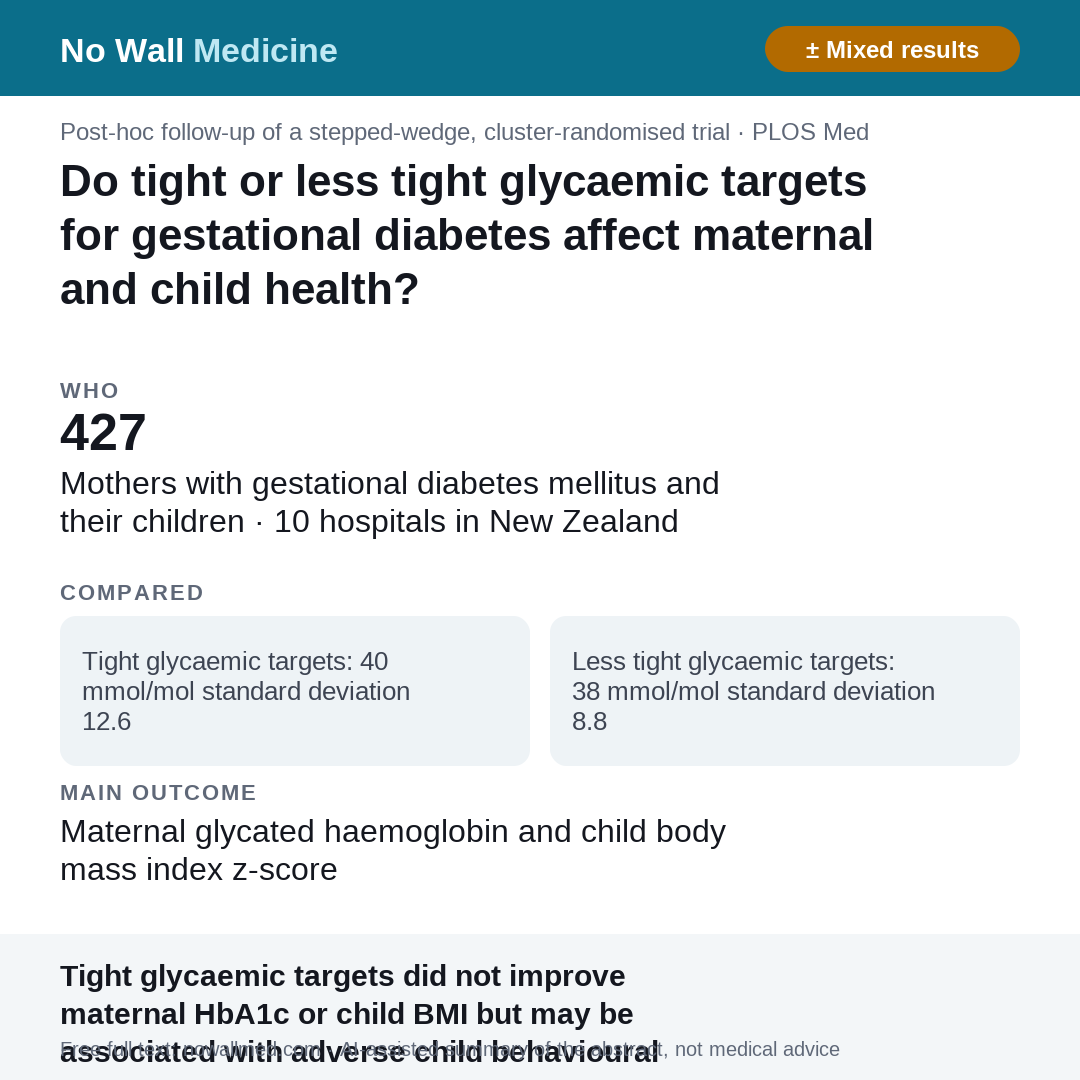
Mother and child health 4.5 years after gestational diabetes mellitus managed using tight or less tight targets for glycaemic control: Post-hoc follow-up study of the TARGET trial
Post-hoc follow-up of a stepped-wedge, cluster-randomised trialMixed results
Do tight or less tight glycaemic targets for gestational diabetes affect maternal and child health?
Who
427
Mothers with gestational diabetes mellitus and their children · 10 hospitals in New Zealand
Compared
Tight glycaemic targets: 40 mmol/mol standard deviation 12.6
Less tight glycaemic targets: 38 mmol/mol standard deviation 8.8
Main outcome
Maternal glycated haemoglobin and child body mass index z-score
Result: adjusted mean difference 2.17 (95% confidence interval [-0.26, 4.60])
Bottom line: Tight glycaemic targets did not improve maternal HbA1c or child BMI but may be associated with adverse child behavioural outcomes.
Limitation: The use of questionnaires rather than health professional assessments for some outcomes.
PLOS Med · 2026-02-03Download image
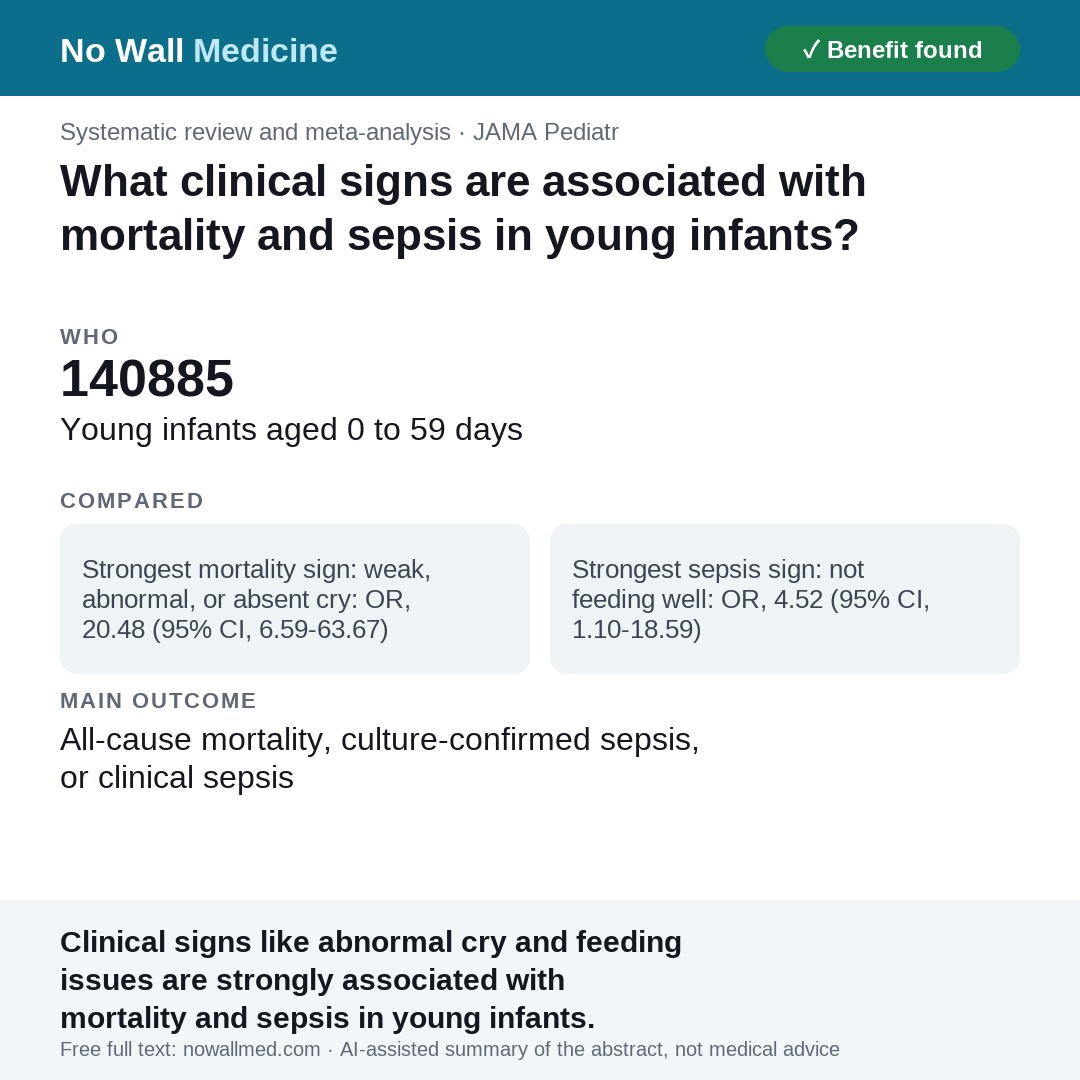
Clinical Signs Associated With Mortality and Sepsis in Young Infants: A Systematic Review and Meta-Analysis
Systematic review and meta-analysisBenefit found
What clinical signs are associated with mortality and sepsis in young infants?
Who
140885
Young infants aged 0 to 59 days
Compared
Strongest mortality sign: weak, abnormal, or absent cry: OR, 20.48 (95% CI, 6.59-63.67)
Strongest sepsis sign: not feeding well: OR, 4.52 (95% CI, 1.10-18.59)
Main outcome
All-cause mortality, culture-confirmed sepsis, or clinical sepsis
Bottom line: Clinical signs like abnormal cry and feeding issues are strongly associated with mortality and sepsis in young infants.
JAMA Pediatr · 2026-02-03Download image
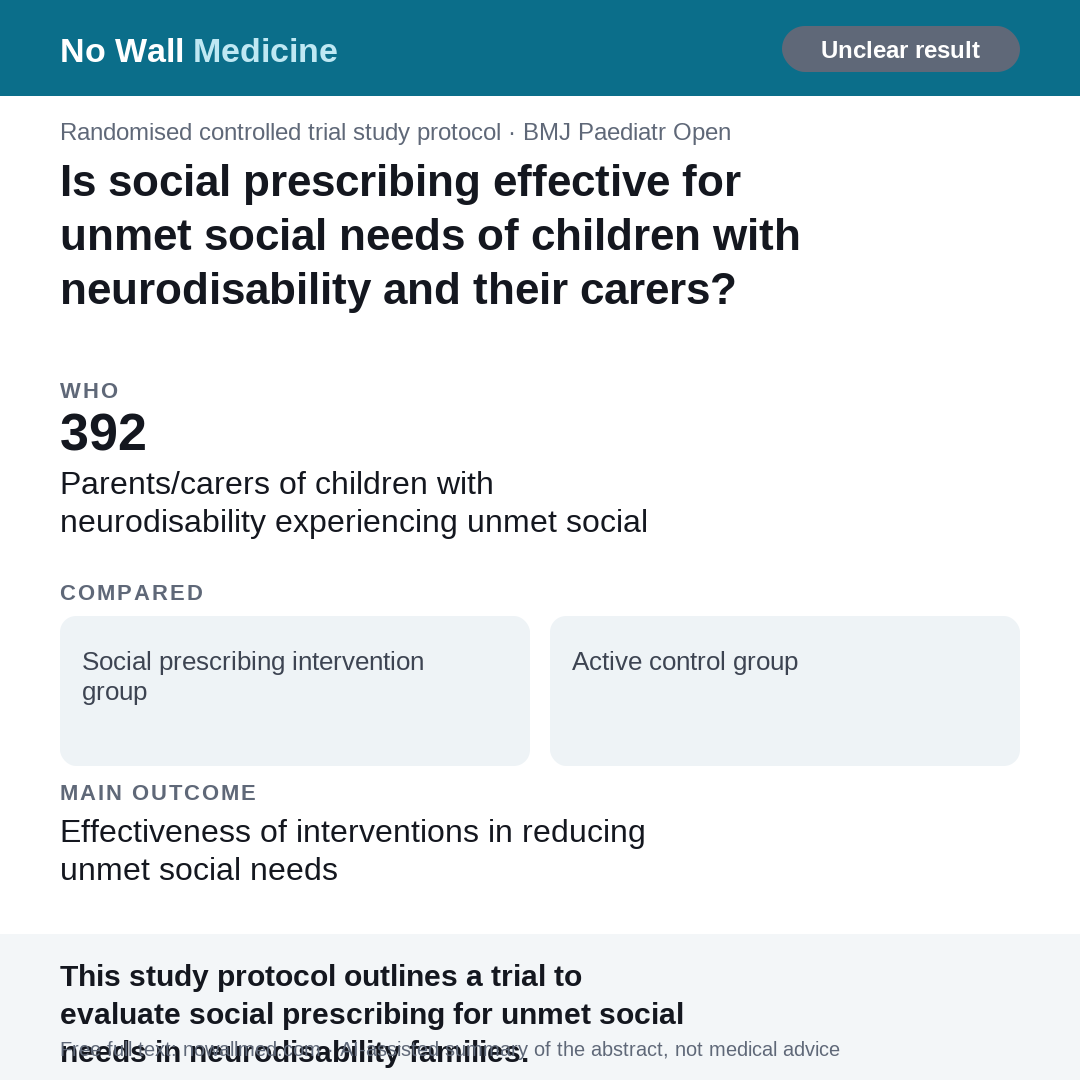
EPIC-ND: a multi-site, randomised controlled trial evaluating the effectiveness of social prescribing for the unmet social needs of children with a neurodisability and their parent/carers - a study protocol
Randomised controlled trial study protocolUnclear result
Is social prescribing effective for unmet social needs of children with neurodisability and their carers?
Who
392
Parents/carers of children with neurodisability experiencing unmet social needs · Paediatric Rehabilitation Services in New South Wales, Australia
Compared
Social prescribing intervention group
Active control group
Main outcome
Effectiveness of interventions in reducing unmet social needs
Bottom line: This study protocol outlines a trial to evaluate social prescribing for unmet social needs in neurodisability families.
BMJ Paediatr Open · 2026-02-03Download image