Visual abstracts
New randomized trials and meta-analyses from leading journals at a glance: who was studied, what was compared, and what was found. Every paper is free to read in full.
All specialtiesCardiology 4832Oncology 4114Gastroenterology & Hepatology 1934Infectious Disease 3824Neurology 1899Psychiatry & Mental Health 2256Pulmonology 2082Critical Care 1345Endocrinology & Diabetes 2572Pediatrics 2940Surgery 2525Orthopedics & Sports Medicine 926Neurosurgery 534Cardiothoracic & Vascular Surgery 671Plastic & Reconstructive Surgery 591Nephrology 1124Rheumatology 823Hematology 1104Dermatology 620Ophthalmology 543Obstetrics & Gynecology 1684Public & Global Health 1056Radiology & Imaging 641Anesthesiology 962Urology 754ENT (Otolaryngology) 503Emergency Medicine 489Allergy & Immunology 313Geriatrics 981Family Medicine & Primary Care 541Medical Genetics & Genomics 675Pathology & Laboratory Medicine 157Physical Medicine & Rehabilitation 751Palliative Care 424Nutrition 1580Digital Health & AI 2195General Medicine 321
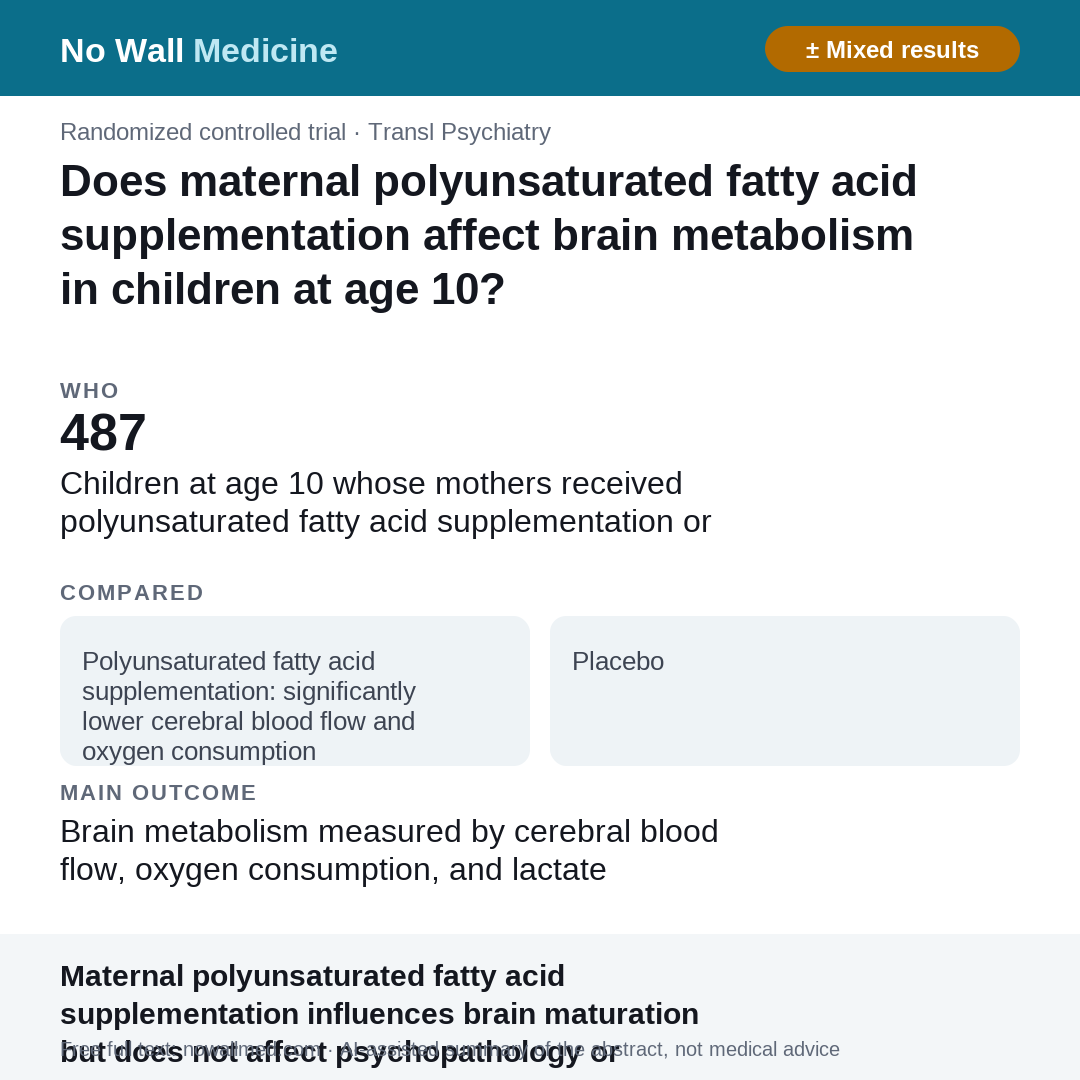
Fish oil-derived fatty acids in pregnancy and brain metabolism in middle childhood: results from a randomized controlled trial
Randomized controlled trialMixed results
Does maternal polyunsaturated fatty acid supplementation affect brain metabolism in children at age 10?
Who
487
Children at age 10 whose mothers received polyunsaturated fatty acid supplementation or placebo
Compared
Polyunsaturated fatty acid supplementation: significantly lower cerebral blood flow and oxygen consumption
Placebo
Main outcome
Brain metabolism measured by cerebral blood flow, oxygen consumption, and lactate
Bottom line: Maternal polyunsaturated fatty acid supplementation influences brain maturation but does not affect psychopathology or cognitive performance.
Limitation: further large-scale studies on maternal nutrition and brain development are needed
Transl Psychiatry · 2026-07-16Download image
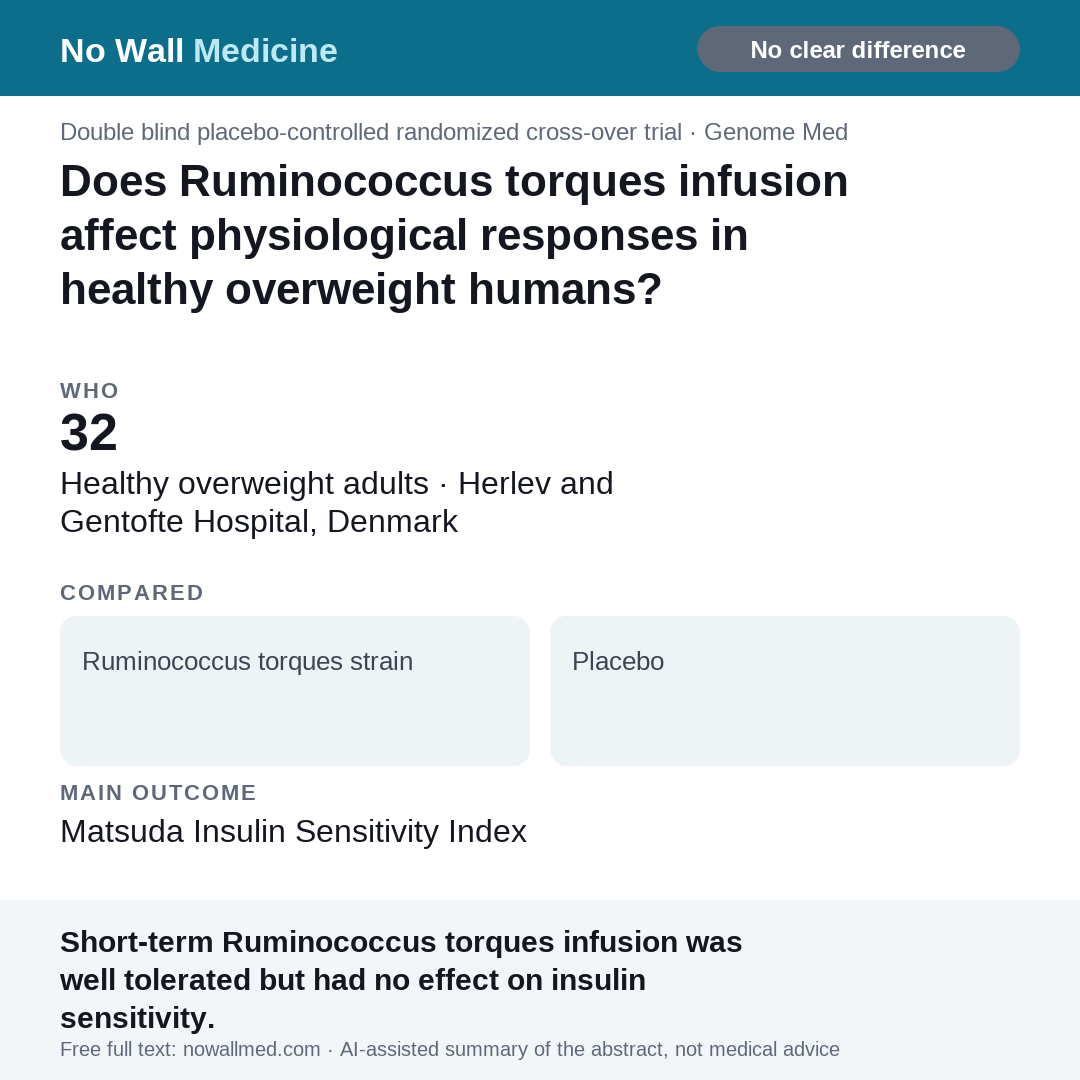
A short-term randomized clinical trial testing feasibility of and physiological responses to a Ruminococcus torques strain in healthy overweight humans
Double blind placebo-controlled randomized cross-over trialNo clear difference
Does Ruminococcus torques infusion affect physiological responses in healthy overweight humans?
Who
32
Healthy overweight adults · Herlev and Gentofte Hospital, Denmark
Compared
Ruminococcus torques strain
Placebo
Main outcome
Matsuda Insulin Sensitivity Index
Bottom line: Short-term Ruminococcus torques infusion was well tolerated but had no effect on insulin sensitivity.
Genome Med · 2026-07-16Download image
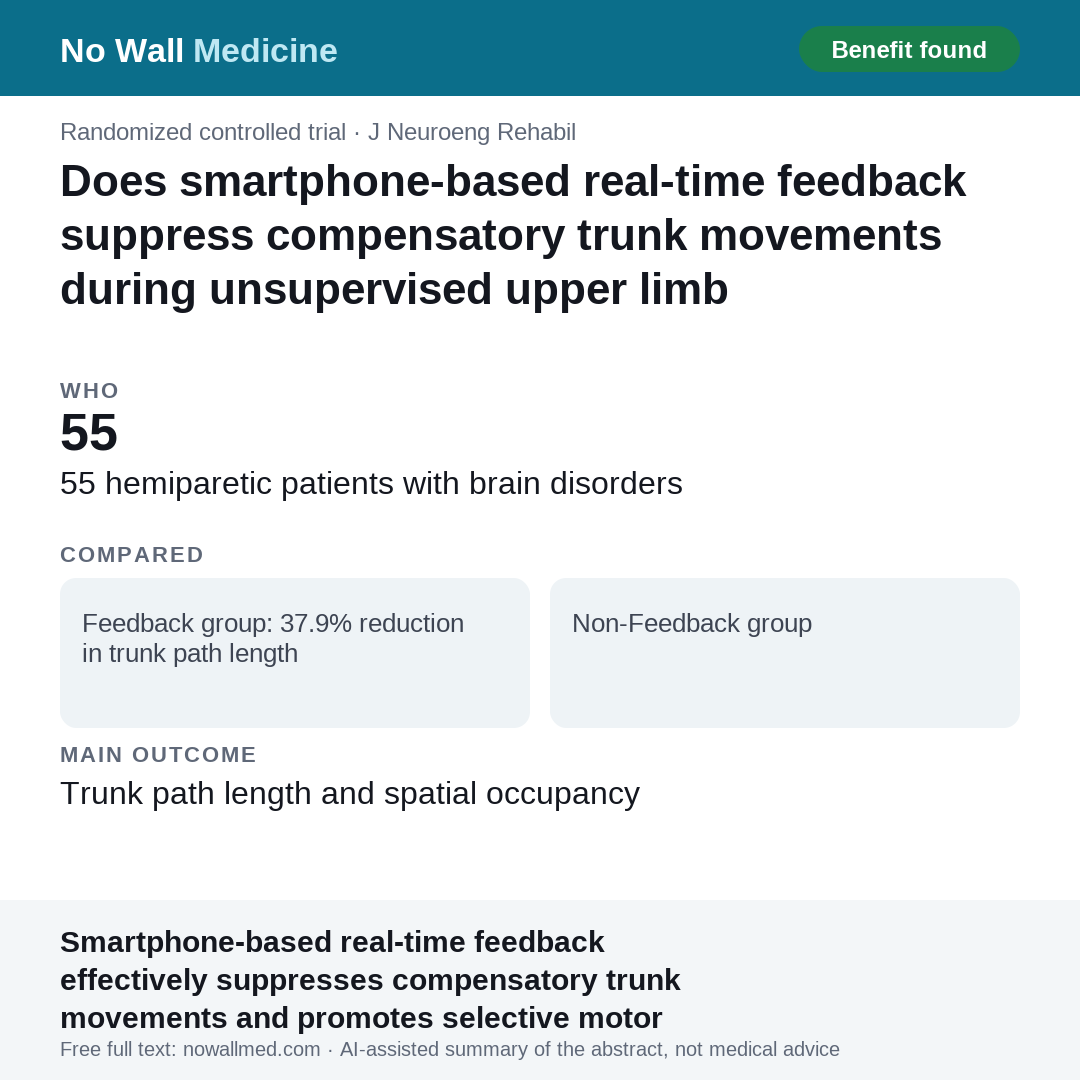
Smartphone-based real-time feedback to suppress trunk compensation for unsupervised upper limb rehabilitation in patients with brain disorders
Randomized controlled trialBenefit found
Does smartphone-based real-time feedback suppress compensatory trunk movements during unsupervised upper limb rehabilitation?
Who
55
55 hemiparetic patients with brain disorders
Compared
Feedback group: 37.9% reduction in trunk path length
Non-Feedback group
Main outcome
Trunk path length and spatial occupancy
Bottom line: Smartphone-based real-time feedback effectively suppresses compensatory trunk movements and promotes selective motor control during rehabilitation.
J Neuroeng Rehabil · 2026-07-16Download image
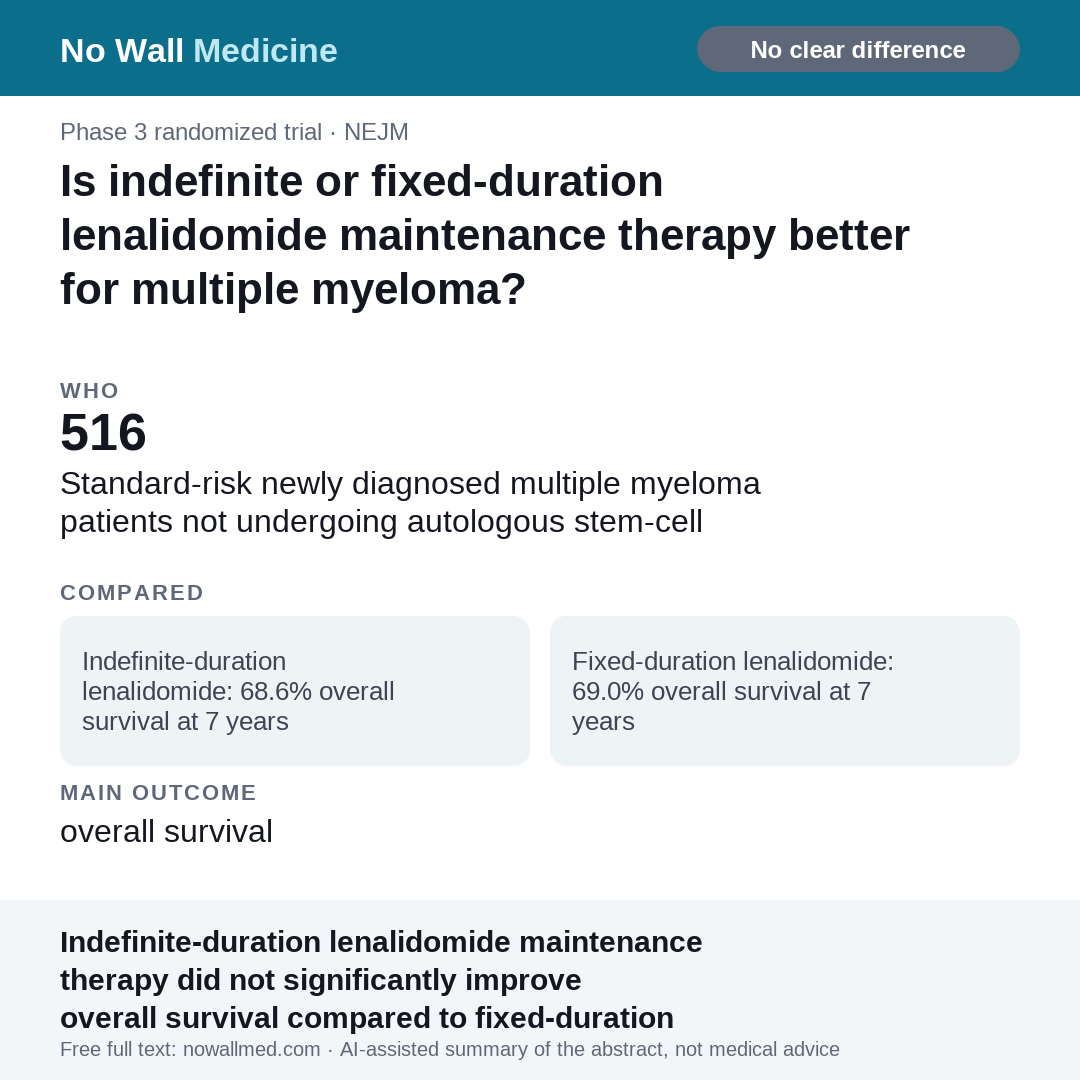
Continuous or Fixed-Duration Maintenance Therapy in Multiple Myeloma
Phase 3 randomized trialNo clear difference
Is indefinite or fixed-duration lenalidomide maintenance therapy better for multiple myeloma?
Who
516
Standard-risk newly diagnosed multiple myeloma patients not undergoing autologous stem-cell transplantation
Compared
Indefinite-duration lenalidomide: 68.6% overall survival at 7 years
Fixed-duration lenalidomide: 69.0% overall survival at 7 years
Main outcome
overall survival
Result: difference, -0.4 percentage points; 95% confidence interval [-9.0 to 8.3]
Bottom line: Indefinite-duration lenalidomide maintenance therapy did not significantly improve overall survival compared to fixed-duration therapy.
Funded by: National Cancer Institute of the National Institutes of Health and Amgen
NEJM · 2026-07-15Download image
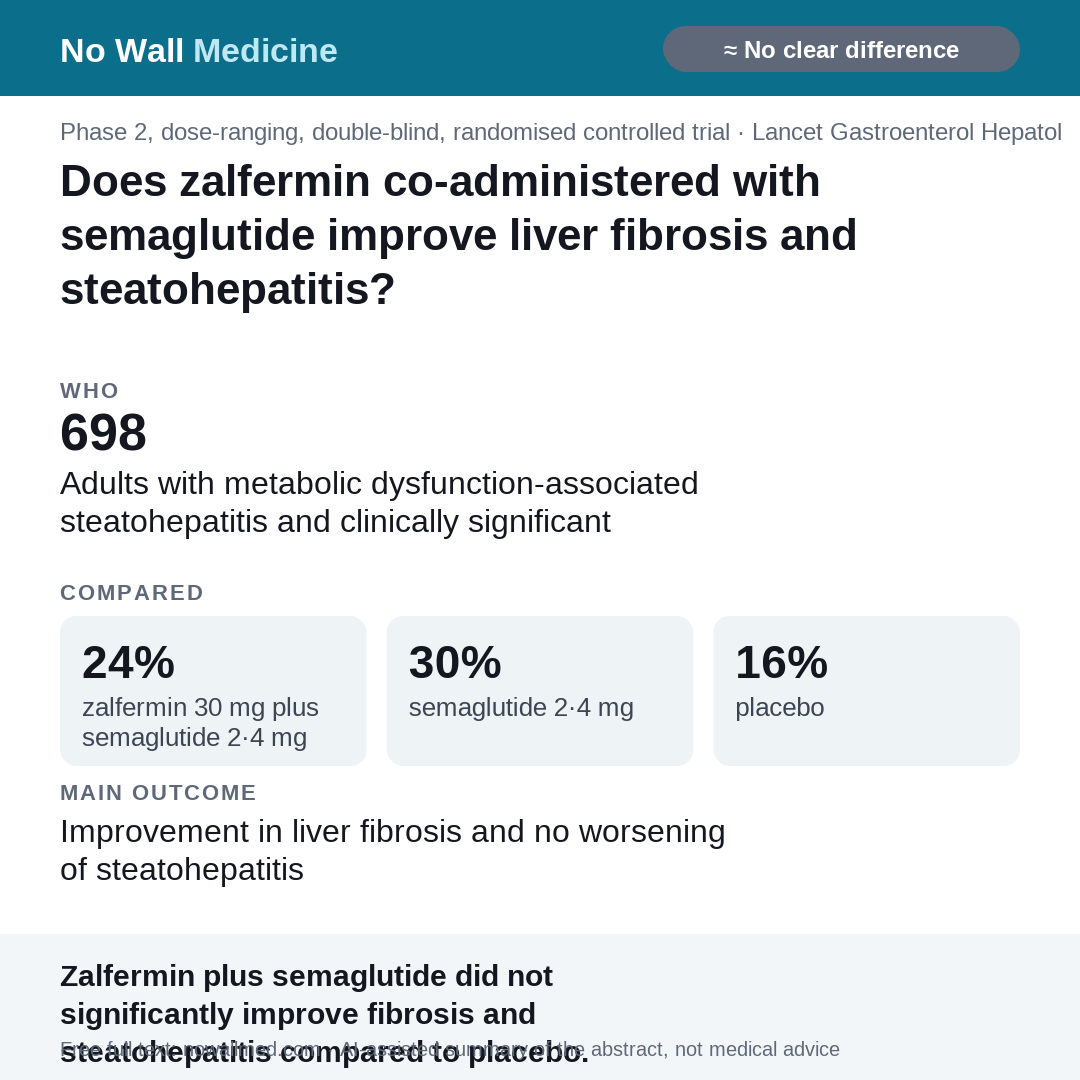
Efficacy and safety of zalfermin co-administered with semaglutide in participants with fibrosis and cirrhosis due to metabolic dysfunction-associated steatohepatitis: a phase 2, dose-ranging, double-blind, randomised controlled trial
Phase 2, dose-ranging, double-blind, randomised controlled trialNo clear difference
Does zalfermin co-administered with semaglutide improve liver fibrosis and steatohepatitis?
Who
698
Adults with metabolic dysfunction-associated steatohepatitis and clinically significant fibrosis · 187 clinical trial sites in 22 countries
Compared
24%zalfermin 30 mg plus semaglutide 2·4 mg (24/99)
30%semaglutide 2·4 mg (30/100)
16%placebo (16/100)
Main outcome
Improvement in liver fibrosis and no worsening of steatohepatitis
Result: estimated difference in responder proportions 7·98, 95% CI -3·82 to 19·79
Bottom line: Zalfermin plus semaglutide did not significantly improve fibrosis and steatohepatitis compared to placebo.
Lancet Gastroenterol Hepatol · 2026-07-15Download image
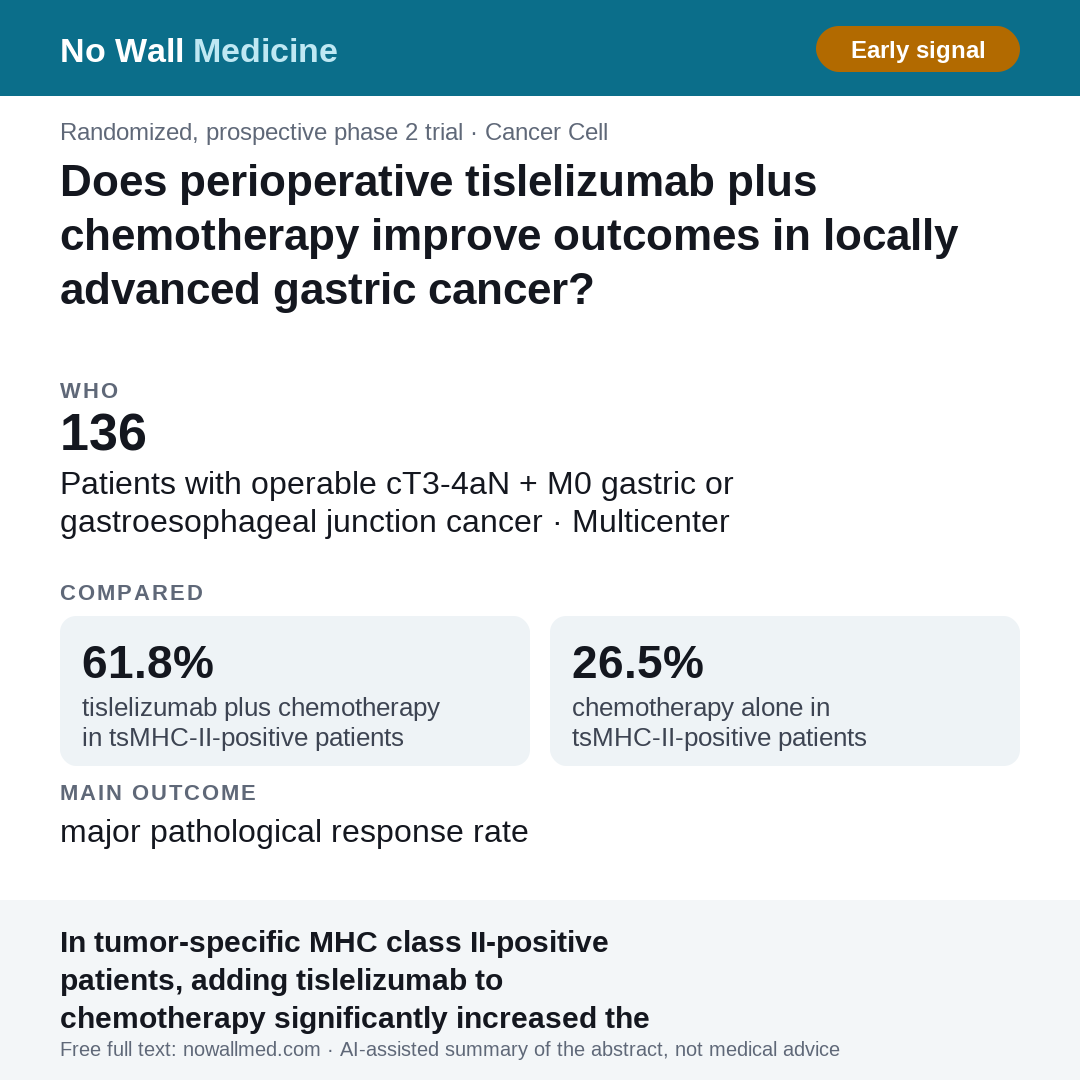
Perioperative tislelizumab plus chemotherapy for locally advanced gastric cancer: A randomized, prospective phase 2 trial
Randomized, prospective phase 2 trialEarly signal
Does perioperative tislelizumab plus chemotherapy improve outcomes in locally advanced gastric cancer?
Who
136
Patients with operable cT3-4aN + M0 gastric or gastroesophageal junction cancer · Multicenter
Compared
61.8%tislelizumab plus chemotherapy in tsMHC-II-positive patients
26.5%chemotherapy alone in tsMHC-II-positive patients
Main outcome
major pathological response rate
Bottom line: In tumor-specific MHC class II-positive patients, adding tislelizumab to chemotherapy significantly increased the major pathological response rate.
Cancer Cell · 2026-07-15Download image
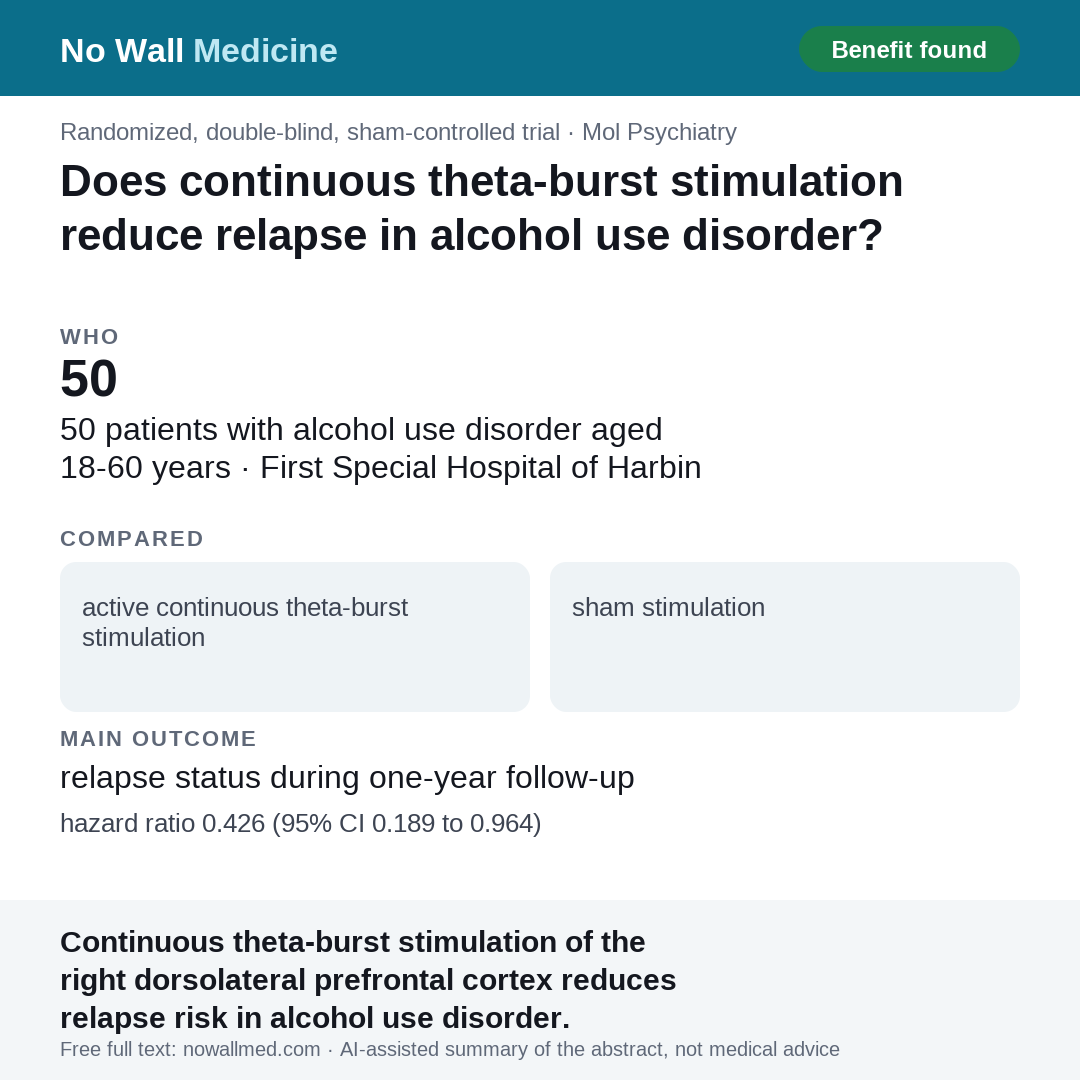
Optimizing brain functional-structural architecture with cTBS to reduce relapse in alcohol use disorder: a randomized controlled trial
Randomized, double-blind, sham-controlled trialBenefit found
Does continuous theta-burst stimulation reduce relapse in alcohol use disorder?
Who
50
50 patients with alcohol use disorder aged 18-60 years · First Special Hospital of Harbin
Compared
active continuous theta-burst stimulation
sham stimulation
Main outcome
relapse status during one-year follow-up
Result: hazard ratio 0.426 (95% CI 0.189 to 0.964)
Bottom line: Continuous theta-burst stimulation of the right dorsolateral prefrontal cortex reduces relapse risk in alcohol use disorder.
Mol Psychiatry · 2026-07-15Download image
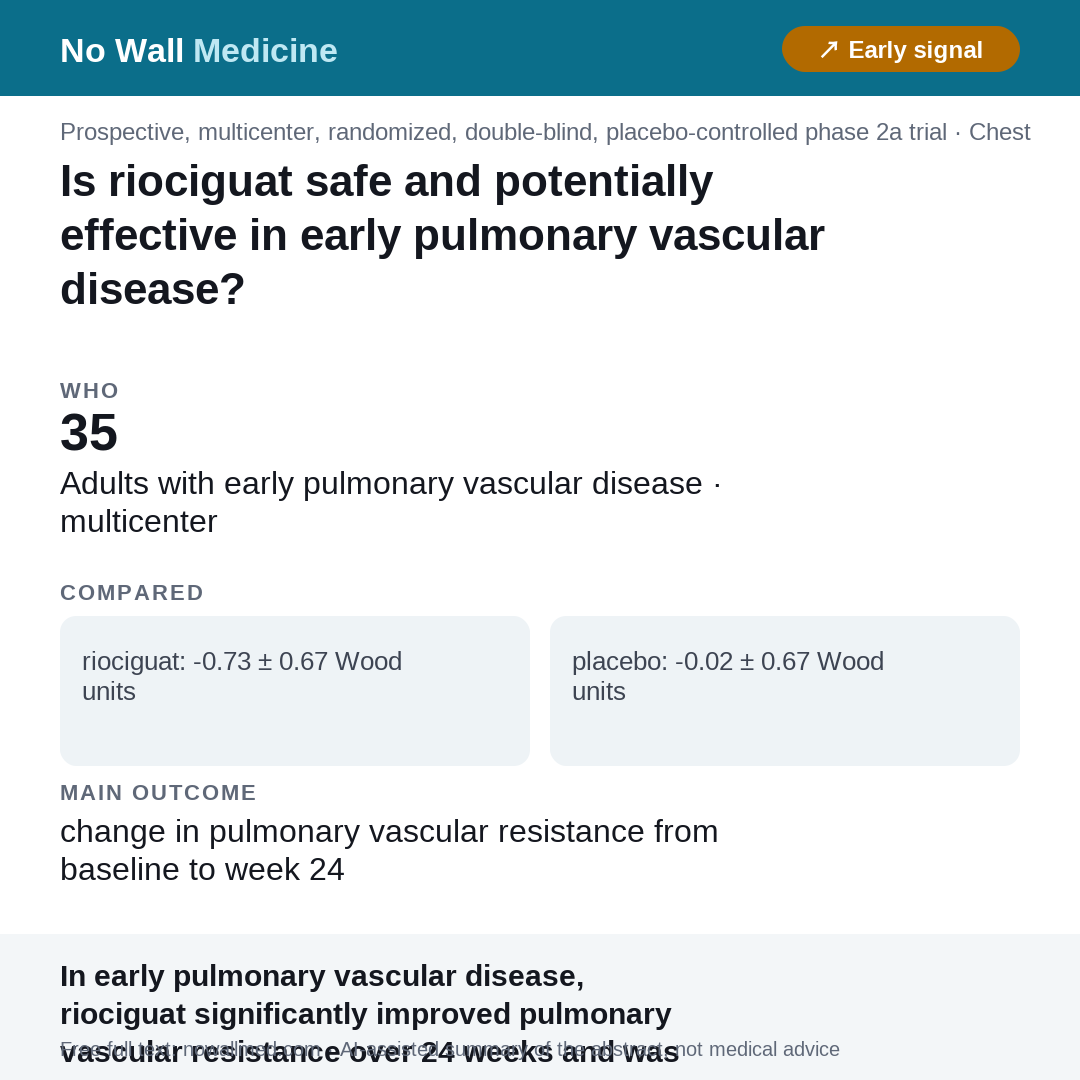
Efficacy and Safety of Riociguat in Early Pulmonary Vascular Disease: A Prospective, Multicenter, Randomized, Double-Blind, Placebo-Controlled Phase 2a Trial
Prospective, multicenter, randomized, double-blind, placebo-controlled phase 2a trialEarly signal
Is riociguat safe and potentially effective in early pulmonary vascular disease?
Who
35
Adults with early pulmonary vascular disease · multicenter
Compared
riociguat: -0.73 ± 0.67 Wood units
placebo: -0.02 ± 0.67 Wood units
Main outcome
change in pulmonary vascular resistance from baseline to week 24
Result: 27% placebo-adjusted reduction
Bottom line: In early pulmonary vascular disease, riociguat significantly improved pulmonary vascular resistance over 24 weeks and was safe.
Limitation: limited number of participants
Chest · 2026-07-15Download image
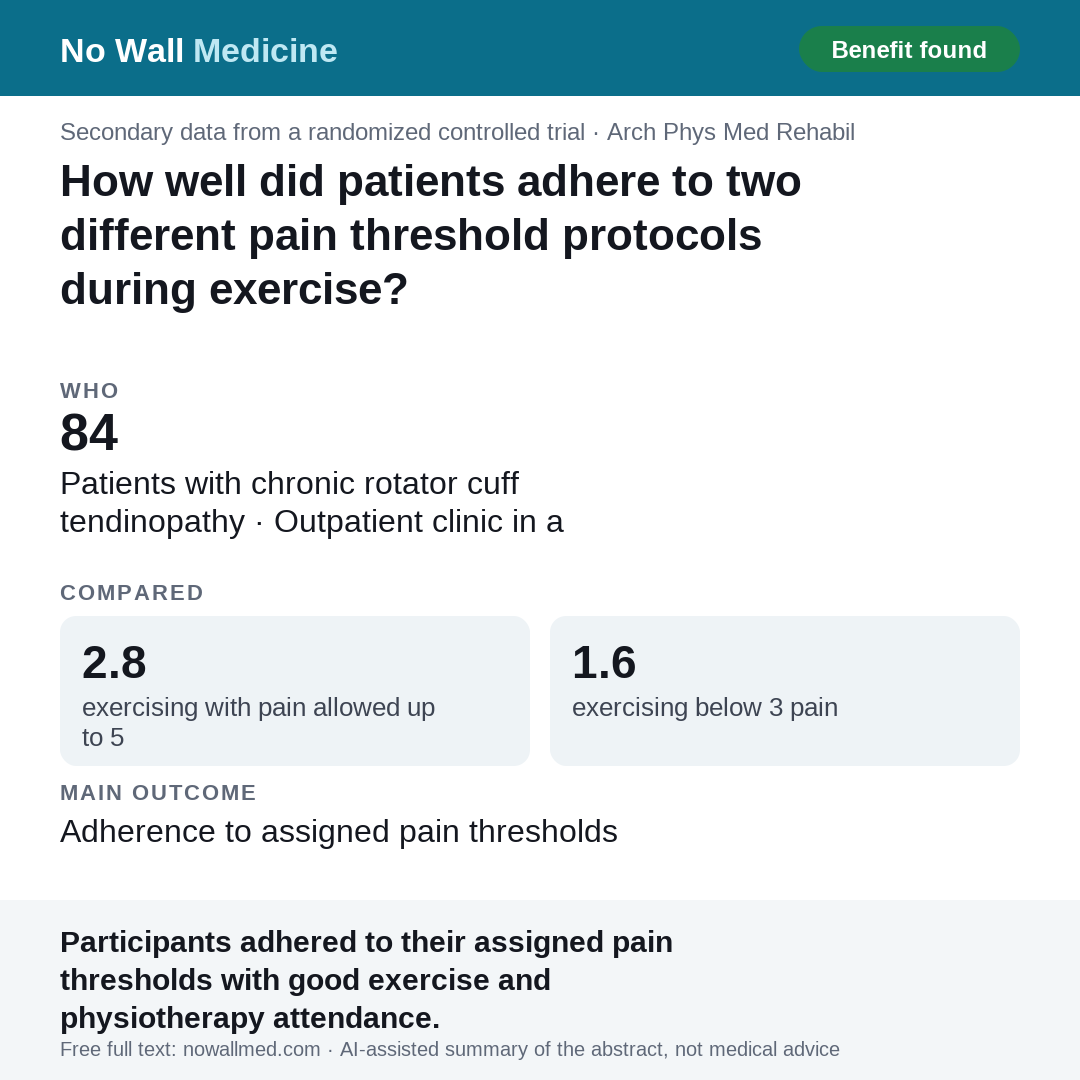
Adherence to Exercise Intervention Including Pain Threshold, Exercise and Physiotherapy Sessions for Patients With Chronic Rotator Cuff Tendinopathy
Secondary data from a randomized controlled trialBenefit found
How well did patients adhere to two different pain threshold protocols during exercise?
Who
84
Patients with chronic rotator cuff tendinopathy · Outpatient clinic in a secondary care setting
Compared
Pain allowed up to 5: Mean exercise pain was 2.8 (SD ±0.21)
Pain below 3: Mean exercise pain was 1.6 (SD ±0.19)
Main outcome
Adherence to assigned pain thresholds
Bottom line: Participants adhered to assigned pain thresholds, though logbook adherence declined over time.
Arch Phys Med Rehabil · 2026-07-15Download image
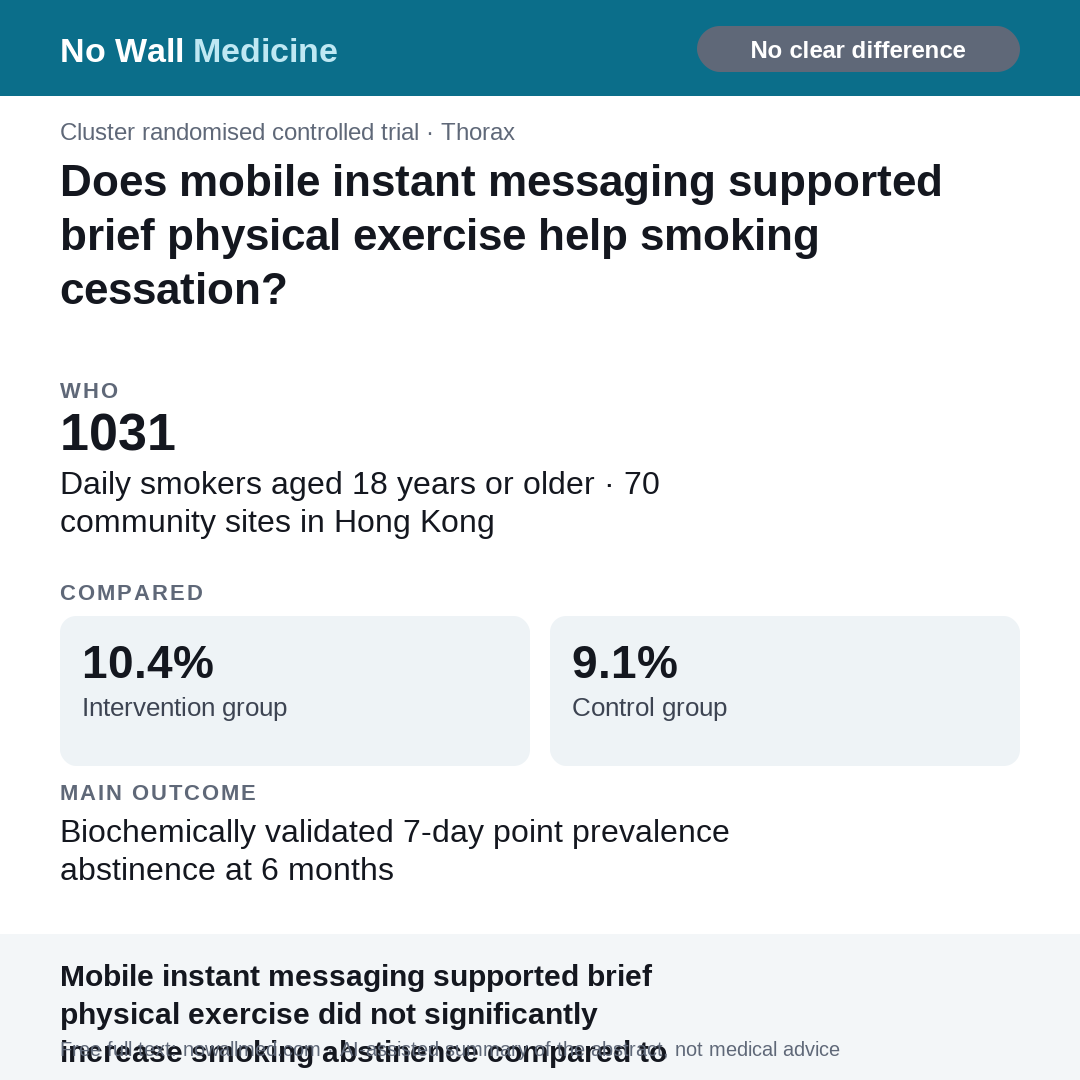
Mobile instant messaging supported brief physical exercise intervention for smoking cessation: a community-based, cluster randomised controlled trial
Cluster randomised controlled trialNo clear difference
Does mobile instant messaging supported brief physical exercise help smoking cessation?
Who
1031
Daily smokers aged 18 years or older · 70 community sites in Hong Kong
Compared
10.4%Intervention group
9.1%Control group
Main outcome
Biochemically validated 7-day point prevalence abstinence at 6 months
Result: risk ratio 1.14 (95% CI 0.79 to 1.66)
Bottom line: Mobile instant messaging supported brief physical exercise did not significantly increase smoking abstinence compared to brief cessation advice alone.
Limitation: Only 59.8% of participants were followed up at 6 months.
Thorax · 2026-07-15Download image
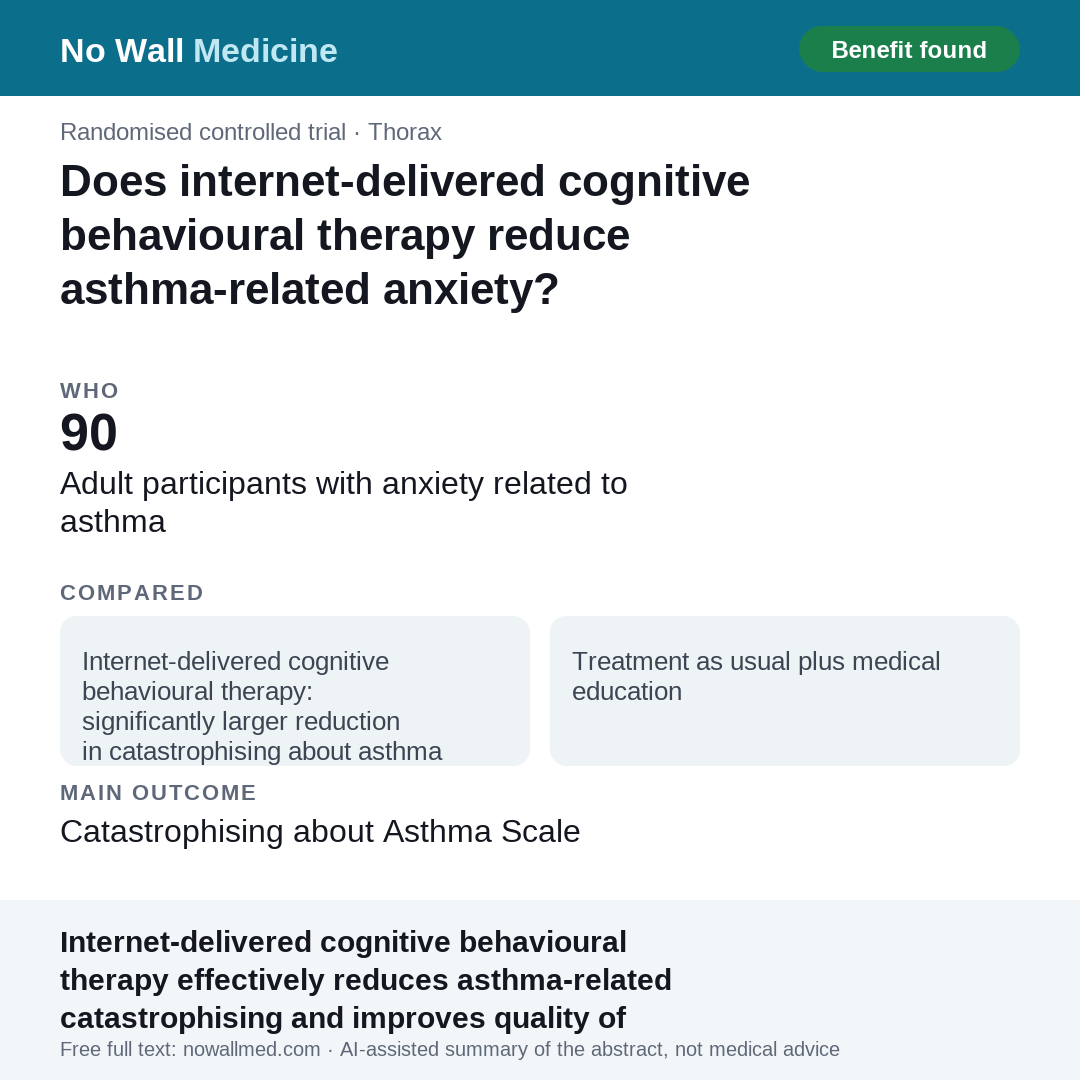
Online cognitive behaviour therapy for asthma-related anxiety: a randomised controlled trial
Randomised controlled trialBenefit found
Does internet-delivered cognitive behavioural therapy reduce asthma-related anxiety?
Who
90
Adult participants with anxiety related to asthma
Compared
Internet-delivered cognitive behavioural therapy: significantly larger reduction in catastrophising about asthma
Treatment as usual plus medical education
Main outcome
Catastrophising about Asthma Scale
Result: mean difference -18.53 (95% CI -25.54 to -11.53)
Bottom line: Internet-delivered cognitive behavioural therapy effectively reduces asthma-related catastrophising and improves quality of life.
Thorax · 2026-07-15Download image
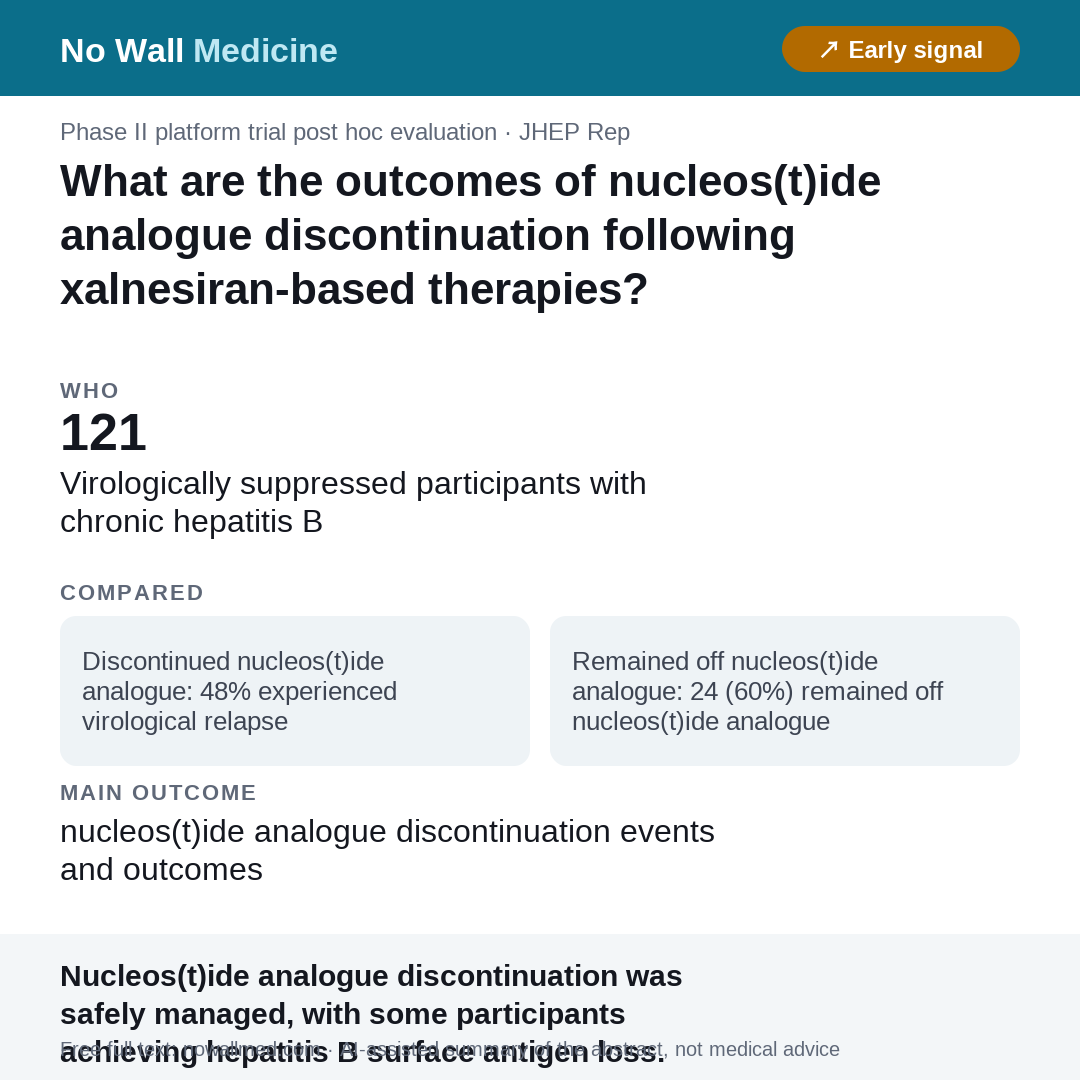
Outcomes of nucleos(t)ide analogue discontinuation following finite xalnesiran-based therapies in chronic hepatitis B
Phase II platform trial post hoc evaluationEarly signal
What are the outcomes of nucleos(t)ide analogue discontinuation following xalnesiran-based therapies?
Who
121
Virologically suppressed participants with chronic hepatitis B
Compared
Discontinued nucleos(t)ide analogue: 48% experienced virological relapse
Remained off nucleos(t)ide analogue: 24 (60%) remained off nucleos(t)ide analogue
Main outcome
nucleos(t)ide analogue discontinuation events and outcomes
Bottom line: Nucleos(t)ide analogue discontinuation was safely managed, with some participants achieving hepatitis B surface antigen loss.
Limitation: Data from clinical trials are limited
JHEP Rep · 2026-07-15Download image
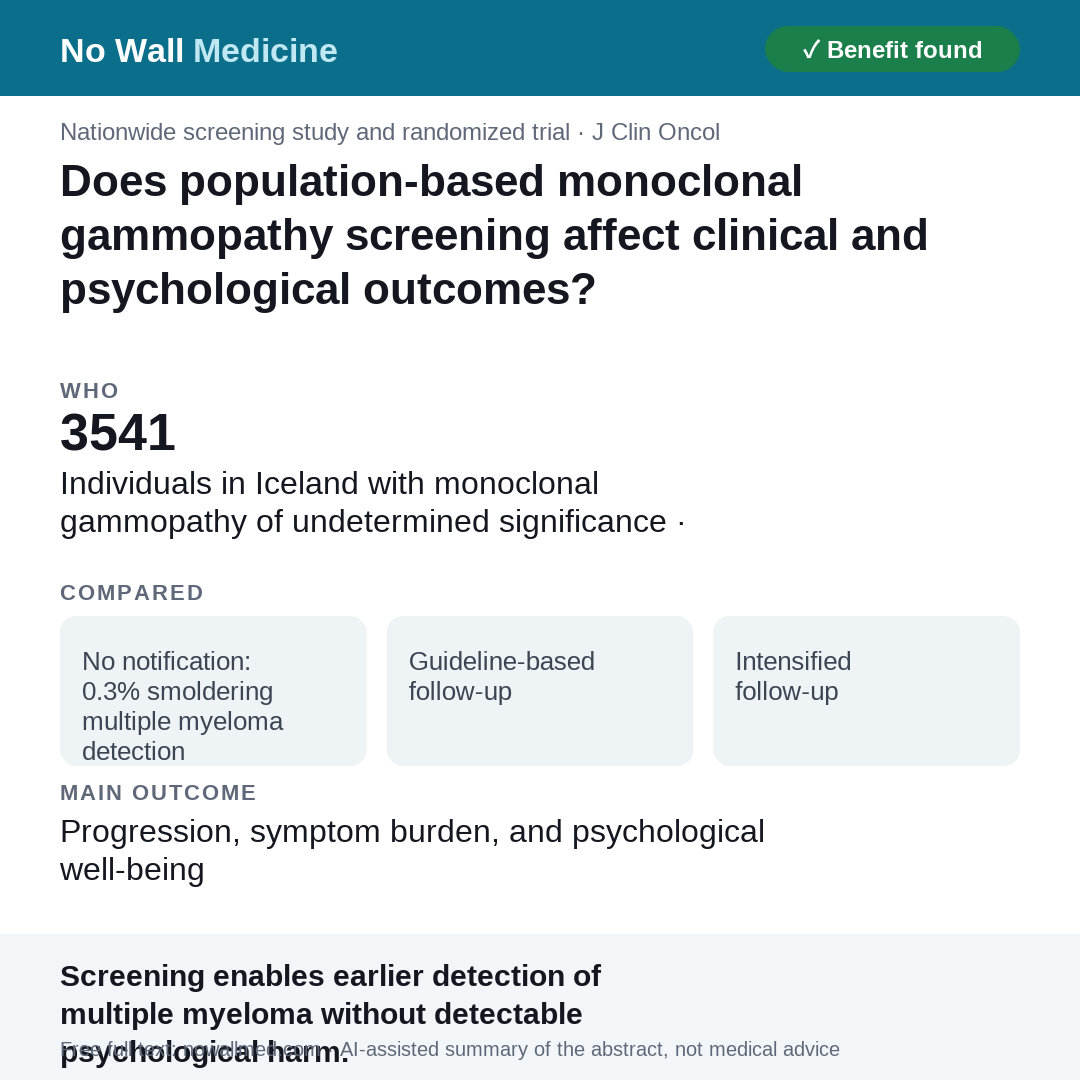
Clinical and Psychological Outcomes After Monoclonal Gammopathy Screening: A Population-Based Screening Study and Subsequent Randomized Trial of Follow-Up
Nationwide screening study and randomized trialBenefit found
Does population-based monoclonal gammopathy screening affect clinical and psychological outcomes?
Who
3541
Individuals in Iceland with monoclonal gammopathy of undetermined significance · Iceland
Compared
No notification: 0.3% smoldering multiple myeloma detection
Guideline-based follow-up
Intensified follow-up
Main outcome
Progression, symptom burden, and psychological well-being
Result: hazard ratio 27.46 (95% CI 10.21 to 73.86)
Bottom line: Screening enables earlier detection of multiple myeloma without detectable psychological harm.
J Clin Oncol · 2026-07-14Download image
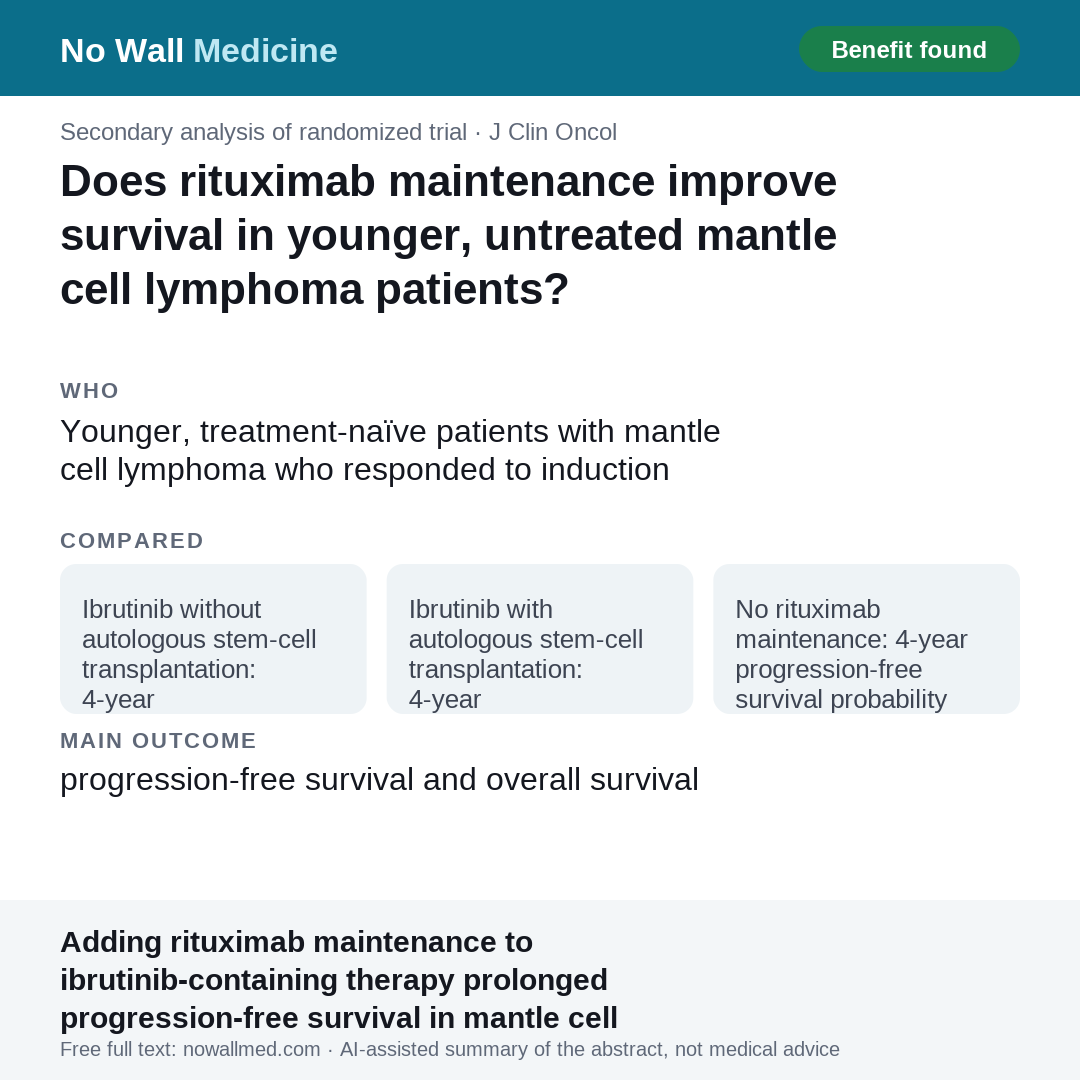
Rituximab Maintenance Added to Ibrutinib-Containing Therapy in Younger, Untreated Patients With Mantle Cell Lymphoma: Results From the TRIANGLE Trial
Secondary analysis of randomized trialBenefit found
Does rituximab maintenance improve survival in younger, untreated mantle cell lymphoma patients?
Who
Younger, treatment-naïve patients with mantle cell lymphoma who responded to induction
Compared
Ibrutinib without autologous stem-cell transplantation: 4-year progression-free survival probability 85% with rituximab maintenance
Ibrutinib with autologous stem-cell transplantation: 4-year progression-free survival probability 90% with rituximab maintenance
No rituximab maintenance: 4-year progression-free survival probability 73% in ibrutinib only arm
Main outcome
progression-free survival and overall survival
Bottom line: Adding rituximab maintenance to ibrutinib-containing therapy prolonged progression-free survival in mantle cell lymphoma patients.
J Clin Oncol · 2026-07-14Download image
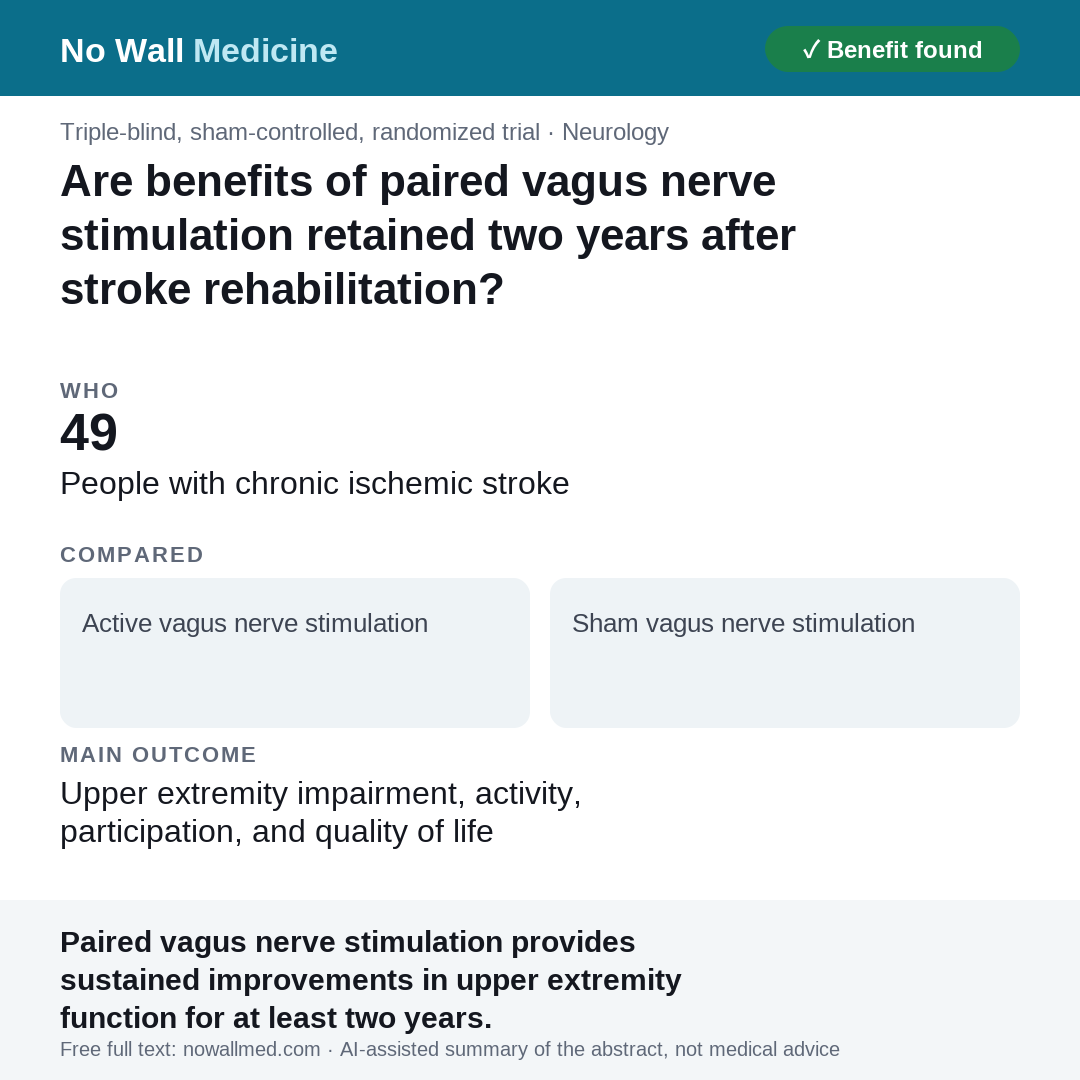
Two-Year Retention of Benefits After Paired Vagus Nerve Stimulation in Stroke: Follow-Up of the VNS-REHAB Randomized Clinical Trial
Triple-blind, sham-controlled, randomized trialBenefit found
Are benefits of paired vagus nerve stimulation retained two years after stroke rehabilitation?
Who
49
People with chronic ischemic stroke
Compared
Active vagus nerve stimulation
Sham vagus nerve stimulation
Main outcome
Upper extremity impairment, activity, participation, and quality of life
Bottom line: Paired vagus nerve stimulation provides sustained improvements in upper extremity function for at least two years.
Neurology · 2026-07-14Download image
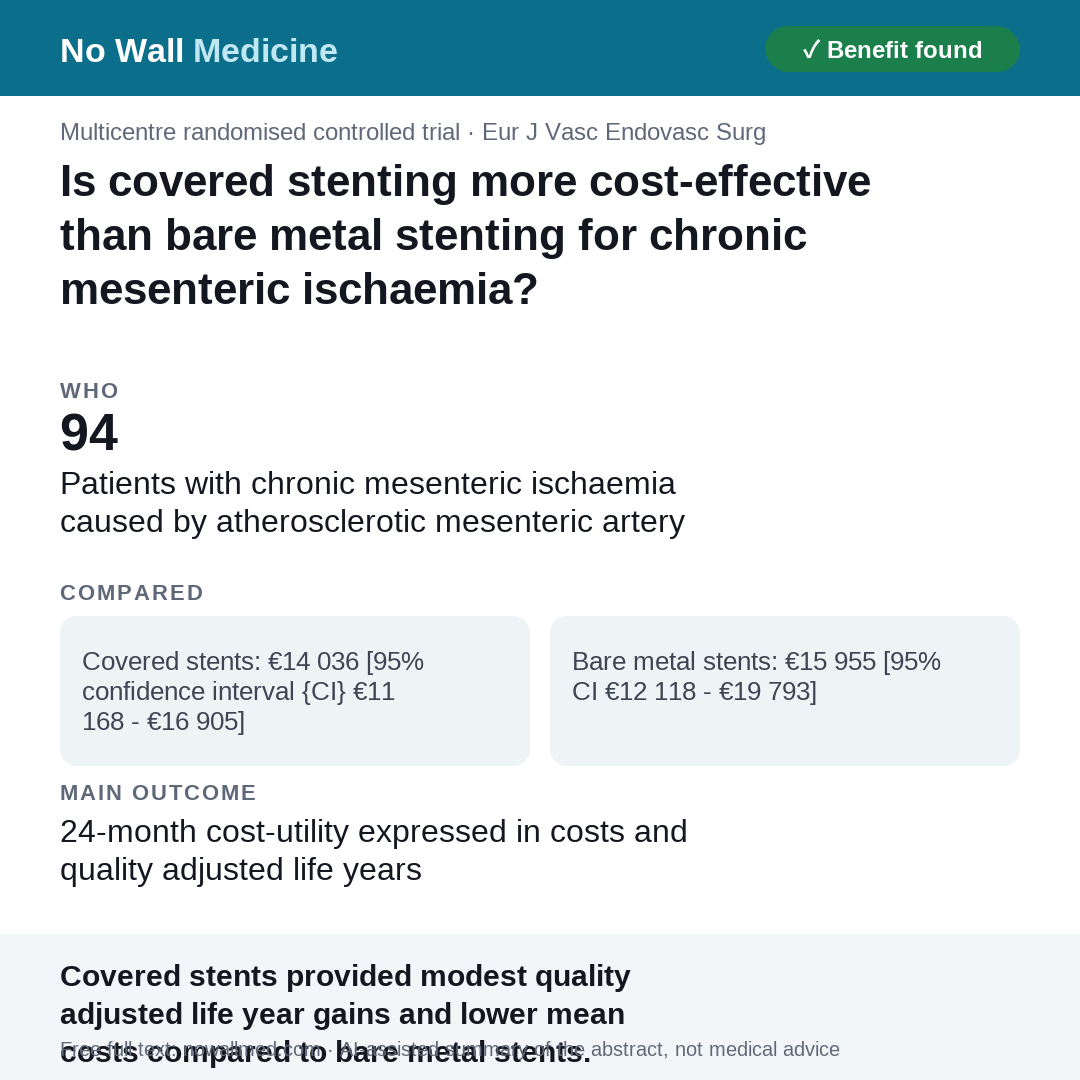
Cost-Utility Analysis of Covered vs. Bare Metal Stenting of the Mesenteric Arteries in Patients with Chronic Mesenteric Ischaemia: Results of a Multicentre Randomised Controlled Trial (CoBaGI)
Multicentre randomised controlled trialBenefit found
Is covered stenting more cost-effective than bare metal stenting for chronic mesenteric ischaemia?
Who
94
Patients with chronic mesenteric ischaemia caused by atherosclerotic mesenteric artery stenosis · Multicentre
Compared
Covered stents: €14 036 [95% confidence interval {CI} €11 168 - €16 905]
Bare metal stents: €15 955 [95% CI €12 118 - €19 793]
Main outcome
24-month cost-utility expressed in costs and quality adjusted life years
Bottom line: Covered stents provided modest quality adjusted life year gains and lower mean costs compared to bare metal stents.
Eur J Vasc Endovasc Surg · 2026-07-14Download image
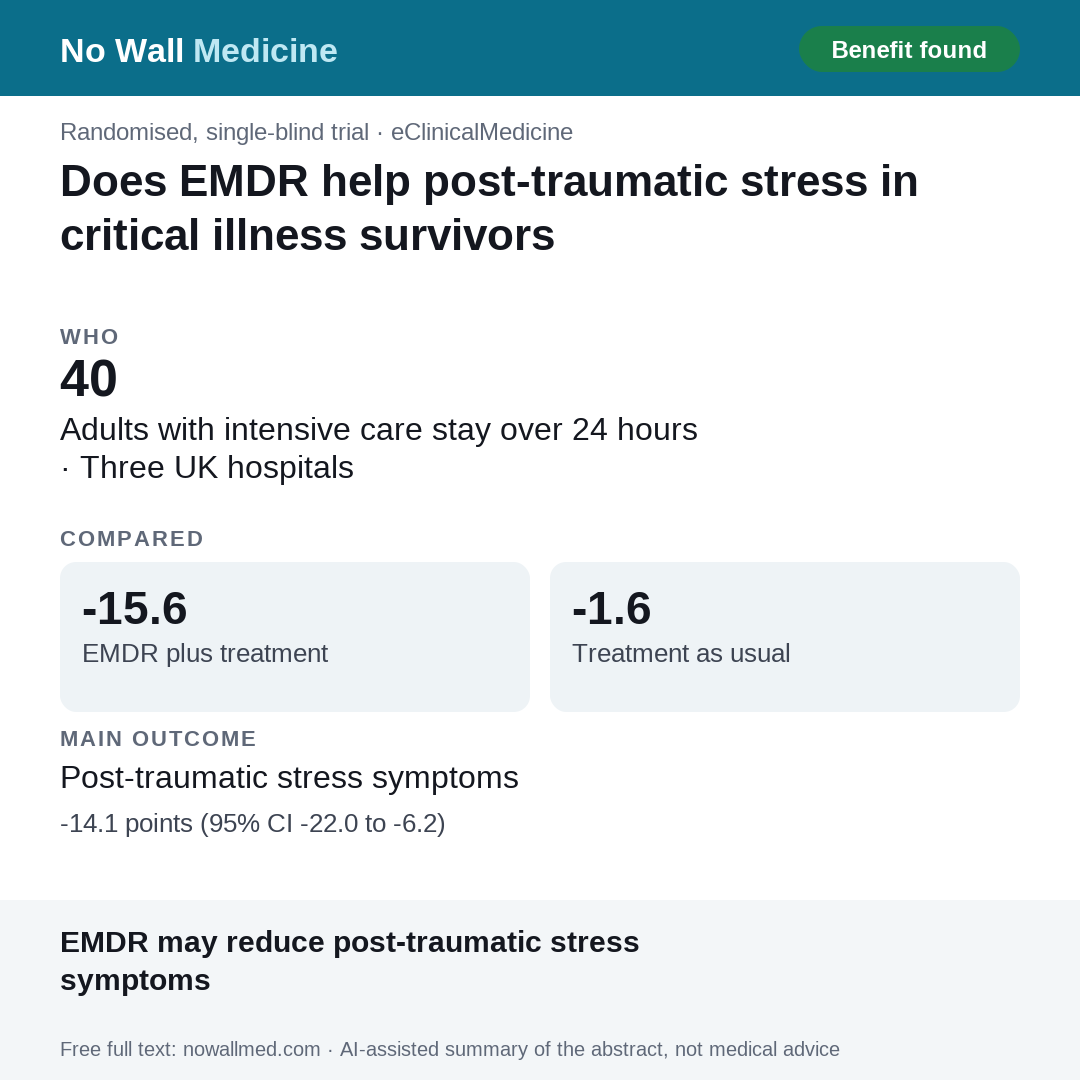
Eye movement desensitisation and reprocessing for post-traumatic stress in survivors of critical illness (EMERALD): a mixed-methods, randomised, single-blind, parallel group-controlled, feasibility trial
Randomised, single-blind trialEarly signal
Does EMDR help post-traumatic stress in critical illness survivors
Who
40
Adults with intensive care stay over 24 hours · Three UK hospitals
Compared
-15.6EMDR plus treatment (SD 12.5)
-1.6Treatment as usual (SD 11.8)
Main outcome
Post-traumatic stress symptoms
Result: -14.1 points (95% CI -22.0 to -6.2)
Bottom line: EMDR may reduce post-traumatic stress symptoms
Limitation: small sample size
Funded by: National Institute for Health and Care Research
eClinicalMedicine · 2026-07-13Download image
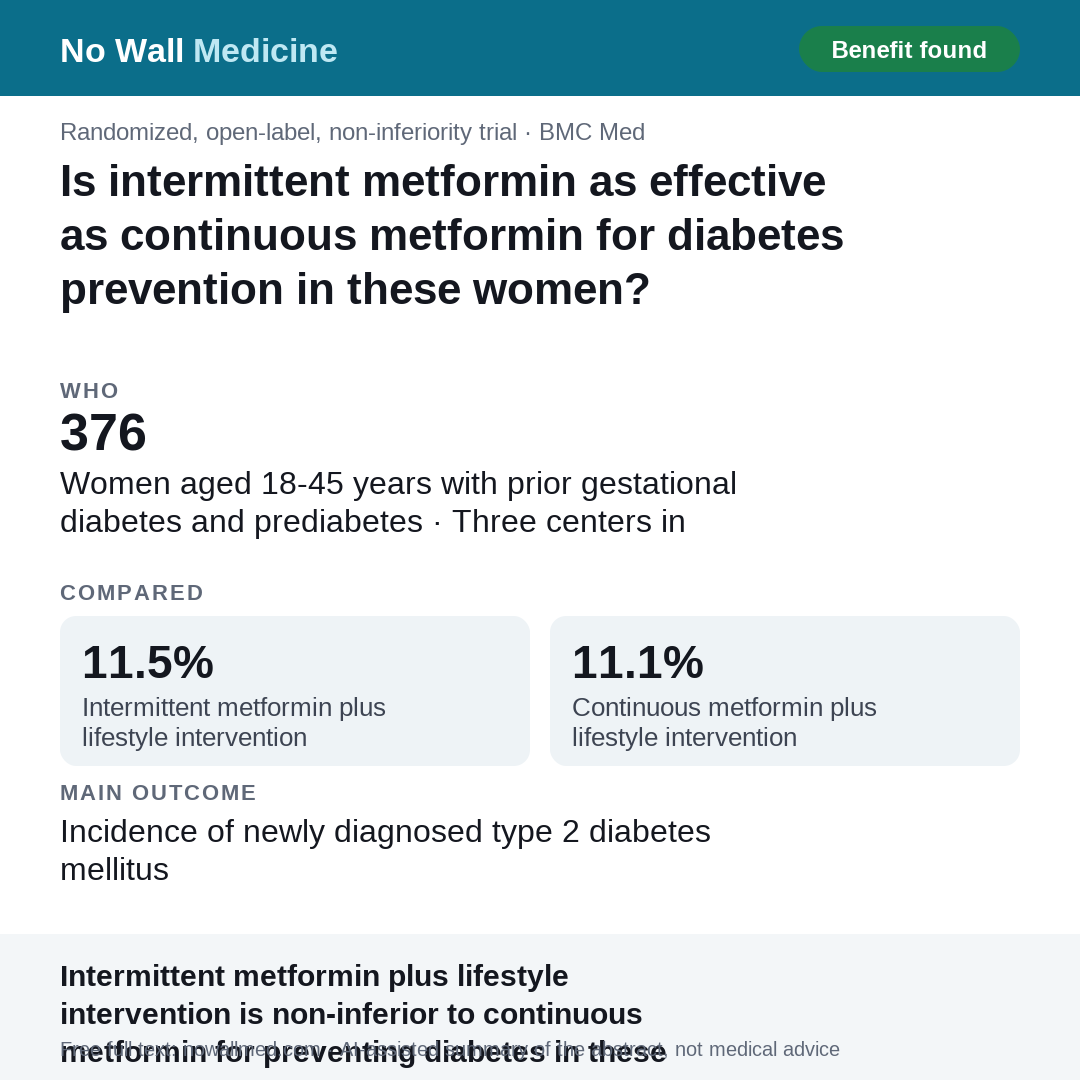
The efficacy of intermittent metformin plus lifestyle intervention for diabetes prevention in women with prediabetes and prior gestational diabetes: a randomized clinical, non-inferiority trial
Randomized, open-label, non-inferiority trialBenefit found
Is intermittent metformin as effective as continuous metformin for diabetes prevention in these women?
Who
376
Women aged 18-45 years with prior gestational diabetes and prediabetes · Three centers in China
Compared
11.5%Intermittent metformin plus lifestyle intervention
11.1%Continuous metformin plus lifestyle intervention
Main outcome
Incidence of newly diagnosed type 2 diabetes mellitus
Result: absolute risk difference 0.4% points (95% CI -6.5 to 7.4)
Bottom line: Intermittent metformin plus lifestyle intervention is non-inferior to continuous metformin for preventing diabetes in these women.
BMC Med · 2026-07-13Download image
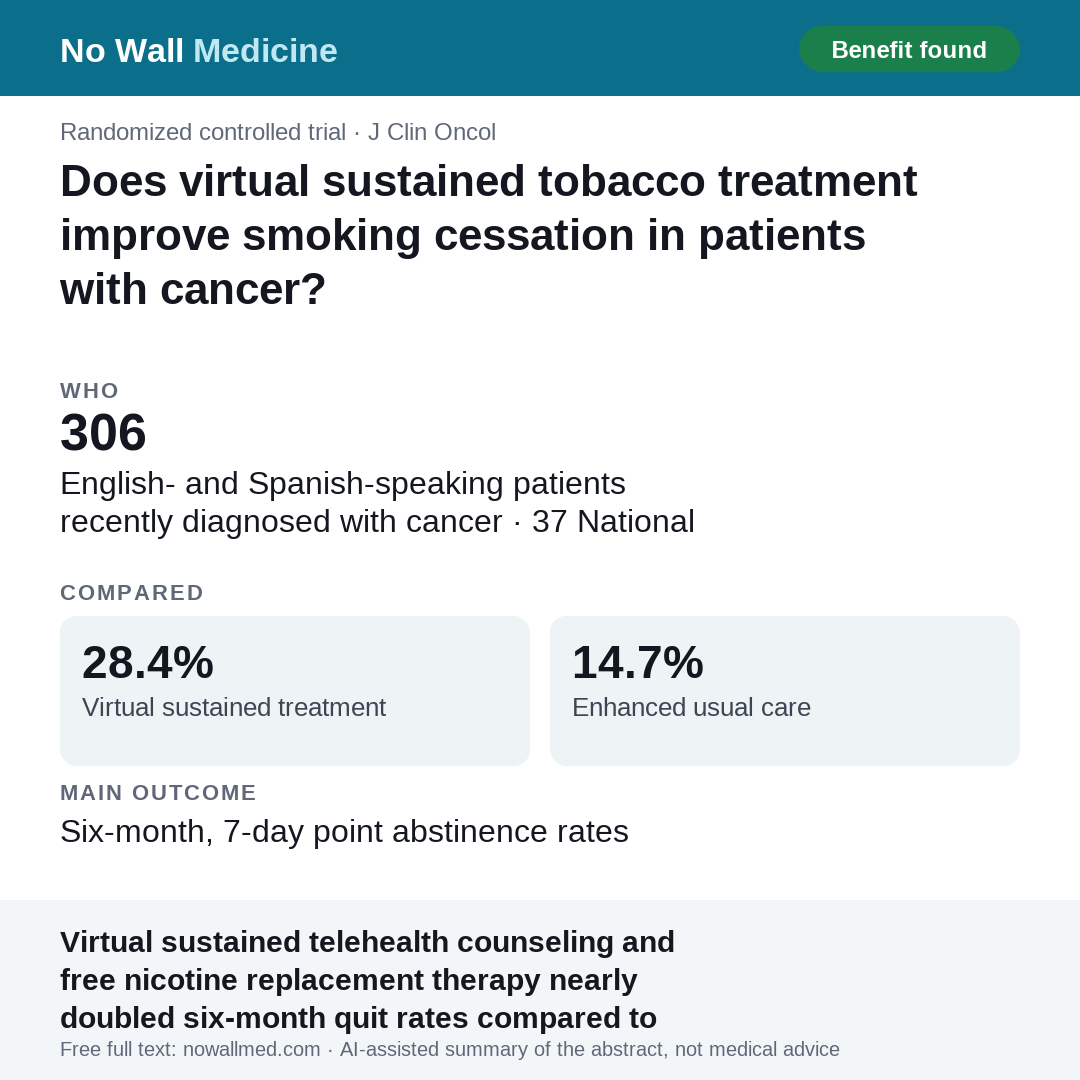
Virtual Sustained Tobacco Treatment for Patients With Cancer: A Randomized Controlled Trial (ECOG-ACRIN: EAQ171CD) Within the National Cancer Institute Community Oncology Research Program
Randomized controlled trialBenefit found
Does virtual sustained tobacco treatment improve smoking cessation in patients with cancer?
Who
306
English- and Spanish-speaking patients recently diagnosed with cancer · 37 National Cancer Institute Community Oncology Research Program sites
Compared
28.4%Virtual sustained treatment (42 of 148)
14.7%Enhanced usual care (21 of 143)
Main outcome
Six-month, 7-day point abstinence rates
Bottom line: Virtual sustained telehealth counseling and free nicotine replacement therapy nearly doubled six-month quit rates compared to enhanced usual care.
J Clin Oncol · 2026-07-13Download image
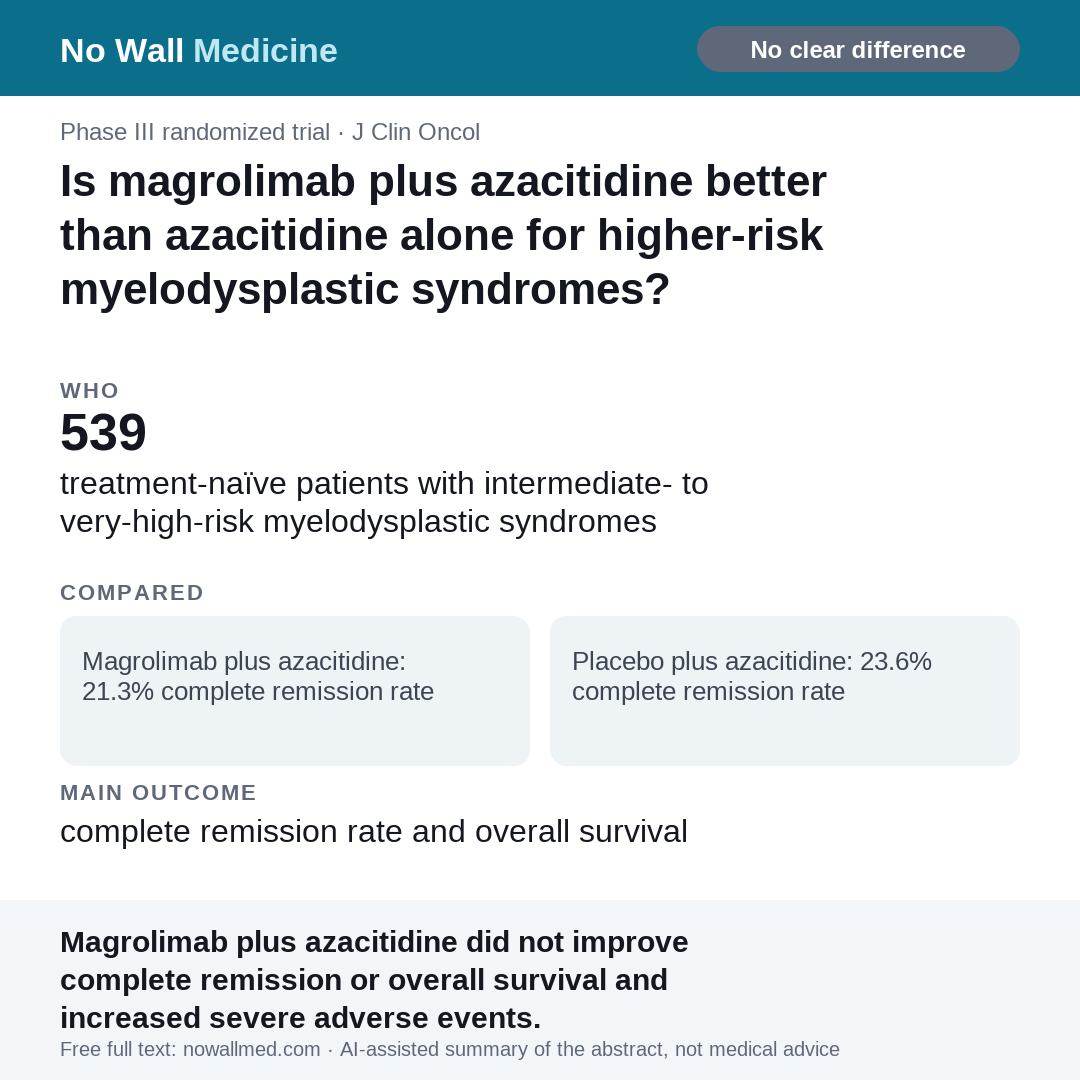
Magrolimab Plus Azacitidine Versus Placebo Plus Azacitidine in Patients With Untreated Higher-Risk Myelodysplastic Syndromes: The Phase III ENHANCE Study
Phase III randomized trialNo clear difference
Is magrolimab plus azacitidine better than azacitidine alone for higher-risk myelodysplastic syndromes?
Who
539
treatment-naïve patients with intermediate- to very-high-risk myelodysplastic syndromes
Compared
Magrolimab plus azacitidine: 21.3% complete remission rate
Placebo plus azacitidine: 23.6% complete remission rate
Main outcome
complete remission rate and overall survival
Result: hazard ratio 1.203 (95% CI 0.947 to 1.528)
Bottom line: Magrolimab plus azacitidine did not improve complete remission or overall survival and increased severe adverse events.
J Clin Oncol · 2026-07-13Download image