Visual abstracts
New randomized trials and meta-analyses from leading journals at a glance: who was studied, what was compared, and what was found. Every paper is free to read in full.
All specialtiesCardiology 4763Oncology 4042Gastroenterology & Hepatology 1902Infectious Disease 3756Neurology 1872Psychiatry & Mental Health 2214Pulmonology 2042Critical Care 1319Endocrinology & Diabetes 2544Pediatrics 2889Surgery 2479Orthopedics & Sports Medicine 917Neurosurgery 525Cardiothoracic & Vascular Surgery 656Plastic & Reconstructive Surgery 574Nephrology 1107Rheumatology 810Hematology 1090Dermatology 611Ophthalmology 532Obstetrics & Gynecology 1645Public & Global Health 1037Radiology & Imaging 617Anesthesiology 957Urology 745ENT (Otolaryngology) 494Emergency Medicine 481Allergy & Immunology 309Geriatrics 972Family Medicine & Primary Care 533Medical Genetics & Genomics 659Pathology & Laboratory Medicine 156Physical Medicine & Rehabilitation 734Palliative Care 421Nutrition 1560Digital Health & AI 2133General Medicine 318
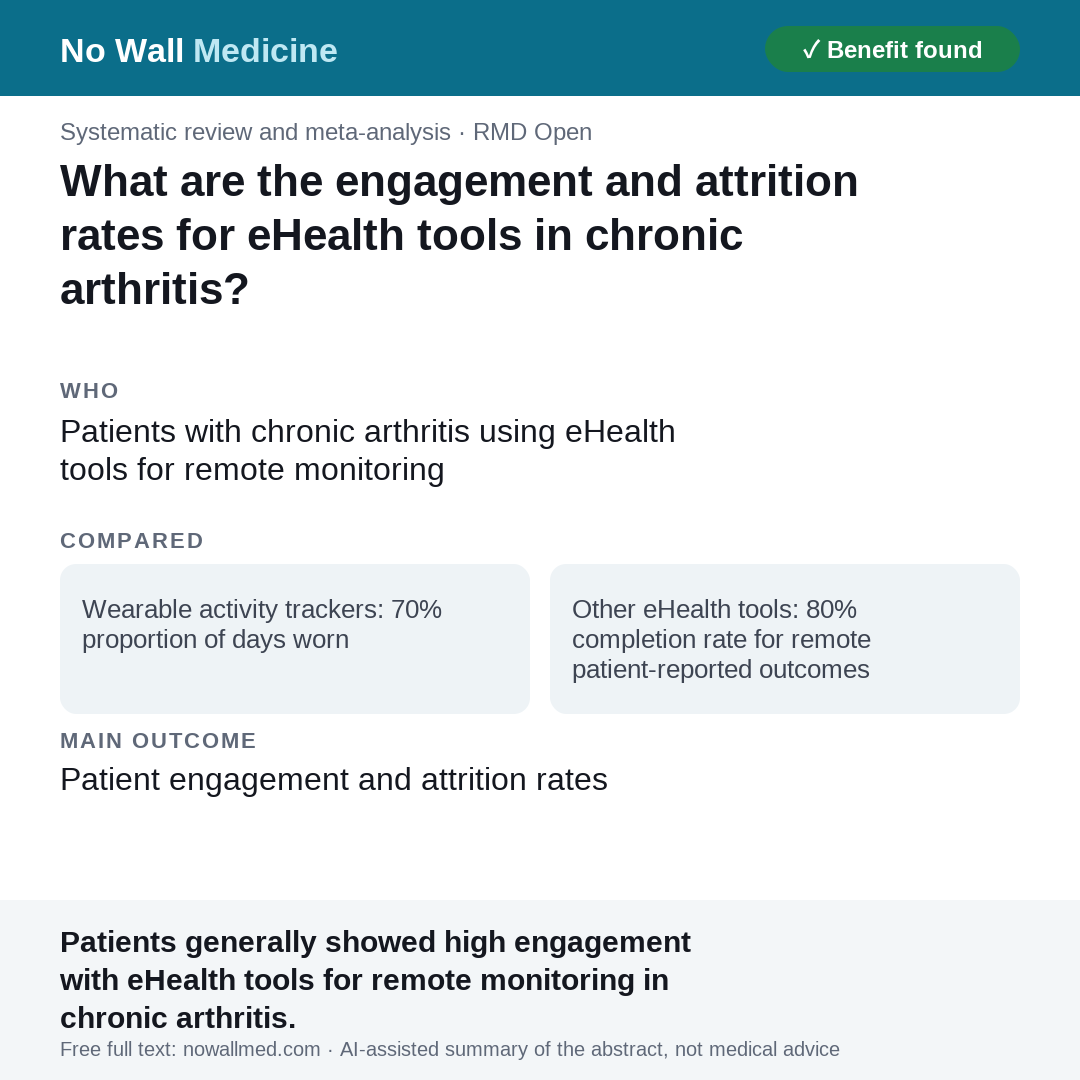
Engagement and attrition with eHealth tools for remote monitoring in chronic arthritis: a systematic review and meta-analysis
Systematic review and meta-analysisBenefit found
What are the engagement and attrition rates for eHealth tools in chronic arthritis?
Who
Patients with chronic arthritis using eHealth tools for remote monitoring
Compared
Wearable activity trackers: 70% proportion of days worn
Other eHealth tools: 80% completion rate for remote patient-reported outcomes
Main outcome
Patient engagement and attrition rates
Bottom line: Patients generally showed high engagement with eHealth tools for remote monitoring in chronic arthritis.
Limitation: High between-study heterogeneity and a relative lack of real-world data.
RMD Open · 2022-10-27Download image
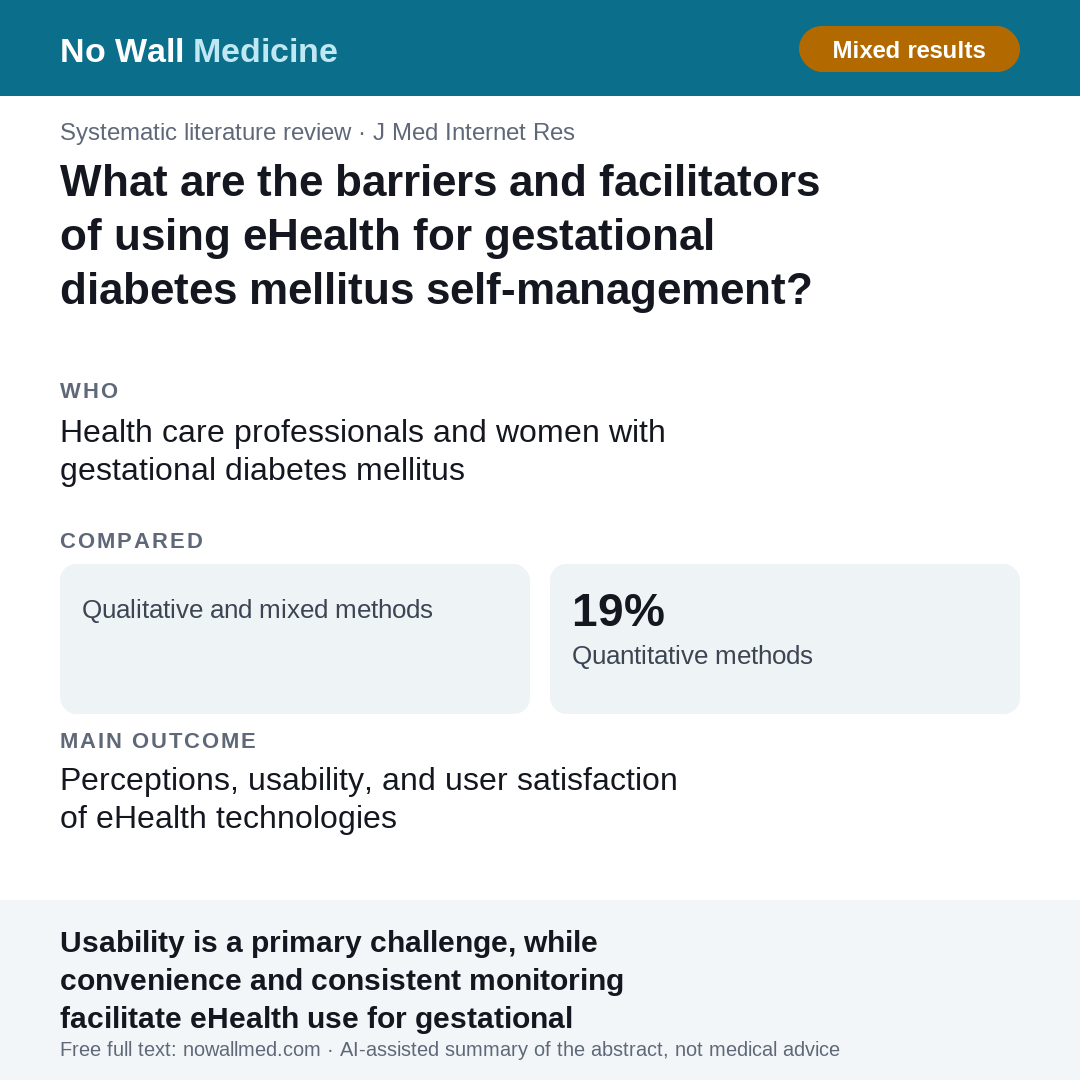
Barriers to and Facilitators of Using eHealth to Support Gestational Diabetes Mellitus Self-management: Systematic Literature Review of Perceptions of Health Care Professionals and Women With Gestational Diabetes Mellitus
Systematic literature reviewMixed results
What are the barriers and facilitators of using eHealth for gestational diabetes mellitus self-management?
Who
Health care professionals and women with gestational diabetes mellitus
Compared
Qualitative and mixed methods
19%Quantitative methods (5/26)
Main outcome
Perceptions, usability, and user satisfaction of eHealth technologies
Bottom line: Usability is a primary challenge, while convenience and consistent monitoring facilitate eHealth use for gestational diabetes mellitus self-management.
J Med Internet Res · 2022-10-27Download image
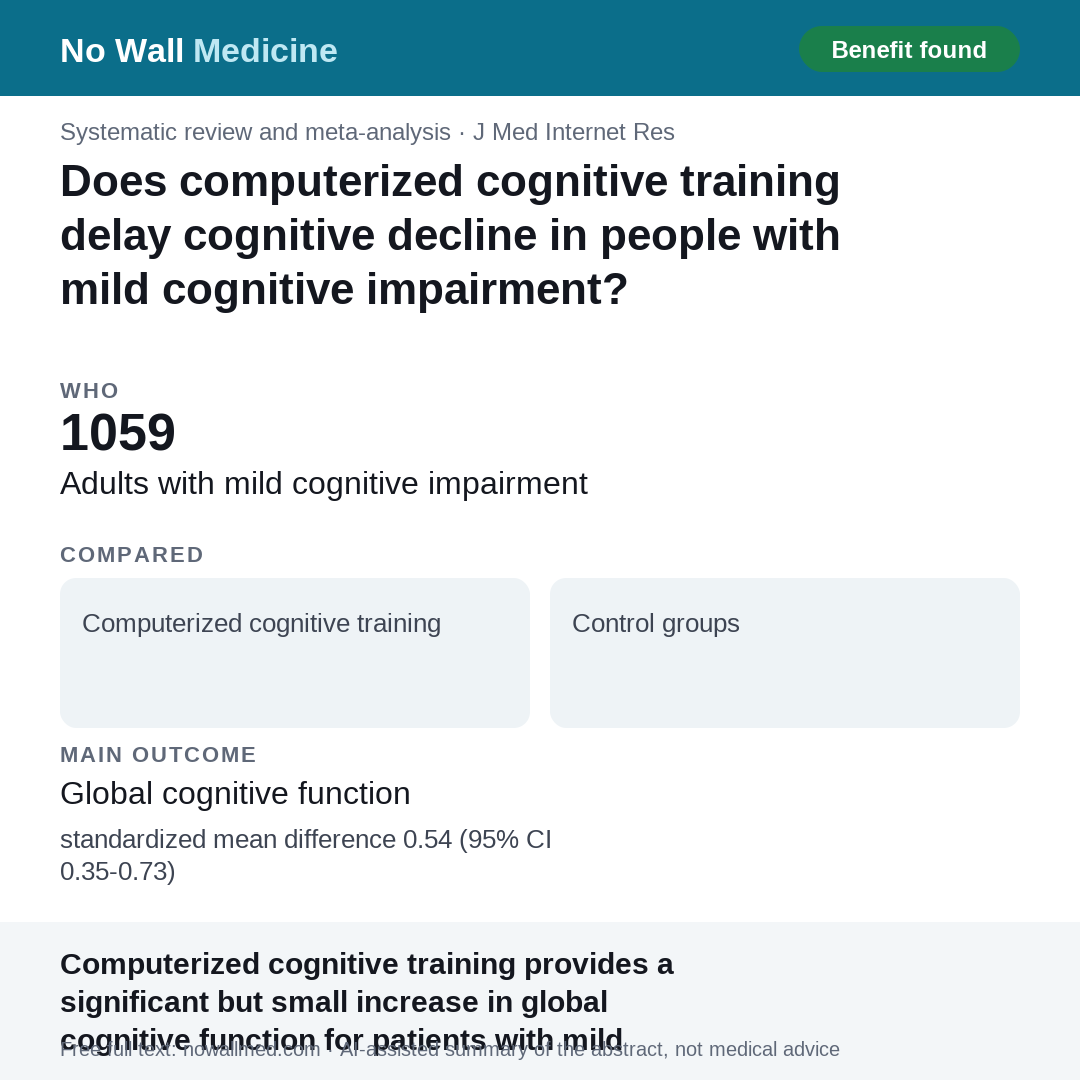
Effectiveness of Computerized Cognitive Training in Delaying Cognitive Function Decline in People With Mild Cognitive Impairment: Systematic Review and Meta-analysis
Systematic review and meta-analysisBenefit found
Does computerized cognitive training delay cognitive decline in people with mild cognitive impairment?
Who
1059
Adults with mild cognitive impairment
Compared
Computerized cognitive training
Control groups
Main outcome
Global cognitive function
Result: standardized mean difference 0.54 (95% CI 0.35-0.73)
Bottom line: Computerized cognitive training provides a significant but small increase in global cognitive function for patients with mild cognitive impairment.
Limitation: Relatively small sample size and short treatment duration in all included studies.
J Med Internet Res · 2022-10-27Download image
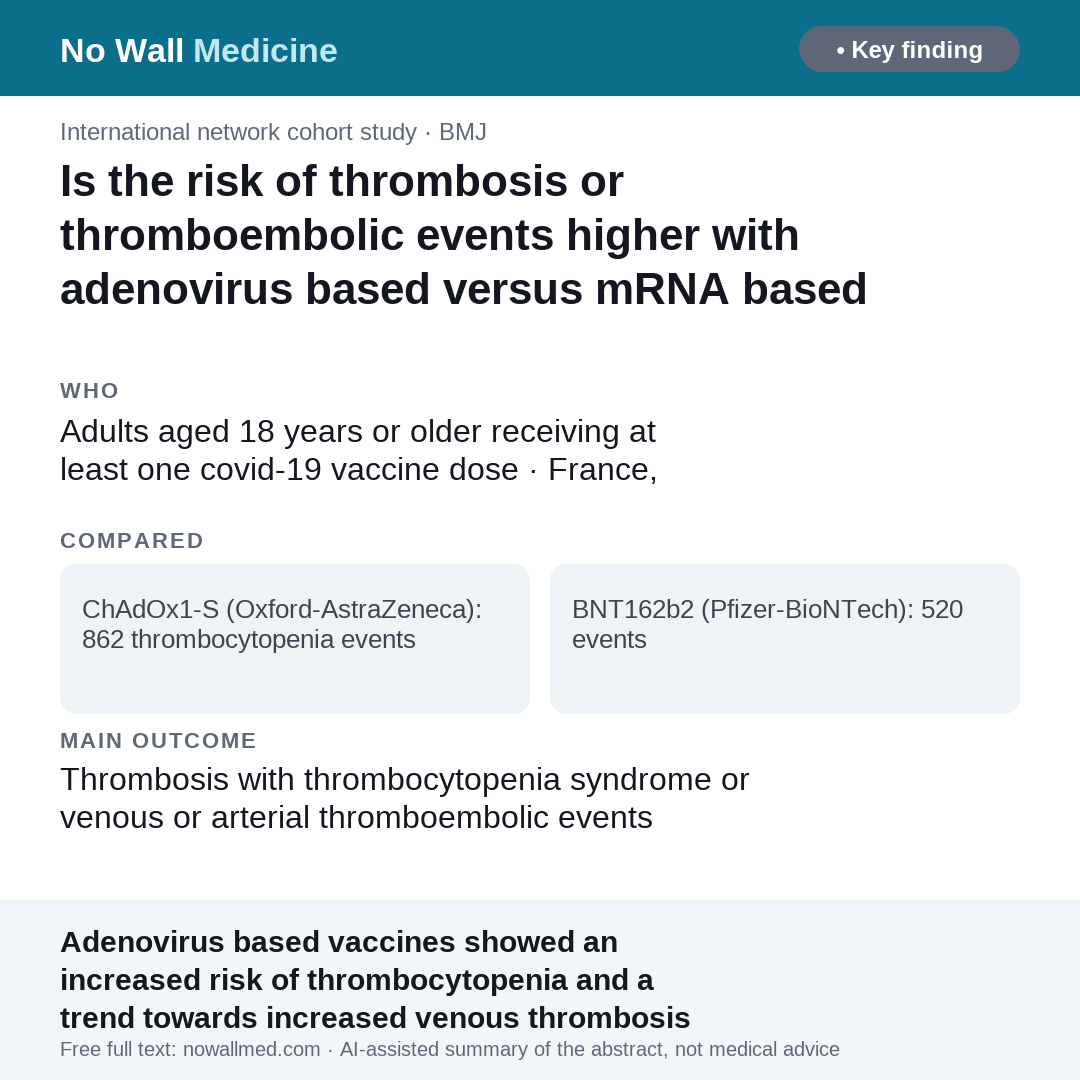
Comparative risk of thrombosis with thrombocytopenia syndrome or thromboembolic events associated with different covid-19 vaccines: international network cohort study from five European countries and the US
International network cohort studyKey finding
Is the risk of thrombosis or thromboembolic events higher with adenovirus based versus mRNA based covid-19 vaccines?
Who
Adults aged 18 years or older receiving at least one covid-19 vaccine dose · France, Germany, the Netherlands, Spain, the UK, and the US
Compared
ChAdOx1-S (Oxford-AstraZeneca): 862 thrombocytopenia events
BNT162b2 (Pfizer-BioNTech): 520 events
Main outcome
Thrombosis with thrombocytopenia syndrome or venous or arterial thromboembolic events
Result: pooled calibrated incidence rate ratio 1.33 (95% confidence interval 1.18 to 1.50)
Bottom line: Adenovirus based vaccines showed an increased risk of thrombocytopenia and a trend towards increased venous thrombosis with thrombocytopenia syndrome.
BMJ · 2022-10-26Download image
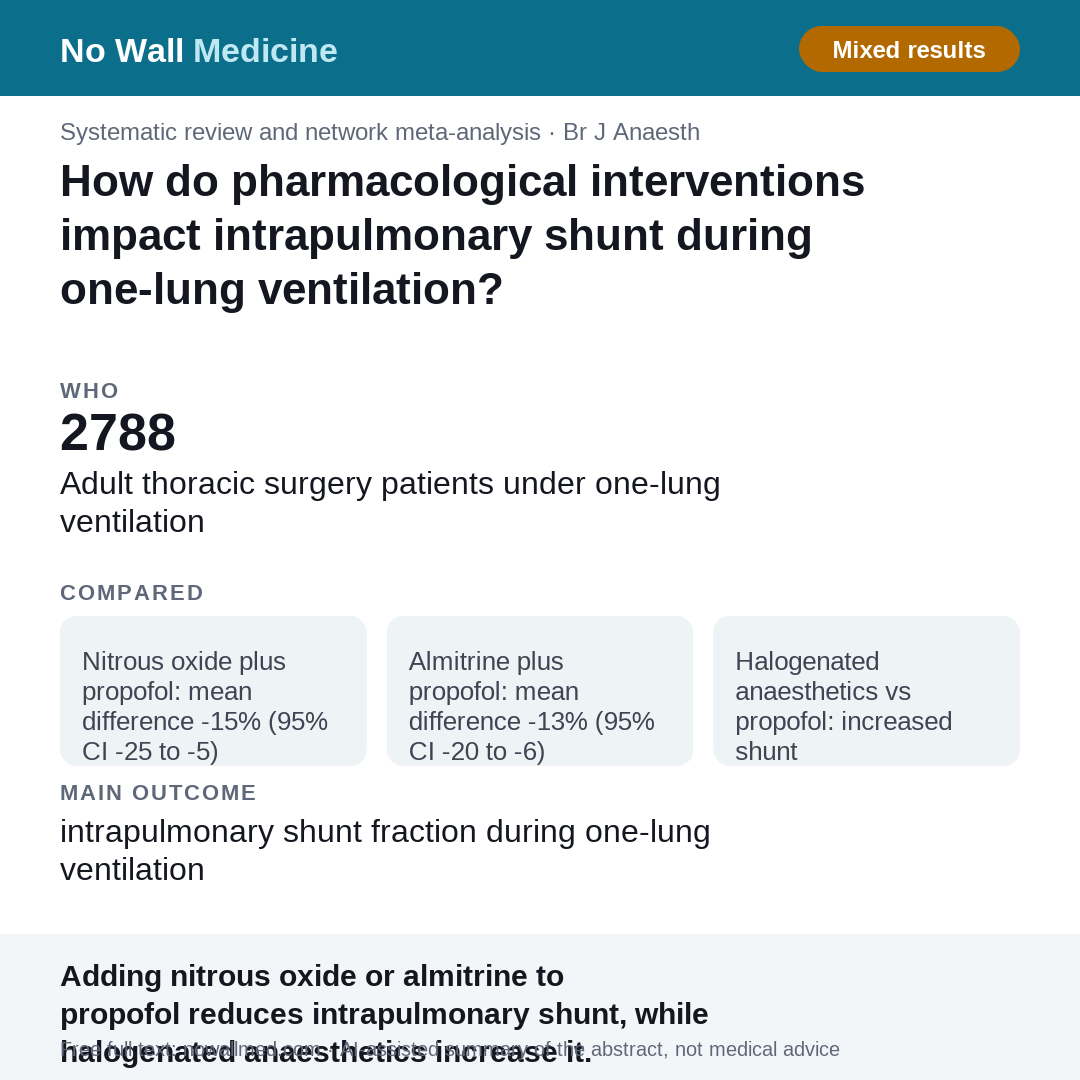
Impact of pharmacological interventions on intrapulmonary shunt during one-lung ventilation in adult thoracic surgery: a systematic review and component network meta-analysis
Systematic review and network meta-analysisMixed results
How do pharmacological interventions impact intrapulmonary shunt during one-lung ventilation?
Who
2788
Adult thoracic surgery patients under one-lung ventilation
Compared
Nitrous oxide plus propofol: mean difference -15% (95% CI -25 to -5)
Almitrine plus propofol: mean difference -13% (95% CI -20 to -6)
Halogenated anaesthetics vs propofol: increased shunt
Main outcome
intrapulmonary shunt fraction during one-lung ventilation
Bottom line: Adding nitrous oxide or almitrine to propofol reduces intrapulmonary shunt, while halogenated anaesthetics increase it.
Limitation: Certainty of evidence ranged from very low to moderate.
Br J Anaesth · 2022-10-26Download image
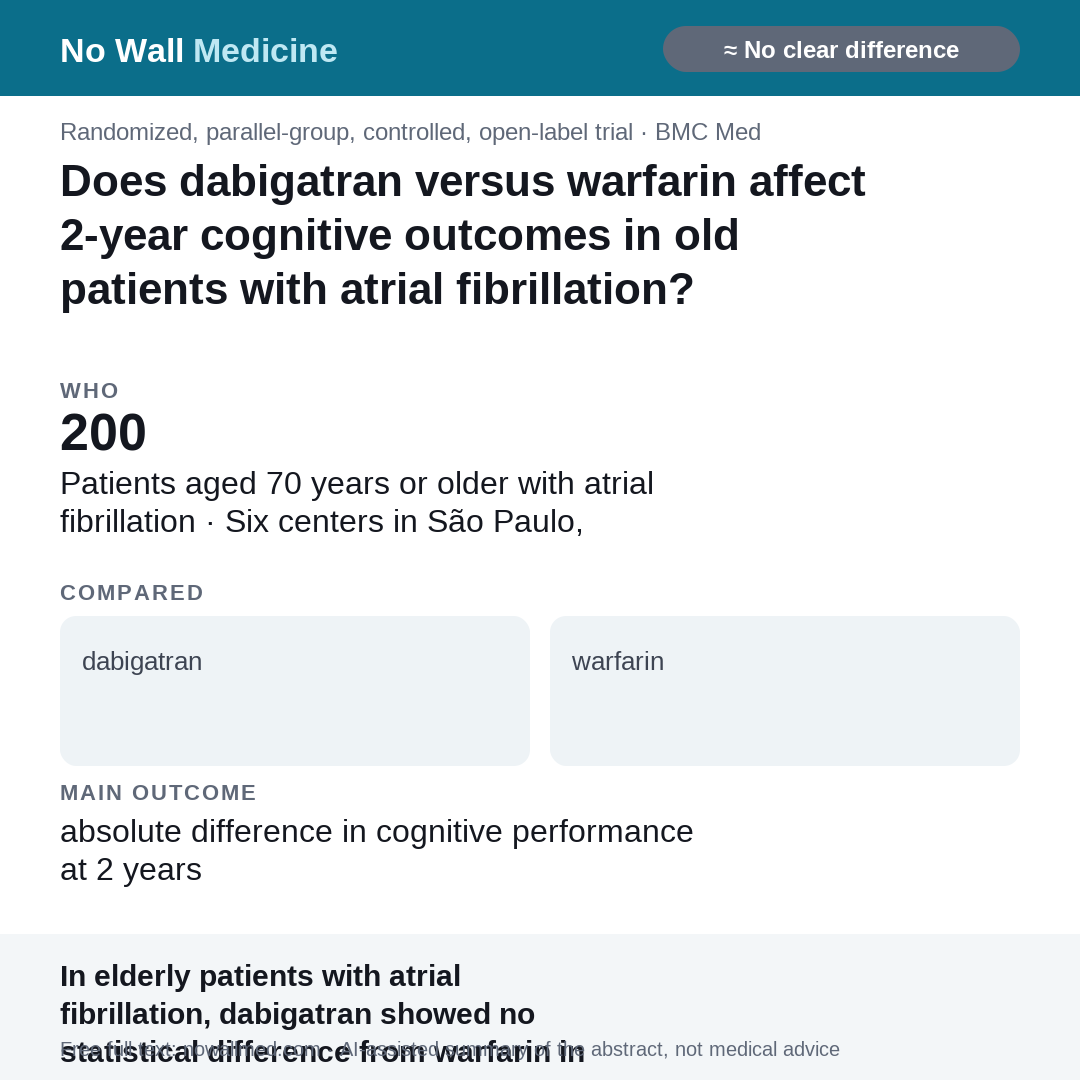
Effects of dabigatran versus warfarin on 2-year cognitive outcomes in old patients with atrial fibrillation: results from the GIRAF randomized clinical trial
Randomized, parallel-group, controlled, open-label trialNo clear difference
Does dabigatran versus warfarin affect 2-year cognitive outcomes in old patients with atrial fibrillation?
Who
200
Patients aged 70 years or older with atrial fibrillation · Six centers in São Paulo, Brazil
Compared
dabigatran
warfarin
Main outcome
absolute difference in cognitive performance at 2 years
Bottom line: In elderly patients with atrial fibrillation, dabigatran showed no statistical difference from warfarin in cognitive outcomes after 2 years.
BMC Med · 2022-10-26Download image
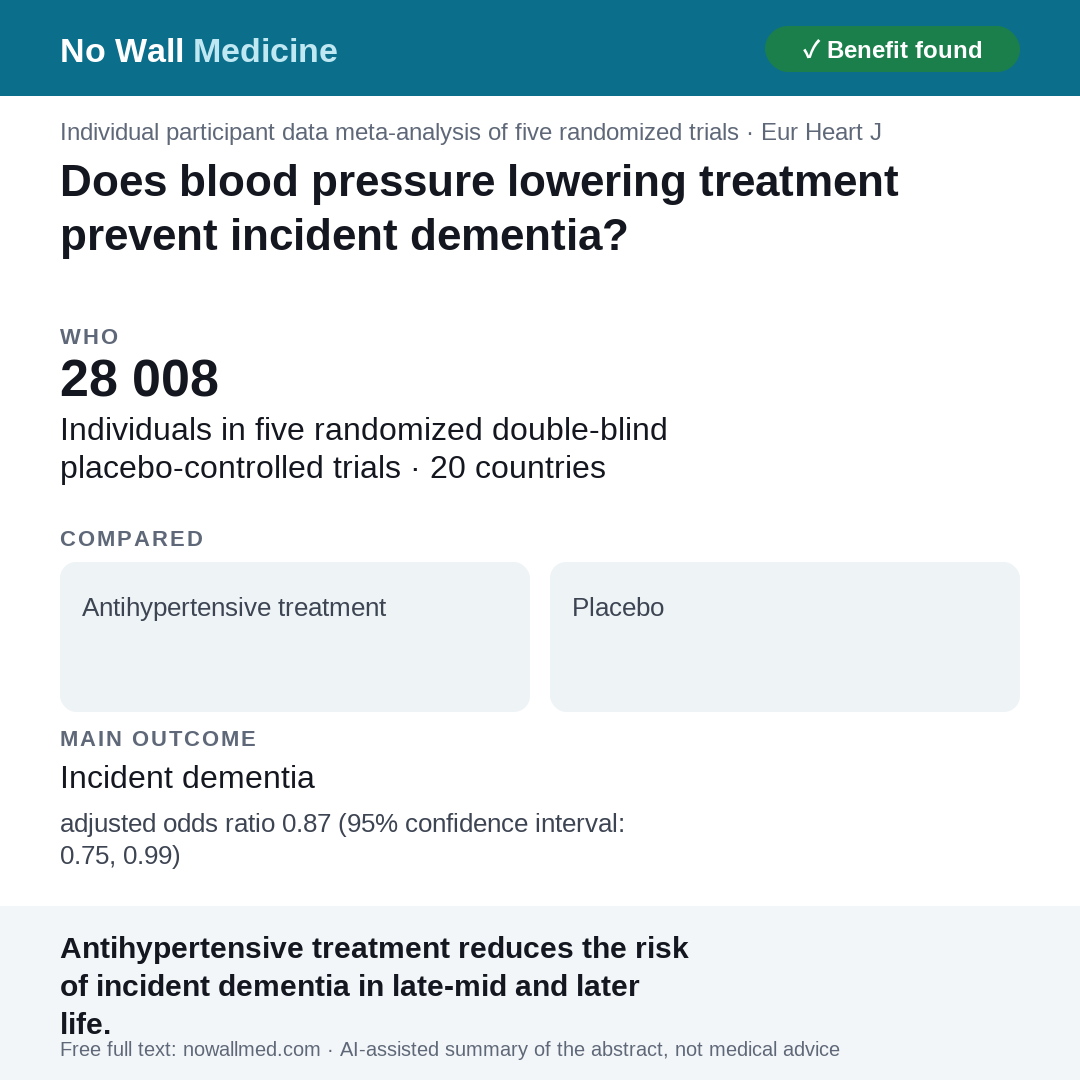
Blood pressure lowering and prevention of dementia: an individual patient data meta-analysis
Individual participant data meta-analysis of five randomized trialsBenefit found
Does blood pressure lowering treatment prevent incident dementia?
Who
28 008
Individuals in five randomized double-blind placebo-controlled trials · 20 countries
Compared
Antihypertensive treatment
Placebo
Main outcome
Incident dementia
Result: adjusted odds ratio 0.87 (95% confidence interval: 0.75, 0.99)
Bottom line: Antihypertensive treatment reduces the risk of incident dementia in late-mid and later life.
Eur Heart J · 2022-10-26Download image
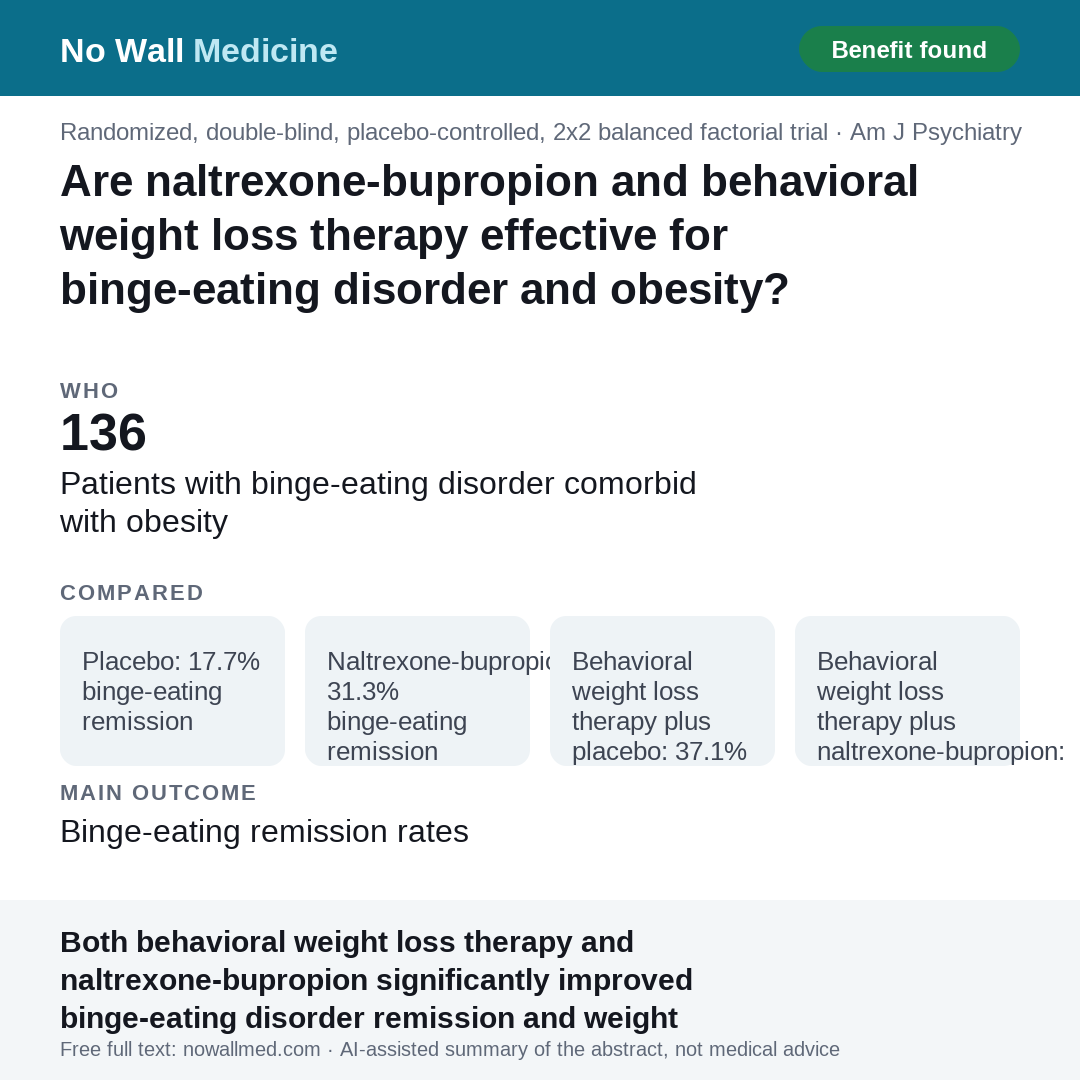
Naltrexone-Bupropion and Behavior Therapy, Alone and Combined, for Binge-Eating Disorder: Randomized Double-Blind Placebo-Controlled Trial
Randomized, double-blind, placebo-controlled, 2x2 balanced factorial trialBenefit found
Are naltrexone-bupropion and behavioral weight loss therapy effective for binge-eating disorder and obesity?
Who
136
Patients with binge-eating disorder comorbid with obesity
Compared
Placebo: 17.7% binge-eating remission
Naltrexone-bupropion: 31.3% binge-eating remission
Behavioral weight loss therapy plus placebo: 37.1% binge-eating remission
Behavioral weight loss therapy plus naltrexone-bupropion: 57.1% binge-eating remission
Main outcome
Binge-eating remission rates
Bottom line: Both behavioral weight loss therapy and naltrexone-bupropion significantly improved binge-eating disorder remission and weight loss.
Am J Psychiatry · 2022-10-26Download image
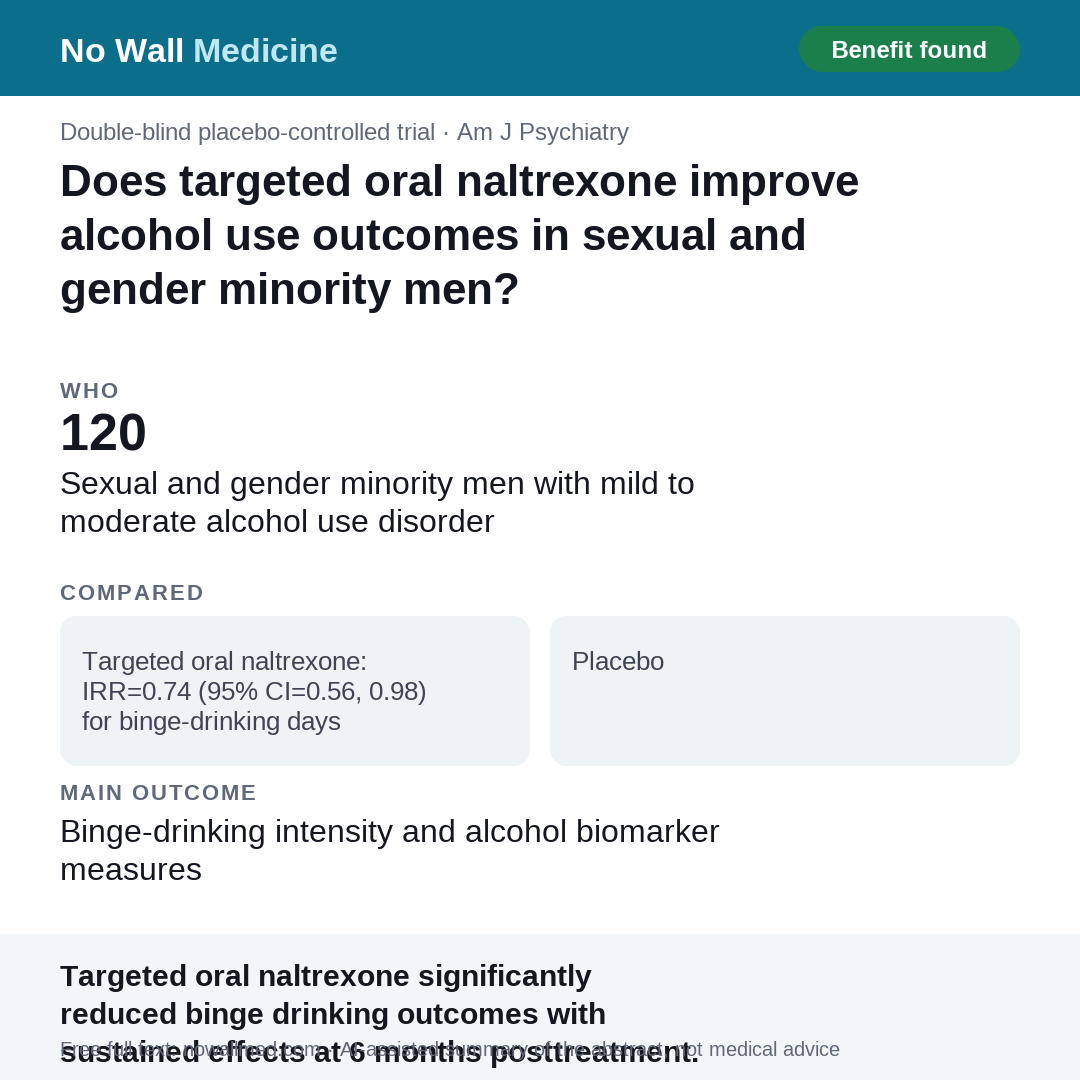
Targeted Oral Naltrexone for Mild to Moderate Alcohol Use Disorder Among Sexual and Gender Minority Men: A Randomized Trial
Double-blind placebo-controlled trialBenefit found
Does targeted oral naltrexone improve alcohol use outcomes in sexual and gender minority men?
Who
120
Sexual and gender minority men with mild to moderate alcohol use disorder
Compared
Targeted oral naltrexone: IRR=0.74 (95% CI=0.56, 0.98) for binge-drinking days
Placebo
Main outcome
Binge-drinking intensity and alcohol biomarker measures
Result: incidence rate ratio 0.74 (95% CI 0.56 to 0.98)
Bottom line: Targeted oral naltrexone significantly reduced binge drinking outcomes with sustained effects at 6 months posttreatment.
Am J Psychiatry · 2022-10-26Download image
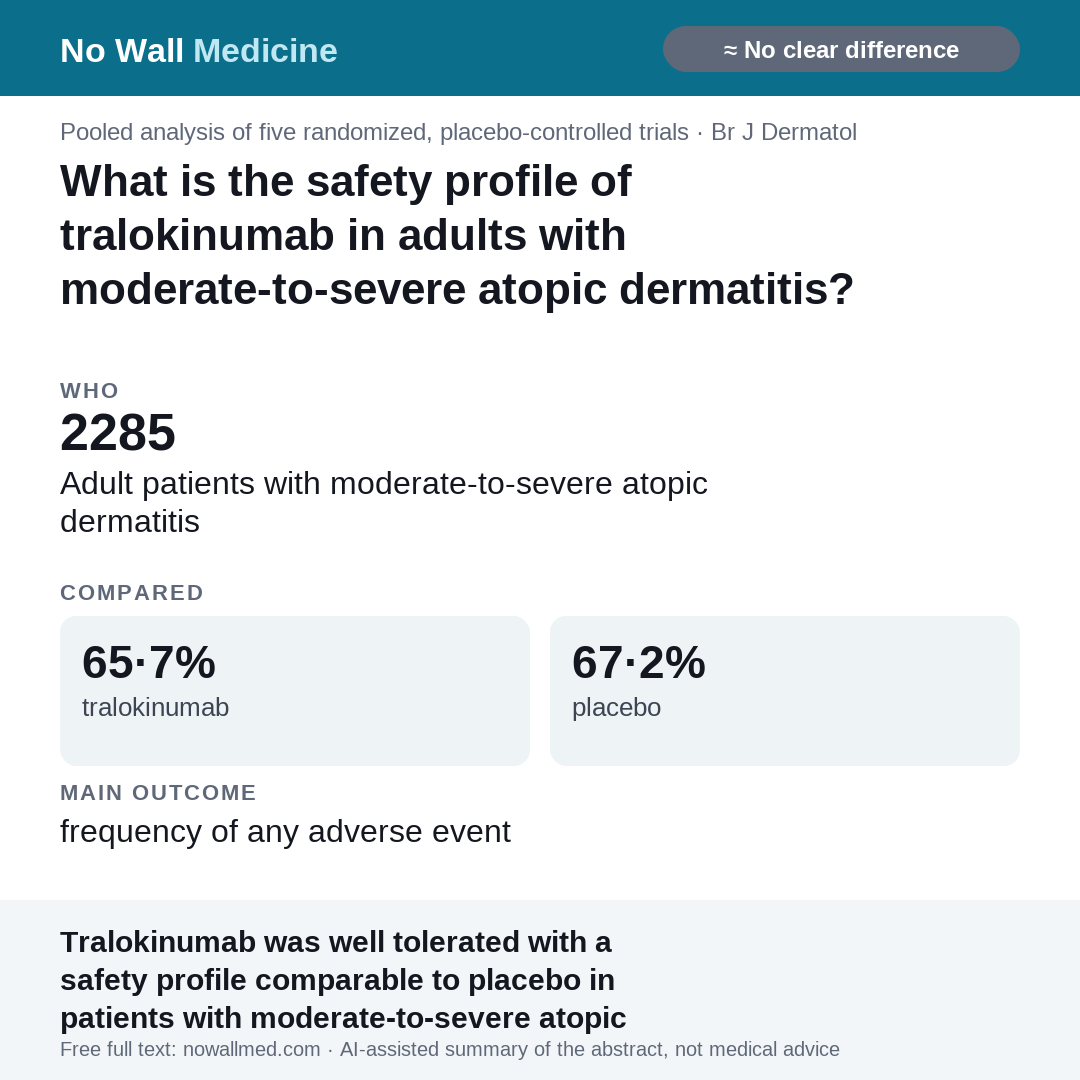
Safety of tralokinumab in adult patients with moderate-to-severe atopic dermatitis: pooled analysis of five randomized, double-blind, placebo-controlled phase II and phase III trials
Pooled analysis of five randomized, placebo-controlled trialsNo clear difference
What is the safety profile of tralokinumab in adults with moderate-to-severe atopic dermatitis?
Who
2285
Adult patients with moderate-to-severe atopic dermatitis
Compared
65·7%tralokinumab
67·2%placebo
Main outcome
frequency of any adverse event
Result: rate ratio 1·0 (95% CI 0·9-1·1)
Bottom line: Tralokinumab was well tolerated with a safety profile comparable to placebo in patients with moderate-to-severe atopic dermatitis.
Br J Dermatol · 2022-10-26Download image
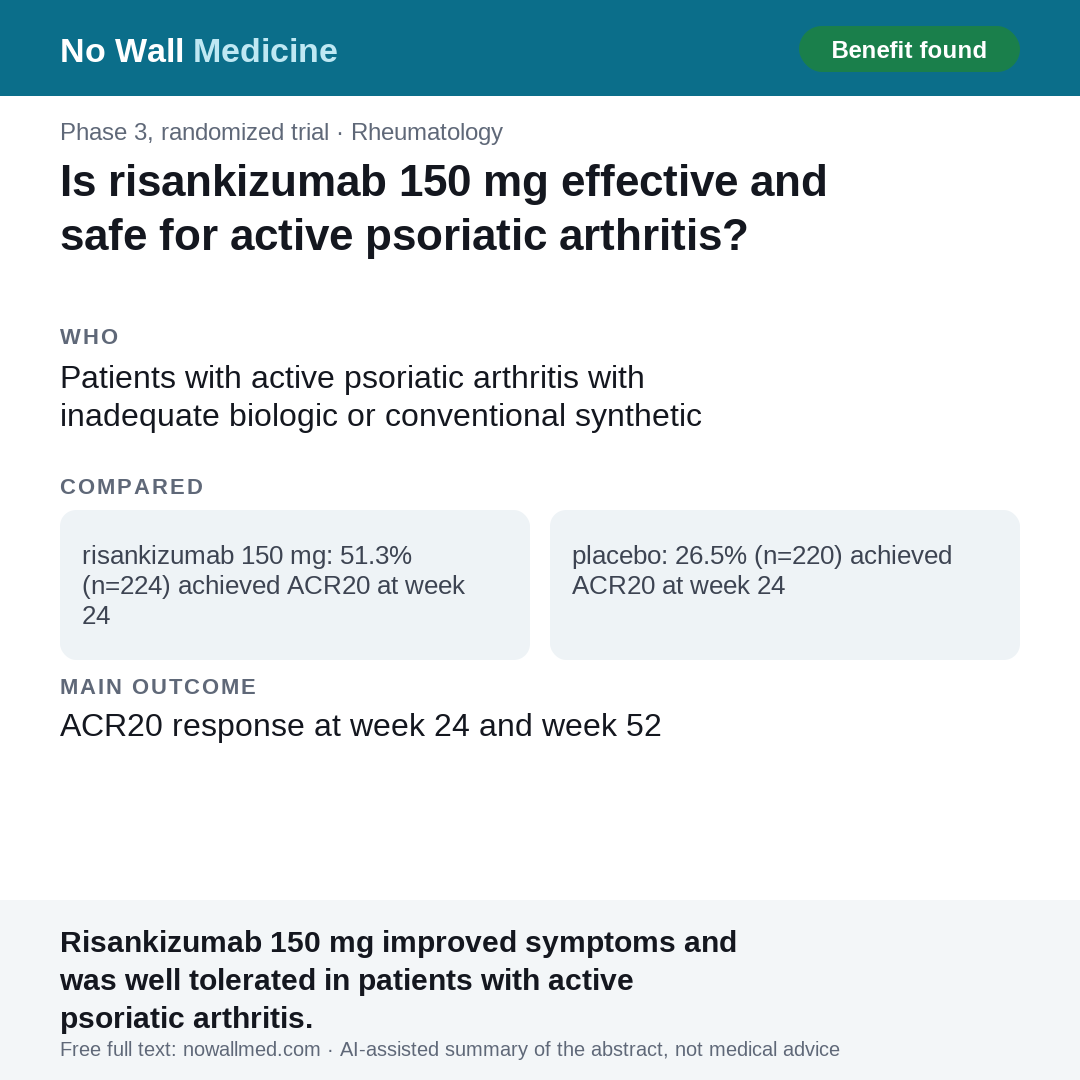
Efficacy and safety of risankizumab for active psoriatic arthritis: 52-week results from the KEEPsAKE 2 study
Phase 3, randomized trialBenefit found
Is risankizumab 150 mg effective and safe for active psoriatic arthritis?
Who
Patients with active psoriatic arthritis with inadequate biologic or conventional synthetic DMARD response
Compared
risankizumab 150 mg: 51.3% (n=224) achieved ACR20 at week 24
placebo: 26.5% (n=220) achieved ACR20 at week 24
Main outcome
ACR20 response at week 24 and week 52
Bottom line: Risankizumab 150 mg improved symptoms and was well tolerated in patients with active psoriatic arthritis.
Rheumatology · 2022-10-26Download image
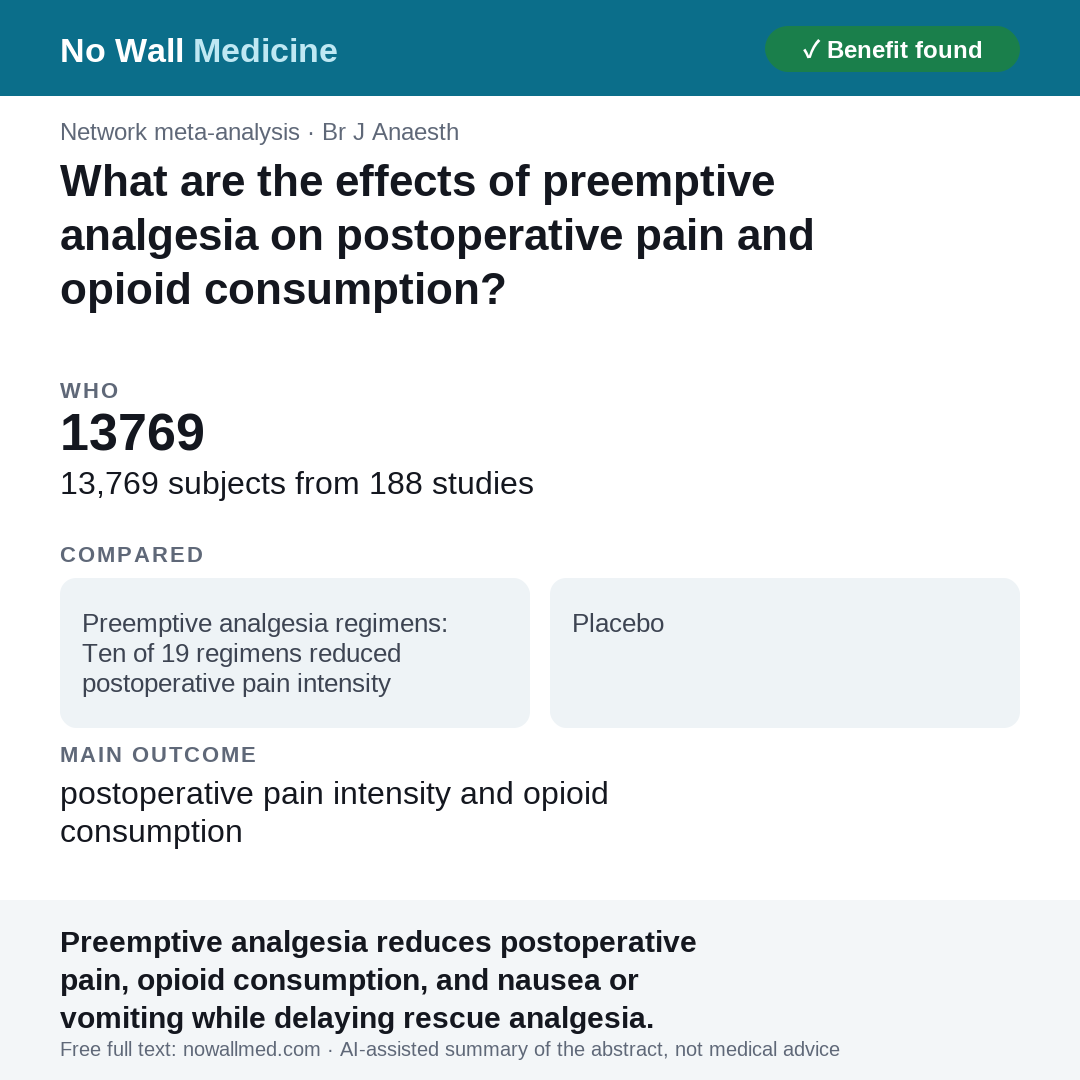
Efficacy of preemptive analgesia treatments for the management of postoperative pain: a network meta-analysis
Network meta-analysisBenefit found
What are the effects of preemptive analgesia on postoperative pain and opioid consumption?
Who
13769
13,769 subjects from 188 studies
Compared
Preemptive analgesia regimens: Ten of 19 regimens reduced postoperative pain intensity
Placebo
Main outcome
postoperative pain intensity and opioid consumption
Bottom line: Preemptive analgesia reduces postoperative pain, opioid consumption, and nausea or vomiting while delaying rescue analgesia.
Br J Anaesth · 2022-10-26Download image
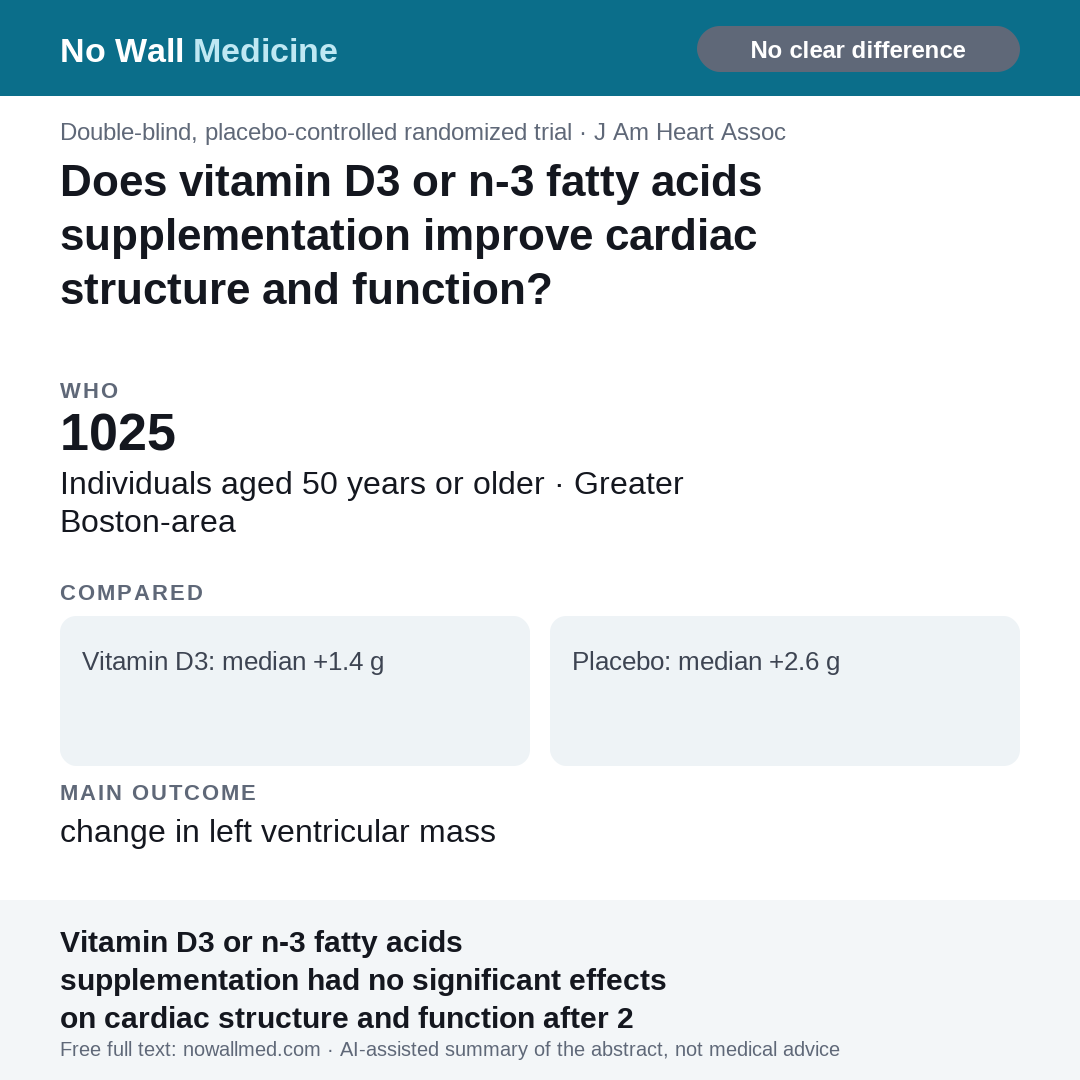
Impact of Vitamin D3 Versus Placebo on Cardiac Structure and Function: A Randomized Clinical Trial
Double-blind, placebo-controlled randomized trialNo clear difference
Does vitamin D3 or n-3 fatty acids supplementation improve cardiac structure and function?
Who
1025
Individuals aged 50 years or older · Greater Boston-area
Compared
Vitamin D3: median +1.4 g
Placebo: median +2.6 g
Main outcome
change in left ventricular mass
Bottom line: Vitamin D3 or n-3 fatty acids supplementation had no significant effects on cardiac structure and function after 2 years.
Limitation: Seventy-nine percent returned for follow-up and had analyzable echocardiograms at both visits.
J Am Heart Assoc · 2022-10-26Download image
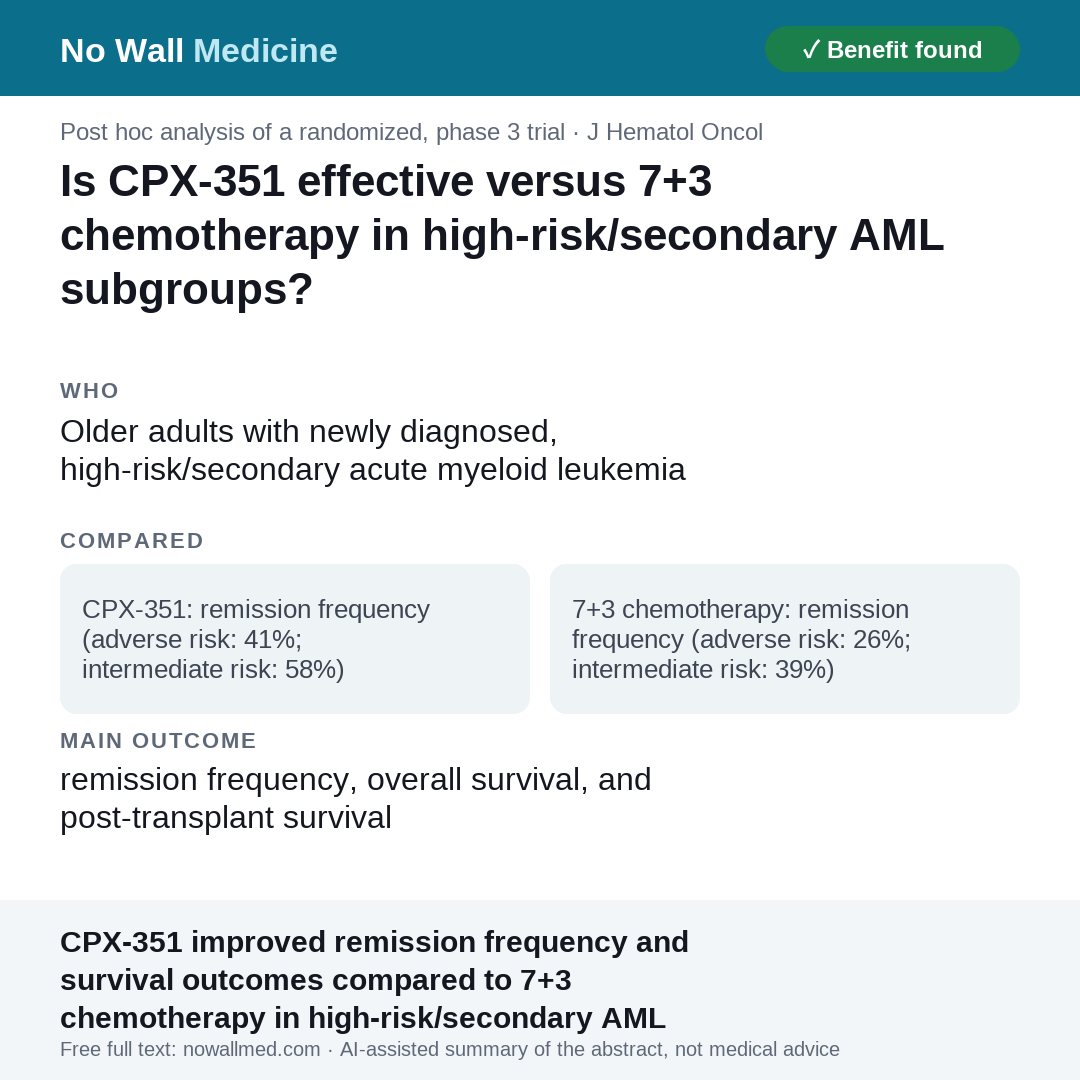
Efficacy and safety of CPX-351 versus 7 + 3 chemotherapy by European LeukemiaNet 2017 risk subgroups in older adults with newly diagnosed, high-risk/secondary AML: post hoc analysis of a randomized, phase 3 trial
Post hoc analysis of a randomized, phase 3 trialBenefit found
Is CPX-351 effective versus 7+3 chemotherapy in high-risk/secondary AML subgroups?
Who
Older adults with newly diagnosed, high-risk/secondary acute myeloid leukemia
Compared
CPX-351: remission frequency (adverse risk: 41%; intermediate risk: 58%)
7+3 chemotherapy: remission frequency (adverse risk: 26%; intermediate risk: 39%)
Main outcome
remission frequency, overall survival, and post-transplant survival
Bottom line: CPX-351 improved remission frequency and survival outcomes compared to 7+3 chemotherapy in high-risk/secondary AML subgroups.
J Hematol Oncol · 2022-10-26Download image
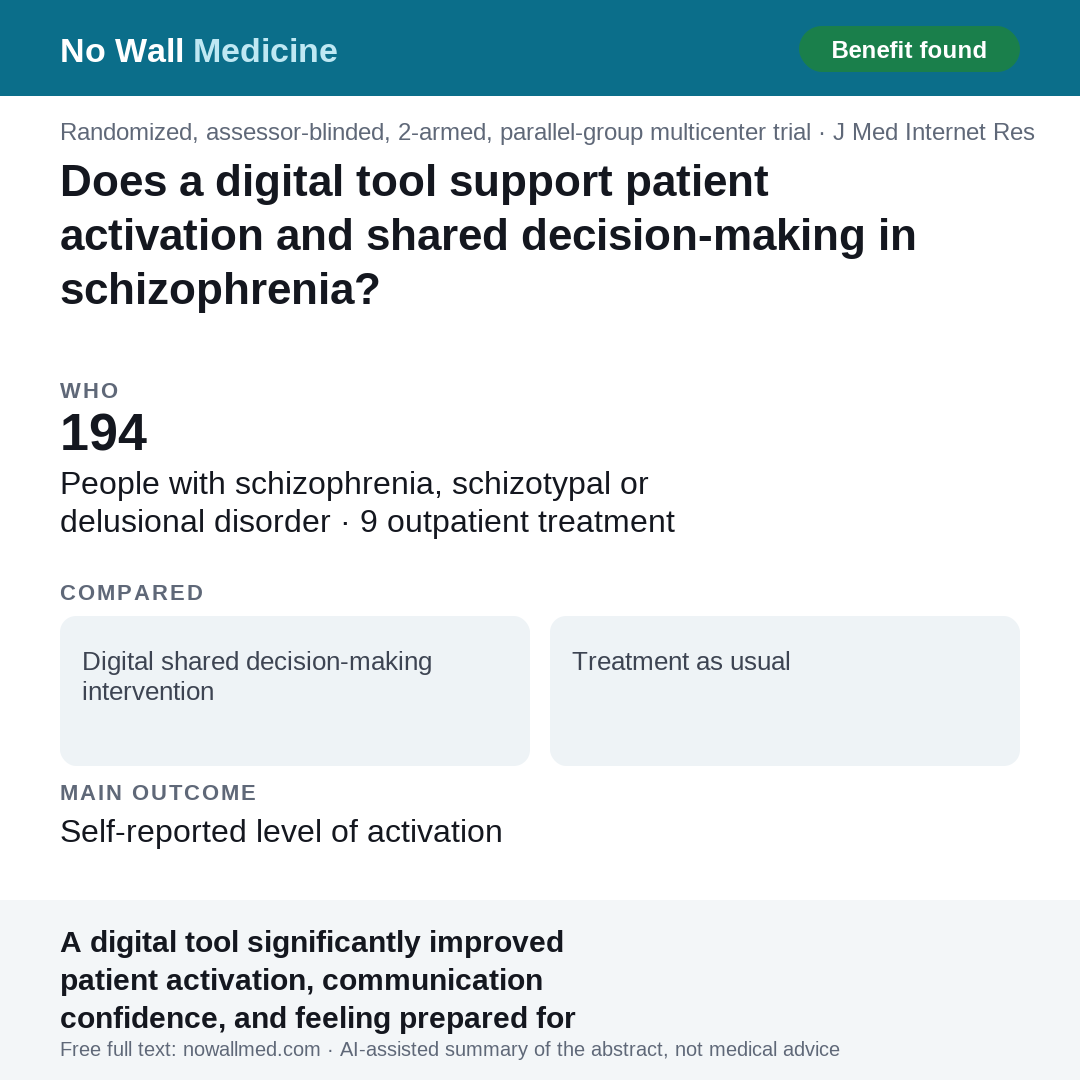
A Smartphone App to Promote Patient Activation and Support Shared Decision-making in People With a Diagnosis of Schizophrenia in Outpatient Treatment Settings (Momentum Trial): Randomized Controlled Assessor-Blinded Trial
Randomized, assessor-blinded, 2-armed, parallel-group multicenter trialBenefit found
Does a digital tool support patient activation and shared decision-making in schizophrenia?
Who
194
People with schizophrenia, schizotypal or delusional disorder · 9 outpatient treatment sites in Denmark
Compared
Digital shared decision-making intervention
Treatment as usual
Main outcome
Self-reported level of activation
Result: mean difference 4.39, 95% CI 0.99-7.79
Bottom line: A digital tool significantly improved patient activation, communication confidence, and feeling prepared for decision-making in schizophrenia patients.
J Med Internet Res · 2022-10-26Download image
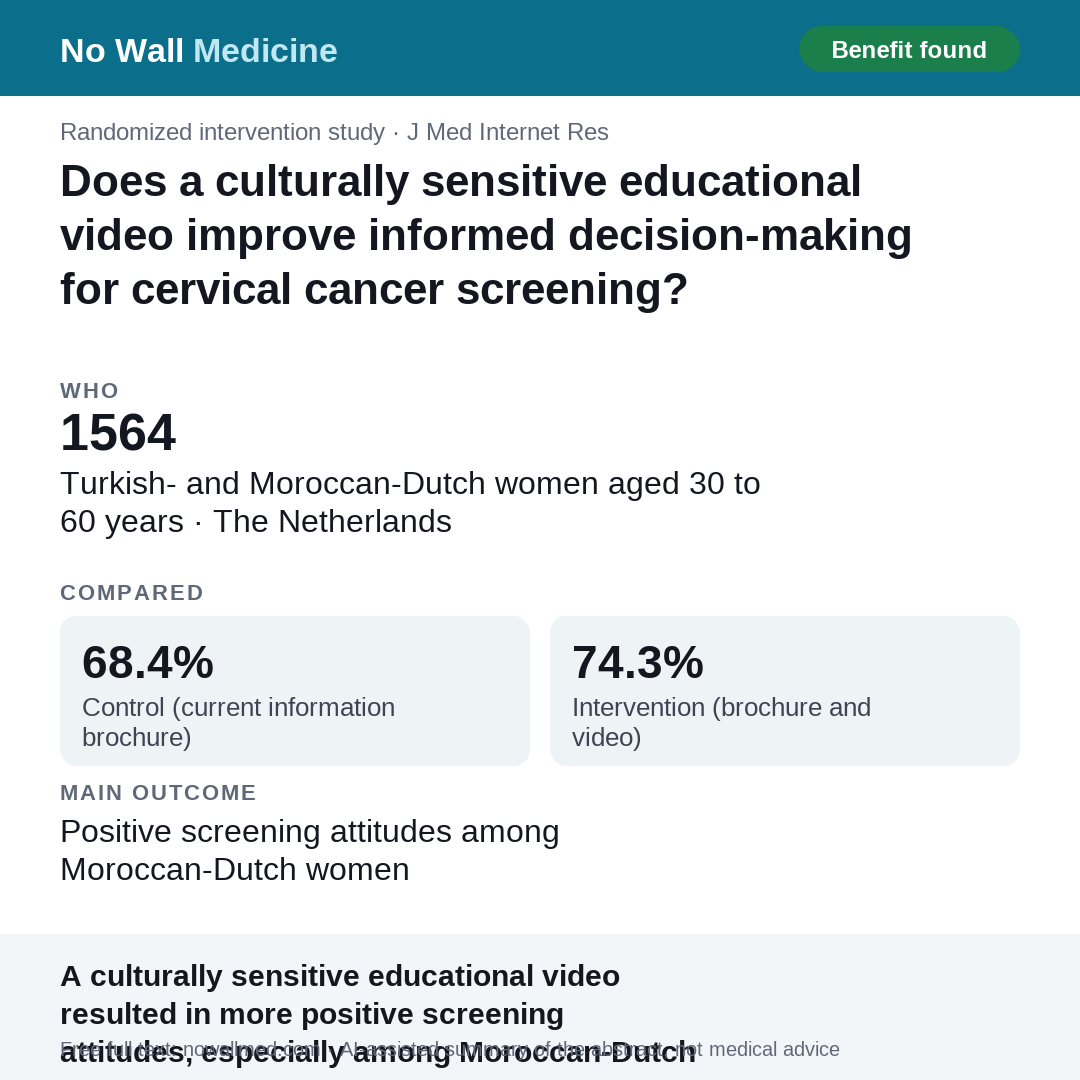
Evaluation of a Web-Based Culturally Sensitive Educational Video to Facilitate Informed Cervical Cancer Screening Decisions Among Turkish- and Moroccan-Dutch Women Aged 30 to 60 Years: Randomized Intervention Study
Randomized intervention studyBenefit found
Does a culturally sensitive educational video improve informed decision-making for cervical cancer screening?
Who
1564
Turkish- and Moroccan-Dutch women aged 30 to 60 years · The Netherlands
Compared
68.4%Control (current information brochure)
74.3%Intervention (brochure and video)
Main outcome
Positive screening attitudes among Moroccan-Dutch women
Bottom line: A culturally sensitive educational video resulted in more positive screening attitudes, especially among Moroccan-Dutch women.
J Med Internet Res · 2022-10-26Download image
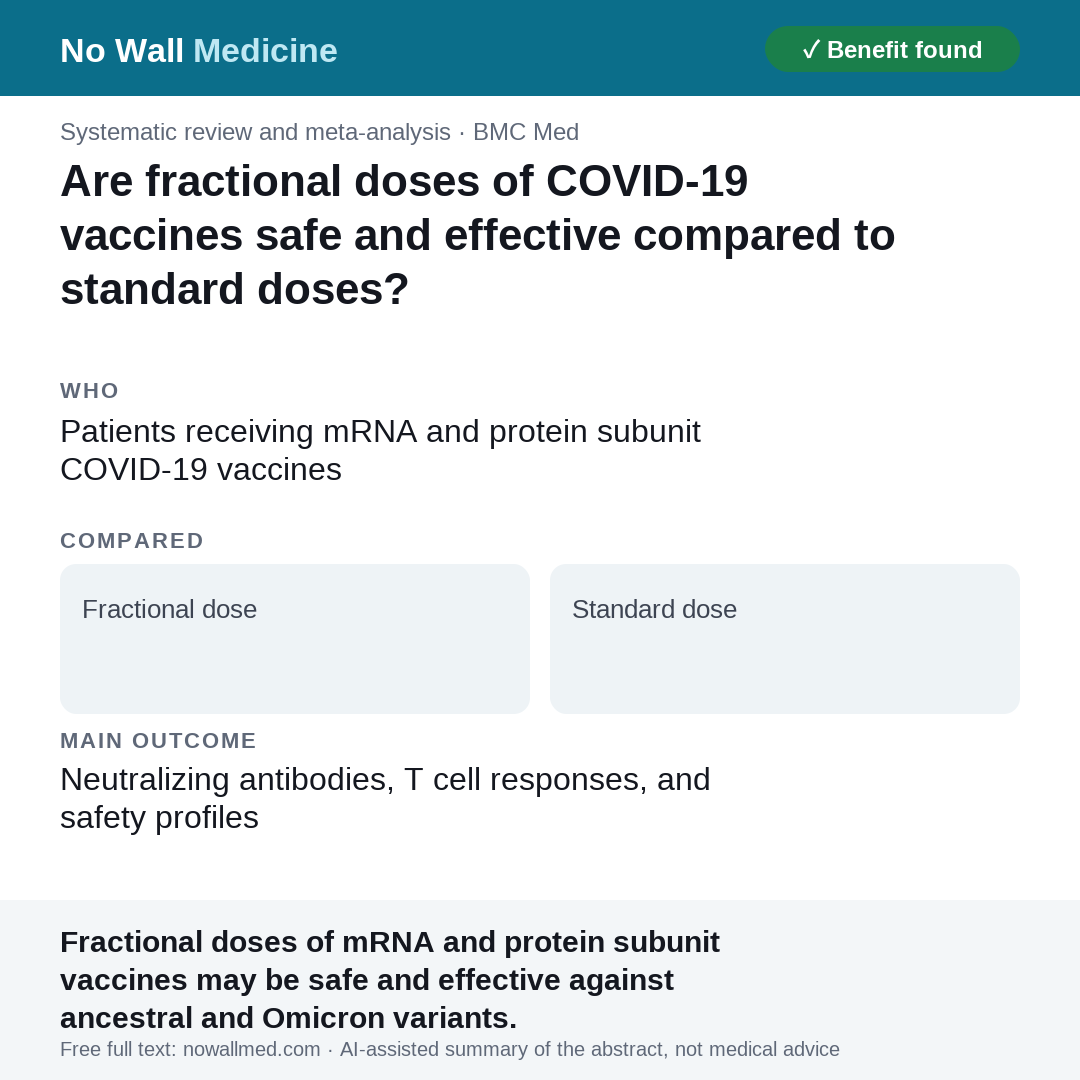
Immunogenicity, efficacy, and safety of SARS-CoV-2 vaccine dose fractionation: a systematic review and meta-analysis
Systematic review and meta-analysisBenefit found
Are fractional doses of COVID-19 vaccines safe and effective compared to standard doses?
Who
Patients receiving mRNA and protein subunit COVID-19 vaccines
Compared
Fractional dose
Standard dose
Main outcome
Neutralizing antibodies, T cell responses, and safety profiles
Bottom line: Fractional doses of mRNA and protein subunit vaccines may be safe and effective against ancestral and Omicron variants.
Limitation: Results may vary depending on emerging variants and updated vaccine formulations.
BMC Med · 2022-10-25Download image
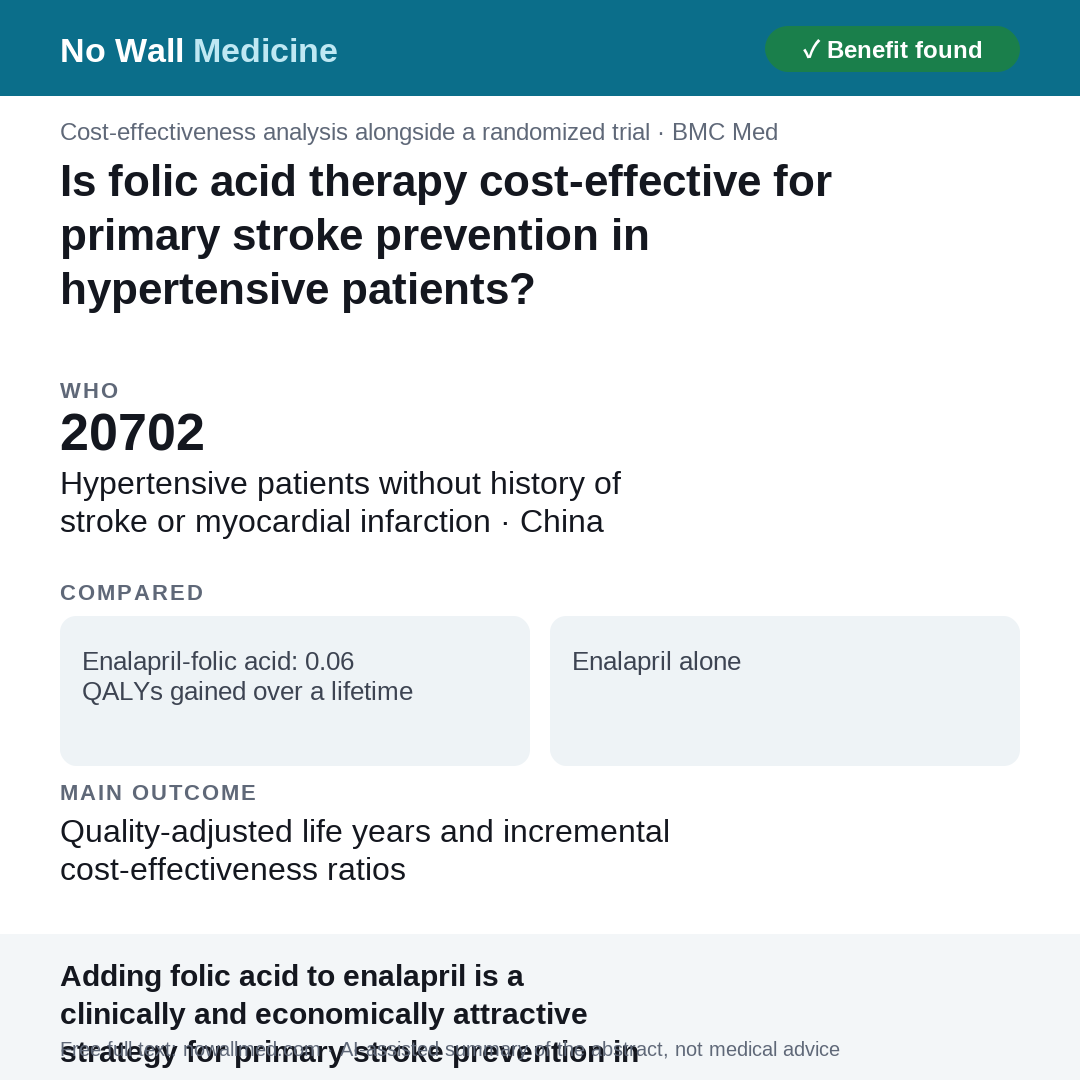
Cost-effectiveness of folic acid therapy for primary prevention of stroke in patients with hypertension
Cost-effectiveness analysis alongside a randomized trialBenefit found
Is folic acid therapy cost-effective for primary stroke prevention in hypertensive patients?
Who
20702
Hypertensive patients without history of stroke or myocardial infarction · China
Compared
Enalapril-folic acid: 0.06 QALYs gained over a lifetime
Enalapril alone
Main outcome
Quality-adjusted life years and incremental cost-effectiveness ratios
Result: $26,066.13 (168,126.54 RMB) per QALY gained
Bottom line: Adding folic acid to enalapril is a clinically and economically attractive strategy for primary stroke prevention in hypertensive patients.
BMC Med · 2022-10-25Download image
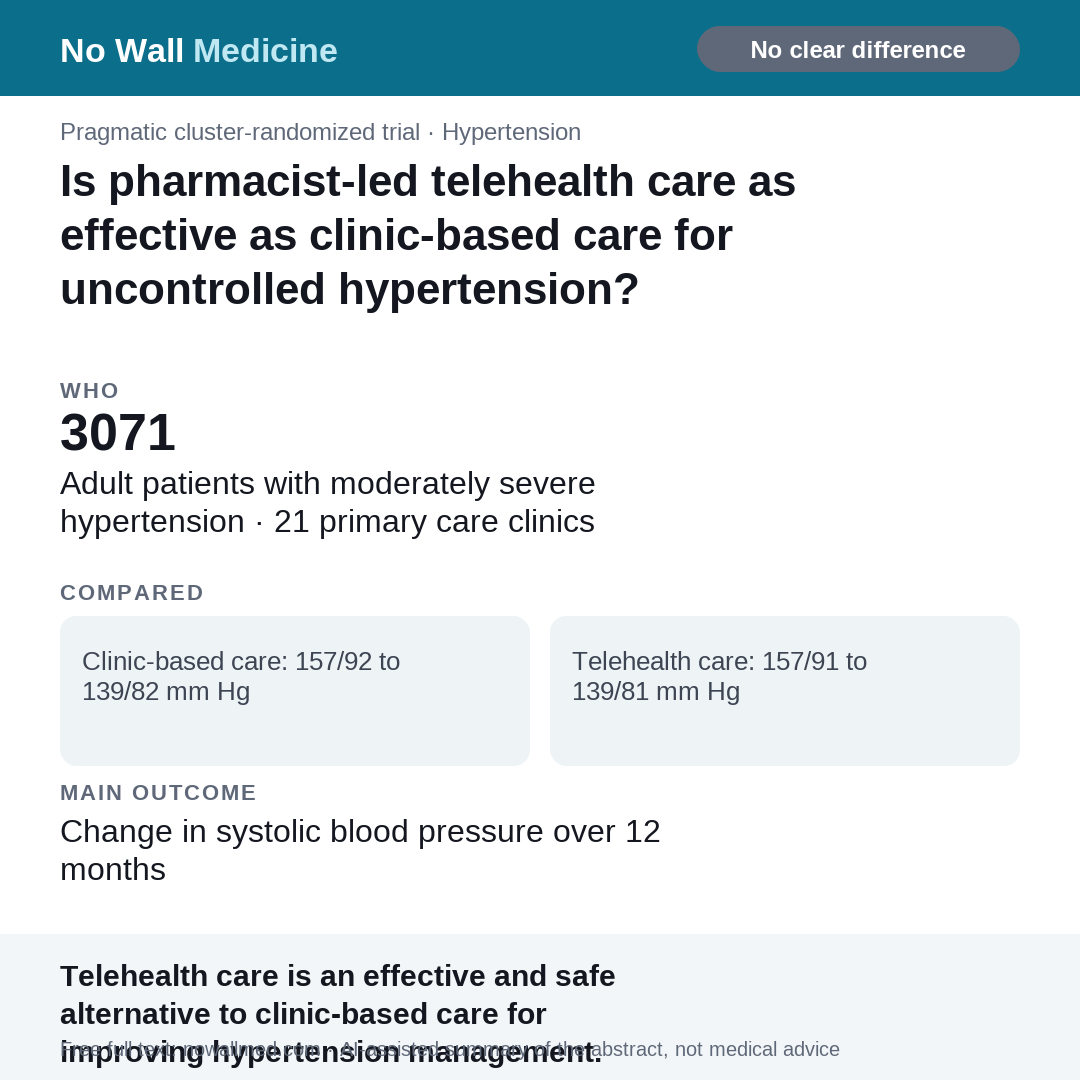
Comparing Pharmacist-Led Telehealth Care and Clinic-Based Care for Uncontrolled High Blood Pressure: The Hyperlink 3 Pragmatic Cluster-Randomized Trial
Pragmatic cluster-randomized trialNo clear difference
Is pharmacist-led telehealth care as effective as clinic-based care for uncontrolled hypertension?
Who
3071
Adult patients with moderately severe hypertension · 21 primary care clinics
Compared
Clinic-based care: 157/92 to 139/82 mm Hg
Telehealth care: 157/91 to 139/81 mm Hg
Main outcome
Change in systolic blood pressure over 12 months
Result: -0.8 mm Hg (95% CI, -2.84 to 1.32)
Bottom line: Telehealth care is an effective and safe alternative to clinic-based care for improving hypertension management.
Hypertension · 2022-10-25Download image
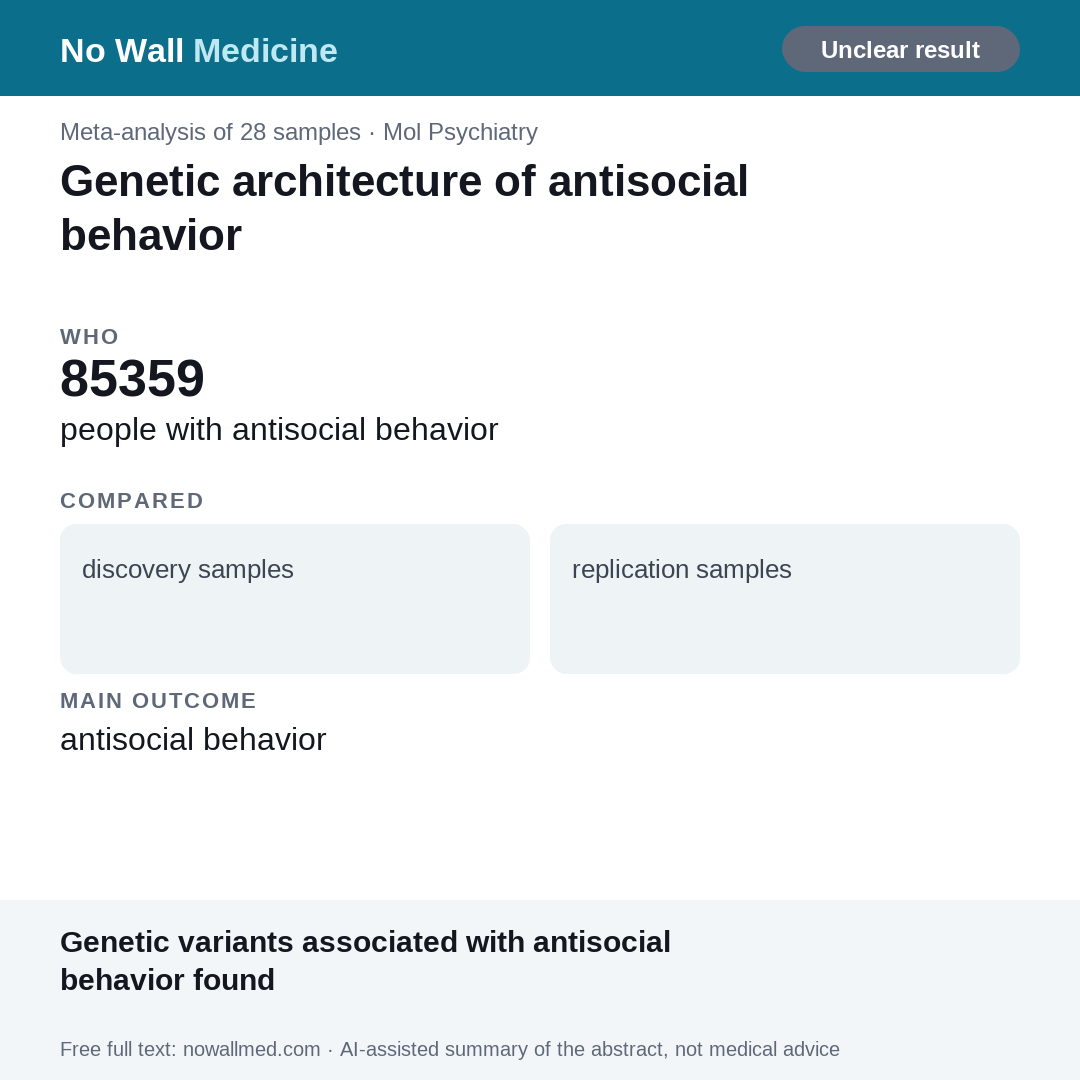
Uncovering the genetic architecture of broad antisocial behavior through a genome-wide association study meta-analysis
Meta-analysis of 28 samplesUnclear result
Genetic architecture of antisocial behavior
Who
85359
people with antisocial behavior
Compared
discovery samples
replication samples
Main outcome
antisocial behavior
Bottom line: Genetic variants associated with antisocial behavior found
Mol Psychiatry · 2022-10-25Download image