Visual abstracts
New randomized trials and meta-analyses from leading journals at a glance: who was studied, what was compared, and what was found. Every paper is free to read in full.
All specialtiesCardiology 1812Oncology 1562Gastroenterology & Hepatology 679Infectious Disease 1154Neurology 749Psychiatry & Mental Health 891Pulmonology 775Critical Care 527Endocrinology & Diabetes 978Pediatrics 1081Surgery 912Orthopedics & Sports Medicine 339Neurosurgery 230Cardiothoracic & Vascular Surgery 199Plastic & Reconstructive Surgery 279Nephrology 376Rheumatology 255Hematology 400Dermatology 199Ophthalmology 217Obstetrics & Gynecology 593Public & Global Health 353Radiology & Imaging 245Anesthesiology 358Urology 315ENT (Otolaryngology) 246Emergency Medicine 205Allergy & Immunology 118Geriatrics 385Family Medicine & Primary Care 219Medical Genetics & Genomics 199Pathology & Laboratory Medicine 56Physical Medicine & Rehabilitation 322Palliative Care 163Nutrition 489Digital Health & AI 958General Medicine 139
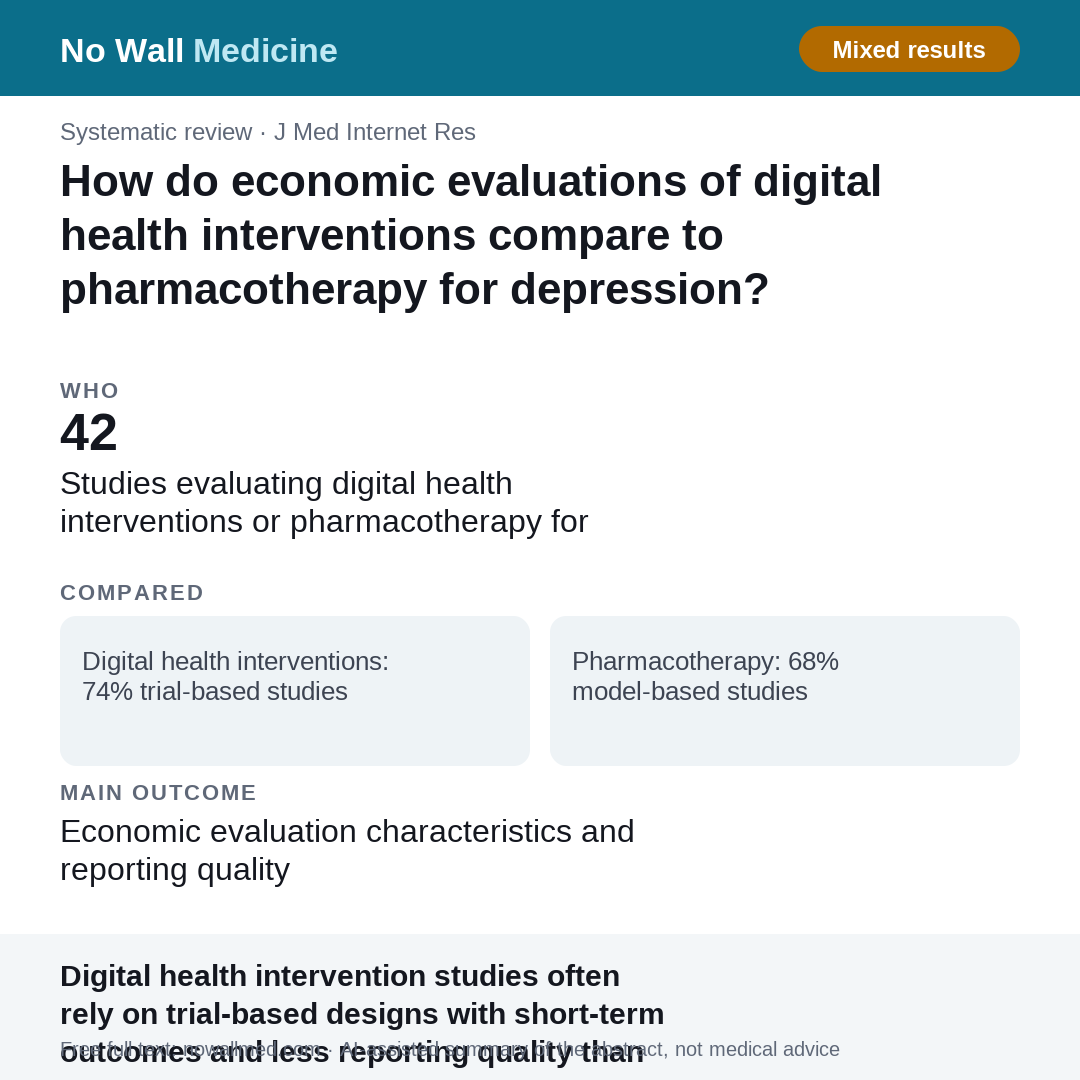
Comparison of Cost-Effectiveness Between Digital Health Interventions and Pharmacotherapy for Depression: Systematic Review
Systematic reviewMixed results
How do economic evaluations of digital health interventions compare to pharmacotherapy for depression?
Who
42
Studies evaluating digital health interventions or pharmacotherapy for depression
Compared
Digital health interventions: 74% trial-based studies
Pharmacotherapy: 68% model-based studies
Main outcome
Economic evaluation characteristics and reporting quality
Bottom line: Digital health intervention studies often rely on trial-based designs with short-term outcomes and less reporting quality than pharmacotherapy studies.
Limitation: Digital health intervention studies had ambiguously defined cost items and lower reporting quality.
J Med Internet Res · 2025-09-10Download image
Global, regional, and national cascades of diabetes care, 2000-23: a systematic review and modelling analysis using findings from the Global Burden of Disease Study
Systematic review and modelling analysisMixed results
What is the global state of the diabetes cascade of care?
Who
People with diabetes aged 15 years and older · 204 countries and territories
Compared
55·8%Diagnosed (95% UI 49·3-62·3)
91·4%Treated among diagnosed (88·0-94·2)
41·6%Optimal glycaemic concentrations among treated (35·7-48·5)
Main outcome
Proportion of diabetes diagnosis, treatment, and glycaemic management
Bottom line: While diagnosis and treatment rates improved, suboptimal glycaemic management remains a major global challenge.
Funded by: Bill & Melinda Gates Foundation
Lancet Diabetes Endocrinol · 2025-09-09Download image

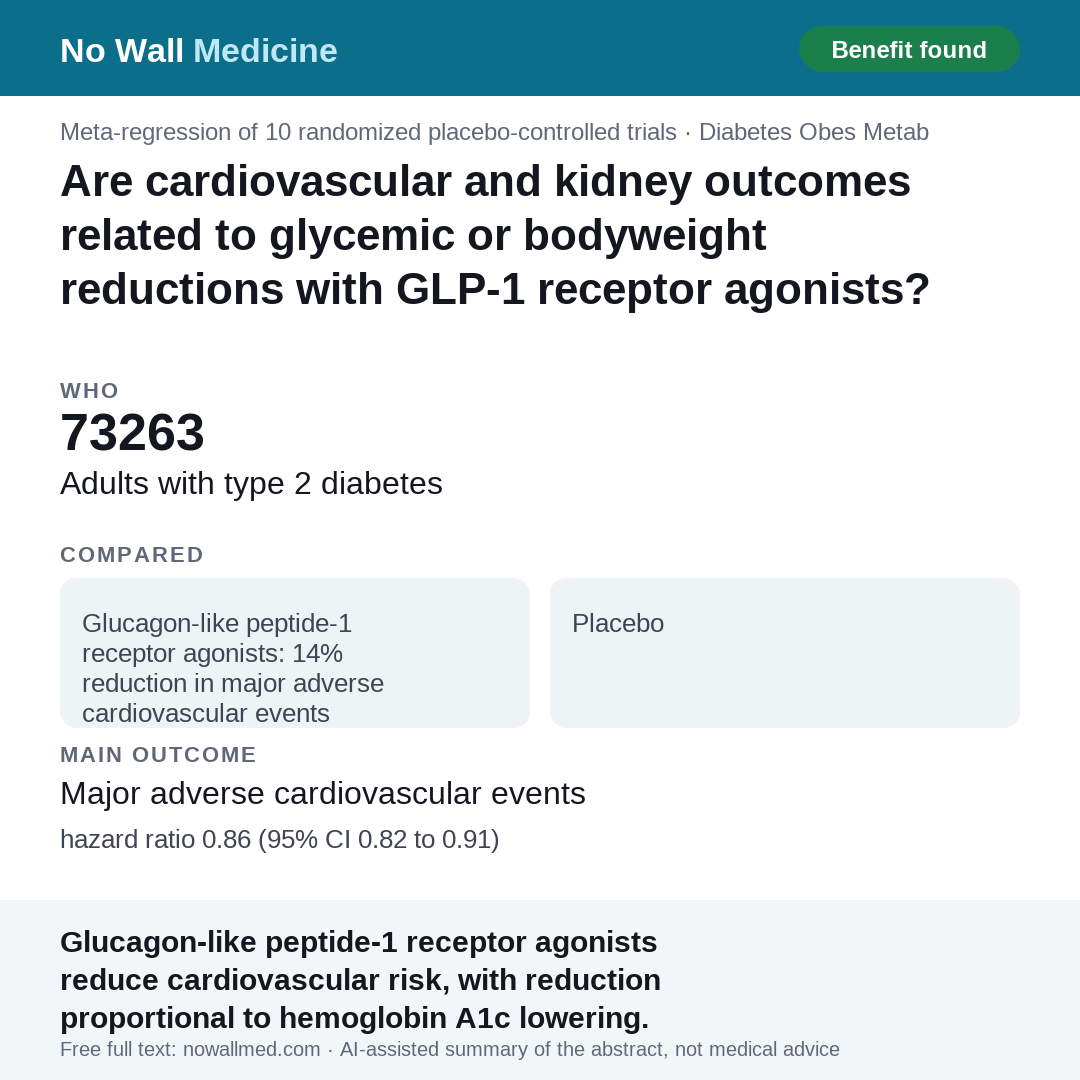
Cardiovascular risk reduction with glucagon-like peptide-1 receptor agonists is proportional to HbA1c lowering in type 2 diabetes: An updated meta-regression analysis incorporating FLOW and SOUL trials
Meta-regression of 10 randomized placebo-controlled trialsBenefit found
Are cardiovascular and kidney outcomes related to glycemic or bodyweight reductions with GLP-1 receptor agonists?
Who
73263
Adults with type 2 diabetes
Compared
Glucagon-like peptide-1 receptor agonists: 14% reduction in major adverse cardiovascular events
Placebo
Main outcome
Major adverse cardiovascular events
Result: hazard ratio 0.86 (95% CI 0.82 to 0.91)
Bottom line: Glucagon-like peptide-1 receptor agonists reduce cardiovascular risk, with reduction proportional to hemoglobin A1c lowering.
Diabetes Obes Metab · 2025-09-09Download image
Safety and efficacy of bariatric or metabolic surgery in septuagenarians: a systematic review and meta-analysis
Systematic review and meta-analysisMixed results
Is bariatric or metabolic surgery safe and effective in septuagenarians?
Who
2528
Patients aged 70 years or older undergoing primary bariatric or metabolic surgery
Compared
Septuagenarians: 9.0% (95% CI: 6.0-13.0%) 30-day morbidity
Septuagenarians: 0.7% (95% CI: 0.0-1.2%) mortality
Younger patients
Main outcome
30-day morbidity, mortality, hospital stay, and weight loss outcomes
Result: odds ratio 1.55 (95% CI: 1.26-1.91) for complications; odds ratio 4.31 (95% CI: 1.53-12.11) for mortality
Bottom line: Bariatric surgery is feasible in septuagenarians but carries higher short-term risks for complications and mortality compared to younger patients.
Int J Surg · 2025-09-09Download image

The efficacy of botulinum toxin treatment in facial palsy: A systematic review
Systematic reviewBenefit found
What is the efficacy of botulinum toxin injections in treating facial palsy?
Who
Individuals with facial palsy
Compared
Botulinum toxin
Control
Main outcome
Facial symmetry, spasticity, functional outcomes, and patient satisfaction
Bottom line: Botulinum toxin injections show promising efficacy in improving facial symmetry and functional outcomes for facial palsy.
JPRAS Open · 2025-09-09Download image

Effectiveness of different de-implementation strategies in primary care: systematic review and meta-analysis
Systematic review and meta-analysisBenefit found
How effective are different de-implementation strategies in reducing low value care in primary care?
Who
Patients receiving low value care in primary care settings · Primary care
Compared
Provider education combined with audit and feedback: moderate certainty of evidence
Other individual strategies: low certainty of evidence
Main outcome
Use of targeted low value care
Result: odds ratio 0.73 (95% CI 0.63 to 0.84)
Bottom line: Combining provider education with audit and feedback moderately reduces the use of targeted low value care in primary care.
Limitation: Low certainty of evidence for individual strategies and combinations of strategies.
BMJ Med · 2025-09-09Download image

Music therapy for patients with depression: systematic review and meta-analysis of randomised controlled trials
Systematic review and meta-analysis of randomised controlled trialsBenefit found
Is music therapy effective for managing depressive symptoms and related problems?
Who
Individuals with depression
Compared
Music therapy
Controls
Main outcome
Depressive symptoms
Result: standardised mean difference -0.97 (95% CI -1.23 to -0.71)
Bottom line: Music therapy may reduce depressive symptoms, improve quality of life, and improve sleep quality in patients with depression.
Limitation: Very low evidence level due to high risk of bias, inconsistency, and imprecision.
BJPsych Open · 2025-09-09Download image

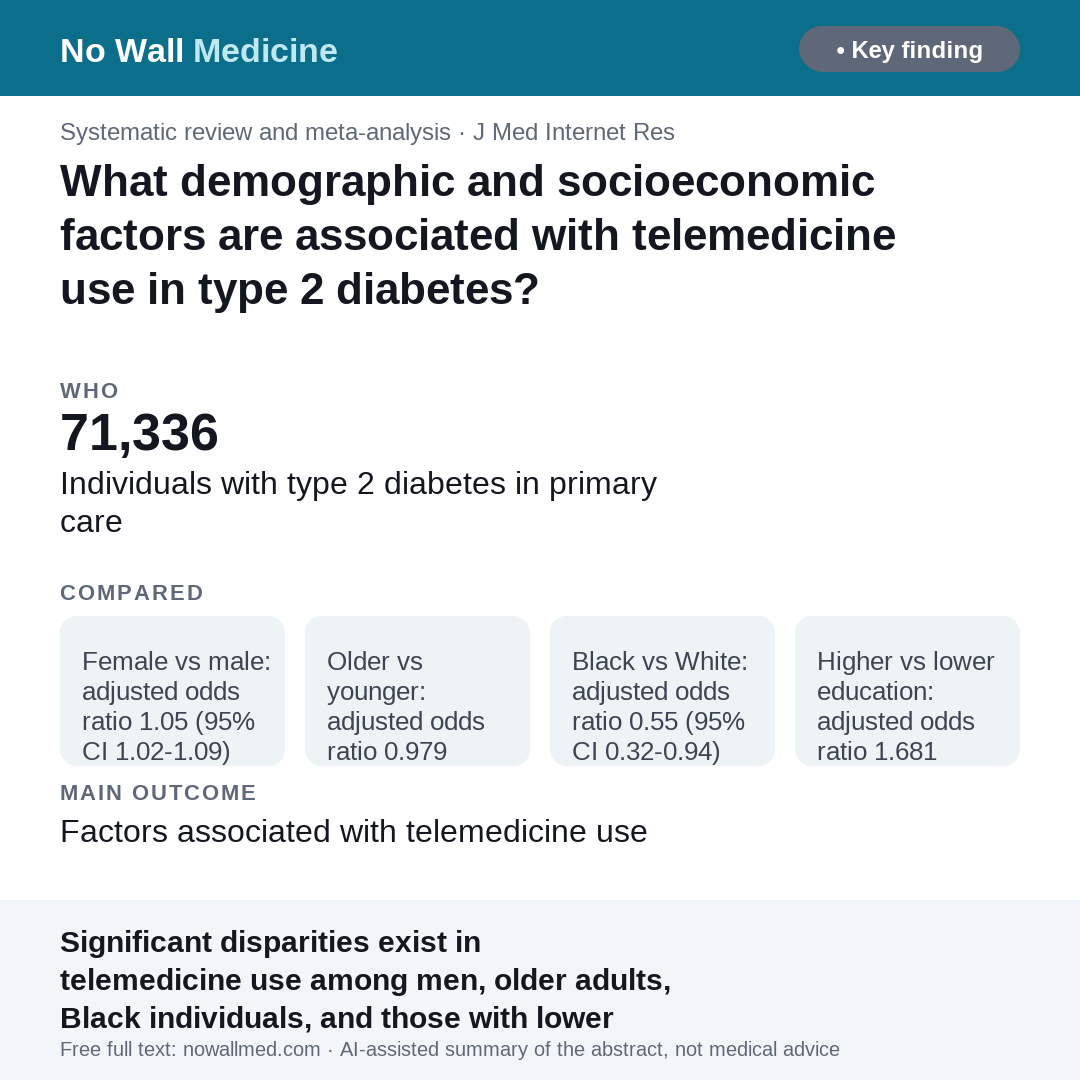
Demographic and Socioeconomic Disparities in Telemedicine Use Among Individuals With Type 2 Diabetes in Primary Care: Systematic Review and Meta-Analysis
Systematic review and meta-analysisHarm found
What demographic and socioeconomic factors are associated with telemedicine use in type 2 diabetes?
Who
71,336
Individuals with type 2 diabetes in primary care
Compared
Female vs male: adjusted odds ratio 1.05 (95% CI 1.02-1.09)
Older vs younger: adjusted odds ratio 0.979 (95% CI 0.98-0.98)
Black vs White: adjusted odds ratio 0.55 (95% CI 0.32-0.94)
Higher vs lower education: adjusted odds ratio 1.681 (95% CI 1.48-1.91)
Main outcome
Factors associated with telemedicine use
Bottom line: Significant disparities exist in telemedicine use among men, older adults, Black individuals, and those with lower education levels.
J Med Internet Res · 2025-09-09Download image
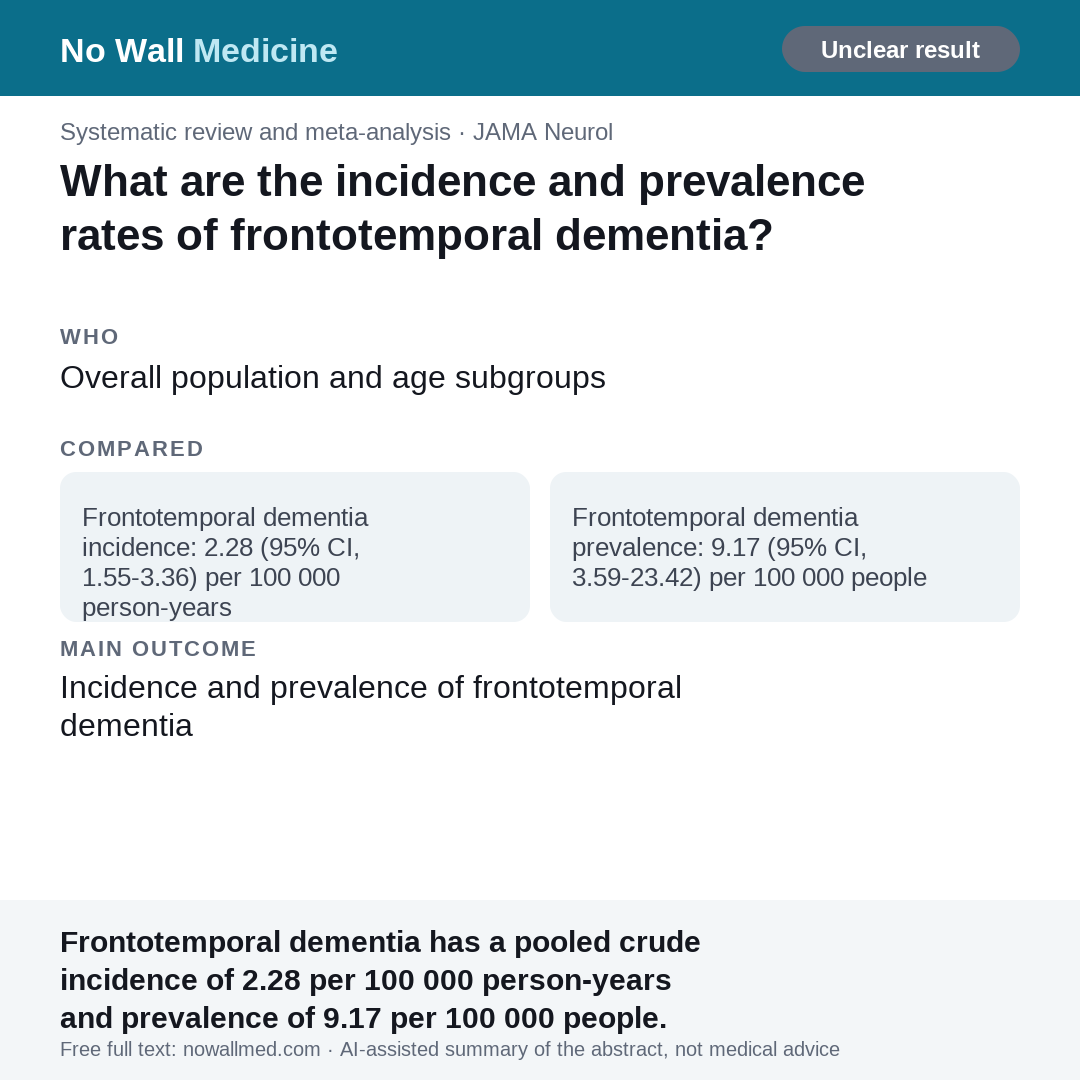
Incidence and Prevalence of Frontotemporal Dementia: A Systematic Review and Meta-Analysis
Systematic review and meta-analysisUnclear result
What are the incidence and prevalence rates of frontotemporal dementia?
Who
Overall population and age subgroups
Compared
Frontotemporal dementia incidence: 2.28 (95% CI, 1.55-3.36) per 100 000 person-years
Frontotemporal dementia prevalence: 9.17 (95% CI, 3.59-23.42) per 100 000 people
Main outcome
Incidence and prevalence of frontotemporal dementia
Bottom line: Frontotemporal dementia has a pooled crude incidence of 2.28 per 100 000 person-years and prevalence of 9.17 per 100 000 people.
JAMA Neurol · 2025-09-08Download image
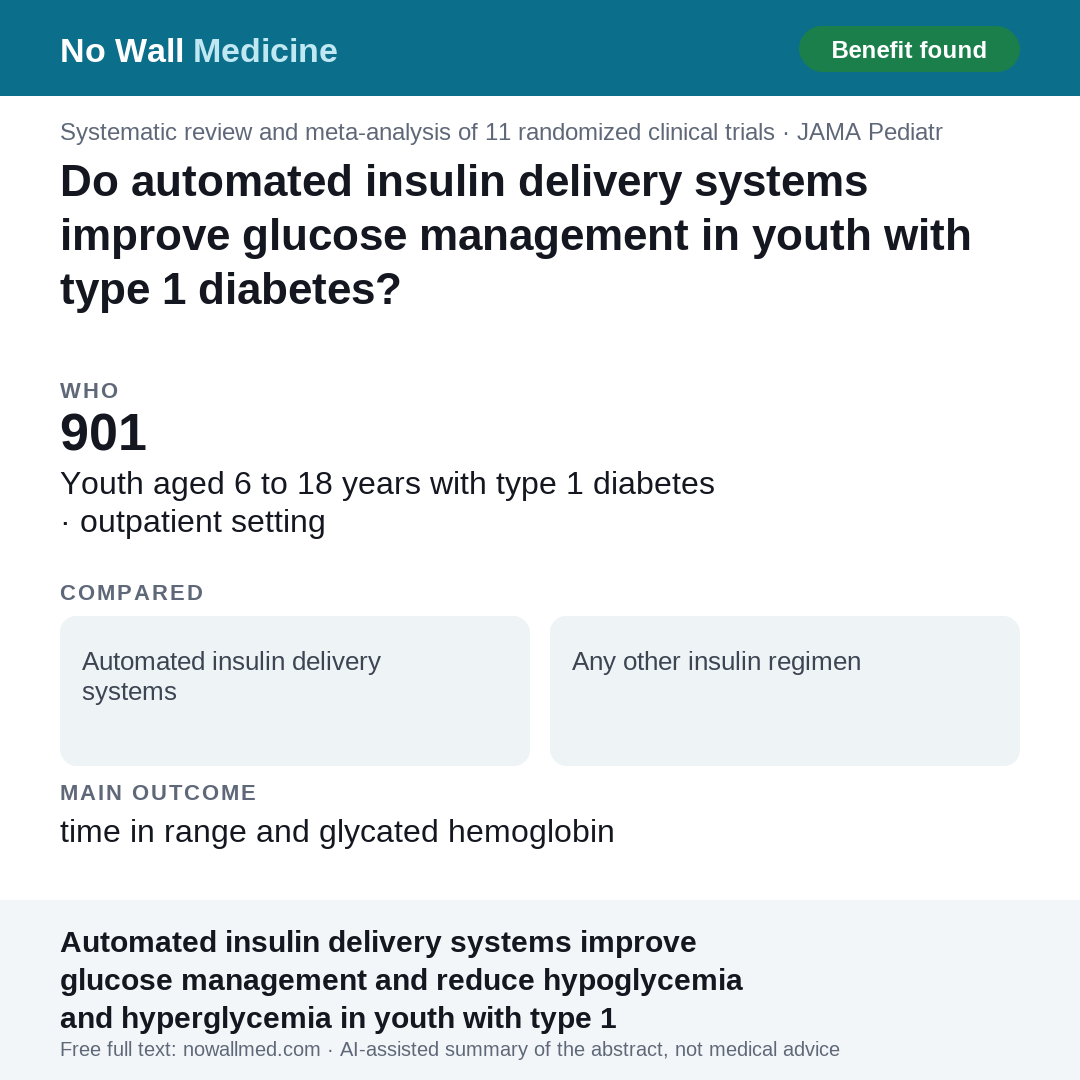
Automated Insulin Delivery Systems and Glucose Management in Children and Adolescents With Type 1 Diabetes: A Systematic Review and Meta-Analysis
Systematic review and meta-analysis of 11 randomized clinical trialsBenefit found
Do automated insulin delivery systems improve glucose management in youth with type 1 diabetes?
Who
901
Youth aged 6 to 18 years with type 1 diabetes · outpatient setting
Compared
Automated insulin delivery systems
Any other insulin regimen
Main outcome
time in range and glycated hemoglobin
Result: HbA1c mean difference -0.41% (95% CI, -0.58% to -0.25%); time in range increase 11.5% (95% CI, 9.3%-13.7%)
Bottom line: Automated insulin delivery systems improve glucose management and reduce hypoglycemia and hyperglycemia in youth with type 1 diabetes.
JAMA Pediatr · 2025-09-08Download image
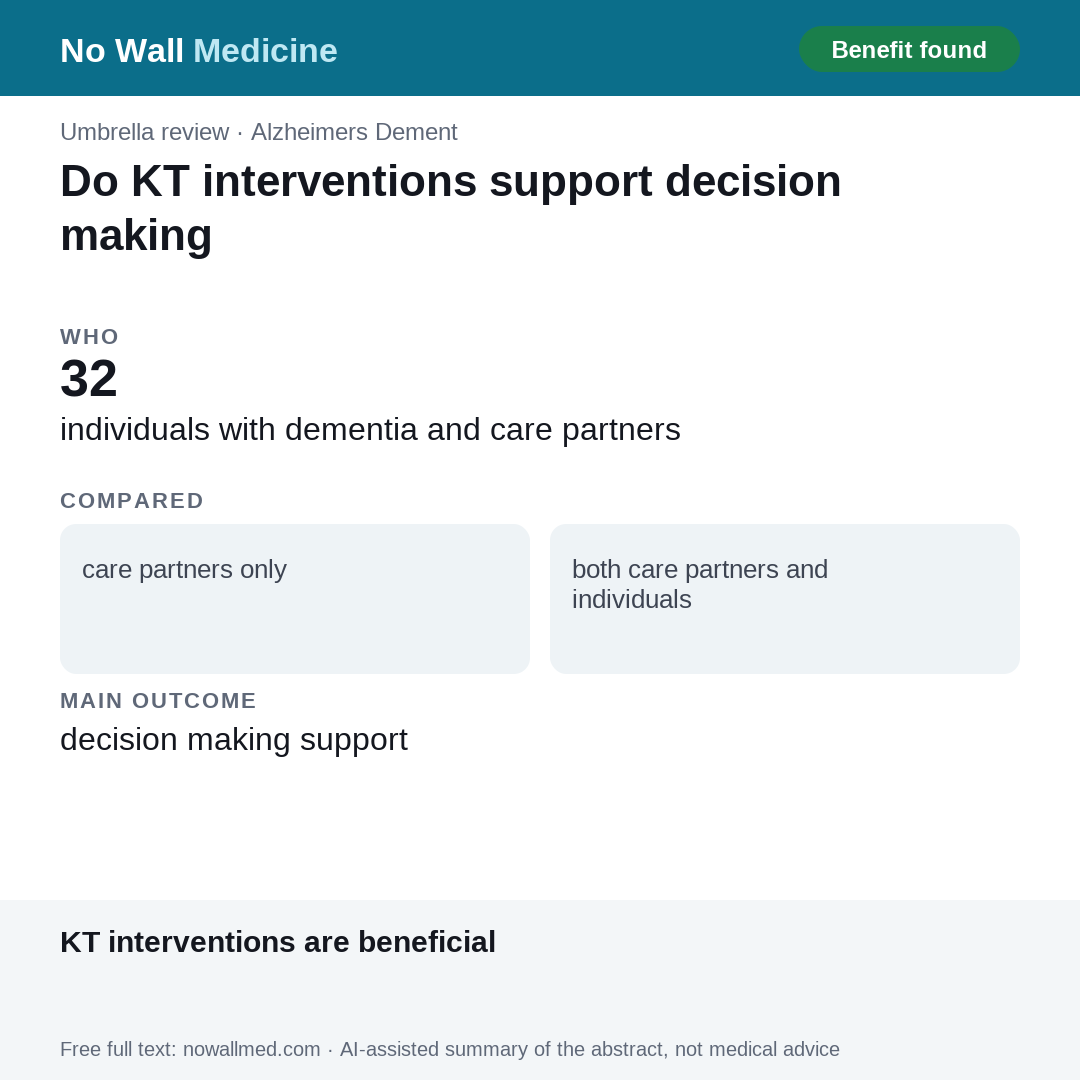
Supporting decision making for individuals living with dementia and their care partners with knowledge translation: An umbrella review
Umbrella reviewBenefit found
Do KT interventions support decision making
Who
32
individuals with dementia and care partners
Compared
care partners only
both care partners and individuals
Main outcome
decision making support
Bottom line: KT interventions are beneficial
Alzheimers Dement · 2025-09-08Download image
Neural correlates of peripartum depression: a systematic review, meta-analysis and comparison to major depressive disorder
Systematic review and meta-analysisMixed results
What are the distinct structural, functional, and metabolic brain features of peripartum depression compared to major depressive disorder?
Who
Women with peripartum depression and female non-peripartum major depressive disorder
Compared
Peripartum depression
Female non-peripartum major depressive disorder
Main outcome
Structural, functional, and metabolic brain features
Bottom line: Peripartum depression and major depressive disorder share neural underpinnings but show reversed activity patterns in specific brain regions.
Mol Psychiatry · 2025-09-08Download image

Prediction of oncogene mutation status in non-small cell lung cancer: a systematic review and meta-analysis with a special focus on artificial intelligence-based methods
Systematic review and meta-analysisBenefit found
Can radiomics and artificial intelligence non-invasively predict oncogene mutation status in non-small cell lung cancer?
Who
Patients with non-small cell lung cancer
Compared
EGFR mutation prediction (radiomics alone): sensitivity 0.754 (95% CI 0.727-0.780)
ALK mutation prediction (radiomics alone): sensitivity 0.754 (95% CI 0.638-0.841)
KRAS mutation prediction (radiomics alone): sensitivity 0.475 (95% CI 0.153-0.820)
EGFR mutation prediction (combined models): sensitivity 0.806 (95% CI 0.777-0.833)
Main outcome
Performance of artificial intelligence models in predicting oncogene mutation status
Bottom line: Radiomics-based models may offer a non-invasive alternative for determining oncogene mutation status in non-small cell lung cancer.
Limitation: Further research is required to analyze whether clinical data might boost performance.
Eur Radiol · 2025-09-08Download image

Alar Battens Grafts Versus Lateral Crural Strut Grafts: A Systematic Review of Postoperative Outcomes
Systematic reviewNo clear difference
How do alar batten grafts compare to lateral crural strut grafts for nasal valve incompetence?
Who
1052
Patients with preoperative nasal valve incompetence
Compared
Lateral crural strut graft: NOSE score improvements 15.8 to 65.6 points
Alar batten graft: NOSE score improvements 25.6 to 69.0 points
Main outcome
Functional and cosmetic postoperative outcomes
Bottom line: Both graft types yield substantial functional improvements, but cosmetic satisfaction for alar batten grafts is undercharacterized.
Otolaryngol Head Neck Surg · 2025-09-08Download image

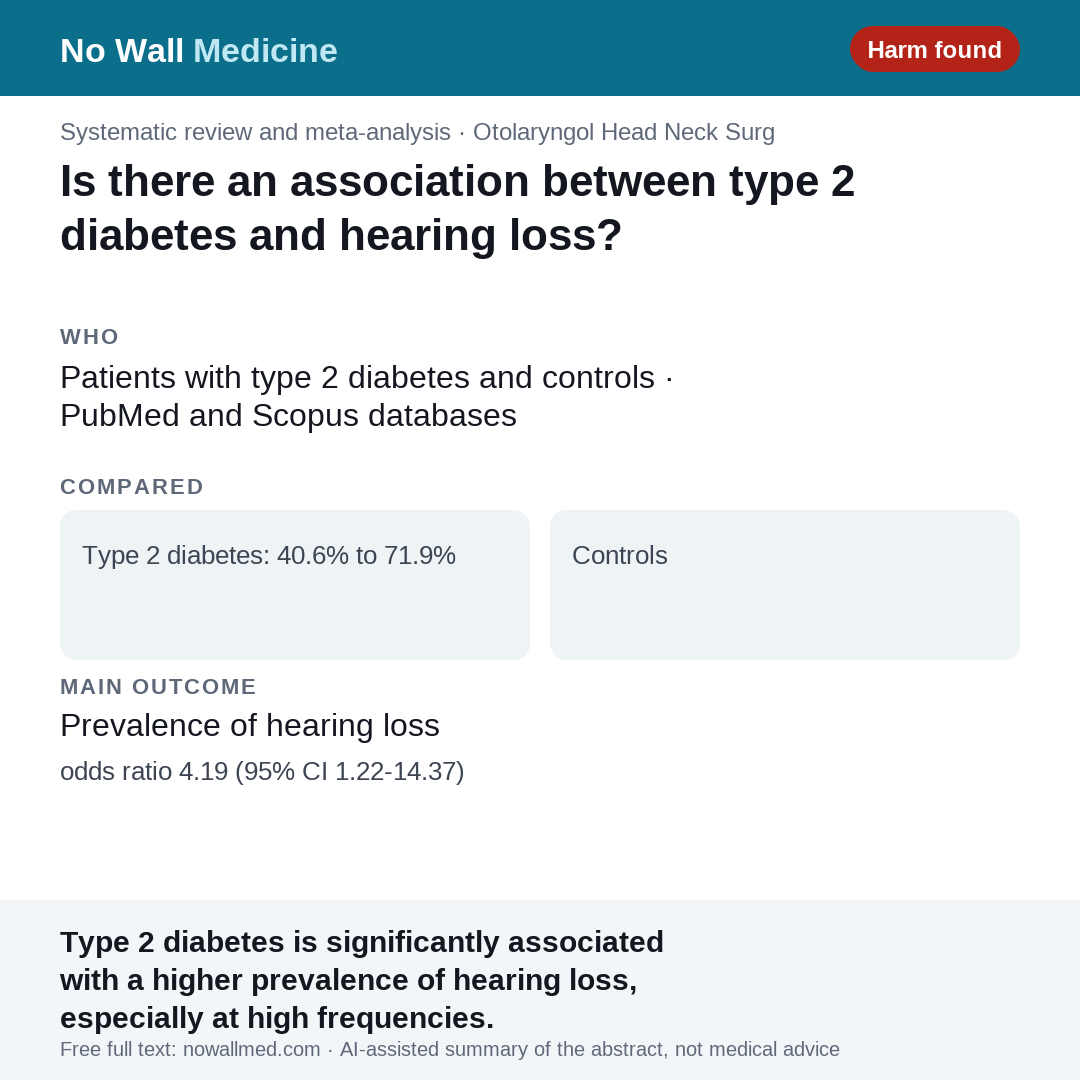
Type 2 Diabetes Mellitus and Hearing Loss: A Prisma Systematic Review and Meta-Analysis
Systematic review and meta-analysisHarm found
Is there an association between type 2 diabetes and hearing loss?
Who
Patients with type 2 diabetes and controls · PubMed and Scopus databases
Compared
Type 2 diabetes: 40.6% to 71.9%
Controls
Main outcome
Prevalence of hearing loss
Result: odds ratio 4.19 (95% CI 1.22-14.37)
Bottom line: Type 2 diabetes is significantly associated with a higher prevalence of hearing loss, especially at high frequencies.
Otolaryngol Head Neck Surg · 2025-09-08Download image
Systematic Review and Meta-Analysis of Oral Immunotherapy Effect on Food Allergy-Related Quality of Life
Systematic review and meta-analysisBenefit found
Does oral immunotherapy improve food allergy-related health-related quality of life?
Who
1330
Patients receiving food oral immunotherapy
Compared
Oral immunotherapy
Comparator
Main outcome
Health-related quality of life
Result: g = -0.51 (95% CI -0.84 to -0.19) post-treatment
Bottom line: Health-related quality of life benefits were observed 12 months after oral immunotherapy treatment completion.
Limitation: Limited evidence of benefit during active treatment.
Allergy · 2025-09-08Download image

Prevalence and factors associated with depression, anxiety and post-traumatic stress disorder among healthcare workers from sub-Saharan Africa: systematic review
Systematic reviewMixed results
What is the prevalence and associated factors of depression, anxiety, and PTSD among healthcare workers in sub-Saharan Africa?
Who
Healthcare workers from sub-Saharan Africa · sub-Saharan Africa
Compared
Depression: 2.1-75.7%
Anxiety: 4.8-96.5%
Post-traumatic stress disorder symptoms: 11.7-78.3%
Main outcome
Prevalence of depression, anxiety, and post-traumatic stress disorder symptoms
Bottom line: The burden of depression, anxiety, and post-traumatic stress disorder among sub-Saharan African healthcare workers is high and multifactorial.
BJPsych Open · 2025-09-08Download image

Patient-Reported Outcomes After Neoadjuvant Therapy and Watch-and-Wait for Rectal Cancer: A Systematic Review and Meta-Analysis
Systematic review and meta-analysisMixed results
What are the patient-reported outcomes for rectal cancer patients undergoing watch-and-wait versus other treatments?
Who
3139
Patients with stage I-III rectal adenocarcinoma
Compared
Watch-and-wait
Proctectomy, local excision, or declined surgery
Main outcome
Patient-reported outcomes and quality of life
Bottom line: Watch-and-wait shows potential for fewer bowel symptoms and improved quality of life in some subscales.
Limitation: More robust data are needed to assess patient-reported outcomes compared to proctectomy or local excision.
Ann Surg Open · 2025-09-08Download image

Impact of PARP Inhibitors on Health-related Quality of Life in Patients with Metastatic Castration-resistant Prostate Cancer: A Systematic Review and Meta-analysis
Systematic review and meta-analysisNo clear difference
Do PARP inhibitors impact health-related quality of life in metastatic castration-resistant prostate cancer?
Who
2861
Patients with metastatic castration-resistant prostate cancer
Compared
PARP inhibitors
Control
Main outcome
Functional Assessment of Cancer Therapy-Prostate total scores
Result: no clinically meaningful differences in change in FACT-P total score
Bottom line: PARP inhibitors showed no statistically or clinically meaningful deterioration in health-related quality of life for patients with metastatic castration-resistant prostate cancer.
Limitation: Some studies had moderate or high risk of bias regarding symptom status stratification.
Eur Urol Open Sci · 2025-09-08Download image

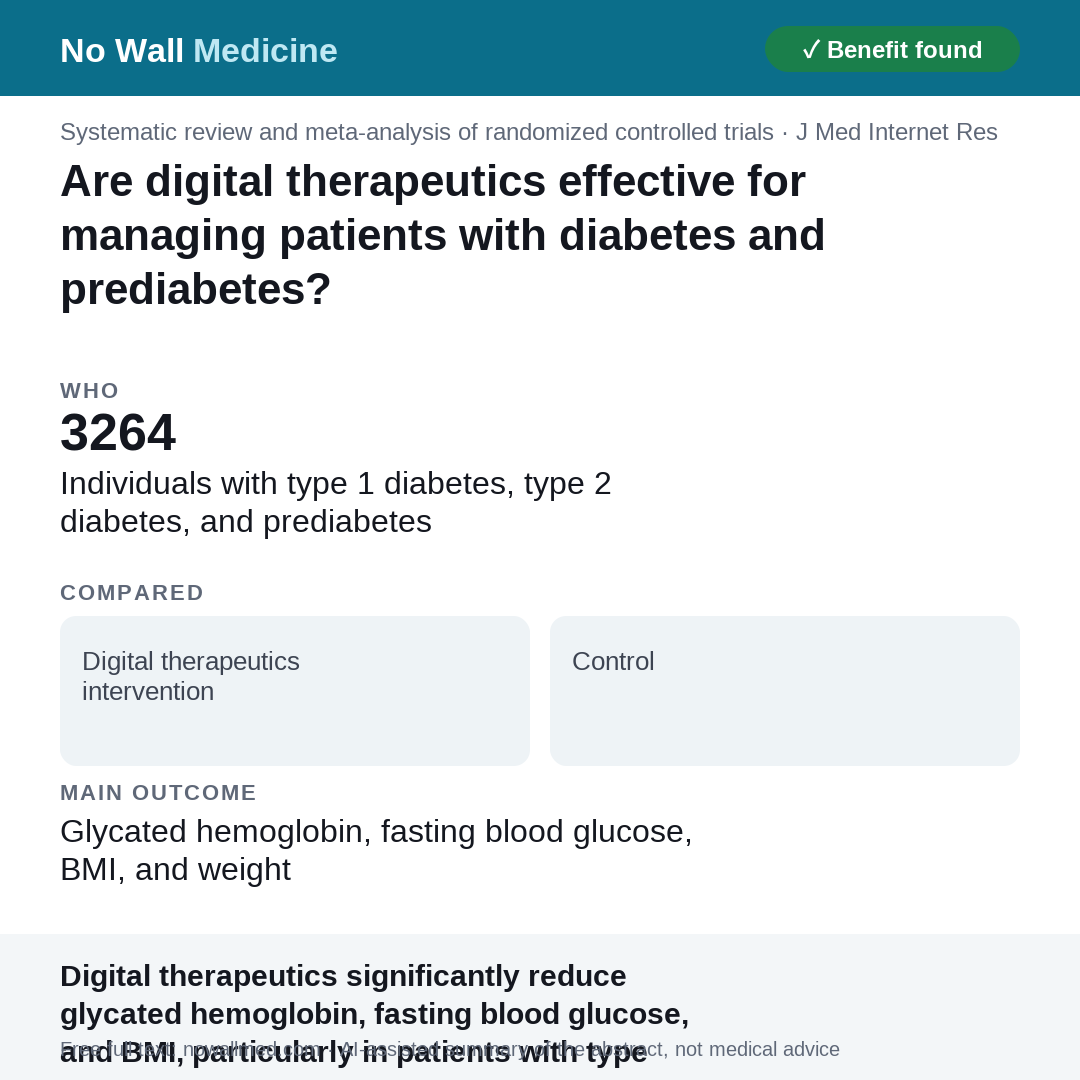
Impact of Digital Therapeutics for the Management of Adult Patients With Diabetes: Systematic Review and Meta-Analysis of Randomized Controlled Trials
Systematic review and meta-analysis of randomized controlled trialsBenefit found
Are digital therapeutics effective for managing patients with diabetes and prediabetes?
Who
3264
Individuals with type 1 diabetes, type 2 diabetes, and prediabetes
Compared
Digital therapeutics intervention
Control
Main outcome
Glycated hemoglobin, fasting blood glucose, BMI, and weight
Result: weighted mean difference -0.54% (95% CI -0.72 to -0.36) for HbA1c
Bottom line: Digital therapeutics significantly reduce glycated hemoglobin, fasting blood glucose, and BMI, particularly in patients with type 2 diabetes.
J Med Internet Res · 2025-09-08Download image