Visual abstracts
New randomized trials and meta-analyses from leading journals at a glance: who was studied, what was compared, and what was found. Every paper is free to read in full.
All specialtiesCardiology 1913Oncology 1645Gastroenterology & Hepatology 735Infectious Disease 1217Neurology 795Psychiatry & Mental Health 937Pulmonology 818Critical Care 554Endocrinology & Diabetes 1036Pediatrics 1143Surgery 971Orthopedics & Sports Medicine 354Neurosurgery 242Cardiothoracic & Vascular Surgery 211Plastic & Reconstructive Surgery 300Nephrology 394Rheumatology 268Hematology 414Dermatology 212Ophthalmology 225Obstetrics & Gynecology 625Public & Global Health 373Radiology & Imaging 262Anesthesiology 381Urology 332ENT (Otolaryngology) 255Emergency Medicine 214Allergy & Immunology 126Geriatrics 411Family Medicine & Primary Care 226Medical Genetics & Genomics 205Pathology & Laboratory Medicine 60Physical Medicine & Rehabilitation 334Palliative Care 168Nutrition 517Digital Health & AI 1009General Medicine 149
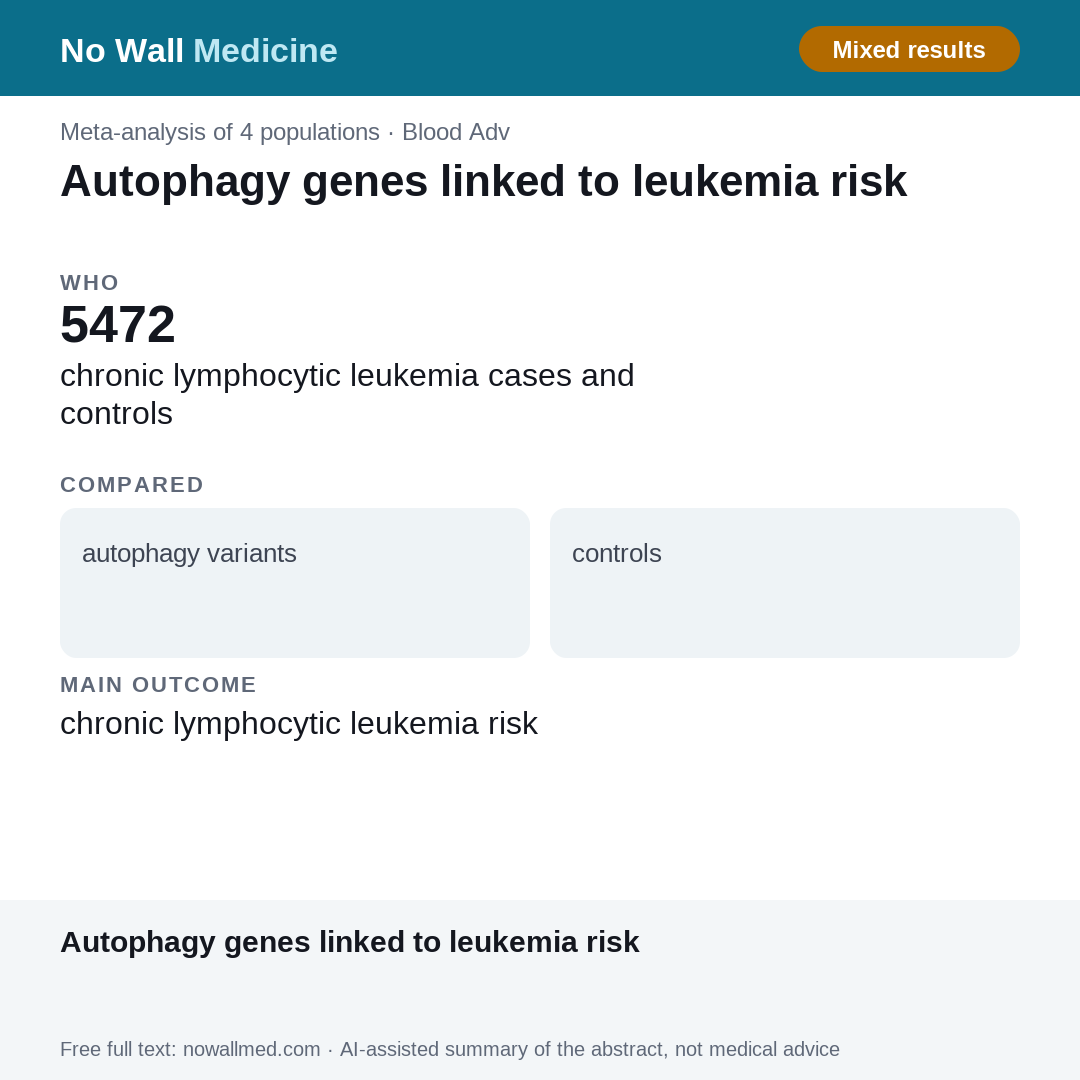
Identification of 4 autophagy-related genetic variants as risk factors for chronic lymphocytic leukemia
Meta-analysis of 4 populationsMixed results
Autophagy genes linked to leukemia risk
Who
5472
chronic lymphocytic leukemia cases and controls
Compared
autophagy variants
controls
Main outcome
chronic lymphocytic leukemia risk
Bottom line: Autophagy genes linked to leukemia risk
Blood Adv · 2025-09-03Download image
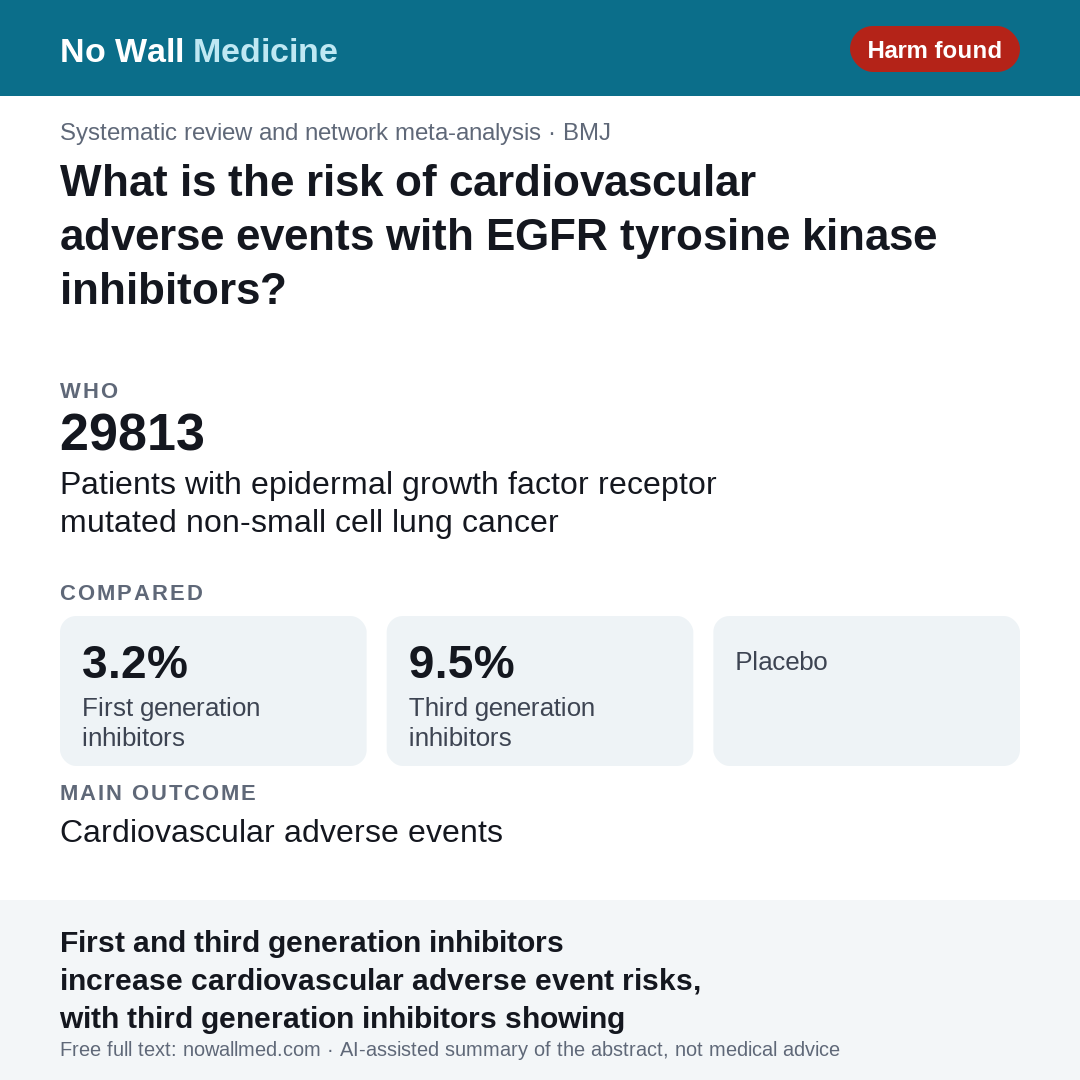
Cardiovascular adverse events associated with epidermal growth factor receptor tyrosine kinase inhibitors in EGFR-mutated non-small cell lung cancer: systematic review and network meta-analysis
Systematic review and network meta-analysisHarm found
What is the risk of cardiovascular adverse events with EGFR tyrosine kinase inhibitors?
Who
29813
Patients with epidermal growth factor receptor mutated non-small cell lung cancer
Compared
3.2%First generation inhibitors
9.5%Third generation inhibitors
Placebo
Main outcome
Cardiovascular adverse events
Result: odds ratio 2.18 (95% confidence interval 1.46 to 3.27)
Bottom line: First and third generation inhibitors increase cardiovascular adverse event risks, with third generation inhibitors showing higher risks than first generation.
BMJ · 2025-09-02Download image
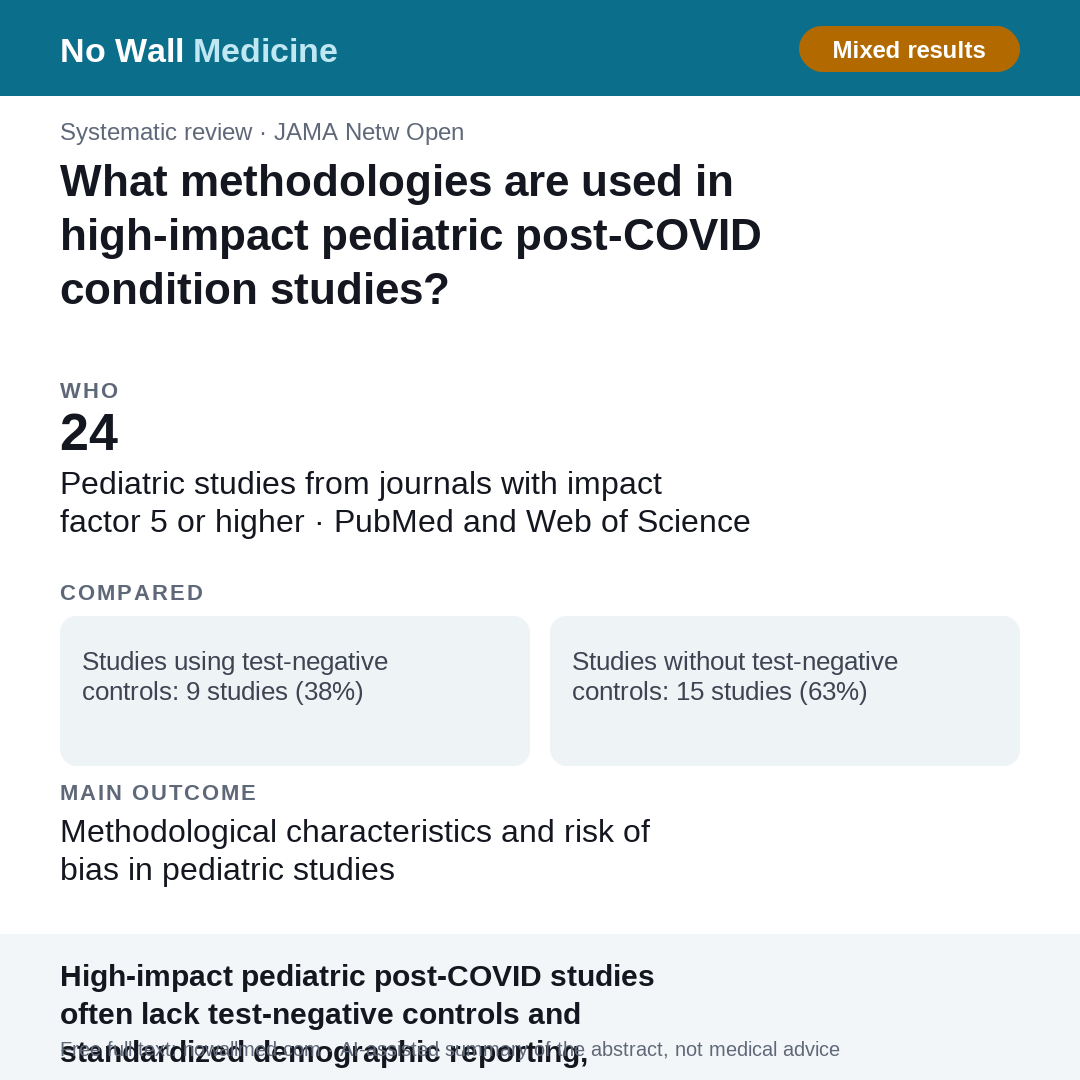
Methods of Pediatric Post-COVID Condition Studies in High-Impact Journals: A Systematic Review
Systematic reviewMixed results
What methodologies are used in high-impact pediatric post-COVID condition studies?
Who
24
Pediatric studies from journals with impact factor 5 or higher · PubMed and Web of Science
Compared
Studies using test-negative controls: 9 studies (38%)
Studies without test-negative controls: 15 studies (63%)
Main outcome
Methodological characteristics and risk of bias in pediatric studies
Bottom line: High-impact pediatric post-COVID studies often lack test-negative controls and standardized demographic reporting, necessitating more rigorous prospective designs.
Limitation: Small median sample sizes and inconsistent reporting of psychiatric history, comorbidities, and body mass index.
JAMA Netw Open · 2025-09-02Download image
Adverse Events Following Short-Course Systemic Corticosteroids Among Children and Adolescents: A Systematic Review and Meta-Analysis
Systematic review and meta-analysisMixed results
What are the adverse events associated with short-term systemic corticosteroid use in children and adolescents?
Who
6470
Children and adolescents aged 1 to younger than 18 years
Compared
Corticosteroids
Usual care
Main outcome
Adverse events including serious events, discontinuation, hyperglycemia, sleep disturbances, behavior changes, and gastrointestinal bleeding
Result: hyperglycemia RD 38 more AEs per 1000 patients (95% CI 11 to 64 more)
Bottom line: Short-term corticosteroids increase risks of hyperglycemia, sleep problems, and gastrointestinal bleeding, though serious adverse events were not significantly increased.
Limitation: Further research is needed to obtain better quality of evidence.
JAMA Netw Open · 2025-09-02Download image
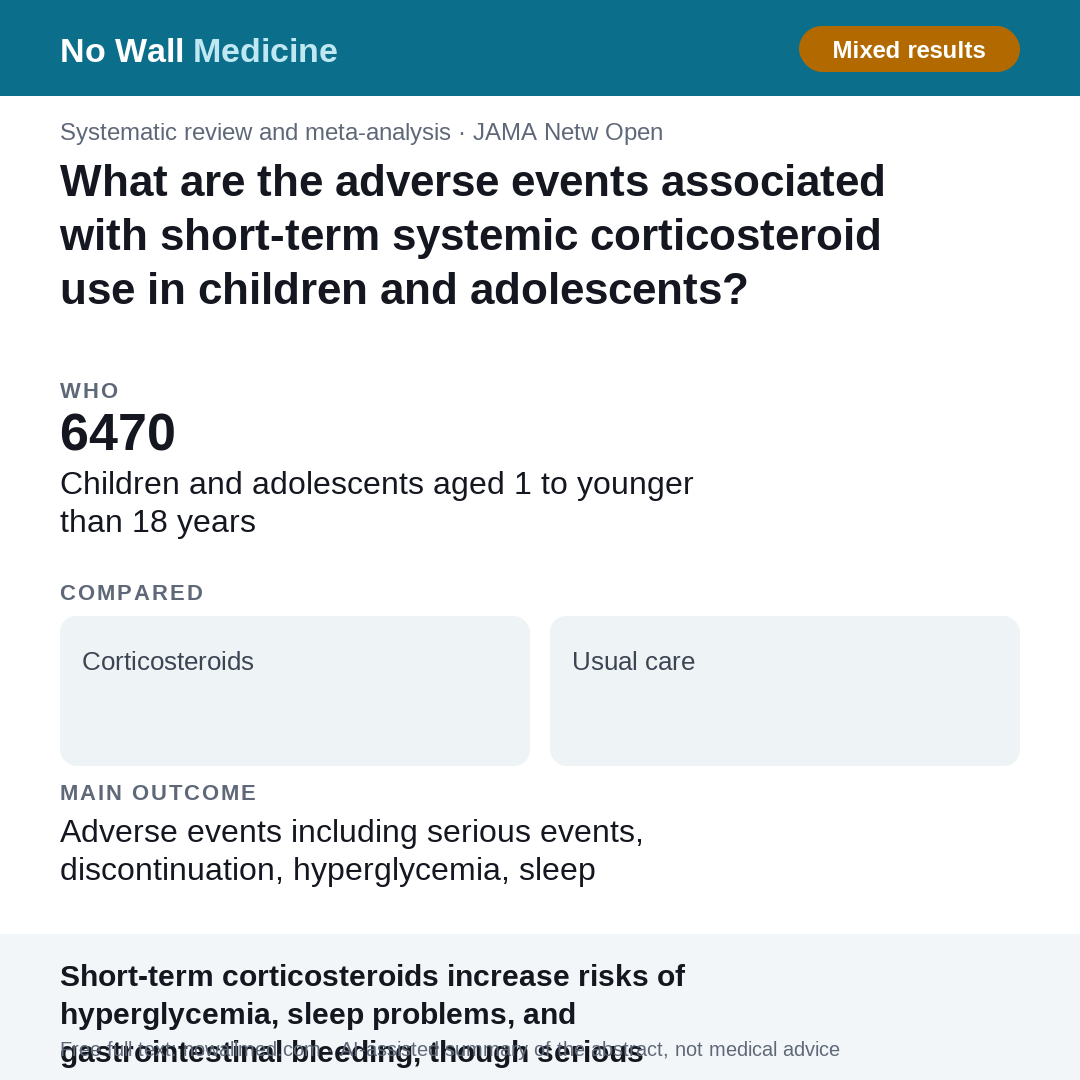
Alcohol Consumption Per Capita and Suicide: A Meta-Analysis
Meta-analysis of 13 studiesHarm found
Alcohol consumption linked to suicide
Who
general population
Compared
alcohol consumption
control
Main outcome
suicide mortality rate
Result: 3.59% increase (95% CI 2.38%-4.79%)
Bottom line: Alcohol consumption increases suicide rate
JAMA Netw Open · 2025-09-02Download image
Comparative Safety of JAK Inhibitors vs TNF Antagonists in Immune-Mediated Inflammatory Diseases: A Systematic Review and Meta-Analysis
Systematic review and meta-analysisMixed results
Are Janus kinase inhibitors safer than tumor necrosis factor antagonists in immune-mediated inflammatory diseases?
Who
813881
Adults with immune-mediated inflammatory diseases
Compared
Janus kinase inhibitors: IR, 3.79 [95% CI, 2.85-5.05] serious infections
Tumor necrosis factor antagonists: IR, 3.03 [2.32-3.95] serious infections
Main outcome
Risk of serious infections, malignant neoplasms, major cardiovascular events, or venous thromboembolism
Result: pooled HR, 1.26 (95% CI 1.03 to 1.54) for venous thromboembolism
Bottom line: Janus kinase inhibitors showed no significant difference in serious infections, malignancies, or cardiovascular events, but had a slightly higher venous thromboembolism risk.
Limitation: Further research, especially long-term studies, is needed to fully elucidate safety across diverse populations.
JAMA Netw Open · 2025-09-02Download image

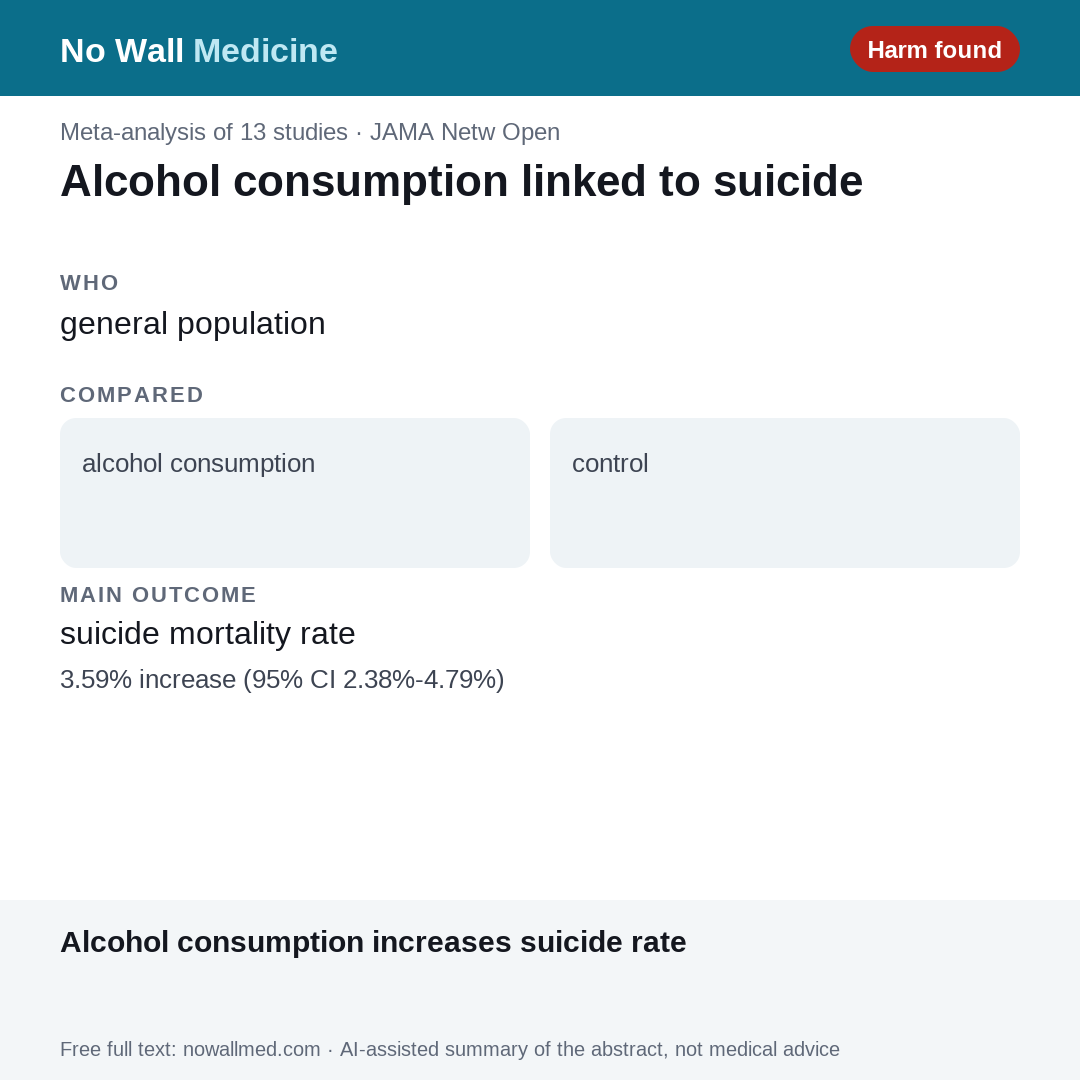
Nonregistration, Discontinuation, and Nonpublication of Randomized Trials: A Systematic Review
Systematic reviewHarm found
What was the rate of nonregistration, discontinuation, and nonpublication of randomized clinical trials?
Who
347
Randomized clinical trials approved by ethics committees in 2016 · United Kingdom, Switzerland, Germany, and Canada
Compared
Industry-sponsored trials: 92.3% (166 of 181) results available
Non-industry-sponsored trials: 66.3% (110 of 166) results available
Main outcome
Nonregistration, discontinuation, and nonpublication of trial results
Result: adjusted odds ratio 0.32 (95% CI 0.15-0.71)
Bottom line: Nonregistration, discontinuation due to poor recruitment, and nonpublication remain major challenges, particularly for non-industry-sponsored trials.
JAMA Netw Open · 2025-09-02Download image
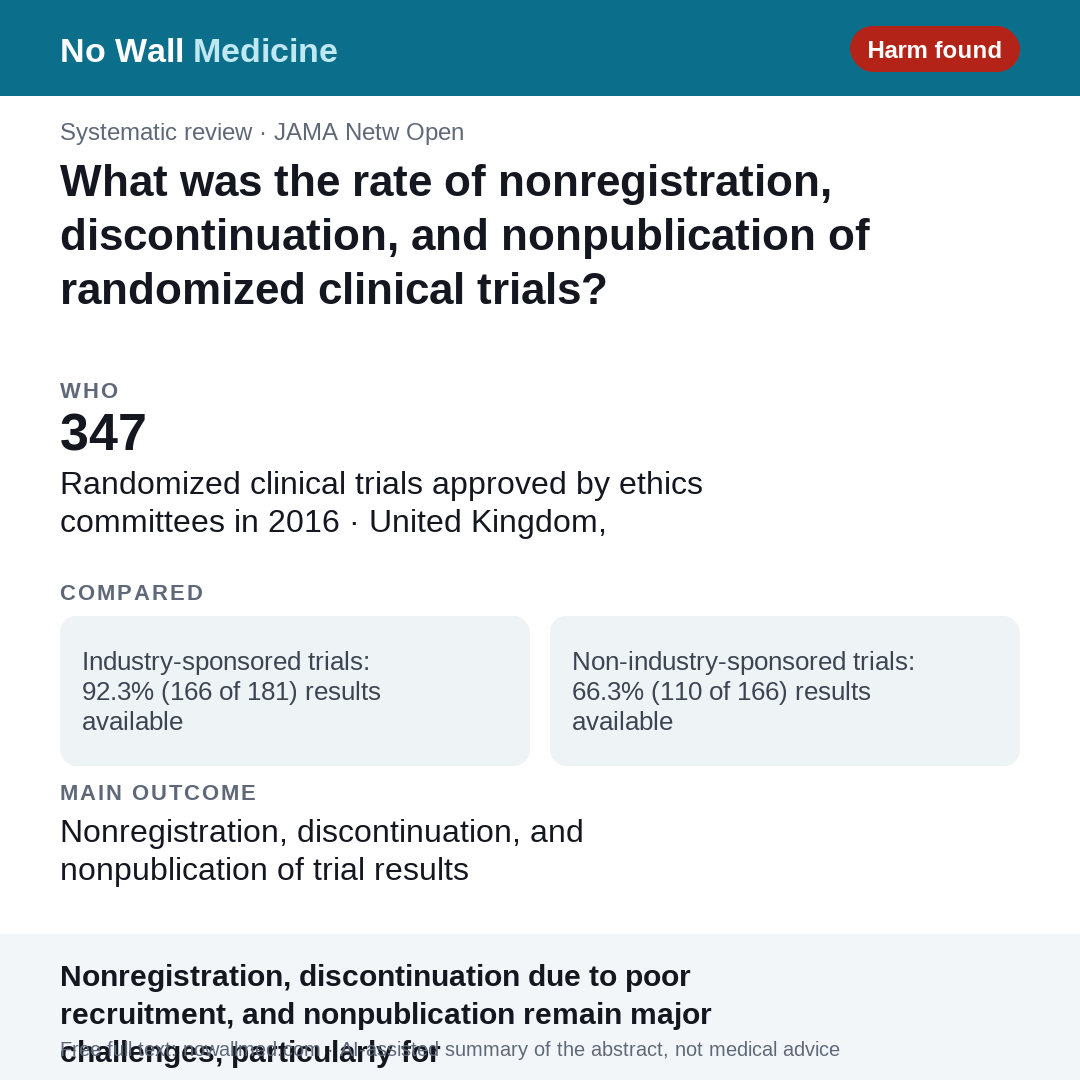
Adherence to Updated Race and Ethnicity Reporting Guidance in Ophthalmology Journals
Systematic reviewHarm found
How well do high-impact ophthalmology journals adhere to updated race and ethnicity reporting guidelines?
Who
525
Research articles in three high-impact ophthalmology journals · Three highest-impact ophthalmology journals
Compared
285Articles reporting race and/or ethnicity (54.3%)
276Articles reporting specific race and/or ethnicity categories (96.8%)
Main outcome
Adherence to updated race and ethnicity reporting guidelines
Bottom line: Race and ethnicity reporting in high-impact ophthalmology journals was substantially nonadherent with updated American Medical Association recommendations.
JAMA Netw Open · 2025-09-02Download image
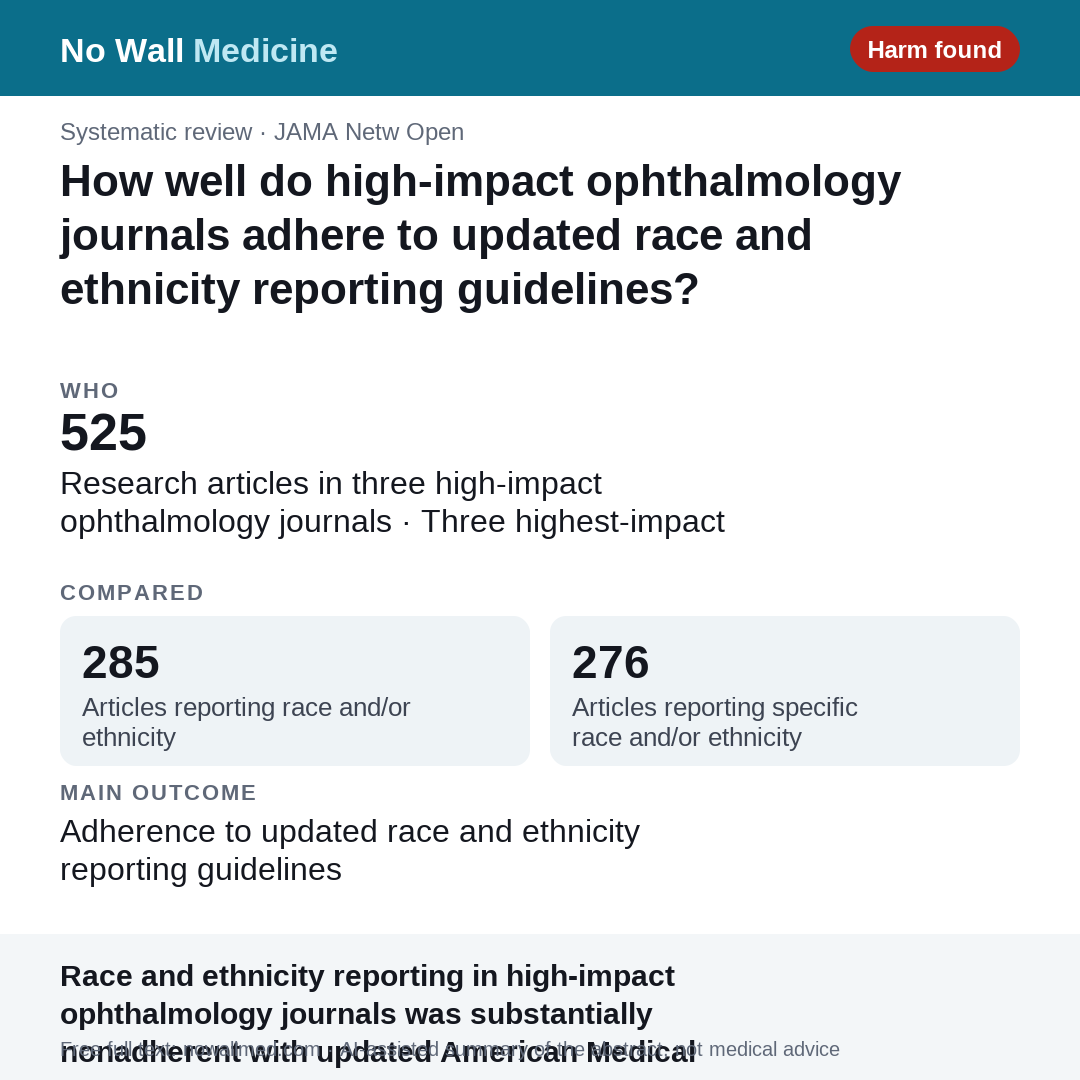
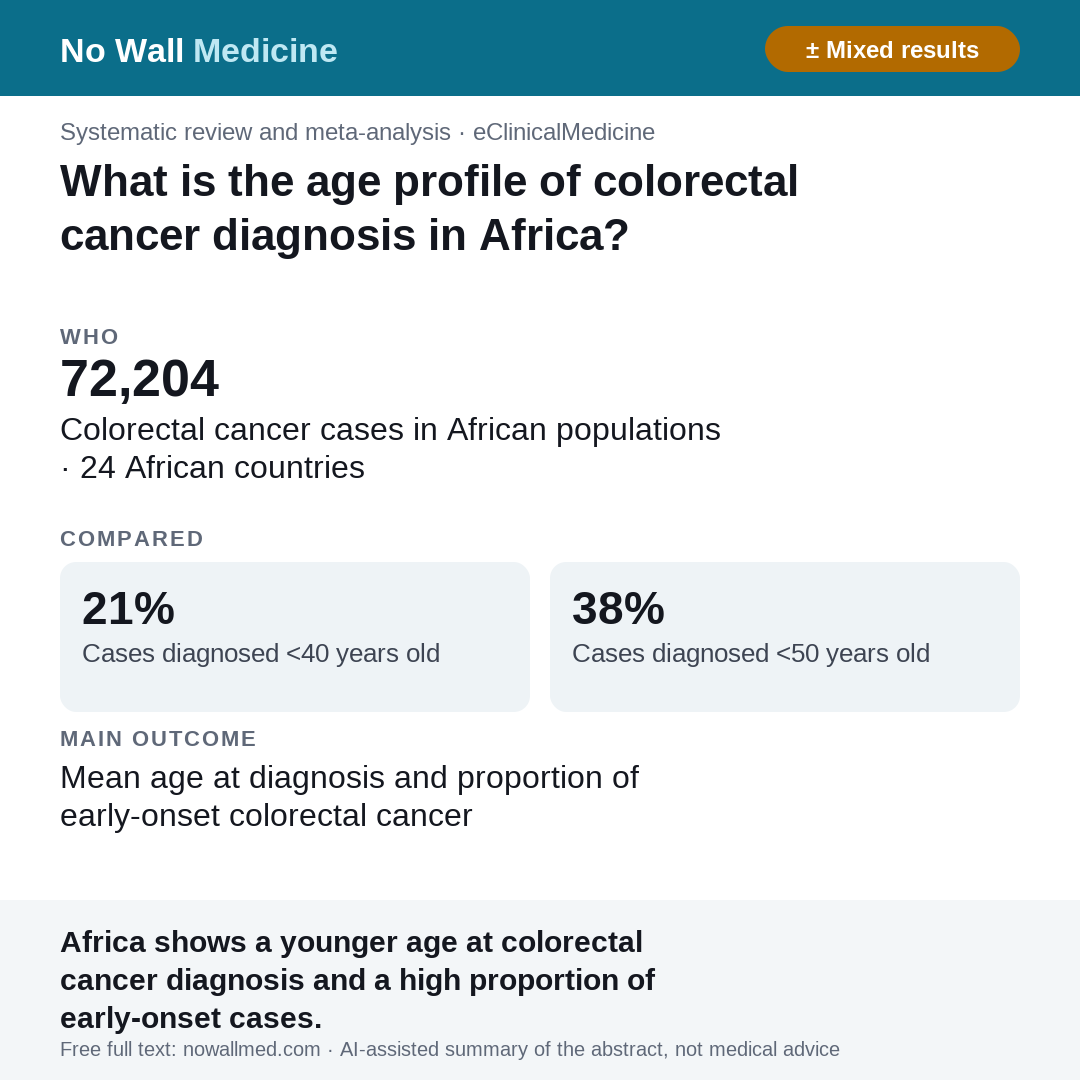
The descriptive epidemiology of age at colorectal cancer diagnosis in Africa: a systematic review and meta-analysis
Systematic review and meta-analysisMixed results
What is the age profile of colorectal cancer diagnosis in Africa?
Who
72,204
Colorectal cancer cases in African populations · 24 African countries
Compared
21%Cases diagnosed <40 years old (95% CI: 18%-25%)
38%Cases diagnosed <50 years old (95% CI 35%-41%)
Main outcome
Mean age at diagnosis and proportion of early-onset colorectal cancer
Result: pooled mean age 53.5 years
Bottom line: Africa shows a younger age at colorectal cancer diagnosis and a high proportion of early-onset cases.
Funded by: Queen's University Belfast and Department for the Economy, Northern Ireland
eClinicalMedicine · 2025-09-02Download image
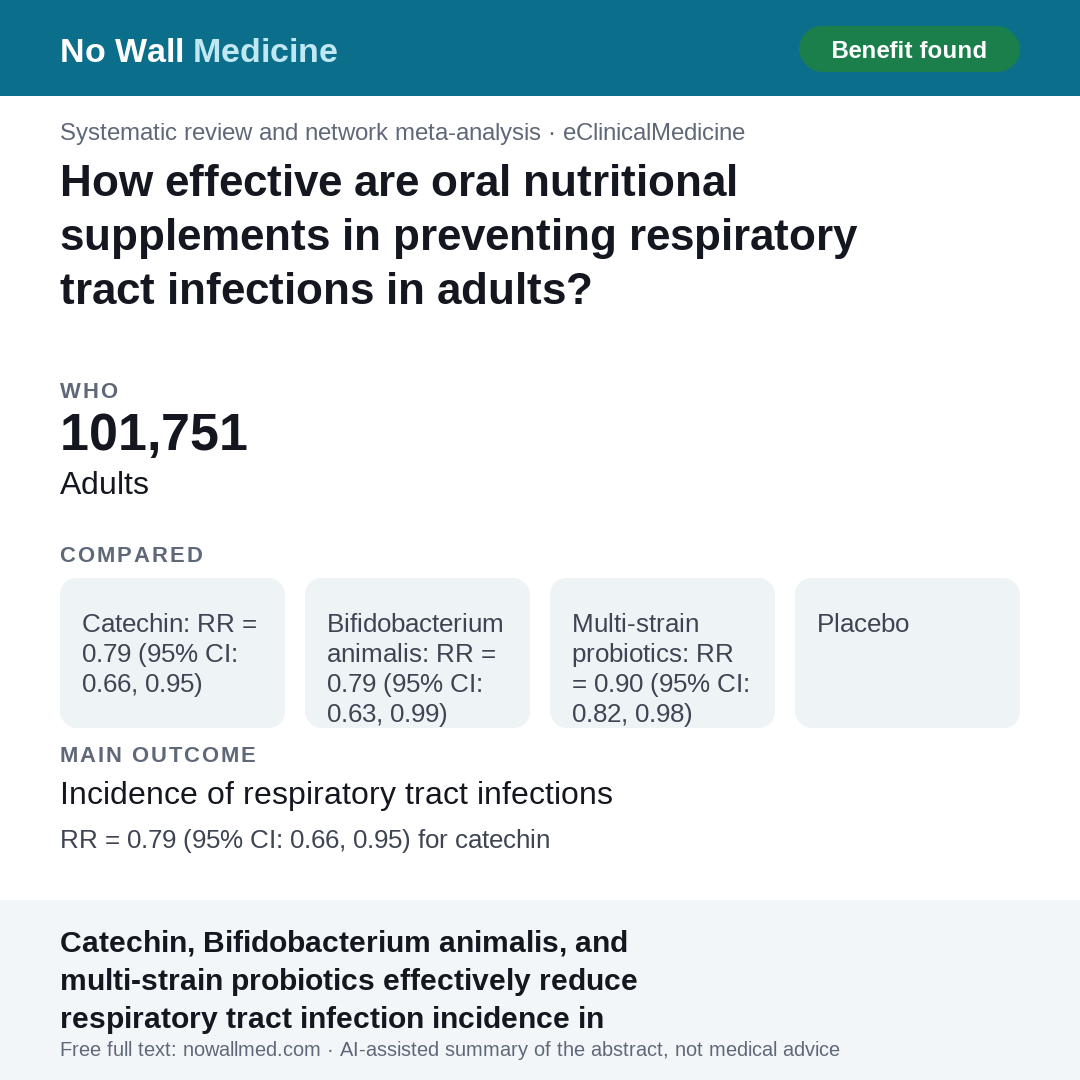
Comparative effectiveness of oral nutritional supplements in preventing respiratory tract infections among adults: a systematic review and network meta-analysis
Systematic review and network meta-analysisBenefit found
How effective are oral nutritional supplements in preventing respiratory tract infections in adults?
Who
101,751
Adults
Compared
Catechin: RR = 0.79 (95% CI: 0.66, 0.95)
Bifidobacterium animalis: RR = 0.79 (95% CI: 0.63, 0.99)
Multi-strain probiotics: RR = 0.90 (95% CI: 0.82, 0.98)
Placebo
Main outcome
Incidence of respiratory tract infections
Result: RR = 0.79 (95% CI: 0.66, 0.95) for catechin
Bottom line: Catechin, Bifidobacterium animalis, and multi-strain probiotics effectively reduce respiratory tract infection incidence in adults.
Limitation: Lack of head-to-head comparisons and heterogeneity from varied administration methods.
Funded by: Ningbo Top Medical and Health Research Program and Zhejiang Provincial Plan
eClinicalMedicine · 2025-09-02Download image
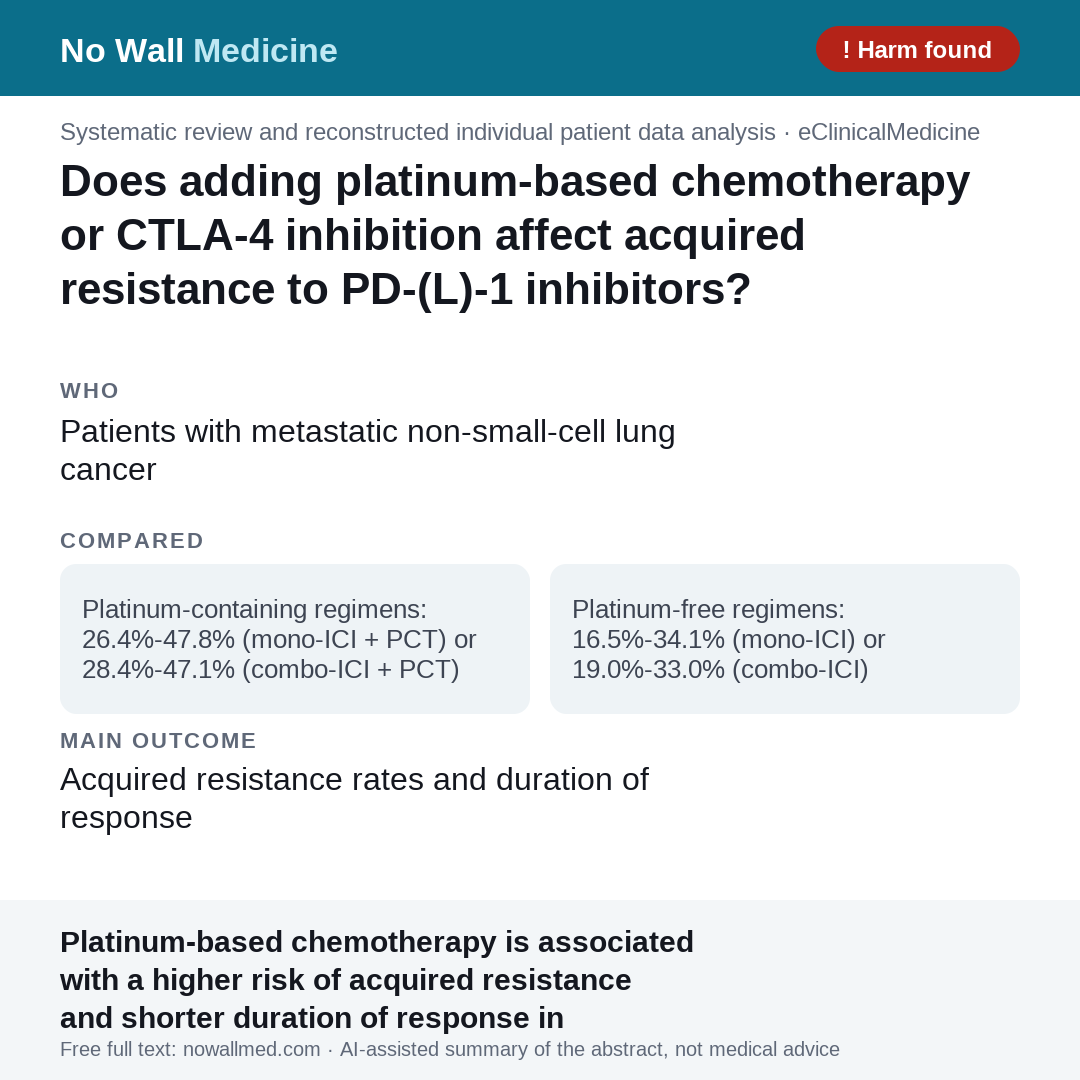
Impact of platinum-based chemotherapy and CTLA-4 inhibition on acquired resistance to first-line anti-PD-1/PD-L1 agents in non-small cell lung cancer: a systematic review and reconstructed individual patient data analysis
Systematic review and reconstructed individual patient data analysisHarm found
Does adding platinum-based chemotherapy or CTLA-4 inhibition affect acquired resistance to PD-(L)-1 inhibitors?
Who
Patients with metastatic non-small-cell lung cancer
Compared
Platinum-containing regimens: 26.4%-47.8% (mono-ICI + PCT) or 28.4%-47.1% (combo-ICI + PCT)
Platinum-free regimens: 16.5%-34.1% (mono-ICI) or 19.0%-33.0% (combo-ICI)
Main outcome
Acquired resistance rates and duration of response
Result: 12-months RR: 1.46 (95% CI 1.23-1.75) for PCT-containing versus PCT-free
Bottom line: Platinum-based chemotherapy is associated with a higher risk of acquired resistance and shorter duration of response in non-small-cell lung cancer.
eClinicalMedicine · 2025-09-02Download image
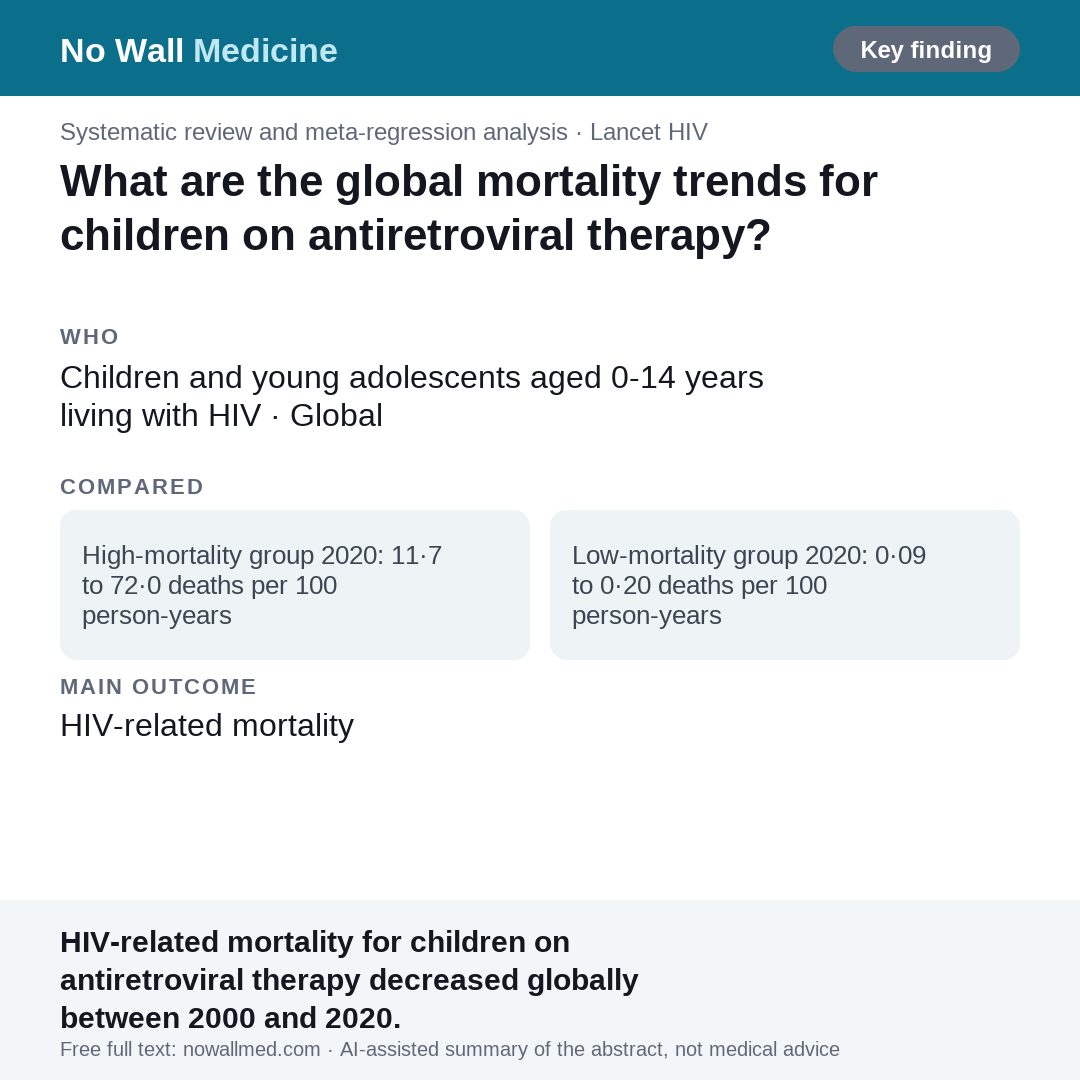
HIV-related mortality time trends among children and young adolescents on antiretroviral therapy by age, treatment duration, and region: a systematic review and meta-regression analysis
Systematic review and meta-regression analysisBenefit found
What are the global mortality trends for children on antiretroviral therapy?
Who
Children and young adolescents aged 0-14 years living with HIV · Global
Compared
High-mortality group 2020: 11·7 to 72·0 deaths per 100 person-years
Low-mortality group 2020: 0·09 to 0·20 deaths per 100 person-years
Main outcome
HIV-related mortality
Bottom line: HIV-related mortality for children on antiretroviral therapy decreased globally between 2000 and 2020.
Funded by: National Institute of Allergy and Infectious Diseases and National Institutes of Health
Lancet HIV · 2025-09-02Download image
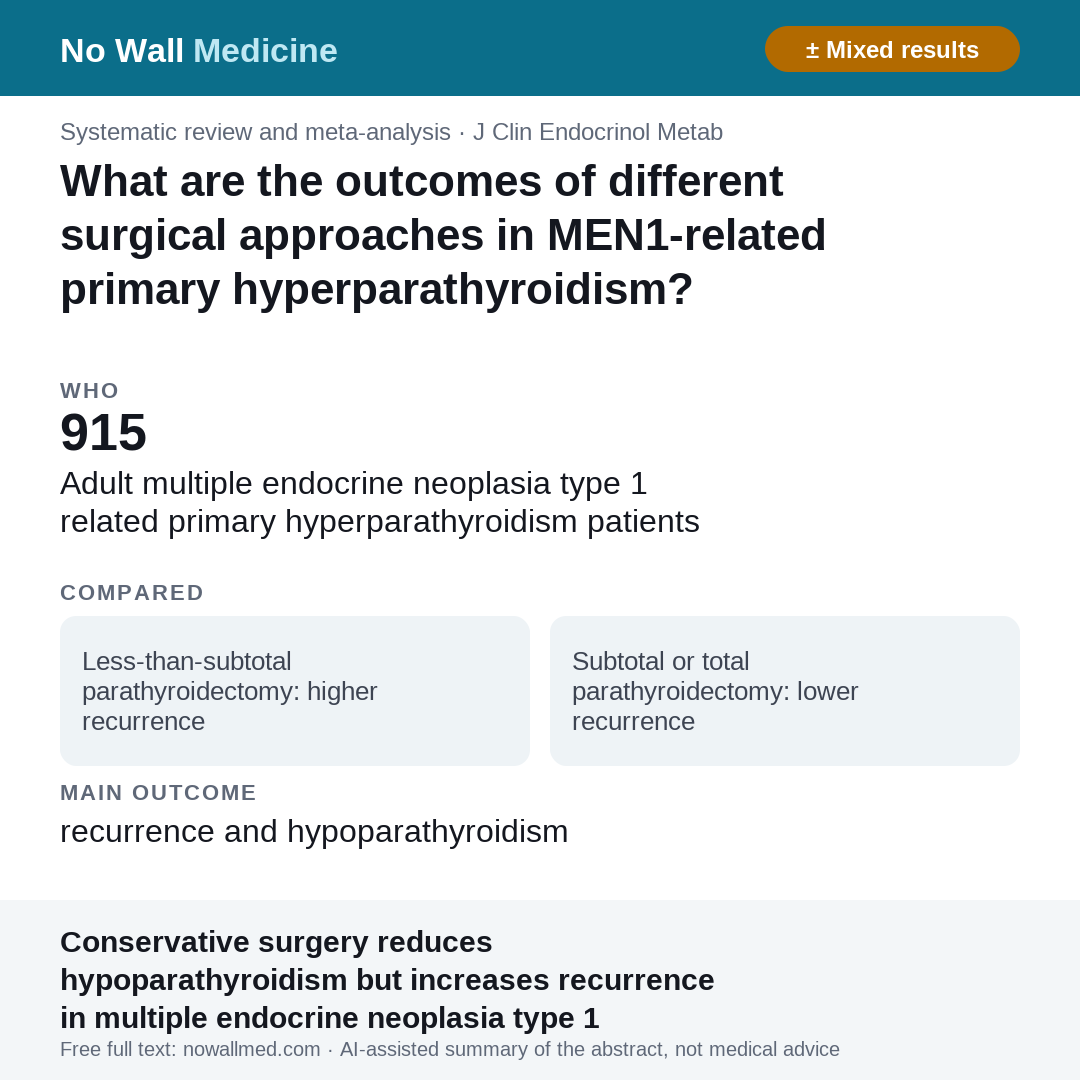
Extent of Surgical Resection and Predictors of Outcomes in MEN1-related Hyperparathyroidism: A Systematic Review and Meta-analysis
Systematic review and meta-analysisMixed results
What are the outcomes of different surgical approaches in MEN1-related primary hyperparathyroidism?
Who
915
Adult multiple endocrine neoplasia type 1 related primary hyperparathyroidism patients
Compared
Less-than-subtotal parathyroidectomy: higher recurrence
Subtotal or total parathyroidectomy: lower recurrence
Main outcome
recurrence and hypoparathyroidism
Result: RR = 1.23 (95% CI 1.03 to 1.46) for recurrence
Bottom line: Conservative surgery reduces hypoparathyroidism but increases recurrence in multiple endocrine neoplasia type 1 related primary hyperparathyroidism.
J Clin Endocrinol Metab · 2025-09-02Download image
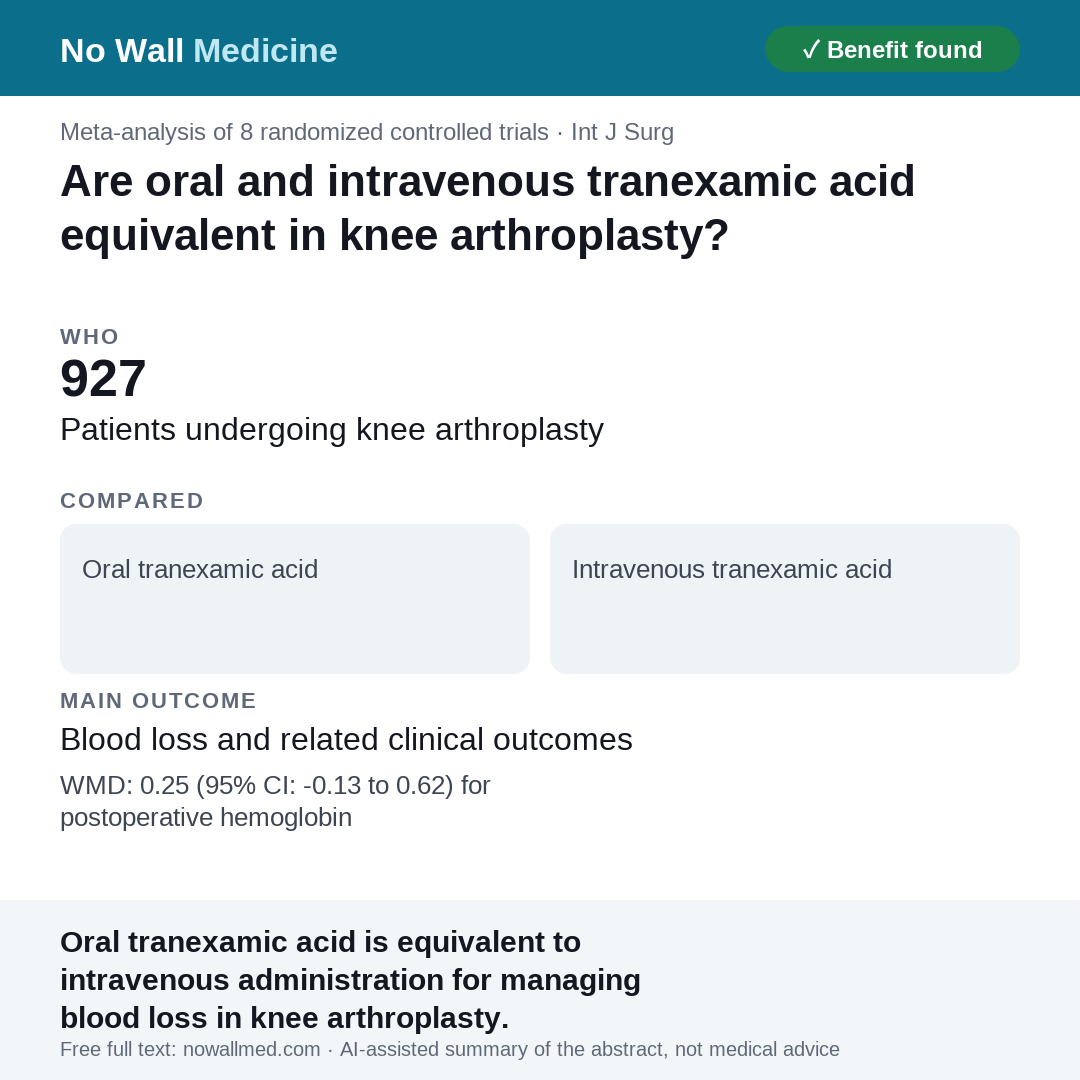
Equivalence of oral and intravenous tranexamic acid in knee arthroplasty: a systematic review and meta-analysis of randomized clinical trials
Meta-analysis of 8 randomized controlled trialsBenefit found
Are oral and intravenous tranexamic acid equivalent in knee arthroplasty?
Who
927
Patients undergoing knee arthroplasty
Compared
Oral tranexamic acid
Intravenous tranexamic acid
Main outcome
Blood loss and related clinical outcomes
Result: WMD: 0.25 (95% CI: -0.13 to 0.62) for postoperative hemoglobin
Bottom line: Oral tranexamic acid is equivalent to intravenous administration for managing blood loss in knee arthroplasty.
Int J Surg · 2025-09-02Download image
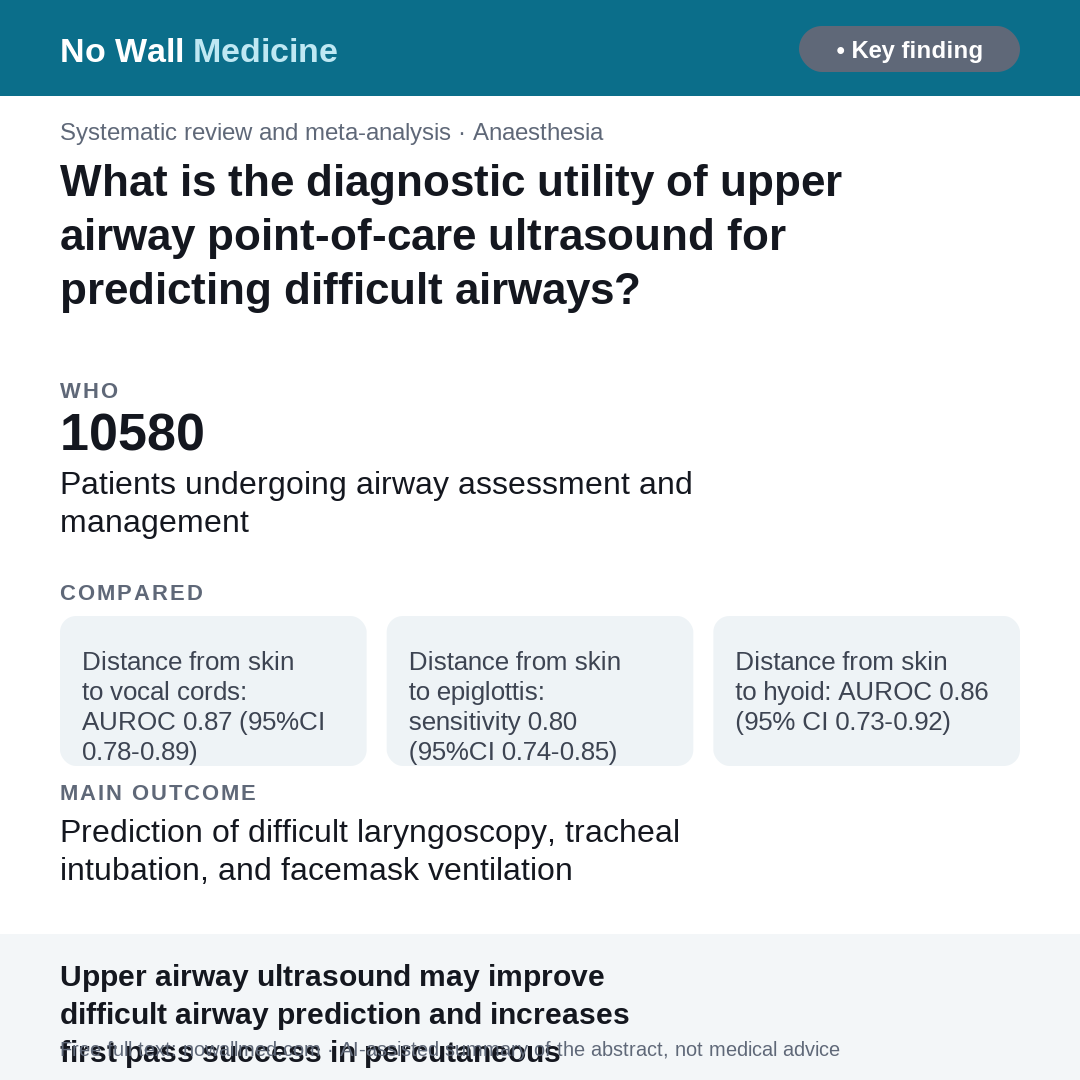
Point-of-care ultrasound of the upper airway in difficult airway management: a systematic review and meta-analysis
Systematic review and meta-analysisBenefit found
What is the diagnostic utility of upper airway point-of-care ultrasound for predicting difficult airways?
Who
10580
Patients undergoing airway assessment and management
Compared
Distance from skin to vocal cords: AUROC 0.87 (95%CI 0.78-0.89)
Distance from skin to epiglottis: sensitivity 0.80 (95%CI 0.74-0.85)
Distance from skin to hyoid: AUROC 0.86 (95% CI 0.73-0.92)
Main outcome
Prediction of difficult laryngoscopy, tracheal intubation, and facemask ventilation
Bottom line: Upper airway ultrasound may improve difficult airway prediction and increases first pass success in percutaneous tracheostomy.
Limitation: Future research should evaluate use in combination with history and standard bedside examination tests.
Anaesthesia · 2025-09-02Download image
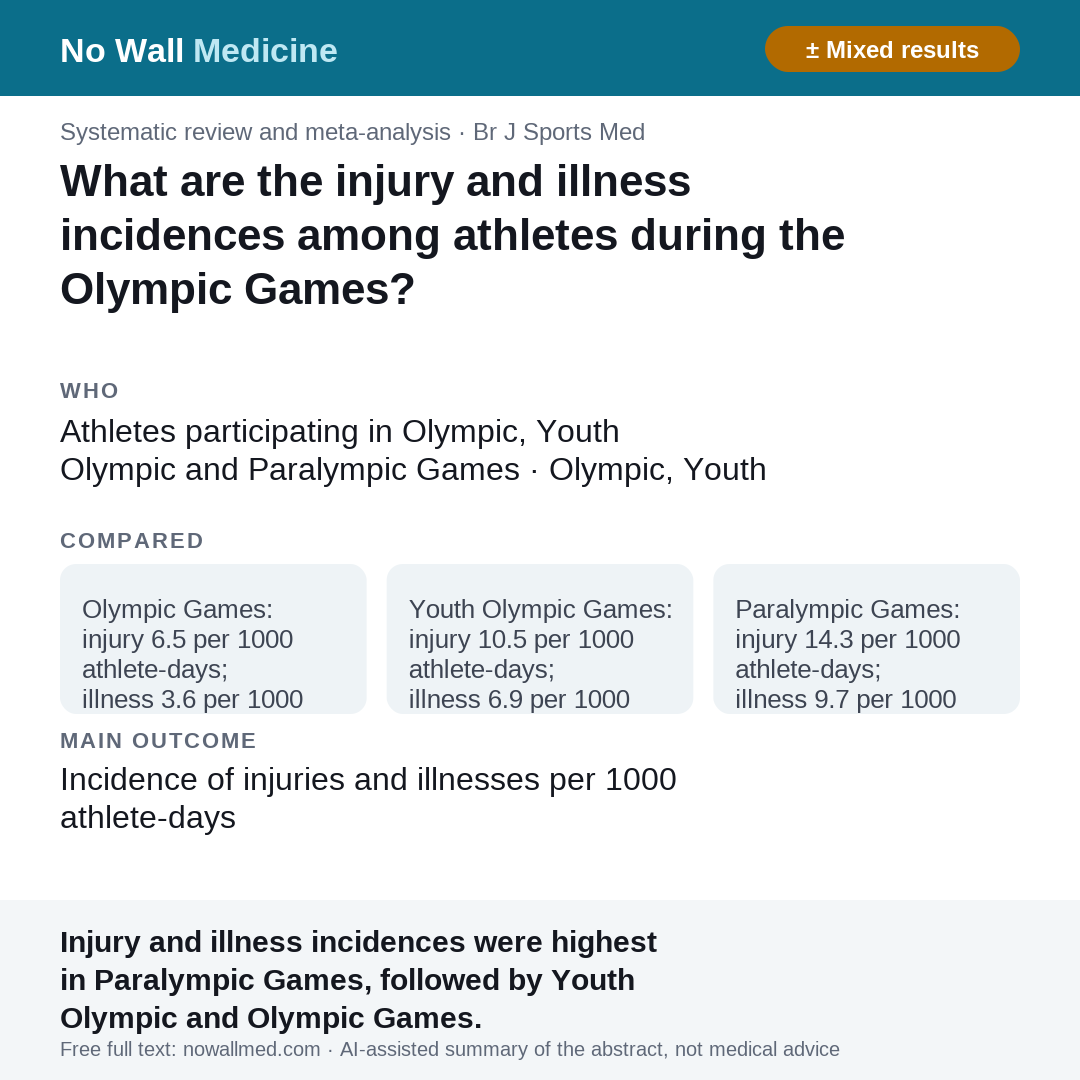
Injury and illness epidemiology in elite athletes during the Olympic, Youth Olympic and Paralympic Games: a systematic review and meta-analysis
Systematic review and meta-analysisMixed results
What are the injury and illness incidences among athletes during the Olympic Games?
Who
Athletes participating in Olympic, Youth Olympic and Paralympic Games · Olympic, Youth Olympic and Paralympic Games
Compared
Olympic Games: injury 6.5 per 1000 athlete-days; illness 3.6 per 1000 athlete-days
Youth Olympic Games: injury 10.5 per 1000 athlete-days; illness 6.9 per 1000 athlete-days
Paralympic Games: injury 14.3 per 1000 athlete-days; illness 9.7 per 1000 athlete-days
Main outcome
Incidence of injuries and illnesses per 1000 athlete-days
Bottom line: Injury and illness incidences were highest in Paralympic Games, followed by Youth Olympic and Olympic Games.
Limitation: Certainty of evidence was low for Paralympic Games.
Br J Sports Med · 2025-09-02Download image
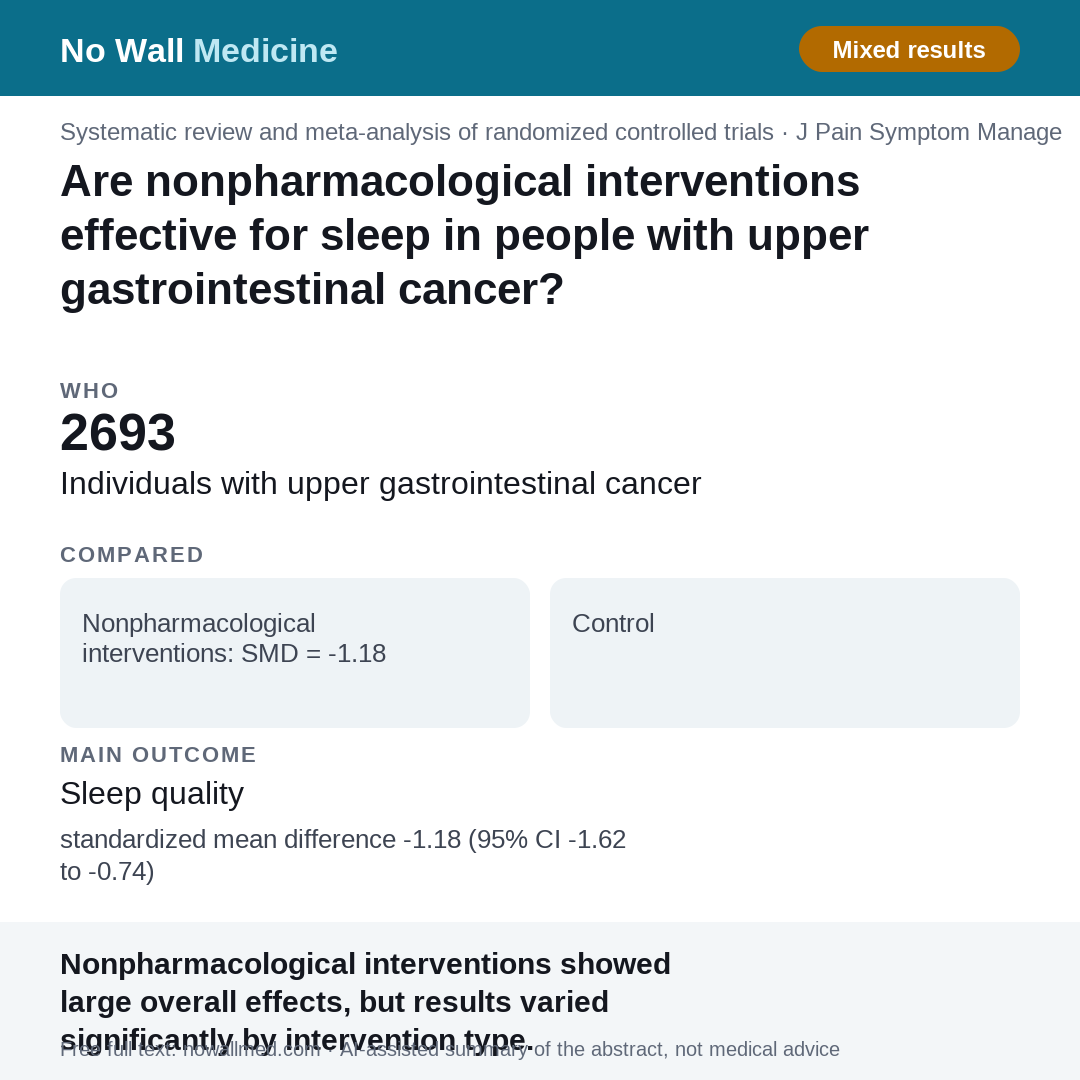
Nonpharmacological Interventions for Sleep in People With Upper Gastrointestinal Cancer: A Systematic Review and Meta-Analysis
Systematic review and meta-analysis of randomized controlled trialsMixed results
Are nonpharmacological interventions effective for sleep in people with upper gastrointestinal cancer?
Who
2693
Individuals with upper gastrointestinal cancer
Compared
Nonpharmacological interventions: SMD = -1.18
Control
Main outcome
Sleep quality
Result: standardized mean difference -1.18 (95% CI -1.62 to -0.74)
Bottom line: Nonpharmacological interventions showed large overall effects, but results varied significantly by intervention type.
Limitation: High heterogeneity and limited number of trials prevent definitive recommendations.
J Pain Symptom Manage · 2025-09-02Download image
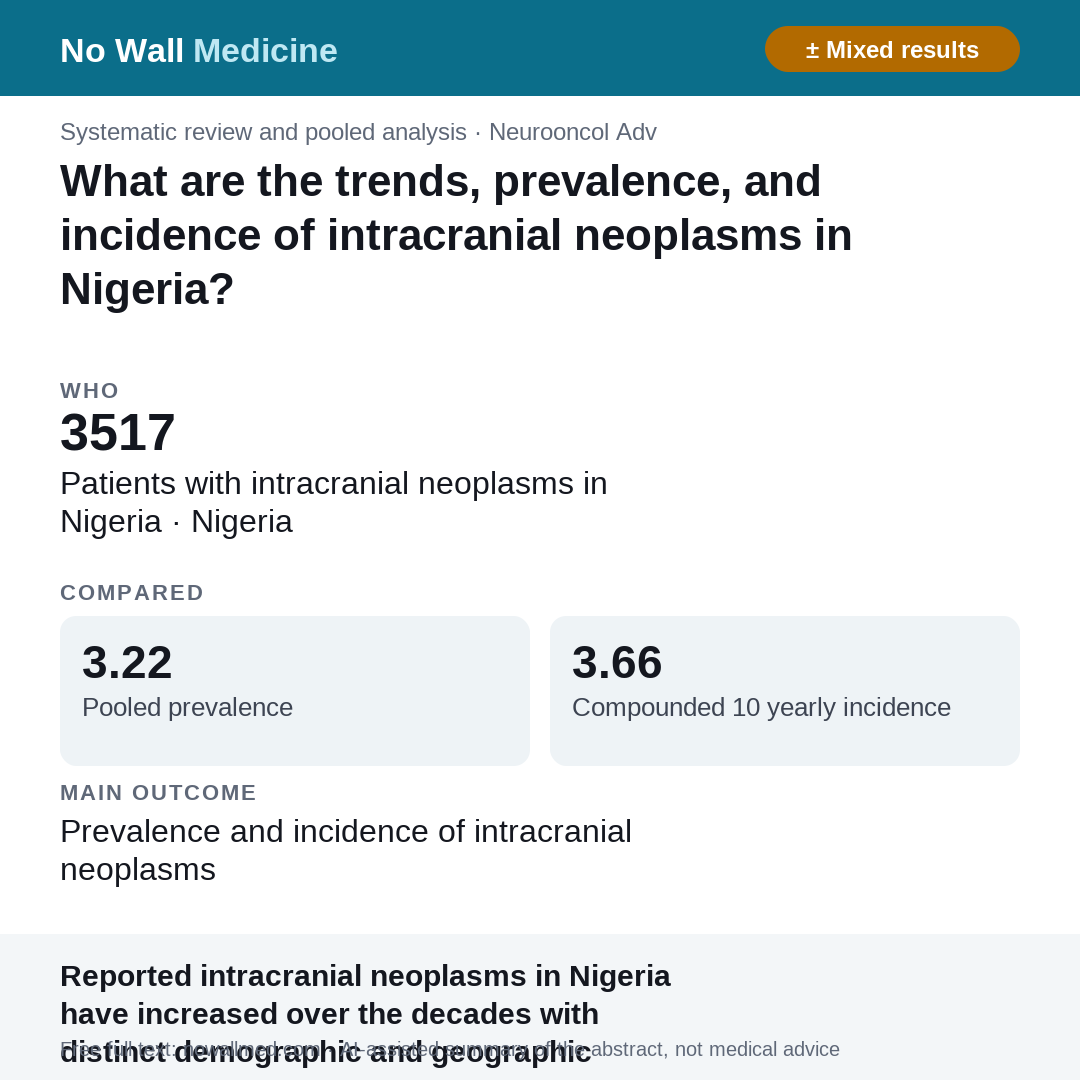
Trends of hospital-based reporting of intracranial neoplasms in Nigeria from 1960 to 2024: A systematic review and pooled analysis of literatures
Systematic review and pooled analysisMixed results
What are the trends, prevalence, and incidence of intracranial neoplasms in Nigeria?
Who
3517
Patients with intracranial neoplasms in Nigeria · Nigeria
Compared
3.22Pooled prevalence (95% CI: 1.66-5.22)
3.66Compounded 10 yearly incidence (95% CI: 1.67-6.32)
Main outcome
Prevalence and incidence of intracranial neoplasms
Bottom line: Reported intracranial neoplasms in Nigeria have increased over the decades with distinct demographic and geographic patterns.
Neurooncol Adv · 2025-09-02Download image
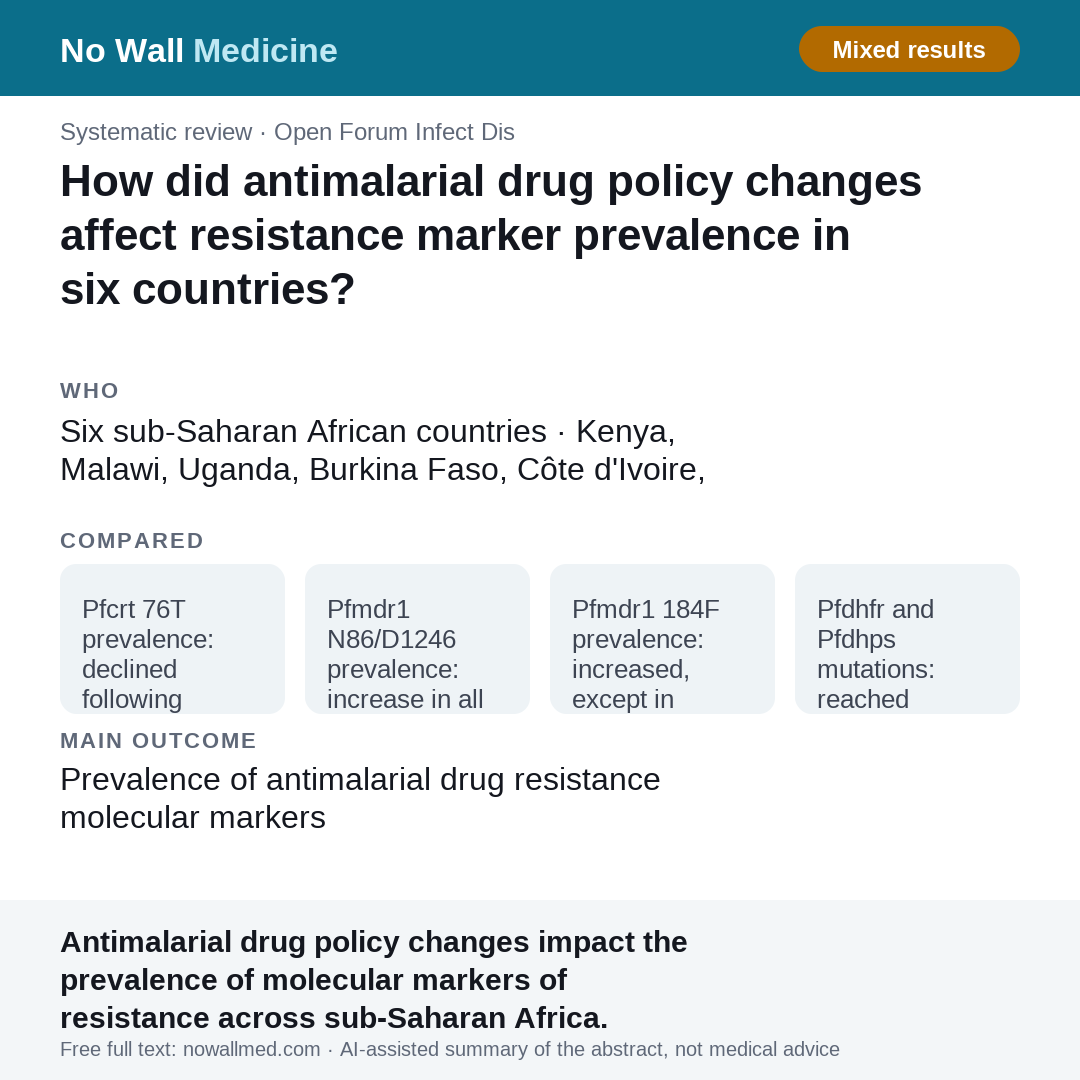
Changes in the Prevalence of Antimalarial Partner Drug Resistance Markers and Policy in 6 Sub-Saharan African Countries From 2000 to 2021: A Systematic Review
Systematic reviewMixed results
How did antimalarial drug policy changes affect resistance marker prevalence in six countries?
Who
Six sub-Saharan African countries · Kenya, Malawi, Uganda, Burkina Faso, Côte d'Ivoire, and Nigeria
Compared
Pfcrt 76T prevalence: declined following cessation of chloroquine
Pfmdr1 N86/D1246 prevalence: increase in all countries
Pfmdr1 184F prevalence: increased, except in Burkina Faso
Pfdhfr and Pfdhps mutations: reached fixation levels in most countries
Main outcome
Prevalence of antimalarial drug resistance molecular markers
Bottom line: Antimalarial drug policy changes impact the prevalence of molecular markers of resistance across sub-Saharan Africa.
Open Forum Infect Dis · 2025-09-02Download image
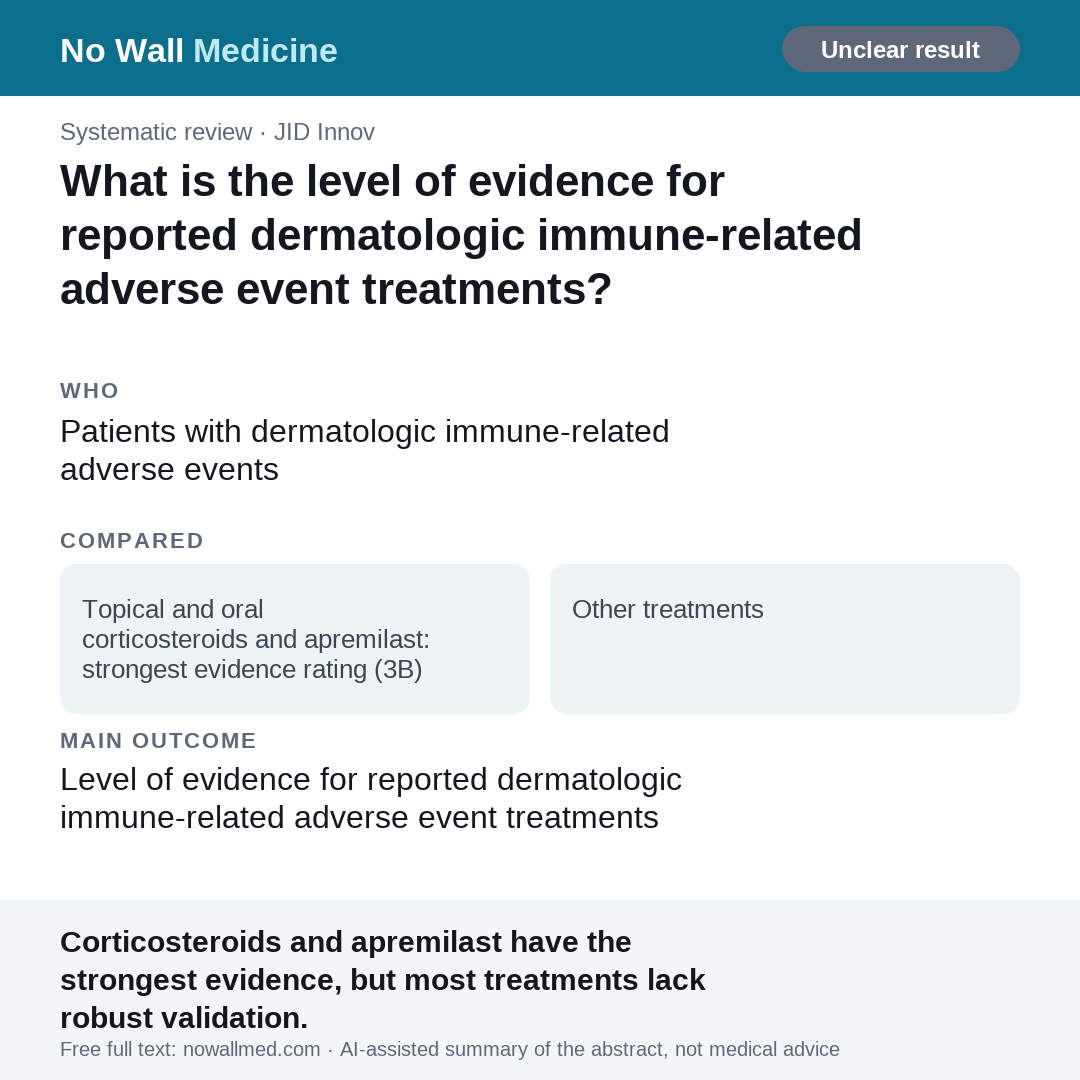
Assessing Treatment Efficacy for Dermatologic Immune-Related Adverse Events: A Systematic Review
Systematic reviewUnclear result
What is the level of evidence for reported dermatologic immune-related adverse event treatments?
Who
Patients with dermatologic immune-related adverse events
Compared
Topical and oral corticosteroids and apremilast: strongest evidence rating (3B)
Other treatments
Main outcome
Level of evidence for reported dermatologic immune-related adverse event treatments
Bottom line: Corticosteroids and apremilast have the strongest evidence, but most treatments lack robust validation.
Limitation: Lack of randomized control trials and prospective cohort studies
JID Innov · 2025-09-02Download image