Visual abstracts
New randomized trials and meta-analyses from leading journals at a glance: who was studied, what was compared, and what was found. Every paper is free to read in full.
All specialtiesCardiology 4800Oncology 4084Gastroenterology & Hepatology 1917Infectious Disease 3789Neurology 1886Psychiatry & Mental Health 2240Pulmonology 2061Critical Care 1335Endocrinology & Diabetes 2553Pediatrics 2914Surgery 2500Orthopedics & Sports Medicine 923Neurosurgery 532Cardiothoracic & Vascular Surgery 665Plastic & Reconstructive Surgery 585Nephrology 1115Rheumatology 815Hematology 1099Dermatology 619Ophthalmology 539Obstetrics & Gynecology 1661Public & Global Health 1044Radiology & Imaging 637Anesthesiology 959Urology 751ENT (Otolaryngology) 497Emergency Medicine 484Allergy & Immunology 310Geriatrics 974Family Medicine & Primary Care 538Medical Genetics & Genomics 662Pathology & Laboratory Medicine 156Physical Medicine & Rehabilitation 746Palliative Care 422Nutrition 1566Digital Health & AI 2191General Medicine 319
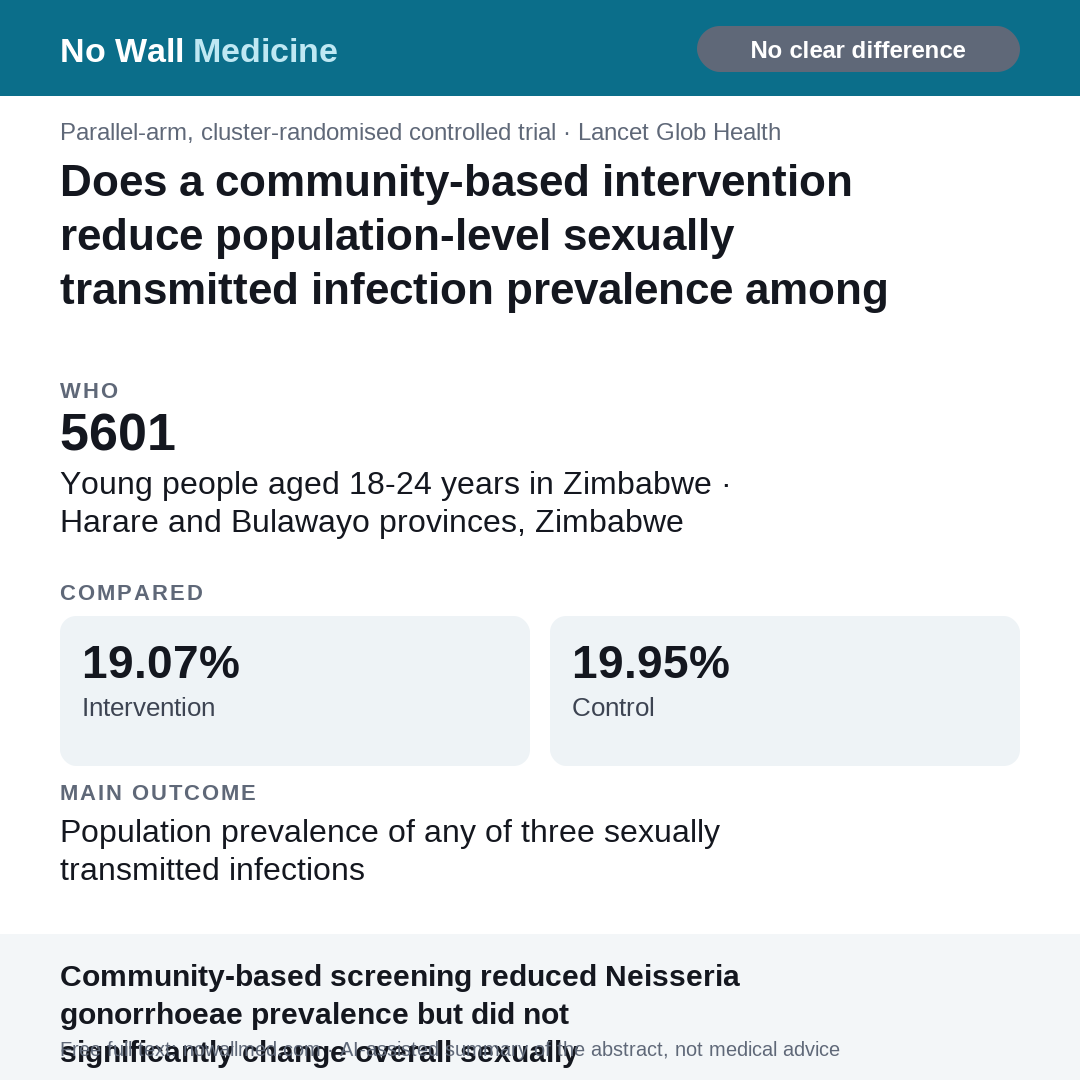
Effect of a community-based intervention for sexually transmitted infections on population-level prevalence among youth in Zimbabwe (STICH): a cluster-randomised trial
Parallel-arm, cluster-randomised controlled trialNo clear difference
Does a community-based intervention reduce population-level sexually transmitted infection prevalence among youth?
Who
5601
Young people aged 18-24 years in Zimbabwe · Harare and Bulawayo provinces, Zimbabwe
Compared
19.07%Intervention
19.95%Control
Main outcome
Population prevalence of any of three sexually transmitted infections
Result: risk ratio 0.93 (95% CI 0.78-1.10)
Bottom line: Community-based screening reduced Neisseria gonorrhoeae prevalence but did not significantly change overall sexually transmitted infection prevalence.
Lancet Glob Health · 2024-11-14Download image
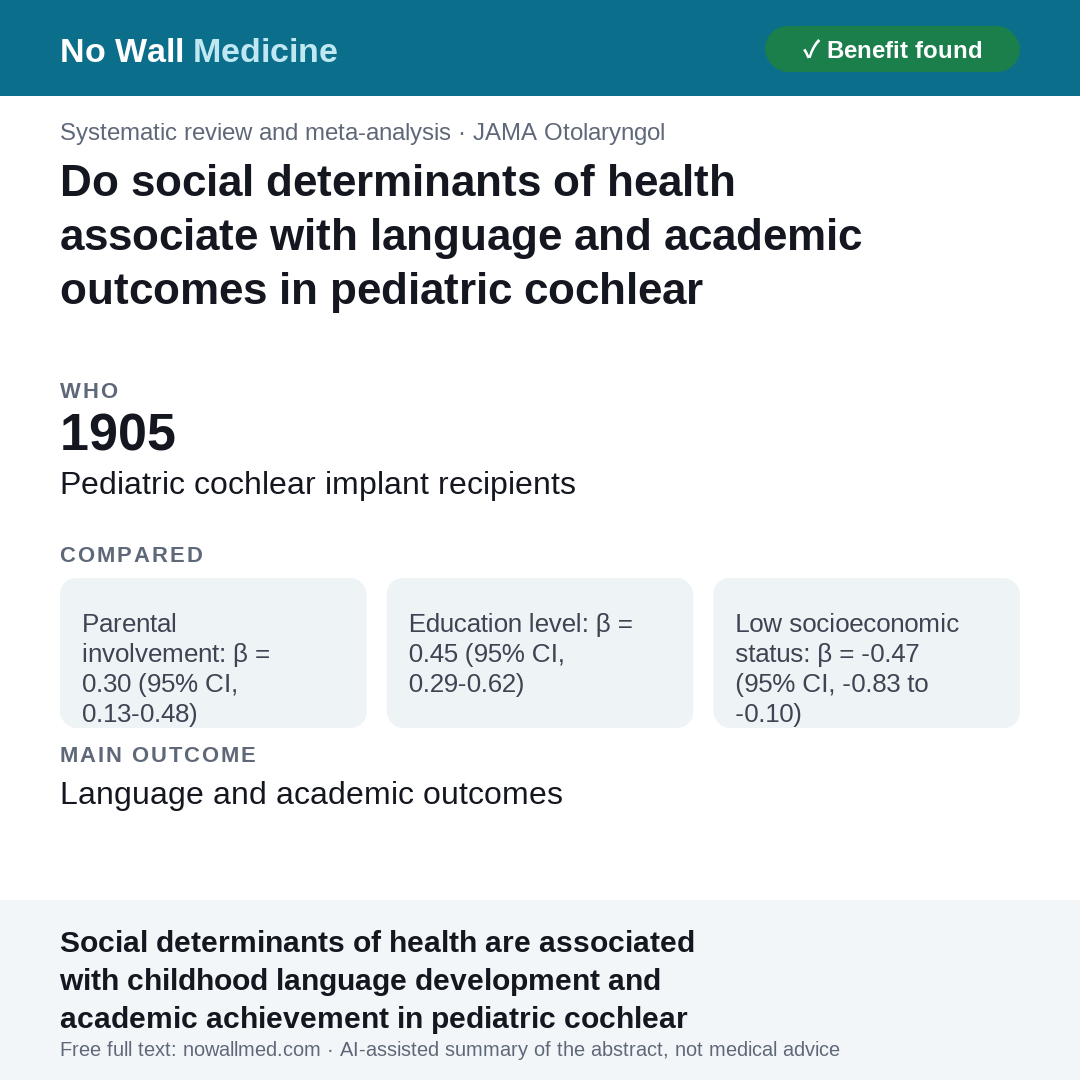
Social Determinants of Health and Language and Academic Outcomes in Pediatric Cochlear Implantation: A Systematic Review and Meta-Analysis
Systematic review and meta-analysisBenefit found
Do social determinants of health associate with language and academic outcomes in pediatric cochlear implantation?
Who
1905
Pediatric cochlear implant recipients
Compared
Parental involvement: β = 0.30 (95% CI, 0.13-0.48)
Education level: β = 0.45 (95% CI, 0.29-0.62)
Low socioeconomic status: β = -0.47 (95% CI, -0.83 to -0.10)
Main outcome
Language and academic outcomes
Bottom line: Social determinants of health are associated with childhood language development and academic achievement in pediatric cochlear implant recipients.
JAMA Otolaryngol · 2024-11-14Download image
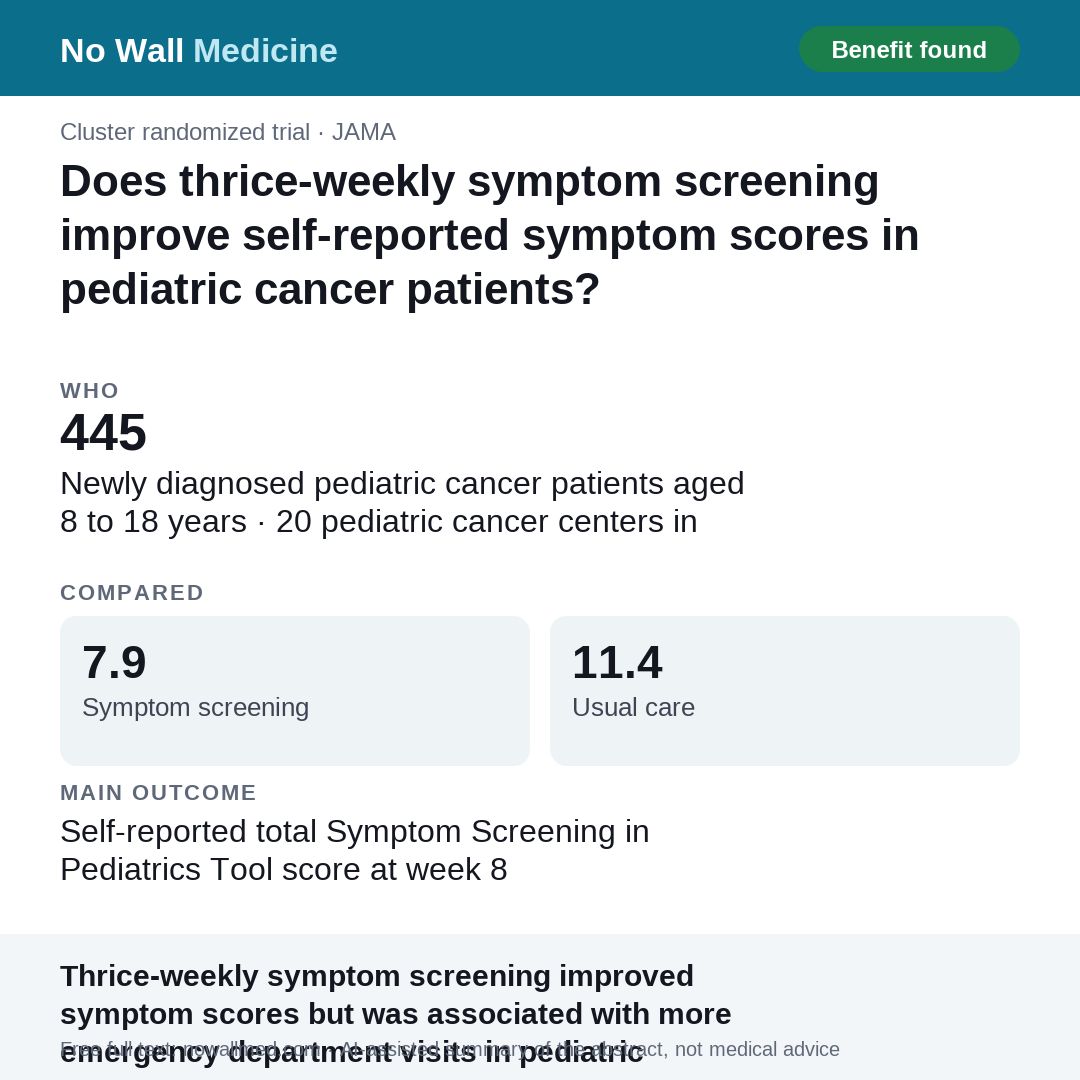
Symptom Screening Linked to Care Pathways for Pediatric Patients With Cancer: A Randomized Clinical Trial
Cluster randomized trialBenefit found
Does thrice-weekly symptom screening improve self-reported symptom scores in pediatric cancer patients?
Who
445
Newly diagnosed pediatric cancer patients aged 8 to 18 years · 20 pediatric cancer centers in the US
Compared
7.9Symptom screening (7.2)
11.4Usual care (8.7)
Main outcome
Self-reported total Symptom Screening in Pediatrics Tool score at week 8
Result: adjusted mean difference, -3.8 (95% CI, -6.4 to -1.2)
Bottom line: Thrice-weekly symptom screening improved symptom scores but was associated with more emergency department visits in pediatric cancer patients.
JAMA · 2024-11-13Download image
Intratracheal Budesonide Mixed With Surfactant for Extremely Preterm Infants: The PLUSS Randomized Clinical Trial
Double-blind randomized clinical trialNo clear difference
Does early intratracheal budesonide mixed with surfactant improve survival free of bronchopulmonary dysplasia?
Who
1059
Extremely preterm infants born at less than 28 weeks' gestation · 21 neonatal units in 4 countries
Compared
25.6%Budesonide and surfactant
22.6%Surfactant only
Main outcome
Survival free of bronchopulmonary dysplasia at 36 weeks' postmenstrual age
Result: adjusted risk difference, 2.7% (95% CI, -2.1% to 7.4%)
Bottom line: Early intratracheal budesonide mixed with surfactant may have little to no effect on survival free of bronchopulmonary dysplasia.
JAMA · 2024-11-13Download image
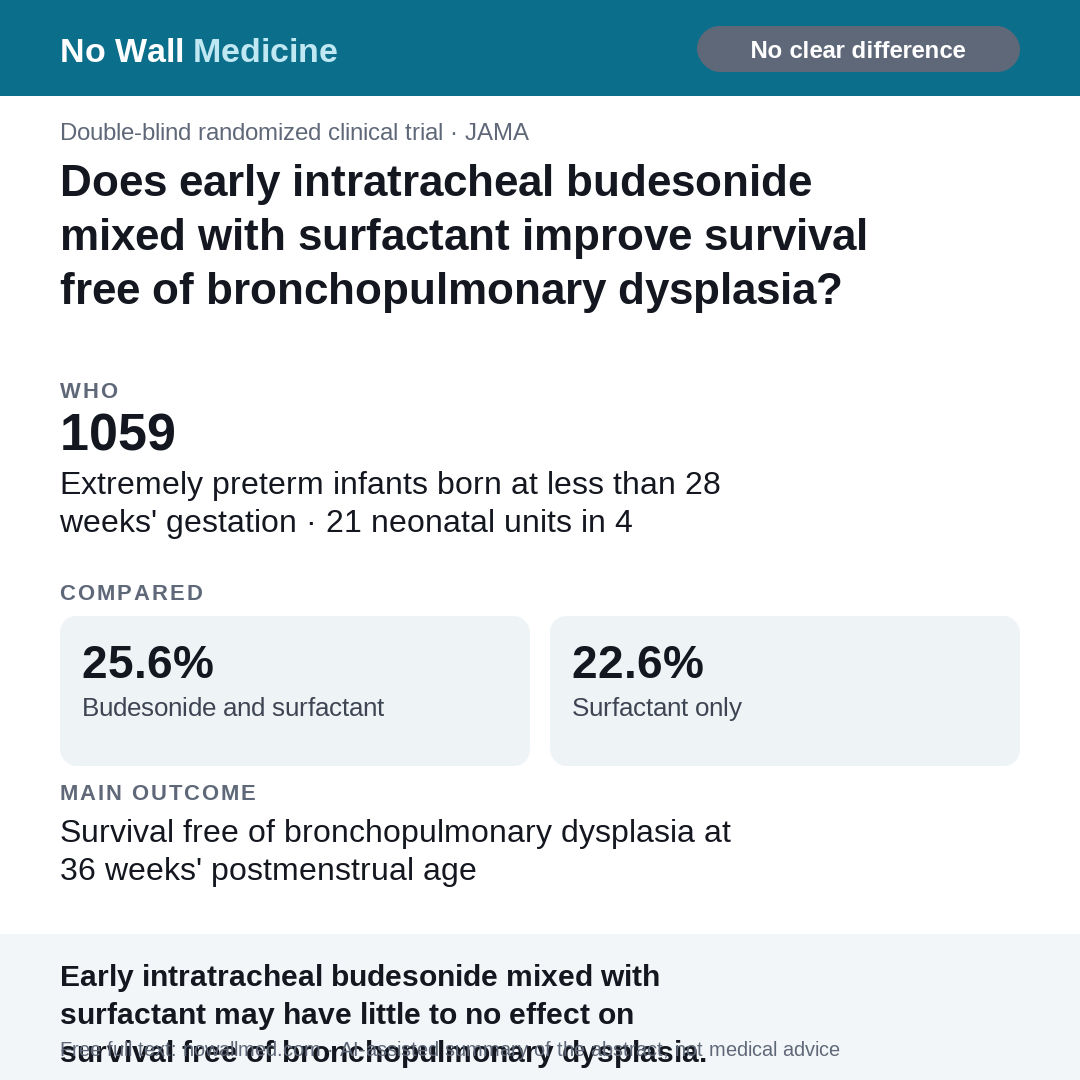
Symptom Screening for Hospitalized Pediatric Patients With Cancer: A Randomized Clinical Trial
Randomized clinical trialBenefit found
Does daily symptom screening reduce symptom burden in hospitalized pediatric cancer patients?
Who
345
Pediatric patients aged 8 to 18 years with cancer · 8 Canadian tertiary care centers
Compared
Intervention
Control
Main outcome
Self-reported total Symptom Screening in Pediatrics Tool score on day 5
Result: adjusted mean difference, -2.5 (95% CI, -3.8 to -1.2)
Bottom line: Daily symptom screening improved total symptom scores in pediatric cancer patients compared to usual care.
JAMA Pediatr · 2024-11-13Download image
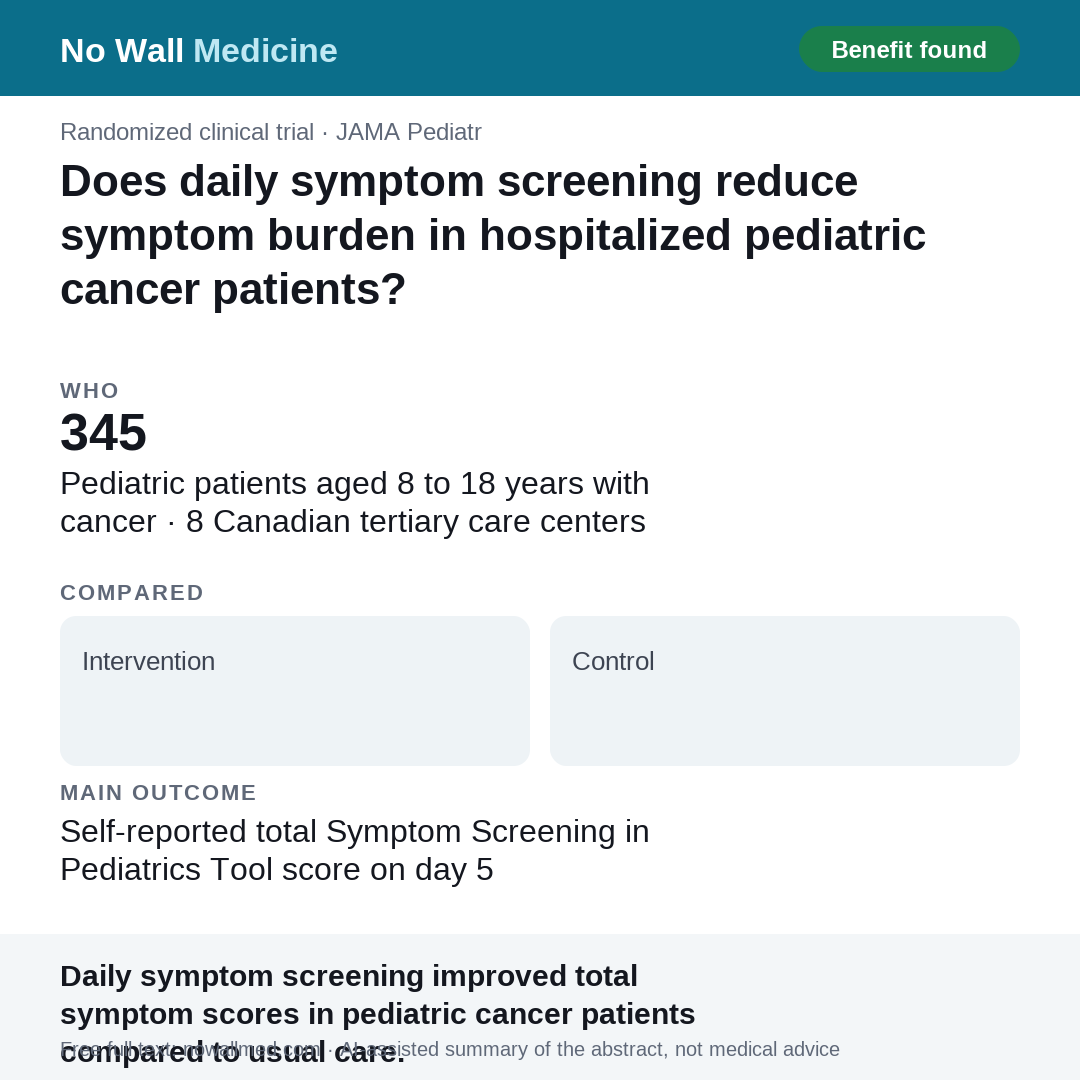
Prevalence of Adverse Childhood Experiences in Child Population Samples: A Systematic Review and Meta-Analysis
Systematic review and meta-analysisMixed results
What is the average prevalence of adverse childhood experiences in children?
Who
490423
Children 18 years or younger · 18 countries
Compared
42.3%0 adverse childhood experiences (95% CI, 25.3%-52.7%)
22.0%1 adverse childhood experience (95% CI, 9.9%-32.7%)
12.7%2 adverse childhood experiences (95% CI, 3.8%-22.3%)
8.1%3 adverse childhood experiences (95% CI, 1.4%-16.8%)
Main outcome
Prevalence of adverse childhood experiences
Bottom line: Adverse childhood experiences are prevalent among children with notable disparities across demographic characteristics and contexts.
JAMA Pediatr · 2024-11-13Download image
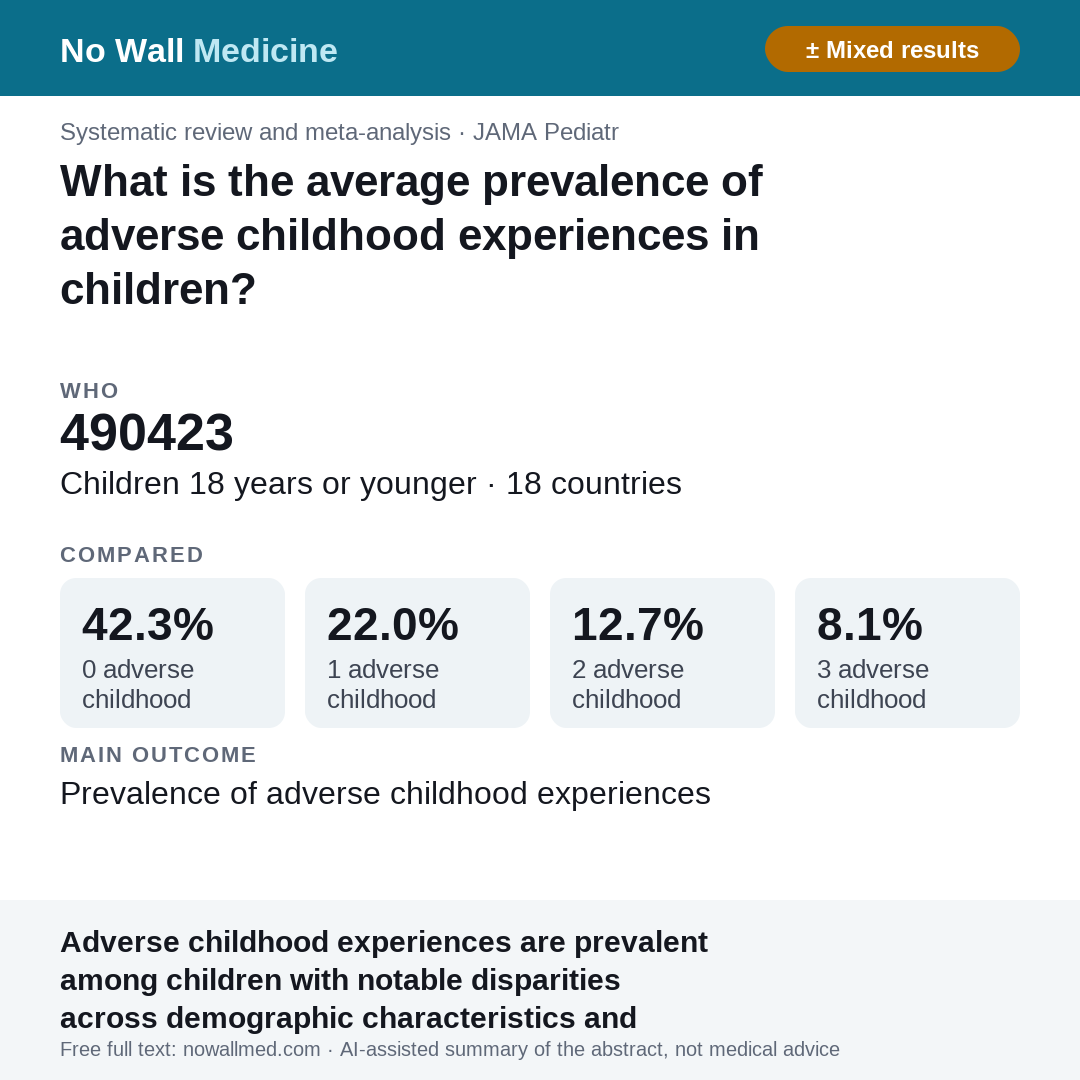
Effect of Esophageal Dilation History on Efficacy Outcomes in Patients With Eosinophilic Esophagitis Receiving Budesonide Oral Suspension
Post hoc analysis of a randomized, double-blind, placebo-controlled trialMixed results
Does esophageal dilation history affect efficacy of budesonide oral suspension in eosinophilic esophagitis?
Who
318
Patients aged 11-55 years with eosinophilic esophagitis and dysphagia
Compared
Budesonide with dilation history: 44.0% dysphagia symptom response
Budesonide with no dilation history: 59.0% dysphagia symptom response
Main outcome
Histologic response and dysphagia symptom response
Bottom line: Budesonide efficacy for dysphagia symptom response varied depending on esophageal dilation history in patients with eosinophilic esophagitis.
Limitation: This was a post hoc analysis of a phase 3 study.
Am J Gastroenterol · 2024-11-12Download image
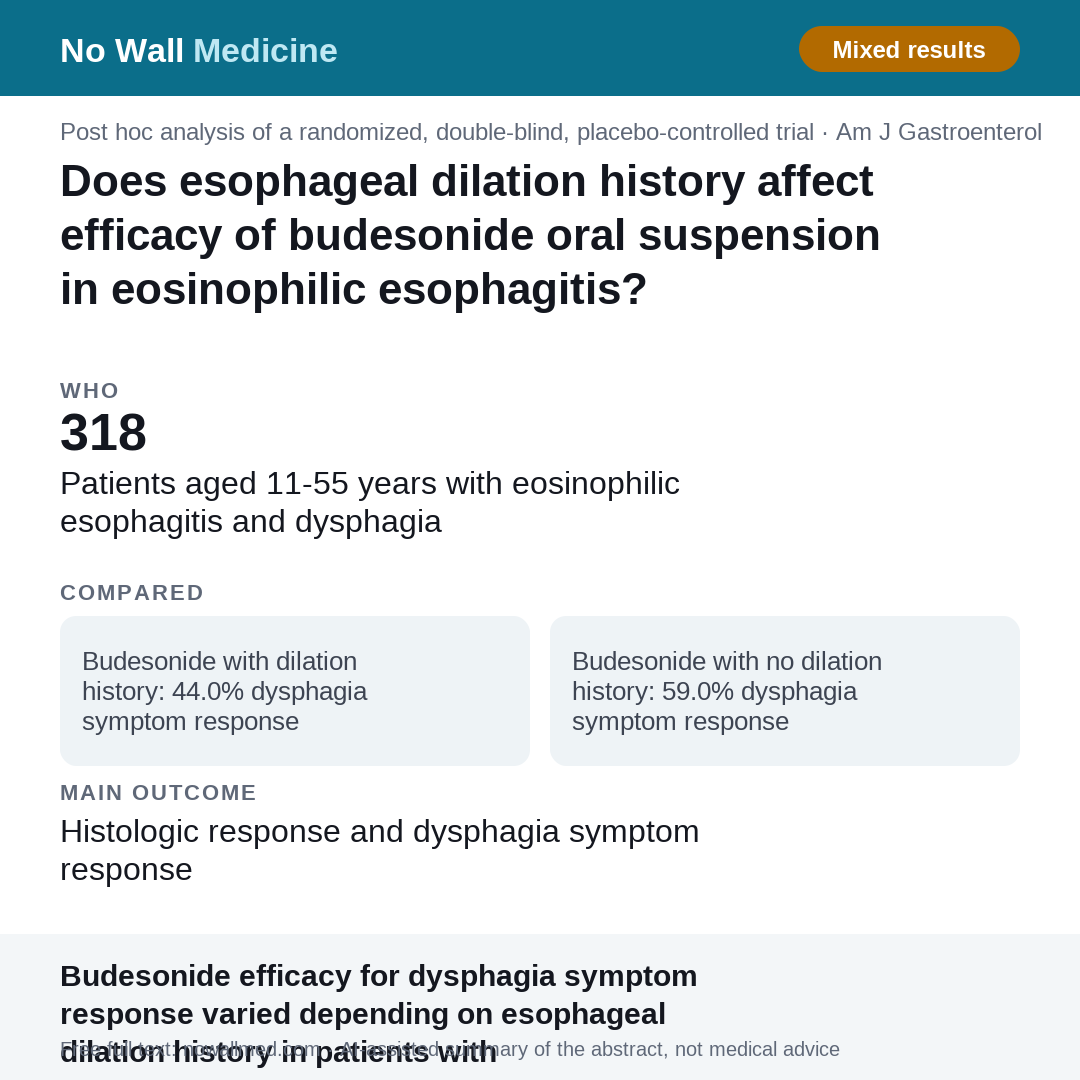
The effects and costs of an anti-bullying program (KiVa) in UK primary schools: a multicenter cluster randomized controlled trial
Multicenter cluster randomized controlled trialBenefit found
Does the KiVa anti-bullying program reduce bullying victimization in primary schools?
Who
11111
Students in United Kingdom primary schools · Four trial sites in the United Kingdom
Compared
KiVa-intervention: 17.7% at follow-up
Usual practice: 20.7% at follow-up
Main outcome
Student-reported bullying-victimization
Result: odds ratio 0.87 (95% confidence interval 0.78 to 0.97)
Bottom line: The KiVa anti-bullying program effectively reduces bullying victimization in primary school students.
Funded by: UK National Institute for Health and Care Research
Psychol Med · 2024-11-12Download image

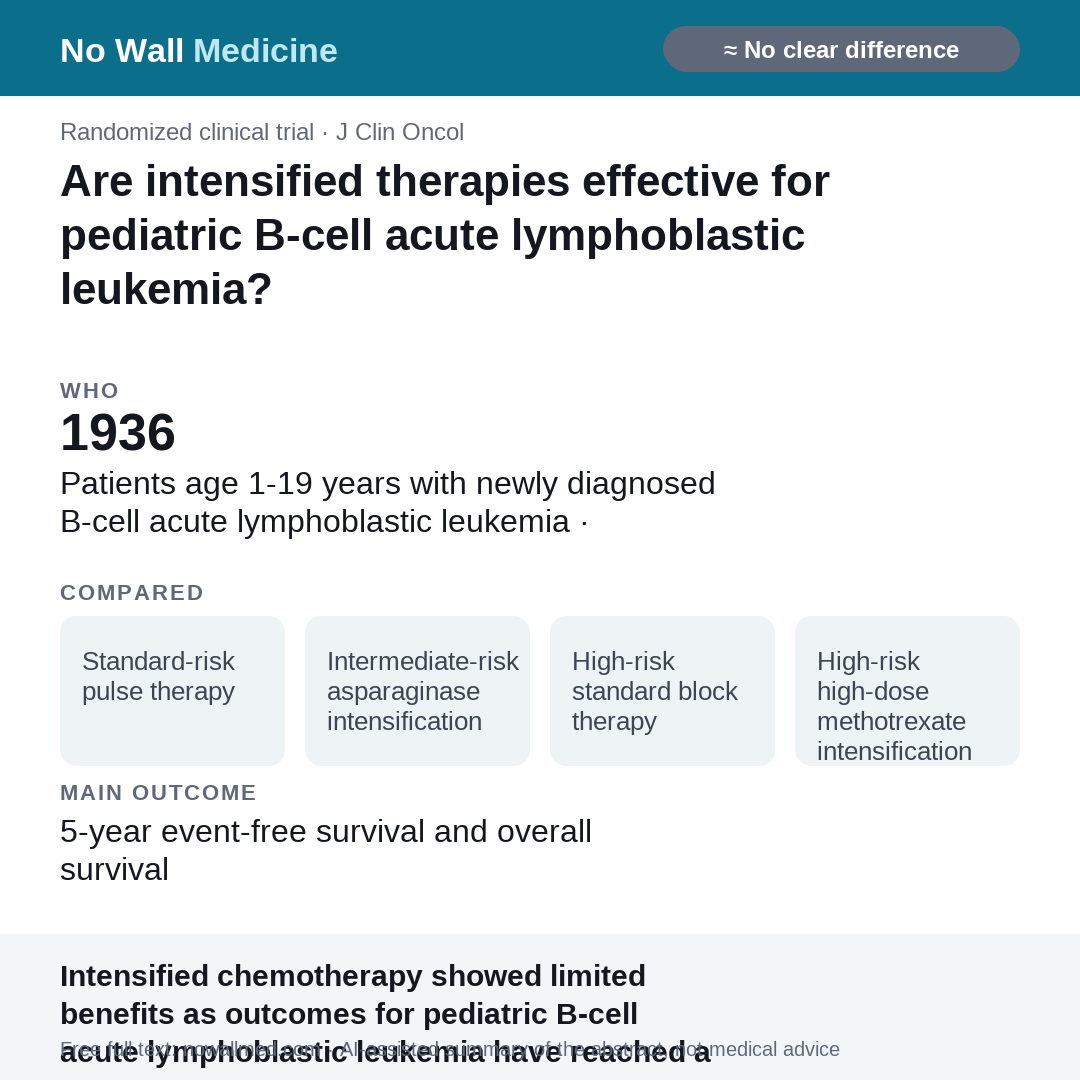
JCCG ALL-B12: Evaluation of Intensified Therapies With Vincristine/Dexamethasone Pulses and Asparaginase and Augmented High-Dose Methotrexate for Pediatric B-ALL
Randomized clinical trialNo clear difference
Are intensified therapies effective for pediatric B-cell acute lymphoblastic leukemia?
Who
1936
Patients age 1-19 years with newly diagnosed B-cell acute lymphoblastic leukemia · Nationwide cohort
Compared
Standard-risk pulse therapy
Intermediate-risk asparaginase intensification
High-risk standard block therapy
High-risk high-dose methotrexate intensification
Main outcome
5-year event-free survival and overall survival
Bottom line: Intensified chemotherapy showed limited benefits as outcomes for pediatric B-cell acute lymphoblastic leukemia have reached a plateau.
J Clin Oncol · 2024-11-12Download image
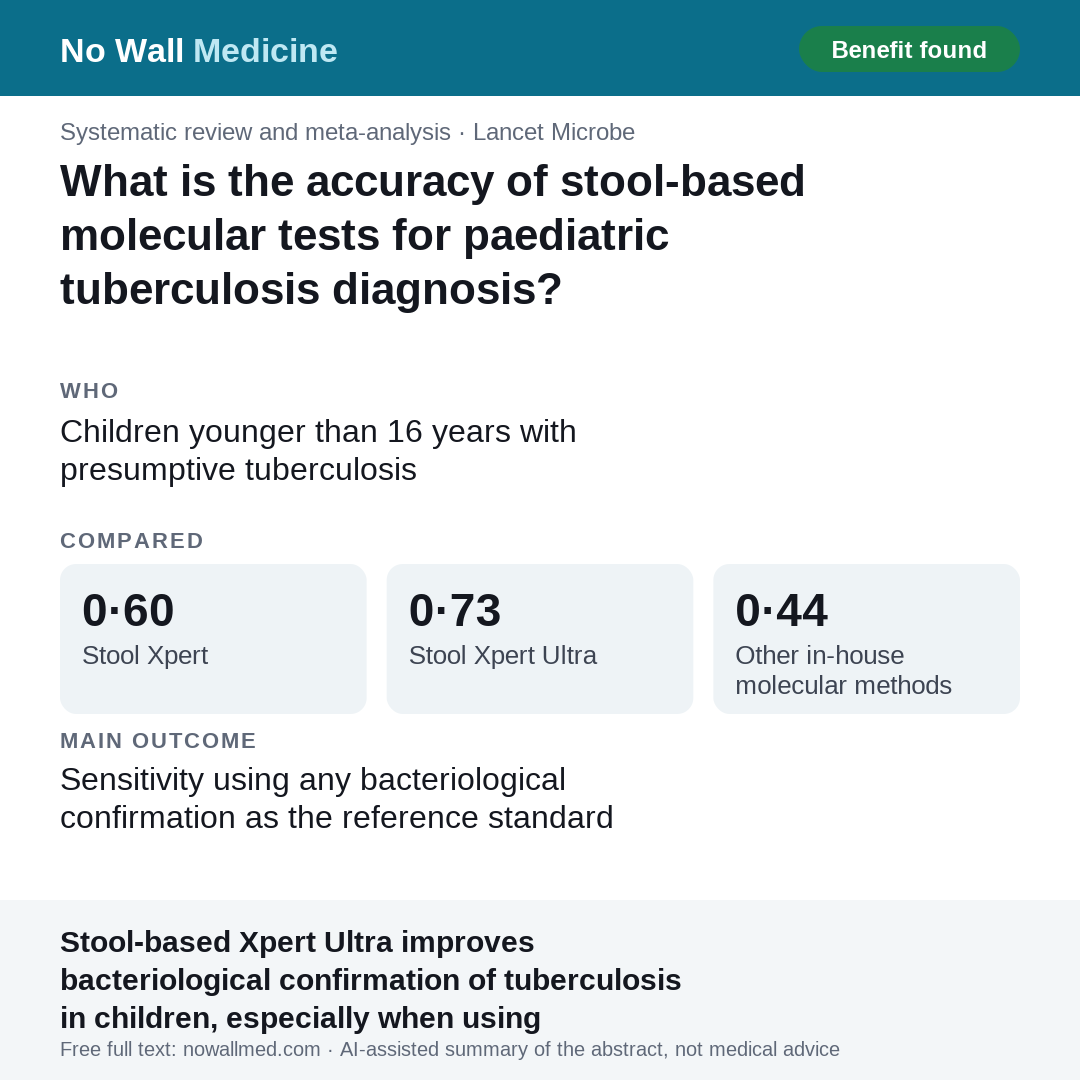
Performance of stool-based molecular tests and processing methods for paediatric tuberculosis diagnosis: a systematic review and meta-analysis
Systematic review and meta-analysisBenefit found
What is the accuracy of stool-based molecular tests for paediatric tuberculosis diagnosis?
Who
Children younger than 16 years with presumptive tuberculosis
Compared
0·60Stool Xpert (95% CI 0·48-0·71)
0·73Stool Xpert Ultra (0·63-0·81)
0·44Other in-house molecular methods (0·29-0·60)
Main outcome
Sensitivity using any bacteriological confirmation as the reference standard
Result: stool Xpert Ultra sensitivity 0·73 (95% CI 0·63-0·81)
Bottom line: Stool-based Xpert Ultra improves bacteriological confirmation of tuberculosis in children, especially when using centrifuge-free simplified processing methods.
Funded by: EDCTP2 programme and European Society of Pediatric Infectious Diseases
Lancet Microbe · 2024-11-11Download image
Post-traumatic stress disorder and symptoms in paediatric cancer survivors and their family nucleus: systematic review, meta-analysis and meta-regression
Systematic review and meta-analysisBenefit found
What is the risk of post-traumatic stress disorder and symptom severity in pediatric cancer survivors and families?
Who
Pediatric cancer survivors and their family nucleus
Compared
Pediatric cancer survivors: risk ratio 2.36 (95% CI 1.37-4.06)
Family nucleus: risk ratio 1.13 (95% CI 0.59-5.00)
Main outcome
Post-traumatic stress disorder risk and symptom severity
Result: risk ratio 2.36 (95% CI 1.37-4.06)
Bottom line: Pediatric cancer survivors have an increased risk of post-traumatic stress disorder compared to non-cancer controls.
BJPsych Open · 2024-11-11Download image

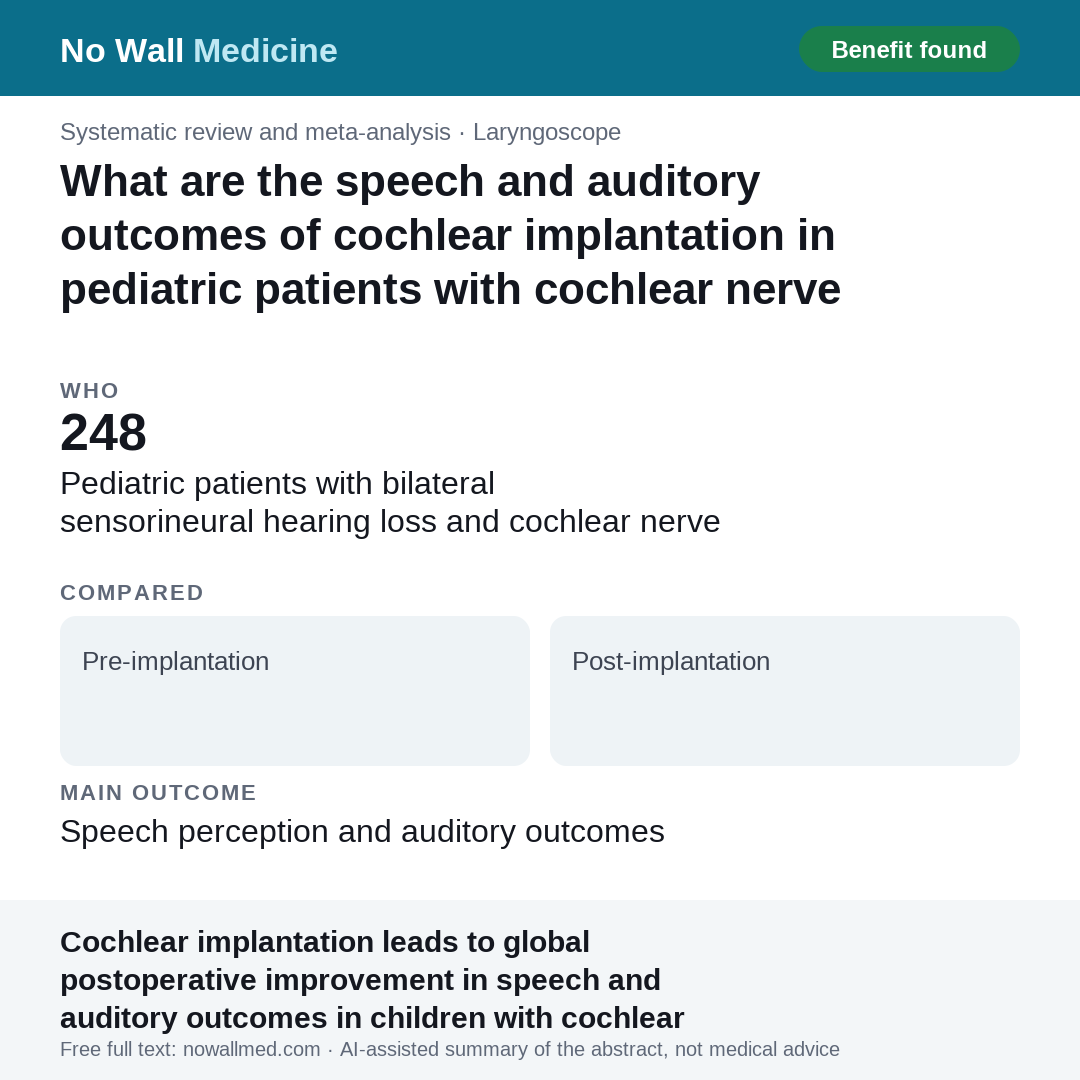
Cochlear Implantation in Pediatric Cochlear Nerve Deficiency: A Systematic Review and Meta-Analysis
Systematic review and meta-analysisBenefit found
What are the speech and auditory outcomes of cochlear implantation in pediatric patients with cochlear nerve deficiency?
Who
248
Pediatric patients with bilateral sensorineural hearing loss and cochlear nerve deficiency
Compared
Pre-implantation
Post-implantation
Main outcome
Speech perception and auditory outcomes
Result: standardized mean difference 2.18 (95% CI 1.68-2.69)
Bottom line: Cochlear implantation leads to global postoperative improvement in speech and auditory outcomes in children with cochlear nerve deficiency.
Laryngoscope · 2024-11-09Download image
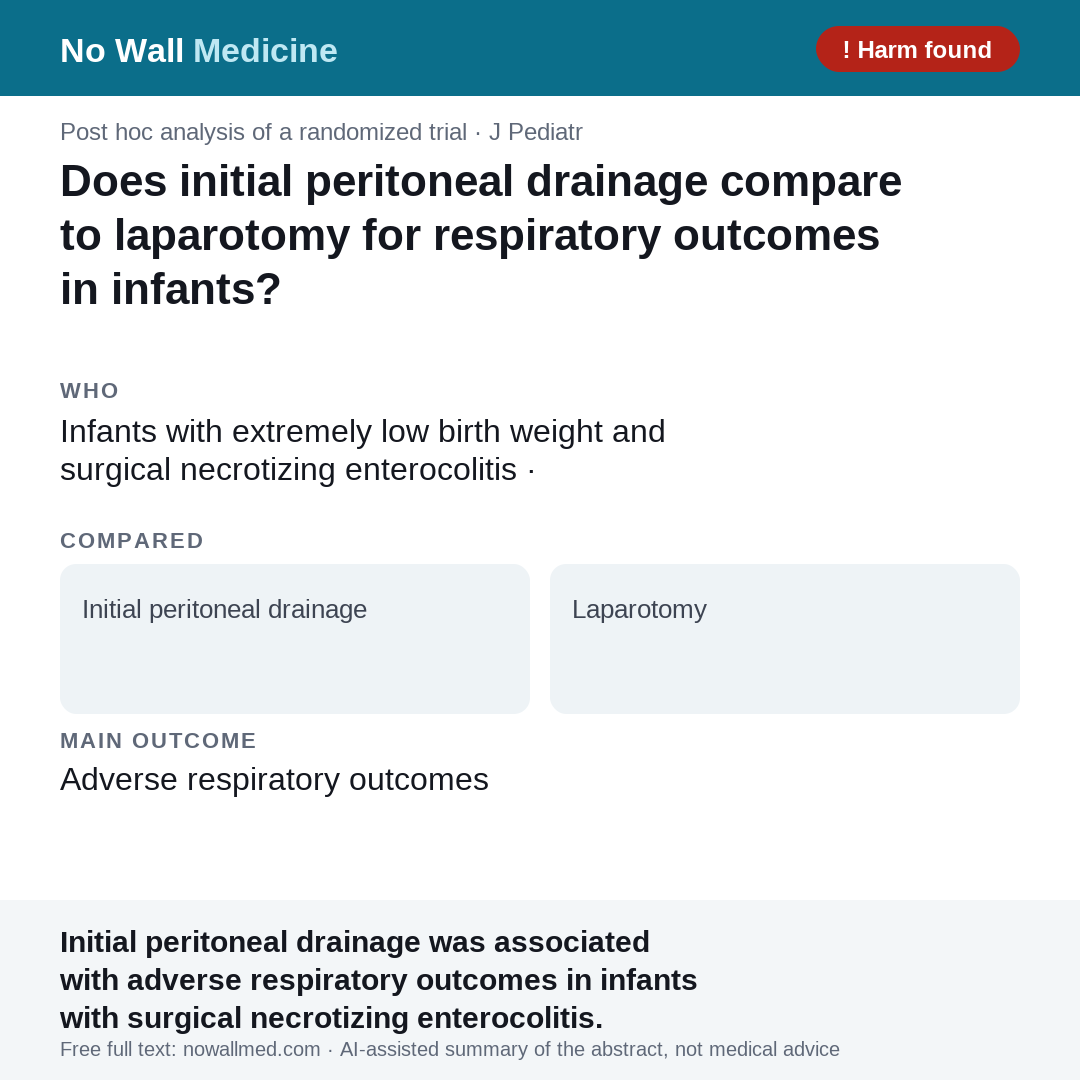
Respiratory Outcomes of Infants Born Extremely Preterm in the Necrotizing Enterocolitis Surgery Trial
Post hoc analysis of a randomized trialHarm found
Does initial peritoneal drainage compare to laparotomy for respiratory outcomes in infants?
Who
Infants with extremely low birth weight and surgical necrotizing enterocolitis · Multicenter
Compared
Initial peritoneal drainage
Laparotomy
Main outcome
Adverse respiratory outcomes
Bottom line: Initial peritoneal drainage was associated with adverse respiratory outcomes in infants with surgical necrotizing enterocolitis.
J Pediatr · 2024-11-08Download image
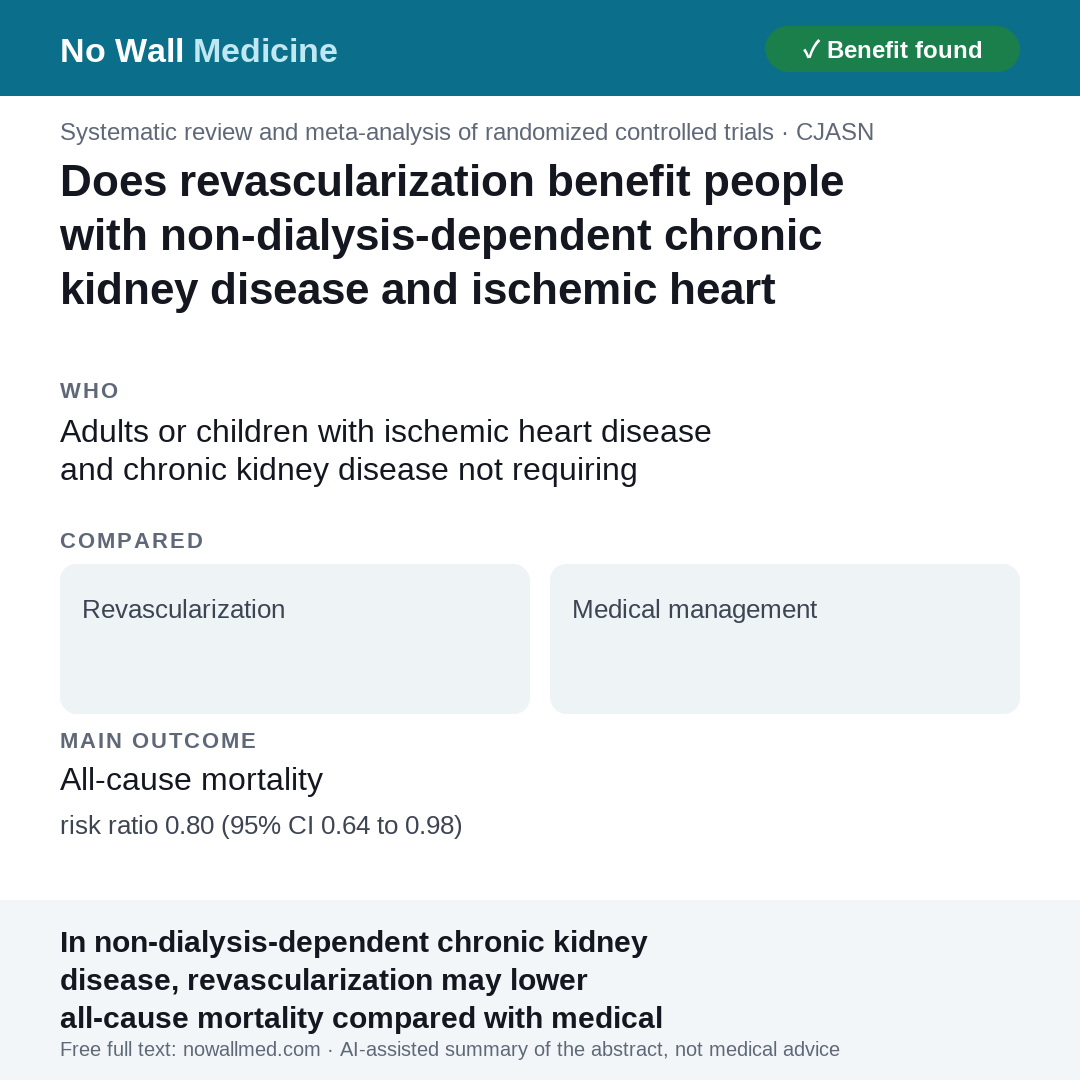
Benefits and Harms of Coronary Revascularization in Non-Dialysis-Dependent Chronic Kidney Disease and Ischemic Heart Disease: A Systematic Review and Meta-Analysis
Systematic review and meta-analysis of randomized controlled trialsBenefit found
Does revascularization benefit people with non-dialysis-dependent chronic kidney disease and ischemic heart disease?
Who
Adults or children with ischemic heart disease and chronic kidney disease not requiring kidney replacement therapy
Compared
Revascularization
Medical management
Main outcome
All-cause mortality
Result: risk ratio 0.80 (95% CI 0.64 to 0.98)
Bottom line: In non-dialysis-dependent chronic kidney disease, revascularization may lower all-cause mortality compared with medical management.
Limitation: Data were limited by heterogeneity of patient populations and the limited number of trials.
CJASN · 2024-11-08Download image
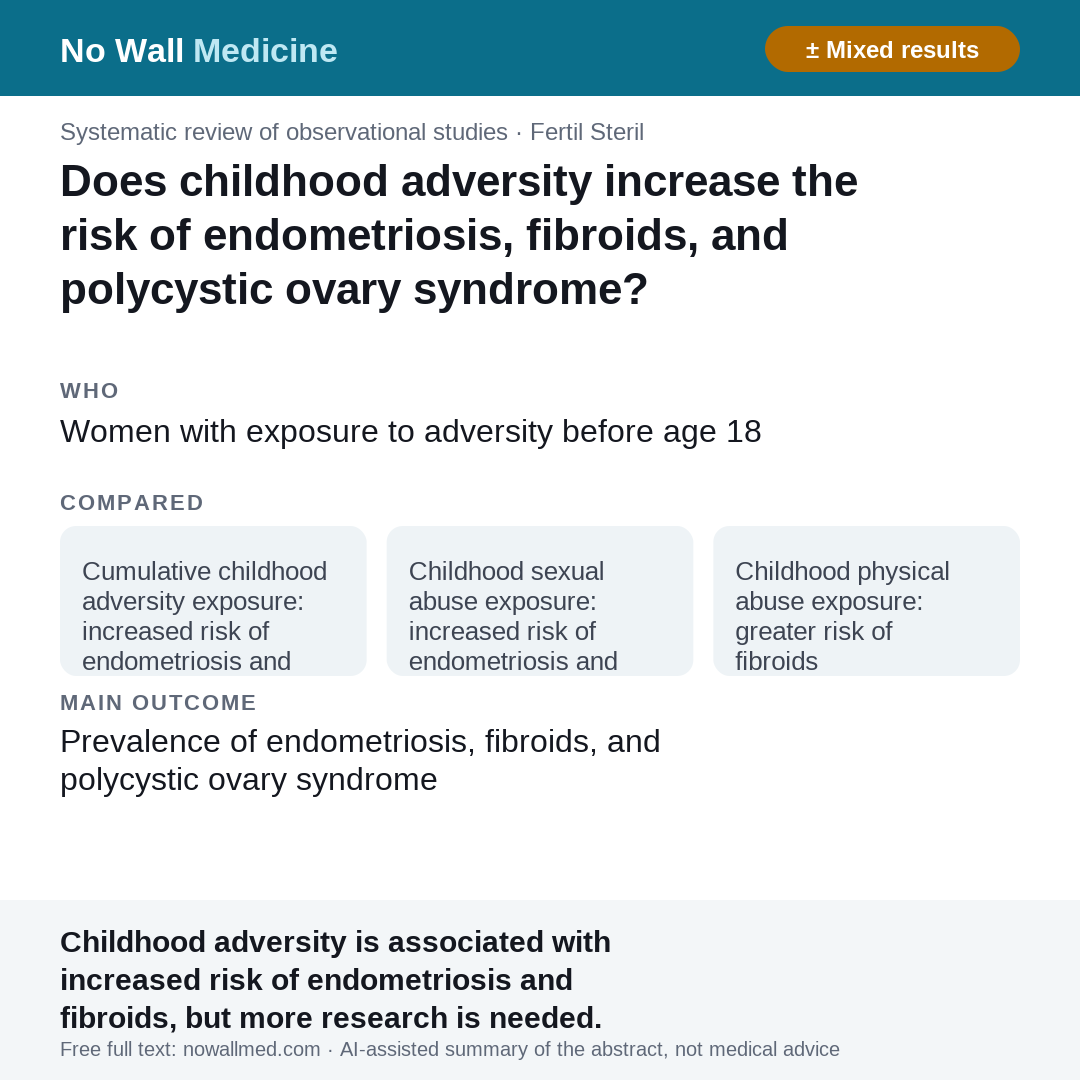
Childhood adversity and risk of endometriosis, fibroids, and polycystic ovary syndrome: a systematic review
Systematic review of observational studiesMixed results
Does childhood adversity increase the risk of endometriosis, fibroids, and polycystic ovary syndrome?
Who
Women with exposure to adversity before age 18
Compared
Cumulative childhood adversity exposure: increased risk of endometriosis and fibroids
Childhood sexual abuse exposure: increased risk of endometriosis and fibroids
Childhood physical abuse exposure: greater risk of fibroids
Main outcome
Prevalence of endometriosis, fibroids, and polycystic ovary syndrome
Bottom line: Childhood adversity is associated with increased risk of endometriosis and fibroids, but more research is needed.
Limitation: All seven included studies received a moderate risk of bias score.
Fertil Steril · 2024-11-08Download image
Yellow fever breakthrough infections after yellow fever vaccination: a systematic review and meta-analysis
Systematic review and meta-analysisBenefit found
What is the proportion of symptomatic yellow fever breakthrough infections after vaccination?
Who
6951
Virologically confirmed and probable yellow fever cases · Brazil
Compared
3%Vaccinated cases
Unvaccinated cases
Main outcome
Proportion of vaccinees among confirmed and probable cases
Result: 3% (95% CI 1-19%)
Bottom line: Yellow fever breakthrough infections are rare, suggesting a single vaccine dose provides sufficient lifelong protective immunity.
Limitation: 31 records were of low quality.
Lancet Microbe · 2024-11-07Download image

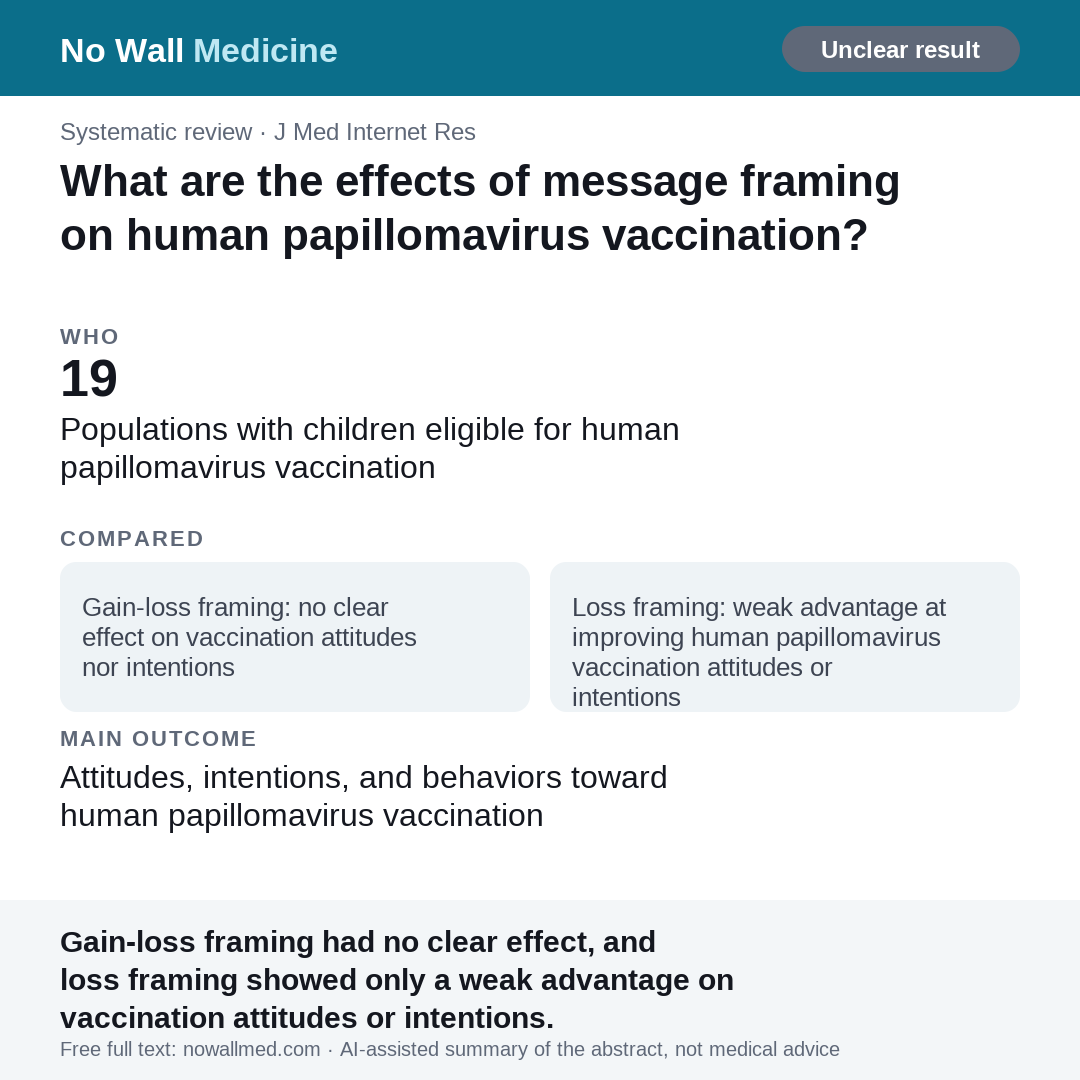
Effects of Message Framing on Human Papillomavirus Vaccination: Systematic Review
Systematic reviewUnclear result
What are the effects of message framing on human papillomavirus vaccination?
Who
19
Populations with children eligible for human papillomavirus vaccination
Compared
Gain-loss framing: no clear effect on vaccination attitudes nor intentions
Loss framing: weak advantage at improving human papillomavirus vaccination attitudes or intentions
Main outcome
Attitudes, intentions, and behaviors toward human papillomavirus vaccination
Bottom line: Gain-loss framing had no clear effect, and loss framing showed only a weak advantage on vaccination attitudes or intentions.
Limitation: Limited number of studies and qualitative nature of the analysis for vaccination behaviors.
J Med Internet Res · 2024-11-07Download image
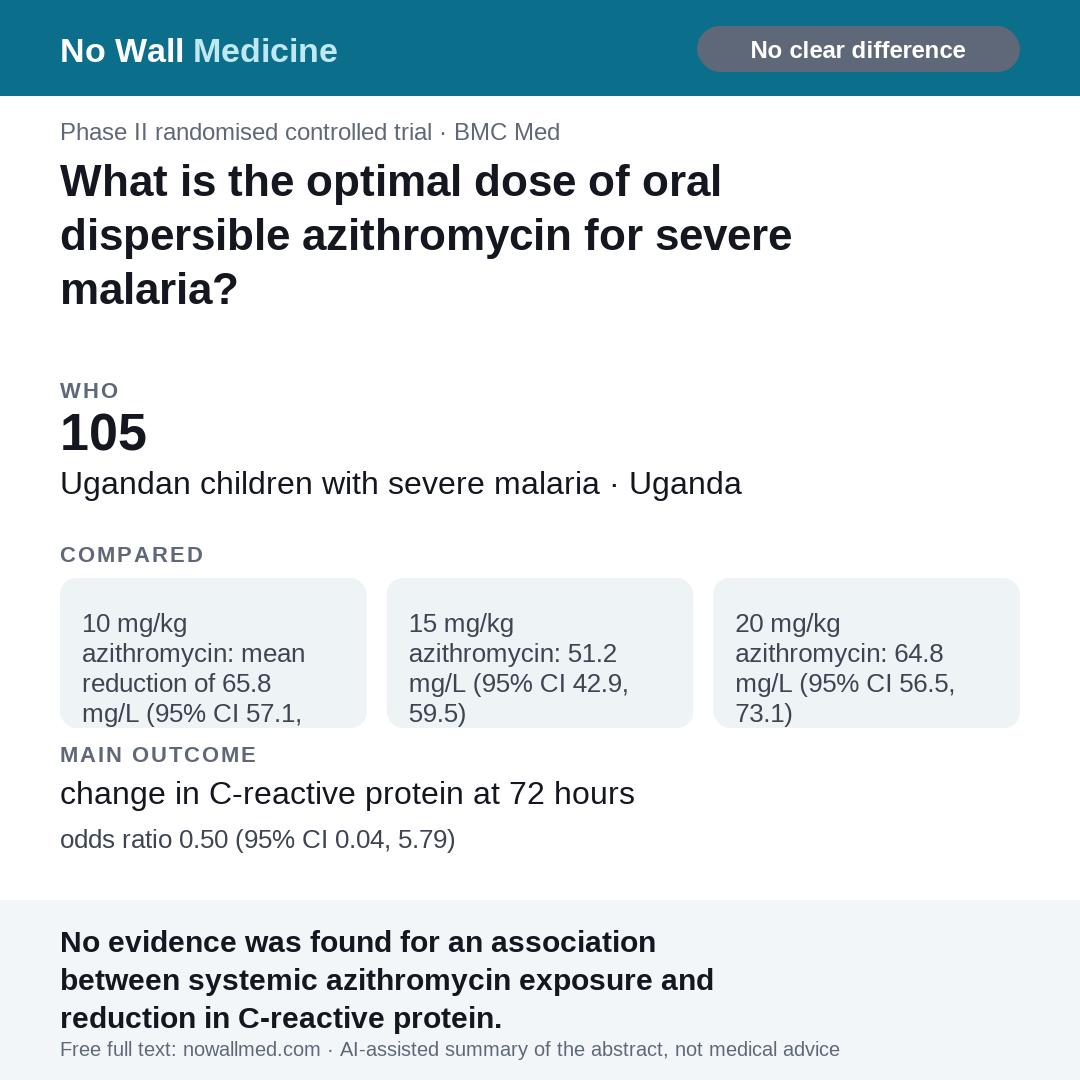
Azithromycin in severe malaria bacterial co-infection in African children (TABS-PKPD): a phase II randomised controlled trial
Phase II randomised controlled trialNo clear difference
What is the optimal dose of oral dispersible azithromycin for severe malaria?
Who
105
Ugandan children with severe malaria · Uganda
Compared
10 mg/kg azithromycin: mean reduction of 65.8 mg/L (95% CI 57.1, 74.5)
15 mg/kg azithromycin: 51.2 mg/L (95% CI 42.9, 59.5)
20 mg/kg azithromycin: 64.8 mg/L (95% CI 56.5, 73.1)
Main outcome
change in C-reactive protein at 72 hours
Result: odds ratio 0.50 (95% CI 0.04, 5.79)
Bottom line: No evidence was found for an association between systemic azithromycin exposure and reduction in C-reactive protein.
BMC Med · 2024-11-06Download image
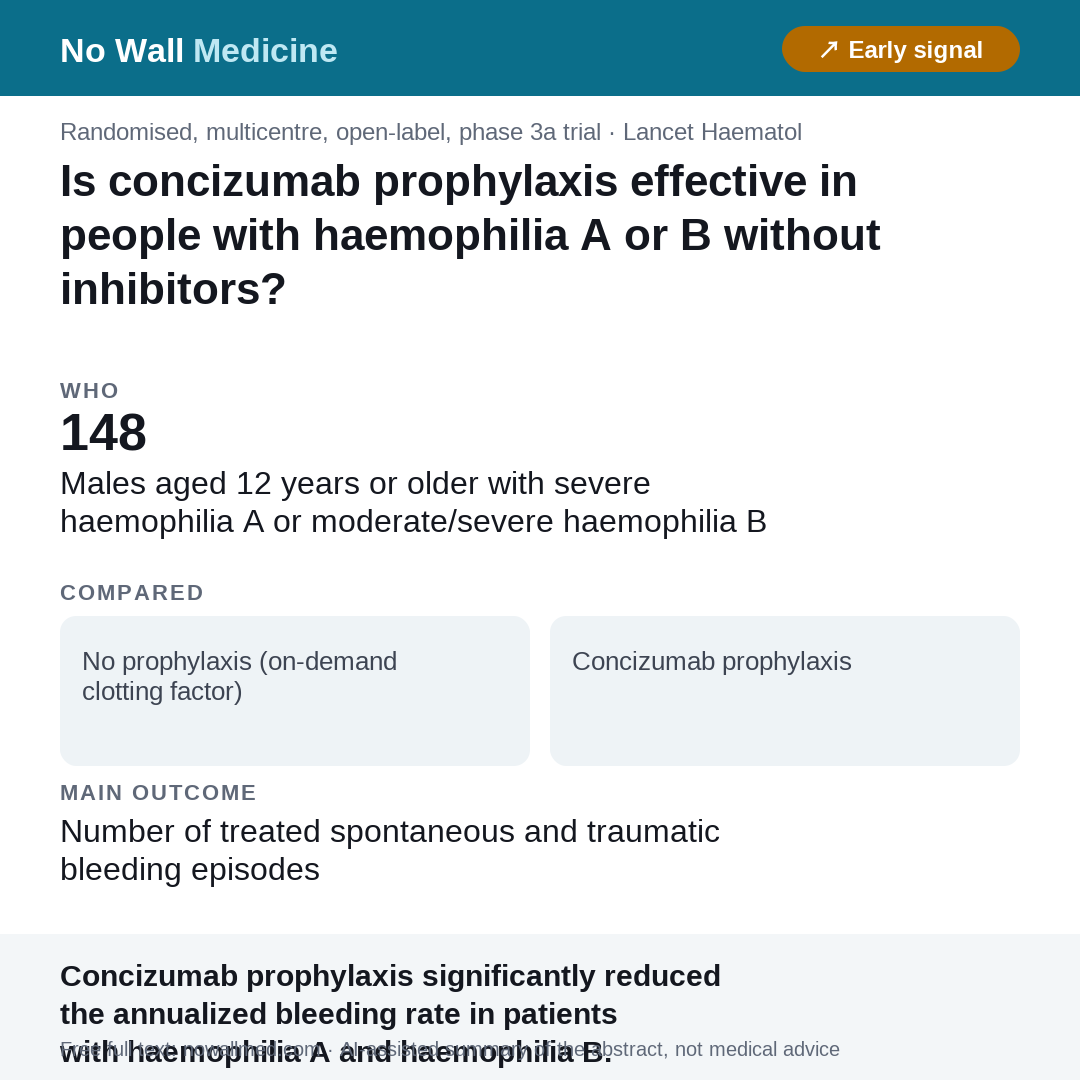
Concizumab prophylaxis in people with haemophilia A or haemophilia B without inhibitors (explorer8): a prospective, multicentre, open-label, randomised, phase 3a trial
Randomised, multicentre, open-label, phase 3a trialEarly signal
Is concizumab prophylaxis effective in people with haemophilia A or B without inhibitors?
Who
148
Males aged 12 years or older with severe haemophilia A or moderate/severe haemophilia B without inhibitors · 69 investigational sites in 31 countries
Compared
No prophylaxis (on-demand clotting factor)
Concizumab prophylaxis
Main outcome
Number of treated spontaneous and traumatic bleeding episodes
Result: haemophilia A ratio 0·14 (95% CI 0·07-0·29); haemophilia B ratio 0·21 (95% CI 0·10-0·45)
Bottom line: Concizumab prophylaxis significantly reduced the annualized bleeding rate in patients with haemophilia A and haemophilia B.
Lancet Haematol · 2024-11-06Download image
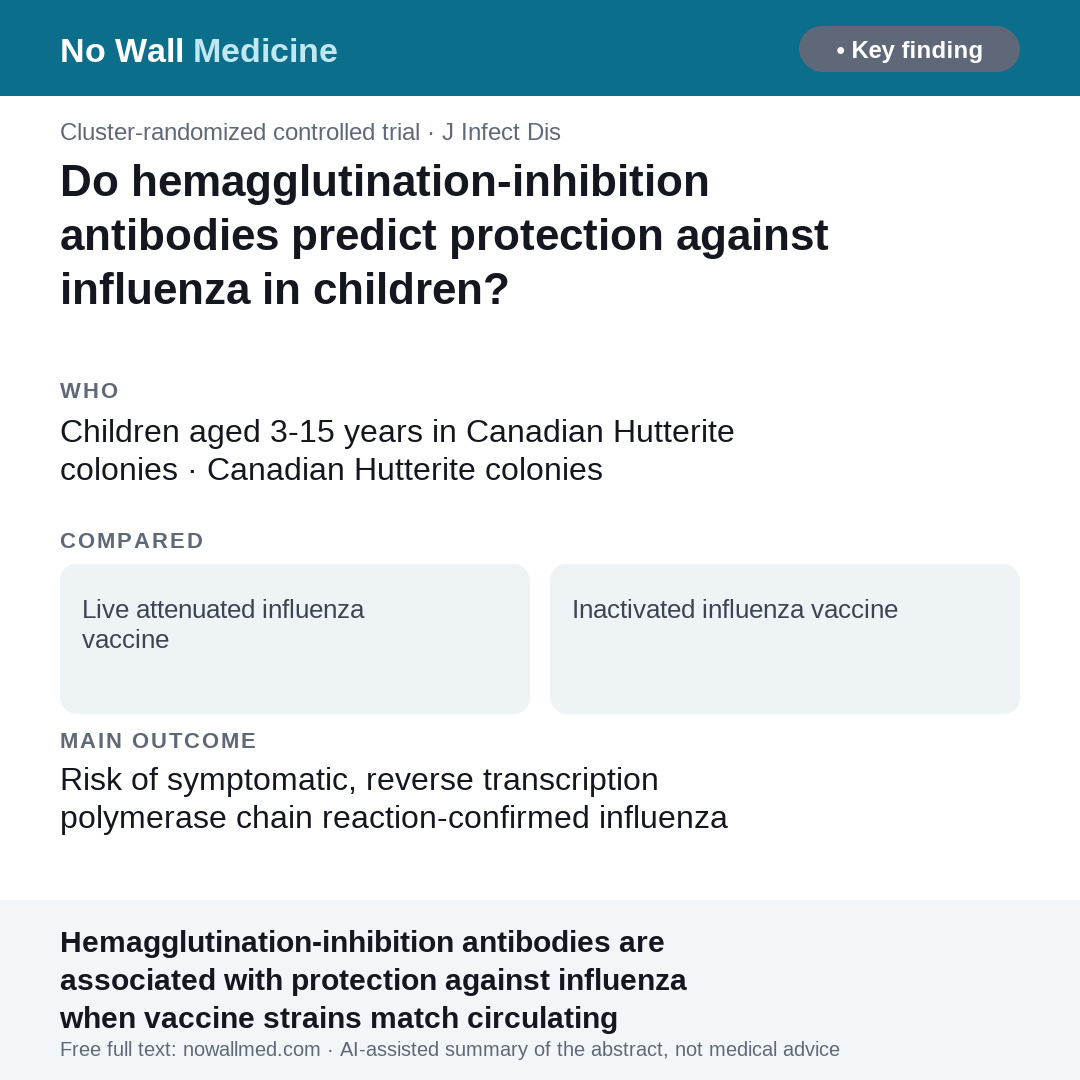
Hemagglutination-Inhibition Antibodies and Protection against Influenza Elicited by Inactivated and Live Attenuated Vaccines in Children
Cluster-randomized controlled trialBenefit found
Do hemagglutination-inhibition antibodies predict protection against influenza in children?
Who
Children aged 3-15 years in Canadian Hutterite colonies · Canadian Hutterite colonies
Compared
Live attenuated influenza vaccine
Inactivated influenza vaccine
Main outcome
Risk of symptomatic, reverse transcription polymerase chain reaction-confirmed influenza
Result: reduction in risk 29.6% (95% CI 17.1%-39.5%) for A/H1N1
Bottom line: Hemagglutination-inhibition antibodies are associated with protection against influenza when vaccine strains match circulating subtypes.
J Infect Dis · 2024-11-06Download image