Visual abstracts
New randomized trials and meta-analyses from leading journals at a glance: who was studied, what was compared, and what was found. Every paper is free to read in full.
All specialtiesCardiology 4763Oncology 4042Gastroenterology & Hepatology 1902Infectious Disease 3756Neurology 1872Psychiatry & Mental Health 2214Pulmonology 2042Critical Care 1319Endocrinology & Diabetes 2544Pediatrics 2889Surgery 2479Orthopedics & Sports Medicine 917Neurosurgery 525Cardiothoracic & Vascular Surgery 656Plastic & Reconstructive Surgery 574Nephrology 1107Rheumatology 810Hematology 1090Dermatology 611Ophthalmology 532Obstetrics & Gynecology 1645Public & Global Health 1037Radiology & Imaging 617Anesthesiology 957Urology 745ENT (Otolaryngology) 494Emergency Medicine 481Allergy & Immunology 309Geriatrics 972Family Medicine & Primary Care 533Medical Genetics & Genomics 659Pathology & Laboratory Medicine 156Physical Medicine & Rehabilitation 734Palliative Care 421Nutrition 1560Digital Health & AI 2133General Medicine 318
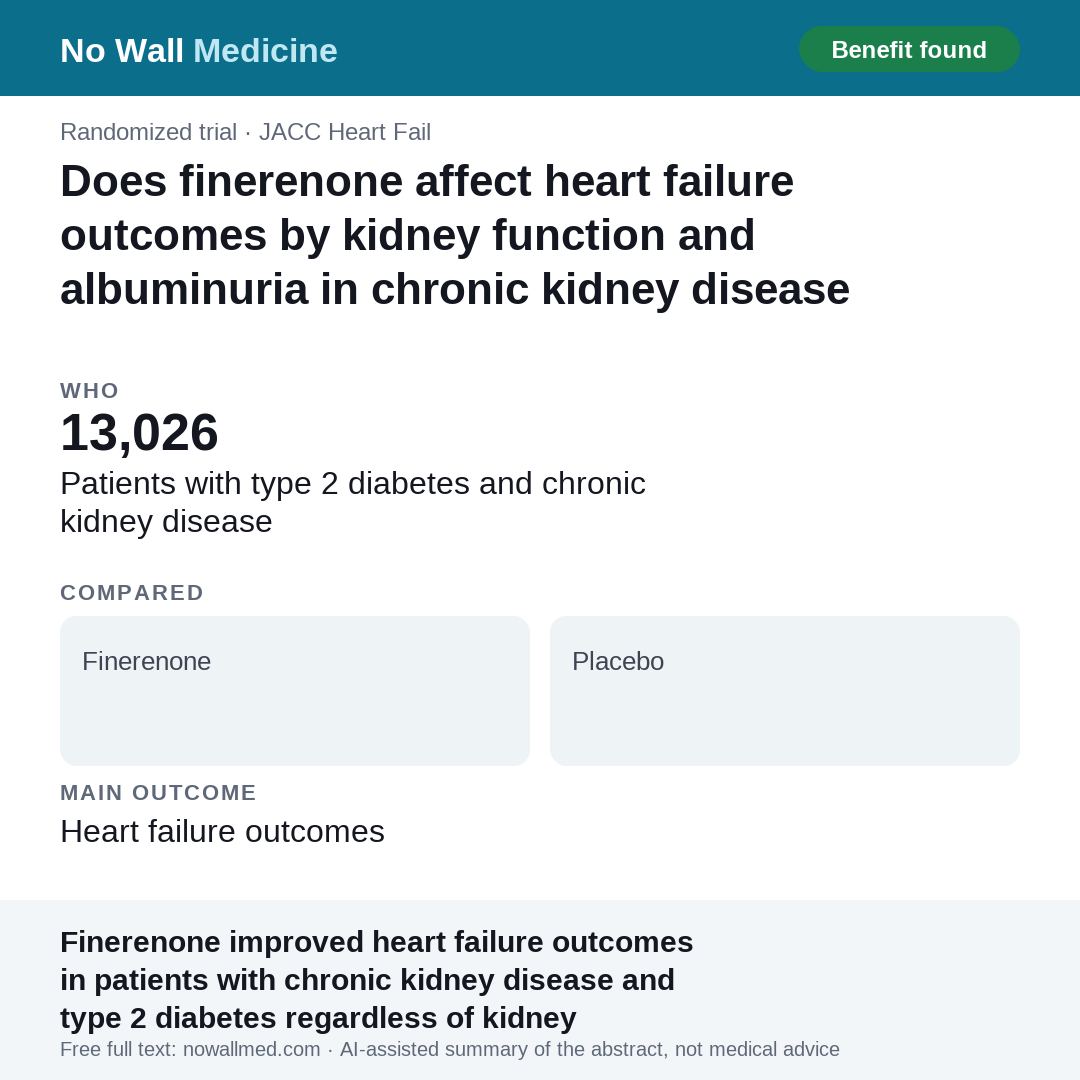
Finerenone and Heart Failure Outcomes by Kidney Function/Albuminuria in Chronic Kidney Disease and Diabetes
Randomized trialBenefit found
Does finerenone affect heart failure outcomes by kidney function and albuminuria in chronic kidney disease and diabetes?
Who
13,026
Patients with type 2 diabetes and chronic kidney disease
Compared
Finerenone
Placebo
Main outcome
Heart failure outcomes
Result: hazard ratio 0.78 (95% CI 0.66-0.92) for first hospitalization for heart failure
Bottom line: Finerenone improved heart failure outcomes in patients with chronic kidney disease and type 2 diabetes regardless of kidney function.
JACC Heart Fail · 2022-10-12Download image
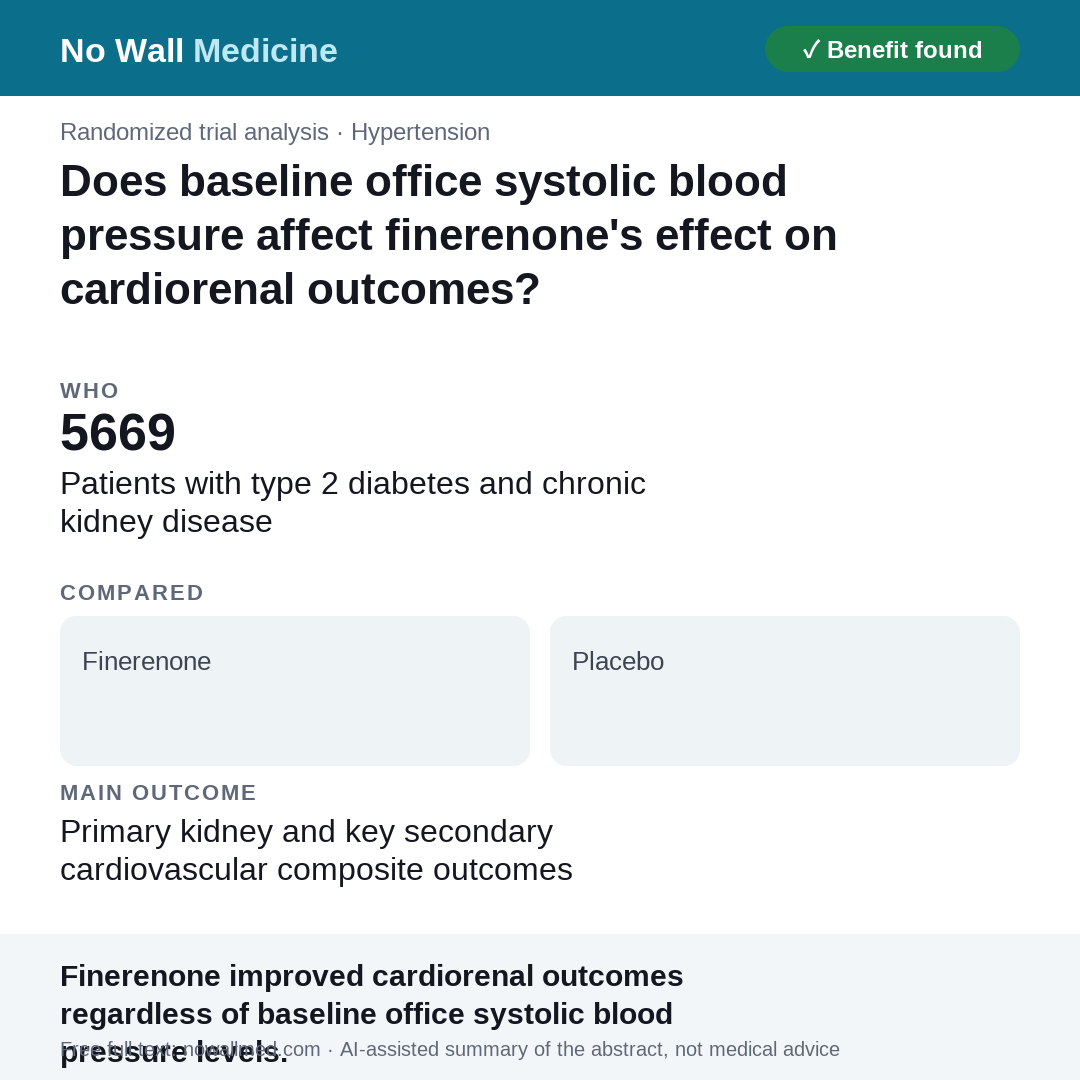
Blood Pressure and Cardiorenal Outcomes With Finerenone in Chronic Kidney Disease in Type 2 Diabetes
Randomized trial analysisBenefit found
Does baseline office systolic blood pressure affect finerenone's effect on cardiorenal outcomes?
Who
5669
Patients with type 2 diabetes and chronic kidney disease
Compared
Finerenone
Placebo
Main outcome
Primary kidney and key secondary cardiovascular composite outcomes
Bottom line: Finerenone improved cardiorenal outcomes regardless of baseline office systolic blood pressure levels.
Hypertension · 2022-10-12Download image
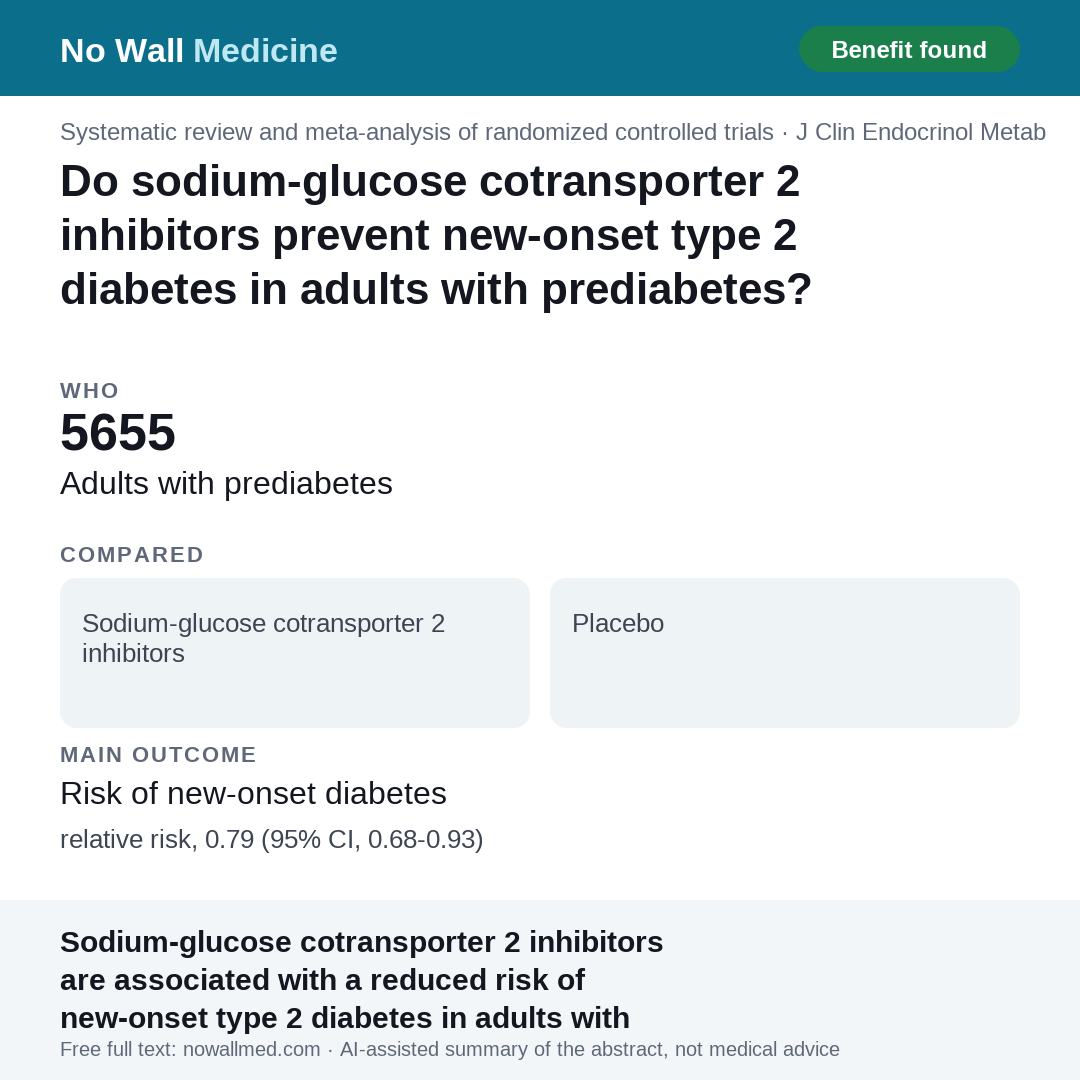
Sodium-Glucose Cotransporter 2 Inhibitors and New-onset Type 2 Diabetes in Adults With Prediabetes: Systematic Review and Meta-analysis of Randomized Controlled Trials
Systematic review and meta-analysis of randomized controlled trialsBenefit found
Do sodium-glucose cotransporter 2 inhibitors prevent new-onset type 2 diabetes in adults with prediabetes?
Who
5655
Adults with prediabetes
Compared
Sodium-glucose cotransporter 2 inhibitors
Placebo
Main outcome
Risk of new-onset diabetes
Result: relative risk, 0.79 (95% CI, 0.68-0.93)
Bottom line: Sodium-glucose cotransporter 2 inhibitors are associated with a reduced risk of new-onset type 2 diabetes in adults with prediabetes.
J Clin Endocrinol Metab · 2022-10-12Download image
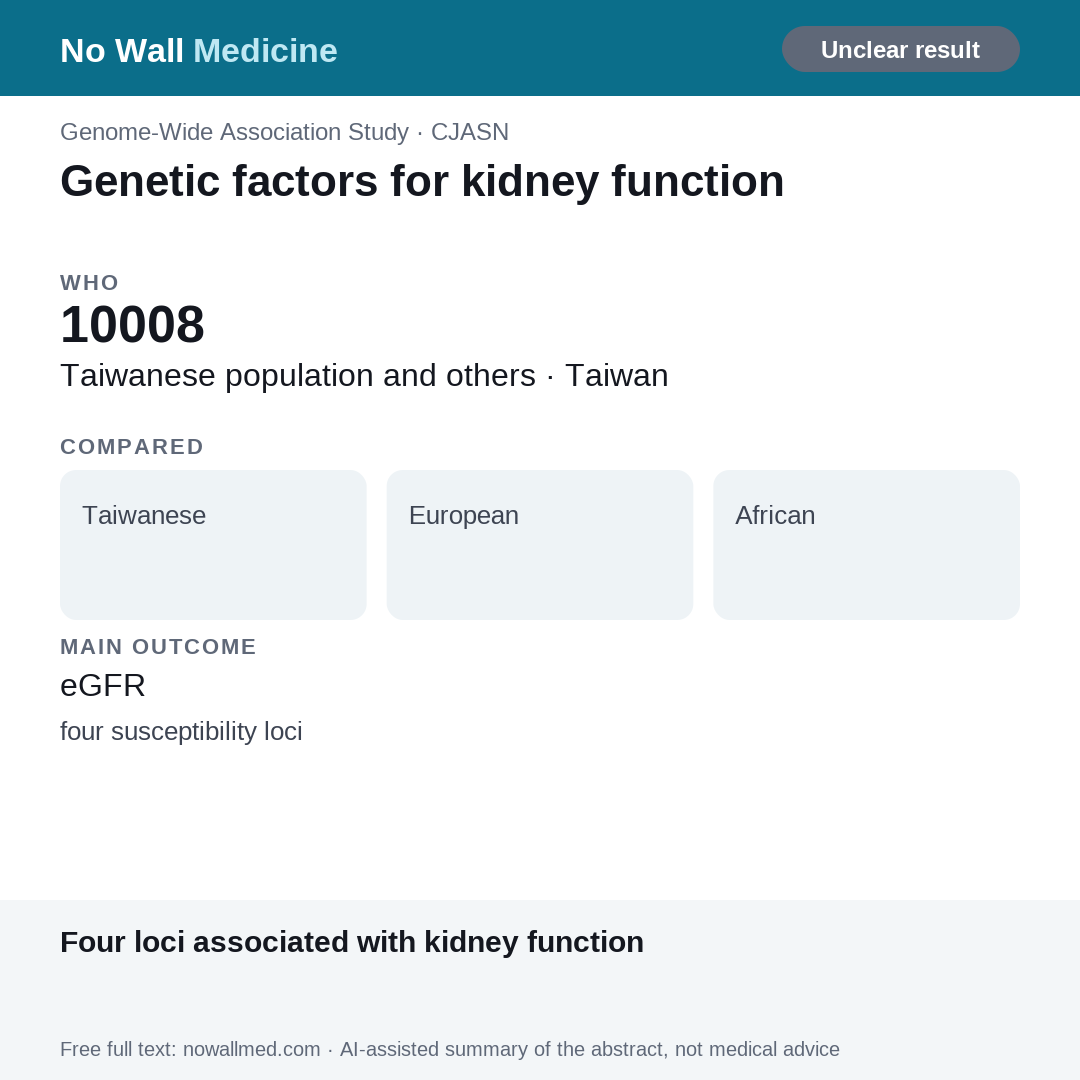
Genome-Wide Association Study for eGFR in a Taiwanese Population
Genome-Wide Association StudyUnclear result
Genetic factors for kidney function
Who
10008
Taiwanese population and others · Taiwan
Compared
Taiwanese
European
African
Main outcome
eGFR
Result: four susceptibility loci
Bottom line: Four loci associated with kidney function
CJASN · 2022-10-12Download image
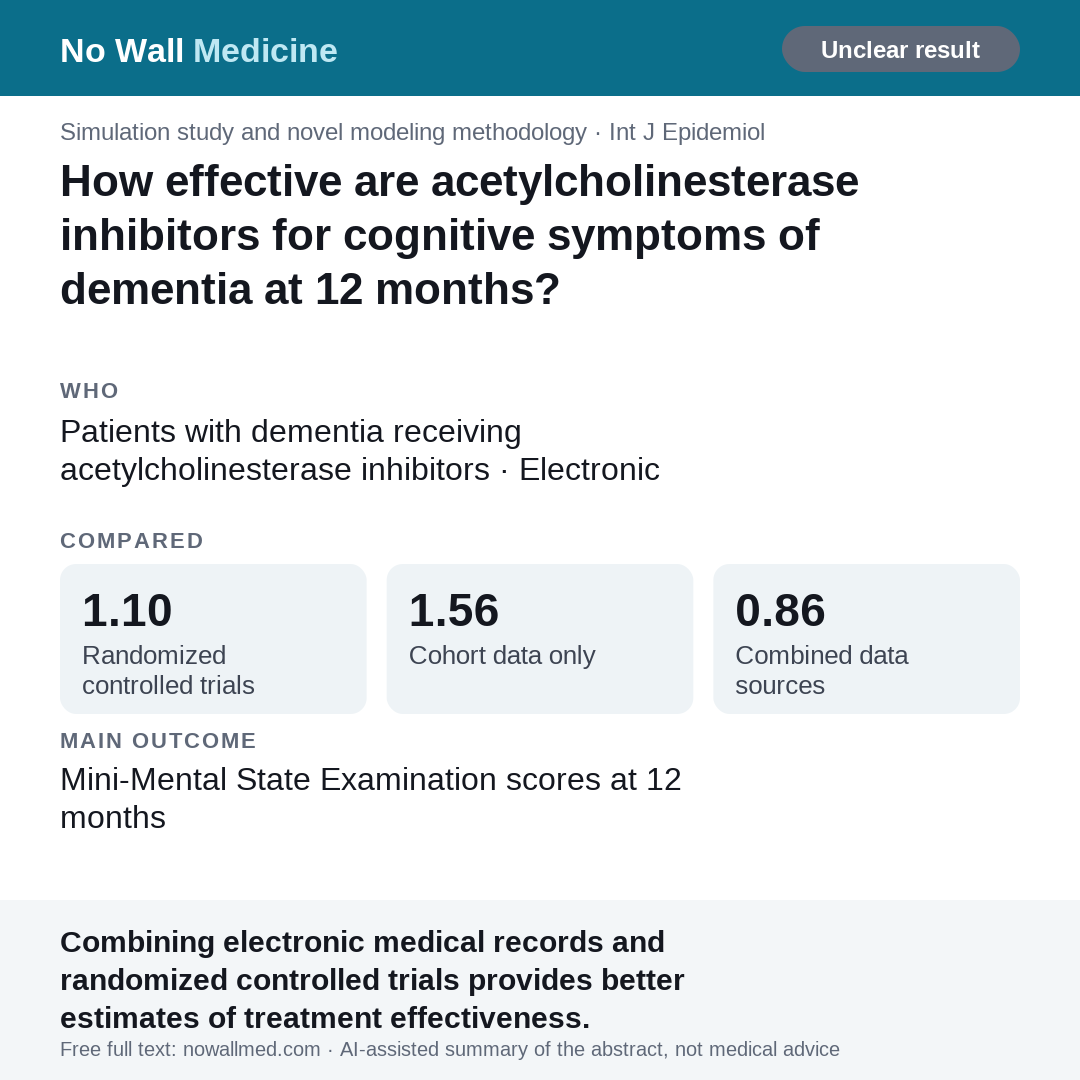
Borrowing strength from clinical trials in analysing longitudinal data from a treated cohort: investigating the effectiveness of acetylcholinesterase inhibitors in the management of dementia
Simulation study and novel modeling methodologyUnclear result
How effective are acetylcholinesterase inhibitors for cognitive symptoms of dementia at 12 months?
Who
Patients with dementia receiving acetylcholinesterase inhibitors · Electronic medical records and randomized controlled trials
Compared
1.10Randomized controlled trials only (SE = 0.316)
1.56Cohort data only (SE = 0.240)
0.86Combined data sources (SE = 0.327)
Main outcome
Mini-Mental State Examination scores at 12 months
Bottom line: Combining electronic medical records and randomized controlled trials provides better estimates of treatment effectiveness.
Limitation: The study uses a simulation study to demonstrate performance.
Int J Epidemiol · 2022-10-12Download image
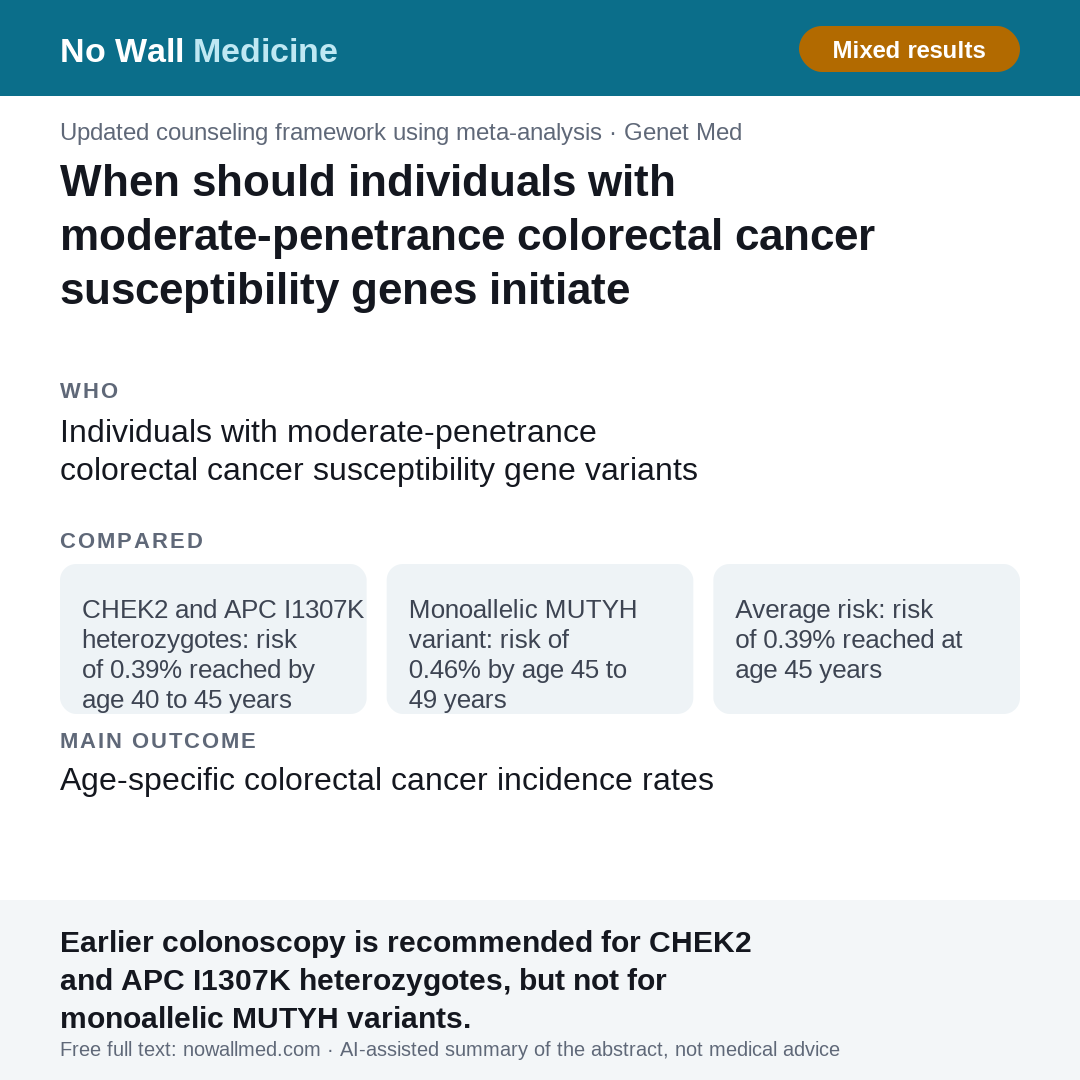
An updated counseling framework for moderate-penetrance colorectal cancer susceptibility genes
Updated counseling framework using meta-analysisMixed results
When should individuals with moderate-penetrance colorectal cancer susceptibility genes initiate colonoscopy?
Who
Individuals with moderate-penetrance colorectal cancer susceptibility gene variants · United States
Compared
CHEK2 and APC I1307K heterozygotes: risk of 0.39% reached by age 40 to 45 years
Monoallelic MUTYH variant: risk of 0.46% by age 45 to 49 years
Average risk: risk of 0.39% reached at age 45 years
Main outcome
Age-specific colorectal cancer incidence rates
Bottom line: Earlier colonoscopy is recommended for CHEK2 and APC I1307K heterozygotes, but not for monoallelic MUTYH variants.
Genet Med · 2022-10-12Download image
Direct-to-consumer genetic testing: an updated systematic review of healthcare professionals' knowledge and views, and ethical and legal concerns
Systematic reviewUnclear result
Healthcare professionals' knowledge of genetic testing
Who
Healthcare professionals
Compared
Genetic counsellors
Clinical geneticists
Other professionals
Main outcome
Knowledge of genetic testing
Bottom line: Healthcare professionals' knowledge has minimally improved
Eur J Hum Genet · 2022-10-12Download image

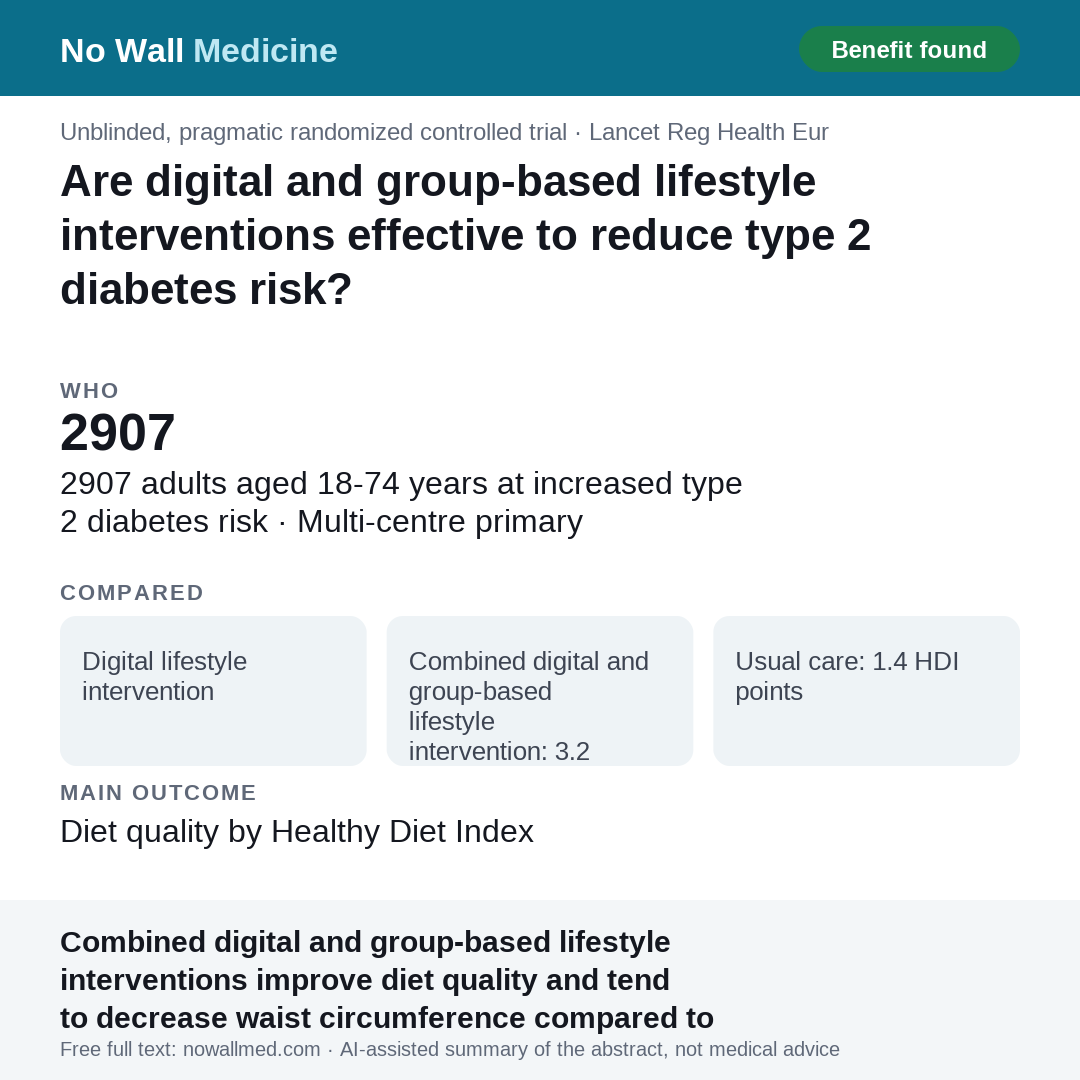
Real-world effectiveness of digital and group-based lifestyle interventions as compared with usual care to reduce type 2 diabetes risk - A stop diabetes pragmatic randomised trial
Unblinded, pragmatic randomized controlled trialBenefit found
Are digital and group-based lifestyle interventions effective to reduce type 2 diabetes risk?
Who
2907
2907 adults aged 18-74 years at increased type 2 diabetes risk · Multi-centre primary healthcare
Compared
Digital lifestyle intervention
Combined digital and group-based lifestyle intervention: 3.2 HDI points
Usual care: 1.4 HDI points
Main outcome
Diet quality by Healthy Diet Index
Bottom line: Combined digital and group-based lifestyle interventions improve diet quality and tend to decrease waist circumference compared to usual care.
Funded by: Academy of Finland, Novo Nordisk Foundation, Finnish Diabetes Research foundation
Lancet Reg Health Eur · 2022-10-12Download image
Subgroup analyses in randomized phase III trials of systemic treatments in patients with advanced solid tumours: a systematic review of trials published between 2017 and 2020
Systematic reviewMixed results
What are the prevalence and methodological characteristics of subgroup analyses in oncology trials?
Who
Adult patients with locally advanced or metastatic solid tumours
Compared
For-profit trials: 94% reported subgroup analyses
Non-profit trials: 70% reported subgroup analyses
Main outcome
Prevalence and methodological characteristics of subgroup analyses
Bottom line: Subgroup analyses are highly prevalent in oncology trials but often suffer from significant methodological weaknesses.
ESMO Open · 2022-10-12Download image

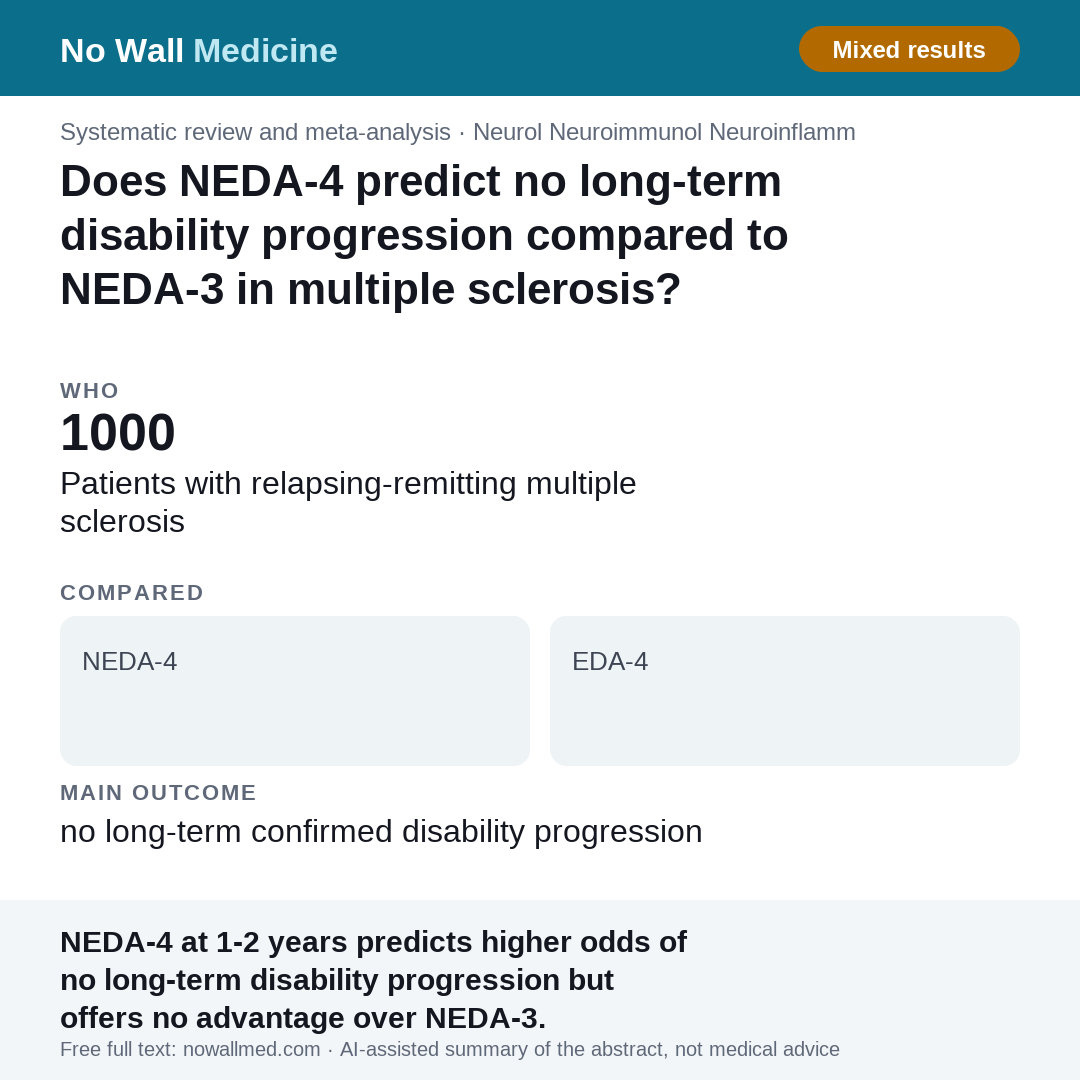
Association of NEDA-4 With No Long-term Disability Progression in Multiple Sclerosis and Comparison With NEDA-3: A Systematic Review and Meta-analysis
Systematic review and meta-analysisMixed results
Does NEDA-4 predict no long-term disability progression compared to NEDA-3 in multiple sclerosis?
Who
1000
Patients with relapsing-remitting multiple sclerosis
Compared
NEDA-4
EDA-4
Main outcome
no long-term confirmed disability progression
Result: odds ratio 2.14 (95% confidence interval: 1.36-3.37)
Bottom line: NEDA-4 at 1-2 years predicts higher odds of no long-term disability progression but offers no advantage over NEDA-3.
Neurol Neuroimmunol Neuroinflamm · 2022-10-12Download image
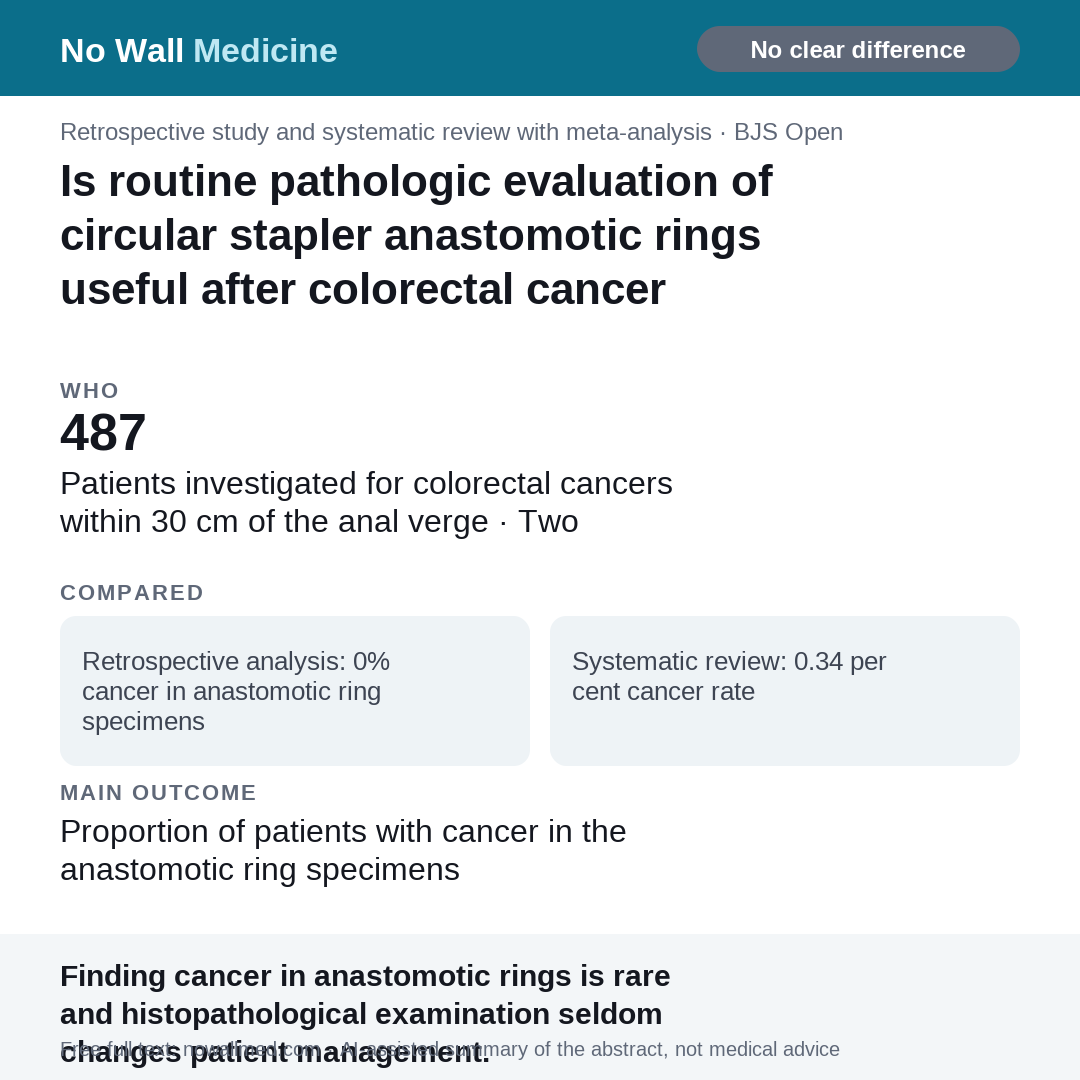
Routine pathologic evaluation of circular stapler anastomotic rings is not useful after resection for colorectal cancer: retrospective study and systematic review with meta-analysis
Retrospective study and systematic review with meta-analysisNo clear difference
Is routine pathologic evaluation of circular stapler anastomotic rings useful after colorectal cancer resection?
Who
487
Patients investigated for colorectal cancers within 30 cm of the anal verge · Two university-associated academic hospitals in Winnipeg, Canada
Compared
Retrospective analysis: 0% cancer in anastomotic ring specimens
Systematic review: 0.34 per cent cancer rate
Main outcome
Proportion of patients with cancer in the anastomotic ring specimens
Bottom line: Finding cancer in anastomotic rings is rare and histopathological examination seldom changes patient management.
BJS Open · 2022-10-12Download image
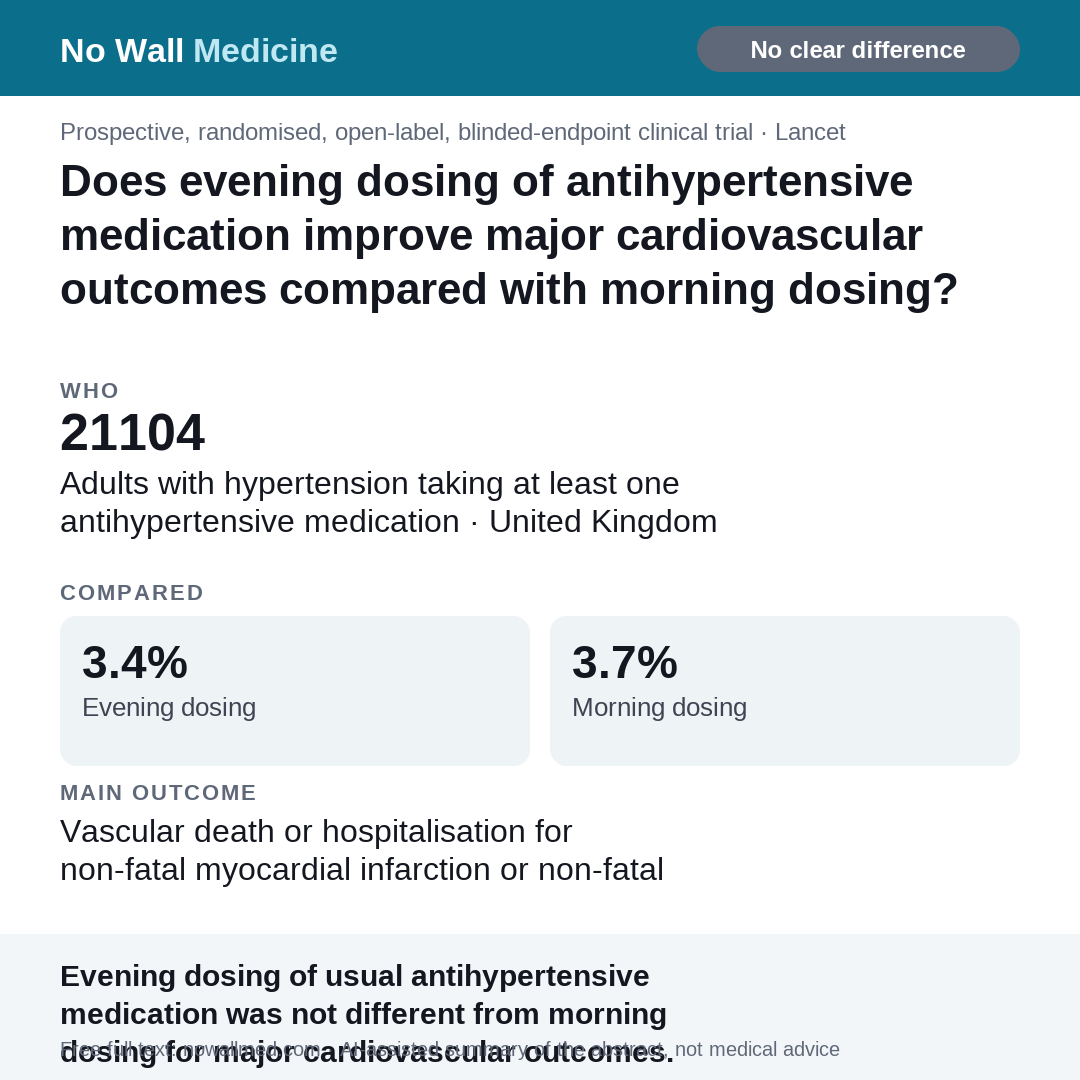
Cardiovascular outcomes in adults with hypertension with evening versus morning dosing of usual antihypertensives in the UK (TIME study): a prospective, randomised, open-label, blinded-endpoint clinical trial
Prospective, randomised, open-label, blinded-endpoint clinical trialNo clear difference
Does evening dosing of antihypertensive medication improve major cardiovascular outcomes compared with morning dosing?
Who
21104
Adults with hypertension taking at least one antihypertensive medication · United Kingdom
Compared
3.4%Evening dosing
3.7%Morning dosing
Main outcome
Vascular death or hospitalisation for non-fatal myocardial infarction or non-fatal stroke
Result: unadjusted hazard ratio 0.95 (95% CI 0.83 to 1.10)
Bottom line: Evening dosing of usual antihypertensive medication was not different from morning dosing for major cardiovascular outcomes.
Funded by: British Heart Foundation
Lancet · 2022-10-11Download image
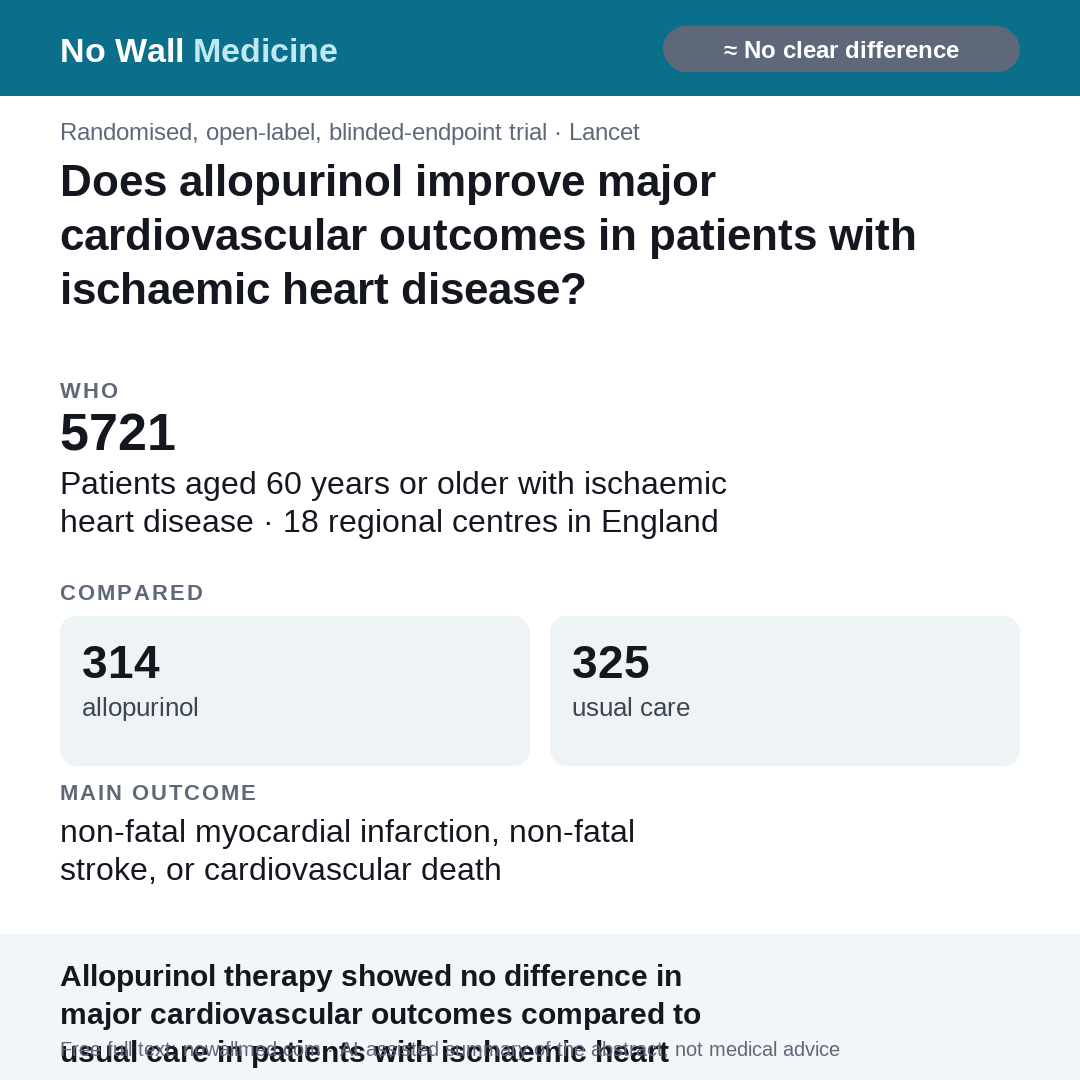
Allopurinol versus usual care in UK patients with ischaemic heart disease (ALL-HEART): a multicentre, prospective, randomised, open-label, blinded-endpoint trial
Randomised, open-label, blinded-endpoint trialNo clear difference
Does allopurinol improve major cardiovascular outcomes in patients with ischaemic heart disease?
Who
5721
Patients aged 60 years or older with ischaemic heart disease · 18 regional centres in England and Scotland
Compared
314allopurinol (11.0%)
325usual care (11.3%)
Main outcome
non-fatal myocardial infarction, non-fatal stroke, or cardiovascular death
Result: hazard ratio 1.04 (95% CI 0.89-1.21)
Bottom line: Allopurinol therapy showed no difference in major cardiovascular outcomes compared to usual care in patients with ischaemic heart disease.
Funded by: UK National Institute for Health and Care Research
Lancet · 2022-10-11Download image
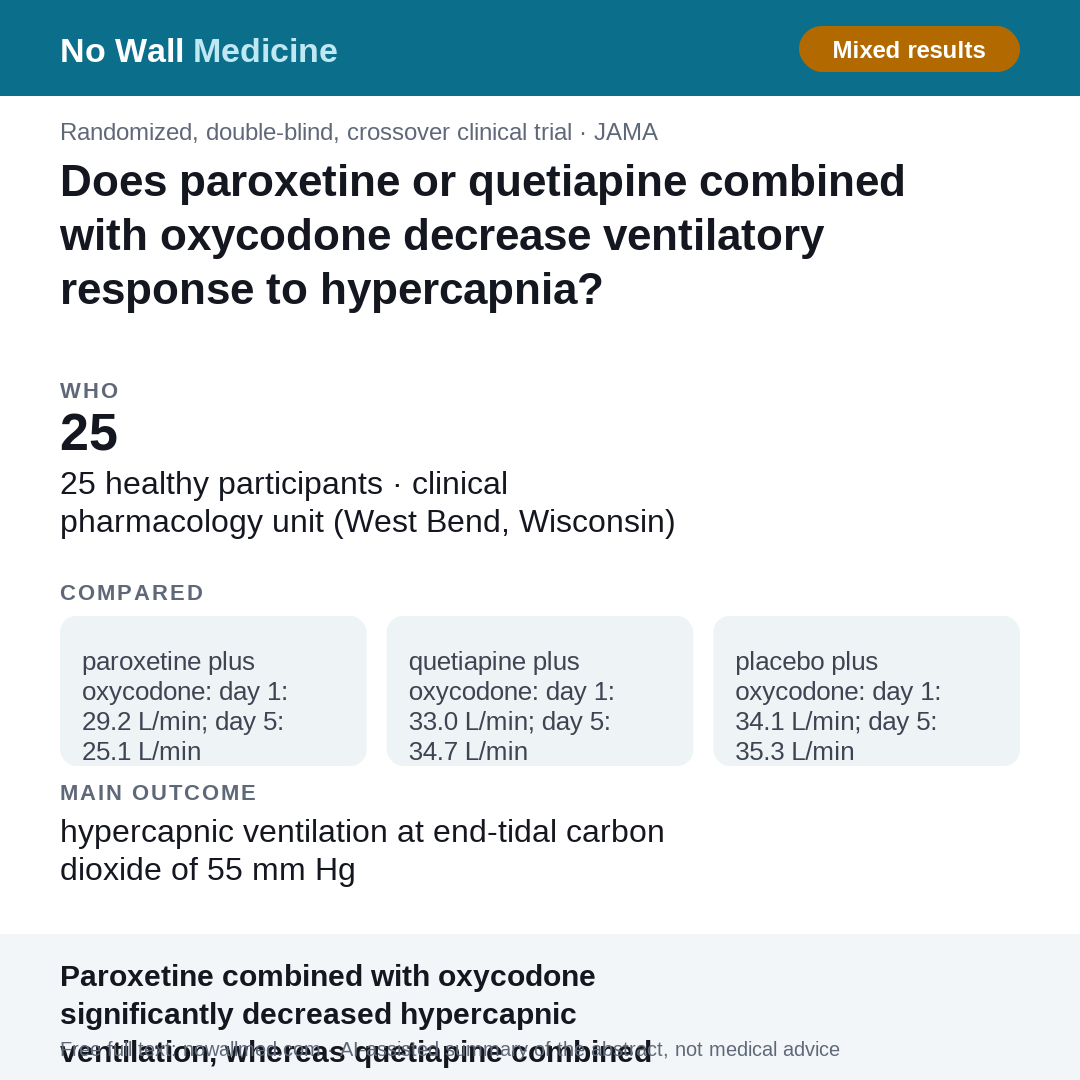
Effect of Paroxetine or Quetiapine Combined With Oxycodone vs Oxycodone Alone on Ventilation During Hypercapnia: A Randomized Clinical Trial
Randomized, double-blind, crossover clinical trialMixed results
Does paroxetine or quetiapine combined with oxycodone decrease ventilatory response to hypercapnia?
Who
25
25 healthy participants · clinical pharmacology unit (West Bend, Wisconsin)
Compared
paroxetine plus oxycodone: day 1: 29.2 L/min; day 5: 25.1 L/min
quetiapine plus oxycodone: day 1: 33.0 L/min; day 5: 34.7 L/min
placebo plus oxycodone: day 1: 34.1 L/min; day 5: 35.3 L/min
Main outcome
hypercapnic ventilation at end-tidal carbon dioxide of 55 mm Hg
Result: MD, -4.9 L/min [1-sided 97.5% CI, -∞ to -0.6] for paroxetine plus oxycodone vs placebo plus oxycodone on day 1
Bottom line: Paroxetine combined with oxycodone significantly decreased hypercapnic ventilation, whereas quetiapine combined with oxycodone did not.
JAMA · 2022-10-11Download image
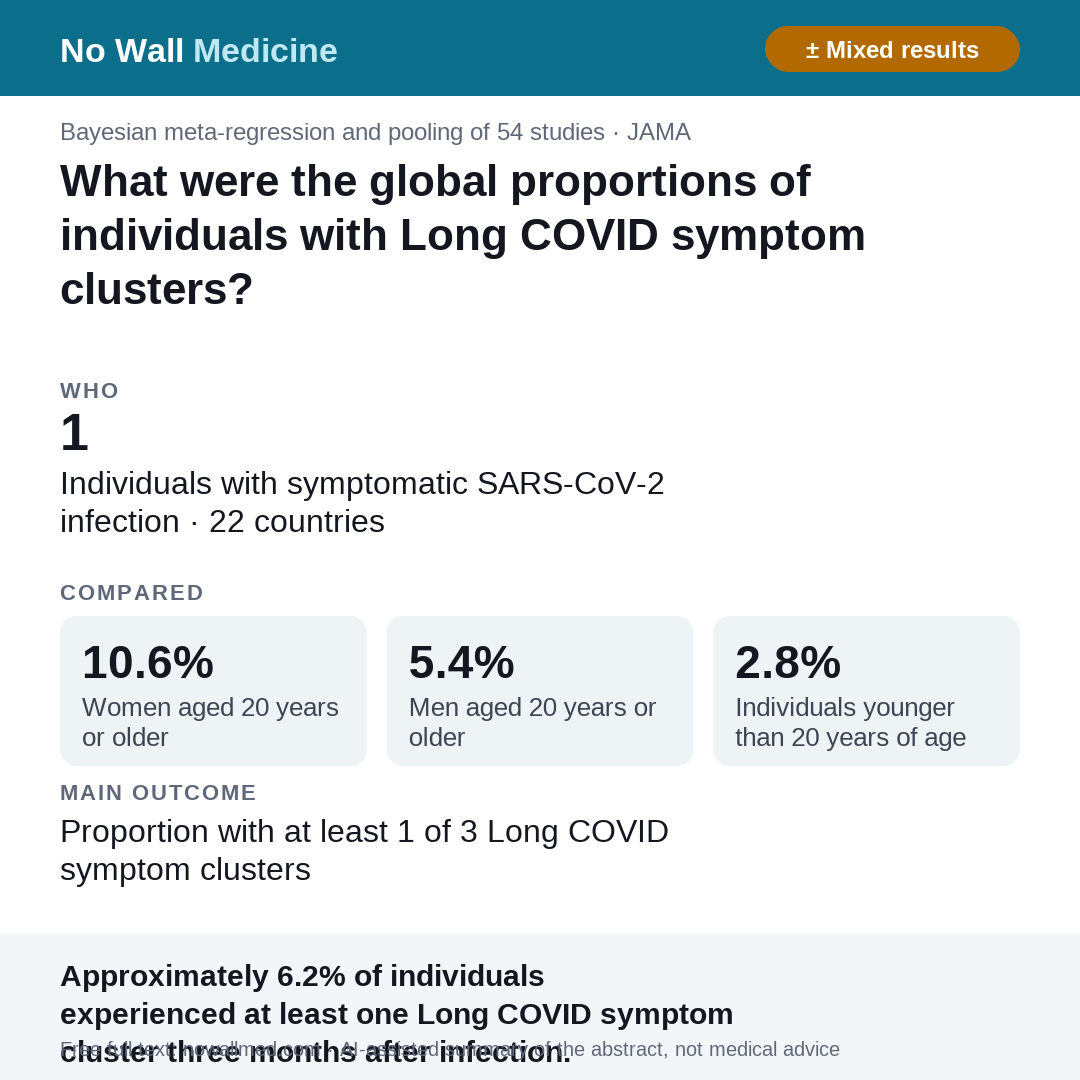
Estimated Global Proportions of Individuals With Persistent Fatigue, Cognitive, and Respiratory Symptom Clusters Following Symptomatic COVID-19 in 2020 and 2021
Bayesian meta-regression and pooling of 54 studiesMixed results
What were the global proportions of individuals with Long COVID symptom clusters?
Who
1
Individuals with symptomatic SARS-CoV-2 infection · 22 countries
Compared
10.6%Women aged 20 years or older (95% UI, 4.3%-22.2%)
5.4%Men aged 20 years or older (95% UI, 2.2%-11.7%)
2.8%Individuals younger than 20 years of age (95% UI, 0.9%-7.0%)
Main outcome
Proportion with at least 1 of 3 Long COVID symptom clusters
Result: 6.2% (95% uncertainty interval, 2.4%-13.3%)
Bottom line: Approximately 6.2% of individuals experienced at least one Long COVID symptom cluster three months after infection.
JAMA · 2022-10-11Download image
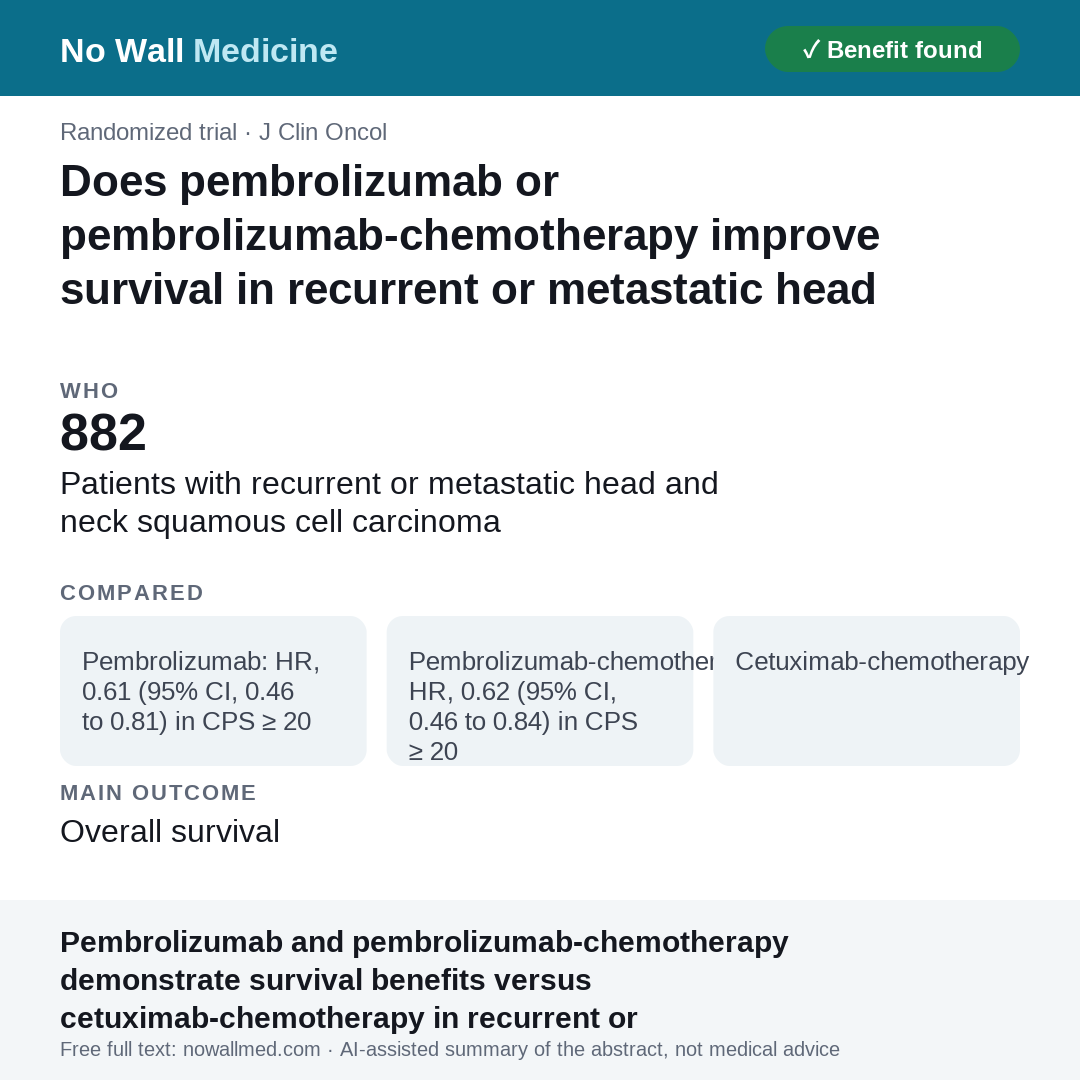
Pembrolizumab With or Without Chemotherapy in Recurrent or Metastatic Head and Neck Squamous Cell Carcinoma: Updated Results of the Phase III KEYNOTE-048 Study
Randomized trialBenefit found
Does pembrolizumab or pembrolizumab-chemotherapy improve survival in recurrent or metastatic head and neck squamous cell carcinoma?
Who
882
Patients with recurrent or metastatic head and neck squamous cell carcinoma
Compared
Pembrolizumab: HR, 0.61 (95% CI, 0.46 to 0.81) in CPS ≥ 20
Pembrolizumab-chemotherapy: HR, 0.62 (95% CI, 0.46 to 0.84) in CPS ≥ 20
Cetuximab-chemotherapy
Main outcome
Overall survival
Result: hazard ratio 0.61 (95% CI 0.46 to 0.81)
Bottom line: Pembrolizumab and pembrolizumab-chemotherapy demonstrate survival benefits versus cetuximab-chemotherapy in recurrent or metastatic head and neck squamous cell carcinoma.
J Clin Oncol · 2022-10-11Download image
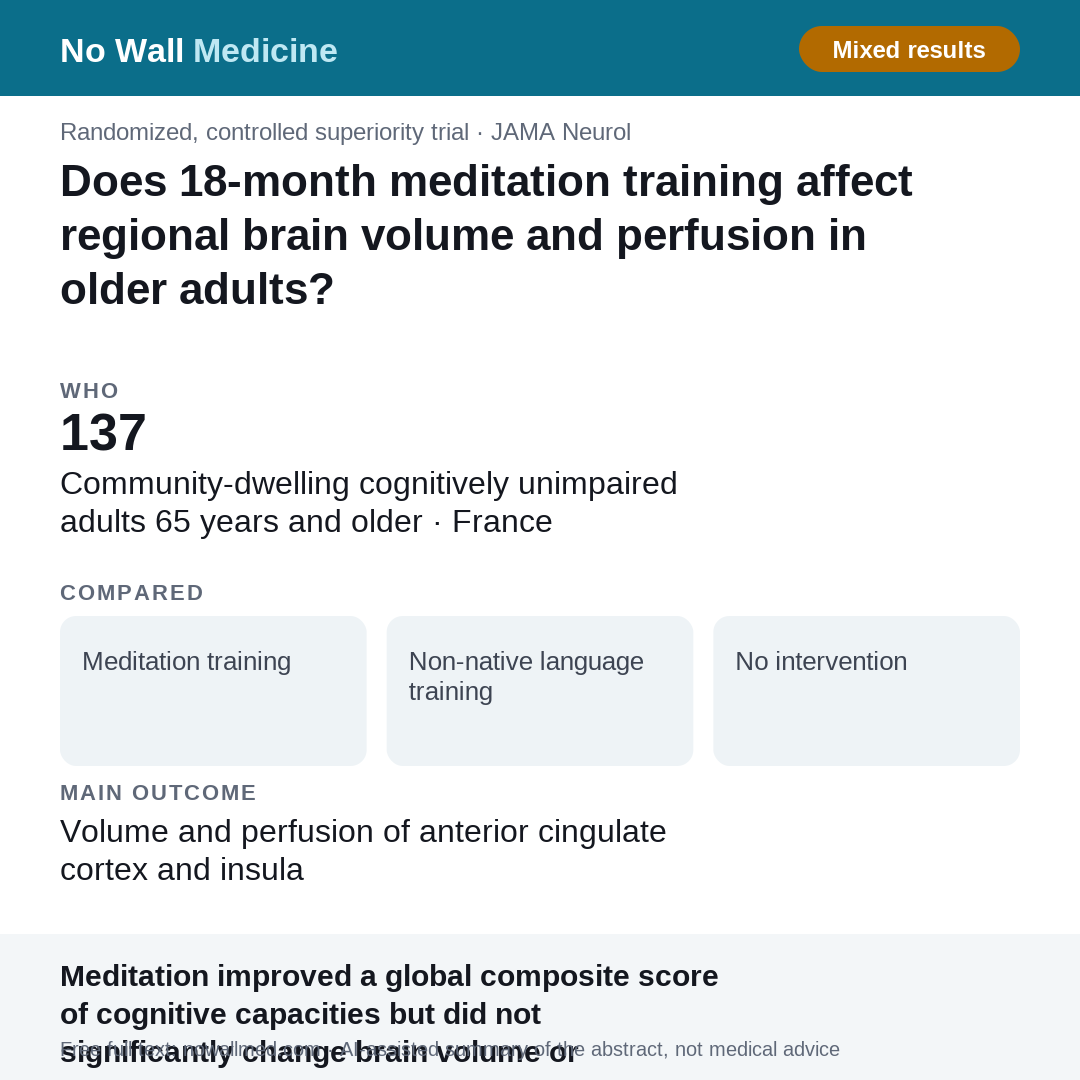
Effect of an 18-Month Meditation Training on Regional Brain Volume and Perfusion in Older Adults: The Age-Well Randomized Clinical Trial
Randomized, controlled superiority trialMixed results
Does 18-month meditation training affect regional brain volume and perfusion in older adults?
Who
137
Community-dwelling cognitively unimpaired adults 65 years and older · France
Compared
Meditation training
Non-native language training
No intervention
Main outcome
Volume and perfusion of anterior cingulate cortex and insula
Result: Cohen d, 0.52 (95% CI, 0.19-0.85) for global composite score
Bottom line: Meditation improved a global composite score of cognitive capacities but did not significantly change brain volume or perfusion.
JAMA Neurol · 2022-10-11Download image
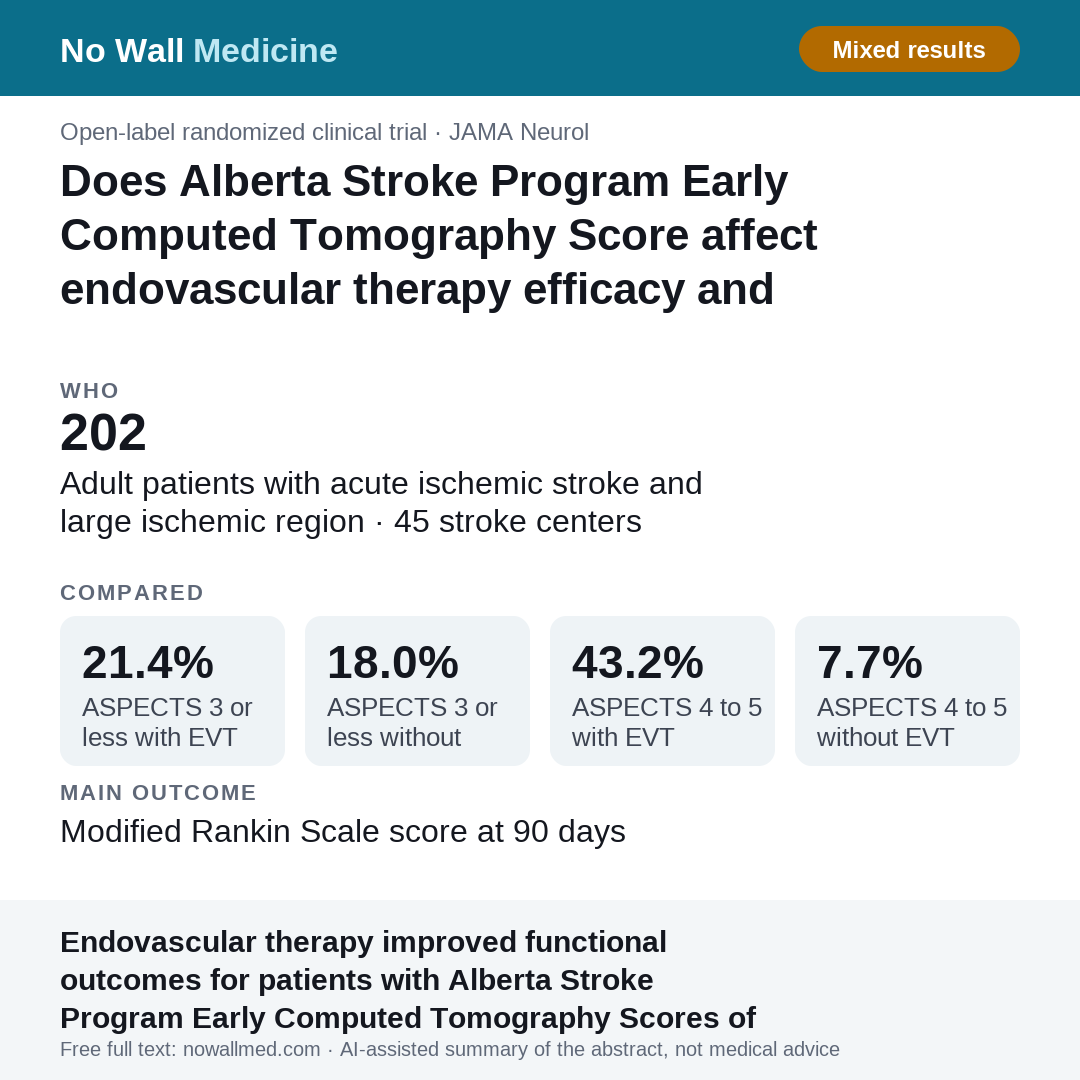
Association Between Alberta Stroke Program Early Computed Tomography Score and Efficacy and Safety Outcomes With Endovascular Therapy in Patients With Stroke From Large-Vessel Occlusion: A Secondary Analysis of the Recovery by Endovascular Salvage for Cerebral Ultra-acute Embolism-Japan Large Ischemic Core Trial (RESCUE-Japan LIMIT)
Open-label randomized clinical trialMixed results
Does Alberta Stroke Program Early Computed Tomography Score affect endovascular therapy efficacy and safety?
Who
202
Adult patients with acute ischemic stroke and large ischemic region · 45 stroke centers across Japan
Compared
21.4%ASPECTS 3 or less with EVT
18.0%ASPECTS 3 or less without EVT
43.2%ASPECTS 4 to 5 with EVT
7.7%ASPECTS 4 to 5 without EVT
Main outcome
Modified Rankin Scale score at 90 days
Result: common OR 4.48 (95% CI 2.07-9.71) for ASPECTS 4 to 5
Bottom line: Endovascular therapy improved functional outcomes for patients with Alberta Stroke Program Early Computed Tomography Scores of 4 to 5.
JAMA Neurol · 2022-10-11Download image
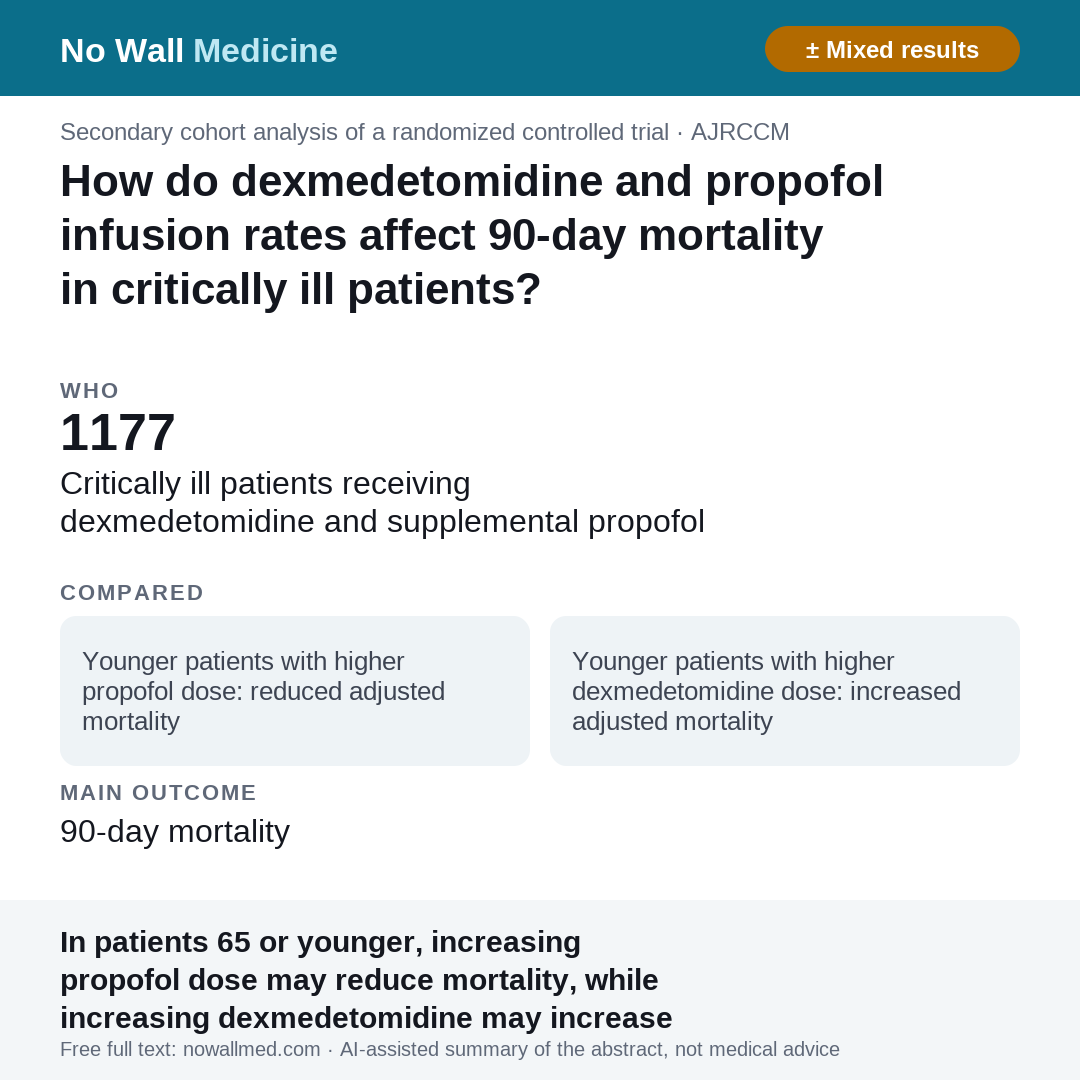
Dexmedetomidine and Propofol Sedation in Critically Ill Patients and Dose-associated 90-Day Mortality: A Secondary Cohort Analysis of a Randomized Controlled Trial (SPICE III)
Secondary cohort analysis of a randomized controlled trialMixed results
How do dexmedetomidine and propofol infusion rates affect 90-day mortality in critically ill patients?
Who
1177
Critically ill patients receiving dexmedetomidine and supplemental propofol
Compared
Younger patients with higher propofol dose: reduced adjusted mortality
Younger patients with higher dexmedetomidine dose: increased adjusted mortality
Main outcome
90-day mortality
Result: hazard ratio 0.59 (95% confidence interval 0.43-0.78) for propofol; hazard ratio 1.30 (95% confidence interval 1.03-1.65) for dexmedetomidine
Bottom line: In patients 65 or younger, increasing propofol dose may reduce mortality, while increasing dexmedetomidine may increase mortality.
AJRCCM · 2022-10-11Download image
Mendelian Randomization Analysis Reveals a Complex Genetic Interplay among Atopic Dermatitis, Asthma, and Gastroesophageal Reflux Disease
Two-sample bidirectional Mendelian randomizationBenefit found
Is gastroesophageal reflux disease causally related to asthma and atopic dermatitis?
Who
European-ancestry populations
Compared
Asthma predisposition to atopic dermatitis: odds ratio 1.46 (95% confidence interval 1.34-1.59)
Atopic dermatitis to asthma: odds ratio 1.34 (95% confidence interval 1.24-1.45)
Asthma on risk of gastroesophageal reflux disease: odds ratio 1.06 (95% confidence interval 1.03-1.09)
Gastroesophageal reflux disease on asthma and atopic dermatitis: odds ratio 1.21 (95% confidence interval 1.09-1.35)
Main outcome
Causal pathways between asthma, atopic dermatitis, and gastroesophageal reflux disease
Bottom line: Asthma causes atopic dermatitis, and gastroesophageal reflux disease increases risks for both asthma and atopic dermatitis.
AJRCCM · 2022-10-11Download image