Visual abstracts
New randomized trials and meta-analyses from leading journals at a glance: who was studied, what was compared, and what was found. Every paper is free to read in full.
All specialtiesCardiology 331Oncology 257Gastroenterology & Hepatology 143Infectious Disease 259Neurology 149Psychiatry & Mental Health 219Pulmonology 152Critical Care 102Endocrinology & Diabetes 199Pediatrics 149Surgery 98Orthopedics & Sports Medicine 66Neurosurgery 19Cardiothoracic & Vascular Surgery 35Plastic & Reconstructive Surgery 67Nephrology 67Rheumatology 66Hematology 78Dermatology 32Ophthalmology 56Obstetrics & Gynecology 94Public & Global Health 98Radiology & Imaging 27Anesthesiology 59Urology 75ENT (Otolaryngology) 42Emergency Medicine 31Allergy & Immunology 33Geriatrics 92Family Medicine & Primary Care 50Medical Genetics & Genomics 30Pathology & Laboratory Medicine 5Physical Medicine & Rehabilitation 84Palliative Care 50Nutrition 113Digital Health & AI 284General Medicine 41
Vitiligo-associated variants and genes beyond immune-related loci: A genome-wide association and Mendelian randomization meta-analysis
Meta-analysis of genomic resourcesUnclear result
Vitiligo genetic variants and genes beyond immune-related loci
Who
3134
Vitiligo cases and controls
Compared
Cases
Controls
Main outcome
Vitiligo risk
Bottom line: Identified potentially causal variants and genes
J Invest Dermatol · 2026-10-16Download image

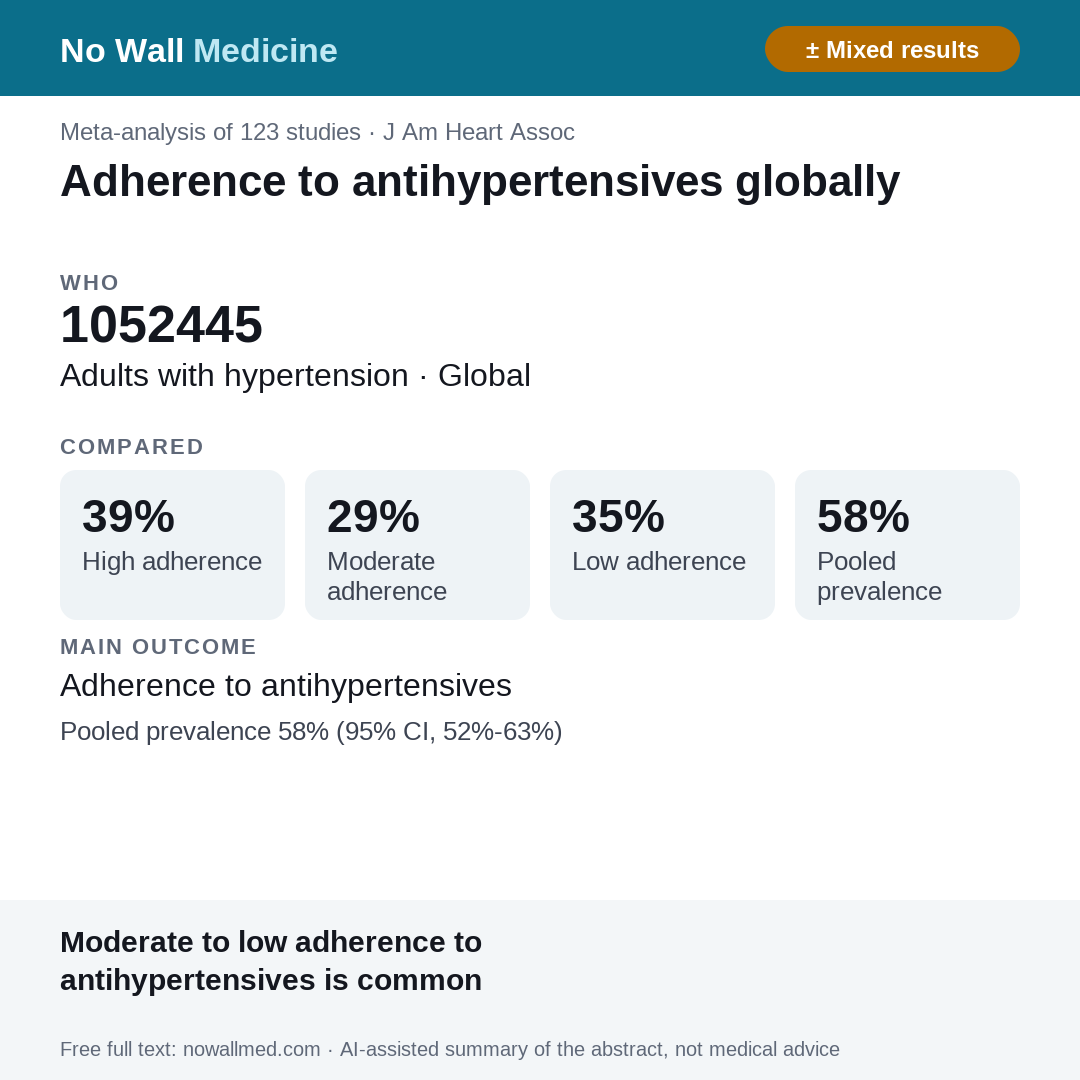
Global Prevalence of Adherence to Antihypertensives and Associated Moderating Factors Among Adults With Hypertension: A Meta-Analysis
Meta-analysis of 123 studiesMixed results
Adherence to antihypertensives globally
Who
1052445
Adults with hypertension · Global
Compared
39%High adherence
29%Moderate adherence
35%Low adherence
58%Pooled prevalence (95% CI, 52%-63%)
Main outcome
Adherence to antihypertensives
Result: Pooled prevalence 58% (95% CI, 52%-63%)
Bottom line: Moderate to low adherence to antihypertensives is common
Limitation: Lack of consensus-based definitions
J Am Heart Assoc · 2026-10-16Download image
Mental Health Factors in Cardiothoracic Surgery Risk Prediction Models: A Systematic Review
Systematic reviewUnclear result
Mental health in cardiothoracic surgery risk
Who
Adults undergoing cardiothoracic surgery
Compared
Models with mental health
Models without mental health
Main outcome
Postoperative outcomes
Bottom line: Mental health rarely used in risk models
Limitation: High risk of bias in three studies
J Am Heart Assoc · 2026-10-16Download image

Effectiveness of Discrete Strategies and Implementation Bundles for Improving Clinician Prescription of Clinical Practice Guideline-Recommended Medications for Atherosclerotic Occlusive Disease: A Systematic Review and Meta-Analysis
Meta-analysis of 31 trialsBenefit found
Do strategies improve medication prescription
Who
Adults with atherosclerotic occlusive disease
Compared
Implementation bundle
Team changes
Main outcome
Medication prescription
Result: relative risk 2.62 (95% CI 2.08 to 3.29)
Bottom line: Strategies improve medication prescription
J Am Heart Assoc · 2026-10-16Download image

Prostate Cancer Incidence and Disease Characteristics in Transgender Women Receiving Gender-affirming Hormone Therapy: A Systematic Review with Meta-analysis
Systematic review with meta-analysisBenefit found
Prostate cancer risk in transgender women
Who
54342
transgender women on hormone therapy
Compared
transgender women: 22.9 per 100 000 person-years
cisgender men: 98.1 per 100 000 person-years
Main outcome
prostate cancer incidence
Result: standardised incidence ratio 0.224 (95% confidence interval = 0.146-0.344)
Bottom line: Prostate cancer incidence lower in transgender women
Limitation: very low certainty evidence
Eur Urol Oncol · 2026-10-15Download image

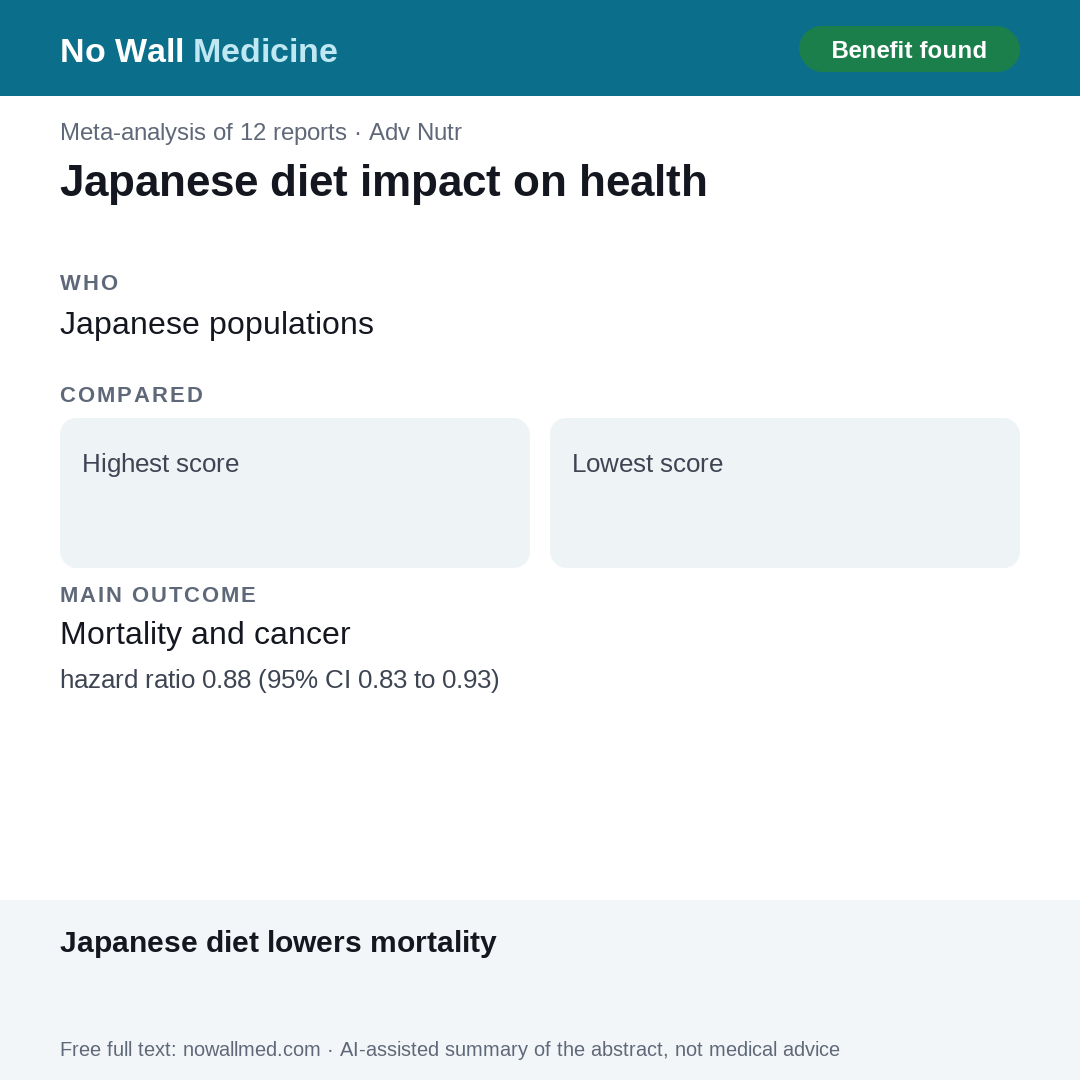
Japanese-Style Dietary Patterns, Mortality, and Selected Cancer Outcomes in Japanese Populations: A Systematic Review Integrating Meta-Analysis, Food-Group Loading Visualization, and Qualitative Synthesis
Meta-analysis of 12 reportsBenefit found
Japanese diet impact on health
Who
Japanese populations
Compared
Highest score
Lowest score
Main outcome
Mortality and cancer
Result: hazard ratio 0.88 (95% CI 0.83 to 0.93)
Bottom line: Japanese diet lowers mortality
Limitation: substantial heterogeneity
Adv Nutr · 2026-10-15Download image
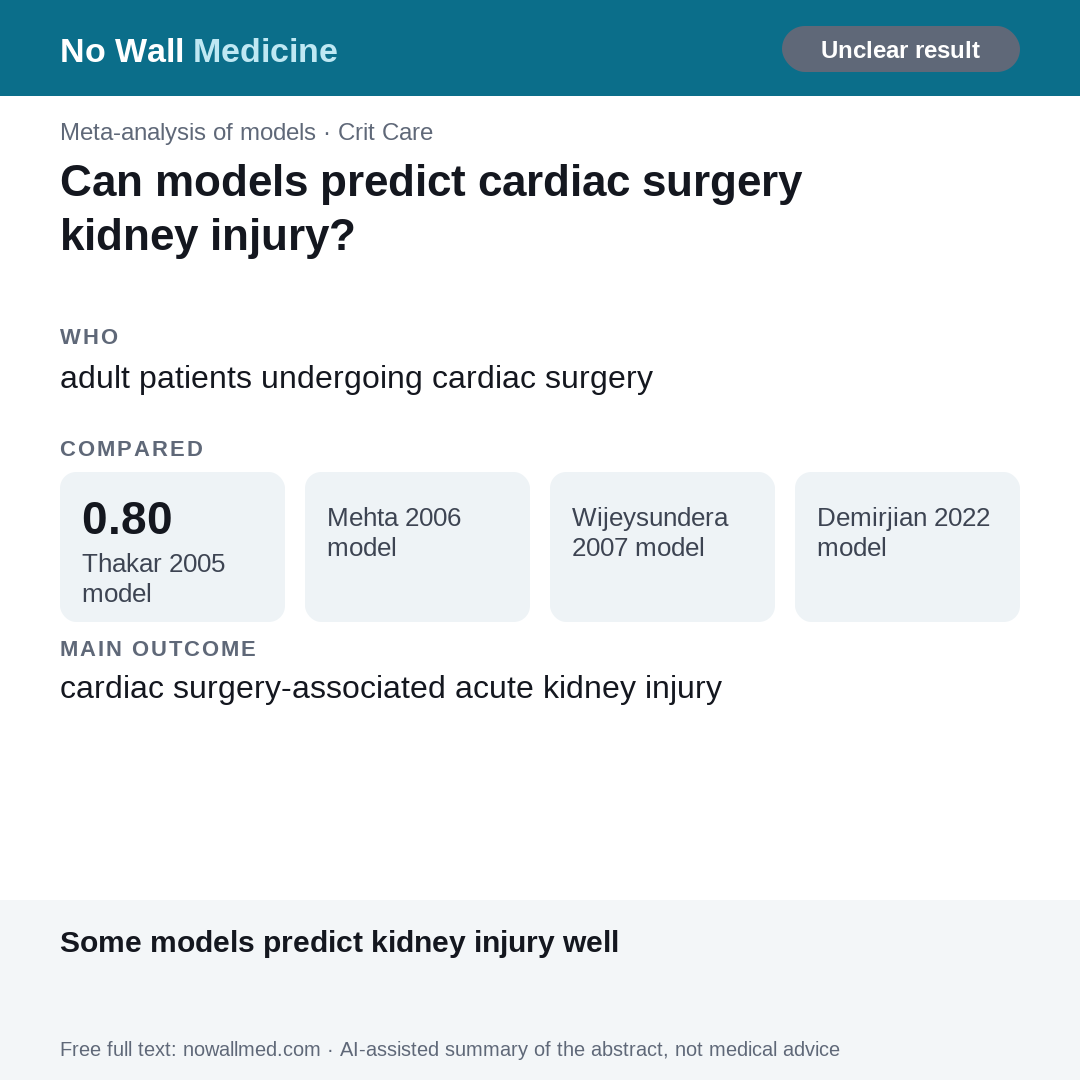
Clinical prediction models in cardiac surgery-associated acute kidney injury: a systematic review and meta-analysis
Meta-analysis of modelsUnclear result
Can models predict cardiac surgery kidney injury?
Who
adult patients undergoing cardiac surgery
Compared
0.80Thakar 2005 model (95% CI, 0.77-0.82)
Mehta 2006 model
Wijeysundera 2007 model
Demirjian 2022 model
Main outcome
cardiac surgery-associated acute kidney injury
Bottom line: Some models predict kidney injury well
Crit Care · 2026-10-15Download image
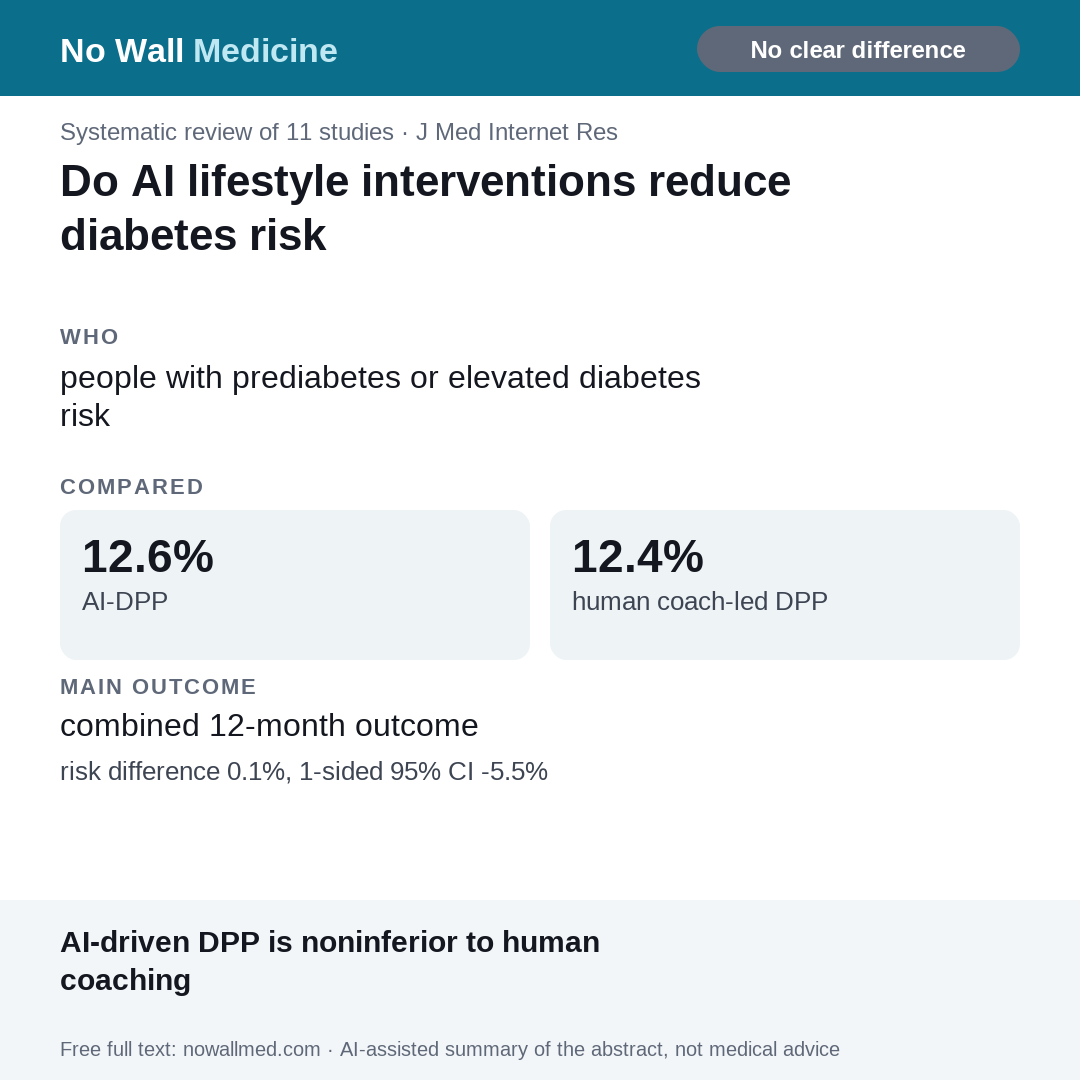
AI-Driven Lifestyle Interventions for Reducing Diabetes Risk: Systematic Review
Systematic review of 11 studiesNo clear difference
Do AI lifestyle interventions reduce diabetes risk
Who
people with prediabetes or elevated diabetes risk
Compared
12.6%AI-DPP (23/183)
12.4%human coach-led DPP (23/185)
Main outcome
combined 12-month outcome
Result: risk difference 0.1%, 1-sided 95% CI -5.5%
Bottom line: AI-driven DPP is noninferior to human coaching
Limitation: substantial heterogeneity in designs
J Med Internet Res · 2026-10-15Download image
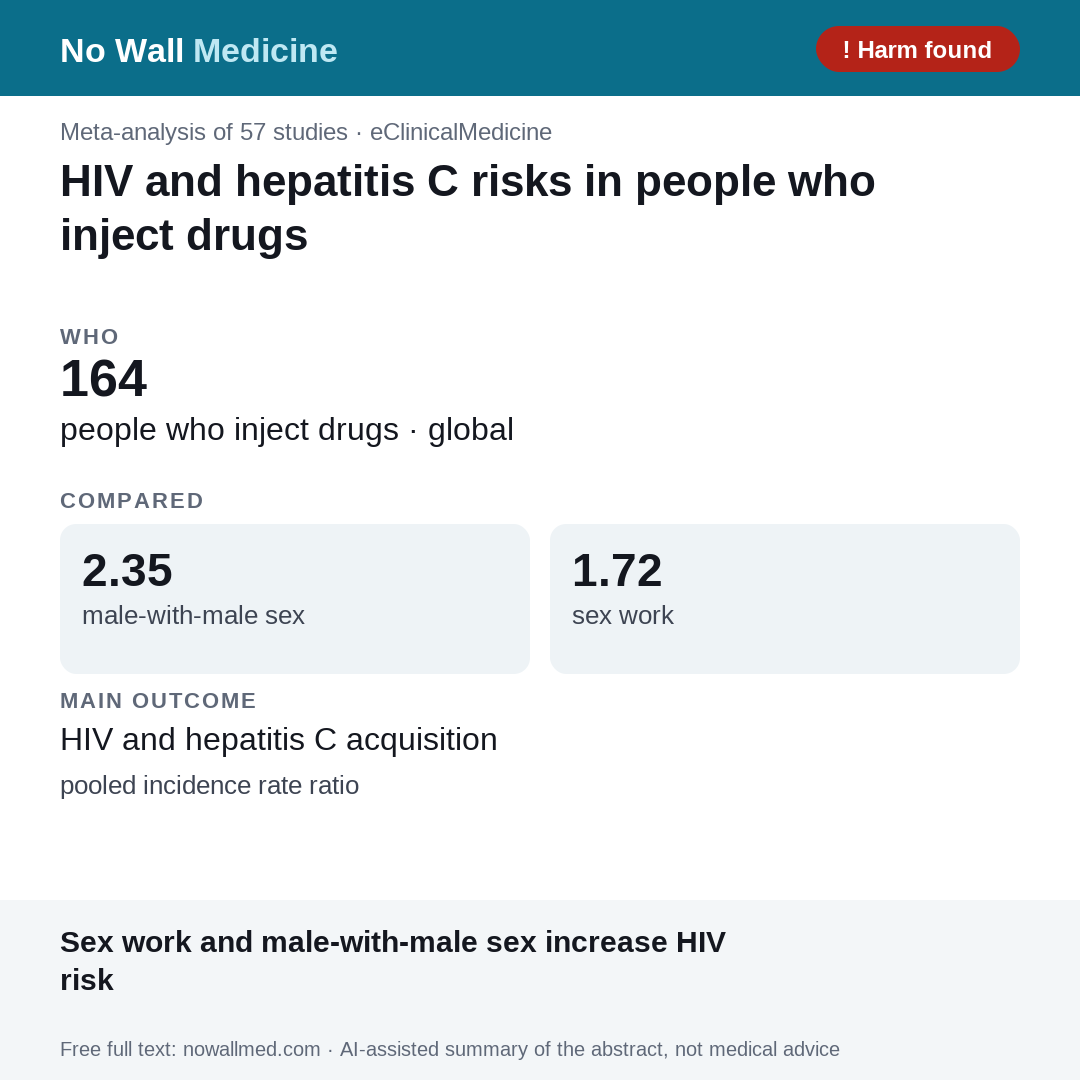
Sex work or male-with-male sexual activity and the risks of HIV and hepatitis C acquisition among people who inject drugs: a global systematic review and meta-analysis
Meta-analysis of 57 studiesHarm found
HIV and hepatitis C risks in people who inject drugs
Who
164
people who inject drugs · global
Compared
2.35male-with-male sex (95% CI 1.51-3.66)
1.72sex work (95% CI 1.30-2.28)
Main outcome
HIV and hepatitis C acquisition
Result: pooled incidence rate ratio
Bottom line: Sex work and male-with-male sex increase HIV risk
Limitation: considerable heterogeneity
Funded by: Medical Research Council and others
eClinicalMedicine · 2026-10-14Download image
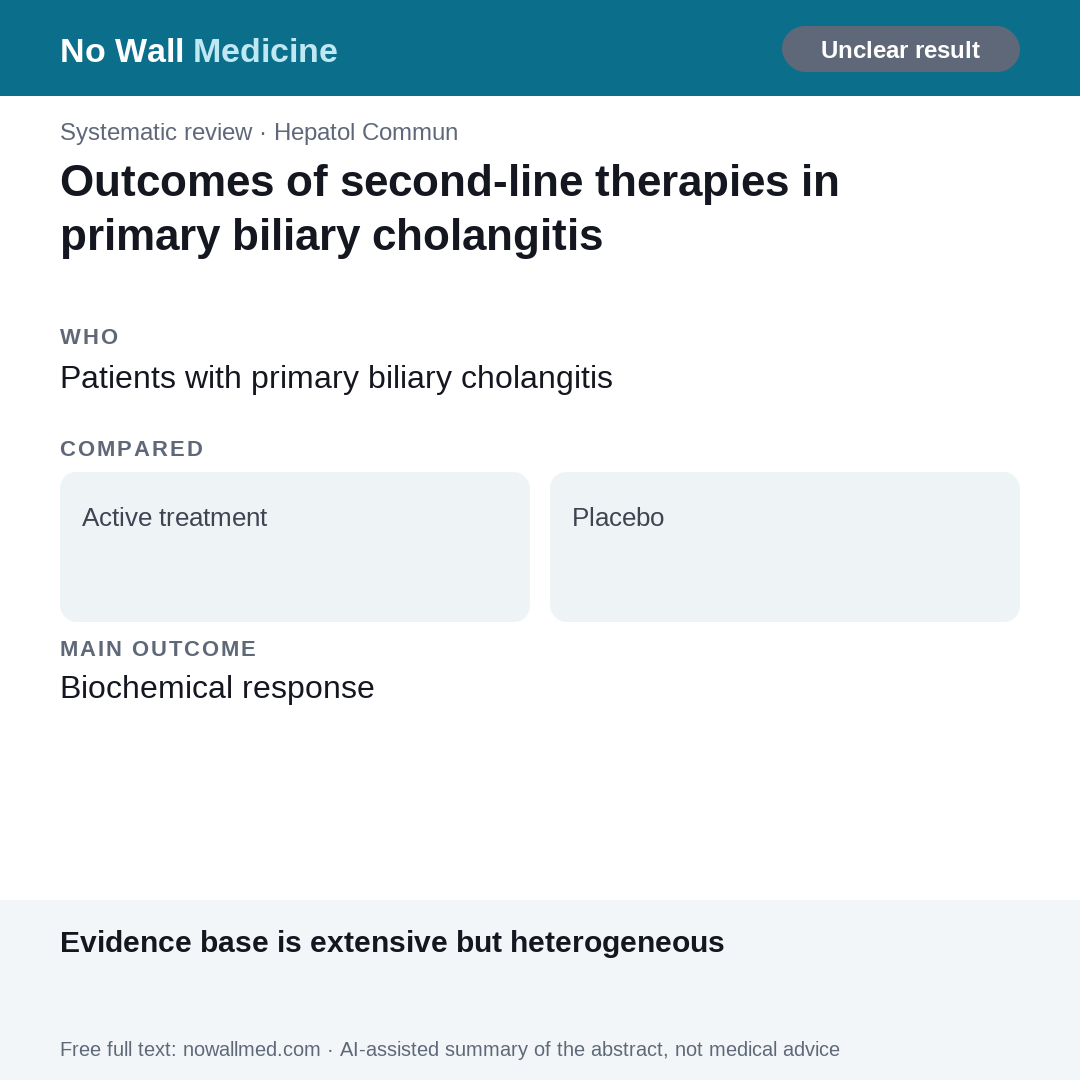
Clinical, safety, and patient-reported outcomes associated with second-line and later therapies in primary biliary cholangitis: A systematic review
Systematic reviewUnclear result
Outcomes of second-line therapies in primary biliary cholangitis
Who
Patients with primary biliary cholangitis
Compared
Active treatment
Placebo
Main outcome
Biochemical response
Bottom line: Evidence base is extensive but heterogeneous
Limitation: Heterogeneous study designs and outcomes
Hepatol Commun · 2026-10-14Download image
Spleen stiffness to rule out high-risk varices in advanced chronic liver disease: an individual patient data meta-analysis
Individual patient data meta-analysisBenefit found
Can spleen stiffness rule out high-risk varices?
Who
2257
Adult patients with advanced chronic liver disease · Multicenter, international
Compared
100%Baveno VI algorithm (95%-CI:97-100%)
97%Combined Baveno-SSM criteria (95%-CI:94-99%)
Main outcome
Ruling out high-risk varices
Result: sensitivity 97% (95%-CI:94-99%)
Bottom line: Spleen stiffness helps rule out high-risk varices
Limitation: low-quality evidence previously
JHEP Rep · 2026-10-14Download image

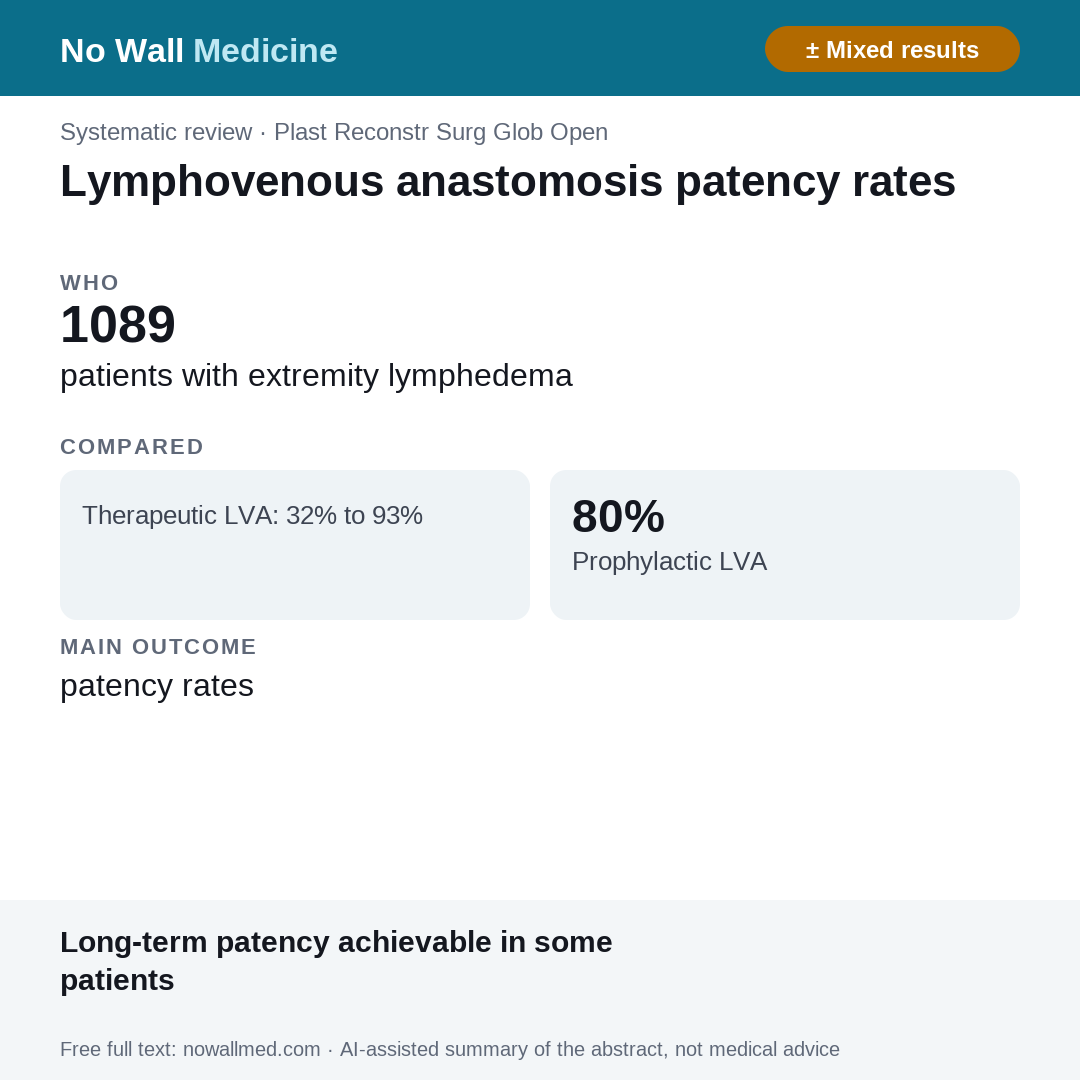
Short- and Long-term Patency of Prophylactic and Therapeutic Lymphovenous Anastomosis for Extremity Lymphedema: A Systematic Review
Systematic reviewMixed results
Lymphovenous anastomosis patency rates
Who
1089
patients with extremity lymphedema
Compared
Therapeutic LVA: 32% to 93%
80%Prophylactic LVA
Main outcome
patency rates
Bottom line: Long-term patency achievable in some patients
Limitation: serious risk of bias and heterogeneity
Plast Reconstr Surg Glob Open · 2026-10-14Download image
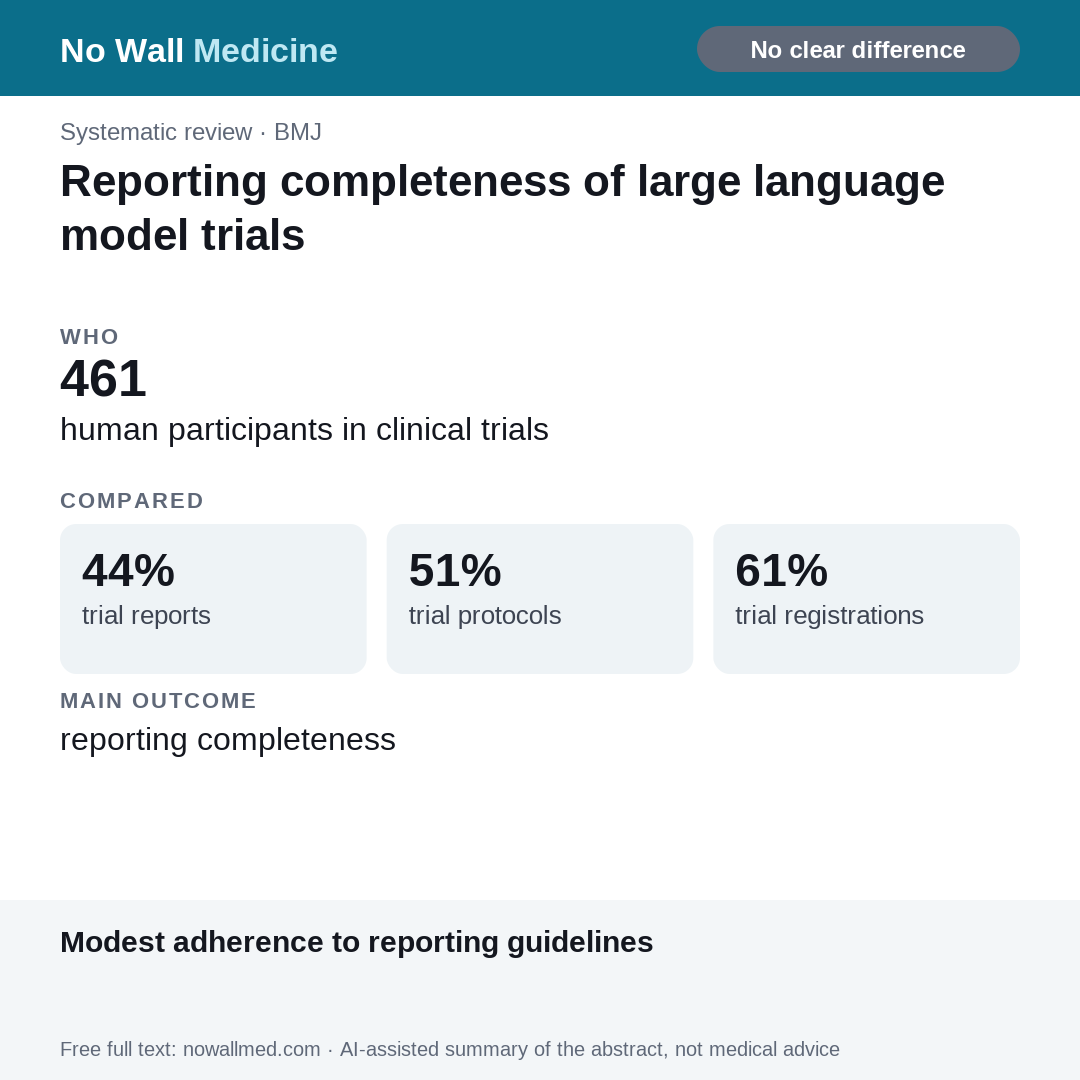
Reporting completeness of clinical trials evaluating large language model interventions in medicine: systematic review
Systematic reviewNo clear difference
Reporting completeness of large language model trials
Who
461
human participants in clinical trials
Compared
44%trial reports (CONSORT 2025)
51%trial protocols (SPIRIT 2025)
61%trial registrations (WHO Trial Registration Dataset)
Main outcome
reporting completeness
Bottom line: Modest adherence to reporting guidelines
Limitation: underreporting of methodological details
BMJ · 2026-10-13Download image
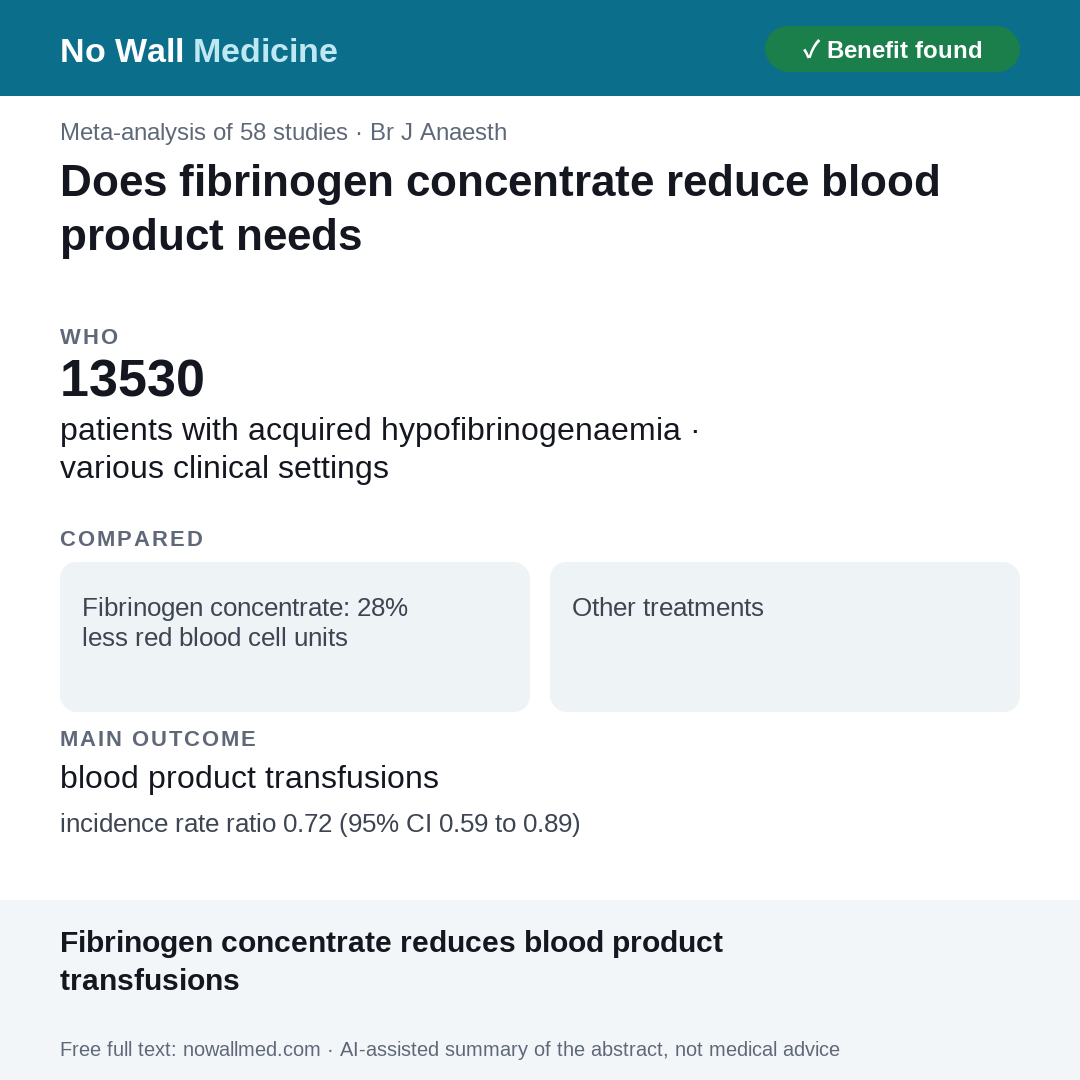
The role of fibrinogen concentrate in the reduction of allogeneic blood product requirements: a systematic review and meta-analysis
Meta-analysis of 58 studiesBenefit found
Does fibrinogen concentrate reduce blood product needs
Who
13530
patients with acquired hypofibrinogenaemia · various clinical settings
Compared
Fibrinogen concentrate: 28% less red blood cell units
Other treatments
Main outcome
blood product transfusions
Result: incidence rate ratio 0.72 (95% CI 0.59 to 0.89)
Bottom line: Fibrinogen concentrate reduces blood product transfusions
Br J Anaesth · 2026-10-12Download image
Plasma metabolomic profiles associated with breastfeeding history and subsequent ovarian cancer risk
Meta-analysis of case-control studiesBenefit found
Breastfeeding impact on ovarian cancer risk
Who
9904
Parous women in midlife and postpartum
Compared
0.62Highest breastfeeding score (0.39 to 0.99)
Lower breastfeeding score
Main outcome
Ovarian cancer risk
Result: odds ratio 0.62 (95% CI 0.39 to 0.99)
Bottom line: Breastfeeding reduces ovarian cancer risk
JNCI Cancer Spectr · 2026-10-11Download image

Assisted Reproductive Technology and Risk of Congenital Heart Defects in the Offspring: A Systematic Review and Meta-Analysis
Meta-analysis of thirteen studiesHarm found
Is assisted reproductive technology linked to congenital heart defects
Who
45916925
children conceived via assisted reproductive technology
Compared
Assisted reproductive technology
Natural pregnancy
Main outcome
congenital heart defects
Result: risk ratio 2.35 (95% CI 1.68-3.28)
Bottom line: Assisted reproductive technology increases congenital heart defect risk
Limitation: significant heterogeneity across studies
J Am Heart Assoc · 2026-10-10Download image

Omega-6 Polyunsaturated Fatty Acids and Peripheral Artery Disease: An Individual Participant-Level Analysis of 9 International Prospective Studies
Meta-analysis of 9 cohortsBenefit found
Omega-6 PUFAs and peripheral artery disease risk
Who
137704
participants free of clinical PAD at baseline · international
Compared
Low linoleic acid: quintile 1
High linoleic acid: quintile 5: HR 0.75
Main outcome
incident peripheral artery disease
Result: hazard ratio 0.75 (95% CI 0.64 to 0.89)
Bottom line: Linoleic acid may protect against PAD
J Am Heart Assoc · 2026-10-10Download image

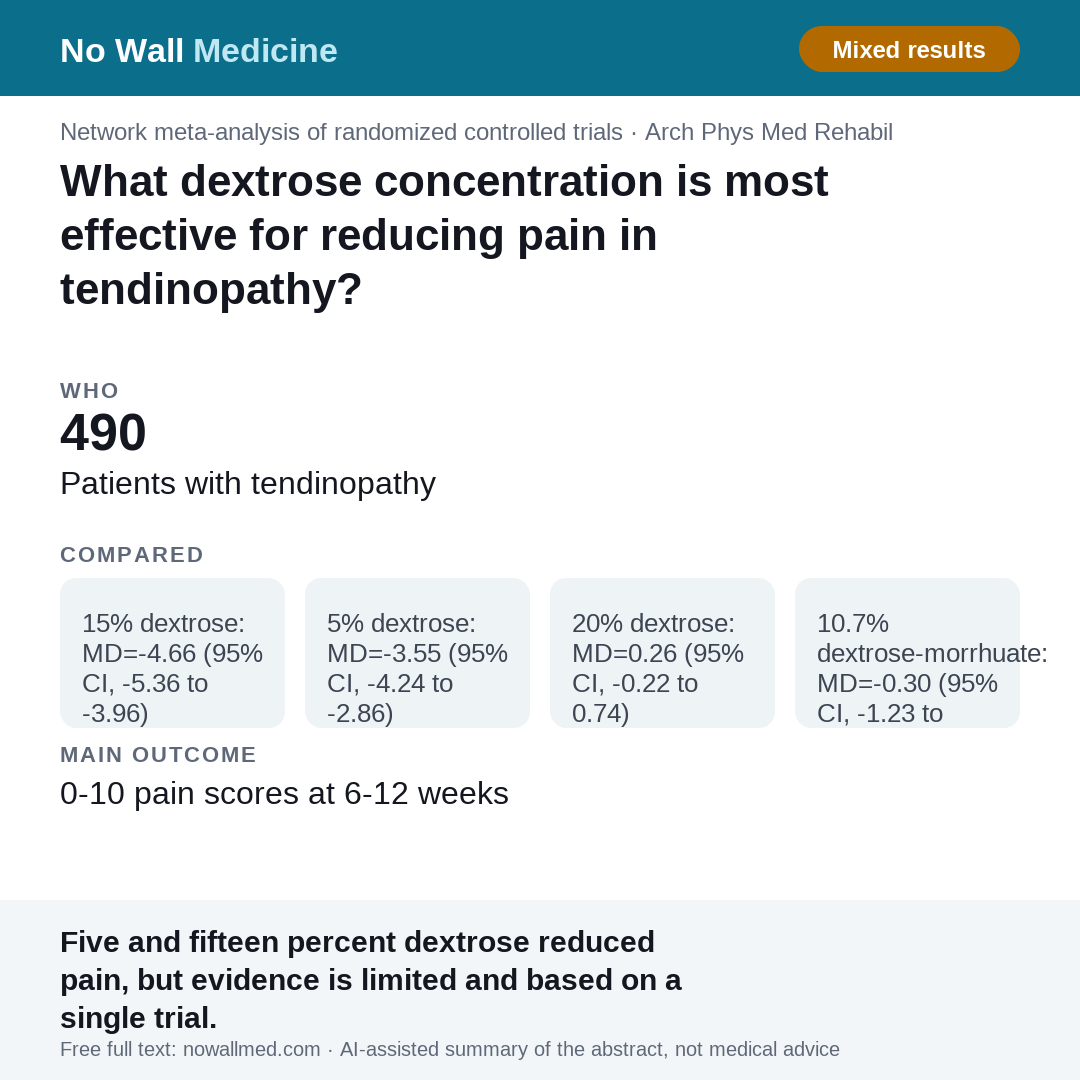
Optimal Dextrose Concentration for Prolotherapy in Tendinopathy: A Systematic Review and Network Meta-Analysis of Randomized Controlled Trials
Network meta-analysis of randomized controlled trialsMixed results
What dextrose concentration is most effective for reducing pain in tendinopathy?
Who
490
Patients with tendinopathy
Compared
15% dextrose: MD=-4.66 (95% CI, -5.36 to -3.96)
5% dextrose: MD=-3.55 (95% CI, -4.24 to -2.86)
20% dextrose: MD=0.26 (95% CI, -0.22 to 0.74)
10.7% dextrose-morrhuate: MD=-0.30 (95% CI, -1.23 to 0.63)
Main outcome
0-10 pain scores at 6-12 weeks
Bottom line: Five and fifteen percent dextrose reduced pain, but evidence is limited and based on a single trial.
Limitation: Evidence is limited, certainty is low to very low, and results may reflect differences in tendon site or schedule.
Arch Phys Med Rehabil · 2026-10-09Download image
Imaging for diagnosis, monitoring and outcome prediction in polymyalgia rheumatica: a systematic literature review and meta-analysis informing an international task force
Systematic literature review and meta-analysisMixed results
What is the evidence for imaging in polymyalgia rheumatica diagnosis, monitoring, and outcome prediction?
Who
Patients with polymyalgia rheumatica
Compared
Imaging for diagnosis
Imaging for monitoring
Imaging for outcome prediction
Main outcome
Diagnostic, monitoring, prognostic, and technical aspects of imaging
Bottom line: Imaging can support polymyalgia rheumatica diagnosis, but evidence for monitoring and outcome prediction is sparse and heterogeneous.
Limitation: Available evidence was heterogeneous, of limited quality, and no study was graded as low risk of bias.
RMD Open · 2026-10-09Download image

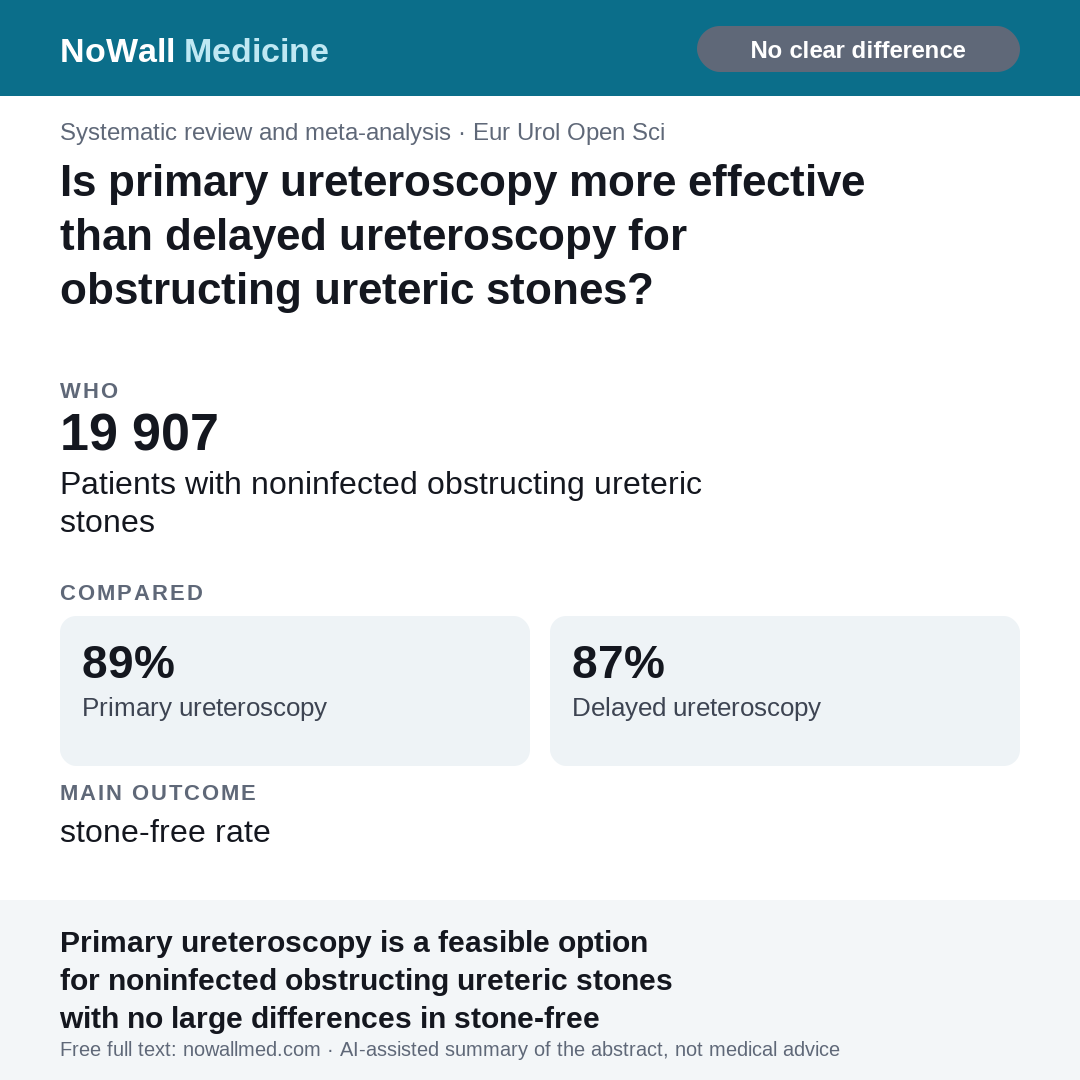
Primary Versus Delayed Ureteroscopy for Obstructing Ureteric Calculi: A Systematic Review and Meta-analysis from the European Association of Urology Endourology
Systematic review and meta-analysisNo clear difference
Is primary ureteroscopy more effective than delayed ureteroscopy for obstructing ureteric stones?
Who
19 907
Patients with noninfected obstructing ureteric stones
Compared
89%Primary ureteroscopy (95% CI 80-95)
87%Delayed ureteroscopy (95% CI 77-94)
Main outcome
stone-free rate
Result: odds ratio 1.20 (95% CI 0.75-1.92)
Bottom line: Primary ureteroscopy is a feasible option for noninfected obstructing ureteric stones with no large differences in stone-free rates.
Limitation: Methodological heterogeneity, predominantly retrospective designs, and sparse data using strict stone-free definitions.
Eur Urol Open Sci · 2026-10-09Download image