Visual abstracts
New randomized trials and meta-analyses from leading journals at a glance: who was studied, what was compared, and what was found. Every paper is free to read in full.
All specialtiesCardiology 2665Oncology 2260Gastroenterology & Hepatology 1027Infectious Disease 1676Neurology 1059Psychiatry & Mental Health 1237Pulmonology 1120Critical Care 739Endocrinology & Diabetes 1374Pediatrics 1560Surgery 1373Orthopedics & Sports Medicine 490Neurosurgery 325Cardiothoracic & Vascular Surgery 289Plastic & Reconstructive Surgery 398Nephrology 552Rheumatology 407Hematology 579Dermatology 310Ophthalmology 306Obstetrics & Gynecology 871Public & Global Health 485Radiology & Imaging 366Anesthesiology 530Urology 445ENT (Otolaryngology) 316Emergency Medicine 298Allergy & Immunology 174Geriatrics 570Family Medicine & Primary Care 307Medical Genetics & Genomics 302Pathology & Laboratory Medicine 85Physical Medicine & Rehabilitation 435Palliative Care 238Nutrition 709Digital Health & AI 1276General Medicine 193
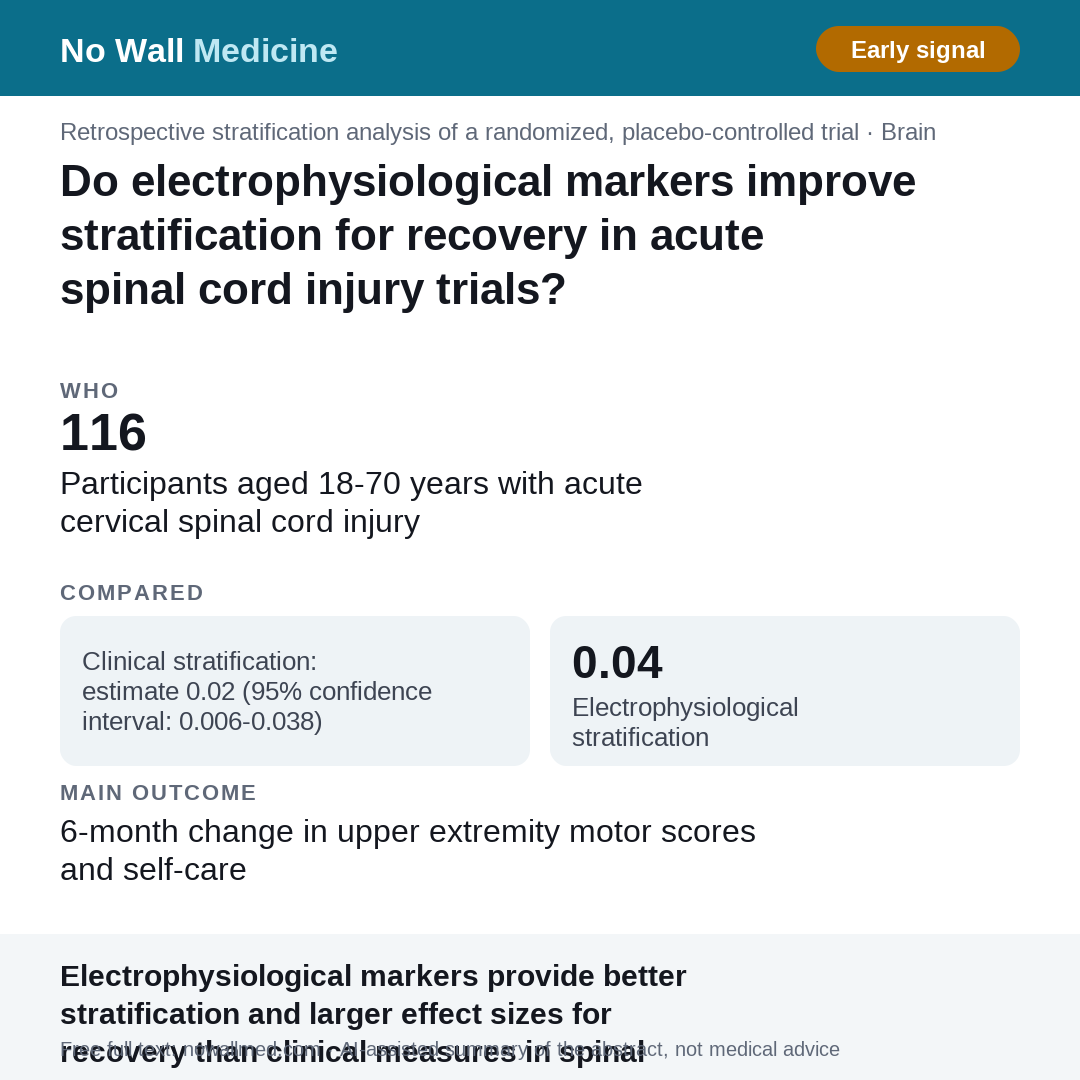
Enhanced clinical trial stratification in spinal cord injury: the value of electrophysiology
Retrospective stratification analysis of a randomized, placebo-controlled trialBenefit found
Do electrophysiological markers improve stratification for recovery in acute spinal cord injury trials?
Who
116
Participants aged 18-70 years with acute cervical spinal cord injury
Compared
Clinical stratification: estimate 0.02 (95% confidence interval: 0.006-0.038)
0.04Electrophysiological stratification (0.015-0.054)
Main outcome
6-month change in upper extremity motor scores and self-care
Result: Cohen's d = 0.94 for electrophysiological stratification
Bottom line: Electrophysiological markers provide better stratification and larger effect sizes for recovery than clinical measures in spinal cord injury trials.
Brain · 2025-09-24Download image
Multimodal prognostic modeling of individual cognitive trajectories to enhance trial efficiency in preclinical Alzheimer's disease
Model development and trial simulationsBenefit found
Can prognostic models of cognitive trajectories improve trial efficiency in preclinical Alzheimer's disease?
Who
Asymptomatic preclinical Alzheimer's disease patients · Phase III A4 study
Compared
Model without tau positron emission tomography: area under the receiver operating characteristic curve 78.6%
Model with tau positron emission tomography: area under the receiver operating characteristic curve 83.1%
Main outcome
Predicting cognitive decline and trial efficiency
Result: reduced sample sizes by 35% and increased power from 80% to 94.7%
Bottom line: Prognostic models of cognitive decline improve trial efficiency by reducing required sample sizes and increasing statistical power.
Alzheimers Dement · 2025-09-24Download image

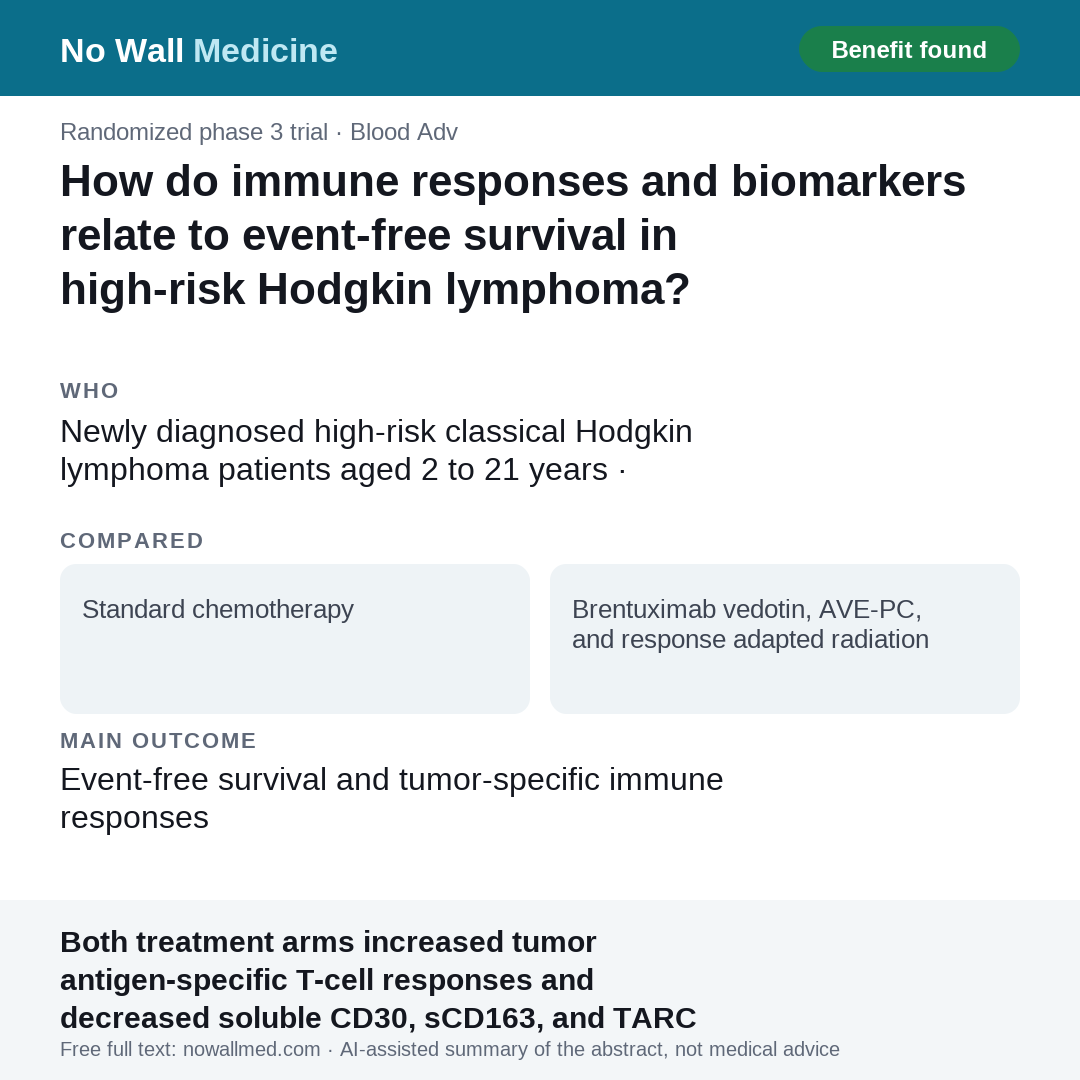
Tumor-specific immune responses and biomarkers in pediatric patients with high-risk Hodgkin lymphoma
Randomized phase 3 trialBenefit found
How do immune responses and biomarkers relate to event-free survival in high-risk Hodgkin lymphoma?
Who
Newly diagnosed high-risk classical Hodgkin lymphoma patients aged 2 to 21 years · Children's Oncology Group clinical trial
Compared
Standard chemotherapy
Brentuximab vedotin, AVE-PC, and response adapted radiation
Main outcome
Event-free survival and tumor-specific immune responses
Bottom line: Both treatment arms increased tumor antigen-specific T-cell responses and decreased soluble CD30, sCD163, and TARC levels.
Blood Adv · 2025-09-24Download image
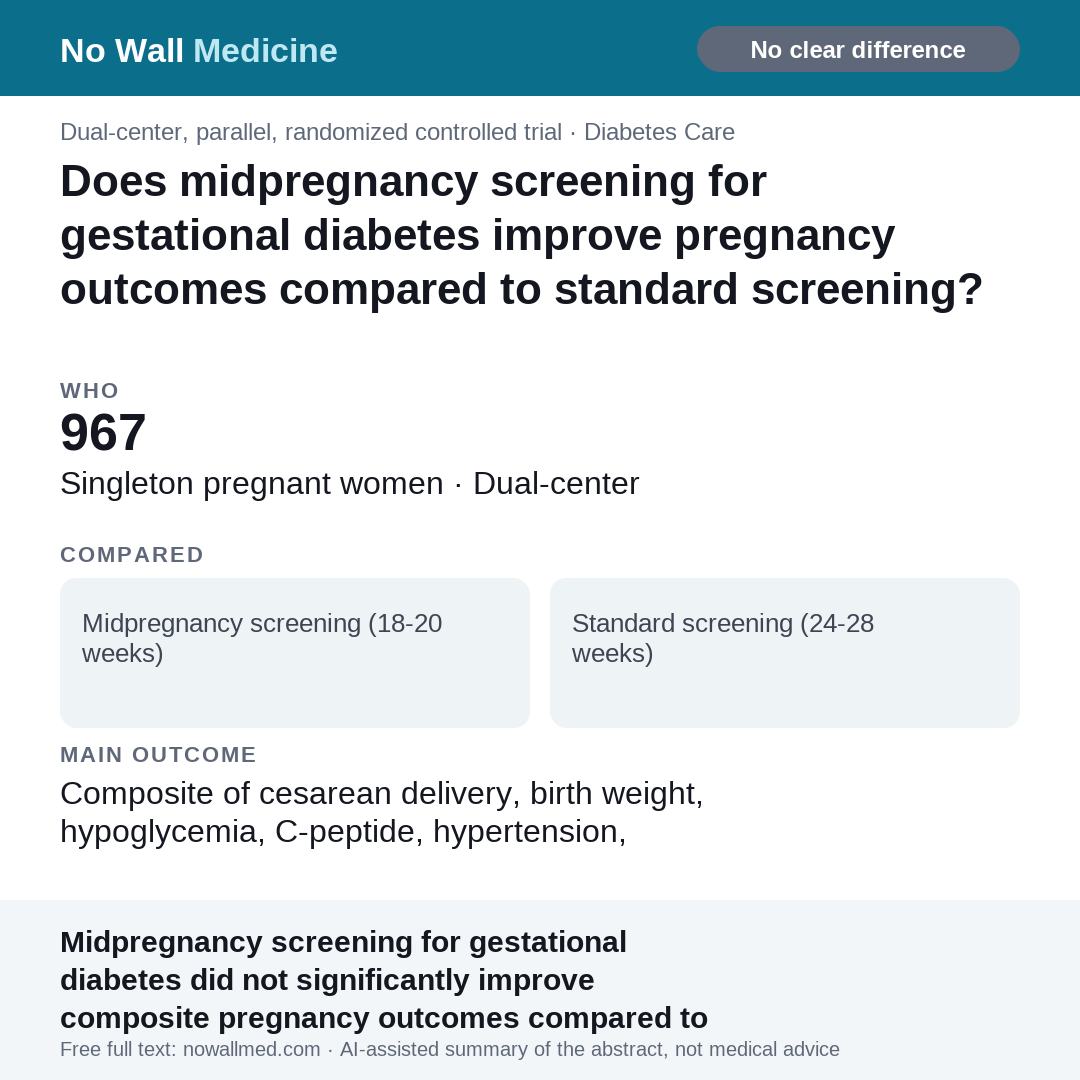
The Effect of Midpregnancy Screening for Gestational Diabetes Mellitus on Pregnancy Outcomes: The TESGO Randomized Controlled Trial
Dual-center, parallel, randomized controlled trialNo clear difference
Does midpregnancy screening for gestational diabetes improve pregnancy outcomes compared to standard screening?
Who
967
Singleton pregnant women · Dual-center
Compared
Midpregnancy screening (18-20 weeks)
Standard screening (24-28 weeks)
Main outcome
Composite of cesarean delivery, birth weight, hypoglycemia, C-peptide, hypertension, preeclampsia, and birth trauma
Bottom line: Midpregnancy screening for gestational diabetes did not significantly improve composite pregnancy outcomes compared to standard screening.
Diabetes Care · 2025-09-23Download image
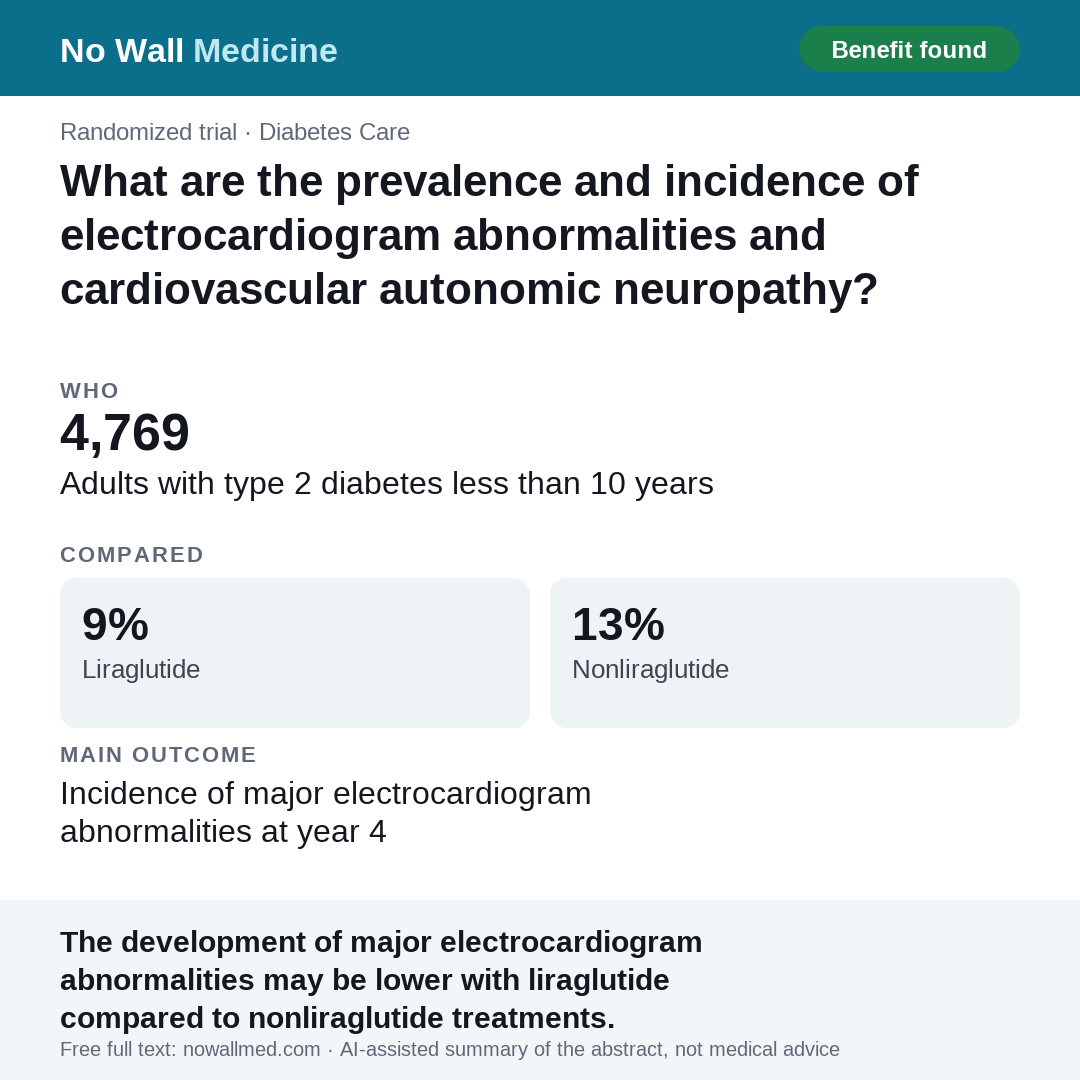
Differences in Prevalence and Incidence of Electrocardiogram Abnormalities and Cardiovascular Autonomic Neuropathy Among Randomized Glucose-Lowering Treatments in Early Type 2 Diabetes: The Glycemia Reduction Approaches in Diabetes (GRADE) Cohort
Randomized trialBenefit found
What are the prevalence and incidence of electrocardiogram abnormalities and cardiovascular autonomic neuropathy?
Who
4,769
Adults with type 2 diabetes less than 10 years
Compared
9%Liraglutide
13%Nonliraglutide
Main outcome
Incidence of major electrocardiogram abnormalities at year 4
Bottom line: The development of major electrocardiogram abnormalities may be lower with liraglutide compared to nonliraglutide treatments.
Diabetes Care · 2025-09-23Download image
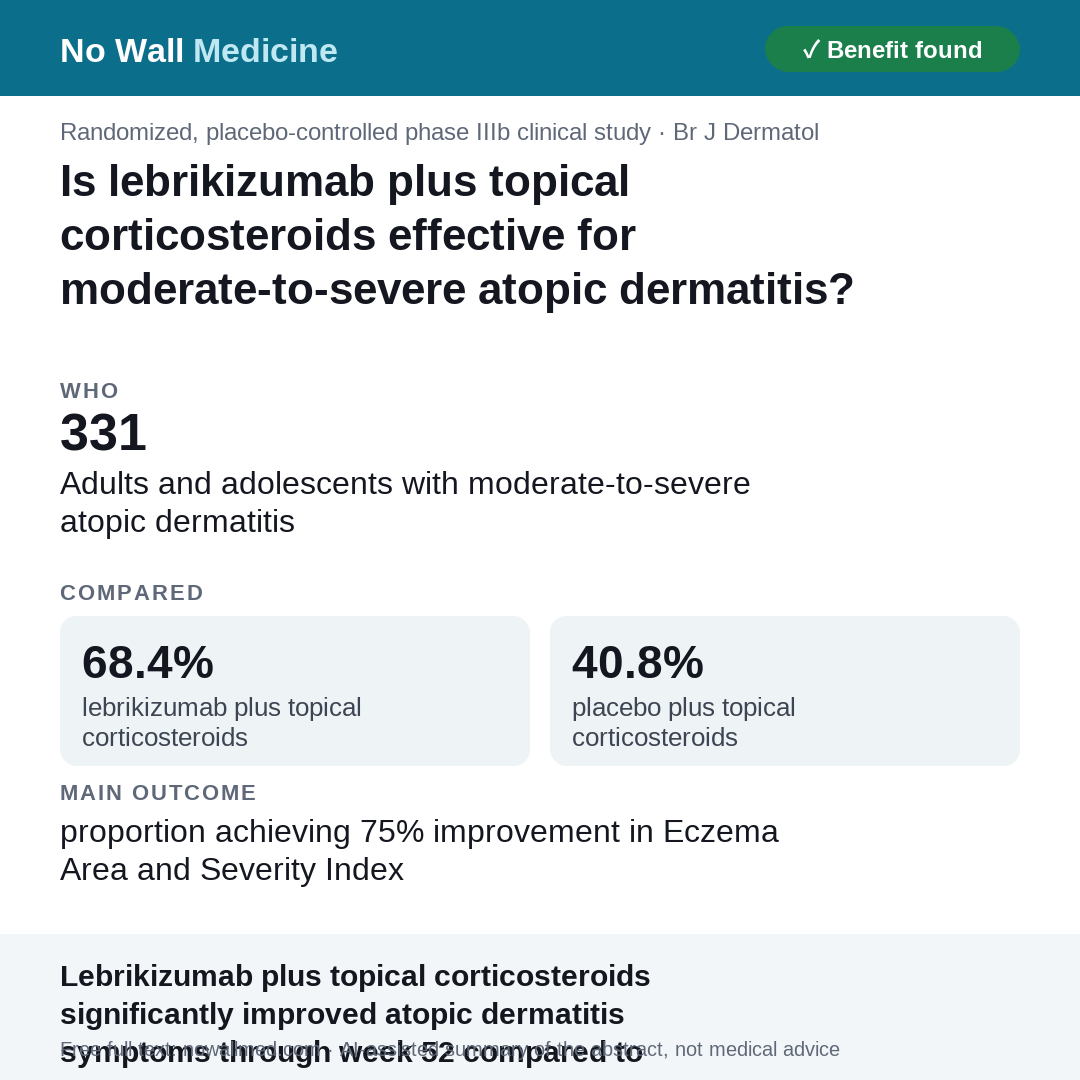
Efficacy and safety of lebrikizumab in adult and adolescent patients with moderate-to-severe atopic dermatitis inadequately controlled with or ineligible for ciclosporin A: a placebo-controlled, randomized phase IIIb clinical study (ADvantage)
Randomized, placebo-controlled phase IIIb clinical studyBenefit found
Is lebrikizumab plus topical corticosteroids effective for moderate-to-severe atopic dermatitis?
Who
331
Adults and adolescents with moderate-to-severe atopic dermatitis
Compared
68.4%lebrikizumab plus topical corticosteroids (EASI 75 at week 16)
40.8%placebo plus topical corticosteroids (EASI 75 at week 16)
Main outcome
proportion achieving 75% improvement in Eczema Area and Severity Index
Bottom line: Lebrikizumab plus topical corticosteroids significantly improved atopic dermatitis symptoms through week 52 compared to placebo.
Br J Dermatol · 2025-09-23Download image
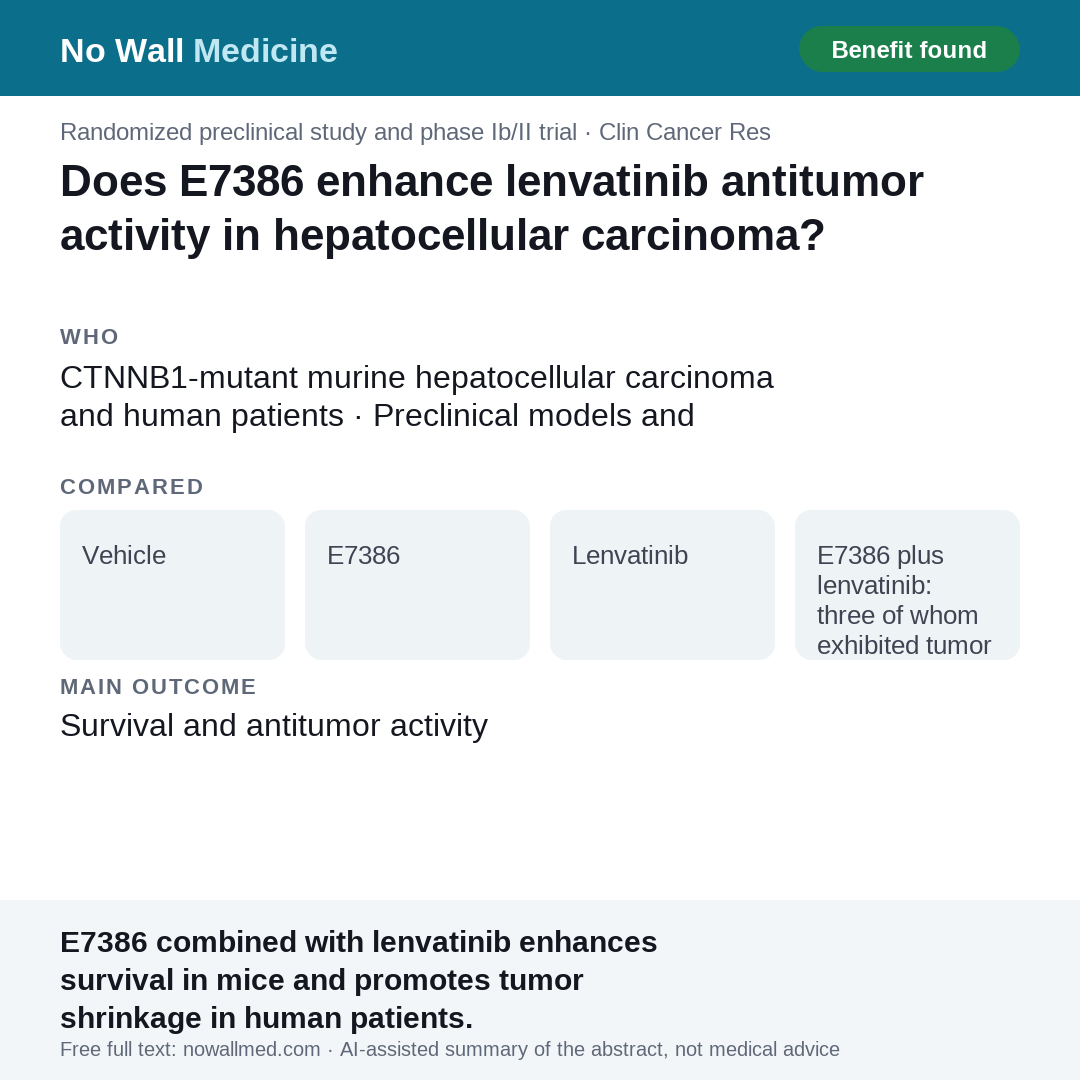
E7386 Enhances Lenvatinib's Antitumor Activity in Preclinical Models and Human Hepatocellular Carcinoma
Randomized preclinical study and phase Ib/II trialBenefit found
Does E7386 enhance lenvatinib antitumor activity in hepatocellular carcinoma?
Who
CTNNB1-mutant murine hepatocellular carcinoma and human patients · Preclinical models and human phase Ib/II trial
Compared
Vehicle
E7386
Lenvatinib
E7386 plus lenvatinib: three of whom exhibited tumor diameter shrinkage >30%
Main outcome
Survival and antitumor activity
Bottom line: E7386 combined with lenvatinib enhances survival in mice and promotes tumor shrinkage in human patients.
Clin Cancer Res · 2025-09-23Download image
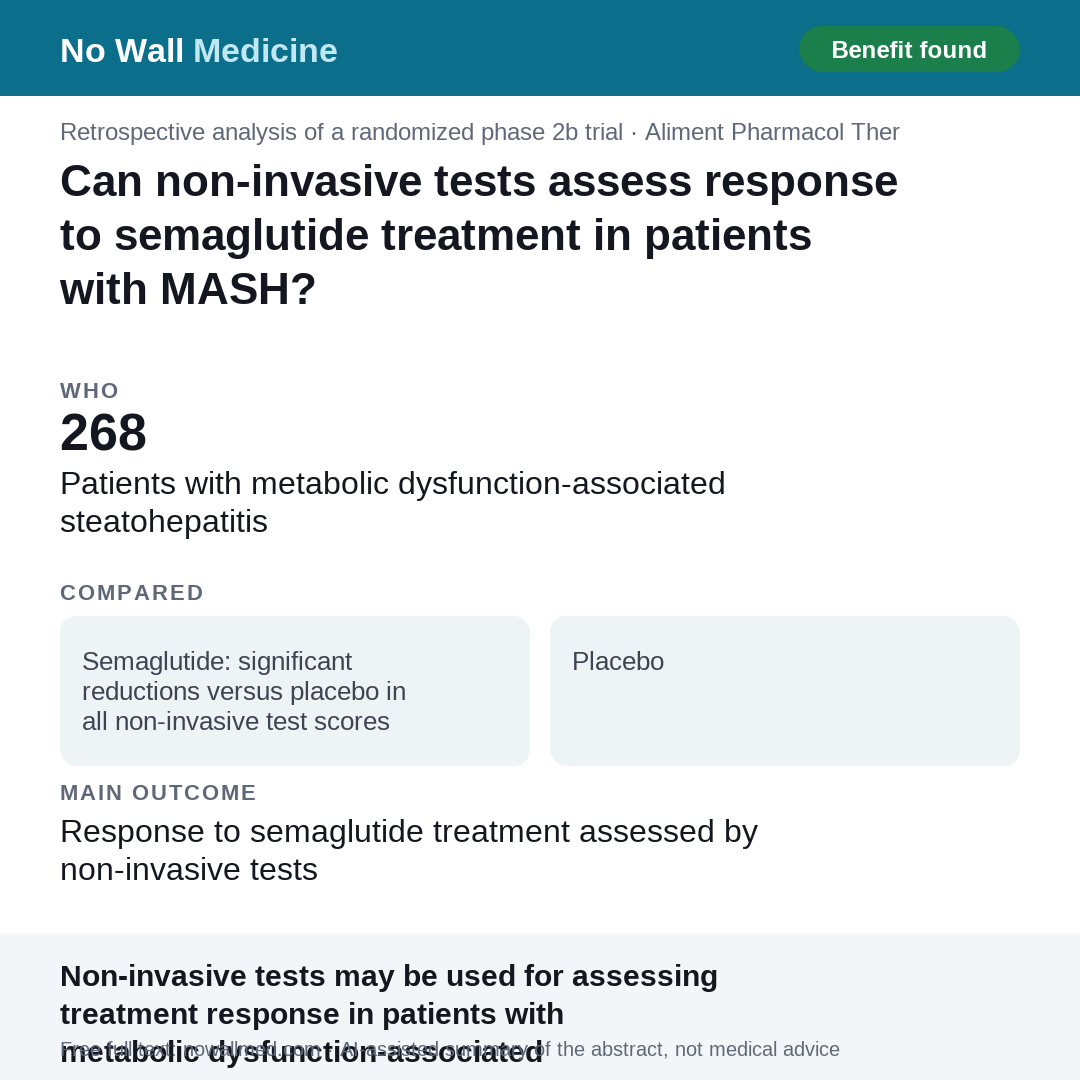
Exploration of Multiple Non-Invasive Tests for Assessing Response to Treatment in a Semaglutide Phase 2b Trial in Patients with MASH
Retrospective analysis of a randomized phase 2b trialBenefit found
Can non-invasive tests assess response to semaglutide treatment in patients with MASH?
Who
268
Patients with metabolic dysfunction-associated steatohepatitis
Compared
Semaglutide: significant reductions versus placebo in all non-invasive test scores
Placebo
Main outcome
Response to semaglutide treatment assessed by non-invasive tests
Bottom line: Non-invasive tests may be used for assessing treatment response in patients with metabolic dysfunction-associated steatohepatitis.
Aliment Pharmacol Ther · 2025-09-23Download image
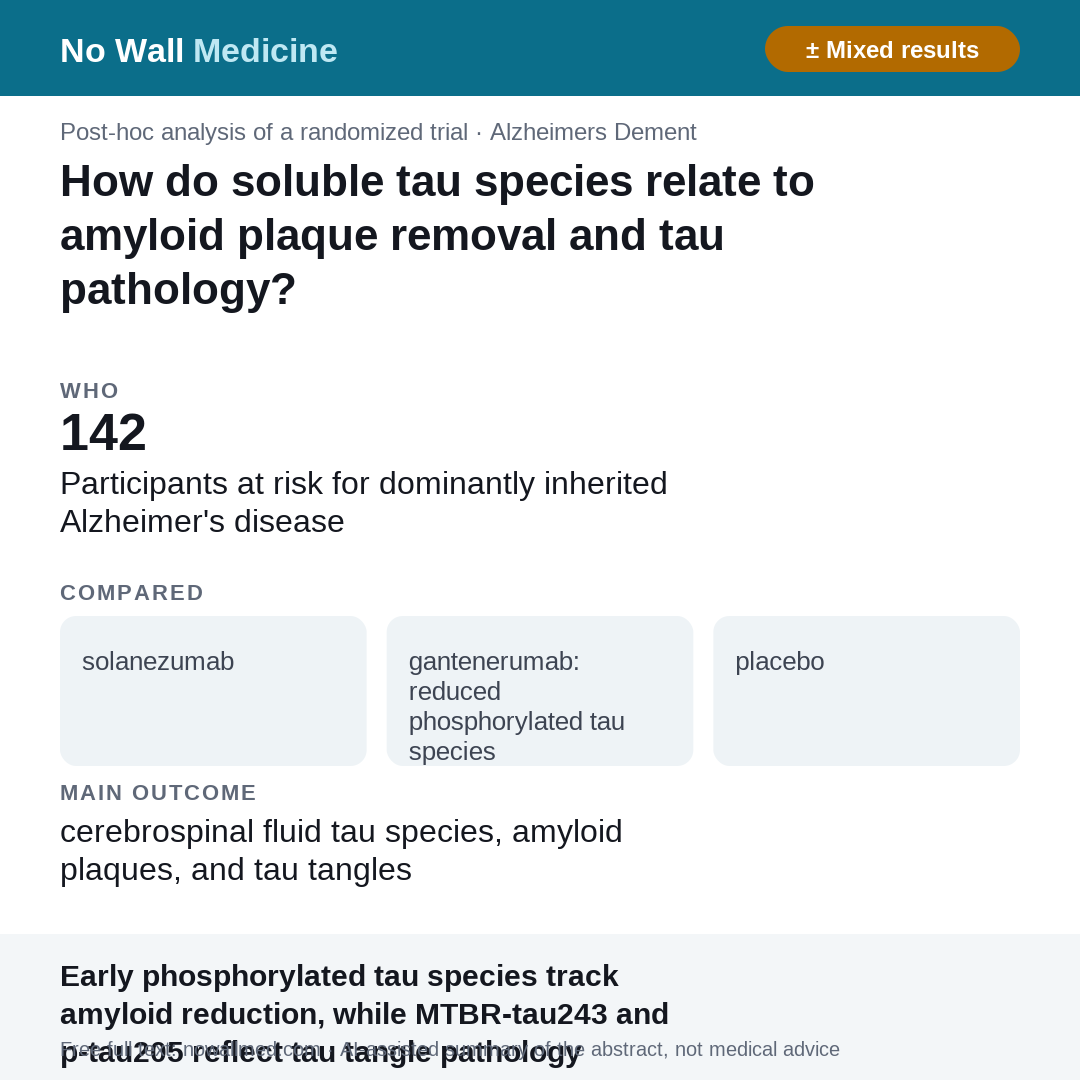
The relationship of soluble tau species with Alzheimer's disease amyloid plaque removal and tau pathology
Post-hoc analysis of a randomized trialMixed results
How do soluble tau species relate to amyloid plaque removal and tau pathology?
Who
142
Participants at risk for dominantly inherited Alzheimer's disease
Compared
solanezumab
gantenerumab: reduced phosphorylated tau species
placebo
Main outcome
cerebrospinal fluid tau species, amyloid plaques, and tau tangles
Bottom line: Early phosphorylated tau species track amyloid reduction, while MTBR-tau243 and p-tau205 reflect tau tangle pathology progression.
Alzheimers Dement · 2025-09-23Download image
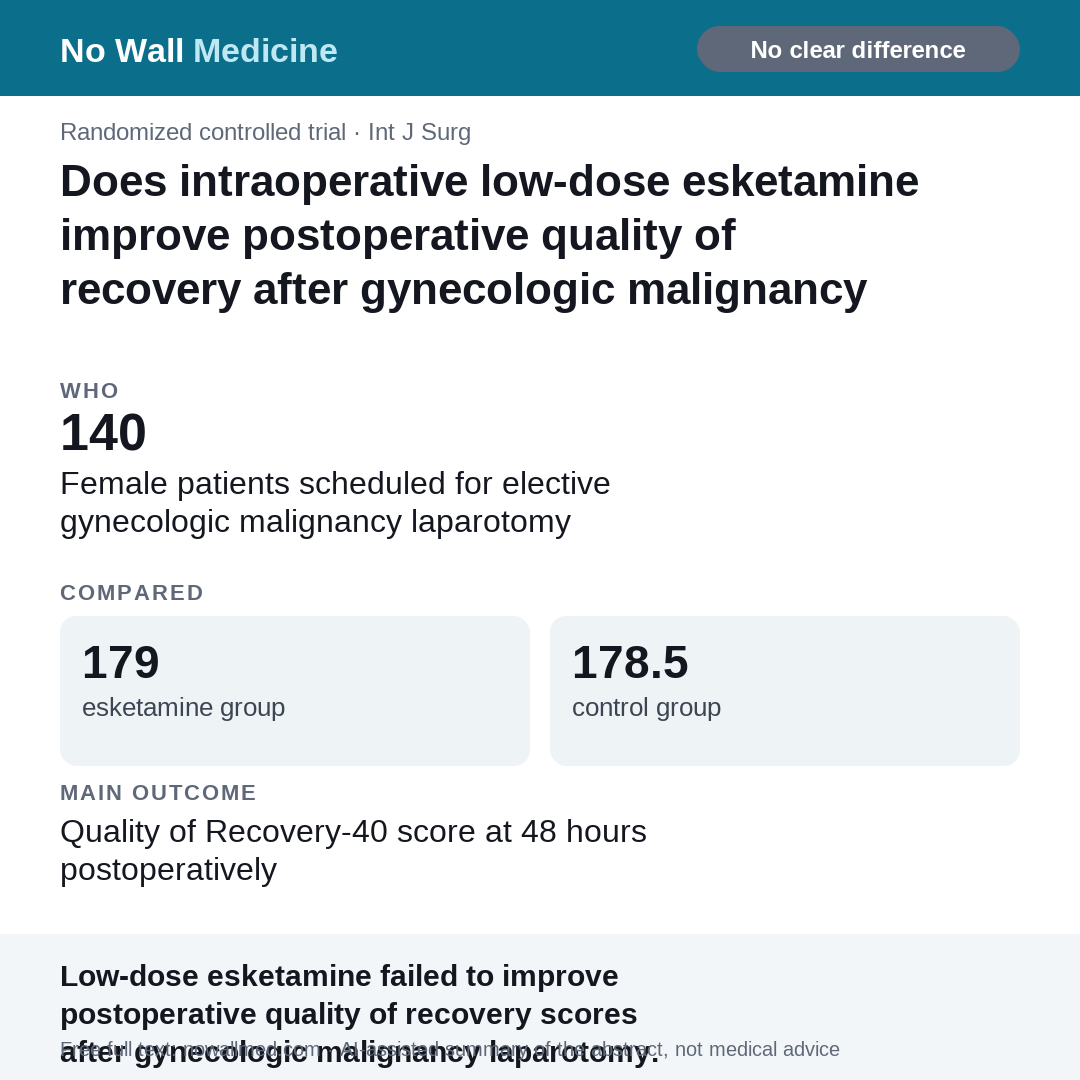
Effect of intraoperative low-dose esketamine on postoperative quality of recovery in patients undergoing laparotomy for gynecologic malignancy: a randomized controlled trial
Randomized controlled trialNo clear difference
Does intraoperative low-dose esketamine improve postoperative quality of recovery after gynecologic malignancy laparotomy?
Who
140
Female patients scheduled for elective gynecologic malignancy laparotomy
Compared
179esketamine group (164-190)
178.5control group (163-186)
Main outcome
Quality of Recovery-40 score at 48 hours postoperatively
Result: median difference, 1; 95% CI, -4 to 7
Bottom line: Low-dose esketamine failed to improve postoperative quality of recovery scores after gynecologic malignancy laparotomy.
Int J Surg · 2025-09-23Download image
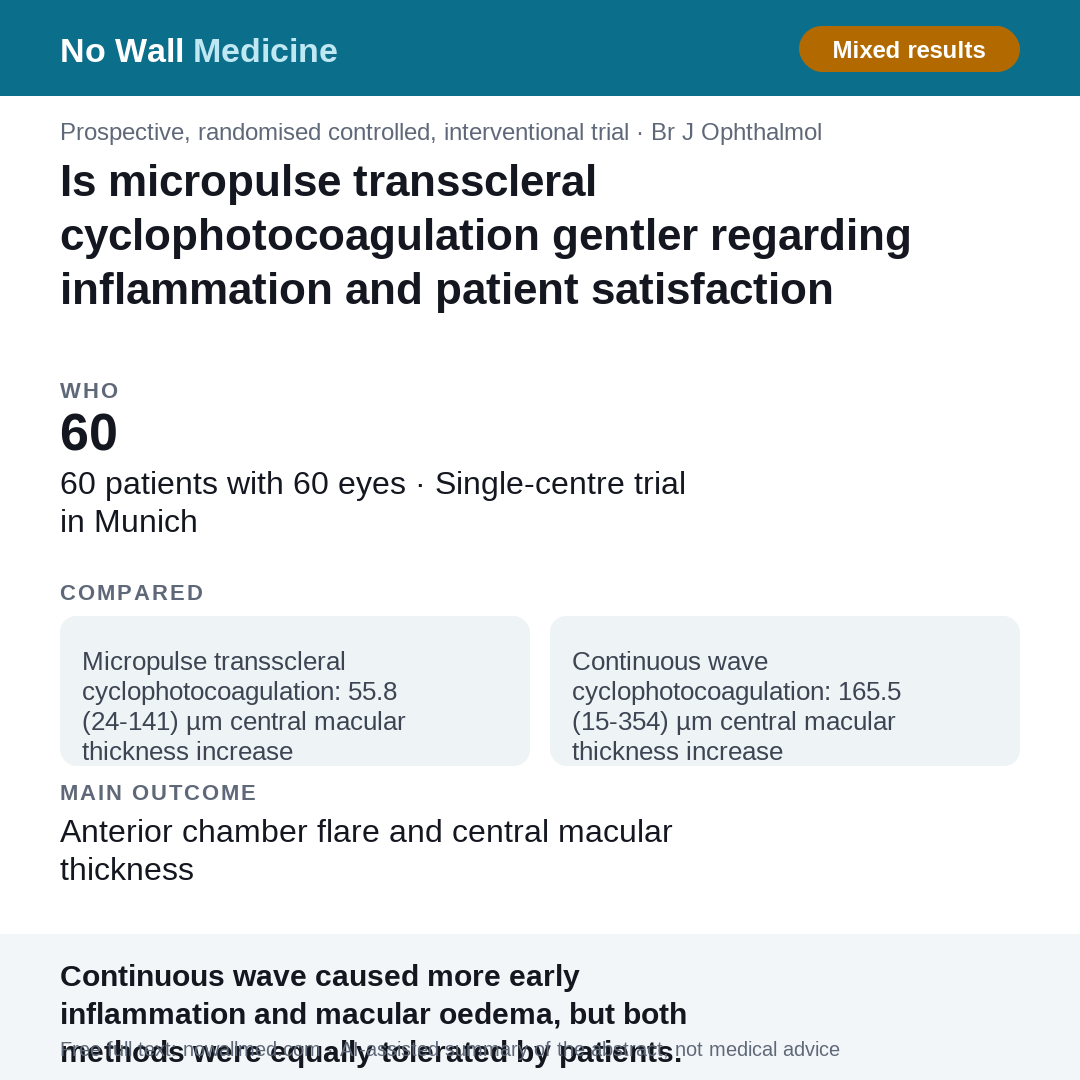
Inflammation and patient satisfaction in micropulse versus continuous wave transscleral cyclophotocoagulation
Prospective, randomised controlled, interventional trialMixed results
Is micropulse transscleral cyclophotocoagulation gentler regarding inflammation and patient satisfaction than continuous wave?
Who
60
60 patients with 60 eyes · Single-centre trial in Munich
Compared
Micropulse transscleral cyclophotocoagulation: 55.8 (24-141) µm central macular thickness increase
Continuous wave cyclophotocoagulation: 165.5 (15-354) µm central macular thickness increase
Main outcome
Anterior chamber flare and central macular thickness
Bottom line: Continuous wave caused more early inflammation and macular oedema, but both methods were equally tolerated by patients.
Br J Ophthalmol · 2025-09-23Download image
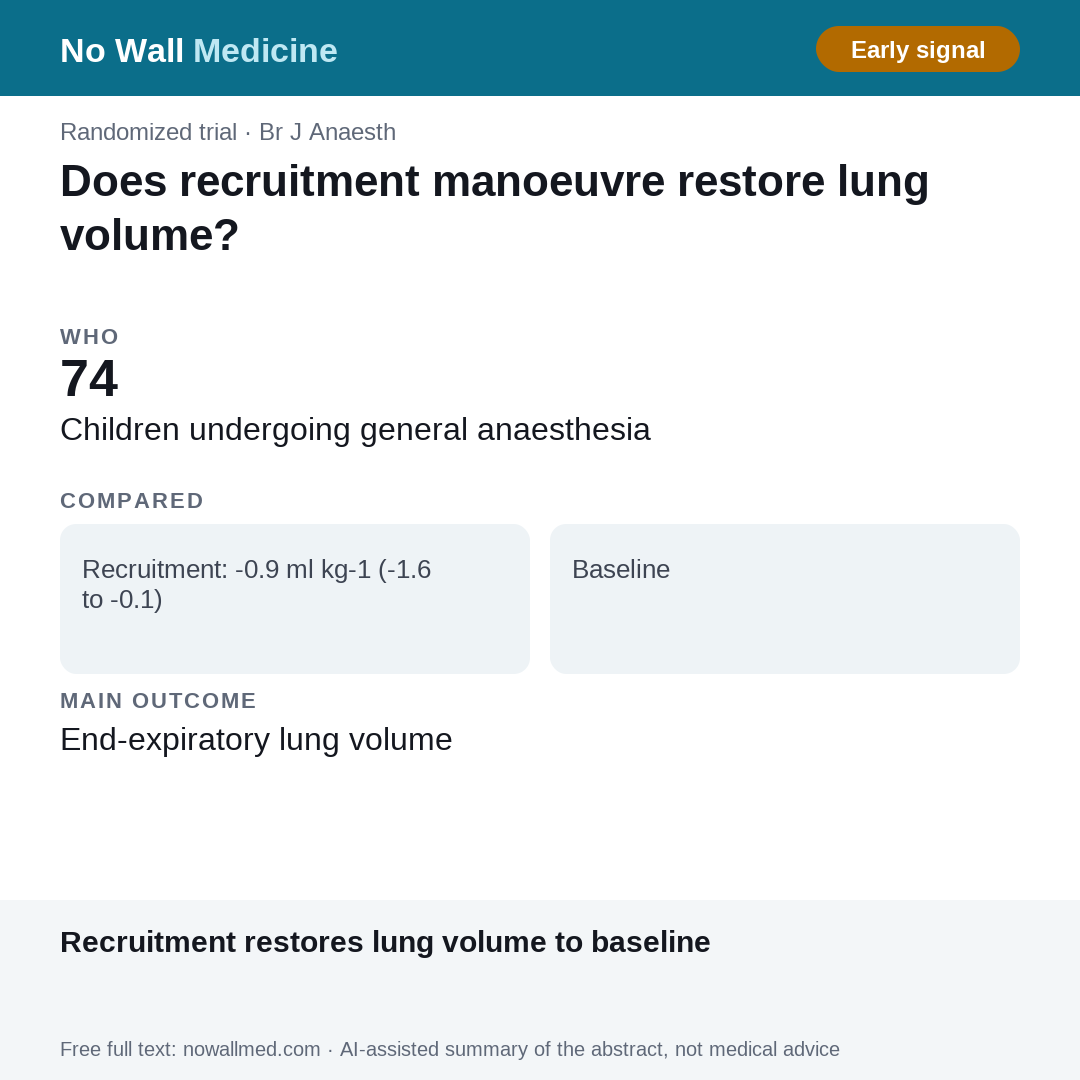
Efficacy of a lung recruitment manoeuvre in children undergoing general anaesthesia with a supraglottic airway
Randomized trialBenefit found
Does recruitment manoeuvre restore lung volume?
Who
74
Children undergoing general anaesthesia
Compared
Recruitment: -0.9 ml kg-1 (-1.6 to -0.1)
Baseline
Main outcome
End-expiratory lung volume
Bottom line: Recruitment restores lung volume to baseline
Br J Anaesth · 2025-09-23Download image
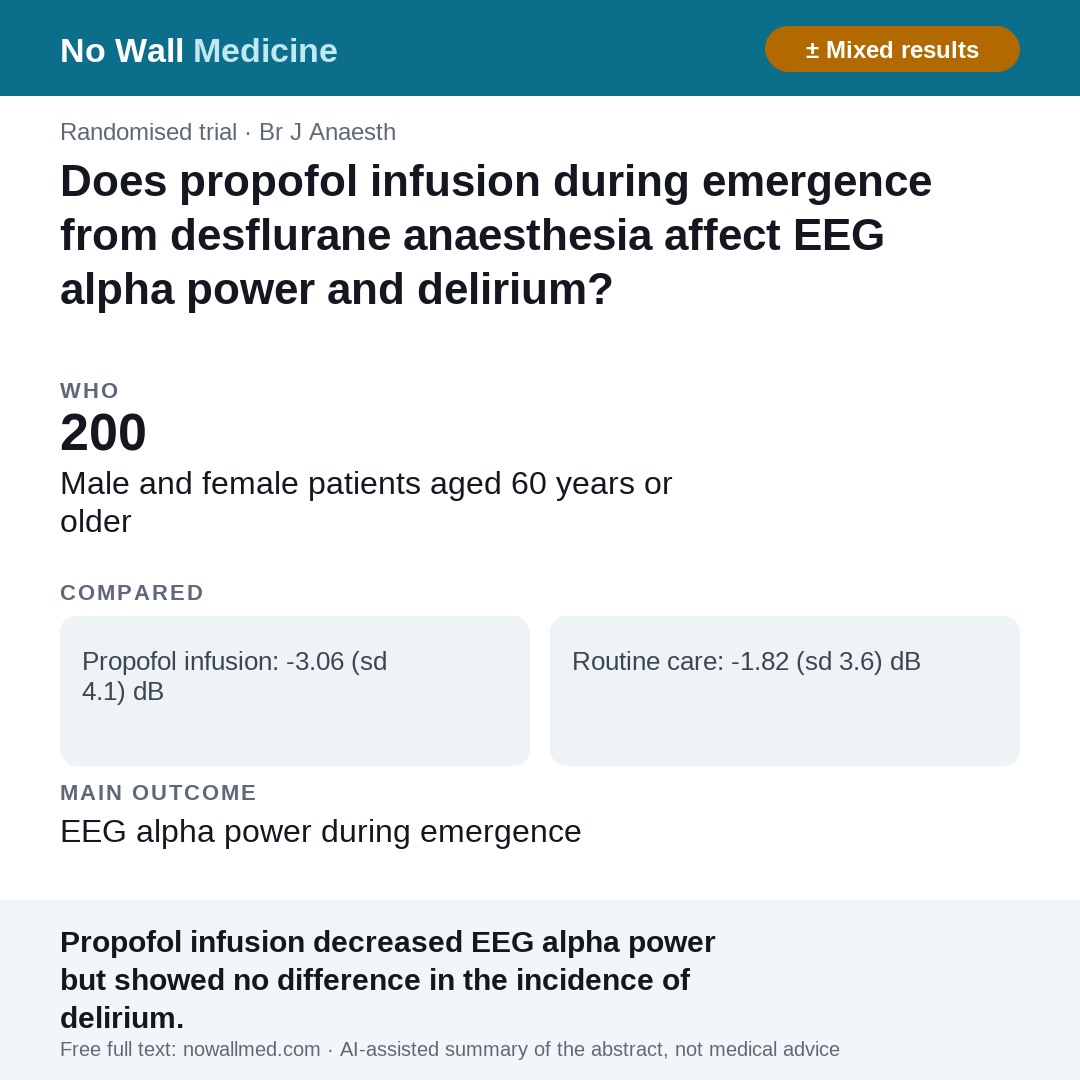
EEG alpha power and delirium in the postanaesthesia care unit in older adults: the AlphaMax trial part 2 - effect of propofol infusion during emergence from desflurane anaesthesia☆
Randomised trialMixed results
Does propofol infusion during emergence from desflurane anaesthesia affect EEG alpha power and delirium?
Who
200
Male and female patients aged 60 years or older
Compared
Propofol infusion: -3.06 (sd 4.1) dB
Routine care: -1.82 (sd 3.6) dB
Main outcome
EEG alpha power during emergence
Bottom line: Propofol infusion decreased EEG alpha power but showed no difference in the incidence of delirium.
Limitation: The study was underpowered for postanaesthesia care unit delirium due to feasibility issues.
Br J Anaesth · 2025-09-23Download image
The effect of an Iyengar yoga-based exercise programme versus a seated yoga relaxation programme on falls in people aged 60 years and older (SAGE): a pragmatic, two-arm, parallel randomised controlled trial
Pragmatic, two-arm, parallel randomised controlled trialHarm found
Does Iyengar yoga-based exercise reduce fall rates compared to seated yoga relaxation in older adults?
Who
700
Australian community-dwelling people aged 60 years and older · Australia
Compared
Iyengar yoga-based exercise: 0.87 falls per person-year
Seated yoga relaxation: 0.64 falls per person-year
Main outcome
fall rate per year
Result: incidence rate ratio 1.33 (95% CI 1.01-1.75)
Bottom line: Iyengar yoga-based exercise resulted in a higher fall rate than seated yoga relaxation in older adults.
Funded by: National Health and Medical Research Council
Lancet Healthy Longev · 2025-09-23Download image

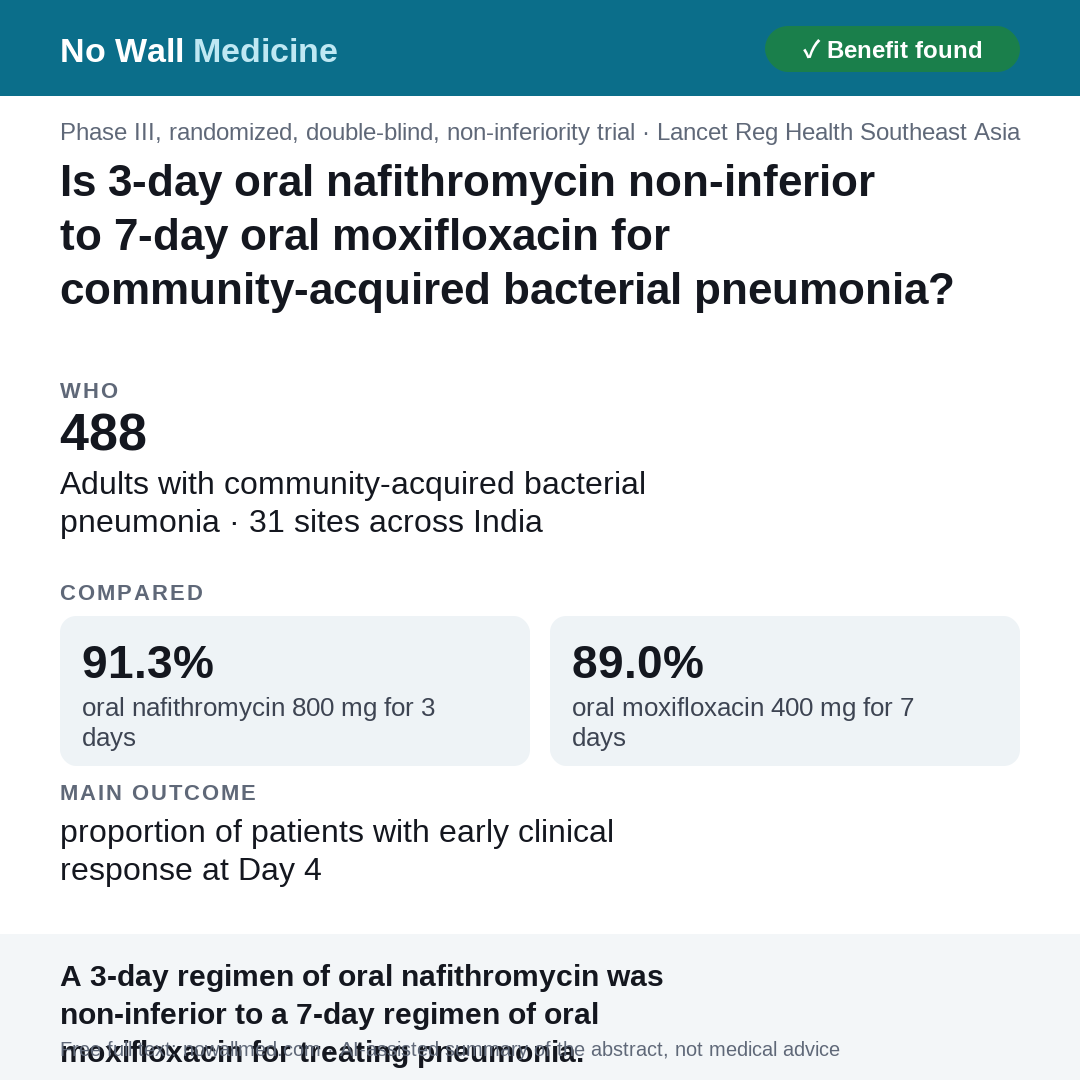
Efficacy and safety of a 3-day once-daily regimen of oral nafithromycin in comparison to oral moxifloxacin for the treatment of community-acquired bacterial pneumonia in adults: a phase III, randomized, double-blind controlled trial
Phase III, randomized, double-blind, non-inferiority trialBenefit found
Is 3-day oral nafithromycin non-inferior to 7-day oral moxifloxacin for community-acquired bacterial pneumonia?
Who
488
Adults with community-acquired bacterial pneumonia · 31 sites across India
Compared
91.3%oral nafithromycin 800 mg for 3 days (220/241)
89.0%oral moxifloxacin 400 mg for 7 days (210/236)
Main outcome
proportion of patients with early clinical response at Day 4
Result: difference 2.3%; 95% CI (-3.1, 7.8)
Bottom line: A 3-day regimen of oral nafithromycin was non-inferior to a 7-day regimen of oral moxifloxacin for treating pneumonia.
Funded by: Wockhardt and BIRAC, Department of Biotechnology, Government of India
Lancet Reg Health Southeast Asia · 2025-09-23Download image
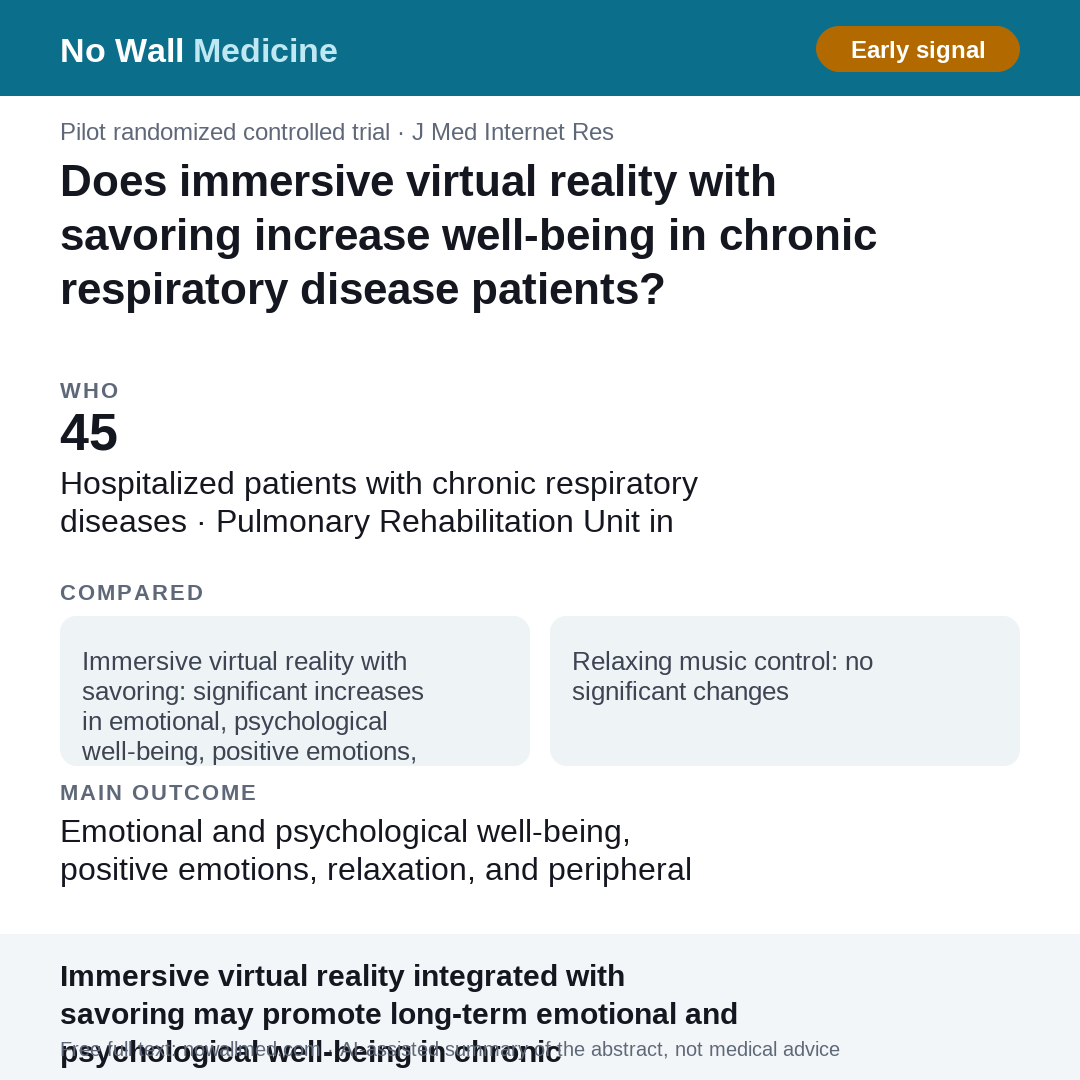
Integrating Immersive Virtual Reality With Savoring to Promote the Well-Being of Patients With Chronic Respiratory Diseases: Pilot Randomized Controlled Trial
Pilot randomized controlled trialBenefit found
Does immersive virtual reality with savoring increase well-being in chronic respiratory disease patients?
Who
45
Hospitalized patients with chronic respiratory diseases · Pulmonary Rehabilitation Unit in Italy
Compared
Immersive virtual reality with savoring: significant increases in emotional, psychological well-being, positive emotions, and relaxation
Relaxing music control: no significant changes
Main outcome
Emotional and psychological well-being, positive emotions, relaxation, and peripheral oxygen saturation
Bottom line: Immersive virtual reality integrated with savoring may promote long-term emotional and psychological well-being in chronic respiratory disease patients.
Limitation: Control group only received relaxing music, precluding determination of specific contributions of virtual reality and savoring.
J Med Internet Res · 2025-09-23Download image
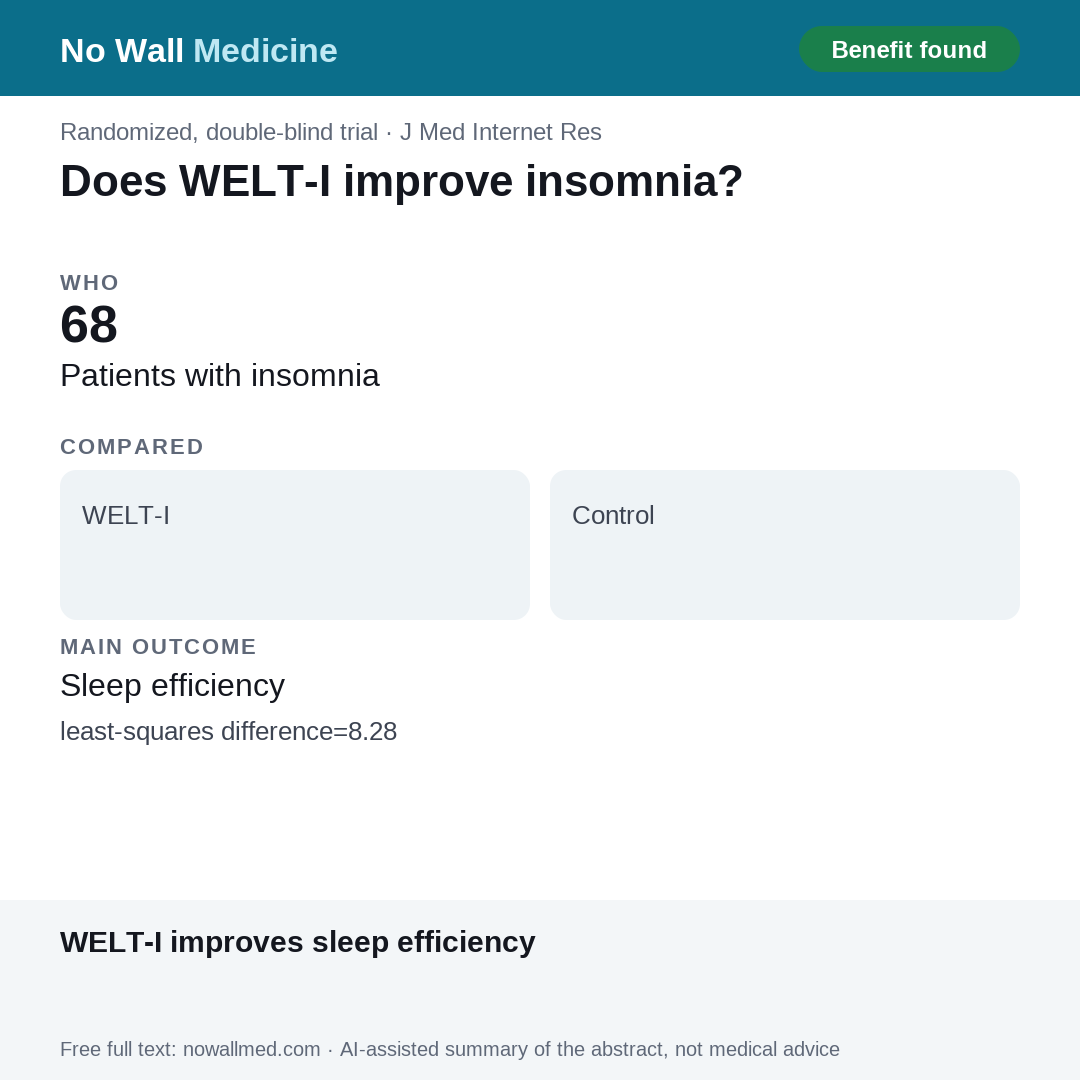
Validating the Efficacy of a Mobile Digital Therapeutic for Insomnia (WELT-I): Randomized Controlled Decentralized Clinical Trial
Randomized, double-blind trialBenefit found
Does WELT-I improve insomnia?
Who
68
Patients with insomnia
Compared
WELT-I
Control
Main outcome
Sleep efficiency
Result: least-squares difference=8.28
Bottom line: WELT-I improves sleep efficiency
J Med Internet Res · 2025-09-23Download image
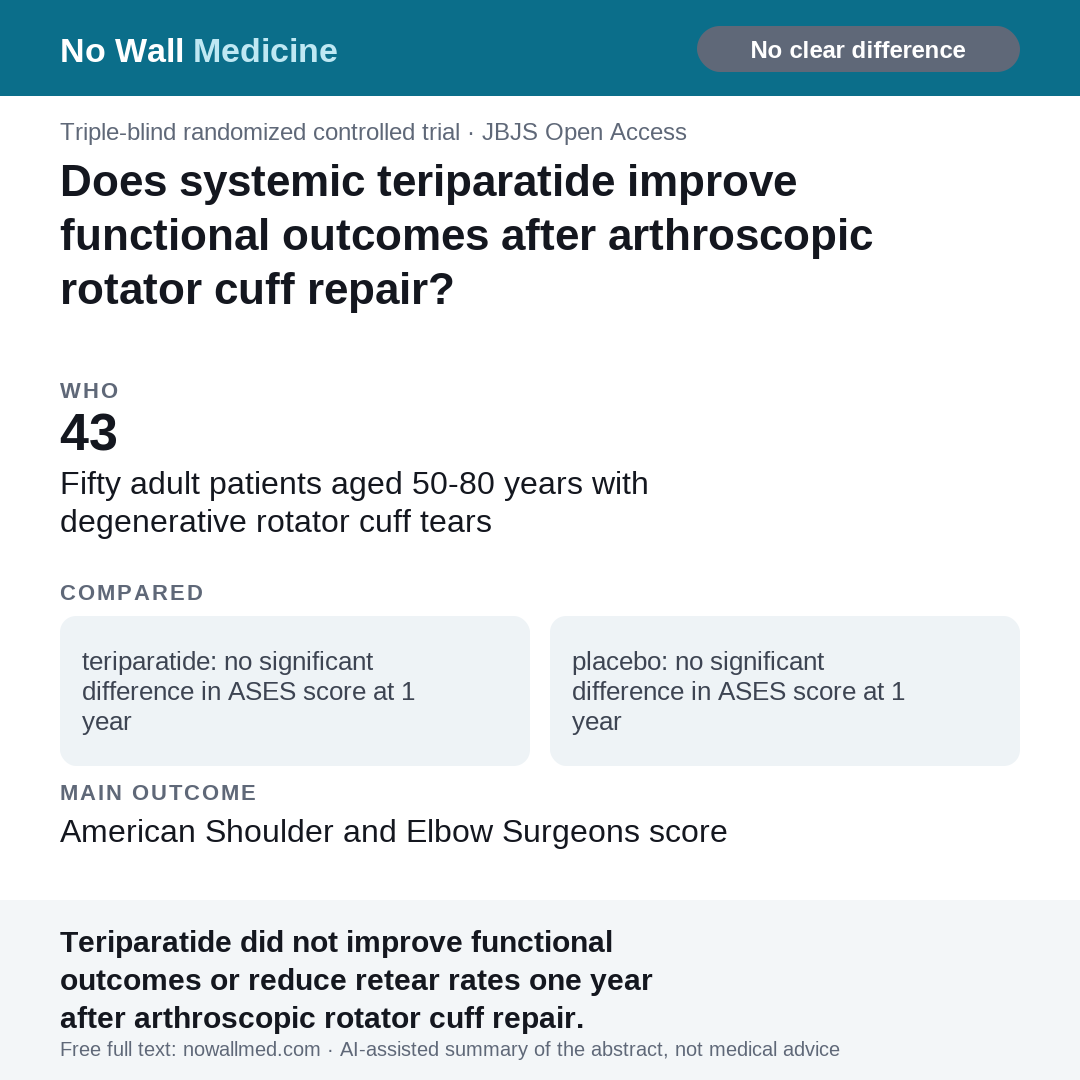
Effectiveness of Teriparatide (rhPTH) in Enhancing Functional Recovery After Arthroscopic Rotator Cuff Repair: A Triple-Blind Randomized Clinical Trial
Triple-blind randomized controlled trialNo clear difference
Does systemic teriparatide improve functional outcomes after arthroscopic rotator cuff repair?
Who
43
Fifty adult patients aged 50-80 years with degenerative rotator cuff tears
Compared
teriparatide: no significant difference in ASES score at 1 year
placebo: no significant difference in ASES score at 1 year
Main outcome
American Shoulder and Elbow Surgeons score
Bottom line: Teriparatide did not improve functional outcomes or reduce retear rates one year after arthroscopic rotator cuff repair.
Limitation: Larger randomized controlled trials with broader patient populations are required.
JBJS Open Access · 2025-09-23Download image
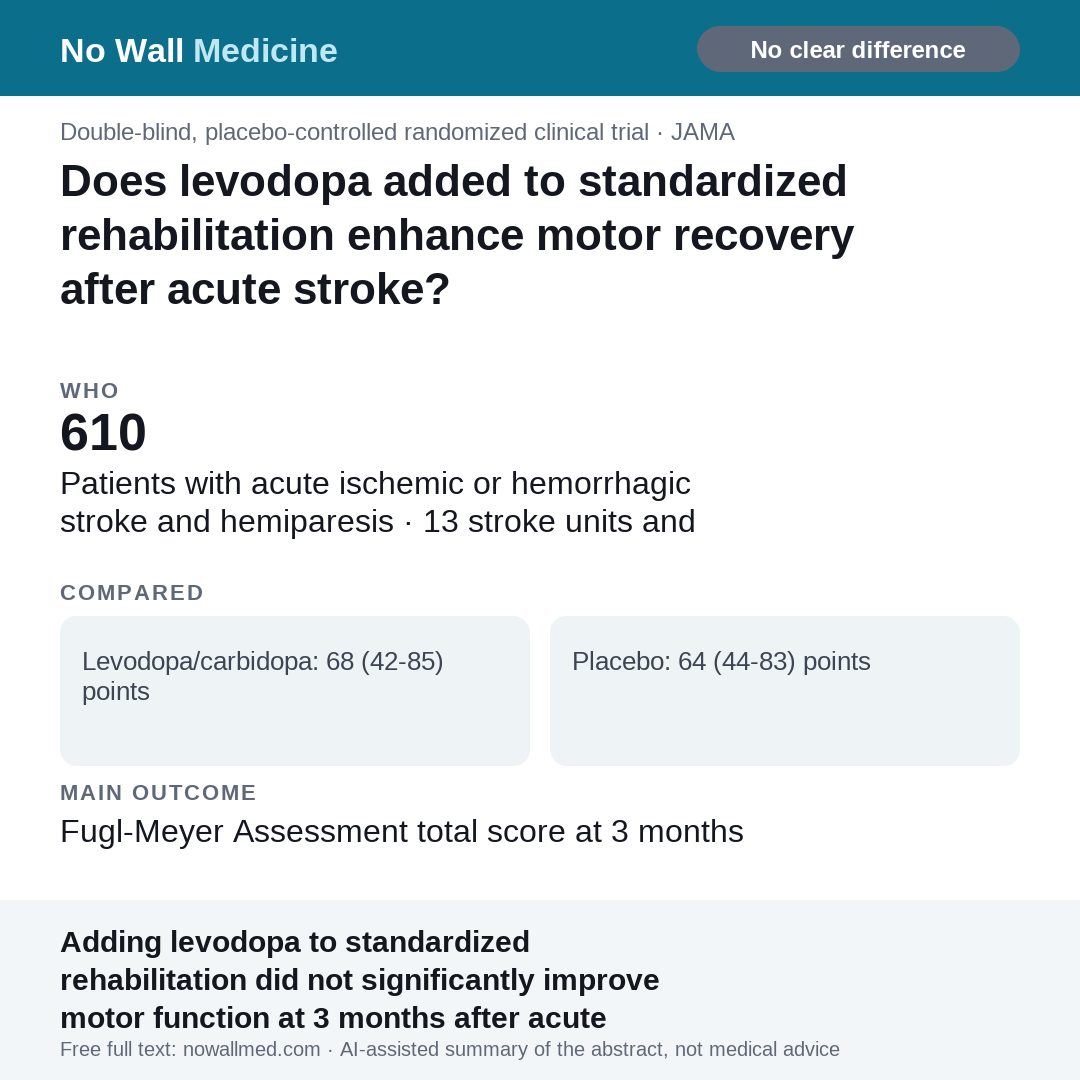
Levodopa Added to Stroke Rehabilitation: The ESTREL Randomized Clinical Trial
Double-blind, placebo-controlled randomized clinical trialNo clear difference
Does levodopa added to standardized rehabilitation enhance motor recovery after acute stroke?
Who
610
Patients with acute ischemic or hemorrhagic stroke and hemiparesis · 13 stroke units and 11 rehabilitation centers in Switzerland
Compared
Levodopa/carbidopa: 68 (42-85) points
Placebo: 64 (44-83) points
Main outcome
Fugl-Meyer Assessment total score at 3 months
Result: -0.90 points (95% CI, -3.78 to 1.98)
Bottom line: Adding levodopa to standardized rehabilitation did not significantly improve motor function at 3 months after acute stroke.
JAMA · 2025-09-22Download image
Effect of BCG Danish and oral polio vaccine on neonatal mortality in newborn babies weighing less than 2000 g in India: multicentre open label randomised controlled trial (BLOW2)
Multicentre, open label, randomised controlled trialBenefit found
Does BCG Danish and oral polio vaccine reduce all cause neonatal mortality in low birth weight babies?
Who
5420
Newborn babies weighing less than 2000 grams · Three tertiary neonatal intensive care units in southeast India
Compared
238Early vaccination group (8.8%)
273Control group (10.1%)
Main outcome
All cause neonatal mortality
Result: adjusted hazard ratio 0.83 (95% CI 0.69 to 0.98)
Bottom line: Early BCG Danish and oral polio vaccine administration reduces all cause neonatal mortality in low birth weight infants.
BMJ · 2025-09-22Download image