Visual abstracts
New randomized trials and meta-analyses from leading journals at a glance: who was studied, what was compared, and what was found. Every paper is free to read in full.
All specialtiesCardiology 350Oncology 273Gastroenterology & Hepatology 145Infectious Disease 266Neurology 159Psychiatry & Mental Health 223Pulmonology 159Critical Care 104Endocrinology & Diabetes 205Pediatrics 156Surgery 100Orthopedics & Sports Medicine 66Neurosurgery 21Cardiothoracic & Vascular Surgery 36Plastic & Reconstructive Surgery 67Nephrology 68Rheumatology 67Hematology 80Dermatology 32Ophthalmology 58Obstetrics & Gynecology 97Public & Global Health 100Radiology & Imaging 29Anesthesiology 61Urology 77ENT (Otolaryngology) 44Emergency Medicine 33Allergy & Immunology 37Geriatrics 96Family Medicine & Primary Care 53Medical Genetics & Genomics 32Pathology & Laboratory Medicine 5Physical Medicine & Rehabilitation 87Palliative Care 53Nutrition 116Digital Health & AI 293General Medicine 42
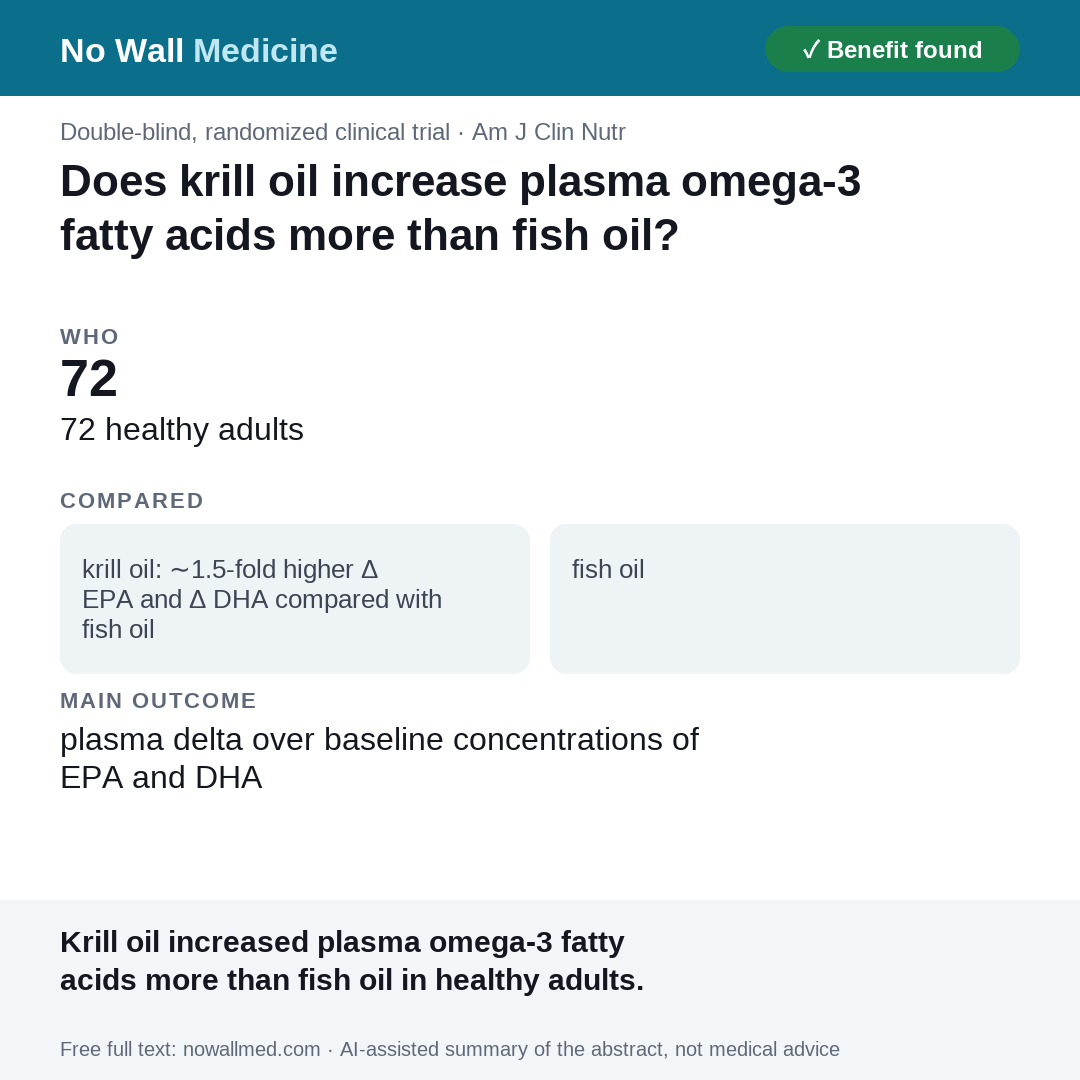
Krill oil increases plasma omega-3 fatty acids more than fish oil in healthy adults: a double-blind randomized controlled trial
Double-blind, randomized clinical trialBenefit found
Does krill oil increase plasma omega-3 fatty acids more than fish oil?
Who
72
72 healthy adults
Compared
krill oil: ∼1.5-fold higher Δ EPA and Δ DHA compared with fish oil
fish oil
Main outcome
plasma delta over baseline concentrations of EPA and DHA
Bottom line: Krill oil increased plasma omega-3 fatty acids more than fish oil in healthy adults.
Am J Clin Nutr · 2026-05-16Download image
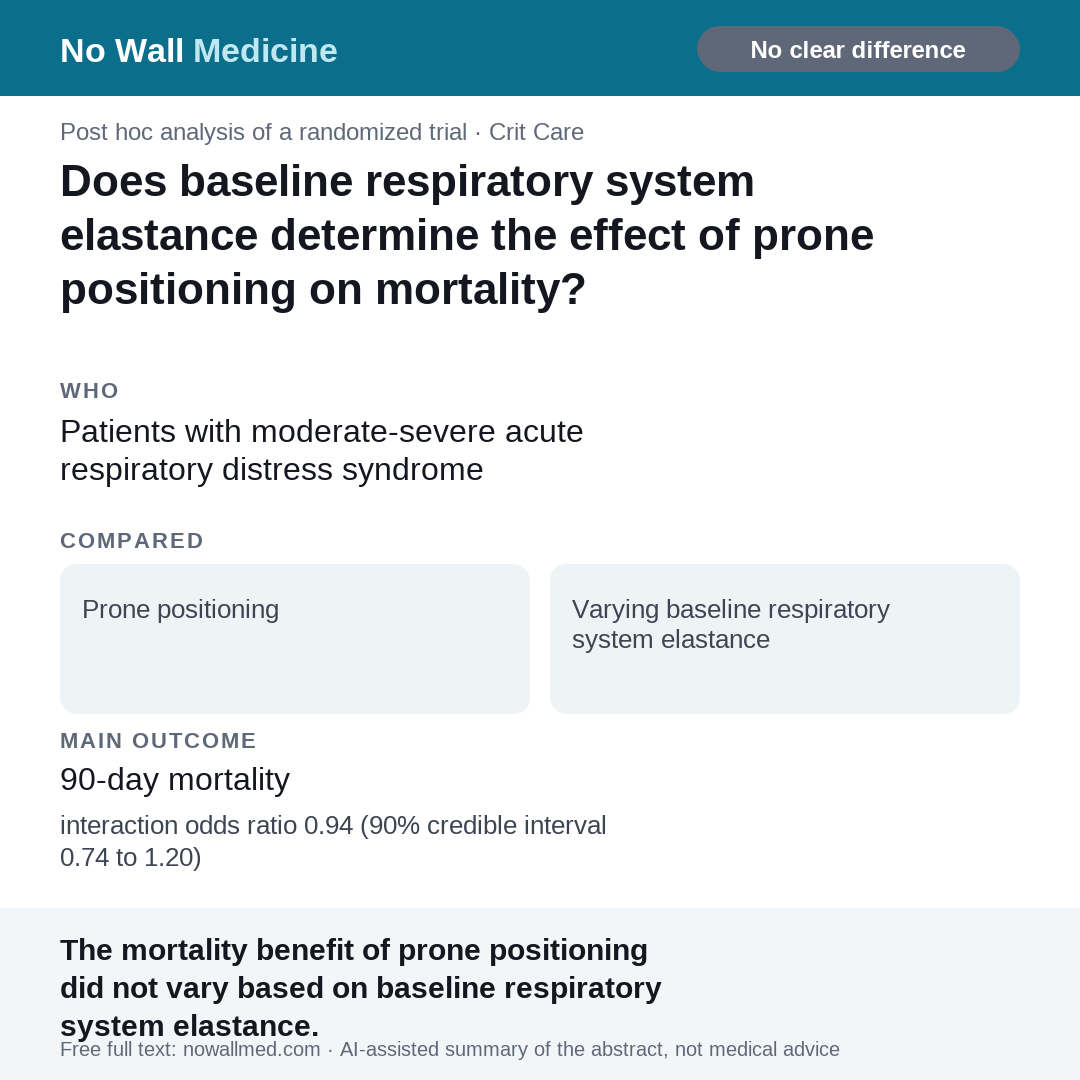
Elastance as a determinant of the effect of prone positioning on mortality in acute respiratory distress syndrome: a post hoc analysis of the PROSEVA trial
Post hoc analysis of a randomized trialNo clear difference
Does baseline respiratory system elastance determine the effect of prone positioning on mortality?
Who
Patients with moderate-severe acute respiratory distress syndrome
Compared
Prone positioning
Varying baseline respiratory system elastance
Main outcome
90-day mortality
Result: interaction odds ratio 0.94 (90% credible interval 0.74 to 1.20)
Bottom line: The mortality benefit of prone positioning did not vary based on baseline respiratory system elastance.
Crit Care · 2026-05-16Download image
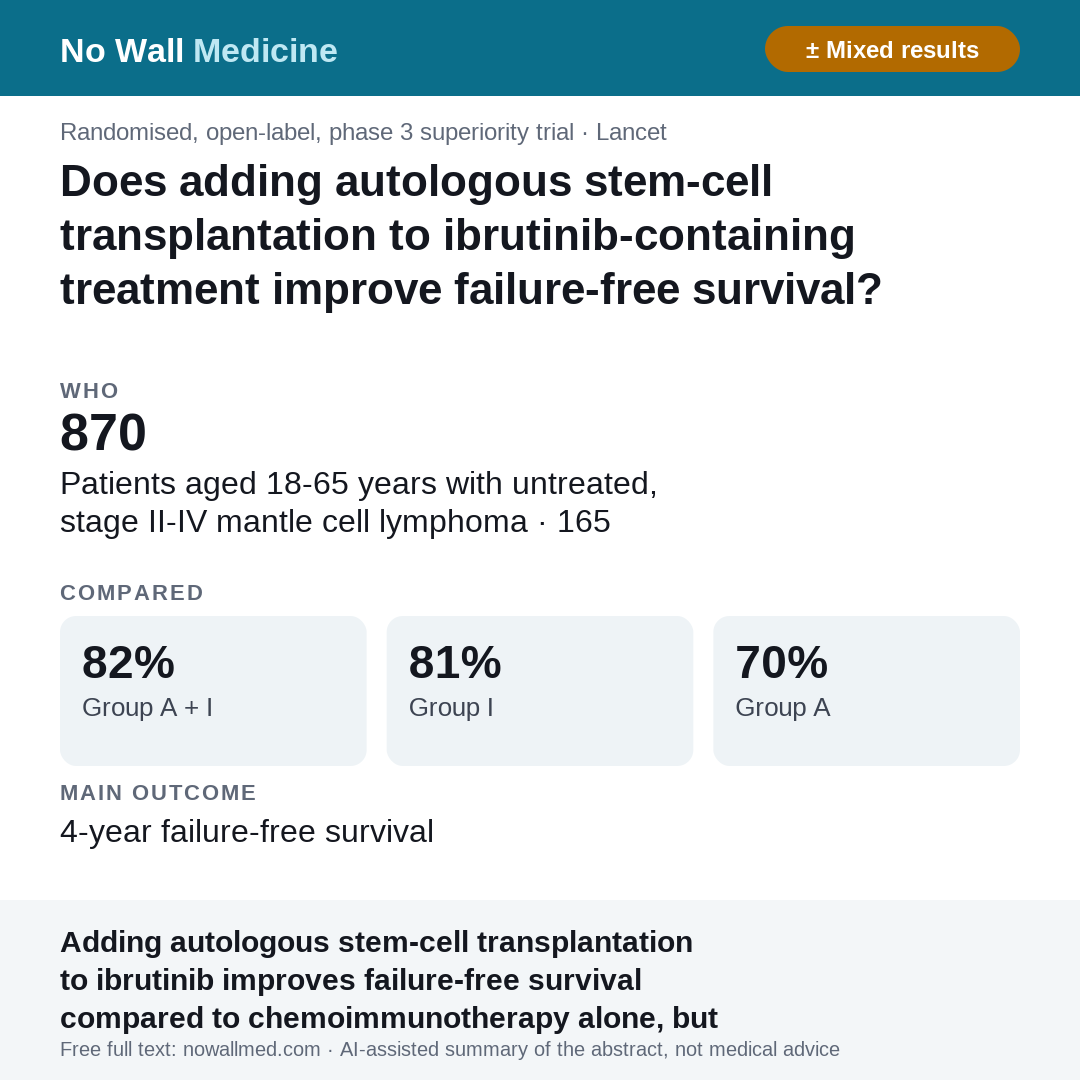
Addition of autologous stem-cell transplantation to an ibrutinib-containing first-line treatment in patients aged 18-65 years with mantle cell lymphoma (TRIANGLE): 4·5-year follow-up of a three-arm, randomised, open-label, phase 3 superiority trial of the European MCL Network
Randomised, open-label, phase 3 superiority trialMixed results
Does adding autologous stem-cell transplantation to ibrutinib-containing treatment improve failure-free survival?
Who
870
Patients aged 18-65 years with untreated, stage II-IV mantle cell lymphoma · 165 clinical centres in 13 European countries and Israel
Compared
82%Group A + I (95% CI 78-87)
81%Group I (76-86)
70%Group A (65-76)
Main outcome
4-year failure-free survival
Result: hazard ratio 0.86 (one-sided 98.33% CI 0.00-1.27)
Bottom line: Adding autologous stem-cell transplantation to ibrutinib improves failure-free survival compared to chemoimmunotherapy alone, but not compared to ibrutinib alone.
Lancet · 2026-05-15Download image
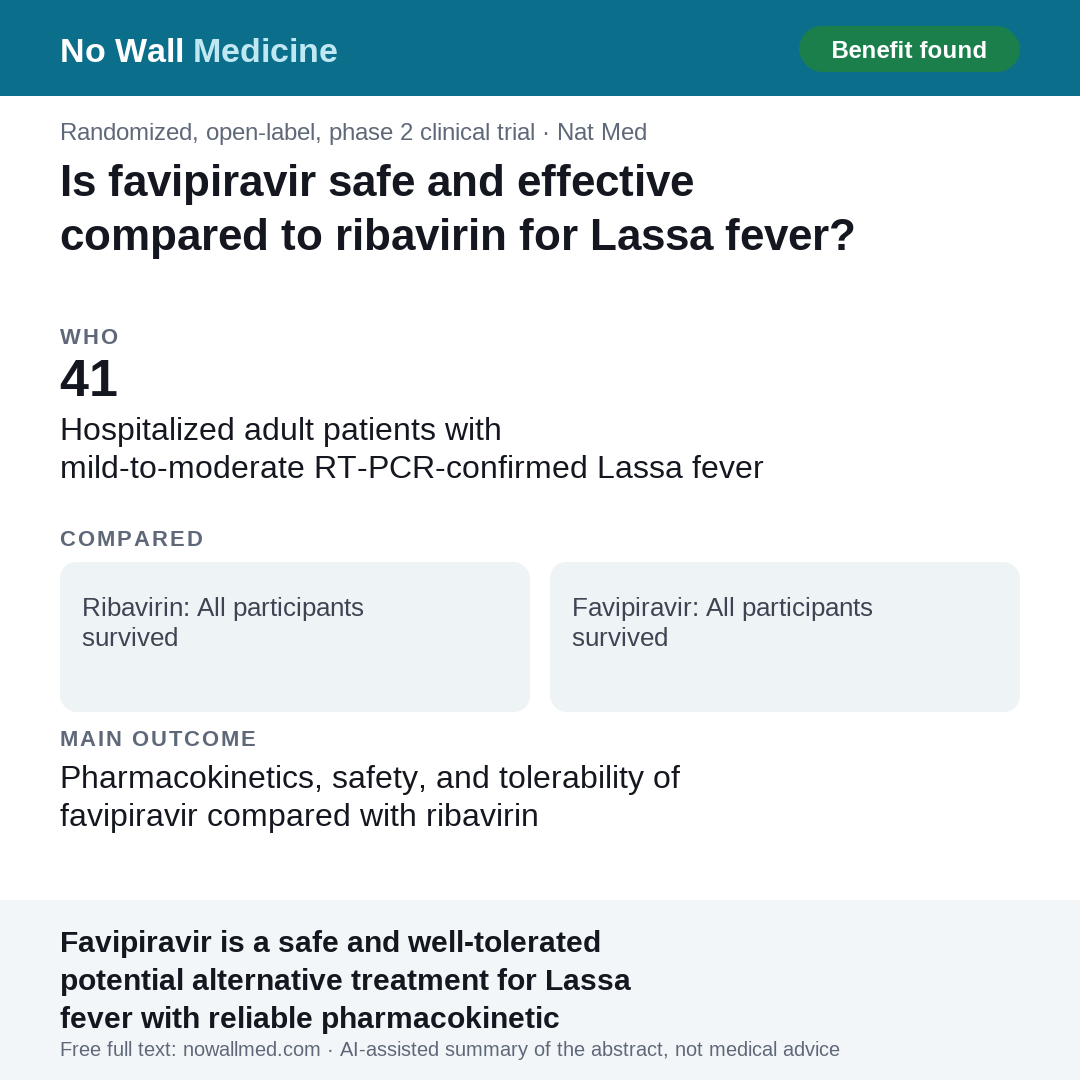
Favipiravir for Lassa fever: an open-label, randomized controlled phase 2 trial
Randomized, open-label, phase 2 clinical trialBenefit found
Is favipiravir safe and effective compared to ribavirin for Lassa fever?
Who
41
Hospitalized adult patients with mild-to-moderate RT-PCR-confirmed Lassa fever · Two reference hospitals in Nigeria
Compared
Ribavirin: All participants survived
Favipiravir: All participants survived
Main outcome
Pharmacokinetics, safety, and tolerability of favipiravir compared with ribavirin
Bottom line: Favipiravir is a safe and well-tolerated potential alternative treatment for Lassa fever with reliable pharmacokinetic exposure.
Limitation: This was an open-label phase 2 trial.
Nat Med · 2026-05-15Download image
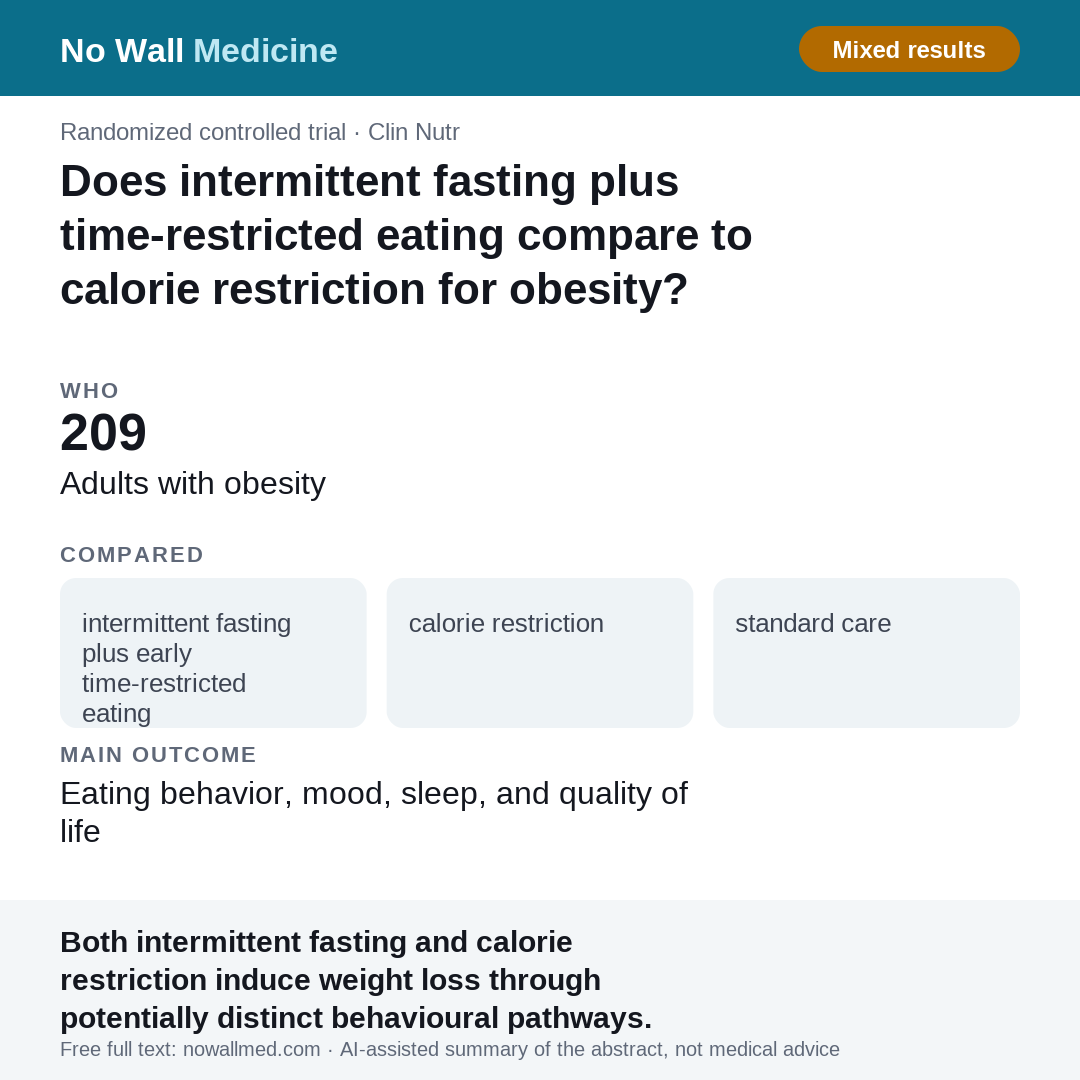
Exploring the impact of intermittent fasting plus time-restricted eating versus calorie restriction on eating behavior, mood, sleep, quality of life in adults with obesity
Randomized controlled trialMixed results
Does intermittent fasting plus time-restricted eating compare to calorie restriction for obesity?
Who
209
Adults with obesity
Compared
intermittent fasting plus early time-restricted eating
calorie restriction
standard care
Main outcome
Eating behavior, mood, sleep, and quality of life
Bottom line: Both intermittent fasting and calorie restriction induce weight loss through potentially distinct behavioural pathways.
Limitation: This is an exploratory analysis.
Clin Nutr · 2026-05-15Download image
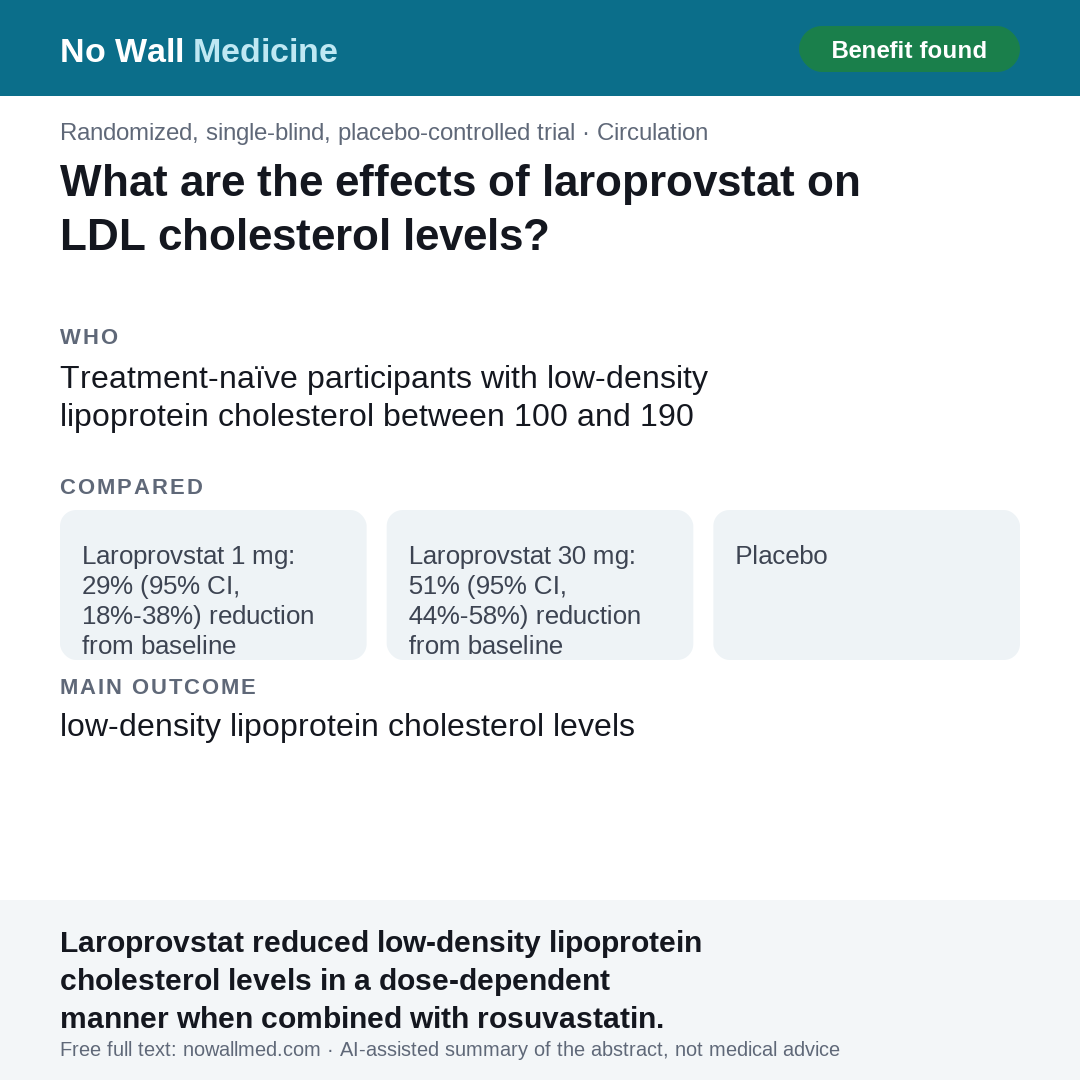
Laroprovstat, the First Oral Small-Molecule PCSK9 Inhibitor for the Treatment of Hypercholesterolemia: Results From a Randomized, Single-Blind, Placebo-Controlled Phase 1 Trial in Treatment-Naïve Patients
Randomized, single-blind, placebo-controlled trialBenefit found
What are the effects of laroprovstat on LDL cholesterol levels?
Who
Treatment-naïve participants with low-density lipoprotein cholesterol between 100 and 190 mg/dL
Compared
Laroprovstat 1 mg: 29% (95% CI, 18%-38%) reduction from baseline
Laroprovstat 30 mg: 51% (95% CI, 44%-58%) reduction from baseline
Placebo
Main outcome
low-density lipoprotein cholesterol levels
Bottom line: Laroprovstat reduced low-density lipoprotein cholesterol levels in a dose-dependent manner when combined with rosuvastatin.
Circulation · 2026-05-15Download image
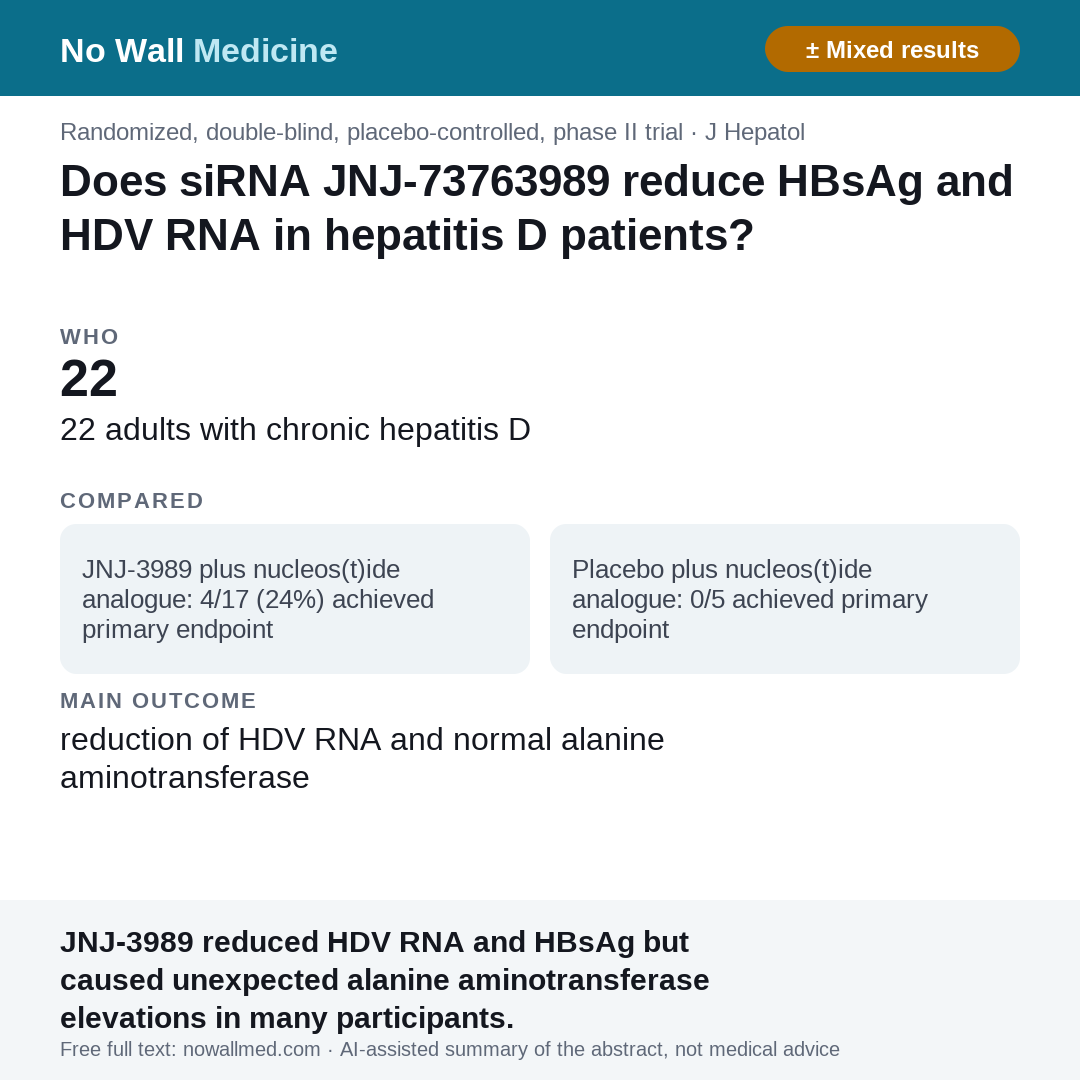
siRNA JNJ-73763989 decreases HBsAg and HDV RNA in NA-treated hepatitis D patients but may cause ALT flares
Randomized, double-blind, placebo-controlled, phase II trialMixed results
Does siRNA JNJ-73763989 reduce HBsAg and HDV RNA in hepatitis D patients?
Who
22
22 adults with chronic hepatitis D
Compared
JNJ-3989 plus nucleos(t)ide analogue: 4/17 (24%) achieved primary endpoint
Placebo plus nucleos(t)ide analogue: 0/5 achieved primary endpoint
Main outcome
reduction of HDV RNA and normal alanine aminotransferase
Bottom line: JNJ-3989 reduced HDV RNA and HBsAg but caused unexpected alanine aminotransferase elevations in many participants.
J Hepatol · 2026-05-15Download image
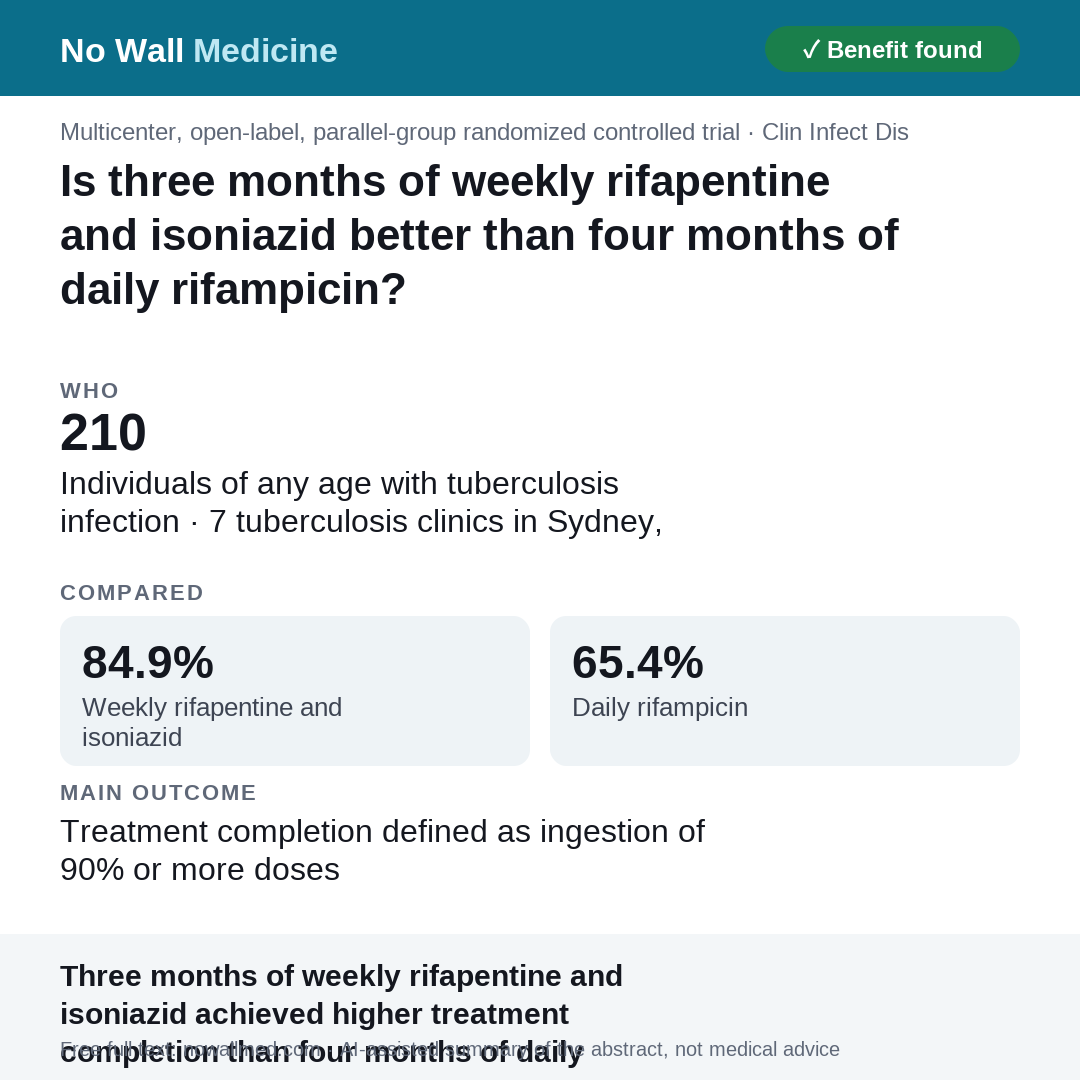
Three Months of Weekly Rifapentine and Isoniazid Versus Four Months of Daily Rifampicin for Tuberculosis Infection: A Randomized Controlled Trial
Multicenter, open-label, parallel-group randomized controlled trialBenefit found
Is three months of weekly rifapentine and isoniazid better than four months of daily rifampicin?
Who
210
Individuals of any age with tuberculosis infection · 7 tuberculosis clinics in Sydney, Australia
Compared
84.9%Weekly rifapentine and isoniazid
65.4%Daily rifampicin
Main outcome
Treatment completion defined as ingestion of 90% or more doses
Result: relative risk 1.30 (95% confidence interval 1.22-1.38)
Bottom line: Three months of weekly rifapentine and isoniazid achieved higher treatment completion than four months of daily rifampicin.
Clin Infect Dis · 2026-05-15Download image
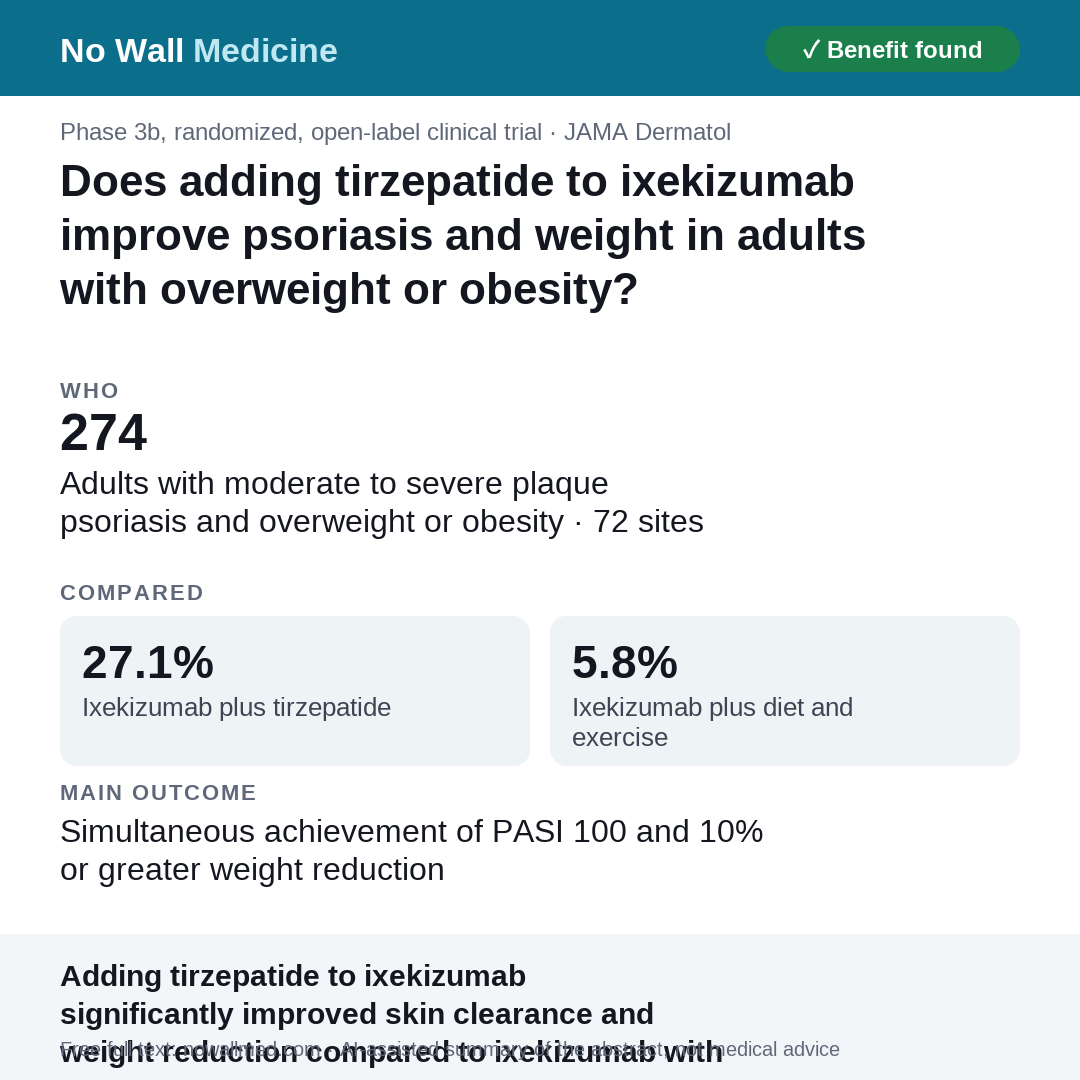
Ixekizumab With or Without Tirzepatide in Adults With Psoriasis and Overweight or Obesity: A Phase 3b Randomized Clinical Trial
Phase 3b, randomized, open-label clinical trialBenefit found
Does adding tirzepatide to ixekizumab improve psoriasis and weight in adults with overweight or obesity?
Who
274
Adults with moderate to severe plaque psoriasis and overweight or obesity · 72 sites in the US
Compared
27.1%Ixekizumab plus tirzepatide
5.8%Ixekizumab plus diet and exercise
Main outcome
Simultaneous achievement of PASI 100 and 10% or greater weight reduction
Result: risk difference 21.2% (95% CI, 12.8%-29.7%)
Bottom line: Adding tirzepatide to ixekizumab significantly improved skin clearance and weight reduction compared to ixekizumab with diet and exercise.
JAMA Dermatol · 2026-05-15Download image
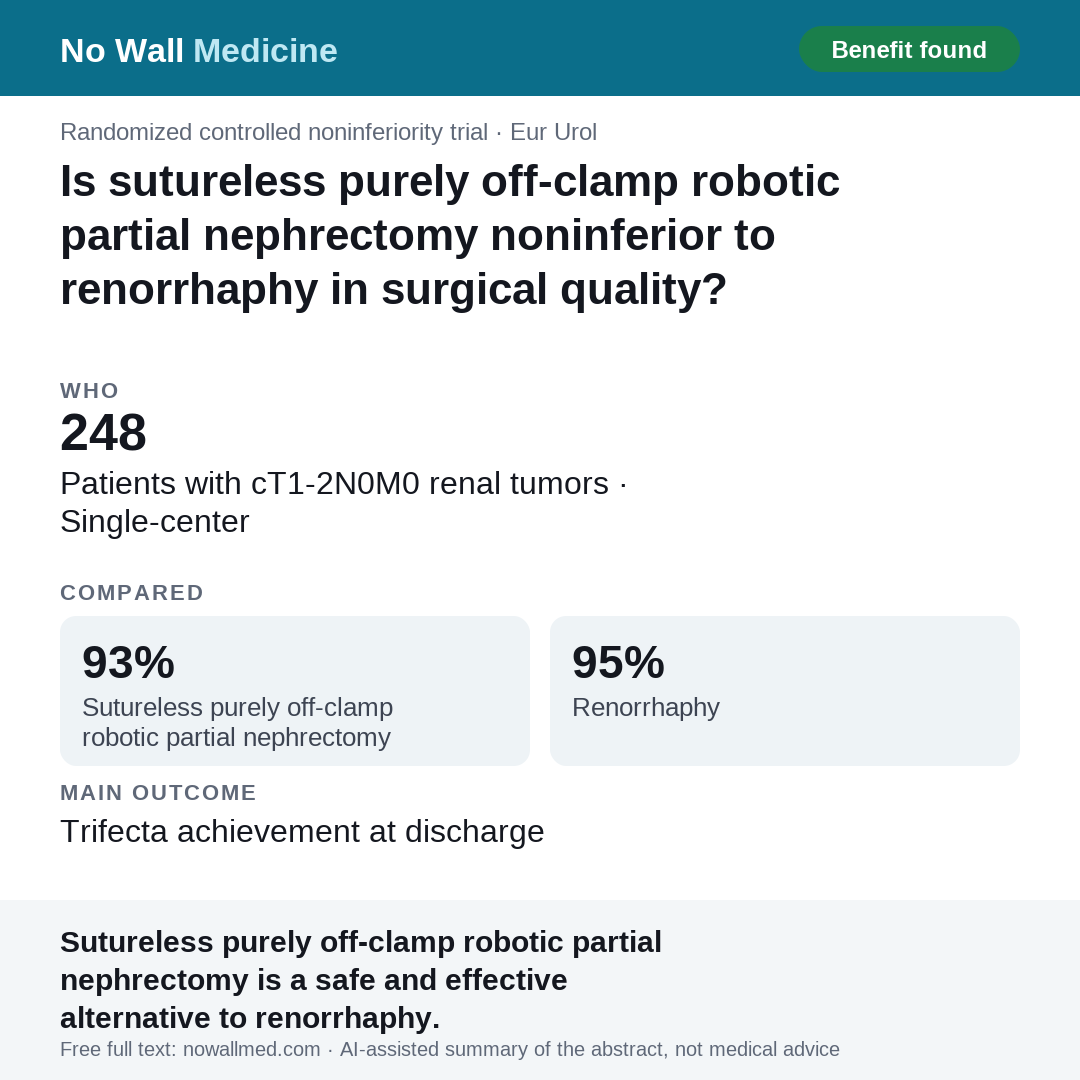
Sutureless Purely Off-clamp Robotic Partial Nephrectomy: Evidence from a Randomized Controlled Noninferiority Trial
Randomized controlled noninferiority trialBenefit found
Is sutureless purely off-clamp robotic partial nephrectomy noninferior to renorrhaphy in surgical quality?
Who
248
Patients with cT1-2N0M0 renal tumors · Single-center
Compared
93%Sutureless purely off-clamp robotic partial nephrectomy
95%Renorrhaphy
Main outcome
Trifecta achievement at discharge
Result: absolute difference -2.4% (90% confidence interval -7.4% to 2.6%)
Bottom line: Sutureless purely off-clamp robotic partial nephrectomy is a safe and effective alternative to renorrhaphy.
Limitation: Single-center design, surgeon expertise, and short oncologic follow-up.
Eur Urol · 2026-05-15Download image
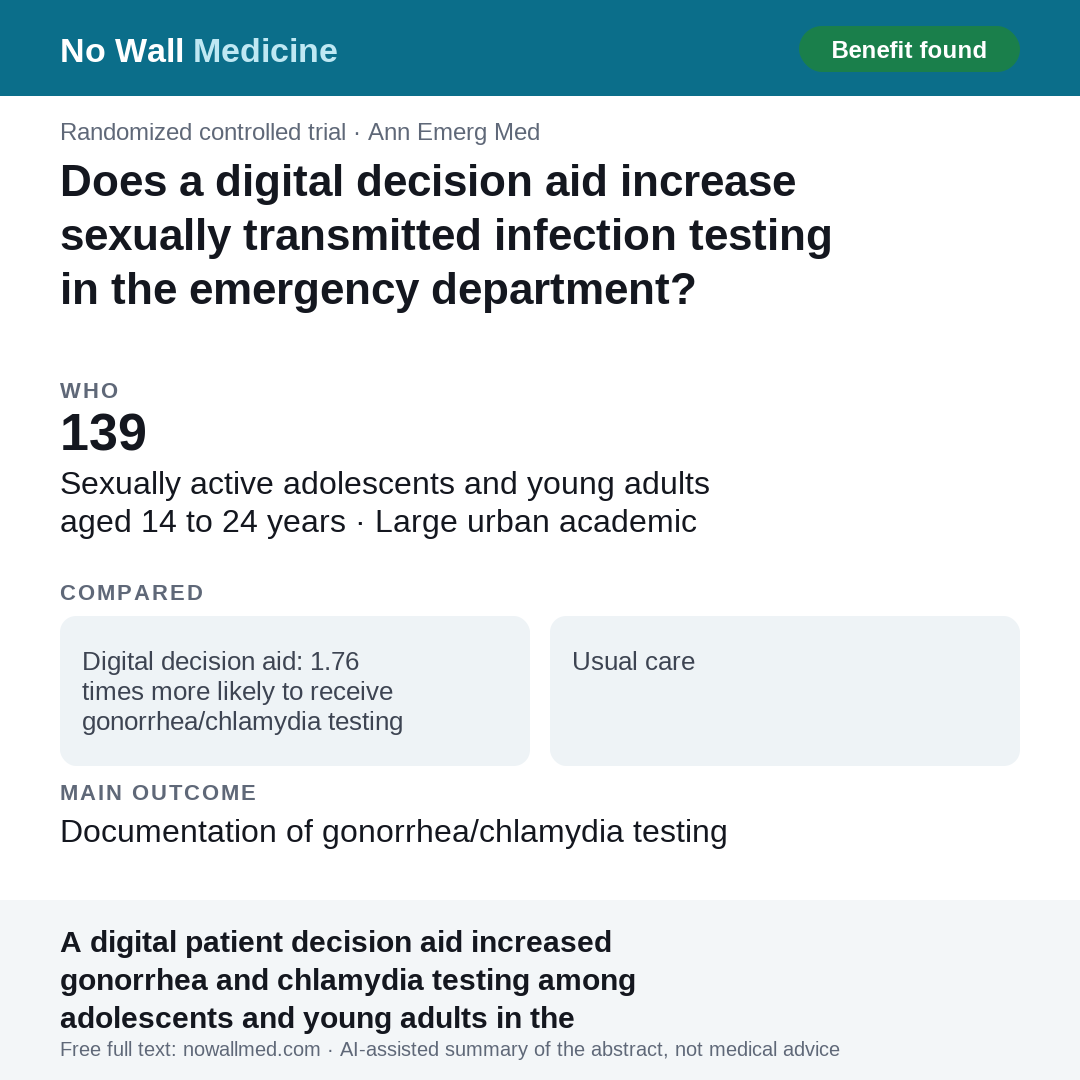
A Randomized Controlled Trial of a Digital Patient Decision Tool to Increase Sexually Transmitted Infection Testing in the Emergency Department
Randomized controlled trialBenefit found
Does a digital decision aid increase sexually transmitted infection testing in the emergency department?
Who
139
Sexually active adolescents and young adults aged 14 to 24 years · Large urban academic medical center emergency departments
Compared
Digital decision aid: 1.76 times more likely to receive gonorrhea/chlamydia testing
Usual care
Main outcome
Documentation of gonorrhea/chlamydia testing
Result: 1.76 times more likely (95% confidence interval, 1.10 to 3.00)
Bottom line: A digital patient decision aid increased gonorrhea and chlamydia testing among adolescents and young adults in the emergency department.
Ann Emerg Med · 2026-05-15Download image
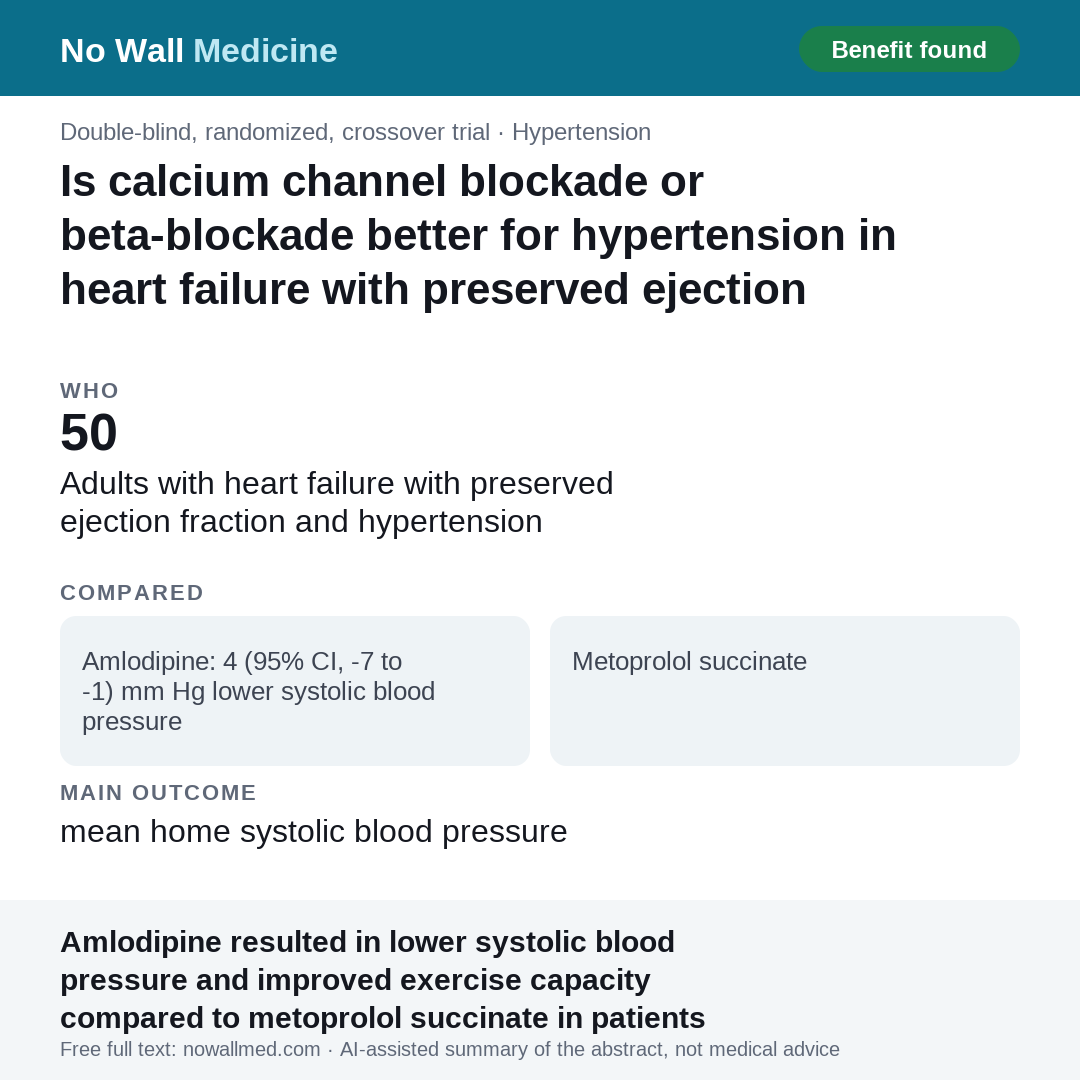
Calcium Channel Blockade Versus β-Blockade for Hypertension in Heart Failure With Preserved Ejection Fraction: A Randomized Crossover Trial
Double-blind, randomized, crossover trialBenefit found
Is calcium channel blockade or beta-blockade better for hypertension in heart failure with preserved ejection fraction?
Who
50
Adults with heart failure with preserved ejection fraction and hypertension
Compared
Amlodipine: 4 (95% CI, -7 to -1) mm Hg lower systolic blood pressure
Metoprolol succinate
Main outcome
mean home systolic blood pressure
Result: 4 (95% CI, -7 to -1) mm Hg
Bottom line: Amlodipine resulted in lower systolic blood pressure and improved exercise capacity compared to metoprolol succinate in patients with HFpEF.
Hypertension · 2026-05-15Download image
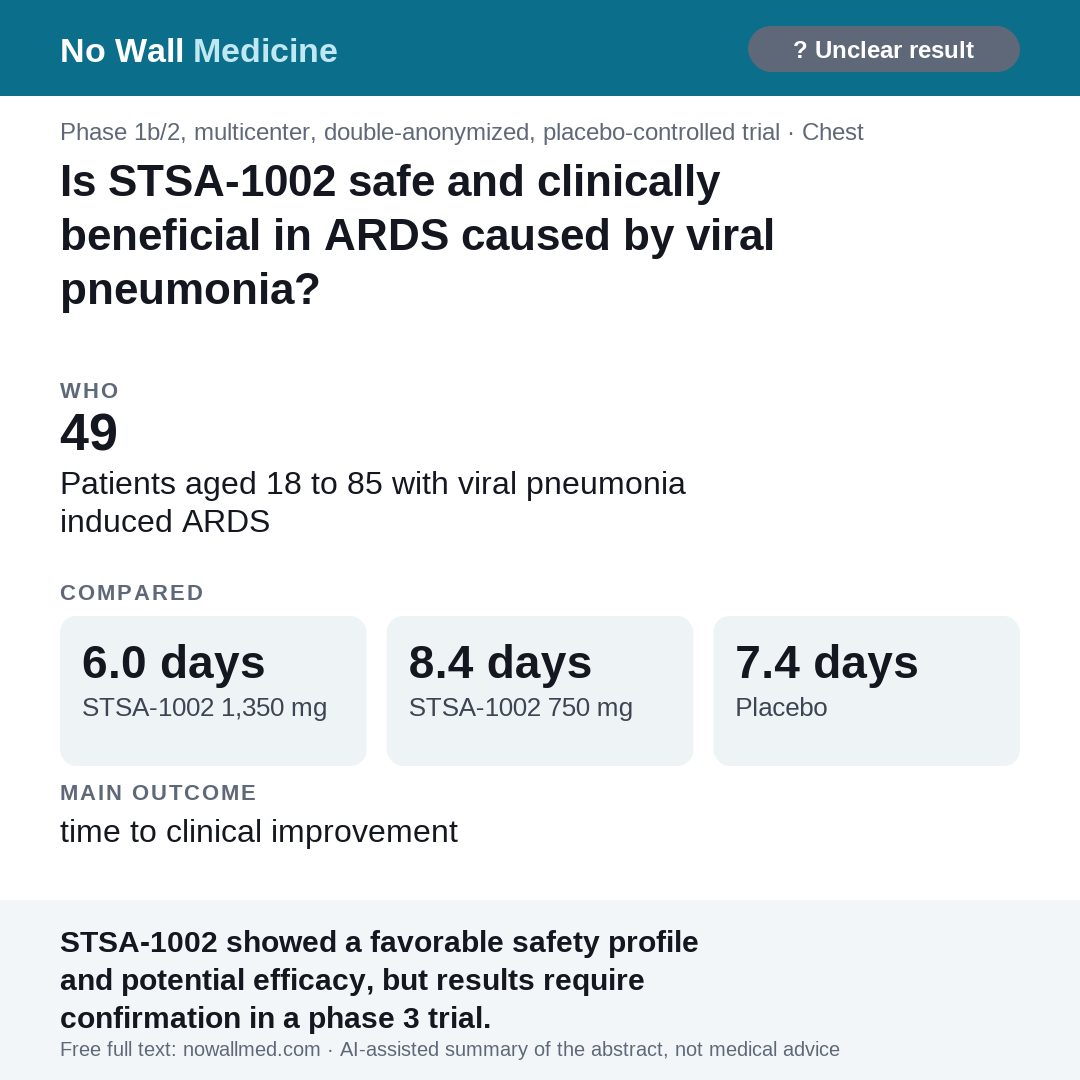
Anti-C5a Antibody STSA-1002 for Patients With ARDS Due to Viral Pneumonia: A Phase 1b/2, Multicenter, Randomized, Double-Anonymized, Placebo-Controlled Trial
Phase 1b/2, multicenter, double-anonymized, placebo-controlled trialUnclear result
Is STSA-1002 safe and clinically beneficial in ARDS caused by viral pneumonia?
Who
49
Patients aged 18 to 85 with viral pneumonia induced ARDS
Compared
6.0 daysSTSA-1002 1,350 mg
8.4 daysSTSA-1002 750 mg
7.4 daysPlacebo
Main outcome
time to clinical improvement
Result: subdistribution hazard ratio 1.55 (95% CI, 0.68-3.55)
Bottom line: STSA-1002 showed a favorable safety profile and potential efficacy, but results require confirmation in a phase 3 trial.
Chest · 2026-05-15Download image
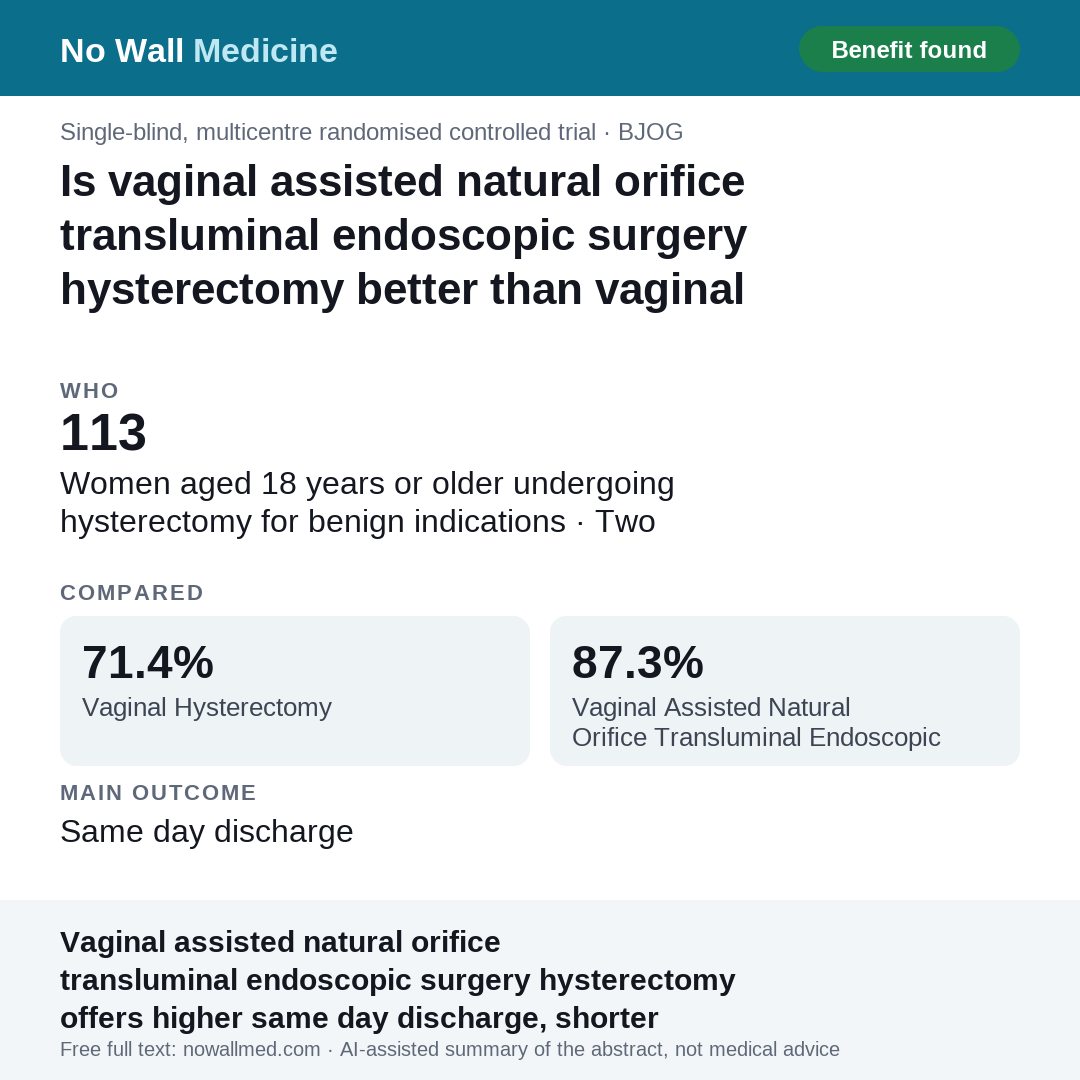
Vaginal Hysterectomy Versus Vaginal Assisted Natural Orifice Transluminal Endoscopic Surgery Hysterectomy; Results of a Randomised Controlled Trial
Single-blind, multicentre randomised controlled trialBenefit found
Is vaginal assisted natural orifice transluminal endoscopic surgery hysterectomy better than vaginal hysterectomy?
Who
113
Women aged 18 years or older undergoing hysterectomy for benign indications · Two Dutch non-academic teaching hospitals
Compared
71.4%Vaginal Hysterectomy
87.3%Vaginal Assisted Natural Orifice Transluminal Endoscopic Surgery Hysterectomy
Main outcome
Same day discharge
Result: odds ratio 2.76 (95% CI 1.04-7.25)
Bottom line: Vaginal assisted natural orifice transluminal endoscopic surgery hysterectomy offers higher same day discharge, shorter operative time, and less blood loss.
BJOG · 2026-05-15Download image
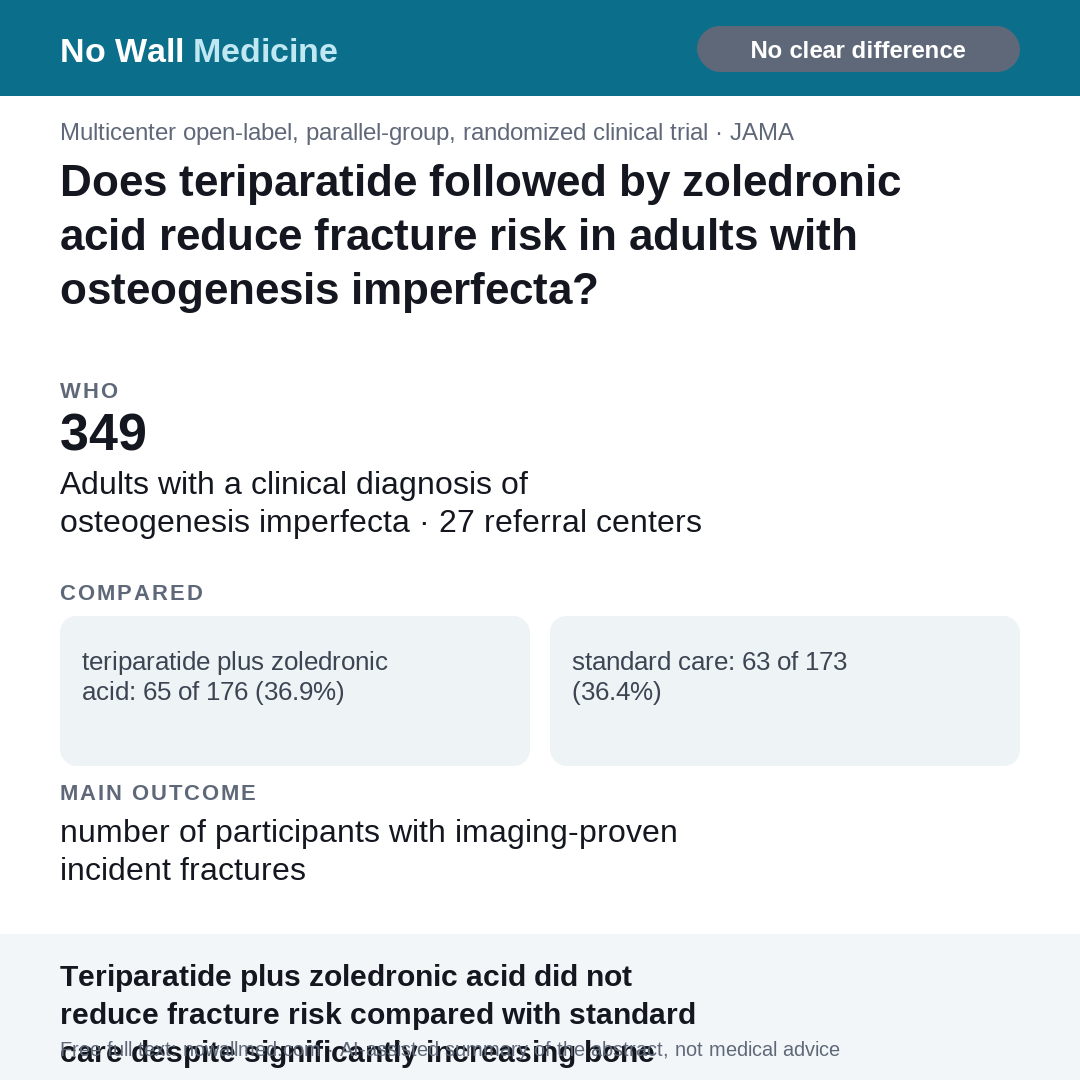
Teriparatide Plus Zoledronic Acid for Osteogenesis Imperfecta: A Randomized Clinical Trial
Multicenter open-label, parallel-group, randomized clinical trialNo clear difference
Does teriparatide followed by zoledronic acid reduce fracture risk in adults with osteogenesis imperfecta?
Who
349
Adults with a clinical diagnosis of osteogenesis imperfecta · 27 referral centers
Compared
teriparatide plus zoledronic acid: 65 of 176 (36.9%)
standard care: 63 of 173 (36.4%)
Main outcome
number of participants with imaging-proven incident fractures
Result: hazard ratio 0.97 (95% CI 0.68 to 1.38)
Bottom line: Teriparatide plus zoledronic acid did not reduce fracture risk compared with standard care despite significantly increasing bone mineral density.
JAMA · 2026-05-14Download image
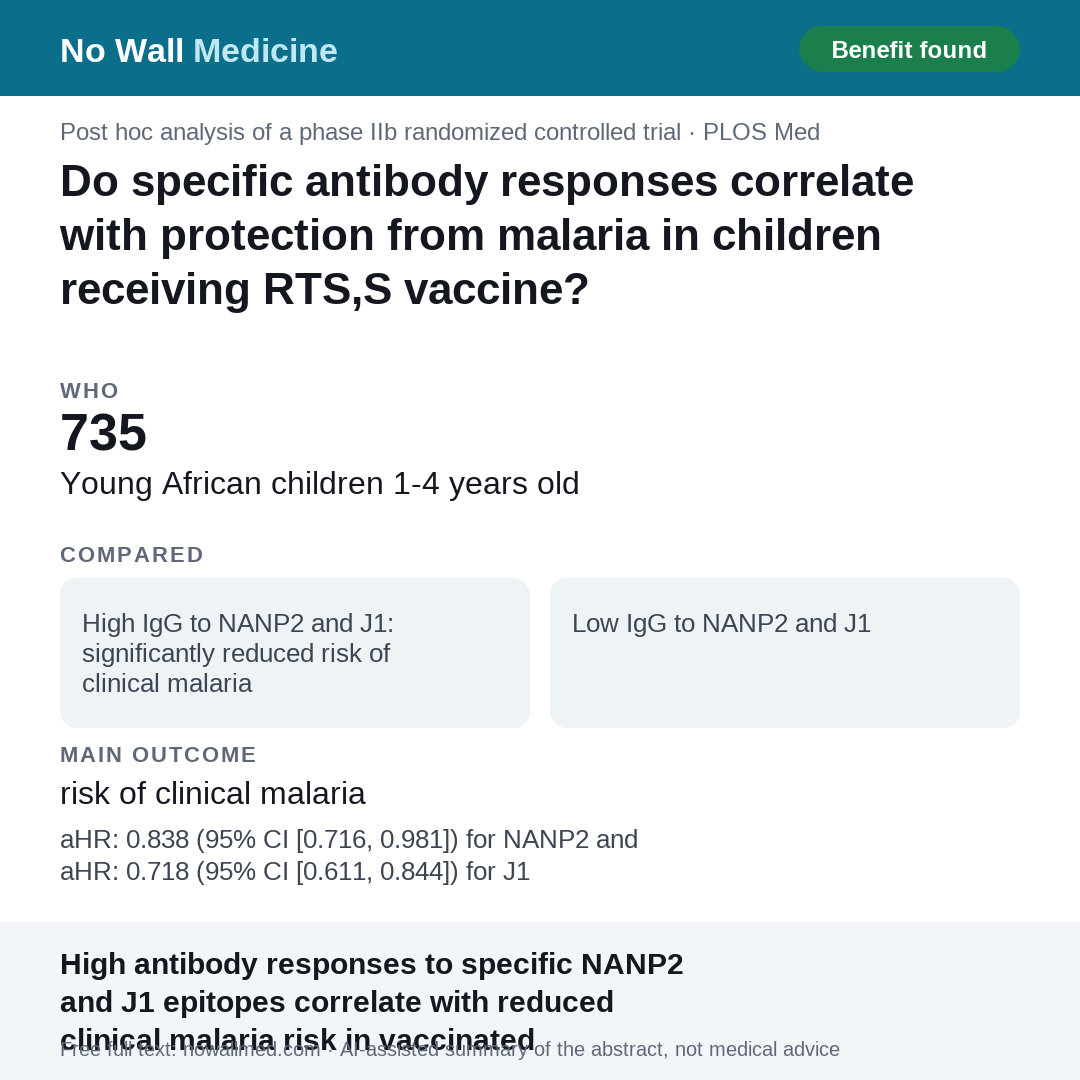
Antibody fine specificity correlates with protection from malaria for the RTS,S vaccine in young African children: A post hoc analysis of a phase IIb randomised controlled trial
Post hoc analysis of a phase IIb randomized controlled trialBenefit found
Do specific antibody responses correlate with protection from malaria in children receiving RTS,S vaccine?
Who
735
Young African children 1-4 years old
Compared
High IgG to NANP2 and J1: significantly reduced risk of clinical malaria
Low IgG to NANP2 and J1
Main outcome
risk of clinical malaria
Result: aHR: 0.838 (95% CI [0.716, 0.981]) for NANP2 and aHR: 0.718 (95% CI [0.611, 0.844]) for J1
Bottom line: High antibody responses to specific NANP2 and J1 epitopes correlate with reduced clinical malaria risk in vaccinated children.
PLOS Med · 2026-05-14Download image
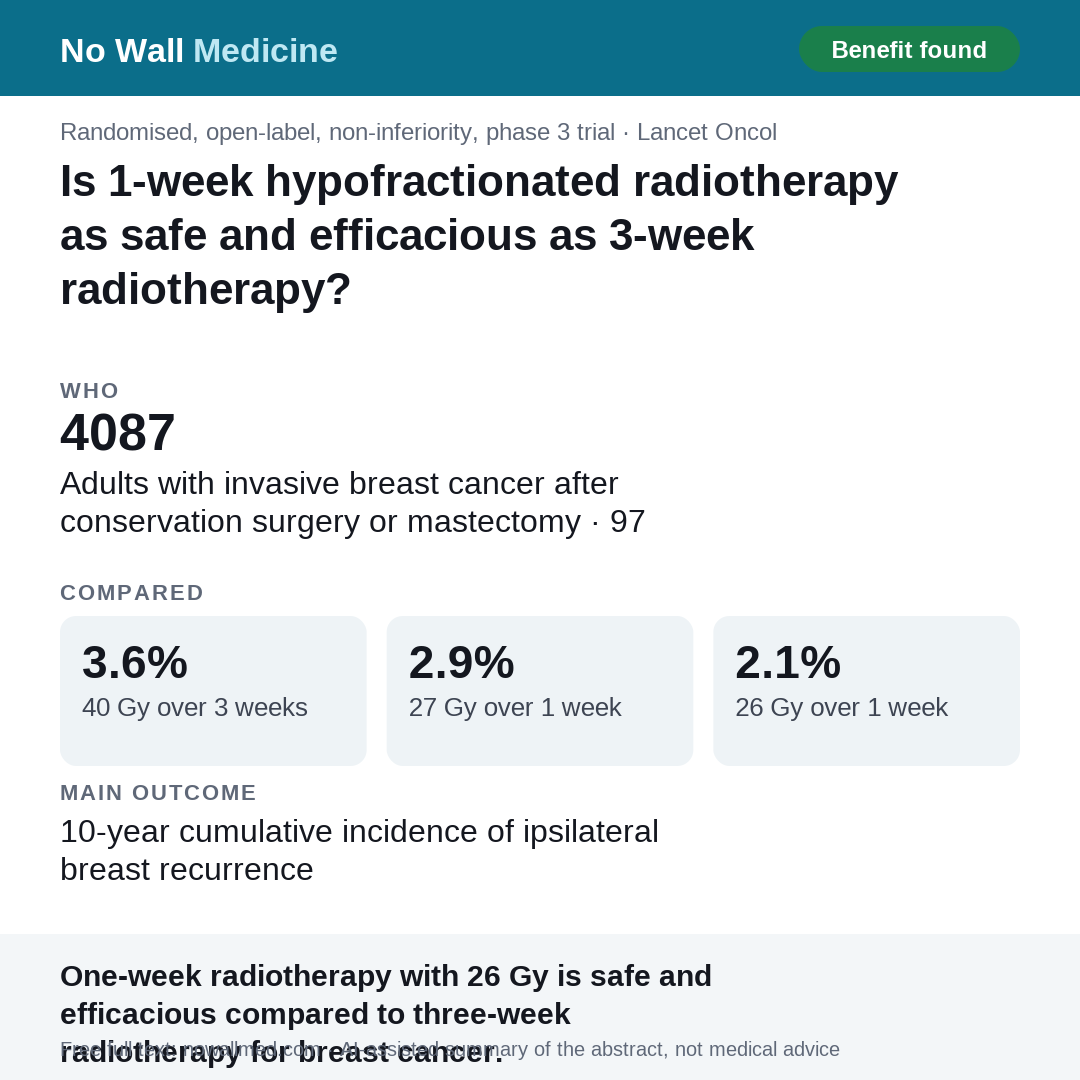
Hypofractionated breast radiotherapy for 1 week versus 3 weeks (FAST-Forward): 10-year efficacy and late normal tissue effects from a multicentre, open-label, non-inferiority, phase 3, randomised controlled trial and 5-year efficacy results from a randomised axillary substudy
Randomised, open-label, non-inferiority, phase 3 trialBenefit found
Is 1-week hypofractionated radiotherapy as safe and efficacious as 3-week radiotherapy?
Who
4087
Adults with invasive breast cancer after conservation surgery or mastectomy · 97 hospitals in the United Kingdom
Compared
3.6%40 Gy over 3 weeks (95% CI 2.7-4.9)
2.9%27 Gy over 1 week (2.1-4.0)
2.1%26 Gy over 1 week (1.5-3.1)
Main outcome
10-year cumulative incidence of ipsilateral breast recurrence
Bottom line: One-week radiotherapy with 26 Gy is safe and efficacious compared to three-week radiotherapy for breast cancer.
Limitation: Sample size limits precision of estimation for the axillary nodal radiotherapy subgroup.
Funded by: UK National Institute for Health and Care Research
Lancet Oncol · 2026-05-14Download image
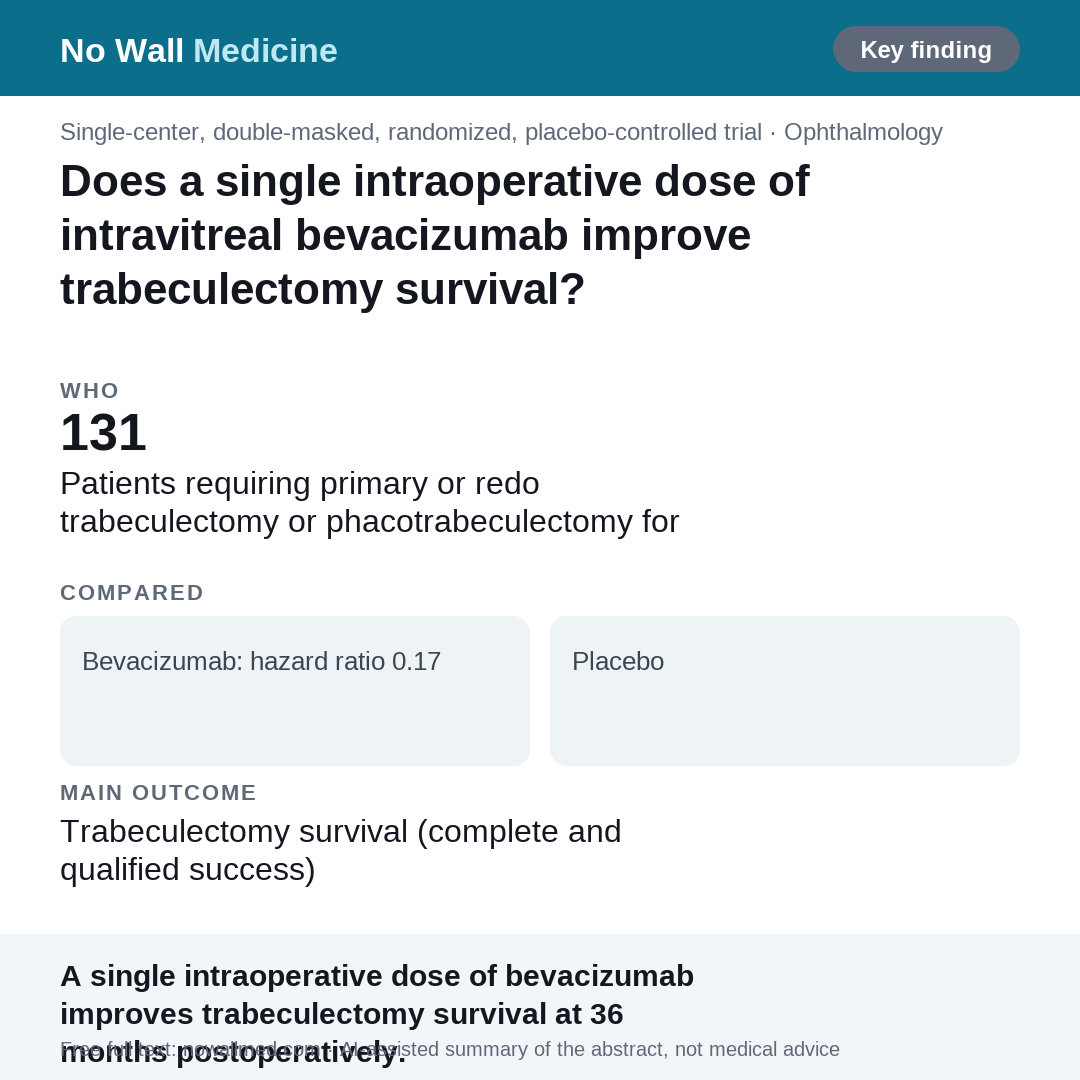
Intravitreal Bevacizumab Improves Trabeculectomy Survival at 3 Years: Long-term Follow-up from the Bevacizumab in Trabeculectomy Study
Single-center, double-masked, randomized, placebo-controlled trialBenefit found
Does a single intraoperative dose of intravitreal bevacizumab improve trabeculectomy survival?
Who
131
Patients requiring primary or redo trabeculectomy or phacotrabeculectomy for progressing glaucoma · Single ophthalmic outpatient referral center
Compared
Bevacizumab: hazard ratio 0.17
Placebo
Main outcome
Trabeculectomy survival (complete and qualified success)
Result: hazard ratio 0.17 (P = 0.002)
Bottom line: A single intraoperative dose of bevacizumab improves trabeculectomy survival at 36 months postoperatively.
Ophthalmology · 2026-05-14Download image
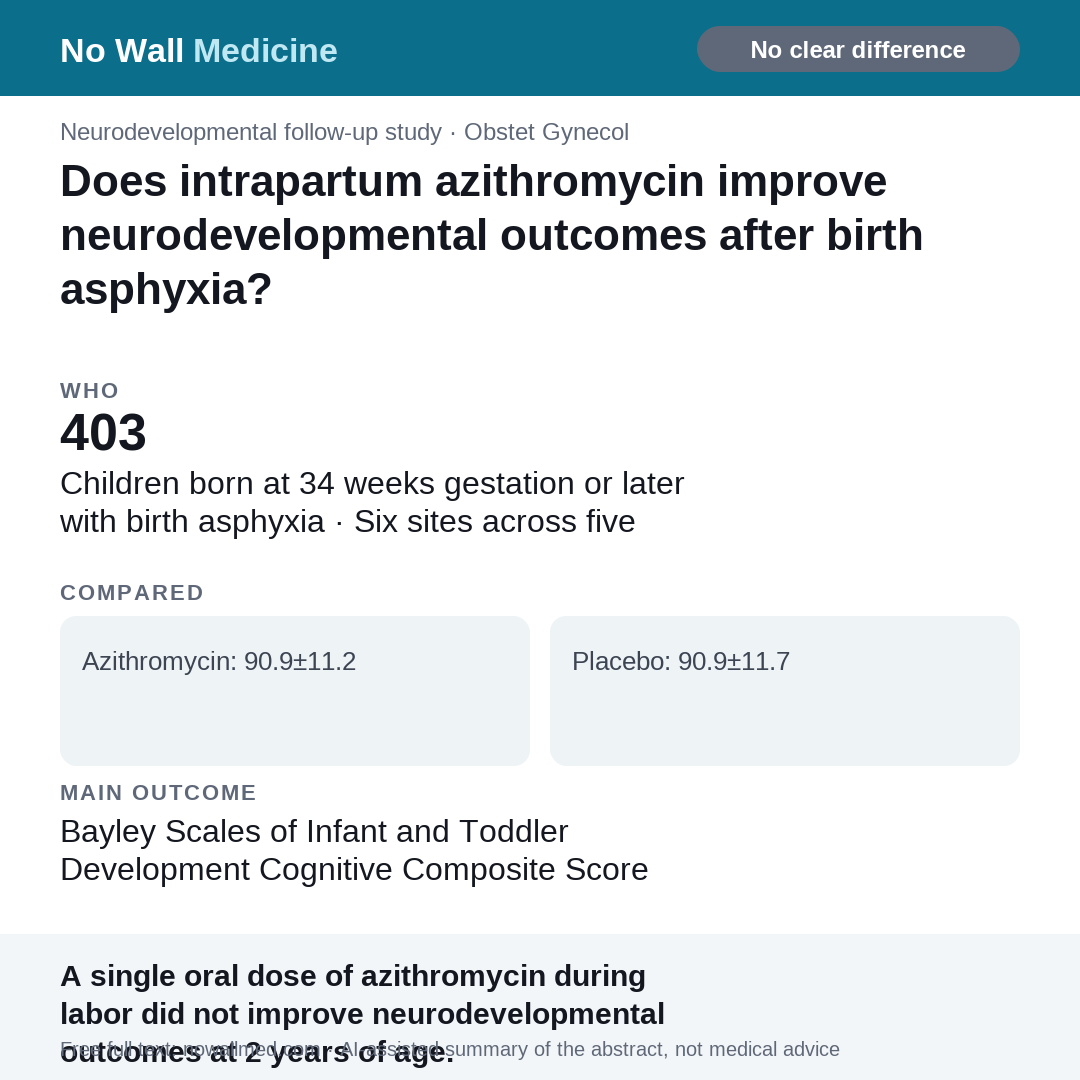
Neurodevelopmental Pediatric Follow-Up After the Azithromycin Prevention in Labor Use Study
Neurodevelopmental follow-up studyNo clear difference
Does intrapartum azithromycin improve neurodevelopmental outcomes after birth asphyxia?
Who
403
Children born at 34 weeks gestation or later with birth asphyxia · Six sites across five countries
Compared
Azithromycin: 90.9±11.2
Placebo: 90.9±11.7
Main outcome
Bayley Scales of Infant and Toddler Development Cognitive Composite Score
Result: mean difference: 0.29; 95% CI, -1.77 to 2.34
Bottom line: A single oral dose of azithromycin during labor did not improve neurodevelopmental outcomes at 2 years of age.
Obstet Gynecol · 2026-05-14Download image
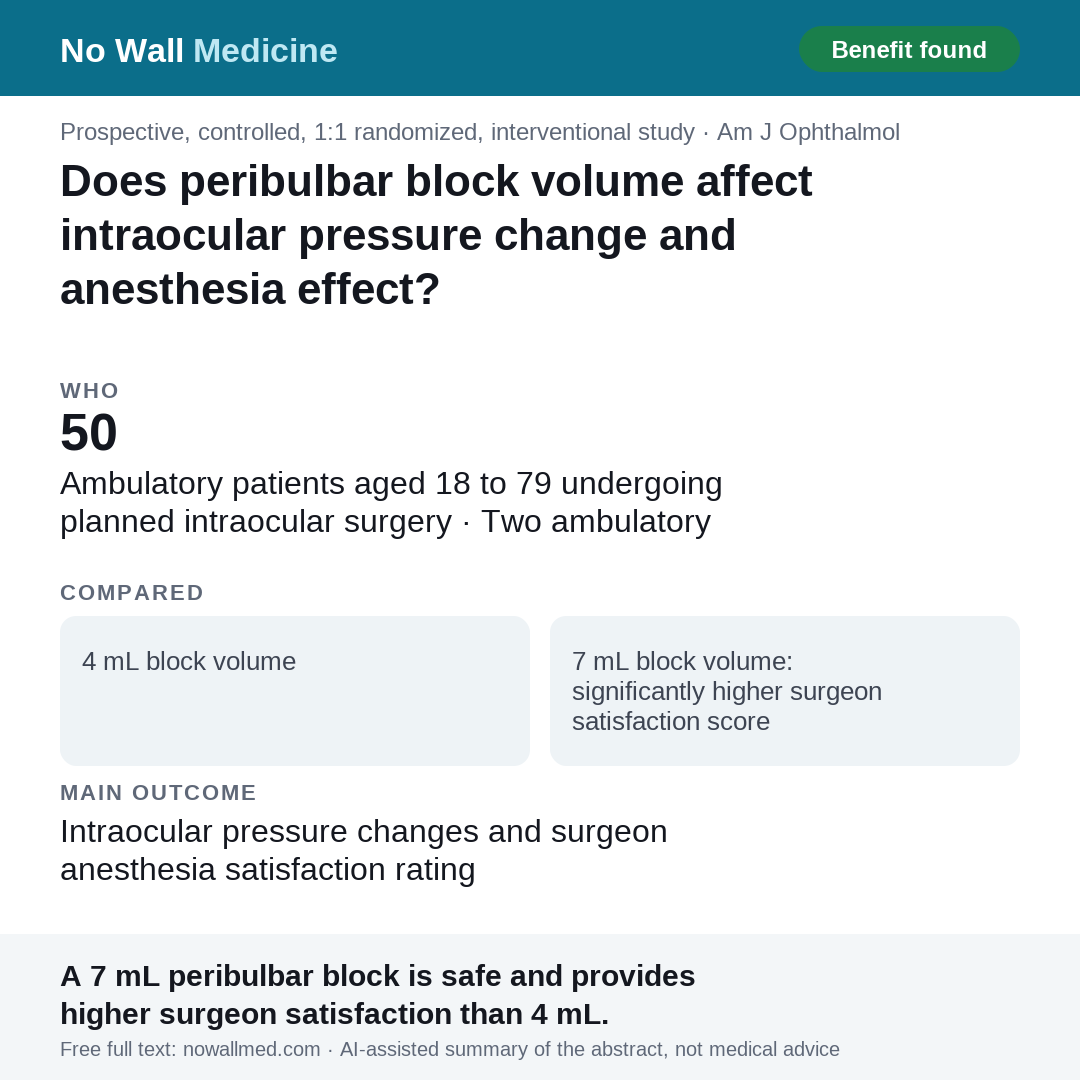
The Effect of Peribulbar Block Volume on Intraocular Pressure Change: A Randomized Prospective Study
Prospective, controlled, 1:1 randomized, interventional studyBenefit found
Does peribulbar block volume affect intraocular pressure change and anesthesia effect?
Who
50
Ambulatory patients aged 18 to 79 undergoing planned intraocular surgery · Two ambulatory surgical centers
Compared
4 mL block volume
7 mL block volume: significantly higher surgeon satisfaction score
Main outcome
Intraocular pressure changes and surgeon anesthesia satisfaction rating
Bottom line: A 7 mL peribulbar block is safe and provides higher surgeon satisfaction than 4 mL.
Am J Ophthalmol · 2026-05-14Download image