Visual abstracts
New randomized trials and meta-analyses from leading journals at a glance: who was studied, what was compared, and what was found. Every paper is free to read in full.
All specialtiesCardiology 4877Oncology 4138Gastroenterology & Hepatology 1942Infectious Disease 3837Neurology 1905Psychiatry & Mental Health 2273Pulmonology 2143Critical Care 1365Endocrinology & Diabetes 2580Pediatrics 2980Surgery 2559Orthopedics & Sports Medicine 931Neurosurgery 537Cardiothoracic & Vascular Surgery 674Plastic & Reconstructive Surgery 591Nephrology 1133Rheumatology 823Hematology 1109Dermatology 621Ophthalmology 543Obstetrics & Gynecology 1686Public & Global Health 1058Radiology & Imaging 648Anesthesiology 986Urology 764ENT (Otolaryngology) 503Emergency Medicine 511Allergy & Immunology 313Geriatrics 981Family Medicine & Primary Care 562Medical Genetics & Genomics 676Pathology & Laboratory Medicine 159Physical Medicine & Rehabilitation 757Palliative Care 444Nutrition 1588Digital Health & AI 2201General Medicine 321
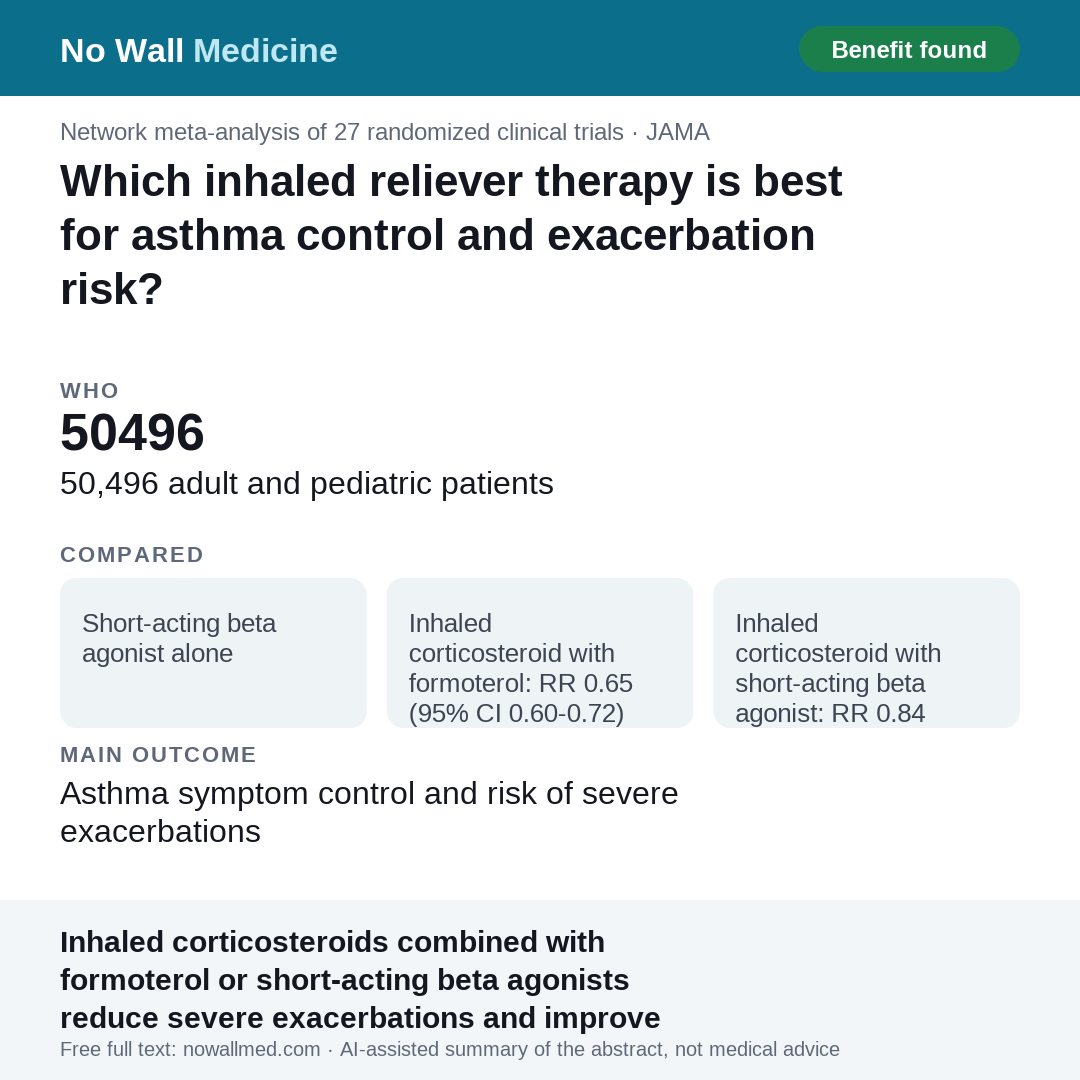
Inhaled Reliever Therapies for Asthma: A Systematic Review and Meta-Analysis
Network meta-analysis of 27 randomized clinical trialsBenefit found
Which inhaled reliever therapy is best for asthma control and exacerbation risk?
Who
50496
50,496 adult and pediatric patients
Compared
Short-acting beta agonist alone
Inhaled corticosteroid with formoterol: RR 0.65 (95% CI 0.60-0.72) for severe exacerbations
Inhaled corticosteroid with short-acting beta agonist: RR 0.84 (95% CI 0.73-0.95) for severe exacerbations
Main outcome
Asthma symptom control and risk of severe exacerbations
Result: ICS-formoterol RR 0.65 (95% CI 0.60-0.72) for severe exacerbations
Bottom line: Inhaled corticosteroids combined with formoterol or short-acting beta agonists reduce severe exacerbations and improve asthma control compared to short-acting beta agonists alone.
JAMA · 2024-10-28Download image
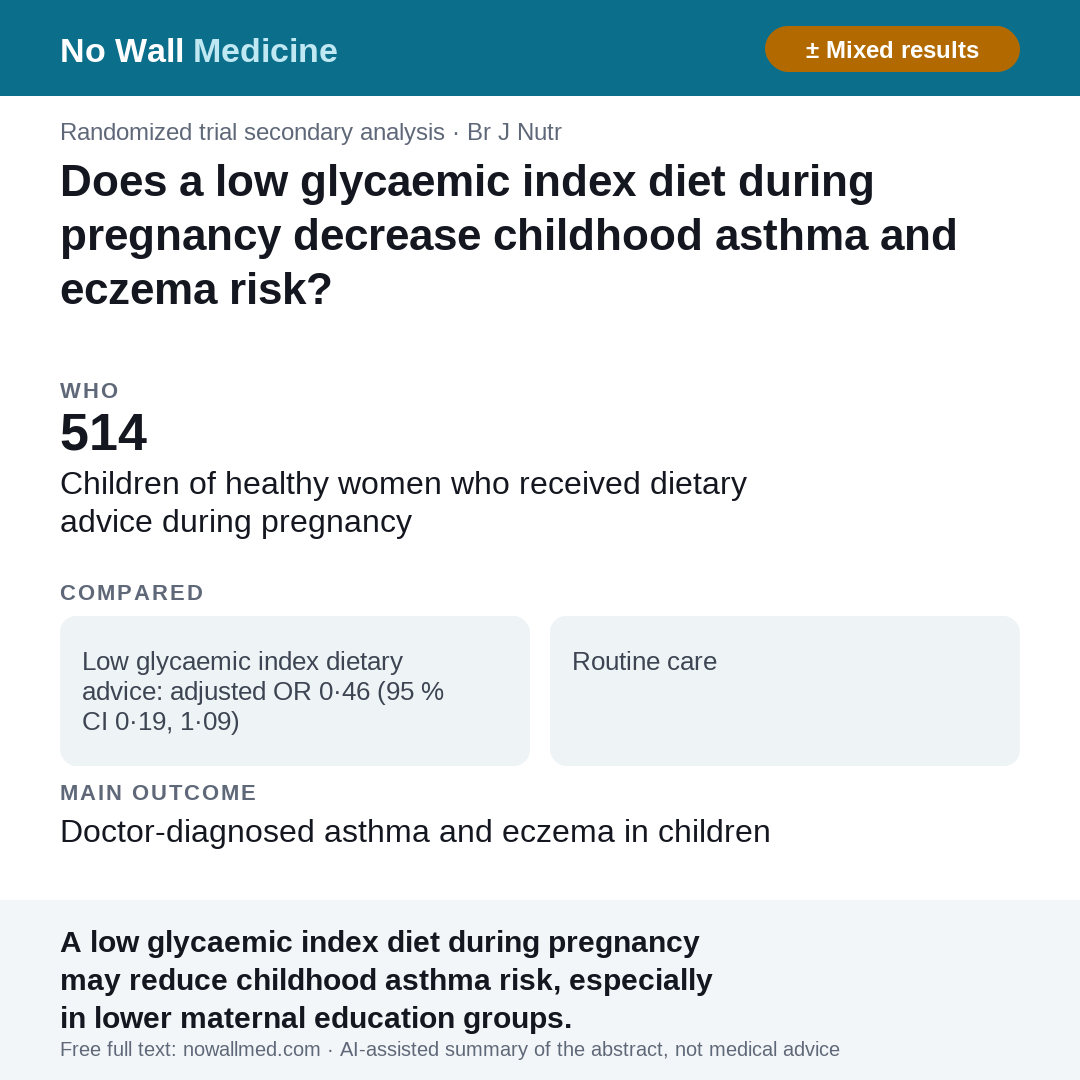
Low glycaemic index diet in pregnancy and child asthma: follow-up of the ROLO trial
Randomized trial secondary analysisMixed results
Does a low glycaemic index diet during pregnancy decrease childhood asthma and eczema risk?
Who
514
Children of healthy women who received dietary advice during pregnancy
Compared
Low glycaemic index dietary advice: adjusted OR 0·46 (95 % CI 0·19, 1·09)
Routine care
Main outcome
Doctor-diagnosed asthma and eczema in children
Result: adjusted OR 0·46 (95 % CI 0·19, 1·09)
Bottom line: A low glycaemic index diet during pregnancy may reduce childhood asthma risk, especially in lower maternal education groups.
Br J Nutr · 2024-10-28Download image
Diagnosis and Treatment of Tethered Spinal Cord: A Systematic Review
Systematic reviewMixed results
What is the evidence for diagnosis and treatment of tethered spinal cord?
Who
Patients with tethered spinal cord syndrome
Compared
MRI diagnosis: medium to high diagnostic sensitivity and specificity
Prophylactic surgery: motor function benefits and stability of neurologic status
Symptomatic surgical detethering: improvement in neurologic status
Main outcome
Diagnosis, prophylactic surgery, symptomatic treatment, and repeat surgery
Bottom line: MRI is effective for diagnosis, while surgical treatments show benefits but carry risks of complications.
Limitation: Insufficient evidence for clinical impact, ambulation, quality of life, and over- or undertreatment.
Pediatrics · 2024-10-25Download image

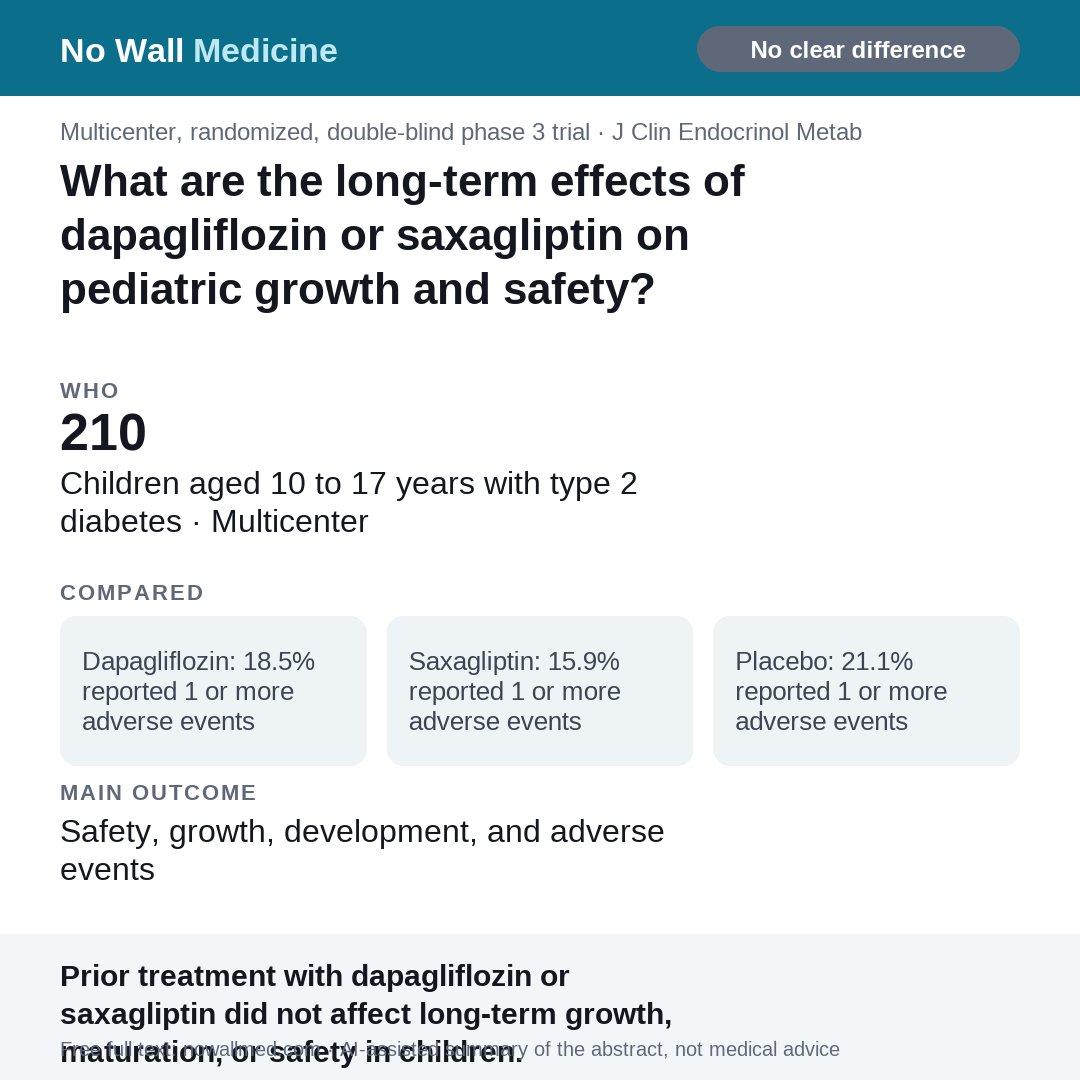
Safety, Growth, and Development After Dapagliflozin or Saxagliptin in Children With Type 2 Diabetes (T2NOW Follow-Up)
Multicenter, randomized, double-blind phase 3 trialNo clear difference
What are the long-term effects of dapagliflozin or saxagliptin on pediatric growth and safety?
Who
210
Children aged 10 to 17 years with type 2 diabetes · Multicenter
Compared
Dapagliflozin: 18.5% reported 1 or more adverse events
Saxagliptin: 15.9% reported 1 or more adverse events
Placebo: 21.1% reported 1 or more adverse events
Main outcome
Safety, growth, development, and adverse events
Bottom line: Prior treatment with dapagliflozin or saxagliptin did not affect long-term growth, maturation, or safety in children.
J Clin Endocrinol Metab · 2024-10-24Download image
Duration of anticoagulation for venous thromboembolism in pediatric patients: Evaluation of the Duration of Therapy for Thrombosis in Children (Kids-DOTT) trial outcomes at 2 years
Multicenter, randomized clinical trialBenefit found
Is 6 weeks of anticoagulation noninferior to 3 months for provoked venous thromboembolism?
Who
417
Patients under 21 years old with provoked venous thromboembolism · Multicenter
Compared
6-week anticoagulation duration: 1.7% (95% CI, 0%, 3.7%) symptomatic recurrent venous thromboembolism
3-month anticoagulation duration: 2.9% (95% CI, 0.3%, 5.4%) symptomatic recurrent venous thromboembolism
Main outcome
net clinical benefit including recurrent thrombosis and bleeding
Bottom line: A 6-week anticoagulation duration is noninferior to a 3-month course for net clinical benefit at 2 years.
J Thromb Haemost · 2024-10-24Download image

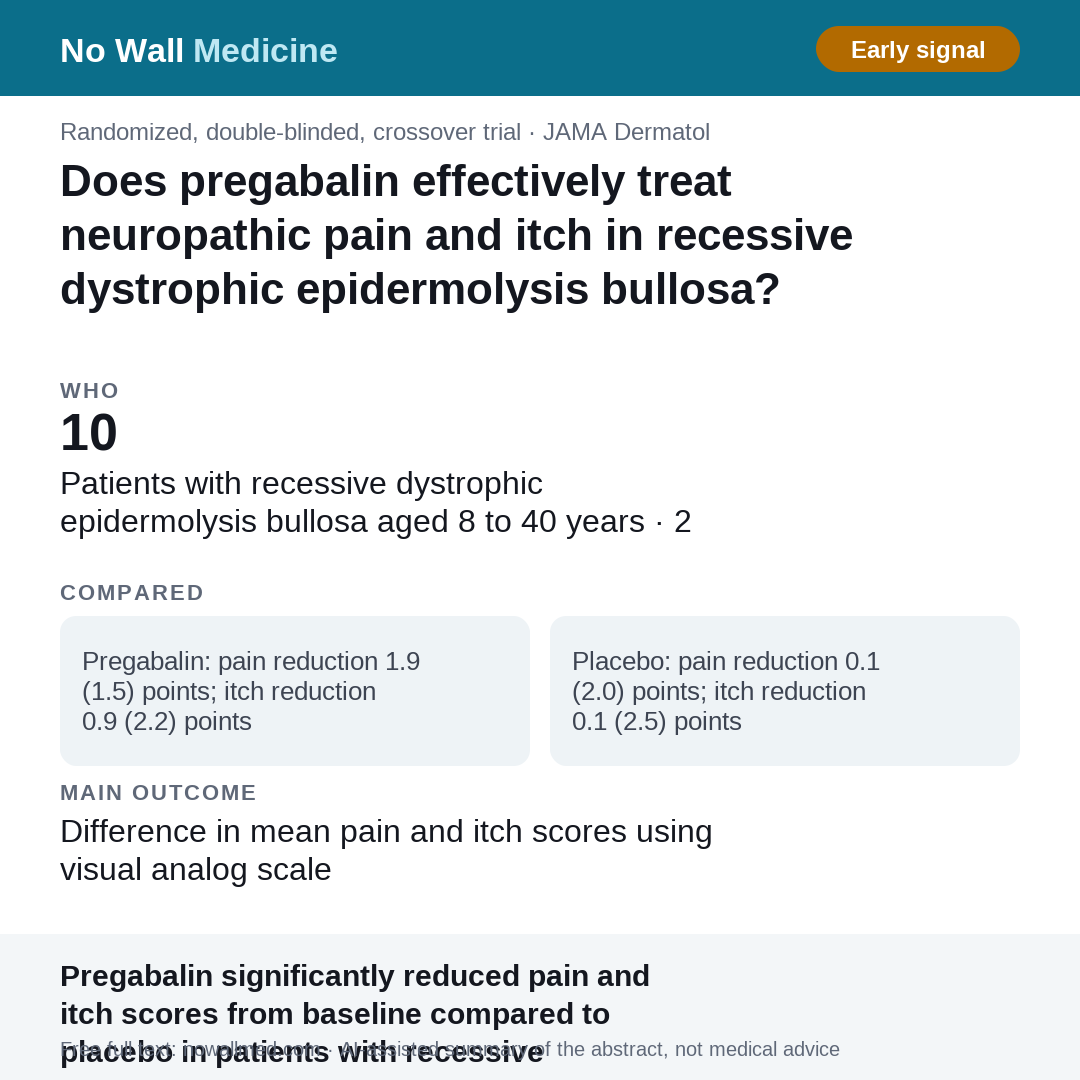
Pregabalin for Neuropathic Pain and Itch in Recessive Dystrophic Epidermolysis Bullosa: A Randomized Crossover Trial
Randomized, double-blinded, crossover trialBenefit found
Does pregabalin effectively treat neuropathic pain and itch in recessive dystrophic epidermolysis bullosa?
Who
10
Patients with recessive dystrophic epidermolysis bullosa aged 8 to 40 years · 2 sites, Toronto (Canada) and Santiago (Chile)
Compared
Pregabalin: pain reduction 1.9 (1.5) points; itch reduction 0.9 (2.2) points
Placebo: pain reduction 0.1 (2.0) points; itch reduction 0.1 (2.5) points
Main outcome
Difference in mean pain and itch scores using visual analog scale
Bottom line: Pregabalin significantly reduced pain and itch scores from baseline compared to placebo in patients with recessive dystrophic epidermolysis bullosa.
JAMA Dermatol · 2024-10-23Download image
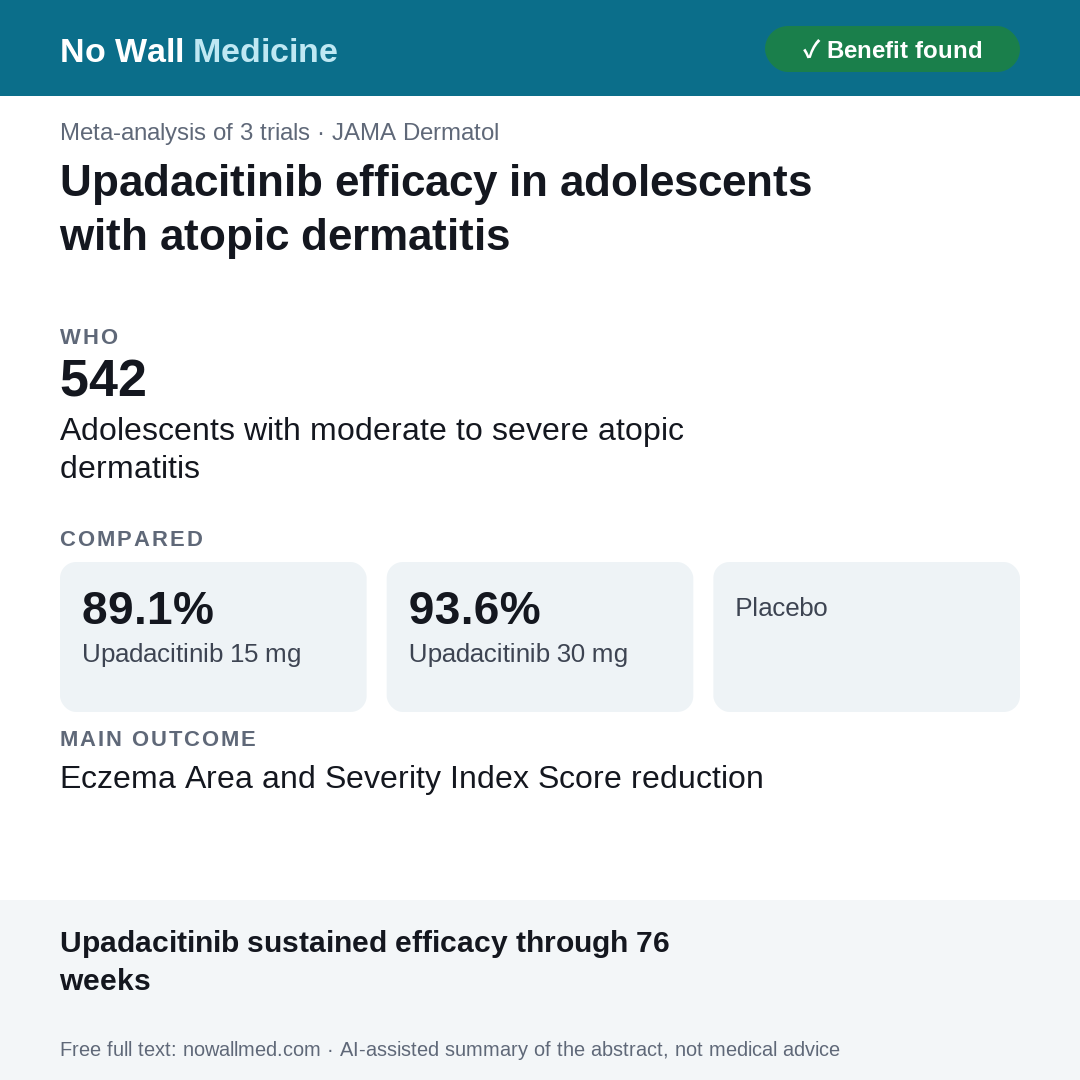
Upadacitinib in Adolescents With Moderate to Severe Atopic Dermatitis: Analysis of 3 Phase 3 Randomized Clinical Trials Through 76 Weeks
Meta-analysis of 3 trialsBenefit found
Upadacitinib efficacy in adolescents with atopic dermatitis
Who
542
Adolescents with moderate to severe atopic dermatitis
Compared
89.1%Upadacitinib 15 mg
93.6%Upadacitinib 30 mg
Placebo
Main outcome
Eczema Area and Severity Index Score reduction
Bottom line: Upadacitinib sustained efficacy through 76 weeks
JAMA Dermatol · 2024-10-23Download image
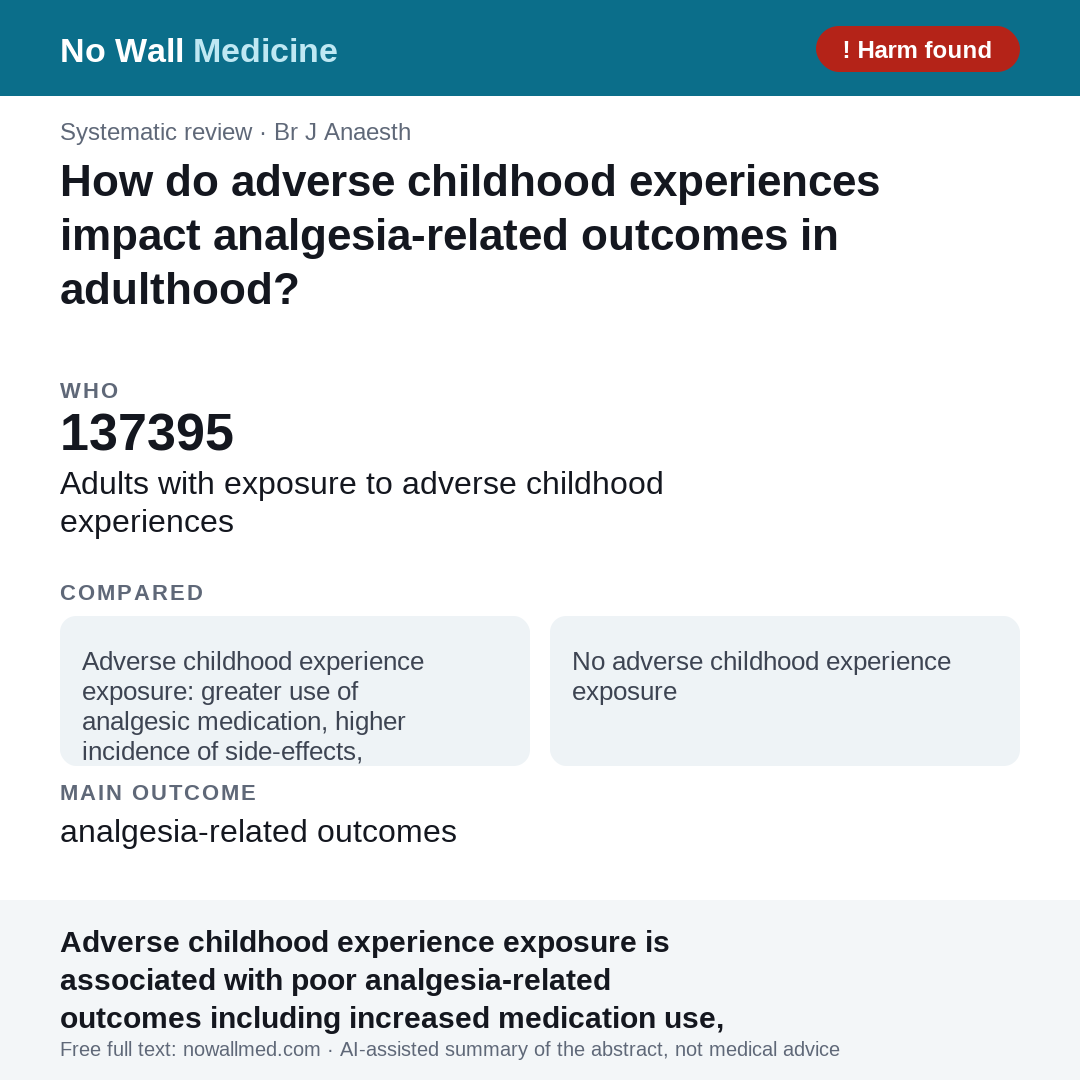
Impact of adverse childhood experiences on analgesia-related outcomes: a systematic review
Systematic reviewHarm found
How do adverse childhood experiences impact analgesia-related outcomes in adulthood?
Who
137395
Adults with exposure to adverse childhood experiences
Compared
Adverse childhood experience exposure: greater use of analgesic medication, higher incidence of side-effects, greater risk and severity of substance misuse, greater risk of drug overdose, and greater risk of attempted suicide
No adverse childhood experience exposure
Main outcome
analgesia-related outcomes
Bottom line: Adverse childhood experience exposure is associated with poor analgesia-related outcomes including increased medication use, side-effects, and substance misuse.
Limitation: Significant gaps remain regarding the use and harms of non opioid analgesics.
Br J Anaesth · 2024-10-22Download image
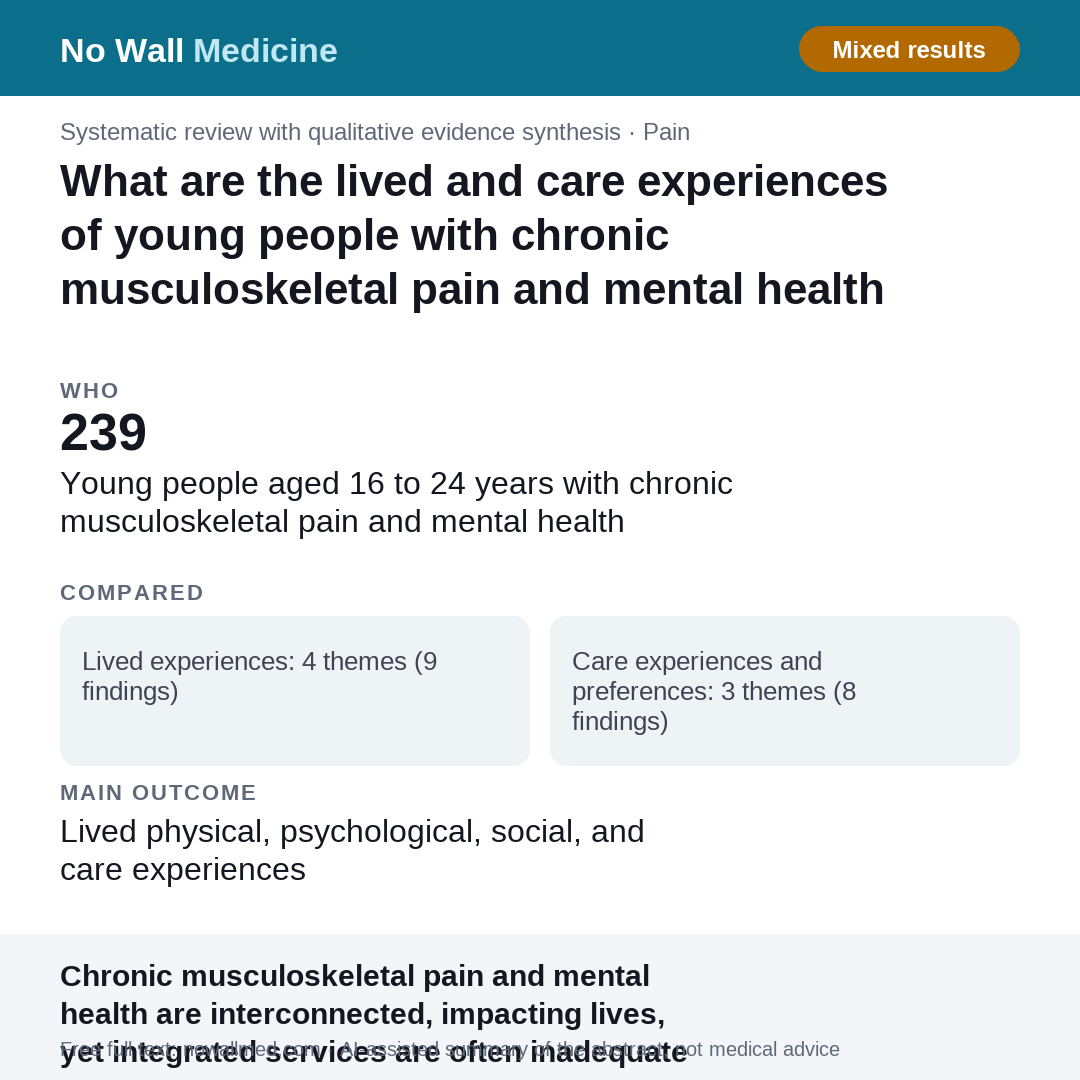
Lived and care experiences of young people with chronic musculoskeletal pain and mental health conditions: a systematic review with qualitative evidence synthesis
Systematic review with qualitative evidence synthesisMixed results
What are the lived and care experiences of young people with chronic musculoskeletal pain and mental health conditions?
Who
239
Young people aged 16 to 24 years with chronic musculoskeletal pain and mental health conditions
Compared
Lived experiences: 4 themes (9 findings)
Care experiences and preferences: 3 themes (8 findings)
Main outcome
Lived physical, psychological, social, and care experiences
Bottom line: Chronic musculoskeletal pain and mental health are interconnected, impacting lives, yet integrated services are often inadequate and poorly integrated.
Limitation: Confidence in findings ranged from very low to moderate
Pain · 2024-10-22Download image
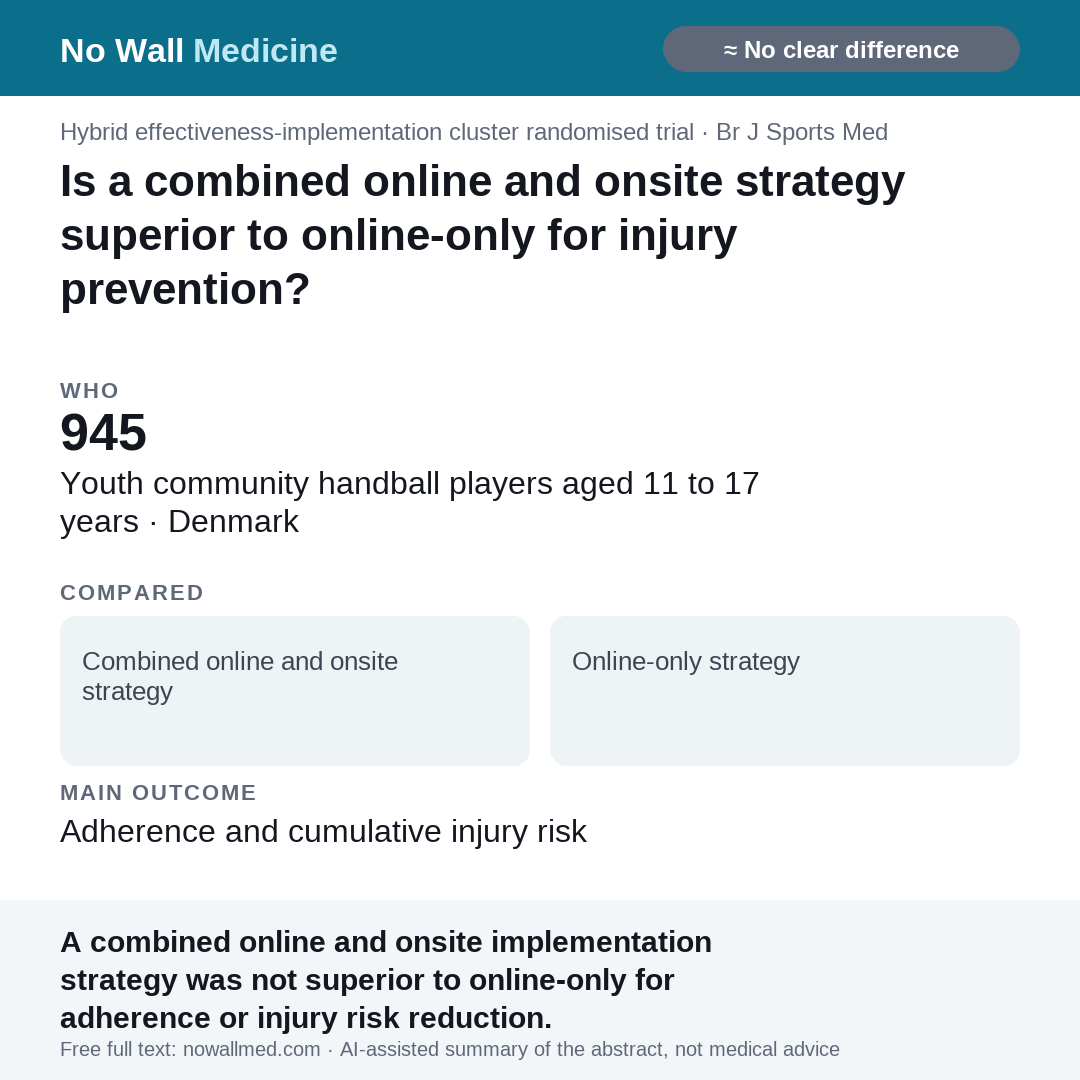
Health And Performance Promotion in Youth (HAPPY) hybrid effectiveness-implementation cluster randomised trial: comparison of two strategies to implement an injury prevention exercise programme in Danish youth handball
Hybrid effectiveness-implementation cluster randomised trialNo clear difference
Is a combined online and onsite strategy superior to online-only for injury prevention?
Who
945
Youth community handball players aged 11 to 17 years · Denmark
Compared
Combined online and onsite strategy
Online-only strategy
Main outcome
Adherence and cumulative injury risk
Result: between-group difference 5.5% points, 95% CI -2.2 to 13.1
Bottom line: A combined online and onsite implementation strategy was not superior to online-only for adherence or injury risk reduction.
Br J Sports Med · 2024-10-22Download image
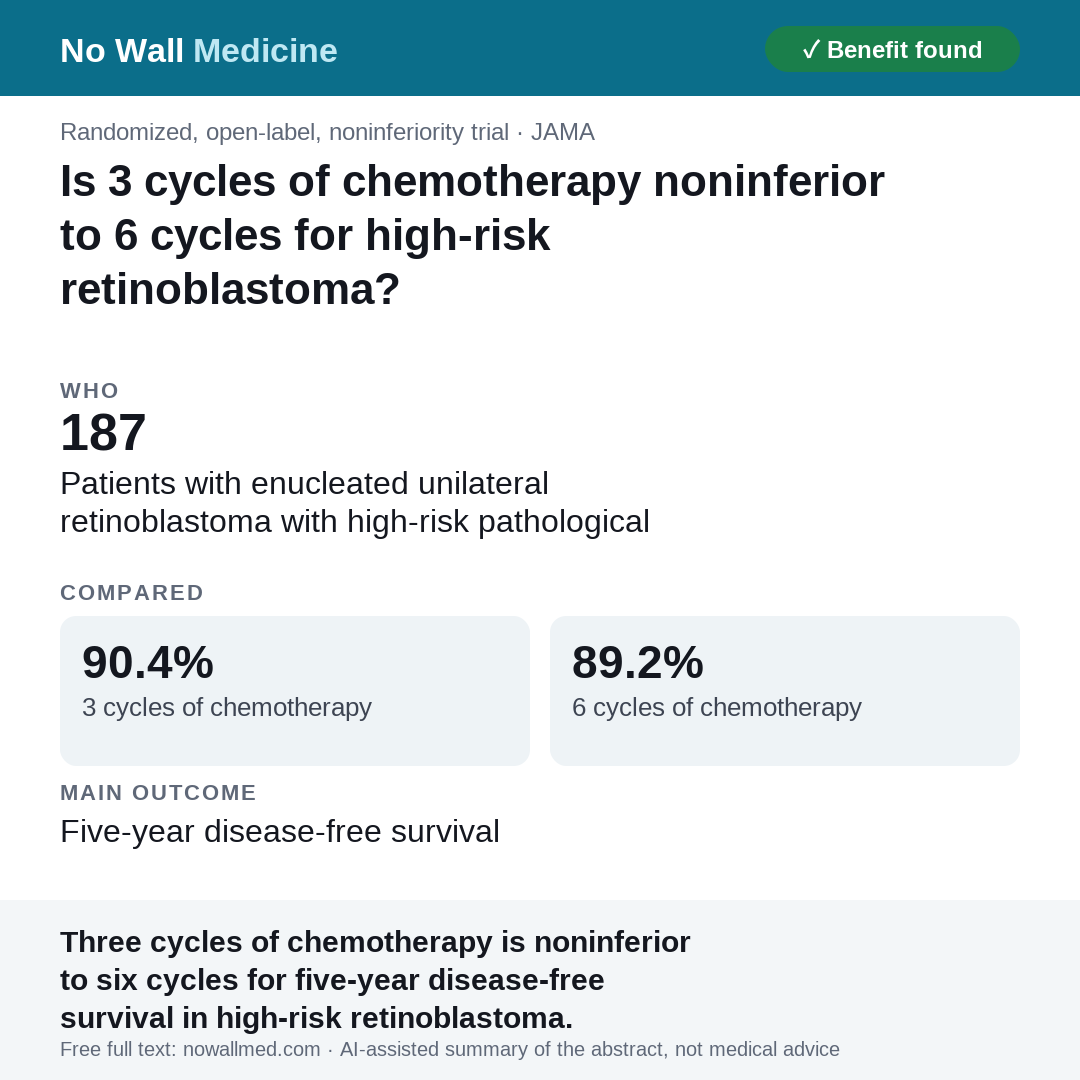
Three vs 6 Cycles of Chemotherapy for High-Risk Retinoblastoma: A Randomized Clinical Trial
Randomized, open-label, noninferiority trialBenefit found
Is 3 cycles of chemotherapy noninferior to 6 cycles for high-risk retinoblastoma?
Who
187
Patients with enucleated unilateral retinoblastoma with high-risk pathological features · 2 premier eye centers in China
Compared
90.4%3 cycles of chemotherapy
89.2%6 cycles of chemotherapy
Main outcome
Five-year disease-free survival
Result: difference, 1.2% (95% CI, -7.5% to 9.8%)
Bottom line: Three cycles of chemotherapy is noninferior to six cycles for five-year disease-free survival in high-risk retinoblastoma.
JAMA · 2024-10-21Download image
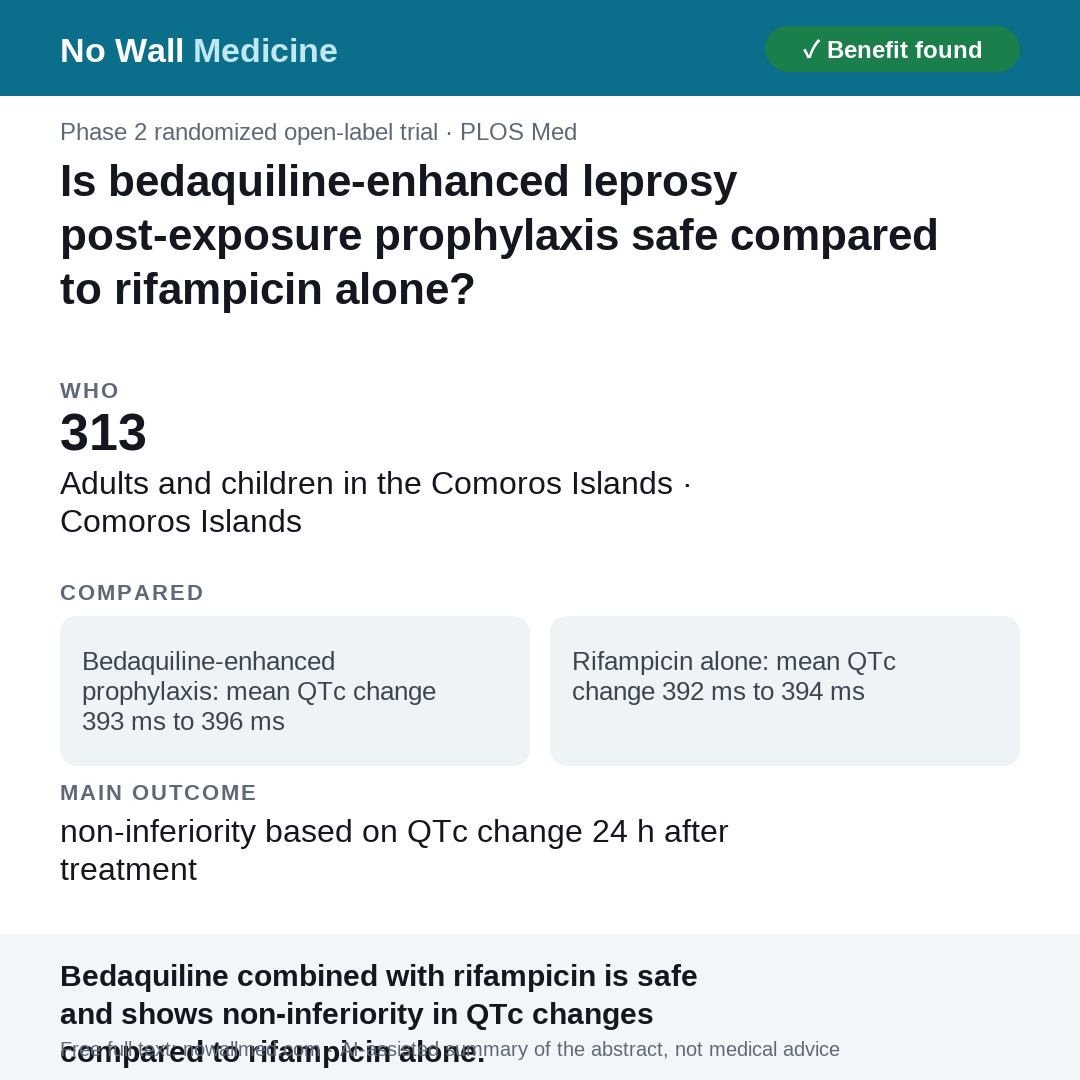
Safety of single-dose bedaquiline combined with rifampicin for leprosy post-exposure prophylaxis: A Phase 2 randomized non-inferiority trial in the Comoros Islands
Phase 2 randomized open-label trialBenefit found
Is bedaquiline-enhanced leprosy post-exposure prophylaxis safe compared to rifampicin alone?
Who
313
Adults and children in the Comoros Islands · Comoros Islands
Compared
Bedaquiline-enhanced prophylaxis: mean QTc change 393 ms to 396 ms
Rifampicin alone: mean QTc change 392 ms to 394 ms
Main outcome
non-inferiority based on QTc change 24 h after treatment
Result: difference between arms 1.8 ms, 95% CI -1.8, 5.3
Bottom line: Bedaquiline combined with rifampicin is safe and shows non-inferiority in QTc changes compared to rifampicin alone.
Limitation: false elevation of ALT/AST during adult recruitment due to a technical error
PLOS Med · 2024-10-21Download image
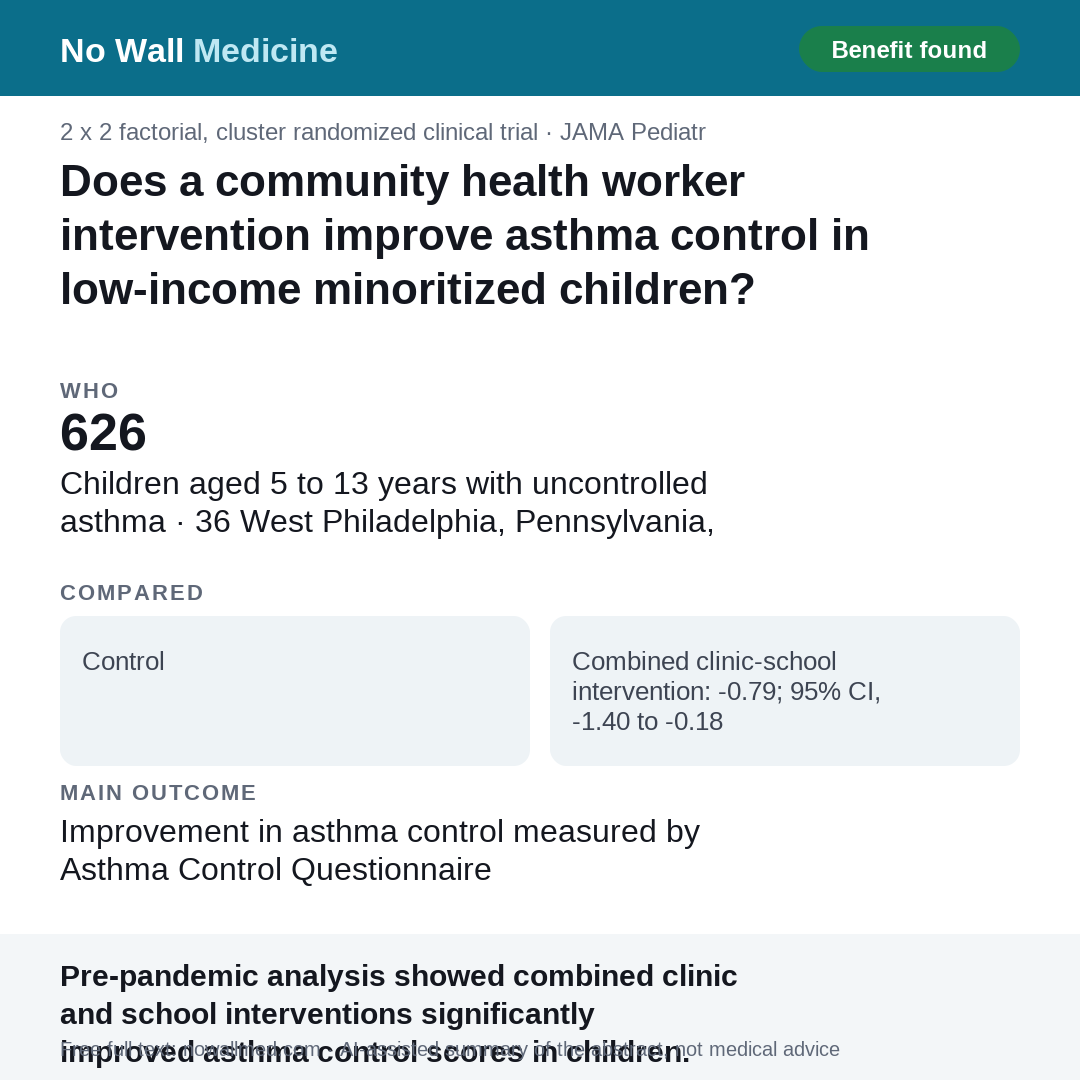
Community Health Workers Linking Clinics and Schools and Asthma Control: A Randomized Clinical Trial
2 x 2 factorial, cluster randomized clinical trialBenefit found
Does a community health worker intervention improve asthma control in low-income minoritized children?
Who
626
Children aged 5 to 13 years with uncontrolled asthma · 36 West Philadelphia, Pennsylvania, public and charter schools
Compared
Control
Combined clinic-school intervention: -0.79; 95% CI, -1.40 to -0.18
Main outcome
Improvement in asthma control measured by Asthma Control Questionnaire
Result: -0.79; 95% CI, -1.40 to -0.18
Bottom line: Pre-pandemic analysis showed combined clinic and school interventions significantly improved asthma control scores in children.
Limitation: Primary care and school interventions were dramatically disrupted by the COVID-19 pandemic.
JAMA Pediatr · 2024-10-21Download image
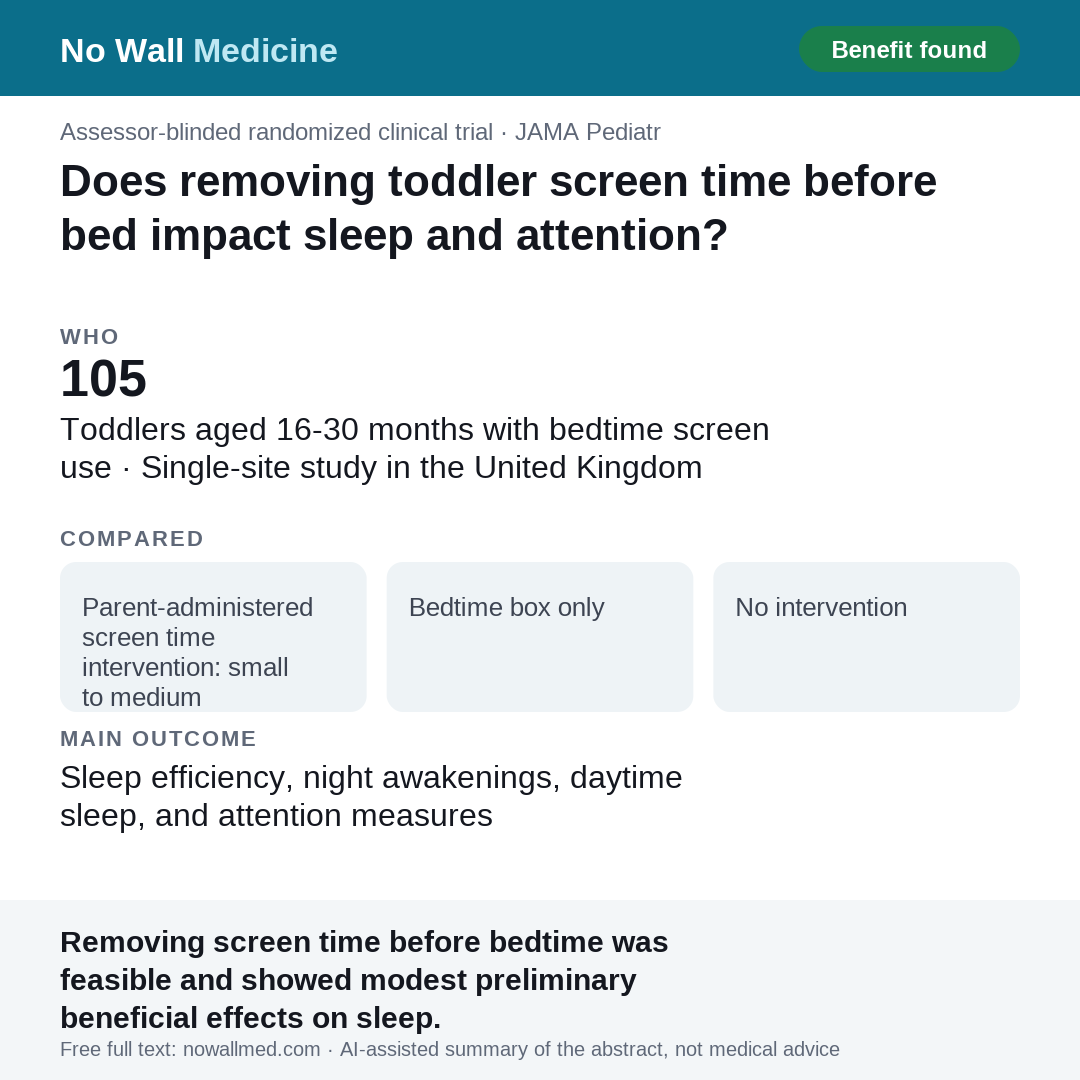
Toddler Screen Use Before Bed and Its Effect on Sleep and Attention: A Randomized Clinical Trial
Assessor-blinded randomized clinical trialBenefit found
Does removing toddler screen time before bed impact sleep and attention?
Who
105
Toddlers aged 16-30 months with bedtime screen use · Single-site study in the United Kingdom
Compared
Parent-administered screen time intervention: small to medium improvements in sleep efficiency
Bedtime box only
No intervention
Main outcome
Sleep efficiency, night awakenings, daytime sleep, and attention measures
Result: Cohen d 0.56 (95% CI, 0.17-0.96) for sleep efficiency vs BB only
Bottom line: Removing screen time before bedtime was feasible and showed modest preliminary beneficial effects on sleep.
JAMA Pediatr · 2024-10-21Download image
GLI1-Altered Mesenchymal Tumor-Multiomic Characterization of a Case Series and Patient-Level Meta-analysis of One Hundred Sixty-Seven Cases for Risk Stratification
Case series and patient-level meta-analysisMixed results
What clinicopathologic features predict metastasis in GLI1-altered mesenchymal tumors?
Who
167
Patients with GLI1-altered mesenchymal tumors
Compared
Size ≥6 cm and mitotic count ≥5: predictive of metastasis
Other features
Main outcome
Predictors of metastasis and malignant behavior
Bottom line: Tumor size ≥6 cm and mitotic count ≥5 per 10 high-power fields predict metastasis.
Mod Pathol · 2024-10-21Download image

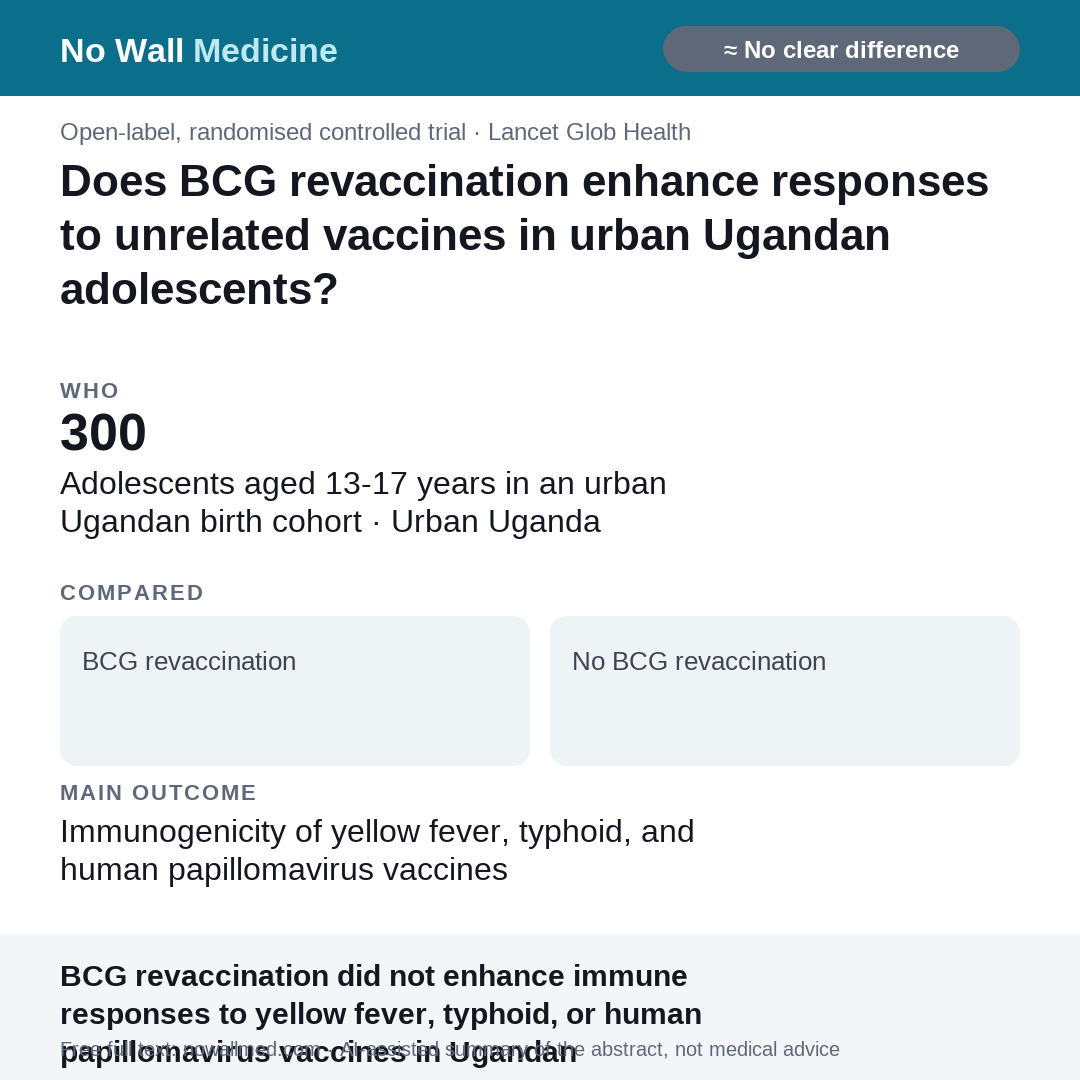
The effect of BCG revaccination on the response to unrelated vaccines in urban Ugandan adolescents (POPVAC C): an open-label, randomised controlled trial
Open-label, randomised controlled trialNo clear difference
Does BCG revaccination enhance responses to unrelated vaccines in urban Ugandan adolescents?
Who
300
Adolescents aged 13-17 years in an urban Ugandan birth cohort · Urban Uganda
Compared
BCG revaccination
No BCG revaccination
Main outcome
Immunogenicity of yellow fever, typhoid, and human papillomavirus vaccines
Result: GMR 0.95 (95% CI 0.75-1.19) for yellow fever PRNT50
Bottom line: BCG revaccination did not enhance immune responses to yellow fever, typhoid, or human papillomavirus vaccines in Ugandan adolescents.
Lancet Glob Health · 2024-10-19Download image
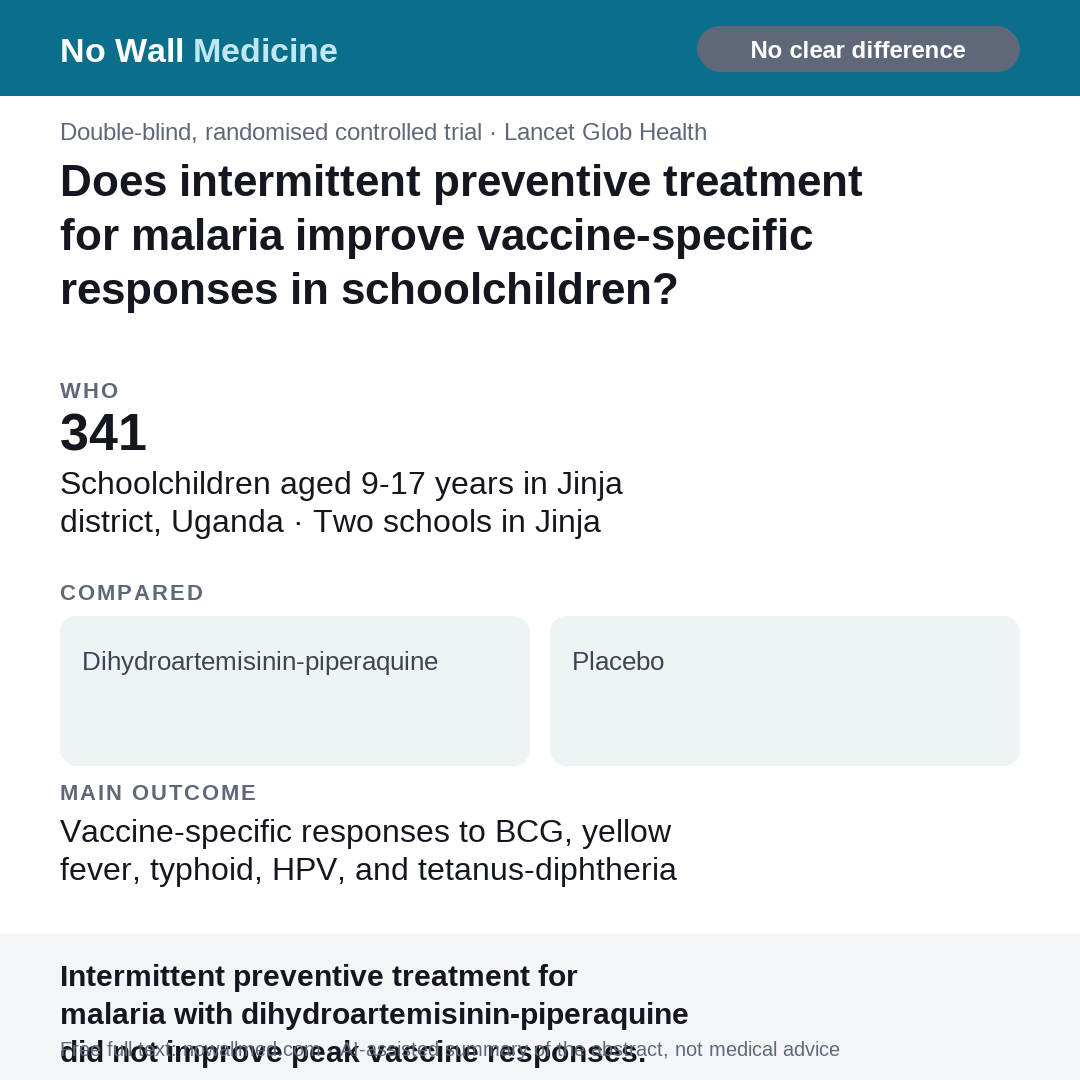
The effect of intermittent preventive treatment for malaria with dihydroartemisinin-piperaquine on vaccine-specific responses among schoolchildren in rural Uganda (POPVAC B): a double-blind, randomised controlled trial
Double-blind, randomised controlled trialNo clear difference
Does intermittent preventive treatment for malaria improve vaccine-specific responses in schoolchildren?
Who
341
Schoolchildren aged 9-17 years in Jinja district, Uganda · Two schools in Jinja district, Uganda
Compared
Dihydroartemisinin-piperaquine
Placebo
Main outcome
Vaccine-specific responses to BCG, yellow fever, typhoid, HPV, and tetanus-diphtheria
Bottom line: Intermittent preventive treatment for malaria with dihydroartemisinin-piperaquine did not improve peak vaccine responses.
Funded by: UK Medical Research Council
Lancet Glob Health · 2024-10-19Download image
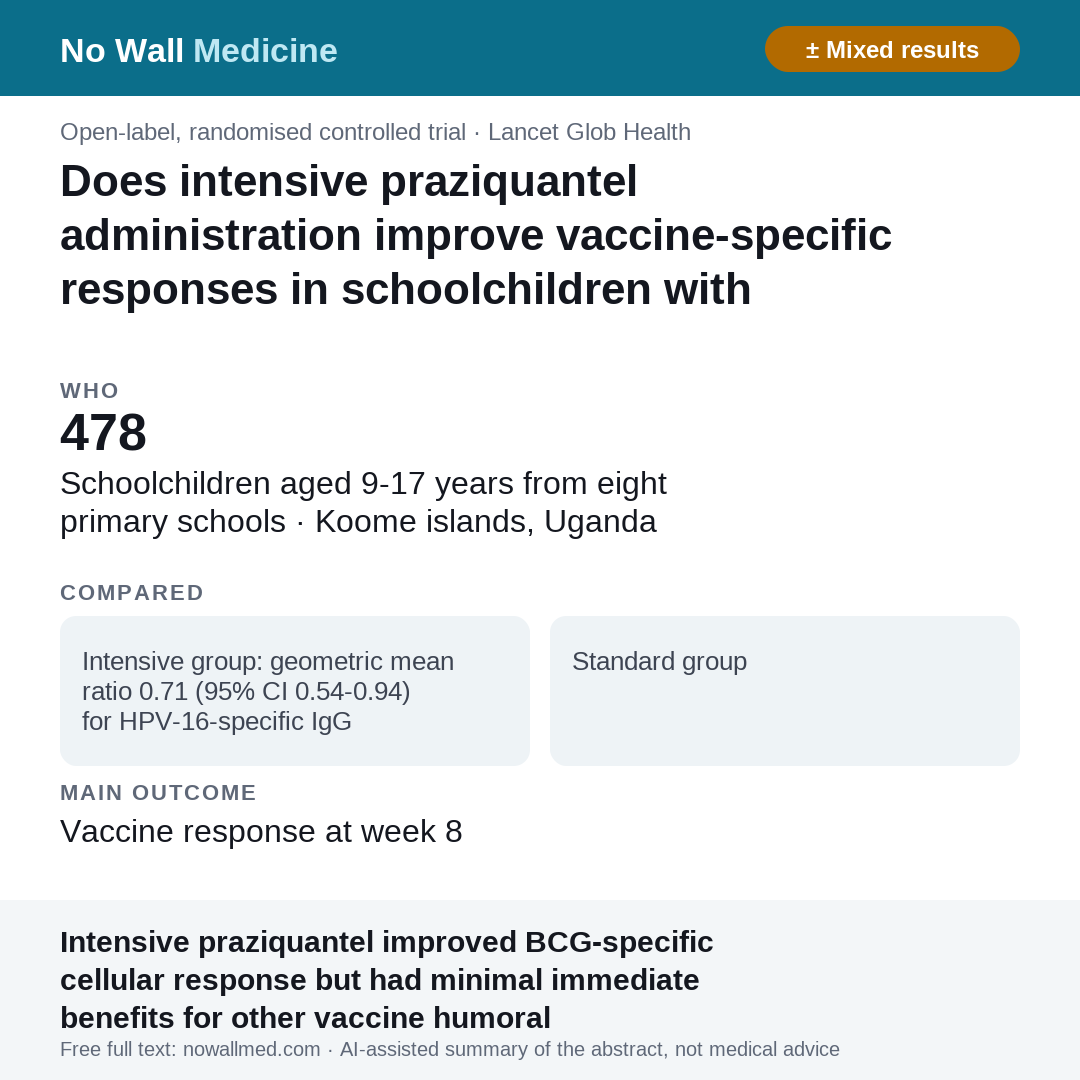
The effect of intensive praziquantel administration on vaccine-specific responses among schoolchildren in Ugandan schistosomiasis-endemic islands (POPVAC A): an open-label, randomised controlled trial
Open-label, randomised controlled trialMixed results
Does intensive praziquantel administration improve vaccine-specific responses in schoolchildren with Schistosoma mansoni?
Who
478
Schoolchildren aged 9-17 years from eight primary schools · Koome islands, Uganda
Compared
Intensive group: geometric mean ratio 0.71 (95% CI 0.54-0.94) for HPV-16-specific IgG
Standard group
Main outcome
Vaccine response at week 8
Result: geometric mean ratio 0.71 (95% CI 0.54-0.94)
Bottom line: Intensive praziquantel improved BCG-specific cellular response but had minimal immediate benefits for other vaccine humoral responses.
Funded by: UK Medical Research Council
Lancet Glob Health · 2024-10-19Download image
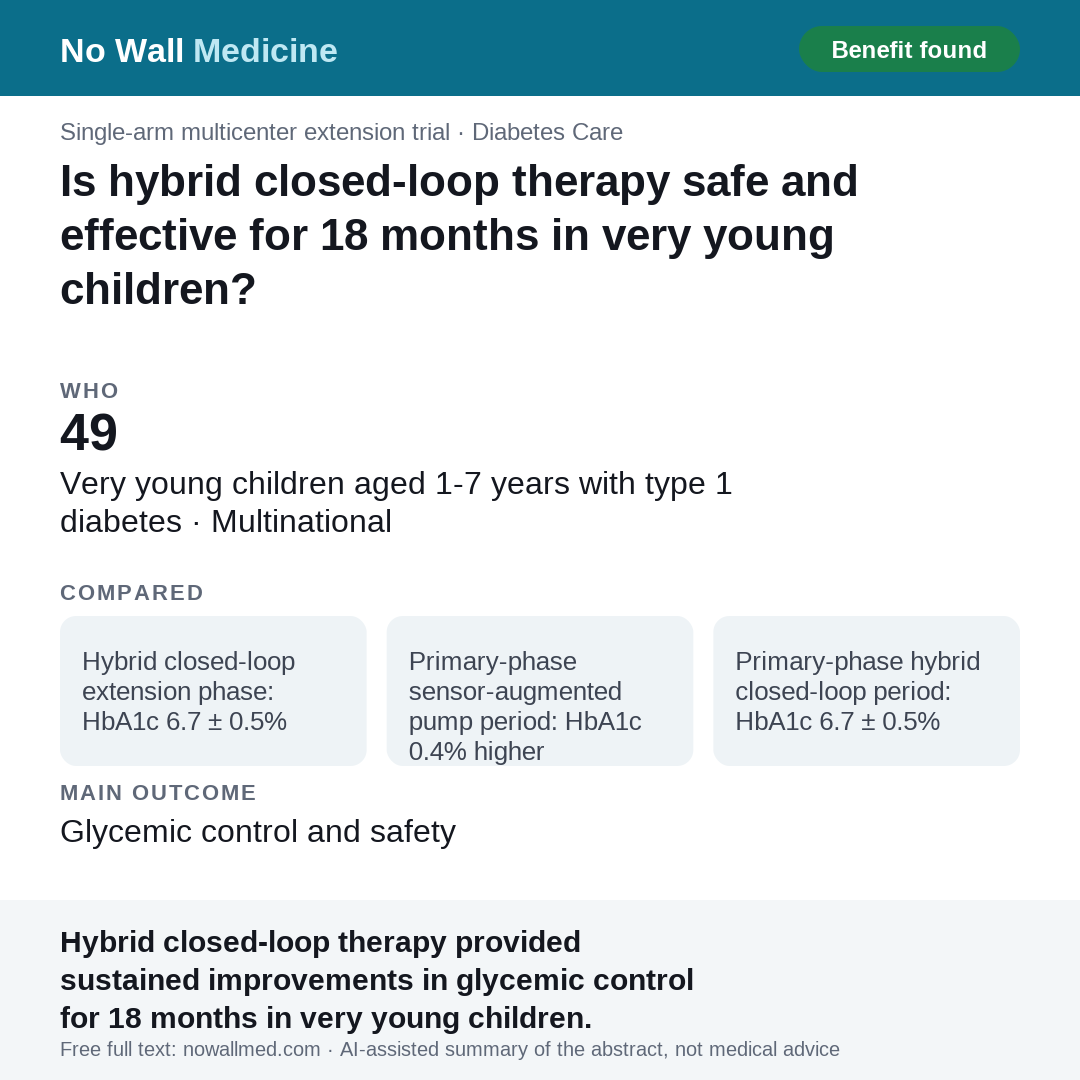
Eighteen-Month Hybrid Closed-Loop Use in Very Young Children With Type 1 Diabetes: A Single-Arm Multicenter Trial
Single-arm multicenter extension trialBenefit found
Is hybrid closed-loop therapy safe and effective for 18 months in very young children?
Who
49
Very young children aged 1-7 years with type 1 diabetes · Multinational
Compared
Hybrid closed-loop extension phase: HbA1c 6.7 ± 0.5%
Primary-phase sensor-augmented pump period: HbA1c 0.4% higher
Primary-phase hybrid closed-loop period: HbA1c 6.7 ± 0.5%
Main outcome
Glycemic control and safety
Bottom line: Hybrid closed-loop therapy provided sustained improvements in glycemic control for 18 months in very young children.
Diabetes Care · 2024-10-18Download image
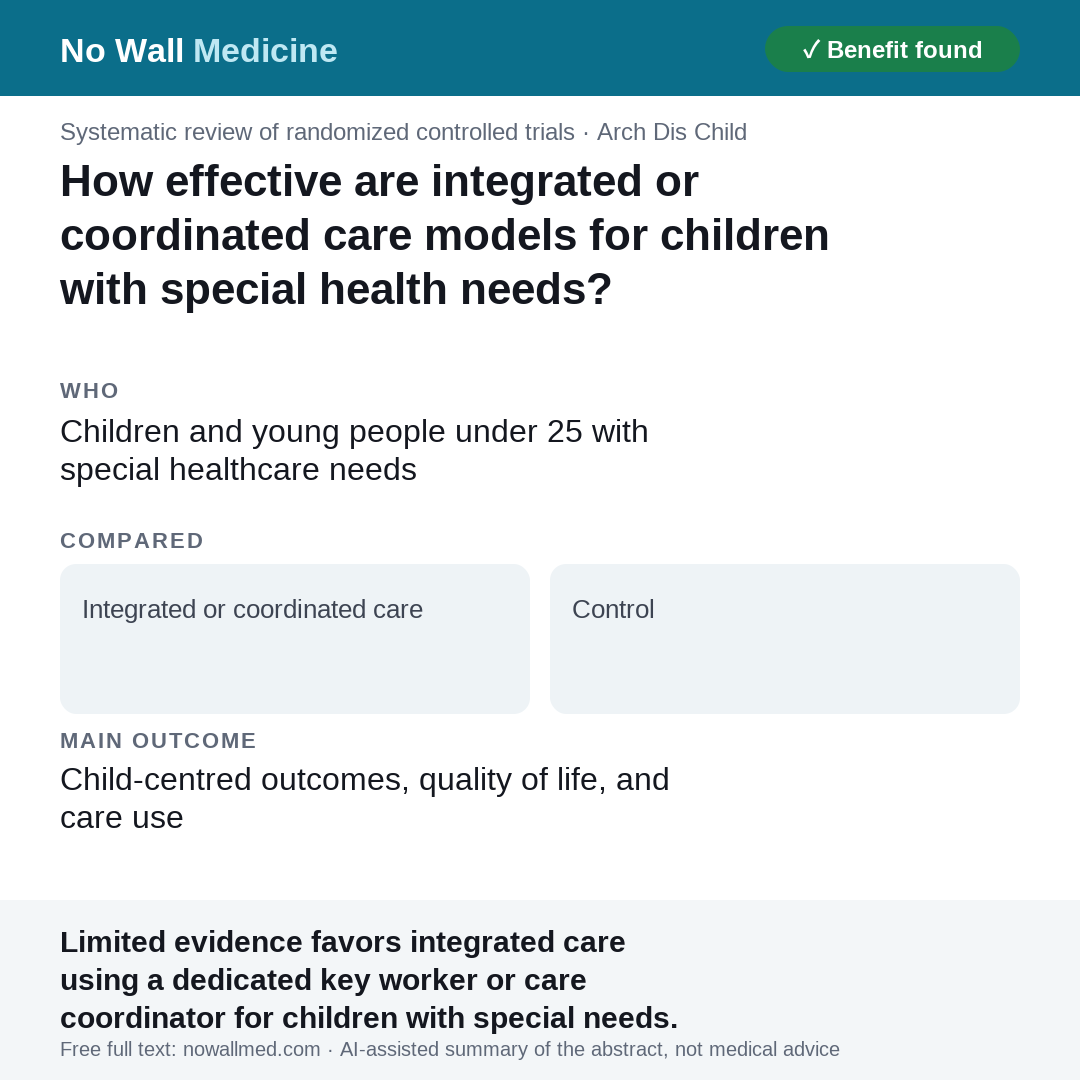
Integrated care for children and young people with special health and care needs: a systematic review
Systematic review of randomized controlled trialsBenefit found
How effective are integrated or coordinated care models for children with special health needs?
Who
Children and young people under 25 with special healthcare needs
Compared
Integrated or coordinated care
Control
Main outcome
Child-centred outcomes, quality of life, and care use
Bottom line: Limited evidence favors integrated care using a dedicated key worker or care coordinator for children with special needs.
Limitation: Low or very low certainty of evidence and heterogeneity in study outcomes and definitions.
Arch Dis Child · 2024-10-18Download image