Visual abstracts
New randomized trials and meta-analyses from leading journals at a glance: who was studied, what was compared, and what was found. Every paper is free to read in full.
All specialtiesCardiology 382Oncology 296Gastroenterology & Hepatology 151Infectious Disease 296Neurology 173Psychiatry & Mental Health 248Pulmonology 171Critical Care 116Endocrinology & Diabetes 220Pediatrics 175Surgery 114Orthopedics & Sports Medicine 70Neurosurgery 24Cardiothoracic & Vascular Surgery 41Plastic & Reconstructive Surgery 74Nephrology 74Rheumatology 73Hematology 85Dermatology 39Ophthalmology 60Obstetrics & Gynecology 111Public & Global Health 112Radiology & Imaging 30Anesthesiology 67Urology 87ENT (Otolaryngology) 47Emergency Medicine 38Allergy & Immunology 47Geriatrics 110Family Medicine & Primary Care 63Medical Genetics & Genomics 34Pathology & Laboratory Medicine 5Physical Medicine & Rehabilitation 91Palliative Care 58Nutrition 131Digital Health & AI 320General Medicine 46
Interventions to reduce greenhouse gas emissions from health-system solid waste: a systematic review
Systematic reviewBenefit found
What interventions reduce greenhouse gas emissions from health-system solid waste?
Who
Health-care and aged-care sectors in Australia and high-income countries · Australia and other high-income countries
Compared
Interventions
Economic cost studies: 54 of the 57 studies found cost savings
Main outcome
Greenhouse gas emission footprint of solid waste
Bottom line: Interventions prioritizing reduce, reuse, reprocess, and refurbish can reduce emissions and often provide cost savings.
Lancet Planet Health · 2026-02-14Download image

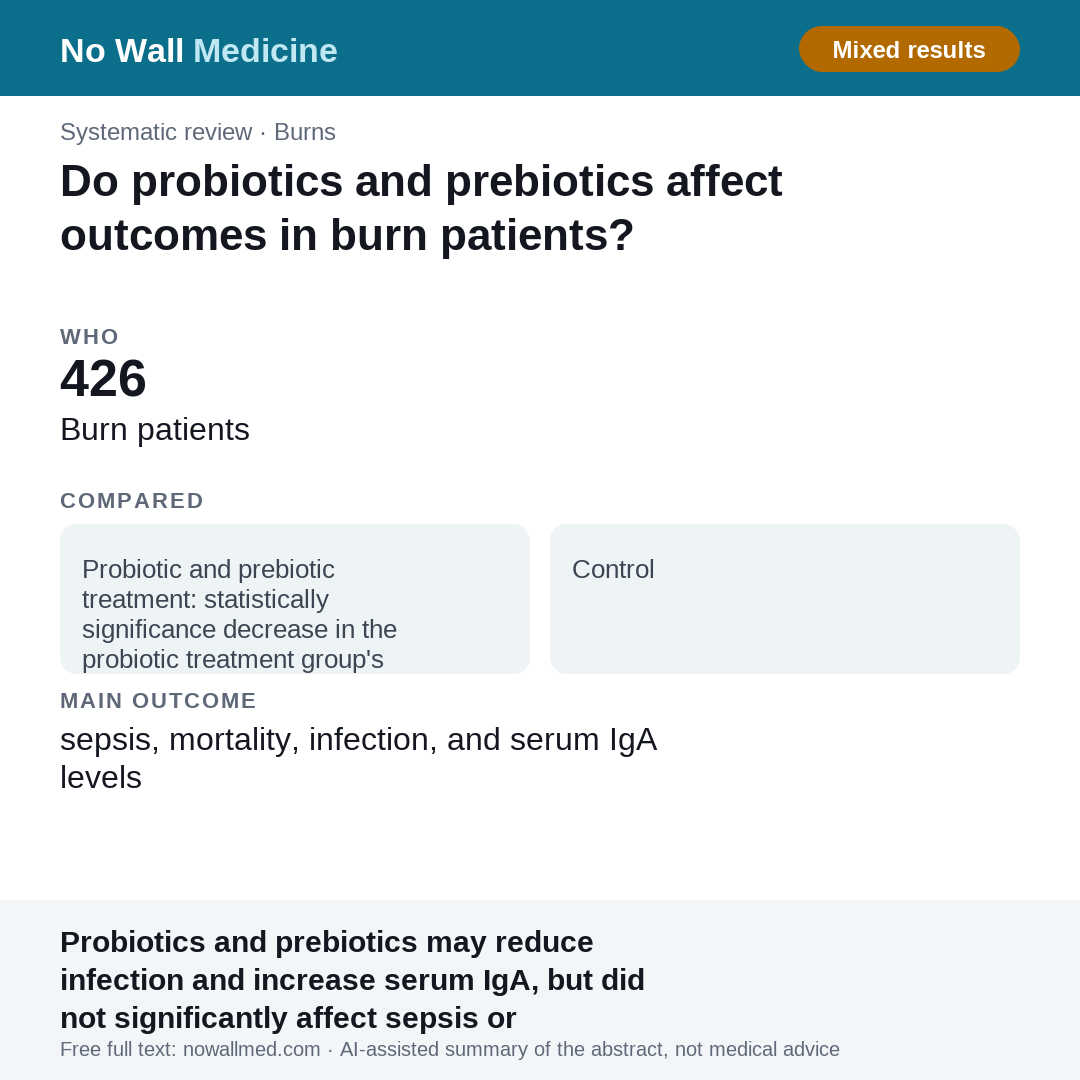
Probiotic and prebiotic interventions in burn patients: A systematic review
Systematic reviewMixed results
Do probiotics and prebiotics affect outcomes in burn patients?
Who
426
Burn patients
Compared
Probiotic and prebiotic treatment: statistically significance decrease in the probiotic treatment group's rate of infection (p < 0.0001)
Control
Main outcome
sepsis, mortality, infection, and serum IgA levels
Bottom line: Probiotics and prebiotics may reduce infection and increase serum IgA, but did not significantly affect sepsis or mortality.
Burns · 2026-02-14Download image
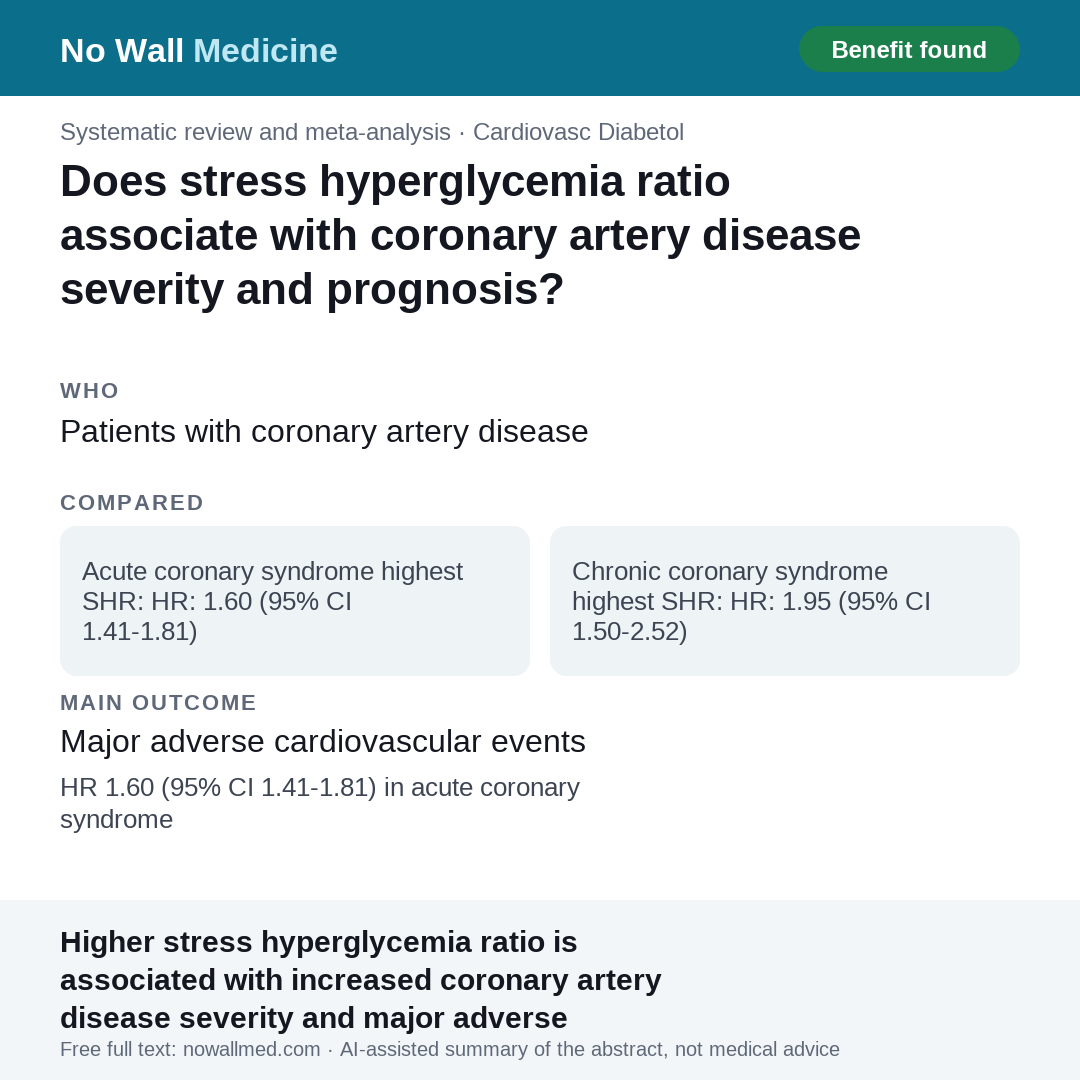
Stress hyperglycemia ratio in coronary artery disease: a systematic review and meta-analysis of severity and prognosis
Systematic review and meta-analysisBenefit found
Does stress hyperglycemia ratio associate with coronary artery disease severity and prognosis?
Who
Patients with coronary artery disease
Compared
Acute coronary syndrome highest SHR: HR: 1.60 (95% CI 1.41-1.81)
Chronic coronary syndrome highest SHR: HR: 1.95 (95% CI 1.50-2.52)
Main outcome
Major adverse cardiovascular events
Result: HR 1.60 (95% CI 1.41-1.81) in acute coronary syndrome
Bottom line: Higher stress hyperglycemia ratio is associated with increased coronary artery disease severity and major adverse cardiovascular events.
Cardiovasc Diabetol · 2026-02-14Download image
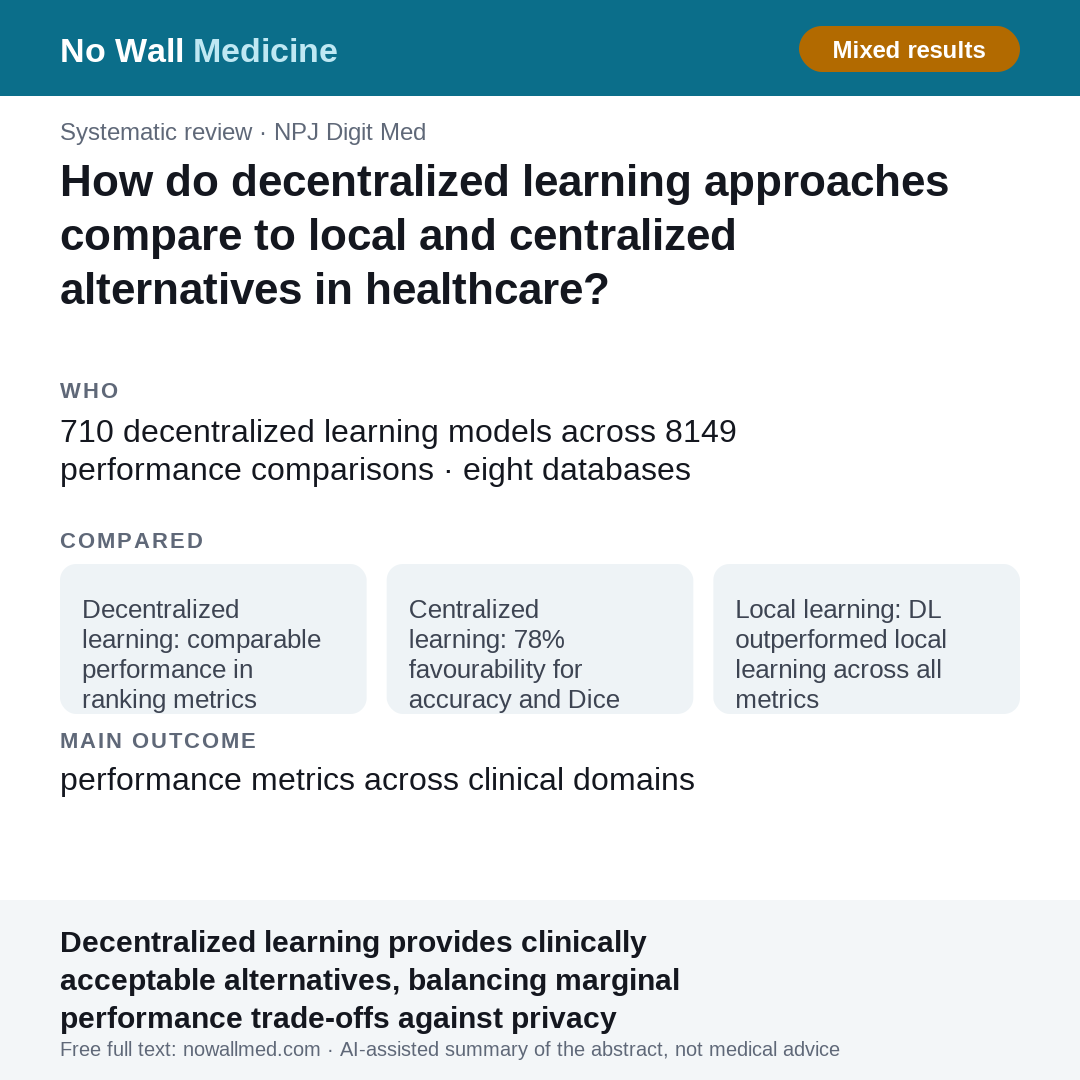
Comparing decentralized machine learning and AI clinical models to local and centralized alternatives: a systematic review
Systematic reviewMixed results
How do decentralized learning approaches compare to local and centralized alternatives in healthcare?
Who
710 decentralized learning models across 8149 performance comparisons · eight databases
Compared
Decentralized learning: comparable performance in ranking metrics
Centralized learning: 78% favourability for accuracy and Dice score
Local learning: DL outperformed local learning across all metrics
Main outcome
performance metrics across clinical domains
Bottom line: Decentralized learning provides clinically acceptable alternatives, balancing marginal performance trade-offs against privacy regulations and application needs.
NPJ Digit Med · 2026-02-14Download image
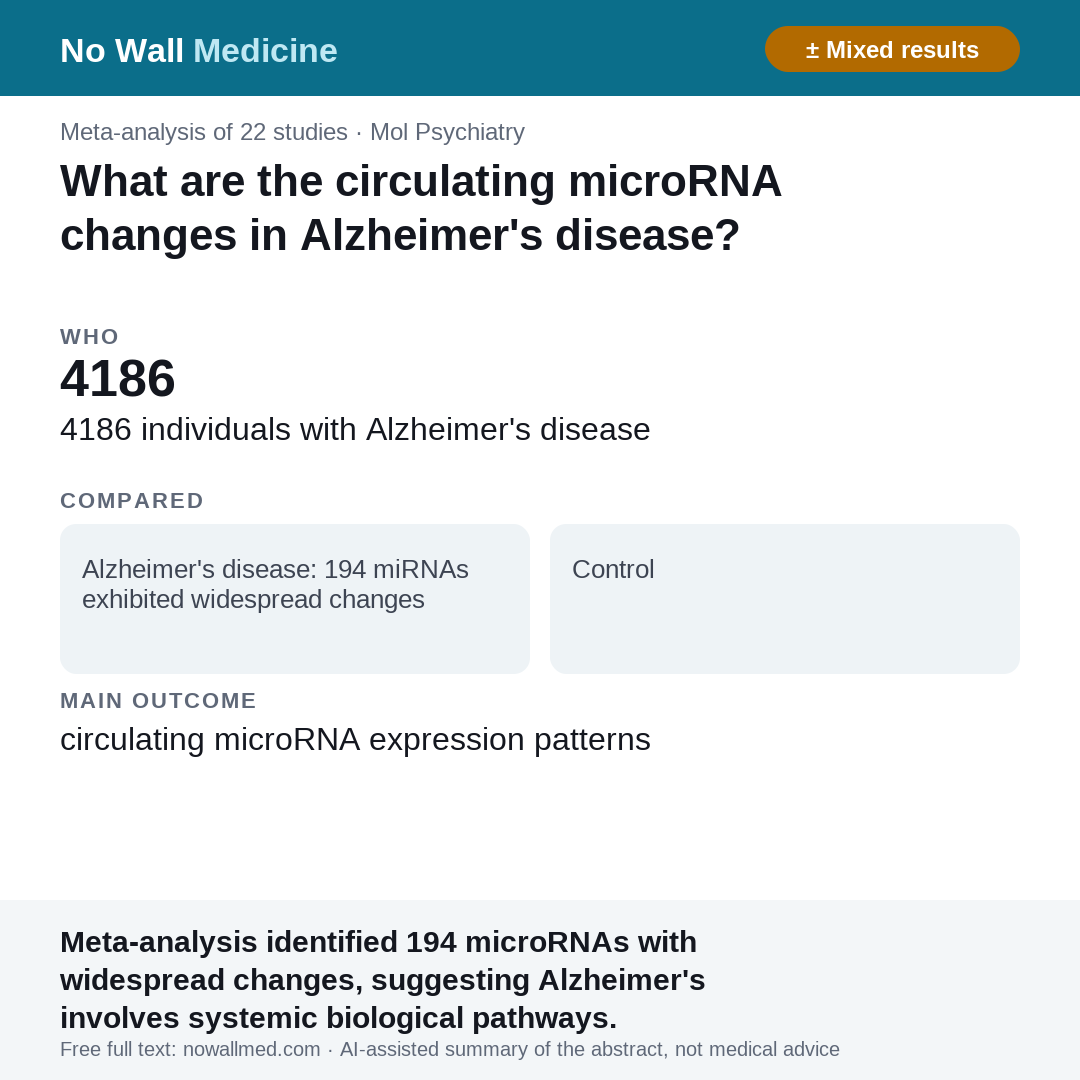
Rethinking Alzheimer's: novel miRNAs illuminate a disease beyond the brain
Meta-analysis of 22 studiesMixed results
What are the circulating microRNA changes in Alzheimer's disease?
Who
4186
4186 individuals with Alzheimer's disease
Compared
Alzheimer's disease: 194 miRNAs exhibited widespread changes
Control
Main outcome
circulating microRNA expression patterns
Bottom line: Meta-analysis identified 194 microRNAs with widespread changes, suggesting Alzheimer's involves systemic biological pathways.
Mol Psychiatry · 2026-02-13Download image
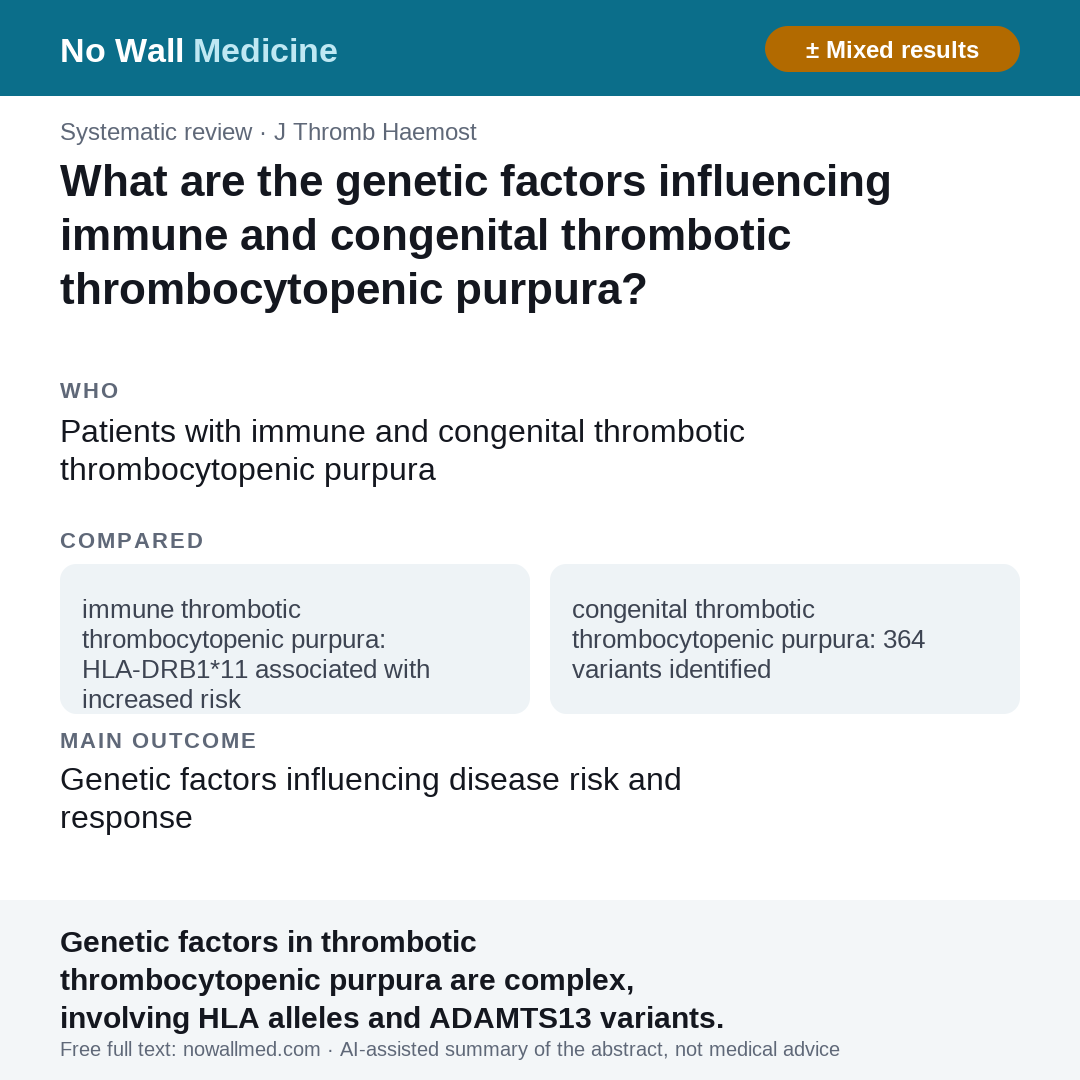
Genetics of thrombotic thrombocytopenic purpura: systematic review in immune and congenital thrombotic thrombocytopenic purpura
Systematic reviewMixed results
What are the genetic factors influencing immune and congenital thrombotic thrombocytopenic purpura?
Who
Patients with immune and congenital thrombotic thrombocytopenic purpura
Compared
immune thrombotic thrombocytopenic purpura: HLA-DRB1*11 associated with increased risk
congenital thrombotic thrombocytopenic purpura: 364 variants identified
Main outcome
Genetic factors influencing disease risk and response
Bottom line: Genetic factors in thrombotic thrombocytopenic purpura are complex, involving HLA alleles and ADAMTS13 variants.
J Thromb Haemost · 2026-02-13Download image
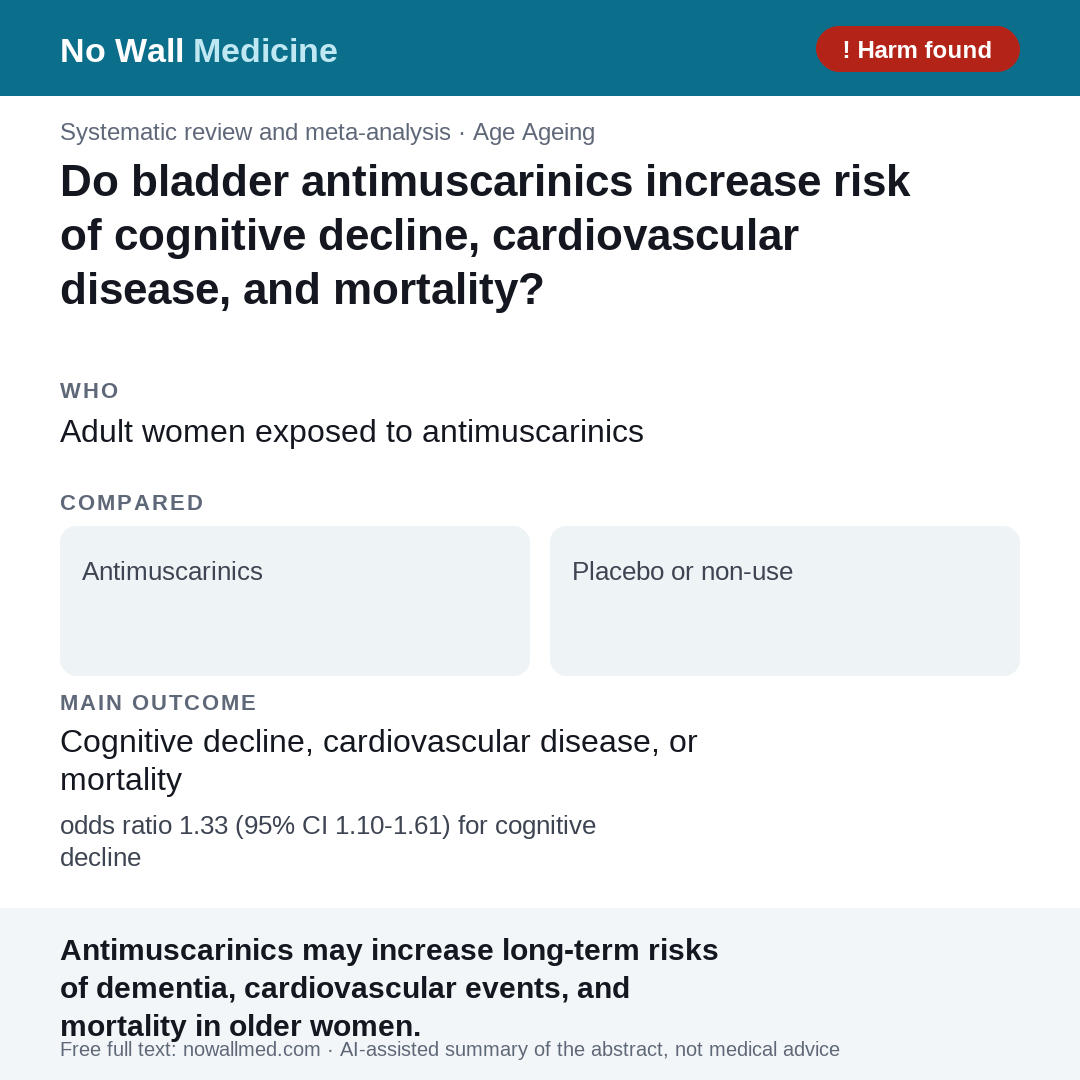
Antimuscarinic medication used for the treatment of overactive bladder in women and the risk of cognitive decline, cardiovascular disease and mortality-a systematic review
Systematic review and meta-analysisHarm found
Do bladder antimuscarinics increase risk of cognitive decline, cardiovascular disease, and mortality?
Who
Adult women exposed to antimuscarinics
Compared
Antimuscarinics
Placebo or non-use
Main outcome
Cognitive decline, cardiovascular disease, or mortality
Result: odds ratio 1.33 (95% CI 1.10-1.61) for cognitive decline
Bottom line: Antimuscarinics may increase long-term risks of dementia, cardiovascular events, and mortality in older women.
Limitation: Findings are constrained by the low quality of the underlying evidence and risk of bias.
Age Ageing · 2026-02-13Download image
Editor's Choice - Systematic Review on the Cost Effectiveness of Abdominal Aortic Aneurysm Screening in Women
Systematic review of nine studiesMixed results
Is abdominal aortic aneurysm screening cost effective in all women or high risk subgroups?
Who
Women or high risk subgroups of women · European or North American populations
Compared
Screening all women: Incremental cost effectiveness ratios exceeded typical willingness to pay thresholds
Screening women smokers: $24 000 per quality adjusted life year
Main outcome
Cost effectiveness of abdominal aortic aneurysm screening
Bottom line: Routine screening for all women is unlikely cost effective, but targeted screening of high risk subgroups may be economically viable.
Limitation: Six studies at moderate and three at serious risk of bias
Eur J Vasc Endovasc Surg · 2026-02-13Download image

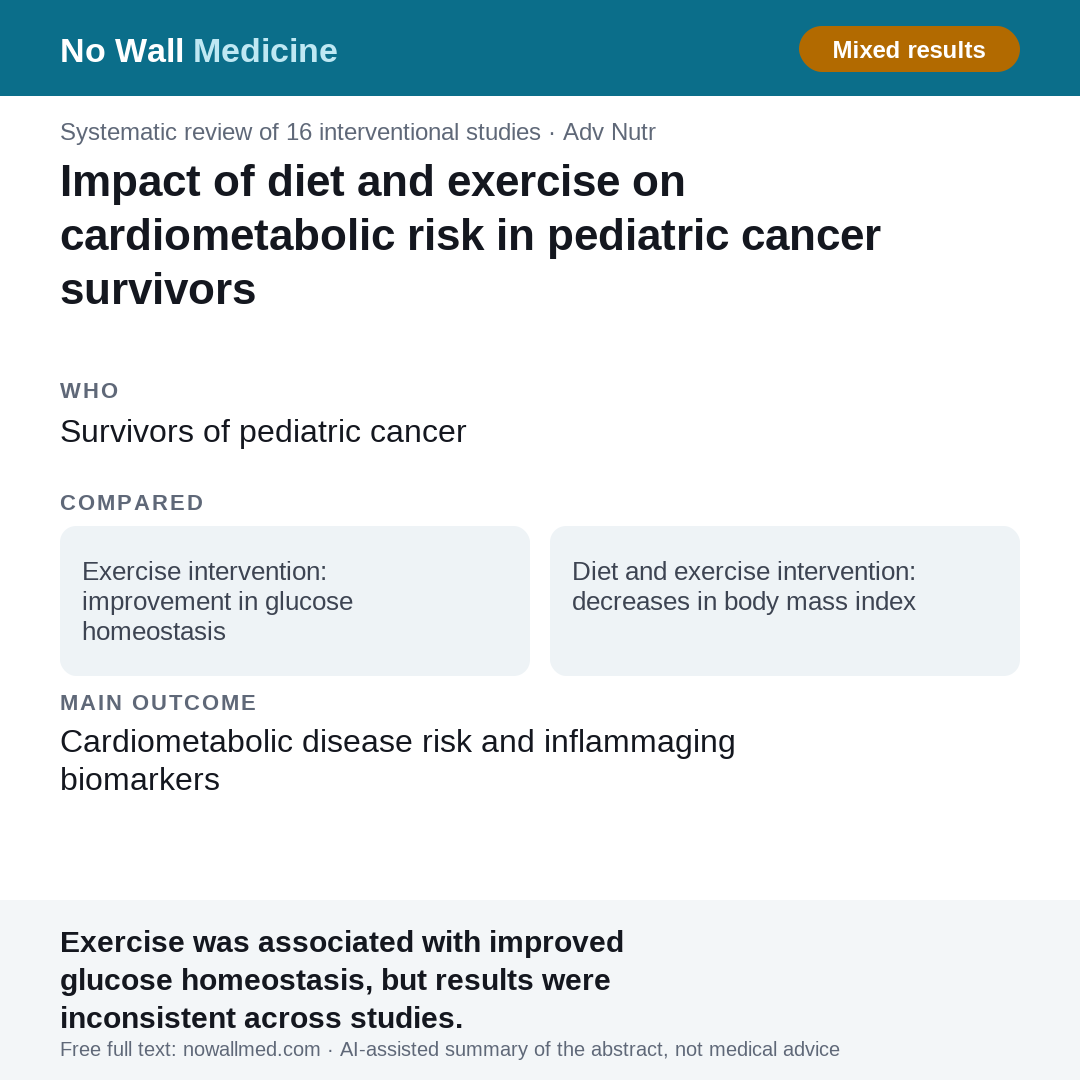
Diet and Exercise Interventions in Pediatric Cancer Survivors and Effects on Cardiometabolic Disease Risk and Inflammaging Biomarkers: A Systematic Review
Systematic review of 16 trialsMixed results
Do diet and exercise affect disease risk
Who
pediatric cancer survivors in the United States
Compared
diet intervention
exercise intervention
combined diet and exercise
Main outcome
cardiometabolic disease risk
Bottom line: Exercise improves glucose homeostasis
Limitation: high risk of bias
Adv Nutr · 2026-02-13Download image
Automated algorithms for identifying patients requiring palliative care: a systematic review and meta‑analysis
Systematic review and meta-analysisBenefit found
Do automated electronic health record algorithms increase palliative care identification and interventions?
Who
125,666
Patients identified via electronic health record algorithms
Compared
Automated algorithms
Control
Main outcome
Palliative care consultations and do-not-resuscitate documentation
Result: noncancer: risk ratio 2.19 (95% CI 1.12 to 4.28); cancer: risk ratio 5.31 (95% CI 3.49 to 8.09)
Bottom line: Automated electronic health record algorithms increase palliative care consultations and do-not-resuscitate documentation.
NPJ Digit Med · 2026-02-13Download image

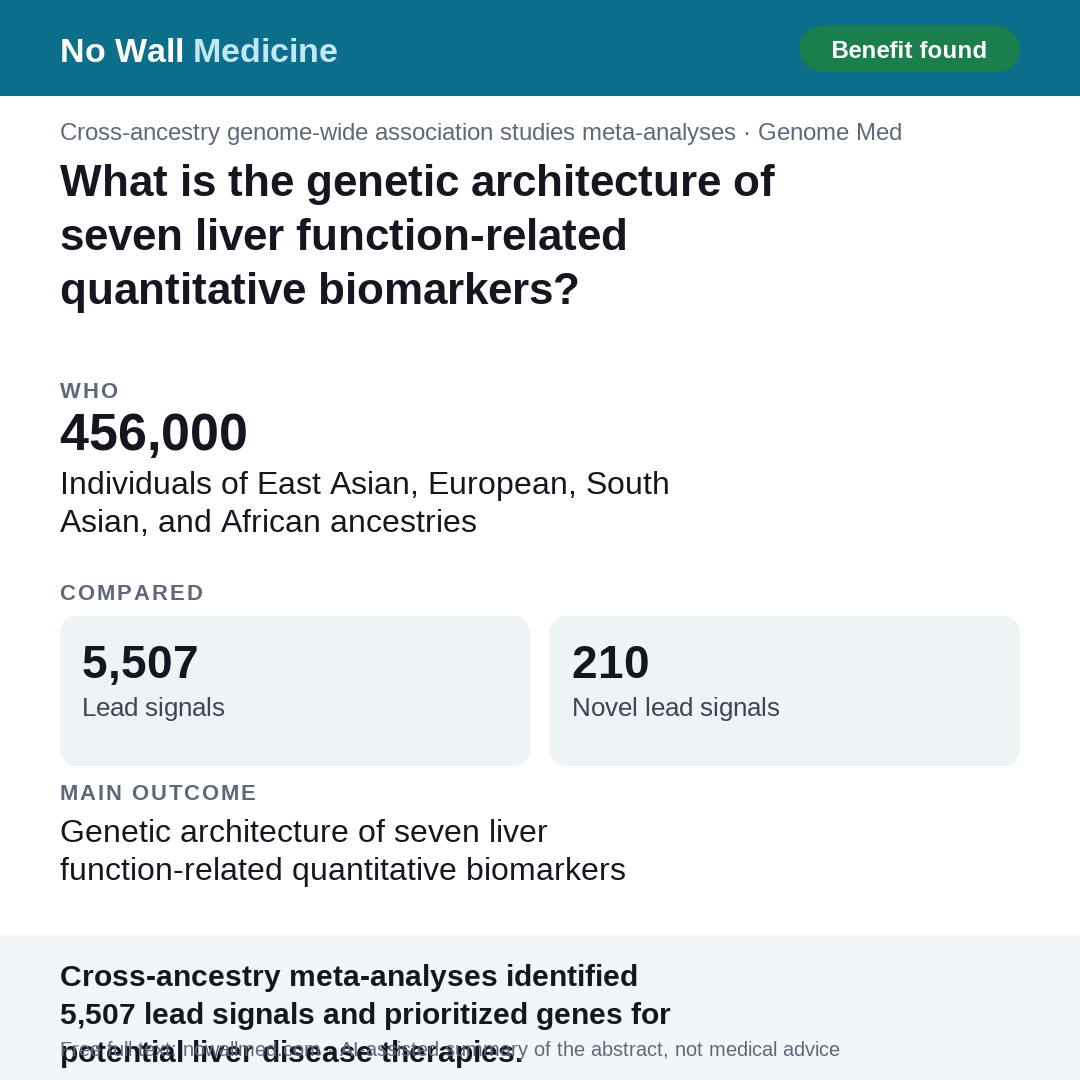
Cross-ancestry genome-wide association studies of liver function biomarkers uncover pleiotropic variants, systemic disease links and therapeutic targets
Cross-ancestry genome-wide association studies meta-analysesBenefit found
What is the genetic architecture of seven liver function-related quantitative biomarkers?
Who
456,000
Individuals of East Asian, European, South Asian, and African ancestries
Compared
5,507Lead signals (P < 5 × 10⁻⁹)
210Novel lead signals
Main outcome
Genetic architecture of seven liver function-related quantitative biomarkers
Bottom line: Cross-ancestry meta-analyses identified 5,507 lead signals and prioritized genes for potential liver disease therapies.
Genome Med · 2026-02-13Download image
Perioperative Analgesia and Postoperative Nausea and Vomiting Management in Otoplasty: A Systematic Review
Systematic reviewBenefit found
What are the best techniques for pain and nausea management after otoplasty?
Who
370
Patients undergoing otoplasty for prominent ear deformity
Compared
Regional nerve block: mean pain score at 6 hours 0.25
Local infiltration anesthesia: mean pain score at 6 hours 2.34
16%Propofol and hyoscine patches
48%Placebo
Main outcome
Pain scores, opioid use, and postoperative nausea and vomiting
Bottom line: Regional nerve block improves pain scores and reduces opioid use, while propofol and hyoscine reduce postoperative nausea and vomiting.
Limitation: Overall methodological quality was moderate and heterogeneity precluded meta-analysis.
Plast Reconstr Surg Glob Open · 2026-02-13Download image

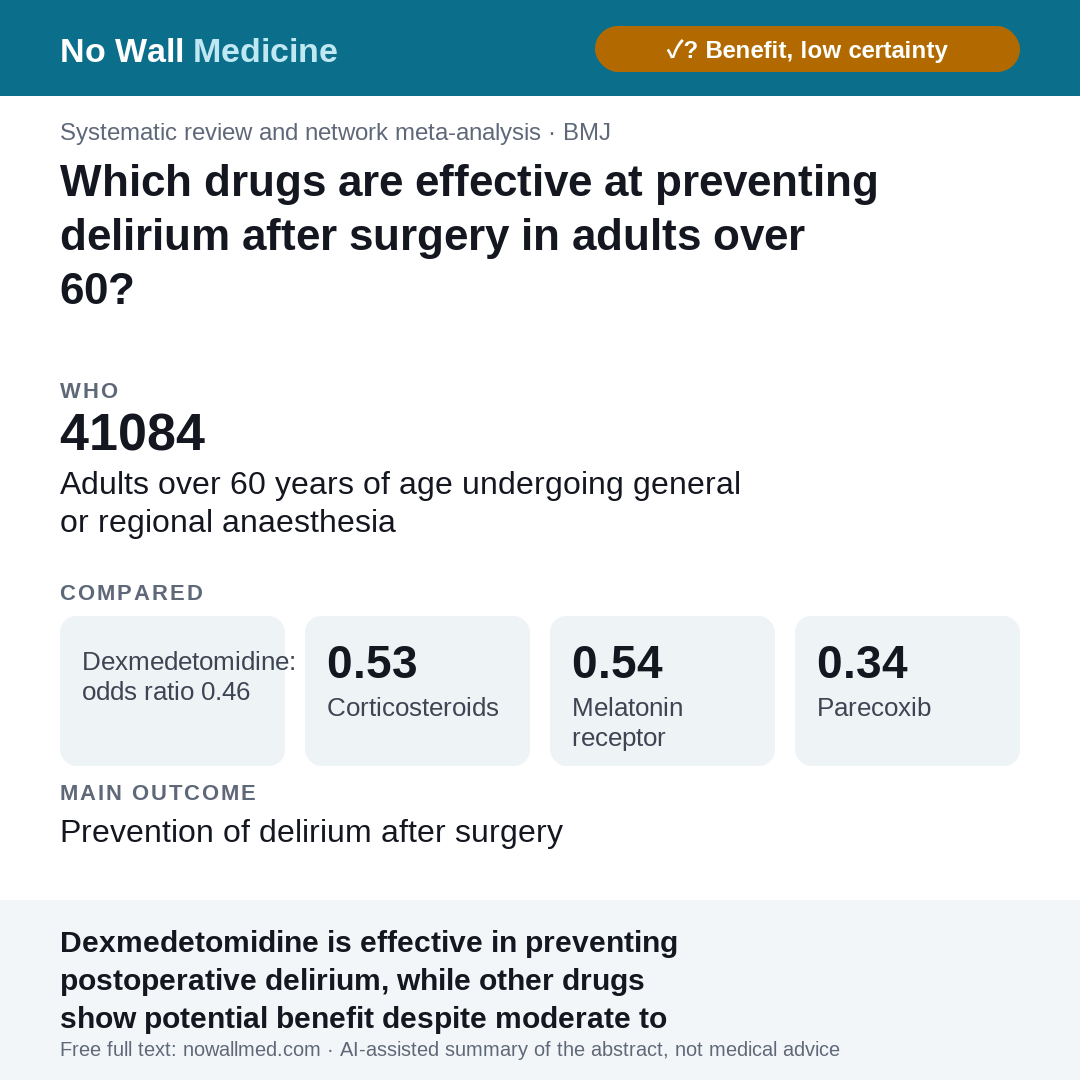
Effectiveness of drug interventions to prevent delirium after surgery for older adults: systematic review and network meta-analysis of randomised controlled trials
Systematic review and network meta-analysisBenefit found
Which drugs are effective at preventing delirium after surgery in adults over 60?
Who
41084
Adults over 60 years of age undergoing general or regional anaesthesia
Compared
Dexmedetomidine: odds ratio 0.46
0.53Corticosteroids
0.54Melatonin receptor agonists
0.34Parecoxib
Main outcome
Prevention of delirium after surgery
Result: dexmedetomidine odds ratio 0.46 (95% credible interval 0.36 to 0.57)
Bottom line: Dexmedetomidine is effective in preventing postoperative delirium, while other drugs show potential benefit despite moderate to very low quality evidence.
Limitation: Inadequate trial registration practices and incomplete adoption of core outcome sets.
BMJ · 2026-02-12Download image
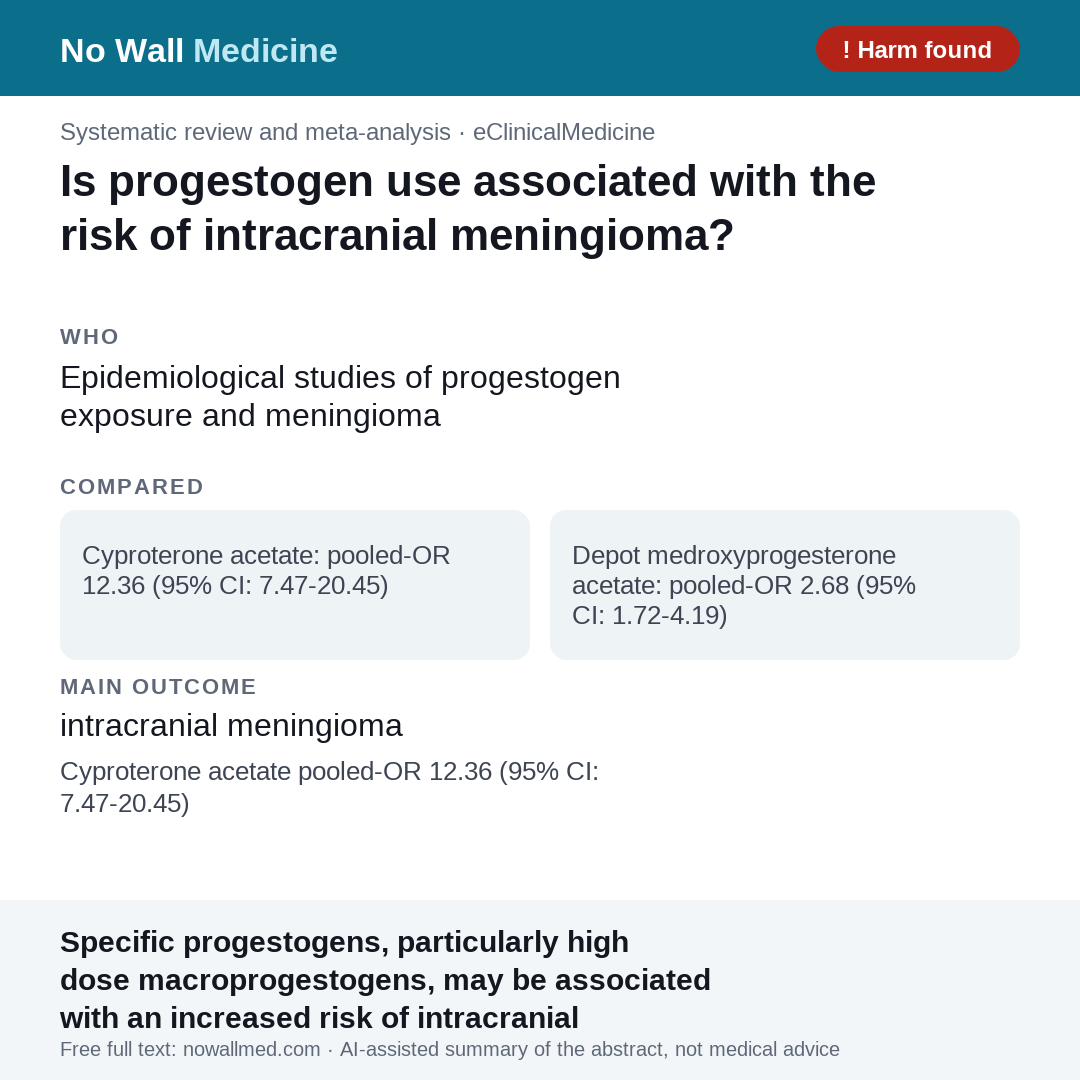
Progestogen use and the risk of intracranial meningioma: a systematic review and meta-analysis
Systematic review and meta-analysisHarm found
Is progestogen use associated with the risk of intracranial meningioma?
Who
Epidemiological studies of progestogen exposure and meningioma
Compared
Cyproterone acetate: pooled-OR 12.36 (95% CI: 7.47-20.45)
Depot medroxyprogesterone acetate: pooled-OR 2.68 (95% CI: 1.72-4.19)
Main outcome
intracranial meningioma
Result: Cyproterone acetate pooled-OR 12.36 (95% CI: 7.47-20.45)
Bottom line: Specific progestogens, particularly high dose macroprogestogens, may be associated with an increased risk of intracranial meningioma.
Limitation: Observational design, residual confounding, heterogeneity, and imprecision for some exposures.
eClinicalMedicine · 2026-02-12Download image
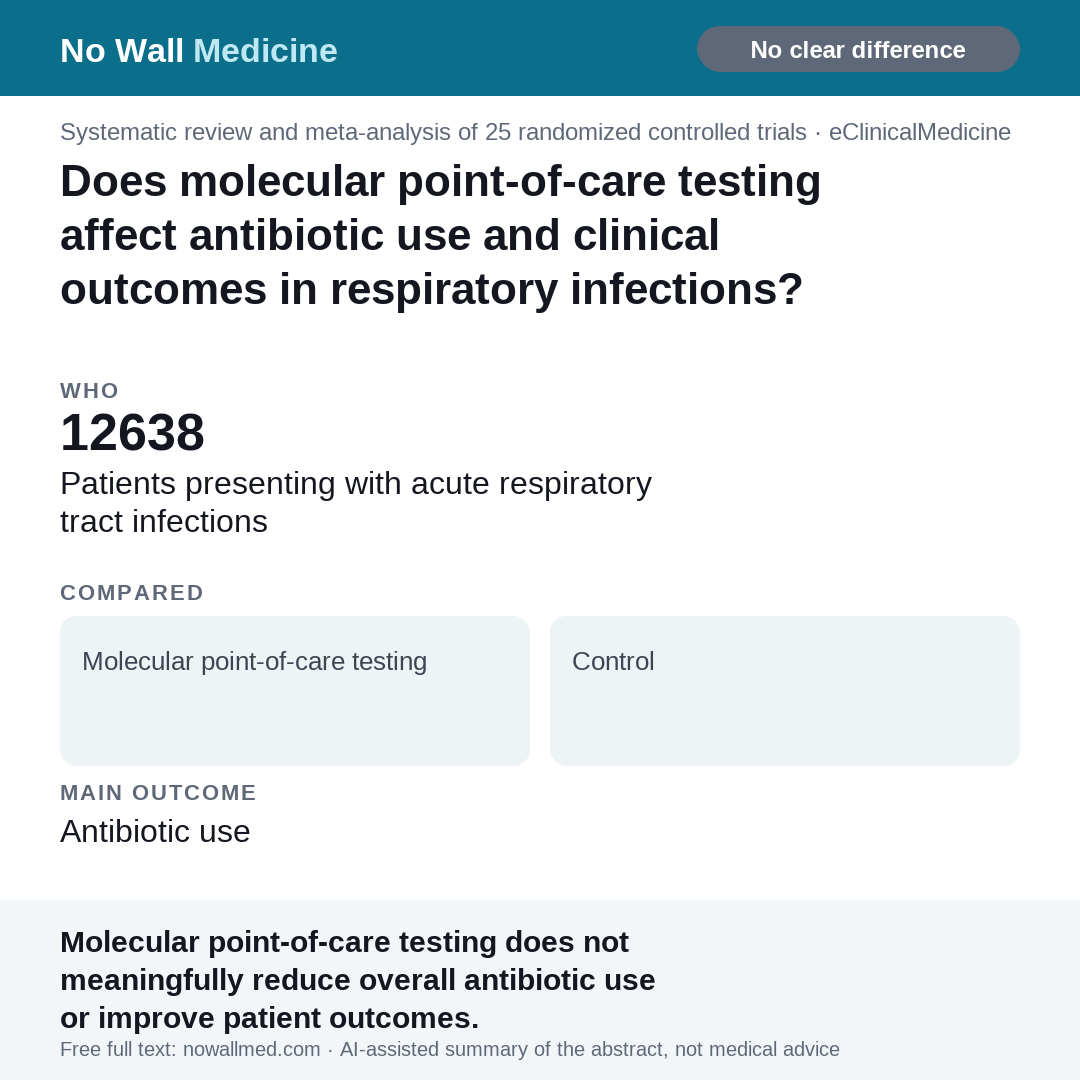
Impact of molecular point-of-care testing for respiratory pathogens on antibiotic use and clinical outcomes in acute respiratory tract infections: a systematic review and meta-analysis
Systematic review and meta-analysis of 25 randomized controlled trialsNo clear difference
Does molecular point-of-care testing affect antibiotic use and clinical outcomes in respiratory infections?
Who
12638
Patients presenting with acute respiratory tract infections
Compared
Molecular point-of-care testing
Control
Main outcome
Antibiotic use
Result: risk ratio 0.95 (95% CI 0.90-1.00)
Bottom line: Molecular point-of-care testing does not meaningfully reduce overall antibiotic use or improve patient outcomes.
Limitation: Low-certainty evidence for potential reduction in antibiotic use in children.
Funded by: National Natural Science Foundation of China and others
eClinicalMedicine · 2026-02-12Download image
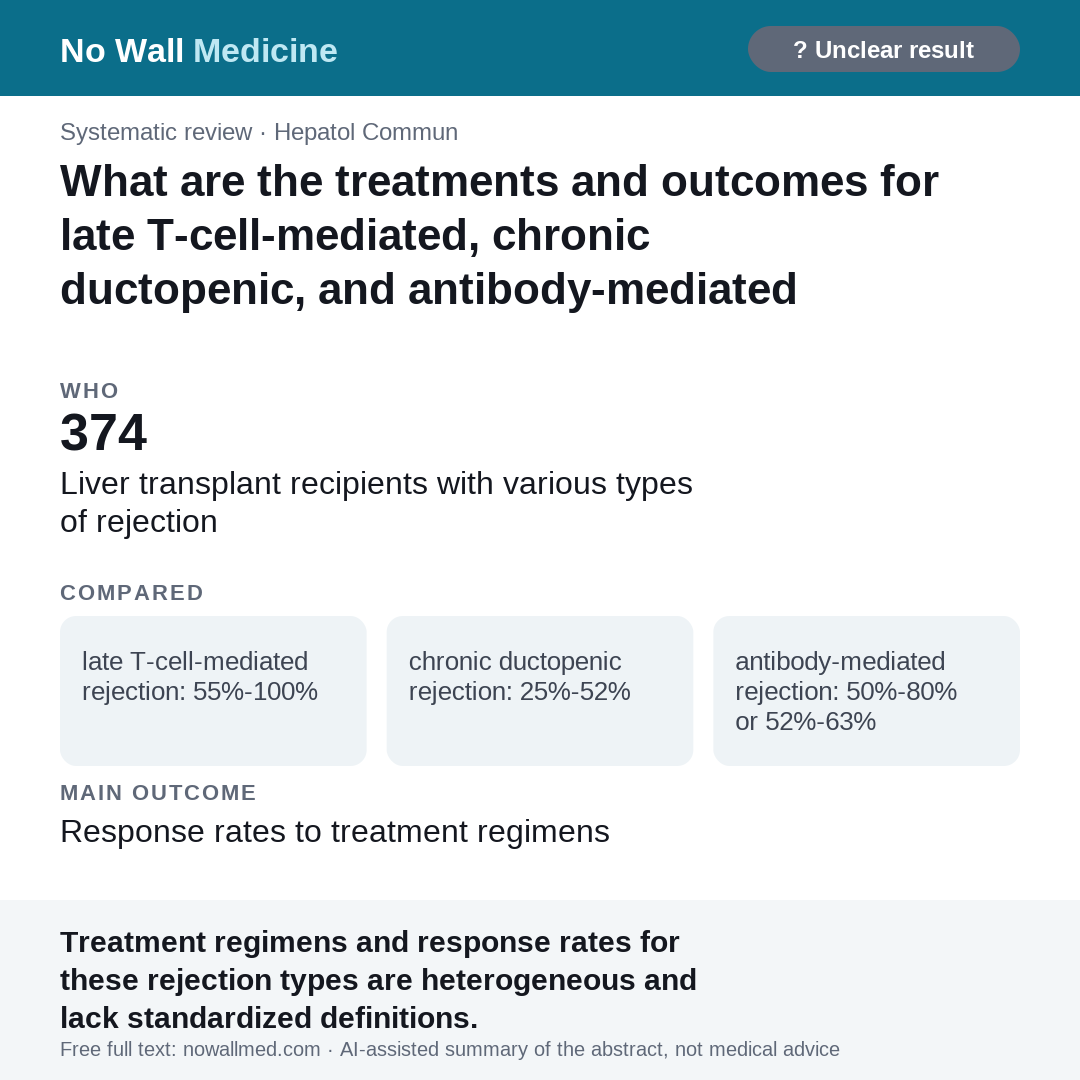
Antimicrobial dressings for the prevention of surgical-site infection: systematic review and meta-analysis
Systematic review and meta-analysis of 35 randomized controlled trialsBenefit found
Do antimicrobial dressings prevent surgical-site infection in closed incisional wounds?
Who
8718
Participants with closed incisional wounds after elective or emergency surgery
Compared
Silver dressings: risk ratio 0.78 (95% c.i. 0.62 to 0.97)
Dialkylcarbamoyl chloride dressings: risk ratio 0.49 (95% c.i. 0.29 to 0.83)
Mupirocin dressings: risk ratio 0.62 (95% c.i. 0.15 to 2.63)
Main outcome
Surgical-site infection within 30 or 90 days
Result: silver risk ratio 0.78 (95% c.i. 0.62 to 0.97); DACC risk ratio 0.49 (95% c.i. 0.29 to 0.83)
Bottom line: Silver and dialkylcarbamoyl chloride dressings probably reduce surgical-site infection risk, but effectiveness of other antimicrobial dressings remains uncertain.
Limitation: Evidence for other antimicrobial agents was insufficient.
Br J Surg · 2026-02-12Download image
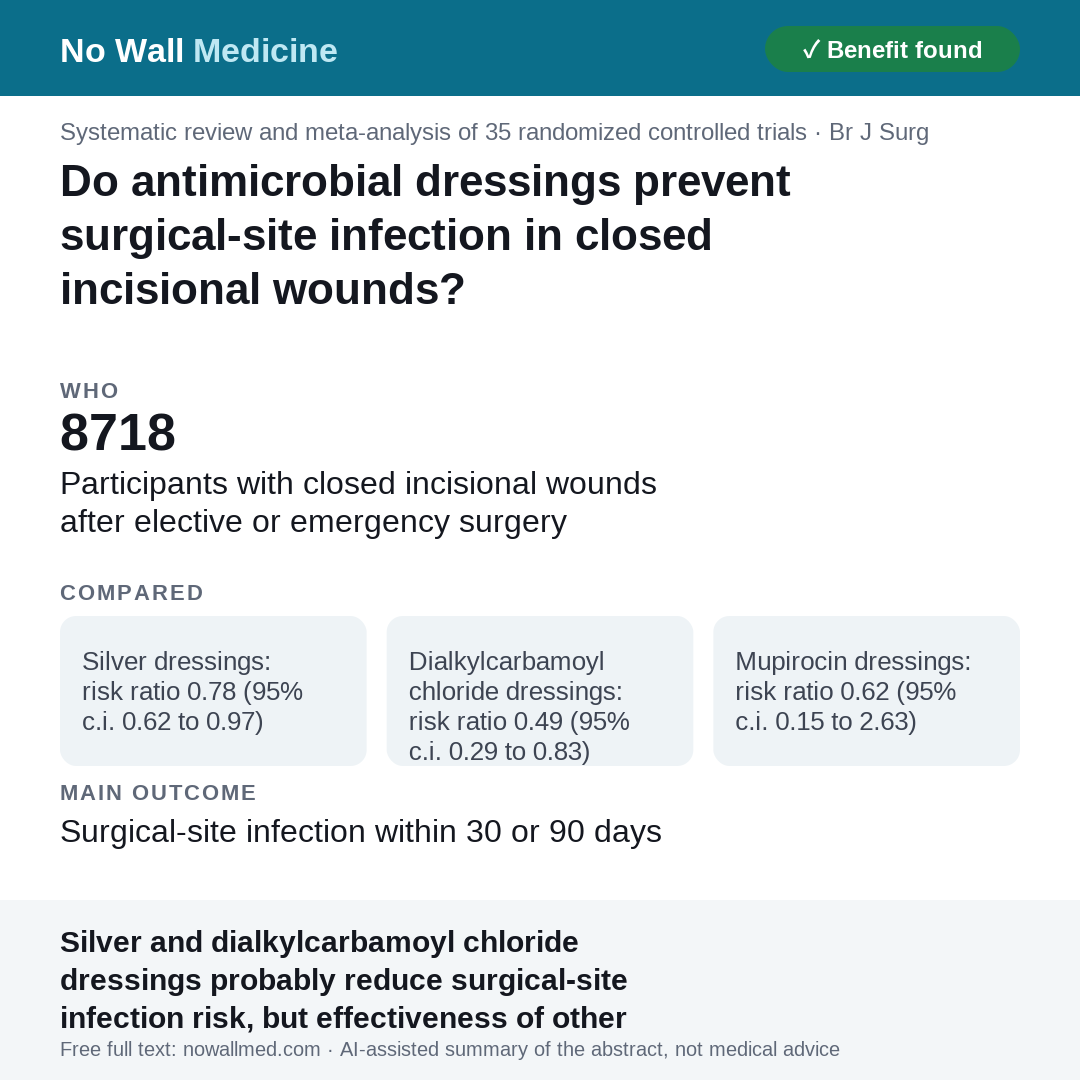
A Systematic Review Evaluating Pain Assessment Strategies for Patients With Dementia in the Emergency Department: The Geriatric ED Guidelines 2.0
Systematic reviewNo clear difference
Do dementia-specific pain assessment tools improve pain management compared with usual care?
Who
602
Emergency department patients aged 65 years or older with dementia · Multicenter
Compared
Pain Assessment in Advanced Dementia tool: median time to first analgesia 83 min
Standard pain scales: median time to first analgesia 82 min
Main outcome
Timeliness of analgesia administration
Result: p = 0.42 for median time to first analgesia
Bottom line: Dementia-specific pain assessment tools do not appear to improve the timeliness of analgesia administration in the emergency department.
Limitation: Evidence certainty was rated very low and available data is extremely limited.
Acad Emerg Med · 2026-02-12Download image
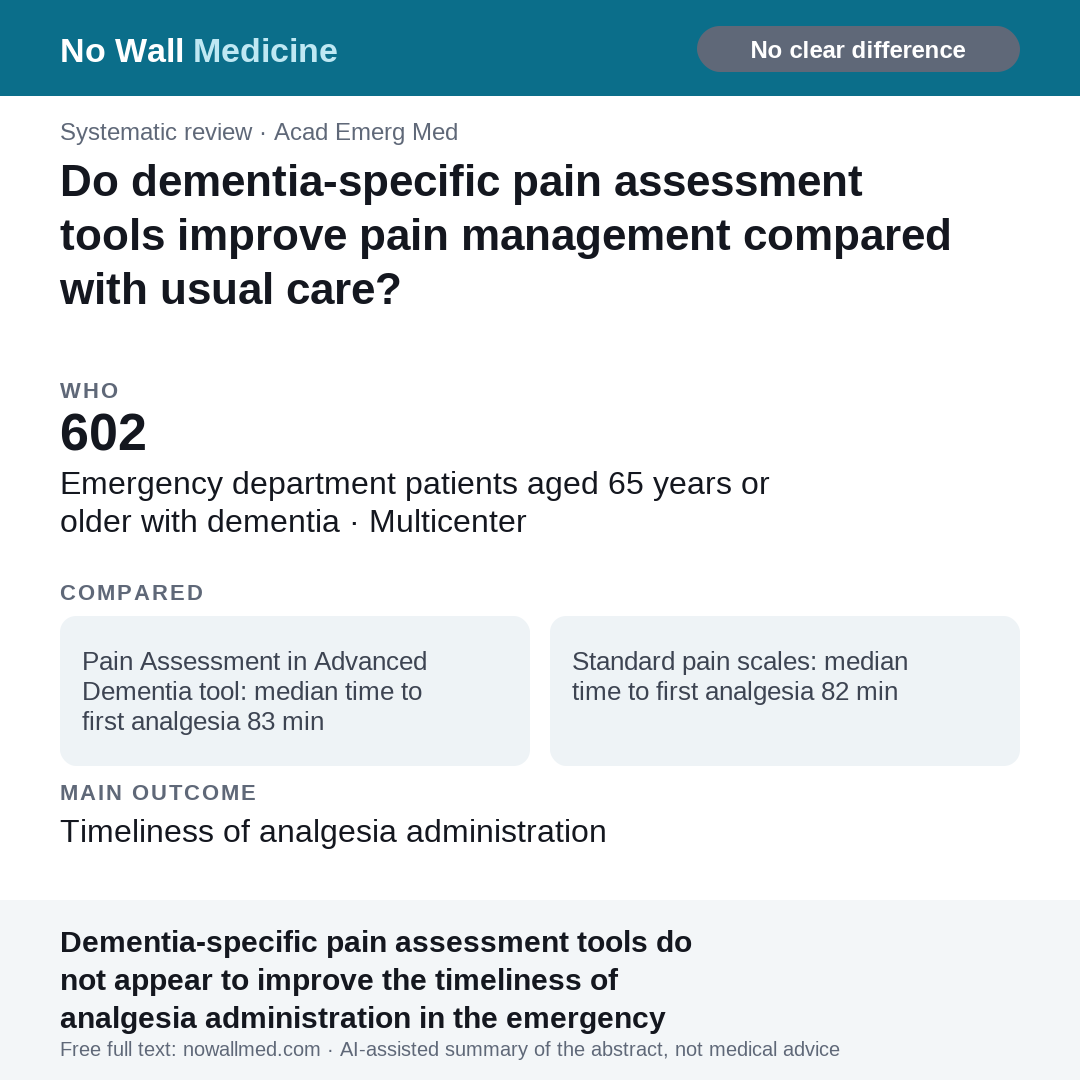
Smoking cessation for people with severe mental illness: systematic review and network meta-analysis
Systematic review and network meta-analysisBenefit found
What are the comparative effectiveness and safety of smoking cessation interventions in severe mental illness?
Who
11023
Adults with schizophrenia, bipolar disorder, severe depression, or post-traumatic stress disorder
Compared
Varenicline: 10 more per 100 achieving long term smoking abstinence
Bupropion: 5 more per 100 achieving long term smoking abstinence
Nicotine replacement therapy: improved short term abstinence
Combination interventions: 6 more per 100 achieving long term smoking abstinence
Main outcome
long term smoking abstinence
Bottom line: Varenicline, bupropion, and nicotine replacement therapy likely improve smoking abstinence in people with severe mental illness.
BMJ Med · 2026-02-12Download image
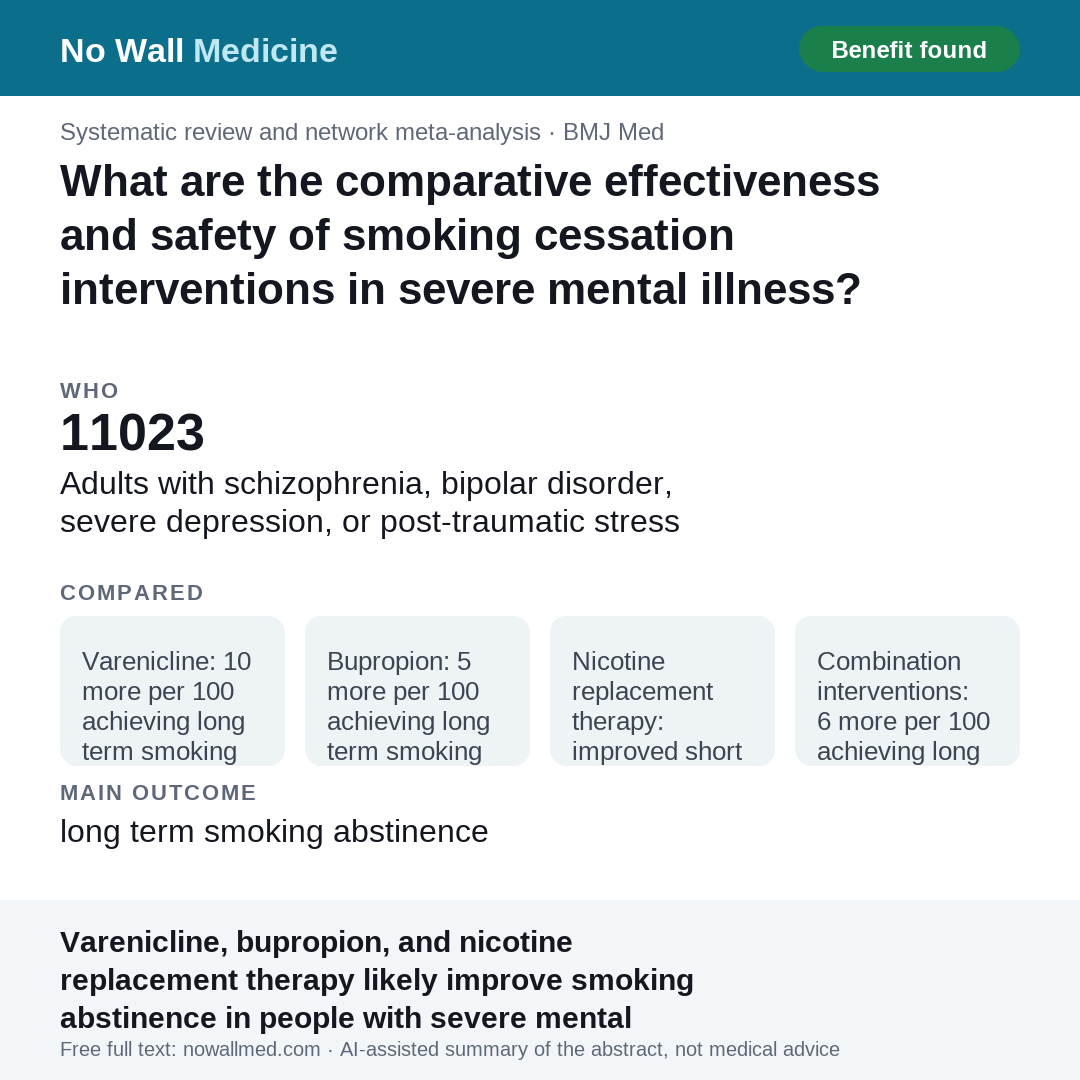
A systematic review of post-liver transplantation treatment and outcomes for late T-cell mediated, chronic ductopenic, and antibody-mediated rejection
Systematic reviewUnclear result
What are the treatments and outcomes for late T-cell-mediated, chronic ductopenic, and antibody-mediated rejection?
Who
374
Liver transplant recipients with various types of rejection
Compared
late T-cell-mediated rejection: 55%-100%
chronic ductopenic rejection: 25%-52%
antibody-mediated rejection: 50%-80% or 52%-63%
Main outcome
Response rates to treatment regimens
Bottom line: Treatment regimens and response rates for these rejection types are heterogeneous and lack standardized definitions.
Hepatol Commun · 2026-02-12Download image
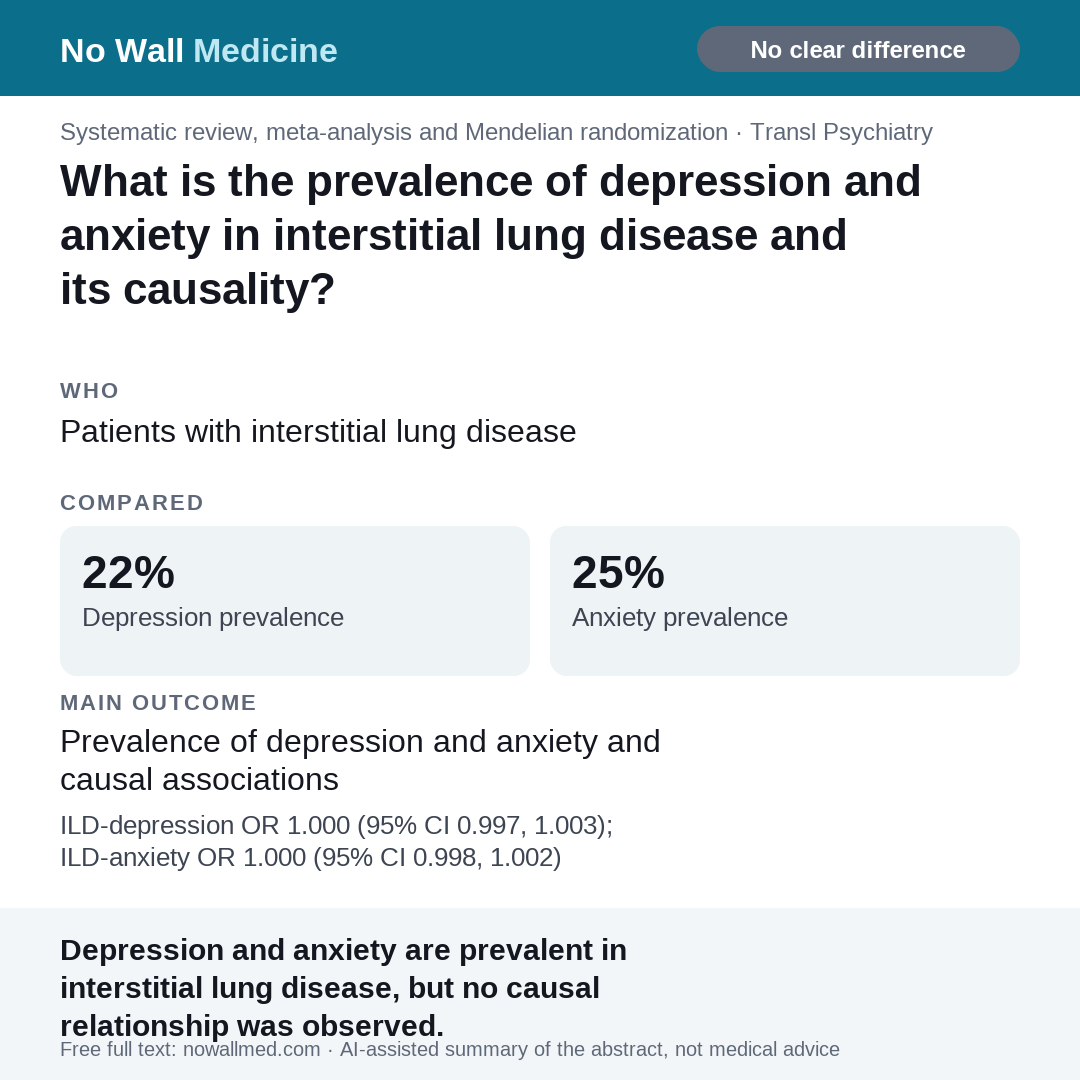
Depression and anxiety in interstitial lung disease: a systematic review, meta-analysis and Mendelian randomization
Systematic review, meta-analysis and Mendelian randomizationNo clear difference
What is the prevalence of depression and anxiety in interstitial lung disease and its causality?
Who
Patients with interstitial lung disease
Compared
22%Depression prevalence (95% CI 17%, 26%)
25%Anxiety prevalence (95% CI 18%, 32%)
Main outcome
Prevalence of depression and anxiety and causal associations
Result: ILD-depression OR 1.000 (95% CI 0.997, 1.003); ILD-anxiety OR 1.000 (95% CI 0.998, 1.002)
Bottom line: Depression and anxiety are prevalent in interstitial lung disease, but no causal relationship was observed.
Transl Psychiatry · 2026-02-12Download image