Visual abstracts
New randomized trials and meta-analyses from leading journals at a glance: who was studied, what was compared, and what was found. Every paper is free to read in full.
All specialtiesCardiology 394Oncology 314Gastroenterology & Hepatology 158Infectious Disease 313Neurology 179Psychiatry & Mental Health 258Pulmonology 180Critical Care 125Endocrinology & Diabetes 236Pediatrics 188Surgery 128Orthopedics & Sports Medicine 75Neurosurgery 24Cardiothoracic & Vascular Surgery 47Plastic & Reconstructive Surgery 79Nephrology 77Rheumatology 81Hematology 92Dermatology 42Ophthalmology 64Obstetrics & Gynecology 120Public & Global Health 119Radiology & Imaging 36Anesthesiology 68Urology 91ENT (Otolaryngology) 48Emergency Medicine 41Allergy & Immunology 49Geriatrics 113Family Medicine & Primary Care 67Medical Genetics & Genomics 36Pathology & Laboratory Medicine 6Physical Medicine & Rehabilitation 96Palliative Care 60Nutrition 135Digital Health & AI 337General Medicine 46
Antimicrobial resistance in bacterial meningitis caused by Streptococcus pneumoniae, Neisseria meningitidis, or Haemophilus influenzae (2010-24): a systematic review and meta-analysis
Systematic review and meta-analysisHarm found
What are the global prevalence and time trends of antimicrobial resistance in bacterial meningitis?
Who
16441
People with microbiologically confirmed meningitis from three main bacterial pathogens · 37 countries across all WHO regions
Compared
Streptococcus pneumoniae (benzylpenicillin): 27·4% [19·0-36·6] globally
Streptococcus pneumoniae (third-generation cephalosporins): 8·8% [4·3-14·6] globally
Neisseria meningitidis (benzylpenicillin): 24·7% [5·3-52·3] globally
Neisseria meningitidis (third-generation cephalosporins): 4·6% [0·0-19·4] globally
Main outcome
Prevalence of antimicrobial resistance for relevant pathogen-antimicrobial combinations
Bottom line: Antimicrobial resistance in bacterial meningitis is rising, particularly in low-income and middle-income countries, challenging effective treatment.
Limitation: None of the included reports described all thirteen Microbiology Investigation Criteria for Reporting Objectively mandatory items.
Funded by: Fleming Fund, US Centers for Disease Control and Prevention, and WHO
Lancet Microbe · 2026-01-27Download image

Potential Harms of Posterior Chamber Phakic IOL: A Systematic Review and Meta-Analysis of Complication Incidence
Systematic review and meta-analysisBenefit found
What is the incidence of complications after posterior chamber phakic intraocular lens implantation?
Who
45,027
Adults undergoing posterior chamber phakic intraocular lens implantation · Not specified
Compared
Rotation or displacement: 4.2 per 1,000 person-years
Explantation: 3.1 per 1,000 person-years
Retinal detachment: 0.4 per 1,000 person-years
Macular edema: 0.3 per 1,000 person-years
Main outcome
Incidence of complications
Bottom line: Posterior chamber phakic intraocular lens implantation has a low incidence of complications and rare vision-threatening events.
Limitation: Predominantly short follow-up and high risk of bias likely lead to underestimation of late events.
Am J Ophthalmol · 2026-01-27Download image

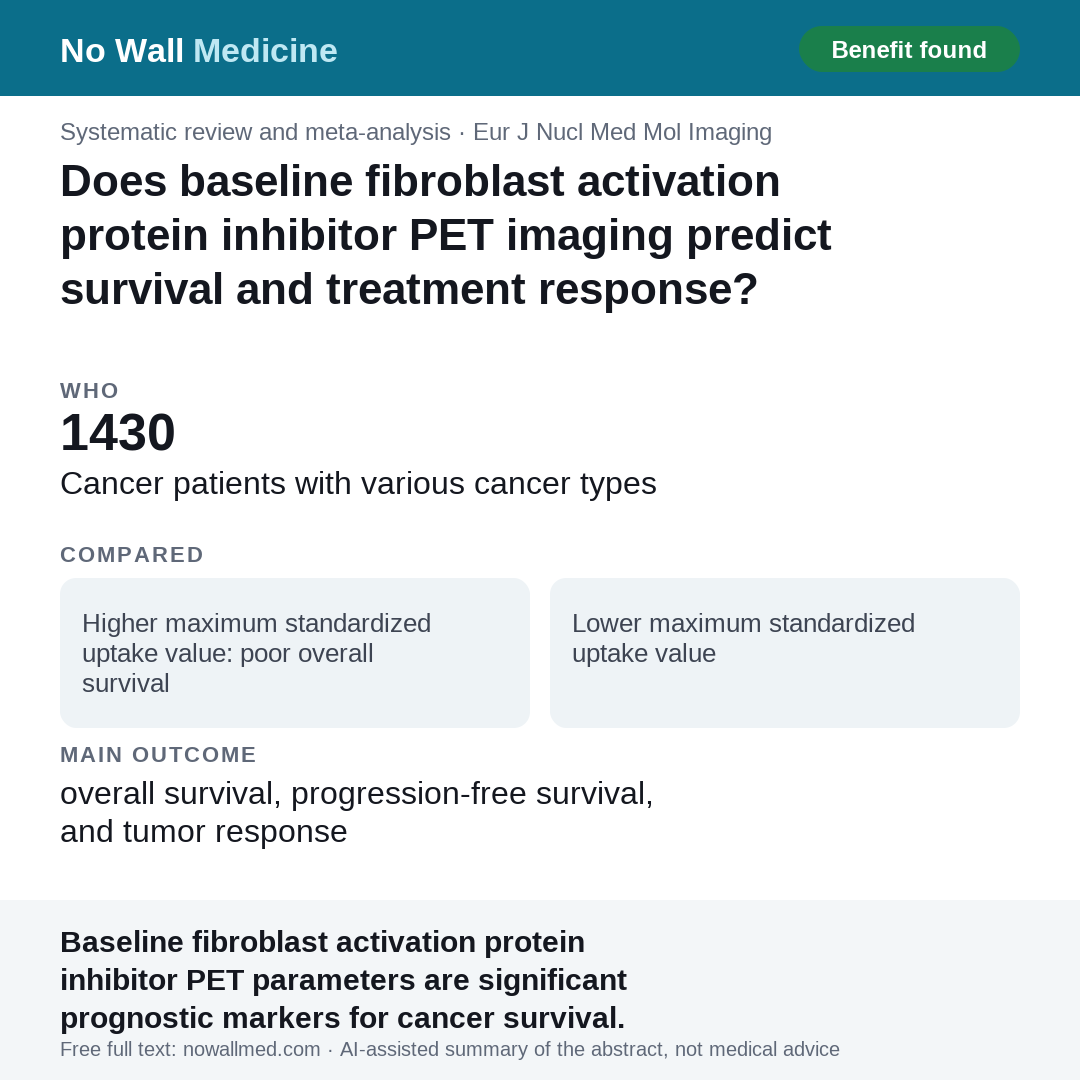
Predicting the unpredictable: prognostic and predictive power of FAPI-PET imaging in oncology: a systematic review and meta-analysis
Systematic review and meta-analysisBenefit found
Does baseline fibroblast activation protein inhibitor PET imaging predict survival and treatment response?
Who
1430
Cancer patients with various cancer types
Compared
Higher maximum standardized uptake value: poor overall survival
Lower maximum standardized uptake value
Main outcome
overall survival, progression-free survival, and tumor response
Result: hazard ratio 2.36 (95% CI 1.56-3.56)
Bottom line: Baseline fibroblast activation protein inhibitor PET parameters are significant prognostic markers for cancer survival.
Eur J Nucl Med Mol Imaging · 2026-01-27Download image
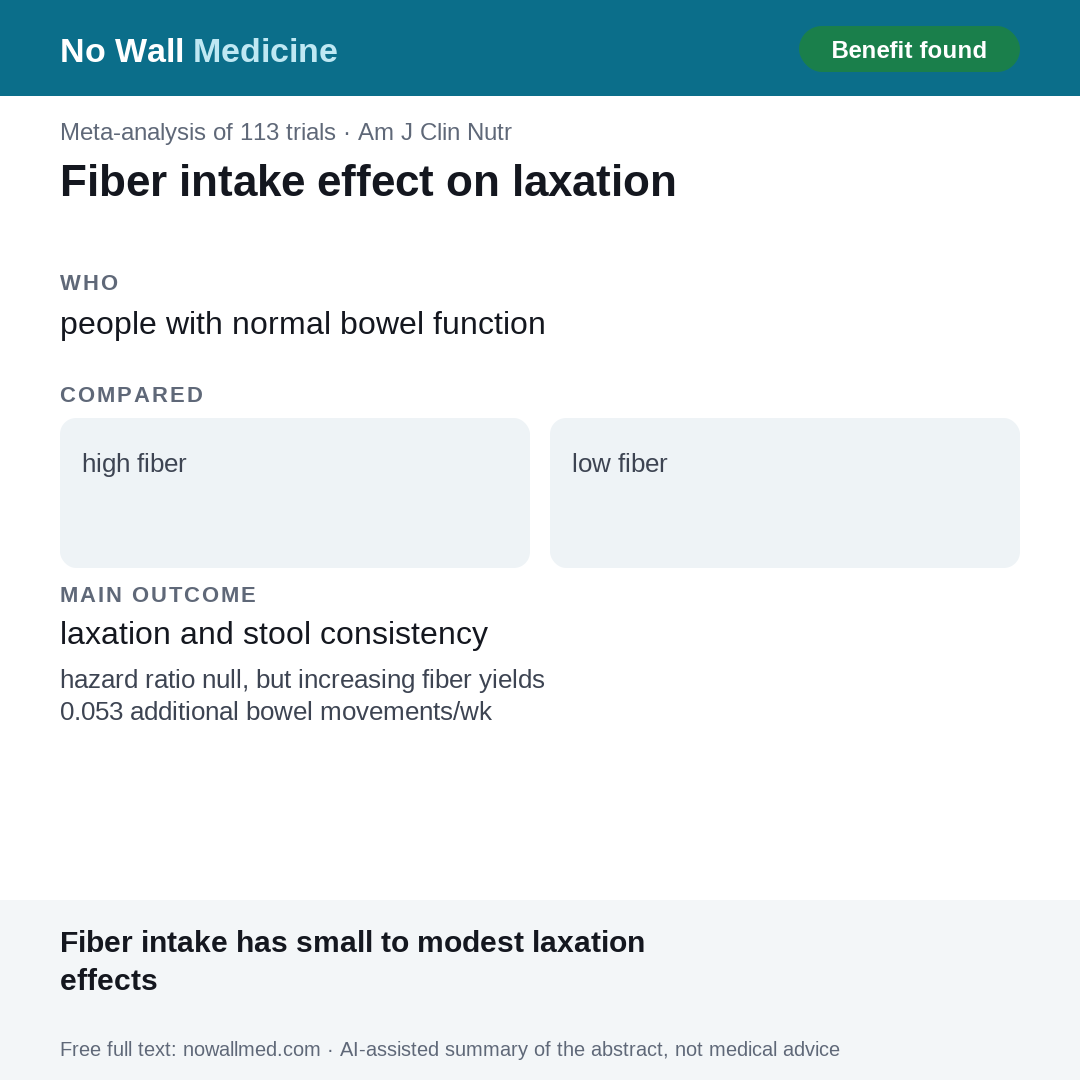
Fiber intake and laxation in people with normal bowel function: a systematic review
Meta-analysis of 113 trialsBenefit found
Fiber intake effect on laxation
Who
people with normal bowel function
Compared
high fiber
low fiber
Main outcome
laxation and stool consistency
Result: hazard ratio null, but increasing fiber yields 0.053 additional bowel movements/wk
Bottom line: Fiber intake has small to modest laxation effects
Limitation: findings are indirect and based on models
Am J Clin Nutr · 2026-01-27Download image
The influence of antenatal and pregnancy-related factors on recovery after childbirth: a systematic review
Systematic reviewMixed results
What antenatal and pregnancy-related factors influence recovery after childbirth?
Who
56
Women aged 18 years or older who delivered live-born singletons
Compared
Risk factors: Previous pain, high body mass index, and antenatal mental health problems
Protective factors: Physical activity, social support, and psychological resilience
Main outcome
Maternal morbidity beyond 6 weeks postpartum
Bottom line: Postpartum recovery is influenced by multiple antenatal and pregnancy-related factors including physical, mental, and social elements.
AJOG Glob Rep · 2026-01-27Download image

Kidney Function and Blood and Cerebrospinal Fluid Biomarkers in Alzheimer's Disease and Related Dementias: Systematic Review and Meta-Analysis
Systematic review and meta-analysisMixed results
Is kidney function associated with Alzheimer's disease and related dementia biomarkers in blood and cerebrospinal fluid?
Who
62503
Adults aged 20 to 96 years · 21 countries
Compared
Lower kidney function (eGFR): higher blood NfL, GFAP, and Aβ40
Cerebrospinal fluid biomarkers
Main outcome
Blood and cerebrospinal fluid biomarkers of Alzheimer's disease
Result: every 1 ml/min per 1.73 m2 lower eGFR was associated with 0.19 pg/ml higher NfL (95% CI, 0.12 to 0.25), 0.11 pg/ml higher GFAP (95% CI, 0.04 to 0.18), and 0.29 pg/ml higher Aβ40 (95% CI, 0.01 to 0.56)
Bottom line: Lower kidney function is associated with higher blood biomarkers for Alzheimer's disease, but associations with cerebrospinal fluid biomarkers were inconsistent.
JASN · 2026-01-26Download image

Global epidemiology and mortality trends of necrotizing fasciitis: a systematic review and meta-analysis with a focus on monomicrobial Gram-negative infections
Systematic review and meta-analysisMixed results
What are the global distribution and mortality trends of monomicrobial Gram-negative necrotizing fasciitis?
Who
6740
Patients with necrotizing fasciitis · Global
Compared
12%Monomicrobial Gram-negative before 2000
18%Monomicrobial Gram-negative from 2000 onward
28%Monomicrobial Gram-negative mortality before 2000
22%Monomicrobial Gram-negative mortality from 2000 onward
Main outcome
Proportion of monomicrobial Gram-negative cases and in-hospital mortality
Bottom line: Monomicrobial Gram-negative necrotizing fasciitis is increasing in proportion with persistently high in-hospital mortality rates.
Int J Surg · 2026-01-26Download image

Adverse events following cervical spine self-manipulation: A systematic review
Systematic reviewHarm found
What are the adverse events following cervical spine self-manipulation?
Who
24
Individuals reporting adverse events after cervical spine self-manipulation
Compared
Mild adverse events: n = 4, 17%
Moderate adverse events: n = 7, 29%
Severe adverse events: n = 9, 38%
Catastrophic adverse events: n = 4, 17%
Main outcome
Adverse event severity
Bottom line: Cervical self-manipulation has the potential for serious harms, including catastrophic events and fatalities, though evidence of commonality is lacking.
Limitation: With very low certainty, the practice has the potential for serious harms.
PM R · 2026-01-26Download image

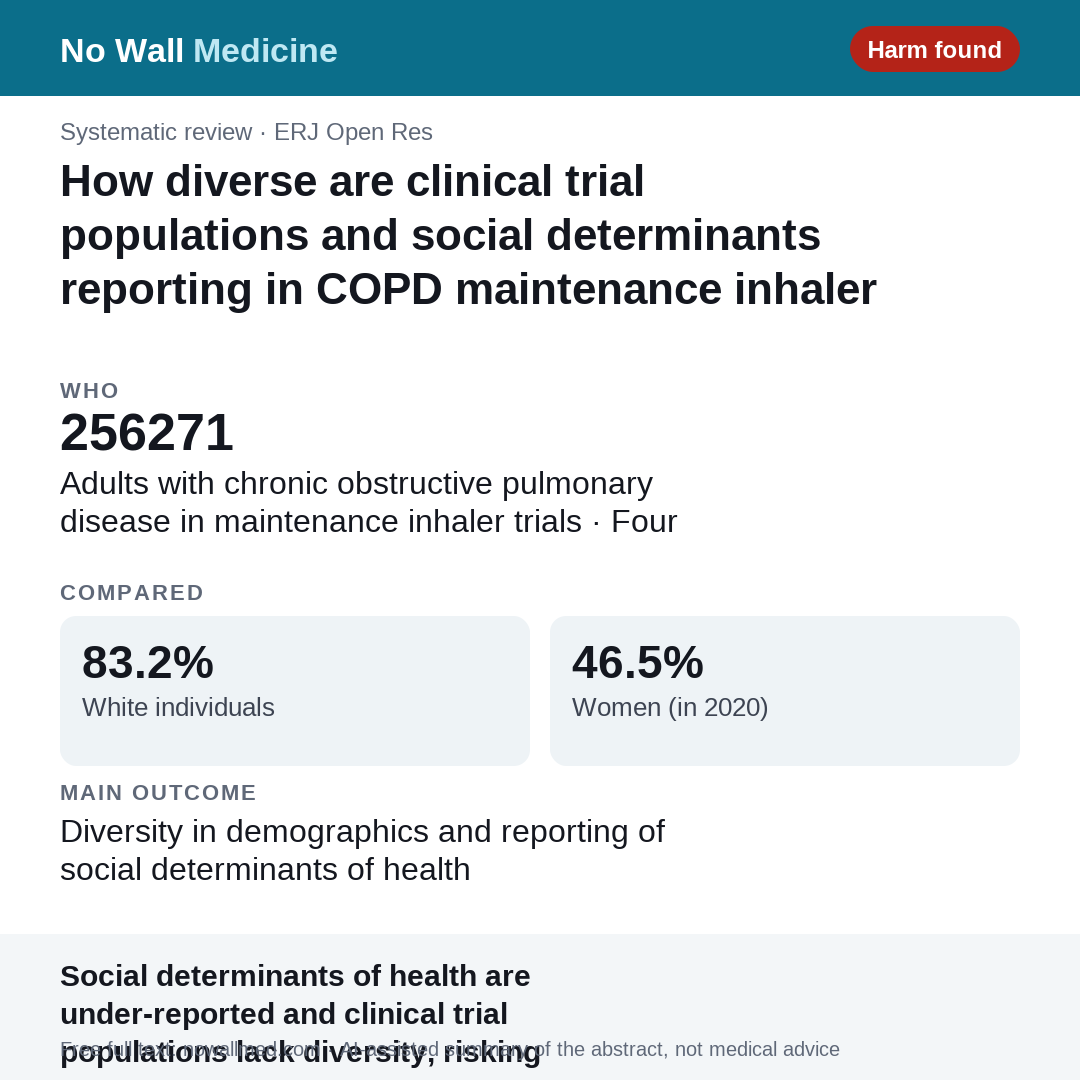
Diversity and inclusivity in clinical trial populations for maintenance inhaler therapy in people with COPD: a systematic review
Systematic reviewHarm found
How diverse are clinical trial populations and social determinants reporting in COPD maintenance inhaler trials?
Who
256271
Adults with chronic obstructive pulmonary disease in maintenance inhaler trials · Four clinical trial databases
Compared
83.2%White individuals (130086)
46.5%Women (in 2020)
Main outcome
Diversity in demographics and reporting of social determinants of health
Bottom line: Social determinants of health are under-reported and clinical trial populations lack diversity, risking suboptimal care for diverse groups.
ERJ Open Res · 2026-01-26Download image
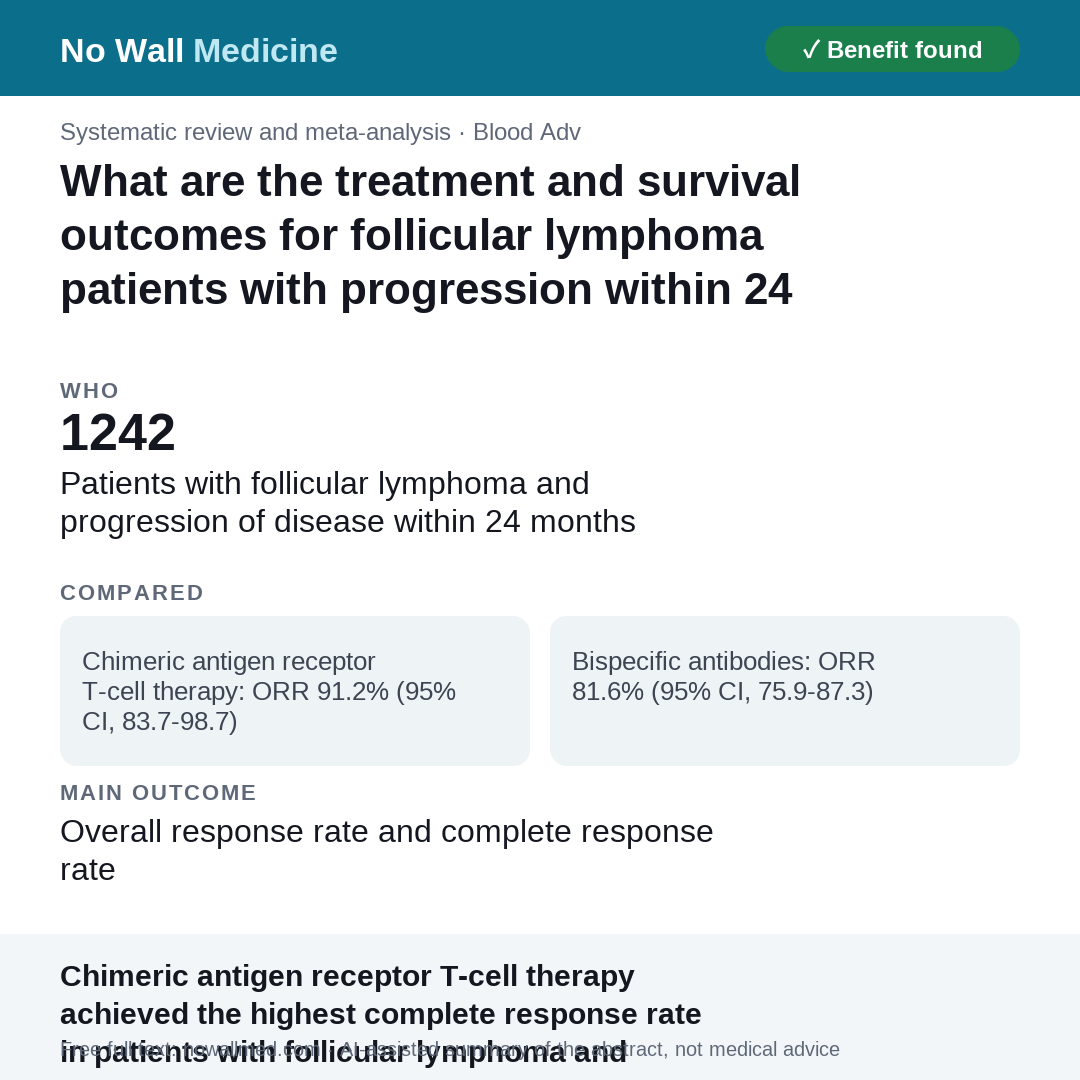
Treatment and survival outcomes for patients with follicular lymphoma and POD24: a systematic review and meta-analysis
Systematic review and meta-analysisBenefit found
What are the treatment and survival outcomes for follicular lymphoma patients with progression within 24 months?
Who
1242
Patients with follicular lymphoma and progression of disease within 24 months
Compared
Chimeric antigen receptor T-cell therapy: ORR 91.2% (95% CI, 83.7-98.7)
Bispecific antibodies: ORR 81.6% (95% CI, 75.9-87.3)
Main outcome
Overall response rate and complete response rate
Bottom line: Chimeric antigen receptor T-cell therapy achieved the highest complete response rate in patients with follicular lymphoma and progression within 24 months.
Blood Adv · 2026-01-26Download image
Perioperative chemoimmunotherapy for patients with gastric or gastroesophageal junction cancer: a systematic review and meta-analysis
Meta-analysis of seven randomized controlled trialsBenefit found
Does adding immune checkpoint inhibitors to perioperative chemotherapy improve outcomes in resectable gastric cancer?
Who
2510
Patients with resectable gastric or gastroesophageal junction adenocarcinoma
Compared
Chemoimmunotherapy: 17.6% pathological complete response
Chemotherapy alone: 6.1% pathological complete response
Main outcome
Pathological complete response, event-free survival, and overall survival
Result: hazard ratio 0.76 (95% CI 0.66 to 0.86) for event-free survival
Bottom line: Adding immune checkpoint inhibitors to perioperative chemotherapy improves pathological and survival outcomes, especially in PD-L1 positive patients.
JNCI Cancer Spectr · 2026-01-25Download image

Patient satisfaction following scar revision: A systematic review and meta-analysis
Systematic review and meta-analysisBenefit found
What is the patient satisfaction following scar revision procedures?
Who
5230
Adults undergoing scar revision
Compared
2.71Surgical interventions (95% CI 2.32-3.11)
3.32Non-surgical procedures (95% CI 2.92-3.71)
Main outcome
Patient-reported satisfaction and esthetic severity scores
Result: 78.6% (95% CI 74.3-82.8)
Bottom line: Scar revision is associated with high patient satisfaction, with surgical approaches generally producing superior patient-reported outcomes.
Limitation: Need for standardized patient-reported outcome measures and improved reporting of psychosocial factors.
J Plast Reconstr Aesthet Surg · 2026-01-24Download image

Interpreting the natural history and pathogenesis of Nipah virus disease through clinical data, to inform clinical trial design: a systematic review
Systematic reviewUnclear result
What are the clinical characteristics and pathogenesis of Nipah virus disease?
Who
717
Patients with Nipah virus disease
Compared
All cases: median case-fatality rate 69% (IQR 31-88%)
Survivors: 51 (26%) of 197 survivors presenting with persistent neurological deficits
Main outcome
Clinical characteristics, pathogenesis, and case-fatality rate
Bottom line: Nipah virus disease has high mortality and diverse clinical symptoms, requiring prospective observational studies to inform future clinical trials.
Limitation: Clinical management varied widely, with incomplete reporting limiting insights.
Lancet Microbe · 2026-01-24Download image

The diagnostic accuracy of wearable digital technology in detecting fertility window and menstrual cycles: a systematic review and Bayesian network meta-analysis
Systematic review and Bayesian network meta-analysisBenefit found
What is the diagnostic accuracy of wearable digital technology for monitoring fertility windows?
Who
Women monitoring fertility windows and menstrual cycles
Compared
Wearable digital technology: pooled accuracy of 0.88 (95% CI: 0.86-0.90)
Conventional methods
Main outcome
Diagnostic accuracy of wearable digital technology
Result: pooled accuracy 0.88 (95% CI: 0.86-0.90)
Bottom line: Wearable digital technology shows promise for tracking fertility windows and optimizing pregnancy planning.
NPJ Digit Med · 2026-01-24Download image

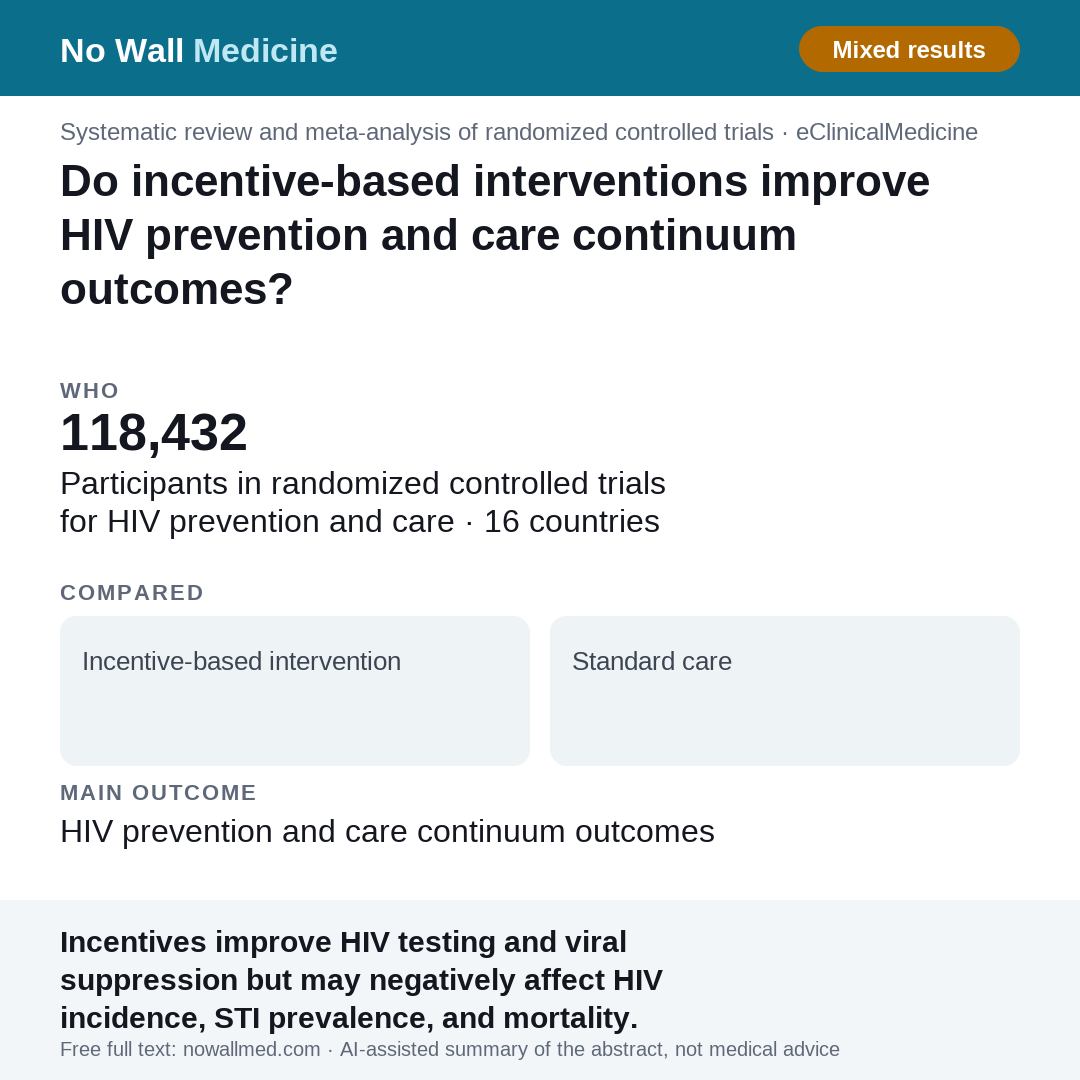
Incentive-based interventions to improve HIV prevention and care continuum: a global systematic review and meta-analysis
Systematic review and meta-analysis of randomized controlled trialsMixed results
Do incentive-based interventions improve HIV prevention and care continuum outcomes?
Who
118,432
Participants in randomized controlled trials for HIV prevention and care · 16 countries
Compared
Incentive-based intervention
Standard care
Main outcome
HIV prevention and care continuum outcomes
Result: risk ratio 1.83 (95% CI 1.31-2.54) for HIV testing uptakes
Bottom line: Incentives improve HIV testing and viral suppression but may negatively affect HIV incidence, STI prevalence, and mortality.
Limitation: Inconsistency between incentive types, implementation duration, and country income levels.
Funded by: National Natural Science Foundation of China and Guangdong Province
eClinicalMedicine · 2026-01-23Download image
Non-inferiority of robotic versus open pancreatoduodenectomy - a systematic review and meta-analysis of prospective non-randomized and randomized trials
Systematic review and meta-analysisNo clear difference
Are robotic versus open partial pancreatoduodenectomy procedures comparable in short-term outcomes?
Who
Patients undergoing partial pancreatoduodenectomy
Compared
Robotic partial pancreatoduodenectomy
Open partial pancreatoduodenectomy
Main outcome
90-day mortality
Result: odds ratio 1.07 (95% CI 0.04, 29.40)
Bottom line: Robotic partial pancreatoduodenectomy shows comparable 90-day mortality and major complications to open surgery in experienced centers.
Limitation: Recommendation is limited to experienced, high-volume centers.
Funded by: investigator-initiated
eClinicalMedicine · 2026-01-23Download image

Comparative effects of salt substitutes on blood pressure, cardiovascular events and mortality: a systematic review and network meta-analysis
Systematic review and network meta-analysisBenefit found
Do salt substitutes reduce blood pressure, cardiovascular events, and mortality compared to regular salt?
Who
37,063
Adults · 15 countries
Compared
Moderate-potassium and low-sodium salt substitutes: 7-17 deaths per 1000 individuals reduction
Regular salt
Main outcome
Blood pressure, cardiovascular events, and mortality
Result: 4.39-4.64 mmHg reduction for systolic blood pressure
Bottom line: Moderate-potassium and low-sodium salt substitutes probably reduce mortality, cardiovascular events, and systolic blood pressure compared to regular salt.
Limitation: Evidence is dominated by one large Chinese trial with limited generalisability beyond Chinese populations.
BMC Med · 2026-01-23Download image

Efficacy and safety of once-weekly insulins in type 2 diabetes: A systematic review and meta-analysis
Systematic review and meta-analysis of 16 randomized controlled trialsBenefit found
How effective and safe are once-weekly insulins in type 2 diabetes?
Who
Patients with type 2 diabetes
Compared
Once-weekly insulin: HbA1c reduction: -0.12% (95% CI: -0.19 to -0.04)
Once-daily insulin or semaglutide
Main outcome
Glycaemic control and safety outcomes
Result: pooled mean difference: -0.12%, 95% CI: -0.19 to -0.04
Bottom line: Once-weekly insulins modestly improve glycaemic control without increasing hypoglycaemia risk, though slight weight gain may occur.
Diabetes Obes Metab · 2026-01-23Download image

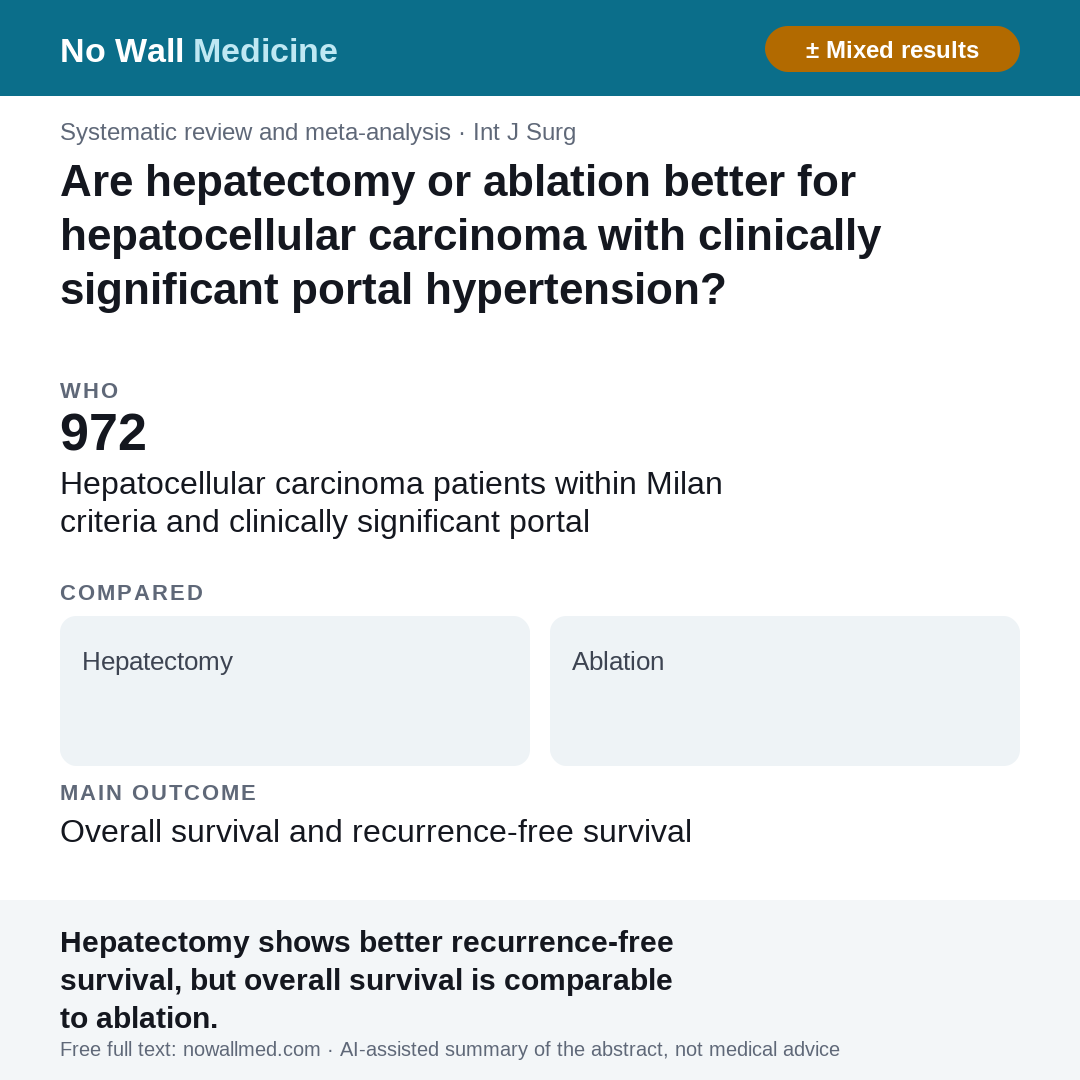
Survival and safety outcomes of hepatectomy versus ablation in hepatocellular carcinoma within Milan criteria and clinically significant portal hypertension: a systematic review and meta-analysis
Systematic review and meta-analysisMixed results
Are hepatectomy or ablation better for hepatocellular carcinoma with clinically significant portal hypertension?
Who
972
Hepatocellular carcinoma patients within Milan criteria and clinically significant portal hypertension
Compared
Hepatectomy
Ablation
Main outcome
Overall survival and recurrence-free survival
Result: hazard ratio 1.10 (95% CI: 0.76-1.61) for overall survival
Bottom line: Hepatectomy shows better recurrence-free survival, but overall survival is comparable to ablation.
Int J Surg · 2026-01-23Download image
Anterior cruciate ligament reconstruction in elite and professional athletes: does graft choice influence return to sport and failure rate? A systematic review and meta-analysis
Systematic review and meta-analysisBenefit found
Does graft choice influence return to sport and failure rate in elite athletes?
Who
824
Skeletally mature elite and professional athletes
Compared
Patellar tendon grafts
94.0%Hamstring/peroneus plus lateral extra-articular procedures (95% CI, 85.5-97.6)
Main outcome
Return to sport and re-rupture rate
Result: OR, 3.52; 95% CI, 1.20-10.34
Bottom line: Hamstring/peroneus plus lateral extra-articular procedures significantly increased return to sport rates compared to patellar tendon grafts.
Int J Surg · 2026-01-23Download image