Visual abstracts
New randomized trials and meta-analyses from leading journals at a glance: who was studied, what was compared, and what was found. Every paper is free to read in full.
All specialtiesCardiology 4763Oncology 4042Gastroenterology & Hepatology 1902Infectious Disease 3756Neurology 1872Psychiatry & Mental Health 2214Pulmonology 2042Critical Care 1319Endocrinology & Diabetes 2544Pediatrics 2889Surgery 2479Orthopedics & Sports Medicine 917Neurosurgery 525Cardiothoracic & Vascular Surgery 656Plastic & Reconstructive Surgery 574Nephrology 1107Rheumatology 810Hematology 1090Dermatology 611Ophthalmology 532Obstetrics & Gynecology 1645Public & Global Health 1037Radiology & Imaging 617Anesthesiology 957Urology 745ENT (Otolaryngology) 494Emergency Medicine 481Allergy & Immunology 309Geriatrics 972Family Medicine & Primary Care 533Medical Genetics & Genomics 659Pathology & Laboratory Medicine 156Physical Medicine & Rehabilitation 734Palliative Care 421Nutrition 1560Digital Health & AI 2133General Medicine 318
Effectiveness of Al-Assisted Patient Health Education Using Voice Cloning and ChatGPT: Prospective Randomized Controlled Trial
Prospective, 3-arm, parallel-group randomized controlled trialBenefit found
Is AI-assisted education with voice cloning effective compared to traditional education?
Who
180
Hospitalized patients requiring standardized health education · A tertiary hospital
Compared
Traditional education: 73.2, SD 8.5
Physician voice cloning: 86.7, SD 7.3
Patient self-voice cloning: 92.5, SD 6.8
Main outcome
Education content compliance
Bottom line: Patient self-voice cloning for AI-assisted education produced superior compliance, satisfaction, and psychological well-being compared to other methods.
J Med Internet Res · 2026-03-19Download image

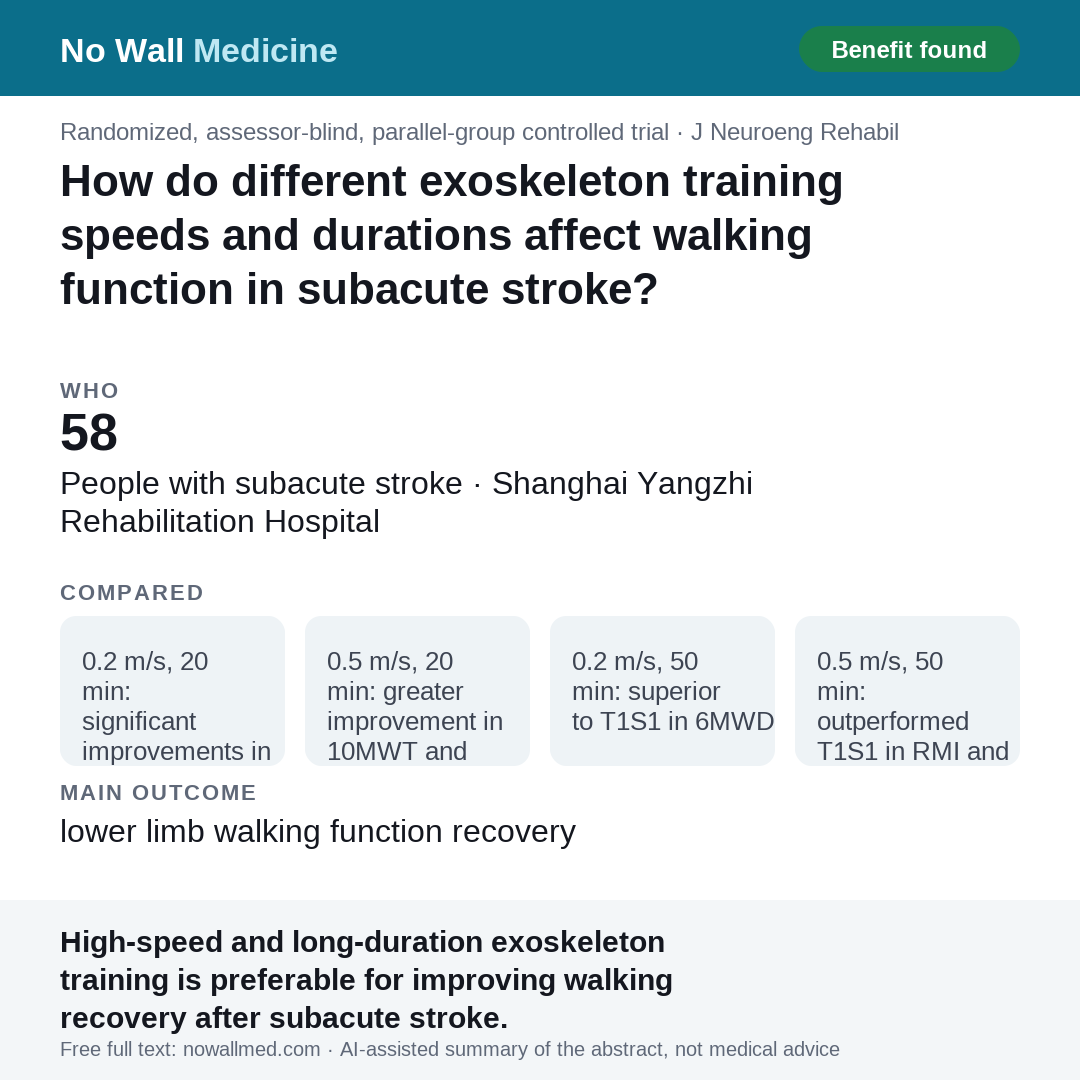
Effects of different intensity training with a lower limb exoskeleton robot on walking function in people with subacute stroke: a randomized controlled trial
Randomized, assessor-blind, parallel-group controlled trialBenefit found
How do different exoskeleton training speeds and durations affect walking function in subacute stroke?
Who
58
People with subacute stroke · Shanghai Yangzhi Rehabilitation Hospital
Compared
0.2 m/s, 20 min: significant improvements in all clinical outcomes
0.5 m/s, 20 min: greater improvement in 10MWT and FMA-LE than T1S1
0.2 m/s, 50 min: superior to T1S1 in 6MWD
0.5 m/s, 50 min: outperformed T1S1 in RMI and greatest improvement in gait speed
Main outcome
lower limb walking function recovery
Bottom line: High-speed and long-duration exoskeleton training is preferable for improving walking recovery after subacute stroke.
J Neuroeng Rehabil · 2026-03-19Download image
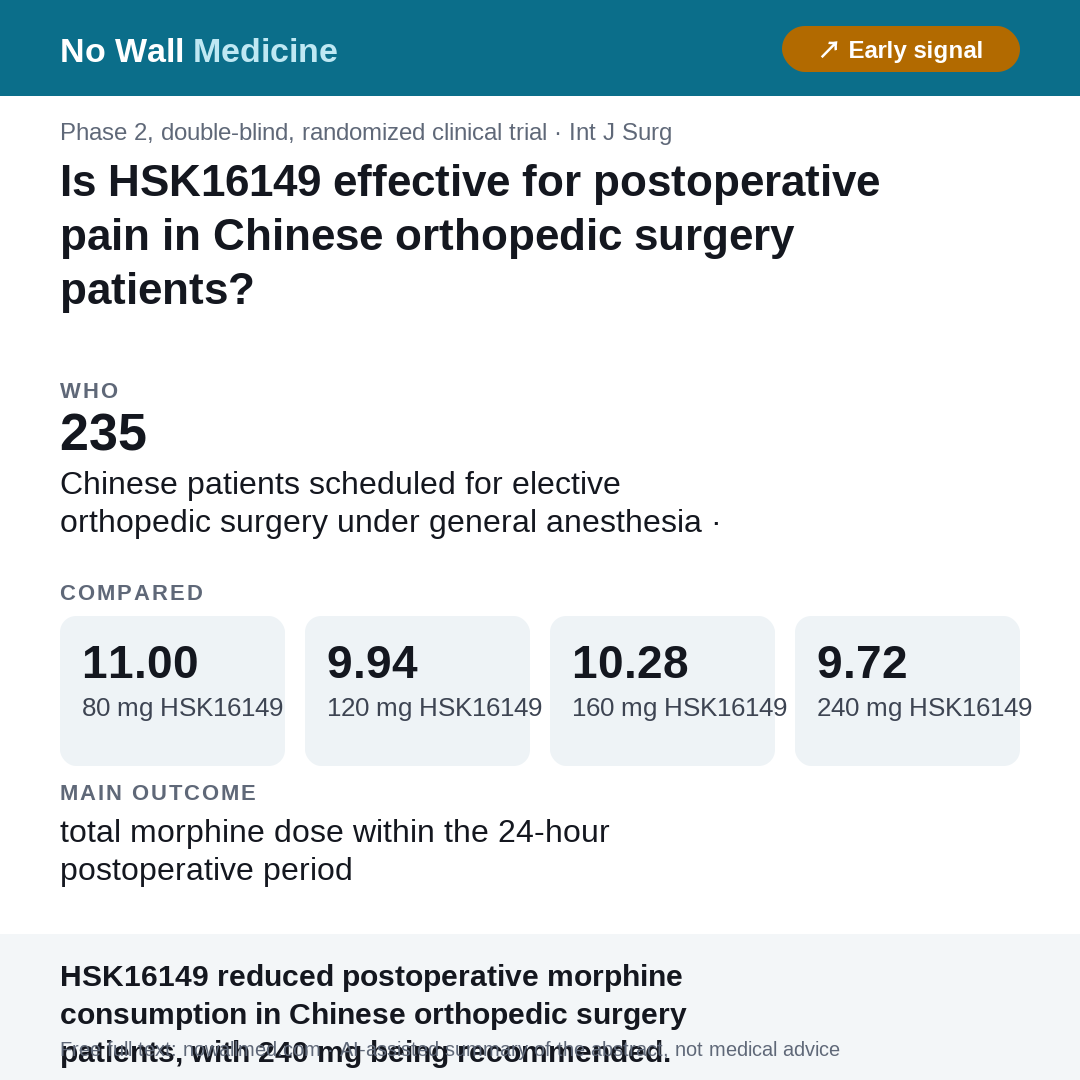
Efficacy and safety of HSK16149 for postoperative pain in Chinese patients after orthopedic surgery: a phase 2 randomized clinical trial
Phase 2, double-blind, randomized clinical trialEarly signal
Is HSK16149 effective for postoperative pain in Chinese orthopedic surgery patients?
Who
235
Chinese patients scheduled for elective orthopedic surgery under general anesthesia · 20 clinical hospitals in China
Compared
11.0080 mg HSK16149 (7.59)
9.94120 mg HSK16149 (8.15)
10.28160 mg HSK16149 (8.80)
9.72240 mg HSK16149 (10.07)
Main outcome
total morphine dose within the 24-hour postoperative period
Bottom line: HSK16149 reduced postoperative morphine consumption in Chinese orthopedic surgery patients, with 240 mg being recommended.
Int J Surg · 2026-03-18Download image
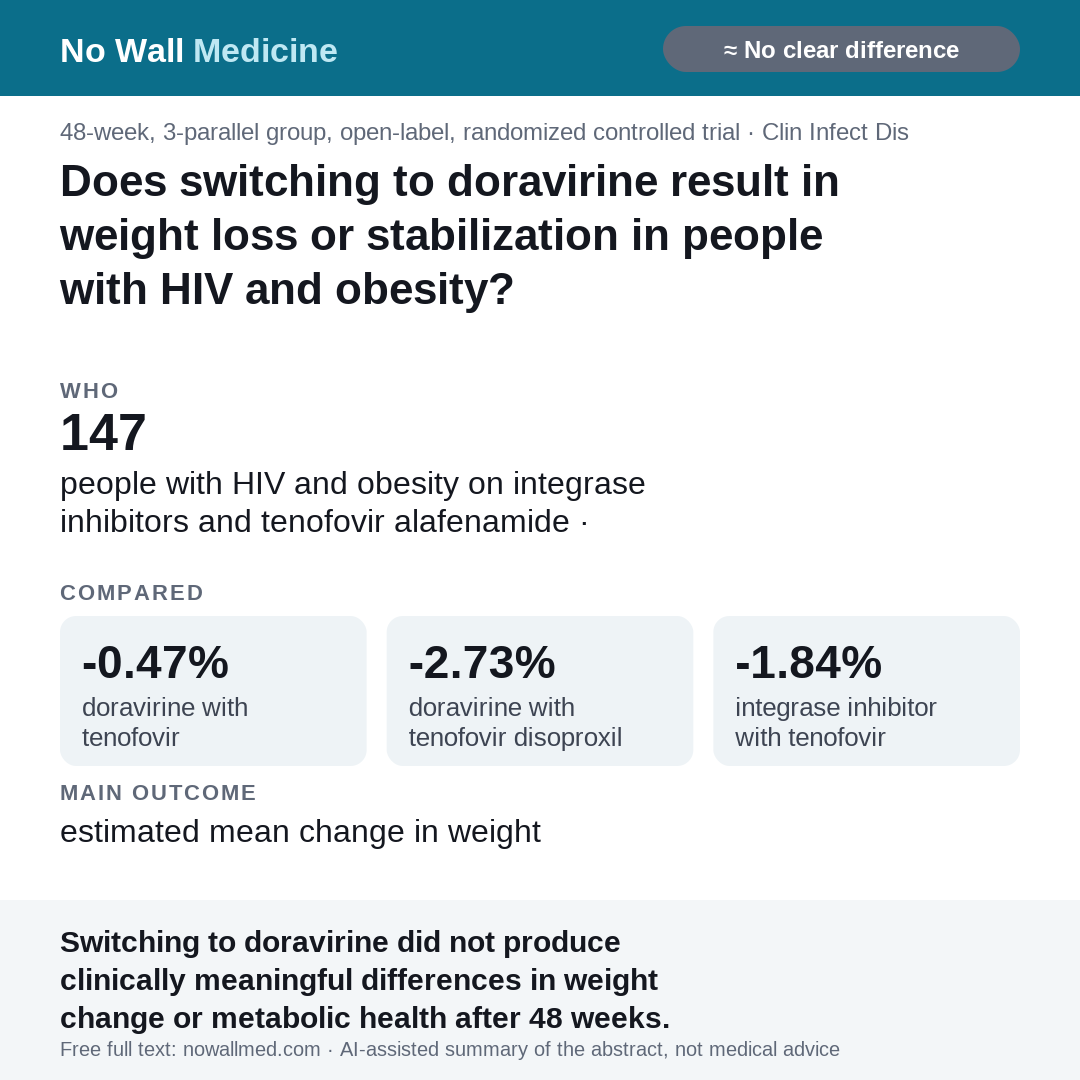
A 48-Week, Randomized Controlled Trial of Doravirine for Individuals With HIV and Obesity on Integrase Inhibitors and Tenofovir Alafenamide: The Do IT Study (ACTG A5391)
48-week, 3-parallel group, open-label, randomized controlled trialNo clear difference
Does switching to doravirine result in weight loss or stabilization in people with HIV and obesity?
Who
147
people with HIV and obesity on integrase inhibitors and tenofovir alafenamide · multicenter
Compared
-0.47%doravirine with tenofovir alafenamide and emtricitabine (95% CI: -2.09, 1.14)
-2.73%doravirine with tenofovir disoproxil fumarate and emtricitabine (-4.22, -1.23)
-1.84%integrase inhibitor with tenofovir alafenamide and emtricitabine (-3.37, -0.30)
Main outcome
estimated mean change in weight
Result: 1.36 percentage points (97.5% CI: -1.20, 3.92) for DOR versus INSTI (both with TAF/FTC)
Bottom line: Switching to doravirine did not produce clinically meaningful differences in weight change or metabolic health after 48 weeks.
Clin Infect Dis · 2026-03-18Download image
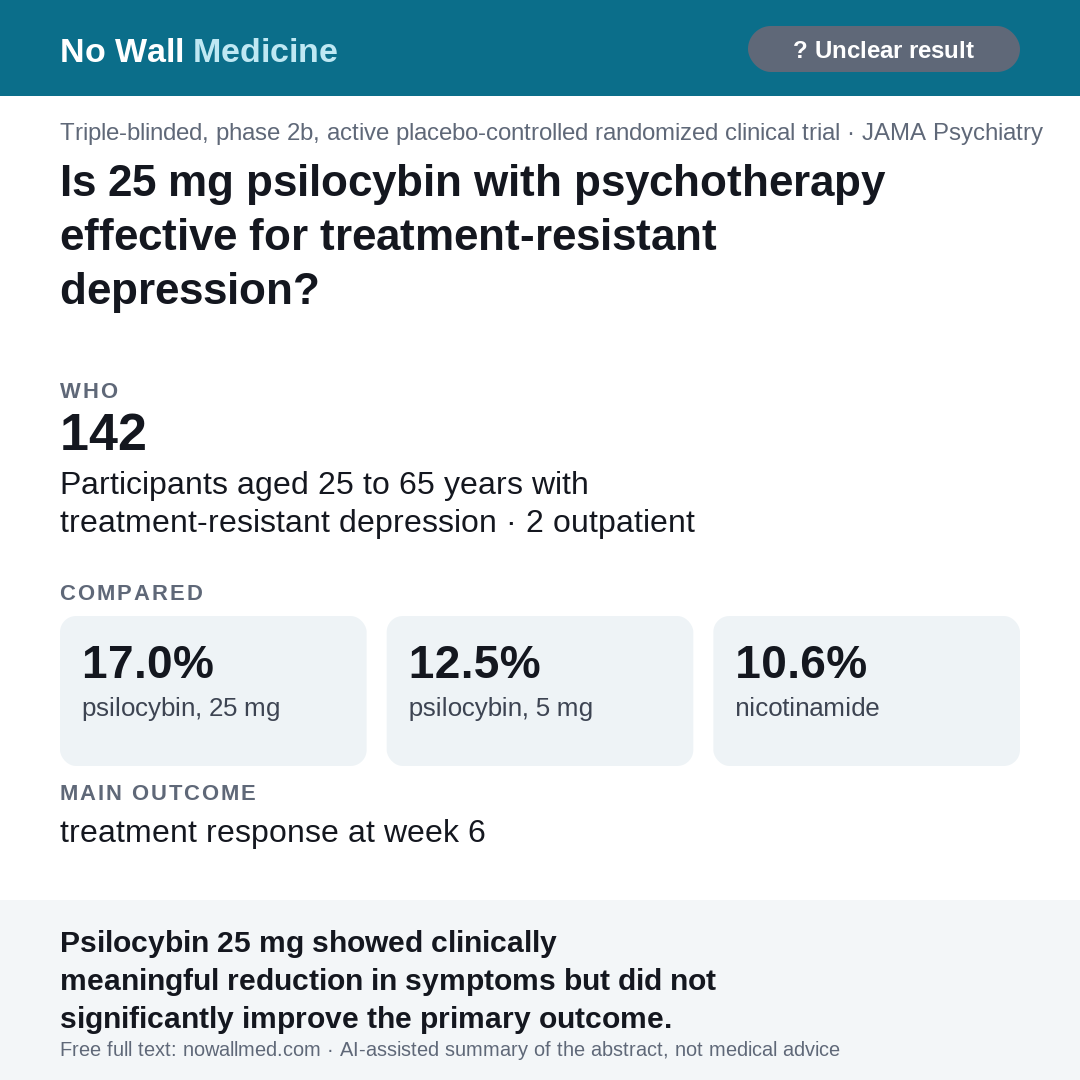
Efficacy and Safety of Psilocybin in Treatment-Resistant Major Depression: The EPISODE Randomized Clinical Trial
Triple-blinded, phase 2b, active placebo-controlled randomized clinical trialUnclear result
Is 25 mg psilocybin with psychotherapy effective for treatment-resistant depression?
Who
142
Participants aged 25 to 65 years with treatment-resistant depression · 2 outpatient settings in Germany
Compared
17.0%psilocybin, 25 mg
12.5%psilocybin, 5 mg
10.6%nicotinamide
Main outcome
treatment response at week 6
Result: adjusted odds ratio 1.73 (95% CI, 0.53-6.23)
Bottom line: Psilocybin 25 mg showed clinically meaningful reduction in symptoms but did not significantly improve the primary outcome.
Limitation: Findings did not show a significant effect on the primary outcome.
JAMA Psychiatry · 2026-03-18Download image
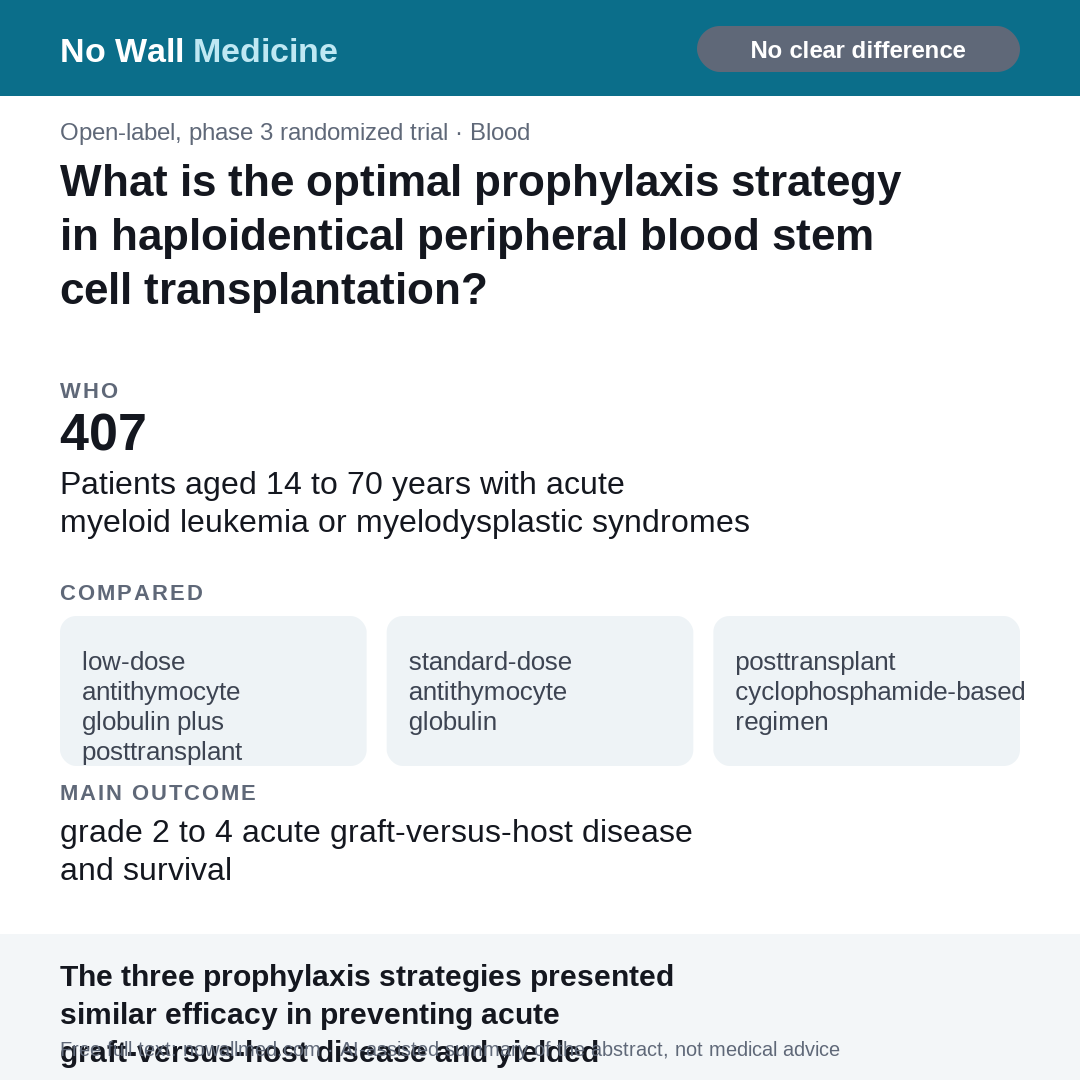
A randomized trial of GVHD prophylaxis in haploidentical PBSC transplantation: ATG, PTCy, and low-dose combination therapy
Open-label, phase 3 randomized trialNo clear difference
What is the optimal prophylaxis strategy in haploidentical peripheral blood stem cell transplantation?
Who
407
Patients aged 14 to 70 years with acute myeloid leukemia or myelodysplastic syndromes
Compared
low-dose antithymocyte globulin plus posttransplant cyclophosphamide
standard-dose antithymocyte globulin
posttransplant cyclophosphamide-based regimen
Main outcome
grade 2 to 4 acute graft-versus-host disease and survival
Bottom line: The three prophylaxis strategies presented similar efficacy in preventing acute graft-versus-host disease and yielded comparable survival.
Blood · 2026-03-18Download image
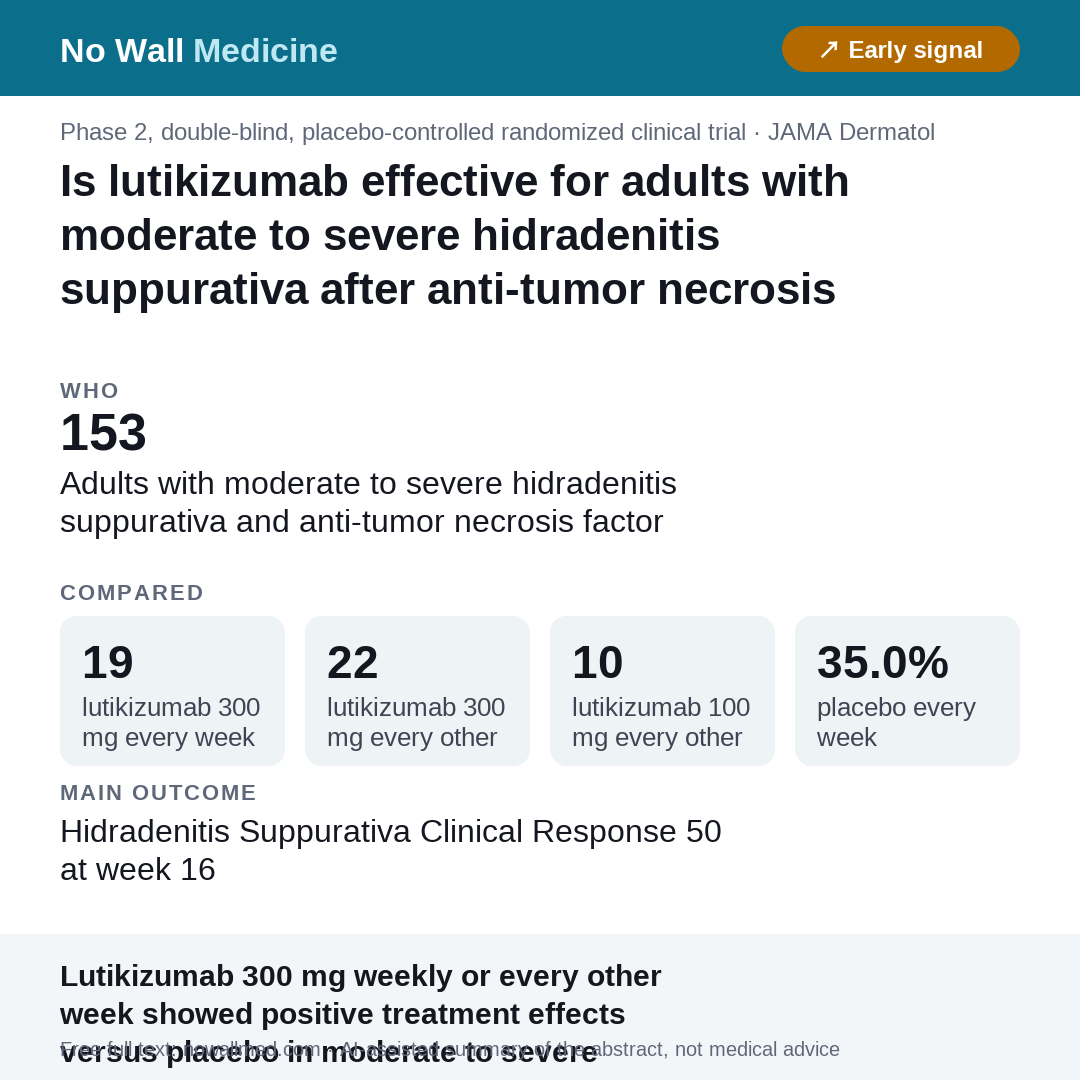
Lutikizumab in Adults With Moderate to Severe Hidradenitis Suppurativa After Anti-TNF Therapy Failure: A Phase 2 Randomized Clinical Trial
Phase 2, double-blind, placebo-controlled randomized clinical trialEarly signal
Is lutikizumab effective for adults with moderate to severe hidradenitis suppurativa after anti-tumor necrosis factor failure?
Who
153
Adults with moderate to severe hidradenitis suppurativa and anti-tumor necrosis factor failure · 45 sites in 8 countries or territories
Compared
19lutikizumab 300 mg every week (48.7%)
22lutikizumab 300 mg every other week (59.5%)
10lutikizumab 100 mg every other week (27.0%)
35.0%placebo every week
Main outcome
Hidradenitis Suppurativa Clinical Response 50 at week 16
Bottom line: Lutikizumab 300 mg weekly or every other week showed positive treatment effects versus placebo in moderate to severe hidradenitis suppurativa.
JAMA Dermatol · 2026-03-18Download image
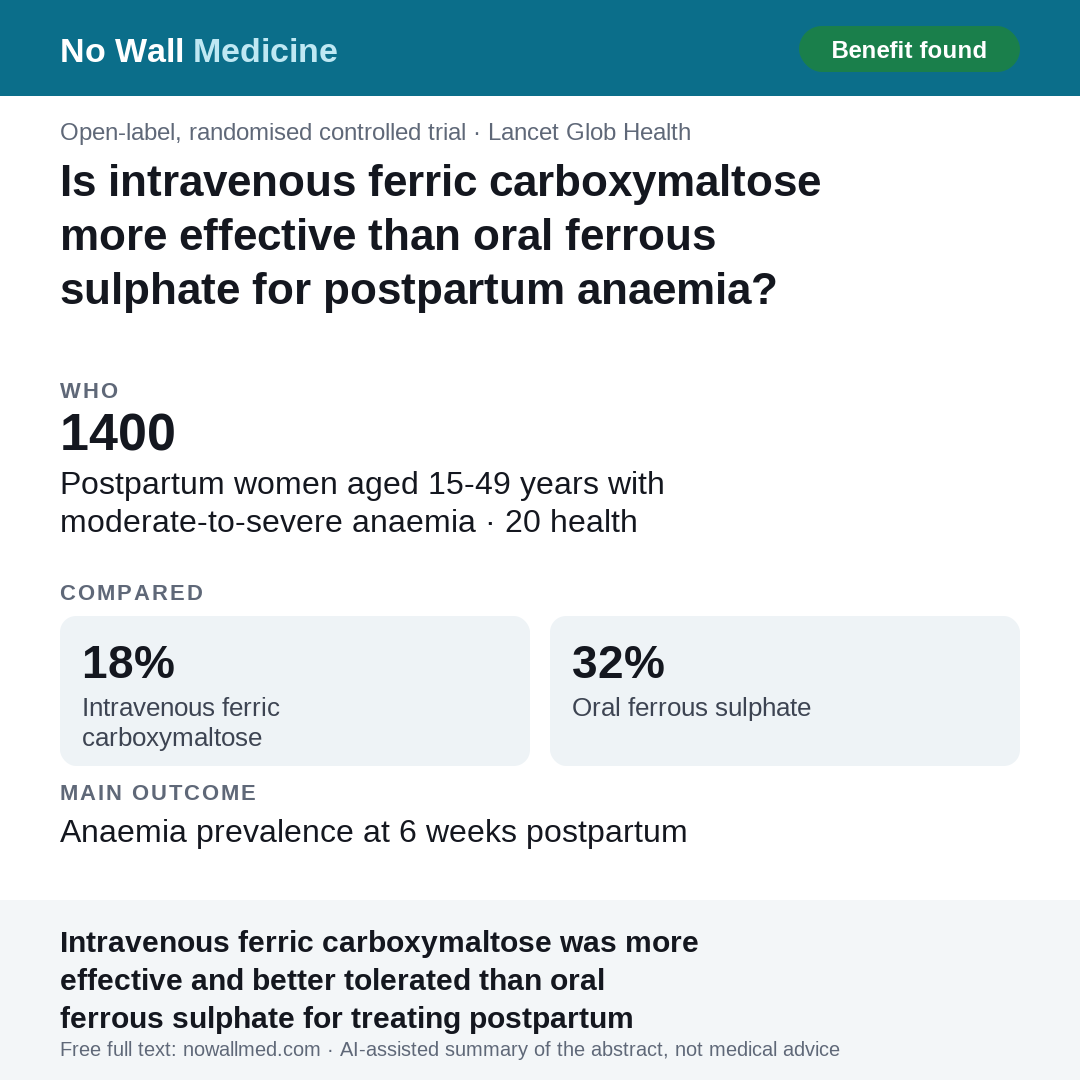
Intravenous ferric carboxymaltose versus oral ferrous sulphate for the treatment of moderate-to-severe postpartum anaemia in Nigerian women (IVON-PP): an open-label, randomised controlled trial
Open-label, randomised controlled trialBenefit found
Is intravenous ferric carboxymaltose more effective than oral ferrous sulphate for postpartum anaemia?
Who
1400
Postpartum women aged 15-49 years with moderate-to-severe anaemia · 20 health facilities across Nigeria
Compared
18%Intravenous ferric carboxymaltose (115 of 655)
32%Oral ferrous sulphate (214 of 662)
Main outcome
Anaemia prevalence at 6 weeks postpartum
Result: risk ratio 0·54, 95% CI 0·44-0·66
Bottom line: Intravenous ferric carboxymaltose was more effective and better tolerated than oral ferrous sulphate for treating postpartum anaemia.
Funded by: Bill & Melinda Gates Foundation
Lancet Glob Health · 2026-03-18Download image
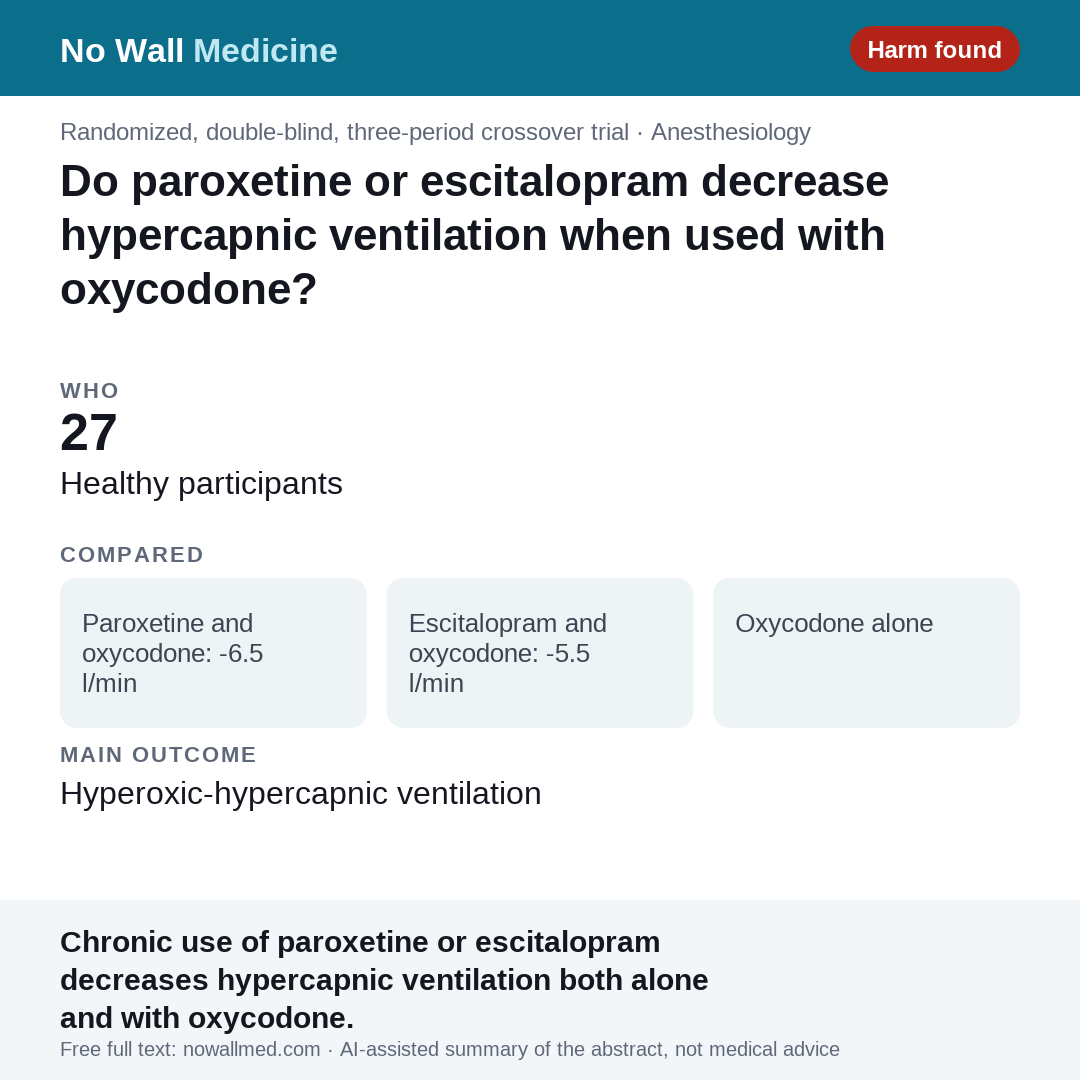
Effect of Paroxetine or Escitalopram Coadministered with Oxycodone versus Oxycodone Alone on Ventilation during Hypercapnia: A Randomized Clinical Trial
Randomized, double-blind, three-period crossover trialHarm found
Do paroxetine or escitalopram decrease hypercapnic ventilation when used with oxycodone?
Who
27
Healthy participants
Compared
Paroxetine and oxycodone: -6.5 l/min
Escitalopram and oxycodone: -5.5 l/min
Oxycodone alone
Main outcome
Hyperoxic-hypercapnic ventilation
Bottom line: Chronic use of paroxetine or escitalopram decreases hypercapnic ventilation both alone and with oxycodone.
Anesthesiology · 2026-03-18Download image
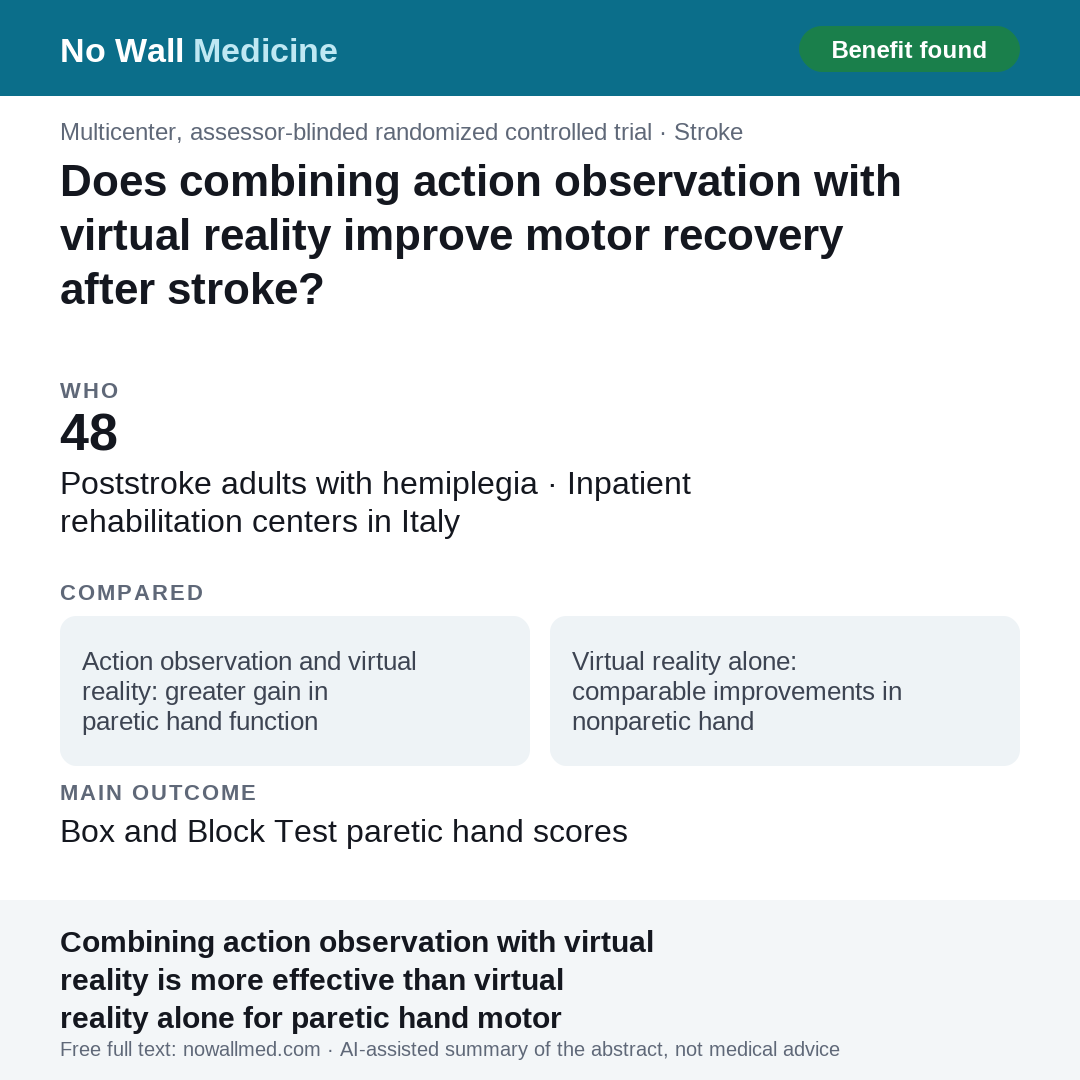
Action Observation Combined With Virtual Reality Promotes Motor Recovery After Stroke: A Randomized Controlled Trial
Multicenter, assessor-blinded randomized controlled trialBenefit found
Does combining action observation with virtual reality improve motor recovery after stroke?
Who
48
Poststroke adults with hemiplegia · Inpatient rehabilitation centers in Italy
Compared
Action observation and virtual reality: greater gain in paretic hand function
Virtual reality alone: comparable improvements in nonparetic hand
Main outcome
Box and Block Test paretic hand scores
Result: between-group difference in change of 7.8 blocks (95% CI, 7.1-7.9)
Bottom line: Combining action observation with virtual reality is more effective than virtual reality alone for paretic hand motor recovery.
Limitation: Treatment effects varied according to age and time from stroke.
Stroke · 2026-03-18Download image
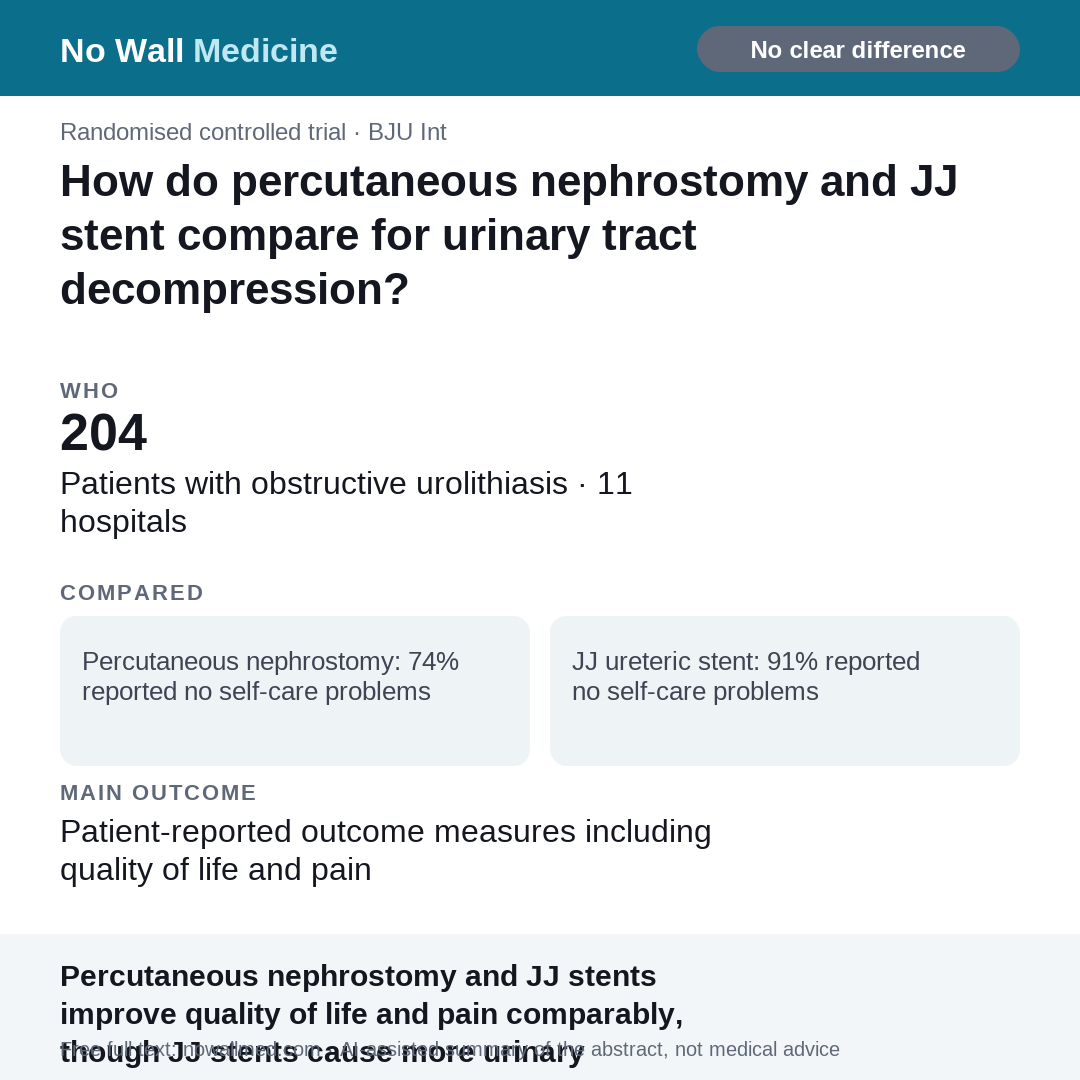
Patient-reported outcome measures of percutaneous nephrostomy vs JJ stent in obstructive urolithiasis: results of the STent Or NEphrostomy (STONE) randomised controlled trial
Randomised controlled trialNo clear difference
How do percutaneous nephrostomy and JJ stent compare for urinary tract decompression?
Who
204
Patients with obstructive urolithiasis · 11 hospitals
Compared
Percutaneous nephrostomy: 74% reported no self-care problems
JJ ureteric stent: 91% reported no self-care problems
Main outcome
Patient-reported outcome measures including quality of life and pain
Bottom line: Percutaneous nephrostomy and JJ stents improve quality of life and pain comparably, though JJ stents cause more urinary symptoms.
Limitation: Survey-based data collection may introduce response bias with a 59% response rate.
BJU Int · 2026-03-18Download image
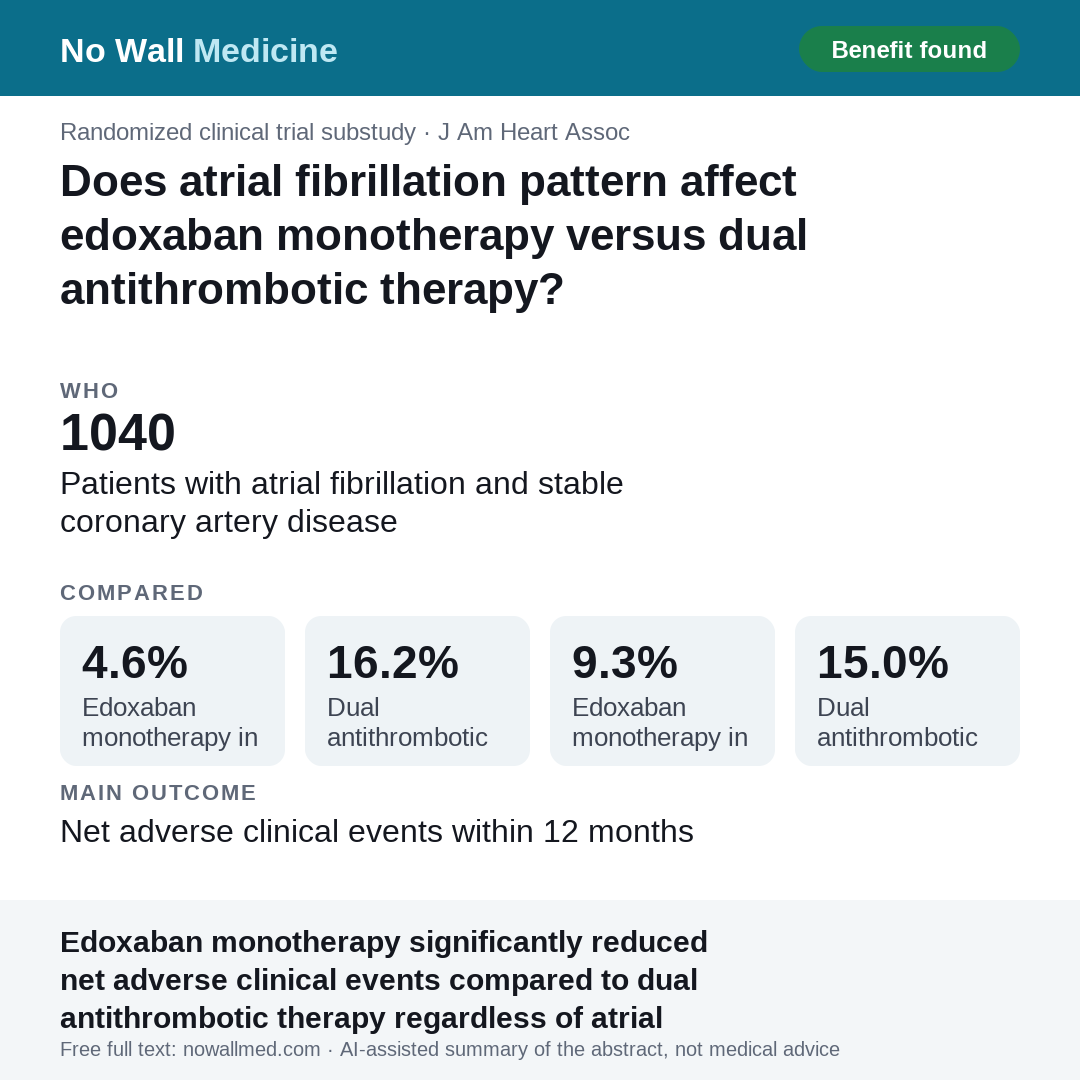
Impact of Atrial Fibrillation Pattern on Edoxaban Antithrombotic Therapy in Patients With Atrial Fibrillation and Stable Coronary Artery Disease: A Secondary Analysis of the EPIC-CAD Randomized Clinical Trial
Randomized clinical trial substudyBenefit found
Does atrial fibrillation pattern affect edoxaban monotherapy versus dual antithrombotic therapy?
Who
1040
Patients with atrial fibrillation and stable coronary artery disease
Compared
4.6%Edoxaban monotherapy in paroxysmal AF
16.2%Dual antithrombotic therapy in paroxysmal AF
9.3%Edoxaban monotherapy in nonparoxysmal AF
15.0%Dual antithrombotic therapy in nonparoxysmal AF
Main outcome
Net adverse clinical events within 12 months
Result: adjusted hazard ratio 0.23 (95% CI 0.12-0.42) and 0.56 (95% CI 0.32-0.87)
Bottom line: Edoxaban monotherapy significantly reduced net adverse clinical events compared to dual antithrombotic therapy regardless of atrial fibrillation pattern.
J Am Heart Assoc · 2026-03-18Download image
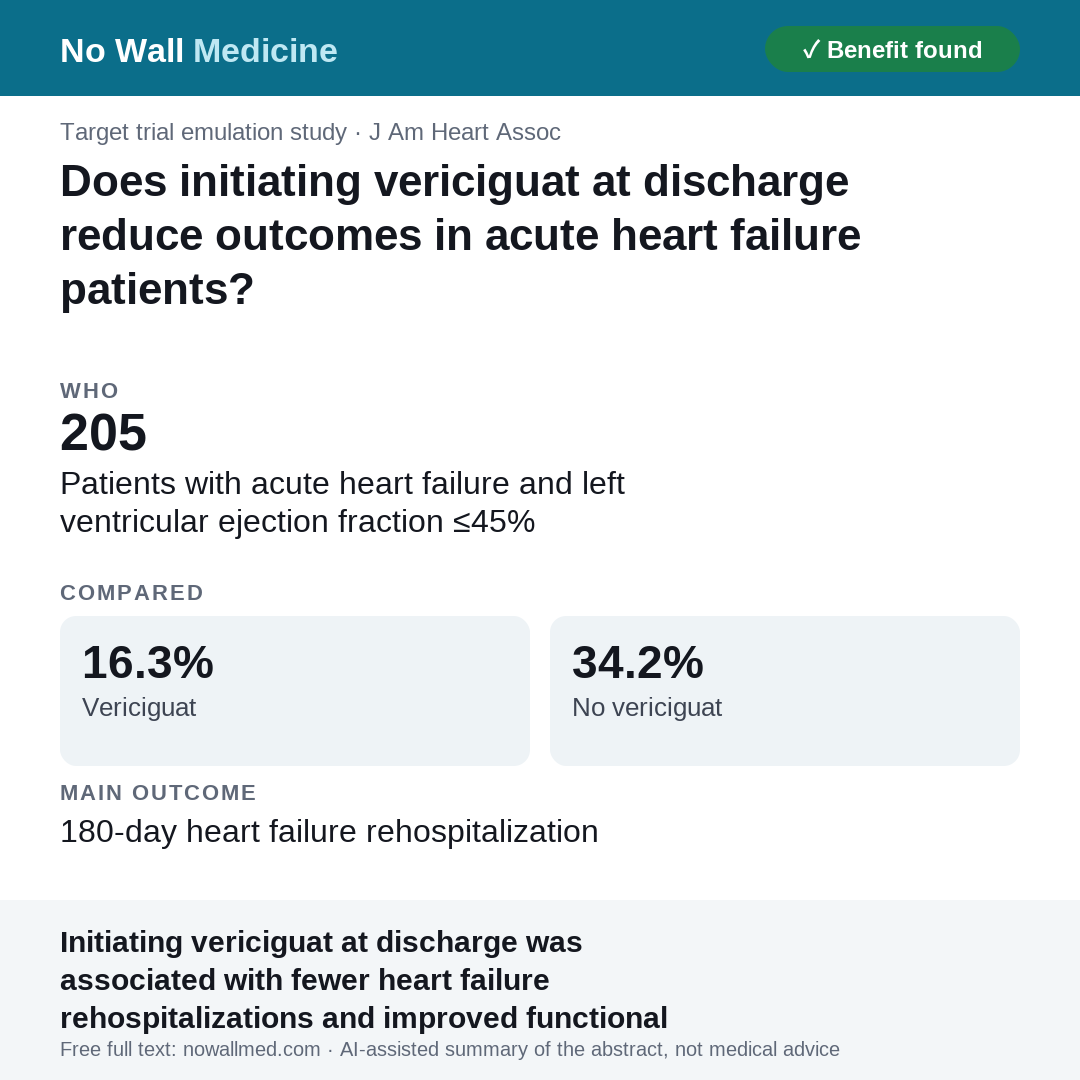
Efficacy of Vericiguat in Acute Heart Failure: A Target Trial Emulation Study
Target trial emulation studyBenefit found
Does initiating vericiguat at discharge reduce outcomes in acute heart failure patients?
Who
205
Patients with acute heart failure and left ventricular ejection fraction ≤45%
Compared
16.3%Vericiguat
34.2%No vericiguat
Main outcome
180-day heart failure rehospitalization
Result: hazard ratio 0.43 (95% CI 0.23-0.80)
Bottom line: Initiating vericiguat at discharge was associated with fewer heart failure rehospitalizations and improved functional class in acute heart failure.
J Am Heart Assoc · 2026-03-18Download image
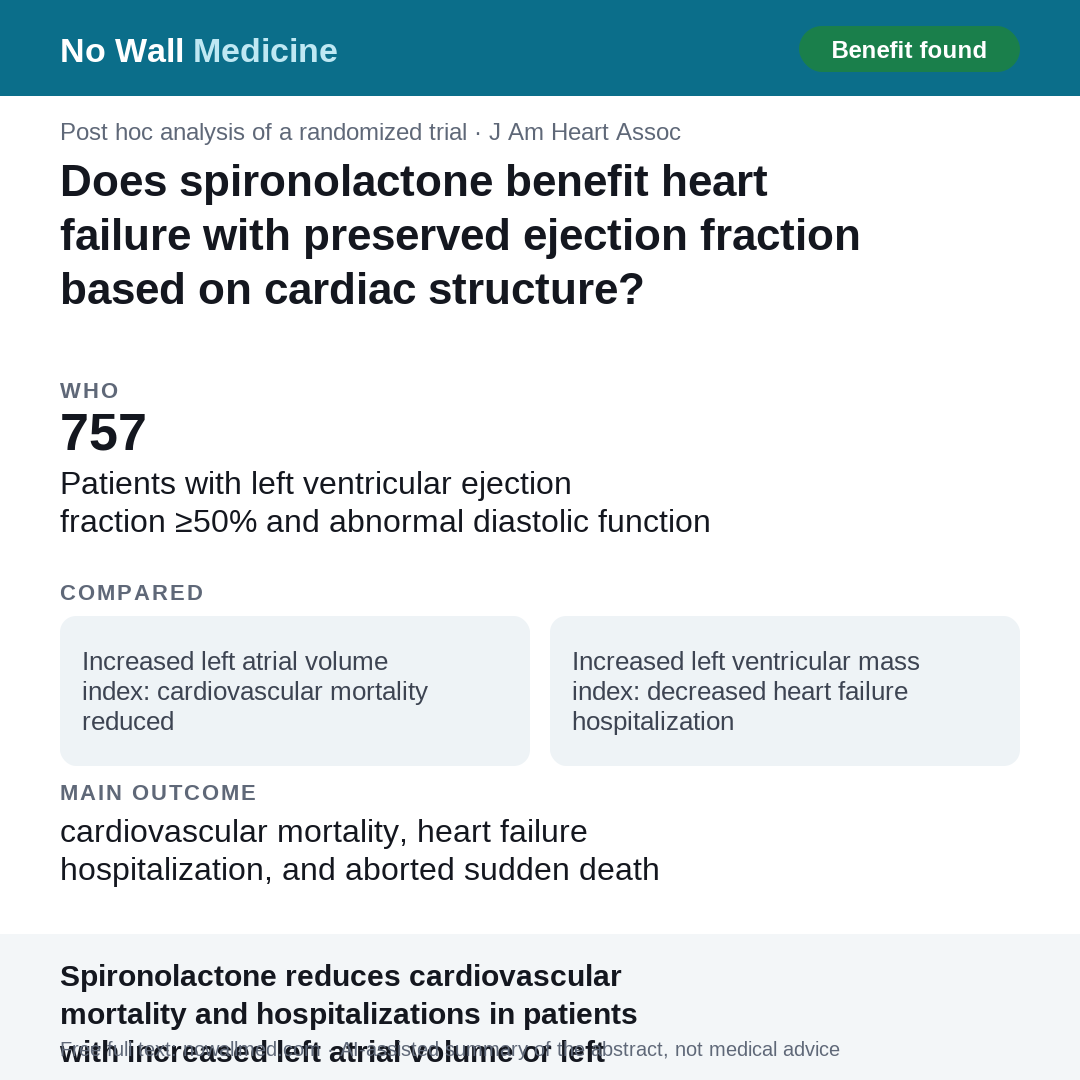
Left Atrial Volume Index and Left Ventricular Mass Index Determine the Benefits of Spironolactone in Patients With Heart Failure With Preserved Ejection Fraction
Post hoc analysis of a randomized trialBenefit found
Does spironolactone benefit heart failure with preserved ejection fraction based on cardiac structure?
Who
757
Patients with left ventricular ejection fraction ≥50% and abnormal diastolic function
Compared
Increased left atrial volume index: cardiovascular mortality reduced
Increased left ventricular mass index: decreased heart failure hospitalization
Main outcome
cardiovascular mortality, heart failure hospitalization, and aborted sudden death
Result: adjusted hazard ratio 0.48 (95% CI 0.24-0.98)
Bottom line: Spironolactone reduces cardiovascular mortality and hospitalizations in patients with increased left atrial volume or left ventricular mass index.
J Am Heart Assoc · 2026-03-18Download image
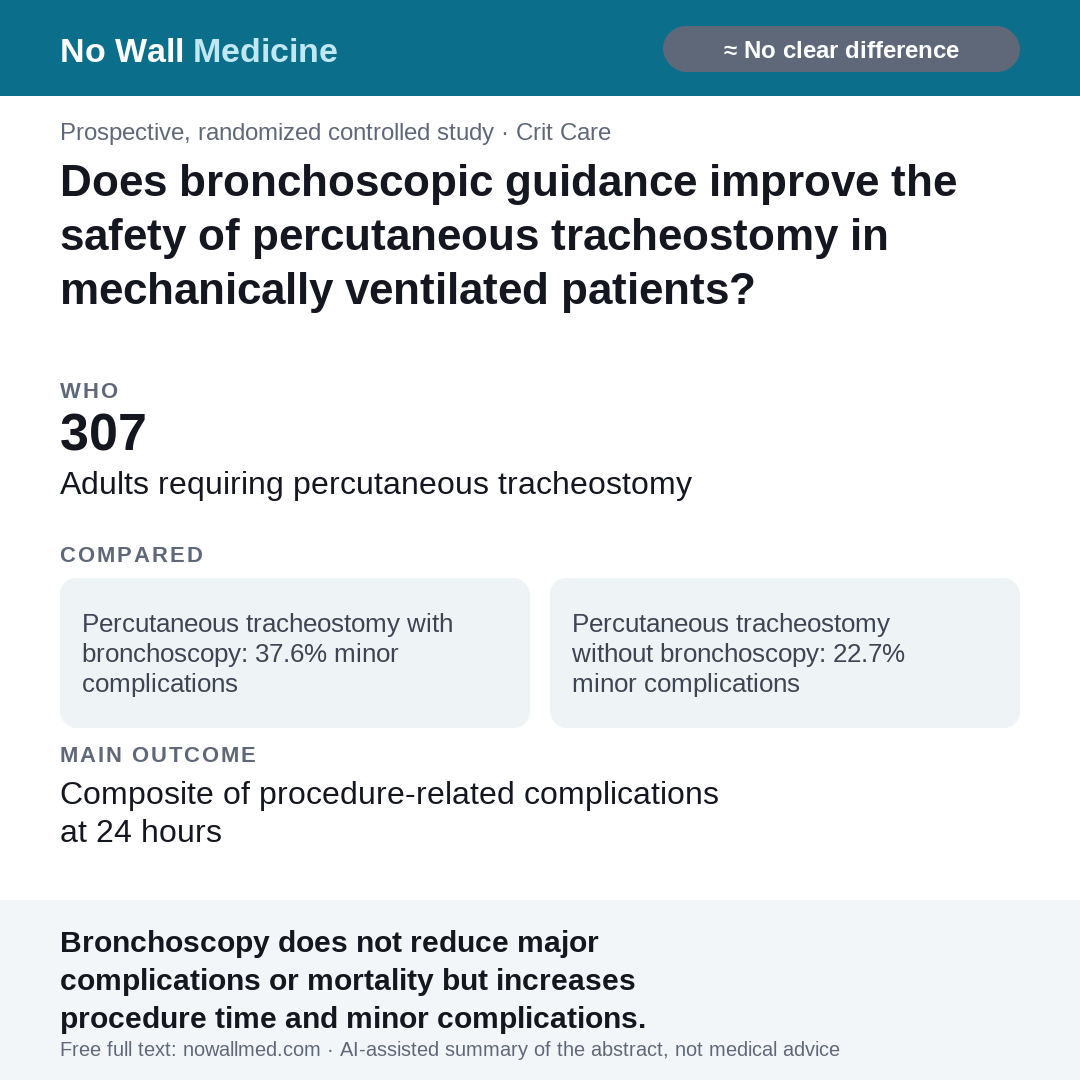
The impact of bronchoscopy on the safety of percutaneous tracheostomy: a randomized controlled trial
Prospective, randomized controlled studyNo clear difference
Does bronchoscopic guidance improve the safety of percutaneous tracheostomy in mechanically ventilated patients?
Who
307
Adults requiring percutaneous tracheostomy
Compared
Percutaneous tracheostomy with bronchoscopy: 37.6% minor complications
Percutaneous tracheostomy without bronchoscopy: 22.7% minor complications
Main outcome
Composite of procedure-related complications at 24 hours
Bottom line: Bronchoscopy does not reduce major complications or mortality but increases procedure time and minor complications.
Limitation: Multicenter studies are needed to assess generalizability of these findings.
Crit Care · 2026-03-18Download image
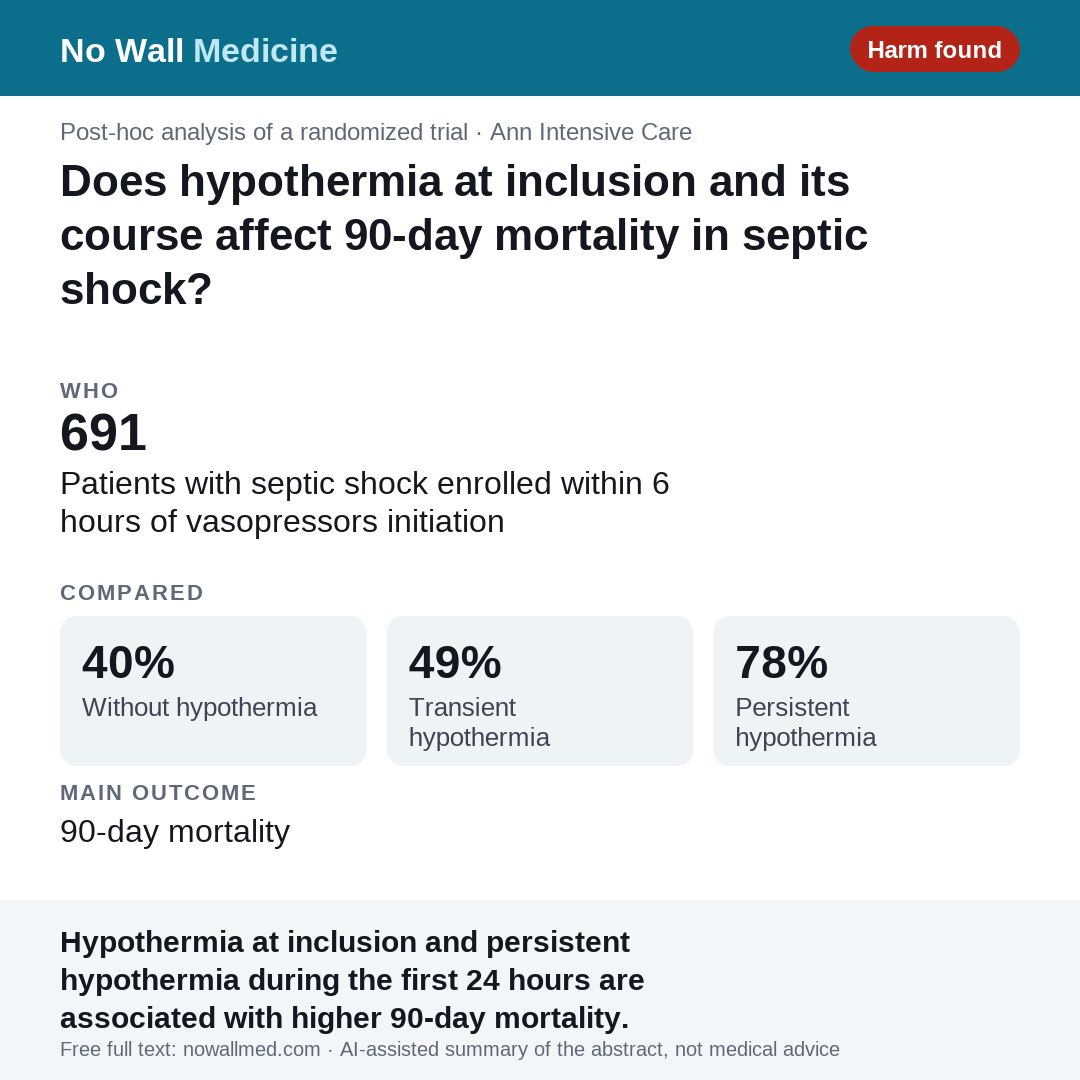
Relation between initial hypothermia, course of the hypothermia and mortality in patients with septic shock: a post-hoc analysis of the SEPSISPAM randomized trial
Post-hoc analysis of a randomized trialHarm found
Does hypothermia at inclusion and its course affect 90-day mortality in septic shock?
Who
691
Patients with septic shock enrolled within 6 hours of vasopressors initiation
Compared
40%Without hypothermia
49%Transient hypothermia
78%Persistent hypothermia
Main outcome
90-day mortality
Result: hazard ratio 2.83 (95% CI 1.62 to 4.95)
Bottom line: Hypothermia at inclusion and persistent hypothermia during the first 24 hours are associated with higher 90-day mortality.
Limitation: This is a post-hoc analysis of the SEPSISPAM trial
Ann Intensive Care · 2026-03-18Download image
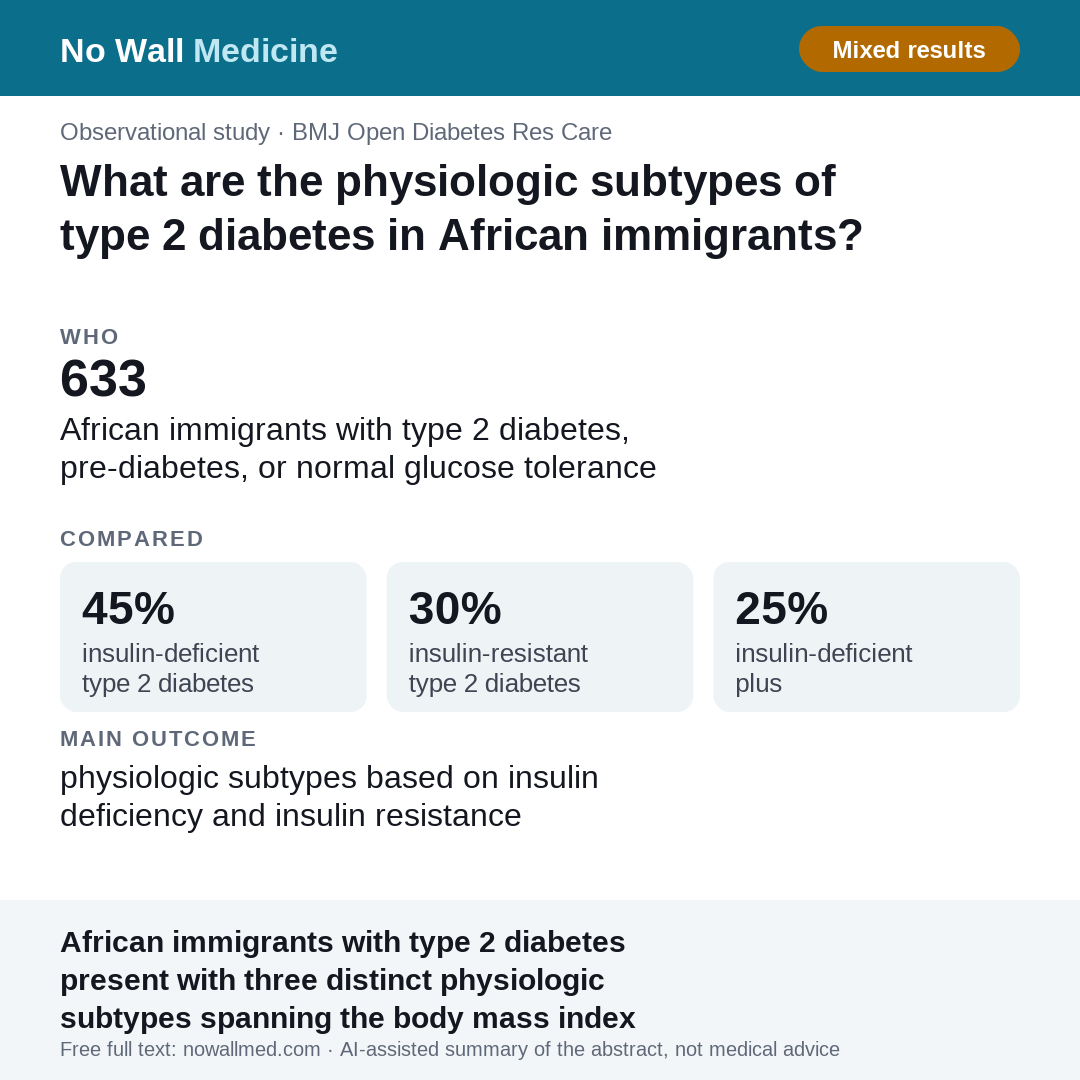
African immigrants with type 2 diabetes present with three physiologic subtypes: implications for screening, diagnosis and treatment
Observational studyMixed results
What are the physiologic subtypes of type 2 diabetes in African immigrants?
Who
633
African immigrants with type 2 diabetes, pre-diabetes, or normal glucose tolerance
Compared
45%insulin-deficient type 2 diabetes
30%insulin-resistant type 2 diabetes
25%insulin-deficient plus insulin-resistant type 2 diabetes
Main outcome
physiologic subtypes based on insulin deficiency and insulin resistance
Bottom line: African immigrants with type 2 diabetes present with three distinct physiologic subtypes spanning the body mass index spectrum.
BMJ Open Diabetes Res Care · 2026-03-18Download image
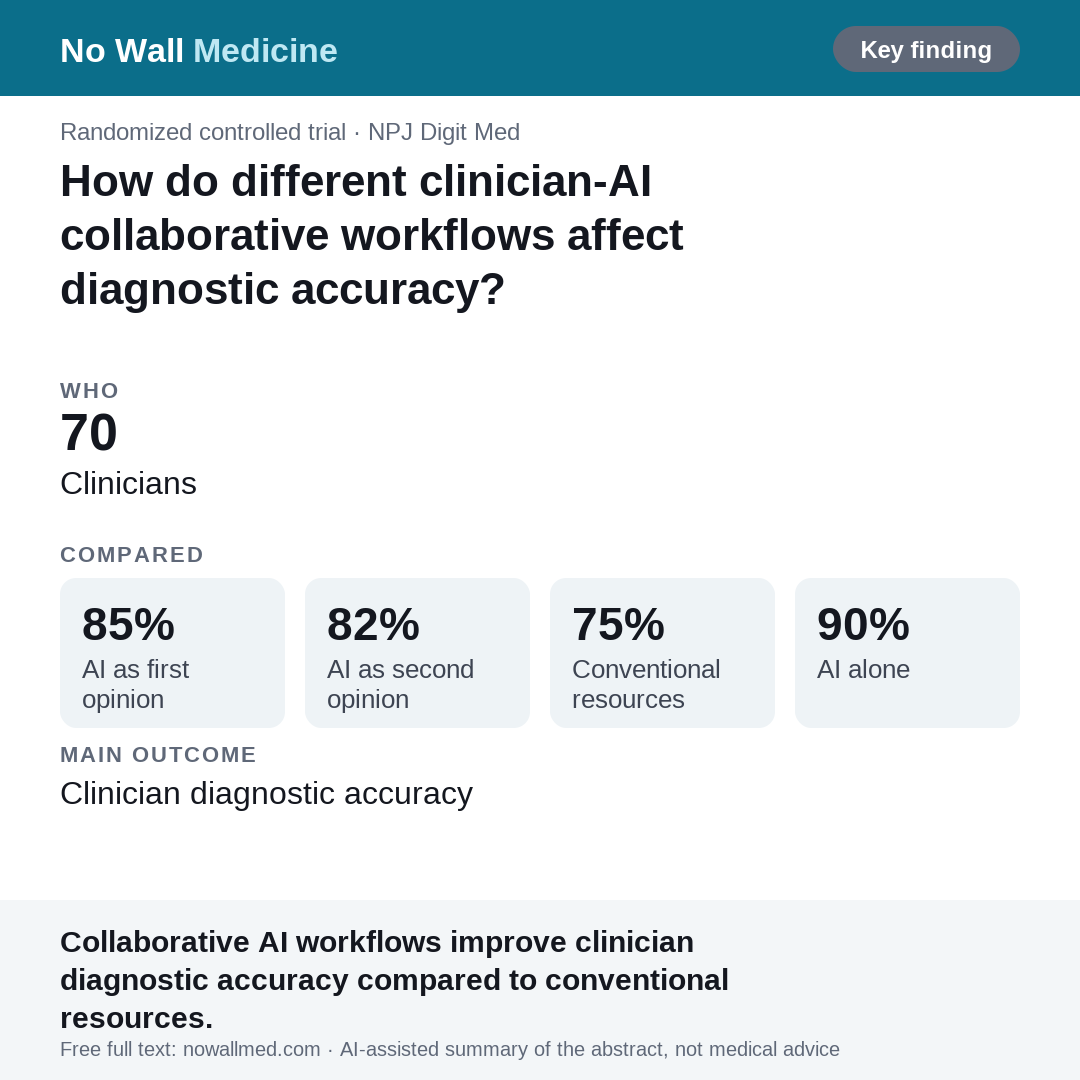
From tool to teammate in a randomized controlled trial of clinician-AI collaborative workflows for diagnosis
Randomized controlled trialKey finding
How do different clinician-AI collaborative workflows affect diagnostic accuracy?
Who
70
Clinicians
Compared
85%AI as first opinion
82%AI as second opinion
75%Conventional resources
90%AI alone
Main outcome
Clinician diagnostic accuracy
Bottom line: Collaborative AI workflows improve clinician diagnostic accuracy compared to conventional resources.
NPJ Digit Med · 2026-03-18Download image
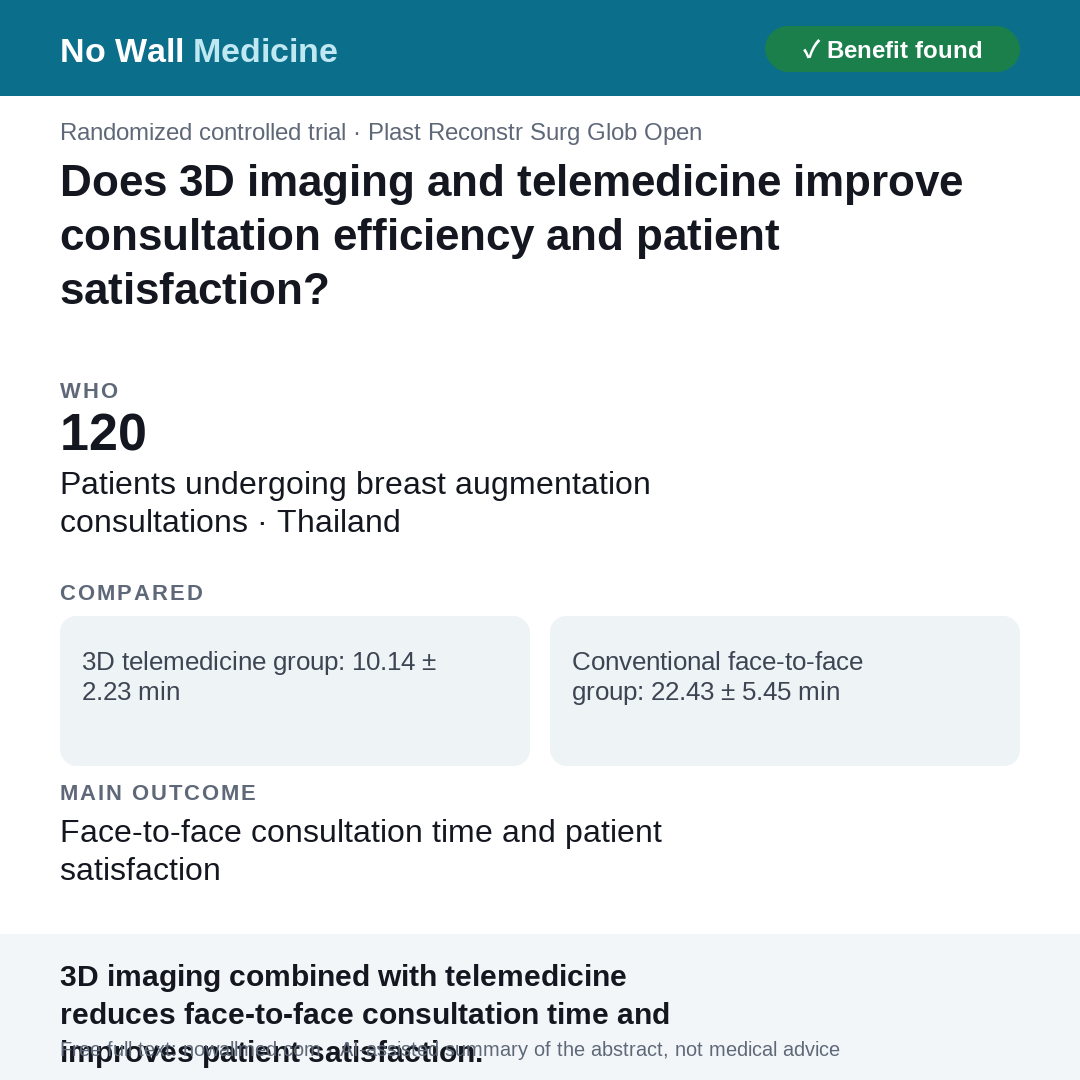
The Role of 3-dimensional Imaging and Telemedicine in Breast Augmentation Consultations: A Prospective Cohort Study of 1153 Cases and a Randomized Controlled Trial in Thailand
Randomized controlled trialBenefit found
Does 3D imaging and telemedicine improve consultation efficiency and patient satisfaction?
Who
120
Patients undergoing breast augmentation consultations · Thailand
Compared
3D telemedicine group: 10.14 ± 2.23 min
Conventional face-to-face group: 22.43 ± 5.45 min
Main outcome
Face-to-face consultation time and patient satisfaction
Bottom line: 3D imaging combined with telemedicine reduces face-to-face consultation time and improves patient satisfaction.
Plast Reconstr Surg Glob Open · 2026-03-18Download image
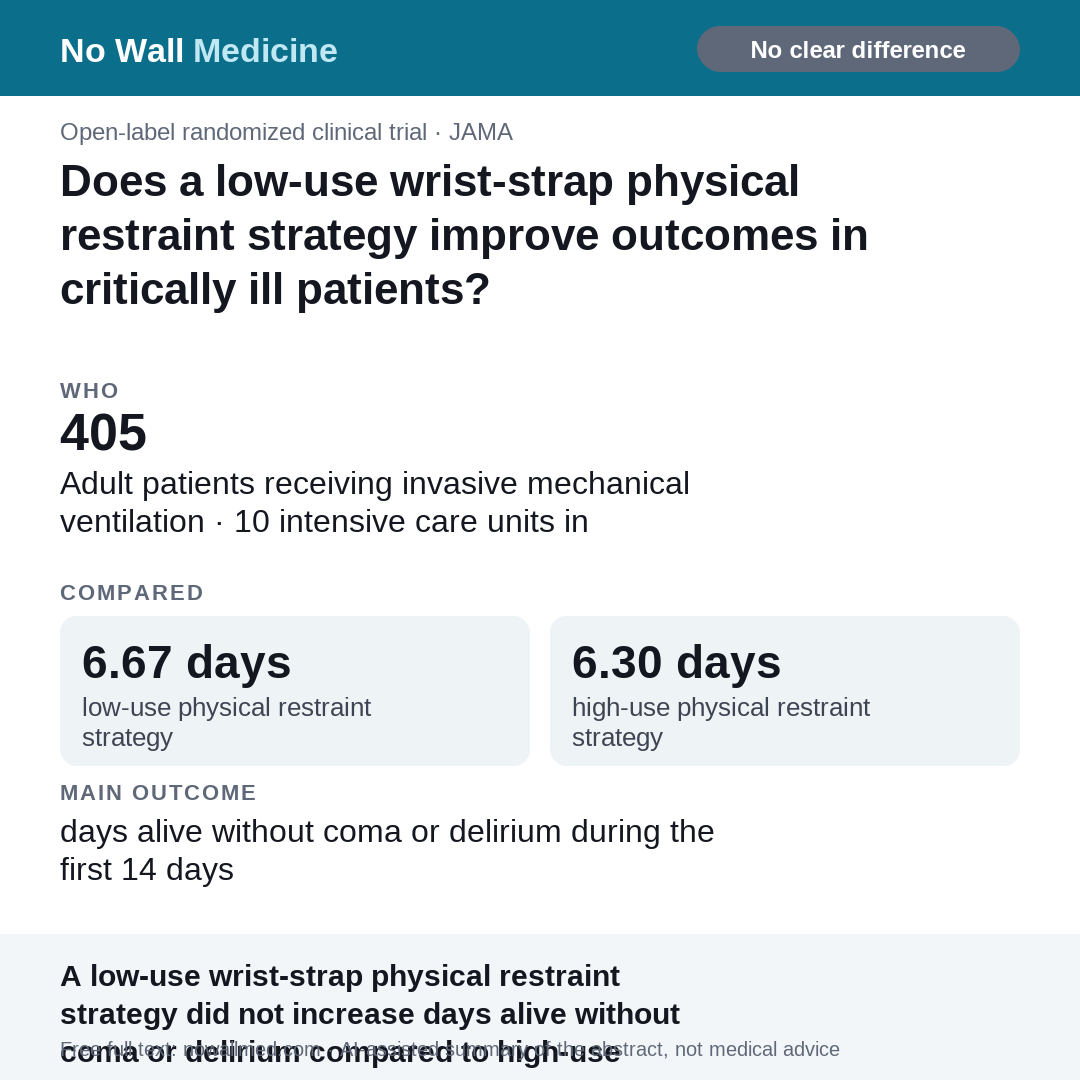
Restrictive vs Liberal Physical Restraint Strategies in Critically Ill Patients: The R2D2-ICU Randomized Clinical Trial
Open-label randomized clinical trialNo clear difference
Does a low-use wrist-strap physical restraint strategy improve outcomes in critically ill patients?
Who
405
Adult patients receiving invasive mechanical ventilation · 10 intensive care units in France
Compared
6.67 dayslow-use physical restraint strategy (95% CI, 5.69-7.65)
6.30 dayshigh-use physical restraint strategy (95% CI, 5.35-7.24)
Main outcome
days alive without coma or delirium during the first 14 days
Result: adjusted mean difference, 0.37 days (95% CI, -0.71 to 1.46)
Bottom line: A low-use wrist-strap physical restraint strategy did not increase days alive without coma or delirium compared to high-use strategy.
JAMA · 2026-03-17Download image