Visual abstracts
New randomized trials and meta-analyses from leading journals at a glance: who was studied, what was compared, and what was found. Every paper is free to read in full.
All specialtiesCardiology 4763Oncology 4042Gastroenterology & Hepatology 1902Infectious Disease 3756Neurology 1872Psychiatry & Mental Health 2214Pulmonology 2042Critical Care 1319Endocrinology & Diabetes 2544Pediatrics 2889Surgery 2479Orthopedics & Sports Medicine 917Neurosurgery 525Cardiothoracic & Vascular Surgery 656Plastic & Reconstructive Surgery 574Nephrology 1107Rheumatology 810Hematology 1090Dermatology 611Ophthalmology 532Obstetrics & Gynecology 1645Public & Global Health 1037Radiology & Imaging 617Anesthesiology 957Urology 745ENT (Otolaryngology) 494Emergency Medicine 481Allergy & Immunology 309Geriatrics 972Family Medicine & Primary Care 533Medical Genetics & Genomics 659Pathology & Laboratory Medicine 156Physical Medicine & Rehabilitation 734Palliative Care 421Nutrition 1560Digital Health & AI 2133General Medicine 318
The role of male foetal sex on maternal and neonatal outcomes in pregnancies complicated by gestational diabetes-secondary analysis of a randomised placebo controlled clinical trial of metformin in gestational diabetes (EMERGE)
Secondary analysis of a randomised controlled trialMixed results
Does foetal sex modify maternal and neonatal outcomes in gestational diabetes treated with metformin?
Who
Women with gestational diabetes and their foetuses
Compared
Metformin exposed males: 4.88 mmol/L fasting glucose at 32 weeks
Metformin exposed females: 8.3% birth weight < 2500 g
Main outcome
Maternal and neonatal outcomes including glucose and birth weight
Bottom line: Metformin showed sex-specific effects on glucose and birth weight, but findings are hypothesis-generating due to non-significant interactions.
Limitation: The sex-by-treatment interaction was not significant, so findings are hypothesis-generating.
BMC Med · 2026-03-12Download image

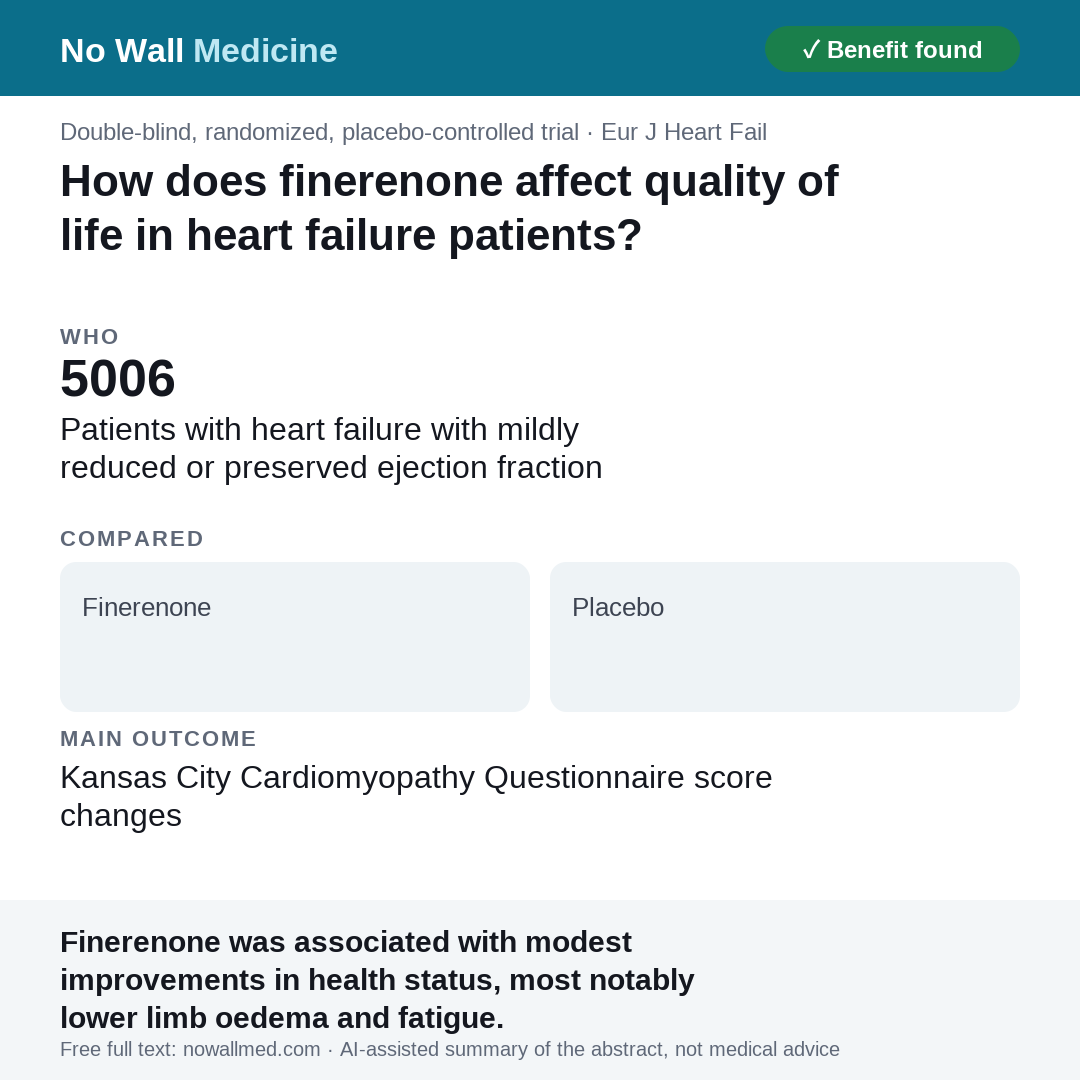
Finerenone and quality of life in heart failure: component-level analyses and clinical relevance of the Kansas City cardiomyopathy questionnaire
Double-blind, randomized, placebo-controlled trialBenefit found
How does finerenone affect quality of life in heart failure patients?
Who
5006
Patients with heart failure with mildly reduced or preserved ejection fraction
Compared
Finerenone
Placebo
Main outcome
Kansas City Cardiomyopathy Questionnaire score changes
Bottom line: Finerenone was associated with modest improvements in health status, most notably lower limb oedema and fatigue.
Eur J Heart Fail · 2026-03-12Download image
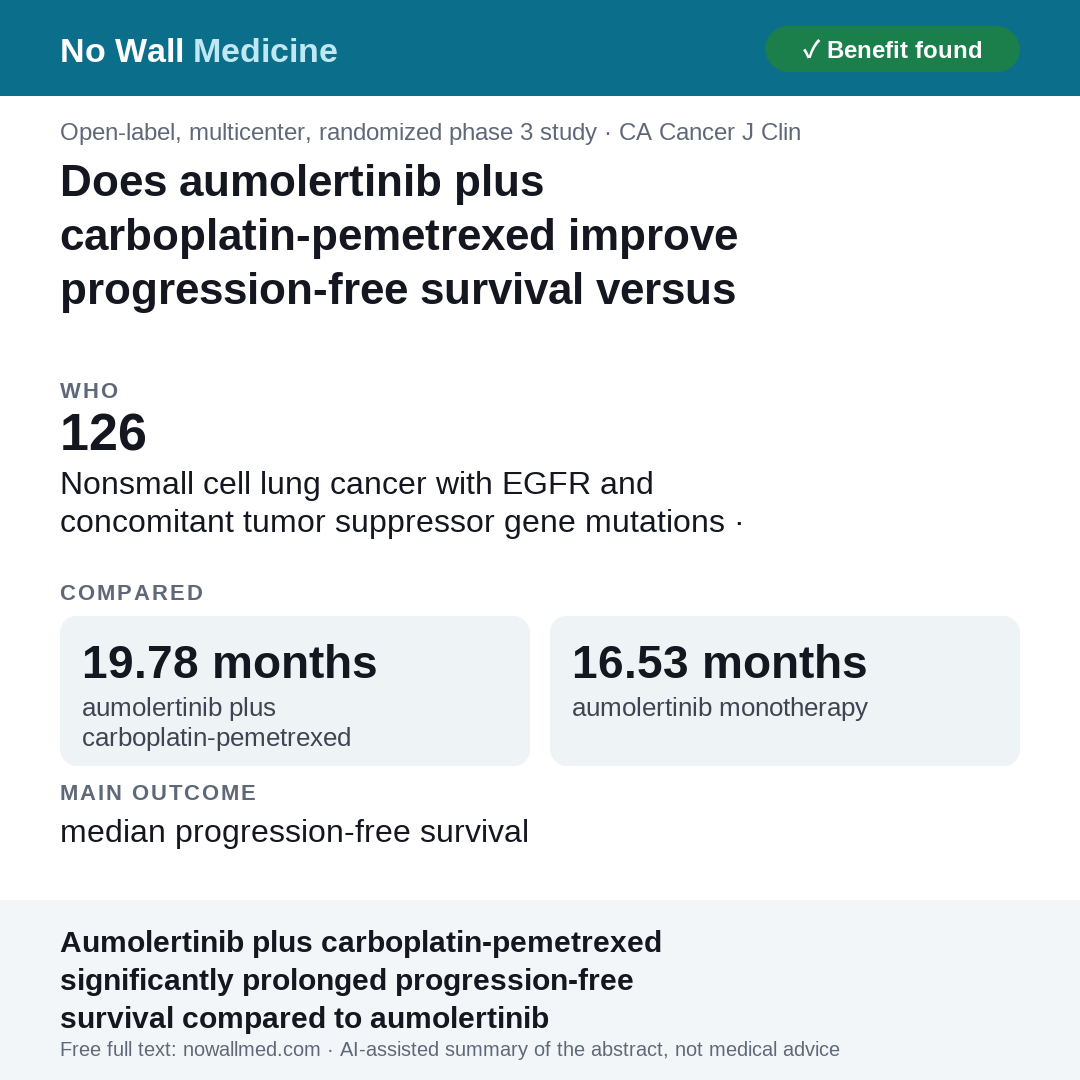
Aumolertinib with carboplatin-pemetrexed versus aumolertinib for nonsmall cell lung cancer with EGFR and concomitant tumor suppressor genes (ACROSS2): An open-label, multicenter, randomized phase 3 study
Open-label, multicenter, randomized phase 3 studyBenefit found
Does aumolertinib plus carboplatin-pemetrexed improve progression-free survival versus aumolertinib monotherapy?
Who
126
Nonsmall cell lung cancer with EGFR and concomitant tumor suppressor gene mutations · multicenter
Compared
19.78 monthsaumolertinib plus carboplatin-pemetrexed
16.53 monthsaumolertinib monotherapy
Main outcome
median progression-free survival
Result: hazard ratio 0.58 (95% confidence interval 0.34-0.97)
Bottom line: Aumolertinib plus carboplatin-pemetrexed significantly prolonged progression-free survival compared to aumolertinib monotherapy in this population.
Limitation: Overall survival data were immature
CA Cancer J Clin · 2026-03-12Download image
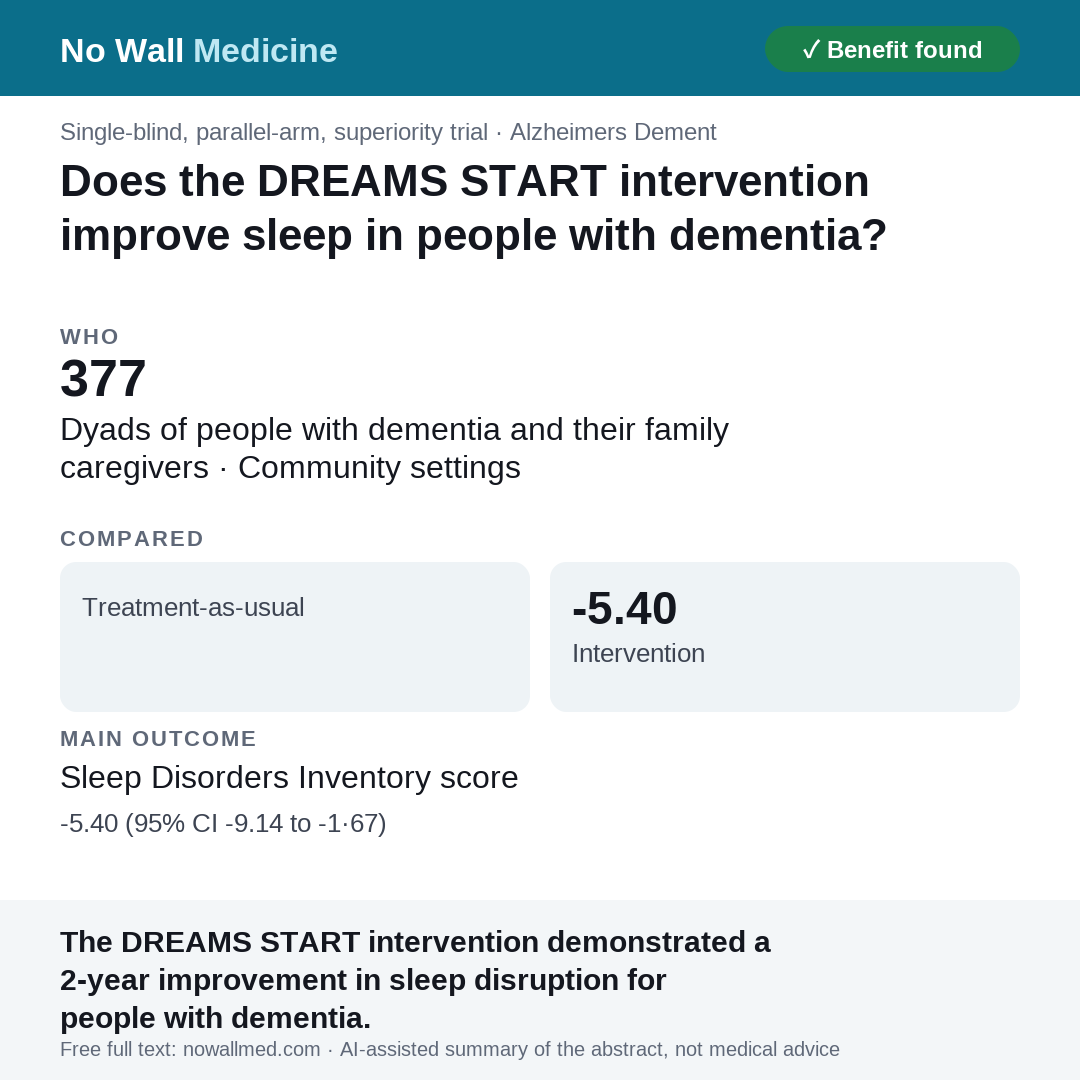
The DREAMS START intervention for sleep in dementia: Long-term follow-up of a randomized controlled trial
Single-blind, parallel-arm, superiority trialBenefit found
Does the DREAMS START intervention improve sleep in people with dementia?
Who
377
Dyads of people with dementia and their family caregivers · Community settings
Compared
Treatment-as-usual
-5.40Intervention
Main outcome
Sleep Disorders Inventory score
Result: -5.40 (95% CI -9.14 to -1·67)
Bottom line: The DREAMS START intervention demonstrated a 2-year improvement in sleep disruption for people with dementia.
Limitation: Only 177 dyads (46.9%) were followed up at 24 months.
Alzheimers Dement · 2026-03-12Download image
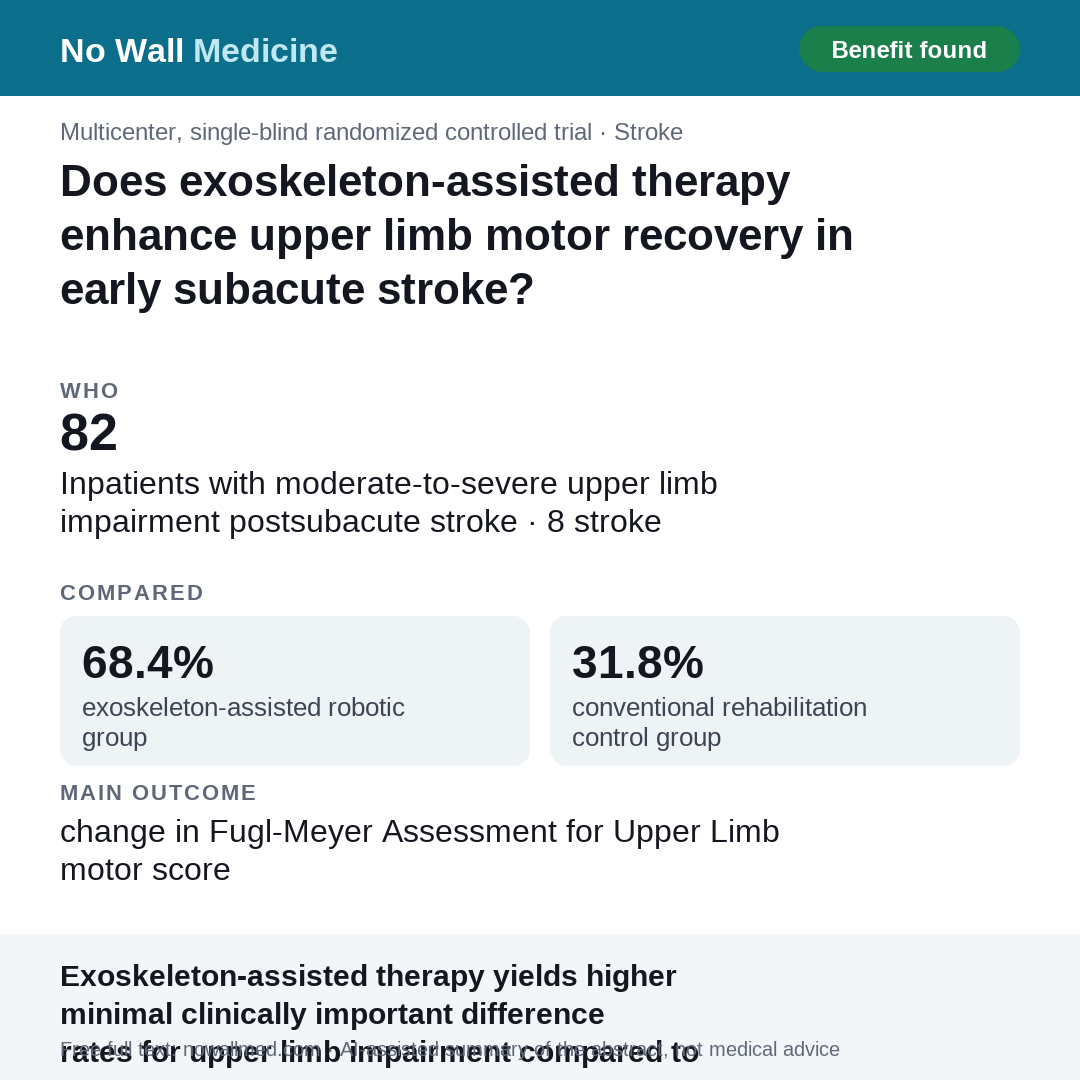
Exoskeleton-Assisted Therapy Enhances Upper Limb Motor Recovery in Early Subacute Stroke: A Multicenter, Single-Blind Randomized Controlled Trial
Multicenter, single-blind randomized controlled trialBenefit found
Does exoskeleton-assisted therapy enhance upper limb motor recovery in early subacute stroke?
Who
82
Inpatients with moderate-to-severe upper limb impairment postsubacute stroke · 8 stroke neurorehabilitation units
Compared
68.4%exoskeleton-assisted robotic group
31.8%conventional rehabilitation control group
Main outcome
change in Fugl-Meyer Assessment for Upper Limb motor score
Result: odds ratio 4.64 (95% CI 1.83-11.8)
Bottom line: Exoskeleton-assisted therapy yields higher minimal clinically important difference rates for upper limb impairment compared to conventional therapy.
Stroke · 2026-03-12Download image
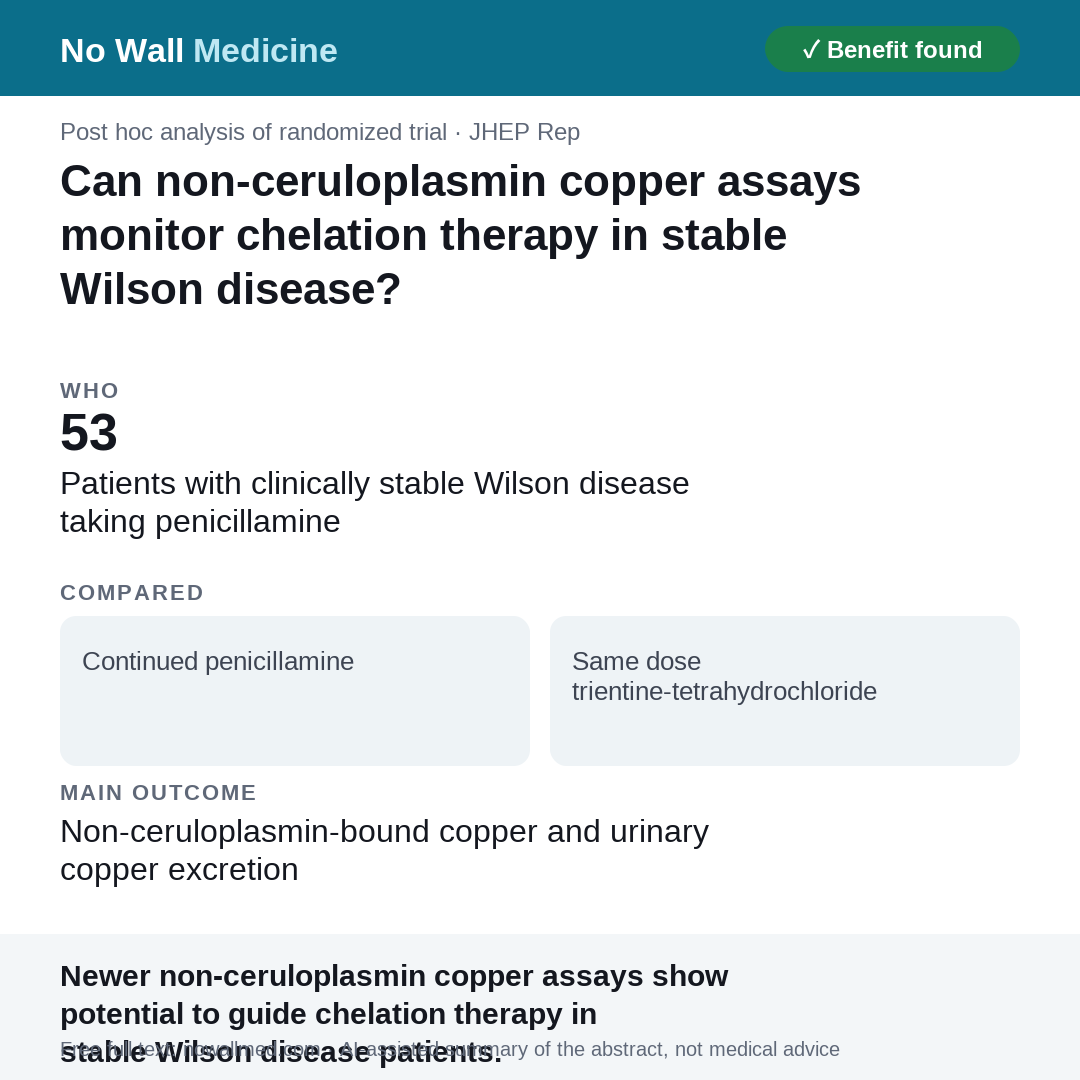
Evaluation of novel assays of non-ceruloplasmin copper to monitor chelation treatment in patients with Wilson disease
Post hoc analysis of randomized trialBenefit found
Can non-ceruloplasmin copper assays monitor chelation therapy in stable Wilson disease?
Who
53
Patients with clinically stable Wilson disease taking penicillamine
Compared
Continued penicillamine
Same dose trientine-tetrahydrochloride
Main outcome
Non-ceruloplasmin-bound copper and urinary copper excretion
Bottom line: Newer non-ceruloplasmin copper assays show potential to guide chelation therapy in stable Wilson disease patients.
JHEP Rep · 2026-03-12Download image
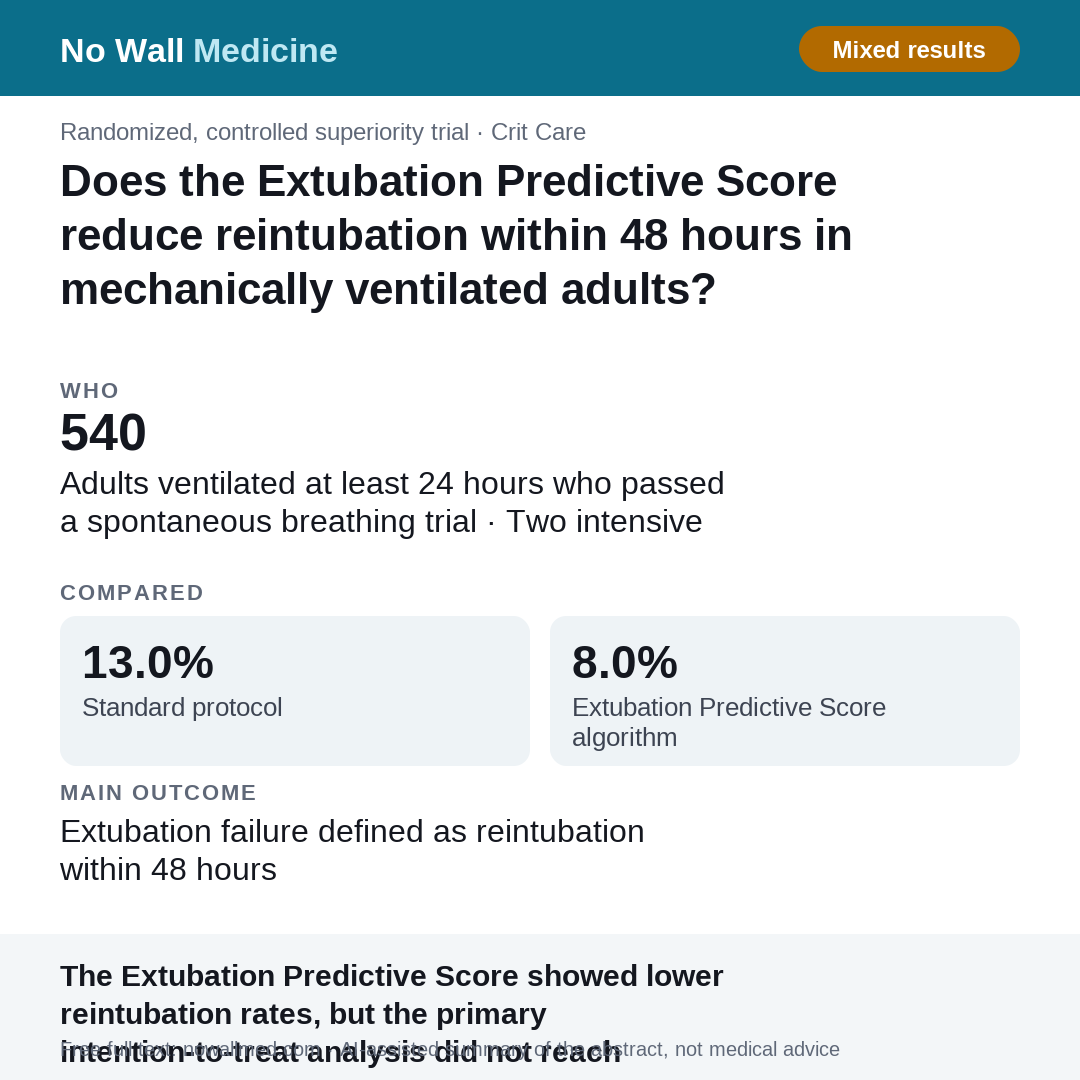
Effect of the extubation predictive score (ExPreS) on reintubation in the ICU: a randomized controlled trial
Randomized, controlled superiority trialMixed results
Does the Extubation Predictive Score reduce reintubation within 48 hours in mechanically ventilated adults?
Who
540
Adults ventilated at least 24 hours who passed a spontaneous breathing trial · Two intensive care units of a Brazilian university hospital
Compared
13.0%Standard protocol
8.0%Extubation Predictive Score algorithm
Main outcome
Extubation failure defined as reintubation within 48 hours
Bottom line: The Extubation Predictive Score showed lower reintubation rates, but the primary intention-to-treat analysis did not reach statistical significance.
Limitation: Findings warrant confirmation in larger multicenter studies.
Crit Care · 2026-03-12Download image
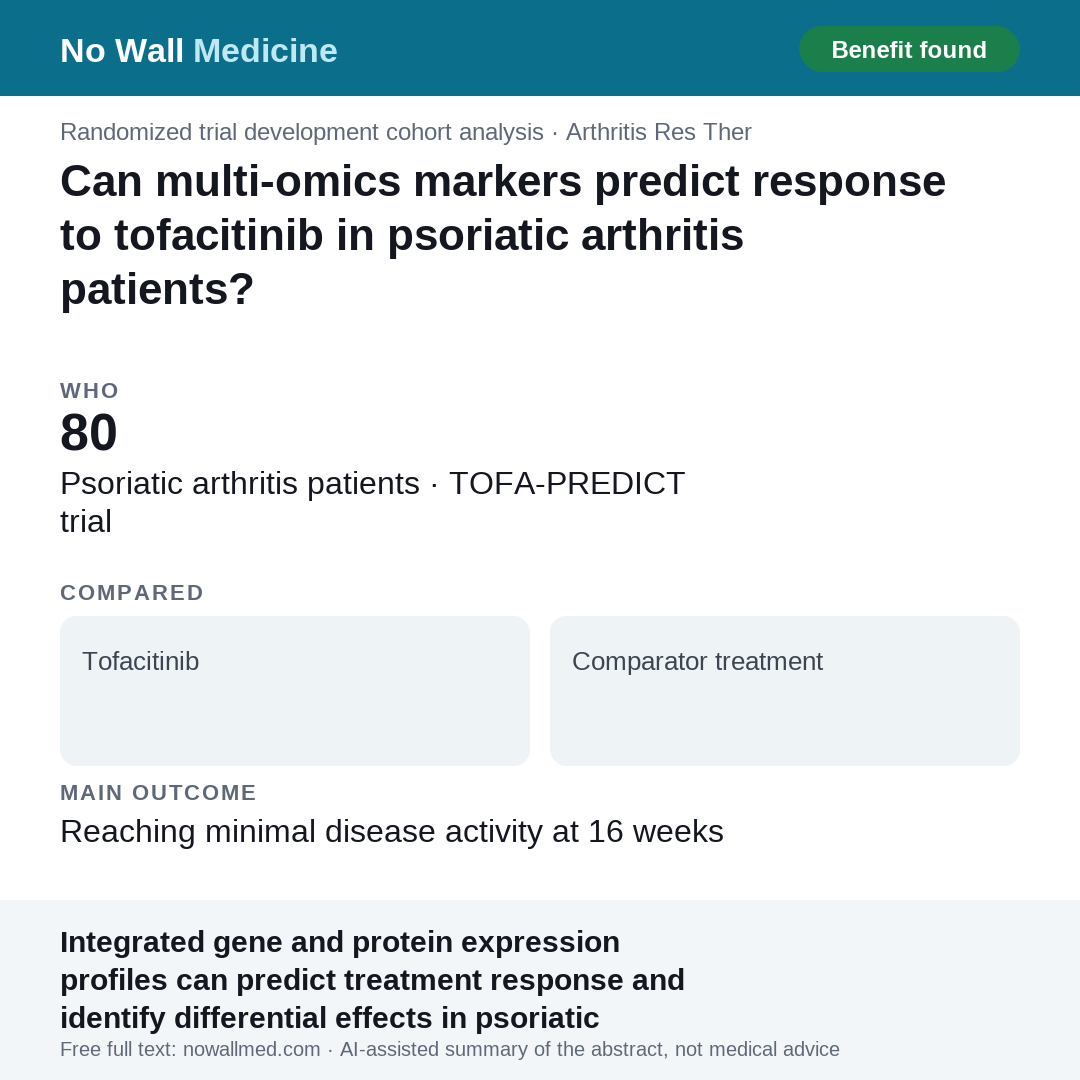
Predicting clinical response in psoriatic arthritis through integrative analysis of transcriptomics and proteomics
Randomized trial development cohort analysisKey finding
Can multi-omics markers predict response to tofacitinib in psoriatic arthritis patients?
Who
80
Psoriatic arthritis patients · TOFA-PREDICT trial
Compared
Tofacitinib
Comparator treatment
Main outcome
Reaching minimal disease activity at 16 weeks
Result: AUC 0.70 ± 0.19
Bottom line: Integrated gene and protein expression profiles can predict treatment response and identify differential effects in psoriatic arthritis.
Arthritis Res Ther · 2026-03-12Download image
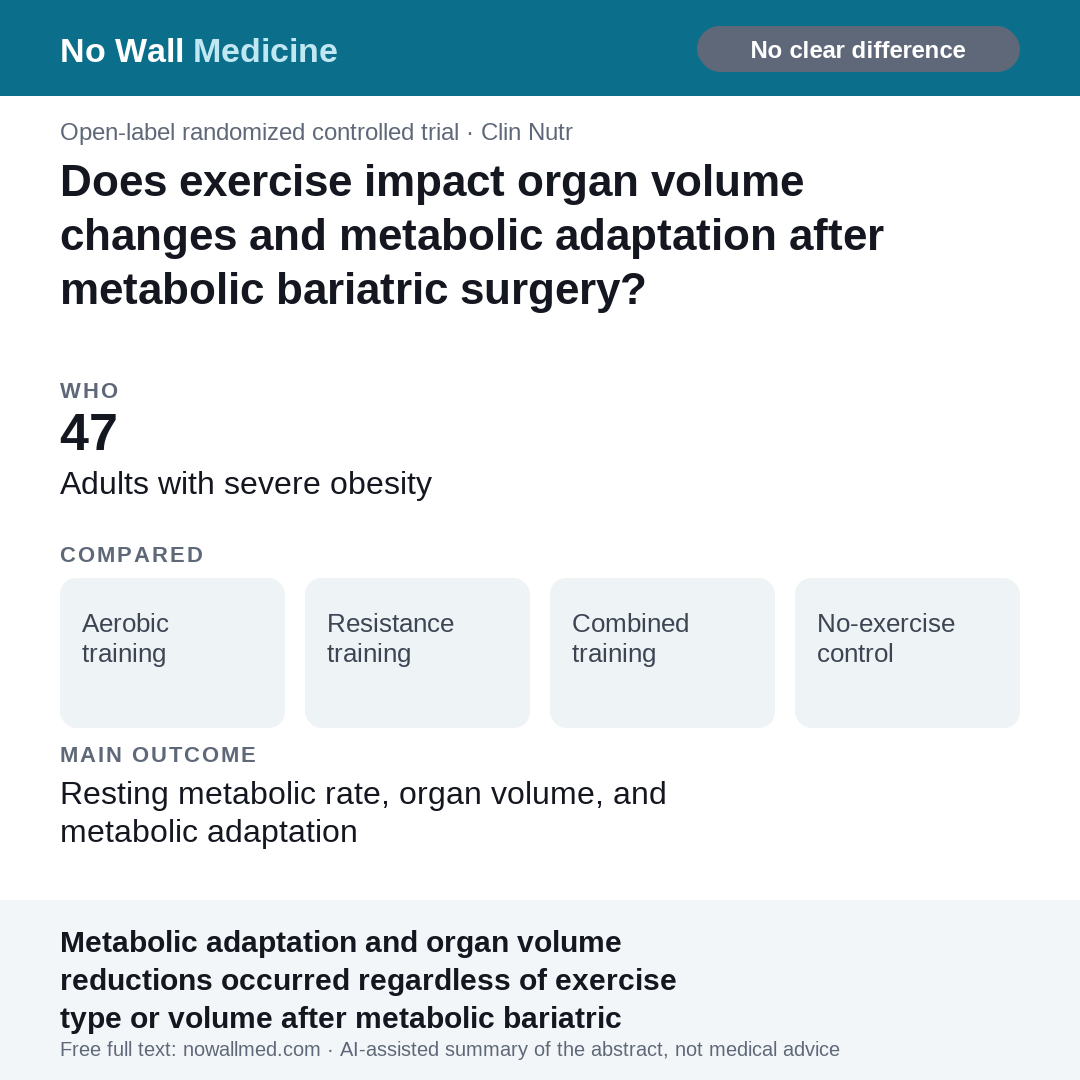
Liver and Kidney volume Reduction May Underlie Metabolic Adaptation After Metabolic Bariatric Surgery: A sub-study of the "POWER" Randomized clinical trial
Open-label randomized controlled trialNo clear difference
Does exercise impact organ volume changes and metabolic adaptation after metabolic bariatric surgery?
Who
47
Adults with severe obesity
Compared
Aerobic training
Resistance training
Combined training
No-exercise control
Main outcome
Resting metabolic rate, organ volume, and metabolic adaptation
Bottom line: Metabolic adaptation and organ volume reductions occurred regardless of exercise type or volume after metabolic bariatric surgery.
Clin Nutr · 2026-03-11Download image
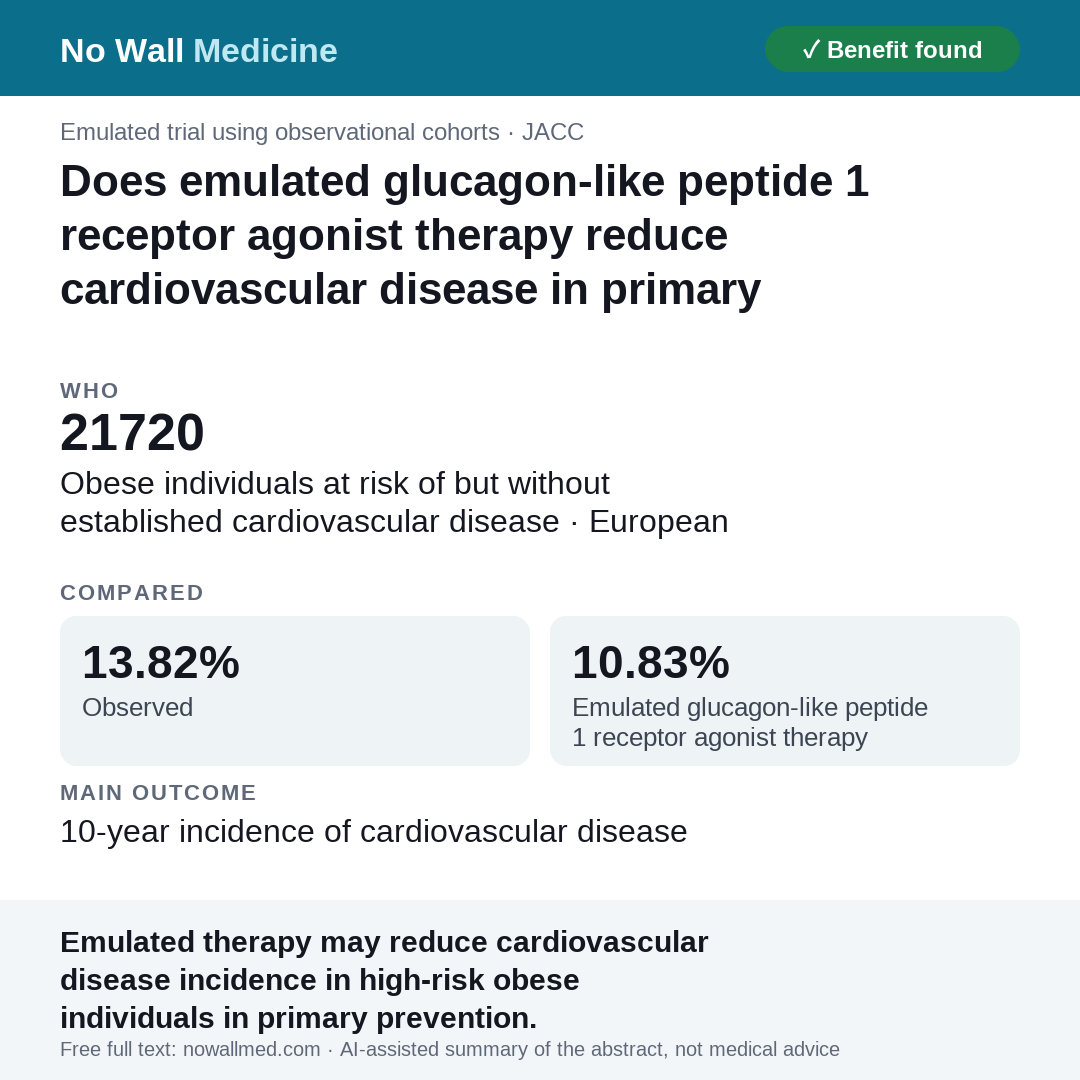
Emulated Effects of Glucagon-Like Peptide 1 Receptor Agonist Therapy in the General Population
Emulated trial using observational cohortsBenefit found
Does emulated glucagon-like peptide 1 receptor agonist therapy reduce cardiovascular disease in primary prevention?
Who
21720
Obese individuals at risk of but without established cardiovascular disease · European and North American cohorts
Compared
13.82%Observed (95% CI: 11.94%-15.71%)
10.83%Emulated glucagon-like peptide 1 receptor agonist therapy (95% CI: 9.27%-12.39%)
Main outcome
10-year incidence of cardiovascular disease
Result: absolute reduction of 2.99% (95% CI: 2.67%-3.31%)
Bottom line: Emulated therapy may reduce cardiovascular disease incidence in high-risk obese individuals in primary prevention.
Limitation: Modeled risk reductions were attenuated in nonobese and lower risk groups and with lower compliance.
JACC · 2026-03-11Download image
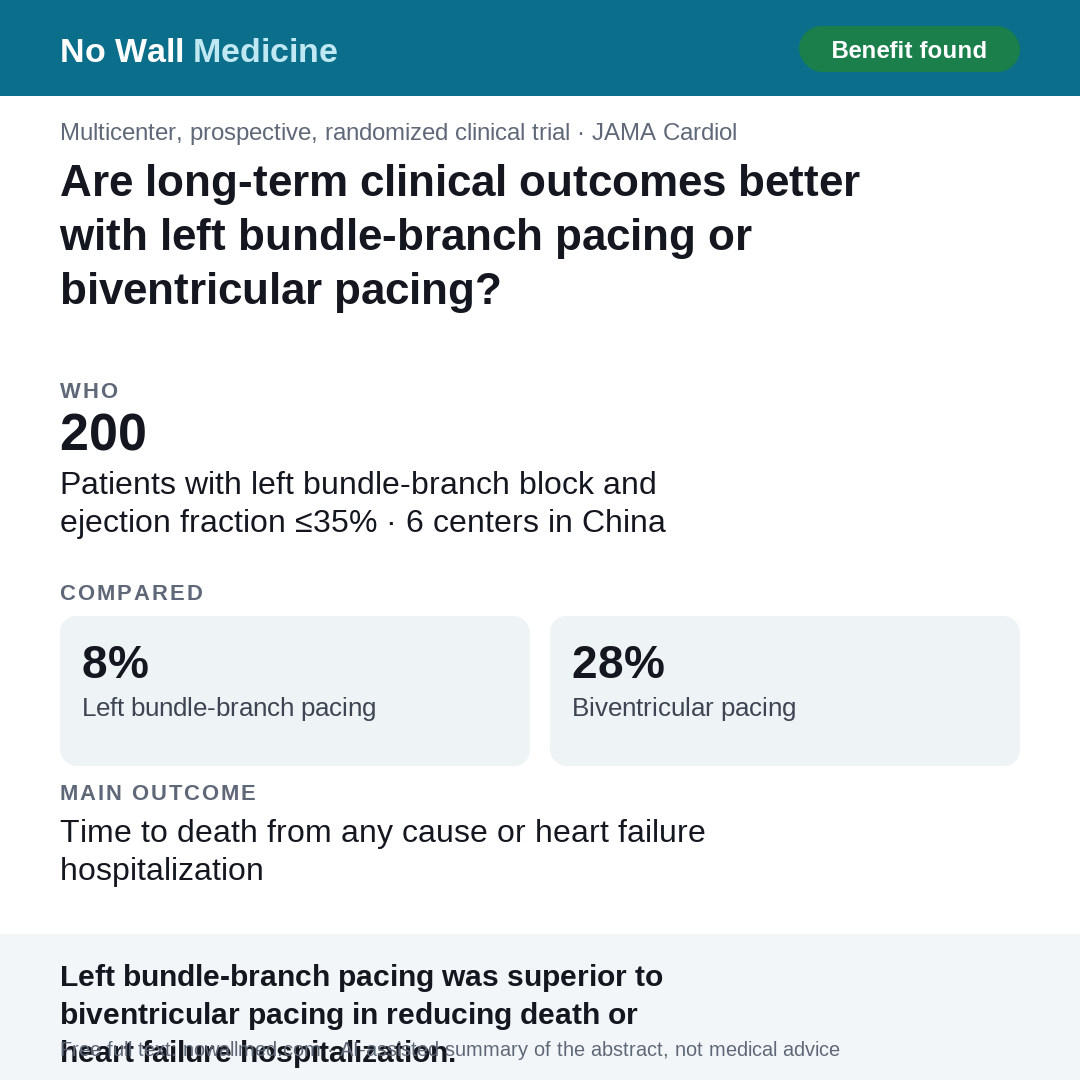
Long-Term Outcomes of Left Bundle-Branch Pacing vs Biventricular Pacing in Heart Failure: The HeartSync-LBBP Randomized Clinical Trial
Multicenter, prospective, randomized clinical trialBenefit found
Are long-term clinical outcomes better with left bundle-branch pacing or biventricular pacing?
Who
200
Patients with left bundle-branch block and ejection fraction ≤35% · 6 centers in China
Compared
8%Left bundle-branch pacing
28%Biventricular pacing
Main outcome
Time to death from any cause or heart failure hospitalization
Result: hazard ratio 0.26 (95% CI, 0.12-0.57)
Bottom line: Left bundle-branch pacing was superior to biventricular pacing in reducing death or heart failure hospitalization.
JAMA Cardiol · 2026-03-11Download image
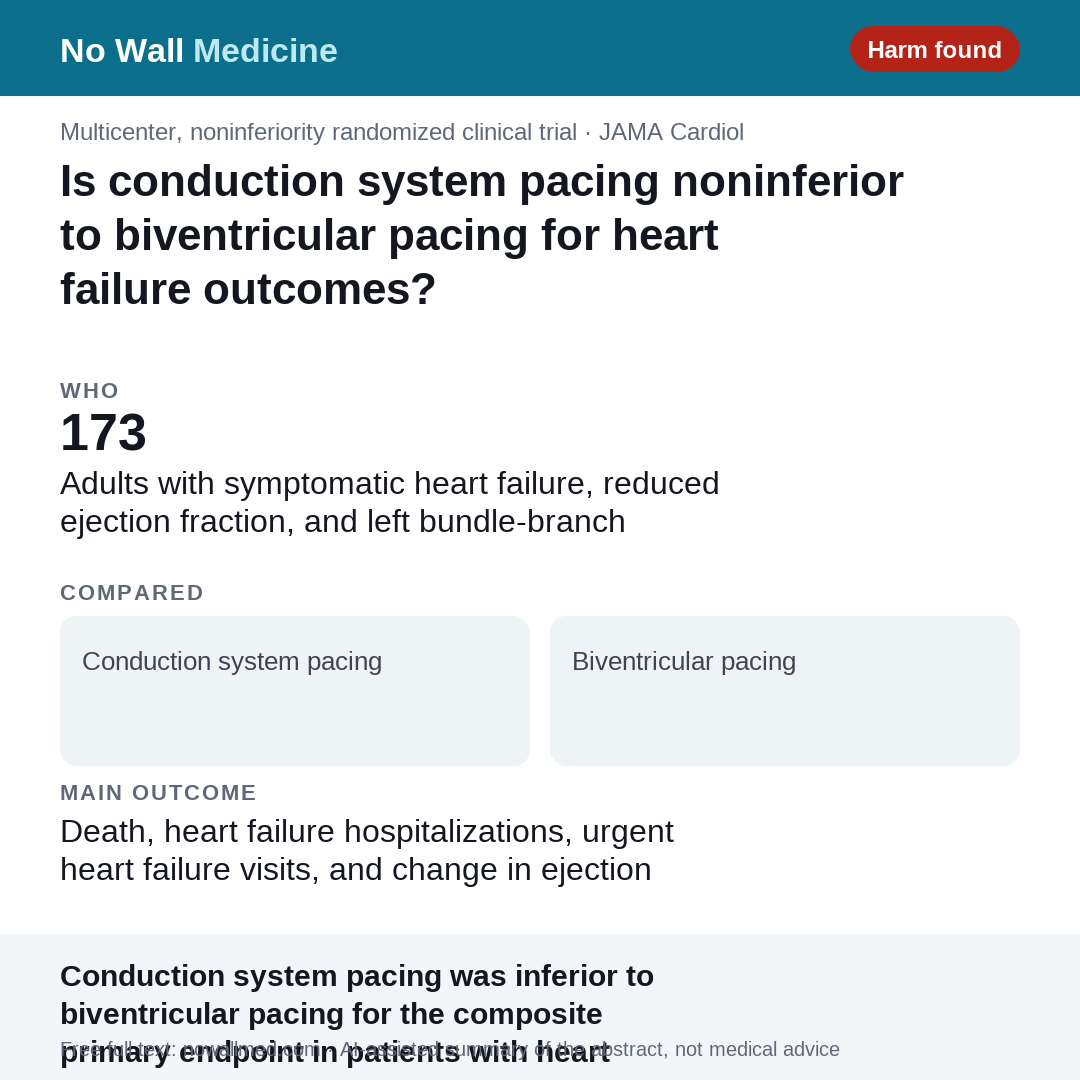
Conduction System vs Biventricular Pacing in Heart Failure: The PhysioSync-HF Randomized Clinical Trial
Multicenter, noninferiority randomized clinical trialHarm found
Is conduction system pacing noninferior to biventricular pacing for heart failure outcomes?
Who
173
Adults with symptomatic heart failure, reduced ejection fraction, and left bundle-branch block · 14 hospitals across all regions of Brazil
Compared
Conduction system pacing
Biventricular pacing
Main outcome
Death, heart failure hospitalizations, urgent heart failure visits, and change in ejection fraction
Result: odds ratio 2.36 (95% CI, 1.37-4.06)
Bottom line: Conduction system pacing was inferior to biventricular pacing for the composite primary endpoint in patients with heart failure.
JAMA Cardiol · 2026-03-11Download image
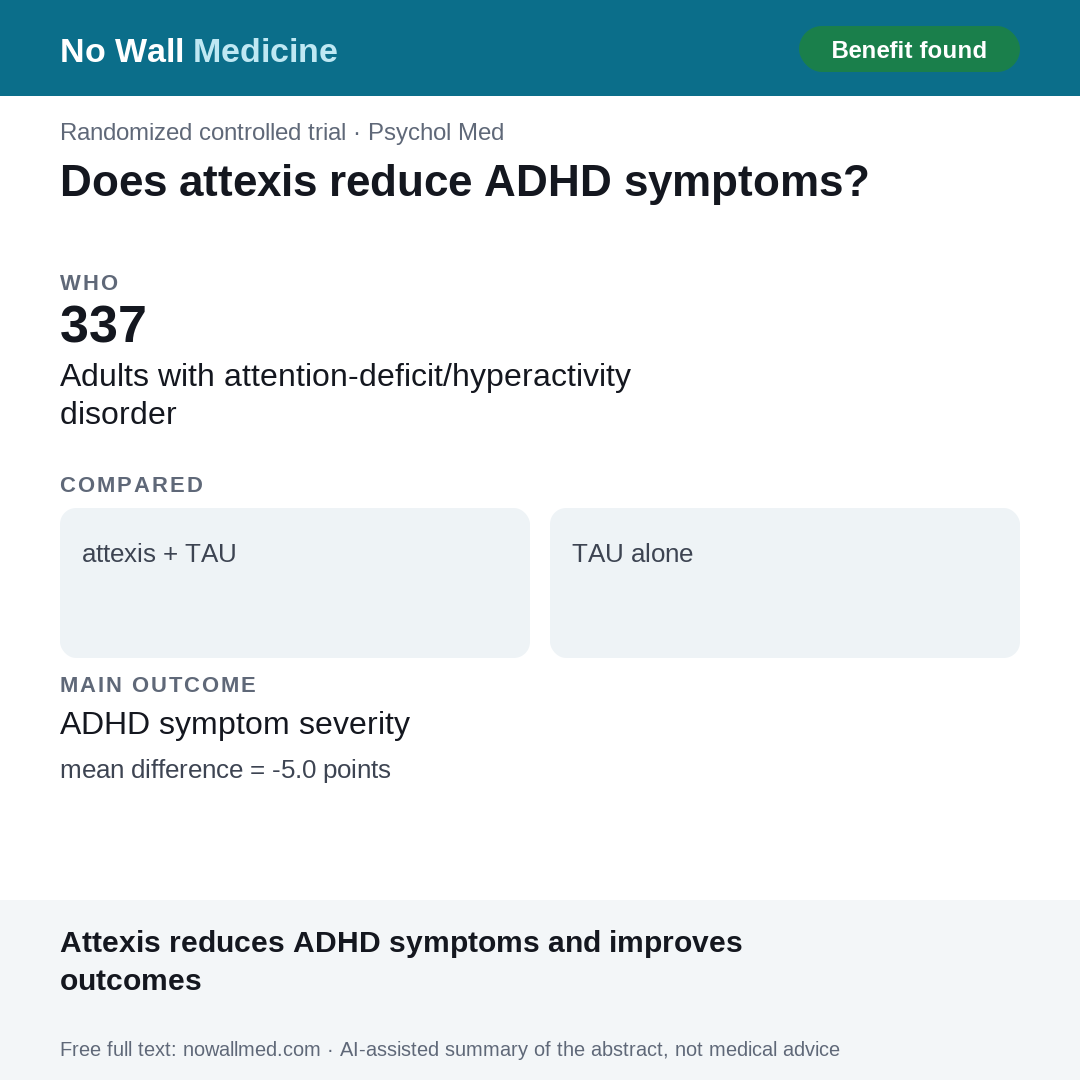
Effectiveness of attexis, a digital intervention based on cognitive behavioral therapy for adults with ADHD: a randomized controlled trial
Randomized controlled trialBenefit found
Does attexis reduce ADHD symptoms?
Who
337
Adults with attention-deficit/hyperactivity disorder
Compared
attexis + TAU
TAU alone
Main outcome
ADHD symptom severity
Result: mean difference = -5.0 points
Bottom line: Attexis reduces ADHD symptoms and improves outcomes
Psychol Med · 2026-03-11Download image
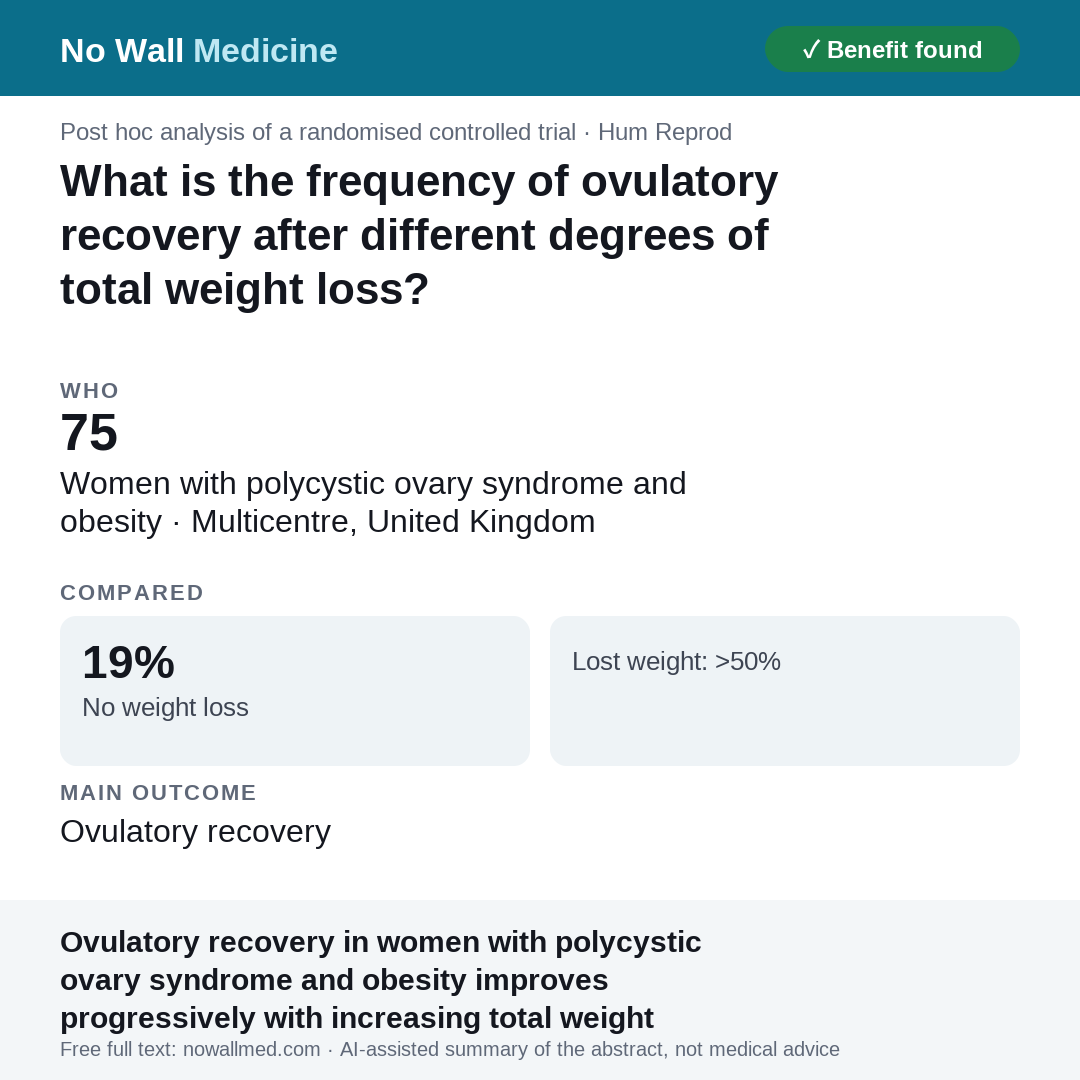
Ovulatory Recovery following weight loss in women with polycystic ovary syndrome and obesity: a post hoc analysis of the BAMBINI randomised controlled trial
Post hoc analysis of a randomised controlled trialBenefit found
What is the frequency of ovulatory recovery after different degrees of total weight loss?
Who
75
Women with polycystic ovary syndrome and obesity · Multicentre, United Kingdom
Compared
19%No weight loss
Lost weight: >50%
Main outcome
Ovulatory recovery
Result: OR 0.944, 95% CI 0.900-0.990
Bottom line: Ovulatory recovery in women with polycystic ovary syndrome and obesity improves progressively with increasing total weight loss.
Limitation: Not powered to detect potential adverse reproductive effects at higher degrees of total weight loss.
Funded by: The Jon Moulton Charity Trust and National Institute of Health Research
Hum Reprod · 2026-03-11Download image
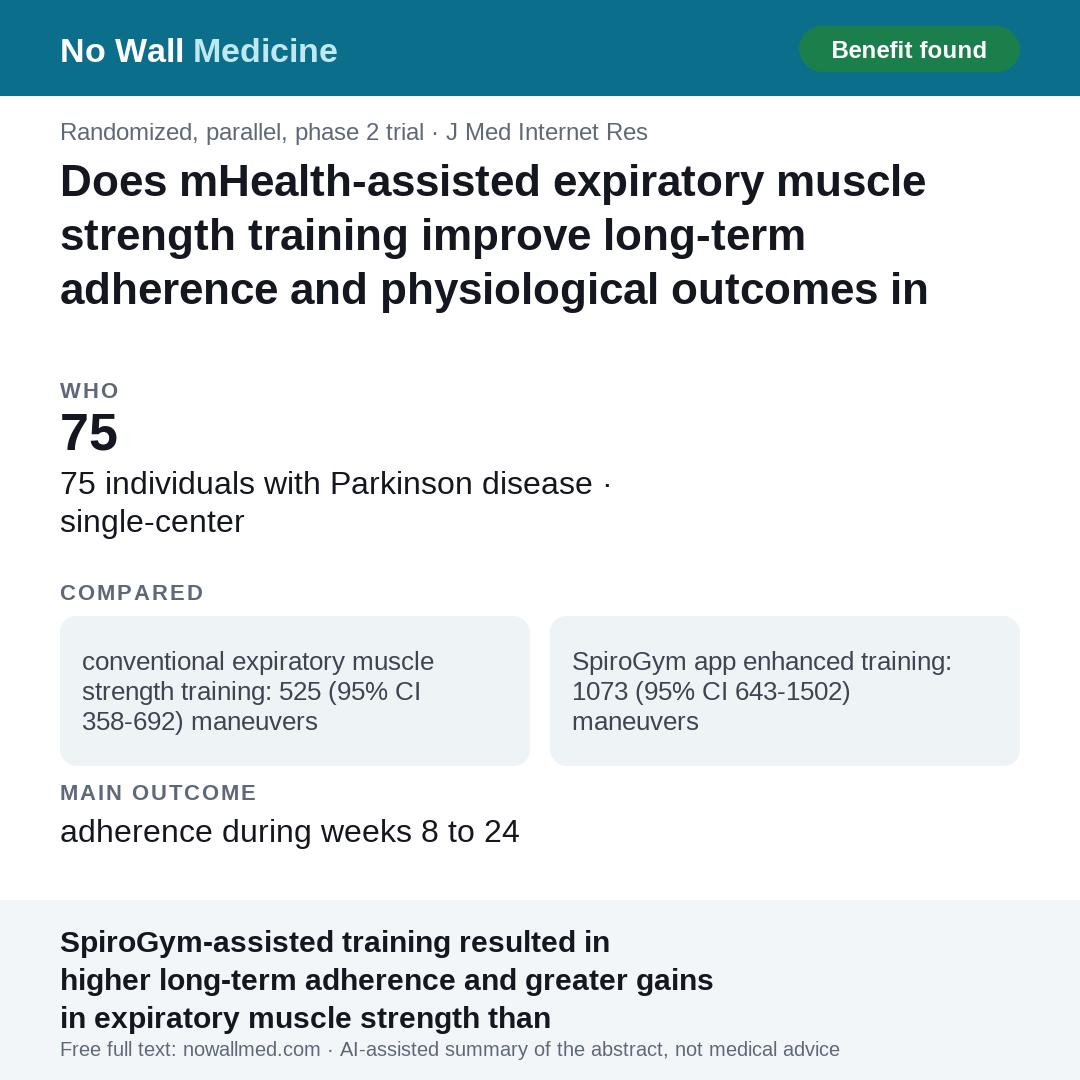
Enhancing Adherence to Home-Based Expiratory Muscle Strength Training in Parkinson Disease: Randomized Controlled Trial of an mHealth Intervention
Randomized, parallel, phase 2 trialEarly signal
Does mHealth-assisted expiratory muscle strength training improve long-term adherence and physiological outcomes in Parkinson disease?
Who
75
75 individuals with Parkinson disease · single-center
Compared
conventional expiratory muscle strength training: 525 (95% CI 358-692) maneuvers
SpiroGym app enhanced training: 1073 (95% CI 643-1502) maneuvers
Main outcome
adherence during weeks 8 to 24
Result: β=496.9, 95% CI 130.7-863.3
Bottom line: SpiroGym-assisted training resulted in higher long-term adherence and greater gains in expiratory muscle strength than conventional training.
J Med Internet Res · 2026-03-11Download image
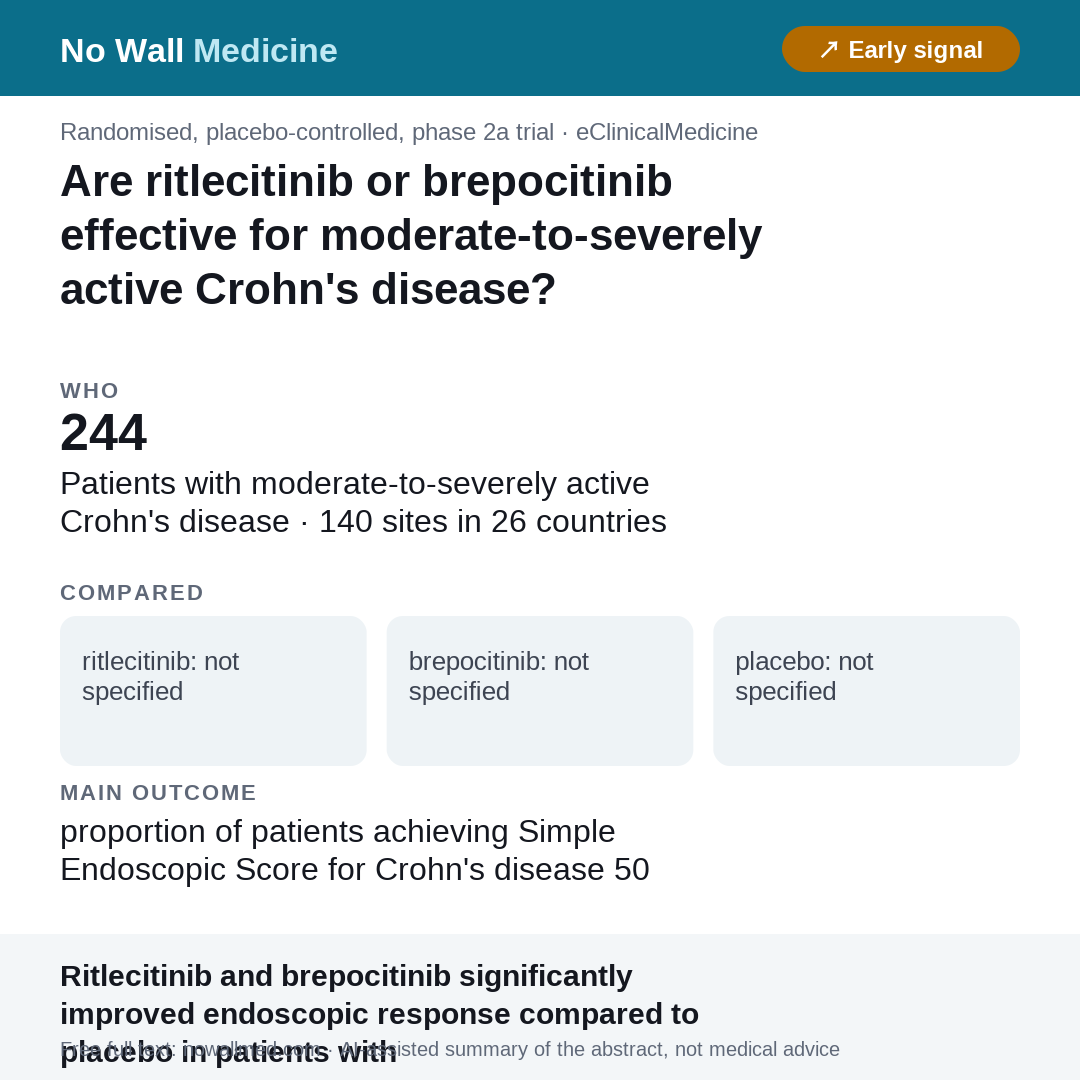
Once-daily oral ritlecitinib or brepocitinib versus placebo in patients with moderate-to-severely active Crohn's disease (PIZZICATO): an international, randomised, phase 2a trial
Randomised, placebo-controlled, phase 2a trialEarly signal
Are ritlecitinib or brepocitinib effective for moderate-to-severely active Crohn's disease?
Who
244
Patients with moderate-to-severely active Crohn's disease · 140 sites in 26 countries
Compared
ritlecitinib: not specified
brepocitinib: not specified
placebo: not specified
Main outcome
proportion of patients achieving Simple Endoscopic Score for Crohn's disease 50
Result: difference versus placebo: 14.3% (90% CI 4.0-24.5) for ritlecitinib; 21.4% (90% CI 10.0-32.9) for brepocitinib
Bottom line: Ritlecitinib and brepocitinib significantly improved endoscopic response compared to placebo in patients with moderate-to-severely active Crohn's disease.
eClinicalMedicine · 2026-03-10Download image
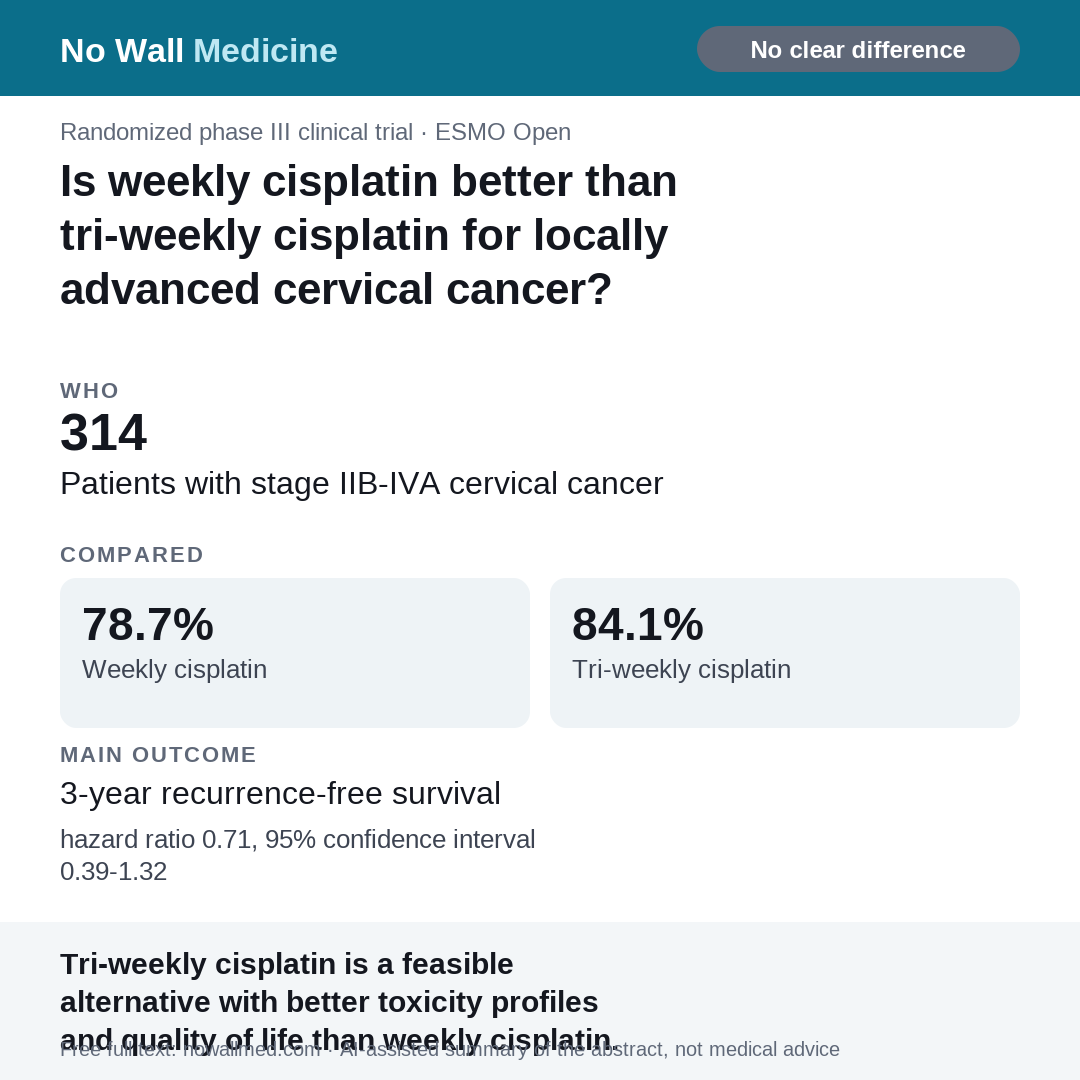
A randomized phase III clinical trial of weekly versus tri-weekly cisplatin-based chemoradiotherapy for locally advanced cervical cancer: results of the TACO (GCIG/KGOG 1027/THAI 2012) study
Randomized phase III clinical trialNo clear difference
Is weekly cisplatin better than tri-weekly cisplatin for locally advanced cervical cancer?
Who
314
Patients with stage IIB-IVA cervical cancer
Compared
78.7%Weekly cisplatin
84.1%Tri-weekly cisplatin
Main outcome
3-year recurrence-free survival
Result: hazard ratio 0.71, 95% confidence interval 0.39-1.32
Bottom line: Tri-weekly cisplatin is a feasible alternative with better toxicity profiles and quality of life than weekly cisplatin.
ESMO Open · 2026-03-10Download image
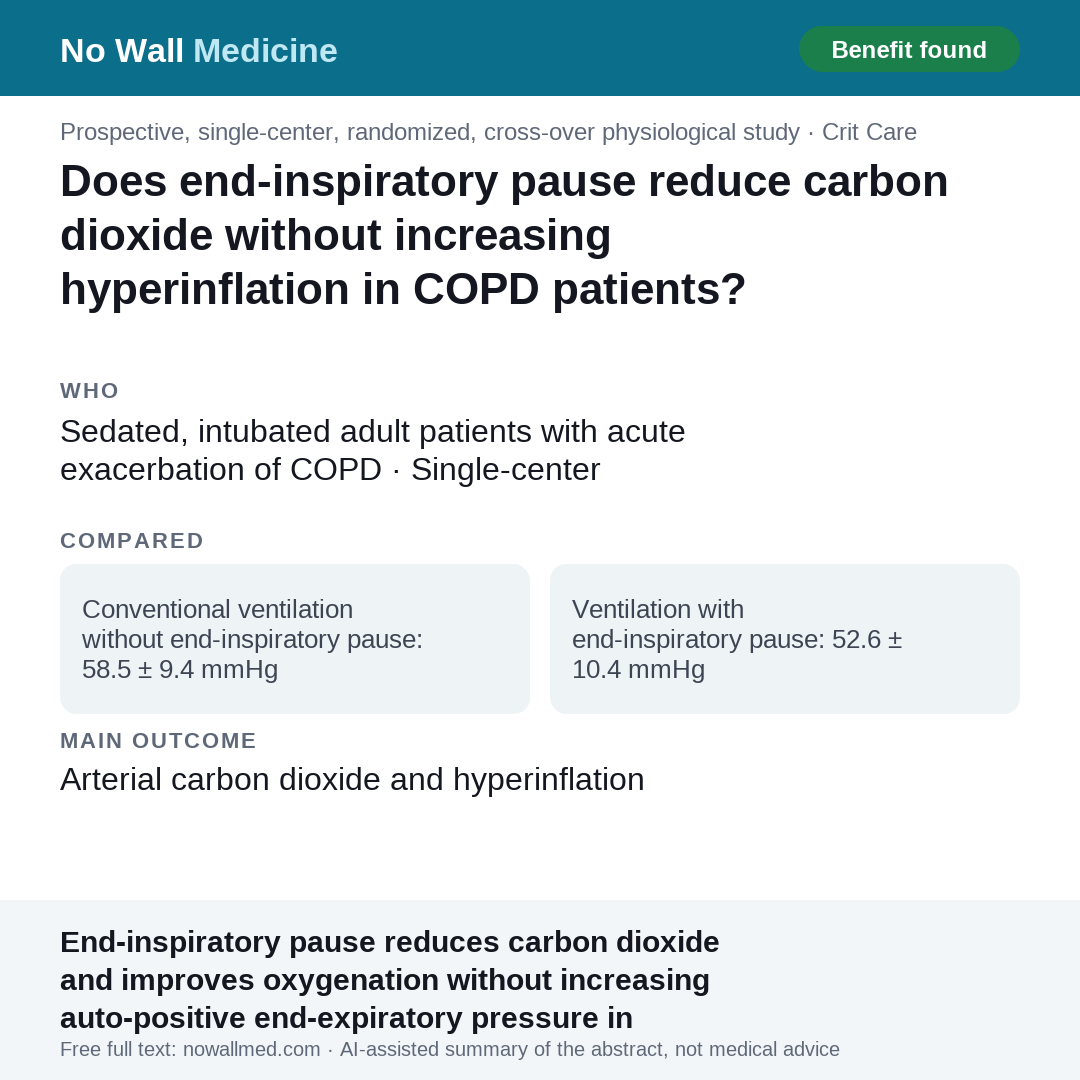
End-inspiratory pause enhances ventilation efficiency without increasing autoPEEP in patients with COPD during controlled ventilation
Prospective, single-center, randomized, cross-over physiological studyBenefit found
Does end-inspiratory pause reduce carbon dioxide without increasing hyperinflation in COPD patients?
Who
Sedated, intubated adult patients with acute exacerbation of COPD · Single-center
Compared
Conventional ventilation without end-inspiratory pause: 58.5 ± 9.4 mmHg
Ventilation with end-inspiratory pause: 52.6 ± 10.4 mmHg
Main outcome
Arterial carbon dioxide and hyperinflation
Bottom line: End-inspiratory pause reduces carbon dioxide and improves oxygenation without increasing auto-positive end-expiratory pressure in COPD patients.
Crit Care · 2026-03-10Download image
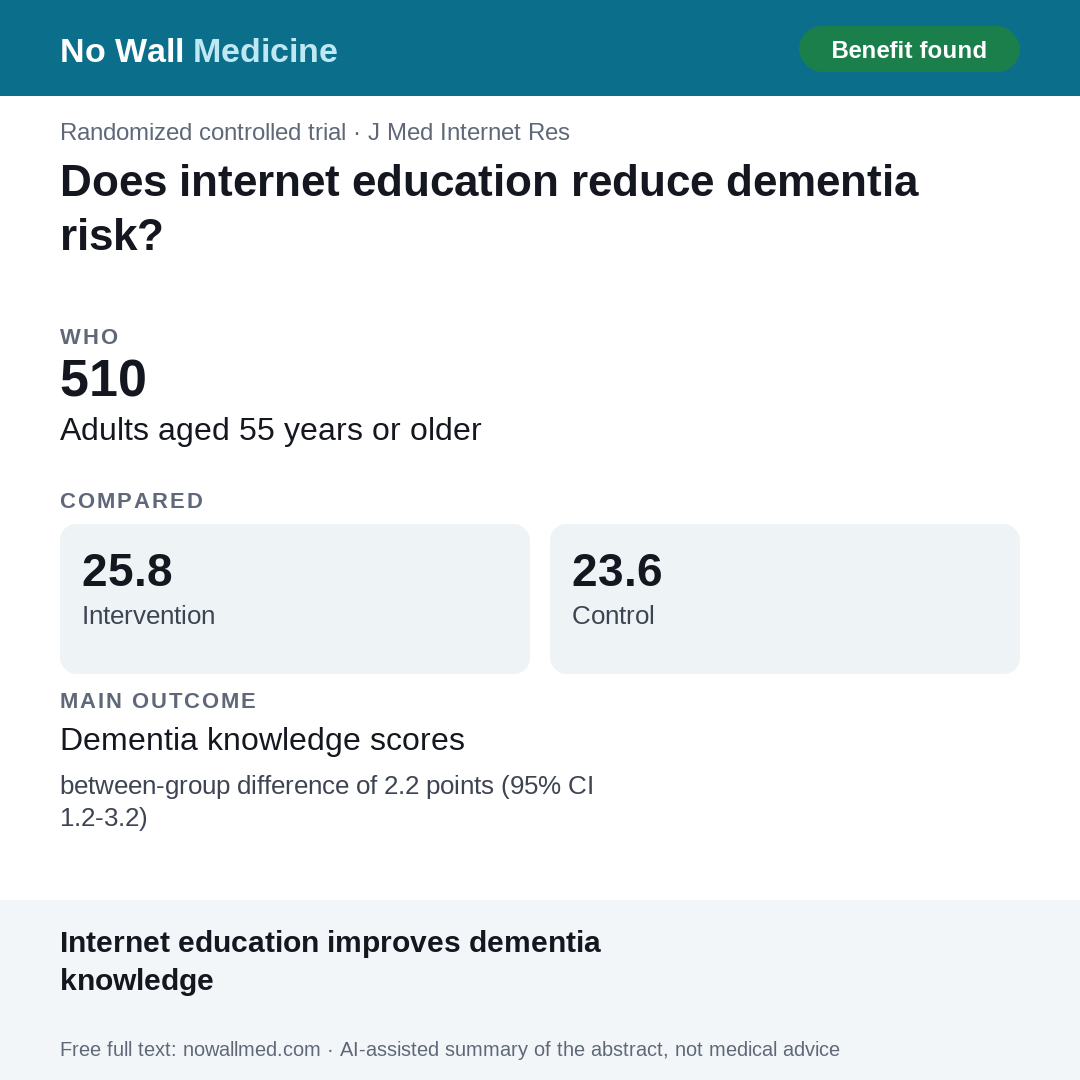
Effects of Internet-Based Dementia Risk Reduction Education on Risk and Protective Factor Knowledge, Intentions, and Health Behaviors: Randomized Controlled Trial
Randomized controlled trialBenefit found
Does internet education reduce dementia risk?
Who
510
Adults aged 55 years or older
Compared
25.8Intervention (SD 4.5)
23.6Control (SD 5.1)
Main outcome
Dementia knowledge scores
Result: between-group difference of 2.2 points (95% CI 1.2-3.2)
Bottom line: Internet education improves dementia knowledge
J Med Internet Res · 2026-03-10Download image
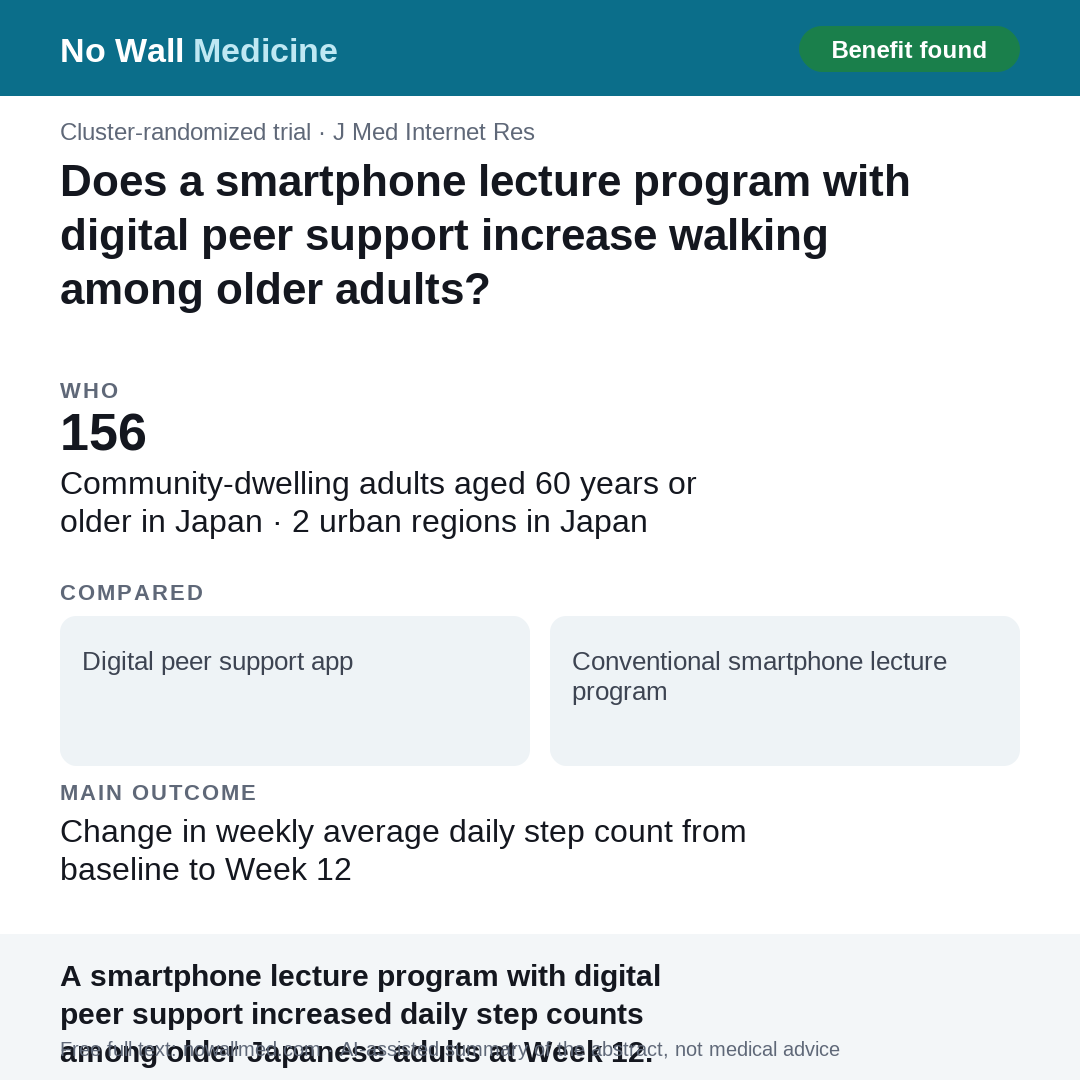
Digital Peer Support to Increase Walking Among Older Adults: Cluster Randomized Trial
Cluster-randomized trialBenefit found
Does a smartphone lecture program with digital peer support increase walking among older adults?
Who
156
Community-dwelling adults aged 60 years or older in Japan · 2 urban regions in Japan
Compared
Digital peer support app
Conventional smartphone lecture program
Main outcome
Change in weekly average daily step count from baseline to Week 12
Result: difference=579, 95% CI 36-1123
Bottom line: A smartphone lecture program with digital peer support increased daily step counts among older Japanese adults at Week 12.
Limitation: Future research should investigate long-term maintenance and subpopulation responses.
J Med Internet Res · 2026-03-10Download image