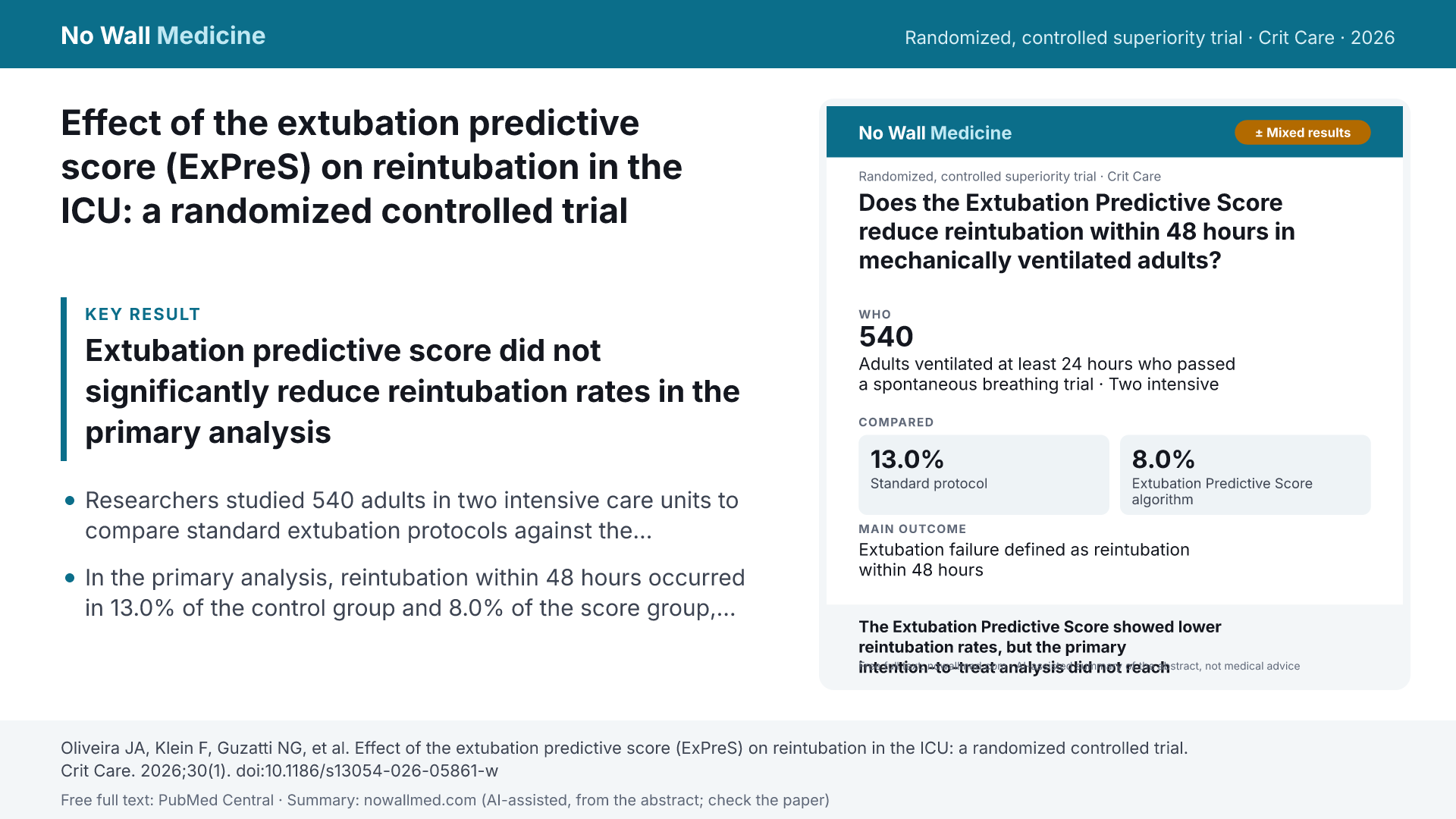
Extubation predictive score did not significantly reduce reintubation rates in the primary analysis
Effect of the extubation predictive score (ExPreS) on reintubation in the ICU: a randomized controlled trial
Randomized, controlled superiority trialMixed results
Does the Extubation Predictive Score reduce reintubation within 48 hours in mechanically ventilated adults?
Who
540
Adults ventilated at least 24 hours who passed a spontaneous breathing trial · Two intensive care units of a Brazilian university hospital
Compared
13.0%Standard protocol
8.0%Extubation Predictive Score algorithm
Main outcome
Extubation failure defined as reintubation within 48 hours
Bottom line: The Extubation Predictive Score showed lower reintubation rates, but the primary intention-to-treat analysis did not reach statistical significance.
Limitation: Findings warrant confirmation in larger multicenter studies.
Crit Care · 2026-03-12 · Save PNG
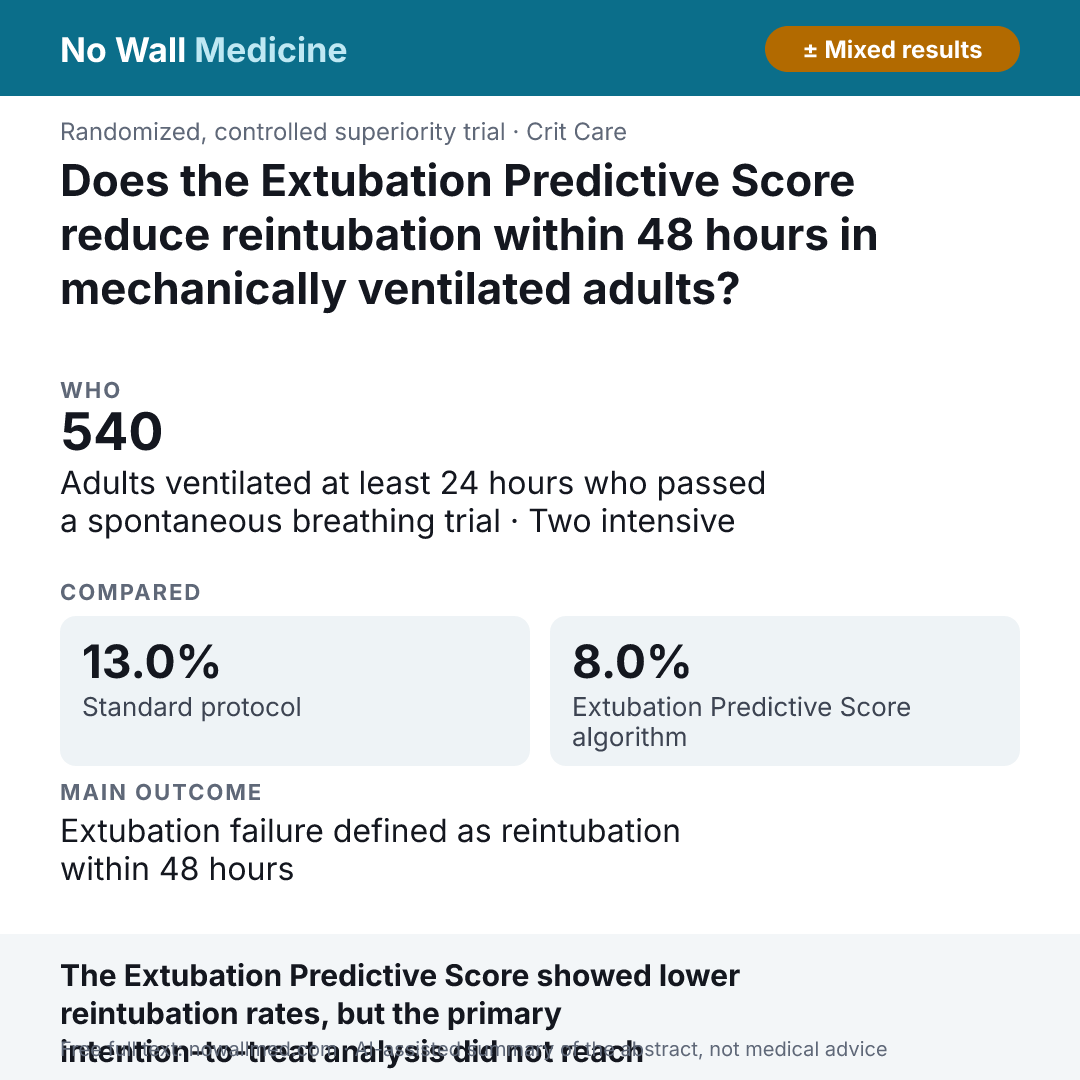
Clinical question: Does the Extubation Predictive Score reduce reintubation within 48 hours in mechanically ventilated adults?
Why it matters: Clinicians lack randomized controlled trial evidence on whether using the Extubation Predictive Score as a decision-support tool reduces reintubation after removing breathing tubes.
Key points
- Researchers studied 540 adults in two intensive care units to compare standard extubation protocols against the Extubation Predictive Score algorithm.
- In the primary analysis, reintubation within 48 hours occurred in 13.0% of the control group and 8.0% of the score group, but the result was not statistically significant (p = 0.070).
- A per-protocol analysis showed reintubation rates of 12.9% for controls and 7.3% for the score group (p = 0.042), while no differences were found in mortality or length of stay.
Limitation the authors note: The authors state that these findings warrant confirmation in larger multicenter studies.
Headline and key points written with AI from the paper’s abstract, with every number checked against it. Read the paper before relying on them.
Was this summary helpful?
Subject terms
Headline, design, result, key points, caveat and citation as plain text.
Cite this article
Oliveira JA, Klein F, Guzatti NG, et al. Effect of the extubation predictive score (ExPreS) on reintubation in the ICU: a randomized controlled trial. Crit Care. 2026;30(1). doi:10.1186/s13054-026-05861-w
Spotted a mistake? Suggest a correction