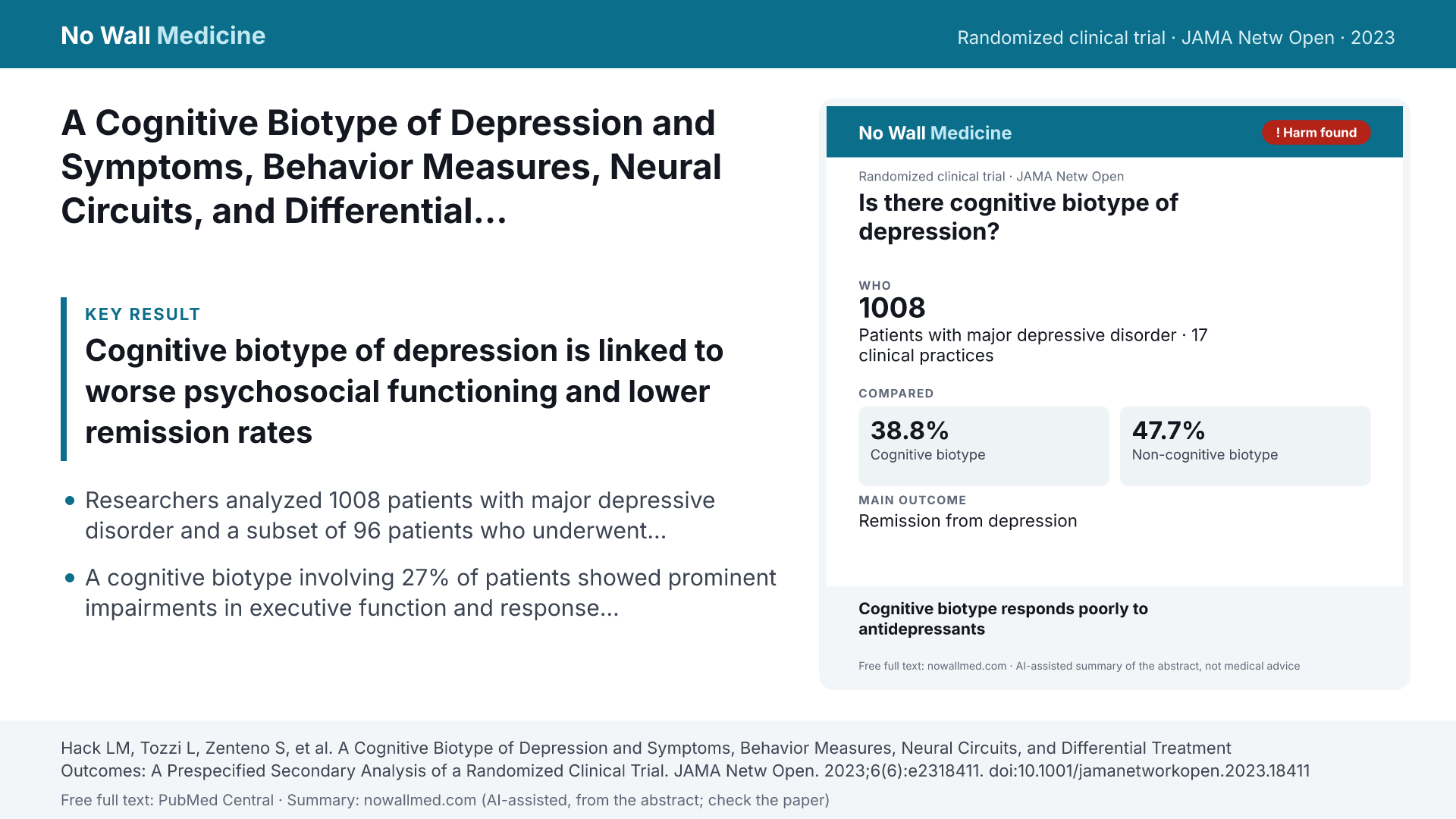
Cognitive biotype of depression is linked to worse psychosocial functioning and lower remission rates
A Cognitive Biotype of Depression and Symptoms, Behavior Measures, Neural Circuits, and Differential Treatment Outcomes: A Prespecified Secondary Analysis of a Randomized Clinical Trial
Randomized clinical trialHarm found
Is there cognitive biotype of depression?
Who
1008
Patients with major depressive disorder · 17 clinical practices
Compared
38.8%Cognitive biotype (73/188)
47.7%Non-cognitive biotype (250/524)
Main outcome
Remission from depression
Bottom line: Cognitive biotype responds poorly to antidepressants
JAMA Netw Open · 2023-06-01Download image
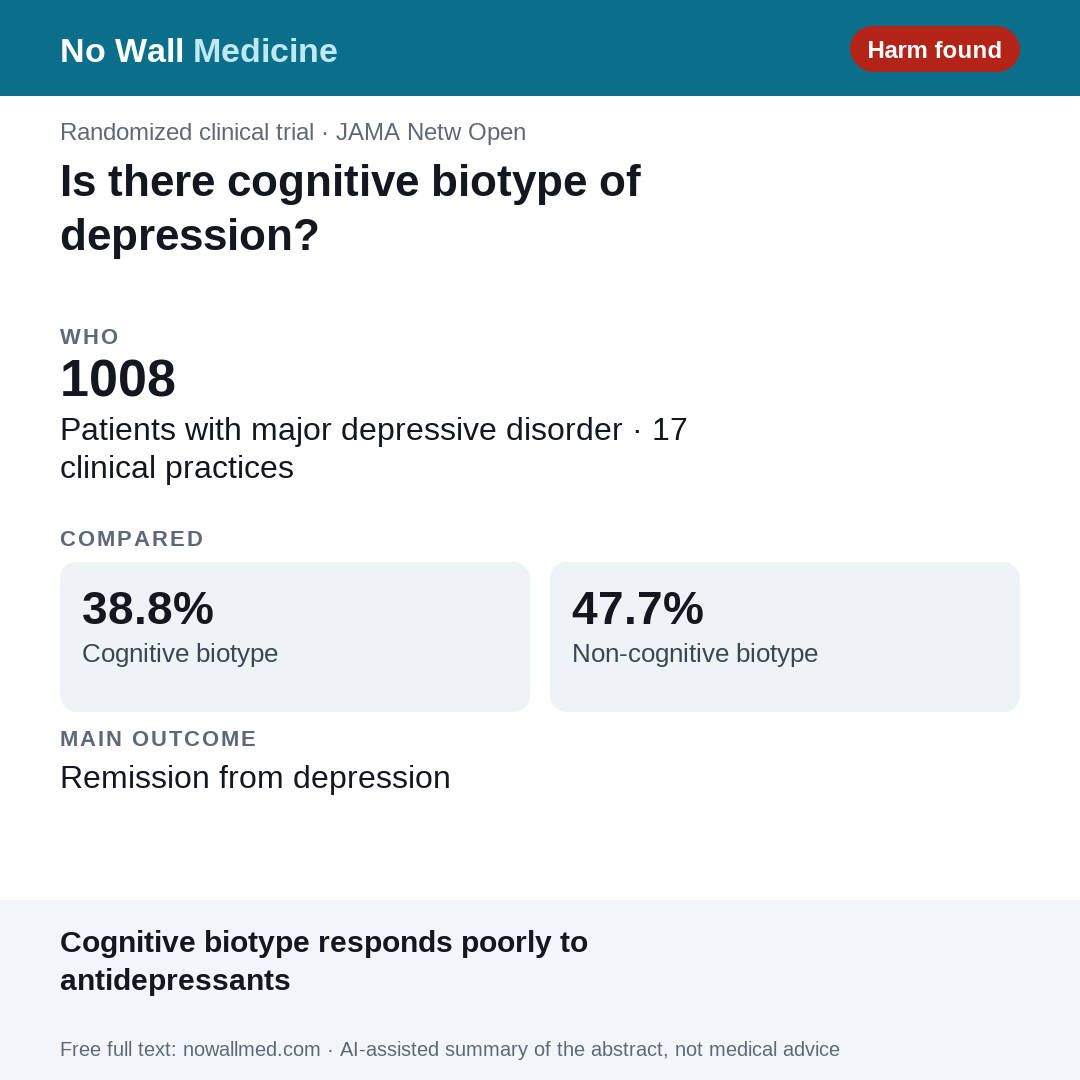
Clinical question: Is there cognitive biotype of depression?
Why it matters: It was unknown if specific cognitive impairments combine to identify a distinct subgroup of depression patients and how these impairments relate to treatment outcomes.
Key points
- Researchers analyzed 1008 patients with major depressive disorder and a subset of 96 patients who underwent functional magnetic resonance imaging.
- A cognitive biotype involving 27% of patients showed prominent impairments in executive function and response inhibition, lower remission rates (38.8% vs 47.7%), and reduced activation in the right dorsolateral prefrontal cortex.
- Changes in cognition mediated the extent of symptom and functional change, but changes in symptoms did not mediate changes in cognition.
Headline and key points written with AI from the paper’s abstract, with every number checked against it. Read the paper before relying on them.
Was this summary helpful?
Subject terms
Cite this article
Hack LM, Tozzi L, Zenteno S, Olmsted AM, Hilton R, Jubeir J. A Cognitive Biotype of Depression and Symptoms, Behavior Measures, Neural Circuits, and Differential Treatment Outcomes: A Prespecified Secondary Analysis of a Randomized Clinical Trial. JAMA Netw Open. 2023. doi:10.1001/jamanetworkopen.2023.18411
Spotted a mistake? Suggest a correction