Genetic variations are linked to how blood lipid levels change after different dietary interventions
A combination of single nucleotide polymorphisms is associated with the interindividual variability in the blood lipid response to dietary fatty acid consumption in a randomized clinical trial
Multicenter randomized crossover trialMixed results
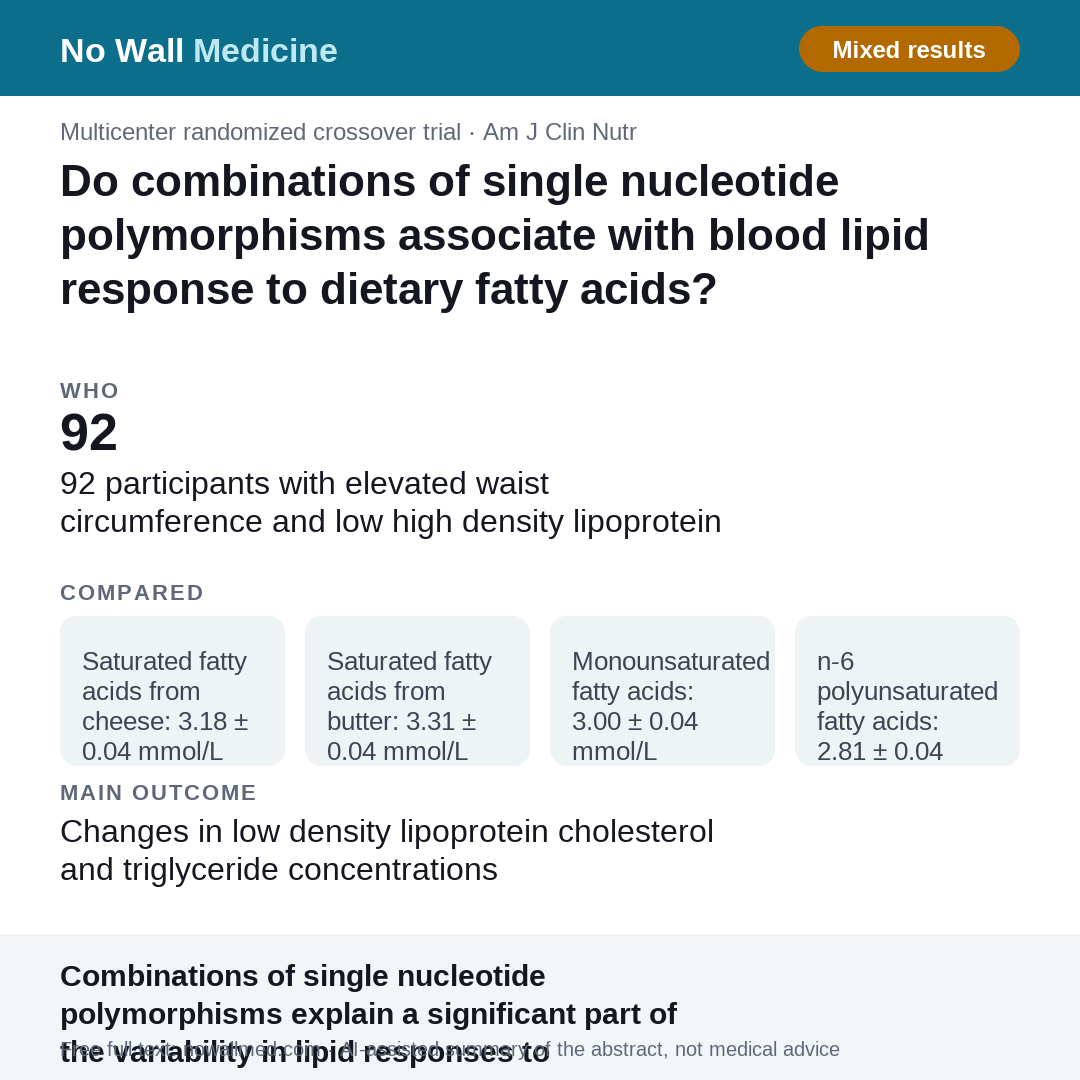
Do combinations of single nucleotide polymorphisms associate with blood lipid response to dietary fatty acids?
Who
92
92 participants with elevated waist circumference and low high density lipoprotein cholesterol · Multicenter
Compared
Saturated fatty acids from cheese: 3.18 ± 0.04 mmol/L
Saturated fatty acids from butter: 3.31 ± 0.04 mmol/L
Monounsaturated fatty acids: 3.00 ± 0.04 mmol/L
n-6 polyunsaturated fatty acids: 2.81 ± 0.04 mmol/L
Main outcome
Changes in low density lipoprotein cholesterol and triglyceride concentrations
Bottom line: Combinations of single nucleotide polymorphisms explain a significant part of the variability in lipid responses to different dietary fatty acids.
Am J Clin Nutr · 2021-04-20Download image
Clinical question: Do combinations of single nucleotide polymorphisms associate with blood lipid response to dietary fatty acids?
Why it matters: Single genetic variations analyzed individually only explain a limited fraction of the variability in how blood lipids respond to different dietary fatty acid profiles.
Key points
- Researchers studied 92 participants with elevated waist circumference and low high-density lipoprotein cholesterol who consumed five different diets for 4 wk.
- Multivariate models of genetic variations explained from 16.0% to 33.6% of the variability in low-density lipoprotein cholesterol changes and from 17.5% to 32.0% in triglyceride changes.
- Endpoint low-density lipoprotein cholesterol concentrations differed significantly across diets, while endpoint triglyceride concentrations did not show significant differences.
Headline and key points written with AI from the paper’s abstract, with every number checked against it. Read the paper before relying on them.
Was this summary helpful?
Subject terms
Cite this article
Rajendiran E, Lamarche B, She Y, Ramprasath V, Eck P, Brassard D. A combination of single nucleotide polymorphisms is associated with the interindividual variability in the blood lipid response to dietary fatty acid consumption in a randomized clinical trial. Am J Clin Nutr. 2021. doi:10.1093/ajcn/nqab064
Spotted a mistake? Suggest a correction
Top studies every Monday
The week’s key trials and guidelines in your specialties, plus any topics you follow. By email, free.
Get the weekly digest