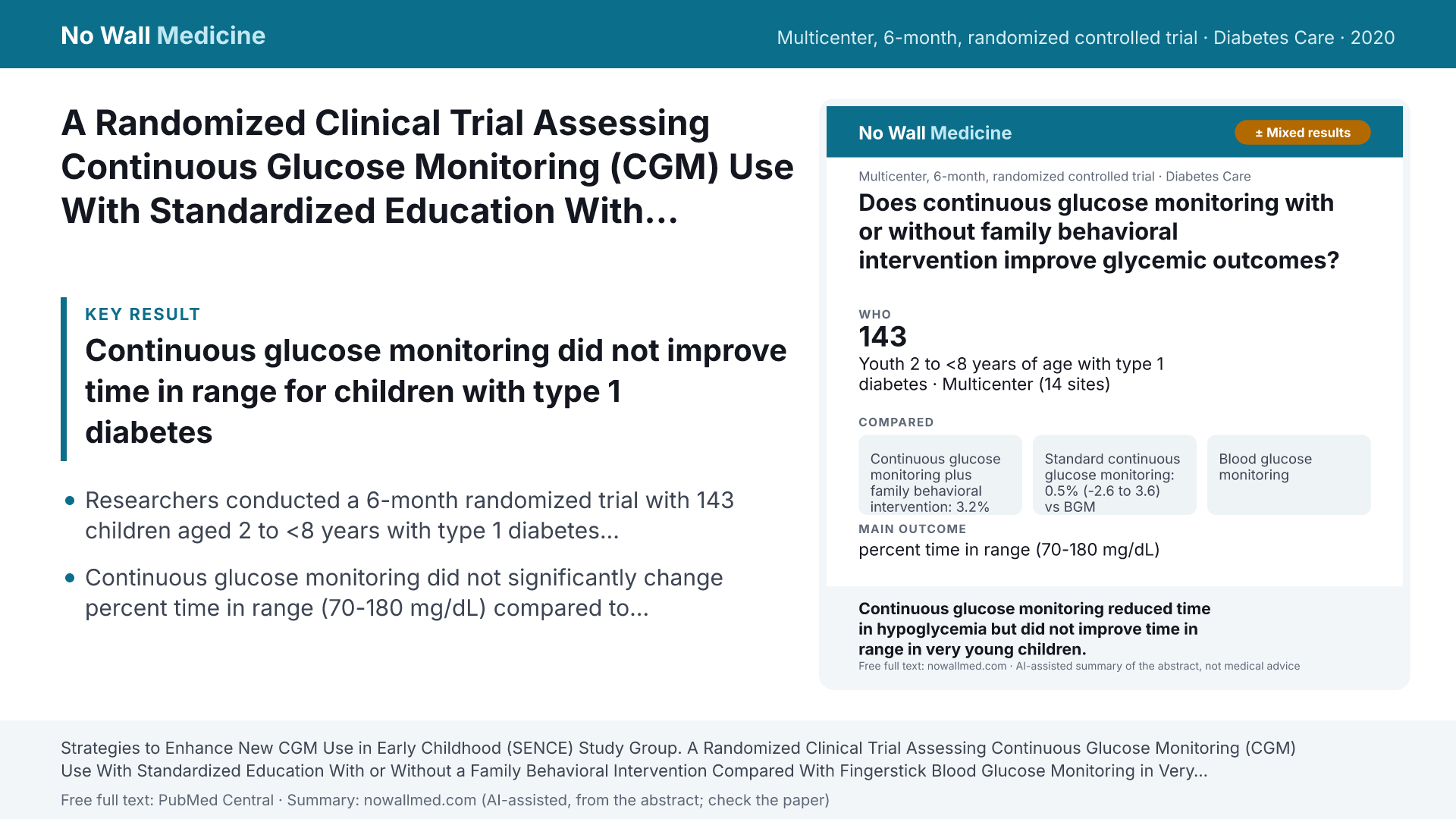
Continuous glucose monitoring did not improve time in range for children with type 1 diabetes
A Randomized Clinical Trial Assessing Continuous Glucose Monitoring (CGM) Use With Standardized Education With or Without a Family Behavioral Intervention Compared With Fingerstick Blood Glucose Monitoring in Very Young Children With Type 1 Diabetes
Multicenter, 6-month, randomized controlled trialMixed results
Does continuous glucose monitoring with or without family behavioral intervention improve glycemic outcomes?
Who
143
Youth 2 to <8 years of age with type 1 diabetes · Multicenter (14 sites)
Compared
Continuous glucose monitoring plus family behavioral intervention: 3.2% (95% CI -0.5, 7.0) vs BGM
Standard continuous glucose monitoring: 0.5% (-2.6 to 3.6) vs BGM
Blood glucose monitoring
Main outcome
percent time in range (70-180 mg/dL)
Result: 3.2% (95% CI -0.5, 7.0)
Bottom line: Continuous glucose monitoring reduced time in hypoglycemia but did not improve time in range in very young children.
Diabetes Care · 2020-12-17 · Save PNG
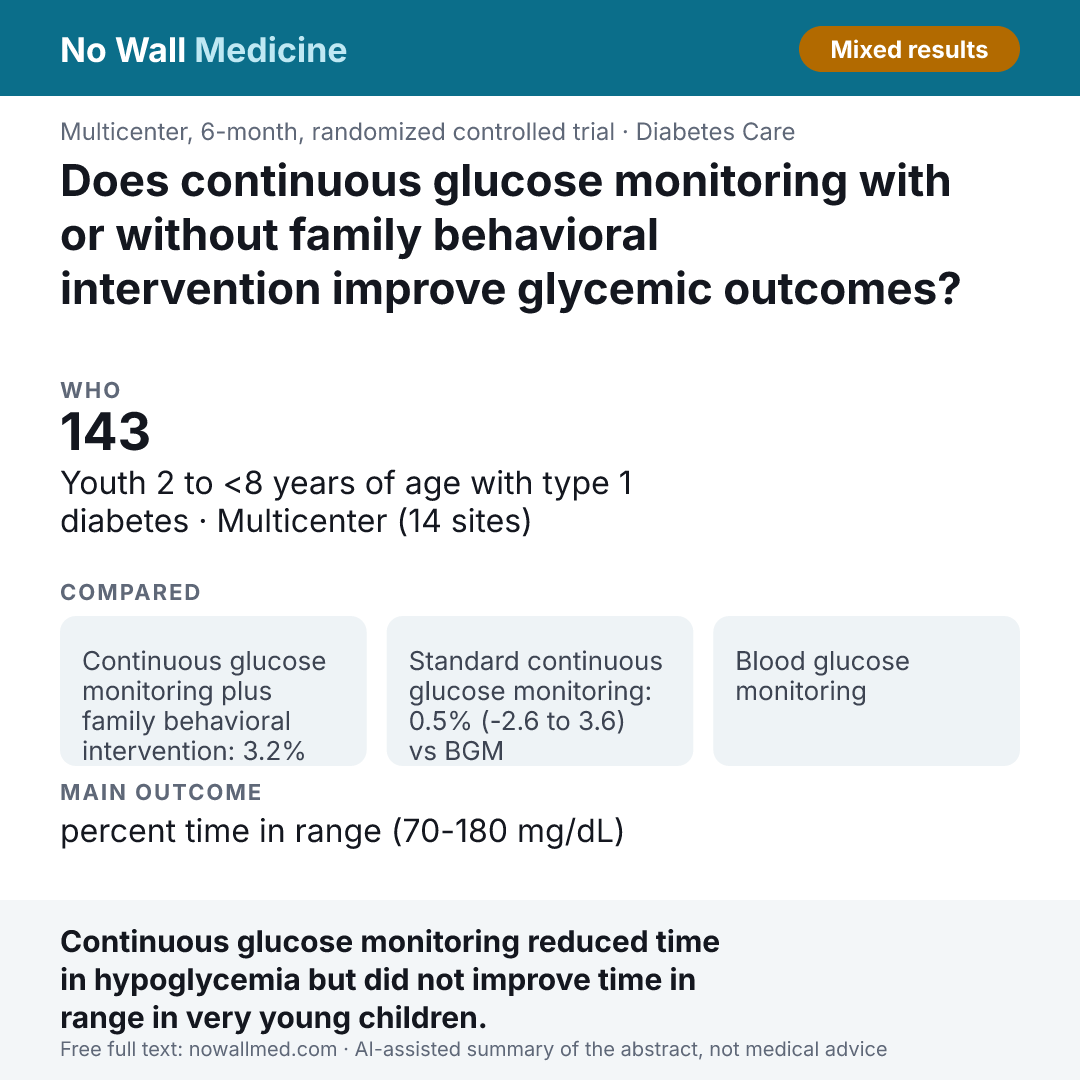
Clinical question: Does continuous glucose monitoring with or without family behavioral intervention improve glycemic outcomes?
Key points
- Researchers conducted a 6-month randomized trial with 143 children aged 2 to <8 years with type 1 diabetes comparing continuous glucose monitoring with or without family behavioral intervention to fingerstick blood glucose monitoring.
- Continuous glucose monitoring did not significantly change percent time in range (70-180 mg/dL) compared to fingerstick monitoring, with differences of 3.2%, 0.5%, and 2.7% between groups.
- Continuous glucose monitoring was associated with lower time spent with glucose levels below 70 mg/dL, and the family behavioral intervention was associated with greater reductions in parental diabetes burden and fear of hypoglycemia.
Headline and key points written with AI from the paper’s abstract, with every number checked against it. Read the paper before relying on them.
Was this summary helpful?
Subject terms
Headline, design, result, key points, caveat and citation as plain text.
Cite this article
Strategies to Enhance New CGM Use in Early Childhood (SENCE) Study Group. A Randomized Clinical Trial Assessing Continuous Glucose Monitoring (CGM) Use With Standardized Education With or Without a Family Behavioral Intervention Compared With Fingerstick Blood Glucose Monitoring in Very Young Children With Type 1 Diabetes. Diabetes Care. 2021;44(2):464-472. doi:10.2337/dc20-1060
Spotted a mistake? Suggest a correction