Targeting basic life support training to high-risk groups is associated with improved survival and skills
Basic life support training targeted to family members or carers of those at high-risk of out-of-hospital cardiac arrest: a systematic review
Systematic reviewBenefit found
Does targeting basic life support training to high-risk groups improve outcomes?
Who
Family members or carers of those at high-risk of out-of-hospital cardiac arrest
Compared
Targeted training intervention
Control
Main outcome
Patient and educational outcomes
Bottom line: Targeting high-risk groups improves simulated cardiopulmonary resuscitation skills, confidence, and willingness to provide care.
Limitation: Very-low to low quality of evidence due to low event numbers and loss to follow-up.
Resusc Plus · 2025-07-15 · Save PNG
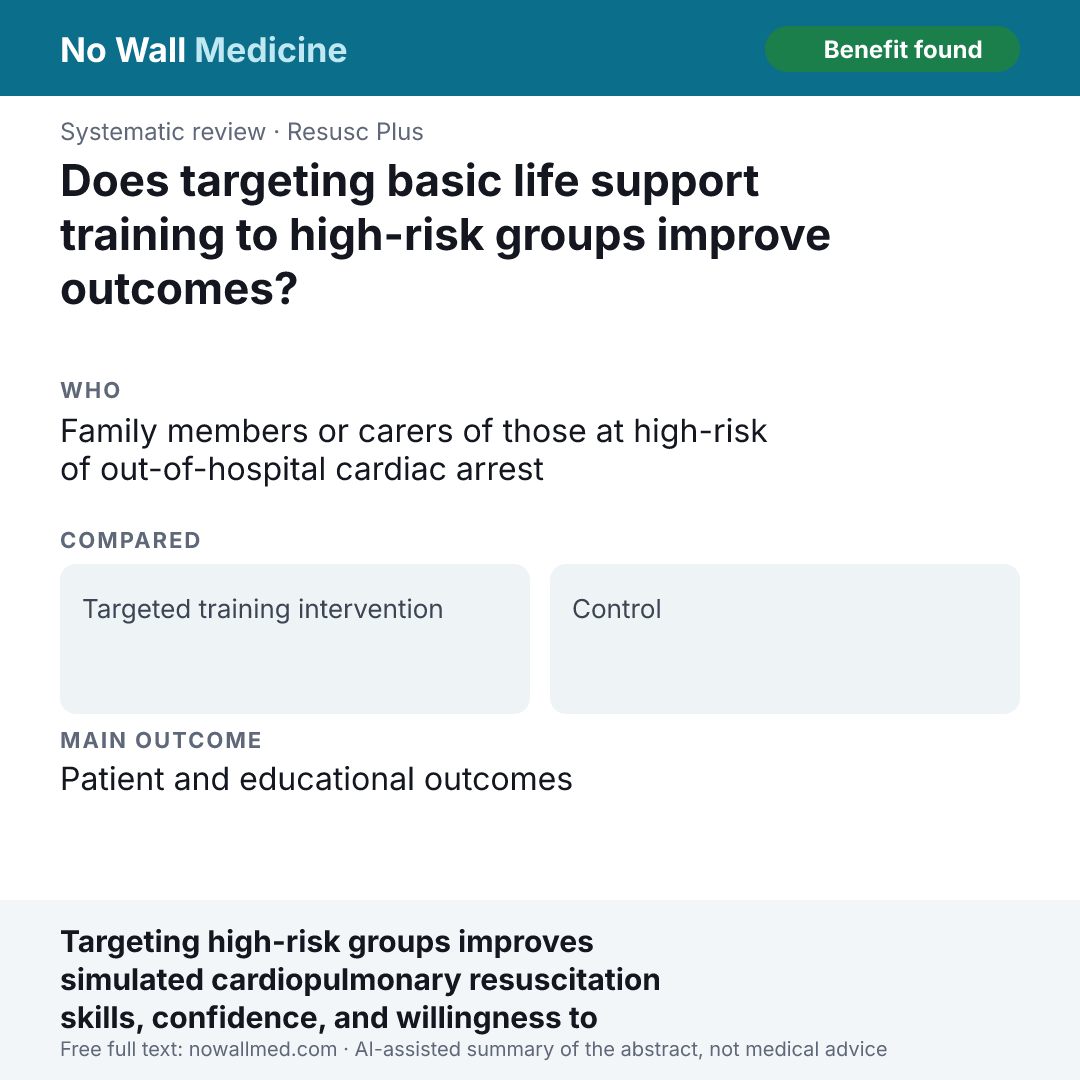
Clinical question: Does targeting basic life support training to high-risk groups improve outcomes?
Key points
- Researchers reviewed 48 studies to examine how training basic life support, or CPR, for people at high risk of sudden cardiac arrest affects outcomes.
- The review found that targeting these groups was associated with improved survival and the subsequent use of skills, though evidence quality was very-low to low.
- Training was associated with improved simulated cardiopulmonary resuscitation skills, confidence, and willingness to perform the procedure, and those trained were likely to train others.
Limitation the authors note: The quality of evidence was low to very-low due to a low number of out-of-hospital cardiac arrest events during follow-up and significant loss to follow-up.
Headline and key points written with AI from the paper’s abstract, with every number checked against it. Read the paper before relying on them.
Was this summary helpful?
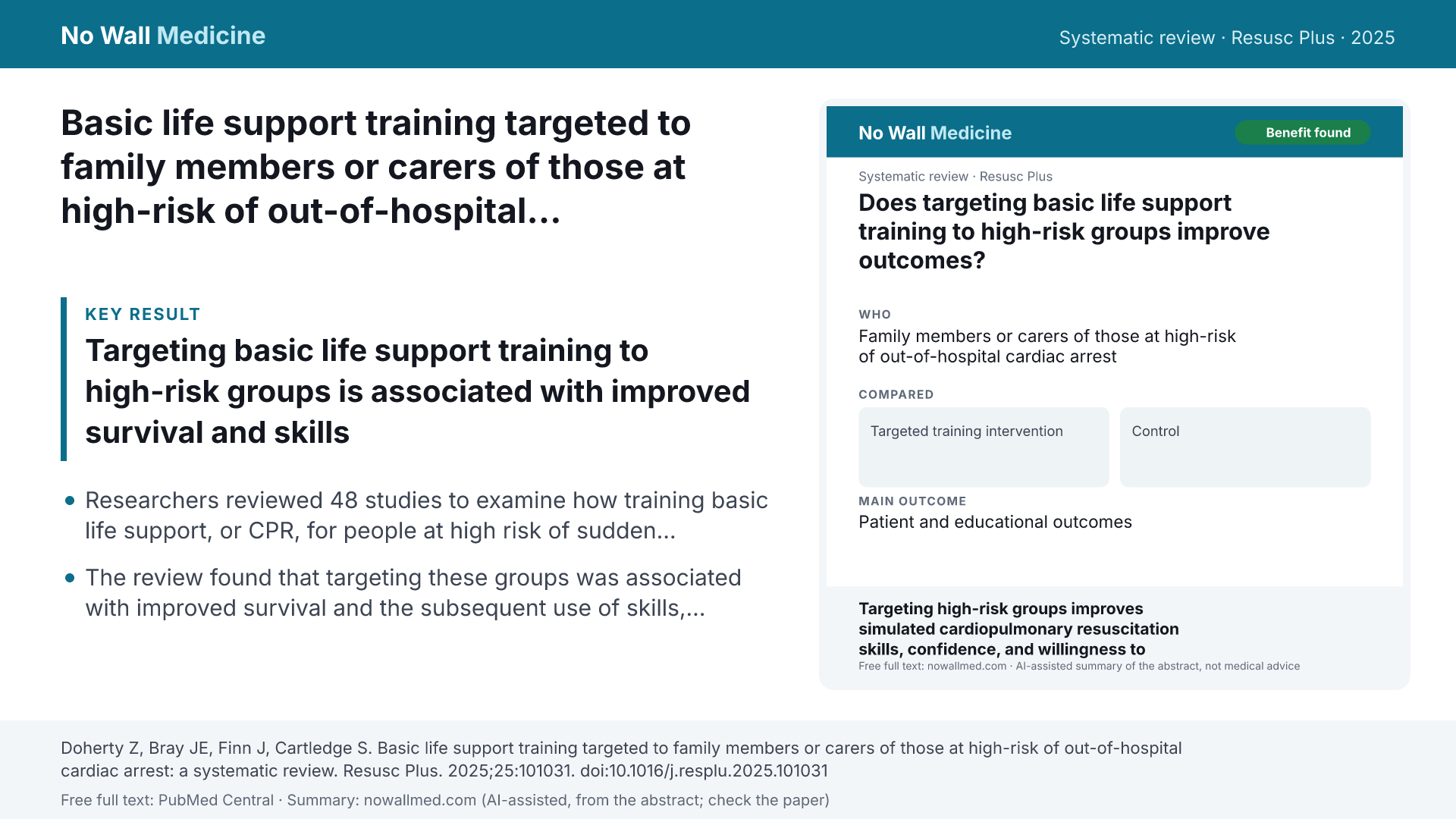
Headline, design, result, key points, caveat and citation as plain text.
Cite this article
Doherty Z, Bray JE, Finn J, Cartledge S. Basic life support training targeted to family members or carers of those at high-risk of out-of-hospital cardiac arrest: a systematic review. Resusc Plus. 2025;25:101031. doi:10.1016/j.resplu.2025.101031
Spotted a mistake? Suggest a correction