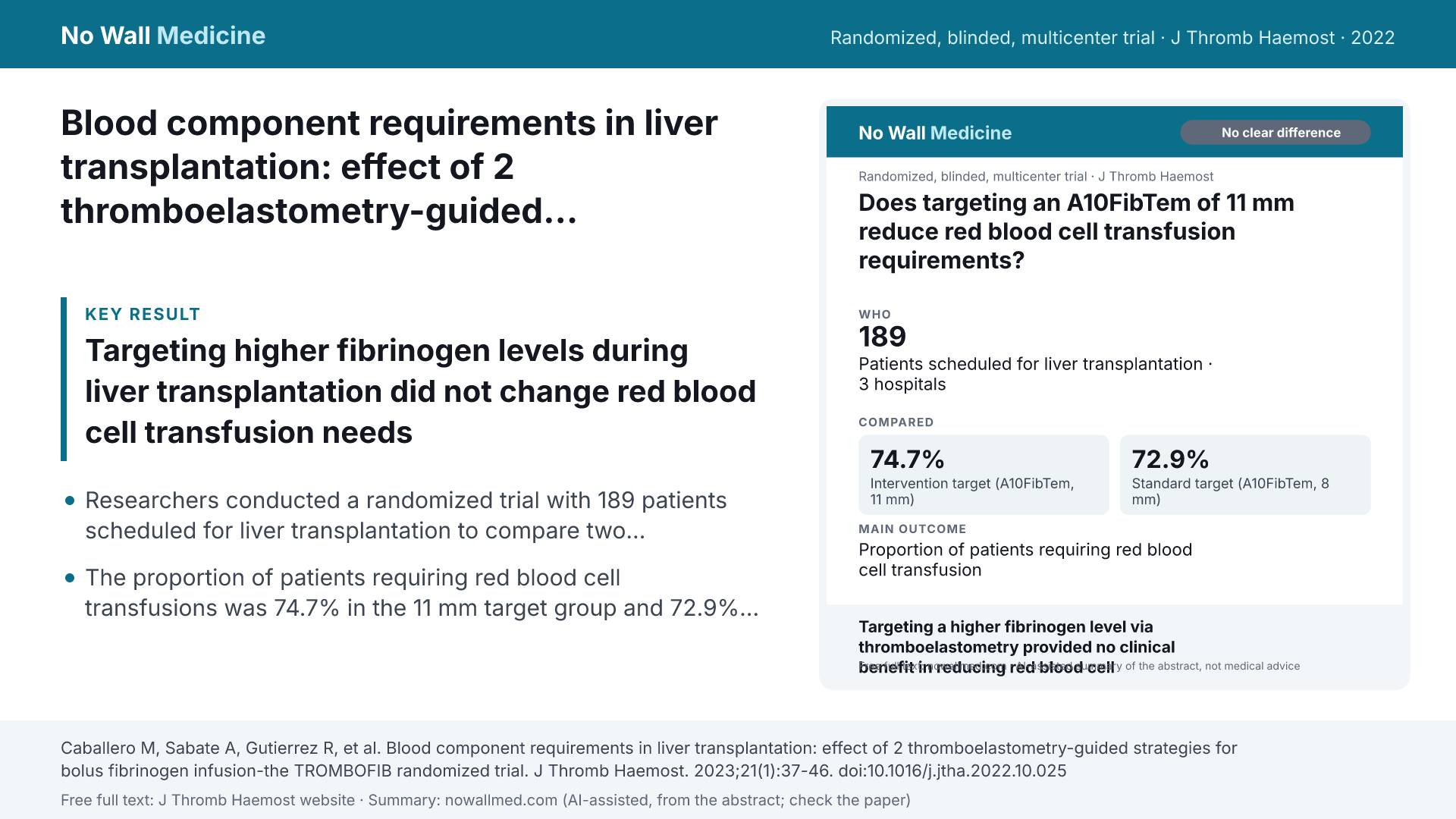
Targeting higher fibrinogen levels during liver transplantation did not change red blood cell transfusion needs
Blood component requirements in liver transplantation: effect of 2 thromboelastometry-guided strategies for bolus fibrinogen infusion-the TROMBOFIB randomized trial
Randomized, blinded, multicenter trialNo clear difference
Does targeting an A10FibTem of 11 mm reduce red blood cell transfusion requirements?
Who
189
Patients scheduled for liver transplantation · 3 hospitals
Compared
74.7%Intervention target (A10FibTem, 11 mm) (95% CI, 65.5%-83.3%)
72.9%Standard target (A10FibTem, 8 mm) (95% CI, 62.2%-82.0%)
Main outcome
Proportion of patients requiring red blood cell transfusion
Result: absolute difference, 1.8% (95% CI, -11.1% to 14.78%)
Bottom line: Targeting a higher fibrinogen level via thromboelastometry provided no clinical benefit in reducing red blood cell transfusion requirements.
Limitation: Similar low plasma fibrinogen concentrations could explain the lack of significant between-group outcomes.
J Thromb Haemost · 2022-12-22Download image
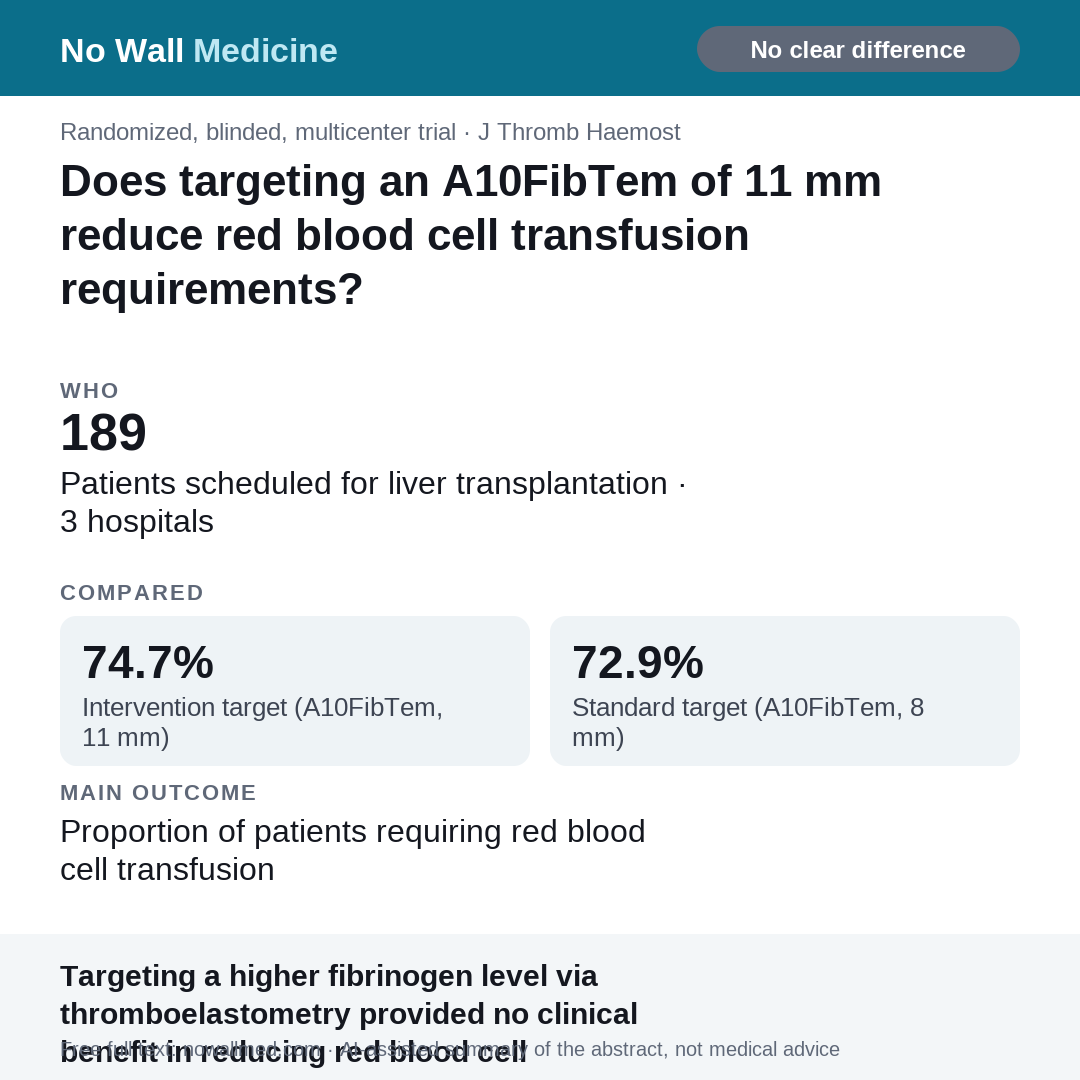
Clinical question: Does targeting an A10FibTem of 11 mm reduce red blood cell transfusion requirements?
Key points
- Researchers conducted a randomized trial with 189 patients scheduled for liver transplantation to compare two different fibrinogen targets using thromboelastometry, a tool that measures blood clotting.
- The proportion of patients requiring red blood cell transfusions was 74.7% in the 11 mm target group and 72.9% in the 8 mm target group, showing no significant difference.
- Thrombotic events, such as blood clots, occurred in 4% of patients in both groups, and there were no differences in mortality or reoperation rates.
Headline and key points written with AI from the paper’s abstract, with every number checked against it. Read the paper before relying on them.
Was this summary helpful?
Subject terms
Headline, design, result, key points, caveat and citation as plain text.
Cite this article
Caballero M, Sabate A, Gutierrez R, et al. Blood component requirements in liver transplantation: effect of 2 thromboelastometry-guided strategies for bolus fibrinogen infusion-the TROMBOFIB randomized trial. J Thromb Haemost. 2022. doi:10.1016/j.jtha.2022.10.025
Spotted a mistake? Suggest a correction