Prone position was associated with higher blood pressure during CPR compared to supine position
Cardiopulmonary resuscitation and defibrillation for cardiac arrest when patients are in the prone position: A systematic review
Systematic reviewUnclear result
Is cardiopulmonary resuscitation and defibrillation effective in the prone position versus supine position?
Who
Adults and children in any setting with cardiac arrest in prone position
Compared
Prone position: 72 mmHg mean systolic blood pressure
Supine position: 48 mmHg mean systolic blood pressure
Main outcome
Arterial blood pressure and end-tidal capnography during cardiopulmonary resuscitation
Bottom line: Prone cardiopulmonary resuscitation may be reasonable if immediate turning to supine is difficult or risky.
Limitation: Critical risk of bias limited the ability to perform pooled analyses.
Resusc Plus · 2021-12-04Download image
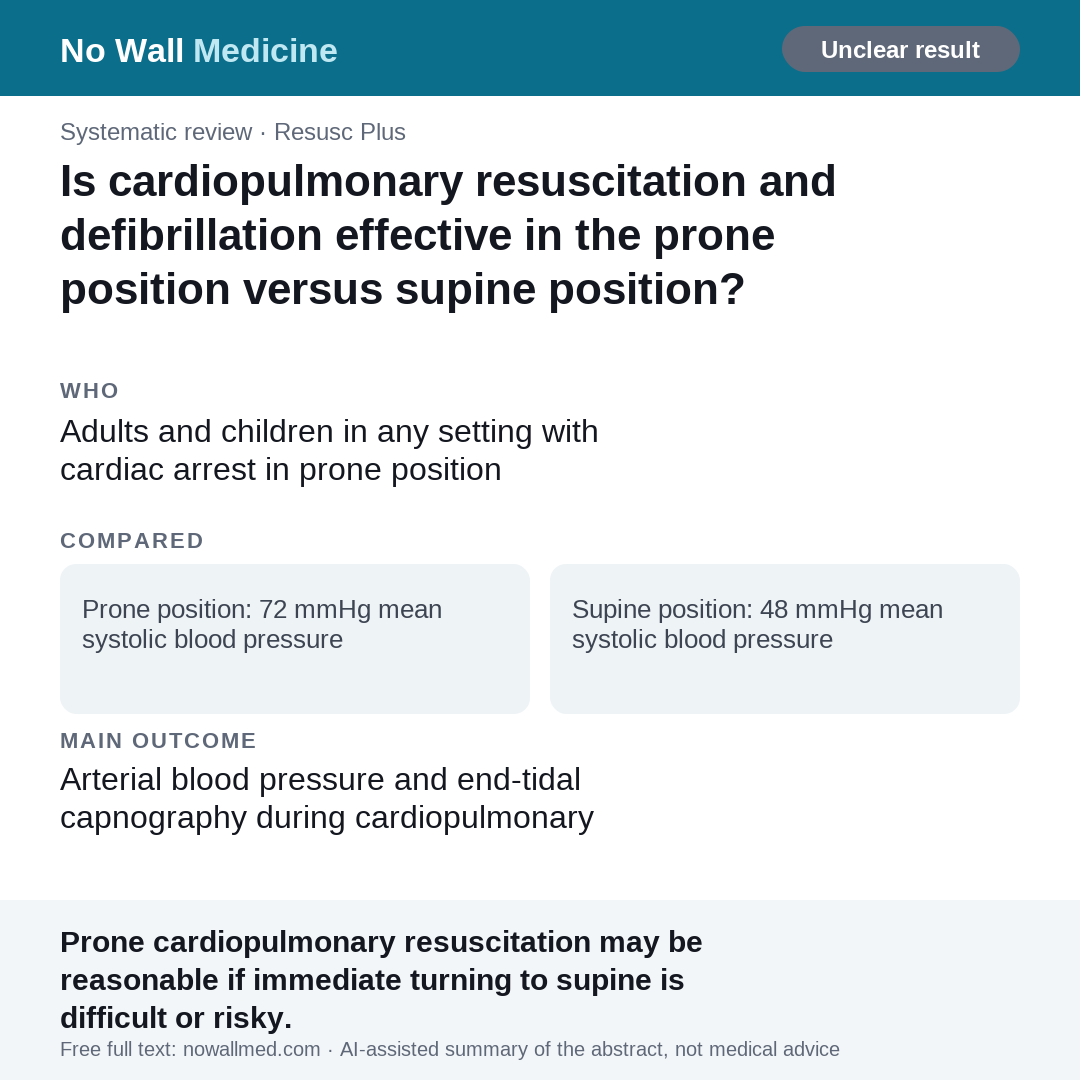
Clinical question: Is cardiopulmonary resuscitation and defibrillation effective in the prone position versus supine position?
Key points
- Researchers reviewed 29 case reports, two prospective observational studies, and two simulation studies involving adults and children in cardiac arrest.
- In observational studies of 17 patients, the prone position was associated with higher mean systolic blood pressure during CPR than the supine position (72 mmHg vs 48 mmHg, p < 0.005).
- One simulation study reported that the time to start defibrillation, or the use of electric shocks to restore heart rhythm, was faster in the prone position.
Limitation the authors note: Critical risk of bias limited the ability to perform pooled analyses.
Headline and key points written with AI from the paper’s abstract, with every number checked against it. Read the paper before relying on them.
Was this summary helpful?
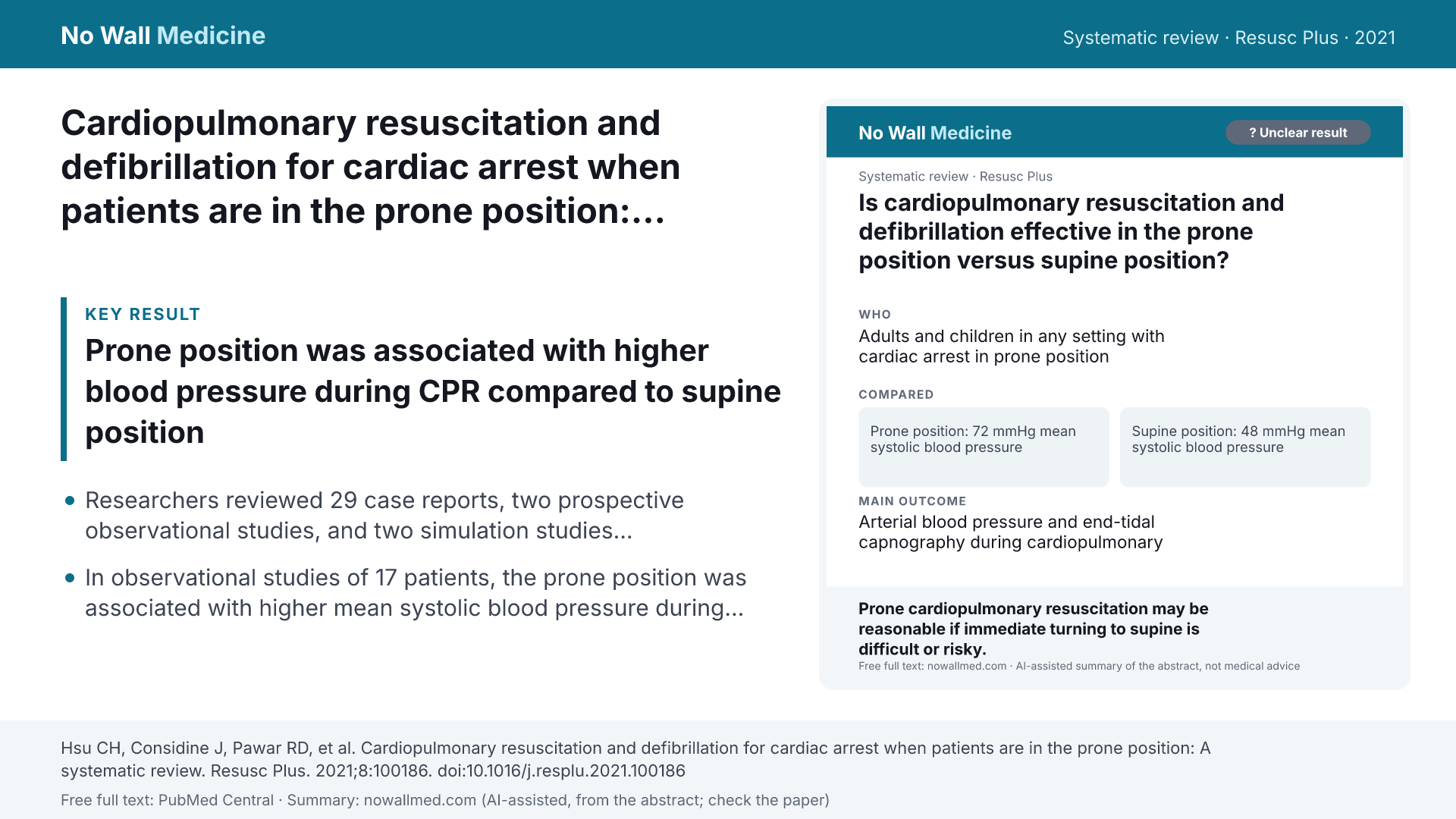
Headline, design, result, key points, caveat and citation as plain text.
Cite this article
Hsu CH, Considine J, Pawar RD, et al. Cardiopulmonary resuscitation and defibrillation for cardiac arrest when patients are in the prone position: A systematic review. Resusc Plus. 2021;8:100186. doi:10.1016/j.resplu.2021.100186
Spotted a mistake? Suggest a correction