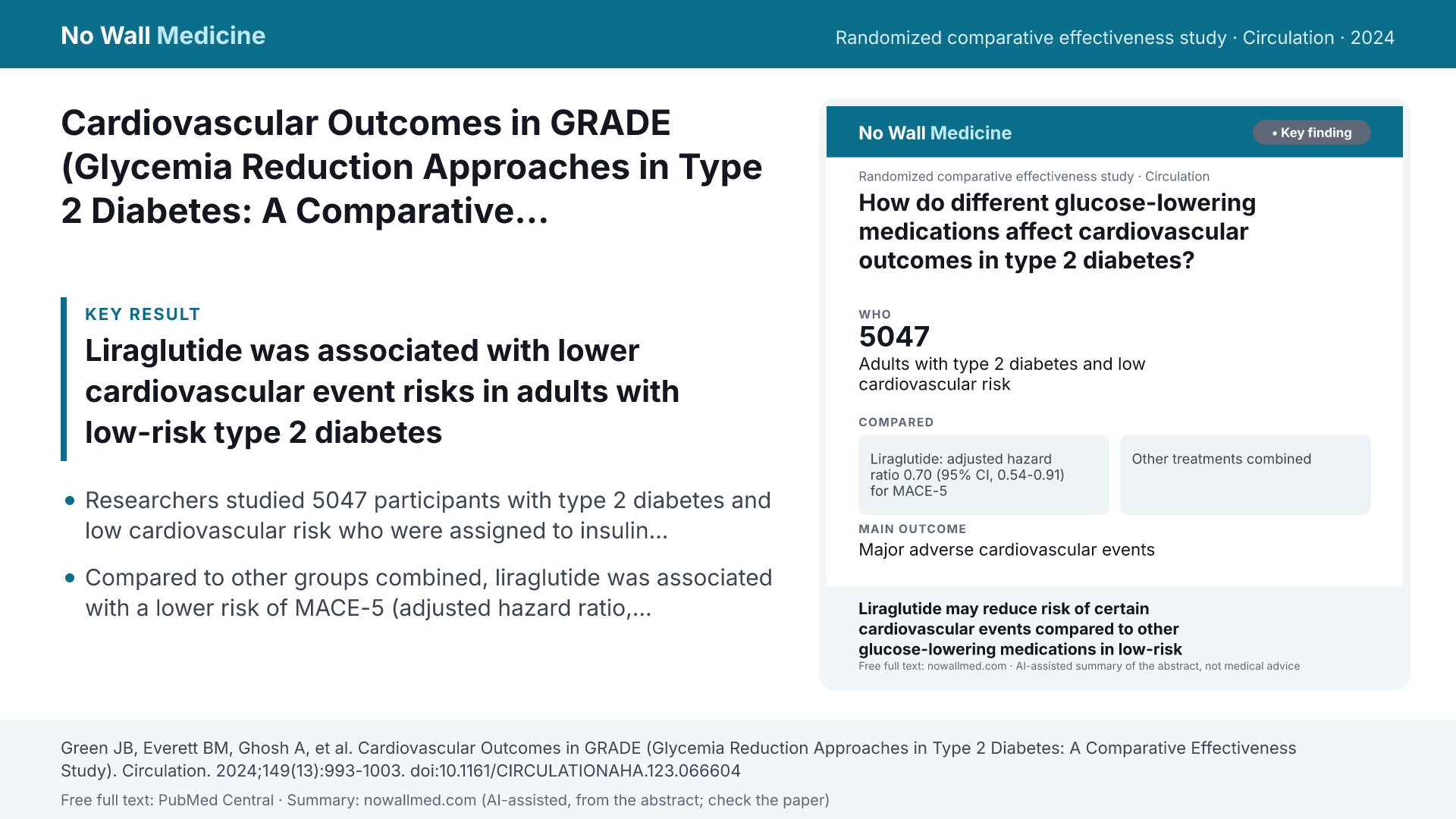
Liraglutide was associated with lower cardiovascular event risks in adults with low-risk type 2 diabetes
Cardiovascular Outcomes in GRADE (Glycemia Reduction Approaches in Type 2 Diabetes: A Comparative Effectiveness Study)
Randomized comparative effectiveness studyKey finding
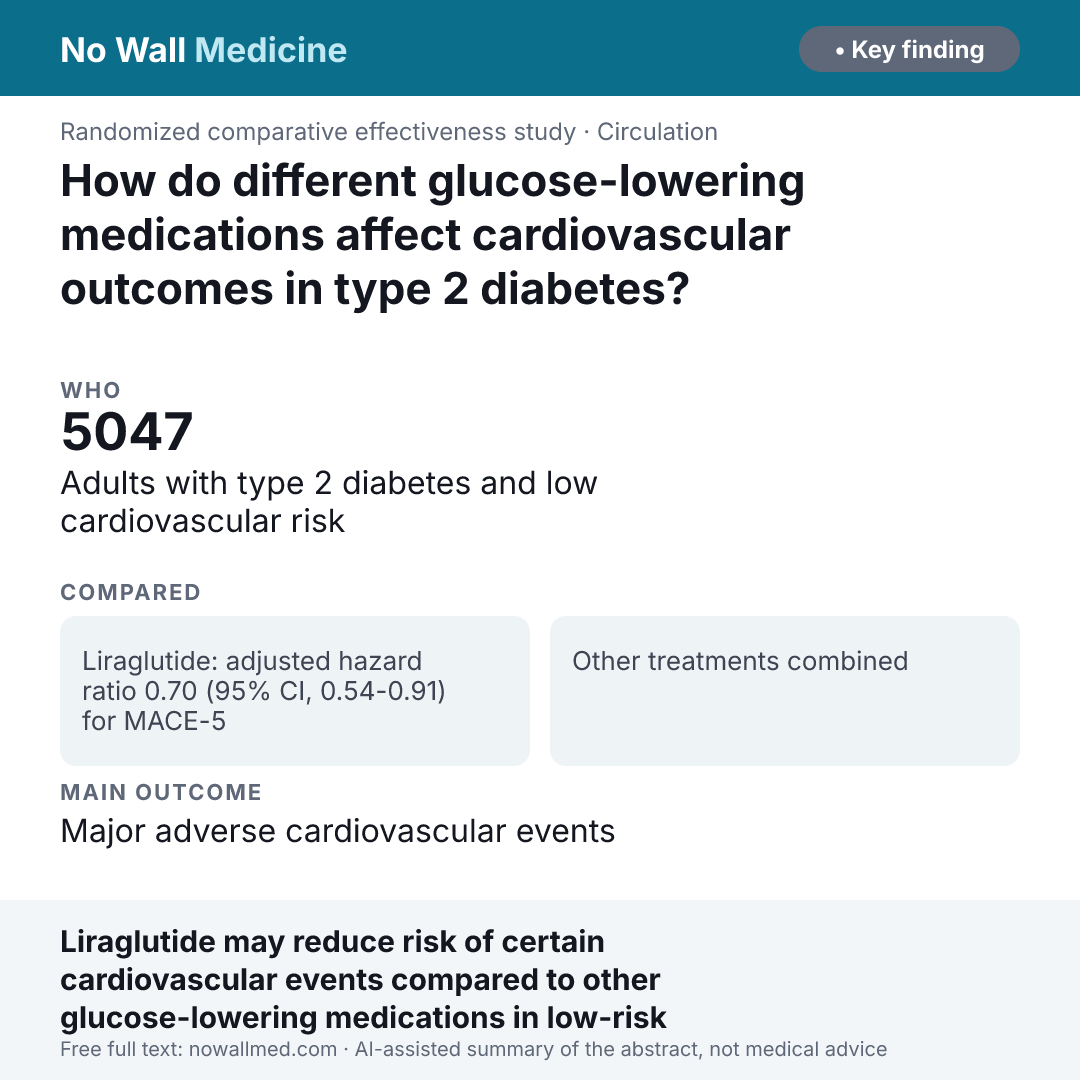
How do different glucose-lowering medications affect cardiovascular outcomes in type 2 diabetes?
Who
5047
Adults with type 2 diabetes and low cardiovascular risk
Compared
Liraglutide: adjusted hazard ratio 0.70 (95% CI, 0.54-0.91) for MACE-5
Other treatments combined
Main outcome
Major adverse cardiovascular events
Result: adjusted hazard ratio 0.70 (95% CI, 0.54-0.91) for MACE-5
Bottom line: Liraglutide may reduce risk of certain cardiovascular events compared to other glucose-lowering medications in low-risk type 2 diabetes patients.
Circulation · 2024-02-12 · NCT01794143
Same trial (NCT01794143)
Papers we list that report this registered trial, oldest first. Read a secondary analysis alongside the main results.
- Main results Mixed results
Glargine and liraglutide were more effective than glimepiride or sitagliptin at maintaining target blood sugar levels NEJM 2022-09 - Related analysis Mixed results
Four glucose-lowering medications showed similar results for microvascular and cardiovascular outcomes in type 2 diabetes NEJM 2022-09 - Related analysis Key finding
This paper Circulation 2024-02 - Secondary analysis Mixed results
Somatic depression symptoms were linked to higher insulin resistance and inflammation in people with diabetes Diabetologia 2025-02
Headline and visual abstract written with AI from the paper’s abstract, with every number checked against it. Read the paper before relying on them.
Was this summary helpful?
Heart failureMyocardial infarction and acute coronary syndromeGLP-1 receptor agonists (semaglutide, tirzepatide)Type 2 diabetes
Subject terms
Cite this article
Green JB, Everett BM, Ghosh A, et al. Cardiovascular Outcomes in GRADE (Glycemia Reduction Approaches in Type 2 Diabetes: A Comparative Effectiveness Study). Circulation. 2024;149(13):993-1003. doi:10.1161/CIRCULATIONAHA.123.066604
Spotted a mistake? Suggest a correction