Reductions in impulsivity were associated with better outcomes for binge-eating disorder treatment
Change in impulsivity is prospectively associated with treatment outcomes for binge-eating disorder
Randomized placebo-controlled clinical trialBenefit found
Does change in impulsivity associate with treatment outcomes for binge-eating disorder?
Who
108
Patients with binge-eating disorder
Compared
Cognitive-behavioral therapy and/or fluoxetine
Placebo
Main outcome
Eating-disorder psychopathology, depression scores, and body mass index
Bottom line: Rapid and overall reductions in impulsivity during treatment were associated with improvements in binge-eating disorder psychopathology and general outcomes.
Psychol Med · 2021-11-23Download image
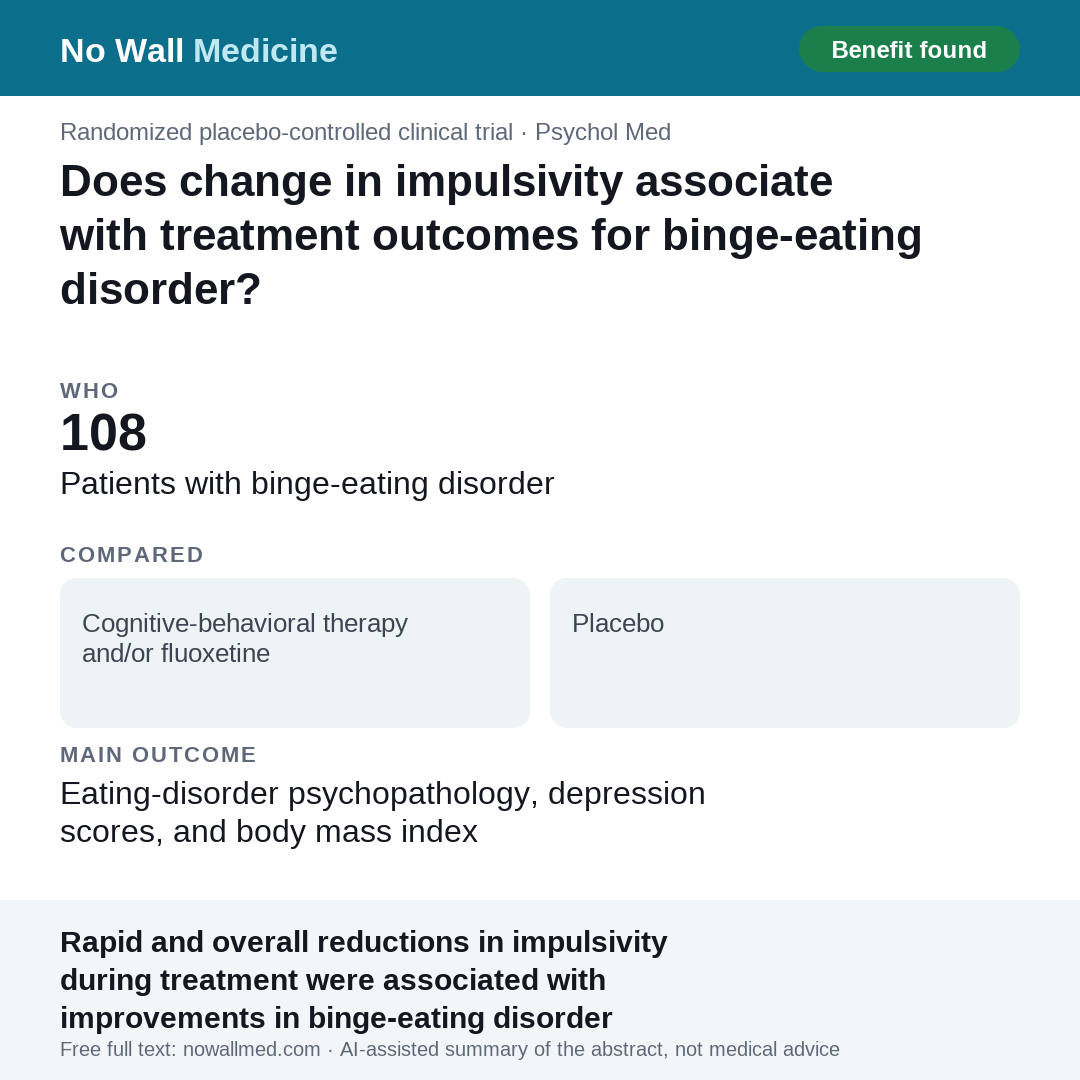
Clinical question: Does change in impulsivity associate with treatment outcomes for binge-eating disorder?
Why it matters: It was unknown if changes in impulsivity during treatment are prospectively related to clinical outcomes for binge-eating disorder.
Key points
- Researchers studied 108 patients with binge-eating disorder who received cognitive-behavioral therapy or medication in a randomized placebo-controlled trial.
- Rapid and overall changes in impulsivity were associated with reductions in eating-disorder symptoms, depression scores, and body mass index during treatment and at 16 weeks.
- Overall changes in impulsivity during treatment were associated with lower depression scores at the 12-month follow-up.
Headline and key points written with AI from the paper’s abstract, with every number checked against it. Read the paper before relying on them.
Was this summary helpful?
Subject terms
Cite this article
Boswell RG, Gueorguieva R, Grilo CM. Change in impulsivity is prospectively associated with treatment outcomes for binge-eating disorder. Psychol Med. 2021. doi:10.1017/S003329172100475X
Spotted a mistake? Suggest a correction
Top studies every Monday
The week’s key trials and guidelines in your specialties, plus any topics you follow. By email, free.
Get the weekly digest