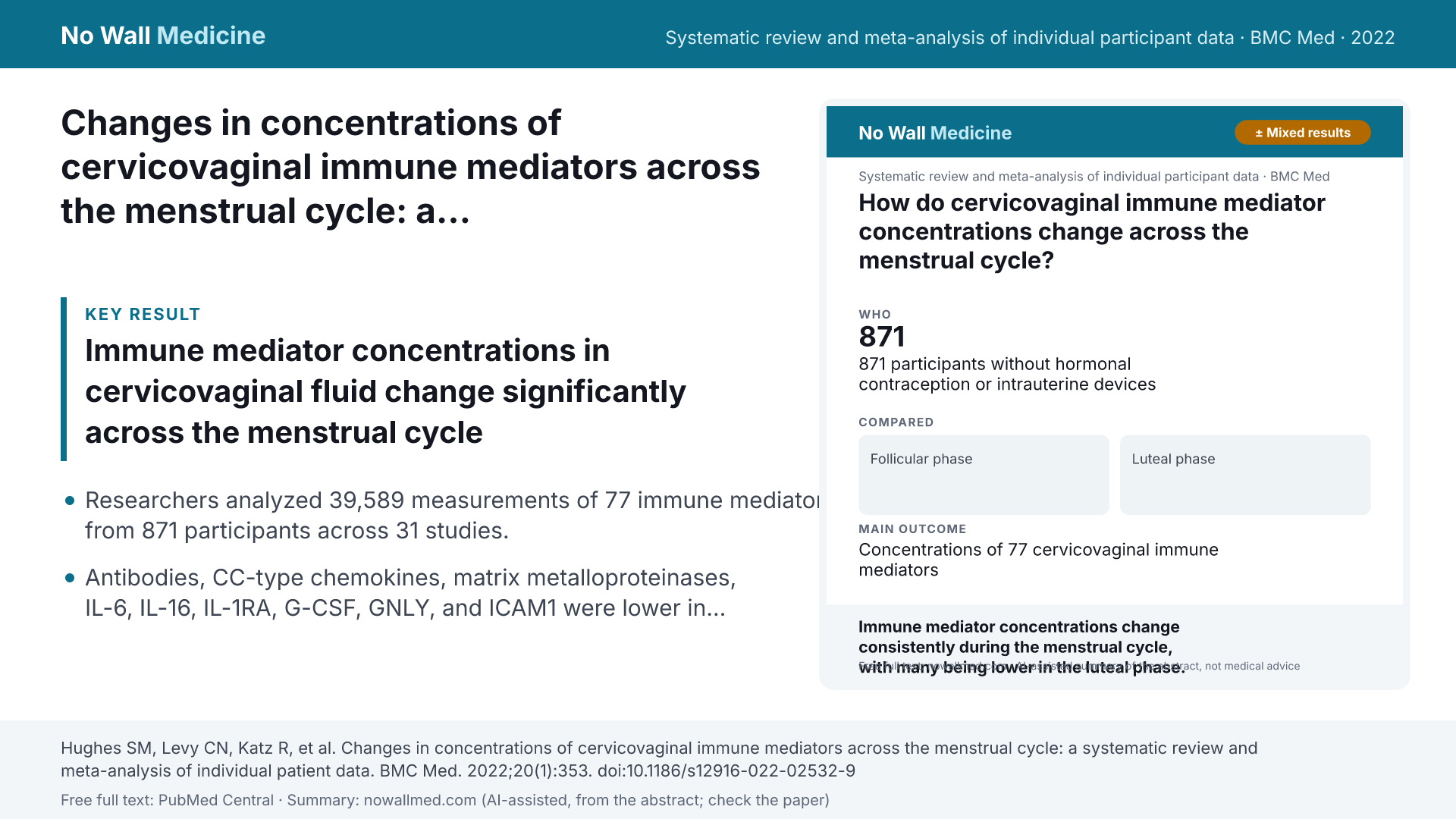
Immune mediator concentrations in cervicovaginal fluid change significantly across the menstrual cycle
Changes in concentrations of cervicovaginal immune mediators across the menstrual cycle: a systematic review and meta-analysis of individual patient data
Systematic review and meta-analysis of individual participant dataMixed results
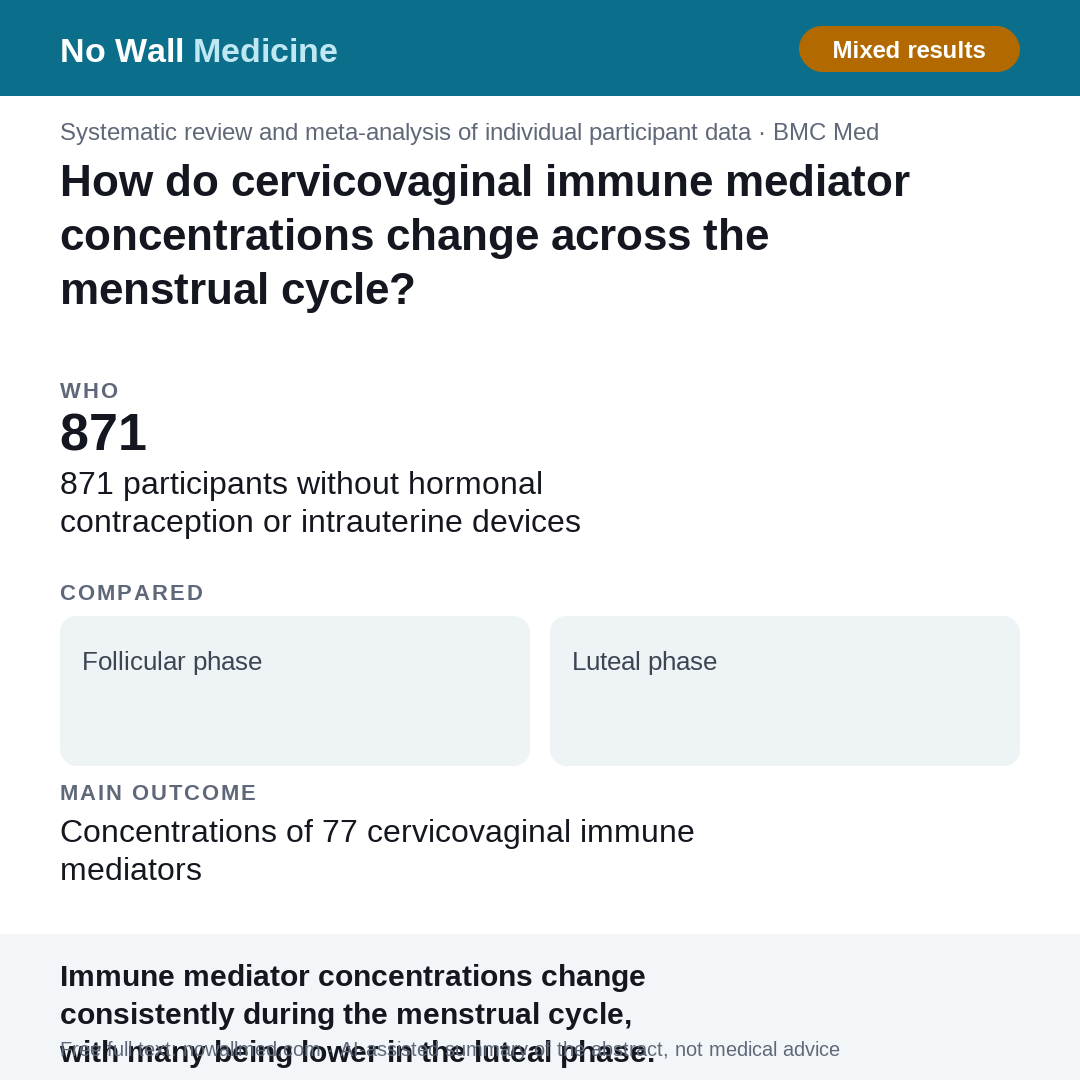
How do cervicovaginal immune mediator concentrations change across the menstrual cycle?
Who
871
871 participants without hormonal contraception or intrauterine devices
Compared
Follicular phase
Luteal phase
Main outcome
Concentrations of 77 cervicovaginal immune mediators
Bottom line: Immune mediator concentrations change consistently during the menstrual cycle, with many being lower in the luteal phase.
Limitation: Variability of cervicovaginal immune mediator measurements
BMC Med · 2022-10-05Download image
Clinical question: How do cervicovaginal immune mediator concentrations change across the menstrual cycle?
Why it matters: Previous studies have shown inconsistent results regarding how immune mediator concentrations in the cervicovaginal tract change throughout the menstrual cycle.
Key points
- Researchers analyzed 39,589 measurements of 77 immune mediators from 871 participants across 31 studies.
- Antibodies, CC-type chemokines, matrix metalloproteinases, IL-6, IL-16, IL-1RA, G-CSF, GNLY, and ICAM1 were lower in the luteal phase than the follicular phase.
- Only IL-1α, HBD-2, and HBD-3 were elevated in the luteal phase, while several others showed minimal change.
Headline and key points written with AI from the paper’s abstract, with every number checked against it. Read the paper before relying on them.
Was this summary helpful?
Subject terms
Cite this article
Hughes SM, Levy CN, Katz R, Lokken EM, Anahtar MN, Hall MB. Changes in concentrations of cervicovaginal immune mediators across the menstrual cycle: a systematic review and meta-analysis of individual patient data. BMC Med. 2022. doi:10.1186/s12916-022-02532-9
Spotted a mistake? Suggest a correction
Top studies every Monday
The week’s key trials and guidelines in your specialties, plus any topics you follow. By email, free.
Get the weekly digest