Trial characteristics like location and delirium incidence were linked to effectiveness in postoperative delirium research
Characteristics associated with effectiveness in postoperative delirium research: a systematic review of randomised controlled trials with meta-regression and meta-analysis
Systematic review and meta-analysisMixed results
What trial characteristics are associated with the effectiveness of postoperative delirium interventions?
Who
201
Randomized controlled trials on postoperative delirium
Compared
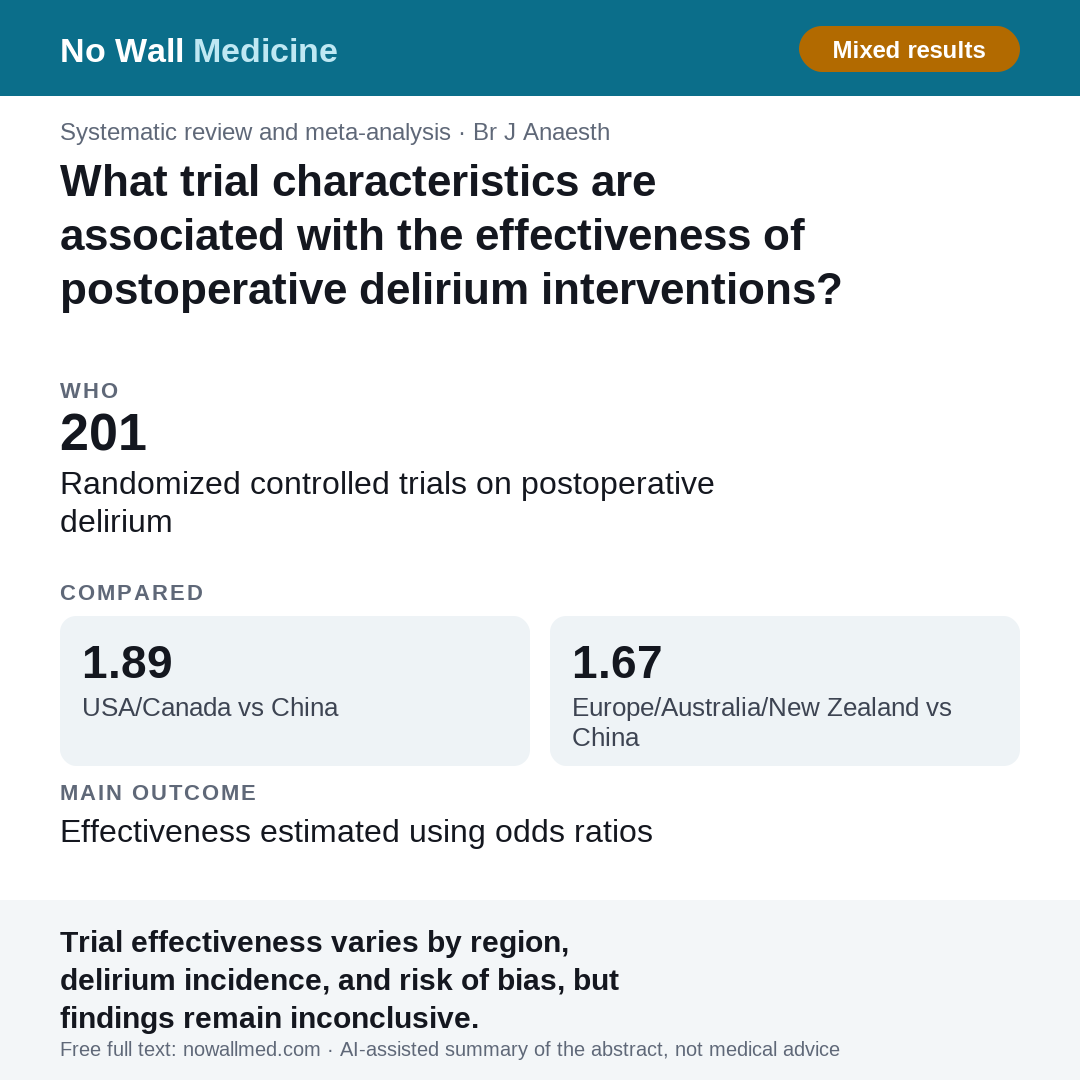
1.89USA/Canada vs China (95% confidence interval, 1.45-2.45)
1.67Europe/Australia/New Zealand vs China (95% confidence interval, 1.29-2.18)
Main outcome
Effectiveness estimated using odds ratios
Bottom line: Trial effectiveness varies by region, delirium incidence, and risk of bias, but findings remain inconclusive.
Limitation: Heterogeneous interventions, limited trials, small-scale studies, and potential publication bias.
Br J Anaesth · 2024-07-04Download image
Clinical question: What trial characteristics are associated with the effectiveness of postoperative delirium interventions?
Why it matters: It is unknown how specific trial characteristics, such as geographic location or the baseline rate of delirium, influence the reported effectiveness of interventions in randomized controlled trials.
Key points
- Researchers analyzed 201 randomized controlled trials to see how different study features related to the effectiveness of interventions for postoperative delirium, a state of temporary confusion after surgery.
- Trials from the USA/Canada and Europe/Australia/New Zealand were associated with an 89% and 67% higher odds ratio of reduced effectiveness compared to trials from China.
- Increased effectiveness was associated with a higher incidence of postoperative delirium and trials with concerns regarding deviations from intended interventions.
Limitation the authors note: The authors noted challenges including grouping different types of interventions, a limited number of eligible trials, the prevalence of small-scale studies, and potential publication bias.
Headline and key points written with AI from the paper’s abstract, with every number checked against it. Read the paper before relying on them.
Topics
Cite this article
Meng L, Zhao X, Sun Y, Cheng S, Bao L, Fang K. Characteristics associated with effectiveness in postoperative delirium research: a systematic review of randomised controlled trials with meta-regression and meta-analysis. Br J Anaesth. 2024. doi:10.1016/j.bja.2024.05.033
Spotted a mistake? Suggest a correction
Top studies every Monday
The week’s key trials and guidelines in your specialties, plus any topics you follow. By email, free.
Get the weekly digest