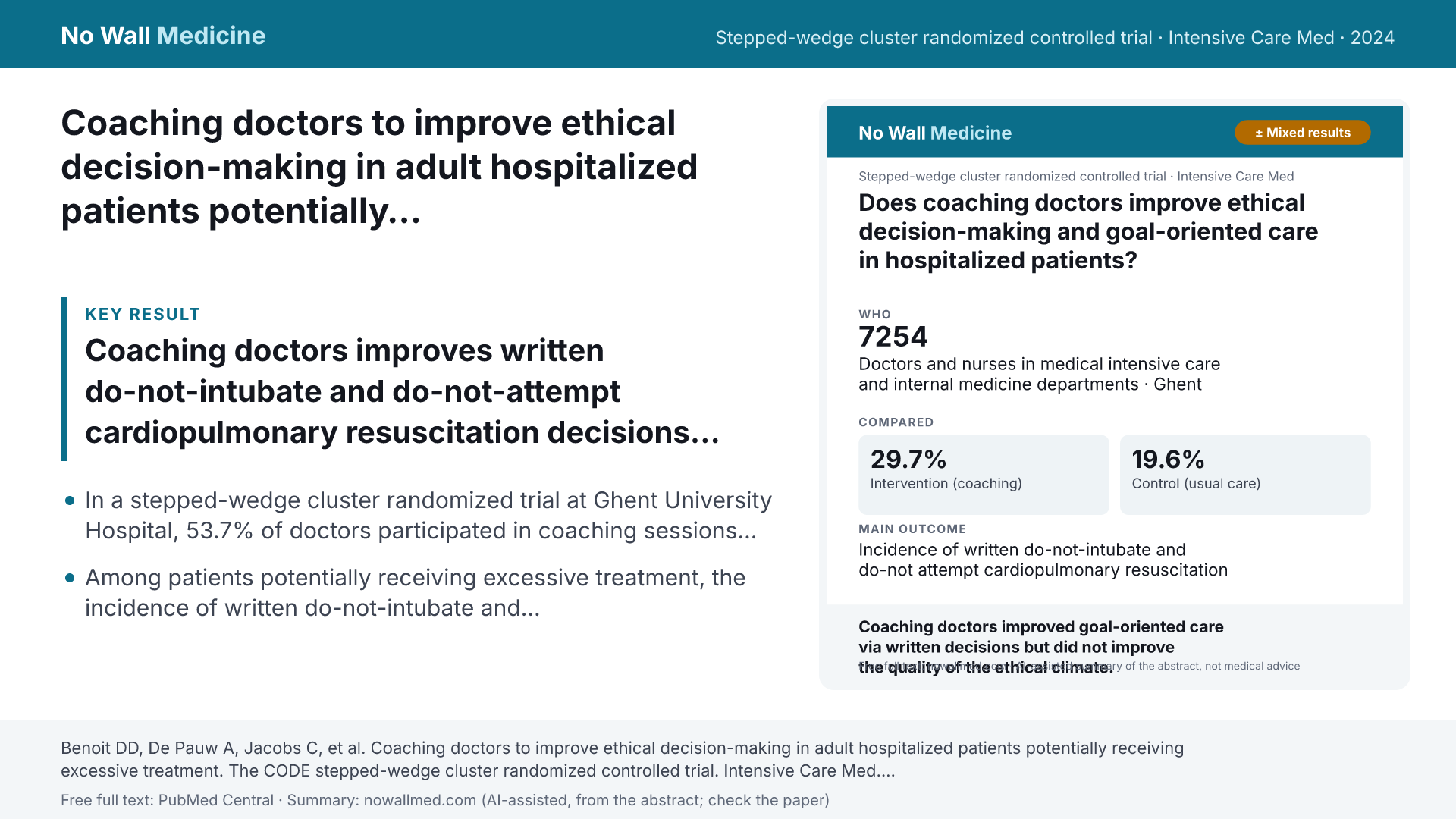
Coaching doctors improves written do-not-intubate and do-not-attempt cardiopulmonary resuscitation decisions in hospitalized patients
Coaching doctors to improve ethical decision-making in adult hospitalized patients potentially receiving excessive treatment. The CODE stepped-wedge cluster randomized controlled trial
Stepped-wedge cluster randomized controlled trialMixed results
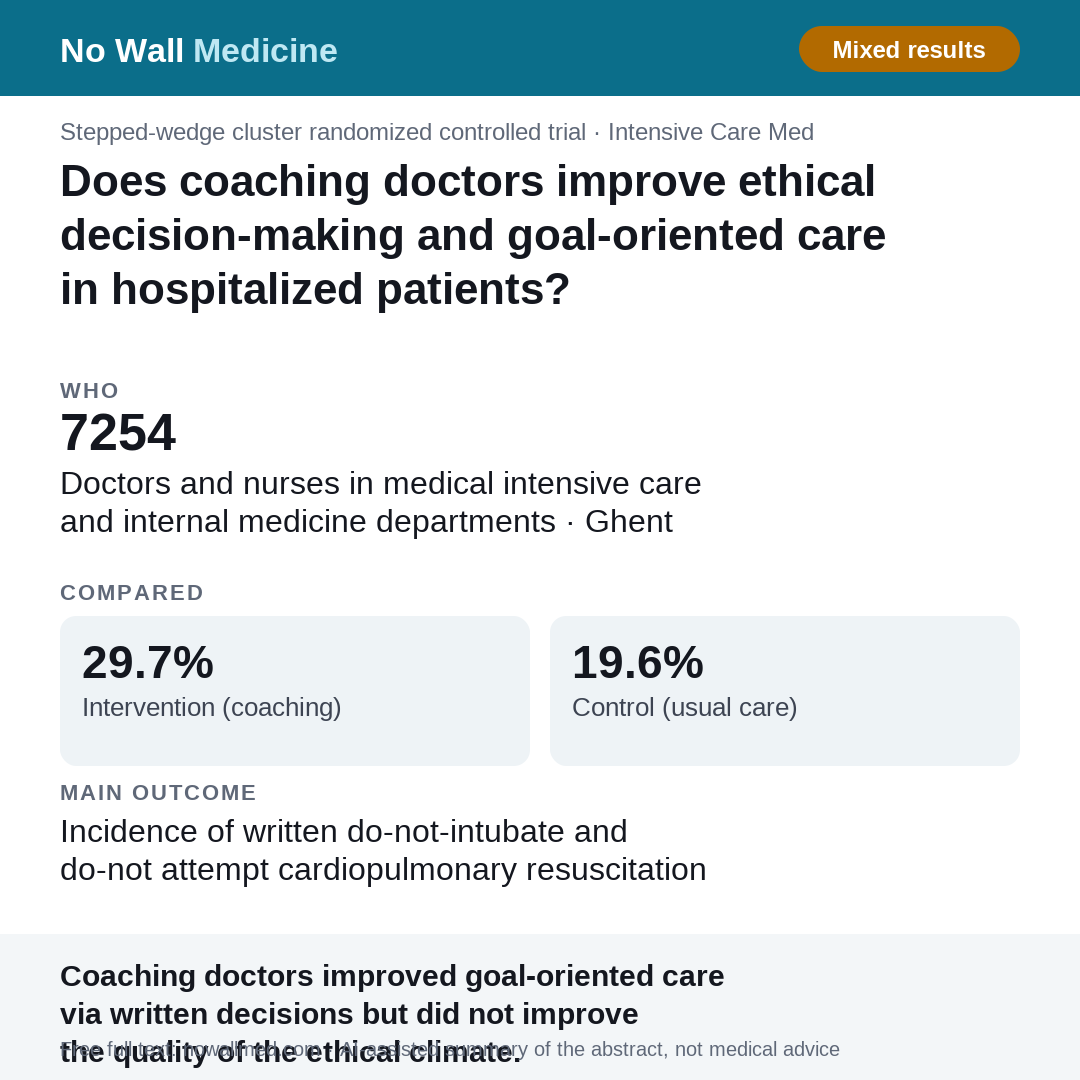
Does coaching doctors improve ethical decision-making and goal-oriented care in hospitalized patients?
Who
7254
Doctors and nurses in medical intensive care and internal medicine departments · Ghent University Hospital
Compared
29.7%Intervention (coaching) (in PET population)
19.6%Control (usual care) (in PET population)
Main outcome
Incidence of written do-not-intubate and do-not attempt cardiopulmonary resuscitation decisions
Result: odds ratio 4.24, 95% confidence interval 4.21-4.27
Bottom line: Coaching doctors improved goal-oriented care via written decisions but did not improve the quality of the ethical climate.
Limitation: Clinicians identified less potentially receiving excessive treatment than required to detect a difference in written decisions.
Intensive Care Med · 2024-09-04Download image
Clinical question: Does coaching doctors improve ethical decision-making and goal-oriented care in hospitalized patients?
Why it matters: It was unknown if coaching doctors in teams would improve goal-oriented care through written do-not-intubate and do-not-attempt cardiopulmonary resuscitation orders.
Key points
- In a stepped-wedge cluster randomized trial at Ghent University Hospital, 53.7% of doctors participated in coaching sessions to improve ethical decision-making.
- Among patients potentially receiving excessive treatment, the incidence of written do-not-intubate and do-not-attempt cardiopulmonary resuscitation decisions was 29.7% in the coaching group versus 19.6% in the control group.
- The coaching did not result in a statistically significant change in the ethical decision-making climate questionnaire scores.
Headline and key points written with AI from the paper’s abstract, with every number checked against it. Read the paper before relying on them.
Was this summary helpful?
Subject terms
Cite this article
Benoit DD, De Pauw A, Jacobs C, Moors I, Offner F, Velghe A. Coaching doctors to improve ethical decision-making in adult hospitalized patients potentially receiving excessive treatment. The CODE stepped-wedge cluster randomized controlled trial. Intensive Care Med. 2024. doi:10.1007/s00134-024-07588-0
Spotted a mistake? Suggest a correction
Top studies every Monday
The week’s key trials and guidelines in your specialties, plus any topics you follow. By email, free.
Get the weekly digest