Cognitive processing therapy reduced posttraumatic stress disorder symptoms among outpatients in Japan
Cognitive Processing Therapy for Posttraumatic Stress Disorder in Japan: A Randomized Clinical Trial
Randomized, assessor-blinded, parallel-group superiority trialBenefit found
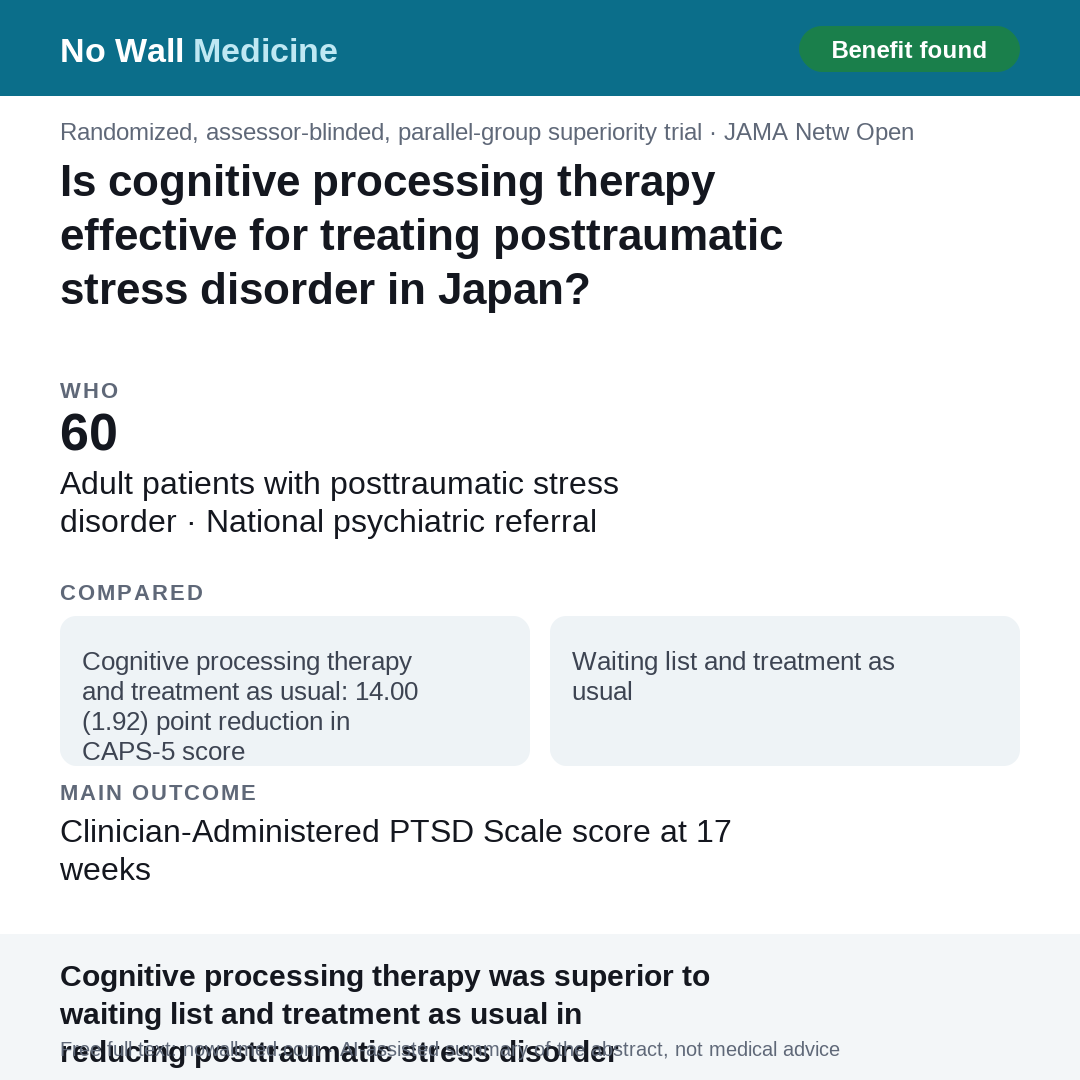
Is cognitive processing therapy effective for treating posttraumatic stress disorder in Japan?
Who
60
Adult patients with posttraumatic stress disorder · National psychiatric referral hospital in Tokyo, Japan
Compared
Cognitive processing therapy and treatment as usual: 14.00 (1.92) point reduction in CAPS-5 score
Waiting list and treatment as usual
Main outcome
Clinician-Administered PTSD Scale score at 17 weeks
Bottom line: Cognitive processing therapy was superior to waiting list and treatment as usual in reducing posttraumatic stress disorder symptoms.
JAMA Netw Open · 2025-02-03Download image
Clinical question: Is cognitive processing therapy effective for treating posttraumatic stress disorder in Japan?
Why it matters: There is little evidence regarding the efficacy of cognitive processing therapy for treating posttraumatic stress disorder in East Asian populations.
Key points
- Researchers studied 60 adult outpatients in Tokyo, comparing 12 weekly cognitive processing therapy sessions to a waiting list with usual care.
- The cognitive processing therapy group showed a mean reduction of 14.00 (SE 1.92) points in clinician-administered posttraumatic stress disorder scale scores at 17 weeks.
- Patients receiving cognitive processing therapy also showed improvements in depression, suicidal ideation, disability, and clinical global impression scores.
Limitation the authors note: The study used a single-center design at a national psychiatric referral hospital in Tokyo.
Headline and key points written with AI from the paper’s abstract, with every number checked against it. Read the paper before relying on them.
Topics
Cite this article
Ito M, Katayanagi A, Miyamae M, Inomata T, Takagishi Y, Kikuchi A. Cognitive Processing Therapy for Posttraumatic Stress Disorder in Japan: A Randomized Clinical Trial. JAMA Netw Open. 2025. doi:10.1001/jamanetworkopen.2024.58059
Spotted a mistake? Suggest a correction
Top studies every Monday
The week’s key trials and guidelines in your specialties, plus any topics you follow. By email, free.
Get the weekly digest