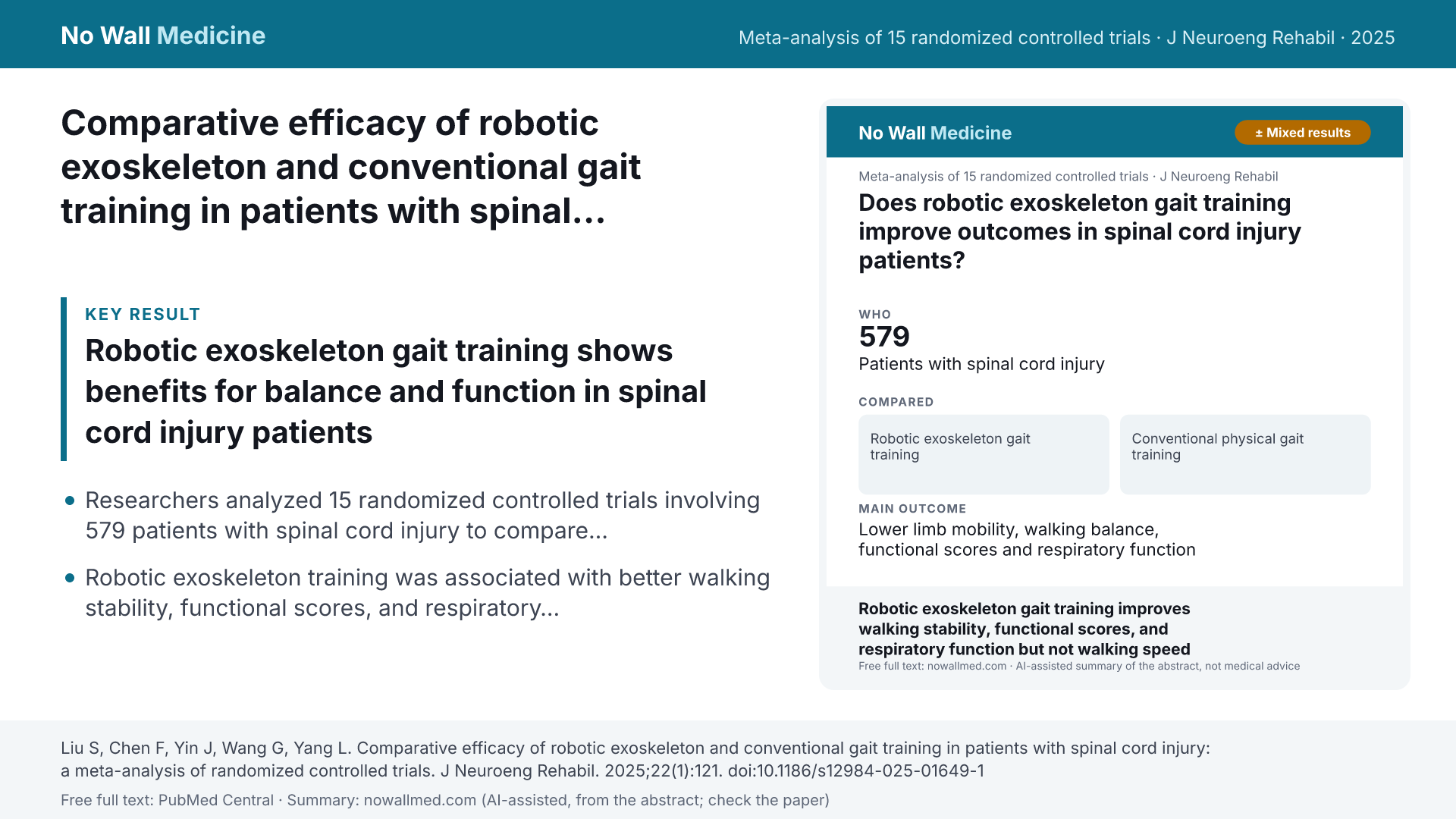
Robotic exoskeleton gait training shows benefits for balance and function in spinal cord injury patients
Comparative efficacy of robotic exoskeleton and conventional gait training in patients with spinal cord injury: a meta-analysis of randomized controlled trials
Meta-analysis of 15 randomized controlled trialsMixed results
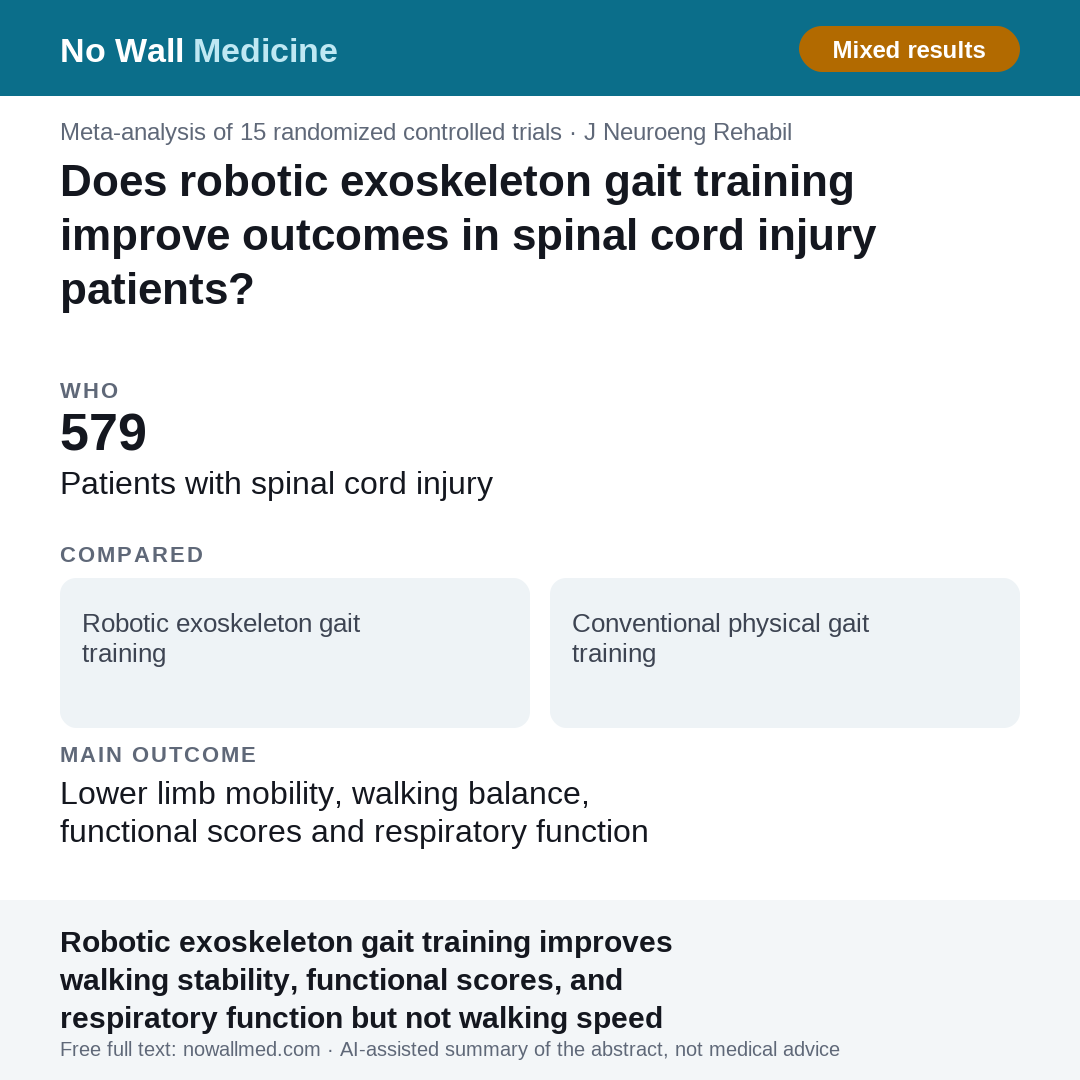
Does robotic exoskeleton gait training improve outcomes in spinal cord injury patients?
Who
579
Patients with spinal cord injury
Compared
Robotic exoskeleton gait training
Conventional physical gait training
Main outcome
Lower limb mobility, walking balance, functional scores and respiratory function
Bottom line: Robotic exoskeleton gait training improves walking stability, functional scores, and respiratory function but not walking speed or distance.
J Neuroeng Rehabil · 2025-05-29Download image
Clinical question: Does robotic exoskeleton gait training improve outcomes in spinal cord injury patients?
Why it matters: It is unclear if robotic exoskeleton gait training provides superior outcomes compared to conventional physical gait training for mobility and respiratory function in spinal cord injury.
Key points
- Researchers analyzed 15 randomized controlled trials involving 579 patients with spinal cord injury to compare robotic exoskeleton gait training with conventional physical gait training.
- Robotic exoskeleton training was associated with better walking stability, functional scores, and respiratory function, including a forced expiratory volume in one second increase of 0.60 (95%CI 0.05, 1.16) L.
- The robotic training showed no significant difference in walking speed or walking distance compared to conventional physical gait training.
Headline and key points written with AI from the paper’s abstract, with every number checked against it. Read the paper before relying on them.
Was this summary helpful?
Subject terms
Cite this article
Liu S, Chen F, Yin J, Wang G, Yang L. Comparative efficacy of robotic exoskeleton and conventional gait training in patients with spinal cord injury: a meta-analysis of randomized controlled trials. J Neuroeng Rehabil. 2025. doi:10.1186/s12984-025-01649-1
Spotted a mistake? Suggest a correction
Top studies every Monday
The week’s key trials and guidelines in your specialties, plus any topics you follow. By email, free.
Get the weekly digest