Systematic review shows wearable lower-limb exoskeletons have potential for gait rehabilitation in neuromuscular impairments
Systematic review on wearable lower-limb exoskeletons for gait training in neuromuscular impairments
Systematic reviewMixed results
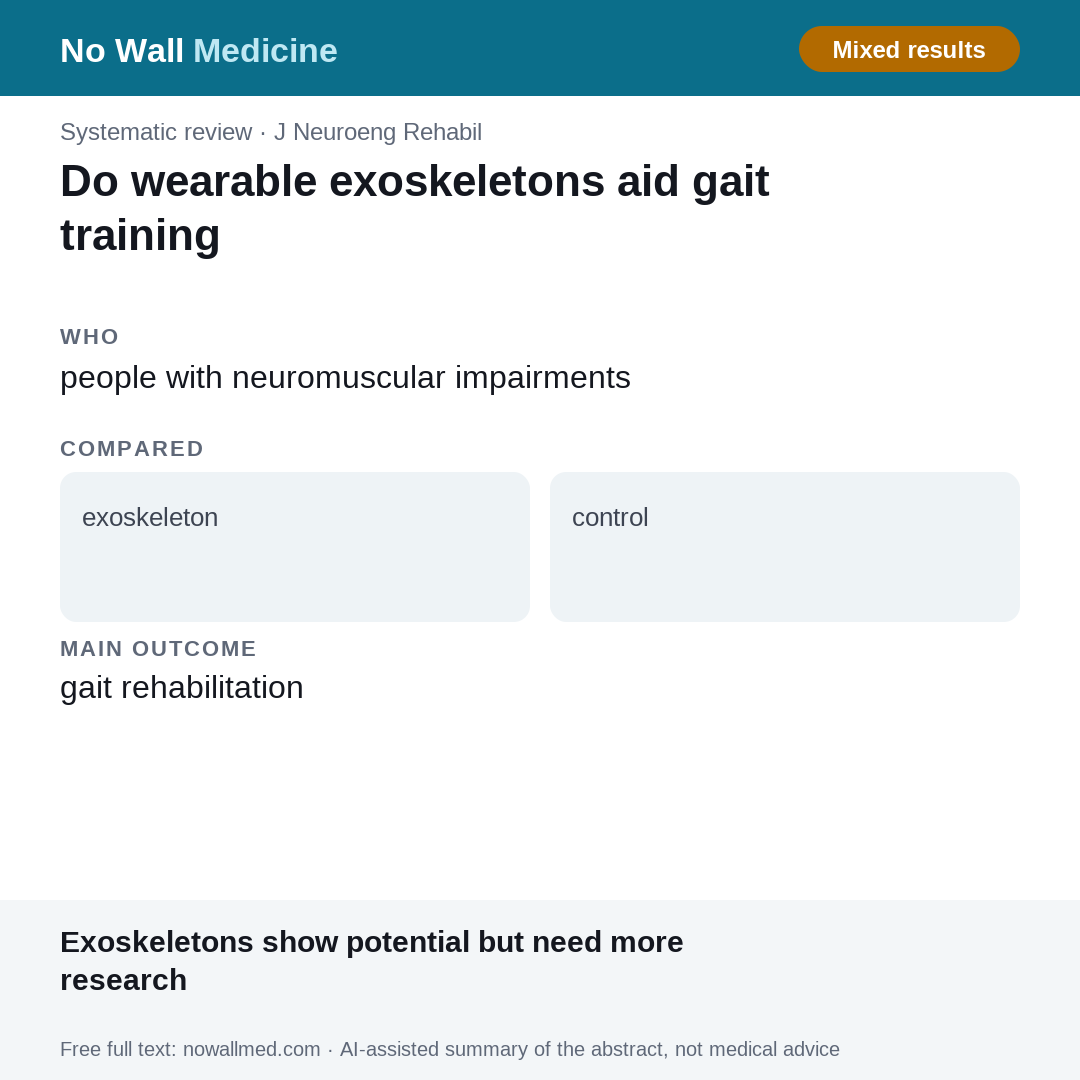
Do wearable exoskeletons aid gait training
Who
people with neuromuscular impairments
Compared
exoskeleton
control
Main outcome
gait rehabilitation
Bottom line: Exoskeletons show potential but need more research
Limitation: limited to short trials with few participants
J Neuroeng Rehabil · 2021-02-01Download image
Why it matters: The clinical efficacy and specific benefits of wearable lower-limb exoskeletons for gait rehabilitation remain uncertain due to limited evidence.
Key points
- Researchers analyzed 87 clinical studies regarding the technology and clinical validation of wearable powered lower-limb exoskeletons for people with neuromuscular impairments.
- The review found that these devices may improve mobility and independence in non-ambulatory people and may reduce secondary health conditions related to sedentariness.
- Current technology is limited by heavy and bulky devices that require supervision and the use of walking aids.
Limitation the authors note: Evidence is currently limited to short-intervention trials with few participants and diversity among clinical protocols.
Headline and key points written with AI from the paper’s abstract, with every number checked against it. Read the paper before relying on them.
Was this summary helpful?
Subject terms
Cite this article
Rodríguez-Fernández A, Lobo-Prat J, Font-Llagunes JM. Systematic review on wearable lower-limb exoskeletons for gait training in neuromuscular impairments. J Neuroeng Rehabil. 2021. doi:10.1186/s12984-021-00815-5
Spotted a mistake? Suggest a correction
Top studies every Monday
The week’s key trials and guidelines in your specialties, plus any topics you follow. By email, free.
Get the weekly digest