Continuous theta-burst stimulation of the brain improves upper limb recovery after stroke
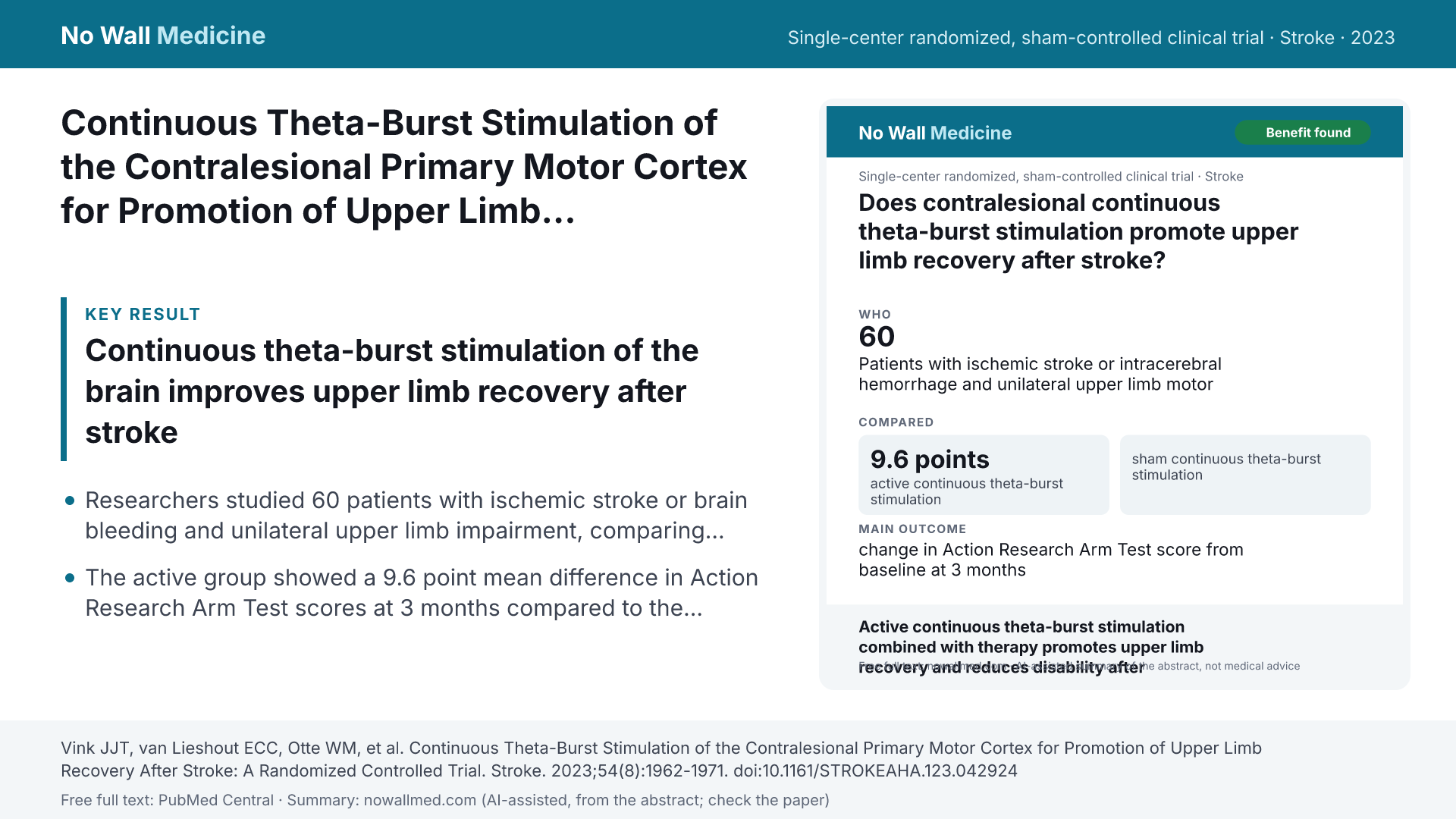
Continuous Theta-Burst Stimulation of the Contralesional Primary Motor Cortex for Promotion of Upper Limb Recovery After Stroke: A Randomized Controlled Trial
Single-center randomized, sham-controlled clinical trialBenefit found
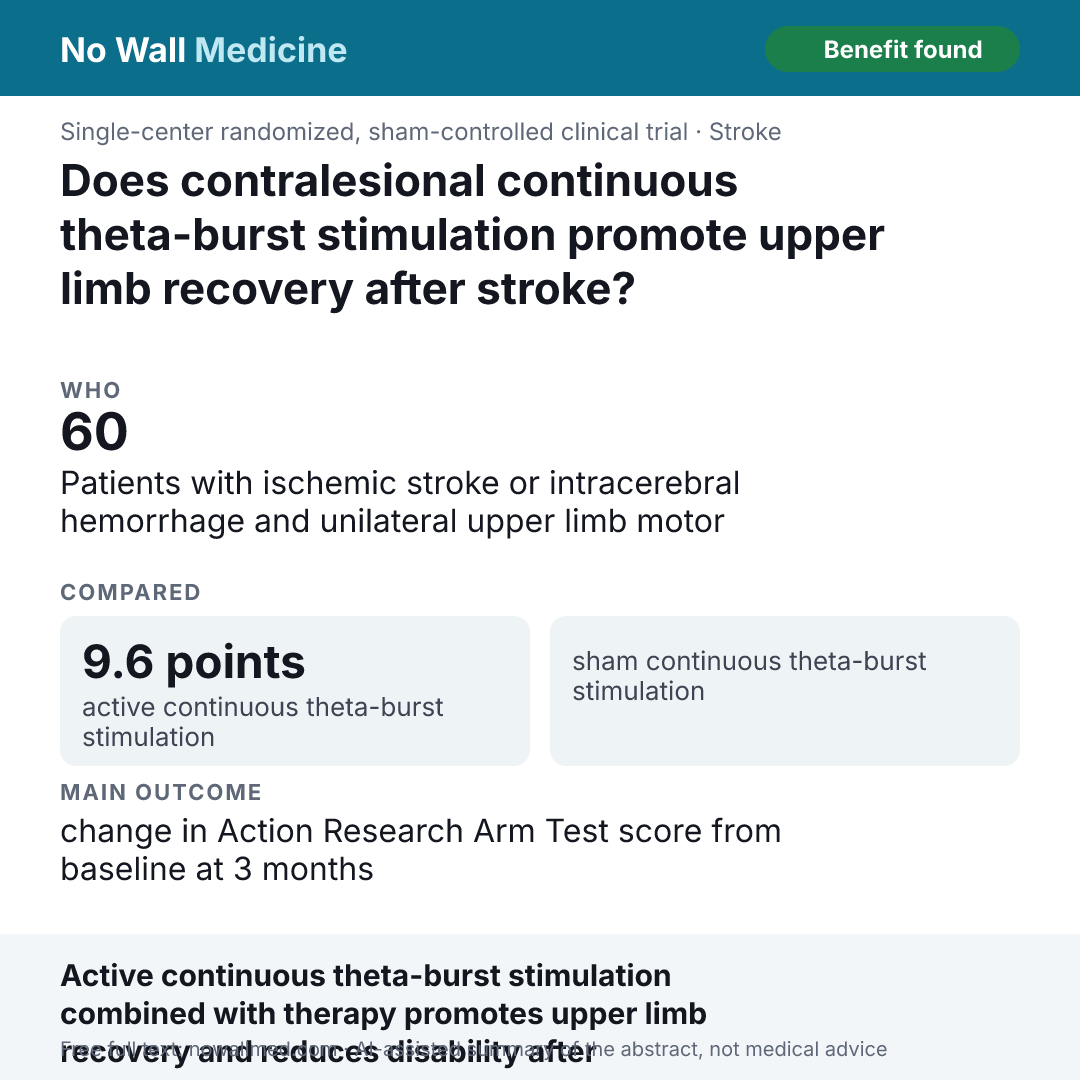
Does contralesional continuous theta-burst stimulation promote upper limb recovery after stroke?
Who
60
Patients with ischemic stroke or intracerebral hemorrhage and unilateral upper limb motor impairment · Single-center
Compared
9.6 pointsactive continuous theta-burst stimulation
sham continuous theta-burst stimulation
Main outcome
change in Action Research Arm Test score from baseline at 3 months
Result: mean difference 9.6 points (95% CI 1.2-17.9)
Bottom line: Active continuous theta-burst stimulation combined with therapy promotes upper limb recovery and reduces disability after stroke.
Stroke · 2023-06-22 · Save PNG
Clinical question: Does contralesional continuous theta-burst stimulation promote upper limb recovery after stroke?
Key points
- Researchers studied 60 patients with ischemic stroke or brain bleeding and unilateral upper limb impairment, comparing active or sham continuous theta-burst stimulation with standard therapy.
- The active group showed a 9.6 point mean difference in Action Research Arm Test scores at 3 months compared to the sham group.
- Active stimulation was associated with better modified Rankin Scale scores and an 18 days shorter stay at the rehabilitation center.
Headline and key points written with AI from the paper’s abstract, with every number checked against it. Read the paper before relying on them.
Was this summary helpful?
Subject terms
Headline, design, result, key points, caveat and citation as plain text.
Cite this article
Vink JJT, van Lieshout ECC, Otte WM, et al. Continuous Theta-Burst Stimulation of the Contralesional Primary Motor Cortex for Promotion of Upper Limb Recovery After Stroke: A Randomized Controlled Trial. Stroke. 2023;54(8):1962-1971. doi:10.1161/STROKEAHA.123.042924
Spotted a mistake? Suggest a correction