Randomized trialPLOS Medicine · Nov 26, 2024

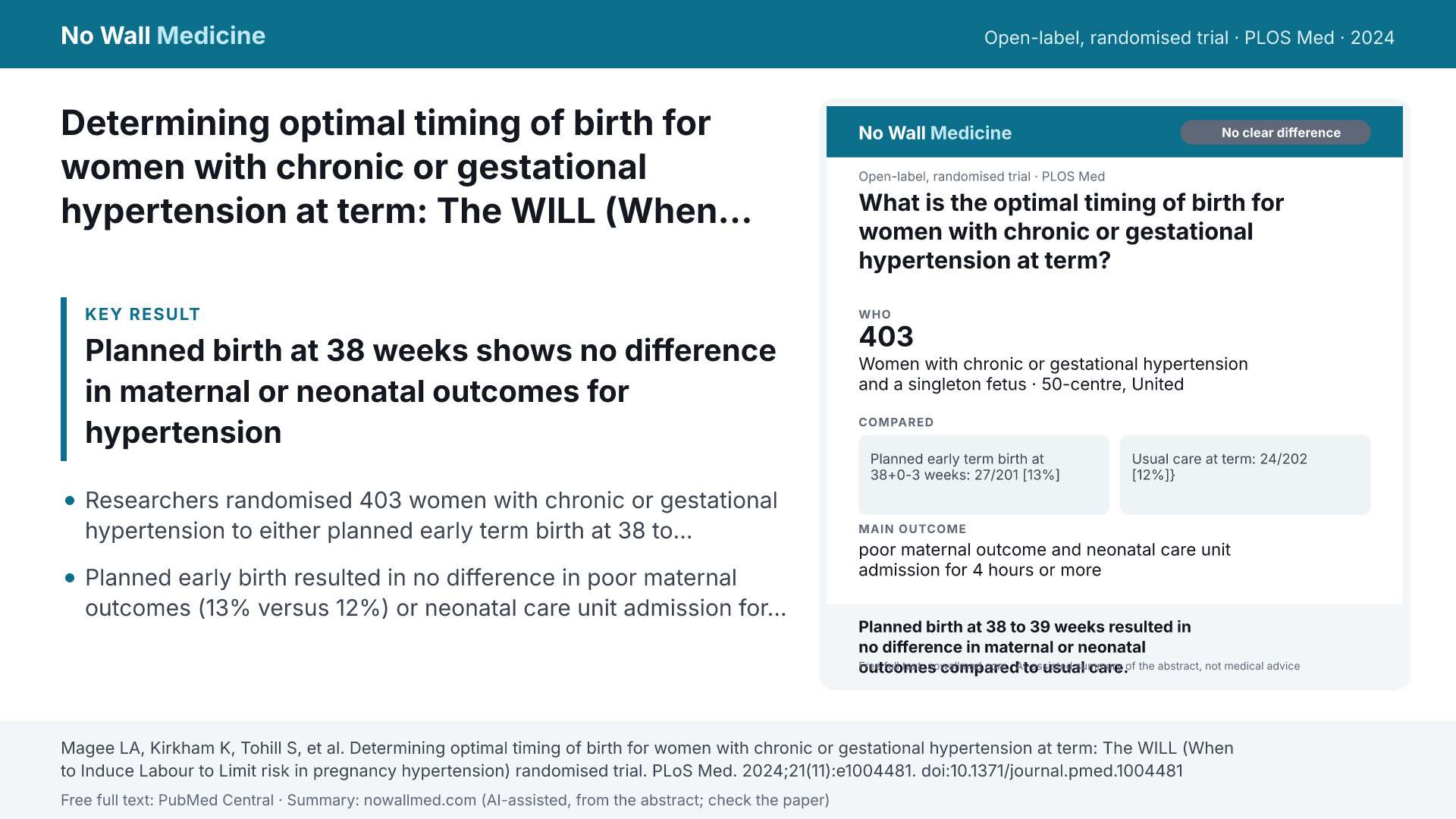
Planned birth at 38 weeks shows no difference in maternal or neonatal outcomes for hypertension

Determining optimal timing of birth for women with chronic or gestational hypertension at term: The WILL (When to Induce Labour to Limit risk in pregnancy hypertension) randomised trial

Magee LA, Kirkham K, Tohill S, Gkini E, Moakes CA, Dorling J, et al
Obstetrics & GynecologyCardiologyAdult
Open-label, randomised trialNo clear difference
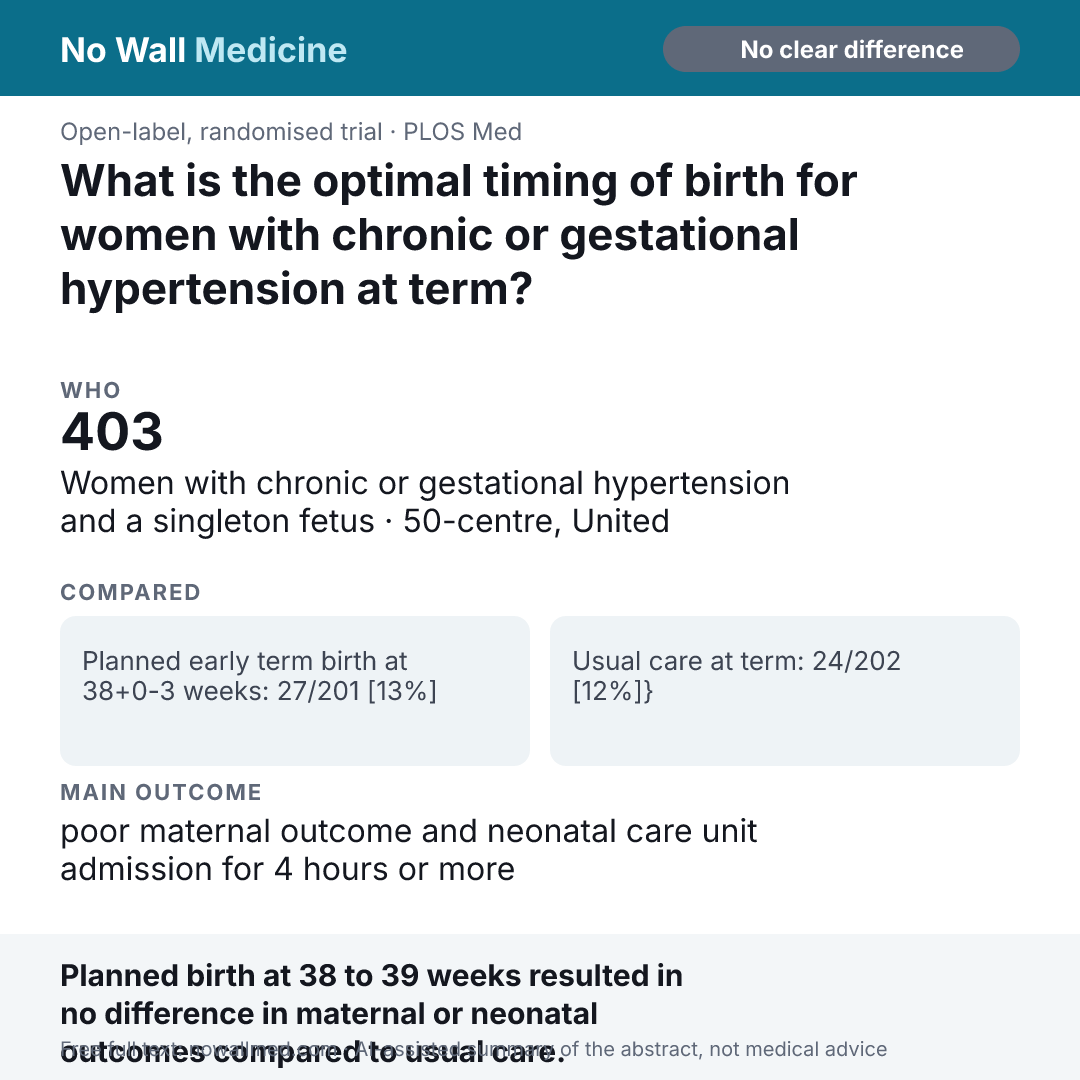
What is the optimal timing of birth for women with chronic or gestational hypertension at term?
Who
403
Women with chronic or gestational hypertension and a singleton fetus · 50-centre, United Kingdom
Compared
Planned early term birth at 38+0-3 weeks: 27/201 [13%]
Usual care at term: 24/202 [12%]}
Main outcome
poor maternal outcome and neonatal care unit admission for 4 hours or more
Result: adjusted risk ratio 1.16 (95% CI 0.72 to 1.87)
Bottom line: Planned birth at 38 to 39 weeks resulted in no difference in maternal or neonatal outcomes compared to usual care.
Limitation: Smaller-than-planned sample size and lower-than-anticipated event rates.
PLOS Med · 2024-11-26 · ISRCTN77258279
Read the full paper free at PubMed Central ↗
Save PNG⬇ Slide🖨 Handout

Headline and visual abstract written with AI from the paper’s abstract, with every number checked against it. Read the paper before relying on them.

Was this summary helpful?

More on this topic

Hypertension

Subject terms

Humans; Female; Pregnancy; Hypertension, Pregnancy-Induced; Adult; Labor, Induced; Time Factors; United Kingdom; Term Birth; Gestational Age; Chronic Disease; Cesarean Section

DOI: 10.1371/journal.pmed.1004481 · PubMed: 39591427 · Registered: ISRCTN77258279

Cite this article

Magee LA, Kirkham K, Tohill S, et al. Determining optimal timing of birth for women with chronic or gestational hypertension at term: The WILL (When to Induce Labour to Limit risk in pregnancy hypertension) randomised trial. PLoS Med. 2024;21(11):e1004481. doi:10.1371/journal.pmed.1004481

RIS (EndNote, Zotero, Mendeley)BibTeX

Spotted a mistake? Suggest a correction

Top Obstetrics & Gynecology studies every Monday

The week’s key trials and guidelines, free to read, in one short email. No account; unsubscribe in one click.

Choose specialties and topics

Similar articles

Randomized trial · NEJM · Aug 9, 2018 · All ages · Obstetrics & Gynecology

Inducing labor at 39 weeks lowered cesarean rates in low-risk first-time mothers

Randomized trial n = 8,094 · Lancet · Dec 4, 2025 · All ages · Obstetrics & Gynecology

Planned early-term birth based on risk assessment was associated with lower pre-eclampsia rates

Randomized trial · BJOG · May 1, 2025 · All ages · Obstetrics & Gynecology

Early induction of labour for suspected large babies was not cost-effective to prevent shoulder dystocia

Meta-analysis n = 1,790 · AJOG · Apr 26, 2022 · Pediatric · Obstetrics & Gynecology, Pediatrics

Planned delivery for preeclampsia at 34 weeks reduces maternal morbidity but increases neonatal respiratory issues

Randomized trial n = 357 · BJOG · Jun 24, 2025 · Obstetrics & Gynecology, Cardiology

Planned early birth at 38 weeks showed no difference in childbirth satisfaction for women with hypertension