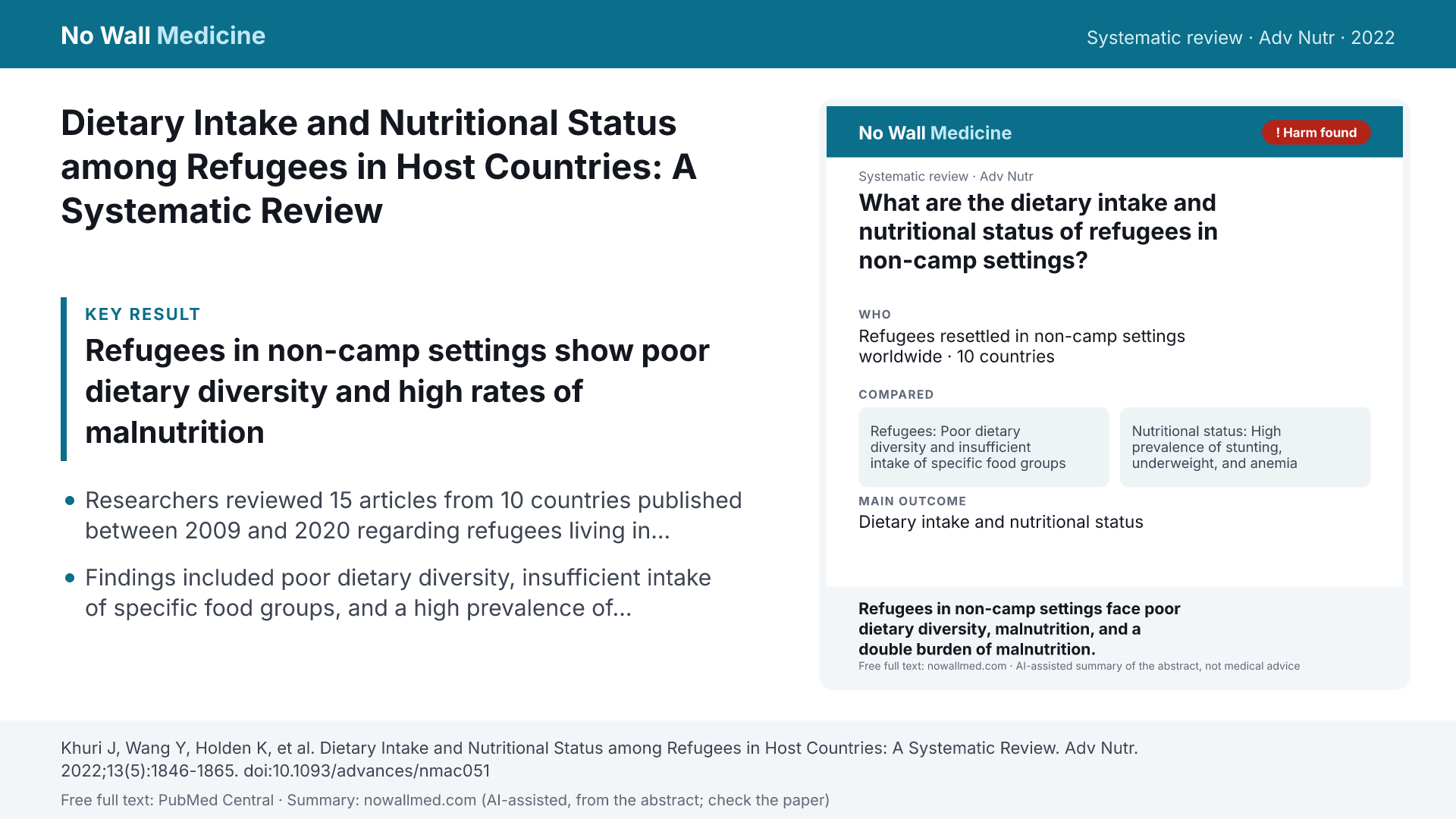
Refugees in non-camp settings show poor dietary diversity and high rates of malnutrition
Dietary Intake and Nutritional Status among Refugees in Host Countries: A Systematic Review
Systematic reviewHarm found
What are the dietary intake and nutritional status of refugees in non-camp settings?
Who
Refugees resettled in non-camp settings worldwide · 10 countries
Compared
Refugees: Poor dietary diversity and insufficient intake of specific food groups
Nutritional status: High prevalence of stunting, underweight, and anemia
Main outcome
Dietary intake and nutritional status
Bottom line: Refugees in non-camp settings face poor dietary diversity, malnutrition, and a double burden of malnutrition.
Adv Nutr · 2022-05-14Download image
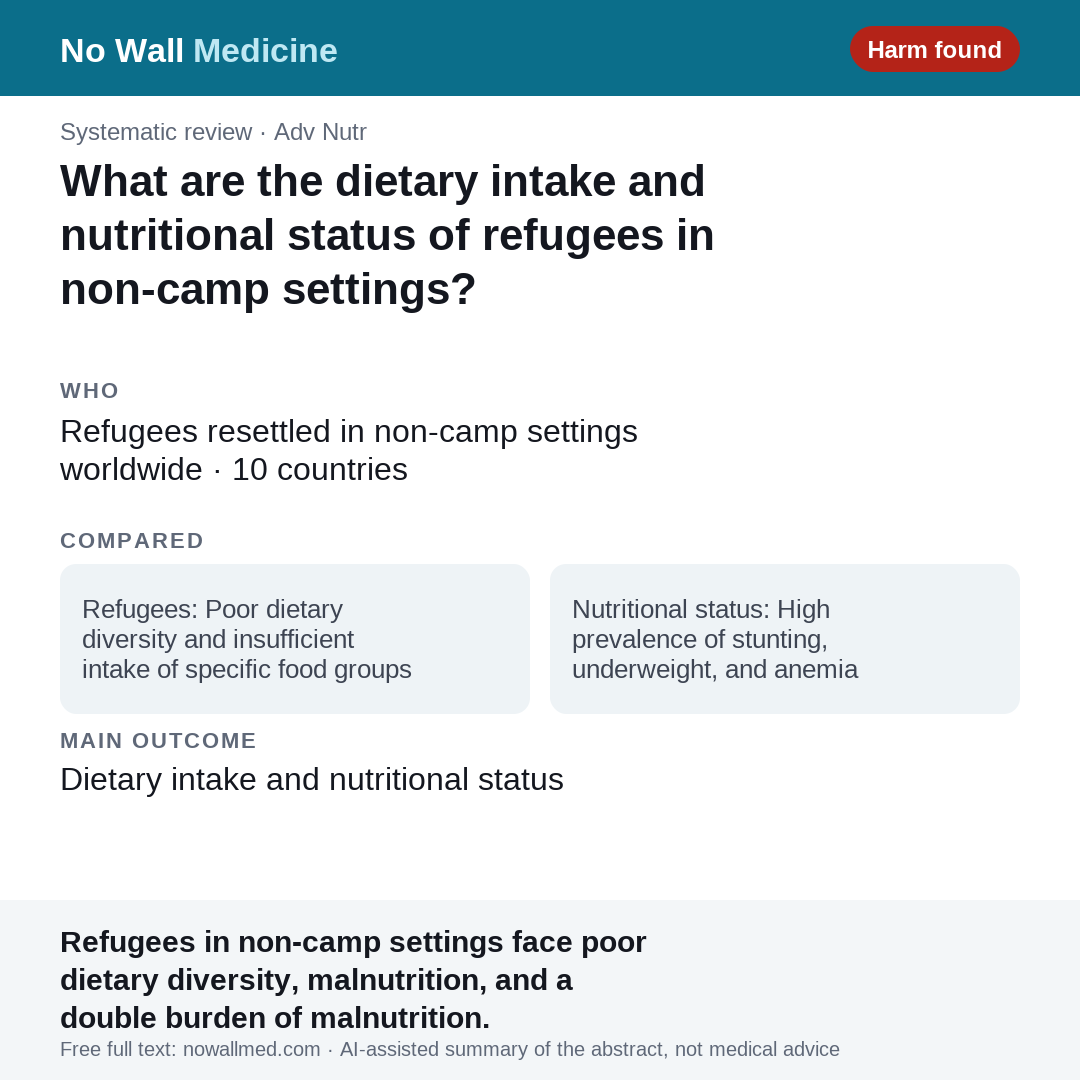
Clinical question: What are the dietary intake and nutritional status of refugees in non-camp settings?
Why it matters: It was unknown how dietary intake and nutritional status are affected for refugees resettled in non-camp settings worldwide.
Key points
- Researchers reviewed 15 articles from 10 countries published between 2009 and 2020 regarding refugees living in non-camp settings.
- Findings included poor dietary diversity, insufficient intake of specific food groups, and a high prevalence of stunting, underweight, and anemia, especially in children.
- A double burden of malnutrition was observed, with nutritional status being influenced by pre-resettlement experiences and host country resources.
Headline and key points written with AI from the paper’s abstract, with every number checked against it. Read the paper before relying on them.
Was this summary helpful?
Subject terms
Cite this article
Khuri J, Wang Y, Holden K, Fly AD, Mbogori T, Mueller S. Dietary Intake and Nutritional Status among Refugees in Host Countries: A Systematic Review. Adv Nutr. 2022. doi:10.1093/advances/nmac051
Spotted a mistake? Suggest a correction