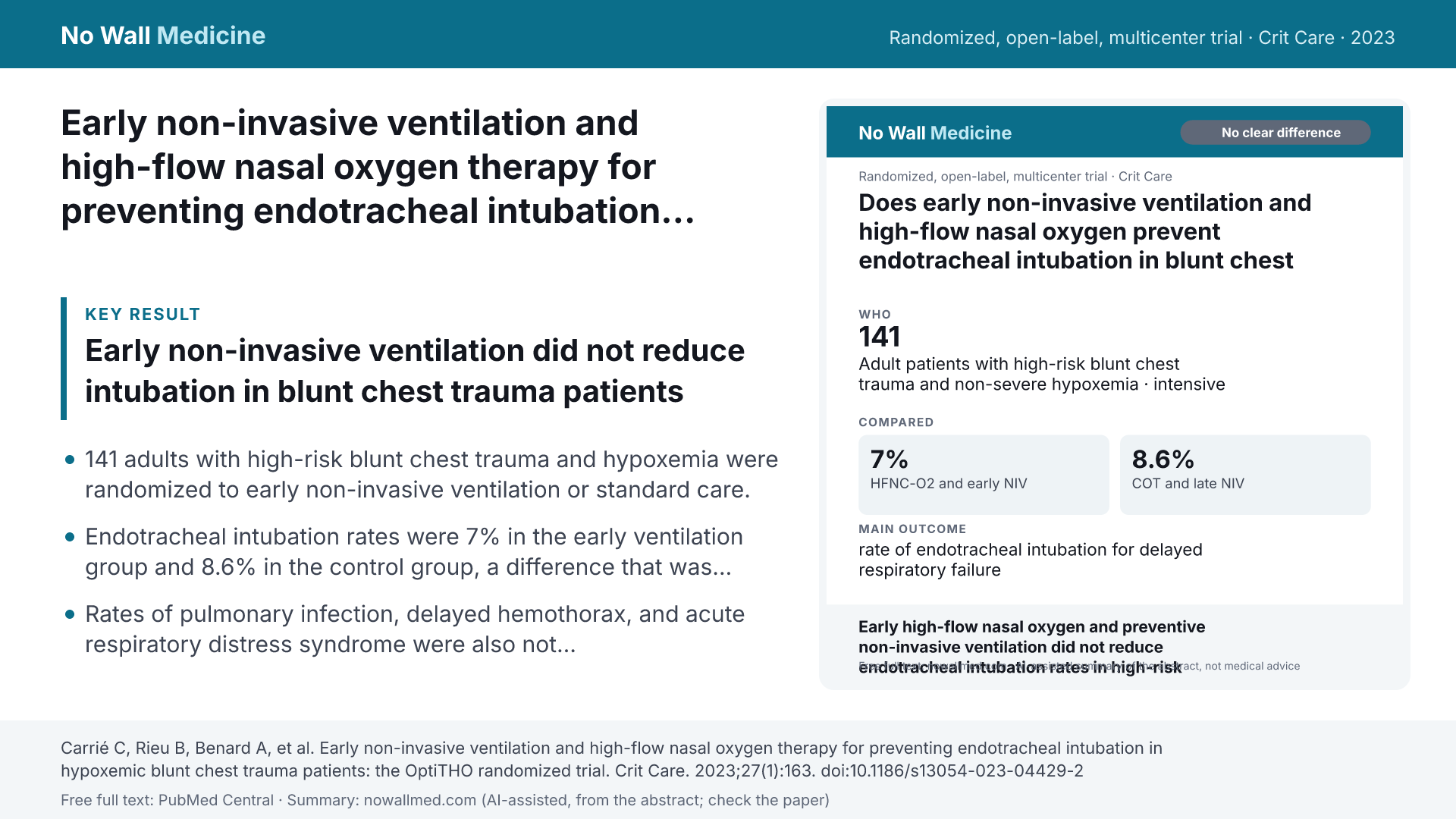
Early non-invasive ventilation and high-flow nasal oxygen did not reduce intubation rates in chest trauma
Early non-invasive ventilation and high-flow nasal oxygen therapy for preventing endotracheal intubation in hypoxemic blunt chest trauma patients: the OptiTHO randomized trial
Randomized, open-label, multicenter trialNo clear difference
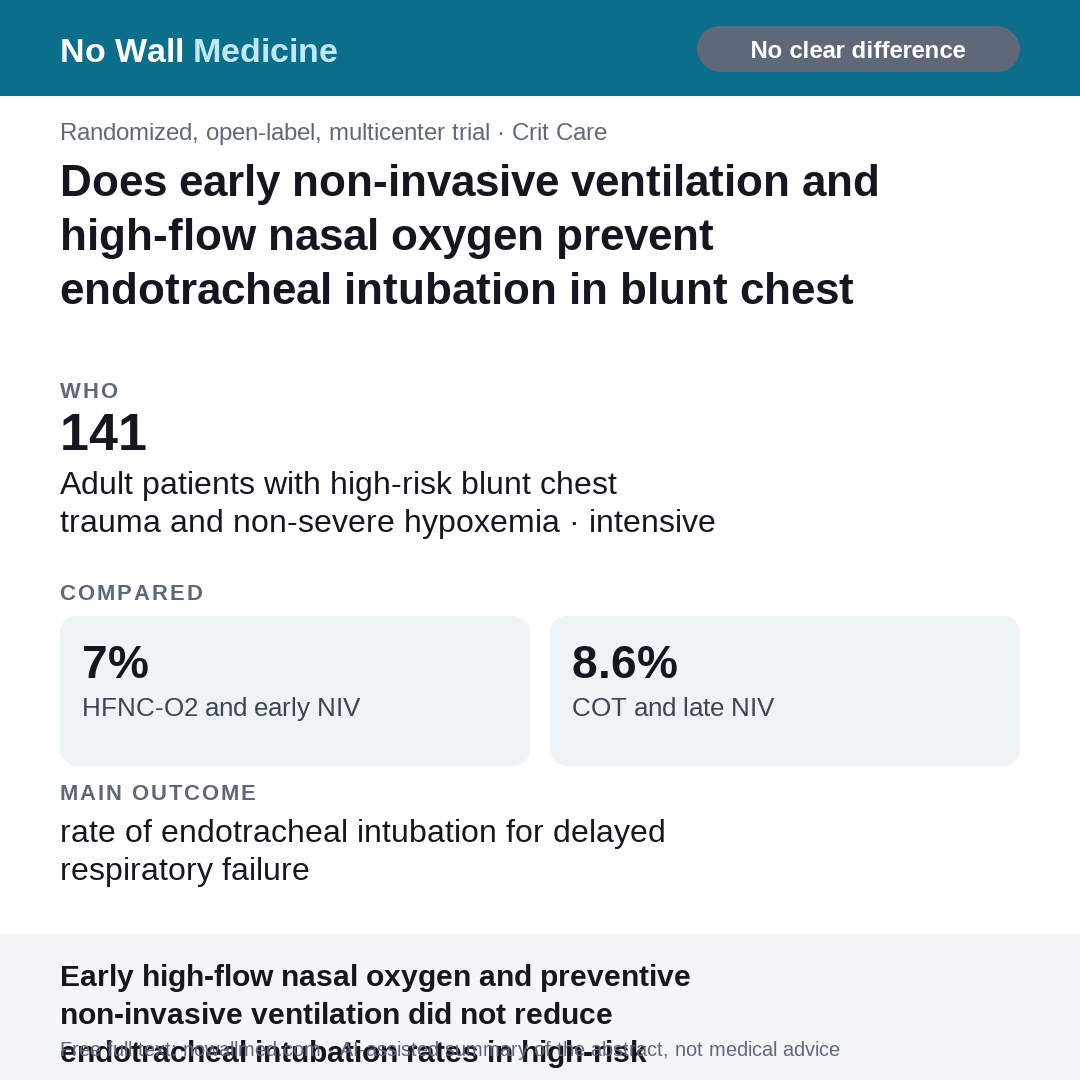
Does early non-invasive ventilation and high-flow nasal oxygen prevent endotracheal intubation in blunt chest trauma?
Who
141
Adult patients with high-risk blunt chest trauma and non-severe hypoxemia · intensive care unit
Compared
7%HFNC-O2 and early NIV (5/71)
8.6%COT and late NIV (6/70)
Main outcome
rate of endotracheal intubation for delayed respiratory failure
Result: adjusted OR 0.72 (95%IC: 0.20-2.43)
Bottom line: Early high-flow nasal oxygen and preventive non-invasive ventilation did not reduce endotracheal intubation rates in high-risk blunt chest trauma.
Limitation: Study enrollment was stopped for futility after a 2-year study period
Crit Care · 2023-04-26Download image
Clinical question: Does early non-invasive ventilation and high-flow nasal oxygen prevent endotracheal intubation in blunt chest trauma?
Why it matters: The benefit-risk ratio of using prophylactic non-invasive ventilation and high-flow nasal oxygen therapy during the early stages of blunt chest trauma remains controversial.
Key points
- Researchers randomized 141 adult intensive care patients with high-risk blunt chest trauma to compare early non-invasive ventilation with standard care.
- The rate of endotracheal intubation for delayed respiratory failure was 7% [5/71] in the experimental group compared to 8.6% [6/70] in the control group.
- The experimental strategy was not significantly associated with lower rates of pulmonary infection, delayed hemothorax, or moderate-to-severe acute respiratory distress syndrome.
Headline and key points written with AI from the paper’s abstract, with every number checked against it. Read the paper before relying on them.
Was this summary helpful?
Subject terms
Cite this article
Carrié C, Rieu B, Benard A, et al. Early non-invasive ventilation and high-flow nasal oxygen therapy for preventing endotracheal intubation in hypoxemic blunt chest trauma patients: the OptiTHO randomized trial. Crit Care. 2023. doi:10.1186/s13054-023-04429-2
Spotted a mistake? Suggest a correction