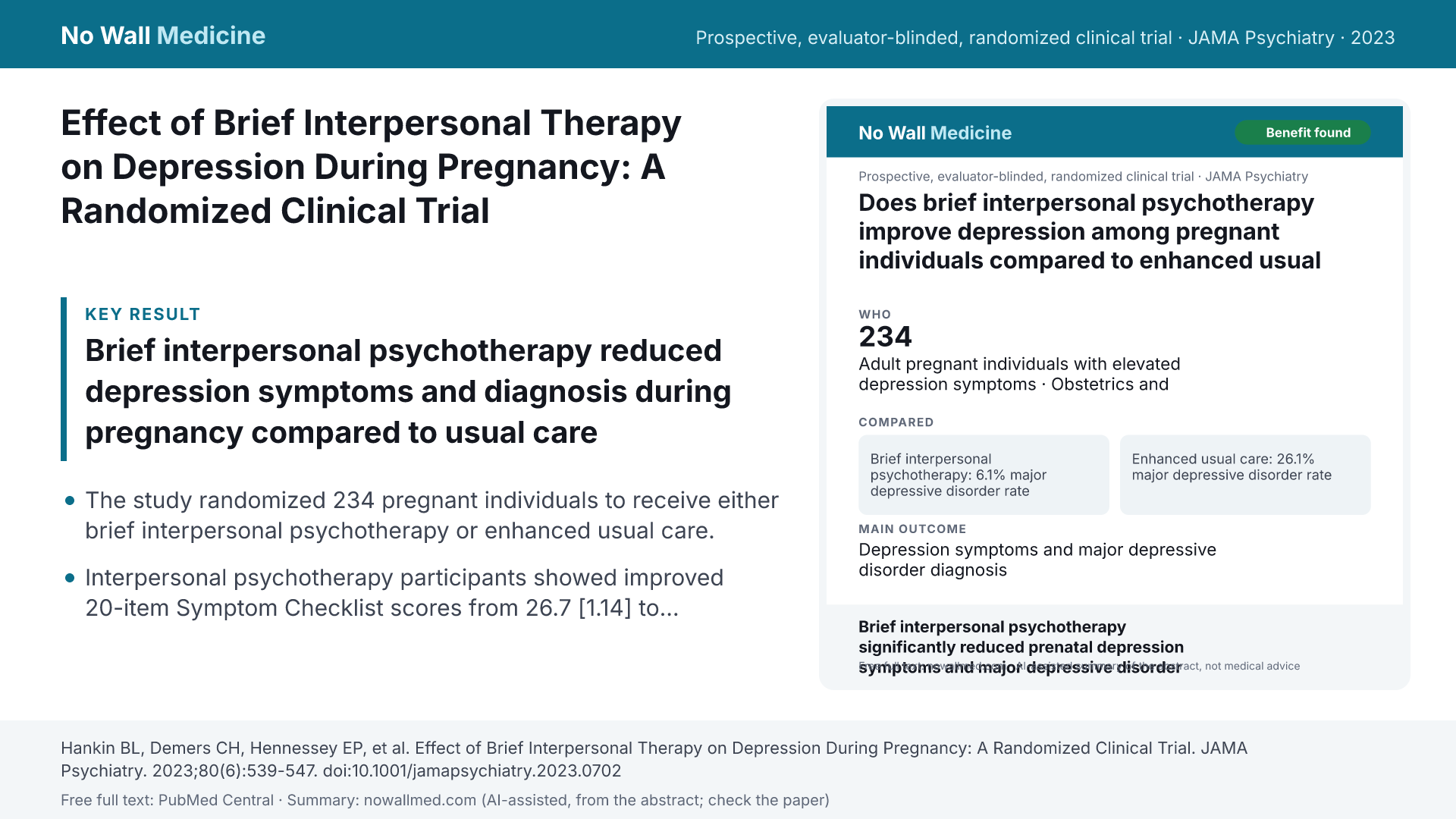
Brief interpersonal psychotherapy reduced depression symptoms and diagnosis during pregnancy compared to usual care
Effect of Brief Interpersonal Therapy on Depression During Pregnancy: A Randomized Clinical Trial
Prospective, evaluator-blinded, randomized clinical trialBenefit found
Does brief interpersonal psychotherapy improve depression among pregnant individuals compared to enhanced usual care?
Who
234
Adult pregnant individuals with elevated depression symptoms · Obstetrics and gynecology clinics
Compared
Brief interpersonal psychotherapy: 6.1% major depressive disorder rate
Enhanced usual care: 26.1% major depressive disorder rate
Main outcome
Depression symptoms and major depressive disorder diagnosis
Result: odds ratio 4.99 (95% CI 2.08-11.97)
Bottom line: Brief interpersonal psychotherapy significantly reduced prenatal depression symptoms and major depressive disorder compared to enhanced usual care.
JAMA Psychiatry · 2023-04-19Download image
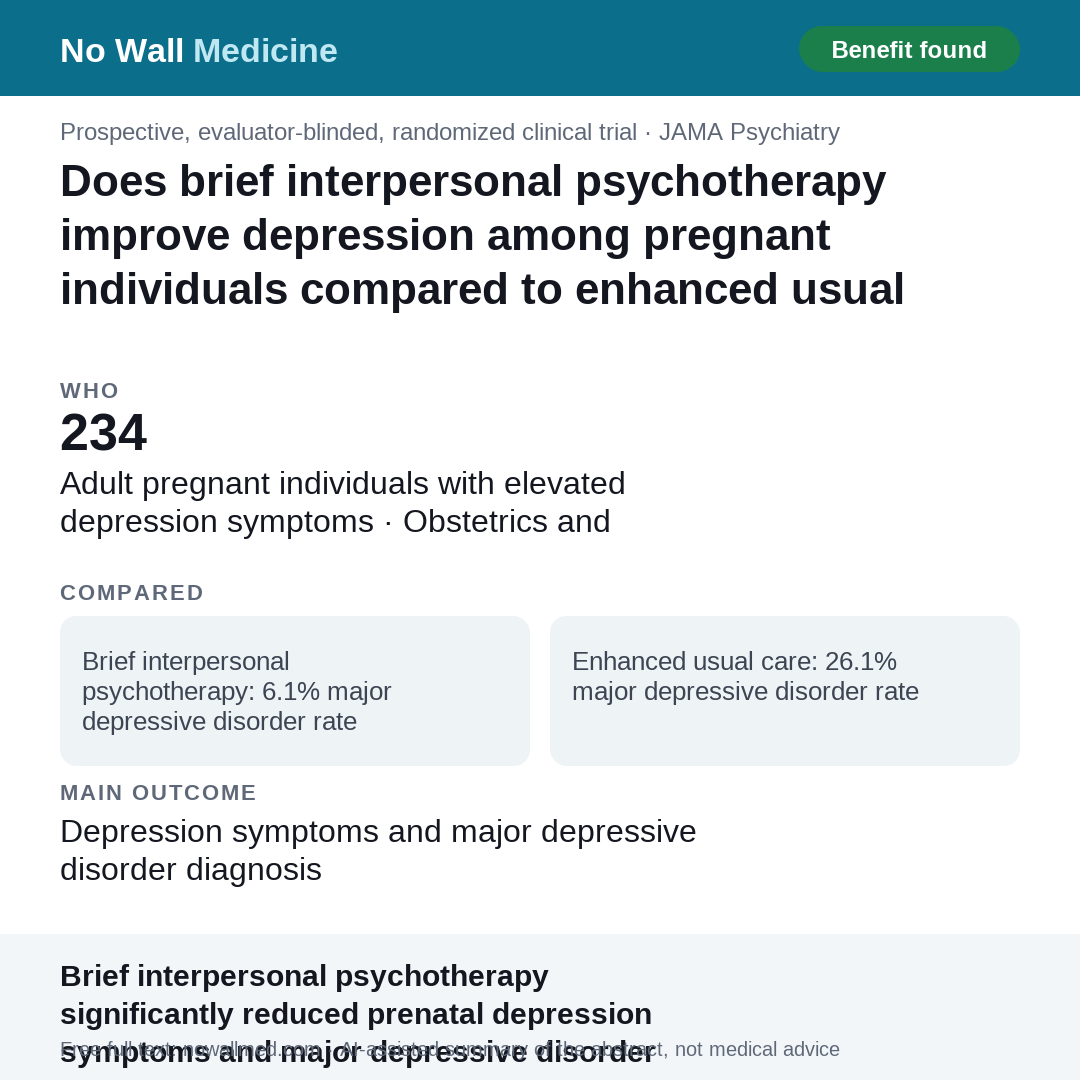
Clinical question: Does brief interpersonal psychotherapy improve depression among pregnant individuals compared to enhanced usual care?
Why it matters: Brief, effective, and safe interventions to reduce depression during pregnancy are needed because prenatal depression has negative consequences for mothers and developing fetuses.
In absolute numbers
Brief interpersonal psychotherapy: 6.1% · Enhanced usual care: 26.1% → a difference of 20 percentage points, so about 5 people would need the treatment for 1 more to benefit (number needed to treat) over the trial’s follow-up.
Worked out by us from the two group results above, not reported by the authors. Check the paper for the exact outcome and timing.
Key points
- The study randomized 234 pregnant individuals to receive either brief interpersonal psychotherapy or enhanced usual care.
- Interpersonal psychotherapy participants showed improved 20-item Symptom Checklist scores from 26.7 [1.14] to 13.6 [1.40] compared to 27.1 [1.12] to 23.5 [1.34] in the usual care group.
- The rate of major depressive disorder at the end of pregnancy was 6.1% for the psychotherapy group versus 26.1% for the usual care group.
Headline and key points written with AI from the paper’s abstract, with every number checked against it. Read the paper before relying on them.
Was this summary helpful?
Subject terms
Cite this article
Hankin BL, Demers CH, Hennessey EP, Perzow SED, Curran MC, Gallop RJ. Effect of Brief Interpersonal Therapy on Depression During Pregnancy: A Randomized Clinical Trial. JAMA Psychiatry. 2023. doi:10.1001/jamapsychiatry.2023.0702
Spotted a mistake? Suggest a correction