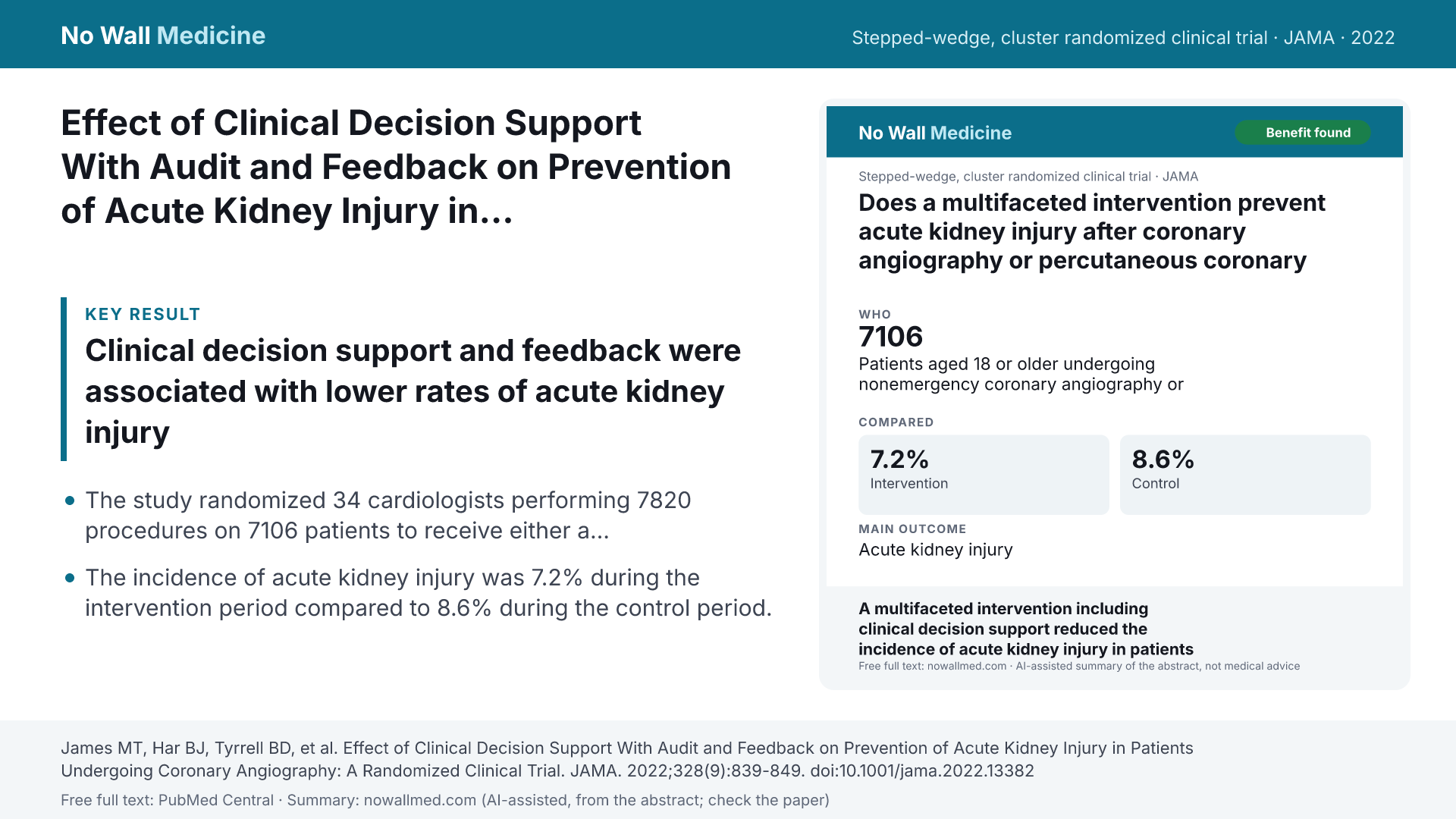
Clinical decision support and feedback were associated with lower rates of acute kidney injury
Effect of Clinical Decision Support With Audit and Feedback on Prevention of Acute Kidney Injury in Patients Undergoing Coronary Angiography: A Randomized Clinical Trial
Stepped-wedge, cluster randomized clinical trialBenefit found
Does a multifaceted intervention prevent acute kidney injury after coronary angiography or percutaneous coronary intervention?
Who
7106
Patients aged 18 or older undergoing nonemergency coronary angiography or percutaneous coronary intervention · 3 cardiac catheterization laboratories in Alberta, Canada
Compared
7.2%Intervention
8.6%Control
Main outcome
Acute kidney injury
Result: odds ratio 0.72 (95% CI 0.56 to 0.93)
Bottom line: A multifaceted intervention including clinical decision support reduced the incidence of acute kidney injury in patients undergoing coronary procedures.
JAMA · 2022-09-06Download image
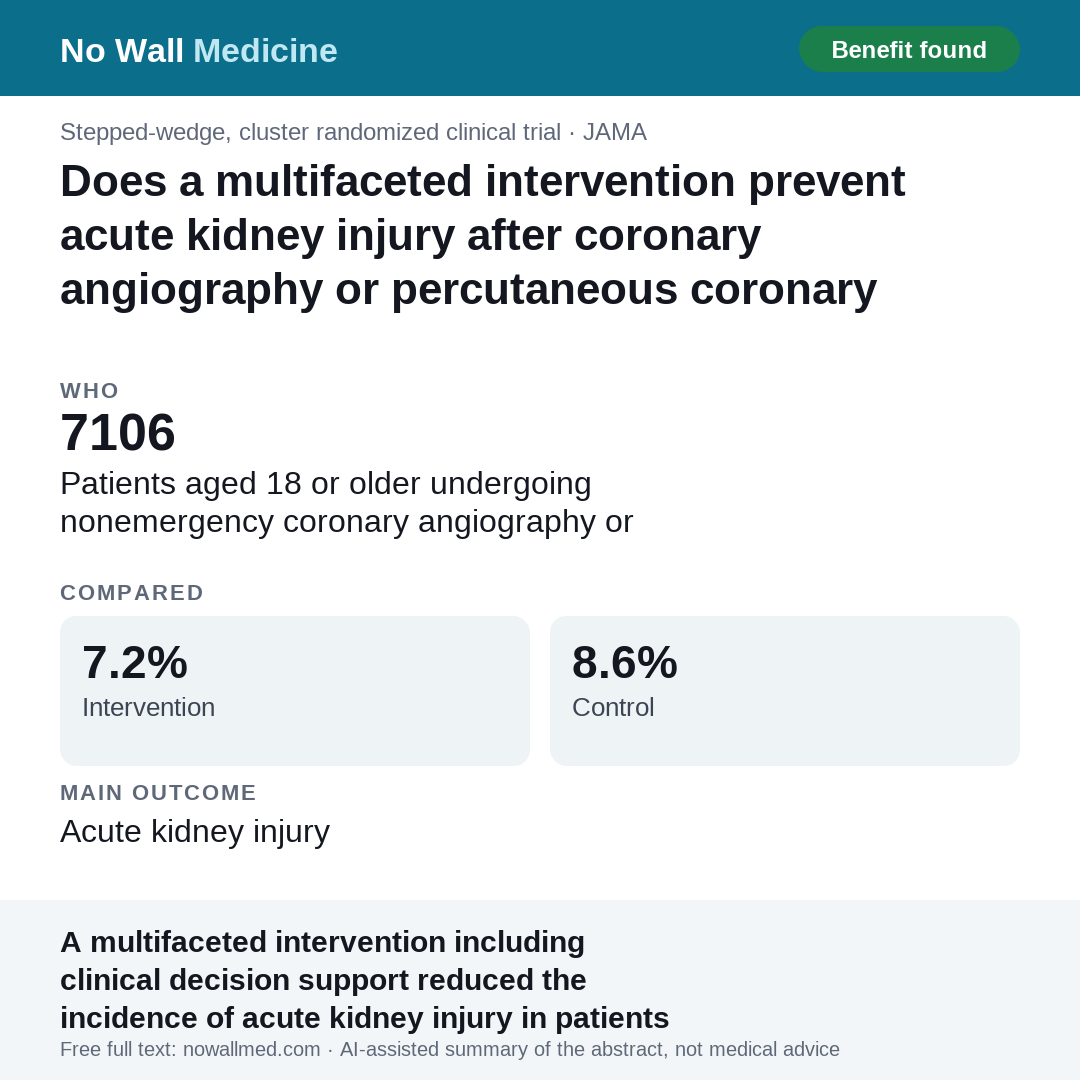
Clinical question: Does a multifaceted intervention prevent acute kidney injury after coronary angiography or percutaneous coronary intervention?
Why it matters: It was unknown if a multifaceted intervention using computerized decision support and physician feedback could prevent acute kidney injury after coronary procedures.
In absolute numbers
Intervention: 7.2% · Control: 8.6% → a difference of 1.4 percentage points, so about 72 people would need the treatment for 1 more to benefit (number needed to treat) over the trial’s follow-up.
Worked out by us from the two group results above, not reported by the authors. Check the paper for the exact outcome and timing.
Key points
- The study randomized 34 cardiologists performing 7820 procedures on 7106 patients to receive either a multifaceted intervention or usual care.
- The incidence of acute kidney injury was 7.2% during the intervention period compared to 8.6% during the control period.
- Excessive contrast volume use was 38.1% during the intervention period compared to 51.7% during the control period.
Headline and key points written with AI from the paper’s abstract, with every number checked against it. Read the paper before relying on them.
Was this summary helpful?
Subject terms
Cite this article
James MT, Har BJ, Tyrrell BD, Faris PD, Tan Z, Spertus JA. Effect of Clinical Decision Support With Audit and Feedback on Prevention of Acute Kidney Injury in Patients Undergoing Coronary Angiography: A Randomized Clinical Trial. JAMA. 2022. doi:10.1001/jama.2022.13382
Spotted a mistake? Suggest a correction
Top studies every Monday
The week’s key trials and guidelines in your specialties, plus any topics you follow. By email, free.
Get the weekly digest