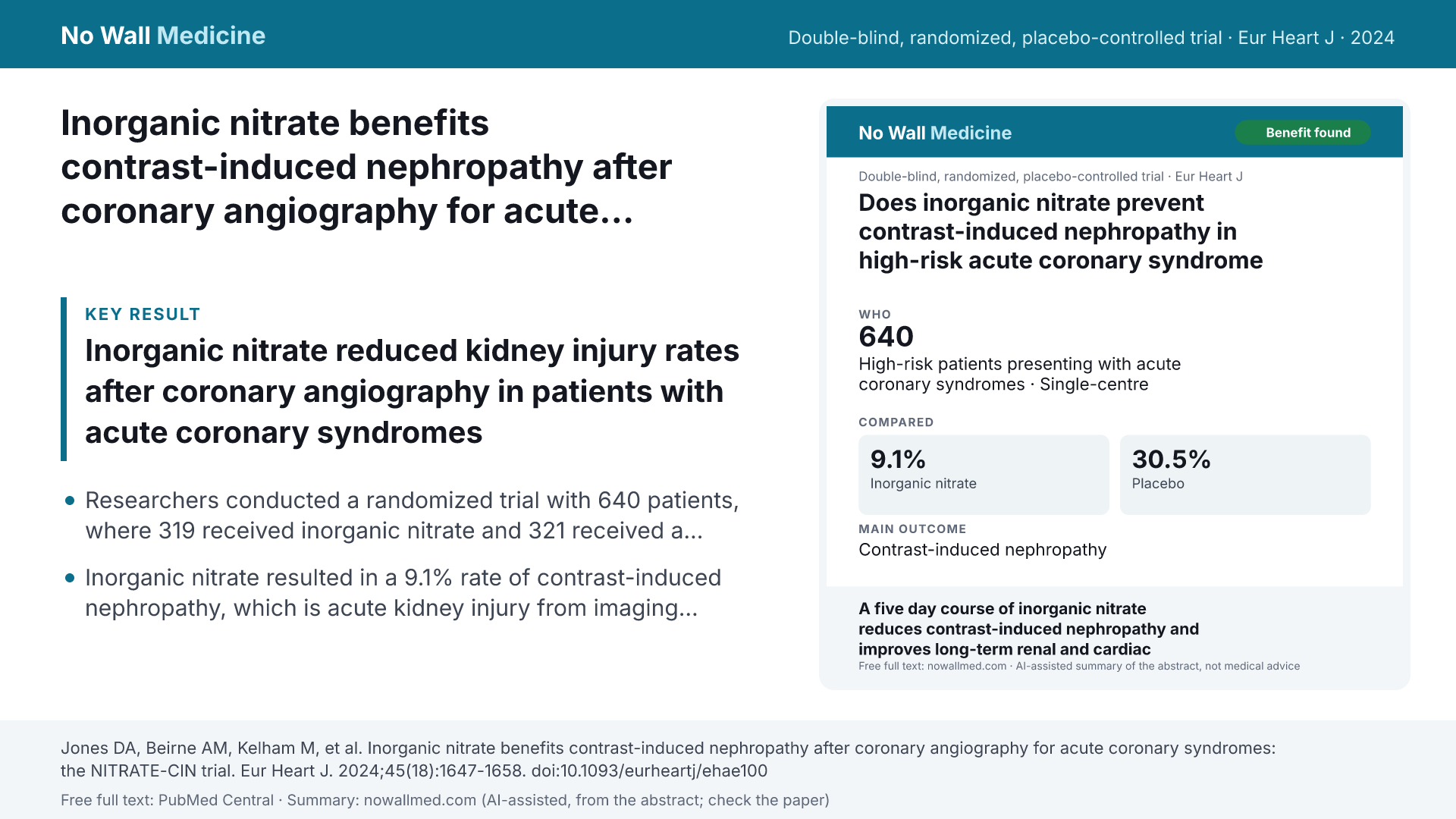
Inorganic nitrate reduced kidney injury rates after coronary angiography in patients with acute coronary syndromes
Inorganic nitrate benefits contrast-induced nephropathy after coronary angiography for acute coronary syndromes: the NITRATE-CIN trial
Double-blind, randomized, placebo-controlled trialBenefit found
Does inorganic nitrate prevent contrast-induced nephropathy in high-risk acute coronary syndrome patients?
Who
640
High-risk patients presenting with acute coronary syndromes · Single-centre
Compared
9.1%Inorganic nitrate
30.5%Placebo
Main outcome
Contrast-induced nephropathy
Result: odds ratio 0.21 (95% confidence interval 0.13-0.34)
Bottom line: A five day course of inorganic nitrate reduces contrast-induced nephropathy and improves long-term renal and cardiac outcomes.
Eur Heart J · 2024-03-21Download image
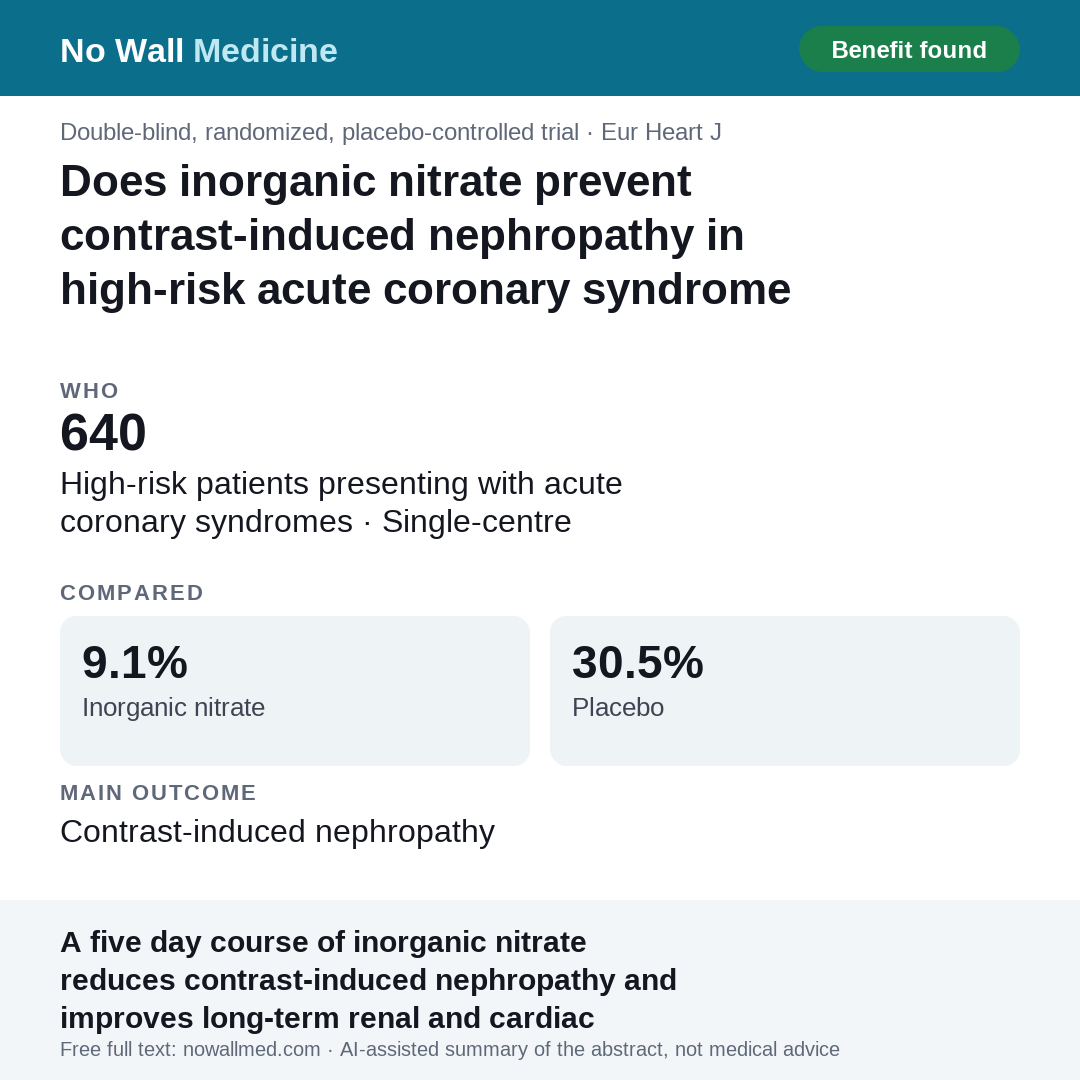
Clinical question: Does inorganic nitrate prevent contrast-induced nephropathy in high-risk acute coronary syndrome patients?
Why it matters: It was unknown if inorganic nitrate, which converts to nitric oxide in the body, could prevent acute kidney injury caused by contrast dye in high-risk patients.
In absolute numbers
Inorganic nitrate: 9.1% · Placebo: 30.5% → a difference of 21.4 percentage points, so about 5 people would need the treatment for 1 more to benefit (number needed to treat) over the trial’s follow-up.
Worked out by us from the two group results above, not reported by the authors. Check the paper for the exact outcome and timing.
Key points
- Researchers conducted a randomized trial with 640 patients, where 319 received inorganic nitrate and 321 received a placebo for 5 days.
- Inorganic nitrate resulted in a 9.1% rate of contrast-induced nephropathy, which is acute kidney injury from imaging dye, compared to 30.5% for placebo.
- The treatment was also associated with lower rates of procedural heart attack at 2.7% versus 12.5% and lower 1-year major adverse cardiac events at 9.1% versus 18.1%.
Headline and key points written with AI from the paper’s abstract, with every number checked against it. Read the paper before relying on them.
Was this summary helpful?
Subject terms
Cite this article
Jones DA, Beirne AM, Kelham M, et al. Inorganic nitrate benefits contrast-induced nephropathy after coronary angiography for acute coronary syndromes: the NITRATE-CIN trial. Eur Heart J. 2024. doi:10.1093/eurheartj/ehae100
Spotted a mistake? Suggest a correction